• About
  • Brand Building
  • Film & Drama
  • Writing: Arts & Lifestyle
  • Writing: Interviews
  • Writing: Luxury Brands
  • Writing: Travel

sitanshi talati-parikh

sitanshi talati-parikh

Category Archives: Social Chronicles

Verve Diaries on 26/11: Sab Nahi Chalta Hai

19 Monday Jan 2009

Posted by sitanshi talati-parikh in Publication: Verve Magazine, Social Chronicles

≈ 1 Comment

Tags

26/11, comment, In Memoriam, India, mumbai, Thoughts, vervemagazine

Published: Verve Magazine, In Memoriam Issue, January 2009

‘Light a candle and watch it burn away
Light a fire in your soul and keep it here to stay….’

I read post after post, article after article of heart-rending stories and traumatic accounts. In reading them, I forget my own pain. But a greater anguish floods my soul – it is a gut-wrenching feeling, like something is being ripped out from inside. The city isn’t burning, we are. We are being caught alive and examined in public – it is our own public hanging and extermination – well-deserved in the face of reality. It made me angry when we revelled in the spirit of Mumbai, to bounce back and just get into work, without a second thought. I came to work, broken and disheartened, walked into the building barely a block away from Café Leopold and watched everyone discussing the horror in muted tones, with escalating emotions. I couldn’t join in. I watched people – young people – say ‘but it will be okay – we will be back to normal soon, sab chalta hai’. My mind screamed out to them – what is normal? Is our apathy – which is neither resilience nor spiritedness – normal?

As I arrived, a few days later for the protest march and drifted along with the throng, as if I were a paper boat riding a wave, something snapped within me. A sense of pride, a sense of conviction, a sense of determination, a sense of change. As the chants mounted into a powerful crescendo, it was the chant of a city finding its spirit. The real spirit – not to sit back and watch, but to stand up and take charge.

I felt a thundering inside me, as I watched the intelligentsia rub shoulders with the workers. Every ethnic community stood unified that night – the remote SoBoites who generally abscond from voting because it is beneath them, stormed the streets and asked for justice, pushed for change.

Of course this time it was because it was the Taj and Oberoi that got hit. Of course it was because these are places that we could have been at – on another day, at another time. And of course, it made people uncomfortable – for the first time, this made them sit up and take notice. It was unfortunately at the cost of so many people, so many people we knew, but all the same, it gave Mumbai a soul.

If we need a cause to get motivated, this is it. Let us not burn another candle in our lives – a candle that may brighten up a dark night, sympathise with a bereft one and watch out for a lost soul; but ones which eventually melt away into the night like stained wax. Let it not be another incident relegated to the archives of human thought – better left undisturbed. Let us wake every day with a fire that eats into us, ravages us, demanding that we do something, to make it right. Let it not take the loss of one more life before we hold onto our very evasive Mumbai soul.

20 is the New 40

18 Tuesday Nov 2008

Posted by sitanshi talati-parikh in Features & Trends, Publication: Verve Magazine, Social Chronicles

≈ Leave a comment

Tags

comment, India, Quarter Life Crisis, Social Chronicle, Trend, vervemagazine

Published: Verve Magazine, Essay, November 2008
Illustration by Farzana Cooper

In a time when being young is ageless and wisdom is selective, the 20-something age group is in a different space from where it has ever been. Sitanshi Talati-Parikh ruminates on the phenomenon called the ‘quarter-life crisis’ and explores the factors that contribute to a generation on autopilot

Chronicle01

Youth has taken on a new maturity, and a new sensibility has attached itself to age. What is it that makes one feel old – age, a thought-process, experience or wisdom? And what exactly, defines a crisis – an inability to deal with circumstances and life? The mid-life crisis is quite been-there-done-that; what is now in prime focus is the quarter-life crisis (QLC) referring to a period immediately following adolescence – a decade of chaos lasting from the early twenties to the early thirties of one’s life, a phenomenon recognised by therapists and mental health professionals.

Characterised by feelings of incompetence, frustration (with relationships and work), identity crisis, insecurity, stress, confusion, boredom, opinionated and short-tempered responses, loneliness, nostalgia towards youth and a pressure-free school life, an inability to deal with situations and to face the reality of responsibilities; the ‘crisis’ seems to hit everyone in the age-group that suddenly realises that they have to grow up, fast. These emotions tend to occur pretty soon after the youths enter the post-college-make-important-decisions-about-life-stage.

Tweens are in a tearing hurry to be teens, teens are in a tremendous rush to be 20-something-mature-and-in-charge-of-their-lives, while the 20-somethings just want to stay 20-somethings. Suddenly the buck screeches to a halt there – leading to obvious maladjustments. Those who take life by the horns get burnt out, and those who ponder and plan, simply don’t move. It is a generation of extremes. ‘How will I know what I want to do so early? I need to find myself, test waters, I need space!’ Or a grimly determined, ‘I know where I want to go, and I wanna get there fast!’

At an age when, post MBA or post graduate school, the younglings would be just stepping out of the shelter of their parental lock and into the world wide web, these kids are faced with too many options, too many choices and a cheese that’s highly indecisive and constantly moving. Whilst embracing change fondly, this uncertain generation opts to hide behind the cloak of experimentation. It is difficult to step out of the comfort zone: marriage takes a backseat as jobs and partners switch with remarkable ease, towns and countries are no longer ‘long distance’, corporate ladders are meant to be parachuted up, and the age at which life ‘settles down’ is not in the near future. As a young magazine editor puts it, “We are living in an ageless world – the whole notion of age has been ‘problematised’.” After all, 30 is the new 20.

And so, 20 is the new 30. With the ‘new maturity’ – a biological fact that the age of puberty is being advanced – by the time we have reached our 20s, we are thinking like we would in our 30s; and ironically, to hold onto a desperate sense of youth, the 30-somethings are thinking, looking and behaving like they are in their 20s. As you mature faster, you also want to stay ‘younger’ longer.

And yet, it gets more complicated! Medically, 30 is the new 40. Stress, high cholesterol, high blood pressure, mental angst and all the adjoining ailments are hitting the 20-somethings in supreme irony, as the medical world finds new means to extend life. Consultant gastroenterologist, Dr Chetan Bhatt, finds the “hurry, worry, curry” syndrome has found its mark. QLC is officially a part of the psycho-babble and the 20-something age group is the cash cow of today.

Dr Ashit Sheth, consultant psychiatrist at Bombay Hospital, feels it’s the transitionary stress of the last 50 years – with a changed lifestyle, values, exposure, and disintegration of the joint-family system – transition from dependency to independency. The media hype and advertising-generated consumerism is all about “what you want being more important than what you have”. Women especially, are leading dual roles, with increasing demands. There is an excessive concern about weight leading to anorexia; the yuppie population doesn’t have time to consummate their marriages; and it eventually can lead to silent depression. The solution, according to Dr Sheth, is a five-fold answer: “Accept, follow recommendations, alter demand and expectations, enjoy what you have and learn to value basic needs.”

Expectations and needs are at the crux of this problem, agrees Dr Bhatt. It is the time of low tolerance and instant gratification – why slog and wait a few decades to enjoy things that can be had in an instant? Instant coffee, instant marriage, instant divorce, instant travel, instant loans and instant break-downs. As the older generation reminisces about the pleasures of delayed gratification, the need to work hard to reap the rewards; this generation agrees – but now years become days and delayed becomes instant. Money flows in easily – the concept of ‘working hard’ has changed to ‘maximise returns’. The youth often has their priorities straight – earn a ‘pot load’, somehow, and retire early. ‘And what exactly is a pot load?’ A 26-year-old financial analyst, casually describes a crore of rupees a year as being thoroughly acceptable – in all seriousness – “to lead a comfortable life.” High ambitions and an unreal sense of a consumerism engulf the youth, creating fantastic expectations and setting impossible goals.

As the material world threatens to swallow up the fresh recruits ripe out of school, it is the frenetic pace, which leads the 20-something in the quest of more or an existential nothingness. It is the epitome of the psychological fight-or-flight syndrome, dealt with a querulous sense of foreboding and complete confusion. As questions pile up and the answers don’t, these 20-somethings turn to mind-numbing, mind-altering and mindless states of being, hoping to alleviate their sense of frustration. It is especially worrisome, when India’s median age currently is 24.9 years – with over half its population under 25 years of age. The 20-somethings are riding a fast bike and driving a hard bargain, and it is important for someone to sit up and provide a guiding light. As Dr Bhatt concludes, “Dreams are not what you see while sleeping, dreams are what makes you restless and don’t let you sleep.”

Been to the Bachelorette Party?

18 Thursday Sep 2008

Posted by sitanshi talati-parikh in Features & Trends, Humour, Publication: Verve Magazine, Social Chronicles

≈ Leave a comment

Tags

Bachelorette Party, comment, Hen Party, India, mumbai, vervemagazine

Published: Verve Magazine, Musings, September 2008
Illustration by Farzana Cooper

As women experience a dramatic liberation of the spirit, they flock together in time for the most sensational party in town – the pre-nuptial ‘bachelorette’ aka hen party. What ensues is seductive, exorbitant and completely amoral mayhem, discovers Sitanshi Talati-Parikh

Henparty

Cock-a-doodle-doo. A cackle of resounding proportions ensues, ricocheting from the walls and reverberating in my ears. As the shrieking, excited women gather together in a spacious marble tiled room of a luxury hotel, I sit back in amused anticipation. Taking the been-there-done-there stance, I hold forte as the knowing spectator of a scene that is bouncing with camaraderie, clinging with subtle desperation to a youth that may never return, and high on spirits of every kind – as if this is the last night of fun, ever.

With lurid décor to offset the expensive and borderline sensational clothes, the women in one collective burst cheer the hunky man (is it just me or do I dread the sweaty, hairy ape that may just appear?) who is to make an appearance. In a flash I recall the Friends episode where Danny DeVito appears at Phoebe’s bachelorette party, resplendent in an officer’s uniform, all of four feet tall and I believe I can never forget the look of shock and abysmal dismay on the girls’ faces. I kid you not, an Indian hen party that promises a male stripper leaves me queasy and sceptical. A bronzed Brazilian or Greek God – now that would be my kind of party!

As the inebriation skyrockets, the women get louder and brasher by the minute – and the drinking games begin to take a turn toward the scandalous. From recounting your most brazen sexual escapade, to dares that would make any sane woman shudder with disgust, the parties are simply a way to surrender to impulse and try to do what one may never have or probably never will in the future. Or maybe, it is a way to explore the secret, often subdued kinky streak, to ensure post-marital bliss. Simply by letting your imagination go completely wild.

And while one is speeding down the fast lane, taking off on destination hen parties to exotic locales is high up on the wish list. Where the women can surround themselves with everything they love most – credit cards, friends, hot men, shopping, and a vacation that promises to be embedded in their memories forever. While a fun beach trip in Spain or Koh Samui or maybe even intoxicated rounds of vineyards in Tuscany would suit my taste, there are other more sensational destinations that do the bachelorette party rounds. Take your pick from gambling, striptease and can-can in Vegas to 48-hour raves in Ibiza, from singles-only adult resorts in Mexico to life-threatening adventure sports – the world is a menu, and one just has to pick a spot.

What is it that makes this night such a big deal in a woman’s life? Is it the post-women’s lib take on the bachelor’s party? In my naïve understanding of history, women would gab a bit, have a pyjama party, gossip, paint their nails, brush each other’s hair and share secrets about love and what is soon to come. It was a means of solidifying the female bond at a time when women need it the most – as they are about to enter the big bad world of men, mothers-in-law and the kitchen. And men would sow their wild oats. Literally and metaphorically.

We then arrive at the premise that today’s women have many a wild oat to sow as well – with the liberation and all that. And so, every woman wants to bag (or bed) that last bit of scandal, before she begins the journey of a devoted and chaste life. I don’t think so! As single marriages are passé and divorces are the first resort, hen parties are just that – another party to frequent the colourful social lives of the free-spirited women of today, and one that has the golden ‘Get As Wild As You Can’ pass to make anything that happens at that party acceptable.

So what are the women really liberated from? Inhibitions – of course. Moral code – probably. A sense of decorum – definitely. And that is what makes it the night of a lifetime. Needless to say – what happens at a hen party stays at a hen party. And that is one pact that strictly cannot be broken – like that of a sorority. No photos, no emails, nothing to leave a trace of what actually took place, except a vaguely delicious memory that leaves you feeling that you’ve been bad, and enjoyed every minute of it. And the best part – there is no hangover of guilt.

Mumbai On The Rocks

19 Monday Feb 2007

Posted by sitanshi talati-parikh in Features & Trends, Humour, Publication: Verve Magazine, Social Chronicles

≈ Leave a comment

Tags

comment, Goa, India, Lifestyle, mumbai, Nightlife, Partying

Published: Verve Magazine, Musings, January 2007
Illustration by Farzana Cooper

Sitanshi Talati-Parikh meditates on Mumbai, a city where sex, drugs and alcohol race through the party circuit, Indian traditional values are discussed over sheesha and bhang and the hippest people are those that find a perfect balance between the raciness of the culture and the values that are harped on at home
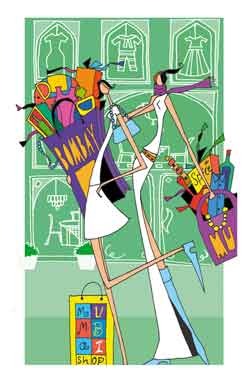
Musings01

Hip, trendy and captivating. When the season to entertain is here, the tourists and diaspora start floating in with the cool Queen’s Necklace breezes, looking starry-eyed and thirsty. Coconut water or lassi isn’t their cup of tea; the quenchers are fresh sugarcane martinis and melon caipirinhas. They move to a beat that is ultimately Mumbai – trippy techno, remixed goldies and American hip-hop. Their cuisine of choice isn’t kebabs and bukharas, but French fusion and Thai curry. The melting pot of cultures that they want to experience isn’t Punjabi, Gujarati, Muslim and Christian, but a svelte girl in a miniskirt, getting ‘hammered’ on a vodka-with-wings, grooving to hip-hop and making eyes at a wannabe American frat-boy. Where sex, drugs and alcohol race through the party circuit, Indian traditional values are discussed over sheesha and bhang and the hippest people are those that find a perfect balance between the raciness of the culture and values that are harped on at home.

They flock in hordes, flooding every fashionable place in sight from Colaba to Juhu, experiencing the way of life that is Mumbai. The Gateway of India is just a landmark for the Taj Tower or Privé, the lounge bar and Elephanta, Ajanta and Ellora are mystical card patterns sold at traffic signals. From breakfast at popular bistro, Basilico, late lunches at Indigo Deli, percussion and cocktails at Henry Tham, wine at Intercontinental’s dome, sushi at Shiru, sheesha at Souk and dinner at India Jones, these tourists are here for the nouveau luxury and sophistication that is creeping into the bumpy roads that still continue to get dug up every few months, whilst fabulous new buildings and sparkling malls pop up at every intersection. The chauffer-driven Mercs and Beamers, bearing Armani and Zara, chandelier earrings, platinum credit cards and stiletto heels, accompany them to all the hot spots, where the conversation is no longer about what is going wrong, but what is going right.

As my friends start holding their designer exhibitions in happening nightspots like Red Light, instead of staid shops, homes and galleries and art is displayed and discussed over wine and hors d’oeuvres at Saltwater Grill and at evening shows at Dusk, before a nightcap at Olive, one begins to wonder whether the city’s nightlife is pervading our everyday existence. Ryan Tham, restaurant owner, believes that it is the constant need to do and try something different. I wonder: are we really so different, or are we aping a culture that we have brought home with us, after our sojourns abroad? Is this who we want to be and is this an organic social change, or one that is racing headfirst towards collision with an intrinsic culture that is no longer in line with what is considered ‘in’?

Sunday brunches are the new buzz in a city that apparently has no limits – it is no longer chic to throw a party into the wee hours of the night – rather, it is delicately suggested to drop by for a Sunday brunch at one of the happening lounges – Vie, Squeeze, Taxi, Ra. As the sophisticates stroll in by 2 p.m., the welcome drink is a shooter – tequila, kamikaze, and slammer. Inside, the liquor and rhythm are readily flowing, replicating a night-time soirée. The only noticeable difference between the partying a few hours prior and the afternoon lies in the designer pair of sunglasses that must accompany every man and woman, to be considered fittingly attired for the occasion. To be seen without one of those, is a faux pas of the biggest sort! It is mid-afternoon, after all, and what better way to hide the previous night’s hangover than with a pair of gargantuan Versace or Gucci shades that cover most of the painstakingly made-up faces? Fabulous summer dresses, skinny heels and matching totes are perfect for the occasion, where conversation gets tiresome and the music gets louder until the invitees inevitably get completely inebriated by early evening. The ‘lunch’ is of course served by 4 p.m. and eaten in most part by 6 p.m. As I wondered why these invasive, but inordinately jolly, gatherings sliced straight through my routine massage on my only free day of the week, I was perkily asked by one very tipsy girl, what better day to party than that of the Sabbath? Besides, the best way to get rid of Saturday night’s hangover is to simply roll out of bed and drink some more! The future of cosmopolitan India suddenly looked painfully bright through the skylight.

This is the much-touted ‘McDonaldisation’ of Indian culture. Our Art of Living has found a new form of materialistic meditation, where money flows like a brook, as easily in as out. I am not surprised to find friends under 30 with complaints of high blood pressure, premature balding, cholesterol and heart trouble. Stress amongst the youth is as common as a Louis Vuitton at a party and as high as the sensex. In the race to become a Manhattan, we are quickly becoming mad hatters. Life is on speed dial and a party’s calling.

For those aching for a different scene, Goa is the ultimate weekend spot right around the corner. From ramshackle beach shacks to exquisite luxury resorts, they zoom in by the hordes. Bathing, tanning and getting ‘stoned’, Goa is their escape from the reality of their lives. They’re quietly raving but not ranting; the youth has given up complaints in lieu of escapist complacence. From Manchester to Mumbai, people ironically swoop in to hide in this ecstasy-driven pleasure haven. King’s beer, Goan curry, Domino’s pizza served on the beach, entrancing music, bohemian culture and a pace of life that refuses to speak of stress or worry, ease the harried nerves and form a balm to the acid of each day.

From the palaces of the North, to the spas of the South, India has now begun selling a lifestyle that is contemporary and current, instead of the history and glory of the past. Whether this lifestyle is appropriate is no longer the question but the worldly Mumbaikar has arrived, with luxury, sophistication and ideas galore. The icing on the cake is his endless desire to party, every night, every day and on any occasion. As the visitors flicker in by the dozens, they feel more at home, away from home, where the metropolis buzzes with excitement every minute, laced with an intoxicating flavour that is truly, Indian cosmopolitan.

My American-born-desi friend looked scornful and shocked when my husband and I announced our decision to leave the Bushy ‘country of dreams’, to take the rickety and bumpy ride home. The same person, while visiting us recently, was culture-shocked by the life that was now Mumbai. After 12 event-packed days, he left, hung over, a few kilos heavier and determinedly clutching the business card of a real-estate agent in Mumbai.

From the Scandinavian girls in small-town Italy, who speak not of the Taj Mahal (monument), but of plush Indian resorts with fabulous swimming pools and massages, to the Argentinean couple touring China, who talk of the cultural differences and expensive lifestyles in cosmopolitan India, foreigners are no longer bewildered and querulous of this poor, once-rich country. They are now in awe of this rich, poor country that is climbing the lifestyle ladder faster than they can build rungs to the top. What is it that amazes them? The ability of this Asian peace-haven to break the Lakshman rekha of tradition and dance on the bar-top of fire? Or is curiosity to see how this yogic nation can successfully climb out of the quagmire that has been sold to them by a country that failed miserably in doing the same? And can we, the brainiacs of the globe, manage to come a full circle and find material peace with the fire that burns in our souls?

Newer posts →

|  Filling the gaps between words.  |

Writing By Category

  • Art, Literature & Culture
  • Brand Builidng
  • Brand Watch
  • Fashion & Style
  • Features & Trends
  • Fiction
  • Food
  • Humour
  • In The Media
  • Interviews (All)
  • Interviews: Business
  • Interviews: Cinema
  • Interviews: Cover Stories
  • Interviews: Lifestyle
  • Interviews: Luxury Brands
  • Interviews: The Arts
  • Interviews: Travel
  • Musings
  • Parenting
  • Publication: Conde Nast
  • Publication: Elle
  • Publication: Mint Lounge
  • Publication: Mother's World
  • Publication: Taj Magazine
  • Publication: The Swaddle
  • Publication: The Voice of Fashion
  • Publication: Verve Magazine
  • Social Chronicles
  • Sustainability
  • Travel Stories

Reach out:
sitanshi.t.parikh@gmail.com

© Sitanshi Talati-Parikh 2018.
All Rights Reserved.

Website Powered by WordPress.com.

  • Subscribe Subscribed
    • sitanshi talati-parikh
    • Join 51 other subscribers
    • Already have a WordPress.com account? Log in now.
    • sitanshi talati-parikh
    • Subscribe Subscribed
    • Sign up
    • Log in
    • Report this content
    • View site in Reader
    • Manage subscriptions
    • Collapse this bar