
Girl On A Wire: Cover Story with Parineeti Chopra

Tags

, , , ,

Published: Verve Magazine, September 2012, Cover Story
Photographs by Vishesh Verma

Parineeti01

She is touted as the industry ’s great new talent on the block, on the watch list of every major director and actor. Six months after her first film released, she is already working on her third. It is a rapid start for any newcomer, particularly one who became an actor because she got a return ticket to Mumbai instead of Delhi! PARINEETI CHOPRA is refreshingly easy to talk to and incredibly laidback in general, finds SITANSHI TALATI-PARIKH, as she chats with the banker who became a movie star

Parineeti05

Alive wire buzzes with an electric current that creates energy all on its own, without sapping any other source. In cinema, the screen is ripped to shreds with the power of its intensity. She has a lovely structured face, instantly appealing with its generous smile, fiery light-brown eyes, and translucent skin. She has a particularly defiant tilt to her jawline – as she speaks, she unconsciously lifts her face upwards, as if willing the world to see where she is headed. And yet, she believes it’s all just destiny. After all, that is what her name means.

“I dreamed of being a very different person – the CEO of one of the biggest banks in the world.” And clutching onto that lifetime’s vision, Parineeti Chopra found herself floundering while looking for a finance job. “Twenty-one years of my life I dreamt of being a banker. I worked all my life for it; I went to London. The year I graduated, was a recession – a financial breakdown in the world. I’d taken an educational loan, followed my dreams and gone there to study… everything finished for me.”

That’s when she picked up the bits and decided to return to India. Used to working and buying her own ticket home, she found that it was cheaper to fly into Mumbai – a city she had never previously visited – than to fly to Delhi; staying with her cousin, actress Priyanka Chopra, before returning home. The day after Parineeti arrived into the city, Priyanka had a shoot at the YRF studios. She accompanied her to see the studio, out of curiosity. “When I came here, I saw things like ‘Producer’ and ‘Director’ written on the walls – and found it so strange. It fascinated me, as a fan. I haven’t grown up on films – I used to read finance books, I was very nerdy. When I saw this place (we are currently at the very same studios), I thought about applying for a job here – in finance or accounts, maybe.”

Parineeti09

And so, using one of her other majors, Parineeti ended up doing marketing. “I started seeing the actors here, and initially I used to look down upon them – they put on make-up, go on set, earn so much money, they are in the biggest cars, best hotels in the world, everything is paid for….” Ironically, now, for her, that is a checklist with all the boxes ticked. “But with a very different frame of mind,” she insists. “Now, even if I hear that some actor is paid 25 crores, or some unrealistic figure like that, I don’t find it strange anymore – because working with them made me realise why actors are paid so much, why they are famous and so sought after, why their lives affect so many lives. I felt then that this is a creative field, requiring a lot of intelligence. Not only banking. I used to think that because I read out of a book and because I am making money for my clients, I’m very intelligent. That’s when I decided to be an actor.”

A staffer nervously hands her a cup of her special hazelnut coffee, profusely apologising for being late, checking if it is okay. She notices my amused expression. “I think it’s sweet. I’ve done this for people. I know I’ve not done anything to deserve it, but I know it is a natural thing. This importance is what I didn’t understand earlier about actors…but I guess, now I get it.” Parineeti says it without a sense of wonderment. “You work in an office,” she gesticulates, using me as an example. “Imagine if you were suddenly made the owner of the magazine! Yash Raj treats its actors like stars: you are given that much pampering and importance, freedom and decision-making power, however new you may be. I used to coordinate interviews and order food for actors (everyone from Ranbir Kapoor, Shahid Kapoor, Ranveer Singh to Anushka Sharma, Deepika Padukone, Rani Mukerji and even her cousin, Priyanka). I used to take care of them, be their security person when they were out in the crowd. Suddenly you are elevated to a pedestal that you only used to be a caretaker of.”

The daughter of an NRI mom and Haryana’s Ambala-bornand-raised dad, left home at the age of 15 to study, and is fiercely independent and self-sufficient. “I had a very balanced childhood. Six months of the year I used to be in Ambala as a small-town girl with a very conservative, disciplined upbringing and six months I would live the life of utmost luxury with my billionaire grandparents abroad. I am a good-mannered, good girl, yet very open-minded in life. I get to see my parents thrice a year. They let me take my own decisions – all I have to do is inform them.” And yet, the 23-year-old admits she is not a great judge of people. “I’m not naive, but with people I do go wrong. Someone needs to come and tell me, ‘Why are you saying this to so-and-so, or why are you being so-and-so with so-and-so…’ and until someone tells me, it won’t occur to me. And I’m not a big star that people need to suck up to me!”

Parineeti02

She stops, takes a sip from a glass full of green liquid – spinach juice, she reveals with a wry grin, a formula she is using to improve her near-perfect skin so that she can face the camera without make-up for her next film. It’s a big step for a girl who has a chronic weakness for pizza – averaging four a week – to watch what she eats. “I don’t want to lose a lot of weight. But I like to be fit and I like to get into a regime before my next film so that I don’t get tired on set. Sometimes the director asks for 15 takes – and if I don’t have the energy to give that I may regret it for the rest of my life.”

As she murmurs approval over my bright coral bag, I’m certain there must be a girl in there who reads the fashion blogs and watches her choices being torn to shreds with the appearances she has made – including the big one at a film magazine’s awards ceremony where she stepped up to receive the best actress debut award for Ladies Vs. Ricky Bahl. “I’m wearing jeans today. It’s a big thing – people think I’m dressed up when I wear jeans. I have a whole pile of track pants and ganjees. That’s all I wear in my personal life. My hair is always in a mess.” She takes a breath, giving a clue to the fact that this may have hit home. “I don’t care about clothes. But I know that when I step out I need to look a certain way. Unfortunately, I don’t have the acumen to dress well. I’m just not that person. So now I do have a stylist to help me. I would never want people to say, ‘She is horribly dressed; she only knows how to act!’ I know I’ve made a lot of mistakes, because I’m so illiterate about what looks good on me or what’s in fashion. I have a very tricky body – I am not a very thin girl, so it is hard to dress me. But I am going to make an effort and try and look better. Just give me that time. I don’t have the vision of me as the actor, which needs to be sold in the industry. I wish I had grown up wanting to be an actor – I would have been so much more prepared.”

Prepared or not, she’s clearly gritty and hard-working to the extent of being tenacious about her roles, her characters, her life. Her screen presence has been remarkable and yet, apparently effortless. She enjoyed Ricky Bahl… and that created ripples on screen; she “gave my heart and soul” in Ishaqzaade and received critical acclaim. “There is a rule in the industry where actresses don’t get all the good roles. I would never say it is male-oriented, but there are better roles for men, which makes men huger stars than women. There are very few huge female stars, because they have been blessed with three or four really great evergreen roles. In my films, I think both characters are memorable – in absolutely different ways. I hope I get more such characters. I want to be a successful actor, which comes with successful characters, good characters.” An admirer of Vidya Balan and Rani Mukerji’s author-backed roles, she automatically shies away from ‘package films’ that rely upon a single selling point like money or a famous actor or a director on a winning spree. She needs something to keep her interested, to keep her wanting more. “I have a very short attention span. If you put me in similar kinds of characters I couldn’t do it. Something that is not meaty enough for me as an actor bores me. I can’t work on those films – except when I’m tired and need a break between two intense films…I should use the energy I have right now until I start tiring.”
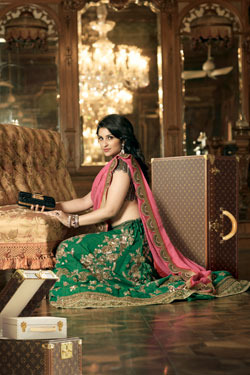
Parineeti07Parineeti04

She’s been speaking rapidly, without hesitation, with a certain amount of lightheartedness that highlights her relaxed but upbeat demeanour, even as her work life steamrolls on. “I don’t mean to sound philosophical, but I’m just really happy in life. There are people – with due respect to them – who wait years and years for this to happen to them. I’m probably one of the more thankless ones, because I just got it – instead of running after it. I’m just plain happy.” She sounds dangerously blasé. “No – I’m saying this right now, but in three hours I may be crying saying I don’t know why I am an actor. I am a very extremist person. At this point I am content. I know this has happened to me. Life isn’t the same. But I haven’t dreamt about wanting to be an actor, so what has happened isn’t do-or-die for me. It’s not the hugest thing in the world. If I am successful, great. If not, I have my degree to fall back upon. The good thing is I don’t come from a film family. Today, my parents still say – do whatever you are doing until it makes you happy. When it doesn’t, do something else. Who knows – I may get bored of it, get married someday!”

There is something defiantly free spirited about her, that leaves one with the impression that she is in control, she needs to be in control, but occasionally spirals into the unknown ready to experiment at a moment’s choice. And she can surprise you with the things she says. “I’d like to believe I am very different, because nothing in this world means the world to me. Nothing. No one. Nothing. It could be my parents. People say you can’t live without your parents, but I know one day everybody is going to die and we are going to separate. I’m very realistic.” There is a moment of shock. Is there a little romantic girl? “I’m not a romantic person at all – I am very practical and realistic. Very. I will fall in love. And I know that the people that I love, I r-e-a-l-l-y love.” But these are people you can do without? “No! Not at all! They are very important to me. All I’m saying is that I don’t want anything to be the centre of my world because I’ll end up hurting myself. It’s just the kind of person I am. Whether it is money, or success in my career, or it’s my family or friends – I love everything and I want everything all the time till the day I die. But if something doesn’t work out, it’s okay. I don’t want it to shatter me. Whatever has happened to me is enough for it to go to anybody’s head. Because it’s happening so fast and happening so well. My name means ‘destiny’ and I really believe in destiny. I know that tomorrow if it is not meant to be, it will all be over, so I shouldn’t let it be the most important thing in the world to me.”

Parineeti08

Parineeti’s wedding diary 

The actor, who has so far had unrequited love on screen, is ready for a happy ending in real life.

THE GROOM “It’s a cliché, but I want my man to be like my father – I fi nd every other boy too pansy for me, because they are not brooding Punjabi Jatts.”

THE WOOING “My idea of romance is when a guy gives me no importance. I love it. I hate it when I get gifts, or when someone says, ‘Come, let’s go for dinner.’ But, ‘Just come over, we’ll watch a fi lm and order food’ – that’s fun. Just being a regular Punjabi man.”

THE RELATIONSHIP “I’m 23, I hope now I get into a good relationship. I’ve never been in a serious enough relationship to experience any kind of heartbreak. And that’s why I love Band Baaja Baraat – it says ‘Pyaar aur vyapaar ek saath ho sakte hain’.”

THE PROBLEMS “The privacy thing. Rumours in the p
apers link me up with various people – all friends; and now I can’t be seen with them! Even if I tell my mother there is nothing going on, there will be some seed planted in her mind. When I do have a boyfriend, I could never hide it. The problem now is if I am seen going on a late-night drive, or to the movies, people won’t think ‘how much fun they are having’, it will always be, ‘what is happening?’ It will always be negative, sleazier and shadier. But…it doesn’t deter me.”

THE LOCATION “A beach wedding! Water really turns me on…it could be a fake lake under a building, or even a rivulet, but I love water. Not sexually. It’s so strange; any sound of water – even a running tap – can calm me.”

THE CEREMONY “The wedding can be casual, where all my friends are bunked up in one hotel for three days. I’m not really into the ‘traditional, let’s do it the Hindu way’ or whatever. I’m not very religious. I just want a big party, with lots of food and…swimming!”

THE CLOTHES “The kind of looks we’re doing for the Verve shoot is exactly something that I would like to wear for my wedding. Something Indian, something beautiful, but not the usual traditional stuff. I think I look okay in Indian clothes.”

THE COLOUR “Onion pink. I like onion pink, a lot.”
‘A Suitable Girl’ @vervemagazine September Bridal Issue

Tags

,

Published: Verve Magazine, September 2012, Verve’s Got The Nerve

It is a truth universally acknowledged, that a single man in possession of a good fortune, must be in want of a wife drawing a good ‘package’

My darling Jane Austen would turn in her grave at the unsightly events taking place in the high society of Mumbai. The patrons of SoBo who may be old or new money (after all today who’s checking how mosscovered your tijori may be?) apparently want the best for their sons. Sarva gun samparna and seva are all in their place, and dowry may be a bit antiquated even if you do expect the Beamer with polka-studded leather seats at your doorstep, at the very least, but what you do question is whether the girl is happening – career-wise or not.

There were days when girls were made to study home science, because that made them imminently eligible in their green-thumbsewing glory. They were promptly married off about the time they were to graduate – or even right before their exams, so that the timing was just suitable to learning and never applying their knowledge. As society became more egalitarian, girls were encouraged to be thought of as equal to boys – taking up the glorious path of law. It seemed so much nicer to say, ‘My daughter is ridiculously smart – she can ensure you know how to write your will even before you decide to make one.’

The few parents, who understood that their girls possessed rare talent, were encouraged to take up science and dare-to-be-different medicine. A new breed of doctors emerged who then juggled clinics and medical practice along with raising a family. The wonder women: whom the fathers and fathers-in-law were proud of. They stood apart from the designers. Every alternate house had a clothes or jewellery designer in their midst, as if the world’s artistic ability had concentrated itself in SoBo. But this made the in-laws happy, because their daughters-in-law were ‘busy’ and yet, always at their beck and call.

But all hell broke loose when the parents agreed to let their daughters into what was formerly a man’s domain: accounting, business administration, marketing, banking and commerce – they didn’t know that they were unleashing a new wave of talent. As the Indian economy exploded and the multinationals came into the fray, the girls in finance (particularly those with a ‘foreign education’) became the ‘it’ girls of high society. Drawing massive salaries, often unheard of in polite company – it is rude to even mention those figures – the in-laws realised that it’s not just what you drive or what you wear that defines you as a person. It’s where you work and how much you earn. It’s the package. A school teacher stands no chance in the society meat market – even if she makes the best chocolates and candles – amongst the brainiacs that know their money and can bet on it. Happy is a father-in-law who can carelessly slide into a conversation, ‘She draws a six figure salary… every month,’ observing the jaws drop and then sitting back with a satisfied air.

As women struggle to become men’s equals, the men have decided to accept it. In fact, they find it deeply favourable. Fathers encourage their sons to ensure a suitable match – it will ensure a comfortable life forevermore, whether he works or not. Househusbands may become the new male of Indian society. The ideal scenario would be to produce three lazy sons. Get them married to a doctor, a lawyer and a banker respectively. You are so sorted. Just avoid the writer who can spill the beans.

The Reluctant Bride

Tags

,

Published: Verve Magazine, September 2012

12 brides who give 12 reasons to stay single

1. I Hate What He Wears If my fiancé hasn’t got the right haircut, or won’t wear that skinny Canali tie with Ferragamo shoes, I have every right to turn away from the big day. The only allowance will be made for wearing last season’s shoes picked up on sale, just because he still doesn’t get it.

2. I Am Set In My Ways When you are young and suggestible, you may succumb to finding your version of marital bliss. Come the 30s, it’s more about do I need a man? Do I need this man?

3. Girl’s Nights Waning Pyjama parties and comfort food. . A far cry from hosting formal dos as a couple, finding the right chic dress, organising the caterer, the help and the finger foods. So antiquated and pati-vrata.

4. No More Flavours It’s also about variety. Imagine the many, many types open to a woman in the prime of her youth. And now to think about picking one man, and settling down with him…seriously? What if he becomes a crazy patriarchal monster post-marriage? Shudder.

5. The Dead-End Chase I can never disrespect the chase. When I’m single and wanted, every guy will be desperate to woo me into his life. You play hard-to-get. You attempt to thwart unnecessary advances, but the attention is flattering. And then, when you settle down, it’s all over.

6. The Dull Relationship Dates are fun! Waiting with a sense of expectation, for something different, well-thought-out, all that creative attention. The banal life of a married couple…without the mystery, the excitement, the fantasy, the effort. He stops caring about caring.

8. The Food Once the talk was about delicate course meals, fresh watering holes, popping open a new label of wine. Now married-girl conversations are about managing food – and the dreaded word of domesticity… tiffins.

9. The moolah When you are dating, it’s all very well to be a hot-shot executive making pot-loads of money. It makes you rather eligible – in that Demi-Moore-power-woman-way. But the moment you are married, it becomes an ego thing. “So if you earn so much, buy your fancy stuff yourself.” Or “Why do you need to work so much?” Less demi and more moored.

10. The In-laws Your home is your home. And however much your in-laws love you, can it ever be the same? Can I ever just throw a few tantrums coz I feel like it, or demand my favourite comfort food made just so or basically, be the kid that every woman needs to be occasionally? I need to constantly prove that I am the perfect daughter-in-law. And I don’t think I am.

11. The next generation It’s like a girl is born to be a mother. I mean, relax. If I do tie the knot, am I expected to produce the brood immediately? And then be nothing more than a cow to be milked? Gross. I think the longer I wait to get married, the less I have to worry about the kid thing.

12. The Arguments When you are dating, you live in different homes. You can have timeouts and just hang up or choose to talk on your time or take up from where you left off. When you live with that person, where do you go? The fight gets implanted in your relationship, swirls around with the morning coffee and grows into a monumental blown-out-of-proportion pressure cooker situation that never gets a chance to blow off steam. Boom. End of the road. Even the make-up sex isn’t as good when you are married. I’ve heard.

My Baby and Me

Tags

,

Published: Mother’s World, September-November 2012

When a woman leaves the hospital after a successful delivery, she returns home not just with her tiny tot, but with an overwhelming sense of responsibility. Sitanshi Talati-Parikh rewinds to the many doubts, the questions and the emotions that filled the early days of motherhood

“She’s just so little. What if she breaks?” It was ignorance, of course. Babies are far more resilient than we think, but for a new mother, who has never had younger siblings it is a revelation. Suddenly, from the moment you leave the hospital and come home there is an overwhelming sense of responsibility and control – you need to wield that control for things to not shatter around you. You run a million checks, feverishly click through all the lists, ignore the fact that your body doesn’t feel anything like what it used to and make the little tot the focus of everything that matters. The most exhilarating feeling is tucking her in – for the first time – in the little cot you spent ages pondering over and making just right. Watching those spiked lashes tuck themselves into the generous curve of her cheek as she breathes evenly and naps. She sleeps in the most dramatic positions – limbs thrown towards the world, limbs tucked in, hair askew, she kicks the bolsters right out of the cot…. You watch her sleep, squirm, pucker up her little face so, listen to the strange little sounds that emanate, and you are lucky if you fall into some kind of wonderous, exhausted slumber.

And then she wakes up. With a loud piercing constant wail. It rips through your sub-conscious and remains etched in your memory for months to come. You spring to attention, tending to her needs. She’s expressive – in the I-will-howl-when-I-need-anything-front. You’re reeling from the assault to your senses. Here is a little child you have brought home and you are unable to gauge what sets her off – why does she cry so much? And so loudly? And so incessantly? As you fumble and race through the newly-learnt motions – nursing, diaper changes, sleep, nursing, diaper changes, sleep, you don’t have a moment to ask yourself – ‘What were you thinking?’ You’ve lost track of how much and if you ate, but you force yourself through the motions of eating because you must. For her. You are assaulted by barrage of suggestions, recommendations and ministrations – of what to do and not do, of what to eat and not eat…until you wonder if you are the baby or is she? It’s for her. You wonder how far you need to go to ensure that she can become the person you think she can be. In the first few weeks, you don’t even know how you will get through the first year…much less see her off to college. Life just seems to have braked and stopped mid-way; you are suspended in a black hole that you can’t crawl out of.

You are shocked at how fiercely your emotions roll. Every breath you take seems to be for this other little helpless person, who is so incredibly dependent on you that it stuns you. And scares you. Was it merely a month ago that you were the girl who laughed without a care in the world? Was it only recently that you were a person with a sense of self-worth that stemmed from more than a sense of responsibility for another? You look at the mirror and you feel that you have aged – there is a tautness of the mouth that suggests restraint and rigid control of overwhelming emotions, there are shadows under your eyes that shine with love but belie a weariness that doesn’t abate. Your skin has shed its glorious pregnancy glow and pales listlessly. You are edgy and skittish – you set off in a whale of tears at the most inane things, and you begin to cling to the father of your child. It’s as if only he can truly understand that you are changing, you are out of control and you are not who you were just a few weeks ago. You need him to understand. You need him. You feel betrayed that he has a life with a semblance of normalcy and yours has become unrecognizable. You wonder if that’s fair.

And yet, you walk through each day, noting milestones, becoming more adept at the daily rituals, more in tune with your child, more able to slide in and out of the dark moments with a strange in-built coping mechanism. And then the colic hits. She cries uncontrollably every day, racked with stomach pain. You can’t get her to stop…you can’t help her. You hold her tightly, clutched to your chest and find that there is no solace. Every shred of control that you have wielded, every manner in which you have coped, suddenly spins away and you are left feeling ridiculously helpless. And you feel your insides clench with pain, because you think you should be able to help her, make her feel better, but you can’t. You medicate, you control your food, but all you can do is wait it out. As her face scrunches with pain, turns red with wailing and tears pour out rapidly, you die many small deaths with every cry.

Until she passes the glorious three-month milestone and the colic magically disappears, the daily crying stops, she understands, she begins to coo affectionately, smile regularly, reach out for you, is ready to sit up and turn over, flexes her muscles to begin crawling…. She sits on the safari-themed bouncer chair and gurgles at her new buddies: Mr. Lion, Ms. Hippo and Mr. Monkey. She smacks them around, catches them, and kicks her legs rapidly in circular motions in glee. She jumps up and down in her cot – letting out a peal of excited laughter when she spies you. She plays peek-a-boo with you behind her cot bumper. She starts flipping over and crawling up to her favourite ducky. She splashes the bath water, she smacks her lips with food she likes, she tries to stand up and become tall, like you.

As you watch her grow at every stage – mentally, emotionally, physically, you marvel at nature’s perfection. As she holds your finger in a pincer-like grasp, knowing you will lead her to her future, she turns those wee lips upwards into a little toothless smile, her eyes turn to you with faith and unconditional love; the anxieties, misgivings and fears of the first few weeks disappear and the darkness that’s shrouded your soul lifts, allowing the brightness of youth and the magic of life to flood into your emotional space. You learn to let go, to stop trying to control and analyse what parenting is all about, and instead experience more the truth and patience of motherhood. Because there is more honesty in that relationship than there is in the world. Because however your life may have changed, the beautiful, quirky, affectionate little person is now your life.

How To Not Lose Yourself When You Gain Someone

1. Make sure you have help. If not full-time, then part-time at the very least. Rope in the grandmothers to babysit at regular intervals so that you can get a chance to grab some much-needed shut-eye or a chance to do something with yourself.

2. Pamper yourself. You’d be surprised how much it helps. Take some time out every week to do something special – a massage, a pedicure or manicure.

3. Time out: It’s important to bring back snatches of a previous life or a semblance of a social life. Whether alone or with someone, create a change of scene. Grab coffee with a friend, visit the bookshop, sit in the park or catch a movie.

4. Talk to people. Friends who have been through this are particularly helpful and sympathetic to your state and concerns. Chatting helps relieve the tension and having to cope with it all alone.

5. Don’t sweat the small stuff. Laundry, specks of dust, serving visitors fancy snacks (yes, Indian hospitality), matching cot bumpers…don&rsq
uo;t worry if you can’t get to everything. Just concentrate on the bigger picture. Delegate to friends or family members. You’d be surprised how willing they would be to help out.

6. Be prepared. Preparations managed before your delivery are always useful. You don’t want to have to run out to buy supplies with a colicky baby at home. And if you do, then delegate!

7. Talk to doctors. Post-partum depression, mood swings and lows are surprisingly common. Talk to your ob-gyn about what you’re going through and stay in touch with your child’s pediatrician about your child’s progress so that you feel in control.

8. Eat well, Sleep well. It’s astonishing how much difference being well fed and a good night’s sleep makes. Eat what makes you happy. Don’t starve yourself off food, love or sleep.

9. Engage your partner. Your husband will want to be involved in any way he can. You’ve done a lot of the work having the baby; now let him help out raising the baby. You will feel happier and it is great for the baby to feel her father’s presence.

10. Trust your instinct. People may give you a lot of suggestions, but unless they are medically important, trust your own instincts when raising your child. Often, mom does know best.

Malaika Zayed Khan for Mother’s World Magazine

Tags

, ,

Published: Mother’s World Magazine, September-November 2012, Cover Story

“I’m an out-with-them mum”

Malaika Khan makes the parenting thing seem a cakewalk. Less Stepford and more hip soccer mum, the soon-to-be-32-year-old vivacious and soft-spoken mother of two, is in her element with her life and family well in control. And she looks fabulous. Sitanshi Talati-Parikh takes a peek at woman behind the mother….

She is struggling to get her older son, Zidaan (4), in the mood for the Mother’s World photoshoot. He is not pleased at losing his time with his cousins Hrehaan and Hridhaan (Hrithik and Suzanne Roshan’s sons) who are over for their weekly play date. Malaika Zayed Khan is playing the role of super mom – cajoling the kids, smiling for the camera, popping into the kitchen to bring cheese slices on demand to appease Zidaan enough to take a shot, checking frequently if her guests – including the Mother’s World team – need anything to eat or drink. All the whirlwind activity is managed in a lovely blue day dress and stunner heels. “I’m still on the mission of losing weight. People who know me know that this is not me. I’ve always been a 44-kilo girl. I am 5 feet 2 inches, so 44 is a good weight for somebody of my height!” She’s a self-confessed foodie – to the extent that she can stare people down when they are eating enough to make them ask her if she would like a bite, she relates, with a peal of laughter.

The real challenge through her pregnancy has been losing weight, particularly her second one, which was a C-section. “It took me eight weeks before I could actually start working out. According to me, I have still got 10 kilos to go and I’m hoping it will happen by the end of this year. The first time (my weight loss) was so quick that I don’t even know where it went – because it was a normal delivery and also, I was far more conscious about what I ate – this time I’m eating what I feel like eating, when I feel like eating.” She works out three days a week with a trainer in what she terms ‘functional training’, which is a full body workout but using her own body weight rather than external weights. “I’ve been doing it for four months and I have been enjoying it – I haven’t had to sacrifice anything in terms of my food intake. It’s also genetics – I have it in my genes to be skinny – though I missed the height gene,” she chuckles.

As we track through her wooden-tiled living room to the marble floor bedroom, I express concern over ransacking her Juhu apartment. She reveals she is the person responsible for cleaning her house once a week. “No one is allowed to touch anything, the staff have to go wait in the kitchen. I’m a cleanliness freak…I set up my house every Sunday. Boarding school habits die hard!” It’s obvious then that she is a super active person, someone her husband refers to as one with ‘ants in her pants’. “People have this myth that pregnancy weight is so difficult to lose – in fact, it’s the easiest weight to lose. It’s how quickly you decide to tackle it. If you sit back and relax and enjoy life, it will pile on. I’m not a stay-at-home mum as much as an out-with-them mum.” She plays the role of soccer mom with ease: “trotting about everywhere”, taking Zidaan to all his classes (drawing, reading, writing), doing his kung-fu tumbles with him; simultaneously watching out for the younger one, Aariz (11 months) who is already attempting to walk – all of it becoming easier because of her naturally athletic body from years of enforced sports at boarding school.

Malaika’s a chronic planner – someone who always knew what she wanted when she wanted it, and luckily, managed to get it. “I completely planned my life – when I was going to have my first child, my second, when I was going to get married…when I was going to fall in love! It was a quick pregnancy each time, and I had planned a sufficient age gap between the kids.” I wonder if she’s got her children’s future planned as well? “No,” she laughs. “But yes, I’ve already told my son, you have to study law and you have to…” she breaks off with giggles. “My rule is that you have to complete your MBA and then you are done – you can then have the golden key of your life in your hands.” Coming from a secular household into a rather easy-going family, Malaika who is half-English, half-Hindu Jain, finds that she can even easily keep a balance culturally and let her sons experience a wide range of things.

What about keeping the kids grounded with fame surrounding them? “You have to let the child know his life, the only thing you can do as a parent is not let them think it all came easy. When we go shopping, and Zidaan wants to buy something, I never refuse. I put a hundred rupees in his pocket and tell him (with emphasis) that, ‘It is a hundred rupees – whatever comes in that money you can buy. And since it is a lot of money, you can buy at least three toys with it, so think wisely what you want to buy.’ We travel business class, not everybody travels business class. He can see it, and learn that if he wants to be somebody he has to work that hard. Just because he is an actor’s son, or has a grandfather, Sanjay Khan, or an uncle Hrithik Roshan, it doesn’t change him as a person.” Malaika admits, though, that she wouldn’t put him in a school just surrounded by celebrities – she would choose a more grounded school. Zidaan isn’t oblivious to his family’s chosen profession, however. He knows all his father’s and uncle’s films. “The other day I showed him a small episode from The Sword of Tipu Sultan, and he goes, ‘Dadu, that’s you!’” (Referring to his paternal grandfather, Sanjay Khan).

As the shots click by, we notice that Zidaan, who is known in the family as the “40-year-old man – with an old man’s soul” has settled comfortably into the nook of the sofa, clutching his sliced cheese roll in one hand and tucking the other arm around his little brother. Is it protective instinct, companionship or a sense of comfort? He isn’t in the least uneasy about having another person around sharing his parents’ time and affection, despite having got over three years of undivided attention. Malaika smiles at the thought; knowing it is something she has consciously worked towards and for which she has made an unconventional choice. “My theory was – if I give too much attention to the second one, the older one would feel the pinch. So, I focussed on the older one, because the younger was too little to know any better. When my older son was not around or asleep, I would go to my second child…to this day. I have left my second child to my mother and maid – both of whom have been wonderful – therefore not allowing my first child to feel at all insecure. Now I find Zidaan very connected with his brother, because he doesn’t feel jealously. I’m very vigilant – I look from the corner of my eye when I am hugging Aariz to see how Zidaan is reacting. This is my way of handling it – even if I may look back and find myself to have been the biggest fool for having given less attention to the younger one.”

While the baby of the family, Aariz, enjoys his toddlerhood, reaching out for things, gliding, looking at the AC vent and blowing out air with a cute rounding of his lips and a silent whistling sound; his mum proudly points out that Zidaan is thriving, with being able to spell his and his cousins’ names, knowing twenty words and framing sentences. Besides his martial arts, she’s trying to get him t
o play chess, but his father has drawn the line at pushing him into too many activities. “I’m getting him used to classes from now, so that when he needs to do more serious schoolwork later, he will be accustomed to the concept. These are not make-believe Einstein classes, these are fun activities incorporating knowledge – he enjoys doing it, I don’t force him into going.”

There is fun time – lots of it. “Holidays are just about the kids. Only twice a year do Zayed and I take off on our own and for no more than four days. We have flown back many times because I have started crying and having palpitations! Fifteen-day holidays without the kids didn’t work. Our holidays are adventurous…. In fact, I was hoping I would be charged enough to go for another child, hoping it would be a girl, but I’ll just hold on to that thought! Three boys are all I can take right now!” It does affect the time the couple get to spend together, but that’s all a part of the parenting life. “All relationships are going to have their ups and downs. Children are like kabab mein haddi – you love your child endlessly, but it does happen. The man may feel it more because he loses time with you, but it is a small phase and then you start enjoying it and it becomes three or four of you. Now I don’t even send out messages without signing off Zidaan and Aariz as well. It’s been quite smooth for us!”

Zidaan gets to spend Friday and Saturday night in bed with his parents, and he knows weekdays he’s on his own. His mom concocts creative games that he can play with his cousins on Sundays for their weekly play date. “I don’t encourage a lot of TV, it makes them feel that it’s more important that their mind gets more active than their physical body. If I watch TV, so will he. I have to make sure I’m doing the things I want him to do.” Malaika is all praise for her husband, Zayed, who’s always wanted to be a father. “He doesn’t even need me – he manages just fine, he’s just too, too good as a father. Zidaan and him are perpetually together. They go for movies and bowling, play videogames together, hang out on the iPad, he takes him to the park and sits on the bench and watches him play – that’s his time with him. Whatever time he gets at home, he wants to be with the kids. It’s been damn easy.”


Spa Thoughts: Scrubbed, Wrapped and Polished? @VerveMagazine July 2012

Tags

Published: Verve Magazine, July 2012, Features

We’ve taken great strides in the personal pampering space. Gone are the days of the kashti-sari-wearing maalishwaali bais. Herald in the age of exotic, fragrant scrubs, anti-ageing wraps and BlackBerry massages. But it’s not all fun and relaxation in the spa-going netherworld…

Upper-class Indians have inherited a special gene (assisted by years of sedentary lifestyle and ghee-chawal-laddoos) that contribute to their bodies becoming so packed with soft adipose tissue that they find it difficult to withstand a good maalish. When the bai turns up with her sari tucked out of way, her glass bangles tinkling and her tobacco in place, you know you are in for one major masochistic-ride. Knots you didn’t know existed get squeezed, muscles you should have used but never got around to working out, get plummeted and your bones actually creak. They make tuk-tuk noises as if sighing under the pressure of pressure. Your skin is rubbed so hard it turns red from the friction and it automatically sheds its dead cells and self exfoliates under the angst. The bai’s hands are now hot from all the massaging and your skin gets a quick-and-ready spot sauna simultaneously. For a perfect steam-finish, keep the tropical air in and switch the air-conditioner off.

Those who can’t withstand the tender care – or sadistic advances if you please – of a home-grown maalishwaali bai, prefer to make their way to the chic spas dotting the landscape with a masala mix of herbal tea, soothing music, water fountains, dim lights and carrot scrubs or honey wraps. And nope – that’s not an accompaniment with the tea to nudge the stomach into a contented stupor, as the motherly-types of yore would have suggested. A wrap is a less layered sandwich and more be layered and sandwiched as you begin to look, feel and smell like a smoothie that no one will ever venture near. These are meant to do something clever and wonderful to your skin – on the exfoliating path – which would make you glow and shine like a beacon. It’s no wonder that soon-to-be-married girls flock towards being wrapped before they are unwrapped.

You lie down on a bed (which would have a thermal blanket) – we are back to the spas and away from the mating ritual – and then a wrap product would be smoothed onto your body. The products could be anything from eucalyptus, honey and rosemary to mud, butter or clay. Or you could have minerals or special ‘vitality’ or ‘anti-ageing’ solutions. Then you get wrapped in plastic sheets. Wraps started with linen and have ended up with plastic – much like most of the world, and to the great stress of environmentalists. (Maybe they could use this treatment to de-stress?) The great spa eyewash is all that talk about mud wraps in the same breath as weight loss – not exactly a proven fact. While the loss of bodily fluids (through the heat/sweat) makes you feel lighter, you put all that weight back on the next time you eat or drink. So – a word of advice, spa-goers – when you choose your treatments, remember that it’s about being pampered – not about losing weight. A wrap on your body isn’t going to fix the problems started by the wraps you eat. Just cotton down to the fact that you are going there to relax and make your skin feel completely moisturised.

‘Moisturising’ is the kind of term that always has so many implications. It never fails to remind me of a sensational experience, related in shocked whispers by a dear friend. She was sold on this excellent mud bath spa, celebrating the open air and nature among the undulating Californian hills. Pre-paid package for two, and terribly romantic at that. At a rather delicate stage when they were escorted to the actual treatment area, she balked at the fact that she was to get into a big mud pond, in her birthday suit. The best part being – every other person who had had the treatment previously had also been in that very same pond. Sitting in there for the better part of an hour. Maybe even experiencing an odd call of nature…or two? Shuddering as she related the tale, she bathed and re-bathed and bathed again, trying to mentally and emotionally scrape off the ‘moisturisation’ that her skin had just experienced. Maybe that’s why scrubs became an important addition to the spa-going experience?

I’ve never quite understood the charm of body scrubs. Freshly (you hope) grated and mashed edible items layered on the entire body and slowly finding their way in orifices they should never be introduced to, setting up a massive itch and tickle which you try to combat with wriggling…. Your upper limbs are of no use – they would just scatter more of the food material around if moved. So you lie there in the semi-darkness, hoping whatever the products are supposed to do to your skin are working their magic rapidly, and hoping even more that the helpful lady who quietly and gently buried you under all that food – enough to feed a few hungry children – would soon reappear and save you from this self-inflicted misery. You actually get the time away from your smart phone to think – about your life, your choices, and who you really are as a person. It is a really cheap price for so much potentially destructive self-reflection. Or maybe the whole point of a scrub is to actually work on your will power – to make you a stronger person from within, while the veggies your mama told you to eat are now decomposing on your body. Call the food police! Now!

At what stage these treatments become de-stressers, I have yet to figure out. These over-priced lie-there-and-relax spa elements are always more complicated than they look and more trouble than promised. What about all the time and effort you have to put into washing yourself after? You can’t help but imagine the spa staff – after having swiftly completed the layering and covering – all gathered in one little corner snickering about another sucker. After all, there’s nothing like a good scrub or wrap to give them a nice long tea-break – and a hefty tip. So basically, it’s all about who’s smarter. The ones who get massages obviously know how to get their money’s worth. It’s a cut-and-dry deal that requires no reading between the lines or dreaming about stabbing someone. You pay for a massage, you get a massage. The ones who choose gently exfoliating scrubs and ultra-trimming infinity wraps are the benefactors of society and the patrons of the good life – they have truly discovered the mysterious worth of paying for just lying there covered with substances that you can’t see – just feel and smell.

Massages are all about getting things just right. The room temperature, the volume of the instrumental music – they never have music with lyrics, it’s as if they want to exhume the inner poet in you as you lie there deftly putting words to the lilting melodies. And most importantly, what has to be just right is the pressure. Working out those knots developed over years of laziness and excessive use of digital devices is a painful task. As you spend hours hunched over that elusive Excel spreadsheet on your laptop while attacking your smart phone simultaneously for the night’s dinner plans, your shoulders and arms are slowly ageing – this was not the workout they expected. Technology has impacted the world in so many ways – and particularly the spa industry. Masseuses are in demand and propound the benefits of BlackBerry massages for your hands, hot stone therapies and tension-relaxer points. Ideally, they should mildly suggest more time playing a sport and less time Facebooking, but it wouldn’t quite be in their place to do so. Instead, you find, it is a great opportunity to market their annual massage and pain-containment packages. Sometimes, you miss the good old maalishwaali. She would grin with her half-broken tobacco-stained teeth and soothingly coo at your aches and pains and suggest taking it easy.

Grey Lines and Power Play

Tags

, ,

Published: Verve Magazine, July 2012

A new-age romance between a control-freak billionaire and a literature student crashes into bedrooms, with power play, emotional battles and raging erotica

Oh my,’ says the heroine repeatedly in the bestselling Fifty Shades of Grey trilogy (2011-2012). It alternatively expresses desire, shock, despair, erotica and joy. British author, E L James, inspired by the Twilight trilogy, found her writing cast aside as ‘parasitic’ fan fiction. And then Christian Grey and Anastasia Steele’s edgy romance took the trashy reads’ world by storm, setting fire to the bookshelves, getting banned in libraries, having rioting fans get the books reinstated and finding place in Hollywood bidding war for the movie rights, with every young star clamouring for a chance to play the lead in this film.

A pale, large-eyed literature student succumbs to the mesmerising charms of a devastatingly handsome, sexually deviant 20-something billionaire. The pages are laden with expletives, orgasms, whips and BDSM erotica, and somewhere lurks a haunting resemblance to the protagonists of Twilight. Which is shocking because Edward Cullen and Bella Swan were chaste – too chaste for their day. They barely kissed in three huge volumes of text, and made love once – when she manages to promptly get pregnant. But Grey and Steele can’t hold themselves back from crashing orgasmically through James’ trilogy, dubbed as ‘Mommy porn’.

‘I can hardly believe my good fortune. I can’t believe that he’s mine.’ You would want to whip or slap some sense into the protagonist, because you are supposed to get turned on by their friction, their delicious power struggles, their unending insecurities…. And that’s the point of no return. At the base level, James’ is suggesting that every girl wants a rich, handsome, powerful guy who desperately desires her. And deep down inside she wonders why he wants her so bad. Is she worthy of him? And every man wants a woman who loves him unconditionally and can make him happy. The fact that she is strong-willed annoys him and turns him on all at once. Is he worthy of her? Should one knowingly draw one’s self-esteem from another person?

The protagonist’s weak attempts at feminism fall prey to her lover’s need for control. Screw feminism, being commanded by a powerful man, who can skillfully pull strings of desire, is enormously sexy. But bondage isn’t just physical, it’s emotional, and it’s about breaking free when it crosses the point of no return. As she discovers her own limits, she forces him to overcome his demons and become whole, feel alive and human. Through these novels that tread new boundaries, break social barriers and open up taboo sexual topics for coffee-table discussions, the awful writing is just unfortunate for the reader. You cringe through the pages – particularly through the references of the protagonist’s ‘inner goddess’, wondering how this could become so big. No pun intended. Then, you unwillingly get wrapped up in their weaknesses and plights. You begin rooting for them, painfully learning to ignore their annoyingly one-dimensional characters and cloying issues and never-ending sex. (How do they get so much energy?) Their pain becomes yours. And so you fall. Oh my.

Keeping It Real

Tags

, ,

Published: Verve Magazine, July 2012

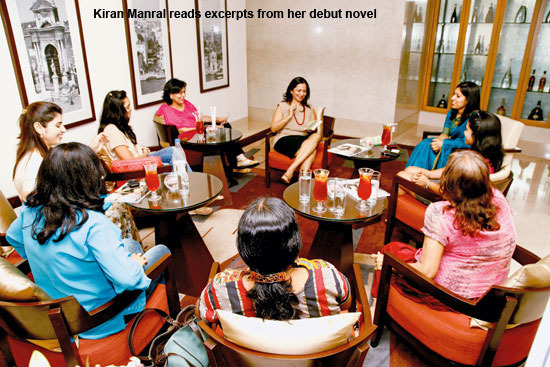
Debutante author Kiran Manral has an animated interaction with writers and bloggers on her debut novel The Reluctant Detective at the Trident-BKC’s Botticino

Event01

The monsoon ride to a luncheon book reading at the Trident-BKC’s Botticino restaurant was surprisingly quick. The clouds were dark and gathered, but not ominous. The hotel is chic, crisp and unostentatious. You’d expect a bustling business hotel, but the soft water channels, elegant jaali work and neck-craning tall ceilings masked the muted conversations floating around. Verve’s Arti Sarin and I were early: we settled into the Botticino’s little cozy seating area (off their grappa display cabinet with hand-blown glass bottles), where The Reluctant Detective’s charmingly poised and self-deprecating author, Kiran Manral, was to read from her book.

The Reluctant Detective by a first-time novelist treads new boundaries: the protagonist, Kanan Mehra, aka Kay, mustn’t be taken seriously. She bumbles and fumbles her way through a murder investigation – with the author’s trademark humour. Less of a stretch with the latter in the book would have made the writing crisper and less stream-of-consciousness. Yet, as the author is already on her next in series, you know she is creating a protagonist meant to be around with some permanence, and you wonder what Kay is likely to be embroiled in next.

For lunch, the Trident-Botticino’s chef Vikas Vichare put up a fine spread: a refreshing antipasto of ripe mango and asparagus in a filo pastry, to toast the season’s end for the king of fruits. Quick on the follow was a fresh pear, pecorino and arugula salad or a roast chicken roulade with marsala wine stewed figs, caramelised shallots and pistachio, if you please. While my choice for the mains was the ricotta and goat cheese ravioli; I could see the others savouring the meat options: chilli and fennel crusted snapper with orange sauce, and the mushroom and mozzarella filled chicken breast with sautéed fennel and thyme jus. As the wine glasses rolling with Frescobaldi Pater Sangiovese Di Toscana clinked to a well-balanced palate, the table wrapped up with a lovely-textured tiramisu and a berry sorbet.

At the beautifully laid table in a private alcove, conversation flowed easily between travel blogger Nisha Jha, food blogger Pushpa Moorjani, author Shakti Salgaokar and Manral, ranging from living the protagonist, to audience expectations, marketing a book and back-packing, while blogger Anuradha Shankar was snapping away with her camera at the elegant and meticulous plating. With Manral’s references to her spouse as “the husband” and to her intolerance towards cooking, we began to realise – in sweet irony over beautifully seasoned and balanced food – how much of the protagonist was her own alter ego. In this case, knowing the author uplifts the book to a place where the character unfolds and seems to come alive, larger than life, and so uncompromisingly realistic.

Bored Games

Tags

Published: Verve Magazine, July 2012

In a swiftly-changing world peopled with inner demons, complex characters and spiralling violence, games and activities for kids have considerably morphed…

Remember the classic old-fashioned board game? The well-worn box that contained innocuous tools that began describing who we were to become as people, began giving free play to our subconscious personalities, whether dominant or submissive, as we learnt how to manage money, life, homes, countries, and even run medical check-ups, all in one night. We lived to spend hours in cozy drawing rooms and nurseries getting feisty over fake wealth, secret missions and die rolls. When did we trade in competitive fun for corporate ladders and managerial snakes? When did we keep aside the Monopoly money for hard cash and real real estate? When did we abandon Scrabble for SMSes?

Smartphones, iPads and computers make it possible to play games virtually. But having real people across the board to trash talk to, midnight feasts and conspiratorial whispers, and even reaching out to the board and flinging it across the room and watching all the little pieces scatter when you lose, is not quite possible in a stale, impersonal, virtual world.

Virtual games tend to walk on the evil side of life in their full experiential fantasy. Stealing cars, sniper games, subterranean ninjas, they make you more exhausted mentally and emotionally than relaxed. British nursery rhymes had a dark side that found roots in the time of war and the plague and served to prepare children for dark times. If our stories, games and activities for children are a sign of the times, we live in not-so-happy times. Building nuclear missiles, being trigger-happy, a desperate desire to save the world – it says something about the current state of society. Where childrens’ tales once spoke about an evil aunt or teacher, it’s our world that is now evil. We are fighting bigger and stronger forces than we ever imagined. We need armies. They have armies. Where once children were made to come to terms with death, today they are dealing with and becoming accustomed to killings. It’s mass bloodshed. Young boys hook up with prostitutes inside a stolen car and then kill the prostitute cold-bloodedly in the multi-award-winning satire on American life, Grand Theft Auto series. Its adult and violent content has not stopped it – in fact it aided it – in becoming one of the most popular video games worldwide.

What’s changed is that it is not as simple as good and bad any more. Characters have grey shades, they have a background, they bring baggage to the table. People are more complex as are the situations they are entwined in. We are teaching our children that the world isn’t a simple place. We are encouraging them to learn that it’s mean out there and to come to terms with their own inner demons. We are suggesting that they find an aspect of their personality that allows them to be bigger and better than the low-lives they are observing and role-playing.

It’s our subversive fascination with darkness and evil. If Shakespeare set the trend, then the gaming industry has perpetuated it. Clue would need to be updated to not finding the murderer, but being the murderer. Monopoly and Risk would go one step further: taking over and then destroying places and continents. Snakes & Ladders would be about killing the competition, not just winning over the competitors. Basically, playing fair would be taboo.

Motherhood or a Career?

Tags

,

Published: Mother’s World Magazine, May-August 2012

You take the big leap – have a child – and the next step is uncertain for many new mothers. Should you begin work right away, should you wait and play it by ear, or should you quit completely and just put all your time into raising a child? Do you even have that choice? Knowing that there can be no cookie-cutter solution, we find that some young working mothers are willing to talk about what worked for them and the battles that they faced – and we’re not talking just about losing vacation days.

A good home support system

Unless you are comfortable leaving your child in a day-care center or with a hired nanny, it is generally far easier to return to work if you have a good family support system. 32-year-old Shamira Mavany, was back at work at Elan Pharmaceuticals, in Philadelphia (USA) when her first daughter was two months old. She relied heavily on her mother or mother-in-law alternately taking care of her daughters Simrun (2) and Zara (1 month in November), while she returned as a full-time manager to her job. Delhi-based Jyoti Verma was back to being a consultant at a multi-national company six months into parenthood – “I have a very supportive husband so we share the responsibilities. I’ve also had some family support for when I needed it the most – the first few months of coming back to work.” With having in-laws around the corner and good staff at hand, for Shayonee Banerjee, when her son, Armaan, began going to school, taking time for work became automatically easier. “At least I know he is in an environment which is safe and enjoyable and that allows me to work peacefully.”

A workplace that understands

Working mothers unanimously describe flexible work environments or easy-going bosses as key to being able to balance parenthood with work. Mavany recalls how having an understanding boss really helped: “I remember being very exhausted when I returned to work after my first child turned two months old. Lack of sleep and the constant demands of raising an infant along with working full-time were taking its toll on me. There were times I felt I was not able to perform well at work and was not being a good mother either because I was just so tired and sleep deprived.”

Banerjee, who has just switched jobs and is now a marketing manager at IBM, enjoys great flexibility at work. “The days Armaan is not well, I work from home. If there is ever a need for me to return home from work, early, I do it. The company has implicit trust in its employees and the idea is to get the job done…not how and where the job is done.” Verma – like the others – chooses less-travel-oriented projects. “Luckily for me, I work in an organization that allows me some flexibility in choosing assignments and the group in which I work has provided me all the support I need. Contrary to my earlier beliefs my appraisal ratings haven’t suffered despite my being a little inflexible with regards to work-related travelling etc.”

Earlier the better?

Unfortunately, pediatricians and working mothers are not in agreement over the ideal time to rejoin the workforce. And ideal time aside, work places are not likely to extend maternity leave for more than six months at the most, unless they provide for a long-term sabbatical, with most expecting their employees back in two or three months

Banerjee admits it’s never easy to find the right moment to leave home for the job. “I would think getting back to work when your baby is little is far easier – both for you and your baby. Your baby is probably too young to understand and realize your absence and that makes you feel a lot less guilty. I was lucky to have fabulous help when Armaan was little – that allowed me to get back to work when he was all of eight months. Today he needs us much more and I feel guilty now – but I explain to him, that I need to go to work just like he needs to go to school everyday. There are days when he’ll turn his head round and say, ‘Bye, Mama’ and there are days when he will just bawl.” Verma feels that there is no golden truth. “Every child is different and copes in a different way. Every parent is different. All jobs have different demands. A parent needs to do a lot of thinking based on their personal circumstances and take a call.”

Pediatrician, Dr. Nihar Parekh of Cheers Childcare, talks about the ideal situation from the child’s perspective. Exclusive breast-feeding until six months (unless your work-place provides for expressing breast milk and arranging to send it home) means that is the bare minimum that a child should have his/her mother around as primary caregiver. After that, stranger anxiety sets in at around six-seven months and peaks at 10-12 months, where the child’s mind tries to differentiate between family and non-family. It is at this stage that direct family members should be around as primary caregivers. This is where the seeds of behavioral issues are sown. In an ideal situation, the mother should (if possible) wait until her child is fifteen months (and at a far more secure stage in his/her personality) to rejoin the workforce.

At the end of the day, it depends on how much one trusts the caregiver to manage a small baby – acknowledging that infants need constant attention and care, and older children need sufficient disciplining and monitoring – and at all stages babies need familial security.

Multi-tasking superwomen

While managing a baby full-time by itself is not an easy task, creating two sets of responsibilities has increased challenges. It means more pressure in terms of decision-making, greater amounts of multi-tasking and accepting that both areas of your life will require some adjustments and time-management. Mavany has learnt over time to reach out to family members for help. “I have also learned to prioritize and get the important things done first, along with accepting that I cannot get everything done perfectly all the time. For example, it is okay if the house isn’t always spic and span, or if we have to order pizza instead of having a home-cooked meal for dinner.”

Verma attributes more changes in the work-place: “I’ve deliberately taken up a role that allows me to balance my work and personal life and cater to the needs of my daughter, although it wouldn’t otherwise be one of my preferred roles. I feel my perception towards work has changed. I was one of the go-getters, seeking to excel in what I did and earn myself a name and reputation, even though it required a lot of extra effort from my side. Now, I only look to achieve what is possible without compromising on my child’s needs.”

Going on a guilt-trip

Culturally, women are often made to feel like homemakers rather than career-oriented individuals. After a child, perceptions tend to lean towards women as primary caretakers and not as working professionals. Banerjee, who comes from a familial background of successful professionals (including all the women in the house), was encouraged to rejoin the workforce after having a child. Not all are in the same boat though. While Mavany admits to having a guilt-free return to work due to the support of her mother and mother-in-law, there have been times when family members and friends have questioned her decision to go back to work and to travel for work leaving the kids at home. “I have felt judged and misunderstood by some friends and family members. Feelings of guilt have swamped me at times because of what others say about my decision to continue working full-time, and as my daughter grew up and wanted to spend more time with me. I have had to remind myself that I am doing what is best for myself and my family and that my husband s
upports me whole-heartedly in my decision. I believe that as a working mother, I am helping my family financially and I am also ensuring that I am not losing my own identity as a professional who enjoys her work. If I stopped working and stayed at home with the kids, I think over time I would be frustrated and disappointed with myself which would probably be worse for my family.” Verma is also plagued with worries. “Thankfully my baby doesn’t cry when I leave home. I don’t know what I would do if she would! Even then, when I leave her with her caretakers even for a bit, I am unable to do it without some guilt. I worry about her all the time when she is not in front of my eyes. I tell myself this is a passing phase and things will change when she grows a little older. My little one is a friendly baby and is not very clingy. I hope she remains this way because this makes it easier for her as well as us when we are not together.”

More Stress and Less Play

It’s not possible to cubbyhole your life into neat compartments, either. Work life and personal life will tend to spill into each other, sometimes not without a bit of chaos or frustration. “In spite of tremendous support from family, I am exhausted most of the time,” says Mavany. “I had to learn to accept that I could not get everything done perfectly all the time and I would have to live with it, for example it was okay if the house was not spic and span all the time, or if we had to order pizza instead of having a home-cooked meal for dinner etc. Even when I am travelling for work, there is never a moment when I am able to switch off mentally or emotionally from the kids and my household. There have been numerous occasions when I felt like I was bringing home work-related issues and vice versa. Yoga and a good night’s sleep really help me de-stress.

Mothers tend to lean on their husbands for support emotionally and as sounding boards. Most admit that without their partner’s support, this decision wouldn’t be possible. After a tough day, Mavany turns to her husband to talk about what bothers her. “If there is a work-related issue on my mind, I will take the time to discuss my feelings with my him and get his perspective on it. After that that I try my best to put the issue behind me and to deal with it at work instead of letting it bother me while I am at home. On the flip side home and family related issues tend to stay on my mind until they are resolved.”

For Mumbai-based Shainta Bhansali-Mehta who rejoined her old workplace as an advertising executive when her first son was three months old, and enjoyed flexibility at work, still felt like it was like a stressful race trying to reach early at work and returning home fast and trying to cope up with everyone’s demands. “There have been times when I may not have given 100 per cent at work or at home but if you have good support it can get easy to deal with. The best thing that worked in my case was to discuss these situations with my team at work and with my family at home.”

Banerjee sticks to prioritizing: “Some days get very busy and no matter how long you’ve worked, it just doesn’t finish. In my job, I’ve realized I will never get done with my daily to-do list. However, that has also helped me prioritize what is critical and what I’ve got to finish now. The rest can wait till next day morning.  Also when I do feel like work is stressful, I just put longer hours to get it done.

The downside: sleep is now a privilege.”

Less play, but more me-time

Can a woman feel complete without sufficient time to herself? Many women suffer from a sense of loss, depression and incompleteness because of what they have given up to become a mother. Others realize how their life can become even more difficult if they lose parts of themselves to parenting that they valued before. Mavany is very clear that it was very important to go back to work to regain normalcy in her life. “Staying at home and being with kids all the time was not easy for me. I was itching to go back into the corporate world and have adult conversations and get something constructive done. Yes, I feel empowered as a working mother. My work keeps me motivated and I derive my identity and confidence from my professional accomplishments. I wonder how some mothers choose to stay at home to take care of their kids because I would find it very hard to stay at home.” Bhansali-Mehta feels the balance provides a mother with a “normal life, self-confidence and her own identity” and would end up being beneficial to the mother and child in the future.

And then there are those working mothers who feel that the ones who don’t work are the empowered ones. Verma feels that stay-at-home mothers are able to give 100 per cent to their child. “I sometimes fear my child won’t do as well as theirs and may have a ‘could-have-had-better’ childhood to remember. Despite this, I chose to be a working mother because I realized I’m not the kind of person who would be happy being a full time mother at home and my unhappiness could affect my family too. I need work to keep my mind stable. And I don’t know any other work than what I do currently.”

Women often feel that babies are a life-changing experience, not just because of the joys and trials a little rug rat brings, but also because it means that the primary caregiver – who in most cultures, particularly Indian ones, is the mother – has to change her life to accommodate another person. The constant attention required means choosing between working, an active social life or a career and being a stay-at-home-mum. It’s never an easy choice. But it’s important to remember that the choice is yours.