• About
  • Brand Building
  • Film & Drama
  • Writing: Arts & Lifestyle
  • Writing: Interviews
  • Writing: Luxury Brands
  • Writing: Travel

sitanshi talati-parikh

sitanshi talati-parikh

Monthly Archives: February 2012

Verve’s Bollywood Style Awards 2012

12 Sunday Feb 2012

Posted by sitanshi talati-parikh in Fashion & Style, Publication: Verve Magazine

≈ Leave a comment

Tags

Bollywood, Bollywood Style Awards, Fashion, indiancinema, Style, vervemagazine

Published: Verve Magazine, Features

Indian cinema has proven with its recent offerings that it can confidently step up to the plate and serve style that matches the character and mood of the movie rather than cook up a half-baked stew of fashion and metre. As Verve pointed out last year, couture has found a definite place in Indian cinema, whether through a subtle pair of designer shades or through a statement handbag. The good news is high fashion isn’t being used as candy floss on the big screen – it’s playing a specific role. Costumiers are equally willing to turn to village threads for authenticity, or design garish, bordering-on-the-vulgar outfits for a real-life character, as they are to doll up their actors in an international label. While there may not be any path-breaking moves here, costume design 2011 has been authentic, stylish and character-oriented. It sets the stage to push the envelope further, away from the sensationalist and dysfunctional ensembles of the past. Sitanshi Talati-Parikh picks out four movies that impressed with their true-to-the-grain styling, and Verve recreates these looks with young actors Sarah Jane Dias and Sahil Shroff.


AUTHENTIC RECREATION: MAUSAM

Lovleen Bains for Sonam Kapoor and Shahid Kapoor

Mausam01

For the clothes to take a backseat for a change and let real-life fashionista Sonam Kapoor’s character shine is no easy feat. Playing a simple Kashmiri refugee in Punjab, she faces Shahid Kapoor, a small town boy, in Mausam. You find the costumes hold their weight in their sheer subtlety – from the gaucheness of Shahid’s college blazer to the sophisticated tailoring of his air force pilot outfit; his character transitions in the very seams. Sonam’s transformation from youthful girl to a mature woman is rooted in her ethnicity: even as she dons international garb when living abroad, the Anamika Khanna-crafted red gown worn in Scotland has Indian embroidery on it, and the Kashmiri embroidered shawls are reminiscent of her Indianness.


Shades change with seasons and locations: the young lovers’ innocence is portrayed with the use of whites and creams in a wintry Punjab, picking up earthy hues along the way, through geographical displacement and character maturity. For instance, Sonam’s pale Kashmiri kurtas and dupattas soon reflect the happier shades of Punjab. When the characters meet again, in the church in Scotland, they are both, once more, in white. “Colour is almost a leitmotif in the film,” says Bains. Intentionally imperfect hand-stitching on Shahid’s college blazer, ageing of clothes to show wear, a fixed wardrobe with repetitions (Shahid had one pair of jeans through the first season except for the song sequences), researching the right length for Sonam’s kurtas, having Shahid’s sweaters woven by Punjabi village folk over gossip sessions and sarson ka saag, there is a thread of authenticity and rootedness in Lovleen Bains’ costume design of Mausam that is devoid of the trappings of Bollywood sensationalism.


URBAN SASS: ZINDAGI NA MILEGI DOBARA

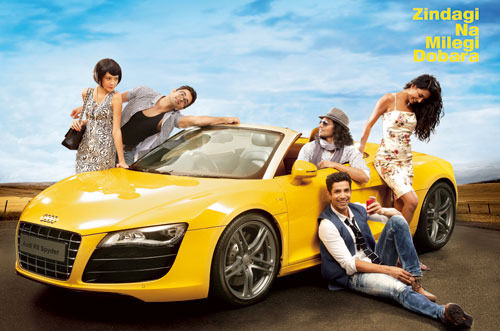
Arjun Bhasin for Hrithik Roshan, Farhan Akhtar, Katrina Kaif, Abhay Deol and Kalki Koechlin
Znmd04

If last year’s Aisha had Dior handbags floating on every arm, 2011’s ZNMD makes ‘Bagwati’ a character – with her own position in the plotline. And the ostrich Hermes Kelly is styled with shades and a scarf occasionally, when the weather requires it. This is probably the first time fashion is used as a plot device in Indian cinema – an obvious barb at Kalki Koechlin’s prissy couture- conscious Natasha. Her blunt cut with sharp bangs, kitten heels, Chanel jacket and designer-everything says more than the pinched expression on her face ever could. The look is reminiscent of Molly-Ringwald-in-Pretty-in-Pink – except that unlike Ringwald’s second-hand, hand-stitched attire, Koechlin/Natasha’s clothes are an expensive combination of fresh-off-the-ramp and couture classics. In sharp contrast – as each character forms a fashion foil to the other – Katrina Kaif’s easy-going Laila philosophises in flowing dresses and tresses, easy-breezy beach wear and minimal makeup. Even a basic transformation into biker-chick requires her to wear a lightly ruffled-edged corset over jeans, always feminine and sexy.


With the boys, each actor’s personal tastes and style are visible. Abhay Deol has a naturally leggy, geeky look. The design takes it a step further for his character, Kabir, with over-the-top nerd spectacles, quirky shirts – think birds-taking-flight – teamed up with sneakers and a backpack that he hoists defensively when grilled about his life’s choices. Hrithik Roshan’s beefy look is toned down with buttoned shirts as the audience can’t be allowed to question how Arjun, a work-obsessed investment banker finds time to go to the gym while ignoring his girlfriend. (Of course, the toned shirtless body on the hoardings makes for a happy box office draw.) As the story unfolds, he loosens up, and so do his hair and styling. Farhan Akhtar is pushed further into a character scripted for him: quirky, philosophical poet, entirely boho chic. Aviator shades, loose pants, kurtas and long-sleeved t-shirts teemed with a random neck scarf and hat that he sports, on occasion, even outside the film.


Every look comes together cohesively, billed directly to director, Zoya Akhtar’s vivid visualization and stylist Arjun Bhasin’s recreation: detailed character-oriented styling and couture that slides into everyday life. We just wish it could’ve been a little more experimental – there is no room for a subtle overflow like a preppy artist, for instance. While ZNMD’s picture-perfect styling serves to
perpetuate stereotypes rather than demolish them, it does so rather appealingly.


YOUTH CULT: ROCKSTAR

Aki Narula for Ranbir Kapoor

Rockstar01

Polish artist Grzegorz Domaradzki set the stage with his poster sketch of Rockstar. You couldn’t help but know that the look and performance would be iconic and the movie didn’t disappoint – at least on those counts. Tight-assed Janardhan (Ranbir Kapoor) in his too-fitted jeans, too-snug sweater, too-crisp shirts and too-short hair is an obvious exaggeration to the transformation that becomes rock star Jordan. Free of inhibitions and full of angst, Jordan dresses exactly the way he feels – unfettered, irreverent, defiant and often unwashed. As he moves to his own tune, treating societal norms, business conventions and geographical boundaries in the same dismissive manner that he does anything that comes in the way of his single-minded vision, he becomes an unwilling anti-authoritarian cult figure. And to that effect, he redefines the Nehru cap as a fashion ploy. Even as detractors and politicos may shift uneasily, Kapoor makes it work.


What stand out are his wardrobe staples (often repeated in the film for realistic styling): the snazzy anti-establishment military jacket, the Qawwal jackets – a call to his Sufi leanings, the mocking feather-topped Sadda Haq police shirt, all teamed with the clever individualistic version of loose patiala pants and kurtas – ultimate comfort wear. Love the fact that there is no leather or biker rock look – so often over done and stereotypical. What impresses is the refreshing take on a rock star. Packaged with Kapoor’s long, unkempt hair, accessorised with a chain around the neck that houses his first broken guitar string and guitar pick along with other souvenirs, Aki Narula, director Imtiaz Ali and Ranbir Kapoor have visualised possibly the iconic look of the year, to be imitated and popularised by young college kids until the next grunge look rocks its way in.


RETRO RENDERING: THE DIRTY PICTURE

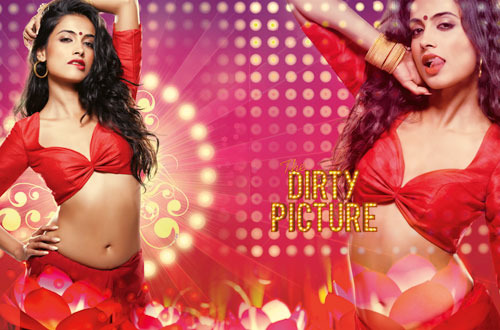
Niharika Khan for Vidya Balan
Tdp04

Even before the film released, Vidya Balan’s bosom encased in Niharika Khan’s suggestive designs made for feverish conversations and post the film’s release, one hears of ‘Ooh la la’ saris becoming popular commercially. If Vidya Balan has the mettle to take on an author-backed sensational role of this kind and further it with panache, then Khan has done more than her job to ensure that Balan’s character stays suitably unclothed throughout. For the racy protagonist, the costumes of the ’80s south are garish, loud and boldly uncouth – as the script intends it. The camera makes love to Vidya Balan’s unfettered body, and the clothes caress her intentionally untoned figure: you watch Balan attempting to button up her jeans over her flabby stomach with an enviably unconcerned attitude towards her generous midriff.


From the tight short dresses, the pelvis-hugging flared pants, to the cleavage-baring cholis and retro shirts, everything shrieks for attention. Where Bobby’s Dimple Kapadia and Once Upon a Time in Mumbai’s Prachi Desai conveyed youthful, shy sensuousness with their midriff baring, polka-dot front-tie shirts, Balan is unabashedly lusty and in-your-face with her wantonness in similar outfits. And yet, caught in a moment of vulnerability, Balan’s character, Silk, makes the walk of shame the morning after being dumped for the wife, attempting to shrink into the folds of her red sequined gown; but in the harsh morning light, it’s too tight for comfort or respect.


Ironically, for Silk, it’s all synthetic and the glitz of sequined make-believe. From the dull, aged South Indian cottons of Reshma’s village wear, and the lamé and brightness of Silk the superstar, to the unflattering wardrobe of an alcoholic, the clothes define every turn in the script. As Khan points out, “The film is about the character’s relationship with her clothing and body – and Balan is brave, far braver than even I could be, to take on this role.” These are the clothes of a woman whose attitude speaks more than her wardrobe, and her wardrobe merely perpetuates her freewheeling attitude. Whether Silk tries to hide or take the world in her stride, her clothes reveal her spirit and character – loud, brash, irreverent, attention-seeking, ambitious and vulnerable – and always exposed.

Superheroes, ha!

12 Sunday Feb 2012

Posted by sitanshi talati-parikh in Art, Literature & Culture, Features & Trends, Publication: Verve Magazine

≈ Leave a comment

Tags

Superheroes, vervemagazine

Published: Verve Magazine, February 2012, Features

Illustration by Bappa

Superhero02

This summer, costumed crime-fighters return to the big screen in their darkest form – plagued by physical failings and emotional dilemmas. This may be their sexiest avatar, ever. What is it about sinister grey shades that make a woman see passionate purple? And can a woman ever stand by a male world-protector, holding her own? Sitanshi Talati-Parikh explores the subterranean world of fantasy fiction

MALE SUPERHEROES: 
the ultimate turn-on
There’s a general buzz in the air about the much-awaited release of Christopher Nolan’s The Dark Knight Rises where the costumed crime-fighter, Batman, is pushed to breaking point. The Amazing Spiderman, also releasing this summer, grapples with human and super-human crises. Superheroes are by default meant to be indestructible. That makes them sexy. But in the world of karmic angst and philosophical revolt, our superheroes are sexier in their existential and painfully human form. Maybe the allure lies in the fact that these are people who have transgressed above and beyond and are able to fight their own weaknesses and fears, and ours. Every cathartic battle makes them take a leap of fantasy in our psychedelic emotions – our subconscious mind becomes a battlefield of latent desires, every fight is a fight for survival. It’s about power. Not just at the obvious level, but at the level of hope. We hope that good can still win over evil. And yet, we hope that it’s a photo finish, because we are afraid of closure. If it all ends today, if everything is said, and all ends are nicely tied up what will we take home to our fantasies?

Indian superheroes are fantastical caricatures at best and over-the-top mystical drones at worst. There is no real superhero culture in commercial Indian cinema. We watch Ra.1 (2011) for Shah Rukh Khan’s exaggerated antics, Robot (2010) for Rajinikanth’s omniscience, and Drona (2008) for…nothing. In Indian cinema, the movie star is the superhero – he’s not an actor, he’s playing a larger-than-life persona. It gives him the ability to do anything, while also at a very simplistic level describing good and bad. Superheroes of Hollywood are a far more refined species, evolving over time to greater levels of depth and mystery. They have undergone many changes, versions and personalities to reach a point of climax. From a rather simplistic beginning during the time of the World War, where economic downturn led to a desire for a better life, a strong role model and a saviour for the average man; to returning in a new avatar: the confident anti-hero, standing up to the establishment, patriotic and powerful. Today we have a disturbed, grey superhero: who is battling his own demons, external and internal. No one can fight evil continuously without feeling the ramifications. Even in fantasy literature, Frodo and Harry Potter found themselves turning vicious under the brunt of carrying the malicious ring and destroying Horcruxes in Lord of the Rings – Return of the King and Harry Potter and the Deathly Hallows respectively. Similarly, in superhero fiction, what makes the current Hollywood costumed crime-fighter worth his weight in gold is the intensity of his emotional drama. His mental battles are ours as we make constant switches between the right and wrong decision. What is good and bad? Who defines it? Is making a bad decision for the greater good okay? Most people don’t face the weight of decisions where cities and worlds get impacted. The superhero’s crisis is supreme. He fights more than his own anxieties; he fights a world’s anxieties.

The power to be in that position and the eventual control he wields makes him obviously an object of desire – but the real sexiness comes from how human he actually is. His turmoil appeals to the nurturing instinct in every woman, and the desire to have him win, willing him along mentally, grips a girl through another superhero summer. Gadgets, indestructibility, strength, resilience, super-intelligence, metaphysical abilities…and an inner reservoir of good make the superhero a classic stereotype of attractiveness. What’s a regular girl asking of a regular boy? Physical desirability, material comfort, good nature, the strength to be her man. Every man spends a lifetime trying to be a superhero and every girl waits for a man to become one for her.

Popularised by teenage comic-book geeks, the genre grew from strength-to-strength inside the mental fantasy of a boy who was yet to come into his own. He is exalted in this make-believe secret world of crime fighting, where his deepest desire of leading a life far removed from his own, where what he believed himself capable of in an alternate universe appears to become a reality. He isn’t the jock, but he’s the guy with secret powers to save the world. He will be an outcast, because he isn’t like them, he is more than them. He yearns for the cutest girl in school, but he can’t have her because of the life he must lead to complete his mission. Along the way, he becomes desirable – he is so focused and inherently strong, that women begin to notice him. We begin to take him seriously. And in there lies his fulfilment – he may be too busy to get anything more than a chaste kiss, but the very fact that he is desirable is enough for him. And it must be enough for us. His sexiness is in his unreachability, in his very unavailability.

FEMALE SUPERHEROES: 
a failed species

In this whole scheme of things, what’s a woman’s role? Superheroes have evolved in their failings and flaws, but their women remain the same – waiting to be rescued, waiting to be loved. Spiderman yearns for Mary Jane, but it seems trite that he can never have her, despite being a superhero, because he’s a superhero. Superheroes have a duty to protect and cherish, but no place for love. They cannot endanger their lady love by bringing them into their web of crime-fighting and uncovering their secret identity. Is that merely ironic or is it a foundation for martyrdom? It’s like a Mills and Boon romance with an unresolved ending. Maybe, as the Twilight romance has proven, endurance – in the age of free sex – is a turn on. And it is possible that we want the people we look up to, to not get it all – to suffer and pay the price of power. Who does the superhero come home to after a hard day’s work? Would his failings and existential pangs have been resolved had he been able to experience a companion’s love, advice and support? Is a woman a superhero’s Kryptonite or elixir?

The story of good versus evil is romantic – whether in its blatant form of a leading love interest or in its subconscious form of bromance (Batman and Robin) and in its metaphysical form of evil serenading good, calling it out and finding itself extinguished in the flame of its love. And in this romanticism, detractors find much to say. Spiderman 2 spent too much time philosophising and romancing and too little fighting crime, say some. Indian superheroes are supreme – they manage to dance and make merry love while all along giving a hearty fight to the supervillains.

A superheroine? Does she exist? Catwoman, Batgirl, Spiderwoman, Ice, Wonder Woman, Xena… the list is quite long but unimpressive. While more popular in their comic book versions than their cinematic ones, these fabulous women don’t leave a lasting impression (except for Buffy the Vampire Slayer, but when vampires get involved it’s a different story altogether) the way the men do – probably because the men watching want to be in power and not be overpowered. So there is waif-fu. A character dependent on waif-fu is best described as a pint-sized powerhouse: an attractive woman with moves that can bring a man to his knees. Literally. If she is captured or pinned she doesn’t stand a chance, making her a good kidnap victim and a key plot turner. We want our women strong, but our men stronger. In women men look for resilience, patience, love… no superhuman powers and strengths. Men want to be seen as protectors and women as their emotional saviours. One would think a supergirl with powers would be the eternal turn on, but apparently, a woman in power is far sexier than a woman with powers. Demi Moore in Disclosure (1994) wins over Halle Berry’s Catwoman, any day.

The comic book industry may actually be male-dominated – after all, a lack of female readership of comic books was suggested as the reason behind keeping ‘women in refrigerators’: an inside term among the comic book circles implying doing away with the female lead as a plot device. And can a woman be his partner in crime? Fan blogs yearn for a true female superhero, the kind that can be more than just a foil to the male lead. But that may not actually work. Take the case in popular fiction of famous sleuths: The Hardy Boys – if you plan to read them, can you complain about the female positioning (or the lack of)? Bringing Nancy Drew and the Hardy Boys together, we have seen, never really worked – it is a recipe for disaster. How can the balance of power sit on the fence? Drew being rescued will make the Boys’ fans snicker with glee and annoy Drew’s fans; Drew playing power woman will turn off the boys. It wouldn’t be much different for a thrilling plot play of Batman and Catwoman, for instance. Coming together of male and female superheroes and crime fighters – unless it is for some fun on the side – is like treading on eggshells. One would have to be subservient to the other: there can be only one dominant hero, and by default and by popular vote, it tends to be the male hero. The fantasy industry does propagate stereotypes, but that isn’t surprising as most of popular culture works on the foundation of male supremacy. And in that world, women are but accessories to the greater good of mankind. And so we must lie.


|  Filling the gaps between words.  |

Writing By Category

  • Art, Literature & Culture
  • Brand Builidng
  • Brand Watch
  • Fashion & Style
  • Features & Trends
  • Fiction
  • Food
  • Humour
  • In The Media
  • Interviews (All)
  • Interviews: Business
  • Interviews: Cinema
  • Interviews: Cover Stories
  • Interviews: Lifestyle
  • Interviews: Luxury Brands
  • Interviews: The Arts
  • Interviews: Travel
  • Musings
  • Parenting
  • Publication: Conde Nast
  • Publication: Elle
  • Publication: Mint Lounge
  • Publication: Mother's World
  • Publication: Taj Magazine
  • Publication: The Swaddle
  • Publication: The Voice of Fashion
  • Publication: Verve Magazine
  • Social Chronicles
  • Sustainability
  • Travel Stories

Reach out:
sitanshi.t.parikh@gmail.com

© Sitanshi Talati-Parikh 2018.
All Rights Reserved.

Website Powered by WordPress.com.

  • Subscribe Subscribed
    • sitanshi talati-parikh
    • Join 51 other subscribers
    • Already have a WordPress.com account? Log in now.
    • sitanshi talati-parikh
    • Subscribe Subscribed
    • Sign up
    • Log in
    • Report this content
    • View site in Reader
    • Manage subscriptions
    • Collapse this bar