• About
  • Brand Building
  • Film & Drama
  • Writing: Arts & Lifestyle
  • Writing: Interviews
  • Writing: Luxury Brands
  • Writing: Travel

sitanshi talati-parikh

sitanshi talati-parikh

Category Archives: Art, Literature & Culture

A Focussed Affair: Mumbai’s on-going Focus Festival

19 Tuesday Mar 2013

Posted by sitanshi talati-parikh in Art, Literature & Culture, Publication: Verve Magazine

≈ 2 Comments

Tags

Photography, Verve Magazine

Published: Verve Magazine, March 2013, Framed

This month, the hotbed of Mumbai’s arts and culture scene throws its doors open to still visuals. Verve gives you a preview of the frames to come

Image

Image

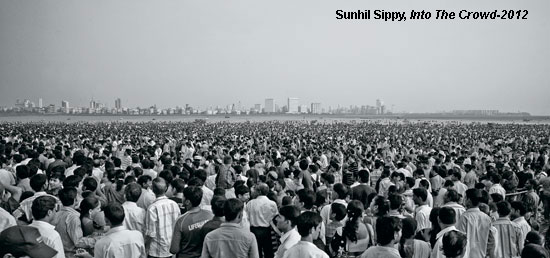
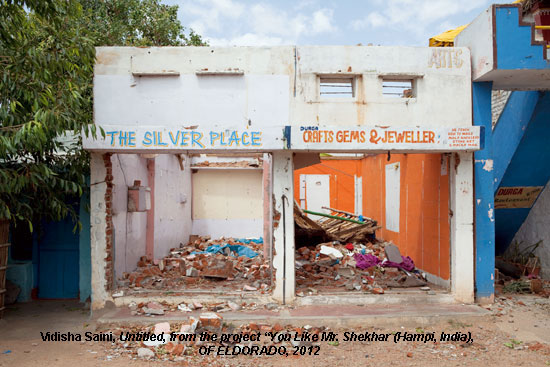
Hot on the heels of the Kala Ghoda festival, where the lay person creates magic with his camera phone, snapping away at the thought-provoking installations on display, comes, FOCUS, Mumbai’s first free photography festival to be held in the last two weeks of this month. Not surprising then, is the theme of The City, where a range of budding and established photographers, both local and international, make their lens-way over to receptive centres in South Mumbai. In a bid to throw a deeper net and engage a wider audience, the exhibition runs with the usual suspects in Kala Ghoda, Mumbai, like the Terrace Gallery (Jehangir Art Complex) and the Max Mueller Bhavan Gallery (Rampart Row) and onto fresh faces like Bombay Electric, Bungalow 8, Design Temple, Filter, Good Earth, Hermes and Kala Ghoda Café.

From early Bombay images (1850-1890) curated by academic Susan Hapgood to contemporary photography by women curated by photographer Sunil Gupta and curator Veerangana Solanki, from Risham Syed’s Metropolyptical: A Tale of a City to Sooni Taraporevala’s Parsis: The Zoroastrians of India, from talks, workshops, photography books and magazines to portfolio review sessions…FOCUS, co-founded by Nicola Antaki, Elise Foster Vander Elst and Matthieu Foss, promises to be a dynamic vision of the future.

Image
Q&A WITH MATTHIEU FOSS

WHAT DO YOU LOVE ABOUT THE CITY AS A POWERFUL VISUAL METAPHOR?
The City, as a backdrop for the lives of the majority of the word’s population is a tremendous source of inspiration for photographers. We wish to present photo projects from the very local, to much wider global contexts – from a photo-journalistic point of view as well as from more artistic interpretations, from issues pertaining to local routine, as well as more aesthetic studies on architecture and urbanism. Images from Mumbai will co-exist with some from cities around the world thus encouraging constructive dialogue.

YOU’VE OPENED UP NON-GALLERY SPACES LIKE CAFÉS AND STORES TO A PHOTOGRAPHY DIALOGUE….
A festival is the ideal way to create bridges between communities on a particular subject or art form, and with exhibitions and events taking place throughout the city in traditional spaces as well as alternative ones, we will benefit from an exciting cross-pollination of audiences and create true synergies.

Image

A Man of Substance

22 Friday Feb 2013

Posted by sitanshi talati-parikh in Art, Literature & Culture, Publication: Verve Magazine

≈ Leave a comment

Tags

Verve Magazine

Published: Verve Magazine, February 2013, Verve Diaries
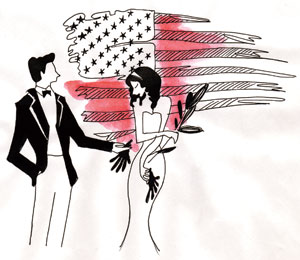
Illustration by Wyanet Vaz

They may not all be tall, dark and handsome, but they have the ‘It’ factor that makes women swoon as they stride across the pages of fictional offerings through the years. The Verve girls pick their literary soulmate – men who have made them go weak at the knees. Mr Darcy apart!

diaries03A MAN OF SUBSTANCE
Richard Kane;
The Prodigal Daughter
Oh, those that weep over Heathcliff and turn into mush over Darcy and get all hot-and-bothered over a Grey or a Cullen, haven’t really met a regular guy – a banker-type person. Or really, a guy who had everything going for him and gave it all up to be with the girl he loves. Remember Jeffrey Archer’s Kane and Abel? Well, think about William Kane’s son, Richard, who appears in the sequel, The Prodigal Daughter. Tall, good-looking and ridiculously rich, he is the modern American Romeo, screwed over by a family feud. He falls in love with a Bloomingdale salesgirl – so much so that he goes in to buy gloves every day until he can muster up the courage to ask her out. In the midst of the courtship, he discovers she is actually an heiress to a fortune. Florentyna Rosnovski is the daughter of his father’s arch-rival and nemesis. After incurring the wrath of both families, they are forced to marry before he’s even finished with Harvard Business School.

He becomes an out-of-job, would-be banker, with nothing but a cello and $100, who has the gumption to tell his furious father, ‘You suffer like generations of our family, Father, from imagining money can buy everything. Your son is not for sale.’ While charting a banking career for himself, he joins forces with his entrepreneurial wife to make her the brand she is destined to become – quitting his job to come on board her venture. He has the courage and will to be independent of obligatory wealth and prove himself to the world and society…and he is secure enough in his own self-worth to help his wife become successful!

Oh, I can’t feel my knees.

Storytellers of 2012

15 Tuesday Jan 2013

Posted by sitanshi talati-parikh in Art, Literature & Culture, Publication: Verve Magazine

≈ 2 Comments

Tags

vervemagazine

Published: Verve Magazine, January 2013, Features.

Evocative novels, edgy film scripts, gut-wrenching plays, gripping small screen plots, eye-catching ad campaigns, soulful inspired music and more…. A look at the ‘tales’ that hogged the headlines last year

JUHI CHATURVEDI
Dialogue, story and screenplay writer, Vicky Donor

The summer release, Vicky Donor, was set for disaster at the box office, with a bunch of unknowns and has-beens gathering together to talk about a subject like sperm donation and infertility, using humour as a base. The latter has never been a strong point with Indian cinema – either it ranges from the atrociously caricaturish and slapstick to the deeply offensive and crass. Vicky Donor’s scriptwriter, Juhi Chaturvedi, hails from an advertising background – and maybe that’s what gives her an edge and the confidence to tackle something different in a clever way. The humour in the film is nuanced and keeps in mind the sensitivity of the topic; it is never over-the-top or annoying. In fact, it manages to make a naturally taboo topic into a coffee-table conversation piece. The audience who fails to understand where a sperm donor is coming from is as close-minded as the girl who slaps Vicky when she discovers what he does for a living, and yet you sympathise with her state – because she has to date a sperm donor. Every situation is dealt with, with depth and a realistic understanding of human nature. The characters come alive as true and believable, identifiable even in their Delhi-Punju-ness. The local area becomes relevant to any metro, the dialogues have punch, the story has character and every character tells a story. For a big screen debutante, this is no mean feat.

ADVAITA KALA AND SUJOY GHOSH
Storywriter and screenplay writer, Kahaani

An unexpected hit at the box office, the primary factor in favour of this movie is its thriller of a story with a gripping screenplay. While there may have been enough people who could have predicted the end – and it’s shocker of a twist – it can be safely said that this is a film that will be remembered for some time to come. A pregnant woman roaming the by-lanes of Kolkata in search of her missing husband sounds scary in itself, but the very fact that no one appears to remember her husband pushes the suspense up many notches. This could have gone wrong in so many areas – the pace could have been just too slow, not enough happening to hold interest, too much violence, too few characters…but the script kept a tight grip on the correct formula and produced a good film, ably brought to life by the cast, particularly the lead, Vidya Balan.

SALMAN RUSHDIE
Author, Joseph Anton

‘“How does it feel,” she asked him, “to know that you have just been sentenced to death by the Ayatollah Khomeini?” It was a sunny Tuesday in London, but the question shut out the light.’ This, in a nutshell, is what Rushdie’s latest offering is about. After taking us through the sordid world of religion and life, weaving wands of historic fiction and magic realism, he has now turned autobiographical, talking about the years of his life following the fatwa that had been issued by the ‘spiritual’ and political leader of Iran. Angered by Rushdie’s apparently blasphemous novel, The Satanic Verses, Muslims had been ordered to kill Rushdie in 1989. The moments that followed, the incidents that transpired and the breathlessness with which he lived has been documented, rather unconventionally, in the third person. Including a rather sharp account of his marriage to the American novelist Marianne Wiggins and a glimpse of his married life with model and TV star Padma Lakshmi, which was after he came out of hiding, the memoir with a Conrad-and-Chekov-inspired alias, makes for fascinating – if sometimes depressing – reading, in no less part due to Rushdie’s evocative flair.

ANJUM HASAN
Author, Difficult Pleasures

Anjum Hasan’s collection of short stories is full of interesting snippets of time, tipping – without warning – into the surreal. The flavours of the cities and places – ranging from Mumbai’s Promenade to Paris’s Rue de Seine – are so sharp, and yet, you feel the characters’ sense of loss and desperation to belong. Can you live in a place that you feel, understand and can describe in the minutae, and yet not feel like it’s your own? Are you always looking for something? Her characters are mysterious, sliding between the known and unknown, and a metaphor for modern living. Hasan’s snapshots are powerful, and a lens into the world as we know – or are attempting to unravel – today.

ABHISHEK MAJUMDAR
Playwright, The Djinns of Edigah

Early this year, Verve carried a review of this edgy and gut-wrenching play about the manic situation in Kashmir. From the story of 12-year-old Ashrafi, who is shattered emotionally and psychologically when she travels with her dead father in her lap to the football-playing dreams of her brother Bilal, the mediating force of Dr. Bilal and the senselessness of the soldier, we come to terms with the reality that lives in our country and its violent and horrific face. While battling her own demons Ashrafi manages to help her doctor deal with his own. The angst of the battered land folds together in a story that is evocatively written and brought to the stage by Richard Twyman, a British director who has never been to Kashmir, but can visualise its tragic impasse. The play was selected to perform at the Royal Court last month. The Bengaluru-based playwright, who has previously acted in theatre, said in a recent interview with a daily, ‘Writing a play is a bit like travelling. One really has to enjoy the journey.’

SWATI KAUSHAL
Author, Drop Dead

After writing two novels, Piece of Cake and A Girl Like Me, Swati Kaushal set her sights on creating a detective fiction heroine, Niki Marwah. Smart, savvy, a good looker and dresser, she sounds suspiciously like a character inspired from American Television – Castle’s Kate Beckett. Kaushal’s writing is crisp and refreshing – and while it’s set in an Indian milieu, she pulls from the classic detective tradition. It’s not an Agatha Christie suspense, but it is a story that’s fun to read, and a promise of many more – as Niki Marwah has a lot more detecting to do. What Kaushal does well is master the popular fiction category, or maybe it’s time we had our own grown-up, Indian, Nancy Drew.

MUSICIANS OF THE DEWARISTS
TV Series

Soulful, inspired and constantly evolving, The Dewarists, the musical series running currently on national television (in its second season), is part music documentary and part travelogue. Musicians hailing from different parts of the world jam together to create fresh beats and lyrics while travelling through India. By itself, it’s a concept that popularises the creativity of the Beat artistes. The Cannes Lions award-winning series is hosted by Monica Dogra and packed with musicians like Anoushka Shankar, Trilok Gurtu, Salim-Sulaiman, Shafqat, Amanat Ali and Shaa’ir + Func. With a sense of the culture of the world, nuances and fragrances of India and the strong musical foundation brought by the various musicians, the show makes for the unfolding of a great musical story, with satire, political barbs and the crises of society today finding their way into the chapters, for example the one a few weeks ago titled, Tom, Dick and Harry (Piyush Mishra feat Akala).

HAPPY CREATIVE SERVICES
FlipKart Ad Campaign

You start by thinking, ‘Are they serious – are those kids with a bad voiceover and too-big clothes?’ And then you get drawn in, and are slightly incred
ulous, wondering who thinks up this stuff? And then, bam, you are cackling with laughter at the campaign from ‘No Kidding, No Worries’ to ‘Shopping ka naya address’. In a world of jaded ads and Katrina Kaif’s mango-flavoured lips, the innocence of this campaign is refreshing. The worldliness of the children – so much like the tech-savvy kids of today, the simple wants, the back-to-the-basics sort of philosophy all comes together in a clever way in the FlipKart trust-building ad campaign that started with ‘No Kidding, No Worries.’ The third installment released last September and in keeping with the flavour of the previous ones, continued the story of two kids dealing with adult jobs, dressed like adults and with child-like wish fulfillment wants. Of course, FlipKart can make that happen; it’s as easy as child’s play. The Bengaluru-based agency acquired the account last year and has continued the saga to make it memorable.

SABYASACHI MUKHERJEE
Fashion designer, Spinning yarns through textiles

He’s become a household name, and his threads are distinctive, classic and woven with nostalgia. But what really makes his fashion ideology iconic is the fact that he carries it forward into the distinctive ambiance of his stores. With the clocks and the traditional cluttered tiles, his stores make time stop, and make you retrace your steps to a time forgotten – of knotted hair, big bindis, the feminine grace of beadwork, delicate gold and bold contrasts in a classic palette. Keeping up with the tradition of his other stores, Sabyasachi has recently launched a new store in Hyderabad: with hundreds of clocks on the walls, evidence of his art foundation and beautiful lampshades. It’s as if he wants time to stop and rewind every time one enters his store.

MILBURN CHERIAN
Artist, Story Weavers, series of paintings, Acrylic on Canvas

Milburn Cherian’s detailed works build narratives of life, pulling from relationships, religion, carnival and daily life. There are textual narratives in every minuate, woven into the brush strokes. In a world of abstract expressionism and post-modern art, Cherian’s works are reminiscent of Peter Brueghel, Dali and German expressionism, with bold colours, slanted lines and strong perspectives. And through these strokes, lie truths – masked or otherwise – that reflect upon religion, society and the mundane rituals of daily living. While Cherian pulls from her own life, in her works one sees the recurrence of certain faces, with differences – possibly denoting the afterlife and rebirth, which the artist is known to believe in, creating a strong central narrative that binds her works together, despite the carnivalesque mise en scene and distorted brush-strokes.

Grey Lines and Power Play

10 Tuesday Jul 2012

Posted by sitanshi talati-parikh in Art, Literature & Culture, Publication: Verve Magazine

≈ Leave a comment

Tags

Books, Popular Culture, vervemagazine

Published: Verve Magazine, July 2012

A new-age romance between a control-freak billionaire and a literature student crashes into bedrooms, with power play, emotional battles and raging erotica

Oh my,’ says the heroine repeatedly in the bestselling Fifty Shades of Grey trilogy (2011-2012). It alternatively expresses desire, shock, despair, erotica and joy. British author, E L James, inspired by the Twilight trilogy, found her writing cast aside as ‘parasitic’ fan fiction. And then Christian Grey and Anastasia Steele’s edgy romance took the trashy reads’ world by storm, setting fire to the bookshelves, getting banned in libraries, having rioting fans get the books reinstated and finding place in Hollywood bidding war for the movie rights, with every young star clamouring for a chance to play the lead in this film.

A pale, large-eyed literature student succumbs to the mesmerising charms of a devastatingly handsome, sexually deviant 20-something billionaire. The pages are laden with expletives, orgasms, whips and BDSM erotica, and somewhere lurks a haunting resemblance to the protagonists of Twilight. Which is shocking because Edward Cullen and Bella Swan were chaste – too chaste for their day. They barely kissed in three huge volumes of text, and made love once – when she manages to promptly get pregnant. But Grey and Steele can’t hold themselves back from crashing orgasmically through James’ trilogy, dubbed as ‘Mommy porn’.

‘I can hardly believe my good fortune. I can’t believe that he’s mine.’ You would want to whip or slap some sense into the protagonist, because you are supposed to get turned on by their friction, their delicious power struggles, their unending insecurities…. And that’s the point of no return. At the base level, James’ is suggesting that every girl wants a rich, handsome, powerful guy who desperately desires her. And deep down inside she wonders why he wants her so bad. Is she worthy of him? And every man wants a woman who loves him unconditionally and can make him happy. The fact that she is strong-willed annoys him and turns him on all at once. Is he worthy of her? Should one knowingly draw one’s self-esteem from another person?

The protagonist’s weak attempts at feminism fall prey to her lover’s need for control. Screw feminism, being commanded by a powerful man, who can skillfully pull strings of desire, is enormously sexy. But bondage isn’t just physical, it’s emotional, and it’s about breaking free when it crosses the point of no return. As she discovers her own limits, she forces him to overcome his demons and become whole, feel alive and human. Through these novels that tread new boundaries, break social barriers and open up taboo sexual topics for coffee-table discussions, the awful writing is just unfortunate for the reader. You cringe through the pages – particularly through the references of the protagonist’s ‘inner goddess’, wondering how this could become so big. No pun intended. Then, you unwillingly get wrapped up in their weaknesses and plights. You begin rooting for them, painfully learning to ignore their annoyingly one-dimensional characters and cloying issues and never-ending sex. (How do they get so much energy?) Their pain becomes yours. And so you fall. Oh my.

Keeping It Real

10 Tuesday Jul 2012

Posted by sitanshi talati-parikh in Art, Literature & Culture, Publication: Verve Magazine

≈ 2 Comments

Tags

Books, Food, vervemagazine

Published: Verve Magazine, July 2012

Debutante author Kiran Manral has an animated interaction with writers and bloggers on her debut novel The Reluctant Detective at the Trident-BKC’s Botticino

Event01

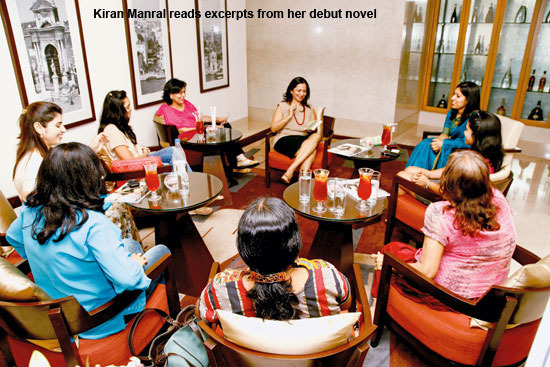
The monsoon ride to a luncheon book reading at the Trident-BKC’s Botticino restaurant was surprisingly quick. The clouds were dark and gathered, but not ominous. The hotel is chic, crisp and unostentatious. You’d expect a bustling business hotel, but the soft water channels, elegant jaali work and neck-craning tall ceilings masked the muted conversations floating around. Verve’s Arti Sarin and I were early: we settled into the Botticino’s little cozy seating area (off their grappa display cabinet with hand-blown glass bottles), where The Reluctant Detective’s charmingly poised and self-deprecating author, Kiran Manral, was to read from her book.

The Reluctant Detective by a first-time novelist treads new boundaries: the protagonist, Kanan Mehra, aka Kay, mustn’t be taken seriously. She bumbles and fumbles her way through a murder investigation – with the author’s trademark humour. Less of a stretch with the latter in the book would have made the writing crisper and less stream-of-consciousness. Yet, as the author is already on her next in series, you know she is creating a protagonist meant to be around with some permanence, and you wonder what Kay is likely to be embroiled in next.

For lunch, the Trident-Botticino’s chef Vikas Vichare put up a fine spread: a refreshing antipasto of ripe mango and asparagus in a filo pastry, to toast the season’s end for the king of fruits. Quick on the follow was a fresh pear, pecorino and arugula salad or a roast chicken roulade with marsala wine stewed figs, caramelised shallots and pistachio, if you please. While my choice for the mains was the ricotta and goat cheese ravioli; I could see the others savouring the meat options: chilli and fennel crusted snapper with orange sauce, and the mushroom and mozzarella filled chicken breast with sautéed fennel and thyme jus. As the wine glasses rolling with Frescobaldi Pater Sangiovese Di Toscana clinked to a well-balanced palate, the table wrapped up with a lovely-textured tiramisu and a berry sorbet.

At the beautifully laid table in a private alcove, conversation flowed easily between travel blogger Nisha Jha, food blogger Pushpa Moorjani, author Shakti Salgaokar and Manral, ranging from living the protagonist, to audience expectations, marketing a book and back-packing, while blogger Anuradha Shankar was snapping away with her camera at the elegant and meticulous plating. With Manral’s references to her spouse as “the husband” and to her intolerance towards cooking, we began to realise – in sweet irony over beautifully seasoned and balanced food – how much of the protagonist was her own alter ego. In this case, knowing the author uplifts the book to a place where the character unfolds and seems to come alive, larger than life, and so uncompromisingly realistic.

Superheroes, ha!

12 Sunday Feb 2012

Posted by sitanshi talati-parikh in Art, Literature & Culture, Features & Trends, Publication: Verve Magazine

≈ Leave a comment

Tags

Superheroes, vervemagazine

Published: Verve Magazine, February 2012, Features

Illustration by Bappa

Superhero02

This summer, costumed crime-fighters return to the big screen in their darkest form – plagued by physical failings and emotional dilemmas. This may be their sexiest avatar, ever. What is it about sinister grey shades that make a woman see passionate purple? And can a woman ever stand by a male world-protector, holding her own? Sitanshi Talati-Parikh explores the subterranean world of fantasy fiction

MALE SUPERHEROES: 
the ultimate turn-on
There’s a general buzz in the air about the much-awaited release of Christopher Nolan’s The Dark Knight Rises where the costumed crime-fighter, Batman, is pushed to breaking point. The Amazing Spiderman, also releasing this summer, grapples with human and super-human crises. Superheroes are by default meant to be indestructible. That makes them sexy. But in the world of karmic angst and philosophical revolt, our superheroes are sexier in their existential and painfully human form. Maybe the allure lies in the fact that these are people who have transgressed above and beyond and are able to fight their own weaknesses and fears, and ours. Every cathartic battle makes them take a leap of fantasy in our psychedelic emotions – our subconscious mind becomes a battlefield of latent desires, every fight is a fight for survival. It’s about power. Not just at the obvious level, but at the level of hope. We hope that good can still win over evil. And yet, we hope that it’s a photo finish, because we are afraid of closure. If it all ends today, if everything is said, and all ends are nicely tied up what will we take home to our fantasies?

Indian superheroes are fantastical caricatures at best and over-the-top mystical drones at worst. There is no real superhero culture in commercial Indian cinema. We watch Ra.1 (2011) for Shah Rukh Khan’s exaggerated antics, Robot (2010) for Rajinikanth’s omniscience, and Drona (2008) for…nothing. In Indian cinema, the movie star is the superhero – he’s not an actor, he’s playing a larger-than-life persona. It gives him the ability to do anything, while also at a very simplistic level describing good and bad. Superheroes of Hollywood are a far more refined species, evolving over time to greater levels of depth and mystery. They have undergone many changes, versions and personalities to reach a point of climax. From a rather simplistic beginning during the time of the World War, where economic downturn led to a desire for a better life, a strong role model and a saviour for the average man; to returning in a new avatar: the confident anti-hero, standing up to the establishment, patriotic and powerful. Today we have a disturbed, grey superhero: who is battling his own demons, external and internal. No one can fight evil continuously without feeling the ramifications. Even in fantasy literature, Frodo and Harry Potter found themselves turning vicious under the brunt of carrying the malicious ring and destroying Horcruxes in Lord of the Rings – Return of the King and Harry Potter and the Deathly Hallows respectively. Similarly, in superhero fiction, what makes the current Hollywood costumed crime-fighter worth his weight in gold is the intensity of his emotional drama. His mental battles are ours as we make constant switches between the right and wrong decision. What is good and bad? Who defines it? Is making a bad decision for the greater good okay? Most people don’t face the weight of decisions where cities and worlds get impacted. The superhero’s crisis is supreme. He fights more than his own anxieties; he fights a world’s anxieties.

The power to be in that position and the eventual control he wields makes him obviously an object of desire – but the real sexiness comes from how human he actually is. His turmoil appeals to the nurturing instinct in every woman, and the desire to have him win, willing him along mentally, grips a girl through another superhero summer. Gadgets, indestructibility, strength, resilience, super-intelligence, metaphysical abilities…and an inner reservoir of good make the superhero a classic stereotype of attractiveness. What’s a regular girl asking of a regular boy? Physical desirability, material comfort, good nature, the strength to be her man. Every man spends a lifetime trying to be a superhero and every girl waits for a man to become one for her.

Popularised by teenage comic-book geeks, the genre grew from strength-to-strength inside the mental fantasy of a boy who was yet to come into his own. He is exalted in this make-believe secret world of crime fighting, where his deepest desire of leading a life far removed from his own, where what he believed himself capable of in an alternate universe appears to become a reality. He isn’t the jock, but he’s the guy with secret powers to save the world. He will be an outcast, because he isn’t like them, he is more than them. He yearns for the cutest girl in school, but he can’t have her because of the life he must lead to complete his mission. Along the way, he becomes desirable – he is so focused and inherently strong, that women begin to notice him. We begin to take him seriously. And in there lies his fulfilment – he may be too busy to get anything more than a chaste kiss, but the very fact that he is desirable is enough for him. And it must be enough for us. His sexiness is in his unreachability, in his very unavailability.

FEMALE SUPERHEROES: 
a failed species

In this whole scheme of things, what’s a woman’s role? Superheroes have evolved in their failings and flaws, but their women remain the same – waiting to be rescued, waiting to be loved. Spiderman yearns for Mary Jane, but it seems trite that he can never have her, despite being a superhero, because he’s a superhero. Superheroes have a duty to protect and cherish, but no place for love. They cannot endanger their lady love by bringing them into their web of crime-fighting and uncovering their secret identity. Is that merely ironic or is it a foundation for martyrdom? It’s like a Mills and Boon romance with an unresolved ending. Maybe, as the Twilight romance has proven, endurance – in the age of free sex – is a turn on. And it is possible that we want the people we look up to, to not get it all – to suffer and pay the price of power. Who does the superhero come home to after a hard day’s work? Would his failings and existential pangs have been resolved had he been able to experience a companion’s love, advice and support? Is a woman a superhero’s Kryptonite or elixir?

The story of good versus evil is romantic – whether in its blatant form of a leading love interest or in its subconscious form of bromance (Batman and Robin) and in its metaphysical form of evil serenading good, calling it out and finding itself extinguished in the flame of its love. And in this romanticism, detractors find much to say. Spiderman 2 spent too much time philosophising and romancing and too little fighting crime, say some. Indian superheroes are supreme – they manage to dance and make merry love while all along giving a hearty fight to the supervillains.

A superheroine? Does she exist? Catwoman, Batgirl, Spiderwoman, Ice, Wonder Woman, Xena… the list is quite long but unimpressive. While more popular in their comic book versions than their cinematic ones, these fabulous women don’t leave a lasting impression (except for Buffy the Vampire Slayer, but when vampires get involved it’s a different story altogether) the way the men do – probably because the men watching want to be in power and not be overpowered. So there is waif-fu. A character dependent on waif-fu is best described as a pint-sized powerhouse: an attractive woman with moves that can bring a man to his knees. Literally. If she is captured or pinned she doesn’t stand a chance, making her a good kidnap victim and a key plot turner. We want our women strong, but our men stronger. In women men look for resilience, patience, love… no superhuman powers and strengths. Men want to be seen as protectors and women as their emotional saviours. One would think a supergirl with powers would be the eternal turn on, but apparently, a woman in power is far sexier than a woman with powers. Demi Moore in Disclosure (1994) wins over Halle Berry’s Catwoman, any day.

The comic book industry may actually be male-dominated – after all, a lack of female readership of comic books was suggested as the reason behind keeping ‘women in refrigerators’: an inside term among the comic book circles implying doing away with the female lead as a plot device. And can a woman be his partner in crime? Fan blogs yearn for a true female superhero, the kind that can be more than just a foil to the male lead. But that may not actually work. Take the case in popular fiction of famous sleuths: The Hardy Boys – if you plan to read them, can you complain about the female positioning (or the lack of)? Bringing Nancy Drew and the Hardy Boys together, we have seen, never really worked – it is a recipe for disaster. How can the balance of power sit on the fence? Drew being rescued will make the Boys’ fans snicker with glee and annoy Drew’s fans; Drew playing power woman will turn off the boys. It wouldn’t be much different for a thrilling plot play of Batman and Catwoman, for instance. Coming together of male and female superheroes and crime fighters – unless it is for some fun on the side – is like treading on eggshells. One would have to be subservient to the other: there can be only one dominant hero, and by default and by popular vote, it tends to be the male hero. The fantasy industry does propagate stereotypes, but that isn’t surprising as most of popular culture works on the foundation of male supremacy. And in that world, women are but accessories to the greater good of mankind. And so we must lie.


Dangerous Liaisons: Men we hate to love (Indian cinema)

14 Wednesday Dec 2011

Posted by sitanshi talati-parikh in Art, Literature & Culture, Features & Trends, Publication: Verve Magazine

≈ Leave a comment

Tags

Bollywood, indiancinema, Men

Published: Verve Man, October 2011

Some say women are suckers for punishment, others believe that the young rebellious teen attracts the irresponsible Willoughby, while a grown woman is always in want of a decent man. History is witness to many a woman falling flat in the face while chasing a rogue beau. Sitanshi Talati-Parikh examines the shining Indian silver screen examples of lovable dangerous men

Straight-laced men don’t make for racy fantasies, skipping heartbeats and sexual tension. They lack the edge, the drive, the sizzle, the power to tug at our heartstrings and wreak sweet havoc with our lives. Women are attracted to danger like a moth to a flame – there has to be reason that phrase has become a cliché. There’s something inordinately sexy about a man who knows what he wants and will stop at nothing to get it. Getting a playboy’s attention is not necessarily about a notch on the belt as much as it is about being alluring enough to grab his attention. And deep down inside, every woman attracted to a naughty bloke feels that somewhere, there is a chance that she can fix him. That she can be the person he will surrender to, will change for, and will eventually become some version of the Utopian male they have in their head. And so they all fall.

They Work With Passion

This obsession with the men who are not quite toeing the line possibly began with Amitabh Bachchan’s Angry Young Man. Not a bad lot, but a man who is roaring with discontent – he’s full of testosterone, a desire to avenge all that’s wrong. He’s not passive. He’s not even passive-aggressive. He’s raging male. With a whole bunch of adolescent hormones. You know he has passion – for what he believes in – and you can easily imagine how that would translate – in bed and out of it. Shahenshah’s (1988) avenger became Shah Rukh Khan in Baazigar (1993). He played his hands, the cards turned in his favour and he got his own back, albeit with a massive amount of gore. The cinema of the 70s through the 80s threw up seething, vengeful heroes, those who were not apologetic about treading on a few lives. Recently, Aamir Khan’s Ghajini (2008) – with Khan’s character looming large over the messy revenge scene – in his own words, brought back the action genre with a Dabangg (2010).

They Steal Our Hearts

With the exception of chiseled-chin Vinod Khanna who debuted in cinema as the bad guy, it is only post 2000 that we have become somewhat sophisticated about our wayward heroes. Hrithik Roshan in Dhoom 2 (2006) oozed charm and stunning sex appeal – he didn’t even have an excuse about being bad, he just was.

Luckily though he wasn’t out to kill anyone, just cop a few shiny ones. Maybe it is the Dhoom franchise that has successfully converted our picture-perfect heroes into those with grey shades. Who cares if the guy you date is a bit of a thief? If he looks half as good as John Abraham from Dhoom (2004) or Roshan, or can provide half as much intellectual stimulation as Aamir Khan (the upcoming villain in Dhoom 3)…that would be a love life worth writing home about. Moot to point out that no one really notices the unshaven, paunchy good guy, the cop: Abhishek Bachchan. Has anyone ever wanted the good guy to lose as badly as in the Dhoom movies?

They Kill Us Softly With One Look

Going back a few years, can one deny that Saif Ali Khan actually became sizzling hot on screen in 2004 – in his comeback era – in the completely negative role Ek Hasina Thi? Which girl wouldn’t succumb to his charms? He made being a rogue look cool. And soon after in Being Cyrus (2005). All this, while maintaining his status quo as a premier romantic hero; and ironically, if not surprisingly, consolidating his screen appeal with repeated negative roles – including that of the recent clandestine terrorist in Kurbaan (2009).

They Play Good Cop, Bad Cop With Our Emotions

Anil Kapoor in Ram Lakhan. Was he good or was he bad? It’s hard to tell, even after watching the classic repeatedly. In Shahenshah, Amitabh Bachchan played an ineffectual corrupt cop, while fighting for justice, out of the system. Women go weak-kneed over a man in uniform, especially if it’s an errant cop out to play Robin Hood. The success of Dabangg – and Salman Khan shaking his uniformed body to national hysteria – heralds the revival of cop dramas and high-risk love lives.

They Cleverly Win Us Over

Ishwar ‘Langda’ Tyagi in Omkara (2006) completely took the movie to different heights, and the disgust one felt for the character was smudged with grudging admiration. You give a man brains and his mental prowess is bound to not go unnoticed.

They Wield Power Over Our Thoughts

Ajay Devgn made underworld dons appear cool – with an enviable display of control, smoothness and above all, power. As Al Pacino proved in Scarface (1983) that power attracts women, Devgn proved it with Company (2002) and a few years later with Once Upon A Time In Mumbai (2010). In fact, in OUATIM, Emraan Hashmi managed to keep his girl by his side despite ill-treating her. Katrina Kaif’s character fell in love with the Pratap politicians – played by Ranbir Kapoor and Arjun Rampal – who preferred to work the wrong side of the system in Raajneeti (2010). Forget women, even film-maker and actor Farhan Akhtar admits a strange fascination with Don’s character, leading him to remake the old classic. There is a natural instinct in women – as much as they like to nurture, they like to be protected. And who better to protect them than an unstoppable man who can rule a better part of the world?

Their Good Outweighs Their Bad?

Movies on real-life characters tend to tread on eggshells, portraying a primarily positive perspective of characters that have been perceived as heading down the wrong path. Guru (2007), for instance, portrayed the protagonist, Gurubhai (loosely based on Dhirubhai Ambani) in a very favourable light, in the role of an inspiring leader. Sarkar (2005), where Amitabh Bachchan plays a character assumed to be based on Bal Thakeray, creatively designed like The Godfather, showed him to be a man of steel and goodness parcelled with a lack of concern for human life.

They Win Our Sympathy

While Shiney Ahuja’s character in Gangster (2006) and Sanjay Dutt’s Raghu in Vaastav (1999), were all about the fallen man – looking desperately for love’s respite or salvation, Imran Khan’s Kabir in Kidnap (2008) saved face with his inner good guy winning over the bad. John Abraham touched a soft spot in his I’m-a-terrorist-but-a-good-guy in New York (2009). You may not be able to love these characters, but they do win your sympathy – and strangely that is a way into women’s hearts, sometimes.

They Need Rescuing

A step up from the sympathy vote is actually pulling them out of the quagmire. Abhay Deol has made it his prerogative to be the lack-lustre hero – think Dev D (2009) in particular – who’s always finding himself and losing his love. His women have to deal with his incapacities, and many love him despite it. Sanjay Dutt’s Ballu in Khalnayak (1993) immortalized the hero who loved, lost and died a pitiful love life.

They Have Converted from Lover to Lover Boy

You know this has to be about Salman Khan. He made every girl fall in love with Prem from Maine Pyar Kiya (1989) and then ran away from this good guy image, and embraced that of the playa. He played the field in every possible movie – even played the role of the playing-the-field-mentor in No Entry (2005), and carried a successful bunch of romantic comedies on merely his inability to remain faithful.

And so it goes that there’s nothing like a wayward love interest to make life a bunch of prickly roses. And there’s probably a make-your-bed-and-lie-on-it pun there somewhere….


Big Misses, Small Catches

17 Wednesday Aug 2011

Posted by sitanshi talati-parikh in Art, Literature & Culture, Features & Trends, Publication: Verve Magazine

≈ Leave a comment

Tags

Bollywood, indiancinema

Published: Verve Magazine, July, 2011

The masala dailies have wrung their words out trying to understand what happened last year. Heavyweights sunk at the box office and a handful of unknowns, nobodies and alternates walked away with the entire silver screen pie. Sitanshi Talati-Parikh decodes the enigma of the mega-budget losses and small-movie wins

Recently, film critic Rajeev Masand wrote a column deriding the excesses of the Indian film industry. He spoke about the glory of big budgets – including the cost of taking star wives and their entourage shopping – being washed out in the final tally at the box office, when the film faces the music of a silent box office register. While he was talking about an upcoming film, it is bringing back into focus the hot topic of discussion – namely the cold slush of the big-budget movies that failed miserably, against the refreshing warmth of the surprise hits: small films that made it huge.

Like a sudden bad hangover from the ’90s, Indian cinema is facing a crisis of money: too much money chasing an average story, a tired movie star, and refurbished content. The lucrative movie-making business has created an illusionary clout of movie stars and divas, gift-wrapped with zero professionalism and huge egos. These stars continue to be bankable at the box office, which is why big banners are willing to turn a blind (albeit bleeding) eye to their demands. After all, at the end of the day everyone rakes in the big bucks and trills home happy.

Suddenly though, expensive movies are not enough to attract the audience: with a refreshing sensibility that one wished would extend to our political choices, moviegoers have shunned some of the biggest movies last year. Big in the form of stars, directors, production houses, and production costs (see box for details). Think Kites, Tees Maar Khan, Guzaarish, Raavan. Before that, Saawariya, Blue, What’s Your Raashee? and even My Name Is Khan didn’t fare as well as one would have expected or the producers preferred to suggest. What went wrong? The formula elements were there: masala, big actors, varied concepts, established directors, expensive marketing and sufficient money chasing all of it to get a rise out of the staunchest movie buff.

How big can the movie be? The money being poured into the movies has become ostentatious without any sign of equal returns. This has led to a sudden flow of in-movie advertising, a desperate bid to sell music, cable and overseas distribution rights to the highest bidder. The problem lies in production costs. When a great amount of money is poured into lavish film sets, movie star salaries and their entourage fees, shooting abroad, and with relaxed schedules, it becomes impossible to recover those costs. And many times, the glitz outdoes the actual story. In the age of information overload, content is king: a good movie primarily needs a good script to work, the rest will follow. Udaan, one of the best movies last year, did well despite the odds; and others lost out despite the factors in their favour.

The final tally
It is not so much the audience that is changing as much as the amount of money being poured into a film that is challenging the final tally. Does a movie deserve that kind of money? Take Blue, or Kites for instance. Both gambled big, banking on the larger-than-life phenomenon: hoping that international locales (ridiculous when you see Kites which is shot in a barren desert) and a carrot of expensive productions would be a box-office draw. Possibly with the fact that much of the audience is now far more well-travelled, satellite television provides enough entertainment in the form of international scenery, viewers don’t necessarily want to go to the theatre merely to see American scapes or underwater corals.

Shah Rukh Khan’s RA.One, rumoured to have a budget of Rs one billion, makes it one of India’s most expensive films. Releasing later this year, Khan claims that the ambitious movie calls for special effects (collaborating with international teams) and cutting corners just won’t do the trick. With satellite rights already reportedly sold to Star India for Rs 40 crore, the film is playing the high stakes. Even if Khan magnanimously feels that he is setting the standard for technically well-produced movies and is ready to bear the costs of being such a trend-setter, no one can hope to gamble with big numbers and go in ready to fail.

More than the death of the blockbuster mega banner film, as some reports are willing to tout, what has emerged is a license to live for the small or medium film. Hrishikesh Mukherjee’s ’70s and ’80s saw the popularity of small films that spoke to the finer sensibilities of a discerning audience. Lately there have been slick mega-budget movies appealing to the grandeur of an emerging and moneyed India. Ironically, rather than get washed away in the gloss of a mega film, smaller films now, once again, have a greater chance of surviving, not only because of a good product, but particularly because their budgets are controlled. The big budget movies’ wins are meagre, their losses massive – so it’s not surprising that established production houses like Excel Entertainment (run by the Akhtars and Ritesh Sidhwani) are willing to stake their bets on smaller films like Karthik Calling Karthik, to give them room for one Zindagi Na Milegi Dobara, releasing this month.

Where the star cast is willing to share in the profits than take a big upfront fee also makes a difference in the movie business – think Aamir Khan, Farhan Akhtar, Shah Rukh Khan, Imran Khan. Guzaarish, for instance, started out in the red – after paying out massive amounts to the three heavyweights: director Sanjay Leela Bhansali, and actors Hrithik Roshan and Aishwarya Rai Bachchan, added to which the cost of making the lavish film, it was left with a massive total to bat towards. Even with a decent opening weekend, you cannot lay your bets on pulling in those kind of numbers. What may change the dynamics of the game is producers getting smarter and not trigger-happy stretching their purse strings for stars like Akshay Kumar who demand larger amounts and who believe in cross-bargaining, or even those directors, like Sanjay Leela Bhansali who genuinely think they are worth that much.

A talking point
Inevitably, the success of a film gets measured by numbers and the total pull from the box office. Which means that for a movie to be successful in a wide and diverse audience mix, it needs to satisfy various segments of society – which is impossible for one trying to be different. It then becomes obvious that such a film must be made with a small budget, so that the niche audience it is catering towards will accept it, and it can recover costs and possibly encourage others to take baby steps forward. There are few films in that mould which can satisfy enough people to become a talking point and generate sufficient traction to make it successful across the board. Udaan is one such film – like Iqbal (2005) was at one point of time. This works because an inspirational story has a universal appeal.

Certain films have recently faced flak because of too much ‘Hollywoodisation’. Kites took a Hollywood-type story, placed it in a Hollywood-style location and brought in technicians and a look from that part of the world. Besides the failings of the story, direction and editing, what didn’t resonate with the Indian audience was the fact that the mindset of the characters also became Western. As the Yash Raj and Dharma stable has proved time and time again, the locales and the clothes can be Western, but the identity and characterisation shouldn’t. While the movie may be echoing how a certain portion of the urbane youth is beginning to feel, it doesn’t resonate with the Indianness of the Indian culture. The audience seems to prefer an aspirational look and styling, with a strong Indian sensibility. Possibly a reason why Tanu Weds Manu or a Band Baaja Baaraat scored over Anjaana Anjaani and Break Ke Baad, despite the fact that the former had an average production and the latter a slick and well-styled product.

Within the milieu of an Indian sensibility, movies that were of the different mould, may not have been runaway successes, have nevertheless prepared us to accept experimental stories: Karthik Calling Karthik, Ishqiya, Anjaana Anjaani, Wake Up Sid, Rocket Singh, Love, Sex Aur Dhoka, Dev D. Rather than embrace the old formula, others would now be more willing to tread unknown waters. Would Delhi Belly – releasing this month – stand a chance if Aamir Khan Productions, UTV and Imran Khan were not associated with it? Possibly not – there is something reassuring about a safe bet. The viewers trust Aamir’s choice, and there will be people willing to see – even if out of sheer curiosity – what he has to offer next.

Great expectations
That leads one to expectations. One expects that a movie that has a big name or multiple big names attached to it would be good. So heavyweights act like our elected representatives – we trust them to be discerning in their choices, to provide us entertainment. And sometimes, as was the case with Madhuri Dixit, we also believe that they can make even an ordinary film superlative by their mere presence. The basic premise when we know big names are associated with a project is ‘How bad can it be? It’s worth a watch.’ This is what producers bank on to recover their costs in the first weekend, and it is what makes stars feel invincible.

And the small films that became conversation starters, centrepieces and endnotes? Besides a fresh script or perspective, what they have in common is that they have at least one big banner backing them and possibly even a big production house overseeing things – Udaan (UTV), Once Upon A Time in Mumbaai (Balaji Motion Pictures), Peepli [Live] (UTV and Aamir Khan Productions), Ishqiya (Shemaroo and Vishal Bharadwaj Pictures), Band Baaja Baaraat (Yash Raj Films), Tanu Weds Manu (Viacom 18 Motion Pictures). UTV readily picks what would appear to be more experimental films – think its round up of Mumbai terror movies in 2008, while other big banners are following suit by adding smaller films to their stable to balance the money being poured into a bigger venture. UTV Motion Pictures has actually been a part of a good number of the losing films last year, but has saved face with the popularity of the small films it backed.

Brand value
Would the backing of notable production houses attract top stars to milder scripts? Maybe, if they didn’t worry so much about their brand value dipping with lower sign-up fees, they (and then in return big banners) would be willing to hedge their bets on smaller films. Would Aishwarya have done films like Chokher Bali or Raincoat (even though it meant working with acclaimed Rituparno Ghosh) in the middle of her career trajectory, had she had plum offers in hand at the time? Possibly not. At a certain stage of stardom, movie stars tend to become particularly risk-averse, afraid to jinx a happy mainstream run. Which is ironic from the tally last year – all the top stars have struggled to make it through, while non-A-list actors like Kangna Ranaut, Anushka Sharma and Madhavan, and a new breed of directors have scored big – simply by having nothing to lose.

Another recent game-changer: in a rapid movement, social media has played a role in reducing the impact of big names versus good movies. With previews and online buzz allowing a good film to gain traction possibly even before the first weekend opening or very quickly during the first weekend, it stands a fair chance of doing well overall, and continuing for a longer time in cinemas and then negotiating a more competitive price for DVD and cable rights. On the flipside, social media still only reaches out to a few multiplex audiences in the urban sectors, lacking a strong overall impact.

At the end of the day, it’s some bad choices that have made this a conversation piece: people will not stop being drawn to the glamour of huge films. As we have seen, the buzz about Zindagi Na Milegi Dobara more than sizzles, with an overwhelming amount of names (Hrithik Roshan, Katrina Kaif, Farhan and Zoya Akhtar) and their unique combinations, including Abhay Deol and Kalki Koechlin, guaranteeing a sizeable opening. With the recent disappointments though, what will happen is that smaller films, which would ordinarily be considered niche and maybe even risky propositions, will now become more attractive to audiences who are looking for more challenging views. So the chances are the urbane audiences will watch Zindagi… and Delhi Belly this month with equal gusto. As long as there are some steady players: financiers, producers, directors and actors ready to take the plunge with small, experimental, unique films, willing to adjust budgets for the cause of the film rather than their pockets or egos, there will continue to be a breeding ground for good cinema. Where cinema remains an art form before it becomes a business.

BIG GUNS WHO MISSED THE SHOT

7 KHOON MAAF
Vishal Bharadwaj, Priyanka Chopra,
UTV Spotboy

VEER
Salman Khan,
Eros International

ACTION REPLAYY
Aishwarya Rai Bachchan, Akshay Kumar, Vipul Shah,
PVR Pictures

GUZAARISH
Sanjay Leela Bhansali, Hrithik Roshan, Aishwarya Rai Bachchan,
UTV Motion Pictures

RAAVAN
Mani Ratnam, Abhishek and Aishwarya Bachchan, Reliance Big Pictures,
Madras Talkies

LAFANGEY PARINDEY
Deepika Padukone, Neil Nitin Mukesh,
Yash Raj Films

KITES
Hrithik Roshan, Rakesh Roshan, Anurag Basu,
Reliance Big Pictures

BREAK KE BAAD
Kunal Kohli Productions, Reliance Big Pictures,
Deepika Padukone and Imran Khan

ANJAANA ANJAANI
Priyanka Chopra, Ranbir Kapoor

KHELEN HUM JEE JAAN SE
Ashutosh Gowariker, Abhishek Bachchan and Deepika Padukone,
UTV Motion Pictures

TEES MAAR KHAN
Farah Khan Productions, UTV Motion Pictures,
Akshay Kumar and Katrina Kaif

Captured Memories

27 Monday Sep 2010

Posted by sitanshi talati-parikh in Art, Literature & Culture, Publication: Verve Magazine

≈ 1 Comment

Tags

Marriage, Photography, vervemagazine

Published: Verve Magazine, Nerve, September 2010

The most ignored aspect of a wedding is the one you would ideally want to do right for posterity – the pictures! Verve looks at various options for the album


Photo01
Photo02

Ehsaan Faridafsar’s photograph on the adjoining page has been taken from a photo essay in Verve’s iconic black-and-white issue – there is something blissfully happy and memorable about the imagery. Having a photographer willing to render the moments of the most important day in your life in a unique fashion apparently is not something everyone hankers towards. It is surprising, considering how much money is bled into the most spectacular invitations, back presents, sets, jewellery, clothes…and yet wedding photography remains the unfortunate step-child.

Mumbai-based artist, curator and gallerist, Bose Krishnamachari traces the evolution of marriage in India to the extravaganza popularised by the maharajas of yore – and in those times, posed portraiture was the norm. As canvases evolved to bulky and expensive camera film and to the digital varieties of date, the traditional form of posed imagery still remains a part of the wedding legacy. It is only rarely – and more abroad than in India – that the photojournalistic style of wedding photography is popularised, where candid shots are taken and irreverent moments captured to add a sense of realism to the wedding album.

Matthieu Foss, photography curator and gallerist (Mumbai) feels that weddings have been restricted to a more conventional and conservative form of photography when creating the family wedding album. From the point of the photographer, Foss points out, they are using this form to merely make a living, not as a creative act. While it would be interesting for a photographer to capture moments from a poignant and radically important time in someone’s life, it appears that the subject’s lack of interest in something different would naturally stem the photographer’s creativity, making it a space that is a mere commercial stepping-stone to more absorbing pastures. And if the photographer were doing something different, it may well be in the space of satire and kitsch. Foss gives the example of French artist Jean-Christian Bourcart, whose first job as a wedding photographer led to him being ‘fascinated by those moments of joy in a crude or absurd reality,’ which later defined his other distinct photo projects.

It is not unnatural to take wedding photography a step further and explore moments in the nature of fashion photography: styled shoots inspired by high-fashion glossies; think a more involved and personal version of Carrie Bradshaw in Sex and the City: The Movie snapped before her disastrous wedding in bridal fashion, documenting her pre-wedding preparations for an international fashion magazine. Many an aspiring socialite or fashionista would create a wedding album that looks like something out of the pages of a fashion magazine – to feel like the ultimate diva. Of course, this involves a good amount of post-processing of the images and possibly a touch up here and there!

At the other end of the glamour spectrum, with digital cameras and phone-cams, every other person considers himself/herself an amateur photographer, and impromptu and often unfortunately-candid shots of the wedding-in-process have been documented – much to the embarrassment of the couple-to-be. Loosely termed ‘contemporary wedding photography’, the professional version o f this irreverent clicking serves to capture the imagery of the wedding from the beginning to the end, without predetermined poses but with strong visual appeal.

While tradition is great when saying your vows or taking a turn around the fire, capturing eternal moments is an art and should be considered as such. With couples willing to give enough importance to the form, it may evolve into a universally appreciated aesthetic medium.

Pop-culture Candy

27 Monday Sep 2010

Posted by sitanshi talati-parikh in Art, Literature & Culture, Interviews (All), Interviews: The Arts, Publication: Verve Magazine

≈ Leave a comment

Tags

Art and Design, Graphic Novel, Literature, Popular Culture, vervemagazine

Published: Verve Magazine, Nerve, September 2010

When Pixar animator and storyboard artist, Sanjay Patel, takes a break, he sketches Hindu deities. Check out his pop-culture illustrations of traditional Hindu marriages


Art01

You see The Little Book of Hindu Deities and inevitably think kitsch, mired in the nostalgia of tradition and…cute. Flipping through it, you find yourself amused by artwork that is fresh, appealing and inoffensive; and fascinated by the information that you are, in all likelihood, quite unaware of. And of course, the illustrator’s repertoire is impressive – he is a supervising animator and storyboard artist for Pixar Animation Studios, where he has worked for the last 14 years on features that include Monsters, Inc., A Bugs Life, Toy Story 2, Ratatouille, WALL-E, The Incredibles, Toy Story 3 and CARS. He has worked on The Simpsons for Fox and also with legendary cartoonist John K. California-based Sanjay Patel sends us an illustrative self-portrait, while replying to our questions via email:


What brings about the interest in Hindu deities?
For a very long time I had zero interest in anything Indian. Growing up in LA with devout Hindu parents, I desperately just wanted to fit in. It was only until I felt comfortable being myself, did I begin to explore Hindu iconography.


Why do you illustrate deities in an irreverent pop-culture format?
To show people a contemporary view of Hindu iconography and their legends. By that I mean, a view from the perspective of someone born between two cultures – the US and India; through the lens of modernism, graphic design, and animation. And from a voice that is rooted in the pop culture of the US and is acutely aware of the relevance of Hinduism and its devotees. This is just a means of communicating with people in my age group, who are culturally disconnected, who love design and animation, who are curious about Hinduism and spirituality, and who just can’t resist something cute.


Do you feel nostalgia about tradition creeping in?
I can’t speak to the sense of nostalgia. For me, having an Indian name, background and face, and yet not ever having set foot on Indian soil, can lead to different longings: to have all the things that make me up coexist in creative space. So it’s been incredibly gratifying to finally bring together my passion for Disney animation with the roots of my parents’ traditions and to forge a new cultural symbol in the form of my books.


Is pop culture the way of life today, or is it a way to subconsciously subvert culture and tradition?
I’ve definitely used the tropes of pop culture to get a message across that culture is changing: that a person that looks Indian could be American, or that a book that looks like cartoon could actually be a visual temple. The Hindu Deities book looks like pure pop-culture candy, but will hopefully enlighten you without giving you a cavity.


What’s your verdict on India’s animation scene?
There is lots of animation work being done in India these days. Most of it is derivative and lacking in its inspiration. But as artists gain confidence, they will undoubtedly begin to create content that is unique. My hope is just as the animation master Hayao Miyazaki manages to tell stories that feel uniquely Japanese, maybe one day there will be Indian animators that will tell tales that feel uniquely rooted to their soil.

← Older posts
Newer posts →

|  Filling the gaps between words.  |

Writing By Category

  • Art, Literature & Culture
  • Brand Builidng
  • Brand Watch
  • Fashion & Style
  • Features & Trends
  • Fiction
  • Food
  • Humour
  • In The Media
  • Interviews (All)
  • Interviews: Business
  • Interviews: Cinema
  • Interviews: Cover Stories
  • Interviews: Lifestyle
  • Interviews: Luxury Brands
  • Interviews: The Arts
  • Interviews: Travel
  • Musings
  • Parenting
  • Publication: Conde Nast
  • Publication: Elle
  • Publication: Mint Lounge
  • Publication: Mother's World
  • Publication: Taj Magazine
  • Publication: The Swaddle
  • Publication: The Voice of Fashion
  • Publication: Verve Magazine
  • Social Chronicles
  • Sustainability
  • Travel Stories

Reach out:
sitanshi.t.parikh@gmail.com

© Sitanshi Talati-Parikh 2018.
All Rights Reserved.

Website Powered by WordPress.com.

  • Subscribe Subscribed
    • sitanshi talati-parikh
    • Join 51 other subscribers
    • Already have a WordPress.com account? Log in now.
    • sitanshi talati-parikh
    • Subscribe Subscribed
    • Sign up
    • Log in
    • Report this content
    • View site in Reader
    • Manage subscriptions
    • Collapse this bar
 

Loading Comments...