• About
  • Brand Building
  • Film & Drama
  • Writing: Arts & Lifestyle
  • Writing: Interviews
  • Writing: Luxury Brands
  • Writing: Travel

sitanshi talati-parikh

sitanshi talati-parikh

Category Archives: Interviews: Cinema

Imtiaz Ali: Happily Never After

20 Saturday Feb 2010

Posted by sitanshi talati-parikh in Art, Literature & Culture, Interviews (All), Interviews: Cinema, Publication: Verve Magazine

≈ Leave a comment

Tags

Aditya Kashyap, Deepika Padukone, Geet, imtiazali, Indian Fiction, indiancinema, jabwemet, kareenakapoor, Love Aaaj Kal, Meera, Saif Ali Khan, Scriptwriting, Shahid Kapoor, vervemagazine

Published: Verve Magazine, Verve Men, February 2010

Photograph: Colston Julian; Illustration: Bappa

Imtiaz01

Director and scriptwriter of popular romantic dramas Jab We Met and Love Aaj Kal, Imtiaz Ali, does not know whether happily-ever-after exists, “since the world is designed for relationship disasters. When people decide to get together, it is not a cerebral decision or a love formula, it’s an instinctive one. The one that got away occupies a person more, and anyone who is accessible becomes ordinary. No relationship can satisfy all the needs of a person. There is a reason why love stories end when they do”. In all his movies, the director believes that if we had the opportunity of seeing what were to happen a few years down the line to his characters, post the kiss-and-make-up; we would not be guaranteed a happy ending. So in a piece of wicked cross-scripting with Sitanshi Talati-Parikh, he plots a volatile fictional love story concocted with the unrelated characters of his two films, to see what would happen if Kareena Kapoor and Saif Ali Khan’s characters, Geet (Jab We Met) and Jai (Love Aaj Kal), actually met!

Imtiaz02The Setting

Ten years after Jab We Met (about eight years after Love Aaj Kal). Geet is married to Aditya Kashyap and they have two children. Jai and Meera are also married. There is a crisis of the “end of excitement”.

The Characters
GEET, the essential free spirit, chafes under the boring normalcy of her life. She finds that Aditya Kashyap has changed – or maybe this is who he is – an industrialist who has a lot on his plate. He can’t take off anytime he chooses; having children has also changed the equation. While they balance each other out, she is haunted by the fact that now she doesn’t have a place to reach; without a destination, there is no journey. She is deeply disillusioned by the fact that she has no train to catch, nowhere to run off to with wild abandon and therefore no major thrill that keeps her going. There is a vacuum inside her, working its way towards a silent depression. Something sparks off a renaissance….

ADITYA doesn’t like the fact that his wife, Geet, talks to everyone with unnatural friendliness. This is a part of who she is, and he can’t change that, but it bothers him. He tries to bring a semblance of order in her life, but she constantly resists it. While she needs this stability to balance her out, she tends to react violently to it. Work keeps him so preoccupied that he finds he has less time and patience to pander to her impulsive needs.

JAI always believed in the concept of a live-in relationship as opposed to marriage. His love for Meera keeps him going, but the inability to walk out at any time, to experiment, to go with the flow, or change direction if he so desires, makes him feel shackled. The pressures of life are building up and he’s just looking for an escape route.

MEERA can’t seem to understand what is bothering Jai. She keeps reminding herself that this marriage is what he wanted – he had come looking for her. The fact that he may not be happy worries her, but she doesn’t know what she can do to fix it. She decides to wait and watch for an opportunity when things can go back to normal.

The Situation
Day 1
Geet is driving, with a lot of pent-up rage, to pick up her kids from school. She is manoeuvring the Mumbai traffic, amid construction, while simultaneously on the phone trying to negotiate keeping her maid who suddenly wants to quit. She has woken up early to make aloo parathas for Aditya. Her frustration has been building up for a while but she just doesn’t have the nerve to tell Aditya, “I can’t do this anymore, this is not me!” Suddenly as she is distracted, her car slams into an island, and shudders to a stop. She fumbles, trying to start it while continuing to talk on the phone. The traffic piles up behind her; loud curses can be heard in the background, accompanied by a lot of disgusted gestures.

A car slides into position next to her, a window rolls down and a disgruntled man (Jai) looks at her, saying, “There is a reason why women shouldn’t drive. Why don’t you do something that suits you more…like look after your home, and leave driving to men?” That chauvinistic statement gets Geet completely riled up – the years of dissatisfaction and disillusionment with marriage are simmering under the surface waiting to explode. She gets out of the car to scream at him. Jai has already driven past, the window is up – with the noise of the traffic and his music in the car, he can’t hear her. She can be seen in his rear-view mirror getting smaller and smaller.

She gets back into the car, manages to start it, slams the door and drives after Jai furiously. He enters a tall office building, and the elevator door is about to close behind him, when she wedges a foot into the door. She starts yelling at him, abusing him, trying to get the pent up fury out of her system. She follows him into his office, still yelling about the woes of her life – domesticity, the children, a husband who’s forgotten how to live life. The entire office is looking at them. Suddenly, realising where she is, she flushes a deep red, turns around and leaves. Jai’s visibly shaken; he doesn’t know what hit him. He needs to make a pitch before a very important client, and he can’t perform because he’s so nervous. Stammering and suddenly not his usual confident self, he doesn’t paint a convincing picture. He loses the account…and is completely shattered.

Day 2
Driving to work the next day (at approximately the same time he’d met Geet the day before), Jai, feeling really miserable, suddenly notices her waiting in her car for her children. He immediately swerves to a stop, running over to her to give her a piece of his own mind. His problems are mounting: EMIs, a wife who’s threatening to leave him, the competition…. He ends his tirade with, “Maybe I have a wife who’s a bigger bitch than you are.”

[This is the excitement they are both missing in their lives. An escape from their own problems. Both Geet and Jai are people who would want to breathe more air, do more and say more than their partners.]

The next time they see each other, it’s like they’ve known each other for a long time…. Their vivaciousness and outgoing personalities leave no awkwardness between them. She needs to go back home to Aditya, but Jai suggests an excuse that works well on husbands, she thinks for a moment and gives into the thrill of a new experience, continuing their conversation over another cup of coffee.

Next Week
Jai has an anniversary coming up and Geet needs to shop for Aditya’s birthday. They decide it’s an excuse good enough as any to shop together. Jai confesses that his wife has hated all the gifts he’s bought her in the past, that she’s a very sensitive kind of woman. “She would be happy if she thought that I thought about the gift!” Geet thinks it would be fun to help out, while Jai can help her choose something for her “fuddy-duddy boring industrialist-type of husband”.

And then…
They continue to meet; putting in the effort to look better, in response to the passion and electricity the air. They connect at various levels – they find their childish pursuits a great diversion, which their spouses would not. They gravitate towards each other. Neither wants to commit, but they believe that they have found their soulmate in each other. They are too volatile to actually be able to have a fulfilling, stable relationship together – and they know that. They are both people who are constantly in conflict, it is difficult for them to reach resolve – but they thrive in the conflict.

The Spouses
ADITYA, when he sees the change in Geet, senses that something is not right. He begins to look back at their life and see what’s missing, what is eating away into the Geet he fell in love with. He never confronts her or makes her uncomfortable, but makes an effort to be more attentive. Geet, for her part, can tell that he knows or is aware that something has changed. She finds its oddly disconcerting that he continues to be there for her – often suggesting doing things that she loves, which makes her feel guilty and confused about her feelings. She wants to come out and talk to him about it, but something holds her back – the fear of hurting him. She wishes he would react with anger or violence – not this silent niceness. It makes her feel like a bitch. In the middle of the night, having no one else to talk to, she frequently calls up Jai.

MEERA instinctively knows when Jai is unhappy or is not being faithful, especially with the increasing calls late into the night coming from Geet. Meera’s way of dealing with it is very matter-of-fact. She invites Jai out to his favourite restaurant, dresses up in his favourite outfit; and in the middle of the wine and meal, asks him directly, “Jai, I think you’re seeing somebody…just tell me about it.” Jai looks taken-aback and then decides to come clean. He talks about Geet – a girl whom he has been hanging out with, but insists that there isn’t anything serious between them. “I didn’t tell you because you’d be upset…but I can see I’ve upset you anyway. I’m sorry. But if you say the word, I won’t see her again.” Meera looks at him for a minute and says, “If I ask you not to see her, then I’m making her your lover, so do what you want.”

The End
It appears to be a doomed love story of two people who can’t get rid of each other. Geet and Jai are the kind of people who consume each other – a relationship that scales the heights and plummets to the depths, making it a nervy ride. They make each other more insecure and it leads them to miss the stability provided by their spouses.

Jai meets Geet to tell her that they should stop seeing each other. Geet reacts explosively – talking about how much they are actually made for each other, and how they are not being unfaithful at all. They deliberate breaking up often. Eventually, in the midst of an emotional scene, Geet perks up with a suggestion – if they must end it, then why not with a bang – something that matches their personality? And she reminds him about the trip they had spoken about taking together…

Imran Khan: The Quiet Romantic

19 Friday Feb 2010

Posted by sitanshi talati-parikh in Interviews (All), Interviews: Cinema, Publication: Verve Magazine

≈ 1 Comment

Tags

Avantika Malik, Bollywood, Bushido, I Hate Luv Storys, imrankhan, indiancinema, Interview, Jaane Tu Ya Jaane Na, Marriage, romance, vervemagazine

Published: Verve Magazine, Verve Men, February 2010
Photograph by: Colston Julian

Recently, Imran Khan got engaged to Avantika Malik after a seven-year relationship. The poster boy of romantic cinema, in his upcoming film I Hate Luv Storys, produced by Karan Johar, plays a true-to-life character that is completely unromantic. On a set of the film, staying in reel and real avatar, the young actor talks candidly to Sitanshi Talati-Parikh about relationships past and present, the insecurities and trials, and the importance of chivalry…peppered with intermittent reflections on what he thinks (or doesn’t think) about romance demonstrated by funny pie charts, graphs and comic strips that he has saved on his laptop

Imran01

I’m honestly the least romantic person you can find, really. By conventional definitions, and by my fiancée’s definition, that is. But if she’s lasted out this long, clearly she sees something in me!

It’s not that I don’t like romance…I just don’t think it’s feasible. When you are wooing someone, you put on your game face – bathe regularly, cut your nails, take her to fancy places, buy her flowers…all of the drama. It’s a mating dance…but rather short-lived. As time goes on, how you feel about each other as people, how you treat each other as people, will determine whether your relationship will last.

And yet, I’m big on the proper proposals. I proposed to Avantika a month after we met, asking her if she would be my girlfriend – lighting her room with candles – the works. Somewhere in me, there is a classical streak – I was brought up with values of chivalry. You have to do it the right way – go down on one knee…it just doesn’t work otherwise.

You do some things because you know that they are important to someone. I’ve been working on my last four birthdays, because I couldn’t care less. To Avantika, a birthday is really important – the excitement starts to build a month-and-a-half in advance. So, I put in an effort to make a big deal about her birthday. The diamond engagement ring, the surprise proposal – while I know it’s something created as a marketing concept by the diamond company, De Beers – I knew it would mean something to Avantika, it would make her happy, so I did the whole deal. I planned the surprise proposal on her birthday (last July) at her farmhouse with a bunch of friends, complete with a red herring to throw her off course. And then, as I pulled out the ring, while going down on one knee…the expression on her face was priceless.

Avantika would want me to be more expressive. When you are in a relationship with someone for an extended period of time, you tend to take on characteristics of the other person. She’s taken on my characteristics, I know – and I have done the same. She’s calmed down a lot. All her emotions are just below the surface, and sometimes on the surface. At a moment’s notice she will erupt with love or anger or violence. My anger is more frigid – the angrier I am, the calmer I get and the softer my voice gets. It’s very brutal and it really shrivels people up. When I’m livid, it takes two sentences to bring the other person to the brink of tears. But it takes something monumental to get me angry.

I have never been jealous – particularly in this relationship with Avantika. Even right in the beginning, it never occurred to me that at any point, if she is somewhere without me, something would happen with another guy. If you’ve been messed with a few times in life, you would imagine it should, but it didn’t. I’ve cheated on one girl in my life and broke up with her the next day – couldn’t deal with the guilt. More often than not, I’ve got the raw end of the deal; it took me a very long time to get over it. There was a grand break-up, followed by extremely short-term relationships – measurable in hours – and in the aftermath of that, I met Avantika.

I had not the slightest clue when I entered the relationship that it would be for keeps. I was 19. What do you think at the time? ‘Pretty girl, I am interested in her and she in me; let’s just see how it goes.’ It started off without any specific intentions and just coasted along. It speaks for itself that we are still in it.

I think the wisdom is false that in this industry it is an advantage to be thought of as single. If you are in a committed relationship and honest about it, people respect you that much more. Emotionally, they like you more, it makes them think, ‘This is a good guy, an honest guy.’ There are enough people out there who think all Bollywood relationships are a sham. And some of them are. Avantika believes that if she were in this ‘circus’ with anyone else, it wouldn’t have lasted.

Avantika isn’t insecure, but there’s something else…. She doesn’t worry that I might get attracted to an actress or model. What I think bothers her is the fact that people talk to her because she’s my fiancée, and if she were not, they wouldn’t even look at her; or there are others who just look through her. There is a tendency in these circles to talk to people without having things in common, because you are a part of the same fraternity – and anyone not in that immediate circle gets left out.

We’ve been through two major trials recently – the first when we started shooting Jaane Tu…Ya Jaane Na. It involved people who had nothing to do with her life. Generally, your friends are common, but suddenly I’m spending days and nights with people whom she has never seen. That was a very difficult time – she had to come to terms with the fact that I suddenly had less time to spend with her. And the next was when Jaane Tu…had just released – suddenly I became famous and the whole world wanted a piece of me.

I’ve lived my life believing that you decide who you want to be and you can be that person. You look back, learn and move on. I don’t have any regrets about my current or past relationships. If I had done something differently with Avantika, perhaps we wouldn’t be here today. Things wouldn’t be the same.

If I fall prey to the ugliness that is a part of the underbelly of this industry, it won’t be because I am a part of this industry – it would be for the reason that any man in any job would…which is that he is done with the relationship. It certainly won’t be because I get tempted by some girl who thinks, ‘I want to sleep with an actor.’

The rumours that tabloids pick on for sensationalism can so easily sully a clean relationship. It happened to me once – and because of all the drama, all the sudden awkwardness, it has soured some friendships.

I don’t want to be in a position where I give Avantika any cause for discomfort. If I had to choose to cut a person out of my life to give Avantika that security, I would do it – I did it. The very fact that I have done this, and the fact that I have acknowledged her as my girlfriend from the beginning, gives her that kind of security. I don’t know whether she would expect this of me in the future, or as a result of my having done this, her faith in me would be stronger and I would not need to do something like that again.

I live my life by a very strict code of conduct – I believe that I must behave in a certain way, be a certain way. Everything that I do must be righteous. Commitment means a lot to me. So, hypothetically, if I was to be tired of my relationship, I would not cheat, I would say, ‘End this, and then go find another girl.’

You read about chivalry. Bushido is the samurai code of conduct – the way of the warrior. They have certain principles, where ‘to say is to do’ – your word is your bond. I was probably eight or ten when I read about these things. I loved the King Arthur legends. It was cool – armour, swords, rescuing damsels in distress, leading chaste lives…and I decided I wanted to be like these guys. It always got them into trouble with the girls – and I still get suckered by damsels in distress. It’s an inbuilt thing…every guy falls for it!

I believe if you do the right things, you don’t need grand gestures of romance. Men use these smokescreens to cover up their relationship inadequacies. I can neglect my girlfriend all day and turn up with a bunch of roses – that doesn’t make it okay. Instead, if I call her twice during the day, we stay connected. The candyfloss idea of romance is just that – paint and gloss. Paint is all very well, but it is not going to keep the rain out – it is the unglamorous bricks and mortar that will. The good guys don’t need showbiz.

Vidya Balan: Sense and Sensuality

19 Friday Feb 2010

Posted by sitanshi talati-parikh in Interviews (All), Interviews: Cinema, Interviews: Cover Stories, Publication: Verve Magazine

≈ 1 Comment

Tags

Bollywood, Ekta Kapoor, Guru, Hum Paanch, indiancinema, Interview, Ishqiya, Paa, Parineeta, Pradeep Sarkar, vervemagazine, vidyabalan

Published: Verve Magazine, Cover Story, February 2010
Photographs by: Atul Kasbekar

She is undeniably sexy. While it is not a raw in-your-face sexuality, it is a deep passionate sensuality that emanates from her captivating smile and smouldering eyes. Vidya Balan is as much of this time as anyone else, but you get the feeling she may have been better suited to the era of the Romantics or the cinema of the ’70s. Worthy of being a muse, the man who gets her, will totally get her. Sitanshi Talati-Parikh woos the audaciously role-playing star of Parineeta and the just-released Ishqiya into talking about romance, men, career lows and what turns her on

Vidya02


I’ve seen you somewhere,” she says looking directly at me. We trace the connection back to our common alma mater, St. Xavier’s College, Mumbai. (She admits wanting to study there simply because Shabana Azmi is an alumnus.) I can’t deny I am surprised by Vidya Balan’s refreshing directness and razor-sharp memory retrieving faces seen more than a decade ago. Her smile reaches up to her eyes, rare in someone from the industry of make-believe. You don’t want to tell her that her eyes are in fact (as she suspects) looking weary, because you are afraid the captivating smile will disappear. You can’t exactly blame this diminutive powerhouse of talent for the fatigue factor – she’s run the marathon for Nanhi Kali, besides working round-the-clock promoting her latest film Ishqiya (2010), where she essays an author-backed role of a femme fatale, Krishna, opposite two thieves (Naseeruddin Shah and Arshad Warsi).

“I always felt that I could be a temptress and a seductress, but people didn’t really want to see me like that.” Balan launches into Krishna’s character with gusto. “Here’s a woman who’s unapologetic about her sexuality. She will not take things lying down…no pun intended,” she laughs a gusty, full-throated laugh. “She’s leading two men on, getting drunk and violent. She’s everything that, on a superficial level, I am not.” She actually thanked director Abhishek Chaubey for considering her to play a role for which she would not have been the natural choice. “People don’t want to take a risk casting against type. I have done some challenging roles, but they have been pretty much in one zone. As a character I relate to the fact that she lives life on her terms. But beyond that, the way she deals with situations is very different. I was doing everything that I had never done. This was exciting!”

The spirited eyes, the full smile and the expressive face all suggest a latent sensuality. “What you feel is what you exude. I enjoy being a woman! After all, I came in with Parineeta (2005). I revel in everything that is feminine, beautiful and sensual. When working on a weight loss regime, I told my trainer, ‘I want to lose the excess not the essentials.’ I love a woman’s curves! I find that ‘flat thing’ very asexual. Ethnic clothing from any part of the world is a lot more feminine. I like clothes that make me feel like a woman.”

Standing in a burgundy georgette-and-net gown-kurta while the camera takes position, her fingers unconsciously pinch the sides, and lost in thought, she gracefully twirls back and forth, looking like a wistful young girl waiting to be taken to the prom. When the camera is on, she slides her hand up to her slim waist, leans forward, a suggestive hint of cleavage visible, hair billowing, transforming into a Victorian temptress who can turn a good man into a sinner. “A man is a man is a man in every situation. A woman, however, transforms according to the role that is demanded of her at that point in time. You will find Krishna (in Ishqiya) playing the tanpura like Meera in one scene and in the next having a passionate affair with a man without any emotional involvement. She is in complete control of her life and truly the progressive woman of today.” She confesses that like Krishna, her feelings are fervent. “I am a very passionate person…I have come to accept that now. There is no midway for me. I love ardently. I don’t hate – one goes through anger; prayer gives me the strength not to hate anyone – but yes, that person ceases to matter for me.”

From the gentle lovemaking in Parineeta to the unabashed sex in Ishqiya, the 31-year-old actress hasn’t held back from giving roles her best. “Initially I felt very conscious, especially in Parineeta, my first film. But I had faith in Dada (director, Pradeep Sarkar) that the scenes would be done beautifully, that they wouldn’t look sleazy. I knew I would be well taken care of. The first thing that crosses your mind when you think of your lover with someone else is the physical aspect: it was important to the story in Parineeta. It is not a comfortable situation, but if it is justified and if I have faith in the people I work with, I am not going to be a prude.”

And being a perfectionist means going that extra mile. When playing a character afflicted with multiple sclerosis, in Mani Ratnam’s Guru (2007), she underwent rigorous training to understand the mental state of the character. Meeting patients, watching films on the subject and even roaming around her building at night on a wheelchair…all of it took a psychological toll on her. To the extent that one night, when trying to get out of bed to get a glass of water, she found herself unable to do so – having lost motor control in her limbs. “It scared the life out of me! At that point Mani sir suggested that I should stop – having prepared enough for the role. But despite that, when you do that kind of work – which challenges you, requires you to push the envelope, push yourself beyond your limits – it is deeply fulfilling.”

She looks exuberant when she talks about cinema and acting. About yearning to have been born in the time of a Jai Jai Shiv Shankar, wearing saris that marked individual style and holding forte with actresses like Shabana Azmi, Mumtaz, Sharmila Tagore, Rekha, Jaya Bachchan and Hema Malini. She knew she wanted to be an actor since she was 11 years old. “If I hadn’t become a movie star I would have perished! Being an actor defines me. I think I am a schizophrenic and want to be another person every day.”

Without having a filmi crutch, she has fumbled and only recently, through perseverance, faith and hard work, found sure footing. While opportunities came her way, many a door was rudely banged in her face. She landed her first TV show when just a few months into college. Balan got her pictures clicked at a local photo studio, with her sister in charge of hair, make-up and a winning bio data. At the time, barely over 15 years of age, she made the cut from 900 applicants. “I owe my sister my career,” she chuckles.

After eight months of filming, the show was shelved because the channel went bust. The producers sent the actors to Ekta Kapoor, who was making her first daily soap. Eyes filled with mirth, she remembers how taken-aback Kapoor was with Balan’s placid response, when offered the role of Radhika for the popular show Hum Paanch. “The cocky thing that I was, I turned back to Ekta and said, ‘I always take everything with a pinch of salt.’” Kapoor has to this date never let her forget it.

After a year on the show, when it began affecting her attendance at college, her parents insisted that she quit working. “I come from a traditional South Indian family, where education and academics take precedence over everything else. I was terribly upset…I grudged them that for a while, but today, I am so grateful to them.” Balan continued to do ad films on the side, going on to do 90-odd commercials. “It was perfect! I could enjoy college life, while pursuing my passion and making money. That’s how it really started….”

While in the South shooting for an ad film, the actress – who can speak five Indian languages – was approached by a model coordinator to star in a Malayalam film. The cockiness resurfaced with a question, ‘Who’s in it?’ When informed that it was her favourite star Mohanlal, she tested and was signed on immediately. While doing her Masters (in Sociology) from Mumbai University, Balan began shooting for the film. Halfway through, the director and Mohanlal had a fall out, and the film was shelved. But by then, there was a positive buzz about a Malayali actress from Mumbai, and Balan had already gone on to sign six films, while in talks for 12.

What she didn’t realise was that in the midst of the problems between the director and Mohanlal, she had been labelled ‘jinxed’, and was rapidly being replaced in all the films she had just signed. They didn’t even bother to inform her – her mother would get the Malayalam papers and discover that the film her daughter was supposed to be a part of had already started without her. Balan was unceremoniously thrown out of a Tamil film as well, after being told that she couldn’t act or dance and didn’t look good. “I didn’t know what it was that I was doing wrong. It was extremely painful. They made me feel really worthless. It had dented my confidence to the extent that I had stopped looking into the mirror for a while. When you are badly hit, you begin to believe what people are saying. In those moments of self-doubt though, I think somewhere my faith in myself and in God got strengthened more than ever. I was relentless.”

At a point of particularly low self-esteem, while working on an ad film, her path crossed that of Pradeep Sarkar’s, who wasn’t very impressed with what he saw. When he was casting for a music video, Euphoria, he was reluctant to call Balan in for the screen test. She relates, “It was at this stage that I had begun to pray…and begun to pull myself out of this negativity.” She got selected, and after shooting for the video all night, was rewarded with Sarkar’s words, ‘Ay ladki, tere saath main film banaonga. (Hey girl, I will make a film with you.)’ While not sure how to react – the bitterness of past experiences still fresh in her mind – she found Sarkar to be as good as his word. “Without sounding dramatic, if I am sitting here today, it is because of that man’s faith in me.”

She went on to do more videos and ad films with him, even assisting him. “That is why people began to talk rubbish about him and me. It was literally like a mentor-student, a guru-shishya relationship…where I wasn’t living in his gurukul, but I was spending a lot of time there. He would show me movies and performances and we would discuss them in great depth. He was constantly teaching me, honing me.” And then, Parineeta happened. “All the things that didn’t work, didn’t work because I was meant to do a Parineeta. That fire wouldn’t have been there….” Balan has been known to share great onscreen chemistry with her co-stars. “I wasn’t nervous even though it was my first film and I was facing Saif Ali Khan and Sanjay Dutt. It could have been George Clooney or a tree for that matter. I would have made love to the tree if I had to, because I was driven by the passion to prove a point. I had to prove it to myself…for every moment that I had considered giving up on my dreams. Something gave me the strength to go on…I wasn’t going to get intimidated by anything or anyone.”

The passion was there for all to see, and that drove the media to a feeding frenzy. “I thought it would never happen to me, but I was shocked to find myself linked with everyone, starting with Pradeep Sarkar. I didn’t know why I was being linked, and people would say that ‘there’s no smoke without a fire’.” Could it have been a publicity stunt to promote the films? “You can dance around naked if you have to, but if your film is not good, it won’t work. I am very proud of the fact that Paa (2009) and Ishqiya are the kind of films that don’t need this kind of publicity – they haven’t had to resort to such things. Story is king and enough to garner interest in it.”

Two movies that lacked the Vidya Balan energy and drive were the ones to not do justice to the audience’s expectations – Heyy Babyy (2007) and Kismat Konnection (2008). “Those were the only films that I did without scripts. I wanted to work with Aziz Mirza (director, Kismat…). Whatever the criticism might be, I am proud of all my work and happy with each experience. The film didn’t turn out the way it was meant to. As human beings we are not consistent, in fact, that kind of consistency almost takes away from creativity! Having said that, I lacked passion in these films…I’m very transparent.” Why would someone so driven not give it her best shot? “I thought I could go through those films without much effort and I was mistaken. I admire those actors who do the regular roles so beautifully. After Kismat… my eyes opened to the fact that what we look upon as regular may actually be a lot more challenging. There are very few times that I have fallen prey to being indifferent towards my work…and both those times it showed. Today, even if I do less work, I want to do work that I believe in.” It is evident that this belief has worked for her. Balan’s mother, who is normally not the “weepy sort”, found her eyes welling up after seeing her daughter’s portrayal of a strong single mom of a progeria-afflicted 13-year-old in Paa, and her father – deeply impressed with her performance – spontaneously gifted her a Mercedes, something she had been eyeing for a while, with a note ‘From Paa for Paa’.

Vidya Balan writes a diary every day, however late it may be. Music pulses through her veins – eclectic, more instrumental than vocal – think Sufi, Asian Underground, Nirvana, Buddha Bar, and that of RD Burman and Gulzar from the ’70s and ’80s. She can talk on the phone endlessly with someone she’s interested in. Even after seven days of no sleep. But you can’t talk to her when she has just woken up. And an undercurrent of silence really gets her buzzing. “There is nothing more romantic than standing in a room full of people and there is silent communication taking place between the two of you. You can be in two different corners of the room, but it feels like you are right next to each other. I’ve experienced it…wanting those 100 people to disappear and somewhere in your head they have actually disappeared.”

While she wants to get there someday, she is not ready for marriage and kids yet. “You are constantly role-playing when you act. I don’t know who I am going to fall in love with. There are no limitations, about loving someone from within the industry or outside it. I know I can still be genuine, but it takes a lot. But, if I can help it, I wouldn’t want to be with an actor – two people constantly fighting for the mirror is just bad news!” She laughs, obliterating the opportunity to probe further.

There is a faraway expression in her eyes as she rattles off qualities in a man that turn her on. “Long and unruly hair can be so sexy! A man’s voice – it has to have a certain base to it. Not a baritone, but a certain lingering quality; and of course interesting conversations. Being self-assured, I find that extremely attractive. A little bit of arrogance for a while can be fun. Definitely someone who likes me the way I am. I don’t have a vision of a man I’d get attracted to…it’s never about the looks for me, it’s always about personality. I have never been able to tell my type – having fallen for radically different, even unusual men.” Anybody I know? I counter. And no, I’m not buying that George Clooney line. She lets out a peal of mischievous laughter. “We shall talk about that later.”

Men she may choose to postpone; success she can’t. Paa has already begun garnering wins for her, and Ishqiya promises to take her to a new high. “Success is something that is personal. Its definition changes every day, if not every moment. When you accomplish what you want to do, that’s success. You know that if people are accepting you, then you need to continue doing what you are doing. It gives you the courage to be who you are, more than ever.”

‘Following’ the Stars: India’s Celebrity Twitter Story

17 Wednesday Feb 2010

Posted by sitanshi talati-parikh in Features & Trends, Interviews (All), Interviews: Cinema, Publication: Verve Magazine, Social Chronicles

≈ Leave a comment

Tags

Abhishek Bachchan, Bollywood, Celebrity Journalism, imrankhan, indiancinema, Internet Generation, Interview, Karan Johar, priyankachopra, Rajeev Masand, Rangita Pritish Nandy, Sonam Kapoor, Twitter

Verve Magazine, Social Chronicle, January 2010

In 2009 the most popular word in the English language was Twitter. This online space has seen marriage proposals, scandals and ‘status updates’ at the altar, but by far the most exciting thing to hit Tweeple-world was the advent of the celebrities. As movie stars, film-makers, opinion-makers and news people took their loves, lives and peeves online, there was an automatic creation of the ‘twitterazzi’. The web crawlers – cyber voyeurs – have made famous people their ‘friends’, innocent people infamous, nobodies into celebrities and the offline media into silent, hapless observers. Sitanshi Talati-Parikh tweet talks, to see what kind of bird brings the top movie stars and opinion-makers out to play

From exclusive scoops and candid camera to Twitter
Voyeurism is one of the world’s deep failings. We can’t help wanting to know what’s happening in someone else’s life. The desire to live vicariously keeps the tabloids, gossip columns and celebrity buzz alive – people have made a living (or killing) out of it. There was a time when celebrity journalists were at a premium – privy to the most private boudoirs and most exclusive soirées. With the advent of television, the paparazzi took an ugly, invasive turn, with visuals of celebs being sold for top dollar, candid cameras trailing them at every step – crawling into their homes, even into their bathing suits. There have been fistfights and media bashing – for simply not knowing where to draw the line.

Then, the Internet changed everything. Vicious MMSes, scandalous sex tapes and politically incorrect tweets aside, celebrities have found a way to access a world of fans (and potential fans) hailing from all nationalities, without having to actually meet them face-to-face. After all, one person’s voyeur is another person’s fan. The anonymity of the Web appeals to the celebrity that is willing to stay connected to the point of involving strangers in their lives: voicing their opinions, sharing titbits about their day, their frustrations and joys, and responding to (often inane) questions. While Rangita Nandy (creative director of Pritish Nandy Communications) may believe that, “It (Twitter.com) is a new fad and people are over-assessing it,” it is an undeniable fact that celebrities are ruling roost over cyber world and we have no choice but to ‘follow’ them.

Mysterious inaccessibility or real charm?
Deepika Padukone may cling onto the good old-fashioned sense of celebrity mystery and power couple Saif Ali Khan and Kareena Kapoor may think that anyone with a life would not be on Twitter, but others are quickly finding that accessibility is more important today than it ever was. Early last year, when I first met actor Imran Khan, he remained easily accessible only to those fans that populated his unofficial fan site. Recently, he decided to dive into the vast anonymity of Twitter. We know when he’s awake, if he’s shooting or just playing X-box. He admits candidly, “A huge part of my appeal is my accessibility. I’m the universal ‘bro’ – their college buddy who made it big. It’s different from a star.” He continues with a deeper thought, “My mom couldn’t bear the thought of anyone not liking me. She brought me up in a certain way to ensure that – and I go out of my way to be nice to people to ensure that people will like me. A lot of people feel that mystery increases star appeal – and in a certain sense it does. I try and find a balance.”

Shaima, Leha and Saan, the 20-something-year-old creators of Imran Khan’s unofficial fan site, voice a definitive opinion, “If it’s a nice person, it makes him more attractive, because then fans are not just attracted to a picture or a character but to the real person. In this day and age, if any public figure chooses to remain mysterious, it doesn’t give out a good vibe.” Abhishek Bachchan would easily agree. He believes that “more is better”: “I think that age is gone where mystery sells – today if you are a bit of an enigma you are almost forgotten. Your audience wants to know you, your thoughts, your feelings and they want an interactive relationship – more tactile and approachable – with their actors; not just one of watching them on the big screen.”

Film critic and CNN-IBN entertainment editor Rajeev Masand, who prefers his global film-loving community on Twitter to the “boring incestuousness” of Facebook, seconds the thought: “It is a competitive age – there is a strong need to be quick rather than accurate with the news. It is important for a celeb to stay connected, and to put out information, correct information.”

The rules of interaction have changed
Priyanka Chopra is the queen bee of social presence: she has the most powerful social outreach programme, born initially out of “curiosity and interest” and later powered by Team Priyanka (spearheaded by Natasha Pal, chief operating officer, Vitcom Consulting). Think an active fan base of over 1,30,000 fans which is growing by the day. She posts pictures of herself while chatting, of the view from her room and scenes from her travels. “These kind of platforms do increase accessibility, but you have to put it into the context of how technology and social media networking have redefined relationships, including that of a personality and his/her audience,” she says.

“My appeal lies in my accessibility.”
– Imran Khan

Private people, public lives
Most of these movie stars are not naturally the kind of people who would get attracted to social networking tools. Admits Chopra: “It’s actually quite strange! I am a very private person and to be honest I did find it a bit difficult initially to open up.” So one wonders, what makes these people take time out of their busy schedule and bare their lives – many times a day – to anonymous people online? Of course, at the most basic level lies a desire to directly reach out to global fans, whom they may not have been able to connect to otherwise. Says Chopra, “I now actually know the names and faces of so many people who have reached out to me on these platforms. Many of them are regularly in touch with their viewpoints, questions and sometimes just lovely words of encouragement.”

Or in another exchange, Pritish Nandy and daughter Rangita often discuss their personal lives on Twitter – with public tweets running back and forth: about feeding the dog, coming home, catching a flight, etc. Rangita doesn’t find it invasive: “We choose how much personal space we want to share online. It is about being yourself, not always having to put opinions out there. We are, after all, a society of Peeping Toms. Twitter is not for an asocial person. If you can barely converse with the person sitting opposite you, then you can’t say anything on Twitter. You have to be a milder version of an exhibitionist to be on Twitter.”

Pritish Nandy clarifies, “I am cautious about what I say on Twitter, more for reasons of security than privacy I guess. After all, when we go on a social networking site we know what to expect. There will be serious intrusions: the odd crackpot who comes at you with a slingshot, hysterical ideologues jumping out of the screen at you. There will be a whole bunch of humourless people taking offence to what you say. But that’s all pretty much compensated for by the warmth and friendship of thousands of genuine tweeters having a great time out there.”

Sonam Kapoor gamely accepts it as a professional hazard: “I understand that in my profession privacy is a rare commodity and I am comfortable with these new mediums of interactivity. If Mr. Bachchan, who is reclusive, can do this, then I guess anyone can!” It actually seems to be a case in point that Amitabh Bachchan was one of the first to generate a buzz with his online presence. Often eliciting doubts about whether he is actually the blogger, die-hard fans continue to believe that the Big B is blogging daily into the wee hours of the night, from whichever part of the world he may be in. He has an avid fan base called the ‘extended family’ – to whom he directs his thoughts, angst, stress and pleasure.

The anonymity of the online space creates a great deal of confusion about whether the online tweeter is the real star or not on Twitter. A flurry of tweets are sent back and forth, with an external party confirming that Abhishek Bachchan, for instance, has been merrily tweeting to the wrong Neil Nitin Mukesh, with the fake Neil Nitin Mukesh getting a kick out of pretending to be the actor. (It’s high time the celebs all got a ‘verified account’ from Twitter.

“If you are a bit of an enigma, you are almost forgotten.”
– Abhishek Bachchan

Greater online buzz around a movie: an agenda
As we begin to wonder about stars like Abhishek Bachchan and Shahid Kapoor taking time out to get online on Twitter suspiciously around the time of a big movie release (Paa, Chance Pe Dance respectively), Bachchan apparently felt the online tug from his director-friends Tarun Mansukhani and Rohan Sippy. He suggests that, “people do end up promoting a lot of their work over there and that’s fine – but that should not be the only reason you are on Twitter. It is nice to share your life with the audience, too!” While Sonam Kapoor insists that there is “no larger plan” to her online presence, we cannot miss the fact that during the good-natured online banter between Imran Khan and (Sonam) Kapoor they are unconsciously recreating the characters of their upcoming film I Hate Luv Storys, which they happen to be shooting for at the time. Inadvertently, a buzz is created surrounding their films – and what the directors and producers hope will lead to more eyeballs on the first weekend. Not surprisingly, a fan recently tweeted to Khan, ‘I’m excited to watch IHLS becoz you give us day to day updates…I feel somewhere I am also connected with it.’

Rajeev Masand may not be off the mark when he suggests that a larger weekend turnout for the movie Wake Up Sid was because of Karan Johar’s (and Konkana Sen Sharma’s) tweets. What would have happened had Ranbir Kapoor found the time or the inclination to twitter talk?

Khan, on the other hand, thinks it’s debatable, pointing out that Twitter can actually damage collections from the first day with the spiralling effect of a bad review.

I won’t promote myself online, someone else will
Twitter can easily become polluted as a space for blatant promotions and in-your-face marketing. Rangita Nandy battles with using the domain as an area to promote the films she is producing. “The noise on Twitter is revolting people. We need to clear the clutter. Marketing should be done intelligently.” Actors like Priyanka Chopra, Imran Khan and Abhishek Bachchan have kept the demarcation pretty clear, with a separate handle for their personal tweets (managed by themselves via their mobiles), and a promotional fan handle for their marketing tweets (managed by their staff or fans).

“I understand that in my profession privacy is a rare commodity.”
– Sonam Kapoor

Podium to direct public opinion
Speaking directly to this young global audience is also a perfect platform to generate public opinion or voice their own on important issues. Like voting, for instance. Chopra tweeted a picture of herself and her brother showing their voting mark, while Khan (who also lends his voice to being environment-friendly) and Sonam Kapoor urged the youth to get out and do so. Newscasters like Rajdeep Sardesai and Barkha Dutt, opinion-makers like Pritish Nandy and political leaders like Shashi Tharoor inform us about their opinions (some more strongly than the others) and thoughts on a daily basis. Gul Panag, considering herself “more of an opinion-maker than a celebrity”, believes her credibility and integrity comes from not mincing words – despite who may be ‘listening’.

Pritish Nandy believes that the dynamic online space is not just about interaction, but about sustained interaction, and prefers to watch to see whether these celeb tweeters will stick. “Film stars can get a huge and instant fan base on Twitter, true. But can they sustain an interesting dialogue Currently I see only Abhishek Bachchan, Priyanka Chopra, Gul Panag, Riteish Deshmukh, Mallika Sherawat and Imran Khan reaching out to their fans through Twitter. Some are succeeding. Some are already getting boring.”

The good, the bad, and the ugly…
An autograph is so 1950. A mobile photo is dependent on being at the right place at the right time. An online chat is a rarity. But being ‘followed’ by a star is the new mantra for young fans who throng Twitter-world. Lording it over their friends when they get a response, fans are incessantly demanding and movie stars are responding to their demands. It takes a lot of courage for celebrities – despite the fact that they are gathering brownie points and a huge online fan base – to engage an audience that can be as fickle as they are loyal.

Privy to some of the disturbing hate mail that Khan got after simply requesting people to avoid air and noise pollution via firecrackers during Diwali, leads me to see how people misuse the platform to lash out with personal angst and impolite criticism. “The downside of accessibility is that you’re also open to abuse and negativity. It takes a lot to not snap and react,” says the young actor, who chooses to concentrate on the landslide of positive responses. “I do feel overwhelmed, that’s why I go off Twitter for a few days. There are weird people out there; people who feel that you owe them something – ‘why aren’t you replying to me?’ or pleas of ‘please follow me!'” Creators of Khan’s fan site agree that even on a moderated forum, the space is deeply invasive. “The weirdest one was a guy, spamming our mailbox everyday to pass the message that Khan was in great danger and that only he could save him!”

Personally-intrusive negativism aside (Celina Jaitley and Mallika Sherawat have had to fight off online pursuers); through this medium, work criticism (and praise) also finds it way easily to the eyes of actors. But maybe, as Masand suggests, the bitter pill is better digested when coming from a fan rather than a critic “The celebs are happy to respond to the praise and the criticism – they take to criticism from fans better than from critics. After all, you are doing it for them, you have to lump it!”

The changing role of media
The big question is where does the media fit in? Chopra believes in its continued importance: “Platforms like this present the opportunity to connect one-on-one with the audience, with a two-way direct dialogue, with no one else in between. Currently and for some time in the future, I believe that both will continue to co-exist. The only difference is that, as with the Internet, information dissemination on these platforms is immediate, creating, in a sense, an alternative source of news and information, as many recent world events prove.”

Khan finds that there will always be a space for deeper interactions. “There are some people – I am one of those people – who want to know more about people they admire in some way. There are some things I won’t find out through Twitter or online chat. Besides, you don’t realise how many people are in places that don’t have the Internet – they wouldn’t know Twitter if it jumped up and bit them. It is arrogant to ignore the fact that newspapers and magazines, particularly in the Hindi language, are immense in scope.”

Panag has found that talking directly online means not waiting to be interviewed to share an opinion or a thought. Besides, it is an optimum place to make an announcement – replacing a press release – she finds herself quoted straight from Twitter on many occasions.

One form doesn’t need to be different from the other, though. The definition of media can be all-inclusive, as Abhishek Bachchan points out: “We are all part of the same medium which is media. A film at some level is also a form of media. Yes, I think artistes do have a new conduit to reach their voice, their opinion to the audience but I don’t think that means they should do without the media – it is a conscience of a nation and it should forever be there.” Pritish Nandy adds another dimension to the thought, “The media is a great intermediary. But intermediation does not always improve or enhance communication. Sometimes, in fact, it distorts it. For me, both media and social networking sites are crucial in today’s world. They support each other and correct each other’s failures.”

I can’t help but agree. Being fatalistic about the future of media is irrelevant. Factually, we have no choice but to embrace newer forms of interaction – whether we chose to be early adopters, or the grudging lot who will squeal, drag their feet and find themselves lost in a sea of information; go online we must. Maybe for the media, the fear stems from a loss of control, even a missing sense of ownership – at a point of time the intermediary remained of paramount importance, now it becomes a bystander in more transparent proceedings. For the others, it’s a whole new world out there – brave and demanding. Sharing your thoughts; and getting to know your ‘neighbourhood’ celeb can be deeply gratifying: find that voyeur in you, and you may surprise yourself by enjoying it.

“I am a very private person and I did find it a bit difficult initially to open up.”
– Priyanka Chopra

Desi Tweeters (Follow the Verve references online…)

Abhishek Bachchan Tweets vary from merely prolific (around the time of the movie release) to interesting and erudite, sometimes including the ‘mrs’ in his personal anecdotes. Twitter: @juniorbachchan Twitter followers: 22,263 Tweets: 1620.

Amitabh Bachchan On his blog, he truly connects with his ‘extended family’ and talks to them, even replies to them on a regular basis. It’s only when the media aggravates him that he starts a bit of a rant online. Blog: http://bigb.bigadda.com/

Gul Panag Ranking among the top tweeters of India, she was asked to be the official tweeter for Delhi Wills Lifestyle Fashion Week. Her views on everything sometimes get lost in the info about her personal life. Twitter: @gulpanang Twitter followers: 32,439 Tweets: 10,307; Website: www.gulpanag.net

Imran Khan It’s his deadpan replies to some of the quack questions he gets (on Twitter) that are really the icing. To really get who he is, read his weekly column in Hindustan Times. Twitter: @1mrankhan Twitter followers: 30,072 Tweets: 1764; Unofficial fan site www.imran-khan.org

Karan Johar His Koffee-time brilliance is missing. No great insights – rather one begins to feel it’s a task he’s keeping up, wishing tweeples good morning and good night, with info about missed flights and problems/ stress while shooting. Twitter: @kjohar25 Twitter followers: 46,992 Tweets: 418.

Neil Nitin Mukesh Engages with his activities and polite replies to his fans. Twitter: @NeilNMukesh Twitter followers: 3,782 Tweets: 287.

Pritish Nandy He has serious views on everything – and right after reading his seven daily papers, there will be a barrage of tweets online. He regularly links his weekly column to his tweets with a ‘try this’ – so you can’t miss it. Twitter: @PritishNandy Twitter followers: 12,459 Tweets: 11,658.

Priyanka Chopra Always her vivacious self, with a powerful branding machine behind her and an ever-growing fan base, it is unlikely that she will stop tweeting any time soon. Facebook; Orkut; YouTube; Official website: www.iampriyankachopra.com;
Twitter: @priyankachopra Twitter followers: 102,640 Tweets: 1182.

Rajdeep Sardesai Twitter: @sardesairajdeep Twitter followers: 19,323 Tweets: 1086; and Barkha Dutt Twitter @bdutt Twitter followers: 39,580 Tweets: 4165. Are as newsy as you’d expect. It’s easier than watching TV.

Rajeev Masand He has managed to engage an audience of film-lovers. Watch out for his never-easy quizzes, updates on his interviews and most importantly, film preview reviews. Twitter: @RajeevMasand Twitter followers: 13,729 Tweets: 4699.

Rangita Nandy Twitter’s her “online diary” and the space is “a world adda for gossip and fun”. Twitter: @RangitaNandy Twitter followers: 1767 Tweets: 2059.

Shahid Kapoor A new advent on Twitter, sneakily close to his film release (Chance Pe Dance). The news leak of Genelia being his first Twitter mate reeks of the true purpose behind getting online. Twitter: @shahidkapoor Twitter followers: 21,009 Tweets: 486.

Shashi Tharoor Claim to fame is the apparently incendiary tweet that sent cows racing. After which we only hear of his comings and goings. Twitter: @ShashiTharoor Twitter followers:525,298 Tweets: 2488.

Sonam Kapoor Can be soulful and fun. Never opinionated, more musings. Check out the bravely untouched pictures of her that she uploads – always managing to look ravishing. Facebook; Twitter: @sonamakapoor Twitter followers: 33,916 Tweets: 1014.

Sitanshi Talati-Parikh: @sitanshi; Verve Magazine: @vervemagazine
(Listing in alphabetical order. Data current at the time of printing.)

Tweets Buzz

@Imrankhan (replies)
‘the thing to remember is, no one ever starts out thinking “this time, I’m going to make a REALLY bad movie. A real stinker!”‘
‘I take compliments where I can get them!’ (in response to: After all, you don’t look like a liar)

@juniorbachchan
‘We actors are a weird lot. Out of the thousands of well wishers and compliments and good things said to us, it takes just one negative… To ruin it all. Why are we so myopic? Wish we could focus on the positives. Takes a very strong person to block out negativity and focus.’

@kjohar25
‘i woke up feeling restless today…wondering if only my work defines me…do i really have a personal life?’
‘Saturdays and i have a strange relationship!! they always get me down for some reason! so..’

@priyankachopra
‘one of those nights… decisions???!! why do we even have to take them…’

@PritishNandy
‘We cant afford to have both dying on us together. The integrity of media n the integrity of our art n culture. Tweeple must be vigilant.’

@RajeevMasand (reply)
‘Lol..we shd all be allowed our own opinions, don’t u think? If u hated it, why shd I be expected to feel the same way. How foolish.’

@sonamakapoor
‘Feeling very lazy. Very comfy and relaxed. Sometimes being single is fun. Watching TV series and vegging out alone is really rejuvenating.’

Dialogue between @kjohar25 and @Imrankhan
kjohar25: ‘hey tweeple…at the office…feeling terrible for my best friend and CEO apoorva mehta…he is a huge pile of work everyday to tackle…’
Imrankhan: ‘I believe that’s called a Freudian slip.’
kjohar25: ‘sorry…i meant he HAS a huge pile of work to tackle’
kjohar25: ‘ha! ha! trust me it was a genuine language slip!!!’
Imrankhan: ‘I’ve met very few people with better grammar than you. I ain’t buying the story!’

Deepika Padukone: Killing Them Softly With Her Smile….

20 Friday Nov 2009

Posted by sitanshi talati-parikh in Interviews (All), Interviews: Cinema, Interviews: Cover Stories, Publication: Verve Magazine

≈ Leave a comment

Tags

Bollywood, Deepika Padukone, indiancinema, Interview, Love Aaaj Kal, Prakash Padukone, Ranbir Kapoor, romance, vervemagazine

Published: Verve Magazine, Cover Story, November 2009

Photograph by: Prasad Naik

She responds to questions with wide-eyed innocence. She will giggle and toss her head, even shriek with laughter. But to get her to reveal her innermost thoughts is a real job, discovers Sitanshi Talati-Parikh as she engages Deepika Padukone, voted the ‘Hottest Girl on Earth’ by a men’s monthly, in a freewheeling chat

Deepika04

There has to be a sense of mystery,” she intones, weaving her charm around us, zapping us with those smouldering doe eyes. She is the antithesis of the ‘socially networked generation’ that keeps fans enthralled with their hour-by-hour updates. A child-woman combination: the dimples in a captivating impish face reach out to you as if wanting to say something, but with firm, resolute determination, Deepika Padukone keeps interest at bay.

I look squarely at the long-limbed, quietly self-assured girl and wonder why she constantly holds back – doesn’t let herself be understood. “Having a guard or barrier up, not telling all, is a good thing.” She flashes that 100-watt smile. I don’t melt. I’m angling for a peek. “But that peek will never end. Today you’ll peek and tomorrow someone else will say I want to peek a little more – and then there’s no mystery left!” She continues animatedly, “There’s only that much we want to share with people. We are also human beings leading normal lives. You have to keep some things – nice and not-so-nice – to yourself. Even normal people don’t share everything with their friends and family. It’s important to have people wanting to know more.” That must take some effort – being consciously ‘normal’, constantly enigmatic. “It’s not an intentional thing. It’s automatically created. I’m not someone who makes the effort to create a particular aura around myself. I mean, how do you create something like that? It’s important to just be you and be real.”

She is Meera Pandit from Imtiaz Ali’s Love Aaj Kal (2009): the strong, silent type, simmering with emotion within. “Like Meera, I absorb and understand a lot without having to say anything. Even the way I react to certain situations. In the film, Meera is silent, as she wonders why Jai has waited until her wedding day to tell her how he feels. Only people who have understood the character have understood the silence in that scene – and that’s how I am. A lot of things are better left unsaid.”

Deepika was a great co-star. She suited the role of Meera in Love Aaj Kal really well and displayed a lot of depth. She is a very quiet and professional person, and seems down to earth and very attached to home.
– Saif Ali Khan, actor

While the twirly ‘RK’ tattoo on the nape of her shapely neck stares at me defiantly, expressively and even outrageously, the girl with the tattoo remains stubbornly silent about discussing relationships – past or present. Of course the letters could stand for anything – rock king, reverse karma, renegade kitten. While Wake Up Sid star and heart-throb Ranbir Kapoor and her make a very attractive couple, the rumour mills have been suggesting turbulence. “I’ve reached a stage in my life, in the last couple of weeks, where I have become a little superstitious and I don’t want to talk about it. I am guarded now. I want to keep it to myself. I think enough has been said, stories going back and forth, people saying what they want…. As long as we know what’s happening in our lives, that’s all that matters.” Does she aim for perfection? After all, Kapoor has been recently quoted in a daily, saying, ‘I don’t want a perfect life.’ “Ranbir and I come from different families – I guess what he thinks is perfect or imperfect will be different from what I think. For me, a perfect life is when obviously everything goes my way. If I am happy doing everything I am doing, happy in the relationship I’m in, with the way my career is going, my family life, if my films are successful, if I am being appreciated for my work, if I’m eating good food…that’ll make me happy.”

Surprisingly, underneath that controlled veneer, she confesses to being a die-hard romantic. “I am a complete sucker for love and romance. I love doing those perfectly romantic things. Being in love is a beautiful feeling. I’ve written lots of love notes….” In a (desperate) bid to get an unrestrained confession, I suggest, ‘Have you ever gift-wrapped yourself?’ I am rewarded by a widening of the kaleidoscope eyes and a look of shock. “Gift-wrap myself?! NO!” A moment to reconsider – “But that’s a good idea!” She chuckles – possibly planning a 5-feet-9-inch surprise in her head. “In the kind of life we lead, the best gift that you can give is spending quality time with each other. No amount of material gifts makes any difference.” How often does that happen? “You’ve to make time for it. People think that if you are in a relationship you’re distracted, but I’m very good at balancing it out. It doesn’t mean that I am not focussed or not as driven as someone who’s single. It makes it easier, because it feels more complete. Romance can’t be defined. There’s too much theory on love and romance and relationships – you can’t go by what the textbook says. Sometimes you just need to let it be – the process and experience is different for different people. When you are in love and in a relationship, everything just falls into place.”

We certainly did not expect Deepika’s dream to be a top model to be realised so soon – it’s entirely due to her determination and clarity of thought. We are extremely proud and while we want her career to continue, it is more important that she make an effort to be a better human being and remain grounded at all times. It may look charming from the outside, but it is a very tough life.
– Prakash Padukone, father 

Adulation then. That must be a tough one. “It’s something I already knew would happen to me when I got into this profession. If you do well, that is. If you are honest to your work and performance, everything else will follow – fame, success, money. My family keeps me grounded. Fame is not new to me – I’ve seen the way my father has handled fame and success. Today it’s there, tomorrow it may not be there.” Will that be okay? “It would be if I’m not affected by it now.” But it’s a part of your life, you’re used to having it around. What happens when it’s not there? She hesitates. “I have no clue. It may be scary.”

Six films in the kitty – with romantic thriller Karthik Calling Karthik opposite Farhan Akhtar and comedy Housefull due to release next year – and she’s already worked with some of the top directors and actors, across genres. Not to mention handling a box office debacle, Chandni Chowk to China (2009), with equanimity. “You move on. I handle my successes just the way I handle my failures. Ups and downs are a part of my profession – there’s no point feeling bad about it. I’ve worked hard and as an actor I know where the film went wrong and I’ll be careful next time.”

Deepika is the epitome of an Indian beauty – regal, graceful, dignified and with a maturity well beyond her age. She has always been a consummate professional, the discipline deeply ingrained – probably from her modelling and sports background. She will go a long way.
– Farah Khan, director

It may be The Secret or just plain wilful resolution, but Padukone hasn’t found herself floundering through decisions like a radical career shift, moving from Bengaluru to Mumbai (which was a huge change for the Padukone family) and disassociating herself with beauty pageants that have been the ticket to stardom for many a model. “My mission for myself was that I would become a famous model – without taking part in a beauty pageant. It’s a great platform for certain people, but it’s not for me.” Hesitant to break away from her firmly adopted diplomacy, she explains, “I can’t compete with other people and be questioned about what I want to do. And being given points because I’ve answered a certain way – that’s just bizarre. I don’t get it.”

With ex-badminton champion Prakash Padukone as her father, a younger sister entering pro golf and the fact that Padukone herself used to play national-level badminton, it was just her single-minded knowledge of who she wanted to be – a top model – that brought her to where she is now. “I didn’t enjoy sports enough to make it a profession for the rest of my life. You just know that something is coming your way or something is meant to be and it all fell into place.” It’s like a fabulous dream, I suggest. She interjects sharply, “But I’ve also worked hard for it! Which is why this is happening to me. I’ve done the right thing at the right time. I also believe that if you really want something, it happens.” At 23, Padukone is the owner of a Mumbai home and a BMW to take her places. But she is far from resting on her laurels. “I haven’t done everything! I have a lot left to do. More films (an Indian period film, like Umrao Jaan)…and so much more in life too. At 60 I’ll hopefully be married, with a happy family…cruising somewhere. When I look back I want people to remember me as a good human being – not an actress or a famous person. If you are not a good human being, nothing else matters, how rich you are, how beautiful you are… whatever you’ve achieved doesn’t make any difference to anyone.”

I can see that the intent to be a good person is deeply ingrained. And it is this intrinsic goodness which may have been taken advantage of. Someone somewhere has touched a raw nerve and made her a hard-backed turtle – careful, diplomatic and withdrawn. I sense a deep-rooted distrust of the media. “Sometimes it (media) bothers me a little bit. It’s annoying when stories are fabricated. Check with me, clarify with me – that’s fine. When things just come out of nowhere – I’m not saying everything is false – but not everything is true. It is annoying when things are not true.” There appears to be something specific on her mind. Just as I feel that she may say something more, the moment has passed and she has reverted to her unflappable self: “If you look at everything positively, it shouldn’t matter. I can’t pick up a tabloid and read it. It might affect me for a bit but then I get into yoga and other things and I get my mind off it or get into work. There’s no point being upset over something. I like being surrounded by positive people and positivity. I get over things fast. I have no idea how I manage – it’s scary sometimes! My father in particular has been a very positive influence – ‘don’t let things affect you, if something is bothering you, talk about it, let it out.’” Obviously there was a footnote which said, talk, but be careful whom you talk to.

Deepika Speak
Greatest fear “To lose loved ones.”

Filmi buddies “Beginning with Ranbir (Kapoor) – you can’t get filmier than that! I’m in touch with a lot of actors like Asin and Bipasha Basu. We don’t hang out – we speak or sms each other once in a while. I’m pretty okay with everyone…Priyanka (Chopra) even. We used to meet earlier, now we don’t, but we’re still in touch.”

Quirks “I am obsessed with cleanliness. If I have to live with someone, I’d clean their mess too!”

Passions Work, food, playing sports, yoga.

Pet Peeves “None.” Not possible. Thinks. “None.”

Imtiaz Ali: The Chemistry In The Script

20 Sunday Sep 2009

Posted by sitanshi talati-parikh in Interviews (All), Interviews: Cinema, Publication: Verve Magazine

≈ Leave a comment

Tags

Bollywood, Deepika Padukone, imtiazali, indiancinema, Interview, jabwemet, kareenakapoor, Love Aaaj Kal, vervemagazine

Published: Verve Magazine, Features, September 2009

Photograph: Ankur Chaturvedi

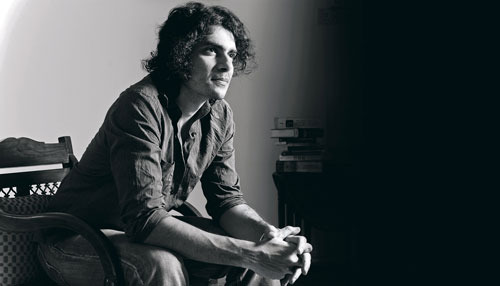
He’s smart, casual, with unruly locks that women want to tame and is completely unmoved by his own success. Kareena Kapoor believes he redefined her career with the role of Geet in Jab We Met. Award-winning writer-director Imtiaz Ali speaks to Sitanshi Talati-Parikh about his disinterest in love stories and not being a good writer, hot on the heels of his latest film Love Aaj Kal

Imtiazali

I think women are much smarter than men.” Pat comes his reply when I suggest that while women loved his latest romantic story Love Aaj Kal (LAK) starring Saif Ali Khan and Deepika Padukone, most men were not visibly impressed. Despite how it sounds, Imtiaz Ali is extremely self-effacing, to a point where he appears not to believe in his own success. It seems to be a mere accident that he can be considered a film-maker of distinction, in a space of the simple love story.


Ali, contrary to expectations, doesn’t like watching love stories. “I prefer relationships like those in Wong Kar-Wai’s Chungking Express (1994). There will always be a man-woman relationship in my films – I am old enough to admit that I like women.” That would explain one of the strongest elements of his cinema – his deep characterisation that surpasses the situation, story or script. The 38-year-old believes that fire is not born on screen alone – that chemistry exists first in the script; and particularly if the actors are suited to the characters. And he has a bias towards actors who haven’t done much work together: “If there is a kissing scene between a couple that is kissing all the time, there is no big deal – it is almost brotherly.” While Ali’s films display the maturing of a love story, happy endings are not a prerequisite. LAK was actually supposed to end unhappily, before he realised (with some insight from director-friend Anurag Kashyap) that it would not be very profound to start and end with a break-up.


The Jamshedpur-born film-maker’s stories are not set in the midst of tamasha and great social disturbance. Rather, they examine the turbulence of the relationship itself, often caused by distinctive character traits. About his choice of genre he simply states, “I’m not very cinema-literate and not really a movie buff. I don’t know what genre I belong to or am creating, and I am not going to fight that. I am selfish enough to do stories that I enjoy most at that point of time.” At the same time, he admits to having to think practically about the film he wants to make. “There are multi-crores riding on the film, it is a very expensive medium and I am from a very middle-class family – I don’t want to take the tension of squandering away anyone’s money.”


Reports suggest that LAK grossed Rs 62 crores worldwide in the opening weekend. “I didn’t have numbers in mind. It is overwhelming, the response, but my expectation from myself is not very much.” Whether he is out to impress or not, people are more than willing to place their bets on him. “People’s faith is a double-edged sword. You get the chance of doing what you want to do, but you also lose some of the filter for your work – finding people who will be direct with you!”


While it is the crisp attention to contemporary dialogue and situations that is the hallmark of an Imtiaz Ali film, there were some murmurs about conversation over-kill in LAK. He looks piercingly back, appearing unfazed. “I am not a very good writer. I’m a director who manages to put his thoughts on paper. A writer would have more precision, more imagination in terms of dialogue. Don’t get me wrong – I’m not saying it doesn’t work. But, sometimes I feel that what I am writing is merely a code for the director [myself] to understand at the time of the shoot.” Writing the scripts for his previous films was a matter of circumstance, not choice. And yet, starting from school skits, the work that he enjoyed doing the most was that which was organic, home-grown and self-written. Regardless of his personal opinion, after winning accolades for Jab We Met (2007) – which he is dismissively appreciative of – Ali can’t escape his own writing.


Doing theatre in Delhi, an advertising course in Mumbai and becoming a “tape-delivery boy for Zee TV” finally brought Ali to television (think Purushetra and Imtihaan), where he spent many years struggling to find a balance between his two-hour stories and their long-term serials. “It was my mistake – TV is not looking at completion, it is looking at longevity.” Then Socha Na Tha (2005) happened, over a period of three years, “where all hell broke loose”. After Socha’s unsuccessful stint at the box office, Ali found himself floundering. “I’ve been a little irresponsible with the practical aspects of life. I don’t know how I have survived up until now. It’s a miracle. I have been broke, I am still broke, but I have got money whenever I needed it. And yet, that didn’t pressurise me to do a film that I didn’t want to, even if it looked like the most attractive proposition on earth. And then Jab We Met happened.”


Today he sits back casually, with no particular story that he plans to start work on soon. “There are stray bits floating in my mind – I don’t know which will materialise into a story. Some of them are so scary I want to forget them! The slate is clean – it gives you insecurity; but right now I have nothing. Usually I wait for myself to lose interest in my old stories. If I lose interest, I feel relieved that I don’t have to waste another year convincing people to invest in it! The best thing to do with a story is not make it. But, if it is compulsive, you have no other option – it is like a ghost you have to exorcise.” He stops to catch his breath. Does he actually enjoy making films? He chuckles, with a flash of the Imtiaz Ali charm. “A lot actually. More than anything else. It is a little compulsive-obsessive rather than a work of creative art that you enjoy with a cup of tea (he’s just finished two cups) and good music.”

When The Masks Slips….

18 Tuesday Aug 2009

Posted by sitanshi talati-parikh in Interviews (All), Interviews: Cinema, Publication: Verve Magazine

≈ Leave a comment

Tags

Abhishek Bachchan, aishwaryaraibachchan, Amitabh Bachchan, Anil Kapoor, Arjun Rampal, Bollywood, Cirque du Soleil, Farah Khan, Farhan Akhtar, Govinda, hrithikroshan, IIFA, indiancinema, Interview, Lara Dutta, Macau, Madhur Bhandarkar, Neil Nitin Mukesh, Riteish Deshmukh, Sonam Kapoor, Sonu Sood, Sushmita Sen, vervemagazine

Published: Verve Magazine, Morality, 75th black-and-white issue, July 2009

In a special media partnership with IIFA, Verve collects the memories, candid moments and some extraordinary quotes from the stars that glittered on the green carpet at IIFA’s 10th anniversary celebrations in Macau. Sitanshi Talati-Parikh shares her weekend diaries, where her conversation with the stars veers between dark and light

I think it can all be traced to our first few moments in Macau – at the ferry terminal, sans conveyor belt for our luggage collection. Harried-looking local baggage handlers were pounding in and off-loading massive amounts of luggage onto a corner alcove, while the entire flight’s passengers – all headed to IIFA – looked on in bemused silence. Designer Anamika Khanna standing lost and bewildered clinging onto her bags, Farah Khan’s plaintive cry for help directed at brother Zayed, while the latter scouted around for local help and Anil Kapoor and Sonam Kapoor’s stealthy exit, all established the premise of the diaries of stardom. Ferry terminals, I have decided, are great levellers.

As I ate meals with some of the actors and directors who were courageous enough to step out of their room and walk the massive hallways of the excruciatingly large Venetian Macao-Resort-Hotel, I found them to be relaxed outside their domain. This was a work-vacation, where they would be winning awards amid great fanfare. I watched Farah Khan working through the day setting up her dazzling designs – sported by many a star on the green carpet as well as the fashion runway. With Hrithik and Sussanne Roshan being her show-stoppers, the crowd couldn’t help but take their eyes away from the sparkling jewels. Farah Khan’s personal style mantra? “Never over-accessorise. Don’t draw people’s attention by wearing too much bling – let your true personality come out.”

And then true personalities began to come out: the scales tipped a little towards the dark side, with the Cirque du Soleil-esque masks slipping and the layers of make-up barely concealing discomfort. What happens when a popular star walks past and steals the show? The moment an Abhishek Bachchan or a Hrithik Roshan would stroll past, they would get mobbed in seconds, while a talented Vinay Pathak would walk along practically incognito. With Aishwarya Rai Bachchan in the forefront, Mugdha Godse was barely noticed on the green carpet.

Iifa21

Or Lara Dutta, who was noticed, not just for her lively presence and wit, but also for stepping up to the podium uncalled, claiming that Riteish Deshmukh, Boman Irani and she were (for the weekend) “joined at the hip.”

The crowd who had gathered over the days just for that one big celebrity sighting, often paying hefty sums of money for show tickets, spent most of their time hanging onto the barricades or prowling the passageways in search of their favourite stars. There were subdued murmurs of, “Where are the big stars? These are the young upcoming ones!” Ah, the price of fame – being a nobody is better than being a minor celebrity!

Iifa01
Iifa03

Walking down the green carpet, Abhishek, forever the doting husband, was not left with any option but to lose the charming veneer and adopt a stern countenance with a group of fans that were jostling too close to him and Aishwarya.

Iifa22

On the other hand, Arjun Rampal’s condescension and Anil Kapoor’s flicker of impatience with what can only be feigned disinterest as their fans collected and tried to get their autographs, made me wonder how it is possible to be so dismissive of those that have made them stars? Maybe, they were just tired?

Iifa14

You could tell that the gentleman was tired. The eyes had dark rims and they were red – with exhaustion or lack of sleep, or both. But he went on. As a reporter said, “When he talks, we have no choice but to listen.” IIFA brand ambassador, Amitabh Bachchan held every single person’s attention when he said: “We believe that cinema binds communities together. When we visit the cinema and we sit in a darkened hall, we never ask who is the person sitting next to us – we never ask whether he is Hindu, Muslim, Sikh or Christian; or what caste or race he is; or what nation he belongs to. We all sit there enjoy and love the product that we see. We sing the same songs, laugh at the same jokes we cry at the same emotion. What better example of integration than Indian cinema?

I asked him (for our thematic 75th issue) what he would define as the darkest period in Indian cinema. Not finding the question to be from the common mould, he asked for it to be repeated, and then in his commanding voice answered: “Cinema is a creative art and anything that restricts creativity can be termed the darkest era. When you restrict creativity, you challenge the very tenet of democracy, of freedom of expression – much like that of the press. If you say that you can only paint a painting in two colours, that is restricting creativity. That cannot happen – in a free world, in a free country as India is, we need the freedom of expression; keeping within the laws of the nation and the culture of the nation.”

Cushioning a star ego is a task into itself and with every expression, one can and must read between the lines. Amitabh Bachchan had a priceless expression when asked by a media person, “Bahut stars nahin aaye, to is time kya IIFA thoda thanda lagta hai? (Isn’t IIFA less glamourous this year – with so many stars not present?)” Taking barely a moment to recover from his amazement – I mean, who asks the Big B this sort of question? – he replied flippantly to appreciative laughter, “Aap hain to thanda kaise hoga? (With you present, how can you say the glamour quotient is missing?)”

The media were at their crass best, often behaving like buzzards – circling their prey and then swooping in for the kill. As I sat near Sushmita Sen and Govinda, waiting in dignified repose for a moment to ask my question, a young lady (if I may dare call her that) of TV origin came and sat on top of me – assuming that would be the best vantage point from which to force her questions. It required my highest level of meditation techniques to not throw her onto the cameraman crouched below. Sushmita, having lost most of the weight she had recently gained, looked stunning in sleek animal prints that showed off her tall, confident persona. She fielded questions (about her ‘fitness mantra’) with cultivated finesse – a reminder of her days as a beauty queen.

Talking about beauty and confidence, one simply cannot leave out Anushka Sharma. Barely a film down, and a mere modelling career behind her, this newcomer stood out with astonishing self-assurance and poise. Always well put-together, she finally had to exclaim, “I am running out of adjectives to describe the experience!” when repeatedly asked about her resounding success in landing a double whammy for her first film Rab Ne Bana Di Jodi (2008) – the Yash Raj banner and Shah Rukh Khan. “I won’t sign films simply because I want to have a bigger house or car,” said the young girl – as if proving that she isn’t out to “play the number game.”

Iifa31

Prevented by good sense and daddy dearest from playing the number game, is the very tall and very good-looking Sonam Kapoor. Vivacious and friendly, she awaits her coming of age in her next film – where she plays Jane Austen’s Emma. When the media questioned her about the answers to life, she looked bewildered. “I am still growing up as well – I can only find answers through trial and error. It is scary to have the kind of responsibility where you are asked questions about how things should be.” She was a tomboy growing up – “If you look at the so-called big stars of the past few decades, they are not the ultra-glamourous, big hairdo, lenses-wearing women. Think Nargis, Kajol, Rani Mukherjee, Sridevi. And they are the biggest stars. Madhuri (Dixit) is absolutely beautiful in Sailaab (1990) without her hair blow-dried in Humko Aaj Kal Hai…with hardly any make-up. Every generation has a naturally beautiful and spontaneous star. India accepts these stars.”

Aspiring star Sonu Sood, best known for his role as Sujamal in Jodhaa Akbar (2008), strives to choose roles with character. The tall actor (hailing from an engineering-and-some-modelling background) was mild-mannered and respectful of the seniors that abound in the breakfast hall, leaving the interview in deference to a veteran director who came to speak to him. Not before he remarked, “All my characters have had grey shades – in Yuva (2004), in Jodhaa Akbar. Every person has some kind of a grey shade. It connects with a cine-goer. Pure whites are not going to touch the hearts of the audience – it is the grey that matters, that adds colour.”

Iifa25

Riteish Deshmukh

has apparently gained sincere popularity for his comic timing – as evidenced by the little race that took place in the hotel lobby – where he was being chased by some fans (an entire family, no less) and the guards were chasing the fans. It was a real-life comedy, where we of course, followed suit to see how it all panned out! The actor, who is also an architect, was candid when he said: “A film was offered to me, and I love films, so I gave it a shot. Comedies worked – if people find my comedy palatable, then I’m really grateful! I cannot force my stuff onto people – I choose films based on my sensibility or on what I think people might like. I like to face reality – I don’t like to think about things that could be a possibility – I am not delusional. Coming from a political family, loads of people thought that my first film was because of my father, who was a politician then. I don’t hold it against them, because if I was in their place I may have thought the same! I had to work hard so that people would call me Riteish Deshmukh and not son of Vilasrao Deshmukh – though I take great pride in being his son.”

Iifa17

He drove the audiences to a state of euphoria (definitely more than Peter Andre’s powerful performance – my colleague Arti may disagree) with his impromptu rendering of a number from Rock On!! Farhan Akhtar was accessible, even a little endearingly nervous while facing the media. His presence was subtle, and his talent immense. “It is important for me to find a character that is real – no person is black or white, no one is just good or just bad, people change depending on what life puts in front of them, or the circumstances and changing situations that may befall them. The character of Luck By Chance (2009) was fascinating, because he was so real – so driven by success that he was willing to put his morals and his ethics aside. To still make him enjoyable to watch and on some level identify with the fact that everything that life has offered him and the decisions that he has made, albeit wrong in retrospect, seemed like the right thing for him to achieve whatever he wanted to achieve. It was so interesting.”

Iifa27

Neil Nitin Mukesh, an experimental role-player who stayed out late partying and greeting everyone with exceptional deference, would agree. His leaning towards the darker roles has him playing Parag Dixit – a youth jailed for a crime he didn’t commit – in Madhur Bhandarker’s next, Jail. “I started my career by getting out of my comfort zone. I want it to be a challenging career. The reason I choose dark films and characters is very simple – they are more interesting. Where else do you get the chance to actually evolve as a human being?” As I happened to be sitting next to the scriptwriter, Anuraadha Tewari, she remarked that with Jail, “Madhur’s [Bhandarkar] layering has gone from black and white into grey – less judgemental than his original films.”

Iifa28

On the flight back with the man himself, who plans to shock audiences with a comedy – albeit “sensible humour” – soon, Madhur Bhandarkar emphasised, “My movies represent contemporary society, with characters with grey shades or starkly black and absolutely positive. I try to combine realism and fiction. People think my movies are an exposé – I disagree. I think they are simply a mirror to society – a representation of all the myriad kinds of people that exist. My protagonist will always have a grey shade – from Chandni Bar (2001) to Fashion (2008). Priyanka Chopra was actually worried about taking up the role (in Fashion) because of what it would do to her image. But every film provides redemption for each of these characters – where the person comes out with flying colours.” I wonder if redemption is a mirror to real life….

The Cirque du Soleil show was a colourful blend of acrobats, jugglers, clowns, colours, masks and immense talent. It had us catch our breath ever so often as the performers catapulted themselves into the topmost echelons of artistic delivery. It also stood as a resounding metaphor for showbiz – a cruel make-believe world that weaves a magic wand and creates an aura of stardom. The ‘stars’ have no choice but to keep this myth alive. As I met some of the assistants – the make-up artistes, the hair stylists and the myriad staff that create the ‘look’ of the star, I found that they were loyal to their own, and busy tearing apart the rest. The models and the dancers were either stubbornly steering clear of showbiz, or trying to wheedle their way in. Fans, the fuel to stardom, were as fickle as they were loyal.

It is lonely at the top. It is also crowded, messy, competitive and superficial. And yet there are people like Javed and Farhan Akhtar whose accessibility and soft-spoken countenance makes one re-evaluate the black and white of stardom. Is it simply the on-screen persona that matters, or is it something more?

Being Hrithik

Iifa19

Hrithik Roshan was charmingly affable and confidently reserved. He fielded questions about his personal life with ease and without a flicker of annoyance. Waiting for 45 minutes outside his room (with a host of other media) to speak to him, seemed to be well worth the wait. He will be seen next in Kites with Mexican actress Barbara Mori; and will begin work in Sanjay Leela Bhansali’s next untitled film alongside Aishwarya Rai Bachchan – which he considers to be a dream role, the first after Koi Mil Gaya.

On not playing a really negative role
“In Dhoom 2 (2006), the idea was to make the bad look good. I have hardly done that many films – I do a film a year. I have no reservations on playing a completely negative character. The idea is to explore the boundaries of my talent as much as possible. Something that is exciting and that scares the hell out of me – I would do it! It’s more fun when you leap without a safety net!”

On reactions to an unkind media
“I have always been the kind of guy I am. I don’t have confrontations with people, problems with anybody in the industry. I am a peaceful guy – I live by my truths and I live free. Once you are happy with your truths, it doesn’t matter what somebody else says. My grandfather told me a long time ago, ‘The world is out to provoke you – if you get provoked it is your downfall.’ If I jump out and start justifying things, it’s just going to make me look silly. It is going to implicate that there is something wrong. I am happy the way I am, I am happy with my family.”

On Imran Khan who considers Hrithik the epitome of a perfect actor
“It is not just about talent – it is about being a good human being. What comes out through the screen subconsciously, is more the person you are than just the expressions you make and the talent you have. Which is why I think Imran will go a long way.”

On being a star
“I have no idea what it means to be a star. I know what it means to be an actor – it’s a job that I do, it’s a means to an end. I work hard so that I can enjoy the kind of life that I want to enjoy with my family and loved ones. I don’t even want to understand what it means to be a star – it is stressful and it is something that is used by some people to fill up that empty void which is a bottomless pit, the ego – I try and stay away from that.”

On living the art
“You have to enjoy what you do if you want to be a part of this industry. If you want to be a star – that is the wrong end you are pursuing. You have to truly enjoy the art. Acting is living in front of the camera. You are expressing emotions in front of the camera. If you are living with inhibitions and not expressing yourself every single moment, you will not be able to duplicate that in front of the camera. If you haven’t lived it, you can’t express it. Live free, explore your emotions despite a sense of fear. Have the courage to explore yourself – see what you are made of.”

Javed Akhtar: Of Timeless Words

20 Monday Jul 2009

Posted by sitanshi talati-parikh in Art, Literature & Culture, Interviews (All), Interviews: Cinema, Publication: Verve Magazine

≈ Leave a comment

Tags

Bollywood, dialogues, IIFA, Indian Fiction, indiancinema, Interview, Javed Akhtar, lyrics, screenplay, Scriptwriting, vervemagazine

Published: Verve Magazine, 75th Black and white issue, Features, July 2009
Photograph by: Sitanshi Talati-Parikh

You cannot be entirely objective towards a person who can be considered one of India’s greatest talents. And yet, Javed Akhtar doesn’t let you down. He is approachable, relaxed and as erudite as you might expect – talking a world of sense from a lifetime of experience, with more than a pinch of humour. Of course, the writer-lyricist-poet admits in a staged whisper, “Shabana [Azmi – his wife] is much more serious than I am.” Candid and rather regretful about his shortcomings – “being not-so-disciplined and rather lazy” – the father of two rising stars of Indian cinema (Farhan and Zoya Akhtar) speaks his mind to Sitanshi Talati-Parikh

Javed01

On being down-to-earth

I have never thought about it. If someone starts thinking about why he is modest, then he isn’t a modest person. If you have certain objectivity, you will know that wherever you are, there are many people who are miles ahead of you!

On what it means to be a star
When I was young, I also admired many people – Pandit Jawaharlal Nehru, a writer called Krishna Chandra, Dilip Kumar. Ultimately, as you grow up, you realise that some people are bestowed with some exceptional talent – they have focussed, worked hard, contributed something towards art, literature and human society – but behind all those achievements there is a human being, a person. I don’t feel that kind of blind admiration anymore. A ‘star’ is actually a very vulnerable person, well aware of his/her own shortcomings and weaknesses and failures.

On nostalgia – about the industry that once was
Life offers you packages. It’s not that things were good and now they are not good. Ultimately the film industry is becoming more streamlined, with people becoming more professional and more focussed than what they once were. The film industry is coming out of the feudal era and entering the industrial mindset. The good films of the 50s, 60s and 70s had a lot of social relevance, depth and literary flavour – and a certain dignity. Think Bimal Roy, Guru Dutt, Yash Chopra or Ramesh Sippy. Today films have more variety, technical finesse and people have become smarter, less pretentious and less melodramatic. But, today cinema lacks the strong edifice. Indian films don’t have the kind of power they once had. Rhetoric is not used the way it was. There is an attempt on understatement and restraint, a great reliance on the audience’s IQ. At the same time, I don’t see the magnum opus quality in their scripts – the saga-like stories are missing today.

On bridging the gap between esotericism and entertainment
Why has the industry decided that you can either be sensible or you can be interesting? Is it a choice? Ultimately, good mainstream cinema is extremely sensible and extremely interesting. This is the desired synthesis that I look for. Films like Lagaan, Taare Zameen Par, Dil Chahta Hai, Rang De Basanti all fall in that category.

On the darkest period of Indian cinema
In the 80s (all the way to the mid-90s) somehow something had happened to our society – and the film industry is a part and parcel of our society. The reasons are multiple – somewhere our aesthetics (be it music, architecture, cinema, theatre or politics) experienced a dip in moral values. Think of the times of Sarkailo Khatiya Jada Lage (Raja Babu, 1994), Choli Ke Peeche (Khalnayak, 1993) and Babri Masjid and the Ram Janma Bhoomi dispute. Cinema of any society doesn’t exist in any kind of socio-politico-cultural void. It is connected and even commercial cinema reflects the mindset of society. It is not a coincidence that such kind of cinema was doing well – where good cinema was actually marginalised. Thankfully, by the mid-90s we started reviving and the worst is behind us.

The best grey roles you have ever written are…
Gabbar Singh’s dialogues (Sholay, 1975), Vijay in Trishul (1978), Deewar (1975); or the important minor characters like those in Arjun (1985), and Raja in Mashaal (1984).

On feeling successful
I have had my share of defeats, deprivation and humiliation; at the same time, if I go to the grand total it is in my favour. Life has ultimately dealt me good cards. I don’t know if I am flattering myself, but I genuinely believe I could have achieved more than what I have. And that I should try to do it.

Awards mean…
I am in a strange situation – when I get an award I don’t get the same kind of thrill and excitement that I once did, but when I don’t get it I still get some kind of unhappiness. It is a bad deal – you get it and you don’t feel a thrill – it’s just another confirmation; you don’t get it and you start getting very suspicious – where am I? Why has it not come to me? Is my work not good enough? It is a precarious situation to be in!

On colour evocation
Black makes me think of Black power, black panthers (or the Black Panthers), Martin Luther King, slavery in the US, civil rights.

White leaves me with mixed feelings – it has a calming effect. It is a colour of peace and tranquillity, the word that comes to mind is an Urdu word: suqoon. Ironically, I don’t think of the white race with the colour white, while the colour black evokes thoughts of the black race.

Grey equals ultimate maturity. When you can see grey, you have matured. Black is not as black and white is not as white, if you have sharp eyes.

Imran Khan: An Actor and a Gentleman

20 Monday Apr 2009

Posted by sitanshi talati-parikh in Interviews (All), Interviews: Cinema, Publication: Verve Magazine

≈ 1 Comment

Tags

Aamir Khan, Avantika Malik, Bollywood, Delhi Belly, imrankhan, indiancinema, Interview, Jaane Tu Ya Jaane Na, Kidnap, Luck, vervemagazine

Published: Verve Magazine, Verve Man, Features, April 2009
Photograph by Colston Julian

Affable yet reticent, blunt yet polite, serious yet funny, unemotional yet moody, Bollywood’s latest poster boy seems to be a contradiction of sorts. Aamir Khan’s nephew and Nasir Husain’s grandson, 26-year-old Imran Khan is two films down with two new releases, Delhi Belly and Luck coming up this year. Sitanshi Talati-Parikh draws the suave and restrained actor out, even if just for a little bit

Imran02

The brows are furrowed in intense concentration. The facial expression is blank. The eyes are reflective. The humour is deadpan. No smirk, no smile, not even a laugh line. And yet we all titter. What is it about this new kid on the block that sends hearts fluttering and makes you yearn to know more? As I watch Imran Khan step self-consciously in front of the camera, taking shot after shot effortlessly, I can’t help but notice his face has character. Whether it emanates from the well-crafted jawline or the intensely expressive eyes, it’s unmistakable. After every shot, Imran lithely hops over for a critical assessment. He is his own worst (or best) critic. As he discusses camera angles with photographer Colston Julian, I learn that he is a self-taught actor (or more accurately, natural), while he has been formally trained in writing, cinematography and direction at New York Film Academy, Los Angeles.

In a crisp white shirt and black trousers with a funky Batman tie (he is a huge fan), Imran sits cross-legged before me on a chair with an expectant look on his face. Why would someone who looks as good as him not attempt to give acting a shot and head straight for direction? As a child he picked up the camera, playing with genres like sci-fi (on the lines of Alien), Agatha Christiesque murder mysteries and spoofs. Post-school, he stumbled from market research into advertising (including ad films). At this point he realised films are what he understands best. After all, the mere smell of celluloid gives him butterflies in his stomach.

Acting was never his intention. A sequence of events – or fate – combined with Abbas Tyrewala’s faith in him led to Imran being cast as the lead in Jaane Tu…Ya Jaane Na (2008), the film that made him an overnight star. Despite having played a young Aamir Khan in Qayamat Se Qayamat Tak (1988) and Jo Jeeta Wohi Sikandar (1992), he says matter-of-factly, “I never thought of myself as being a very good looking guy and figured there was no place for me in the Hindi film industry. Hrithik Roshan set the bar. He is a complete package. I’m not built like him, I can’t dance even a quarter as well as he can – that’s something I aspire to.”

Noticing my imperceptible shiver with the blast from the air conditioner, he solicitously jumps to his sock-covered feet and props himself up on his toes to tone down the room temperature. Then in a flash he is back in interrogation mode. Born in Wisconsin, America, to Nuzhat Khan (director Mansoor Khan’s sister) and Anil Pal, he moved to Mumbai with his mother after his parents’ divorce. He was a year and a half at the time. In all the schools he went to – including Bombay Scottish (Mumbai), two schools in Ooty, a nature-based gurukul in the Nilgiris, Bangalore and Fremont high school in Sunnyvale, California, he was always the new kid in school. “It was really tough. I didn’t grow up being considered cool or dating a lot of girls. I was into science and books and not into sports. I was always the odd one out at parties, sitting in the corner, knowing barely two or three people.”

Imran admits that constantly moving from school to school made him more independent but also a bit of a loner. “I don’t socialise a lot and like silence. I can’t be on all the time – I need occasions when I am with absolutely no one so I can reset, recharge, rejuvenate and then come back out.” He has only just started to make friends in the industry – think Ranbir Kapoor – since he grew up not knowing anyone. Though fond of listening to music, he can’t abide television. He actually doesn’t own a TV or a cable connection. Surprising, considering that he is an obsessive movie buff and watches three to five movies a day (on his computer) and is happiest when at a movie theatre.

As we get to the much-publicised fact that girls are extremely “well-behaved” around him – “very calm and composed – no crazy stuff,” I discover he is also the guy who likes to be in the background and tries not to get noticed. “I roam around town (getting a roll at Candies, Bandra) practically invisible. It’s like an internal switch I can turn on and off. I can walk into a room and make everyone turn around and notice me, or I can walk across a room and no one will ever realise that I am there.”

Imran04

He can be brutally blunt without any perceptible intention of causing discord. “I can’t make stuff up or say anything that isn’t exactly as it is. I live my life by fact and follow reason and logic. I find emotion and irrationality hard to deal with.” Does that make relationships complicated? He swiftly attributes his personal growth to his relationship with girlfriend Avantika Malik, whom he has been seeing for over six years. “I have learned a lot about myself and become a more balanced person. I was 19 when I started seeing Avantika, at a point where I couldn’t express my thoughts and feelings. I’m still not very good at that but have become more comfortable with my own emotions.” The young actor doesn’t see any danger in tagging himself as ‘unavailable’ – “People trust you more if you are open about your relationships.”

Post film school in LA, he could have tried his hand at Hollywood movies. He attributes his return to India to finding it offensive that elite Indians can be so disdainful of Hindi films. “I understand that these movies have shortcomings, but I want to make it better!” He explains earnestly, “I have never lacked anything in life. Everything that I have today comes from the film industry. My grandfather started with nothing – his family threw him out when they found out that he wanted to work in the film industry. He has built it all up, and for me to run away from that is impossible.” I can quite believe him when he says his strongest point is his integrity. “If it is not right or not honourable, I won’t do it – like taking money for things I don’t believe in. It may be an old-fashioned concept, but it counts for something, right?”

Right. And victory follows the honourable? According to the Capricornian, “Success is having the freedom to choose to do only what you really want to do.” By his own definition, Imran is very successful. While scripts are lined up at home, he can’t seem to find one that excites him. “I feel bored and stagnated if I am doing the same thing over and over – that’s part of the reason I am not a banker!” It explains why he jumped from playing a romantic hero to a villain. Ironically, while serious roles are easier for him than light, fun, “torturous” scenes, Imran suffered a lot emotionally, playing the negative role in Kidnap (2008). He couldn’t sleep, would suddenly start crying, and even threw up, dealing with the violence of the character. I ask him if it is worth it. Pensively he says, “I have come out of that stronger as an actor. It’s like scar tissue – when it heals, it heals back tougher.”

In his upcoming comic caper Delhi Belly, directed by Abhinay Deo and from the Aamir Khan Productions banner, Imran sports a new look. He loses the beefed-up frame of Luck, a forthcoming action-thriller directed by Soham Shah and turns into a long-haired, scrawny guy. “Everyone knows how much your physical appearance affects you personally. Women think that way about being fat while guys worry about being skinny.” He straightens his body and puffs his shoulders to demonstrate. “Physicality means a lot – for better or for worse. That’s how we are!”

He is precise and involved about his look to the extent of admitted eccentricity. The idiosyncrasy is tinged with moodiness – he shuffles simultaneously through multiple books and movies entirely dependent on his frame of mind. Imran, who coined, “I like humanity in principle but not in practice,” doesn’t wear his heart on his sleeve. “The people who matter know and understand me. I don’t feel everyone needs to like me beyond a superficial level.” And yet this intensely private person is also incredibly sentimental. The quirky tie collector fondly treasures his grandfather’s blue tie; and the green-and-yellow striped tie worn by Aamir in Jo Jeeta Wohi Sikandar is sported by the nephew in the publicity stills of Jaane Tu…. I inadvertently stumble upon a pair of bright-hued Converse shoes (another fetish) gifted to him by a friend on his birthday, that he doggedly wears despite their being a size too small.

He puts the shoes down and looks up expectantly. My first and last memory of him is his intense concentration. He doesn’t get distracted easily as people move, doors open, phones ring, bugs fly; he remains completely tuned into the task at hand. For about an hour the deep brown eyes are trained onto me and the very second, the conversation (as he prefers to term it) is over, the eyes have clicked out and the focus has shifted to the next task at hand. The bright young Khan – who refuses to tint his car or wear sunglasses because they hide the eyes and mask the face – has withdrawn into his shell, the inscrutable mask back in place.

Zoya Akhtar: The Zoya Effect

20 Friday Mar 2009

Posted by sitanshi talati-parikh in Interviews (All), Interviews: Cinema, Publication: Verve Magazine

≈ Leave a comment

Tags

Bollywood, indiancinema, Interview, Luck By Chance, Zoya Akhtar

Published: Verve Magazine, Features, March 2009

Luck By Chance (LBC), a film visualised in Goa, worked on for seven years, which finally saw daylight in 2009, catapulted debut writer-director Zoya Akhtar into tinsel-town limelight. Javed Akhtar and Honey Irani’s daughter and Farhan Akhtar’s sister has the Midas touch herself, with a self confidence that appears to be cultivated from over a decade of hard work. Sitanshi Talati-Parikh finds her enjoying the journey

IT IS REALLY TOUGH TO pin her down, but when you do, she is patient, effervescent and a powerhouse of energy. I quiz her on her newfound success – not easy with a debut film. “It is a bit of a dichotomy – I expected the collections to be better; I didn’t expect the film to do so well for me! The reviews and feedback have been amazing.”

Has the success of LBC raised the bar? “Your second film is actually a tough one – it has to be ‘do I just keep doing what I do; or do I have to think of the commercial market now?’ What you work with should keep you excited for two years – and turn you on.” What turns Zoya on is a “clever” movie – like The Usual Suspects or Munnabhai MBBS or Lagaan; or one that really touches you, like Black Friday. “I don’t understand movies where the producer and director ask me to leave my brain at home.”

We discuss the clever nuances of LBC, and Zoya is surprisingly modest. “As a director, you need people who can take your vision and give you ideas that you haven’t even thought of – your crew can make or break your film.” Zoya, who studied film at New York University, post literature and sociology at St. Xavier’s College, Mumbai, has always written her own work. She finds that to be the secret of the exacting clarity required to take her vision forward.

The 36-year-old movie enthusiast prefers to engage and question norms in the realms of mainstream cinema. “There is no film-maker who wants only a few people to see his film. There is no more art and commercial cinema. The point is to merge this gap and simply make good commercial films.” And is art instinctive or learned? “Both. You have to be a storyteller at heart, but you have to learn – whether it is from a DVD library, film school or working on a set.”

I point out that there is a sense of irony in making a film about struggling Bollywood ‘have-nots’, when you represent the ‘haves’. She retorts immediately, “What do mean by ‘have’? It’s not like I decided to be a director and got a launch on a platter! If you want to do anything that is slightly out of the box, you have to struggle like anyone else. There are perks – you have access to people, but they won’t do something simply because you are so-and-so’s kid or sister.” Which is evidenced by the fact that all the big stars she approached for the lead role politely turned her down; at which point her brother, Farhan, bailed her out. Taking this in her stride, Zoya, who is tenacious and resilient, laughs and hopes the casting will be easier for her second film. On the other hand, having had experience as a casting director, Zoya – who incidentally would love to cast Sonam Kapoor for one of her films – recalls the numerous aspiring actors that hope for an audience. And while she looks at some of them, thinking that they probably won’t make it, she doesn’t say it aloud. “After all, in this industry, you never know!”

Sharp and incisive, she has a knack for creating characters that are extremely likeable despite their inherent flaws or weaknesses. “I truly believe that if you retain a character’s humanity, you can make the character do anything. They are not heroes and villains, they are people. We come from a culture where everything is so black and white – the good are so good and the bad are just bad. It is boring! They work in superhero films or films like Die Hard, but not all the time.”

Zoya Akhtar is one of the many young women directors now holding fort in Bollywood. “There is a place opened up for young directors. The gender is not really relevant. In this industry – you can be a man, woman, dog, alien, if you can make money for them, they will hire you! And it is a secular industry – it is the only one in the country where it doesn’t really matter what your religion is.”

The story of LBC has a message that resonates deeply with Zoya. Sipping green tea, she says thoughtfully, “We are in a place where success and failure are so polarised – the media tells you whether you are successful or not. I have to think of my sense of self – my accomplishment with my first film. ‘What do I feel about it?’ That to me was what my film was about. Success or failure is merely about the choice(s) you make.”

Zoya speak

I revere…Martin Scorsese, Quentin Tarantino, Mani Ratnam, Mira Nair, Robert Altman, Roman Polanski, Wong Kar Wai, Woody Allen.
I can’t turn off…The Godfather, Scarface, A Fish Called Wanda.
Directing or writing? Both – Can’t I have both? I want it all!
I’m currently reading…One Bright Summer Morning by James Hadley Chase.
When relaxing…I read or watch a movie.
In five years I will be…living in Goa.
I will be satisfied when…I will never be satisfied! I don’t want to reach anywhere – the journey keeps me going.

← Older posts
Newer posts →

|  Filling the gaps between words.  |

Writing By Category

  • Art, Literature & Culture
  • Brand Builidng
  • Brand Watch
  • Fashion & Style
  • Features & Trends
  • Fiction
  • Food
  • Humour
  • In The Media
  • Interviews (All)
  • Interviews: Business
  • Interviews: Cinema
  • Interviews: Cover Stories
  • Interviews: Lifestyle
  • Interviews: Luxury Brands
  • Interviews: The Arts
  • Interviews: Travel
  • Musings
  • Parenting
  • Publication: Conde Nast
  • Publication: Elle
  • Publication: Mint Lounge
  • Publication: Mother's World
  • Publication: Taj Magazine
  • Publication: The Swaddle
  • Publication: The Voice of Fashion
  • Publication: Verve Magazine
  • Social Chronicles
  • Sustainability
  • Travel Stories

Reach out:
sitanshi.t.parikh@gmail.com

© Sitanshi Talati-Parikh 2018.
All Rights Reserved.

Website Powered by WordPress.com.

  • Subscribe Subscribed
    • sitanshi talati-parikh
    • Join 51 other subscribers
    • Already have a WordPress.com account? Log in now.
    • sitanshi talati-parikh
    • Subscribe Subscribed
    • Sign up
    • Log in
    • Report this content
    • View site in Reader
    • Manage subscriptions
    • Collapse this bar