• About
  • Brand Building
  • Film & Drama
  • Writing: Arts & Lifestyle
  • Writing: Interviews
  • Writing: Luxury Brands
  • Writing: Travel

sitanshi talati-parikh

sitanshi talati-parikh

Category Archives: Interviews: Cover Stories

The World According to Aishwarya Rai Bachchan

19 Saturday Mar 2011

Posted by sitanshi talati-parikh in Interviews (All), Interviews: Cinema, Interviews: Cover Stories, Publication: Verve Magazine

≈ Leave a comment

Tags

Aishwarya Rai Bachchan, Bollywood, Interview, Interviews: Cinema, Interviews: Travel, Verve Magazine

Published: Verve Magazine, Cover Story, March 2011
Photographs by Mike Ruiz

Aishwarya Rai Bachchan’s natural precociousness springs up at every twist in the traveller’s tale. Sitanshi Talati-Parikh watches the ex-Miss World-turned-moviestar-and-homemaker switch from child to Inca queen, Bollywood dramatist to casual honeymooner, lost tourist to Disneyworld explorer, through loud giggles, flashing smiles, dramatic enunciations and passionate inflections, exploring a few of her many memorable journeys


Ash04

A little girl sets sail for the world in an “enormous ship”. The romantic notion of travel becomes a kaleidoscopic reality, possibly even a way of life, with her “shippie” dad and family. It is the mid ’80s when Japan is “very disciplined” and China is yet to come into its own. Around a decade later, winning the Miss World pageant makes her “a cultural ambassador of India” in places unpronounceable. And through it all, Aishwarya Rai Bachchan has felt the power of being Indian, of coming from “a world within the world”.


Since then, there have been movie shoots in exotic locales: from a desert full of water bodies in Latin America to remote towns in India, brand endorsements in cobble-stoned Europe, and the world becoming a stage, literally, with performances like the Unforgettable World Tour. “I will go out and experience a place, I won’t live in an ivory tower, while gauging it and being responsible. Ever since Miss World, people have given me a lot of love – whether you call it recognition or adulation, they have always been expressive in their connectivity with me. When they saw me on the streets, it wasn’t like ‘Ay, Aishwarya!’ – women would come forward blessing and embracing me.”


Always politically correct, her carefully polished voice modulating with occasional bursts of enthusiasm, the intrepid traveller sits easy, knowing that the subject of the day is one she can be naturally passionate about. She points out that while the world advanced technologically, becoming a “smaller place”, her life mirrored the advancement: “Everything became from a 14-hour or 18-hour flight to ‘just an overnighter’, because you started doing it so often. Abhishek (Bachchan) and I love flights – we’re psychotic that way.” And, as she inevitably spends an exorbitant amount of time in transit, the covert people watcher admits “feeling a lot for elderly Indian passengers who walk around staring at monitors. Airports can be overwhelming – with the distances, pace, people and security checks; and while they have become second nature to me, I can still relate to how the experience can be for the uninitiated.”


South Africa: “I had a funny feeling inside me – looking outside the airplane window – a sense of going away.”
There are three times that Aishwarya Rai Bachchan recalls feeling this way, with a distinct sense of poignancy. It began with the flight to South Africa as she left to compete for, and win, the Miss World pageant title in 1994. “I suddenly felt that I would be away from everyone and alone for a month. And the thought of being with a whole lot of people foreign to you; but when you get there, you just fit in. I don’t know if it was a premonition or not, but I sensed that life was changing.”


London: “When you land there in winter, you barely wake up from the jetlag and feel that it is dark, like night again.”
In London, where she was to spend a year as the reigning Miss World, she had the option to have her own apartment or to live with a family in their house. “And I, being the responsible one, chose to stay in a house with a very sweet elderly couple rather than alone in an apartment, knowing my family would feel more secure. It’s a very Indian thing.” It was the first time she was living on her own: “For further studies I never went outside of Mumbai, because my father was a marine engineer, and it was just my brother, mum and I living together; I would feel for my mother and didn’t want to leave her and go away.”


Shanghai: “Suddenly Shanghai was an absolutely different city, and the world was beginning to talk about the change in China.”
It was a very different China during her repeat journey in 1994, when she went as a model with Hemant Trevedi. “Shanghai was a symbol of that change – the modernisation and globalisation, like the US on this side of the world. This was a new culture, very much in keeping with the times or ahead of the time. Very interested in India and Indian fashion and it was almost a privilege to be there with our fashion and our designers.”


China: “This time I was shooting a song on the Great Wall doing a little jig!”
In 1994, she had walked up to the fifth gate of the Great Wall, with a “more grown-up taking away, recognising the passion of generations working on building this incredible wonder that we live with on our planet”. She was back on the Great Wall as an actor, shooting the song Poovukkul, which showcased the Seven Wonders of the World, for Shankar’s Jeans. “You never know when you are going to revisit a certain part of the world. As a kid, when I was there in the ’80s, they took us to a uniquely Chinese opera, and sang some of our Hindi songs, with all the Chinese in the audience looking at us because we were the one Indian family sitting there. You’ve heard of people in China and Russia listening to our music, our film songs, and then to think, on my third visit there, I was shooting a song, with a live audience of people fascinated by our cinema and the song culture of our movies.”


Times Square and historic sites: “I am an actor – it means you have to do everything!”
Dancing atop the Great Wall – did it feel ridiculous at all? “Interestingly enough, never,” Aishwarya answers decisively. “From the beginning, I never felt odd. When shooting for Aur Pyar Ho Gaya, I remember Bobby (Deol), even though he belongs to an actor-family, feeling a bit odd when we had to do ridiculous things in public arenas, like jump on a car, or run on the street with a toothbrush in our hand and toothpaste on our face.” Or the time when she was in New York City shooting for Aa Ab Laut Chalein in Times Square wearing a fuschia pink gown with a bow, big earrings and a flower in her hair. “I had no inhibitions. You’ve grown up watching it, song and dance is so much a part of our cinema that you don’t feel silly doing it.”


Disneyland: “We both were like excited kids – free, happy and wonderfully reliving our childhood.”
A youthful exuberance springs up as she recalls memories of the past. “That family trip (’80s) that started with Japan ended with Disneyland, and Abhishek and I ended our honeymoon – after Bora Bora’s ‘drop in the ocean’ experience – in Disneyland. It wasn’t planned, but worked out beautifully into a great circle.”


Tunisia: “In my interviews, when I say ‘Every day I feel like a newcomer, or every day is like the first time’ there are those special moments when I actually feel that, very, very strongly.”
The third time she felt “the pit of the stomach feeling” was when she took off to shoot for “one of the best film experiences”, The Last Legion in Tunisia and Slovakia. “Not only did I have no one from my nationality on the crew, it was a guy flick – everybody was a dude! I was going to be a warrior, this action character. I was feeling it again: going away for a very long period, and I had to step away from very interesting work that was happening here. I had gone through that predicament too many times in my life and career: ‘Heck, all good things happening, do I have to choose?’” Without any idea of the geography of Tunisia, she was bowled over by the spectacular beauty of the country. She arrived three days before the shoot, without rehearsal. “Everyone was in panic mode, but my dancing helped me, I embraced action instantly. Beautiful Mediterranean water, very hot and warm…a bit much in the costumes, with all that armour! The places were so quaint and simple that we all became that much closer as a group.”


Slovakia: “These guys are HUGE. When you sit on these buggers, you don’t walk straight for two days after.”
Slovakia was familiar because she had been to Prague. She found the “cold (weather) and green” country replete with beautiful castles. “We were all like kids. We had so much fun working together, and such incredible discipline – whether it was Colin (Firth) or Sir Ben (Kingsley) – we were like children in a giant videogame.” And the most remarkable experience was spending time on horseback. She emits a loud, expressive laugh: “The horses in Tunisia are one size and then you get to Slovakia and you realise that the horses there are different. These guys are HUGE. When you sit on these buggers, you don’t walk straight for two days after!”


Budapest: “Ajay kept telling Sanjay (Leela Bhansali) that the two things he dreaded the most, dancing and singing, were what Sanjay made him do in the film.”
Budapest was special because Hum Dil De Chuke Sanam was shot there, for which she got her first Best Actress award. She recalls with a smile, the dance sequence with a rather nervous Ajay Devgn. “It was exceptional because it was an insight into their culture – the music and dance sequence was local to the place. So you actually experienced something unique, apart from the magnificence of being by the river and bridge. Also, we saw very few children in the country, and then we realised that they were encouraging people to have more children because of the mortality rate. Apart from the cuisines, it is always interesting to come away with an insight into the place. For me, it is not about hitting the shops; it is about getting to know a place.”


Brazil: “I was reliving my college days, being vicariously part of a gang of childhood friends.”
After Columbia during her Miss World reign, she was back in South America much later, when shooting for Dhoom 2. “The genre of the film we were working on made us relive our college days. I was privy to a close unit of kids (Abhishek, ‘Duggu’ Hrithik Roshan and Uday Chopra) who are childhood friends, and felt that I was vicariously part of the gang. Brazil offers that kind of spirit, the film gave that kind of energy.” Her eyes take on a faraway look as she recalls a surreal moment towards the end of the Dhoom 2 shooting schedule. They lay sprawled below the “magnificent” Christo, in the wee hours of the morning, before Hrithik Roshan was returning to his son being born. “We were in that woozy state of mind, because we had stayed awake the previous day and night and were watching the sun rise. It was a very quiet time, the early morning hour before the tourists arrived. We had had such a noisy schedule, all of us buzzing throughout, that it was the best silence we all shared. As we lay on the ground, we felt that Christ was looking at us from the skies. You hear terms like, ‘listening to the sound of silence’, but we experienced it then.”


Machu Picchu: “In my little bling feathered costume, I looked like one of the Inca queens.”
Shankar’s Robot took her once again to “the other side of the world”. She had taken a break from her career for the first time in her life. “I was facing the camera after an unexpected eight months all the way in Machu Picchu (Peru).” It was the longest journey they had made – counting the kind of flights, number of flights and locations. Upon reaching the place, a tiny township, after a train journey, they all walked from the railway station dragging their bags on the road. “As we trekked along, we suddenly passed a marketplace. My staff was exhausted, but I was thinking, ‘What an adventure!’ I love walking, because we don’t do that enough, and you actually get to feel the pulse of the place, get in contact with the people and culture, otherwise it could well be structure to car, car to airport, airport to plane, plane to car, car to hotel.”


Mexico City airport: “I was the pride of India and all that – and I didn’t have my passport. This was the worst moment for me.”
With her valet in tow, and running a fever, Aishwarya was connecting via Mexico City en route to Melbourne, Australia, representing India in a performance at the Commonwealth Games. Special Services, who had come to help them with the language barrier, disappeared with their passports. “It was bizarre. People there would smile a lot and look blank, because they didn’t speak the language.” She was taken to a private room that was empty save for two people who could be guards eating a home-cooked meal. “It was like the movies – being in a prison cell and these guys going at their meat sauce and bread. They would say something to each other and keep smiling at me. My valet has piercing eyes, so I would keep telling him to smile and keep his face easy. I suddenly felt I had to be protective and get us out of here. I had never felt that before. I wasn’t getting through on the phone to anyone and at one point I felt myself go a bit cold. I had wanted to visit Mexico, but this was not the adventure I was looking for!” After an encounter with a man who spoke perfectly-accented English and suddenly refused to speak any, to a bunch of “strong-looking women” who used the word “off-loaded”, Aishwarya nearly gave up. And then suddenly, in the crowd she spied the person who had disappeared with their passports and chased him down. “He was carrying our passports in his hand, and till date I have no idea why.”


Los Angeles: “With time, travel, age and experiences, you begin to like the easier, more social pace of LA.”
After boarding the flight from an eventful Mexico City, she was transiting through LA to catch her Melbourne connection, hoping to make it in time to perform. “I reached LA and suddenly life was beyond fabulous. It was the one time I cherished being who I am, in terms of the celebrity life. Suddenly, it was beyond comfort, think all superlatives. I always say that once in a while, if it gets too comfortable, God just does a little schickt (demonstrates a click with her fingers like playing carom). He’s watching his own little rom-com, thinking, ‘I want to have fun with you’. So I think, ‘Enjoy it, and turn it when you want to.’”


New Zealand: “The life that we lead, we are like gypsies, nomads, and I’m very quick to feel at home in any place in the world.”
She’s spoken a marathon, and yet looks like she can go on. I’m right; this would make a coffee-table book. “We don’t realise how quickly time flies and because a part of our life gets captured on celluloid forever, I feel as actors we live lifetimes within our lifetime.” She is off to join Abhishek in time for his birthday, in New Zealand where he is shooting, in a place she has never been before. Some people are meant to be children of the world, explorers in their own right. “And yet, when one travels so much, there will always be something unique to being home. It is your family that makes home what it is – it’s not the physical structure even if you say bed and all of that. I live a very homely life in the places that I go to. Besides, as Abhishek rightly puts it, one in six is an Indian: you can go to the farthest of places and we (Indians) will be there, saying, ‘Hello, you want home-cooked food?’ That’s the best part about Indians – they are there to feed you. You are at home anywhere in the world.”


Whom Women Want: Imran Khan cover story

13 Saturday Nov 2010

Posted by sitanshi talati-parikh in Interviews (All), Interviews: Cinema, Interviews: Cover Stories, Publication: Verve Magazine

≈ 1 Comment

Tags

Avantika Malik, Bollywood, I Hate Luv Storys, imrankhan, indiancinema, Kidnap, Luck, Nuzhat Khan, vervemagazine

Published: Verve Magazine, Verve Man Supplement, Cover Story, October 2010
Photographs: Joy Datta

Img_0110

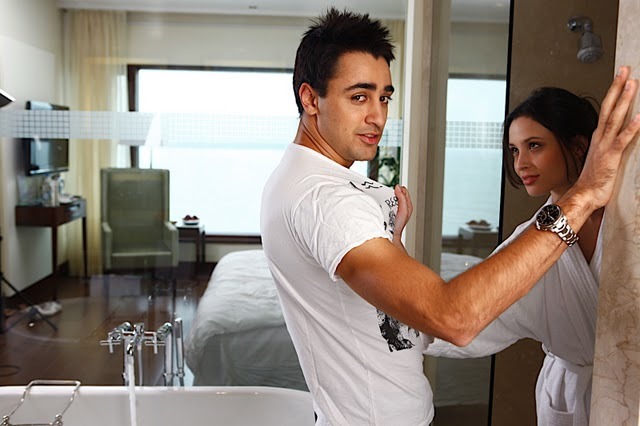
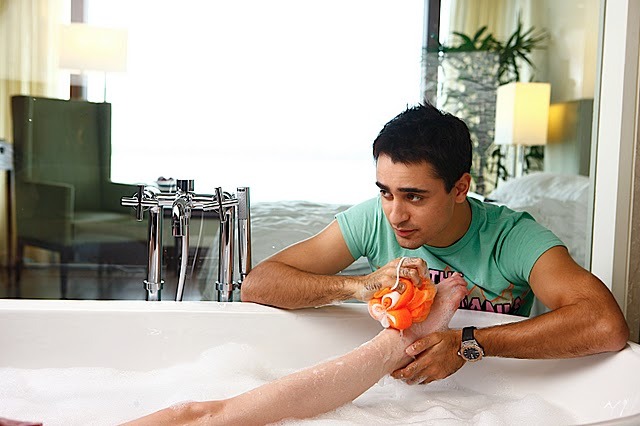
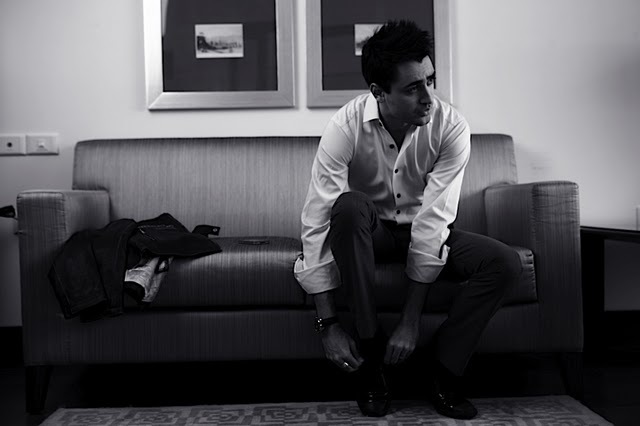
He’s the hot cake of the film industry, has a thriving gay fan following and is quite the favourite with the ladies. This is Imran Khan after he’s delivered his second big hit, I Hate Luv Storys and has a movie lined up with nearly every top actress in the industry: a big notch up from his overnight debut success. While Verve’s camera captures a day in the life of the movie star, Sitanshi Talati-Parikh looks beyond his distracting good looks to discover what makes him tick and makes him the coolest catch in town

“I’ve wanted him to be a man women would like,” is how Nuzhat Khan begins the conversation about her only child. Even the toughest detractors and hardest cynics would find it impossible to dislike 27-year-old Imran Khan, who admits to have consciously imbibed the best aspects of favourite characters from classic books, movies and comics. So, in a sense, the elusive, romantic notion of the man that women chase from fiction is actively present in Imran’s personality. Does that make him perfect? “It’s a work-in-progress,” he grins. In Nuzhat’s ideal lies a fundamental difference that sets Imran apart – while others stop at being good according to their own definition, Imran without self-deprecating, without martyring himself, goes the extra mile to be universally likeable.

Img_0111

This precocious child started speaking long, coherent sentences at a very early age – and in Nuzhat’s words, “He was a complete person even as a child, never requiring disciplining – I could talk to him like a grown-up.” It doesn’t appear to be a statement stemming from a maternal fondness, because she has always attempted to look at Imran as an unrelated person, without bias. “I would hate for him to have grown up thinking he’s special because his mother thinks so – it should be because he believes it.” And that is what makes Imran self-assured. “I don’t think I’ve ever had issues with self-doubt. What I can’t change, I don’t let it influence or affect me. Even if it may seem unnatural for a teenager to be so, I have always been a kind of calm, reasonable, logical person – prided myself on being mature. It is something I consciously hold onto, that I’ve never wanted to lose. I always wanted to be the guy who can handle a situation.” And he can do that, MacGuyver-style, in any condition, under any circumstance.

This what his fiancée, Avantika Malik, in her light, lilting voice, lists as one of the traits that makes him the man she has known to love for eight years and counting, from the age of 19. She finds that through career choices veering from wanting to remain behind-the-scenes as a director, to embracing the limelight as a hero, nothing has changed in the boy she dated and the man she is soon to be married to. “The great thing about Imran is that at his very core, he remains completely the same, grounded and real, though it’s true that he carries himself with more ease and with greater confidence now than ever before.” Avantika admits that her respect for him also stems from the vital fact that he has never given her any reason to doubt his intentions, always being honest and forthcoming about his feelings. She quotes her mother, Vandana Malik, here, who describes Imran as, ‘one of very few God’s good people.’

What makes Imran refreshingly undiabetic, though, is his well-controlled moodiness – evidenced by his need for alone time – his sharp wit, often sardonic and dry, and his toe-the-line principles. You can’t cross boundaries he’s drawn because doing so endangers the very nature of that relationship and his tolerance towards you. But if you work within these limits, you can find in him a genuine friend – warming your grey cells against his razor-sharp repartees. Sonam Kapoor, his co-star in I Hate Luv Storys, marks “his humility and hunger for knowledge, but most of all his quirky sense of humour” as appealing, and Deepika Padukone, with whom he has the upcoming romantic dramedy Break Ke Baad, finds him a fun, supportive co-star, calling him, ‘Mr-Know-It-All.’ “Imran likes to know everything about everything and if there’s ever a time that he doesn’t, he will immediately read up or Google it.” Also known as ‘Imikepdia’ among his friends, intelligence in liberal doses is something Imran prides himself in having: “My dad (Anil Pal, IT professional in Sunnyvale, California) – after all, mera baap hai – knows more about everything than I can ever know. Currently it’s uncool to know stuff, but I have always considered it to be a good thing to be knowledgeable.”

That knowledge extends to supporting causes he believes in, whether it is attempting to create a greener world – he contributed an essay on being environmentally-friendly for Verve last year – to standing up for one’s democratic rights like voting or finding a shelter for homeless animals. With his personal brand of humour and wit, he uses his columns and public forums to inspire people into action – fighting religious myopia and mediocrity, for instance. And he walks the talk: ensuring that his house is environmentally friendly, adopting stray animals and taking criticism positively to ensure achieving his own potential. It works for him, after all, women haven’t given up on idealism: Saan, co-moderator of his unofficial fan site (www.imran-khan.org) is rather taken in by his principles: “I find his honest dedication to good causes and his belief in human beings very hot.”

Img_0112

Sex-appeal? With Imran it’s never about the superficial stuff. “Good looks are not it. People are sweet and well behaved. But for my family, we lay a great deal of importance on integrity. It means different things for different people, but he doesn’t let go of that principle,” says Nuzhat. Imran accurately assesses that people gravitate towards his personality. “People like me when they meet me. I am an amiable, easy-going person. I like people and that translates well. Rakes work for younger women – say until the age of 25-26. I’ve always been the good guy, and up until a certain time I had absolutely no success with women…and suddenly everyone starts coming forward with, ‘You’re such a great guy!’ and I’m thinking, ‘Where were you 10 years ago?’” While his contemporaries play the field as cavalier Wickhams and Willoughbys, Imran remains the quintessential dependable Darcy. As Shaima, the founder of his fan site observes, “What I love about him is that he may be your typical heartthrob, but he isn’t a heart-breaker.” The fact that he has been in a committed relationship for longer than even he can remember may have something to do with it, but as Imran points out, he is quite the unlikely candidate to be “having short-lived affairs with aspiring actresses and models.”

There is a sense of vulnerability about the boy-man that is carefully concealed. I noticed it when I inadvertently came across him eating a boxful of chocolate bars, trying to calm his nerves before going in front of a live audience, over a year ago. You get barely a moment to notice it, before it flickers away. The face is always composed, the voice is always modulated and the feathers are impeccably unruffled. He is never reactionary: his sensitive personality is reined in by his logic-driven outlook. “My motivations are emotional, but my actions are rational. Both take place simultaneously. I’m not a shoulder people cry on; I am the guy who gives advice. Emotionally I am not great – I’m a fairly emotionally reserved person. People bring me things to fix, I’m a mechanic.”

Img_0113

And where reason is important, experimentation isn’t a part of who Imran is – he doesn’t choose to tread dangerous waters unless it will take him to the next step in his calculated climb to the top. Despite the fact that the prudence of his choices were questioned when he faced flak for films Kidnap and Luck, Imran makes every decision after great deliberation – he rarely, if ever, backtracks on that choice. He is quick to rectify errors, learn from the past and lay the foundation for the future, all the while maintaining a stoic demeanour about the present. For instance, his earlier bluntness – stemming from the inability to see the ramifications of brute candour – has now been prudently replaced by tactful replies, truthfulness coated with a barely perceptible paint of diplomacy. You would believe him to have a mental check-list, of the kind of movies he wishes to do, about the people he wants to work with, about the path his life should take, and find him actively fitting pieces of the puzzle to make it all fall into place.

The culmination of being inherently good, irrefutably smart, and irreverently humourous makes him a person you’d want to know despite his potential of being a big movie star. Imran is very clear about stardom: “You have to be a bankable star – to justify the money. You wear different hats. Being treated with deference can get irritating, because it can get too much; but not being treated with deference, bothers you too. I wear no hats in real life.” Twenty months ago, Imran prided himself on being the guy next door, who could roam around town ‘practically invisible’. Today, after the aggressive promos and resounding success of I Hate Luv Storys, he finds himself the reluctant star – unable to do so anymore. While he believes in positive fan interaction, he’s withdrawn from the popular social networking tool, Twitter, to ensure meaningful conversations over general mass following. Few can be actors before they are stars, few can uphold the integrity of their work over the drug of adulation and you believe he is one who can, possibly insulated by his rootedness. Nuzhat, with sudden maternal candour admits, “Yes, I worry that his goodness can suffer at the hands of the movie industry, but more so, I hope Imran never becomes content with mere success, but pushes the limits towards better and more meaningful work. And I don’t mean that for movies alone – but for it to extend to every part of his life.”

Img_0114

Post the success of his first film and the lack-lustre performance of two soon after, he wasn’t noticeably insecure, but definitely eager to prove himself once again. He took the beating in his stride, with the same equanimity with which he handled his overnight rise to fame. Today, there is a sense of retribution inflected in his tone – his choice of words denote an obviously confident person, who is merely reflecting the assurance that repeat success brings. While he doesn’t believe in destiny and can’t predict the future, he is secure: in the knowledge that he has everything that he would need to make his world go around – career back on rails, the power to pick and choose from the best of the industry lined up at his door, the girl, the family, and complete faith in himself. Al Pacino’s Tony Montana in Scarface famously said, ‘First you get the money, then you get the power, then you get the woman.’ Imran may have got it all in the wrong order, but for all the right reasons, he’s hot, he’s wanted and it looks very much like he’s here to stay.

Imran Notes
“Being the only child, I had more one-on-one time with my parents and time to introspect. I can’t deal with loud noise – like TV. I need regular periods of silence and quiet.”

“Who knows what makes you sexy? I think my personality works for me – people like me when they meet me. I am an amiable, easy-going person.

Imran owns a rare edition of his favourite comic book, batman, a Batman tie and believes that were he to have a superpower, it would be MacGyvering. He’s a Star Wars fan and considered being an archaeologist post an Indiana-Jones phase.

Img_0115

Imran Style Guide
He’s been known for his quirky tees, comfort-fit denims and one-of-a-kind sneakers. The ones he is wearing at the Verve shoot are hand-painted Beatles Nike keds sourced by Avantika from LA. Lately, inspired by old movies and the Rat Pack’s sharp “badass” attire, he has decided he wants more from the way he dresses. He’s decided to “bring back the suit by taking that style of dressing and turning it over on its head. It’s not about what you do. You wear it, don’t let it wear you.” To drive the point home, he quotes Alec Baldwin from 30 Rock, who when asked why he’s wearing a tuxedo at work, snaps back, ‘It’s after seven, what am I, a farmer?’

Vidya Balan: Sense and Sensuality

19 Friday Feb 2010

Posted by sitanshi talati-parikh in Interviews (All), Interviews: Cinema, Interviews: Cover Stories, Publication: Verve Magazine

≈ 1 Comment

Tags

Bollywood, Ekta Kapoor, Guru, Hum Paanch, indiancinema, Interview, Ishqiya, Paa, Parineeta, Pradeep Sarkar, vervemagazine, vidyabalan

Published: Verve Magazine, Cover Story, February 2010
Photographs by: Atul Kasbekar

She is undeniably sexy. While it is not a raw in-your-face sexuality, it is a deep passionate sensuality that emanates from her captivating smile and smouldering eyes. Vidya Balan is as much of this time as anyone else, but you get the feeling she may have been better suited to the era of the Romantics or the cinema of the ’70s. Worthy of being a muse, the man who gets her, will totally get her. Sitanshi Talati-Parikh woos the audaciously role-playing star of Parineeta and the just-released Ishqiya into talking about romance, men, career lows and what turns her on

Vidya02


I’ve seen you somewhere,” she says looking directly at me. We trace the connection back to our common alma mater, St. Xavier’s College, Mumbai. (She admits wanting to study there simply because Shabana Azmi is an alumnus.) I can’t deny I am surprised by Vidya Balan’s refreshing directness and razor-sharp memory retrieving faces seen more than a decade ago. Her smile reaches up to her eyes, rare in someone from the industry of make-believe. You don’t want to tell her that her eyes are in fact (as she suspects) looking weary, because you are afraid the captivating smile will disappear. You can’t exactly blame this diminutive powerhouse of talent for the fatigue factor – she’s run the marathon for Nanhi Kali, besides working round-the-clock promoting her latest film Ishqiya (2010), where she essays an author-backed role of a femme fatale, Krishna, opposite two thieves (Naseeruddin Shah and Arshad Warsi).

“I always felt that I could be a temptress and a seductress, but people didn’t really want to see me like that.” Balan launches into Krishna’s character with gusto. “Here’s a woman who’s unapologetic about her sexuality. She will not take things lying down…no pun intended,” she laughs a gusty, full-throated laugh. “She’s leading two men on, getting drunk and violent. She’s everything that, on a superficial level, I am not.” She actually thanked director Abhishek Chaubey for considering her to play a role for which she would not have been the natural choice. “People don’t want to take a risk casting against type. I have done some challenging roles, but they have been pretty much in one zone. As a character I relate to the fact that she lives life on her terms. But beyond that, the way she deals with situations is very different. I was doing everything that I had never done. This was exciting!”

The spirited eyes, the full smile and the expressive face all suggest a latent sensuality. “What you feel is what you exude. I enjoy being a woman! After all, I came in with Parineeta (2005). I revel in everything that is feminine, beautiful and sensual. When working on a weight loss regime, I told my trainer, ‘I want to lose the excess not the essentials.’ I love a woman’s curves! I find that ‘flat thing’ very asexual. Ethnic clothing from any part of the world is a lot more feminine. I like clothes that make me feel like a woman.”

Standing in a burgundy georgette-and-net gown-kurta while the camera takes position, her fingers unconsciously pinch the sides, and lost in thought, she gracefully twirls back and forth, looking like a wistful young girl waiting to be taken to the prom. When the camera is on, she slides her hand up to her slim waist, leans forward, a suggestive hint of cleavage visible, hair billowing, transforming into a Victorian temptress who can turn a good man into a sinner. “A man is a man is a man in every situation. A woman, however, transforms according to the role that is demanded of her at that point in time. You will find Krishna (in Ishqiya) playing the tanpura like Meera in one scene and in the next having a passionate affair with a man without any emotional involvement. She is in complete control of her life and truly the progressive woman of today.” She confesses that like Krishna, her feelings are fervent. “I am a very passionate person…I have come to accept that now. There is no midway for me. I love ardently. I don’t hate – one goes through anger; prayer gives me the strength not to hate anyone – but yes, that person ceases to matter for me.”

From the gentle lovemaking in Parineeta to the unabashed sex in Ishqiya, the 31-year-old actress hasn’t held back from giving roles her best. “Initially I felt very conscious, especially in Parineeta, my first film. But I had faith in Dada (director, Pradeep Sarkar) that the scenes would be done beautifully, that they wouldn’t look sleazy. I knew I would be well taken care of. The first thing that crosses your mind when you think of your lover with someone else is the physical aspect: it was important to the story in Parineeta. It is not a comfortable situation, but if it is justified and if I have faith in the people I work with, I am not going to be a prude.”

And being a perfectionist means going that extra mile. When playing a character afflicted with multiple sclerosis, in Mani Ratnam’s Guru (2007), she underwent rigorous training to understand the mental state of the character. Meeting patients, watching films on the subject and even roaming around her building at night on a wheelchair…all of it took a psychological toll on her. To the extent that one night, when trying to get out of bed to get a glass of water, she found herself unable to do so – having lost motor control in her limbs. “It scared the life out of me! At that point Mani sir suggested that I should stop – having prepared enough for the role. But despite that, when you do that kind of work – which challenges you, requires you to push the envelope, push yourself beyond your limits – it is deeply fulfilling.”

She looks exuberant when she talks about cinema and acting. About yearning to have been born in the time of a Jai Jai Shiv Shankar, wearing saris that marked individual style and holding forte with actresses like Shabana Azmi, Mumtaz, Sharmila Tagore, Rekha, Jaya Bachchan and Hema Malini. She knew she wanted to be an actor since she was 11 years old. “If I hadn’t become a movie star I would have perished! Being an actor defines me. I think I am a schizophrenic and want to be another person every day.”

Without having a filmi crutch, she has fumbled and only recently, through perseverance, faith and hard work, found sure footing. While opportunities came her way, many a door was rudely banged in her face. She landed her first TV show when just a few months into college. Balan got her pictures clicked at a local photo studio, with her sister in charge of hair, make-up and a winning bio data. At the time, barely over 15 years of age, she made the cut from 900 applicants. “I owe my sister my career,” she chuckles.

After eight months of filming, the show was shelved because the channel went bust. The producers sent the actors to Ekta Kapoor, who was making her first daily soap. Eyes filled with mirth, she remembers how taken-aback Kapoor was with Balan’s placid response, when offered the role of Radhika for the popular show Hum Paanch. “The cocky thing that I was, I turned back to Ekta and said, ‘I always take everything with a pinch of salt.’” Kapoor has to this date never let her forget it.

After a year on the show, when it began affecting her attendance at college, her parents insisted that she quit working. “I come from a traditional South Indian family, where education and academics take precedence over everything else. I was terribly upset…I grudged them that for a while, but today, I am so grateful to them.” Balan continued to do ad films on the side, going on to do 90-odd commercials. “It was perfect! I could enjoy college life, while pursuing my passion and making money. That’s how it really started….”

While in the South shooting for an ad film, the actress – who can speak five Indian languages – was approached by a model coordinator to star in a Malayalam film. The cockiness resurfaced with a question, ‘Who’s in it?’ When informed that it was her favourite star Mohanlal, she tested and was signed on immediately. While doing her Masters (in Sociology) from Mumbai University, Balan began shooting for the film. Halfway through, the director and Mohanlal had a fall out, and the film was shelved. But by then, there was a positive buzz about a Malayali actress from Mumbai, and Balan had already gone on to sign six films, while in talks for 12.

What she didn’t realise was that in the midst of the problems between the director and Mohanlal, she had been labelled ‘jinxed’, and was rapidly being replaced in all the films she had just signed. They didn’t even bother to inform her – her mother would get the Malayalam papers and discover that the film her daughter was supposed to be a part of had already started without her. Balan was unceremoniously thrown out of a Tamil film as well, after being told that she couldn’t act or dance and didn’t look good. “I didn’t know what it was that I was doing wrong. It was extremely painful. They made me feel really worthless. It had dented my confidence to the extent that I had stopped looking into the mirror for a while. When you are badly hit, you begin to believe what people are saying. In those moments of self-doubt though, I think somewhere my faith in myself and in God got strengthened more than ever. I was relentless.”

At a point of particularly low self-esteem, while working on an ad film, her path crossed that of Pradeep Sarkar’s, who wasn’t very impressed with what he saw. When he was casting for a music video, Euphoria, he was reluctant to call Balan in for the screen test. She relates, “It was at this stage that I had begun to pray…and begun to pull myself out of this negativity.” She got selected, and after shooting for the video all night, was rewarded with Sarkar’s words, ‘Ay ladki, tere saath main film banaonga. (Hey girl, I will make a film with you.)’ While not sure how to react – the bitterness of past experiences still fresh in her mind – she found Sarkar to be as good as his word. “Without sounding dramatic, if I am sitting here today, it is because of that man’s faith in me.”

She went on to do more videos and ad films with him, even assisting him. “That is why people began to talk rubbish about him and me. It was literally like a mentor-student, a guru-shishya relationship…where I wasn’t living in his gurukul, but I was spending a lot of time there. He would show me movies and performances and we would discuss them in great depth. He was constantly teaching me, honing me.” And then, Parineeta happened. “All the things that didn’t work, didn’t work because I was meant to do a Parineeta. That fire wouldn’t have been there….” Balan has been known to share great onscreen chemistry with her co-stars. “I wasn’t nervous even though it was my first film and I was facing Saif Ali Khan and Sanjay Dutt. It could have been George Clooney or a tree for that matter. I would have made love to the tree if I had to, because I was driven by the passion to prove a point. I had to prove it to myself…for every moment that I had considered giving up on my dreams. Something gave me the strength to go on…I wasn’t going to get intimidated by anything or anyone.”

The passion was there for all to see, and that drove the media to a feeding frenzy. “I thought it would never happen to me, but I was shocked to find myself linked with everyone, starting with Pradeep Sarkar. I didn’t know why I was being linked, and people would say that ‘there’s no smoke without a fire’.” Could it have been a publicity stunt to promote the films? “You can dance around naked if you have to, but if your film is not good, it won’t work. I am very proud of the fact that Paa (2009) and Ishqiya are the kind of films that don’t need this kind of publicity – they haven’t had to resort to such things. Story is king and enough to garner interest in it.”

Two movies that lacked the Vidya Balan energy and drive were the ones to not do justice to the audience’s expectations – Heyy Babyy (2007) and Kismat Konnection (2008). “Those were the only films that I did without scripts. I wanted to work with Aziz Mirza (director, Kismat…). Whatever the criticism might be, I am proud of all my work and happy with each experience. The film didn’t turn out the way it was meant to. As human beings we are not consistent, in fact, that kind of consistency almost takes away from creativity! Having said that, I lacked passion in these films…I’m very transparent.” Why would someone so driven not give it her best shot? “I thought I could go through those films without much effort and I was mistaken. I admire those actors who do the regular roles so beautifully. After Kismat… my eyes opened to the fact that what we look upon as regular may actually be a lot more challenging. There are very few times that I have fallen prey to being indifferent towards my work…and both those times it showed. Today, even if I do less work, I want to do work that I believe in.” It is evident that this belief has worked for her. Balan’s mother, who is normally not the “weepy sort”, found her eyes welling up after seeing her daughter’s portrayal of a strong single mom of a progeria-afflicted 13-year-old in Paa, and her father – deeply impressed with her performance – spontaneously gifted her a Mercedes, something she had been eyeing for a while, with a note ‘From Paa for Paa’.

Vidya Balan writes a diary every day, however late it may be. Music pulses through her veins – eclectic, more instrumental than vocal – think Sufi, Asian Underground, Nirvana, Buddha Bar, and that of RD Burman and Gulzar from the ’70s and ’80s. She can talk on the phone endlessly with someone she’s interested in. Even after seven days of no sleep. But you can’t talk to her when she has just woken up. And an undercurrent of silence really gets her buzzing. “There is nothing more romantic than standing in a room full of people and there is silent communication taking place between the two of you. You can be in two different corners of the room, but it feels like you are right next to each other. I’ve experienced it…wanting those 100 people to disappear and somewhere in your head they have actually disappeared.”

While she wants to get there someday, she is not ready for marriage and kids yet. “You are constantly role-playing when you act. I don’t know who I am going to fall in love with. There are no limitations, about loving someone from within the industry or outside it. I know I can still be genuine, but it takes a lot. But, if I can help it, I wouldn’t want to be with an actor – two people constantly fighting for the mirror is just bad news!” She laughs, obliterating the opportunity to probe further.

There is a faraway expression in her eyes as she rattles off qualities in a man that turn her on. “Long and unruly hair can be so sexy! A man’s voice – it has to have a certain base to it. Not a baritone, but a certain lingering quality; and of course interesting conversations. Being self-assured, I find that extremely attractive. A little bit of arrogance for a while can be fun. Definitely someone who likes me the way I am. I don’t have a vision of a man I’d get attracted to…it’s never about the looks for me, it’s always about personality. I have never been able to tell my type – having fallen for radically different, even unusual men.” Anybody I know? I counter. And no, I’m not buying that George Clooney line. She lets out a peal of mischievous laughter. “We shall talk about that later.”

Men she may choose to postpone; success she can’t. Paa has already begun garnering wins for her, and Ishqiya promises to take her to a new high. “Success is something that is personal. Its definition changes every day, if not every moment. When you accomplish what you want to do, that’s success. You know that if people are accepting you, then you need to continue doing what you are doing. It gives you the courage to be who you are, more than ever.”

Deepika Padukone: Killing Them Softly With Her Smile….

20 Friday Nov 2009

Posted by sitanshi talati-parikh in Interviews (All), Interviews: Cinema, Interviews: Cover Stories, Publication: Verve Magazine

≈ Leave a comment

Tags

Bollywood, Deepika Padukone, indiancinema, Interview, Love Aaaj Kal, Prakash Padukone, Ranbir Kapoor, romance, vervemagazine

Published: Verve Magazine, Cover Story, November 2009

Photograph by: Prasad Naik

She responds to questions with wide-eyed innocence. She will giggle and toss her head, even shriek with laughter. But to get her to reveal her innermost thoughts is a real job, discovers Sitanshi Talati-Parikh as she engages Deepika Padukone, voted the ‘Hottest Girl on Earth’ by a men’s monthly, in a freewheeling chat

Deepika04

There has to be a sense of mystery,” she intones, weaving her charm around us, zapping us with those smouldering doe eyes. She is the antithesis of the ‘socially networked generation’ that keeps fans enthralled with their hour-by-hour updates. A child-woman combination: the dimples in a captivating impish face reach out to you as if wanting to say something, but with firm, resolute determination, Deepika Padukone keeps interest at bay.

I look squarely at the long-limbed, quietly self-assured girl and wonder why she constantly holds back – doesn’t let herself be understood. “Having a guard or barrier up, not telling all, is a good thing.” She flashes that 100-watt smile. I don’t melt. I’m angling for a peek. “But that peek will never end. Today you’ll peek and tomorrow someone else will say I want to peek a little more – and then there’s no mystery left!” She continues animatedly, “There’s only that much we want to share with people. We are also human beings leading normal lives. You have to keep some things – nice and not-so-nice – to yourself. Even normal people don’t share everything with their friends and family. It’s important to have people wanting to know more.” That must take some effort – being consciously ‘normal’, constantly enigmatic. “It’s not an intentional thing. It’s automatically created. I’m not someone who makes the effort to create a particular aura around myself. I mean, how do you create something like that? It’s important to just be you and be real.”

She is Meera Pandit from Imtiaz Ali’s Love Aaj Kal (2009): the strong, silent type, simmering with emotion within. “Like Meera, I absorb and understand a lot without having to say anything. Even the way I react to certain situations. In the film, Meera is silent, as she wonders why Jai has waited until her wedding day to tell her how he feels. Only people who have understood the character have understood the silence in that scene – and that’s how I am. A lot of things are better left unsaid.”

Deepika was a great co-star. She suited the role of Meera in Love Aaj Kal really well and displayed a lot of depth. She is a very quiet and professional person, and seems down to earth and very attached to home.
– Saif Ali Khan, actor

While the twirly ‘RK’ tattoo on the nape of her shapely neck stares at me defiantly, expressively and even outrageously, the girl with the tattoo remains stubbornly silent about discussing relationships – past or present. Of course the letters could stand for anything – rock king, reverse karma, renegade kitten. While Wake Up Sid star and heart-throb Ranbir Kapoor and her make a very attractive couple, the rumour mills have been suggesting turbulence. “I’ve reached a stage in my life, in the last couple of weeks, where I have become a little superstitious and I don’t want to talk about it. I am guarded now. I want to keep it to myself. I think enough has been said, stories going back and forth, people saying what they want…. As long as we know what’s happening in our lives, that’s all that matters.” Does she aim for perfection? After all, Kapoor has been recently quoted in a daily, saying, ‘I don’t want a perfect life.’ “Ranbir and I come from different families – I guess what he thinks is perfect or imperfect will be different from what I think. For me, a perfect life is when obviously everything goes my way. If I am happy doing everything I am doing, happy in the relationship I’m in, with the way my career is going, my family life, if my films are successful, if I am being appreciated for my work, if I’m eating good food…that’ll make me happy.”

Surprisingly, underneath that controlled veneer, she confesses to being a die-hard romantic. “I am a complete sucker for love and romance. I love doing those perfectly romantic things. Being in love is a beautiful feeling. I’ve written lots of love notes….” In a (desperate) bid to get an unrestrained confession, I suggest, ‘Have you ever gift-wrapped yourself?’ I am rewarded by a widening of the kaleidoscope eyes and a look of shock. “Gift-wrap myself?! NO!” A moment to reconsider – “But that’s a good idea!” She chuckles – possibly planning a 5-feet-9-inch surprise in her head. “In the kind of life we lead, the best gift that you can give is spending quality time with each other. No amount of material gifts makes any difference.” How often does that happen? “You’ve to make time for it. People think that if you are in a relationship you’re distracted, but I’m very good at balancing it out. It doesn’t mean that I am not focussed or not as driven as someone who’s single. It makes it easier, because it feels more complete. Romance can’t be defined. There’s too much theory on love and romance and relationships – you can’t go by what the textbook says. Sometimes you just need to let it be – the process and experience is different for different people. When you are in love and in a relationship, everything just falls into place.”

We certainly did not expect Deepika’s dream to be a top model to be realised so soon – it’s entirely due to her determination and clarity of thought. We are extremely proud and while we want her career to continue, it is more important that she make an effort to be a better human being and remain grounded at all times. It may look charming from the outside, but it is a very tough life.
– Prakash Padukone, father 

Adulation then. That must be a tough one. “It’s something I already knew would happen to me when I got into this profession. If you do well, that is. If you are honest to your work and performance, everything else will follow – fame, success, money. My family keeps me grounded. Fame is not new to me – I’ve seen the way my father has handled fame and success. Today it’s there, tomorrow it may not be there.” Will that be okay? “It would be if I’m not affected by it now.” But it’s a part of your life, you’re used to having it around. What happens when it’s not there? She hesitates. “I have no clue. It may be scary.”

Six films in the kitty – with romantic thriller Karthik Calling Karthik opposite Farhan Akhtar and comedy Housefull due to release next year – and she’s already worked with some of the top directors and actors, across genres. Not to mention handling a box office debacle, Chandni Chowk to China (2009), with equanimity. “You move on. I handle my successes just the way I handle my failures. Ups and downs are a part of my profession – there’s no point feeling bad about it. I’ve worked hard and as an actor I know where the film went wrong and I’ll be careful next time.”

Deepika is the epitome of an Indian beauty – regal, graceful, dignified and with a maturity well beyond her age. She has always been a consummate professional, the discipline deeply ingrained – probably from her modelling and sports background. She will go a long way.
– Farah Khan, director

It may be The Secret or just plain wilful resolution, but Padukone hasn’t found herself floundering through decisions like a radical career shift, moving from Bengaluru to Mumbai (which was a huge change for the Padukone family) and disassociating herself with beauty pageants that have been the ticket to stardom for many a model. “My mission for myself was that I would become a famous model – without taking part in a beauty pageant. It’s a great platform for certain people, but it’s not for me.” Hesitant to break away from her firmly adopted diplomacy, she explains, “I can’t compete with other people and be questioned about what I want to do. And being given points because I’ve answered a certain way – that’s just bizarre. I don’t get it.”

With ex-badminton champion Prakash Padukone as her father, a younger sister entering pro golf and the fact that Padukone herself used to play national-level badminton, it was just her single-minded knowledge of who she wanted to be – a top model – that brought her to where she is now. “I didn’t enjoy sports enough to make it a profession for the rest of my life. You just know that something is coming your way or something is meant to be and it all fell into place.” It’s like a fabulous dream, I suggest. She interjects sharply, “But I’ve also worked hard for it! Which is why this is happening to me. I’ve done the right thing at the right time. I also believe that if you really want something, it happens.” At 23, Padukone is the owner of a Mumbai home and a BMW to take her places. But she is far from resting on her laurels. “I haven’t done everything! I have a lot left to do. More films (an Indian period film, like Umrao Jaan)…and so much more in life too. At 60 I’ll hopefully be married, with a happy family…cruising somewhere. When I look back I want people to remember me as a good human being – not an actress or a famous person. If you are not a good human being, nothing else matters, how rich you are, how beautiful you are… whatever you’ve achieved doesn’t make any difference to anyone.”

I can see that the intent to be a good person is deeply ingrained. And it is this intrinsic goodness which may have been taken advantage of. Someone somewhere has touched a raw nerve and made her a hard-backed turtle – careful, diplomatic and withdrawn. I sense a deep-rooted distrust of the media. “Sometimes it (media) bothers me a little bit. It’s annoying when stories are fabricated. Check with me, clarify with me – that’s fine. When things just come out of nowhere – I’m not saying everything is false – but not everything is true. It is annoying when things are not true.” There appears to be something specific on her mind. Just as I feel that she may say something more, the moment has passed and she has reverted to her unflappable self: “If you look at everything positively, it shouldn’t matter. I can’t pick up a tabloid and read it. It might affect me for a bit but then I get into yoga and other things and I get my mind off it or get into work. There’s no point being upset over something. I like being surrounded by positive people and positivity. I get over things fast. I have no idea how I manage – it’s scary sometimes! My father in particular has been a very positive influence – ‘don’t let things affect you, if something is bothering you, talk about it, let it out.’” Obviously there was a footnote which said, talk, but be careful whom you talk to.

Deepika Speak
Greatest fear “To lose loved ones.”

Filmi buddies “Beginning with Ranbir (Kapoor) – you can’t get filmier than that! I’m in touch with a lot of actors like Asin and Bipasha Basu. We don’t hang out – we speak or sms each other once in a while. I’m pretty okay with everyone…Priyanka (Chopra) even. We used to meet earlier, now we don’t, but we’re still in touch.”

Quirks “I am obsessed with cleanliness. If I have to live with someone, I’d clean their mess too!”

Passions Work, food, playing sports, yoga.

Pet Peeves “None.” Not possible. Thinks. “None.”

Priyanka Chopra: Unstoppable Priyanka!

20 Thursday Nov 2008

Posted by sitanshi talati-parikh in Interviews (All), Interviews: Cinema, Interviews: Cover Stories, Publication: Verve Magazine

≈ Leave a comment

Tags

Bollywood, Dostana, indiancinema, Interview, priyankachopra

Published: Verve Magazine, Cover Story, November 2008
Photograph by Atul Kasbekar

From Bareilly to Boston and Manhattan to Mumbai, the cover girl many times over, is leading a fairy-tale life. Firmly entrenched in Bollywood, Priyanka Chopra will have a record six releases this year. Dostana, where she plays an editor at Verve, releases this month and promises to be a rollicking watch. Sitanshi Talati-Parikh finds the vivacious actress full of soul, spirit and spunk

Priyanka01

It is an ordinary Thursday. What makes it extraordinary is the glitter of star power that suffuses the morning with a powerful glow. The lithe, dusky beauty saunters into the make-up van, face barely visible under her enormous shades, dressed in “comfort clothes” – leggings and a long spandex top in her favourite colour, black – after a late shoot the previous night. We look up with trepidation, as she emerges a considerable while later, our allotted time ticking ominously away. Flashing dazzling smiles at everyone, Priyanka Chopra faces the camera, barely wincing in the painfully high Dior heels, which are at least a size too big for her – by her own confession, she was “born in heels”. Ace photographer, Atul Kasbekar, coaxes fluid motion from the svelte actress. She immediately picks up the beat of the music pulsating in the tiny studio and twirls, twists at her slender waist, gracefully cuts the air with the circular motion of her lean arms, flips her hair and throws herself into the scheme of things, with ferocious enthusiasm and buoyancy. It’s a perfect first shot. As the music suddenly stops, and her personal iPod is hastily summoned, with barely noticeable displeasure, she confides, “I can’t think or function without music. My van, my room, my car are always blasting music, so the five minutes I get, become my chill out zone. And besides my family, that’s the one thing I find time for.”

With the kind of schedule she keeps – 25 films in less than five years, not a single holiday or vacation since, working literally 20 hours a day – she is playing a serious juggling act with work and family. “I really don’t find time for my family – I take it for granted that they will come and hang out with me.” Being the first-born to parents who left a flourishing medical practice to ensure that her career took off, it is evident that Priyanka has done them proud. The senior Chopras unobtrusively watch their daughter’s shoot, the mother with a slight smile as she notes the near-perfect shots being reflected on the computer screen, and the father sits back quietly and takes in the confidence of his offspring with teary-eyed pride. Rarely present while his daughter is shooting, the Verve shoot takes Dr. Ashok Chopra back in time. He recalls his 12-year-old girl flouncing in front of a full-length mirror (her only demand from her parents) singing ‘Mere khwaabon mein jo aaye…’ from Dilwale Dulhaniya Le Jayenge – Priyanka’s absolute favourite film of all time. Even now, she recalls in the blink of an eye the same sparkle, head toss and look of romantic fervour.

“Today my dad is home, living his life to the fullest – I am so grateful for that.” She went through a rough patch – possibly the only glitch in an ostensibly dream-like life – when she watched her father go through a serious illness that took him two years to recover from. She was, at the time, shooting for one of the most important movies of her career, Krrish and wrapping up Bluffmaster. “Your father is always your invincible superhero, to whom nothing can ever happen, because he is the one who protects you – and then suddenly tables turn and you have to protect him. I felt so helpless and lost. I didn’t know how to deal with it.” But deal with it, she did. She would spend nights between shoots at the hospital, thankful that this happened at a time in her career when she could provide the best possible treatment that money could buy, without compromising on her work. A year earlier, it would not have been possible.

The July-born Cancerian’s amiable personality and warmth bubble to the surface as she reminisces about the people close to her heart. Her younger brother, Siddharth, is very proud of having a ‘hot’ older sister. She admits, “I am a self-confessed bully. I used to make him do all my work and I even used to dress him up as a girl! For seven years I was the only child and my parents’ most prized possession. And then he came – I used to pinch him and make him cry. My dad would come in and I would quickly pretend that I was holding and pacifying him!” She laughs unselfconsciously. “I love him – he is my greatest weakness. I spoil him, like he is my child.”

Friendships have their own familial bonds. Hailing from an army family, spending most of her childhood on the move, from Bareilly to Jamshedpur, and Iowa, New York and Boston, Priyanka has still managed to cultivate some lasting friendships – her childhood friend, Tamanna, for instance, who flies down from Delhi to meet her on her birthday. “I’m very close to my friends. If you have even two or three ‘4 a.m. friends’ who you can depend on for your life – and you know if you were kidnapped and someone asked you who would vouch for your life, it would be those people – then you’re very lucky. Though all your colleagues are your friends, there are only a few people whom you consider family.”

That’s what Dostana is about – three friends who consider each other family – and how a relationship between great friends is formed and broken. Priyanka, who loves the outdoors, admits that the movie had the best outdoor shoot she has ever experienced. Two months on location in Miami, she found herself gleefully entertaining her “khandaan” from America. Relatives were “crawling out of every room, closet and bathroom” in her three-bedroom apartment. Priyanka dressed for the shoot every morning with people passed out on the couch. Her family was on holiday and would come and hang out on the set. The euphoria was catchy. It is easy to visualise the massive on-location party, including malls and beaches (think fabulous South Beach), with a variety of restaurants and live music bars – all pulsating with energy that Priyanka feels will translate positively on screen.

In a film about friendships, what were the off-set relationships like? “I never thought I would bond with Tarun (Mansukhani) as much as I did. Initially, I didn’t know him very well and I didn’t think I would, either. He seemed like a really serious guy – we fought like cats and dogs, and made up instantly. I keep telling his wife, Karuna, that I play his on-set wife because we are constantly fighting like a married couple! But he has so much clarity as a director.” Karan Johar popped in for a bit and Hiroo Johar was officially the “big mother hen”. Abhishek Bachchan and John Abraham, her co-stars in the film, who pretend to be a gay couple to get an apartment to live in, spent all their off-screen time together, leading Priyanka to quip that they took their roles quite seriously!

John Abraham was the self-proclaimed fitness guru on the set, training everyone – the make-up maestro Mickey Contractor, included. Every day, after the shoot, everyone would land up at the gym. Priyanka studiously followed the regime – despite the fact that she generally doesn’t work out at all – to ensure that she looked prime for her swimsuit scene in the movie. Admiring her trim body – slimmer than she has ever been – It is hard to believe that she doesn’t work out or diet, after seeing how even the ramp-size Dior outfits at the Verve shoot are too large for her. She leans forward with a conspiratorial whisper, “being overworked and underpaid is the mantra for losing weight”.

Priyanka’s character in Dostana is an editor at Verve, and is dressed in accordance to the location. “In Miami, anything’s possible. I wore shorts, high heels and a shirt to work – and I was over-dressed!” Priyanka hopes the fashion critics will find it equally appealing. “If you try to please the critics, making films trying to keep in mind what the fashion industry is going to say, then you’ll never be able to experiment.”

The actress, who has had no mentor or any formal training in acting, has found herself experimenting through her film career. High on the popularity chart, Priyanka has had her share of missable films and reigned supreme in spite of them. The laugh lines smear away and she quickly retorts, “But that’s normal, right? Nobody can get a track record of 100 per cent. It is against the law of averages.” Have the decisions been based on script alone? “It is not just the script. At every point in my career, each film I did was for a certain reason. It may not have done well, but at that point doing that film or finding that film was very important.” Andaaz and Hero gave her small, but important parts; Kismat was her first solo heroine film; Plan with Sanjay Dutt, made by Sanjay Gupta and Asambhav with Rajiv Rai, were a step up in that ladder. “I never expect anything from any film. I feel when you have expectations, somewhere you are let down.” With a sudden flash of her 100-watt smile she confides, “But I can’t help expecting from these three – Drona, Dostana and Fashion. I’ve worked really hard on each one of them and they are very special to me, whatever the fate of the film may be.”

Suddenly retrospective and a tad philosophical, Priyanka appears wiser than her 26 years. Clichés appear truisms as she applies them to her life – she speaks without any affectation, if a shade reminiscent of her articulate Miss World persona. “It is never the end that matters. It is also the journey – we may think of it as a proverb, but that’s how I have led my life, and it works for me. At this point of time, what I do is very important. What happens in the future will be part of what destiny has in store. The decisions I take now must be with courage of conviction.”

Courage of conviction has definitely got her where she is – able to pick and choose, and have more work on her hands than she has time for. “I’ve always believed that I am destiny’s favourite child.” Not even in her wildest dreams did the naturally talented actress, who was considering a career in aeronautical engineering (“making planes and going to NASA”) ever think she would be a part of show biz. “It still feels so surreal.” Neither she nor her family have had the time to retrospect. A mere 17-year-old schoolgirl when she participated in the Miss India beauty pageant – on an entry sent in as a lark by her family – she had just finished school when she became Miss World. “I had to grow up in a month!” She had to reconcile herself from a teenager in sneakers riding a bicycle to a young woman in a sari gracefully balancing a tiara on her head. “They say that the head that wears the crown rules the world. It’s not easy and it wasn’t. I still don’t remember how I did it – I only followed instructions – I was almost robotic in what I did. I only remember being myself since the last few years – since I was 22 or 23. Before that I was always so withdrawn, wary of being in this industry, not knowing anyone, wanting to protect myself and my family. Everything just happened to me. I feel somebody up there is holding onto my little finger, guiding me through life, which is why I never question what’s happening. I know if something bad is happening, this too shall pass, because there is a reason why I am here.” And what about ideals of changing the world that beauty pageants inspire? “I never had aspirations to conquer or change the world. I’m just playing my little part in the bigger picture and am happy that I am able to contribute.”

The strong girl is also incredibly soft-hearted and considerate. Very fond of children, she swings into the shoot in her gold Dior dress with her spot-boy’s son on her arm, smiles and poses for multiple pictures with their family. Later, while giving bytes to a news channel, she notes with the corner of her eye a man bent double with heavy equipment standing behind waiting for her to finish, and she immediately stops and gives way. A self-confessed “mush-pot”, she has a major weakness for romantic comedies, though she can watch creepy horror films with equal fascination. She would often get inspired and write poetry on little paper napkins – being a fan of prose, shayaris and Urdu – though she hasn’t done that in a long time. With a sudden twinkle she reveals that she would love to be serenaded – but with originality and spontaneity. “Buying red roses and sending them is so thoughtless! I prefer thoughtful gifts. A hand-written note would mean so much more to me than diamonds. Actually, a hand-written note with diamonds would mean a lot more,” she rounds up with a chuckle.

The voracious reader (biographies, chick lit, travelogues) hasn’t even had time to read a script that has been lying with her since the last twenty days. Sleeping four-five hours a day, she only manages to unwind in her white Mercedes, which she calls home. “I have worked every single day in the past few years and there isn’t one day that I regret it. I know the day I wake up in the morning feeling that I am too tired to shoot today, I will retire. Very few people are fortunate enough to love what they do. I really, truly love what I do.” That obviously keeps her steamrolling on. As I step out of her car, I watch her walk to the next shoot with a bounce in her step – despite the fact that she missed lunch entirely while talking to me.

Sameera Reddy: Girl Transformed!

20 Tuesday Nov 2007

Posted by sitanshi talati-parikh in Interviews (All), Interviews: Cinema, Interviews: Cover Stories, Publication: Verve Magazine

≈ Leave a comment

Tags

Bollywood, indiancinema, Interview, Sameera Reddy

Published: Verve Magazine, Cover Story, November 2007
Photograph: Joy Datta

Bollywood siren Sameera Reddy has stepped out from the shadow of her model siblings into the sizzling world of the big screen. Recently seen schmoozing with the likes of Shakira and George Clooney at the Toronto Film Festival which showcased two of her films, the sultry star, who was also in the news for battling to save an orphanage, reveals to SITANSHI TALATI-PARIKH, that under all that glamour, she is just a simple girl with simple desires

Sameera03

“Being glamorous doesn’t turn my head, because I have been on the receiving end of never being looked at, of never getting a rose on Rose Day in college, of being alone. I am now more wary of superficiality.”

“It was a painful time when nobody even knew I existed – that there were just two Reddy sisters who were models, Sushma and Meghana.”

“We are so opinionated and headstrong, all with ideas about what’s best for the other! Now, when my sisters and I spend precious moments together, it is a riot.”

“Being sexy is just a facet, not the whole. I didn’t start out being a sex symbol, or think that I would be an actress. It was almost like an overnight change.”

“It isn’t fair to be under constant pressure of having to wake up every morning, roll out of bed and come down looking as if you have just stepped out of a Yash Chopra film! But it is a part of who we are and what we are expected to do.”

“I go with the flow, from bubble-headed bizarre roles in Telugu films, to serious acting in Bengali cinema, to masala parts in Bollywood.”

“I am meticulous about learning all the languages in which I act and I understand the meaning of every word that I speak.”

“Being an actor makes you an extrovert. It throws you into the water and forces you to learn to swim. The image is just an extension of what I am supposed to be – but it is really not who I am.”

“The adulation is fantastic – it is what makes all the baniyawalas and rikshawalas recognise me. But, one day it’s going to go away. The day most actors dread, is the day I feel I will be set free….”

“The turning point of my career was being a part of Buddhadeb Dasgupta’s film, Kalpurush. You can’t hide in Buddhadeb’s cinema, it is just you and your character and it is the true test of real acting.”

“I got a renewed sense of confidence when Buddhadeb chose to cast someone like me, when everyone else dismissed me as just a glamour doll.”

“Toronto was a crazy picnic. I went to the Festival with no expectations and ended up meeting all these international celebrities who are so unbelievably down to earth. Having dinner with them seemed like the most normal thing to do!”

“The Indian sari is the sexiest outfit in the world. Why wear Versace and Armani to International festivals?”

“I am mad about travel and I love places with history and culture, like Turkey. I like backpacking; I have spent a month in Thailand, where I learnt how to ride a bike.”

“I am a loner and an introvert. I love sitting by the poolside reading and writing in my diary – which would probably make a fantastic best-seller! I also enjoy knitting.
I shock myself. I can be unpredictable, because I am very impulsive. I follow a strict fitness and diet regime; yet one day I can wake up and decide to eat pani puri off the road, or fly to Paris, and actually do it!”

“I can say something, and then do something completely different.”

“I would never reveal my inner self to anybody.”

“My portable PlayStation is always with me. I love Need For Speed and car racing games. Sam’s Mission, a video game revolving around me, is a great kick, pun intended!
My love life suffers because guys are really intimidated by my image. At the end of the day, I am just a girl, who wants a simple guy she can come home to, not a model, actor or cricketer!”

“My role model is my mother, a part of my dad’s business, a social worker and a constant learner, whose energy even at the age of 61 makes me want to better myself.
In a world full of superficiality, taking care of orphan kids has been a reality check. The plasma TV, the diamond ring, every big thing became so redundant.”

“I emotionally blackmailed all my friends, found out what fancy new thing they were about to buy and made them put the money into the orphanage instead. I’m proud of them for coming through for me.”

“I am not a party animal. I like simplicity. My favourite thing in the world is plopping down with a big bag of popcorn and watching a movie. What really gives me pleasure is coming home to safety and comfort after a hard day’s work.”

“It is a tight slap in the face if you think that when you win the Filmfare Award you will be happy, or when you find the perfect man or lose weight you will feel good. None of that matters – happiness should begin right at this moment with no end goal in sight.”

Newer posts →

|  Filling the gaps between words.  |

Writing By Category

  • Art, Literature & Culture
  • Brand Builidng
  • Brand Watch
  • Fashion & Style
  • Features & Trends
  • Fiction
  • Food
  • Humour
  • In The Media
  • Interviews (All)
  • Interviews: Business
  • Interviews: Cinema
  • Interviews: Cover Stories
  • Interviews: Lifestyle
  • Interviews: Luxury Brands
  • Interviews: The Arts
  • Interviews: Travel
  • Musings
  • Parenting
  • Publication: Conde Nast
  • Publication: Elle
  • Publication: Mint Lounge
  • Publication: Mother's World
  • Publication: Taj Magazine
  • Publication: The Swaddle
  • Publication: The Voice of Fashion
  • Publication: Verve Magazine
  • Social Chronicles
  • Sustainability
  • Travel Stories

Reach out:
sitanshi.t.parikh@gmail.com

© Sitanshi Talati-Parikh 2018.
All Rights Reserved.

Website Powered by WordPress.com.

  • Subscribe Subscribed
    • sitanshi talati-parikh
    • Join 51 other subscribers
    • Already have a WordPress.com account? Log in now.
    • sitanshi talati-parikh
    • Subscribe Subscribed
    • Sign up
    • Log in
    • Report this content
    • View site in Reader
    • Manage subscriptions
    • Collapse this bar