• About
  • Brand Building
  • Film & Drama
  • Writing: Arts & Lifestyle
  • Writing: Interviews
  • Writing: Luxury Brands
  • Writing: Travel

sitanshi talati-parikh

sitanshi talati-parikh

Category Archives: Musings

Salman Khan and Dabangg: TOI Crest’s decoding

20 Monday Sep 2010

Posted by sitanshi talati-parikh in Musings

≈ 3 Comments

Tags

Bollywood, Dabangg, indiancinema, Salman Khan

Some good reads on Salman and his latest machismo flick:

Seeti-taali hero of all times

Jitesh Pillai | September 18, 2010

Salman Khan is blessed with the tremendous knack of making you want to pull your hair out. You have a thousand-word, sparingly gushy profile of him ready when a TV interview he gave on 26/11 has him giving a clean chit to Pakistan. A not-too-insignificant part of India bays for his blood;you shake your head in exasperation.

That’s Salman Khan for you – India’s true-blue pulp fiction story. Every time you think he is home free, there’s a twist. Each time he escapes unscathed and you put him down finally as a good guy, he goes out and makes you feel stupid. Every time he beats up a villain shirtless, the back-benchers hoot. And every time some news is circulated about him and Katrina, Zarine or whoever, an entire generation of sisters, mothers and daughters wants to know when bhai will get married.

Chew on this: it’s the climax in Dabangg. The arch villain rips off his shirt;he is a good foot taller than our hero and he has six-packs;the viewers wait, mouth half-open, holding their breath for their hero to rip off his shirt too. But he doesn’t. The sweaty six-pack villain beats our shirt-clad hero till the hero’s brother spills the beans on his mother’s death. Our hero gets angry;in a move reminiscent of the Hulk movies, his muscles start ripping and with that, so does his shirt. Even as you gasp, a powerful gust of wind carries the shirt straight off his back. The screen picks up a red tint as our hero beats the villain in action copied straight from Guy Richie’s Sherlock Holmes.

Like Dabangg, Salman’s life too isn’t limited by a leather-bound script – he’s not the good guy, he’s intrinsically flawed, he loses control, makes mistakes, gets angry when someone steals his girl and has a knack for getting into trouble with the law. Fashion be damned, he wears wide-bottomed trousers while the rest of the world is switching to skinny pants. His dance moves can compete against a block of ice in fluidity – and lose.

When you’re just one inch short of dubbing him a kind heart, he acquires an affinity for shooting black bucks and driving over people sleeping on the pavement. When you smile warmly reading news of his large-heartedness with friends, he pours a soft drink over an actress and treats journalists like root canal surgery.

Like every pulp film, Salman’s life is laced with irony and topped with a generous dose of black humour. Like every great pulp film, Salman’s script lacks any apparent plot and is so bad that it’s actually quite good. While other actors have brought shades of grey into their roles, Salman has actually lived these. He is Chulbul Pandey from Dabangg.

The one thing that has changed though is that Salman is increasingly beginning to laugh at himself;he’s getting better at it than his dancing, acting or dressing-up. Some might even put it all down to his desire to seek approval from the masses, which has always eluded him until now – but for him, it’s just another day of being Salman.

There is something else about Salman Khan. A book I was flipping through on Bollywood heroes rather tamely compares him to Jeetendra and Rajendra Kumar, admiring his remarkable durability as a hero. It credits his success to the hyper image-building of male sexuality and points out that this is despite his limited portrayals, a lack of diverse roles and meaningful cinema. I disagree – and not just because it’s tame. If anything, I’d compare Salman at some level with Chuck Norris, the Hollywood martial arts hero. You can love to hate him, but you’d have to love him.

More so, somewhere down the line, we’ve gone on to decide what qualifies as ‘meaningful’ cinema and what does not – a question we’ve conveniently answered ourselves too. Aamir is ‘meaningful’ and Salman is not?

Nothing could be further from the truth. We’re increasingly living in times when what we are told to consider good cinema isn’t always so. What if in this time of ‘thinking’ cinema, we actually want to see larger than life portrayals, essentially plot-less films and cheap thrills with all its bells and whistles? Salman gives you all that. More than any other star, he has never dumped the hooters in the front rows for the popcorn-munching folks in Gold Class.

And the hooters reciprocated by making Salman’s hair cut from Tere Naam a hit. They did it by constantly buying new posters of the shirt-less, purple sunglass-donning star from Pyar Kiya To Darna Kya. If there wasn’t such reciprocation from Salman’s fans, Wanted would not have been as big a hit as it was and Dabangg would not have overtaken 3 Idiots in its collections on day one of its release.

That’s why what Salman does is important. He has never needed to show diversity, exhibit change, pretend to make thinking, meaningful cinema. Above all, he has never forgotten the whistlers and the hooters in the front seats.

Suddenly, though we’ve rather patronisingly dubbed him as ‘kitsch’, the larger than life portrayals are beginning to make inroads even amongst calmer, urban white-collared viewers who loosen their ties and hoot enthusiastically when Salman spins his sunglasses and pins them to the back of his collar in Dabangg. We have suddenly begun to think it’s cool to be rustic and unfinished. People who dubbed his brand of acting and cinema loud, tawdry and crass suddenly term it ‘uber-cool’.

But Salman never sought this patronage and somewhere between then and now, he has managed to show shades of the superstar – something we’d all but pronounced dead. He’s given his fans iconic dialogues, whether it was Wanted’s ‘Ek baar mainey commitment kar diya toh. . . ‘ or Dabangg’s ‘Itney chhed karunga ki confuse ho jaoge ki saans kahan sey ley aur padhe kahaan sey. ‘ Ewww.

In these script-writer and directordriven times we live in, Salman remains unapologetically larger than life. The Dabangg role was said to have been written eight times, so it could accommodate all his mannerisms.

When he does a movie, the heroine is a prop, there are item songs and a sparingly clad woman, but it’s Salman who gets the maximum whistles. And as he spins his sunglasses and tucks them into the back of his shirt, you wonder if in him, India’s north has found an answer to Rajnikanth. The whistles make you feel they have.

http://www.timescrest.com/culture/seetitaali-hero-of-all-times-3537


Decoding Dabangg

Avijit Ghosh | September 18, 2010

In the late 1990s, as liberalisation gathered steam, Bollywood gradually got ‘multiplexed’. Ticket prices soared to over Rs 100 – singlescreen theatres charged Rs 20 for a rear stall ticket those days – the new temples of entertainment became unaffordable, hence off-limits, for the underclass. Cinema halls, once a democratic platform of sharing for different classes, became social ghettos of the moneyed. This, with the rise of the dollar-dripping NRI sector as an important market, created a tectonic shift in Bollywood content. Pretty, young directors made pretty, urban-centric, feel-good movies for pretty girls to watch with their prettier boyfriends. The underprivileged and everything that was construed as uncomfortable to this audience’s tastes were effaced from celluloid.

Dabangg is mainstream Bollywood’s reclamation of that lost world. Earlier this year, two successful movies showed winds of change were blowing;Ishqiya, which was funny but niche in an adult sort of way, and Rajneeti, a political thriller. But Salman Khan’s knuckle-crushing movie marks the thumping return of that delightful subgenre : the unapologetic mainstream masala action flick set in small-town north India. When they clap and dance even in multiplexes, you realise this movie has broken fresh ground. This is the revenge of small towns.

Dabangg – pronounced ‘The Bang’ by those who take pride in failing their Hindi tests – blends Salman’s irreverent masculinity with paisa vasool dialogues and some of the most original action scenes in Mumbai cinema. But the movie is more than the sum of its parts. It appears fullfrontal, but is layered with a larger social subtext.

The film manages to recreate mofussil Uttar Pradesh both in sight and soul, even though the movie was shot elsewhere. The champakal (handpump ), the chakki and the thresher – now forgotten by mainstream Bollywood, form part of the movie’s landscape. The extras dancing on the streets amidst shops of ittar, surma and bangles look like genuine small-town boys and girls. The movie is comfortable in its skin. When the item girl sways to the Bhojpuri-inspired floor-scorcher, Main Zandu Balm hui, darling tere liye, Munni badnaam hui, darling tere liye, she keeps the movie’s symmetry intact. When did you last see a hero in a mainstream Bollywood film drinking from a water tap, dressed in a lungi-ganjee ? To a substantial audience section, the movie evokes something barely remembered.

Dabangg doesn’t exist in a time warp. The movie romances the small town, but never gets mawkish. Rather, it internalises everything that has changed in the kasbah. The lascivious zamindar has been replaced by the upstart bahubali, also a rising youth leader with an eye on the local MLA seat. Even the baddies in Lalganj have footstomping caller tunes on their mobiles.
Amidst all this masala, Dabangg unleashes an anti-hero seldom seen before. In traditional Bollywood, small-town and hinterland heroes are keepers of morality. Chulbul Pandey isn’t. The hero with a name you are more likely to find in regional cinema than a premier Bollywood flick isn’t a cross between a maryada purshottam Ram and a veer Arjun. He hates his step-brother, refuses to touch his step-father’s feet and is abusive and corrupt. It is the sort of thing Shakti Kapoor used to do in the 1980s. Pandeyji doesn’t really have a moral code;only a survivor’s sharpness. And he remains that way for 75 per cent of the movie. That he still remains a hero is as much a triumph of Salman’s stylised acting as what we, the people, have internalised over the years;corruption is no big deal, being ‘smart’ and a winner is. Pandeyji could very well be the ethical template of millions watching the movie.

The film is a personal triumph for Salman. Sleeping on the pavement may still not be a good idea if he is driving around or being a black buck might be risky if he’s in the vicinity. And Pakistan would love to telecast his recent television interview forever. But when it comes to figuring out the people’s pulse, few come closer.

Salman’s biceps in Veergati started the ‘bodybuilding’ craze in mid-1990 s small-town India, an affair that still continues. In every gym, he is Bollywood’s poster-boy Number 1. Yet, a few exceptions aside, his biggest hits were either romantic comedies or emotional dramas such as Maine Pyaar Kiya, Hum Aapke Hain Koun and Hum Dil De Chuke Sanam. On the other hand, Sunny Deol, Sanjay Dutt, Ajay Devgn and Akshay Kumar all began their careers as men of muscle. But as Mumbai cinema got manicured, the action heroes slowly abandoned their fists of fury and re-invented themselves as funny-faced comics and romantics.

The new Salman adroitly filled that gap. True, he was always at home in combat yarns like Karan Arjun. But with Wanted and Dabangg, he has positioned himself as Bollywood’s premier action hero. His dream combo – soft face, tough body – that Dharmendra peddled profitably right through the 1970s ensures that women get plenty to ogle at. In Dabangg, Salman also brings in a dash of irreverence. He is part-Shatrughan Sinha/Rajnikanth and part-himself. There’s symmetry to his performance as Chulbul Pandey, destined to become part of popular Hindi cinema folklore.

What Salman and debutant director Abhinav Singh Kashyap prove in this unstoppable action tale is that there is enough space for ‘unfashionable’ India to be the backdrop of a Bollywood blockbuster and that well-made movies packed with kicks, screams, explosions and gunfire also have a chance. Not everybody digs We are Family. And that includes the pretty girls and their prettier arm-candies in the multiplexes.

http://www.timescrest.com/culture/decoding-dabangg-3536


Inside Khan Market

Srijana Mitra Das | September 18, 2010

Fists fly. Muscles ripple. Bones break and jaws shatter as Salman Khan takes on his opponents in the latest Bollywood blockbuster. Every time Khan decimates an on-screen irritant, rips off his shirt or breaks into a jig hitching his belt up and down or pulling a towel between his legs, we are reminded of how different he is from the other two stars within the same league – Aamir and Shah Rukh Khan. Although the three share their birth year, 1965, and live in the leafy Mumbai locale of Bandra, the similarities end there.

Since Aamir’s debut in 1988, followed by Salman’s entry in 1989 and Shah Rukh’s arrival in 1992, the three have carved out distinct cinematic spaces of their own, demarcating territories in the film market, framing separate sections of the massive gallery they play to with charisma and talent. The division of space between the three has not been a planned strategy;it has grown organically, evolving at its own pace, nurtured by audience tastes, tempered by each star’s predilections. Trade analyst Taran Adarsh explains, “When the Khans came onto the scene, Bollywood was changing enormously. Its focus was shifting from entertaining the masses to pleasing the classes. The NRI and multiplex audience came into focus. These three actors combined with different filmmakers targeting diverse sections of the audience. As sensibilities matched, spaces began emerging.”

The ‘spaces’ gained significance beyond cinema. Image and brand expert Dilip Cherian comments, “Distinctions between the three Khans are clear. Aamir is the Thinking Khan. Shah Rukh is Everyman’s Khan. And Salman is the Poor Man’s Khan. When companies want to launch, staunch or expand their market base, they approach Shah Rukh. He has instant cross-sector appeal. Aamir’s advertisements are more complex. They’re the thinking man’s clever ads. Salman represents mass brands. His appeal is direct and macho at base level. ” Film critic Raja Sen however feels, “Salman is an old-school superstar. He has a larger than life persona with no pretensions. He revels in being an unreal character while the other two strive for reality.”

In the pursuit of reality, the ‘first Khan’, Aamir, has grown into a somewhat nawabi figure, a carefully-crafted artist whose understanding of cinema is becoming legend. Equally comfortable at foreign film festivals or giving viewers promotional haircuts, Aamir began by playing soft-faced lover-boys. He dived deep into drama, gave wacky comedy a go, explored shades of grey, played an ‘ordinary farmer’ in the extraordinary Lagaan, portrayed an uber-urbane playboy, performed action and directed a film exploring a child’s limitation set against the freedom of his imagination. In all this, Aamir’s target viewer seems to be the urban Indian multiplex-goer who pays premium prices to catch the star’s funny, moving, musingly intelligent films. Despite his awareness of the film business, Aamir never discusses commerce publically, focusing on characters, art and politics in his statements rather than money, awards or advertisements. His screen characters are similarly driven not by riches or fame, but larger social goals or finer individual motivations.

At the opposite end of the screen stands Shah Rukh, the only Khan who entered the industry as an outsider and still seems awed by his own phenomenal success. Debuting as a crazed lover, the early 1990s saw a series of movies featuring Shah Rukh as a demented deewana who couldn’t see where social norms and legality began or ended. His blindness to borders was indicative of more to come. With Dilwale Dulhaniya Le Jayenge, Shah Rukh’s geographical ambit widened while his protagonists, playful, sensuous and stylish, began taking on a standardised sameness, the star playing a ‘Non-Resident Indian’ whose life is neatly folded between consumption, passion and tradition. Keenly perceptive about the times, Shah Rukh embraced the glittering brashness of the arriviste. He gave voice to the nouveau riche aspirant who achieved on his own strength and wanted more with no qualms attached. Success, adulation and money were here and now;the past was nostalgia and the future unknown. Shah Rukh’s target viewer resembles his screen characters;located overseas or in urbanised Indian pockets, driven by aspiration, consumption and contradictions that further fuel the first two.

Then there is Salman, the man in the middle whose career has been the most unpredictable. Of the three Khans, Salman has perhaps been most heavily influenced by American popular culture and Hollywood in particular. From his first success in Maine Pyar Kiya, Salman played the Indian who returns home from America. His very physicality is shaped by the imagery of the Hollywood action star, the sculpted muscles and rippling abs of a Stallone, a Schwarzenegger, a Seagal. His career evolved accordingly;from playing the long-haired lover, Salman stepped firmly into close-cut action. He carefully tempered violence on screen with large doses of humour. His comedy can be loud and crass. However, this just goes into his larger persona.
Salman taps into the audience’s deeper imagining of a Hindi heartland feudal, not a polished nawab or an urbane professional, but a small-town bahubali. This persona’s writ (and vehicle) runs well above the law but he is also imbued with a noblesse oblige that comes from relationships of give and take, obligation and power. Modern legality has little place in this picture. This is a web of strong-threaded, fine-woven emotion tapping into history, hierarchy and homoerotica, all of which feed right back into the ardour with which fans surround their ‘Salman-bhai’. Taran Adarsh comments, “I’m always amazed at how loyal Salman’s fan base is. They hero-worship him. He’s like a member of their family. If anyone says anything bad about him, they pounce on them. He is literally the darling of the masses.”

Salman’s target viewer appears to be the small-town or semi-urban youth living on the margins of the metropolis, who admires the star’s physicality, his ability to crack jokes and bones together and his wooing of women with chivalry and violence. There is another aspect to Salman’s audience. Raja Sen remarks, “Of the three Khans, Salman is the only one with a religious fan base. He is himself secular and comes from a multicultural family. However, he has a massive following of Muslim fans who see him as one of their own, who make time for his movies. Unlike the other two Khans, Salman has never shied away from playing Muslim characters in films. Only now, someone’s name is Khan! But Salman’s been in that space years ago.”

The distinctions are clear. Are they water-tight though? At times, Shah Rukh has dribbled his way into what might be seen as Aamir Khan territory, Aamir has punched his way into Salman’s action zone and Salman, as with Dabangg, has smashed the barriers between metropolis and mofussil, multiplex and single-screen. Interestingly, despite all the talk of rivalries, camps and competition, the three Khans never release their films simultaneously, instead spacing these out with months between them. Evidently, market segmentation is not iron-clad. For a hard day’s night, it might well be that the Indian viewer, regardless of class, location or leaning, would just like some robust, wellrounded entertainment. The three Khans understand this better than anyone else in the industry. That’s why they rule it.
http://www.timescrest.com/culture/inside-khan-market-3535

The Ritual of Being Ritualistic

13 Monday Sep 2010

Posted by sitanshi talati-parikh in Musings

≈ Leave a comment

Tags

India, Jainism, Paryushan, Religion, Thoughts

Something very cool happened this year, possibly the only cool thing about religious events. On Sept 11, 2010, Ganesh Utsav, the Jain festival and Eid all fell on the same day. Of course there was mayhem in the city in terms of noise, traffic and chaos, and there were enough nostalgic elements in the city that found it “so lovely” that bright celebrations were sparking all over. However, the point is that special days can be one and the same, they can be celebrated differently, but we lay too much importance on the rituals surrounding the festivals rather than the point of the festival. Fasting, doing ‘darshan’, breaking the fasts, wishing people, it keeps people busy and makes them feel good about being busy in the religious way, but it really leads them nowhere. What changes from one month, one week or one day to the next?

Here are two examples of ritualistic followings which I know from close observation. All the other followings, world-over, are equally ritualistic in their own way and all boil down to the same conclusion.

Ganesh Chaturthi
You bring a Ganpati murti (idol) home, most often decorated in toxic colours and invite people over to take blessings, leave money behind that gets distributed amongst undeserving priests or among street children who use it for drugs and alcohol, immerse the idol in the already toxic water after a lot of banging and singing on the street, creating massive amounts of noise pollution that will probably even deafen the Gods.
– The soft muted music that was to bring one closer to the divine in terms of shlokas and words with meaning, have been replaced by loud DJ-driven music that play the latest techno and raucous bollywood hits, where youngsters get together and dance inebriated on the streets, blocking traffic and hassling all the people in the neighborhood.
– There are neighborhood collections of donations – not for improving society, but to provide funds for the DJ, alcohol, trucks and idol-trappings.
– The colours, paint and glitter used on the idols is killing our marine life, and even though it is on an idol of worship, it doesn’t miraculously save our marine life and water. It enters our eco system and poisons us.
– During these house visits to take blessings – it becomes a means for social gathering, where people attempt to be on their best behavior, but people being people end up discussing the most inane things in front of their revered idol. Such as gossip about other people and needling those with opinions.
– While the idol is at home, one must abstain from non-veg food, alcohol etc in its vicinity. There are those so addicted to these items that they can’t wait for the idol to leave and be immersed, so that they can go back to their daily drink.
– We use offerings to the idol as a means of eating anything – sweets are offered to the idol (apparently rich sweetmeats please the Gods – wasn’t that just a ruse for priests to make away with these sweetmeats?) and that becomes ‘prasad’ – blessed by the Gods and that can be and should be consumed by people generously.
– In the homes, as there is increasing staff problems during this festival (most of the staff leaves to go to their home town to celebrate), war breaks out at home because these sweetmeats MUST be made at all costs to ensure that the right offering is done.
– Most of the staff, who struggle to make ends meet, borrow money to buy expensive idols and celebrate this festival as a means to please the Gods. They have yet, in all these years, not got any form of deliverance; but the quest continues. They will leave a cushy job that doesn’t allow them to take full leave during Ganesh Chaturthi, even if it leaves them jobless and in debt.

While the sentiment and faith is indeed strong and full of conviction, to what end is this being done? Are they leading a better life (not materialistically, but morally)? Does it tell them that there is a way to the divine, and it should be followed with a desire to do good, less harm and a genuine improvement of the soul? Or is it merely a way to party in the name of religion?


The Jain Paryushan
Jainism is a way of life – a strict means to leading an austere and controlled existence, which is supposed to be devoid of unnecessary trappings of religious rituals. The result of the influence of Hinduism into the sects of Jainism and the growth of the Jains as a moneyed class of people, has lead to a strong dilution of the original principles and made it chance for Jains to carry a ‘holier-than-thou’ attitude. In this week, called Paryushan, Jains practice abstinence – from certain foods and if possible, fast as well. It is a means to build the will power of the mind and to control the body’s urges towards baser instincts by solidifying the mind’s role in the decision-making. While in concept it works, it has led to many people doing this half-heartedly, because they have been cajoled into doing so by family. There is no desire to withhold for a greater purpose of mental peace, rather do it to prove to the other that they weren’t ‘bad’. There is no whole-heartedness in this desire. While Jains believe in stringent non-violence, they follow the principles according to their convenience: don’t eat garlic, potatoes and onions (because as underground roots they contain more living organisms than those growing above the surface), but appear to be unconcerned by silk and leather goods, where one silk sari kills multiple silk worms. During their festival, it becomes mandatory for others to visit those who have fasted, making it a mad rush on the one morning from one ‘parna’ to another. These parnas where the fastee breaks his/her fast with some very simple food, becomes taxing to the household as they need to take care of the fastee and provide for food for the visitors. In certain families there appears to be a display of wealth in the lines of a wedding ceremony, with jewelry and clothes et al. Austerity and control over material desires anyone? During the week, as the fasts continue, the evenings are given up to religious discourses, where you listen to a priest talk about why these things are important, being a better person and leading a better life. Maybe the hunger deadens the brain cells, but the people who attend these discourses, look absorbed by the ideas and often find themselves in meaningless material pursuits a few days later – the kind that involve fighting over money within the family. The week over, people wish each other ‘Micchami Dukkadam’ which means if I have hurt you in any way in the past, please forgive me. This universal ‘Sorry’ makes everything okay and allows people – a nice ‘get out of jail free’ card – to go back to their ways until the next year’s apology. And the week over, people rush out in hordes to every restaurant and eat to their heart’s content. Abstinence, abstinence.

Every religion and festival leads to the same thing: leading a better, more moral life and being a good person. At the end of the day, all the rituals do is misguide us into thinking we are becoming better merely by performing them, but until we change from the inside out, we remain shallow and hollow and fake. These are just external trappings that do not fix attitudes and mind-sets, rather give people excuses to be whoever they like, whilst making it okay by performing these rituals. The ritualization of religion – the strongest example being Hinduism and all its varied sects and facets, has mired people into believing that rituals will take one towards a better life, towards deliverance. Rituals are like drugs – they have a feel-good factor associated with them, which make you think you’re feeling good, but actually lead you deeper into the mire of a material world from which you can’t escape. The more you do it, the more you are afraid of what life will become when you stop doing it. The more you do it, the more your mind gets weakened, gripping the rituals as a means to a better end, not being able to do without.

If we snapped out of the weakness of relying on rituals to make us feel like better people or to prove to the world that we are better people, and actually became better people – through our actions, inactions, thoughts, words, beliefs and societal and civic duties, we wouldn’t need religious rituals, just a simple philosophy on leading a better life. And life would become better – for everyone around. Rituals don’t fix the crime problem or over population, or poverty or illiteracy or unemployment or environmental degeneration or terrorism….rituals simply add to the list of mankind’s problems. If we are more humane and less ritualistic material beings, these problems would start solving themselves. That would please God a lot more than our worldly offerings.

The reinvented Khan

11 Saturday Sep 2010

Posted by sitanshi talati-parikh in Musings

≈ Leave a comment

Tags

Bollywood, Dabangg, indiancinema, Salman Khan

While Aamir becomes the most powerful and possibly esoteric Khan of Bollywood, and SRK swirls to the music of Karan Johar’s melodrama at a severe loss to his own histrionic credibility, the Khan we all (anyone with a brain and desire to see good cinema) gave up on, has bounced back with a film that rides entirely on his charisma and iconic characterisation. While cinema is about intelligent pursuits and thoughtful execution, the heart of Bollywood lies in pure entertainment. Salman provided it to the masses, in a crass, slapstick sorta way, but Dabangg appears to have taken his playful soul and exaggerated it on screen in a way that would bring a smile to the lips of even the toughest cynics. This is the film that he has enjoyed, and has created an iconic character, which will remain behind much after the film is long forgotten. Even those who haven’t seen the film, refer to Chulbul Pandey and his antics. Salman has reinvented himself, and many a time, it is the successful reinvention that is the most interesting graph: Amitabh, Saif, and now Chulbul. I may actually warm to Chulbul as much as I did to Maine Pyar Kiya’s Prem….

The fear of the sabbatical

11 Saturday Sep 2010

Posted by sitanshi talati-parikh in Musings

≈ Leave a comment

Tags

Thoughts

As the days inch closer to quitting nearly a decade of work – I can’t help but battle a strange queasiness. Since my sabbatical wouldn’t mean exotic travel and exciting new opportunities, but just a whole new phase of my life; I feel increasingly anxious – will this mean that I will change as a person? We identify ourselves so much with our work that will it give me a separate identity or a non-identity? Will I be able to take the opportunity to explore new avenues of thought and writing…or will the creative juices just dry up? We often wonder, worry about the things we cannot control or cannot predict and it possibly is a massively futile exercise.

Ignore or Delete?

10 Friday Sep 2010

Posted by sitanshi talati-parikh in Musings

≈ Leave a comment

Tags

Thoughts

Today, after really long, I looked at my personal email account and really, really cleaned it up; as opposed to scanning for urgent and ignoring all else, because my work email keeps me so caught up. And I realised a lot of things:

1. We hoard a lotta junk!!! It’s easier to ignore than to take that vicious decision to delete, somehow?

2. Subscribing lists find us (because ignorant friends and family let random apps access their entire contact list to send out emails to) and keep spamming.

3. Sometimes, an important email from a friend lies unreplied (im guilty of replying to one after 8 months) because it got lost in the maze of the junk and useless. And that just feels wrong.

4. The art of emailing a friend who lives far away: when at work, I find it impossible to take time out to shoot out thoughful emails, or a hello to friends I haven’t spoken to in ages. But when in my personal domain, I find myself reviving the spirit of long-distance friendship. You realise work emails are just cluttering up your life and keeping you removed from quality relationships.

5. I feel as relieved and ‘cleansed’ chucking out junk from my Inbox, as I do clearing my workstation or home. It’s funny, the places we hang out – whether they are physical or virtual, always end up collecting stuff – and purging it feels like a revelation.

6. I don’t feel like I’ve done anything productive all afternoon except keep on doggedly after my 4000-email inbox, but, hey, even if it’s not writing an article or making a difference to the world – my email a/c and I feel SO much lighter! Hallelujia!

7. Moral of the story – delete/ archive. Preferably Delete (tho I achived way more than I should have – that stupid tool that hides the junk from you). Even if it means thinking you’ve lost something vital or have wronged the person who’s sent that email to you!! And oh yes, UNSUBSCRIBE to like a million junk lists! Wish they had that for mobile phones.

Clearing out my Inbox, clearing out my desk at work and soon clearing out my home…hope that leads me to a fresh clutter-free start in 2011!

Arthur aka Joe aka Joesph Gordon-Levitt aka @hitRECordJoe

23 Friday Jul 2010

Posted by sitanshi talati-parikh in Musings

≈ Leave a comment

Tags

Arthur, Hollywood, Inception, Thoughts

Joe totally bowled me over in Inception. At that time I began wondering why I tend to look at the secondary actor more than the primary one – I think it’s because he’s just not that obvious. I liked Orlando Bloom in LOTR instead of Viggo Mortesen, I much preferred Jude Law to Robert Downey Jr. in Sherlock Holmes, and now Joe got my attention – moving away from Leo. The very fact that they are unexpected treats – you know the main guy is going to be great, all-powerful, all-knowledgeable and with that casting, perfect to a T…it’s the second player that always grabs my attention (if he’s cute in my sense of the word). Joe was surprising – he’s matured so much from 10 Things I Hate About You, where he was a cute kid, and now he’s a good-looking boy-man. Love the dimples, the natural demeanour, the burgeoning confidence that says ‘Yeah, I’ve made it, but I’m not there yet!’ and it’s fun seeing him in this interview with Peter Travers from Rolling Stones – especially where he starts to play the guitar.

http://hitrecordjoe.tumblr.com/post/824017098/peter-travers-who-has-been-writ…

Exceptions in Inception

22 Thursday Jul 2010

Posted by sitanshi talati-parikh in Musings

≈ Leave a comment

Tags

Christopher Nolan, Cillian Murphy, Ellen Page, Hollywood, Inception, Leonardo di Caprio, Marion Cotillard, Thoughts

So, without a doubt, Inception is a powerful movie – in concept, in it’s making and it’s presentation. Love the casting, so surprising to see grown up Joseph Gordon-Levitt (playing Arthur – best remembered in 10 Things I Hate About You) and Juno‘s Ellen Page as characters in a film like this, but very intuitive and faithful plays all the same. In fact they added the surprise spice that was a perfect foil to Leonardo’s predictably good performace. Love the concept – it’s fresh and will have people thinking about it for ages to come.Hats off to Christopher Nolan – oh and this would have been a great movie to watch in 3D! Oh and another aside: Cillian Murphy (Fischer) and Marion Cotillard (Mal) are actually sublime and super-looking together – would love to see them in a sensual noir film together.

I did have a few concerns about the minutae of the story – the dream sequences – maybe I need to watch it again to clear those doubts. Any thoughts/ feedback welcome!

1 How did both the characters survive the gun wounds in deep dream sequence, when Leo had pointed out that the chances were very weak of them making it through even Level 3, but they came through from Level 4?

2 How did Leo bring Ken Watanabe back? It’s not easy to find someone lost in Limbo, as he himself had pointed out earlier, especially when he wasn’t physically with him when he got lost in the dream sequence. Also because Leo thought it was practically impossible to locate someone lost in a Level 3, and he managed to find Ken from Level 4/Limbo?

3 Why did Ken age so much and Leo not age at all – I assume Ken’s aging was a part of him spending so much time in Level 4 (where time would have moved super slow), but Leo would also have spent significant time in Level 4 hunting for Ken – and he didn’t seem to have aged at all!

4 How can Mal take Fischer into deeper levels when she isn’t real and not a part of his subconscious?

5 How did people return from Level 4 (Leo n Ken) without someone there to pull them back? Every other level needed someone who stayed back on a previous level.

6 And a minor point: If they’ve chosen an architect, why couldn’t she make things easier instead of hard for them? Level 3 in the snow and seemed like it would hamper them instead of making their life easier. It didn’t seem like it had a point.

Some interesting ideas on other blogs thanks to @manishacharya:

Inception Explained: A Dream-within-a-dream

Reviews, Critics and Trashing the Critics

Other stuff on Inception, thanks to @leodicaprio:

Unscripted interview with Leo and Ellen Page (Ellen seems nervous and ill-at-ease)

http://o.aolcdn.com/videoplayer/AOL_PlayerLoader.swf

The Mind Crime Game

Chris Nolan’s Dream Research

The Cobol Job: Prologue Comic

Inception Trailor

One baby, Lonely baby, Two baby…Um, Population control?

08 Thursday Jul 2010

Posted by sitanshi talati-parikh in Musings, Parenting

≈ Leave a comment

Tags

Baby, Motherhood, Thoughts

So the latest buzz I’ve been hearing is that people should never be that cruel and have just one child. (I know, all you smart people worried about population control and all associated evils are probably asphyxiating right now, but hold on, it gets worse). So, you should ALWAYS have more than one child – why? – get this: so that your first baby “doesn’t get lonely.” It’s apparently just plain cruel to put your child through that kind of torture. I can’t even begin to start on how many things are just plain wrong about that. First, if you bring your child up right and he/she has enough things to do and hopefully enough friends, why in the frigging world would (s)he get lonely? Being an only child I really don’t recall feeling any moment of regret getting exactly what I wanted, and feeling a sense of responsibility for being the only child.

That brings me to ridiculous reason no. 2: ‘When we have lotsa children, we ensure that they will be around to take care of us in the future.’ Ahem. Red alert – most kids fight over who shouldn’t take care of the parents, and try to steer clear of duty as much as possible. And with more people living all over the world (not in the farm that these thoughts seem to be stuck in), who’s to say any of the 15 kids will be around to man the parent’s problems? In fact, if it’s just one child, (s)he knows that his/her responsibility from day 1 and works towards it.

Hell, it’s a selfish world, but don’t be selfish by killing the world’s resources and taxing everyone by wanting to provide entertainment and fight-club company for your kid. In fact, the more crowded the world is, the less likely your kid is to have a chance to do something or even have a good quality of life – and heck with overpopulation, (s)he gets his pick of company!!

Sure, I don’t deny that having a sibling is special, the bond is special and irreplaceable, but is it worth it in the long run? If every parent in the world thought this way, what in the world would the world’s population look like? Forget the world, just think India. I mean we do have some form of civic responsibility, right? Or should we all stop thinking about the consequences of our actions and just let the world go to rot? Or wait, that’s IS exactly what we’re doing anyway – for everything else!

At the end of the day, it is entirely a parent’s choice, but what bothers me is when they make important choices that affect people around them based on inane reasoning. God help us and the children we seem to be so heartily planning for!

Going back in publishing time!

08 Thursday Jul 2010

Posted by sitanshi talati-parikh in Musings

≈ Leave a comment

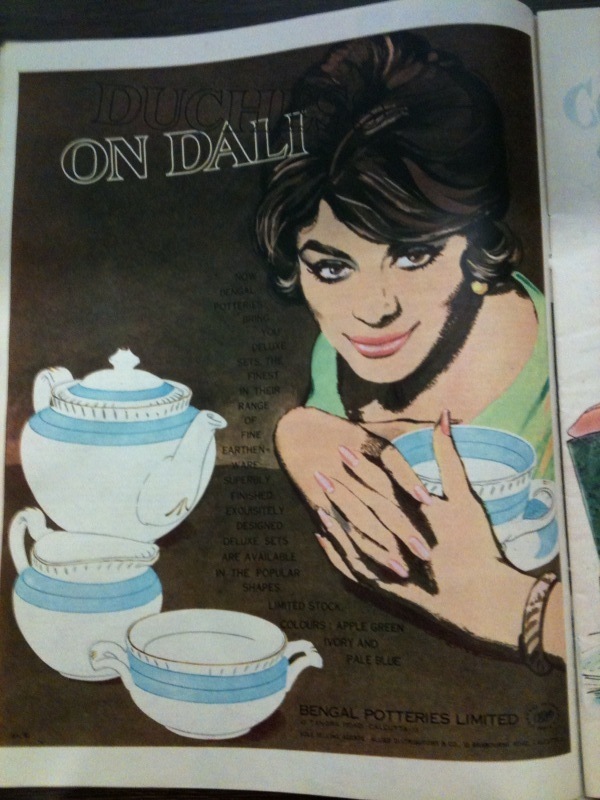
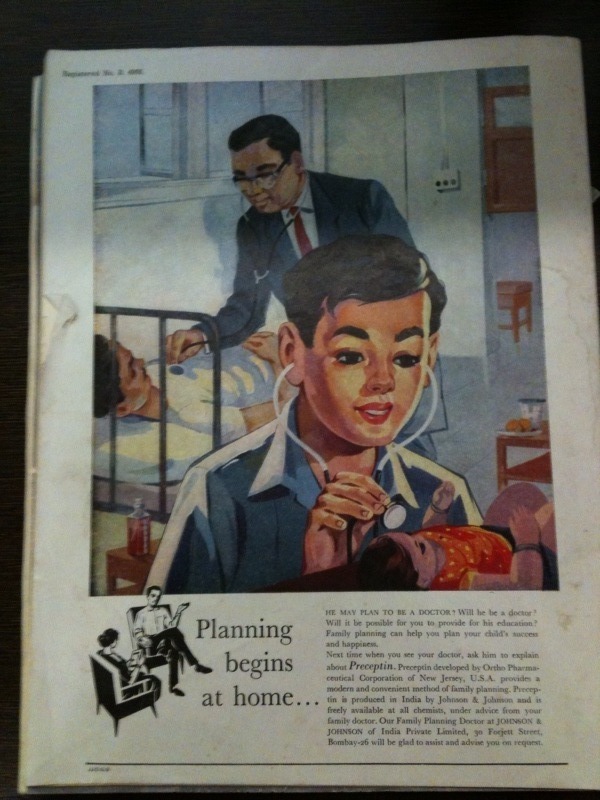
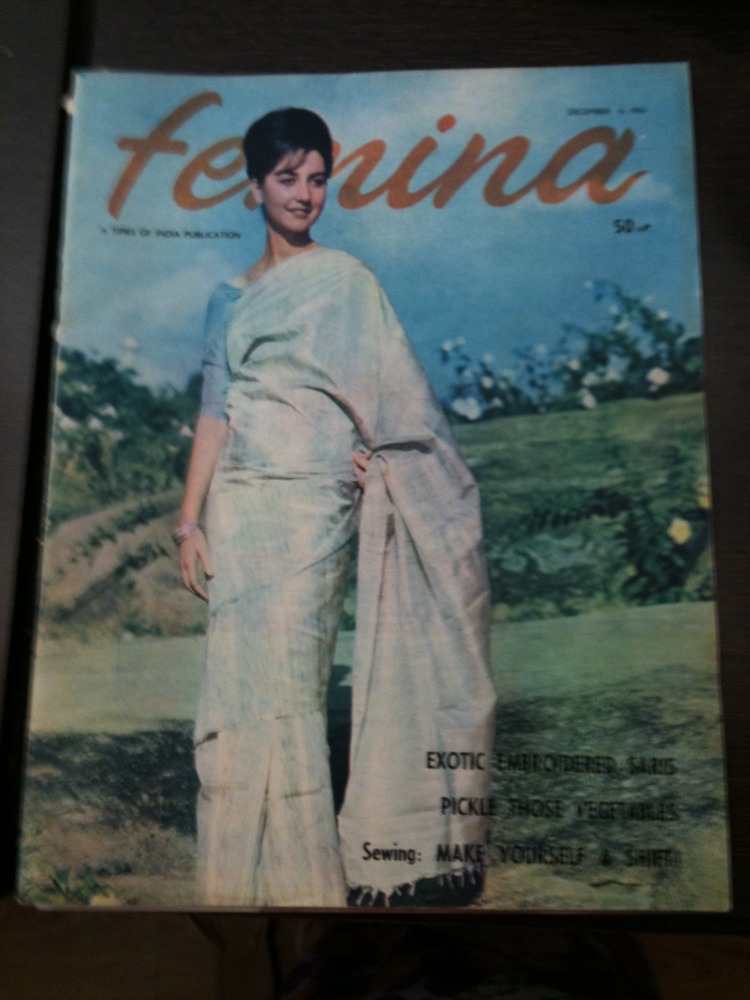
Rare 1960’s issues of Femina, Illustrated Weekly and Eve’s Weekly. Hand-sketched ads, gay parties, typewritter fonts! Some of the ads are really cool…see Marlboro and Goldspot; and while our glossies have come a long way, but this is something just totally worth a dekko!

Img_0014
Photo6
Photo2
Photo3
Photo
Photo7
Photo8
Photo9
Photo10
Photo5
Photo4

See the full gallery on Posterous

A Mauritian winter

08 Thursday Jul 2010

Posted by sitanshi talati-parikh in Musings

≈ Leave a comment

Img_0000
Img_0001
Img_0002
Img_0003
Img_0004
Img_0005
Img_0006
Img_0007
Img_0008
Img_0009
Img_0010
Img_0011
Img_0012
Img_0013

See the full gallery on Posterous

A sojourn in pretty Mauritius with days that were rainy, cloudy and full of sunshine. For much cooler pics check out hubby’s phone uploads: http://www.sahilparikh.com/island-getaway-mauritius-2010 – obviously I found all the cloudy moments to snap! 🙂

← Older posts
Newer posts →

|  Filling the gaps between words.  |

Writing By Category

  • Art, Literature & Culture
  • Brand Builidng
  • Brand Watch
  • Fashion & Style
  • Features & Trends
  • Fiction
  • Food
  • Humour
  • In The Media
  • Interviews (All)
  • Interviews: Business
  • Interviews: Cinema
  • Interviews: Cover Stories
  • Interviews: Lifestyle
  • Interviews: Luxury Brands
  • Interviews: The Arts
  • Interviews: Travel
  • Musings
  • Parenting
  • Publication: Conde Nast
  • Publication: Elle
  • Publication: Mint Lounge
  • Publication: Mother's World
  • Publication: Taj Magazine
  • Publication: The Swaddle
  • Publication: The Voice of Fashion
  • Publication: Verve Magazine
  • Social Chronicles
  • Sustainability
  • Travel Stories

Reach out:
sitanshi.t.parikh@gmail.com

© Sitanshi Talati-Parikh 2018.
All Rights Reserved.

Website Powered by WordPress.com.

  • Subscribe Subscribed
    • sitanshi talati-parikh
    • Join 51 other subscribers
    • Already have a WordPress.com account? Log in now.
    • sitanshi talati-parikh
    • Subscribe Subscribed
    • Sign up
    • Log in
    • Report this content
    • View site in Reader
    • Manage subscriptions
    • Collapse this bar