• About
  • Brand Building
  • Film & Drama
  • Writing: Arts & Lifestyle
  • Writing: Interviews
  • Writing: Luxury Brands
  • Writing: Travel

sitanshi talati-parikh

sitanshi talati-parikh

Category Archives: Social Chronicles

MasterChef On My Plate

17 Saturday Dec 2011

Posted by sitanshi talati-parikh in Humour, Publication: Verve Magazine, Social Chronicles

≈ Leave a comment

Tags

comment, Designer Children's Parties, Designers, Food, India, MasterChef, Social Chronicle, Trend, vervemagazine

Published: Verve Magazine, Social Chronicle, December 2011
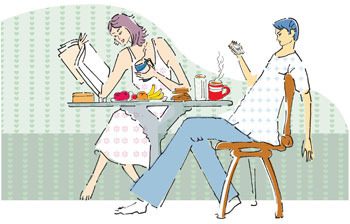
(Illustration by Farzana Cooper)

If you are the latest in the line if PYTs to send your hubby a tiffin that contains pan-seared foi gras with a champagne berry jus, then you know you’ve arrived onto a culinary scene that’s flush with promise and ready to launch. Sitanshi Talati-Parikh describes the necessity of taking a kitchen rendezvous to the next step


Verve-masterchef


‘Do you cook?’ She whispered. ‘Of course not!’ I retorted scornfully.  Great parties are never about knowing what to cook; they are all about finding the right caterer. Gloved hands, butler coats, flitting in and out: the spanking German-designed modular kitchen is meant to be seen, not used. Must you fret whether pesto has pine nuts or pistachios? I’m quite certain it’s the latter, logically, isn’t pesto the green one?


Lately though, newbie home-makers carry recipes in their Ferragamo totes, and while sneezing up a bomb at the local Nature’s Basket, can easily tell one nut from another. Blame it on the latest reality TV craze: MasterChef Australia – far superior to its Indian franchise. As the country watches with bated breath which one of the accented Australians go down under and which ones make it to the top, the ladies are picking up a few tricks along the way, and the men are finding a new itch to scratch: the kind which involves a cutting board and a chef’s hat. After all, those men in chef whites skim over the fine line to count as men in uniform – and the way into a woman’s boudoir may well be through her stomach. Many a young man has now leaned over the bar and whispered suggestively into his lady love’s ear, ‘Your kitchen or mine?’


Now, you can’t visit a friendly home without getting a sprig of parsley in your Brie, or a dose of balsamic vinaigrette in your chilled watermelon balls. Recipes are snitched from one of the mushrooming gourmet restaurants in the city – the toasted pine nut, goat cheese and watermelon salad is The Tasting Room, I believe – and every meal is judged on the outlandishly clever gourmet competency of the home-maker-turned-chef. Does your beetroot come laced with chevre? Has it been garnished just so? If not, it’s not good enough to be plated up?


Play dates (for the uninitiated: the time like-minded infants spend getting to know each other) are also a fine chance to show off those pa(i)ring skills: preparing the finest meal for your child’s little friend – what could be a better sign of love? Ten-month-olds are developing a spectacular taste for the healthy good life – in the form of broccoli-and-spinach risotto garnished with fresh basil, a traditional (low-spice of course) massuman curry and zucchini-and-parmesan ravioli, washed down with a tall bottle of elaichi-flavoured formula milk.


And it’s not just the chic young men and women flaunting their culinary skills, it’s about ensuring that you have a system in place to replicate this sensational food – anytime and with the least bother. And to that end, my Bihari cook is now struggling with understanding my desire to replace a Bombay grilled chutney sandwich on Britannia bread with a Mediterranean sandwich on multigrain herb focaccia.  And not even adding his own home-made paneer? Instead, layering the green meat of a tasteless fruit that he imagines to be Bengali baingan together with hefty hunks of feta, grilled zucchini and eggplant licked with a killer harrissa paste! He grudgingly grasps that the need of the hour – and the possibility of survival – means his knowing his parmigiana from his au gratin.


Chefs are now finding themselves akin to moviestars: in a recent MasterChef India (Season 2) show, one of the contestants cried because she got to meet her idol Michelin-starred, New York-based, Indian chef Vikas Khanna, whom she then proceeded to serenade. With Indians and Sri Lankans making their token presence felt on international cooking shows stirring up a curry-and-flatbread once in a way, and with Michelin-starred chef Vineet Bhatia attempting to challenge the desi taste buds, it appears innovation is the call of the day. You can’t serve up chana-bhatura any more, but what you can do is throw in chickpea couscous, broccoli khichdi and bhatura-flavoured sorbet. Now that would be a meal worth writing home about.


No longer is it about spices – it is about tempering taste buds with the appropriate levels of flavour so that they (your taste buds) can regain their virginity – and discard the massacre of years of generous masalas and chilli powder. And it isn’t really about eating – or stomaching to satisfy – as it is about teasing and cajoling the culinary senses into a pleased stupor. Hunger is for the middle-class. Palate-teasers are what fine dining is all about. It is no wonder that young chefs returning from Manhattan, dipping their fingers into genteel party catering, serve up hors d’oeuvres the size of peanuts. So smoked mozzarella flatbreads are actually coin pizzas, the size of, well, the shiny new 10-rupee coin. Tapas are in, or haven’t you heard? A meal in one of Mumbai’s trendy restaurants can consist of merely ordering 17 tapas and needing a hefty bottle of wine to wash all that tiny, tasty food down to feel deliciously full. 


Wine pairing can’t be missed of course. No self-respecting 30-something will serve anything less than the perfect limited-edition international sipper that goes best with the course being served. All along, the conversation tinkles with very profound discussions on Chinese politics, Rushdie’s literary smackdowns, and whether the Riesling would work better with the coconut soufflé or the champagne tart. My ultimate brain wave is to serve up a passion-fruit-and-lemongrass Sangria. It’s the easy way out of pretentious course-drinking – and is somehow that crass, bohemian sort of thing one can do, to remain cool after all that soul-searching food.


Talking about soul-searching food, the gourmands believe in cooking from your heart, and with a dollop of love. How much can you cook from your heart, when your stomach is empty and how much love can emanate from that drop of extra virgin olive oil that you mayn’t get from your grandmother’s hand-churned ghee?


The thrill lies in the pleasure-seeker and the social climber. After all, can you really be eating khana-khazana-type makhani food in your Jimmy Choos and Herve Leger? It is worth sharing Gouda and Roma tomato notes, if merely to prove that the world is your personal oyster and you have an international, exclusive and very uber chic stew cooking in your state-of-the-art kitchen. And after that dinner party full of whispered conversation, clinking flutes and a sense of social accomplishment, where the senses have been thrilled with that one lactose-free beetroot foam tortellini, you are more than likely to find yourself kicking back furtively with a hearty macaroni baked dish, folded with about 250 grams of Amul cheese, and a little kiss of ketchup.

The Unromance of Realism

07 Thursday Apr 2011

Posted by sitanshi talati-parikh in Musings, Social Chronicles

≈ Leave a comment

Tags

Bollywood, communication, India, Realism, relationships, romance

With sexting and instant messaging, relationships have become just that – instant and ephemeral. Books and films have emulated these real-life changes with often not-so-interesting results. Has the romance in art – and relationships – died?

What defines society today is words and connections. What separates this generation from the ones before is the power of the spoken word. We think that technology is what has changed us, made us the people that move faster, think faster and behave fast. While that may be true in some part, what has empowered technology has been content – online jargon for words. Thoughts, bubbles, discussions, emoticons, replies, retorts, criticism, feedback, conversations, investigations, observations, retweets, status updates…the list goes on.  This generation has increased communication by communicating less and with fewer words. It faces the task of dealing with information overload while constantly putting out more information. The oxymorons define the mindset of today – a generation that wants everything, wants everything super quick and instantly accessible and doesn’t really have the time or the patience to sift, read, ponder. That is where texts, BlackBerry messages, tweets and status updates are the de facto means of communication. It is rare for anyone to pick up the phone and have a good old-fashioned chat, in the generation that prefers to stick to a far more impersonal, but rapid form of communication. It has its own personal vocabulary: insistent abbreviations – often indecipherable to the uninitiated – and instant communication. You find people with heads bent, eyes darting and fingers moving rapidly in practiced synchronisation: rarely able to maintain eye-contact for more than a couple of minutes, rarely can a conversation run its natural old-fashioned course without interruption, as we move into an era of distracted and continuous communication and therefore, erratic and easily dismissed short-lived relationships.

Popular culture represents the dialogue and relationships of today: faster, more impatient and often meaningless. Younger filmmakers have updated their scripts to emulate real life. While underworld films picked up the nuances of the underbelly through actions and dialogue, romance in the arts has been for the longest time linked to a larger-than-life drama. Case in point: the cinema of Karan Johar or Sooraj Barjaytya. Where they update the clothes and the music, the dialogue often remains over-dramatised and pedantic. While some may argue that romance needs the dramatisation, a striking example to contest the argument is that of Saathiya – where the dialogue is rapid, off-the-street and yet, is a powerful story. There is a strong resonation with the viewer, an easy relatability, which carries the film from run-of-the-mill to sensitive and meaningful. Farhan Akhtar’s Dil Chahta Hai made the trend a popular one, taken up by film-makers like Kunal Kohli (Hum Tum) and Imtiaz Ali (Jab We Met and Love Aaj Kal).

It is the language of frankspeak  or straightspeak. Where once “You complete me” was the sigh-generating dictum, now, “I need a break” is easily said, without much angst, furor or thought. Quick answers, rapid and sometimes thoughtless decisions and a sense of bubbling impatience mark the dialogues that often don’t lead anywhere special. This is the nature of relationships of today and the conversations emulate them. Easily said, easy to bed and quick to leave – all takes place faster than a thought, and what is left are non-events. How does this make and fill the artistic and aesthetic space of a film? While Kohli-directed Hum Tum talks about a meandering relationship, When-Harry-Met-Sally-style, he pumps the story with events – which hold the weight of the relationship between the protagonists that appears to be going nowhere. In an attempt to emulate real life and their easy-come-easy-go relationships, Kohli’s recent production Break Ke Baad, directed by Danish Aslam, is a slick film that lacks a meaty story, full of ‘non-happenings’. Conversations, while witty and fresh, would make a better radio play than a long commercial movie. While this may be a comment on relationships today, the art demands a certain balance between real life and cinematic license – it demands that elements, moments and events become at the very least marginally larger than life, to create entertainment, to be watchable. Ali’s Love Aaj Kal nearly crossed the line to become over-ripe with conversations, in the same quest to describe modern-day relationships. Where LAK teetered dangerously, Jab We Met remained fresh in its cinematic experience, particularly through the crispness of dialogue and emotion.

Deepika Padukone’s character, Aaliya, in Break Ke Baad is not lovable in the traditional sense – much like Sonam Kapoor’s Aisha, she is unintentionally selfish and possibly doesn’t deserve the good guy. The industry buzz has it that Zoya Akhtar’s debut film Luck By Chance missed it’s calling because the protagonist, Vikram, was not a nice guy. We don’t feel empathy for the characters and don’t wish them to reach a happy ending. And that is dangerous ground for a film to enter in the romance genre. And it is also rather disturbing seeing that these characters have been picked from real life. Is it true, then, that we prefer the traditional romantic notion of characters that may be slightly misguided, but are nice? Even if that is not real life? So as dialogues get updated, people shouldn’t?

Two recent books speak a local language, but in entirely different ways. Anuja Chauhan’s Battle For Bittora speaks real politik – the language of local and honest-to-good (sense the irony) politics, seen through the eyes of a girl of this generation. There is amusement, cynicism and wonder. While the romance remains honest to chick lit, and the dialogues are basic, matter-of-fact and emulating real life, it is the clever writing and story that lifts this novel from being mundane to a page-turner. Where Chauhan’s effortless writing excites, first-time writer, Rhea Saran’s Girl Plus One is trying too hard, as are her heroines, to become a desi Sex and the City. Saran is not wrong in suggesting, rather obviously, the fact that Indian girls today are openly emulating Manhattan’s popular TV series; however, Saran misses Candace Bushnell’s witticisms that make all the difference between real life and drama. Would a real-life Carrie really talk in continuous innuendoes? No. She simply finds a correlation between her column and her life.

However art is updated to make it believable and real, it is obvious that the artistic license must be used to lift the dullness of real life to a heightened sense of real-life drama. In creating a believable sense of inclusion in a person’s daily, often mundane life, while bringing art into our homes, drawing rooms and bedrooms, we need to maintain a certain distance that allows us to appreciate the nuances of every character, story and relationship. These elements need to interesting and memorable, and often, real life is not. That doesn’t mean we need to regress and run around trees dancing amid roses, but it does mean that we need to assess the dramatic intent of the medium: does the film justify being larger-than-life? Does the book deserve to be printed and propped up on the ‘New Arrivals’ bookshelf rather than be a basic online blog? All in all, while pointing out the casual and matter-of-fact manner of everyday relationships, are we missing the romance in the written word and the spoken dialogue? And are we losing the romance in relationships?

And that leads me to question – do we want the old-fashioned nature of romance, or does that not matter to us anymore? Does a quick sext or a couriered designer bag charm us more than an old-fashioned hand-written note with a love song? Are we so accustomed to sentimentalising love and romance that we are unable to accept it in its matter-of-fact form anymore? If the written word stands for the way we think, then are we changing so dramatically that we question and often thwart sentimentality in its old-fashioned sense? Do we love, or do we ‘like’? Or are we confused because it is ‘too complicated’?

Romance Diaries: Knot of Love

18 Friday Feb 2011

Posted by sitanshi talati-parikh in Humour, Publication: Verve Magazine, Social Chronicles

≈ Leave a comment

Tags

Marriage, romance, vervemagazine

Published: Verve Magazine, Features, February 2009
Illustration by Bappa

Does romance leave you behind at the altar or hold you even tighter in the embrace of marriage? Sitanshi Talati-Parikh traces the transition

Sitanshisdiary

It’s astonishing how deeply romantic it is to tie the knot, slip on the sparkly on your ring finger, walk down the aisle with a swishy fountain of lace behind you, or take a turn at the wedding mandap with dramatic chants sung against the sacred leaping flames. At every moment, you are shivering with anticipation, thinking of that spectacular wedding night that awaits you on a bed of roses. From the moment you drag your weary stiletto-ridden feet home after ‘receiving’ your many guests, you’re ready to crash. Literally. In a fun, wine-laced conversation at a recent bachelorette party, we did a show of hands to see how many people actually consummated their marriage on their wedding nights. The handful who did put up their hands, I’m dead sure, were all cock and bull stories, no pun intended. I mean who in their right mind actually does it on the wedding night?! One chica claimed – ‘You must – I mean, just for the heck of it – you have to! It’s your wedding night, after all!’

And that’s exactly how marriages begin. And romance begins to lose its edge. You do things because you have to, not because it’s always fun or scintillating. So what happens to the calls late into the night when you curl your toes under the covers with glee, the little pecks of promise, the anticipation of meeting soon, the entwined fingers and the burning look of intensity in the eyes that sends your spine and neck tingling with sensation? They are replaced by the harried look of multitasking chores, the absent-minded, disoriented air, the brow furrowed with concentration, the distracted monosyllabic answers at the breakfast table over coffee, toast and wireless BlackBerry compote, the intense concentration of a person who has his ambitious head turned skywards straight at the stars. I remind him it could get lonely at the top.

As I plan another vacation, in memory of the bygone days of wooing, to give me a brief glimpse into the young lovers we once were, I placate myself with the thought of a new destination that allows one to forget the responsibilities of life and focus on the simple pleasures. Like enjoying each other’s company in the companionable silence of golden sands and crashing waves. He slides his hand into mine; we flash back in time. At that moment I sense that romance never left us; we left it because of our preoccupations. The young boy’s romance has matured into a man’s love – deeper and subtler. Instead of wallowing in a time warp, I realise the romance didn’t die. It just changed, adapted, grew. The candyfloss tinted glasses fell off. I wouldn’t want it any other way.

Women Untamed

17 Thursday Feb 2011

Posted by sitanshi talati-parikh in Humour, Publication: Verve Magazine, Social Chronicles

≈ Leave a comment

Tags

comment, Trend, vervemagazine

Verve Magazine, Musings, February 2011

Women wearing the pants is passé, but now we find men holding onto their women’s pants with quiet desperation, afraid they will fly the coop even before the nest is made. Sitanshi Talati-Parikh muses on the metamorphoses of women in a liberated society

The Queen Bees of society are silent killers – men have for centuries been braggarts and women have found a way to get their own back. Who actually goes to a bachelor party expecting to get lucky and laid? The boys-trying-to-be-men come back with tall tales of passion galore, but the paunchy Indian men of the day (who need a compass in matters of orgasmic satisfaction) are hardly going to be the source of irresistible temptation to svelte Scandinavian women – unless a good deal of money is thrown their way. And if you need to pay for it, it doesn’t count. Indian women, who are generally in much better shape compared to their male counterparts, have an exciting, exotic appeal that makes a bit of harmless flirtation nothing more taxing to the purse than the bat of a mascara-ed eyelid. The PYTs of today can roam the cobbled streets of Europe kicking up a merry ruckus and returning quite the merrier. But we won’t go deep into the details – what happens at a destination bachelorette party, should be forgotten the moment you board the flight back home.

Women today are unselfconsciously raunchy, unafraid of their sexuality and are more than willing to take the leap in expressing it. As last year’s release, Aisha, suggests, gauche is out, and manipulative girl power is in. And of course, a foreign locale makes indiscretions completely acceptable – think Sex and the City 2 (2010) where Carrie steals a kiss with ex-boyfriend Aidan, in lieu of hubby Mr. Big being around. Or Vicky Christina Barcelona (2008), where straitlaced Vicky gets sorely tempted into an affair before marriage – even considering calling her wedding off. And while selling kisses for change at a Scottish bar at her hen night, Hannah in Made of Honour (2008) is left weak in the knees for her best friend, not her husband-to-be.

It’s not as much about infidelity and indecisiveness (that’s a thought for another day), as it is about choices. Where once women either didn’t have those choices, or didn’t give themselves the right to make those choices, now women are all for options. If men are like ice cream, women have the entire range of flavours to pick from. And choices that have to do with emotional involvement can get complicated, but we find it surprising that women can be quite the cold fish – unemotional about their liaisons and irreverent about the heartbreak they may leave in the wake of their decisions. A 20-something girl of my acquaintance was regularly chased after by men of all shapes and sizes. She flittered in and out of relationships, with unbelievable emotional ease, while trying to unravel the knots in her on-again, off-again relationship with her long-distance ex-boyfriend. Eventually, after years they decided to get married – and she seemed freaked out by the idea of ‘settling down’! She allowed herself, in that moment of cold feet, one last (we hope) indiscretion abroad. Her now-husband apparently understood her perfectly well and thought it would be most prudent to get it all out of her system. And this – acceptance of women’s wild oats that need to be sowed – is not uncommon in relationships today.

You can’t help but be slightly amazed at this development – since when did cold feet become a paddle ground for men and women, and decisions made on the call of these frozen extremities allow for getting your toes wet in alternate waters? Women today are afraid to take the plunge – in committed relationships, in marriages, towards motherhood…. It is the time when women want ‘space’ and ‘freedom’ to explore boundaries and create new ones, to feel free of the impositions that they have seen other women suffer for generations; and in that very experimental stage, often swing to the other end of the pendulum before slowly clawing back to level ground. At exactly what stage they decided to give themselves the same rights in indiscretion and fun that men have had for years, one can’t quite be sure, but the metamorphoses has firmly taken place and the butterflies are spreading their wings and flying the coop. Women do make up about 50 per cent of society – and realising this, they began to take liberties and make decisions for themselves, subservient to none but their own moral and possibly immoral code.

And this isn’t exactly bothering the men – while it may make them insecure and quite whipped, what turns men on is the winning combination of ‘girls gone wild’ – the hottest selling video in America of women crossing the line (what line?) at foam parties, Spring break, bachelorettes, sleepovers is of the same name. Women for the longest time have had silent power over men, in bed and out of it; it’s just the matter of wielding it, and wielding it right. There is something vicariously pleasing about women going wild, and something entirely irregular about men doing the same. Maybe it’s the fact that men have been having their slice of cheese on the side for years; or maybe it’s the bit where we don’t really give two hoots about a sausage fest in a bowl of hot soup? In fact, the best kind of woman is the naughty moral one: the delicious anomaly defined by the kind who isn’t afraid to kiss, but won’t tell and won’t cheat.

You can tame the man, but can the man tame his New Age, expressive woman? It’s the era of female domination – what existed in the echelons of the kitchen and household has moved to the bedroom and workplace. It’s not really about who wears the pants, rather who finds himself holding the skirt.

Purrfect Relations

17 Saturday Jul 2010

Posted by sitanshi talati-parikh in Features & Trends, Publication: Verve Magazine, Social Chronicles

≈ Leave a comment

Tags

comment, PR, priyankachopra, Trend, vervemagazine

Published in: Verve Magazine, Musings, June 2010

The woman behind or rather in front of the powerful Somebody, is a true gatekeeper: she can smile and grant you permission to interface with Somebody, or unleash the claws as you scramble to find cheese for your daily bread and butter. In the Tom & Jerry-esque melee, Sitanshi Talati-Parikh circumspectly lets a few cats out of the bag

You’d think you would be up against brawny armed guards that patrol the corridors of their high-profile clients, but you’d be surprised to discover that it takes but a wee woman to muscle her way into the upper echelons of high profile relations and become what we fondly call the ‘gateway’ to the terribly famous. These women can vary in designation from PR, personal assistants, secretaries, girl Fridays, media managers, simply managers…you name it and you will find that they exist. What’s interesting is the relationship quotient that exists between these people (gatekeepers or GKs and the Famous Person or FP), with whom the latter spend a good amount of their time – liaisoning, tantrum-throwing, exhibiting their inner idiosyncrasies and unflappable spirit. One of the biggest GKs of the movie industry is possibly Farzana, Rekha’s personal assistant of many years, without whose approval no one can get remotely near the reclusive actress.

You would imagine that the main idea of having this sort of a liaison officer is to make the FP look good – to steer FP’s eccentricities and indiscretions away from the public eye, and to keep them ‘clean’ and ‘lusted after’ as particularly perfect role models. While some GKs manage to do so quite effectively, ensuring that through major string-pulling certain delicious facts are never unearthed and exposed, others in fact, choose to use their shield to create an aura of star presence.

A glittering mirage is not always the aim, though. Actress Priyanka Chopra doesn’t come across as a diva or a star, but rather (in part due to her own personality) as a friendly, hard-working girl-next-door. Natasha Pal, chief operating officer, Vitcom Consulting, is responsible for creating a well-rounded strong brand identity for Chopra which extends to the Internet as well.

But if we go back to those with star presence, what exactly are we talking about? Busy, tut-tut, of course they are. Calendars are never free, they are always either on shoot or constantly travelling or ‘busy’ with other alarmingly important activities. Benefit of doubt given, until you read a gossip rag talking about how they are vacationing and turning down offers because they are ‘waiting for the right opportunity’. This is the lot of the GK of an FP who may not be a public favourite at the moment, but must be made to appear to be!

Entourage? Check. I mean no self-respecting FP will travel without his/her motley crew of spot boy, bodyguard, bag holder, dog walker, coffee maker, hairdresser, make-up artist, mobile-holder, companion, GK/manager(s), chauffeur and ego-panderer. But often we discover that it may not be the FP who believes in crowd-sourcing as accruement of power but actually their GKs who encourage the general view that (a) It’s best to squeeze out the favours one can (b) By throwing one’s weight about one’s star presence increases even more, in fact it solidifies it (c) What’s the point of being an FP if you don’t act like it? The others all do!

At one time, FP’s mummy would say ‘baby ke liye lassi laao’, now the GK informs you ahead of time that FP will require such-and-such items, and that the young and hearty FP cannot under any circumstances climb a flight of stairs for a shoot, or walk ten seconds under the sun (despite the FP being a person known for her athletic prowess) – therefore the most expensive and convenient locations and rooms must be chosen or she will not turn up.

Not to forget that the staff – such as a chauffeur or spot boy – will often have their own letterheads with which they invoice the third party, because if an FP is expected to come to a shoot or interview, her staff must be paid for. So very often, the FP comes for about half an hour, and her staff is paid by the third party an approximate month’s salary. With an FP going regularly on shoots and interviews (supply and demand being such), it makes you wonder if the FP takes a cut from the staff’s earnings! Of course, the GKs, hairdressers and make-up artists when travelling with the FP will want to travel with the FP – i.e. business or first class. The tab, once again, is picked up by the third party. Pal feels that not all clients have insane demands. “This is actually more an archaic myth than a present-day reality. The evaluation of a client’s requirement is subjective really – what is a necessity could be seen as an undue demand.”

While the relationship between an FP and a GK is mutually beneficial, you can never be certain who the real diva is in the relationship. Is it the FP who believes in throwing his/her weight around, or is it the GK who insists on doing it this way? Maybe the FP – getting filtered information through the GK – is quite unaware of what the GK is up to and how he/she is being represented. And maybe, the GK is the innocent victim of the FPs demands, often feeling foolish having to represent these to the outside world as diplomatically as possible.

Archana Sadanand, proprietor of Imagesmiths, who ably handles high-profile clients like Aishwarya Rai Bachchan, Akshay Kumar, Imran Khan and top production houses, admits that it is not always an easy road for a PR person: juggling the time constraints of an FP as well as the requirements of the media. “At times it can get sticky: a failed film or a bogie in an interview that needs firefighting. At other times a journo rubs a maker or a star up the wrong way. We have to find ways to mend the situation; some of these moments can be hilarious. It’s like being in cage with a tiger and hoping he won’t have you for dinner, but that’s the fun of it!”

GKs are often way busier than the FP – many who are affiliated to a professional organisation are not dedicated to one FP alone, often manage multiple FPs in one shot. Try calling a GK…actually rephrase that to try ever getting in touch with a GK. It is practically impossible, unless they believe you are someone worth talking to, or have something valuable to offer them in return. And at any point of time, if you have taken the effort to massage their ego, or made their FP happy, you may find yourself welcome with open arms (hyperbole). And lo and behold! If you ever make the mistake of having a personal equation with their FP – and manage to make inroads in the future without the GK as an intermediary, you will soon discover the strange truth in the wise words ‘…a woman scorned….’ You may never get through the GK again, you may find the GK publicly and unabashedly admonishing their FP for ever allowing a friendship to develop, and you may find that GK’s entire remaining client list banned from your access.

Don’t for a moment imagine that the FP controls the strings of this equation. There is no one stronger than the aide of a FP, as you will soon reluctantly come to realise. FPs who are afraid of being alone on travels, have begun to use their GK or their hair/make-up artist as the chaperone that Mummy once used to be, and you will find them even going to the extent of sharing a room with the person for companionship, as evidenced by a minor actress and her hair-dresser. Where at one point of time, you couldn’t get past a top businessman’s secretary until she wanted to let you through, or when the way into an FP’s heart was through that of her Mummy’s (Luck By Chance ably proved that), you find more and more that now you have to break through the tough shield of a GK.

Natasha Pal has often been considered Chopra’s girl Friday – she’s developed a strong personal equation with the actress. “In most situations, friendships do develop. But, there is always a line that we draw between the job that we have to do and the friendship that has developed. In order for us to be fully effective we also have to be brutally honest and in all professional situations the friendship is relegated to after working hours.”

Amitabh Bachchan’s long-time secretary, Rosie is the model of efficiency. Once a request has been received by her, you don’t need to go through the torturous chase of follow-ups. A legit query will always be handled and she will respond promptly.

However, there are those – Who Cannot Be Named – who have taken their role as a gatekeeper much too seriously. Possibly the power has gone to their head a bit, leading to the detriment of their own standing and that of their FP. Unfortunately for all, the demand for FPs far outweighs the supply, so we are forced to continue to play the cat-and-mouse game as long as divas are around and people remain interested in reading about them.

Killing me softly with my own smog | Jaagore

03 Monday May 2010

Posted by sitanshi talati-parikh in Social Chronicles

≈ Leave a comment

Tags

comment, Environment, India, JaagoRe, Thoughts

Guest Post by Sitanshi Talati-Parikh, Features Editor, Verve Magazine

The problem with writing about issues is the fatalism that creeps in and tends to swallow you whole, where you want to scream to the world to wake up – before it’s too late, but you get the sense that they are simply not getting it. And makes you want to sink into a mire of desperation and helplessness. *Shudder*.

So, the idea is to calmly embrace the fact that the world as we know it, will really not last very long. I have a distant uncle who is geared into amassing family wealth for the next seven generations – and while I am truly proud of this generous gesture towards his family’s well-being, I feel that he is just a bit deluded. At the rate we are going – denuding the earth’s natural resources without a thought towards replenishment, ransacking and pillaging and foraging like barbarians, without once questioning what it implies for tomorrow, there will be no tomorrow. And I don’t mean like, oops I’m going to wake up and June 1, 2010 will no longer exist, but really, June 2, 2020 might not!

Do we really have as many years as we think we do on this planet? As we plan the next generation of pillagers, do we really believe they will make it through another 80 years of living in toxic hell? If the planet doesn’t implode on our own sins, we will definitely self-destruct in some way or the other.

1. We have waste disposal problems.

2. We have severe water shortage issues.

3. The air we breathe is so polluted that there’s no point smoking – you’re inhaling crap anyway.

4. We are rapidly consuming all limited natural resources without really figuring out alternate sources of energy, power etc.

5. Global warming is bringing in volcanic eruptions, tsunamis, earthquakes, tremours and a lot of other stuff that should shake us in our heads, not our houses.

6. There is severe overcrowding and over population, which is merely compounding the crises mentioned in 1-4.

Specifically talking about Mumbai, do we realise that as the incorrigibly corrupt government and municipal corporations allow illegal construction of sky-rises in already sandwiched areas, it’s not just the pressure on the land, it is also the impossible question of the pressure on infrastructure? Our infrastructure is quite simply redundant – there are old pipes, rusted and cracking under the pressure, drinking water getting mixed up with sewage and refuse, there is already insane amounts of fuel, water and power shortage; and with the advent of that many more homes, families, people and cars, the problems on the surface and below will only compound. So as spanking new buildings start popping up left, right and centre, who plans to deal with the repercussions of these short-sighted activities? Forget problems like soil erosion, pollution and cloud cover thinning that you can’t comprehend, but think of the really basic stuff. Say you spend multiple arms and legs buying a flat in a nice Sobo area, in a brand new building, with a great view. What are you going to do when the pipes burst with the pressure and you get filthy water to drink and bathe with in your new luxurious haven? What are you going to do when the already choked area doesn’t allow for you to take your brand new gas-guzzler out because there’s a perennial jam of cars being taken out for unnecessary spins?

The problem is that we think that it’s not our problem yet. It’s not relevant now. It’s not about me. As long as we continue with the current status quo, living in mass oblivion, we are barely able to grasp – despite Hollywood’s barrage of disaster ‘2012’ flicks – that everything is very real, everything is NOW. Tomorrow is not just another day in the grimy city; tomorrow may be a day where we no longer exist. And it would be entirely our fault. No amount of words can make you sit up and take action – until you realise that it’s your and your family’s life at stake, not your neighbour’s.

via jaagore.com

Pixie-dust Romances

17 Wednesday Mar 2010

Posted by sitanshi talati-parikh in Art, Literature & Culture, Features & Trends, Publication: Verve Magazine, Social Chronicles

≈ Leave a comment

Tags

Avatar, Bella, comment, Edward Cullen, International Fiction, Literature, Sophie Kinsella, Stephanie Meyer, Trend, Twilight, vervemagazine

Verve Magazine, Culturescape, February 2010

The immense worldwide success of the Twilight vampire love series and James Cameron’s epic film Avatar have made fantasy a romantic prerequisite. Fangs, love bites, fairy dust and aliens pour out of the Pandora box of magic potions, brewing tales that sell imaginary love to bewitched humans. Sitanshi Talati-Parikh finds herself taking love-struck bites

As humans get more barbaric as a race, romances tend to swirl around a fictional character of an imaginary species. What is it about Pandora and the Na’vi tribe that makes them so beautiful and desired? Or about the blood-sucking undead that makes them the modern version of Byronic or Darcyian romantic heroes? Or what attracts us to a ghost, a spirit or a powerful figment of our imagination? It’s not just the fact that their being unreal or non-real, gives me the ability to superimpose the characteristics that I wish to see in the person I love. It is also the fact that by virtue of being unreal, they can be more than we are. Either as humans we are deeply ineffectual at romance; or as people we need, nay we demand more. The inability of romantic deliverance from a human race appears to send our hearts racing towards the inhuman – in true escapist fashion.

Escapism at one point of time was candyfloss romance – where the romantic hero was kind and considerate and loved you for the woman you were, not the woman he wanted you to be. It was human to be imperfect, it was human to accept these imperfections and it was human to love them. Women have always been suckers for the knight-in-shining-armour story – it is as if, we are still waiting to be rescued if not from atypical danger, then from ourselves, and our deep-rooted insecurities. The age of Feminism masked these things under the coat of smart trousers, shorter hair, and a career. Scratch the surface though, and you will find a rather unapologetic little romantic girl hidden inside every driven woman. As Vatsala Kaul Banerjee, editorial director, children and reference books for Hachette India, publishers of the Twilight, House of Night, Sookie Stackhouse, Blue Bloods, Vampire Diaries, Night World and other such series states, “Feminism is not, and should not be, exclusive to the idea of love. Not everyone who chooses to love a male or be loved by him, even if occasionally beyond all logic, is a needy little twerp. C’mon, we’ve all been there – fallen for someone so bad, it’s been hard to think of anyone or anything else, including school or friends or family. But eventually, you get real.”

What is Edward Cullen, the famous vampire hero of the Twilight saga by Stephenie Meyer, if not a paternal caregiver to the rather insipid heroine Bella Swan? His primary role is in protecting her, because he is that much stronger and more powerful than she can ever be (until she turns into a vampire, that is). As she gets embroiled repeatedly in danger, he appears miraculously to save her – because she means the world to him. When he can’t be around, it is the young werewolf Jacob Black, who, again with greater powers, remains her protector. Bella, it appears, is in love with security, and whichever good-looking, charming man who can provide that kind of security to her. It is primarily the love of a teenage girl for an older, stronger man, a benefactor, a lover, and a protector.

With the fact that there is a burgeoning cult of ‘Twilight Moms’, the notion that this is merely the infatuation of teenage girls is immediately put to question. As some of these 30-plus women grudgingly admit, there is something deeply hypnotising about this romance – which fulfils their own unrequited high-school love. The trials of high-school romances and self-doubts never change – Bella, in her rather characterless state becomes an easy avatar for the reader to identify with. As an avid reader from France in her 20s, Myriam Belkis admits, “We can empathise with Bella particularly because of her unremarkability.” The reader, hopefully a stronger Bella, can morph into a young girl, who just wants the perfect guy to love her unconditionally. And so what if the guy is a blood-sucking, cold-blooded (literally) vampire? The very fact that he finds her blood intoxicating and thirsts for it, fights a moral battle every time he is with her, struggling to control himself to be with her, kisses her and withdraws from her raw passion, is inherently sexy. It is guilt-edged, morally unsound and dangerous desire that leaves the reader panting for more.

What is bothersome is Bella’s lack of control and vapidity as a heroine – at least in the first three books. While it may be easy for girls to slip into her character because it’s an empty shell, it’s rare to find readers rooting for Team Bella. The men superimpose the woman, and despite it being her story, she remains vacuous and annoying at best, irritatingly dependent on a man to make her life credible (except for the fourth book, Breaking Dawn, where she comes into her own). ‘Even after half a year with him, I still couldn’t believe that I deserve this degree of good fortune,’ says Bella in New Moon. We can’t believe it either, because she never considered herself worthy of anyone. On a very superficial level, her crisis is that of any teenage girl’s deafening insecurity and self-doubt; on a deeper level, it is disturbing to see the protagonist in one of the most popular romances of the time behave like a suicidal sacrificial lamb at the altar of love. It makes you wonder if women have come a full circle – willing to do anything for love and for a man – and does that make it endearing or frightening?

Bella is unnaturally attracted to the supernatural, making us wonder if she is inherently other-worldly (they suggest she was born to be a vampire) or if she is battling a normal teenager’s rebellious nature with an uncanny curiosity for trouble. Isn’t it more likely for Bella’s love to be infatuation than the unflinching deep love it is proclaimed to be? As a 17-year-old she takes the kind of hazardous decisions – in the name of love – that a 27-year-old would shudder to contemplate. Belkis confesses that, “At that age you are often reckless, and personally I remember my teenage feelings as the most intense I’ve had in my life.” While its appeal to a teen audience is understandable, its appeal to an older audience is Potteresque – fantasy captures the imagination like nothing else does.

And it asserts the notion of being attracted to the bad guy, and wanting to ‘fix’ the bad guy. Edward (and later Jacob) try to make Bella believe that they are dangerous and therefore shouldn’t be anywhere near her, but that just draws her to them even more, testing their endurance. We understand why she loves them, but why, oh, why, do they love her? Is it meant to be a beacon call of hope for all the spineless women out there who want to believe that Mr Perfect is hovering somewhere, even if he is an alien?

We are constantly reminded that Edward is beautiful and perfect, Jacob is warm and attractive – and it seems to be okay, particularly from a sound feminist point of retribution, to objectify men under the pretext of unconditional love, in this three-way interspecies romance. No regular teenage boy (or man for that matter) would stand a chance against a sophisticated vampire or powerful werewolf with super powers and a burning, intense, monogamous love.

It is in much the same way that the Na’vi tribe and the female lead Neytiri are objectified in Avatar – their other-worldliness, devoid of the trappings of human failings, the beauty in their every movement and relationships with their environs is viewed with reverence, envy and admiration by the voyeur-protagonist Jake Sully. It is easy for Jake to be reborn as a freer soul, powerful in ways that a human cannot be, and in tune with a better moral and ethic fibre. He is escaping from a rotten life to a better world. Aren’t we all hoping for an avatar that can help us escape the monotony and failings of our world? There is the obvious call for humans to be better, to rethink their priorities and non-ideals, because if not, all the good men are going to be falling in love with good aliens!

The love affair in Twilight is as, another reader in her late 20s, Megha Gupta, believes, “unrealistic and teenage, even stalkerish in the real world – but oh so romantic! What attracted me initially to the first book was the fantasy element, but what kept me hooked was the star-crossed lovers theme. I wanted Edward and Bella to stay young and beautiful and in love, ‘every single day of forever’.” The romance of eternity is an obvious attraction with the love of the undead: to be frozen in time appears to be an acceptable price to pay to remain eternally bound together – even if it is at the risk of losing your soul.

In Carole Matthews’ It’s a Kind of Magic, the protagonist, Emma wishes the love of her life, Leo, could magically turn into a better boyfriend, and lo behold, he does, but with an impossibly fabulous fairy girlfriend, Isobel, in tow, whom Emma cannot possibly compete with. Love has some sort of magical element attached to it that leads you to do uncontrollable things; and yet often rights things that are wrong – because as humans we are sometimes incapable of doing so.

Lara leads a desperately boring life in Sophie Kinsella’s Twenties Girl. It takes the advent of the ghost of her great-aunt Sadie to create delicious havoc and weave a wand of romance in Lara’s life, with the touch of a nostalgic past – that of a more chivalrous time. Are we harping back to a time of better – different, more meaningful love? Is something old-fashioned genetically imprinted in us, where we wish for a time where things were simpler and more complicated all at once?

Banerjee finds that the attraction lies in “an unusual, unreal, unearthly, extraordinary romance, against all odds, enticingly impossible, potentially dangerous and possibly forbidden. Whether it’s shape-shifters, ghosts or vampires…it’s dark, action-packed and sexy. Because it’s not just ordinary men and women, the parameters of romance itself become fluid, different and challenging. The emotional and physical interfaces between two people are transformed…that’s quite thrilling, I daresay. It raises the unpredictability bar and makes for exciting unknowns to unfold.”


It is as if we, as humans, yearn for everything good that doesn’t exist in our own version of the world. Is it a deep existential quest for a better world, a better life and a better romance that we are now looking at extraterrestrial fantasy? Or is it just that a Clueless-type romance doesn’t meet our thirst for romantic fulfilment as much as the thrill of a blood-sucking or alien fantasy might? Edward has the trappings of a perfect romantic hero – he has the lineage and hails from a time of great chivalry, he is the strong-silent type, loves unconditionally and is deeply faithful, morals and ethics mean the world to him, has all the right educational qualifications, is knowledgeable and artistic, is extraordinarily rich and doesn’t ever age! It’s true – he isn’t real. It is easier to establish perfection in one that is not human – because isn’t by definition the idea of being human equal to being interestingly imperfect? And yet, Bella and Edward are a romanticised version of award-winning film, American Beauty’s (1999) Jane and Ricky – freaks to the world that doesn’t understand them.


So what are we saying? Women thoughtlessly yearn for men they can never have? The fantasies will remain largely unrequited and there will be a deep sense of dissatisfaction with their men – who will, being human, be unable to live up to these other-worldly expectations. Which human man, because he may hurt her with his brutal strength, will be willing to abscond from the pleasure of sex eternally? While Meyer’s Mormon background leads her to spell out a strict moral code of abstinence and a romance of deep fortitude, I wonder if the spellbound teens may follow suit. In a racy age when sex scandals and illicit love are the order of the day, Meyer, Kinsella and to some extent Matthew refrain from it. The sensuality is derived from restrained kissing, controlled passion and stemmed desire. It is the contemplation of the act that leaves one wanting more – it is the romance of mental and suggested foreplay. It draws one to a time where love precluded lust, where instant gratification was frowned upon.


These books are not making excuses for what they represent. There is no deep-rooted agenda, no desire to change or improve the world, but in that very sense, as popular fiction, they are making a statement about society as a whole. As Banerjee points out, “Fiction is not about being prescriptive, didactic, apologetic or redemptive…not for publishers, and not for authors. The protagonists are characters, not examples for edification. Readers may subscribe to the subtext in their personality or personal life, and that’s their choice; but for some, saying that they are what they read may be akin to saying something as simplistic as they are criminal-minded if they read crime fiction or bile-blooded freaks if they like horror. Many mothers/parents use books such as those in the Twilight series to discuss issues of love, relationships, boundaries and choices with their girls – now there’s an unexpected good thing.”


Whether you consider alien fantasies escapist fare of the worst kind or a subversive pleasure in the other world, the fascination towards romance, whether human or interspecies will remain one of the most popular forms of writing to come. As we explore galaxies, planets and the dark side of human nature, we open our minds to that which may exist outside the realm of our understanding, imagination and acceptance. It’s just heartening to know that romance isn’t dead, even if it is with the undead.

‘Following’ the Stars: India’s Celebrity Twitter Story

17 Wednesday Feb 2010

Posted by sitanshi talati-parikh in Features & Trends, Interviews (All), Interviews: Cinema, Publication: Verve Magazine, Social Chronicles

≈ Leave a comment

Tags

Abhishek Bachchan, Bollywood, Celebrity Journalism, imrankhan, indiancinema, Internet Generation, Interview, Karan Johar, priyankachopra, Rajeev Masand, Rangita Pritish Nandy, Sonam Kapoor, Twitter

Verve Magazine, Social Chronicle, January 2010

In 2009 the most popular word in the English language was Twitter. This online space has seen marriage proposals, scandals and ‘status updates’ at the altar, but by far the most exciting thing to hit Tweeple-world was the advent of the celebrities. As movie stars, film-makers, opinion-makers and news people took their loves, lives and peeves online, there was an automatic creation of the ‘twitterazzi’. The web crawlers – cyber voyeurs – have made famous people their ‘friends’, innocent people infamous, nobodies into celebrities and the offline media into silent, hapless observers. Sitanshi Talati-Parikh tweet talks, to see what kind of bird brings the top movie stars and opinion-makers out to play

From exclusive scoops and candid camera to Twitter
Voyeurism is one of the world’s deep failings. We can’t help wanting to know what’s happening in someone else’s life. The desire to live vicariously keeps the tabloids, gossip columns and celebrity buzz alive – people have made a living (or killing) out of it. There was a time when celebrity journalists were at a premium – privy to the most private boudoirs and most exclusive soirées. With the advent of television, the paparazzi took an ugly, invasive turn, with visuals of celebs being sold for top dollar, candid cameras trailing them at every step – crawling into their homes, even into their bathing suits. There have been fistfights and media bashing – for simply not knowing where to draw the line.

Then, the Internet changed everything. Vicious MMSes, scandalous sex tapes and politically incorrect tweets aside, celebrities have found a way to access a world of fans (and potential fans) hailing from all nationalities, without having to actually meet them face-to-face. After all, one person’s voyeur is another person’s fan. The anonymity of the Web appeals to the celebrity that is willing to stay connected to the point of involving strangers in their lives: voicing their opinions, sharing titbits about their day, their frustrations and joys, and responding to (often inane) questions. While Rangita Nandy (creative director of Pritish Nandy Communications) may believe that, “It (Twitter.com) is a new fad and people are over-assessing it,” it is an undeniable fact that celebrities are ruling roost over cyber world and we have no choice but to ‘follow’ them.

Mysterious inaccessibility or real charm?
Deepika Padukone may cling onto the good old-fashioned sense of celebrity mystery and power couple Saif Ali Khan and Kareena Kapoor may think that anyone with a life would not be on Twitter, but others are quickly finding that accessibility is more important today than it ever was. Early last year, when I first met actor Imran Khan, he remained easily accessible only to those fans that populated his unofficial fan site. Recently, he decided to dive into the vast anonymity of Twitter. We know when he’s awake, if he’s shooting or just playing X-box. He admits candidly, “A huge part of my appeal is my accessibility. I’m the universal ‘bro’ – their college buddy who made it big. It’s different from a star.” He continues with a deeper thought, “My mom couldn’t bear the thought of anyone not liking me. She brought me up in a certain way to ensure that – and I go out of my way to be nice to people to ensure that people will like me. A lot of people feel that mystery increases star appeal – and in a certain sense it does. I try and find a balance.”

Shaima, Leha and Saan, the 20-something-year-old creators of Imran Khan’s unofficial fan site, voice a definitive opinion, “If it’s a nice person, it makes him more attractive, because then fans are not just attracted to a picture or a character but to the real person. In this day and age, if any public figure chooses to remain mysterious, it doesn’t give out a good vibe.” Abhishek Bachchan would easily agree. He believes that “more is better”: “I think that age is gone where mystery sells – today if you are a bit of an enigma you are almost forgotten. Your audience wants to know you, your thoughts, your feelings and they want an interactive relationship – more tactile and approachable – with their actors; not just one of watching them on the big screen.”

Film critic and CNN-IBN entertainment editor Rajeev Masand, who prefers his global film-loving community on Twitter to the “boring incestuousness” of Facebook, seconds the thought: “It is a competitive age – there is a strong need to be quick rather than accurate with the news. It is important for a celeb to stay connected, and to put out information, correct information.”

The rules of interaction have changed
Priyanka Chopra is the queen bee of social presence: she has the most powerful social outreach programme, born initially out of “curiosity and interest” and later powered by Team Priyanka (spearheaded by Natasha Pal, chief operating officer, Vitcom Consulting). Think an active fan base of over 1,30,000 fans which is growing by the day. She posts pictures of herself while chatting, of the view from her room and scenes from her travels. “These kind of platforms do increase accessibility, but you have to put it into the context of how technology and social media networking have redefined relationships, including that of a personality and his/her audience,” she says.

“My appeal lies in my accessibility.”
– Imran Khan

Private people, public lives
Most of these movie stars are not naturally the kind of people who would get attracted to social networking tools. Admits Chopra: “It’s actually quite strange! I am a very private person and to be honest I did find it a bit difficult initially to open up.” So one wonders, what makes these people take time out of their busy schedule and bare their lives – many times a day – to anonymous people online? Of course, at the most basic level lies a desire to directly reach out to global fans, whom they may not have been able to connect to otherwise. Says Chopra, “I now actually know the names and faces of so many people who have reached out to me on these platforms. Many of them are regularly in touch with their viewpoints, questions and sometimes just lovely words of encouragement.”

Or in another exchange, Pritish Nandy and daughter Rangita often discuss their personal lives on Twitter – with public tweets running back and forth: about feeding the dog, coming home, catching a flight, etc. Rangita doesn’t find it invasive: “We choose how much personal space we want to share online. It is about being yourself, not always having to put opinions out there. We are, after all, a society of Peeping Toms. Twitter is not for an asocial person. If you can barely converse with the person sitting opposite you, then you can’t say anything on Twitter. You have to be a milder version of an exhibitionist to be on Twitter.”

Pritish Nandy clarifies, “I am cautious about what I say on Twitter, more for reasons of security than privacy I guess. After all, when we go on a social networking site we know what to expect. There will be serious intrusions: the odd crackpot who comes at you with a slingshot, hysterical ideologues jumping out of the screen at you. There will be a whole bunch of humourless people taking offence to what you say. But that’s all pretty much compensated for by the warmth and friendship of thousands of genuine tweeters having a great time out there.”

Sonam Kapoor gamely accepts it as a professional hazard: “I understand that in my profession privacy is a rare commodity and I am comfortable with these new mediums of interactivity. If Mr. Bachchan, who is reclusive, can do this, then I guess anyone can!” It actually seems to be a case in point that Amitabh Bachchan was one of the first to generate a buzz with his online presence. Often eliciting doubts about whether he is actually the blogger, die-hard fans continue to believe that the Big B is blogging daily into the wee hours of the night, from whichever part of the world he may be in. He has an avid fan base called the ‘extended family’ – to whom he directs his thoughts, angst, stress and pleasure.

The anonymity of the online space creates a great deal of confusion about whether the online tweeter is the real star or not on Twitter. A flurry of tweets are sent back and forth, with an external party confirming that Abhishek Bachchan, for instance, has been merrily tweeting to the wrong Neil Nitin Mukesh, with the fake Neil Nitin Mukesh getting a kick out of pretending to be the actor. (It’s high time the celebs all got a ‘verified account’ from Twitter.

“If you are a bit of an enigma, you are almost forgotten.”
– Abhishek Bachchan

Greater online buzz around a movie: an agenda
As we begin to wonder about stars like Abhishek Bachchan and Shahid Kapoor taking time out to get online on Twitter suspiciously around the time of a big movie release (Paa, Chance Pe Dance respectively), Bachchan apparently felt the online tug from his director-friends Tarun Mansukhani and Rohan Sippy. He suggests that, “people do end up promoting a lot of their work over there and that’s fine – but that should not be the only reason you are on Twitter. It is nice to share your life with the audience, too!” While Sonam Kapoor insists that there is “no larger plan” to her online presence, we cannot miss the fact that during the good-natured online banter between Imran Khan and (Sonam) Kapoor they are unconsciously recreating the characters of their upcoming film I Hate Luv Storys, which they happen to be shooting for at the time. Inadvertently, a buzz is created surrounding their films – and what the directors and producers hope will lead to more eyeballs on the first weekend. Not surprisingly, a fan recently tweeted to Khan, ‘I’m excited to watch IHLS becoz you give us day to day updates…I feel somewhere I am also connected with it.’

Rajeev Masand may not be off the mark when he suggests that a larger weekend turnout for the movie Wake Up Sid was because of Karan Johar’s (and Konkana Sen Sharma’s) tweets. What would have happened had Ranbir Kapoor found the time or the inclination to twitter talk?

Khan, on the other hand, thinks it’s debatable, pointing out that Twitter can actually damage collections from the first day with the spiralling effect of a bad review.

I won’t promote myself online, someone else will
Twitter can easily become polluted as a space for blatant promotions and in-your-face marketing. Rangita Nandy battles with using the domain as an area to promote the films she is producing. “The noise on Twitter is revolting people. We need to clear the clutter. Marketing should be done intelligently.” Actors like Priyanka Chopra, Imran Khan and Abhishek Bachchan have kept the demarcation pretty clear, with a separate handle for their personal tweets (managed by themselves via their mobiles), and a promotional fan handle for their marketing tweets (managed by their staff or fans).

“I understand that in my profession privacy is a rare commodity.”
– Sonam Kapoor

Podium to direct public opinion
Speaking directly to this young global audience is also a perfect platform to generate public opinion or voice their own on important issues. Like voting, for instance. Chopra tweeted a picture of herself and her brother showing their voting mark, while Khan (who also lends his voice to being environment-friendly) and Sonam Kapoor urged the youth to get out and do so. Newscasters like Rajdeep Sardesai and Barkha Dutt, opinion-makers like Pritish Nandy and political leaders like Shashi Tharoor inform us about their opinions (some more strongly than the others) and thoughts on a daily basis. Gul Panag, considering herself “more of an opinion-maker than a celebrity”, believes her credibility and integrity comes from not mincing words – despite who may be ‘listening’.

Pritish Nandy believes that the dynamic online space is not just about interaction, but about sustained interaction, and prefers to watch to see whether these celeb tweeters will stick. “Film stars can get a huge and instant fan base on Twitter, true. But can they sustain an interesting dialogue Currently I see only Abhishek Bachchan, Priyanka Chopra, Gul Panag, Riteish Deshmukh, Mallika Sherawat and Imran Khan reaching out to their fans through Twitter. Some are succeeding. Some are already getting boring.”

The good, the bad, and the ugly…
An autograph is so 1950. A mobile photo is dependent on being at the right place at the right time. An online chat is a rarity. But being ‘followed’ by a star is the new mantra for young fans who throng Twitter-world. Lording it over their friends when they get a response, fans are incessantly demanding and movie stars are responding to their demands. It takes a lot of courage for celebrities – despite the fact that they are gathering brownie points and a huge online fan base – to engage an audience that can be as fickle as they are loyal.

Privy to some of the disturbing hate mail that Khan got after simply requesting people to avoid air and noise pollution via firecrackers during Diwali, leads me to see how people misuse the platform to lash out with personal angst and impolite criticism. “The downside of accessibility is that you’re also open to abuse and negativity. It takes a lot to not snap and react,” says the young actor, who chooses to concentrate on the landslide of positive responses. “I do feel overwhelmed, that’s why I go off Twitter for a few days. There are weird people out there; people who feel that you owe them something – ‘why aren’t you replying to me?’ or pleas of ‘please follow me!'” Creators of Khan’s fan site agree that even on a moderated forum, the space is deeply invasive. “The weirdest one was a guy, spamming our mailbox everyday to pass the message that Khan was in great danger and that only he could save him!”

Personally-intrusive negativism aside (Celina Jaitley and Mallika Sherawat have had to fight off online pursuers); through this medium, work criticism (and praise) also finds it way easily to the eyes of actors. But maybe, as Masand suggests, the bitter pill is better digested when coming from a fan rather than a critic “The celebs are happy to respond to the praise and the criticism – they take to criticism from fans better than from critics. After all, you are doing it for them, you have to lump it!”

The changing role of media
The big question is where does the media fit in? Chopra believes in its continued importance: “Platforms like this present the opportunity to connect one-on-one with the audience, with a two-way direct dialogue, with no one else in between. Currently and for some time in the future, I believe that both will continue to co-exist. The only difference is that, as with the Internet, information dissemination on these platforms is immediate, creating, in a sense, an alternative source of news and information, as many recent world events prove.”

Khan finds that there will always be a space for deeper interactions. “There are some people – I am one of those people – who want to know more about people they admire in some way. There are some things I won’t find out through Twitter or online chat. Besides, you don’t realise how many people are in places that don’t have the Internet – they wouldn’t know Twitter if it jumped up and bit them. It is arrogant to ignore the fact that newspapers and magazines, particularly in the Hindi language, are immense in scope.”

Panag has found that talking directly online means not waiting to be interviewed to share an opinion or a thought. Besides, it is an optimum place to make an announcement – replacing a press release – she finds herself quoted straight from Twitter on many occasions.

One form doesn’t need to be different from the other, though. The definition of media can be all-inclusive, as Abhishek Bachchan points out: “We are all part of the same medium which is media. A film at some level is also a form of media. Yes, I think artistes do have a new conduit to reach their voice, their opinion to the audience but I don’t think that means they should do without the media – it is a conscience of a nation and it should forever be there.” Pritish Nandy adds another dimension to the thought, “The media is a great intermediary. But intermediation does not always improve or enhance communication. Sometimes, in fact, it distorts it. For me, both media and social networking sites are crucial in today’s world. They support each other and correct each other’s failures.”

I can’t help but agree. Being fatalistic about the future of media is irrelevant. Factually, we have no choice but to embrace newer forms of interaction – whether we chose to be early adopters, or the grudging lot who will squeal, drag their feet and find themselves lost in a sea of information; go online we must. Maybe for the media, the fear stems from a loss of control, even a missing sense of ownership – at a point of time the intermediary remained of paramount importance, now it becomes a bystander in more transparent proceedings. For the others, it’s a whole new world out there – brave and demanding. Sharing your thoughts; and getting to know your ‘neighbourhood’ celeb can be deeply gratifying: find that voyeur in you, and you may surprise yourself by enjoying it.

“I am a very private person and I did find it a bit difficult initially to open up.”
– Priyanka Chopra

Desi Tweeters (Follow the Verve references online…)

Abhishek Bachchan Tweets vary from merely prolific (around the time of the movie release) to interesting and erudite, sometimes including the ‘mrs’ in his personal anecdotes. Twitter: @juniorbachchan Twitter followers: 22,263 Tweets: 1620.

Amitabh Bachchan On his blog, he truly connects with his ‘extended family’ and talks to them, even replies to them on a regular basis. It’s only when the media aggravates him that he starts a bit of a rant online. Blog: http://bigb.bigadda.com/

Gul Panag Ranking among the top tweeters of India, she was asked to be the official tweeter for Delhi Wills Lifestyle Fashion Week. Her views on everything sometimes get lost in the info about her personal life. Twitter: @gulpanang Twitter followers: 32,439 Tweets: 10,307; Website: www.gulpanag.net

Imran Khan It’s his deadpan replies to some of the quack questions he gets (on Twitter) that are really the icing. To really get who he is, read his weekly column in Hindustan Times. Twitter: @1mrankhan Twitter followers: 30,072 Tweets: 1764; Unofficial fan site www.imran-khan.org

Karan Johar His Koffee-time brilliance is missing. No great insights – rather one begins to feel it’s a task he’s keeping up, wishing tweeples good morning and good night, with info about missed flights and problems/ stress while shooting. Twitter: @kjohar25 Twitter followers: 46,992 Tweets: 418.

Neil Nitin Mukesh Engages with his activities and polite replies to his fans. Twitter: @NeilNMukesh Twitter followers: 3,782 Tweets: 287.

Pritish Nandy He has serious views on everything – and right after reading his seven daily papers, there will be a barrage of tweets online. He regularly links his weekly column to his tweets with a ‘try this’ – so you can’t miss it. Twitter: @PritishNandy Twitter followers: 12,459 Tweets: 11,658.

Priyanka Chopra Always her vivacious self, with a powerful branding machine behind her and an ever-growing fan base, it is unlikely that she will stop tweeting any time soon. Facebook; Orkut; YouTube; Official website: www.iampriyankachopra.com;
Twitter: @priyankachopra Twitter followers: 102,640 Tweets: 1182.

Rajdeep Sardesai Twitter: @sardesairajdeep Twitter followers: 19,323 Tweets: 1086; and Barkha Dutt Twitter @bdutt Twitter followers: 39,580 Tweets: 4165. Are as newsy as you’d expect. It’s easier than watching TV.

Rajeev Masand He has managed to engage an audience of film-lovers. Watch out for his never-easy quizzes, updates on his interviews and most importantly, film preview reviews. Twitter: @RajeevMasand Twitter followers: 13,729 Tweets: 4699.

Rangita Nandy Twitter’s her “online diary” and the space is “a world adda for gossip and fun”. Twitter: @RangitaNandy Twitter followers: 1767 Tweets: 2059.

Shahid Kapoor A new advent on Twitter, sneakily close to his film release (Chance Pe Dance). The news leak of Genelia being his first Twitter mate reeks of the true purpose behind getting online. Twitter: @shahidkapoor Twitter followers: 21,009 Tweets: 486.

Shashi Tharoor Claim to fame is the apparently incendiary tweet that sent cows racing. After which we only hear of his comings and goings. Twitter: @ShashiTharoor Twitter followers:525,298 Tweets: 2488.

Sonam Kapoor Can be soulful and fun. Never opinionated, more musings. Check out the bravely untouched pictures of her that she uploads – always managing to look ravishing. Facebook; Twitter: @sonamakapoor Twitter followers: 33,916 Tweets: 1014.

Sitanshi Talati-Parikh: @sitanshi; Verve Magazine: @vervemagazine
(Listing in alphabetical order. Data current at the time of printing.)

Tweets Buzz

@Imrankhan (replies)
‘the thing to remember is, no one ever starts out thinking “this time, I’m going to make a REALLY bad movie. A real stinker!”‘
‘I take compliments where I can get them!’ (in response to: After all, you don’t look like a liar)

@juniorbachchan
‘We actors are a weird lot. Out of the thousands of well wishers and compliments and good things said to us, it takes just one negative… To ruin it all. Why are we so myopic? Wish we could focus on the positives. Takes a very strong person to block out negativity and focus.’

@kjohar25
‘i woke up feeling restless today…wondering if only my work defines me…do i really have a personal life?’
‘Saturdays and i have a strange relationship!! they always get me down for some reason! so..’

@priyankachopra
‘one of those nights… decisions???!! why do we even have to take them…’

@PritishNandy
‘We cant afford to have both dying on us together. The integrity of media n the integrity of our art n culture. Tweeple must be vigilant.’

@RajeevMasand (reply)
‘Lol..we shd all be allowed our own opinions, don’t u think? If u hated it, why shd I be expected to feel the same way. How foolish.’

@sonamakapoor
‘Feeling very lazy. Very comfy and relaxed. Sometimes being single is fun. Watching TV series and vegging out alone is really rejuvenating.’

Dialogue between @kjohar25 and @Imrankhan
kjohar25: ‘hey tweeple…at the office…feeling terrible for my best friend and CEO apoorva mehta…he is a huge pile of work everyday to tackle…’
Imrankhan: ‘I believe that’s called a Freudian slip.’
kjohar25: ‘sorry…i meant he HAS a huge pile of work to tackle’
kjohar25: ‘ha! ha! trust me it was a genuine language slip!!!’
Imrankhan: ‘I’ve met very few people with better grammar than you. I ain’t buying the story!’

Cocktails for a Cause

18 Friday Dec 2009

Posted by sitanshi talati-parikh in Publication: Verve Magazine, Social Chronicles

≈ Leave a comment

Tags

Cocktails For A Cause, India, Partying Against Poverty, Trend, Urban Socialising, vervemagazine

Published: Verve Magazine, Features, December 2009

Three young girls came together to party for a cause – and their friends joined this circle of trust. Now, Partying Against Poverty has three chapters in Mumbai, London and Hong Kong, where youth come together to rock the town while contributing towards eliminating poverty. SITANSHI TALATI-PARIKH uncovers the ingredients that enable people to enrich someone else’s life while dancing and making merry

FOR THOSE BEGINNING TO THINK THAT URBAN SOCIALISING AND endless partying is becoming more banal by the minute, or for those who ever needed a reason to party, raising a few lakhs for a few hours of socialising and dancing sounds like quite the plan. All you need to do is go out and party – the cover you pay for entry (which includes the drinks you would consume) goes straight to a predetermined cause – whether it’s towards charity, for the under-privileged, or a cause to fight a social ill. If a charity ball is the thing for pearl-draped or diamond-dripping middle-aged divas, then partying for a cause is for the 20-something newbies – the kind that lead a privileged life and choose to party at least a few nights a week, and find it convenient to combine philanthropy and a rocking time by partying for a cause. It’s simple and doesn’t have an agenda – and most importantly, doesn’t require the party-goers to make any change in their lifestyle. In fact, it lacks pretension in the most basic sense that a charity ball might have. Namrata Tanna, an initiator of ‘partying for a cause’ in India finds that, “Charitable giving is always looked at as something that is done by the very rich – those who have the means to give back to society. Party Against Poverty (PAP) activates all classes of society as well as the youth of our country and helps them start thinking about what they can do for the underprivileged.”

It is a global concept: in New York partying for a cause finds a masquerade ball sending the proceeds towards The World Race which in turn attempts to fight for the victims of modern-day slavery; in Toronto it sends their partying money to charity – to the tune of $36,000; in Miami parties and concerts send money to cancer patients. It is not one organisation with many worldwide chapters, rather multiple people across cities picking up on this simple and effective concept and making it work for the cause they believe in. In India – more specifically, in Mumbai – three young media professionals, moved by the realities that surrounded them, decided that simply reporting facts wasn’t cutting it for them – they wanted to do something more. This led to the creation of an NGO, Creatives Against Poverty (CAP is currently being registered as a non-profit organisation), which aims to use the collective creative skills of volunteers towards out-of-the-box initiatives that can fund the causes they wish to support.

“WE DON’T ASK PEOPLE TO BECOME SUFFOCATED BY SADNESS AT THE IDEA OF POVERTY; we offer hope that this suffering can be alleviated by something as simple as partying! People like emerging from their plush lifestyle and giving to a community.” – Fatima Najm

Fatima Najm spent a lot of time discussing areas that troubled her with college friend Tanna. CAP fell into place after they began working hands-on on some local initiatives in India and realised that it would be hugely effective to pool creative talent together for a cause. Najm explains, “We started from the premise that everyone is good, everyone wants to make a positive impact and everyone will give their time, energy and skill as long as we create a format that doesn’t detract from their lives – we promise to use only your free and recyclable energy.” They threw the first ‘party against poverty’ bash at Najm’s house in South Mumbai, with the idea of creating nurseries in Mumbai slums from the proceeds. Friends – what Tanna describes as the “circle of trust” – flocked to support them and they realised that they had something very promising on their hands. The second party, also hosted by Najm was for the victims of the Bihar flood. The third party, held at the hip Mumbai nightclub Privé, saw a sizeable turnout, with the aim to create nurseries and scholarships for impoverished students of high potential. The success of the concept in Mumbai led Najm to start a London chapter of CAP – which had its first party against poverty early this year. Tanna continues to head the Mumbai chapter, and Neha Kumar has recently launched a Hong Kong chapter. Najm’s friend and Mumbai-based former model and model coordinator Achla Sachdev was willingly roped in to putting in her time, effort, organisational skills, and is now a key factor in drawing the crowd and media attention for the parties (and their causes) as well. Sachdev realised that the combination of feeling good about contributing while having a good time, is a winning “double whammy.”

The causes are not randomly chosen – rather, the research-based recommendations draw from a journalistic approach to charity, also steering clear of religious issues. Whether it is a single person – like a little girl called Anu who needed the valves in her heart replaced (which they funded by activating willing people who had attended a party against poverty) or Sharifa Khanum who fights for the rights of Muslim women in Tamil Nadu; or locations like the Congo valley (one of their biggest projects) where Najm works with local volunteers to educate and create a life for the impoverished youth of the region, the girls have spent time understanding where the funds collected will be going – by actually speaking to the people they are trying to support. Kumar defines a very clear-cut process-driven approach to tackle the issues that may prop up. “I think the first most challenging thing is to find the right organisation to work with: a lot of them either have high administrative costs or aren’t genuine. Secondly, we spend at least three to six months working with them to ensure that they genuinely do what they claim. After which, we raise awareness among people through photo essays, documentaries and articles in the press. Then comes the actual process of raising funds for the organisation. The challenge sometimes is finding sponsors to enable having a party at cost price so that all of the money raised goes to the charity.”

The organisation is run by affluent people who are only looking to help creatively – they will find just use of your talent and just cause for your money. The fact that the idea germinated from a collaborative friendship, makes it a strong foundation that keeps the fire burning. Tanna agrees, “Collaborating with friends on projects is always a motivation in itself. CAP has no financial backing. Our currency is our positive energy and enthusiasm. Since we share the same ideology we motivate each other to work harder to alleviate poverty and find new and creative methods to help the NGOs we support and keep going.” And they maintain that a 100 per cent of the money raised goes to the cause they have identified. Trust is a huge factor in their working: they are tapping into friends and family who believe in them and their due diligence and in turn, the causes they support.

“IN INDIA CHARITY IS ASSOCIATED WITH SACRIFICE AND PURITANICAL BEHAVIOUR, which is not how it needs to be. There is nothing wrong with going out, drinking, spending money and giving back at the same time. It is the ideal form of capitalism.” – Bharati Thakore

While that’s a great concept in itself, you wonder if people balk at the idea of mixing ‘poverty’ and ‘partying’ into a palatable cocktail. Tanna believes that partying with family and friends is always fun. “While it may seem odd to some that we raise money by partying, I believe that in doing this we have activated members of society who usually give little or no thought to charity to become aware, reflect and contribute in a small way to helping the underprivileged. Party Against Poverty is an unconventional approach to charity – it makes charitable giving fun.” Najm states very simply that they were simply bored of the repetitive partying scene in the city: despite the fact that it was so dynamic, it was purposeless. “We just didn’t feel like dressing up and going to one party after another and shelving the issues that we were confronted with.” But isn’t it intrusive or doesn’t it defeat the purpose of having ‘fun’ to have to deal with depressing or dismal issues while downing a Martini? While Tanna believes that they overtly refrain from an in-your-face attitude about the cause, Najm has stronger views. “We don’t ask people to become suffocated by sadness at the idea of poverty; we offer hope that this suffering can be alleviated by something as simple as partying! People like emerging from their plush lifestyle and giving to a community. We want to tap into the goodwill of our guests, we want to take them into the slums, we use photo essays to open a window into a world where many of our guests many not have the time to go.”

In fact, it is this very tenuous relationship between the rich and the poor that initially bothered Najm. She didn’t want to involve anyone who wanted to throw money at the problem, she wanted people to give time and energy, to interact with the people they were trying to help – “to see how much fun these children can be, how creative, witty and generous, despite the poverty they are surrounded by. I couldn’t help wondering what would happen when we exposed the communities who needed help and nurturing to a world that doesn’t understand their strife? I was afraid that this would invite people with a donor mentality. We are so cushioned in our comfortable existence that our senses have become numb to the poverty that overwhelms our cities and chokes our streets. But the challenge was in putting the solution in a format that was easy to respond to – that is why we chose to party against poverty.”

Speaking to some of the PAP attendees, we realise that they come to party for a cause for a variety of reasons. Bharati Thakore, who runs a production company called Education World Films, heard about PAP through a Facebook invite, and wanted to be a part of it because she figured she would meet like-minded people who believe that philanthropy is important. “Honestly this is the most painless and fun way to contribute!” She elaborates, “Every society, including developed countries of the west has elite epicureans who live the high life because they can afford it. I think it’s a different way to get people to perform an act of kindness. In India charity is associated with sacrifice and puritanical behaviour, which is not how it needs to be. There is nothing wrong with going out, drinking, spending money and giving back at the same time. It is the ideal form of capitalism.”

Rachna Sheth, an HR professional joined PAP because she was a friend of one of the founders. Sheth admits that she did feel weird initially – partying to pay for those who can’t afford a square meal. “But, at the end of the day, PAP to me means doing something ordinary and still feeling extraordinary about it.” Juan Katrak, involved in event management and PR, also got roped in wanting to support his friend in the venture. He hasn’t observed people feeling overly bothered by the duality of the concept. “I would be lying if I said I felt weird, because we party every week, irrespective of whether it is for a cause or not. But PAP generates a good feeling – because I know I am helping out – even if the cause for which I am partying is not too evident at that time.”

Whatever the reason may be that brings the night-owls out in their finery to prowl the racy streets of the chic metros, the important thing to remember here is that they are contributing – whether in a deeply heartfelt manner or in a completely irreverent thoughtless fashion – towards enriching someone’s life somewhere in the world. In fact, while having fun with their friends they are actually making the world a better place – one cocktail at a time.

Fatima Najm, 33

Background Human rights journalism. Has worked as a reporter for the Toronto Star, Women’s Own magazine in Karachi and for Arab News in Saudi Arabia for nearly a decade on the human rights beat, besides having traversed countries activating social awareness.
Aim “We are a coalition of creative individuals who donate skills for social impact, nurturing ideas and turning those ideas into concrete action to alleviate the suffering of the voiceless communities we are confronted with.”
If not a part of CAP, she would be…“still engaged in committing human rights journalism.”
Moved by “The providing of opportunity. You can feed someone, you can clothe them but if you can provide an opportunity to them, that is beautiful because then you are offering them dignity, not charity.”
When not partying she…“would be living between the pages of the National Geographic and roaming tribal preserves.”
Desired societal change “My own approach. We have so much to learn from the NGOs we work with on the field.”

Namrata Tanna, 27

Background Television producer. Has worked with Times Now, Sony and BBC London. She makes documentary films on humanitarian issues.
Aim “Activating the inherent goodness that exists in people and using their skills productively to create social impact.”
If not a part of CAP, she would be…“Raising awareness about social injustices across the world through photo essays and documentaries.”
Moved by…“The fact that there are so many people committed to helping those less privileged lead a better life.”
When not partying she…“would be spending time with friends and family, reading and traveling.”
Desired societal change “We don’t aim to change anybody. We aim to create awareness about social issues and through that, hope that our audience starts reflecting on these issues as well as their individual contribution to society.”

Neha Kumar, 29

Background Journalist and writer. Has worked with Bloomberg News, Institutional Investor and Asia Money. Currently works as an editor/writer for a Japanese hedge fund, and also maintains a blog about humanitarian issues.
Aim “Make a change in someone’s life – bring back their aspirations and desires.”
Pet cause Youth Progressive Foundation that is setting up a school in the eastern part of Sri Lanka for displaced children.
When not partying she…“would rather be socialising with friends, writing or reading.”
Desired societal change “We hope to bring meaning to their lives by galvanising them to be party warriors.”

Trust-fund Trysts

18 Friday Dec 2009

Posted by sitanshi talati-parikh in Humour, Publication: Verve Magazine, Social Chronicles

≈ Leave a comment

Tags

Children, comment, Designer Children's Parties, India, Motherhood, mumbai, sparty, Trend, Trust-fund Babies, vervemagazine

Published: Verve Magazine, Musings, December 2009

Oh how we long to be young! Ironically, the young long to be mature and sophisticated. Mud wrestles and creamy cakes are not child-friendly anymore – the quotient has been upped with designer parties, kiddie spas and island hopping on private jets. The one-upmanship is like parental roulette and the trust-fund babies hold the strings to throwing a mean party, Russian circus et al, finds SITANSHI TALATI–PARIKH

I COME FROM THE ERA OF BRIGHT balloons, candy floss, Goriawala’s chocolate cake and deliciously buttery Camy wafers. It sounds like a cliché, but I don’t know where in the space of two decades childhood became a cliché and sophisticated maturity became the new youth buzzword. Recently, at a Verve A-lister party, I was amazed to see that these Chanel-bearing, Choo-tapping and Vuitton-wearing younglings (under 25, mind you) carried themselves with an air that made them out to be well beyond their years. They eyed the paparazzi through the fringes of their long masacara-ed lashes, simpered and smiled, posed and pirouetted with feline grace. I was almost embarrassed to think back to the gauche teenager I used to be. Carrie and Samantha – the ultimate echelons of style and sophistication – shared my concern in Sex and the City. Where the Hamptons are taken over by beer-spouting kids and ‘grassy’ romps on the beach, childhood has entirely gone to pot. Besides ruminating on questions like ‘where has the childhood gone?’ and ‘why must everyone be in such a tearing hurry to grow up?’ we arrive at the things people are doing to grow up super fast.

Ever heard of the ‘sparty’? Let’s take it a step further, ever heard of a ‘sparty’ for eight-year-old divas? So, you pick a cool spa like Rudra, Myrah or your favourite deluxe hotel, pack off the little pretty-somethings for a day of relaxation and detoxification – because of course education can be so stressful nowadays. Primping and softening the tresses, pedicures and manicures, will have them looking the best for their play dates. It’s a fabulous way for the little girls to bond and create lasting friendships. After all, every girl worth her bath salt knows that the secrets shared at the most vulnerable – attending to the most exquisite feminine rituals – are secrets that will last a lifetime.

That’s probably still rather tame compared to having an entire Russian circus troupe flown in for a birthday – I mean you can’t get more global than that. But then, Raj Kapoor was a trendsetter in many ways – though the poor chap may be turning over in his grave at the thought of the fresh age group his ideas now cater to. So custom-made Hello Kitty invitations-and-theme-parties probably don’t stand a chance against a Russian circus, but then what are the less fortunate to do?

Pyjama parties – sleepovers – are still in, apparently. It always helps to read the updated fine print – because you might find your knickers in a twist when you realise that sleepovers come with a spanking new avatar. I may have studied at a co-educational school, but believe me, my mother would have not stood for mixed-sex sleepovers without parental control (she probably wouldn’t have stood for it even with parental control). The buzz is in on a recent sleepover of seven-year-old boys and girls at a premium luxury hotel: a heavy-duty suite booked to accommodate the growing demands of the kids, who probably enjoyed an out-of-control and slightly racier version of not-so-Home-Alone part deux. I’m guessing they weren’t just painting toenails, or is that just me?

For the concerned parents who prefer chaperoned luxe, they are careful to plan a trip for the mommies as well as their darlings – all flown out to an exotic locale – logistically preferably to a nearby country, like Koh Samui, in Thailand – to bring in the birthday of their special little someone amid Thai massages and palate-stinging curries. To be honest, however, birthday bashes at luxury hotels are passé unless they happen to be an entire island – secluded and completely private. American reality show Paradise Hotel comes alive with a private jet flying the closest friends of the 16-and-18-year-olds to the Vivanta Coral Reef (by Taj), Maldives – the latest hip resort perfect for the swish set to unwind with tantalising curry Martinis. The new avatar of the resort sits well with those willing to party hard rather than just sunbathe. The long weekend is sunny and bright: with a private cruise liner floating around, just waiting to be boarded and there is no better way to get the perfect tan that will be flaunted when back in the city.

iPhone-wielding kids in the age group of four-10 are generally used to being cajoled with TAG Heuer watches and Mercedes cars – because toys and books just don’t cut it anymore. BlackBerry phones are the order of the day for the busy eight-year-olds because they can always get a ‘BlackBerry thumb’ massage to release the stress from their little fingers at a ‘sparty’ later. And the outfits are chosen with determined precision and care – a pre-planned outing to Emporio in Delhi (or the equivalent in your urban centre) is required to make the spectacularly difficult decision between a chic Moschino and Marc Jacobs outfit for the little one who has about a decade to go before her debut into haute society.

So it is not exactly surprising that these kids as teenagers frequent hip nightclubs for their exclusive private parties – tables booked, champagne flowing, and an open tab running – where the kids I’ve seen, look no older than 12. Okay, they’re probably 14 or 15. Where celebratory escapades to Alibaug homes, on daddy’s private jets to Jaipur, Goa beach houses and Ibiza raves are the flights of fancy, I’m guessing this is the point where parents stop being too concerned about their ‘naïve’ kids taking a wrong turn when headed abroad – like making headway during Spring Break at a Cancun foam party or breaking the ice when at a semester-at-sea course.

At the end of the day, it’s not just about throwing the party of the century. The cyberworld, paparazzi and glossy magazines should all be buzzing with reverential whispers of your budding creative genius. In whichever way you choose to package your baby’s luxe bash (no pressure, of course), ultimately it is merely a test of your imagination, creativity and trust fund that gives it the right touch of extraordinaire. After all, it is going to set the standard for your child’s future endeavours.

← Older posts
Newer posts →

|  Filling the gaps between words.  |

Writing By Category

  • Art, Literature & Culture
  • Brand Builidng
  • Brand Watch
  • Fashion & Style
  • Features & Trends
  • Fiction
  • Food
  • Humour
  • In The Media
  • Interviews (All)
  • Interviews: Business
  • Interviews: Cinema
  • Interviews: Cover Stories
  • Interviews: Lifestyle
  • Interviews: Luxury Brands
  • Interviews: The Arts
  • Interviews: Travel
  • Musings
  • Parenting
  • Publication: Conde Nast
  • Publication: Elle
  • Publication: Mint Lounge
  • Publication: Mother's World
  • Publication: Taj Magazine
  • Publication: The Swaddle
  • Publication: The Voice of Fashion
  • Publication: Verve Magazine
  • Social Chronicles
  • Sustainability
  • Travel Stories

Reach out:
sitanshi.t.parikh@gmail.com

© Sitanshi Talati-Parikh 2018.
All Rights Reserved.

Website Powered by WordPress.com.

  • Subscribe Subscribed
    • sitanshi talati-parikh
    • Join 51 other subscribers
    • Already have a WordPress.com account? Log in now.
    • sitanshi talati-parikh
    • Subscribe Subscribed
    • Sign up
    • Log in
    • Report this content
    • View site in Reader
    • Manage subscriptions
    • Collapse this bar