Of Perfume, Paper and Tea

Tags

, ,

Published: Vervemagazine.in

Pondicherry has a perfect slice of life up for grabs. Where you can be charmed and bring back memories laced with fragrance and atmosphere

Pondicherry La Villa

The hosts at La Villa are quite as charming as the property itself. Tucked away in a quiet corner of the French Quarter of Pondicherry, La Villa is a converted heritage colonial home, with trees that can tell a story that the distress-finish walls may not. One of the architects and designers, Tina Trigala (along with Yves Lesprit), is a Greek lady from France who has much to relate about the process of getting work done and building a space of this kind in India. Cajoling and learning the ways of the locals, she now is an old hand at it. After having built Villa Shanti with an obvious edge of Kitsch, La Villa is for a more refined and subtle palate. The thoughts are in the finer details, not glaring like Villa Shanti’s curtains made from lungis. The 19th century manor speaks of a distressed luxe — the kind of uber casual luxury that isn’t about ostentatious statues and inlay work, but is about the fine bath products, soft linen sheets, conceptual rooms and whimsical corners. Ancient materials and techniques like centuries-old bricks, lime plaster, colour cement flooring, and hand-made tiles from the villages of Tamil Nadu have found sustenance here with sophisticated western design.

From this world we step into the corridors of varied Pondicherry courtesy La Villa’s Sylvain Paquiry. With the grey buildings of Shri Aurobindo Ashram, to the pop yellow of the French institute (by appointment) with it’s beautiful gardens, rich but dusty library, serene and windy view from the top; to the curious boutiques and local stores that sell the wares of the place. A perfumed life with a wardrobe made entirely of things au naturel. We popped into: Janaki, Amethyst, Kalki and La boutique besides a few antique and curio shops.

As the waves crash on the belligerent ocean front, we watch a parade of people march wilfully along the promenade – looking like they belong, making us the observers and the cataloguers. Pondicherry is a study in architectural styles each quarter being typical of it’s type. One side of a dried-up canal is the “white side” or the French Quarter, while the other side is the Tamil Quarter, which also has a Muslim Quarter. And don’t be surprised to see the practically-vintage Ambassador car on the streets, as if stuck in time. 

Make the road trip to Auroville, an enchanting organic hub of arts and culture with the Matri Mandir’s meditation centre, the tree with history, local markets, chic shops of exclusive local fare and for the long-stayers, workshops in a pure-play give-and-take format. In Pondicherry itself, for lovers of stationery (who often happen to be hoarders too) the world of handmade paper lies before you in an open mill ground with dated outhouses and a fair share of mosquitos. Beautiful paper and paper products are available for purchase, but the art of making the paper (via the waste from the nearby textile industry’s hosiery fabric) is enlightening. 

Don’t leave without a hearty meal rounded up with the fresh mango sorbet (or the jaw-locking lemon sorbet) at Villa Shanti. A particular take-away besides the paper and perfumed giveaways? From the streets of Pondicherry to the serene poolside of La Villa: the most divine iced ‘Nanari’ tea. (Recipe: basil seeds, resin of almond tree (soaked in water), lemon juice, Syrup of nanari root.) It will not fail to cool the body in the soaring local climate. 

Catalyst of Creativity

Tags

, ,

Published Verve Magazine May 2015
Photography by Ryan Martis

Aishwarya Pathy for The Rose Code, Verve Magazine

“I believe in paving my own way through life and society. People like and respect you because of the person you are and not so much because of your family’s legacy.”

While growing up, 33-year-old Aishwarya Pathy (daughter of sugar baroness Rajshree Pathy) has had renowned artists and designers as house guests, while being surrounded by “beautiful, well-made objects”, and never missed the opportunity to travel for an interesting art show or a design exhibit. It was most natural for her, then, to work with her mother on projects that challenged and established aesthetic milestones. “There is a dearth of world-class design platforms and schools in India. We wanted to create something that would bring together creative individuals and businesses from all over the country. We felt the need for a design school for avant-garde design thinkers, a laboratory of sorts for their ideas; hence the concept of CoCCA came to fruition.”

The launch of IDF is a serious milestone in her life, as that set her apart as a pioneer. “I want IDF to be larger than a design conference restricted to Mumbai. It should traverse across the country and serve as a catalyst which changes the way people think about design. We aim to give Indian design the recognition it deserves — especially for the fine craftsmanship that exists in this country, the unique materials available only here and, of course, the talent.” IDF comprises a small team, where “everyone does everything.

For the most part I seek out interesting, new and original concepts in the world of design or in design education. I also handle tie-ups with various partners for the IDF event including sponsors, and work on the entire production.”

She is currently working on the next edition of IDF while also developing two new businesses with her real-estate-developer husband, Laxman Vaidya. Aishwarya juggles various roles by prioritising. “As a mother of two, it’s a constant struggle to do everything you want to do without feeling guilty about compromising somewhere! You do the best you can and try to have fun doing it.” Fond of travelling, spending time with her family and entertaining friends, she enjoys flexible working hours while multitasking, working off a daily task list. “I think it is important for a woman to be assertive — be it in her professional or personal life. Women are marginalised all the time, more so in our culture. We’re used to accepting that. I believe in a level playing field, so if you want it, you have to fight for it.”

Known to be spontaneous, Aishwarya describes her personal style as, “simple, timeless, chic and, most of all, comfortable.” She counts a pair of vintage art deco emerald earrings as her most treasured piece of jewellery and believes that dressing up for an occasion means, “wearing things that make you feel great.”

On looking at the future, she says, “A long time ago, I learnt to stop planning and embraced uncertainty. For me, it’s all about the present — enjoying where I am at this moment in time and not having expectations.”

Maven of Good Spirits

Tags

, , , ,

Published Verve Magazine April 2015
Photograph by Ryan Martis

Aishwarya Nair for The Rose Code, Verve Magazine, Leela Group of Hotels

“It is life in a bottle and that to me is magic.”

The third-generation hotelier with The Leela Group, Aishwarya Nair is the head of corporate food and wine merchandising, responsible for drafting the master wine list for all the units in the chain of hotels. When you factor in variables including location, climate, cuisine and clientele, it becomes quite a task. A vino culture educator and writer, she pushes the envelope for the food and wine experience and knowledge in India. The only woman in India to have been felicitated with an honorary diploma by the region of Champagne, Comite Interprofessionel du Vin de Champagne, Aishwarya has received the ‘Businesswoman of the year 2014’ title from the Indian Leadership Conclave and has also published a coffee-table cookbook, The Fine Art of Food, with her sister, Amruda and photographer, Rohit Chawla.

“The subject itself keeps me going: there is always something new to learn. Every vintage has a different personality, which is the beauty of the wine world!” With a culinary degree to back her up — she obtained an Associate’s and Bachelor’s Degree in hotel and restaurant management at the Culinary Institute of America — Aishwarya ends up delving into the creative aspects of food as well. On a regular workday, her key functions involve product development, menu engineering, research about wine and food, creating menus and reworking existing lists based on her basic algorithm. “I looked at myself as competition and that enabled me to work creatively and build something sustainable in terms of branding for the Leela hotels’ repertoire in wine or my own artisanal brand AMAI.” After the success of her luxury pastry brand, Dolce, she went on to create AMAI influenced by the principles of Japanese macrobiotics. It is artisanal — all crafted by hand — using no refined flour, dairy or eggs. “It is what I predict will be the future for India – the idea of conscious eating.”

She’s fond of electronic music, world cuisine, all things retro, and foreign or classic films. “Eclectic, minimal, edgy yet sophisticated” is her style quotient, while dressing up for an occasion means “coordinating the design of your outfit to match (or mismatch) your accessories, make-up and hair, immaculately.” She believes her curiosity for all things and openness to new experiences is a personality trait that serves her well.

Thirty-year-old Aishwarya Nair, who would like to reach a point where her wants are lesser than her needs, sees herself investing creative resources in a fashion-related business, and cherishes her grandfather’s crocodile leather black suspenders, which he once let her borrow.

She remains inspired by “design, travel, Wes Anderson, powerful women, astrology and metaphysics,” and believes that success is all about being a pioneer in her field. “I would like to live a life where every whim is achievable, by my own right, independently.”

Bavaria: Champagne Nights

Tags

, , ,

Published: Verve Magazine 

Anyone who goes to Germany and skips Bavaria is really missing something. The Free State of Bavaria is what legends, folklore and tales of royal families are made of. It’s misty mountains, dark foliage and stunning countryside. While the Bavarian capital, Munich, provides the old-city charm, driving into the mountains is breathtaking. It’s also just across the Austrian border, easily accessible from Salzburg. Bavarian King Ludwig II’s royal castle Linderhof with beautiful parks and 19th century Romanesque-revival palace Neuschwanstein are splendid examples of the architecture and opulence of the era. The latter has appeared in many movies and was the inspiration for Disneyland’s Sleeping Beauty castle. With wonderful summer and ski resorts and spas dotting the Bavarian mountains, you are spoilt for choice. But for the easy proximity to Munich and the understated classiness of the resort, Bachmair Weissach is quite unparalleled. Much like the affluent Mumbaikars who would take off for the weekend to a luxe spot in the hills, the chic local set find themselves near Lake Tegernsee, enjoying the countryside and the untouched views.

Dashing wheels, sophisticated conversations and champagne murmurs add the ambience to the resort’s classy interiors and charming locale. Fifteen minutes from the beautiful lake, the property is chic rustic, with light wood interiors. The rooms, overlooking the mountains and near a bubbling brook, are spacious and plush, with a fine balance of muted pastel colours. From Etro bath accessories and clever tea bags with perforations to a Samsung tablet in the room for room service, the hotel serves up luxe in more ways than its fabulous fine dining restaurant (while the other restaurants are equally enjoyable and accommodating even to vegetarian requirements or children). The host and sommelier of Laulenzi is amiable and the five-course meal is ably wrapped up with a delicious dessert of strawberries floating in a bed of champagne teased with tempered white chocolate rolls. It’s easy to linger on and take in the well-dressed weekenders. Not to miss the many guests proudly turned out in the local dirndl (traditional dress).

The resort is designed to be child-friendly, with a monitored children’s activity centre and indoor sports. Nothing beats swimming in the temperature-controlled indoor pool and then dashing outside in the bracing cold to the steaming Jacuzzi. On the side of the Alps that suggests rain anytime, this is a perfect place to relax. On a fine day the watersports by the picturesque lake are not to be missed, along with the pebbled beaches, quaint town, boutiques and cafes. On Sundays you may be privy to a local music festival in the town square and a host of horse-driven carriages and vintage cars. Grabbing a local meal in one of Rottarch Egern’s cafes or restaurants, you may then stroll back through canopied trees and gardens to the welcoming resort.

Legacy Talk: Raymond Weil’s CEO Speaks About Their Musical History

Tags

, , , , , ,

Published in Vervemagazine.in April 3, 2015

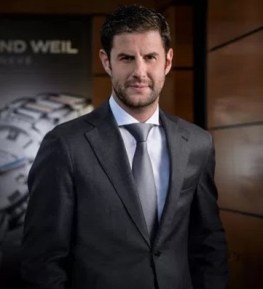
The grandson of the late Raymond Weil, Elie Bernheim joined the company in 2004 and was appointed CEO last year. Here’s a Q&A with the dashing CEO:

Screen Shot 2017-07-24 at 4.54.25 PM

1. The brand has a strong link with the world of music. How did this come to be?
It is true, you are absolutely right, my late grandfather Mr. Raymond Weil had a infinite passion for music, so has my father Olivier Bernheim. My mother is a professional pianist, and I have been playing the cello and piano from a very early age. You can then easily understand how much music is part of our family story, and naturally splits into our Brand DNA. Since three years now, we have developed the concept of music marketing; hence trying every year to establish qualitative musical collaborations such as the examples you have seen this year in our novelties: the Nabucco timepiece inspired by Gibson, Sinatra’s 100 years of birth commemorative maestro timepiece or even our brand new complication: the Nabucco Cello tourbillon.

2. What is your opinion on ‘smart’ watches?
It is always wise to remain informed, updated and sensitive to new developments and innovations – but the tendency this year for Raymond Weil is to point on our watchmaking know-how and propose creative yet audacious timepieces that bear musical features.

3. Which current trend in horology is the most path-breaking?
It is very hard to say, but the sure thing is, if a watch brand remains faithful to its values and provides clients with an authentic, honest and a reasonably-priced collection it will definitely lead to a deserved recognition. I try every day to improve on the quality of the timepieces we propose to our clients. Taking care of the materials, the durability and the long-term readability of the timepiece: these are for me challenging objectives you can always improve on.

4. What do you think of the relevance of chronographs and tourbillon movements today for women?
My challenge this year in Basel was to present a watch that represents the best our actual inspiration — that is why I have encouraged my R&D staff to work on a very special project, this has lead to a superbly designed tourbillon timepiece, totally in line with our musical DNA. It is a gents’ watch, and I am convinced ladies will be sensitive to the approach as well. 45 to 50% of our collection is dedicated to women — we may integrate complications for ladies if it is of relevance for our product strategy — as we have already done in the past.


Premier Speak: Walter Von Kanel on Longines relationship with India

Tags

, , , , , ,

Published, Vervemagazine.in, April 3, 2015

President of Longines, Walter von Kanel talks about India, politics, bureaucracy and Aishwarya Rai Bachchan

Screen Shot 2017-07-25 at 9.26.29 AM

Walter von Kanel is lively, intelligent and with a sharp sense of humour. You can have an easy chat with him which will lead to wide-ranging topics and he will know how to drive facts home. Over his many decades with Longines, the president is sure of himself and the brand and where it is headed — number one in their price segment from it’s current number 4 standing. He shares his views on India below.

  • I’ve brought the brand (Longines) to Number 4 in this industry. When you are over a billion swiss francs, it means a lot of money…it’s too many rupees that I cannot count. We brought this company to a very strong position. 
  • We have now very impressive distribution, according to the group governance where we respect all national laws. Your decision not to allow us to open our own shops for instance!
  • The Indian market is local and abroad the…? (NRIs) Yes, the NRIs! In India they drive you nuts with acronyms. It’s an Indian speciality.
  • With Brazil, India is the highest tax country…we respect it, because unlike Brazil, we don’t have to pay baksheesh
  • Rolex is good at number 1. (Taps a bunch of numbers.) It’s impossible to be number 1. I want to be number 1 in my price segment — in this industry it’s difficult to do everything. The name of the game is the price segment. Many people are coming to this segment now, we welcome them.
  • In this industry you have macro tendency. There is an evolution and no revolution. If you are a genius and have the most brilliant idea, you can’t be a genius alone — this industry is not Apple or Google or Samsung. The cycle is longer. 
  • I’m happy companies like Apple and Samsung are coming into the business. It is additional business for me. They change every few months. They will help us put a watch on the wrist of the younger generation. And one day this generation will be tired of these electronic watches and they will be looking at an analog watch. It is a status symbol. 
  • You (India) are one of the most populated companies in the world. Being the number 1 or 2 populated country in the world, you are number 24 of the 30 countries buying from us. The barriers are so big, that they buy from abroad rather than locally. For instance, we can open a shop anywhere in China, we are not blocked by Titan!
  • The Indian consumer in our price segment knows what they want. I’ve been many times to your country — to the pink building in Delhi! The quota, the licence, the duty… And I learnt one thing that the man with the power is not the minister, it is the guy who works for him, the secretary sitting outside. 
  • Indians have discount in their blood. You always bargain. Don’t you? (No.) Then you must be buying from a shop that doesn’t offer a discount!
  • India is a mature market. It was open to branded consumer goods much before China. Indians travel a lot abroad to cities where they may purchase these goods. But India itself as a market is not 100% open. 
  • In India there is no smuggling, we tell them not to buy from bandits. In luxury shops, if one retailer is selling fakes, he is killed — by the brand and the industry. Your fellow citizens smell the fakes. 
  • Your PM (Narendra Modi) says he is fighting against corruption. Give him a chance! In China they are very strict.
  • It’s nice to have Aishwarya Rai Bachchan (brand ambassador of Longines for 15 years), it’s nice to see her daughter, it’s nice to see her mom…. I was the guy who picked her, when I got a call saying it was time to negotiate with her. 

Baselworld 2015 and 2016: Watch it here!

Tags

, , ,

Baselworld 2015

Click here for Baselworld 2015… the low-down on all the hautest happenings at Baselworld 2015, straight from the heart of the watch expo

Baselworld 2015

Check out the 7 watch trends from Baselworld this year here. Timepieces in varying shades of blue, ‘smart watch’ prototypes and innovative complications… find out the biggest watch trends of 2015

Screen Shot 2017-07-24 at 4.54.25 PM

Raymond Weil’s CEO talks shop here. A quick Q&A with the CEO of Raymond Weil, Elie Bernheim, who speaks about their musical history

Screen Shot 2017-07-25 at 9.26.29 AM

Longines president Walter Von Kanel on India and watches here. President of Longines, Walter von Kanel talking about India, politics, bureaucracy and Aishwarya Rai Bachchan

Talking shop with Bulgari’s Fabrizio Buonamassa (director of the Bulgari Watches Design Center) and Guido Terreni (managing director of Bulgari Horlogerie).

TOP 6 TRENDS FROM BASELWORLD 2016

Screen Shot 2017-07-24 at 1.40.20 PM

In the 99th year of Baselworld, we came away less impressed than last year, despite there being 4,400 media reps and 145,000 participants. It seems that the brands are making 2016 the year of caution, with limited releases, innovations and flamboyance. Maybe this will help them “wait and watch” (no pun intended) until the luxury world is ready to explore new frontiers. Louis Vuitton was missing from the fair, and while the usual suspects held fort and rallied, they lacked the lustre of the previous years. Nevertheless we bring to you some of the key trends and big launches of the year. Read more here.

Interviews:

Founder’s Tales: Fawaz Gruosi for De Grisogono

Screen Shot 2017-07-24 at 2.25.55 PM

Founder’s Tales: Aletta Stas-Bax for Fredrique Constant

Screen Shot 2017-07-24 at 2.21.30 PM

I, Me, Myself and No One Else

Tags

,

Published: Verve Magazine February 2015
Painting by Rahul Das

I-Me-Myself-Verve

In the chaotic social babble, we may have lost the ability to hear our inner voice. Verve ruminates on what it means for women to be alone today

‘I think it’s very healthy to spend time alone. You need to know how to be alone and not be defined by another person.’ Famous words by Oscar Wilde. But do they stand true today? On the one hand, women are willing to be alone and not be defined by a man or a friend or a family. And yet, as a society we remain dependent on other people – the human race is driven by relationships.

In an issue devoted to exploring the ‘I’ in a relationship, do we sing soulfully about ‘me’ time, or is it a beacon call of a lonely heart? A happily married lady of nearly 60, asks, “Should I have, all these years, loved myself more than my husband?” And the regretful answer may have been ‘Yes’. As we celebrate ourselves, we are looking to find our identity and space, collect our thoughts and be who we want to be (or do what we would like to do), without interference, judgement or questioning.

In our race to please everyone, we may have begun forgetting what it is that we want. And driven by peer and social pressures, the very way in which we define ourselves has changed.

Women On Their Own
Some would believe that being alone is a gift of liberty, without having to depend on or account to anyone. For many others, it’s a lifestyle shift, a dramatic change in thinking, emotionally and physically. With the growth of meditation camps, single-person travel tours and no-companion-required activities, we foster a sense of metropolitan independence.

There are many women who do things on their own, in order to ‘find themselves’ or to meet new people. Does that make them social pariahs? With employers like Google – willing to foot the bill for their female employees to freeze their eggs, so that they are not pressured by nature to find a companion – we find the road for ‘aloneness’ made easier. The biological clock doesn’t need to tick in a foreboding manner any more; women can be free of the pressure to settle.

And yet it does not fall that we would like to be alone. Women have begun celebrating their personal time; but are women embracing an involved relationship with themselves? For instance, do women feel comfortable eating a meal by themselves, or watching a film in the cinema on their own?  Perhaps the decision is linked to safety – we feel more secure being with someone, we feel protected.

Maybe we feel the need to establish to society that we are not alone. And in that lies the insecurity where we draw our self-worth from another being. The very fact that someone would choose to be with us makes us worthy. We are always seeking approval; we don’t have to deal with the ‘shame’ of being seen without another person.

Isolation Is Punishment
The primeval need to be a part of a community or have a companion – the reason why humans created societies – is so genetically deep rooted, that we are uncomfortable in isolation. After all, one of the rigorous imprisonment tools is solitary confinement. The inability to make conversation and share thoughts is considered a punishment. It is as if we are afraid of being alone with our own thoughts and feelings. What would we do without the people around us distracting us from ourselves? The claustrophobia of solitary confinement leads to the desperate need of togetherness.

Can Indians Do It?
As a society (and with the risk of generalising) Indians are more likely to be uncomfortable doing things like eating, going to a bar or watching a movie alone in their home city, unless they are travelling or living away from home. This draws from the fact that Indians believe in community life and an outing as a family or group. No one plans to step out alone – if they are alone, they stay home. Going out is intrinsically linked to socialising. They may find it easy enough to stay in on a Friday or Saturday night; while in the West, culturally among the single lot, it is considered uncool to be home alone on nights reserved for hanging out or partying. You angle for a date – as the Saturday-night culture portends that you ‘be there or be square.’ It is not unlikely for single women to be out at a bar abroad, or women willing to pick up a date just to go out, while that is not the norm in India. Locally, women – unless they have company – will most likely stay back rather than be seen alone outside, due to social taboos based the perceptions of how ‘good’ women should behave.

Are We Ever Really Alone?
Keeping aside social conventions, at one time, it might have been considered boring to hang out alone. Today, it has come to pass that we are really never alone when we have our smart phone with us. In a world full of gadgets that speak to us, engage us, challenge us and constantly supply us with information, we may find the communication of another person not required or even worse – not sufficient.

The physical distance between two people in conversation through social media provides security and anonymity to be yourself and push the limits more than you could have when meeting someone face-to-face. Will that change the next generation’s ability to ‘face’ people?

And yet, in an alternative study to technology creating social misfits, Australian researcher David Clark suggests, ‘People become less dependent on their families and need more specialised skills, which could lead to less interest in social support and more self-sufficiency. Over time, people are more individualistic, more extroverted, and have higher self-esteem.’

What Is Fulfilling?
We begin to compartmentalise our lives into time spent with people and time spent alone. Which is more valuable? A woman in her 30s, recently married (and potentially commitment-phobic), believes that it is possible to go an entire life, with a good job and international sojourns, without the need of a man. (Not counting casual sex and friends-with-benefits.)

But independent nights or weekends are a world apart from choosing to live and be alone. When you take a few nights off, you do so with the security that you have someone to come back to. That someone is a willing companion to the things you may want to explore and do. Without that security, are we lost and flailing or are we more aggressively ourselves?

We have yearned for a companion with whom we can be ourselves. But today, in a world of compromise, it may be easier to be yourself with yourself rather than change your personality to match someone else’s! Is a relationship with someone too much work?

The Fight Against Silence
While more people are comfortable being alone, because of the connectedness they feel at any point of time with their gadgets; they are automatically uncomfortable in silence. At a party, theatre, restaurant, even waiting for the lift, people find themselves whipping out their phones and ‘listening in’, ‘liking’, ‘sharing’ and ‘commenting’. They are uncomfortable with idle time or stillness. They must reach out to someone, somewhere or do something. The virtual world provides us sound and distraction at every turn. And we find ourselves choosing that distraction, because our uncontrolled thoughts quickly tap into a world of loneliness and insecurity. Do our cultural connections allow us the freedom to remain alone?

The Fine Line    
For society to grudgingly consent that it is acceptable to be alone, it may become easier for people to take their time over choosing – or never choosing – a companion. Traditional relationships may move over to long-term friendships and multiple relationships. It is likely to create a lower threshold for tolerance – we don’t need to work on a relationship or a compromise if we can be happy alone. It is the fine line between finding yourself and moving beyond self-centeredness. A line that we must tread carefully, so that we may retain a strong sense of self, with the empathy, understanding and a desire to create a society of amiable coexistence.

Purveyor Of The High Life

Tags

,

Published: Verve Magazine March 2015
Photograph by: Ryan Martis

Rose Code Verve Magazine Aneesa Dhody Mehta

“Luxury, for me, is about the experience. It’s about how it makes you feel.”

Rita and Raja Dhody’s elder daughter, Aneesa, has her mother’s sense of understated style, and an intuitive understanding of the good life. Armed with a double degree in business and communication from Bond University, Australia, Aneesa had a watershed moment moving from the world of ad production to the world of luxury. From a stint at Kailash Picture Films, she joined the Murjani group, representing brands across their luxury division. “The learning curve was very steep, as luxury in India was in its nascent stages, and one didn’t have any experience dealing with luxury brands here. The challenge was aligning the expectations of the brand headquarters while still being relevant to the Indian consumer.”

Post this, she began freelancing and eventually founded Creative Co in 2011, with Diageo on board as her first client. The fledgling company executed around 20 events for Diageo in their first year, one of them being the successful Ciroc Sundowners, which put the brand on the map. What started out as a two-person team, working out of Aneesa’s father’s study with a single client and merely an event division, now offers a range of services: brand consultation, public relations, social media and events. Creative Co works with brands such as Gucci, Hèrmes, Christian Louboutin, Diageo, Lancôme, Clarins, Le Mill, and Pinakin.

Aneesa’s role in the company has grown to be a more holistic one – of being a mentor to her team and an advisor to her clients, while focusing on strategy and growth for the company as a whole. “I give my team a lot of flexibility and encourage them to develop their own minds and have continuous learning on the job. With my clients, I am always available should they need to bounce ideas off me or share thoughts on new developments.”

She spends her time working on deliverables or targets, checking in with her team, and meeting her clients regularly – juggling a busy day schedule with work commitments that occasionally stretch to late evenings. “The challenge is also to constantly innovate and not stagnate creatively. Marketing is all about coming up with new ways to engage consumers, so the work in itself is demanding.”

Aneesa’s personal style is “classic, feminine, and sometimes eclectic”.  She treasures her grandmother’s coloured diamond necklace, where each stone is cut in the shape of a heart. Married to Harsh Mehta, who develops luxury villas in Alibaug, Aneesa loves to travel if she has a few days off and hits the spa every Sunday. She defines luxury as, “going away to the Maldives and switching off my phone for three days…or buying a pair of handmade leather sandals in Greece! As is opening a great bottle of wine, and sharing it with a friend.”

While ambitious people inspire her, she appreciates straight shooters: “I’m a ‘from the heart’ sort of a person. I don’t know how to be ‘fake’. Therefore, I attract similar people to my life, and it’s been quite rewarding so far.”

A Fine Thread

Tags

,

Published: Vervemagazine.in March 2015

Espace Louis Vuitton Art

How does a weave become a work of art? Not just in beautiful clothes, or in theGodharis of Maharashtra exhibition, but in the way Espaces Louis Vuitton celebrates new and contemporary artworks using the medium of thread. The Espaces of Munich, Paris and Tokyo have been powered with an exhibition that lasts the first half of 2015.

Curated by Michiko Kono, eight international artists take part in the group show, Le fil rouge which translated means ‘the red thread’. Each Espace showcases the work of four of the eight artists, referencing the theme and the other artists’ works in a three-way dialogue. The series opens with embroidery-based works in Munich to site-specific installations in Paris and ends with a summary of the theme in Tokyo.

Referencing the images from the gallery above, Japanese artist, Chiharu Shiota’s work is an installation of lightbulbs suspended in space and entangled by thread, switching on and off; exploring her interest in life and death. Italian artist, Tatiana Trouvé’s installation of 250 suspended plumb lines hovering barely above ground level struggling (and failing to) achieve a vertical stance – suggest the indecipherability between the absurd and the rational, the possible and the unimaginable. In his new film, the Belgian Hans Op de Beeck, employs puppets exploring contemporary society’s complexities and universal questions of the meaning of life and mortality. His film, The Thread, will be shown at all three Espaces. The other artists are Ghada Amer, Tracey Emin, Isa Melsheimer, Michael Raedecker and Fred Sandback.

The release note remarks: ‘Unlike pencil and paint, thread is not linked to an intrinsic finality, and its materiality encourages infinite artistic expressions and explorations. Replacing the brush, thread in contemporary art is embroidered or glued onto the image carrier, and combined with paint. Canvas fragments are sewn together using thread. By stretching lengths of yarn at different scales and in varied configurations, it is employed to form sculptures, trace lines in space, reproduce architectural principles or seemingly suspend the laws of physics.’

It is essential to go back to thread as an art form, rather than a means to a fashionable end. To question the abstract nature of the medium and it’s physical place in society is to give it perspective and suggest relevance. It is also an emphatic way to revisualise the medium and possibly be inspired to suggest creative renditions that may change the face of fabric tomorrow.

Le fil rouge is showing at Espace Louis Vuitton München (Maximilianstraße 2a, 80539) until April 11, 2015; at Espace Louis Vuitton Paris (60, rue de Bassano, 75008) until May 3, 2015; and will be on at Espace Louis Vuitton Tokyo (Louis Vuitton Omotesando Bldg. 7F 5-7-5 Jingumae, Shibuya-ku) from April 8 to May 31, 2015.