• About
  • Brand Building
  • Film & Drama
  • Writing: Arts & Lifestyle
  • Writing: Interviews
  • Writing: Luxury Brands
  • Writing: Travel

sitanshi talati-parikh

sitanshi talati-parikh

Tag Archives: Designers

Trendsetting Strokes

26 Wednesday May 2010

Posted by sitanshi talati-parikh in Fashion & Style, Interviews (All), Interviews: Lifestyle, Publication: Verve Magazine

≈ Leave a comment

Tags

Art and Design, Designers, Fashion, Gaurav Gupta, Interview, Satya Paul, Style, vervemagazine, Wendell Rodricks

Published: Verve Magazine, Nerve, May 2010

The connection between fashion and art is an old one; international trends can be written in no less than multiple coffee-table books. Verve speaks to four top Indian fashion designers who show obvious influences of art in their designs

WENDELL RODRICKS

Wendell


On the connect “There has always been a connection between art and fashion. Chanel loved Cubism. Schiaparelli loved Surrealism. And Yves Saint Laurent paid tribute to many artists: Braque, Picasso, Mondrian. Art and fashion are both provocative and often intrigue the general public.”

In my designs “I have used art as an influence not just from the Western world but also from an Asian perspective. I have collaborated with Goan artist Theodore Mesquitta; and did an installation for Habitat Centre (Alka Pande). In fact, I know one day I will paint.”

Fashion as a work of art “Fashion is at the lowest rung of the pure art ladder. Our clothes certainly are a form of art. To elevate them to pure art though is being overly ambitious. Fashion can become art in the hands of Alexander McQueen or Hussain Chalayan who look at clothing and shows as art to begin with. But in most cases, fashion is not art.”

SATYA PAUL

Satyapaul02

On the connect “Anything in life has two possibilities – either you can use it to raise or lower the bar. What matters is how one takes it. Fashion is itself an art form, a medium to be used to create amazing art. Broadly seen, it is a confluence of colour, texture and form (by way of weaving, embroidery, printing, and cutting/pattern making). The importance of the two is akin to asking ‘…the importance of oxygen to life?’”

In my designs “Art is anything done with heart! In that vein we have made numerous collections over the years where art of different artists, and movements of art is the basis. Recently, Chola period brozes and Pop art have been referenced in our collections. In addition, we have explored and developed a new visual language.

GAURAV GUPTA

Gaurav02

On the connect “Sure there is: fashion is simply commercial art.”

In my designs “I’ve always been inspired by art. Think architecture by Gaudi, movements like Surrealism, Dadaism, the art nouveau and art deco realisations. While it is nothing obvious and direct, there is a subconscious connect. Recently, I collaborated with artist Akshay Singh Rathore, taking off from his light-box installations. We’ve independently been working towards similar things – a more landscape-like feeling. Tartan checks can be rigid; with this concept, they became more fluid, draping well.”

Fashion as a work of art “Some of them are! Designs are sculpted around a body. Sculptures have a mood; and in fabric draping, construction and moulding, it is like working with clay. One of my saris for instance was displayed at the Portugal Biennale (an international art exhibition) late last year.”

POONAM BHAGAT

Poonam02

On the connect “Art and fashion are both intertwined. Both are highly creative fields. One uses a canvas with brush strokes or mixed media while the other uses fabrics and threads on cloth. The difference is, the latter is turned into a structured garment while the former is flat with sometimes a 3D effect. Artists have even started incorporating materials available to fashion designers in their art.”

In my designs “My spring summer 2010 collection was inspired by the works of world renowned Spanish artist Joan Miró, who was known for his very vibrant, childlike paintings and use of primary colours. I borrowed elements from his art and gave them my own TAIKA twist using vibrant appliqués and embroidery on ivory linens and cotton-silks. The recently concluded WIFW AW 10 showcased my collection inspired by abstract expressionism, a modern American art movement which took wing post World War II in the late ’40s and flourished till the early 1960s, putting New York on the global art map for the very first time.”

Designer in an art show “For me art speaks; so does fashion. The first ever group art show I participated in was organised by Polka Art Gallery at The Visual Arts Centre, New Delhi in August 2007. It was a showing of extremely eminent artists. I was the only fashion designer and the only one to create tapestries on fabric with embroideries.”

Designs as works of art “My designs are just fashion statements, to be worn and enjoyed. Not to be treasured!”

A Bag For All Times

26 Wednesday Aug 2009

Posted by sitanshi talati-parikh in Interviews (All), Interviews: Lifestyle, Publication: Verve Magazine

≈ Leave a comment

Tags

Designers, Fashion, India, Interview, Lifestyle, luxurybrands, Style, vervemagazine

Published: Verve Magazine, Features, August 2009

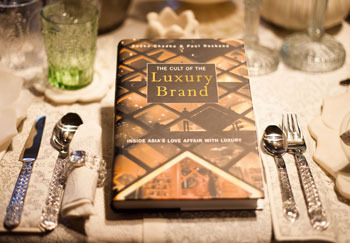
A designer bag is your chance to stalk up the social ladder. Sitanshi Talati-Parikh chats with brand consultant-turned-writer Radha Chadha about the cult of luxury

Chapter02

It isn’t easy to talk about luxury without moralising, particularly when you see girls ready to clobber each other with their Manolos to get their hands on 16 bags at 50 per cent off at the Gucci sale. I began wondering about the craze for luxury brands. Ironically, the answer arrived in the form of Radha Chadha and Paul Husband’s book The Cult of the Luxury Brand: Inside Asia’s love affair with luxury. Excerpts from an interview with Radha Chadha:

How did the love affair begin?
I went to Hong Kong in 1997, well before luxury brands had set up shop in India, not knowing much about them. I was fresh off the plane from India and couldn’t understand how my secretary could afford a Louis Vuitton bag! Working in an advertising agency, I invariably ended up dealing with luxury brand projects, and over a point of time I simply fell in love!

You talk about the ‘democratisation of luxury’ – isn’t that an oxymoron?
Yes it is! Most people associate the word ‘luxury’ with ‘exclusive’. The way luxury brands are marketed today, there is nothing exclusive about it. Take Japan – 94 per cent of women in their 20s have a Louis Vuitton piece. There is nothing exclusive about it in that society. When the access to luxury is there for whoever can bite into it (and luxury also becomes bite-sized), then there is democratisation of luxury.

Where is India going with luxury brands?
India has a lot of luxury, but we do not have too many global luxury brands. We have tons of potential luxury brands waiting to happen. Brands exist more in the head and heart – its all about how you present it to the world. India has yet to do that. Also, in India it is only the top end of the market that is shopping. As the Indian economy grows, the use of these products will also spread, as it has in every country.

Sex and the City, the movie, introduces the concept of renting a bag….
It’s true! What is also common is buying a bag and selling it at the same store. When the desire becomes greater than the pocket – that’s when this happens.

So, the bag is the new solitaire?
The solitaire says ‘I have got money baby’, but a luxury brand says ‘I’ve got money and a certain taste’ – it has a certain ability to express personality.

Why do people buy luxury brands?
Many people buy luxury brands for the sheer pleasure, for the quality…but in Asia I have found that people buy to prove their status in society. Almost all of Asia was poor at one point of time and had ways of marking status. Luxury brands have been around for ages, but the way they were marketed was very different. With the recognition that accompanies the right branding, luxury brands become status markers.

How did the book happen?
I have this burning desire to write. I study people, and luxury brands seemed like an interesting lens with which to study countries. It is such a rich subject – you can understand so much about human beings and behaviour and a country by the kind of things people over there do and what drives them.

Does art fall into the concept of luxury?
I have defined luxury brands arbitrarily in the book to limit the scope, as stuff on the body. So many other things like cars, condominiums, private planes, yachts and even art can fall into it. A lot of these artists are like brands (try telling them that, they will be offended!) but MF Husain is also a brand!

Bali’s Haute Brigade

20 Wednesday May 2009

Posted by sitanshi talati-parikh in Fashion & Style, Interviews (All), Interviews: Lifestyle, Publication: Verve Magazine

≈ Leave a comment

Tags

Bali, Bali art, Bali boutiques, Bali expats, Bali fashion, Designers, Fashion, Interview, Interviews: Travel, Kuta, Lifestyle, Seminyak, Ubud, Verve Magazine

Published: Verve Magazine, Life & Travel, April 2009
Photographs provided by the designers and artists themselves. All photographs are individual copyrights. This blog post does not assume any credit for the photographs.

While others sun, tan and shade themselves, Sitanshi Talati-Parikh gets up close and personal with some chic entrepreneurs and designers in Bali who are creating a global brand for themselves.These expatriates come together to create a fabulous confluence of talent and tradition, where international eyes meet local hands

A hop, skip and splash away in a tropical microcosm of creativity, one can discover a haven for those searching for a different and better life. “A mysterious and magic place charged with tremendous powers of creation and destruction, growth and decay, harmony and struggle,” says expat Susi Johnston. It was as far back as 1920s when artists and photographers moved to Bali inspired by the unselfconscious Balinese women working the fields, and the spectacular tropical environment. It wasn’t long before Bali became the centre for creative ambition. Now, with over 15,000 expats, the island is exploding with a fountain of talent that is simply waiting to be discovered.

While international brands lie low, it is the local labels that take centre stage, run by enterprising young people who are clever enough to spot the advantages of using the unentrepreneurial local talents in a more marketable and international manner. As I speak to many of the people who have moved there, I find that they have discovered a style niche – inspired by the lush tropical environment, amiable people, easy-going life and lower standard of living, they have found opportunities on this island, or more correctly, created opportunities on this island that they may not possibly have had in their home town. The “powerful” and “energetic” island is more than home for most of these “accidental entrepreneurs”. It is also a livelihood and a lifestyle.

And the locals play an important part – every expat I met unreservedly states that the Balinese people are superlatively talented. Excellent at working with their hands, quick at moving forward with traditional techniques and themes that have been handed down through the ages, they however, lack the ability to create an international-style brand and the vision and entrepreneurial ability to take it forward. Is it a happy marriage then? Possibly, though the challenges are many. Work stops unaccountably and a sense of professionalism is lacking. Language is another huge barrier. But these are small bumps on the style highway, as many of these expats are finding fruition by getting noticed by top design houses, designing for billionaires’ homes across the world, and finding a space in a global arena. While some bring global experience to the table, all have a keen sense of creativity and style.

Through many days of exploration, in between afternoons on the beach and motorbike rides through Jalan Oberoi, Seminyak’s shopping area filled with chic boutiques; tête-à-têtes over ‘Bali coffee’ at the boutique Elysian Hotel, wanderings through Bali’s art town, Ubud, cocktails at Amandari, watching ceramic production in action and bargaining with the jewellery vendors, I came across a phenomenon of style, determination and hard work.

Janet De Neefe
Writer, entrepreneur and restaurateur
Restaurants: Casa Luna and Indus, Ubud 

Bali21


It is not difficult to imagine Janet De Neefe as the face behind the annual international Ubud Writers & Readers Festival that is now in its sixth year, and has been instrumental in putting Ubud, Bali and Indonesia back on the travel map after the Bali bombings of 2002. “The aim of the festival is to give a voice to the many talented Indonesian writers by placing them on a world stage, alongside the likes of Vikram Seth and Michael Ondaatje.” Vikram Seth proclaims that his presence at the festival was merely because of Janet’s untiring persistence. Janet’s love affair with Bali began on her first holiday with her family, and on her second visit she met her husband Ketut. She hasn’t looked back since, having spent 20 years in Bali.

Roots Melbourne, Australia

Bali Years 20 years in Ubud

Creative Space Running two restaurants and authoring a book of her personal journey in Bali, partially inspired by the local cuisine and traditions called Fragrant Rice (2003)

Personal Style An eclectic take on the local designs: “Exotic Asian and Paris chic, with a bit of Spanish thrown in. I adore Indian textiles but also love Baroque style and Chinese and Moroccan embroidery.”

Challenges “Amidst all the challenges or misunderstandings, Bali has provided me with an exceptional life that most others would only dream of. I live in a generous, supportive community who value the importance of family, neighbours and community. So many places in the West have lost this. I never feel lonely or isolated and my children are treated with respect.”

“My love affair with Bali began in 1974, with my first visit on a family holiday when I was 15. I remember landing on the shores of a garden paradise, surrounded by waves and nodding palm trees and when the plane doors were flung open, the warm heavy air, mingled with fragrant frangipani and the sweet smell of clove cigarettes, embraced me like a long lost friend.”
– Janet De Neefe, Fragrant Rice


Made de Coney
Designer and boutique owner
Label: Lily Jean, Seminyak, Kerobokan (Kuta), Nusa Dua

Screen Shot 2017-07-25 at 4.11.20 PM

Made de Coney received an inheritance of US$ 5000 from her father (who lived in Bali) at the age of 23, and without thinking twice, used it to rent a shop and create the Lily Jean label. Influenced by international fashion and inspired by the local Bali artisans, Made uses imported materials and local hand work, especially in embroidery and batik. “The same artistry they use for their religious ceremonies are applied in every artistic endeavour.”

Roots Born in Bali, she spent a decade of her childhood in Brazil and studied fashion in America.

Milestones The label is available in 12 countries, and with five shops in Indonesia, Made can look back and say, “Now I realise it is quite an achievement!”

Customers “They are women in their teens who love the playfulness of the designs; they are women in their 20s who are seeking personal statements to make with their style; women in their 30s who embrace the need for changing expressions of self; and women of every age who appreciate the delight of dressing for their own pleasure in beautiful garments that enhance their sense of self.”

Challenges “I’ve learnt to be very tolerant of religious holidays (Christian, Muslim and Hindu) and to cultivate my patience.” 

Bali24

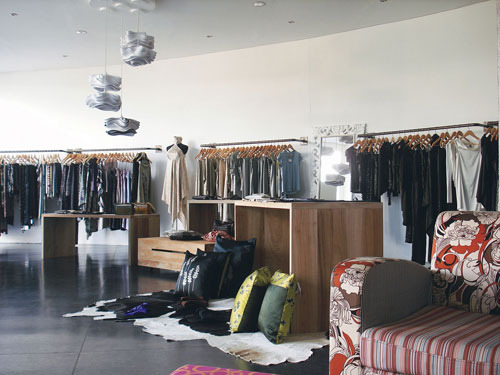
The Lily Jean Label has soft, stylish street wear and highly glamorous cocktail dresses with important materials and local handwork.

Kirsty Ludbrook
Artist and designer
www.kirstyludbrook.com; www.ludbrookandludbrook.com

Bali22

Kirsty Ludbrook moved to Bali to set up a home for her three boys – so that they could experience a world beyond the suburbs of Sydney. “The idea was thrilling and liberating. Especially our boys living this crazy exotic life in their early years, one that is so different to that which they would have had in Australia!” While she discovered that her flair for sketches and painting could be translated into sophisticated murals using local batik techniques on cloth, her husband Richard, a fashion photographer, is building a studio in Bali to accompany the very large one he already has in Sydney. “When I first arrived here I immediately started experimenting in my art with the new materials and techniques available – particularly with the rich, lustrous colours that could be achieved in silk batik work. As a result, my art evolved, and I have been working on portraits which are created by appliquing and embroidering together individual pieces of silks.”?Her paintings get an audience at her solo show in the Biasa Artspace this year.

Roots Sydney, Australia.

Milestones Kirsty has successfully sold a design agency in Australia,?and has been named by The Bulletin Magazine as one of Australia’s top 10 creative talents in their annual Smart 100 listing.

Challenges “The hardest thing is the fact that the Balinese are such nice people. They don’t want to disappoint you or say no. More often than not, being told ‘not possible’ at the beginning would have proven a little more practical.”

Bali19

Kirsty Ludbrook’s silk ‘Art Kimonos’ are inspired from costtume design in Japanese Manga and action films, while the hooded kimonos are from Ninja characters – which sounds deceptive, as the finished product is feminine, soft and very sensual.

Michela and Marcello Massoni
Creative head and business manager
Space and Brand: Gaya Fusion, Ubud
Screen Shot 2017-07-25 at 4.11.26 PM

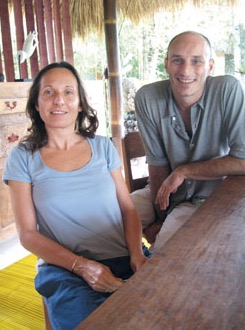
The first private contemporary art space in Bali was started by Stefano Grandi, an Italian entrepreneur, in collaboration with an Indonesian, Nyoman Birit. A young Italian couple, Marcello and Michela and their friend Giorgia Oronte were brought into the picture in 2003 with their background in sculpture and ceramics “to start a dream:? be able to be creative without limits and competitive and productive in an amazing environment.” With over hundred employees, Marcello manages Gaya Fusion, while Michela plays the creative head of the ceramics and sculpting division. Nostalgic about home at a time when Michela’s parents are visiting to meet the babies, they say that they “decided to move for the high quality of life, to give to our kids a natural living environment, to be creative without limits, to be inspired by the tropics and to be productive with capacities difficult to create in Italy.”

Roots Piacenza, a small town 50 km south of Milan, Italy.

Creative Space Gaya Fusion includes an art space showcasing local and international artists, a ceramic studio that exports and supplies to the top brands, including Bvlgari, Aman Resorts and Giorgio Armani Casa; private villas and spas with Italian-Balinese fusion architecture, and a restaurant offering Italian and Indonesian cuisine.

Challenges Dealing with Hindu culture, lot of ceremonies, beliefs, difficulty in finding a high level of professionalism.

Screen Shot 2017-07-25 at 4.14.00 PM

Using local products, Gaya Ceramics is always looking for new inspirations, as different clients mean different moods and designs. They make sculptures and unique pieces, while also producing nearly 5000 ceramic pieces a month.

Paola Zancanaro
Boutique owner and designer
Label: sKs or SimpleKonsepStore, Seminyak

Screen Shot 2017-07-25 at 4.11.33 PM

Paola Zancanaro hails from a long experiential fashion lineage. She studied fashion at the London College of Fashion, and began her career at Vivienne Westwood, in marketing, sales and events, then as celebrities’ dresser at Giorgio Armani, and finally at events at Prada, Milan. Ready for a change of culture, Paola considered Tokyo, but didn’t want a repeat of break-neck city life and chose Bali as her destination of choice. “I have been living on this amazing island for almost a year and half, its culture and nature are the reasons why I moved here.” She continued to work as a consultant for Prada events in Asia, while also becoming a part of a trendy boutique, sKs.

Screen Shot 2017-07-25 at 4.12.04 PM

Creative Space sKs – SimpleKonsepStore is the result of three Italian partners. All the sKs clothes are produced using antique Balinese techniques such as batik and silk screens. Paolo looks after the women’s clothes, while Mario Gierotto designs the menswear. Other accessories are from local designers and they also have exclusivity on Vivienne Westwood Jewellery.

Roots Born in Genoa and brought up in Alassio, Italy.

Challenges “Every day is a big challenge! You think you can do everything but when you get down to it, you realise is not that easy. Things do not get done quickly and as expected, but you can achieve amazing results by working with people who never stop smiling.”

sKs is a concept store where you can not just buy fashion but also find the latest gadget from Japan and real Italian design furniture such as the most iconic pieces from Kartell, Artemide, Flos and Alessi (brands that made history in the design furniture world).

Simonetta Quarti and Marco Lastrucci
Designers and boutique owners
Label: Quarzia, Seminyak

Screen Shot 2017-07-25 at 4.11.41 PM

Marco Lastrucci and Simonetta Quarti started Quarzia, a chic boutique on Jalan Oberoi, (the main shopping district in Seminyak) in 2005, when nothing besides rice fields existed in the area. Hailing from a fashion background – Simonetta was a textile designer and Marco a financial manager, they were looking for a change, and Bali seemed like the perfect option. “The freedom to express ourselves and the skill of the Balinese people” were great motivators to the couple who have spent eight years on the island. Inspired by the old traditional design, they give the fabrics an European sense of colour and design. They are not driven by “creative stress” – having to come out with new collections frequently. Instead, they believe in “eternal” clothes that are one-of-a-kind with great designs, cuts and style.

Roots Florence and Venice, Italy.

Challenges It is difficult for the local artists to be precise and manage to get the exact shade of colour required in creating clothes of international standards. “We are completely different from the local people, but we respect each other and we can learn from each other.”

Bali12

Quarzia makes one-of-a-kind clothes, where design, cut and style are very important, and where a pair of pants can be eternal.


Stephanie Robert
Designer, painter and entrepreneur
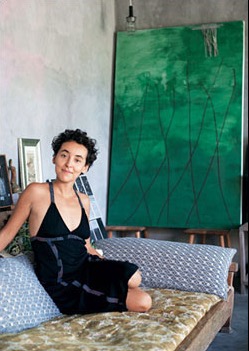
Maisonbulle Ltd. (www.mbulle.com)
Screen Shot 2017-07-25 at 4.11.48 PM

Stephanie has shifted through various creative interests and has entertained a relationship with the island since the early 90s when she came on holiday. “I loved the atmosphere and the endless possibility of creation and realisation the worker and their skills offered to one’s imaginative mind.” She returned to Indonesia to design, produce and buy a business she became a part of, for which she developed an interiors department, with the creation of a home textile and accessories line produced partially in Bali and India. Furniture took over textiles, and a sampling factory in Bali found Stephanie “enjoying experimenting, sharing knowledge and skill with a team of woodworkers, crafting beautiful pieces for single exclusive clients, architects, commercial decorators as well as large retail businesses.”

Roots France.

Design Style “Though my style would certainly reflect a great liking an admiration for the Scandinavian purist simplicity, mixed with an absolute love and fascination for the rough beauty of Asian road and country side furnishing and its practical laid-back attitude.”

Creative Space She is spearheading an online business, Maisonbulle Ltd. (www.mbulle.com) which an online catalogue of beautiful private holiday homes in Bali (and in the future globally), for which the main selective criteria is character. Specifically she recommends homes of designers, collectors, artists, philanthropists and travellers, whose homes reflect a unique character, to a similarly discerning set of travellers looking for a getaway. An editorial edition, Pulse, is soon to be launched. She also designs furniture and is a reclusive painter.

Stephanie puts her 15 years of experience travelling the world, particularly in Asia, into being a reference for “what is hot, stylish and worthy of attention”, with her online business Maisonbulle Ltd.

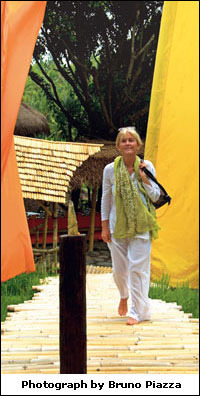
Susi Johnston
Art historian, designer, specialist sourcer
Store: Mican Tidur, Ubud 
Bali48


Determined to move to New Zealand, art historian Susi Johnston took a 14-year detour via Bali. She chose to ‘retire’ after a decade in marketing and public relations, “burnt out on fast-paced urban life,” and decided to spend six months in Bali doing “absolutely nothing”. She rented a little bamboo bungalow in the middle of the rice fields, near Ubud, and hasn’t looked back since. Susi speaks fluent Indonesian (actually stood in as a translator for an Indian yogi speaking to the local audience) and still hasn’t made that original relocation trip to New Zealand. “I ended up doing what I am currently doing in much the same way as so many other ‘accidental entrepreneurs’ who have found themselves in Bali,” says the ‘sleeping tiger of Bali’, who is a goldmine of information on the area and a regular blogger. She lives and works in collaboration with Bruno Piazza, her life partner, an Italian tribal art dealer and designer. They travel around Indonesia and mainland Southeast Asia together, “treasure hunting, feeding each other energy, inspiration, ideas and tastes”.

Roots Grew up in Seattle, lived in Scotland, London, New York and Hanoi.

Bali32

Creative Space Running multiple galleries with her business partners, Susi Johnston is in a space she terms “specialist sourcing”, selling genuine antiques and ancient artefacts, while also creating furniture, accessories, textiles and architectural elements in a collaborative effort.

Challenges “The education and training in Indonesia is far short of what it should be. It can be extremely difficult to put together skilled staff to fulfil the many roles that make up a modern business team.”

Susi Johnston’s companies make unique basketry objects that are more sculpture than mere baskets; work with local carvers and furniture makers who create works in stone, wood and mixed materials with traditional tools and methods. They are a part of the synergy between local and world culture.
Fashionista Baby

18 Friday Apr 2008

Posted by sitanshi talati-parikh in Publication: Verve Magazine

≈ Leave a comment

Tags

Baby Shower, Designers, Fashion, Motherhood, vervemagazine

Published: Verve Magazine, Fashion, April 2008

Fresh out of a designer baby soirée, Sitanshi Talati-Parikh contemplates the exclusivity of a generation soon to be born, who will probably never feel the warmth of a granny-crafted bootie or bib

Baby01

I gasped the very instant I got a formal, evite to a baby shower. The little brats were crawling into my inbox now? The cutesy, ballooney, floral evite exploding with colour was reminding me that the clock was ticking – my grandmother-in-law’s reproving face hovered before my eyes, and I sighed, replete with the knowledge of the irrefutable truth that the pressure would mount and until I either became one of those aunties-that-never-had-kids-but-kept-attending-baby-showers, or even worse, one of the radiant, peachy-pink mothers that had cutsey baby showers thrown by a bunch of excited girlfriends. Ick. This was what life was reduced to. Shopping for babies and attending haute couture baby parties.

Mustering up courage, and looking like this was just another day, I spent my only free day of the week shopping for the tiny tot. As I entered the shop that held promise and words of encouragement for the little-somethings soon to bless your life, with absolutely adorable Anne Geddes’ baby pictures floating enticingly on the walls (wreaking havoc with your sanity if your baby dared to look any less cute), I was accosted by long counters that stretched before me and I suddenly felt a strange discomfort. Sliding down the nearest aisle, my jaw dropped as I looked at a myriad range of baby products that seemed to leap at me from the shelves. Juniper bath wash and serendipity powder, fluorescent rattles and luminous baby oil; help!

Flash forward into a chic SoBo home, where a baby shower is being organised – with larger than life helium balloons in every kiddie shape, little soap bubbles floating around, and guests floating around in bandana bibs sipping passion fruit champagne from Vera Wang crystal flutes. The celebration is under way! As I sit down, I am accosted with large 24-carat gold-tipped diaper pins, and told to get in the groove with all the baby games that have been cleverly concocted by the discerning would-be mama’s coterie. I can only think of the fact that as the baby enters this world – she is certain to be a part of the imported Russian-performer-and-celebrity-lion-birthday parties and potentially even worse, salon-and-spa bashes for the precocious five-year-old.

Nudged into sipping some sugary concoction out of baby bottles and match-ing baby names against celebrity mamas, in a test-your-celeb-prowess-contest, I quietly conceal my ignorance by downing one more flute of the bubbly and practising recently acquired knowledge of a yoga relaxation technique. My creative friend concocted a time capsule for the baby – all the invitees arrive with something of a landmark nature and surrender this to a little capsule that will keep time stagnant – until the baby is old enough to figure out what shattered the earth in the Year Of Her Birth. Bless the child that discovers that just as she was about to step into the world, daffodil yellow rocked Spring-Summer catwalks and Tamil Nadu gave way to the third sex, ForceIndia came into being and SRK got his own IPL. Whoo-hoo!

No Time To Preen

26 Monday Dec 2005

Posted by sitanshi talati-parikh in Fashion & Style, Interviews (All), Interviews: Lifestyle, Publication: Verve Magazine

≈ Leave a comment

Tags

Designers, Falguni And Shane Peacock, Fashion, Interview, Lifestyle, Style, vervemagazine

Published: Verve Magazine, Features, November-December 2005
Photograph: Akash Mehta

When Falguni married Shane Peacock, together they conjured up a funky treasure trove for the tired fashion victim. Sitanshi Talati-Parikh chats with the creative couple behind the flamboyant designer label, who work 24/7 and suffer from Sunday morning blues!

Fs1

The Juhu studio is warm and snug, tastefully embellished with touches that are all Peacock. Settling myself in on an olive love seat with golf motifs, I look expectantly at Shane Peacock seated across me on an animal print settee; he appears as reticent as he is known to be. The other half of the duo – Falguni Peacock – chirpy, bubbly and innately hospitable, bustles about attending to things while talking at breakneck speed.

They could be just any newly married couple, bickering good-naturedly over minor differences, suddenly quiet, otherwise talking over each other, and completely head-over-heels in love with their three-year-old budding fashionista daughter. The conversation flows over a coffee and then some tea.

Theirs is a fairy-tale story of how a self-reliant, salwar kameez-clad Gujarati girl came upon a pig-headed, Christian boy. Ironically, Shane, who was a member of a rock band, had always fantasised about meeting a ‘propah’ traditional girl who didn’t smoke, drink, or ‘go wild’, and there she was. But Falguni wasn’t easy to woo. With a delighted chuckle, she recalls how Shane once asked her out for coffee and told her to come wearing jeans. When the usually conservative dresser obliged, he knew he had won her over.

But conventional as she seemed, Falguni was a career woman through and through. Even before she got married, she had started her own clothing label and Shane, meanwhile had also studied fashion design. It was not long after their marriage that they pooled their talents into the flamboyant and unique Peacock brand.

Their success didn’t come easy. Shane started college, studying engineering at the behest of his father, and Falguni who came from a background of chartered accountants and lawyers, was greeted with equal scepticism when she chose to become a fashion designer. In the end she settled for a Commercial Art degree to make her family happy but working in an ad agency only made her unhappy. Reminiscing, she says, “I told my father, in no uncertain terms, ‘One day I will be a really famous fashion designer’. Unfortunately, my father isn’t here to celebrate my success, but he would have been so proud.”

Shane faced similar rebuke at home when his preference for spending his days sketching outside class was discovered. Horrified at the thought of his son becoming a “ladies tailor” or even worse, being gay, his father took him to task. The rebel in Shane sprung forth and he walked out on his family. Falguni interrupts, “It is really his live wire nature that got him to where he is right now.”

Chasing those dreams, however, was easier said than done. He was forced to give up his indulgence – the rock band, he over-stayed his welcome at a friend’s house by a year and jobs were not easy to come by. It was a while before he thought about doing something on his own.

Shane drags us back to the present. “Let’s not talk about the past; it is only the present and the future which matter.” With the slightest touch of regret but no resentment, he states thoughtfully, “If I had my family’s support, I could have reached here faster. It is frustrating sometimes to think about the extra years I had to put in to get here.” Immediately distracted by his daughter, noticeably the apple of his eye, he reflects on his relationship with her, “She calls me Shane – and I like that. Calling me ‘dad’ would put that extra distance between us, which I don’t want.”

Their marriage was the turning point of their personal and professional lives. When Falguni married Shane, together they conjured up a new vision for discerning dressers. Today 90 per cent of their business comes from the international market, and the Peacocks are a global brand. Ironically, it is the Indian market that they seem unsure of. Appreciative of the attention they have been receiving nationally, they still believe that India as an organised market has a long way to go. Shane explains that selling an outwardly simple outfit for the equivalent of Rs 40,000 abroad would be no problem at all; it would be valued for the style, the cut and the label. In India on the other hand, he states matter-of-factly, “People want their money’s worth. A woman seeing a price tag of Rs 40,000 would ask for the piece to be heavily embellished so it looks like that much karigari has gone into it. Simplicity, which is really more my style, won’t work as easily here as it does abroad, at the prices we retail at.”

Falguni joins in by stating that they know their target audience, “We don’t want anyone and everyone to wear our garments. We are very selective about our clients and our stores. It is the cream of the crowd that we cater to and as long as they appreciate our work, we’re happy.” She says they would rather sell limited garments than drive volumes. It quickly becomes clear that Falguni is the hard-nosed businessperson of the two. Shane seems to read my thoughts, adding, “Falguni is the more pragmatic of the two of us, she sees the commercial viability and makes those key business decisions.” But they both agree that, “At the end of the day, you have to ensure that your work is commercial. You can’t make a masterpiece that is admired but never worn. We want it to sell, but in our style and on our terms.”

Shane strongly believes that talent alone was not the only deciding factor in their successes. Instead it is largely through smart marketing that they have been able to make themselves be seen and noticed. To promote their line, the Peacocks tried working with models, but were not happy with the results. They explain, “Models didn’t provide a value addition. You can’t identify with them, they don’t seem entirely real. Spectacular garments can’t be remembered for just that. So we decided to take on celebrities to build relevance.” That eventually turned out to be quite a marketing coup. They look at each other and smile. Falguni continues, “We set about getting the people we wanted. It was not easy convincing Manish Malhotra, himself a very successful designer, but we managed the impossible. Rita Dhody’s campaign was the most talked about. She is a flamboyant and sensual woman and epitomises glamour. Each person is very different and since we can’t change the character and personality of each, we just take their image and make it even more attractive than it is. Nawaz Singhania’s campaign was tuned into her personality; the lines were slightly more conservative, the look more accessible”.

Shane reiterates, “We want even the most ordinary looking woman to look and feel beautiful in our clothes.” As Falguni strides up to one of the racks and pulls out an outfit to demonstrate, Shane emphasises that they are known for their plunging necklines. That doesn’t mean they don’t make cover-up pieces like kaftans and such, but a large number of their designs carry their signature low necklines. “We cater largely to the kind of woman who is a lot more conscious today about fitness, health and fashion. Everyone wants to look younger and more attractive, and that’s where our necklines come in,” he laughs.

So what is their signature style? Clothes for the woman who is not afraid of going over the top. Shane deliberates and then says, “It’s all still quite new and experimental for us. Four or five years down the line we’ll know exactly what a Peacock piece is meant to look like.” They know what’s important to them, though: “Women feel slimmer and sexier in our clothes. We want a woman to show her feminine side, look like a woman, go slimmer on the waistline, let the garment flow, not be rigid. It will always be funky and distinctive.”

They’ve been echoing each other’s voices for so long, that I begin to wonder about any creative differences that they may have. “Oh, we fight a lot – on everything, but mostly work. We’re both very independent and that is what brings us at loggerheads. But our differences just seem to resolve themselves.” As Shane calls time out to talk to a friend about a trip to the Maldives, I wonder if taking time off from work helps stimulate creativity. “There are barely any holidays for us! We’re always stressed, and all of our travel is work-related. At the most we take one day off to shop (Falguni by the way, loves to shop!). We just don’t know what to do at a beach – it’s almost too stress-free. A city is the perfect place for us, like New York.” Pausing for breath, Falguni suddenly bursts into laughter and resumes, “Even on our honeymoon, in Kerala, we got bored and cut the holiday short!” Shane who finds most pleasure in spending time with his daughter Nian, adds, “Sundays bore us.”


What about giving each other space, I ask. Falguni is quick to assert, “Even if we are together 24/7, we are still doing separate things.” Shane joins in, “We handle separate factories.” As a woman though, it is difficult to manage home and work. Falguni agrees, “The baby came sooner than we had planned.” She makes a quiet mention of the fact that she owes much of her professional success to her mother, who takes care of her daughter, enabling her to keep these busy hours. They are both the creative heads of their line. “We don’t want to be dependent on assistants,” he says, and adds, “The day I feel money is more important than autonomy, I will outsource our designs to employees. That day isn’t here yet!”


So what’s in store for the future, besides more stores and new tales of success? Falguni clinches it by stating their vision, “If a person walks into a crowded room, and if what she is wearing is recognised as a Peacock from miles away, we would have achieved our dream.” Shane adds, “Some people have called us the Cavalli of the East – but we don’t want to work under anyone’s creative shadow. Our fashion house, as it will be in the future, will be sustainable enough for our daughter to carry on the tradition. We want our line to find mention among the top ten global design brands, we want to be a household name…and to live up to our unique surname, to be a Peacock is to find success in it.”

Newer posts →

|  Filling the gaps between words.  |

Writing By Category

  • Art, Literature & Culture
  • Brand Builidng
  • Brand Watch
  • Fashion & Style
  • Features & Trends
  • Fiction
  • Food
  • Humour
  • In The Media
  • Interviews (All)
  • Interviews: Business
  • Interviews: Cinema
  • Interviews: Cover Stories
  • Interviews: Lifestyle
  • Interviews: Luxury Brands
  • Interviews: The Arts
  • Interviews: Travel
  • Musings
  • Parenting
  • Publication: Conde Nast
  • Publication: Elle
  • Publication: Mint Lounge
  • Publication: Mother's World
  • Publication: Taj Magazine
  • Publication: The Swaddle
  • Publication: The Voice of Fashion
  • Publication: Verve Magazine
  • Social Chronicles
  • Sustainability
  • Travel Stories

Reach out:
sitanshi.t.parikh@gmail.com

© Sitanshi Talati-Parikh 2018.
All Rights Reserved.

Website Powered by WordPress.com.

  • Subscribe Subscribed
    • sitanshi talati-parikh
    • Join 51 other subscribers
    • Already have a WordPress.com account? Log in now.
    • sitanshi talati-parikh
    • Subscribe Subscribed
    • Sign up
    • Log in
    • Report this content
    • View site in Reader
    • Manage subscriptions
    • Collapse this bar
 

Loading Comments...