
• About
  • Brand Building
  • Film & Drama
  • Writing: Arts & Lifestyle
  • Writing: Interviews
  • Writing: Luxury Brands
  • Writing: Travel

sitanshi talati-parikh

sitanshi talati-parikh

Tag Archives: Imran Khan

Father of the Child: Imran Khan & Tusshar Kapoor

28 Wednesday Dec 2016

Posted by sitanshi talati-parikh in Features & Trends, Interviews (All), Interviews: Cinema, Publication: Verve Magazine

≈ Leave a comment

Tags

Bollywood, Imran Khan, Interview, Parenting, Tusshar Kapoor, Verve Magazine

Published: Verve Magazine, December 2016
Image credit: Ryan Martis

These two young dads from the Indian film industry exemplify the changing attitude towards child-rearing

Screen Shot 2017-04-12 at 4.36.44 PM

The gentleman of today is exactly that. Ready to accept that raising a family is a joint responsibility, a far cry from the Indian men of a previous generation who believed in the division of responsibilities: earning was a male domain, while taking care of the home and kids was restricted to women. Taking this a step further, what happens when a man decides to become a father without a woman? Two young dads from an industry that celebrates showbiz show us that they are as real as they come and all about changing the name of the parenting game, albeit in two diametrically different ways.

We’ve watched Imran Khan take a leap into parenting in much the same way that he made a foray into cinema — suddenly, without warning, and quickly reaching superstardom. His focused and balanced nature held him in good stead, and we see that in his role as a parent. During his first ever photoshoot with his daughter, we discover that Imran has Imara’s baby footprint tattooed on his chest — a sign of an endearing and permanent love. He may be a man besotted, but he is also hands-on about life, not one to watch as things happen around him.

Tusshar Kapoor has bitten the parenting bullet with single-minded predetermination, and six months into it (before which, he preferred to avoid Laksshya facing the camera), he’s finding his ground. It has made him an example for a generation that strives to juggle choices — whether in a partner, career or life. Perhaps Jane Austen hadn’t prepared for this eventuality. Can a single man in possession of good fortune, be in want of a wife? Or would he prefer IVF-led-surrogacy into single parenthood instead?

Let the men do the talking, we say.

What made you decide to take the plunge?
Imran: It was completely accidental. It was one of those extremely hectic nights. I won’t go into any further detail, but next thing you know, three weeks later, Avantika (Malik, married since 2011) is in the bathroom throwing up and I’m making jokes like, ‘Haha, what if you’re pregnant?’ Two hours later, I wasn’t laughing anymore.

Tusshar: The best things in life just happen. I was considering becoming a father; marriage didn’t seem to be on the cards and I was nearing 40. I had a faint idea of becoming a single parent through surrogacy — maybe through IVF. It just didn’t seem very possible in India. Then I happened to have a chat with director Prakash Jha, and he introduced me to a family that had done it. Things fell into place, and it was wonderful that a year later, I had a child in my arms.

You’re likely to go in with a romantic notion of being a dad — was it all that you imagined?
Tusshar: I was a bit anxious at times, especially on the day of the delivery. The entire family stayed up all night. All the ‘Still a few days more’ just went out the window. But thereafter, I was quite prepared, with the nursery, with help. My biggest concern was losing out on life while wanting to be a hands-on dad. I asked my friends, ‘Can I go out? Will I be able to…?’ And nothing changes. You just have to manage your time well.

Imran: I didn’t know what to expect because, as I said, we had stumbled into it. Suddenly, she was pregnant. Suddenly, the baby has come. And I felt like it snowballed really quickly, and those first couple of months, we were both at a complete loss; we had a really rough time. Even though Imara from, like, day two or three would tend to sleep through the night, we’d be up in the night wondering, ‘Is she breathing? Is she suffocating?’ Both of us were nervous wrecks. It took us five or six months to really settle down and stop being so panicky. That was when I first started to really feel that, ‘Oh my god, I’ve lost my heart to this girl.’ And now I know what that mad parental love is.
Screen Shot 2017-04-12 at 4.36.34 PM

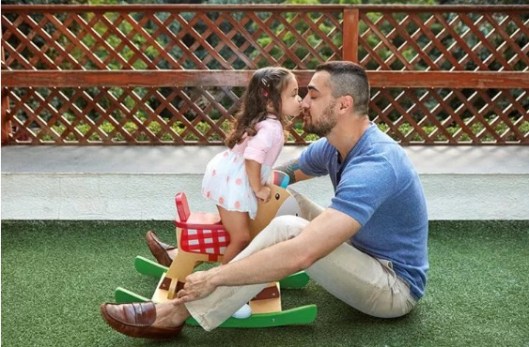
Imran Khan with daughter, Imara


What is that one moment in their lives that you’re waiting for?
Tusshar: I don’t want to miss watching him go to school and picking him up. My parents (actor Jeetendra and Shobha Kapoor) were never there to do that. I mean, they came for PTA meetings and my mom used to drop me off, watch me go to my class, crying. I don’t know if my dad remembered my birth date at that point in time, even though he remembered to wish me. The parents of the ’70s and ’80s (at least in my case) had their own issues. Working, trying to make a life for us. I want to be there for my child. I’ll dot the i’s and cross the t’s.

Imran: It’s a nightmare, haan. Every time I drop Imara to playschool, it’s ‘Papa, don’t go’. You’ll die on the spot because your baby is weeping and you have to leave her. I sit on the steps outside, listening to her cry, thinking, ‘Oh god, I’m a bad father. What am I doing?’

To answer your question, what I am looking forward to the most is the point when she will come and tell me things and make me laugh with her words, with wit — I think that’ll be something that will really make me proud.

Will you change anything in your parenting style from the way you’ve been brought up?
Imran: I love my mother (producer, director and screenwriter, Nasir Hussain’s daughter, Nuzhat Khan) and my mother loves me perhaps a little bit too much — so, I think throughout my life, she was a little over indulgent. That is why I have these notions that I want everything to be exactly the way I want it. This is not an ideal situation, so I would try to love my child a little bit less than my mother loved me.

Is there anxiety about missing key milestones with the nature of your work?
Imran: I was shooting a film from the time Imara was four to eight months old. I was a little nervous about not being there for big moments like if she were to say a word…. I would see her in the morning before I left, for a few minutes. And then the second I returned, I would spend time with her till she went to sleep. Avantika would come on set all the time with her. Luckily, I was there when she took her first steps. I consciously made an effort to not take on work when I knew that that was ‘baby Imara time’. For the past year, I have not shot for any movie. I have been home, with the baby. I’ve been travelling with her and I’ve been there for every major moment.

Tusshar: I’m a little anxious about what’s going to happen next month, when I start shooting. I hope it doesn’t really change things from what I’m doing now and what I’ll have to do then. The shoot, fortunately, is in Mumbai, so I will not be disconnected from my child completely. I’ll try to meet him before I leave home. If he’s sleeping after I’m back home, I’ll miss spending the evening with him; unfortunately there will be some moments that I’ll have to sacrifice. If you are worried you’re not going to be with your child, I think the child also senses that. If a parent is away, but trying their best to make it work, the child understands that and connects with that. And that’s love.

What’s the one thing you enjoy the most about being a father?
Imran: It’s the first time I’ve had the experience of wanting to spend time with someone — and not caring about other things. If the phone is ringing, you let it ring. If you’re late for something, you’re late — it doesn’t matter. If you’re hungry, you eat later. It just doesn’t matter. I also had that fear of my life coming to a standstill because I like to go places and do things. You’ll have a choice between spending time with your child or going somewhere else. And you’ll feel like you’d rather be with her because it’s more fun. It’s not a difficult choice. You’re not giving up anything.

Tusshar: It makes you very selfless. It calms you down, it’s very therapeutic. In a city like Mumbai, we’re clouded with issues and career ups and downs. I haven’t shot for a film at all this year. But, thank god. Since the baby’s come, I feel like I want to be at home with him, I want to spend time with him. And that’s the best part of being a parent — the maturity that comes with it. You rise above petty things that make you anxious. I think my child has taught me what fun it is to be on a playmat! I see his expression change and stop worrying about my work or about who’s inviting and not inviting me to some function or even about who’s calling or not calling back.

Tusshar, if your child asks, ‘Where is mom?’ what would your answer be?
Tusshar: I’m going to have to be very honest with Laksshya about him not having a mom. I’ll have to tell him exactly how and why he came into this world, so that he knows that he is a child born out of love and that I wouldn’t have been happy without him in my life — that he’s my everything. I will try and compensate and be what two parents can be to a child. It is just love that will make things work out.

So who fills the gap of a female figure?
Tusshar: The female energy at home comes from my sister (television and film producer Ekta Kapoor) and mother. I won’t be lying to Laksshya, telling him that his grandmother is like his mom. I don’t want to confuse him with that ideology. My mother has waited a long time for a grandchild. She gets to do so many things all over again, 40 years later. A large part of why I had this child is because my parents were going through a phase of depression; any parent would want to become a grandparent someday, so this is their dream come true. We feel like a very normal — and, I hope, happy — family, one where there’s enough attention from me as a father and enough female energy from my mother and sister even though there is no mother.

Imran, Imara’s obviously got you wrapped around her finger. Who’s the disciplinarian?
Imran: Avantika’s always on my case about not being a good disciplinarian. I can’t say no to Imara for anything. Whatever she wants, I feel like I have no choice but to give it to her. It’s not ideal, but I’m working on it.

Tusshar: That’s something I feel strongly about — I would hate to have a brat as a child. I’m going to be careful about not spoiling Laksshya, but my parents, bua, my sister and the nanny are always going to spoil him. Which is why it’s important that we (the parents) be the balancing factors. And the sooner, the better.

Imran: Yes, I will start today. Today, I am going to start disciplining!

Screen Shot 2017-04-12 at 2.34.08 PM

Who do you guys go to for parenting advice?
Imran: I’ve never asked anyone for parenting advice — not my mom, dad, or Avantika’s mom. I’ve never read any of those parenting books. Maybe I’m missing out on something, I don’t know, but I feel like Avantika and I just kind of figured it out between the two of us. You find your own rhythm.

Tusshar: I didn’t read any books or take any advice from anybody. But the people who’ve done surrogacy before — the family who took me to Dr Firuza Parikh — they helped me set up the nursery before the baby arrived and to deal with things like finding day and night nurses for Laksshya. For day-to-day questions, I got help from my mom and friends.

Who’s the one reading stories at bedtime?
Imran: Anything that is play-related, I’m the one. Building things with Lego, reading books, telling stories — that’s where I’m always first to jump in, saying, ‘Haan, don’t worry, baby, I’ll take care of it.’

Tusshar: Bedtime stories haven’t started for me. I sing loris to put him to sleep. I have some old Hindi songs that I just hum — and he loves it. If I stop humming, he starts crying.

How many diapers have you two changed? Of course, Imran, you’ve had more years to change them.
Imran: Yes. That being said, I’ve probably changed fewer diapers than Avantika has. My trick is this — you change diapers when people come over to visit. Then everyone thinks, ‘Look, this guy’s an amazing hands-on father.’ After that, I can hand it over to Avantika or the nanny.

Tusshar: I don’t know why everyone thinks that diaper-changing is it and why it stands for being a hands-on father. It’s the easiest thing to do. There are tons of other things. Do you know how to poop your baby on a flight? Do you know how to feed your baby? Do you know how to put your baby to sleep? These are my fears.

Imran: I’ve noticed you’re not answering how many diapers you’ve changed.

Tusshar: I’ve changed — to prove to myself — three or four diapers.

Dads today are breaking the stereotype of the Indian father. What do you think has led to this change?
Imran: Part of it just has to do with globalisation. We are now more exposed to international culture, with the way that it is in the US, UK, and Europe.

Tusshar: It’s not like somebody wrote a book about good parenting which everyone read and, therefore, the next generation turned out to be much cooler, better parents! I think my son is going to have some issues with my parenting, even though I’m doing my best. It’s a learning process: what you go through as a child, what you’ve seen your parents do for you and what you feel was left out. Then you make those changes; it’s a natural progression. Society changes, parents change, family settings change, and that’s what evolution is all about.

 

To The Manner Born: Sonakshi Sinha

05 Monday Aug 2013

Posted by sitanshi talati-parikh in Interviews (All), Interviews: Cinema, Interviews: Cover Stories, Publication: Verve Magazine

≈ Leave a comment

Tags

Bollywood, Imran Khan, India, Interview, Interviews: Cinema, Sonakshi Sinha, Verve Magazine, Vikramaditya Motwane

Published: Verve Magazine, Cover Story, August 2013

Sanskaar is a word often associated with her, she says. Sonakshi Sinha is unabashedly confident, reclusively shy and riding a wave of professional good fortune. The homegrown actor is uncomplicated and easy-going…and quintessentially Indian…

Image

She is always excruciatingly punctual. Apparently, on set she’s the first one in – ready before even the lighting guys have set up. At magazine shoots, she’s there with at least a couple of minutes to spare. Sonakshi Sinha crashes on the bed of the hotel suite we are shooting in and experiences a ‘lazy’ moment. Indigo skinny jeans, fitted tee and a smart cropped black leather jacket, a faint hint of lipstick and reflector shades complete the biker-chic look.

We chat lightly. Her grilled cheese sandwich and fries are on their way. While she agrees that an Indian woman is meant to be traditionally curvy and voluptuous, you find that she looks surprisingly slimmer in person than she did recently on screen, and her stomach is enviably flat – but her face is as captivating when she breaks into a smile. That smile reaches her large, expressive coffee-brown eyes that are immersive and can sparkle with a mood of their own. When her lip curls in dissatisfaction, it takes you back to her recent role of Pakhi from Vikramaditya Motwane’s Lootera, seared in our memory, as she transcends the elongated scenes in the movie with her emotiveness. She speaks easily, points out that she keeps getting asked certain questions – answers to which she’s “rattoed” (memorised by rote) and admits she enjoyed our little conversation.

The largely well-received Lootera was a “once-in-a-lifetime opportunity. I felt it was written for me”. People kept telling her not to do the film, that it was meant for a more mature actress, but she figured it was a dream role. And, she admits, the very fact that people were advising her against it goaded her to go for it. While she makes no pretense to high cinema, the 26-year-old girl, who’s taken on masala blockbuster movies head-on and won the heart of the hinterlands, feels that a slow, period romance like Lootera has given her recognition as an actor.

She comes on the set, gets ready with her lines and awaits the director’s instruction. Opening each day with a clean slate, she prefers to be moulded according to the director’s vision, believing that no one understands the character better. In her upcoming release this month, the Akshay Kumar-Imran Khan starrer, Once Upon A Time In Mumbai Dobaara, she plays a girl who makes the move from Kashmir to Mumbai to act. The first Milan Luthria film was a gangster thriller; the sequel has a stronger love angle, requiring a different chemistry for each character (Akshay and Imran), and balancing that became a challenge for her. “I was never a movie buff – I watched very few movies. I like to observe people and their nuances. I meet so many people every day – there is so much variety.”

“Sonakshi is professional, dedicated, fearless and magical. She has a wonderful presence – if she chooses her roles well over the next few years she could be one of the all-time greats.”
– Vikramaditya Motwane, director

Standing tall at five feet and eight inches, she’s comfortable in her own skin, but remains a quiet person. “I am a Gemini – two sides of a coin. I’m a shy person; I like to be by myself sometimes. I don’t overindulge in conversations with people I wouldn’t know.” She knows she’s here to do a certain job and that’s all that matters. “Some people are just meant to do what they are meant to do. I’ve inherited it from my father (actor-politician, Shatrughan Sinha) – he’s a very confident person. Besides, I don’t have anything not to be confident about – I’m very happy, I’m doing well; I’m working hard.” But it’s an industry of insecurities. “That’s what a lot of people tell me. I don’t know. I don’t want to be the centre of attention, I’m not insecure, I’m very comfortable with who I am, with what I’m doing, I don’t poke my nose into other people’s business. I guess that makes me a misfit!”

Sonakshi has her life cleanly compartmentalised. “I switch on and switch off with the camera. I don’t like to take my work home, I don’t like to talk about it; at home it’s a completely different life.”

Preferring to hang out with her school and college friends rather than fraternising with industry people, she says, “Going out for events and promotions, crowds of people yelling and shouting your name – that’s where it ends. At home I’m not a star, I’m my parents’ daughter and my brothers’ sister. If I do something wrong I’m reprimanded for it.” Having lived an unabashedly sheltered life while growing up (not being allowed to go abroad to study or to join her brothers at Kodai International boarding school), she admits, “I still have to be home at 1.30 a.m. when I go out! I have a deadline…it’s always been like that.”

Her mother used to be by her side all the time when Sonakshi had just started her movie career, but now she leaves her to figure things out for herself. “While she knows we are always there for her, workspaces have changed today. She’s grown up now, she understands her limits,” says erstwhile actress, Poonam Sinha who recalls how her daughter has always been sure of herself, quick to take a decision, with no qualms after. “She used to sketch much before she knew she wanted a career in fashion design. She would throw the sheets away, but I used to collect her sketches. Even her foray into films – she entered without any formal training in acting, dance or dialogue delivery. But she was confident from day one. I remember Salman Khan saying to her, ‘Wow, you are a one-take artist!’ She also has a strong gut instinct – she had a feeling about Pakhi (Lootera), that no one but she could play that role. She didn’t think twice.”

Sonakshi has wriggled into a very specific niche in Hindi cinema, quietly making it her own. Somehow, that garners the most queries from viewers who are now accustomed to bare-all-wear-nothing heroines. “It’s ironic that people keep asking me why I keep doing traditional roles as opposed to glamorous ones and no one asks any other Hindi cinema actress why she doesn’t do traditional roles as opposed to glamorous ones! We are talking about India, aren’t we,” she snips back with a smile. Playing a UP girl in Dabangg, a Bihari in Rowdy Rathore, a Punjabi kudi in Son of Sardaar, a Bengali in Lootera and now a Kashmiri girl in Once Upon a Time…she’s been captivated by the places she’s shot in. “I’ve covered most parts of India and found the interiors of the country fascinating. While sitting in the city (Mumbai) we tend to plan vacations abroad, and shooting in these locales has been an eye-opener…they are beautiful! And, I love Mumbai. However much we may crib about the mess and the roads, there’s just something about being home – about this being home,” she says with a broad sweep of her hands, encompassing the rain-tossed waves and palm fronds of Juhu beach outside the windows.

You don’t think she’ll hop off to perform a puja anytime soon, but you do think that she’s been raised to be careful of her screen presence and of her public persona. To be mindful of the way her actions would reflect upon her family. “The world has moved on, children live in a freer world, inspired by the West, but we are a very conventional family. She knew her dos and don’ts. Her father comes from that part of India, is a politician…she’s had to understand her responsibility,” says Poonam Sinha. Sonakshi adds, “There has never been any pressure from their side to do any of it – it’s just the way I have been brought up. I am a certain way, I don’t wear certain kinds of clothes, and we are a conservative family. It’s a part of my value system. My upbringing has everything to do with my rootedness and morals. It’s instinctive. Today wherever I go, when I meet somebody senior, actors or technicians, they give a direct compliment to my parents by saying, ‘I want my daughter to be just like you,’ and they use the words sanskaar a lot.”

“She’s got the swagger and attitude of Salman Khan and Akshay Kumar, and what makes them attractive is what makes her attractive: her inherent confidence and security. She’s simple, straightforward and uncomplicated.”
– Imran Khan, actor and co-star

So she sinks easily into her onscreen traditional avatar. She dons the saris and bindis and smiles beatifically into the camera. She’s mastered the art of holding her face at an angle just right, so that her sharp profile can be seen at its best advantage – she knows she can charm the audience with her warm smile and demure flicker of her eyelashes. And when I relate what her co-star and director have to say about her for this interview, you can’t miss the faint blush creeping up. She’s bashful; she’s smiling, she’s unable to look up. “The overall perception is that the youth is getting immoral – but that is a generalisation. I think India remains a rooted country, a country bound by values. That’s the basic story.”

There is no “I” in Teamwork…

25 Monday Oct 2010

Posted by sitanshi talati-parikh in Musings

≈ Leave a comment

Tags

Chak De, Imran Khan, India, Interviews: Cinema, Politics, Raajneeti, Teamwork, Thoughts

It’s an observation I picked up from Twitter – that teamwork doesn’t have an “i”. And while that’s simple to understand, it means the making or breaking of a country. Sounds monumental? It is. Let’s start with what triggered this thought. Actor Imran Khan’s column in HT today (see excerpt below) on teamwork in movies and my catching Raajneeti on TV last night.

Imran Khan talks about how movies are made by teams, even if they are temporary, they are loyal:
“I wanted to talk about how we all come together for a few months, work till we fall down from exhaustion and then go our separate ways. You see, most people never realise just how much teamwork plays a part in what we do. An actor could be giving the performance of a lifetime, but if the cameraman doesn’t capture it correctly, nobody will ever see it. Each and every shot depends upon each and every person from each and every department doing exactly the right thing at exactly the right moment. It’s stressful and demanding… but it also creates a kind of bond that few other things can. For example, as I sit and write this, there is a game of cricket underway. The actors, director, ADs and light boys are all taking turns batting and bowling, and there is no hierarchy. Or, when we’ve been shooting for hours and it’s past lunch time, no one complains, because we’re all in it together. Nobody starts eating until everyone has broken for lunch.

The fate of a film can never be predicted; it may do well, it may disappear without a trace. I’ve seen both happen. But that can’t change the way we approach our work. We still have to give it everything we have, and we still have to come together and work as a team. And that’s reflected in the term for an entire cast and crew of a film; it’s called a unit.” (Full column here.)

On the other hand, there is politics, where there are teams and more teams and even more teams that spend their time bickering, playing games, manipulating and buying each other out. While some people thought Raajneeti was a bit extreme, I find it quite a relevant movie of the time – where politics today is not what the Greeks intended it to be when they coined the term.

Ref: Wikipedia: “Politics (from Greek πολιτικος, [politikós]: «citizen», «civilian»), is a process by which groups of people make collective decisions. The term is generally applied to behavior within civil governments, but politics has been observed in other group interactions, including corporate, academic, and religious institutions. It consists of ‘social relations involving authority or power’ and refers to the regulation of a political unit, and to the methods and tactics used to formulate and apply policy.”

What is the problem with our country, or many other countries today? Is it really what we learnt in civics and political science and sociology, the things we rattle off, the terms that NRIs sit back in their la-z-boys and shake their heads over while munching betel nuts? Corruption, over-population, illiteracy…these are the buzz words. Yes, these problem exist, and yes, there are important issues that need to be solved for our country to move forward. But is this the real problem at the very foundation of our issues? I think not, I think it is a genuine lack of team spirit. We don’t think like one nation, one people. Whether it is because of religion, caste, money, social structure or an age-old belief in hierarchy…or even just survival of the fittest (because we’ve had to survive to make it here – fight to get anywhere), it has made us individualistic. At the very most, we may include our family in our concerns, but that is also getting few and far between and we find ourselves largely driven by selfish concerns. Some of our wealthiest people do not contribute to charity, rather build towering monuments to denote their status. Recently, while visiting the Jai Vakeel school for the mentally challenged, I learned that the government hasn’t paid salaries there in four months. So even when something good is being done, they can’t simply cough up the change to keep it going, but they can pocket the change from CWG and other big projects. While lining one’s pockets, can’t one at the very least ensure that some good comes of some of the tax payers’ money?

Another quote popularised on Twitter, “Indians are privately smart and publicly dumb” – is exactly the same thing, we don’t believe in treating our country like our own. The streets are not ours, we can trash them. The public loos are not in our house, we can leave them filthy. The movie theatre isn’t our own, we can mess it up with food and drink. Publicly, we notoriously behave like pigs in a pigsty, and yet, we follow stringent hygiene and cleaning rules in our homes – remove your shoes before coming in, they will track germs from the outside in! Is it that we believe that someone else will take care of our mess? Is it simply because we don’t care enough about anyone else that it doesn’t matter?

The reason we admire sports so much is that as humans we crave bonding and togetherness – and there are very few places that show mutual respect and warmth for other humans than in teams that come together for a common cause. I admire the film industry – despite their bickering and issues and camps, a group of people come together and work hard to make a film – even if they never see each other again once it’s complete, they gave it their unselfish best when required. In fact, the movie Chak De is a metaphor for Indian society – we are too mentally segregated to think like one, and when we do, we can possibly reach heights we have never considered possible.

Why can’t we as social citizens do that? Why must we treat other people as “others” and not a part of our own team, own country, own race? Why can’t we think like “we” rather than “I”? If we were to, everything would be very different. A simple shift in perspective would make a huge difference in thought and a huge difference in where we are as a race or nation.

Short-sightedness – where we can’t see beyond our own noses and houses, is what makes us an ultimately selfish race. And this is the root of the trouble – global warming, social evils, unhappiness all boils down to being able to think as a bigger identity than oneself. Can we be bigger than we think we want to be?


|  Filling the gaps between words.  |

Writing By Category

  • Art, Literature & Culture
  • Brand Builidng
  • Brand Watch
  • Fashion & Style
  • Features & Trends
  • Fiction
  • Food
  • Humour
  • In The Media
  • Interviews (All)
  • Interviews: Business
  • Interviews: Cinema
  • Interviews: Cover Stories
  • Interviews: Lifestyle
  • Interviews: Luxury Brands
  • Interviews: The Arts
  • Interviews: Travel
  • Musings
  • Parenting
  • Publication: Conde Nast
  • Publication: Elle
  • Publication: Mint Lounge
  • Publication: Mother's World
  • Publication: Taj Magazine
  • Publication: The Swaddle
  • Publication: The Voice of Fashion
  • Publication: Verve Magazine
  • Social Chronicles
  • Sustainability
  • Travel Stories

Reach out:
sitanshi.t.parikh@gmail.com

© Sitanshi Talati-Parikh 2018.
All Rights Reserved.

Website Powered by WordPress.com.

  • Subscribe Subscribed
    • sitanshi talati-parikh
    • Join 51 other subscribers
    • Already have a WordPress.com account? Log in now.
    • sitanshi talati-parikh
    • Subscribe Subscribed
    • Sign up
    • Log in
    • Report this content
    • View site in Reader
    • Manage subscriptions
    • Collapse this bar
 

Loading Comments...