• About
  • Brand Building
  • Film & Drama
  • Writing: Arts & Lifestyle
  • Writing: Interviews
  • Writing: Luxury Brands
  • Writing: Travel

sitanshi talati-parikh

sitanshi talati-parikh

Tag Archives: India

There is no “I” in Teamwork…

25 Monday Oct 2010

Posted by sitanshi talati-parikh in Musings

≈ Leave a comment

Tags

Chak De, Imran Khan, India, Interviews: Cinema, Politics, Raajneeti, Teamwork, Thoughts

It’s an observation I picked up from Twitter – that teamwork doesn’t have an “i”. And while that’s simple to understand, it means the making or breaking of a country. Sounds monumental? It is. Let’s start with what triggered this thought. Actor Imran Khan’s column in HT today (see excerpt below) on teamwork in movies and my catching Raajneeti on TV last night.

Imran Khan talks about how movies are made by teams, even if they are temporary, they are loyal:
“I wanted to talk about how we all come together for a few months, work till we fall down from exhaustion and then go our separate ways. You see, most people never realise just how much teamwork plays a part in what we do. An actor could be giving the performance of a lifetime, but if the cameraman doesn’t capture it correctly, nobody will ever see it. Each and every shot depends upon each and every person from each and every department doing exactly the right thing at exactly the right moment. It’s stressful and demanding… but it also creates a kind of bond that few other things can. For example, as I sit and write this, there is a game of cricket underway. The actors, director, ADs and light boys are all taking turns batting and bowling, and there is no hierarchy. Or, when we’ve been shooting for hours and it’s past lunch time, no one complains, because we’re all in it together. Nobody starts eating until everyone has broken for lunch.

The fate of a film can never be predicted; it may do well, it may disappear without a trace. I’ve seen both happen. But that can’t change the way we approach our work. We still have to give it everything we have, and we still have to come together and work as a team. And that’s reflected in the term for an entire cast and crew of a film; it’s called a unit.” (Full column here.)

On the other hand, there is politics, where there are teams and more teams and even more teams that spend their time bickering, playing games, manipulating and buying each other out. While some people thought Raajneeti was a bit extreme, I find it quite a relevant movie of the time – where politics today is not what the Greeks intended it to be when they coined the term.

Ref: Wikipedia: “Politics (from Greek πολιτικος, [politikós]: «citizen», «civilian»), is a process by which groups of people make collective decisions. The term is generally applied to behavior within civil governments, but politics has been observed in other group interactions, including corporate, academic, and religious institutions. It consists of ‘social relations involving authority or power’ and refers to the regulation of a political unit, and to the methods and tactics used to formulate and apply policy.”

What is the problem with our country, or many other countries today? Is it really what we learnt in civics and political science and sociology, the things we rattle off, the terms that NRIs sit back in their la-z-boys and shake their heads over while munching betel nuts? Corruption, over-population, illiteracy…these are the buzz words. Yes, these problem exist, and yes, there are important issues that need to be solved for our country to move forward. But is this the real problem at the very foundation of our issues? I think not, I think it is a genuine lack of team spirit. We don’t think like one nation, one people. Whether it is because of religion, caste, money, social structure or an age-old belief in hierarchy…or even just survival of the fittest (because we’ve had to survive to make it here – fight to get anywhere), it has made us individualistic. At the very most, we may include our family in our concerns, but that is also getting few and far between and we find ourselves largely driven by selfish concerns. Some of our wealthiest people do not contribute to charity, rather build towering monuments to denote their status. Recently, while visiting the Jai Vakeel school for the mentally challenged, I learned that the government hasn’t paid salaries there in four months. So even when something good is being done, they can’t simply cough up the change to keep it going, but they can pocket the change from CWG and other big projects. While lining one’s pockets, can’t one at the very least ensure that some good comes of some of the tax payers’ money?

Another quote popularised on Twitter, “Indians are privately smart and publicly dumb” – is exactly the same thing, we don’t believe in treating our country like our own. The streets are not ours, we can trash them. The public loos are not in our house, we can leave them filthy. The movie theatre isn’t our own, we can mess it up with food and drink. Publicly, we notoriously behave like pigs in a pigsty, and yet, we follow stringent hygiene and cleaning rules in our homes – remove your shoes before coming in, they will track germs from the outside in! Is it that we believe that someone else will take care of our mess? Is it simply because we don’t care enough about anyone else that it doesn’t matter?

The reason we admire sports so much is that as humans we crave bonding and togetherness – and there are very few places that show mutual respect and warmth for other humans than in teams that come together for a common cause. I admire the film industry – despite their bickering and issues and camps, a group of people come together and work hard to make a film – even if they never see each other again once it’s complete, they gave it their unselfish best when required. In fact, the movie Chak De is a metaphor for Indian society – we are too mentally segregated to think like one, and when we do, we can possibly reach heights we have never considered possible.

Why can’t we as social citizens do that? Why must we treat other people as “others” and not a part of our own team, own country, own race? Why can’t we think like “we” rather than “I”? If we were to, everything would be very different. A simple shift in perspective would make a huge difference in thought and a huge difference in where we are as a race or nation.

Short-sightedness – where we can’t see beyond our own noses and houses, is what makes us an ultimately selfish race. And this is the root of the trouble – global warming, social evils, unhappiness all boils down to being able to think as a bigger identity than oneself. Can we be bigger than we think we want to be?


The Ritual of Being Ritualistic

13 Monday Sep 2010

Posted by sitanshi talati-parikh in Musings

≈ Leave a comment

Tags

India, Jainism, Paryushan, Religion, Thoughts

Something very cool happened this year, possibly the only cool thing about religious events. On Sept 11, 2010, Ganesh Utsav, the Jain festival and Eid all fell on the same day. Of course there was mayhem in the city in terms of noise, traffic and chaos, and there were enough nostalgic elements in the city that found it “so lovely” that bright celebrations were sparking all over. However, the point is that special days can be one and the same, they can be celebrated differently, but we lay too much importance on the rituals surrounding the festivals rather than the point of the festival. Fasting, doing ‘darshan’, breaking the fasts, wishing people, it keeps people busy and makes them feel good about being busy in the religious way, but it really leads them nowhere. What changes from one month, one week or one day to the next?

Here are two examples of ritualistic followings which I know from close observation. All the other followings, world-over, are equally ritualistic in their own way and all boil down to the same conclusion.

Ganesh Chaturthi
You bring a Ganpati murti (idol) home, most often decorated in toxic colours and invite people over to take blessings, leave money behind that gets distributed amongst undeserving priests or among street children who use it for drugs and alcohol, immerse the idol in the already toxic water after a lot of banging and singing on the street, creating massive amounts of noise pollution that will probably even deafen the Gods.
– The soft muted music that was to bring one closer to the divine in terms of shlokas and words with meaning, have been replaced by loud DJ-driven music that play the latest techno and raucous bollywood hits, where youngsters get together and dance inebriated on the streets, blocking traffic and hassling all the people in the neighborhood.
– There are neighborhood collections of donations – not for improving society, but to provide funds for the DJ, alcohol, trucks and idol-trappings.
– The colours, paint and glitter used on the idols is killing our marine life, and even though it is on an idol of worship, it doesn’t miraculously save our marine life and water. It enters our eco system and poisons us.
– During these house visits to take blessings – it becomes a means for social gathering, where people attempt to be on their best behavior, but people being people end up discussing the most inane things in front of their revered idol. Such as gossip about other people and needling those with opinions.
– While the idol is at home, one must abstain from non-veg food, alcohol etc in its vicinity. There are those so addicted to these items that they can’t wait for the idol to leave and be immersed, so that they can go back to their daily drink.
– We use offerings to the idol as a means of eating anything – sweets are offered to the idol (apparently rich sweetmeats please the Gods – wasn’t that just a ruse for priests to make away with these sweetmeats?) and that becomes ‘prasad’ – blessed by the Gods and that can be and should be consumed by people generously.
– In the homes, as there is increasing staff problems during this festival (most of the staff leaves to go to their home town to celebrate), war breaks out at home because these sweetmeats MUST be made at all costs to ensure that the right offering is done.
– Most of the staff, who struggle to make ends meet, borrow money to buy expensive idols and celebrate this festival as a means to please the Gods. They have yet, in all these years, not got any form of deliverance; but the quest continues. They will leave a cushy job that doesn’t allow them to take full leave during Ganesh Chaturthi, even if it leaves them jobless and in debt.

While the sentiment and faith is indeed strong and full of conviction, to what end is this being done? Are they leading a better life (not materialistically, but morally)? Does it tell them that there is a way to the divine, and it should be followed with a desire to do good, less harm and a genuine improvement of the soul? Or is it merely a way to party in the name of religion?


The Jain Paryushan
Jainism is a way of life – a strict means to leading an austere and controlled existence, which is supposed to be devoid of unnecessary trappings of religious rituals. The result of the influence of Hinduism into the sects of Jainism and the growth of the Jains as a moneyed class of people, has lead to a strong dilution of the original principles and made it chance for Jains to carry a ‘holier-than-thou’ attitude. In this week, called Paryushan, Jains practice abstinence – from certain foods and if possible, fast as well. It is a means to build the will power of the mind and to control the body’s urges towards baser instincts by solidifying the mind’s role in the decision-making. While in concept it works, it has led to many people doing this half-heartedly, because they have been cajoled into doing so by family. There is no desire to withhold for a greater purpose of mental peace, rather do it to prove to the other that they weren’t ‘bad’. There is no whole-heartedness in this desire. While Jains believe in stringent non-violence, they follow the principles according to their convenience: don’t eat garlic, potatoes and onions (because as underground roots they contain more living organisms than those growing above the surface), but appear to be unconcerned by silk and leather goods, where one silk sari kills multiple silk worms. During their festival, it becomes mandatory for others to visit those who have fasted, making it a mad rush on the one morning from one ‘parna’ to another. These parnas where the fastee breaks his/her fast with some very simple food, becomes taxing to the household as they need to take care of the fastee and provide for food for the visitors. In certain families there appears to be a display of wealth in the lines of a wedding ceremony, with jewelry and clothes et al. Austerity and control over material desires anyone? During the week, as the fasts continue, the evenings are given up to religious discourses, where you listen to a priest talk about why these things are important, being a better person and leading a better life. Maybe the hunger deadens the brain cells, but the people who attend these discourses, look absorbed by the ideas and often find themselves in meaningless material pursuits a few days later – the kind that involve fighting over money within the family. The week over, people wish each other ‘Micchami Dukkadam’ which means if I have hurt you in any way in the past, please forgive me. This universal ‘Sorry’ makes everything okay and allows people – a nice ‘get out of jail free’ card – to go back to their ways until the next year’s apology. And the week over, people rush out in hordes to every restaurant and eat to their heart’s content. Abstinence, abstinence.

Every religion and festival leads to the same thing: leading a better, more moral life and being a good person. At the end of the day, all the rituals do is misguide us into thinking we are becoming better merely by performing them, but until we change from the inside out, we remain shallow and hollow and fake. These are just external trappings that do not fix attitudes and mind-sets, rather give people excuses to be whoever they like, whilst making it okay by performing these rituals. The ritualization of religion – the strongest example being Hinduism and all its varied sects and facets, has mired people into believing that rituals will take one towards a better life, towards deliverance. Rituals are like drugs – they have a feel-good factor associated with them, which make you think you’re feeling good, but actually lead you deeper into the mire of a material world from which you can’t escape. The more you do it, the more you are afraid of what life will become when you stop doing it. The more you do it, the more your mind gets weakened, gripping the rituals as a means to a better end, not being able to do without.

If we snapped out of the weakness of relying on rituals to make us feel like better people or to prove to the world that we are better people, and actually became better people – through our actions, inactions, thoughts, words, beliefs and societal and civic duties, we wouldn’t need religious rituals, just a simple philosophy on leading a better life. And life would become better – for everyone around. Rituals don’t fix the crime problem or over population, or poverty or illiteracy or unemployment or environmental degeneration or terrorism….rituals simply add to the list of mankind’s problems. If we are more humane and less ritualistic material beings, these problems would start solving themselves. That would please God a lot more than our worldly offerings.

Killing me softly with my own smog | Jaagore

03 Monday May 2010

Posted by sitanshi talati-parikh in Social Chronicles

≈ Leave a comment

Tags

comment, Environment, India, JaagoRe, Thoughts

Guest Post by Sitanshi Talati-Parikh, Features Editor, Verve Magazine

The problem with writing about issues is the fatalism that creeps in and tends to swallow you whole, where you want to scream to the world to wake up – before it’s too late, but you get the sense that they are simply not getting it. And makes you want to sink into a mire of desperation and helplessness. *Shudder*.

So, the idea is to calmly embrace the fact that the world as we know it, will really not last very long. I have a distant uncle who is geared into amassing family wealth for the next seven generations – and while I am truly proud of this generous gesture towards his family’s well-being, I feel that he is just a bit deluded. At the rate we are going – denuding the earth’s natural resources without a thought towards replenishment, ransacking and pillaging and foraging like barbarians, without once questioning what it implies for tomorrow, there will be no tomorrow. And I don’t mean like, oops I’m going to wake up and June 1, 2010 will no longer exist, but really, June 2, 2020 might not!

Do we really have as many years as we think we do on this planet? As we plan the next generation of pillagers, do we really believe they will make it through another 80 years of living in toxic hell? If the planet doesn’t implode on our own sins, we will definitely self-destruct in some way or the other.

1. We have waste disposal problems.

2. We have severe water shortage issues.

3. The air we breathe is so polluted that there’s no point smoking – you’re inhaling crap anyway.

4. We are rapidly consuming all limited natural resources without really figuring out alternate sources of energy, power etc.

5. Global warming is bringing in volcanic eruptions, tsunamis, earthquakes, tremours and a lot of other stuff that should shake us in our heads, not our houses.

6. There is severe overcrowding and over population, which is merely compounding the crises mentioned in 1-4.

Specifically talking about Mumbai, do we realise that as the incorrigibly corrupt government and municipal corporations allow illegal construction of sky-rises in already sandwiched areas, it’s not just the pressure on the land, it is also the impossible question of the pressure on infrastructure? Our infrastructure is quite simply redundant – there are old pipes, rusted and cracking under the pressure, drinking water getting mixed up with sewage and refuse, there is already insane amounts of fuel, water and power shortage; and with the advent of that many more homes, families, people and cars, the problems on the surface and below will only compound. So as spanking new buildings start popping up left, right and centre, who plans to deal with the repercussions of these short-sighted activities? Forget problems like soil erosion, pollution and cloud cover thinning that you can’t comprehend, but think of the really basic stuff. Say you spend multiple arms and legs buying a flat in a nice Sobo area, in a brand new building, with a great view. What are you going to do when the pipes burst with the pressure and you get filthy water to drink and bathe with in your new luxurious haven? What are you going to do when the already choked area doesn’t allow for you to take your brand new gas-guzzler out because there’s a perennial jam of cars being taken out for unnecessary spins?

The problem is that we think that it’s not our problem yet. It’s not relevant now. It’s not about me. As long as we continue with the current status quo, living in mass oblivion, we are barely able to grasp – despite Hollywood’s barrage of disaster ‘2012’ flicks – that everything is very real, everything is NOW. Tomorrow is not just another day in the grimy city; tomorrow may be a day where we no longer exist. And it would be entirely our fault. No amount of words can make you sit up and take action – until you realise that it’s your and your family’s life at stake, not your neighbour’s.

via jaagore.com

Baz Luhrmann: Amplifying Emotion

19 Friday Mar 2010

Posted by sitanshi talati-parikh in Interviews (All), Interviews: Cinema, Publication: Verve Magazine

≈ Leave a comment

Tags

Australia, Baz Luhrmann, Hollywood, India, Interview, movies, vervemagazine

Published: Verve Magazine, International Edge, March 2010
Photographs: Aparna Jayakumar

Award-winning Australian director of films Moulin Rouge!, Romeo + Juliet and Australia, Baz Luhrmann arrived in India expecting a “creative adventure”. In the midst of dipping his fingers into paint, warding off curious eyes, responding to over-enthusiastic banter and driving a bike through Rajasthan taking photos, Sitanshi Talati-Parikh gets an insight into his artistic mantra


Edge01


An elderly Indian gentleman (probably inebriated) asks Baz Luhrmann at a recent art soirée, about the size of his pants. Luhrmann replies politely and retreats to probably punch the wall or take a deep breath. He has, in the correct manner of famous people especially of international origin, been generously accosted. His voice is scratchy from replying to the same – or inane – questions, his face is showing more lines than it should from smiling politely to profusely talking strangers, and he is undeniably tired. It is not surprising then, that he chooses a late start, armed with coffee, the morning of our meeting. “Not all of it is joy,” the veteran director admits, “Some of it is overwhelming. But something keeps telling me to ‘surrender’ and be in the moment.” An agreeable disposition and genial self-deprecating humour on his surprisingly slight frame make him a very real person who likes making larger-than-life movies that tend to hit the spot.

It is a creative visionary’s brush that picks up on the nuances of life, emotions and true-to-life characters with a flourish to create the ‘big’ film – full of flavour, drama, vibrant colours and melody – whether it is the garish realism of Romeo + Juliet (1996), the Parisian kitsch of Moulin Rouge! (2001), or the ochre-hued drama of Australia (2008). “It is amplification. You take realistic human emotions, realities or problems but you use an expressionistic canvas.” And this is what led to what is popularly known as Luhrmann’s Red Curtain Trilogy (Strictly Ballroom (1992), Romeo + Juliet, Moulin Rouge!) – the concept of an “overtly theatrical musical work”.


Australia announced a departure from Sydney-born Luhrmann’s previous musical format and moved towards a more sweeping epic form. “There is no way that Australia is of the then-current naturalistic vernacular. It is heightened, much like Gone With The Wind is heightened. Instead of music, I tried using landscape to amplify emotion. It is operatic in that sense. Naturalism is like looking through a keyhole and you are apparently looking at reality; but this form is where words fail us – sometimes we just can’t express in words what it is like to truly be exalted or truly be in love or truly lose your child over a cliff.” Instantly, in the mind’s eye appears the stunning visual of the herd of cattle racing towards the brink of a cliff pounding a dust storm. “What may seem to us to be a small event, to a person in the village, it is operatic at that point of time. ‘You-can’t-marry-that-boy-moment’ internally feels like Tosca. As an artist you want to use devices to help the audience empathise. And that doesn’t mean just reproducing the way it apparently is. I try not to show the way things are, rather the way things would have felt for the character.”


The once-aspiring actor has often given credit to Hindi cinema for influencing his cinema. “India has always been an extraordinary serum for my soul. Fifteen years ago – it is quite serendipitous – I made a production of Shakespeare’s A Midsummer Night’s Dream (1993) set in colonial India. I was really fascinated by the connection between the Elizabethan spiritual world and the Hindu spiritual world. The production is very distinctly making those visual translations in the time of the Raj – the lovers are all European Raj characters and the Hindu spiritual world plays with them.” It went on to be a hugely successful show, winning the Critic’s Prize at the Edinburgh Festival. He recalls the defining moment being his visit to India at the time, with his award-winning production-designer wife, Catherine Martin, where in Rajasthan, they saw their very first Bollywood movie. Unable to remember the title or the cast – except that it was about two brothers going to Oxford University, and fighting over the same girl – Luhrmann found it remarkable that there was, “intense tragedy, next to very broad comedy and then a burst of song. Two thousand people were spellbound, including us who couldn’t speak the language, for three hours. What we got out of that was the value of exaltation. In that sense Bollywood films are Shakespearean. Different people can have different experiences at different levels. That sensibility became the Red Curtain Trilogy and has stayed with me ever since.”

Edge02

Characters and sensitivity to their emotions is a trait that can be traced back to his youth working at a gas station observing people. At 47, he admits, “I’m addicted to people. And, it’s shocking, but I’m just getting started. I haven’t begun to meet all the people and haven’t begun to make all the movies. Maybe one day I’ll make a really good film, won’t that be good?!” There’s a light chuckle. “People are derided for it…being enthusiastic is uncool, so I would think, be as uncool as you possibly can. There is nothing sadder than getting to a certain age and sleepwalking through life, marking time until the curtain falls. I don’t want to surround myself with that energy.”


His own vigour (despite the weariness) is paramount, and you would expect him to have enthralled us with more work than he has. He has a bunch of projects lined up, including that of a cinematic production of The Great Gatsby. “There is no such thing for me as lying on a beach and saying, ‘The cocktail’s good!’ Creativity has always instinctively been for me the pursuit of a rich and extraordinary life, out of which creativity grows, as opposed to the pursuit of a successful career. I did that, and all of the Red Curtain came out of the instinctive urge. It has to be personal to begin with. For instance, I love Paris and Bohemia, hence Moulin Rouge!” The first Harry Potter film was offered to him: recalling that, he mutters, ‘Idiot!’ and smacks his forehead in mock disapproval at missing out. “That might have been a brilliant career choice once, but the work I do comes out of my life’s journey. Recently, I lost sight of that. So between films I’m doing things just like this.”


And this is exactly where we are. At the newly-opened Le Sutra art concept hotel, Bandra, Mumbai, that has a mural painted by Luhrmann and Australian artist Vincent Fantauzzo. Appalled by the recent negativity in Australia that he’s afraid will mar the formative years of Indian students, Luhrmann decided to partake of this “creative adventure” to use the artistic medium to speak out in a way that politicians cannot. “It is a genuine leading experiential artwork, what we used to call in the old days, ‘a happening’ and a platform to express the positivity to counter the negativity. As old as India is, it is young again. It is youthful, it’s finding new creativity – Australia connects with India on that level. Without getting too clever or complicated, it was adventurous for us, but also symbolically and creatively a positive gesture. So far it has been intense, and it hasn’t let us down.”


Whether it is playing himself on an American TV show, directing a ballet, painting a wall or making a film, Luhrmann has never been judgemental about ‘high’ and ‘low’ art. “It is just expression…the adventure in pursuing it and the personal gain in your internal journey. What does it do for you?” While painting the mural – quipping that he merely held the can of paint – he finds that he has, “received the invisible lesson – one that you don’t know where to look for.” Accustomed to a zillion people following his directives, he suddenly found himself floundering with the language barrier, helping young children paint the embroidery on the mural. “There aren’t 15 people here to say ‘Yes Boss!’ I was reminded what directing is – to know what you want and engage people and help them release their fear, be the very best they can be.”


Mark Anthony Luhrmann, “a tiny kid with an Afro”, was very young when he ran away from his father, whom he describes as a “loving disciplinarian”. The long, “crazy” hair, left Luhrmann with the derisive nickname ‘Baz’, which he decided to defiantly hold on to, particularly after it was used affectionately by his father, a little before he died. His brand, Bazmark, has a crest with a motto, ‘A life lived in fear is a life half lived’. It defines the way Luhrmann thinks – against a formula that’s any but his own and one that is constantly being redefined by life’s experiences. “As you become successful in any way, little switches have turned where you increasingly become disconnected with yourself and you think you’re doing stuff, but you are not. It’s harder to not be your brand. You get tired…of stepping outside your comfort zone. Being here is awesome, but it’s not like I’m 25 and haven’t gone to India before and it’s not like stuff isn’t thrown at us. But the effort, already, has given me hundred-fold back. I could leave today and know that I have been woken up in a way that I wouldn’t have had I not stepped outside my comfort zone. You tend to regret not finding out.”

Political Balance Sheets and Media Glory

15 Monday Feb 2010

Posted by sitanshi talati-parikh in Musings

≈ Leave a comment

Tags

comment, India, Politics, Thoughts

When we consider how ineffectual our political system and our elected representatives are, we often wonder what we can do to make them accountable or care. Obviously, seeing the recent barrage of films and reportage, we believe that the media is responsible to a very large extent in the lack of accountability. In much the manner that in a democratic set-up we elect representatives, we also ‘elect’ our media to play an important role in defining our thoughts, opinions and in ensuring that we remain protected and taken care of at all times. The easiest way for the media to do this is through responsible journalism – by not distorting the news, not grabbing eyeballs just for TRPs, not sensationalising but simply stating facts and pointing out areas that have gone awry. So, very simply, if the political dailies were to – every week or fortnight or month – run an impartial page on a political ‘balance sheet’ – a report on what promises were made at the time of contesting an election, and what the current standing is for all our elected reps., where the problems have occured and what is expected now…. This can’t be an occasional expose that happens in India Today or TOI etc, but rather, a regular accountability system that keeps the people abreast and the reps on their toes. So, you can’t fake it, you gotta do it and then find yourself written about and held accountable. This would keep the political media busy enough that they don’t need to create drama and fanfare over trivial issues, and political debates that lead nowhere, but rather an administrative system of checks that we can refer to at the time of elections.

Cocktails for a Cause

18 Friday Dec 2009

Posted by sitanshi talati-parikh in Publication: Verve Magazine, Social Chronicles

≈ Leave a comment

Tags

Cocktails For A Cause, India, Partying Against Poverty, Trend, Urban Socialising, vervemagazine

Published: Verve Magazine, Features, December 2009

Three young girls came together to party for a cause – and their friends joined this circle of trust. Now, Partying Against Poverty has three chapters in Mumbai, London and Hong Kong, where youth come together to rock the town while contributing towards eliminating poverty. SITANSHI TALATI-PARIKH uncovers the ingredients that enable people to enrich someone else’s life while dancing and making merry

FOR THOSE BEGINNING TO THINK THAT URBAN SOCIALISING AND endless partying is becoming more banal by the minute, or for those who ever needed a reason to party, raising a few lakhs for a few hours of socialising and dancing sounds like quite the plan. All you need to do is go out and party – the cover you pay for entry (which includes the drinks you would consume) goes straight to a predetermined cause – whether it’s towards charity, for the under-privileged, or a cause to fight a social ill. If a charity ball is the thing for pearl-draped or diamond-dripping middle-aged divas, then partying for a cause is for the 20-something newbies – the kind that lead a privileged life and choose to party at least a few nights a week, and find it convenient to combine philanthropy and a rocking time by partying for a cause. It’s simple and doesn’t have an agenda – and most importantly, doesn’t require the party-goers to make any change in their lifestyle. In fact, it lacks pretension in the most basic sense that a charity ball might have. Namrata Tanna, an initiator of ‘partying for a cause’ in India finds that, “Charitable giving is always looked at as something that is done by the very rich – those who have the means to give back to society. Party Against Poverty (PAP) activates all classes of society as well as the youth of our country and helps them start thinking about what they can do for the underprivileged.”

It is a global concept: in New York partying for a cause finds a masquerade ball sending the proceeds towards The World Race which in turn attempts to fight for the victims of modern-day slavery; in Toronto it sends their partying money to charity – to the tune of $36,000; in Miami parties and concerts send money to cancer patients. It is not one organisation with many worldwide chapters, rather multiple people across cities picking up on this simple and effective concept and making it work for the cause they believe in. In India – more specifically, in Mumbai – three young media professionals, moved by the realities that surrounded them, decided that simply reporting facts wasn’t cutting it for them – they wanted to do something more. This led to the creation of an NGO, Creatives Against Poverty (CAP is currently being registered as a non-profit organisation), which aims to use the collective creative skills of volunteers towards out-of-the-box initiatives that can fund the causes they wish to support.

“WE DON’T ASK PEOPLE TO BECOME SUFFOCATED BY SADNESS AT THE IDEA OF POVERTY; we offer hope that this suffering can be alleviated by something as simple as partying! People like emerging from their plush lifestyle and giving to a community.” – Fatima Najm

Fatima Najm spent a lot of time discussing areas that troubled her with college friend Tanna. CAP fell into place after they began working hands-on on some local initiatives in India and realised that it would be hugely effective to pool creative talent together for a cause. Najm explains, “We started from the premise that everyone is good, everyone wants to make a positive impact and everyone will give their time, energy and skill as long as we create a format that doesn’t detract from their lives – we promise to use only your free and recyclable energy.” They threw the first ‘party against poverty’ bash at Najm’s house in South Mumbai, with the idea of creating nurseries in Mumbai slums from the proceeds. Friends – what Tanna describes as the “circle of trust” – flocked to support them and they realised that they had something very promising on their hands. The second party, also hosted by Najm was for the victims of the Bihar flood. The third party, held at the hip Mumbai nightclub Privé, saw a sizeable turnout, with the aim to create nurseries and scholarships for impoverished students of high potential. The success of the concept in Mumbai led Najm to start a London chapter of CAP – which had its first party against poverty early this year. Tanna continues to head the Mumbai chapter, and Neha Kumar has recently launched a Hong Kong chapter. Najm’s friend and Mumbai-based former model and model coordinator Achla Sachdev was willingly roped in to putting in her time, effort, organisational skills, and is now a key factor in drawing the crowd and media attention for the parties (and their causes) as well. Sachdev realised that the combination of feeling good about contributing while having a good time, is a winning “double whammy.”

The causes are not randomly chosen – rather, the research-based recommendations draw from a journalistic approach to charity, also steering clear of religious issues. Whether it is a single person – like a little girl called Anu who needed the valves in her heart replaced (which they funded by activating willing people who had attended a party against poverty) or Sharifa Khanum who fights for the rights of Muslim women in Tamil Nadu; or locations like the Congo valley (one of their biggest projects) where Najm works with local volunteers to educate and create a life for the impoverished youth of the region, the girls have spent time understanding where the funds collected will be going – by actually speaking to the people they are trying to support. Kumar defines a very clear-cut process-driven approach to tackle the issues that may prop up. “I think the first most challenging thing is to find the right organisation to work with: a lot of them either have high administrative costs or aren’t genuine. Secondly, we spend at least three to six months working with them to ensure that they genuinely do what they claim. After which, we raise awareness among people through photo essays, documentaries and articles in the press. Then comes the actual process of raising funds for the organisation. The challenge sometimes is finding sponsors to enable having a party at cost price so that all of the money raised goes to the charity.”

The organisation is run by affluent people who are only looking to help creatively – they will find just use of your talent and just cause for your money. The fact that the idea germinated from a collaborative friendship, makes it a strong foundation that keeps the fire burning. Tanna agrees, “Collaborating with friends on projects is always a motivation in itself. CAP has no financial backing. Our currency is our positive energy and enthusiasm. Since we share the same ideology we motivate each other to work harder to alleviate poverty and find new and creative methods to help the NGOs we support and keep going.” And they maintain that a 100 per cent of the money raised goes to the cause they have identified. Trust is a huge factor in their working: they are tapping into friends and family who believe in them and their due diligence and in turn, the causes they support.

“IN INDIA CHARITY IS ASSOCIATED WITH SACRIFICE AND PURITANICAL BEHAVIOUR, which is not how it needs to be. There is nothing wrong with going out, drinking, spending money and giving back at the same time. It is the ideal form of capitalism.” – Bharati Thakore

While that’s a great concept in itself, you wonder if people balk at the idea of mixing ‘poverty’ and ‘partying’ into a palatable cocktail. Tanna believes that partying with family and friends is always fun. “While it may seem odd to some that we raise money by partying, I believe that in doing this we have activated members of society who usually give little or no thought to charity to become aware, reflect and contribute in a small way to helping the underprivileged. Party Against Poverty is an unconventional approach to charity – it makes charitable giving fun.” Najm states very simply that they were simply bored of the repetitive partying scene in the city: despite the fact that it was so dynamic, it was purposeless. “We just didn’t feel like dressing up and going to one party after another and shelving the issues that we were confronted with.” But isn’t it intrusive or doesn’t it defeat the purpose of having ‘fun’ to have to deal with depressing or dismal issues while downing a Martini? While Tanna believes that they overtly refrain from an in-your-face attitude about the cause, Najm has stronger views. “We don’t ask people to become suffocated by sadness at the idea of poverty; we offer hope that this suffering can be alleviated by something as simple as partying! People like emerging from their plush lifestyle and giving to a community. We want to tap into the goodwill of our guests, we want to take them into the slums, we use photo essays to open a window into a world where many of our guests many not have the time to go.”

In fact, it is this very tenuous relationship between the rich and the poor that initially bothered Najm. She didn’t want to involve anyone who wanted to throw money at the problem, she wanted people to give time and energy, to interact with the people they were trying to help – “to see how much fun these children can be, how creative, witty and generous, despite the poverty they are surrounded by. I couldn’t help wondering what would happen when we exposed the communities who needed help and nurturing to a world that doesn’t understand their strife? I was afraid that this would invite people with a donor mentality. We are so cushioned in our comfortable existence that our senses have become numb to the poverty that overwhelms our cities and chokes our streets. But the challenge was in putting the solution in a format that was easy to respond to – that is why we chose to party against poverty.”

Speaking to some of the PAP attendees, we realise that they come to party for a cause for a variety of reasons. Bharati Thakore, who runs a production company called Education World Films, heard about PAP through a Facebook invite, and wanted to be a part of it because she figured she would meet like-minded people who believe that philanthropy is important. “Honestly this is the most painless and fun way to contribute!” She elaborates, “Every society, including developed countries of the west has elite epicureans who live the high life because they can afford it. I think it’s a different way to get people to perform an act of kindness. In India charity is associated with sacrifice and puritanical behaviour, which is not how it needs to be. There is nothing wrong with going out, drinking, spending money and giving back at the same time. It is the ideal form of capitalism.”

Rachna Sheth, an HR professional joined PAP because she was a friend of one of the founders. Sheth admits that she did feel weird initially – partying to pay for those who can’t afford a square meal. “But, at the end of the day, PAP to me means doing something ordinary and still feeling extraordinary about it.” Juan Katrak, involved in event management and PR, also got roped in wanting to support his friend in the venture. He hasn’t observed people feeling overly bothered by the duality of the concept. “I would be lying if I said I felt weird, because we party every week, irrespective of whether it is for a cause or not. But PAP generates a good feeling – because I know I am helping out – even if the cause for which I am partying is not too evident at that time.”

Whatever the reason may be that brings the night-owls out in their finery to prowl the racy streets of the chic metros, the important thing to remember here is that they are contributing – whether in a deeply heartfelt manner or in a completely irreverent thoughtless fashion – towards enriching someone’s life somewhere in the world. In fact, while having fun with their friends they are actually making the world a better place – one cocktail at a time.

Fatima Najm, 33

Background Human rights journalism. Has worked as a reporter for the Toronto Star, Women’s Own magazine in Karachi and for Arab News in Saudi Arabia for nearly a decade on the human rights beat, besides having traversed countries activating social awareness.
Aim “We are a coalition of creative individuals who donate skills for social impact, nurturing ideas and turning those ideas into concrete action to alleviate the suffering of the voiceless communities we are confronted with.”
If not a part of CAP, she would be…“still engaged in committing human rights journalism.”
Moved by “The providing of opportunity. You can feed someone, you can clothe them but if you can provide an opportunity to them, that is beautiful because then you are offering them dignity, not charity.”
When not partying she…“would be living between the pages of the National Geographic and roaming tribal preserves.”
Desired societal change “My own approach. We have so much to learn from the NGOs we work with on the field.”

Namrata Tanna, 27

Background Television producer. Has worked with Times Now, Sony and BBC London. She makes documentary films on humanitarian issues.
Aim “Activating the inherent goodness that exists in people and using their skills productively to create social impact.”
If not a part of CAP, she would be…“Raising awareness about social injustices across the world through photo essays and documentaries.”
Moved by…“The fact that there are so many people committed to helping those less privileged lead a better life.”
When not partying she…“would be spending time with friends and family, reading and traveling.”
Desired societal change “We don’t aim to change anybody. We aim to create awareness about social issues and through that, hope that our audience starts reflecting on these issues as well as their individual contribution to society.”

Neha Kumar, 29

Background Journalist and writer. Has worked with Bloomberg News, Institutional Investor and Asia Money. Currently works as an editor/writer for a Japanese hedge fund, and also maintains a blog about humanitarian issues.
Aim “Make a change in someone’s life – bring back their aspirations and desires.”
Pet cause Youth Progressive Foundation that is setting up a school in the eastern part of Sri Lanka for displaced children.
When not partying she…“would rather be socialising with friends, writing or reading.”
Desired societal change “We hope to bring meaning to their lives by galvanising them to be party warriors.”

Trust-fund Trysts

18 Friday Dec 2009

Posted by sitanshi talati-parikh in Humour, Publication: Verve Magazine, Social Chronicles

≈ Leave a comment

Tags

Children, comment, Designer Children's Parties, India, Motherhood, mumbai, sparty, Trend, Trust-fund Babies, vervemagazine

Published: Verve Magazine, Musings, December 2009

Oh how we long to be young! Ironically, the young long to be mature and sophisticated. Mud wrestles and creamy cakes are not child-friendly anymore – the quotient has been upped with designer parties, kiddie spas and island hopping on private jets. The one-upmanship is like parental roulette and the trust-fund babies hold the strings to throwing a mean party, Russian circus et al, finds SITANSHI TALATI–PARIKH

I COME FROM THE ERA OF BRIGHT balloons, candy floss, Goriawala’s chocolate cake and deliciously buttery Camy wafers. It sounds like a cliché, but I don’t know where in the space of two decades childhood became a cliché and sophisticated maturity became the new youth buzzword. Recently, at a Verve A-lister party, I was amazed to see that these Chanel-bearing, Choo-tapping and Vuitton-wearing younglings (under 25, mind you) carried themselves with an air that made them out to be well beyond their years. They eyed the paparazzi through the fringes of their long masacara-ed lashes, simpered and smiled, posed and pirouetted with feline grace. I was almost embarrassed to think back to the gauche teenager I used to be. Carrie and Samantha – the ultimate echelons of style and sophistication – shared my concern in Sex and the City. Where the Hamptons are taken over by beer-spouting kids and ‘grassy’ romps on the beach, childhood has entirely gone to pot. Besides ruminating on questions like ‘where has the childhood gone?’ and ‘why must everyone be in such a tearing hurry to grow up?’ we arrive at the things people are doing to grow up super fast.

Ever heard of the ‘sparty’? Let’s take it a step further, ever heard of a ‘sparty’ for eight-year-old divas? So, you pick a cool spa like Rudra, Myrah or your favourite deluxe hotel, pack off the little pretty-somethings for a day of relaxation and detoxification – because of course education can be so stressful nowadays. Primping and softening the tresses, pedicures and manicures, will have them looking the best for their play dates. It’s a fabulous way for the little girls to bond and create lasting friendships. After all, every girl worth her bath salt knows that the secrets shared at the most vulnerable – attending to the most exquisite feminine rituals – are secrets that will last a lifetime.

That’s probably still rather tame compared to having an entire Russian circus troupe flown in for a birthday – I mean you can’t get more global than that. But then, Raj Kapoor was a trendsetter in many ways – though the poor chap may be turning over in his grave at the thought of the fresh age group his ideas now cater to. So custom-made Hello Kitty invitations-and-theme-parties probably don’t stand a chance against a Russian circus, but then what are the less fortunate to do?

Pyjama parties – sleepovers – are still in, apparently. It always helps to read the updated fine print – because you might find your knickers in a twist when you realise that sleepovers come with a spanking new avatar. I may have studied at a co-educational school, but believe me, my mother would have not stood for mixed-sex sleepovers without parental control (she probably wouldn’t have stood for it even with parental control). The buzz is in on a recent sleepover of seven-year-old boys and girls at a premium luxury hotel: a heavy-duty suite booked to accommodate the growing demands of the kids, who probably enjoyed an out-of-control and slightly racier version of not-so-Home-Alone part deux. I’m guessing they weren’t just painting toenails, or is that just me?

For the concerned parents who prefer chaperoned luxe, they are careful to plan a trip for the mommies as well as their darlings – all flown out to an exotic locale – logistically preferably to a nearby country, like Koh Samui, in Thailand – to bring in the birthday of their special little someone amid Thai massages and palate-stinging curries. To be honest, however, birthday bashes at luxury hotels are passé unless they happen to be an entire island – secluded and completely private. American reality show Paradise Hotel comes alive with a private jet flying the closest friends of the 16-and-18-year-olds to the Vivanta Coral Reef (by Taj), Maldives – the latest hip resort perfect for the swish set to unwind with tantalising curry Martinis. The new avatar of the resort sits well with those willing to party hard rather than just sunbathe. The long weekend is sunny and bright: with a private cruise liner floating around, just waiting to be boarded and there is no better way to get the perfect tan that will be flaunted when back in the city.

iPhone-wielding kids in the age group of four-10 are generally used to being cajoled with TAG Heuer watches and Mercedes cars – because toys and books just don’t cut it anymore. BlackBerry phones are the order of the day for the busy eight-year-olds because they can always get a ‘BlackBerry thumb’ massage to release the stress from their little fingers at a ‘sparty’ later. And the outfits are chosen with determined precision and care – a pre-planned outing to Emporio in Delhi (or the equivalent in your urban centre) is required to make the spectacularly difficult decision between a chic Moschino and Marc Jacobs outfit for the little one who has about a decade to go before her debut into haute society.

So it is not exactly surprising that these kids as teenagers frequent hip nightclubs for their exclusive private parties – tables booked, champagne flowing, and an open tab running – where the kids I’ve seen, look no older than 12. Okay, they’re probably 14 or 15. Where celebratory escapades to Alibaug homes, on daddy’s private jets to Jaipur, Goa beach houses and Ibiza raves are the flights of fancy, I’m guessing this is the point where parents stop being too concerned about their ‘naïve’ kids taking a wrong turn when headed abroad – like making headway during Spring Break at a Cancun foam party or breaking the ice when at a semester-at-sea course.

At the end of the day, it’s not just about throwing the party of the century. The cyberworld, paparazzi and glossy magazines should all be buzzing with reverential whispers of your budding creative genius. In whichever way you choose to package your baby’s luxe bash (no pressure, of course), ultimately it is merely a test of your imagination, creativity and trust fund that gives it the right touch of extraordinaire. After all, it is going to set the standard for your child’s future endeavours.

A Bag For All Times

26 Wednesday Aug 2009

Posted by sitanshi talati-parikh in Interviews (All), Interviews: Lifestyle, Publication: Verve Magazine

≈ Leave a comment

Tags

Designers, Fashion, India, Interview, Lifestyle, luxurybrands, Style, vervemagazine

Published: Verve Magazine, Features, August 2009

A designer bag is your chance to stalk up the social ladder. Sitanshi Talati-Parikh chats with brand consultant-turned-writer Radha Chadha about the cult of luxury

Chapter02

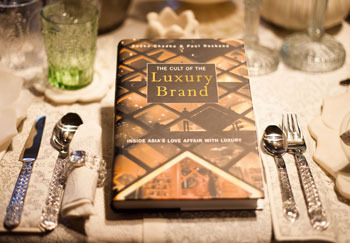
It isn’t easy to talk about luxury without moralising, particularly when you see girls ready to clobber each other with their Manolos to get their hands on 16 bags at 50 per cent off at the Gucci sale. I began wondering about the craze for luxury brands. Ironically, the answer arrived in the form of Radha Chadha and Paul Husband’s book The Cult of the Luxury Brand: Inside Asia’s love affair with luxury. Excerpts from an interview with Radha Chadha:

How did the love affair begin?
I went to Hong Kong in 1997, well before luxury brands had set up shop in India, not knowing much about them. I was fresh off the plane from India and couldn’t understand how my secretary could afford a Louis Vuitton bag! Working in an advertising agency, I invariably ended up dealing with luxury brand projects, and over a point of time I simply fell in love!

You talk about the ‘democratisation of luxury’ – isn’t that an oxymoron?
Yes it is! Most people associate the word ‘luxury’ with ‘exclusive’. The way luxury brands are marketed today, there is nothing exclusive about it. Take Japan – 94 per cent of women in their 20s have a Louis Vuitton piece. There is nothing exclusive about it in that society. When the access to luxury is there for whoever can bite into it (and luxury also becomes bite-sized), then there is democratisation of luxury.

Where is India going with luxury brands?
India has a lot of luxury, but we do not have too many global luxury brands. We have tons of potential luxury brands waiting to happen. Brands exist more in the head and heart – its all about how you present it to the world. India has yet to do that. Also, in India it is only the top end of the market that is shopping. As the Indian economy grows, the use of these products will also spread, as it has in every country.

Sex and the City, the movie, introduces the concept of renting a bag….
It’s true! What is also common is buying a bag and selling it at the same store. When the desire becomes greater than the pocket – that’s when this happens.

So, the bag is the new solitaire?
The solitaire says ‘I have got money baby’, but a luxury brand says ‘I’ve got money and a certain taste’ – it has a certain ability to express personality.

Why do people buy luxury brands?
Many people buy luxury brands for the sheer pleasure, for the quality…but in Asia I have found that people buy to prove their status in society. Almost all of Asia was poor at one point of time and had ways of marking status. Luxury brands have been around for ages, but the way they were marketed was very different. With the recognition that accompanies the right branding, luxury brands become status markers.

How did the book happen?
I have this burning desire to write. I study people, and luxury brands seemed like an interesting lens with which to study countries. It is such a rich subject – you can understand so much about human beings and behaviour and a country by the kind of things people over there do and what drives them.

Does art fall into the concept of luxury?
I have defined luxury brands arbitrarily in the book to limit the scope, as stuff on the body. So many other things like cars, condominiums, private planes, yachts and even art can fall into it. A lot of these artists are like brands (try telling them that, they will be offended!) but MF Husain is also a brand!

when a system doesn’t exist

30 Thursday Apr 2009

Posted by sitanshi talati-parikh in Musings

≈ Leave a comment

Tags

Democracy, India, Thoughts, Voting

Everyone’s been encouraged to vote. keeping aside the fact that we don’t even have the right candidates to vote for, we don’t even have the right system in place to actually vote. mismanaged centers, long lines, incorrect and not updated electoral rolls, inefficient staff and voting machines that don’t work… the list is endless. Today, there were regular voters 60+ years of age, whose names were mixed up on the electoral rolls. The wrong picture was against the wrong name, with a third voting number. many regular voters had suddenly been bumped off the electoral roll. there was no methodical system in place. the people checking looked lost and didnt know how to handle the problems. the machines appeared like they were registering the vote, but one could never be sure.

And yet, I feel amazed and happy to see the elderly – people over 80+ years of age find their way to the polling stations to vote. The young, the old, the sick the healthy, the rich the poor, were all there. can’t something change to live up to their expectations?

60+ years of democracy, of voting, of advancement, of IT professionals, of outsourcing and this is what we have? Zero systems. I read an India Today survey that listed the fortunes of most politicians to be in the hundreds of crores. I don’t mean to sound skeptical, but really, they never possessed that kind of money when they started out. When will it stop? Should we outsource our ‘democracy’ to a dictatorship so that our peace of mind is once again held hostage? How does one change a system so rotten to the core that it infects anyone who comes near it? Politics is a disease in this country and we are all plagued by our own choices.

Travel blog: Hope Floats (Andaman and Nicobar Islands)

22 Wednesday Apr 2009

Posted by sitanshi talati-parikh in Publication: Verve Magazine, Travel Stories

≈ Leave a comment

Tags

Andaman and Nicobar Islands, Car Nicobar, India, Interviews: Travel, Port Blair, Verve Magazine

Published: Verve Magazine, Travel Special, April 2009
Photographs by Geeta Parikh

Andaman05

Sweeping palms and azure waters conjure up an idyllic way of life. Tragically, a gigantic and destructive wave washed all that away faster than you could say ‘Nicobar’. Sitanshi Talati-Parikh reports on the return of the celebratory spirit of life in Car Nicobar post the ravages of the 2004 tsunami


Andaman03

The Andaman and Nicobar islands evoke mixed feelings, predominantly those of curiosity. While images of gorgeous turquoise seas and pristine beaches are imagined by the mind’s eye, there is an element of uncertainty post the 2004 tsunami that ravaged lives and life on the islands. Pooja and Ankur Pandhe (Pandhe Group), currently on the island, are involved in the task of rebuilding local infrastructure. They initially teamed up with an NGO in 2005 and now work in tandem with the Central Public Works Department. Pooja informs me that the Car Nicobar island is a restricted area where tourists are not allowed without a special permit. This is not surprising considering it is an armed force base on which special training and testing activities are carried out, and also because of its strategic location – it’s only a few miles away from India’s southern-most territory, Indira Point.

Last year saw the little island celebrate for the first time in four years. The 55th All India Co-operative Week Celebration was held with over 10 of the villages involved in the performances and celebrations, including cultural exhibits and inter-village competitions. Local colours and moves kept pace with the coconut-flavoured delicacies. Life in this little big island is slowly but surely getting back to normal. Schools have started to run. With government-aided efforts including relief funding from agencies, concrete roads, permanent shelters and most importantly, food, have been provided to the inhabitants. You can spy school-going children scampering along, men feeding their pigs, women cooking or shelling coconuts, and you realise the locals do not have a fixed daily schedule. While the islands have fertile soil, relief funding has reduced the motivation to cultivate, grow and sell. A horticulture department on the island grows a few vegetables; otherwise all supplies are imported from Port Blair and nearby islands. There is actually no vegetation on the island.

Bright young entrepreneurs Pooja and Ankur find that, “The islands will continue to remain the abode of the Nicobari tribals, always remaining somewhat secluded from the life on mainland India. The beats of their tribal drums may bring back the memories of the devastating tsunami from time to time, but thanks to efforts from?various agencies, life is better now, foreseeing a better future for the next generation.”

Andaman02

TEMPTATION ISLANDS

While Car Nicobar restricts entry, the Indian Ocean offers many spectacular islands in the Andaman and Nicobar group which are great destination spots. Think rare flora and fauna, exotic underwater marine life and corals, crystal-clear seas and mangrove-lined creeks.

Port Blair This Andamanese town is home to several museums and a major base for the Indian Navy and the Indian Coast Guard. The Cellular Jail that became a symbol of the tenacity of the Indians in their freedom struggle is also located here.

Baratang From Port Blair ferries and a restricted Jarawa tribe area bring you to this island where you can check out limestone caves and a mud volcano.

Parrot Island Take a speed boat from Baratang if you are a parrot lover.

Havelock Island Tourist-friendly (with eco-tourism), great for scuba diving and known for its rich marine life. Can be reached by government boats that run from Port Blair.

Barren Island You can find the only active volcano in India here, with a big crater of the volcano rising abruptly from the sea. Can be visited on board vessels.

Ross Island Ruins and a small museum named Smritika holds photographs and the other antiques of the Britishers, the island having once been a seat of British power.

Getting There
Port Blair is connected with Delhi, Chennai and Kolkata by air. Regular passenger ship services are available to Port Blair from Chennai, Kolkata and Vishakhapatnam and back. Charter flights or ferries to other islands are also available from Port Blair. For more information go online to www.andaman.nic.in.

← Older posts
Newer posts →

|  Filling the gaps between words.  |

Writing By Category

  • Art, Literature & Culture
  • Brand Builidng
  • Brand Watch
  • Fashion & Style
  • Features & Trends
  • Fiction
  • Food
  • Humour
  • In The Media
  • Interviews (All)
  • Interviews: Business
  • Interviews: Cinema
  • Interviews: Cover Stories
  • Interviews: Lifestyle
  • Interviews: Luxury Brands
  • Interviews: The Arts
  • Interviews: Travel
  • Musings
  • Parenting
  • Publication: Conde Nast
  • Publication: Elle
  • Publication: Mint Lounge
  • Publication: Mother's World
  • Publication: Taj Magazine
  • Publication: The Swaddle
  • Publication: The Voice of Fashion
  • Publication: Verve Magazine
  • Social Chronicles
  • Sustainability
  • Travel Stories

Reach out:
sitanshi.t.parikh@gmail.com

© Sitanshi Talati-Parikh 2018.
All Rights Reserved.

Website Powered by WordPress.com.

  • Subscribe Subscribed
    • sitanshi talati-parikh
    • Join 51 other subscribers
    • Already have a WordPress.com account? Log in now.
    • sitanshi talati-parikh
    • Subscribe Subscribed
    • Sign up
    • Log in
    • Report this content
    • View site in Reader
    • Manage subscriptions
    • Collapse this bar