• About
  • Brand Building
  • Film & Drama
  • Writing: Arts & Lifestyle
  • Writing: Interviews
  • Writing: Luxury Brands
  • Writing: Travel

sitanshi talati-parikh

sitanshi talati-parikh

Tag Archives: Sustainability

A Thread In Time

28 Thursday Jun 2018

Posted by sitanshi talati-parikh in Fashion & Style, Publication: Mint Lounge, Sustainability

≈ Leave a comment

Tags

Embroidery, Fashion, Handicraft, India, Mint Lounge, Sustainability, Sustainable Fashion

Published: Mint Lounge, June 23, 2018

Lounge revisits embroidery techniques integral to the Indian craft vocabulary that are also making a mark on the fashion runway

One of India’s most enduring artistic traditions is its myriad forms of embroidery. Every state and region boasts of its own style, but needlework is not merely a means of ornamentation. The fabrics are also threaded with stories of the community, with motifs emerging from its natural surroundings, economic state and sociopolitical milieu.

As handmade items are reclaimed as new embodiments of luxury, many of these old, and sometimes forgotten, embroidery styles are being revived and popularized. These techniques are popular not only among designers in India but also with international labels. Belgian designer Dries van Noten has worked with embroiderers in Kolkata for decades, and Mumbai is a trade hub for a number of luxury brands seeking Indian embroidery. Labels like Gucci, Valentino, Alberta Ferretti, Maison Margiela and Christian Dior work with the Mumbai-based embroidery firm Chanakya, while Roberto Cavalli, Salvatore Ferragamo, Versace and Michael Kors have collaborated with another firm, Adity Designs, also in Mumbai.

In homage to the country’s diverse embroidery traditions, here are some of the techniques that have found new expression in the works of contemporary fashion designers.

This slideshow requires JavaScript.

Gara
Integral to the wardrobes of Parsi women, gara embroidery is an amalgamation of influences from India, China, Persia and Europe. Parsi brides traditionally wear gara saris for their wedding, the intricate motifs on fabrics ranging from pagodas and dragons to roses, lotuses, roosters and peacocks.
Fashion take: Turn to designers Ashdeen Z. Lilaowala and Mumbai-based Zenobia S. Davar for a contemporary take on gara embroidery on jackets, kurtis and dupattas. In 2016, the Delhi-based Lilaowala collaborated with textile label Ekaya to create handwoven garaBanarasi silks.

Kashida
Kashida is a popular Kashmiri needlework technique, traditionally used on garments such as stoles, woollen pherans and rugs. Evocative motifs like birds, blossoms, fruits and trees—particularly the chinar—are created, usually in a single-stitch style. Another form of Kashmiri embroidery is aari, wherein floral-inspired motifs are embroidered in fine chain stitches using a hooked needle.
Fashion take: In 2014, Rohit Bal’s Gulbagh collection showcased kashida embroidery while Meera and Muzaffar Ali’s Summer/Resort 2017 collection for Kotwara incorporated aari. Manish Malhotra combined Kashmiri embroidery with Merino wool for his recentInaya collection.

Mirrorwork
Also known as shisha or abhala bharat kaam, this is the craft of encasing mirrors of varying shapes and sizes to create patterns on fabric. Women artisans from Gujarat’s Kutch region and parts of Rajasthan are renowned for their expert mirrorwork, on garments, homeware and accessories, which are also widely exported.
Fashion take: Designers Manish Arora, Malini Ramani, Abu Jani and Sandeep Khosla have employed mirrorwork in their designs. Jani-Khosla’s mirrorwork lehnga for Madhuri Dixit-Nene in Devdas (2002) was also displayed at London’s Victoria and Albert Museum for the Fabric Of India exhibition in 2016.

Phulkari
Phulkari, meaning flower work, was traditionally practised by the women of Punjab in their homes. The designs depict colourful motifs embroidered using a long-and-short darn stitch. A mandatory trousseau item for the community’s women, the craft even found mention in Waris Shah’s 18th century poem Heer Ranjha where phulkari was part of Heer’s trousseau.
Fashion take: Manish Malhotra’s Threads Of Emotion collection was exhibited at the Philadelphia Museum of Art’s Phulkari: The Embroidered Textiles Of Punjab exhibition in 2017. The embroidery is also used on accessories, like juttis by Fizzy Goblet, and stoles, bags and small items by the Chandigarh-based brand 1469.

Kantha
Originally practised by women in rural Bengal and Odisha, kantha was used to create blankets (in Bangla, the word is used interchangeably for the embroidery and the blankets). The patterns, crafted using a simple running stitch, are themed on daily life, floral and animal motifs, and geometric shapes.
Fashion take: Designer Sunita Shanker and label 11.11 by CellDSGN have used modern interpretations of the embroidery technique.

Zardozi
An artful technique of metallic embroidery, zardozi uses fine metal wire or thread in gold and silver (or copper wires and synthetic threads for cost-effective designs), to create patterns on fabrics like velvet, satin and heavy silk. Varying from 3D-like patterns to minimal designs, zardozi is commonly employed in bridalwear and couture.
Fashion take: Spot it in the collections of Ritu Kumar, Suneet Varma,Tarun Tahiliani, Shyamal & Bhumika, and Sabyasachi Mukherjee, among others.

Sujini
This embroidery technique practised by women in rural Bihar is akin to an art form. Outlined in chain stitch and filled with running stitches, sujini is also a means of storytelling. The designs often locate a woman’s place in a patriarchal society, with depiction of social evils like dowry or domestic violence, and also showcase their personal aspirations.
Fashion take: Emerging label Indigene designed a collection of sujini-embroidered garments in 2017, co-created with women artisans from Bihar and Uttar Pradesh, while Delhi-based textile designer Swati Kalsi also collaborates with sujini craftspersons on new designs.

This slideshow requires JavaScript.

Mukaish
Popularized in Lucknow, mukaish is created by twisting thin metal strips into fabric. Fardi ka kaam, dotted mukaish embroidery, is done by women, while kamdani, done by men, is used to create varying patterns. The labour- and time-intensive craft has gradually diminished and is today known by only a handful of karigars.
Fashion take: Mukaish can be spotted on runways, courtesy designers like JJ Valaya and Payal Singhal, who incorporated the craft in her Summer/Resort 2018 collection.

Chikankari
Believed to have been introduced in the Mughal court by Noor Jahan, wife of emperor Jahangir, Chikankari is the practice of stitching white untwisted yarn on fine fabrics like muslin, cotton or voile. In recent years, the embroidery is also being done on brightly-hued fabrics or using coloured threads.
Fashion take: Sustain, the apparel line from Good Earth, employs Chikan for its Noor Naira collection on white cotton, Chanderi and Malkha, while Delhi-based designer Sanjay Garg’s collection Cloud People introduces new motifs, such as the figures of angels in the design.

Gota
Indigenous to Rajasthan, where the craft can be seen on lehngas and odhnis as well as turbans, gota refers to strips of gold and silver ribbons that are used to make appliqué patterns on fabrics or butis (small patterns) inspired by local flora, fauna and community life. Originally using precious metals, today’s designs are often made from cheaper copper-coated silver or polyester film known as “plastic gota”.
Fashion take: Anita Dongre, Ridhi Arora and Yogesh Chaudhary incorporate gota in their designs, while The Scarf Story, an accessories label by Joanna Kukreja, has reinterpreted it on cashmere.
 

Can Fashion Save The Planet?

09 Monday Apr 2018

Posted by sitanshi talati-parikh in Fashion & Style, Publication: Elle, Sustainability

≈ 1 Comment

Tags

Anavila, Doodlage, Elle India, Fashion, Gautam Vazirani, Maku, Rajesh Pratap Singh, RiverBlue, Sustainability, Sustainable Fashion, The True Cost

Published: Elle India, April 2018
(Additional images and videos added to this post.)

Designers the world over are making a slow but steady shift towards sustainable fashion, but does the average consumer know what eco-friendly fashion really is? 


The sobering 2017 documentary RiverBlue follows international river conservationist Mark Angelo as he brings into focus how some of the world’s key rivers are being destroyed by the mass manufacturing of clothing. Angelo asserts that any major global fashion brand uses approximately 28 trillion gallons of fresh water every year. And that hazardous chemicals like mercury, cadmium and lead from the fabric are polluting rivers that supply drinking water dyes that filter into them. These chemicals do not break down and travel around the world destroying aquatic life and causing damage to humans in the form of cancer and sensory loss.

Screen Shot 2018-04-09 at 10.18.13 PM

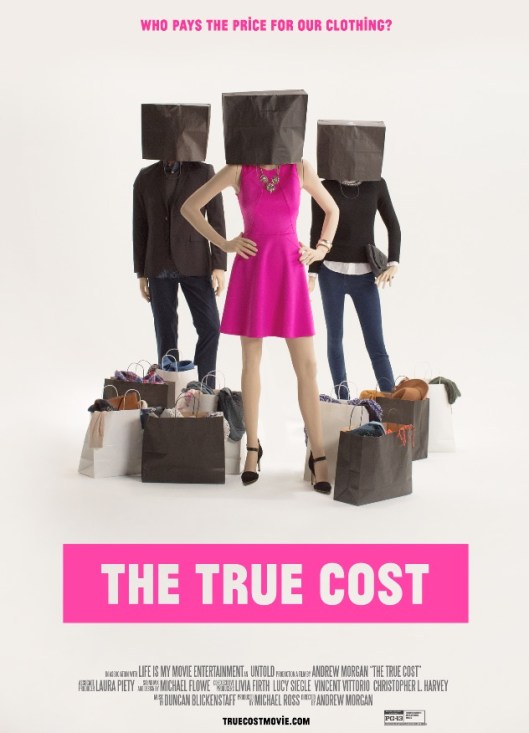
As consumers, we tend to chase beauty over benefits: if it looks good, it couldn’t have harmed anything on its way. There are no aubergine-hued pollutants in the rivers, no underage children making those sensational ruffles, and no worker was paid inadequately to sew those pastel sequins on. Are we wrong, ignorant or simply apathetic? Perhaps all of the above. The True Cost, a film on the fashion industry, brings to the forefront the materialism that drives the economy of fashion, and the heavy price that is paid for cost-effective fast fashion. Parallelly, brands are voraciously driving new trends, while discounting the previous season’s styles. How many pairs of jeans is enough, when baggy or cropped is in one month, and skinny or bootleg fit next month’s #goals? “The consumer didn’t wake up one morning, saying, ‘I want to buy five pairs of jeans.’ We were literally introduced to this concept by the fashion industry,” a commentator in RiverBlue says.

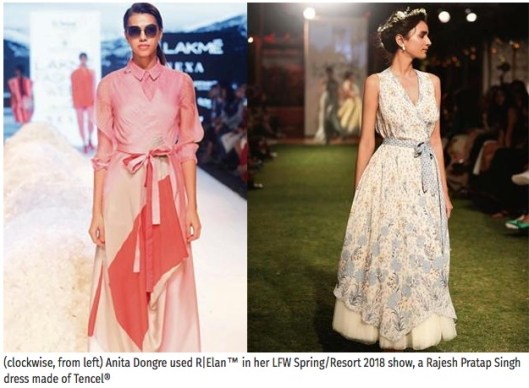
It is clear then, that of the many things it is — expressive, cathartic, good for the economy, and great for Instagram — fashion is also dangerous to the planet. Thankfully, and finally, the industry is now paying heed to its potential legacy of environmental destruction. At Lakmé Fashion Week Summer/Resort (LFW S/R) 2018, Rajesh Pratap Singh used Tencel, a soft fabric made by Austrian textile group Lenzing. It is made from the plant cellulose of sustainably harvested trees in a ‘closed-loop’ production sequence that recycles almost 100 per cent of the solvent. Mumbai-based designer Anavila Misra (of Anavila) has made linen, created from fibres of the flax plant, shine in her subtle-hued saris. Guwahati’s Nandini Baruva (of Kirameki) uses sustainable fabric, made from banana and pineapple (pina fabric), and Eri silk (also known as Ahimsa silk) in her designs that are laced with an ethnic touch. Globally, eco-warrior designer Stella McCartney’s Falabella Go backpack, going strong since 2017, is created using recycled polyester fabric made from ocean plastic. VivoBarefoot’s shoes are made using algae biomass — each pair helps recirculate 57 gallons of filtered water back into natural habitats.

Screen Shot 2018-04-09 at 10.20.04 PM
Screen Shot 2018-04-09 at 10.30.54 PM

(L) Anavila linen saris; (R) Maku natural indigo and white handwoven jamdani scarf. 

While high-street giants like H&M are exhorting you to ‘Rewear, Reuse, Recycle’, Kriti Tula, founder of upcycling relaxed fashion label Doodlage, is keen on waste-management: “Upcycling is the ethos of our brand. Each garment is created using industrial scrap, defective and end-of-the-line fabrics, which are all part of pre-consumer waste, and often end up in a landfill.”

Seven years ago, LFW began a dialogue on sustainable fashion and now dedicates a day to it each season, which focuses on grass-roots-level artisans and craftsmen, with enthusiastic participation from the country’s established and upcoming designers alike. Last season’s #RestartFashion show saw post-consumer waste-fabric makers team up with brands like Chola and Doodlage, while Craftmark by the All India Artisans And Craftworkers Welfare Association collaborated with designers like Anshu Arora, Hetal Shrivastav and Sonal Chitranshi, to showcase ethical garments that were handwoven without generating any waste.

Yvon Chouinard, founder of the outdoor gear label Patagonia, reminds his customers in The Usual, a New York-based publication with a focus on culture and the outdoors: “Think twice before you buy a product from us. Do you really need it or are you just bored, and want to buy something?” This echoes designer Santanu Das’s philosophy for his sustainable Kolkata-based brand, Maku. “Fashion is an industry, it responds to consumption patterns. You don’t need to go on a buying spree — even if the product is sustainable or organic.” Maku’s calls to action are the organic indigo dye and natural fabrics (that are essential to the brand) — its LFW S/R 2018 collection, In Transit, glorified indigo on khadi — and to limit the products on offer.

Screen Shot 2018-04-09 at 10.22.39 PMImage from Doodlage’s Instagram. Photo by: Tanvi Julka.
While fashion players are galvanising into action, consumers can and should do their part too. Gautam Vazirani, fashion curator, IMG Reliance, stresses on individual responsibility. “We are constantly trying to find the next cheapest sale, and we are not conscious about how much we really need,” he says. “In India, we are blessed with easily accessible sustainable fashion. For instance, a consumer can buy a sari made by a craftsman like Chaman Premji from Bhujodi village in Kutch that is handwoven with organic cotton and naturally dyed. Such fashion keeps the environment safe, and empowers the smallest producers in rural areas.” Today, with the rise of seasonless runways and unisex products and attire, we can make a difference by focusing on learning more about and investing in eco-friendly products and fabrics, and buying fewer but value-driven classics that will endure through time and trends.

Perhaps we should shop for a greener wardrobe because really, it is about making sustainable fashion fashionable. And that begins at home so that our heirlooms aren’t merely Chanel and Dior, but a habitable existence on earth. As Das points out, “Fashion cannot save the planet, you can.”

A Truly Green Wardrobe

10 Saturday Feb 2018

Posted by sitanshi talati-parikh in Fashion & Style, Publication: Mint Lounge, Sustainability

≈ Leave a comment

Tags

Bionic Yarn, Eco-friendly, Econyl, Fashion, Hemp, Linen, Mint Lounge, Recca, Stella McCartney, Sustainability, Sustainable Fashion, Tencel, Textiles and Fabrics

Published: Mint Lounge, February 10, 2018 Edition

Seaweed dresses, pineapple handbags and pantyhose made of recycled plastic—a lexicon of innovative eco-friendly fabrics

Screen Shot 2018-02-09 at 5.05.43 PM

From reclaimed fishing nets to algae biomass, and fungi fabric to banana fibre cloth, fashion has a new yarn to spin, and it’s singing a biodegradable tune. Eco-friendly fabrics are not only good for the environment, they also feel great because they are natural, non-toxic and breathable. Eco-fashion stems from sustainable sources, it includes fibres that do not require the use of pesticides or chemicals to grow, as well as biodegradable or fabric spin-offs from the non-biodegradable waste that is choking our planet. Lounge lists 13 fabrics that make the cut.

Bamboo Fabric

Bamboo fabric has come a long way from corset bones of the past. The fabric is durable, drapes well and absorbs moisture, while harvesting of bamboos is sustainable for the planet. London-based Thought and Asquith, Australian brand Shift to Nature and Vancouver-based Lululemon Athletica use bamboo fabric; locally, it is used in Naushad Ali’s designs. A variant called Bamboo Charcoal is created by processing the charcoal from heated bamboo and mixing it with fabrics using nanotechnology.

Bionic Yarn

It is recycled polyester made from recovered waste, particularly from the oceans. Plastic bottles from trash are collected, broken down, shredded into fibres and spun into core yarn; then, this is woven into an eco-friendly fabric. Musician Pharrell Williams joined forces with the team behind Bionic Yarn and it led to initiatives like “Raw For The Oceans” with G-Star Raw denims.

Screen Shot 2018-02-09 at 5.05.55 PM

Ultra Bloom shoes.

Bloom Foam

Algae in your shoes? No fear, Bloom has the world’s first plant-based, performance-driven foam formulated with algae biomass, using renewable feedstock. Noticed in a capsule collection of shoes by London-based Vivobarefoot, which states on its blog that each pair of these Ultra Bloom shoes will also help recirculate 57 gallons of filtered water back into natural habitats.

‘Cork Skin’

It is extracted from the cork oak tree, what Portuguese brand Pelcor calls “cork skin”, a natural, biodegradable and recyclable resource. The company offers accessories like bags, hats and shoes made out of cork.

Screen Shot 2018-02-09 at 5.06.01 PM

A Falabella Go backpack by Stella McCartney.

Econyl® Yarn

An innovative regenerated fibre, “Nylon 6” is made from 100% regenerated waste material, including reclaimed fishing nets. From Swedish Stockings’ pantyhose to luxury brand Stella McCartney’s Falabella Go Backpacks, a number of brands use this yarn in items like swimwear, sportswear and hosiery. Bloni showcased a line of Spring/Summer wear glorifying Econyl® at the recently concluded Lakmé Fashion Week (LFW) in Mumbai.

Hemp

It’s an ancient fibre dating back to 8,000 BC, but it has remained on the fringe. A decade ago, Donatella Versace used a hemp-silk fabric for a gown, while Calvin Klein created a hemp-based pantsuit for the FutureFashion show at the New York Fashion Week. The durable and strong fabric comes from the fibres of the herbaceous plant of the species, Cannabis sativa, a high-yield crop. A hemp blend would look like linen, softening over time. Currently seen in American apparel brands like Bad Decision Adventure Club and Patagonia.

Linen

One of the earliest fibres known to man, the Europeans’ favourite textile was at one point used as a form of currency. Made from the fibres of the flax plant, it has been favoured for bedsheets and tablecloths. There is a value attached to vintage linen as it softens over time—it is stronger than cotton and can last for decades. Anavila Misra has made linen a hero with her handwoven saris, and Padmaja Krishnan uses linen in her handwoven fabrics.

Screen Shot 2018-02-09 at 5.08.27 PM

Products using Pinatex.

Piña Fabric

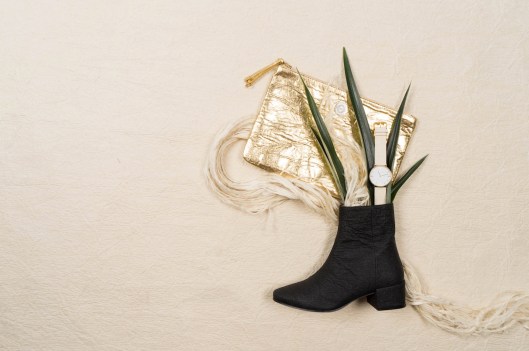
Made from the discarded leaves of the pineapple plant, it is malleable, and can be combined with silk or polyester to create a textile fabric. A cheaper alternative to leather, it can morph into anything from crocodile skin to glittering gold. UK-based Carmen Hijosa’s textile line Ananas Anam has made “Piñatex” chic; the ivory, glossy fabric is also used by Filipino brides for wedding dresses.

R | Elan™

Showcased in designer Anita Dongre’s Songs Of Summer collection at the LFW, R | Elan™ GreenGold is a fabric innovation from Reliance Industries that uses specially engineered fibres. GreenGold is made from 100% used plastic bottles and has a low carbon footprint.

Recca®

Made from pre- and post-consumer waste, it stands for recycled cotton and is manufactured by the Tamil Nadu-based Anandi Enterprises. Sohaya Misra’s label Chola showcased Recca® for the LFW Winter/Festive 2017 initiative “Restart Fashion”, with a monochrome palette and soft, layered silhouettes.

SeaCell®

It’s a fibre made from a mix of ground natural seaweed and wood cellulose, which locks the nutritious properties of seaweed into a wearable fabric. While manufacturers claim that the skin can absorb these nutrients, it depends on the quantity of seaweed in the mix. Made by German company Smartfiber AG, it can be seen in Lululemon Athletica’s VitaSea line of sportswear.

SoyBean Fabric

Also known as “vegetable cashmere”, it is made from fibres that are spun from the waste of the soy food industry, like the hulls of soybean. American designer Linda Loudermilk, considered a pioneer of eco-luxury, used this biodegradable fabric in her brand Luxury Eco years before it became cool to do so.

Tencel®

Last week, the LFW had a gently floating Tencel® chandelier installation in the heart of JioGarden in Mumbai that will be recycled. Produced by Austrian textile group Lenzing, the fabric is commonly known as lyocell. While viscose, rayon, modal and lyocell are all made from plant cellulose, the same fabrics produced by Lenzing are made from sustainably-harvested trees in a “closed-loop” production cycle that recycles almost 100% of solvent. It has a soft, smooth finish, drapes well and absorbs moisture. Skinny denims by Los Angeles-based DSTLD, mini-dresses by American slow-fashion brand Reformation and Rajesh Pratap Singh’s androgynous garments flaunt Tencel®.

We are watching out for the next-gen Refibra™ fibres that will go a step further in recycling cotton scraps left over from the lyocell production process, in a bid to eliminate all waste.

Manifesto: Sustainability & Fashion

01 Thursday Feb 2018

Posted by sitanshi talati-parikh in Fashion & Style, Sustainability

≈ Leave a comment

Tags

Fashion, Manifesto, Sustainability, Sustainable Fashion

Submitted to ‘Fashion and Sustainability’, London College of Fashion (FutureLearn Course)

This is a work-in-progress manifesto.

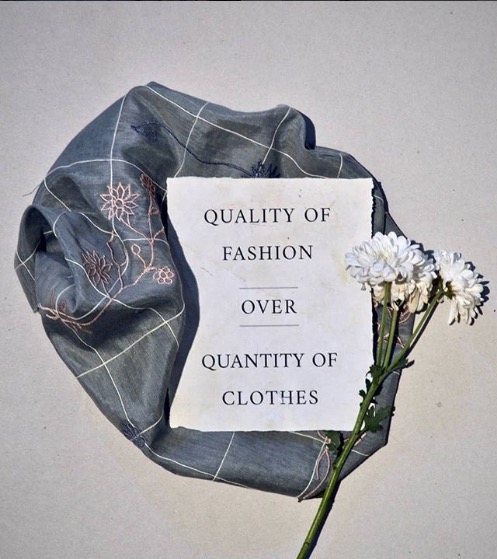
I love fashion, and it turns out, fashion is the biggest pollutant of our planet, after oil. How heavy is the cost of wearing beautiful clothes, and how long can we remain ignorant or act like it doesn’t matter to us?

If one values life—I care about the people around me, I care about animals (and hence am a vegetarian and wear vegan)—then one must understand, acknowledge, and attempt to change what is wrong with the fashion industry. As Barack Obama said: “We are the first generation to feel the effect of climate change and the last generation who can do something about it.”

Our era is defined as the Anthropocene and, according to Johan Rockstrom of the Stockholm Resilience Centre, we have only 50 years to make the changes needed to ensure our wellbeing on earth for the next 10,000 years. While we collect material goods as markers of progress and as a legacy, if we don’t make a change in our consumption patterns starting now, there won’t be a planet to leave to our kids.

While creating a sustainable planet has many angles and agendas, one of the concerns is consumption and waste. We are living in the economy of excess and if we learn frugality, perhaps we stand a chance of saving the planet.

A writer may dip into any of the agendas; my aim is to bring about change through magazine and news articles, to inform and educate and to draw people into the conversation of change.

I also want to be the change, so I am aiming for a more sustainable lifestyle and wardrobe and would like to engage those in my circle of influence in this lifestyle shift.

Vogue View: Buying Vegan

02 Tuesday Jan 2018

Posted by sitanshi talati-parikh in Fashion & Style, Publication: Conde Nast, Sustainability

≈ Leave a comment

Tags

Angela Roi, Cruelty-free fashion, Fashion, Gunas, Matt & Nat, Modavanti, Rheson, ShopEthica, Stella McCartney, Sustainability, Sustainable Fashion, Vegan, Vogue India

Published: Vogue India, Jan 2018

Vegan-Vogue-Jan2018

Have The Bag And Eat It Too!

27 Saturday May 2017

Posted by sitanshi talati-parikh in Fashion & Style, Publication: Mint Lounge, Sustainability

≈ Leave a comment

Tags

Ahimsa, Bags, Ethical Fashion, Fashion, Gunas, Matt & Nat, Mint Lounge, Stella McCartney, Style, Sustainability, Sustainable Fashion, Vegan

Published in Mint Lounge, Saturday May 27, 2017
(Additional images and content used for this post)

If you eat meat, stop reading now. If you are often accused of being a grass-eater, carry on. The eureka moment, when you realize that if you don’t eat it, you shouldn’t wear it, is accompanied by a sense of sartorial discomfort. In India, while designers flirt with the idea of cruelty-free fashion, it’s not all-encompassing. Satin clutches and beaded pouches aside, where do you find the sophisticated bag, the kind with fashion lineage and net worth, the bag that speaks a million dollars with a slight flash of its label? Where do you find a bag that isn’t nouveau riche and one which shows that you care? It may sound noble, but saying no to leather isn’t glamorous when your options are polyurethane.

Screen Shot 2017-06-05 at 2.07.47 PM
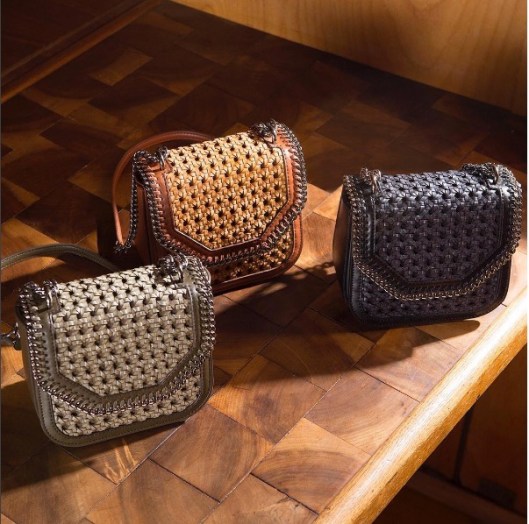
Stella McCartney’s #FalabellaBox in wicker.

In 2001, Stella McCartney, a life-long vegetarian and a supporter of the People for the Ethical Treatment of Animals, took her lifestyle choice and made it a sustainable business. The British designer doesn’t use leather or fur in any of her high-end fashion products. They are cool, edgy and modern and keep the good politics alive, one animal at a time. It actually mimics leather so beautifully that you wouldn’t know the difference, unless your eye picks out the giveaway trademark metal edging (and really, with that price tag, it will keep society from judging you on the basis of your bag).

Matt and Nat op 1
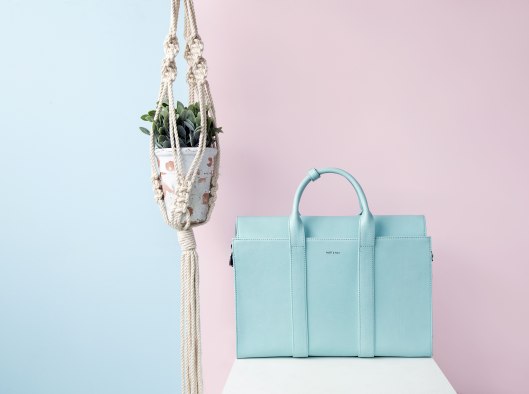
Matt & Nat’s ‘Parallel’ Handbag, worn as a briefcase or cross-body bag.

While McCartney’s classic Falabella handbag (distinguished by a braided chain detail) packs a punch, the Canadian company, Matt & Nat (Materials and Nature), came as a complete eye-opener. When it arrived in the mail (after the whole customs shindig), the vegan bag itself was sleek and functional, but what the “live-beautifully” product said was that the lining was made with 100% recycled plastic bottles (clocked at approximately 21 bottles per bag). The label is made from recycled cork, the price tag moonlights as a bookmark. They have introduced recycled bicycle tyres in their collection and on Earth day, their Instagram post noted that they have recycled over three million plastic bottles to create the linings of their bags. Unlike cheaper man-made materials, this bag lasts until you tire of it, without any difference in texture or appearance.

While their site does not publicize it, the founders are of Indian origin: Inder Bedi launched the company in 1995 after moving to Montreal to go to university and attempted to go vegan. He found his options limited, so he set out to become a game changer. Five years later, Manny Kohli, another passionate vegan, joined him, and is currently president and chief executive officer. Their office lives by the philosophy, including having monthly vegan potluck meals.


Gunas opt 1
Gunas opt 2

Gunas bag and wallet.

Take another instance of vegetarian-turned-vegan Sugandh Agrawal, who grew up in India and now lives in New York. Her experience with raw hide, while interning at a local handbag design firm that specialized in exotic skin handbags and shoes, led her to start her own line of vegan fashion wear, Gunas.

Screen Shot 2017-06-05 at 2.00.20 PM

Grain’s stirrup tote bag.

Unlike man-made leather, ahimsa leather, which has become a topic of serious discussion in India over the last few years, is made from the hide of dead animals. Grain, started by Avinash Bhalerao in 2014, offers unisex bags. While no certification is provided, they work with 30-year-old tanneries that recycle the skin of dead animals into leather, which is the closest you can get to the real thing, without actually harming the animal.

Brands like Guess are dipping into the man-made leather initiatives—but it wouldn’t be amiss to begin thinking about sustainability, and going all the way while you are at it. It is a process of transition, as model Renee Peters explains on Ethica, an ethical fashion blog: “The hardest thing about going completely green has been doing it while being a member of the fashion industry and wanting to express my personal style. I have to work harder at curating my own look….” Go ahead, make a difference, one bag at a time. There is #NoRheson to say no.


Screen Shot 2017-06-05 at 2.13.09 PM
Screen Shot 2017-06-05 at 2.12.37 PM

Stella McCartney’s Falabella wallets and bags made from eco alter-nappa and the oversized Stella Popper. 

Where To Find It:
Stella McCartney
Matt and Nat
Angela Roi
Gunas
Freedom of Animals
Ethica
Modavanti
Rheson

Newer posts →

|  Filling the gaps between words.  |

Writing By Category

  • Art, Literature & Culture
  • Brand Builidng
  • Brand Watch
  • Fashion & Style
  • Features & Trends
  • Fiction
  • Food
  • Humour
  • In The Media
  • Interviews (All)
  • Interviews: Business
  • Interviews: Cinema
  • Interviews: Cover Stories
  • Interviews: Lifestyle
  • Interviews: Luxury Brands
  • Interviews: The Arts
  • Interviews: Travel
  • Musings
  • Parenting
  • Publication: Conde Nast
  • Publication: Elle
  • Publication: Mint Lounge
  • Publication: Mother's World
  • Publication: Taj Magazine
  • Publication: The Swaddle
  • Publication: The Voice of Fashion
  • Publication: Verve Magazine
  • Social Chronicles
  • Sustainability
  • Travel Stories

Reach out:
sitanshi.t.parikh@gmail.com

© Sitanshi Talati-Parikh 2018.
All Rights Reserved.

Website Powered by WordPress.com.

  • Subscribe Subscribed
    • sitanshi talati-parikh
    • Join 51 other subscribers
    • Already have a WordPress.com account? Log in now.
    • sitanshi talati-parikh
    • Subscribe Subscribed
    • Sign up
    • Log in
    • Report this content
    • View site in Reader
    • Manage subscriptions
    • Collapse this bar
 

Loading Comments...