• About
  • Brand Building
  • Film & Drama
  • Writing: Arts & Lifestyle
  • Writing: Interviews
  • Writing: Luxury Brands
  • Writing: Travel

sitanshi talati-parikh

sitanshi talati-parikh

Author Archives: sitanshi talati-parikh

One baby, Lonely baby, Two baby…Um, Population control?

08 Thursday Jul 2010

Posted by sitanshi talati-parikh in Musings, Parenting

≈ Leave a comment

Tags

Baby, Motherhood, Thoughts

So the latest buzz I’ve been hearing is that people should never be that cruel and have just one child. (I know, all you smart people worried about population control and all associated evils are probably asphyxiating right now, but hold on, it gets worse). So, you should ALWAYS have more than one child – why? – get this: so that your first baby “doesn’t get lonely.” It’s apparently just plain cruel to put your child through that kind of torture. I can’t even begin to start on how many things are just plain wrong about that. First, if you bring your child up right and he/she has enough things to do and hopefully enough friends, why in the frigging world would (s)he get lonely? Being an only child I really don’t recall feeling any moment of regret getting exactly what I wanted, and feeling a sense of responsibility for being the only child.

That brings me to ridiculous reason no. 2: ‘When we have lotsa children, we ensure that they will be around to take care of us in the future.’ Ahem. Red alert – most kids fight over who shouldn’t take care of the parents, and try to steer clear of duty as much as possible. And with more people living all over the world (not in the farm that these thoughts seem to be stuck in), who’s to say any of the 15 kids will be around to man the parent’s problems? In fact, if it’s just one child, (s)he knows that his/her responsibility from day 1 and works towards it.

Hell, it’s a selfish world, but don’t be selfish by killing the world’s resources and taxing everyone by wanting to provide entertainment and fight-club company for your kid. In fact, the more crowded the world is, the less likely your kid is to have a chance to do something or even have a good quality of life – and heck with overpopulation, (s)he gets his pick of company!!

Sure, I don’t deny that having a sibling is special, the bond is special and irreplaceable, but is it worth it in the long run? If every parent in the world thought this way, what in the world would the world’s population look like? Forget the world, just think India. I mean we do have some form of civic responsibility, right? Or should we all stop thinking about the consequences of our actions and just let the world go to rot? Or wait, that’s IS exactly what we’re doing anyway – for everything else!

At the end of the day, it is entirely a parent’s choice, but what bothers me is when they make important choices that affect people around them based on inane reasoning. God help us and the children we seem to be so heartily planning for!

Going back in publishing time!

08 Thursday Jul 2010

Posted by sitanshi talati-parikh in Musings

≈ Leave a comment

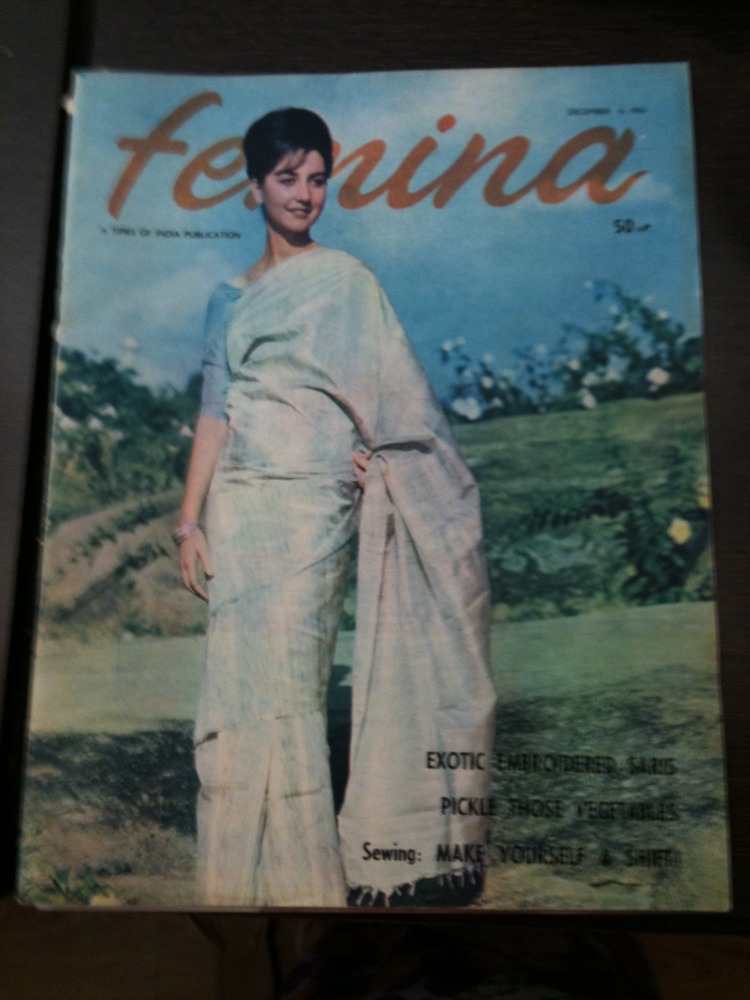
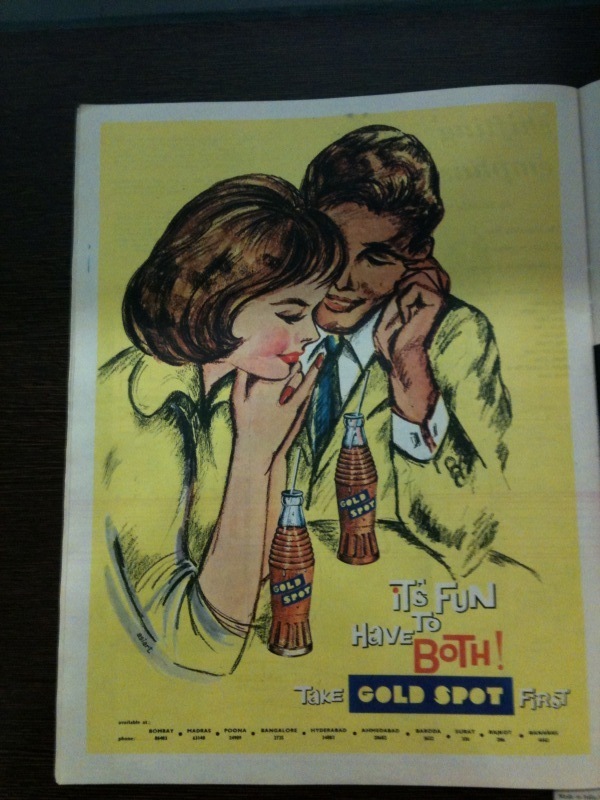
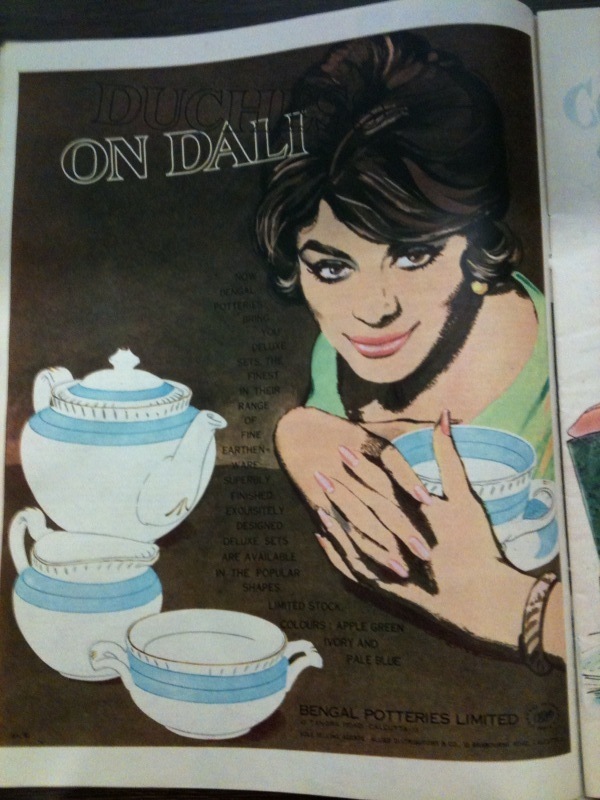
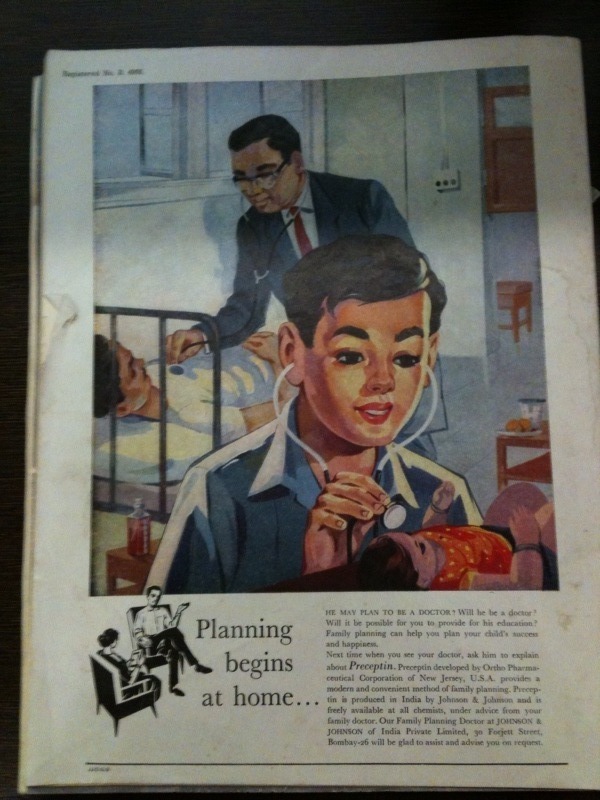
Rare 1960’s issues of Femina, Illustrated Weekly and Eve’s Weekly. Hand-sketched ads, gay parties, typewritter fonts! Some of the ads are really cool…see Marlboro and Goldspot; and while our glossies have come a long way, but this is something just totally worth a dekko!

Img_0014
Photo6
Photo2
Photo3
Photo
Photo7
Photo8
Photo9
Photo10
Photo5
Photo4

See the full gallery on Posterous

A Mauritian winter

08 Thursday Jul 2010

Posted by sitanshi talati-parikh in Musings

≈ Leave a comment

Img_0000
Img_0001
Img_0002
Img_0003
Img_0004
Img_0005
Img_0006
Img_0007
Img_0008
Img_0009
Img_0010
Img_0011
Img_0012
Img_0013

See the full gallery on Posterous

A sojourn in pretty Mauritius with days that were rainy, cloudy and full of sunshine. For much cooler pics check out hubby’s phone uploads: http://www.sahilparikh.com/island-getaway-mauritius-2010 – obviously I found all the cloudy moments to snap! 🙂

The Present Past

27 Sunday Jun 2010

Posted by sitanshi talati-parikh in Art, Literature & Culture, Interviews (All), Interviews: The Arts, Publication: Verve Magazine

≈ Leave a comment

Tags

Art and Design, Pakistani Arts & Literature, vervemagazine

Published: Verve Magazine, Nerve, June 2010

Risham Syed is an artist who understands the influence of history in contemporary life, and expresses it through her often ironic and provoking tableaux. Sitanshi Talati-Parikh explores her intent and thought

Art02
Art03
Art01
See the full gallery on Posterous

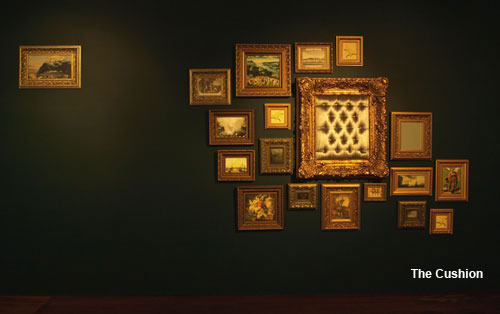
Lahore-based Risham Syed stages provocative set pieces by juxtaposing the power of the past with symbols of contemporary Pakistani society. She paints art, historical images or even photographic images in acrylic, which is essentially plastic. Paintings are turned into objects and ‘conceptual pieces’. There is a very strong influence of power play in the mise-en-scene of installation art and the placement of objects. Domestic objects are used to talk about her experience of living in a society “which imposes certain roles on (men and) women who in turn assume these roles most of the time without challenging/questioning them. This is a take on that, but then these objects engage in a dialogue with the larger social/political picture.” She chooses objects that carry a particular historical/cultural context. For example, the white marble mantelpiece is very Victorian with Indian elements. Along with representing the family unit or the institution of it, it represents a certain class. The wall lamp pretends to be ‘Victorian’ but is a very cheap Chinese version of it. The vestiges of cultural inheritance are observed to suggest an origin and it’s very perceived authenticity.


Art04

In conversation with the artist:

What inspires your works?
I collect photographs from newspapers, magazines, life around in general on a daily basis. I also collect old photographs that inherently carry a particular context with them. I am interested in history and how it connects itself with the present moment.

What draws you towards historical power play?
I connect history with the present. It is also a way of looking within and outside and I like this recurring dialogue. The way I construct this connection, I feel it remains open and every time a new narrative can appear, depending on the sequence of the connection.

Are you using space as a metaphor?
The most apparent thing is a domestic space that comes through from these constructions. It’s a metaphor for roles, personas, pretences, power play, control, etc. Domesticity is a tool that I use to connect various issues with the larger picture. You see a quiet wall lamp with a small painting under it but on close inspection the painting is of disturbance or violence. In this way within the quiet, apparently pretty domestic spaces, there is another space within the painted surface which again is a metaphor for the space outside of us which is alien yet it’s the space within us.

What does power mean to you?
The idea of power or ego is within us and it manifests itself in various dislocated channels resulting in destruction. There is power play from within the basic family unit structure of the society to the larger global picture. It’s the base of the economic structure and that becomes the driving force. It is connected with identities, images, personas, relationships and attitudes.

Influencing artists Zahoor-ul Akhlaq, Salima Hashmi, Quddus Mirza (her teachers at National College of Arts, Lahore). Indian artists like Amrita Sher Gill, Arpita Singh, Bhupen Khakar, the Warhli tribes.

Love looking at: Rembrandt, Leonardo, Vermeer, Gauguin, Van Gough, Magaritte, Joseph Cornell, Frida Kahlo, Chagall, Rothko, Rauschenburg, Richter, Peter Blake, Hockney, O’Keefe, Cartier Bresson….

Not a Word More, Not a Word Less – Jeffrey Archer

26 Saturday Jun 2010

Posted by sitanshi talati-parikh in Art, Literature & Culture, Interviews (All), Interviews: The Arts, Publication: Verve Magazine

≈ Leave a comment

Tags

International Fiction, Interview, Jeffrey Archer, Literature, vervemagazine

Published: Verve Magazine, International Edge, June 2010

British novelist, ex-politician and former jailbird, Lord Jeffrey Archer is an absorbing conversationalist. He’s confident, patient, petulant and raring with sure-fire ambition. In Mumbai for the launch of his latest collection of short stories, And Thereby Hangs a Tale, Sitanshi Talati-Parikh comes away from the tête-à-tête duly charmed

Jeffrey01

Jeffrey Archer explains the act of creation of dialogue, demonstrating how real-life conversation can’t be imitated exactly in fiction. “While talking you may say, ‘Can I have a cup of coffee, please?’ but you can’t put that in a book.” The ever-gracious Taj hospitality team appears bearing silverware and coffee, not knowing that Archer was merely demonstrating a point. “Is that my special?” he asks – having quite missed the force of his spoken word. They look confused. “Is that coffee?” They nod bewildered. “No, thank you, I have my special. I thought they told you all about it. No they didn’t? God bless them,” he mutters. A few minutes later, the somewhat-‘special’ turns up. They couldn’t garnish it with chocolate sauce, they murmur desperately. He takes a sip. “It’s not like Barista’s! They all try to make it like Barista, but they can’t. And who introduced me to Barista? ‘Raoool’ Dravid introduced me to it. I don’t like coffee. I like Barista’s. I don’t get it in England. I love it.” He gives it back, with an unhappy, “Thank you, very much.”

He is surprisingly energetic, he’s refreshingly ebullient and he holds the instinctive ability to inspire. At 70 years of age, he moves with the efficiency – and his voice carries the power of a 35-year-old. He speaks without platitudes and any hint of patronisation. And if you question his creative choices, he responds with effusive mock indignation.

Excerpts from a rollicking, sometimes serious conversation with the author:
(All exclamation marks and text repetitions are entirely based on the interviewee’s tone. Capitals denote elevated volume only.)

Why do you not have more female protagonists in your books – besides The Prodigal Daughter and False Impression?
The Prodigal Daughter is totally about the first woman president of the United States. Who wrote the first story about the first woman president of the United States? ME! Long before Hillary Clinton! You weren’t even born then! I’m married to a woman who runs the biggest, greatest hospital in Britain, Cambridge University. So, don’t you give me that protagonist stuff. In this one (points to his latest book) all the women are wicked. They’re nice in a lot of them, aren’t they? I’m not a women’s writer. I don’t write to please you, I write to please everyone!

And everyone is pleased by men?
Well, no. NO! The Prodigal Daughter is the story of a woman. False Impression, you’re quite right, is about a woman from beginning to end. You selfish thing, isn’t that enough for you? (Laughs uproariously.) God, women’s rights for India! Women to run India!

What happens if you don’t have a story to tell? Do you ever get stuck?
Never. NEVER! No writer’s block! Never. I know my next six stories. The next thing I’m writing is the biggest challenge in my life. I’m writing five books in a row, the story of which starts in 1920 and ends in 2020. They are called The Clifton Chronicles. The first book is dominated by a MAN called Harry Clifton. The second book is dominated by a woman called Emma. Yes!

Is there a sense of completion when your protagonists achieve that position of power – after all, that’s where the books end? What happens if they were to continue?
What you’ve said is going to happen in the next series. One will lead into another. They will all be separate books. I’m a believer in hard work and ambition and achievement – for men or women. (I can sense the aside.) I work for Margaret Thatcher – makes no difference to me. The achievement is in reaching the goal, not afterwards! You don’t want to think about retirement do you?

Do you believe that with great power comes great responsibility – for the storyteller and for the story itself?
No I don’t. I think that’s not realistic. I am a storyteller. I want you to enjoy the story. I want you to turn the page. I don’t want to leave you with any philosophical…well you can, but that’s not what I aim to do. I aim to entertain you.

Is that the difference between popular culture and literature?
NO! That’s insulting. (I’m just saying.) I know you are, but it’s insulting. That is to say you can’t be a great storyteller and write well. The literary failures of this world always try that line, because they are jealous. It was one of your great critics who told me, ‘Jeffrey, don’t worry with the sacred cows of India – read RK Narayan.’ I agree with her. Narayan is both – marvellous combination of great writer and great storyteller. There are very few Vikram Seths around. (He approves of Seth.)

So, your new collection of short stories….
(Answers with practised ease.) Fifteen short stories, nine of them true, the most exciting one for me is set in India, called Caste-off. It’s the story of two people I met in Mumbai three years ago (Nisha Jamvwal and Kanwar Rameshwar Singh Jamvwal). I think it will make a Bollywood film – it’s so romantic. I couldn’t believe it when I heard the story; it’s so remarkable that you can’t make it up.

Do you pull from real life or employ fiction?
It’s half and half. Human beings are giving stories all the time. Why bother to invent someone when I can just write you? It’s so easy. I look at people and I remember details very well. If I get a good story, I write one line that reminds me of it. I always keep notes. Normally everything is all up there. (Referring to his deeply lined forehead.) If you are working the whole time – and I’m always working – memory gets constantly tested. Your memory only gets lazy if you’re lazy.

What does power mean to you?
Power?! Power. (Makes it sound like ‘paar’.) It has many meanings. But sometimes, a writer has power without realising it because people will write to me and say, ‘Your book has changed my life,’ or ‘something you wrote has changed me as a person’. Which one hopes is power for good – for instance young Indians learning to believe in hard work to achieve what they want.

Your stories give people the drive to keep going, to succeed….
Nowadays, people want it tomorrow…not 20 years down the line. A girl came up to me at a restaurant and said, ‘I want to be famous.’ I asked her if she played the violin, sang a song or wrote a book…and she shook her head. She said, ‘You don’t understand me, I want to be famous.’ She didn’t want to do the work. You have to do the work. Now I’m more demanding all the time, on myself.

Does success increase the pressure to deliver?
I always had a story so I never felt pressure. The problem was making sure I worked hard enough. I’m working harder now than ever. People ask me silly questions like ‘Do you write all your books?’ But you would know straight away, wouldn’t you? You’d say, ‘Jeffrey! You didn’t write that!’ I always say to people, my readers would know – they know my tricks. Which makes it harder for me, because my fans are sitting there and saying, ‘Where’s the twist, Jeffrey? What’re you gonna do, Jeffrey? I’ve got my eye on you!’ It’s still a challenge to fool you, to get you to the last line and make you go ‘Aaeee!’ That’s the trick.

Few writers can handle short stories and sagas with equal aplomb….
The thing about short stories is that they are stories. A lot of people who write short stories are actually writing ‘looks at life’ or incidents. I tell stories. They have a beginning, middle and an end. I don’t want to write about the ‘movement in the room, made one feel luminous, as the girl walked toward me, I realised….’ Oh balls. Give me a STORY!

So you’re going strong.
Eh? FOREVER!

Love the spirit. Word.

The Character of Style

17 Thursday Jun 2010

Posted by sitanshi talati-parikh in Fashion & Style, Publication: Verve Magazine

≈ Leave a comment

Tags

Confessions Of A Shopaholic, Fashion, Gossip Girl, Sex And The City, Style, Trend, vervemagazine

Verve Magazine, Nerve, Fashion, May 2010

So haute couture is escapist fare for the masses and a note on what not to buy (since it’s too popular) for the fashionistas. Books, movies and TV serials get rank popularity because of the sequins and stilettos touted by their characters

A little discussion about the haute couture ways of popular women’s fiction led to the realisation that fashion is actually a real-life character, if not a protagonist, playing a very integral role in the lives of the others. So is the stylish drama about Manhattan’s scandalous elite, Gossip Girl, about Serena van der Woodsen and Blair Waldorf or is it about the clothes? Can you take in Serena and Blair’s striking good looks when you are busy gaping at the beautiful clothes they wear? Chuck Bass’ three-piece suits, bow ties and mirror-polish shoes are all telling you more than the actual person himself. Relationship make-ups comprise of receiving fabulous clothes in lovely big boxes. It’s not so much make-up sex as make-up sexy. Not surprisingly the fabulous ‘fashion show’ spawns off a whole bunch of shorts: Gossip Girl Couture, Gossip Girl Revealed, Gossip Girl: Faces Behind The Design, Stylish Confessions: The Fashions of Gossip Girl.

In much the same way that Sex and the City set the trend for Manolo Blahniks and Jimmy Choos to be the point of most conversation, the icing on the foot was when in SATC: The Movie, Mr. Big goes down on one knee with no ring, but a brand new Manolo in hand, and proposes. Carrie accepts, of course, and with evident pleasure slides her slender foot into the proffered Blahnik.

In Confessions of a Shopaholic, Rebecca Bloomwood is obsessed with the art of fashionable and pocket-burning shopping and to be honest, she truly falls in love with Luke Brandon when she discovers that he ‘speaks Prada’ even if adorably reluctantly. Not to forget that the pleated green scarf that started the whole relationship (and led to her being the famously anonymous ‘The Girl With The Green Scarf’) was auctioned off by credit-squashed Rebecca and salvaged by Luke and returned to her as a peace offering – a soft silky foundation to a long-lasting relationship. I mean can you love a man that doesn’t understand fashion and your love for it? Is it worth being in such a relationship that doesn’t include material indulgences of the best kind?

So, you discover that fashion now exists as a very necessary element in movies, books and TV shows. It’s not like it’s a new thing – the age of the Victorians and Romantics had their own characteristic dress elements: the cravat, the embroidered handkerchief twirled nervously, the beautiful hats entwined with ribbons, the gowns and the pearls. In fact the women, kept themselves entertained with notes, embellishments and comparisons on elements of clothes and accessories. The fact that fashion and more particularly brand names have now become hugely significant elements and often undeniably important to the viewing audience leads you to wonder what’s next? Movies are evaluated with the yardstick of their style-worthiness – people sat through SATC: The Movie (despite it being a weak cousin of the TV show) and loved it because of its high fashion elements; people ooohed and aaahed over the cinematic disaster Kambakkht Ishq because of the clothes, shoes and bags splashed across the screen. You often forget the movies, but you can’t escape the gorgeous fashion in them. It’s ominous, it’s morally unsound and deeply unsettling, but you can’t change the fact that the peep-toe stiletto, the bejewelled clutch and the silk scarf are as important (romantically) to a story as the people themselves. Sometimes even more so.

Mindless in the Desert: SATC-2 is actually just a spoof of itself!

15 Tuesday Jun 2010

Posted by sitanshi talati-parikh in Musings

≈ Leave a comment

Tags

Hollywood, movies, Reviews, Sex And The City, Thoughts

How is it possible that Hollywood cannot see how stupid it makes Americans look when it creates movies like Sex and the City-2? I mean you start out with four relatively intelligent, well-read and well-travelled (we hope) women: a writer, a lawyer, a PR person and an art curator. How can these women who’ve spent years in their respective professions behave like such complete imbeciles? Well actually, Miranda and Charlotte do behave themselves, but the queen bees of the foursome, Carrie and Samantha act like absolute idiots.

I get that Samantha is Samantha – deliciously irreverent when it comes to sex and society. But I also get that while she flirts outrageously, and takes home a lot of goody bags, she generally doesn’t act like a moron in her home city. It seems that lack of hormones and hot flashes makes her go a little insane. She flagrantly flaunts social codes (which are a religious and legal issue in the middle east), while being the business guest of the sheikh who has kindly flown her friends and her first class in complete luxury to his home country, so that she can think about representing him in a PR capacity. It appears that Samantha could do with some PR of her own – and some re-training in the way to behave in public; not like a hormonal teenager on heat. And you can argue that that’s just Samantha – but is it? Did she become a top PR executive by showing hordes of conservative men her middle finger, breasts and her latest lay’s boner? I’m not really sure. It just seems that she’s finally becoming senile. Where even her Samantha-ness is no longer acceptable.

Do Americans really know so little of other cultures and behave this silly when they travel? What they do in New York is not really acceptable in Abu Dhabi! And flaunting social norms is not funny, it’s just stupid. Why does Hollywood not understand that when they make movies like this, they are not ridiculing the closed cultures of the world while heralding the joys of the librated ones, they are only proving that Americans can be really socially inept, culturally dumb and truly lacking in common sense, basic decency and courtesy and in any amount of general knowledge? And Americans are not really like this – the ones I’ve met are genuinely interested in other cultures and politely respectful of them. So who are these Americans that Michael Patrick King is idolising on big screen? What happened to the girls who regaled us with their smart repartees, chic appearance and layered conversations? The girls who may have used the metaphor of sex, but were making important observations about society, life, men and people. These are not the women we see now – the women now are haggard, bitchy, unable to learn from their lives’ many lessons and choose to regularly regress to inept teenage-world.

Miranda and Charlotte’s troubles are actually real and funny – they deserved more room to mature and grow, but instead the story got sucked into the vortex of Carrie’s stupidity and Samantha’s ridiculous faux pas. Carrie is just being plain ridiculous – she is tired of the relationship in its current form, she takes time off from their house, but when Big tries to intervene and asks for some time off too, she freaks out and goes and makes out with an ex-boyfriend. I mean really? Do these girls never grow up? What Carrie did when she was 20 and 30 is not really still acceptable at 45+! Does she never learn from her mistakes? Or is the writer so unimaginative that he can’t move or think beyond the usual troubles of the 4 girls? Where is the Carrie who only believed in the love of her life, and went through men trying to find happiness but unable to do so, because she truly loved another? Her affair with Big (when she was dating Aidan) was allowed, because he was the man she loved. Why would she cheat on the man she loves with Aidan? Just because he was too tired to go out to party with her after a long day at work and bought her a plasma TV instead of jewellery? Is she really that shallow?

And the clothes! The styling! What an eyesore! What the show had been known for, renowned for, were the supremely stylish clothes and looks. What have they done here? They’ve taken the brightest, gaudiest fabrics possible, stuck on extremely shiny, often pointy things, added the most garish of accessories that made them look like Christmas trees at best, and called them clothes. I can possibly accept that 4 of the 750 clothes actually looked reasonable, and the only good thing to come out of this is that Miranda got a makeover. The plain Jane of the series and the tubby-mommy of the first movie looked the best of the lot here. Carrie should have thought about mummifying her look from the series and staying cryogenically frozen. She has not aged well, and well, botox doesn’t work for everyone.

The movie would have truly worked as a spoof of the show and the series – outlandish clothes, haggard-looking women, absolutely no story, weak dialogues, stupid characters, social faux pas galore, trivialisation of social rules and a caricature of American intelligence (or the lack of).

I thought the first movie did injustice to the supremely brilliant shows, but in retrospect that movie was Oscar-material compared to this hunk of junk that fans of the show were forced to sit through for 146 minutes! Maybe King needs to think about handing the writing over to Darren Star – who put together 94 episodes of the show that won 8 golden globes. This movie, I’d be happy if it won a Razzie. Two funny lines and four decent outfits do not a movie make. I may just have to burn the box set of the Sex and the City after the incredibly bad taste this movie left in my mind and soul, ruining the iconic characters forever. I hope King gets the message and lets everything and everybody rest in peace, without a third piece of torture barraging our mind and the cities.

Celebrating An Imperfect Life, & It’s Uninhibited Successes

02 Wednesday Jun 2010

Posted by sitanshi talati-parikh in Musings

≈ Leave a comment

Tags

stevejobs, Thoughts

I’m not one for hugely inspirational videos, talks and books; but what is inspiring is when people share their life with you – a life that has been imperfect, and successful despite that, or because of that. One never knows where one’s choices will lead us, but as Steve Jobs (a less cocky, more humble, more human Jobs) points out, we won’t know until we take the plunge. Things we may know from his life, things we may have heard about but are still moving when you hear him talk.

If you can’t view the video below, you can try this link: http://ht.ly/1SwMm

Job’s 3 life lessons:

1. You cannot connect the dots forward, but you can, when you look backwards. So trust in the direction your life is taking.

2. I had been rejected, but I hadn’t stopped being in love (about his work). The only way to do great work is to love what you do…keep looking, don’t settle.

3. Your time is limited, so don’t live someone else’s life. Don’t be trapped by dogma, which is someone else’s thinking. Don’t let others’ opinions drown out your inner voice.

Trendsetting Strokes

26 Wednesday May 2010

Posted by sitanshi talati-parikh in Fashion & Style, Interviews (All), Interviews: Lifestyle, Publication: Verve Magazine

≈ Leave a comment

Tags

Art and Design, Designers, Fashion, Gaurav Gupta, Interview, Satya Paul, Style, vervemagazine, Wendell Rodricks

Published: Verve Magazine, Nerve, May 2010

The connection between fashion and art is an old one; international trends can be written in no less than multiple coffee-table books. Verve speaks to four top Indian fashion designers who show obvious influences of art in their designs

WENDELL RODRICKS

Wendell


On the connect “There has always been a connection between art and fashion. Chanel loved Cubism. Schiaparelli loved Surrealism. And Yves Saint Laurent paid tribute to many artists: Braque, Picasso, Mondrian. Art and fashion are both provocative and often intrigue the general public.”

In my designs “I have used art as an influence not just from the Western world but also from an Asian perspective. I have collaborated with Goan artist Theodore Mesquitta; and did an installation for Habitat Centre (Alka Pande). In fact, I know one day I will paint.”

Fashion as a work of art “Fashion is at the lowest rung of the pure art ladder. Our clothes certainly are a form of art. To elevate them to pure art though is being overly ambitious. Fashion can become art in the hands of Alexander McQueen or Hussain Chalayan who look at clothing and shows as art to begin with. But in most cases, fashion is not art.”

SATYA PAUL

Satyapaul02

On the connect “Anything in life has two possibilities – either you can use it to raise or lower the bar. What matters is how one takes it. Fashion is itself an art form, a medium to be used to create amazing art. Broadly seen, it is a confluence of colour, texture and form (by way of weaving, embroidery, printing, and cutting/pattern making). The importance of the two is akin to asking ‘…the importance of oxygen to life?’”

In my designs “Art is anything done with heart! In that vein we have made numerous collections over the years where art of different artists, and movements of art is the basis. Recently, Chola period brozes and Pop art have been referenced in our collections. In addition, we have explored and developed a new visual language.

GAURAV GUPTA

Gaurav02

On the connect “Sure there is: fashion is simply commercial art.”

In my designs “I’ve always been inspired by art. Think architecture by Gaudi, movements like Surrealism, Dadaism, the art nouveau and art deco realisations. While it is nothing obvious and direct, there is a subconscious connect. Recently, I collaborated with artist Akshay Singh Rathore, taking off from his light-box installations. We’ve independently been working towards similar things – a more landscape-like feeling. Tartan checks can be rigid; with this concept, they became more fluid, draping well.”

Fashion as a work of art “Some of them are! Designs are sculpted around a body. Sculptures have a mood; and in fabric draping, construction and moulding, it is like working with clay. One of my saris for instance was displayed at the Portugal Biennale (an international art exhibition) late last year.”

POONAM BHAGAT

Poonam02

On the connect “Art and fashion are both intertwined. Both are highly creative fields. One uses a canvas with brush strokes or mixed media while the other uses fabrics and threads on cloth. The difference is, the latter is turned into a structured garment while the former is flat with sometimes a 3D effect. Artists have even started incorporating materials available to fashion designers in their art.”

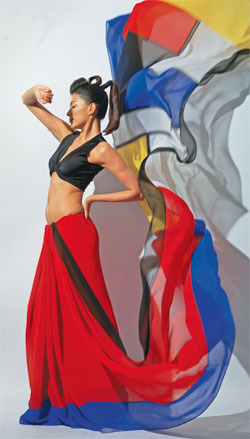
In my designs “My spring summer 2010 collection was inspired by the works of world renowned Spanish artist Joan Miró, who was known for his very vibrant, childlike paintings and use of primary colours. I borrowed elements from his art and gave them my own TAIKA twist using vibrant appliqués and embroidery on ivory linens and cotton-silks. The recently concluded WIFW AW 10 showcased my collection inspired by abstract expressionism, a modern American art movement which took wing post World War II in the late ’40s and flourished till the early 1960s, putting New York on the global art map for the very first time.”

Designer in an art show “For me art speaks; so does fashion. The first ever group art show I participated in was organised by Polka Art Gallery at The Visual Arts Centre, New Delhi in August 2007. It was a showing of extremely eminent artists. I was the only fashion designer and the only one to create tapestries on fabric with embroideries.”

Designs as works of art “My designs are just fashion statements, to be worn and enjoyed. Not to be treasured!”

Up In The Air

17 Monday May 2010

Posted by sitanshi talati-parikh in Humour, Publication: Verve Magazine

≈ Leave a comment

Tags

Mile High Club, vervemagazine

Published: Verve Magazine, Nerve, April 2010

Ever heard of the ‘Mile High Club’ and ‘zero-gravity sex’? It’s really something else when you explore the boundaries of air suction through physical means, suggests Sitanshi Talati-Parikh, carefully ensuring that she never uses the three-letter word that can turn a moment of aerial pleasure into a sheer meaningless and loveless act

When you’re flying, high, high in the sky (and not like Lucy in the sky with diamonds) you tend to get a little lonely. I don’t know if it’s just an itch that arises from being generally unwashed (I have a particular predilection towards personal hygiene) or a desire to be dealt with warm affection (the flight attendants nowadays are generally remiss in that area) or the very fact that being a million (hyperbole) miles above sea-level makes a lot of laws impenetrable, if you get my drift.

But there are those who find the gentle aeronautic vibrations rather conducive to physical exclamations, added to which is the undue excitement of role-playing with a real pilot, flight-attendant or fellow flier. Not to forget, any object which has a long snout and wings to take you higher, promises to fulfil fetishes galore. The thrill of discovery in a public place, you’ve got to admit, even if it is as improbable as a flight loo (where most acts of such colourful intent occur) definitely gets the juices rolling for some, where the risk of being infected with scatological diseases is as rampant as that of physically-transmitted ones. Of course, if you have the luxury of flying first class, with the space provided to enjoy sleeping well and with someone, then you are more than likely to be comfortable in your act of changing transmission.

And it’s really not like you won’t get caught – in fact, sometimes it seems quite worthless if you can’t boast about your bravery and good intention to add a bit of joy to someone’s travelsome life. In 2006 a couple was caught in a deeply compromising position, with an unexpectedly plausible answer provided by their lawyer (see how it sounds like liar): ‘The man was feeling ill and was merely resting his head on the woman’s lap’. The British (more accurately the BBC), always the ‘propah’ sort, ran a discussion on whether this act constituted as illegal or not. It was determined that it entirely depended upon whether it took place in public; and of course there is great confusion as it depends over which country one chooses to explore one’s inner potential.

And if the thrill of being up in the open is not your thing and it’s just being up in the air that counts, then you can book a personal charter flight to ensure yourself privacy and sufficient time to explore the myriad prospects of aerial pleasures. But what really moves right up on the list is doing it in space. Think about it: the sheer weightlessness and the extreme environments of intergalactic territories create a bond of human intimacy far beyond anything that earth can offer while exploring new boundaries and rocketing into a spiralling new world of desire. So very new-age Mills & Boon. Besides, you would have to be extremely fit to qualify for a space flight, which automatically takes care of quality control.

There are several other enormously valid reasons that would leave two people in a mile-high situation. (If more join in, it’s just sickly uncomfortable in those loos, and really plain wrong.) While I was on a flight back from Hong Kong recently I discovered that Sandra Brown’s latest thriller Smash Cut used the airplane encounter as a ploy to avoid client-lawyer complications. So, this unsuspecting dashing criminal lawyer was seduced into a quick and pleasurably dirty scene, which ended up making him ineligible to fight the case that the smart, attractive, seducing stranger had wanted him to steer clear of. Wow. To think that a heady act can mean so much to so many. As for me, alas, it is a mere flight of fantasy, as I do believe in old-fashioned comfort, hygiene and close proximity to the earth’s gravitational pull over the inescapable thrill of an airborne straddle. Until the next flight, that is.

(If you think I suffer from Freudian delusions, feel free to Google it, or check out www.milehighclub.com, where you can view a demonstration video and tips on how to get it right when up high.)

← Older posts
Newer posts →

|  Filling the gaps between words.  |

Writing By Category

  • Art, Literature & Culture
  • Brand Builidng
  • Brand Watch
  • Fashion & Style
  • Features & Trends
  • Fiction
  • Food
  • Humour
  • In The Media
  • Interviews (All)
  • Interviews: Business
  • Interviews: Cinema
  • Interviews: Cover Stories
  • Interviews: Lifestyle
  • Interviews: Luxury Brands
  • Interviews: The Arts
  • Interviews: Travel
  • Musings
  • Parenting
  • Publication: Conde Nast
  • Publication: Elle
  • Publication: Mint Lounge
  • Publication: Mother's World
  • Publication: Taj Magazine
  • Publication: The Swaddle
  • Publication: The Voice of Fashion
  • Publication: Verve Magazine
  • Social Chronicles
  • Sustainability
  • Travel Stories

Reach out:
sitanshi.t.parikh@gmail.com

© Sitanshi Talati-Parikh 2018.
All Rights Reserved.

Website Powered by WordPress.com.

  • Subscribe Subscribed
    • sitanshi talati-parikh
    • Join 51 other subscribers
    • Already have a WordPress.com account? Log in now.
    • sitanshi talati-parikh
    • Subscribe Subscribed
    • Sign up
    • Log in
    • Report this content
    • View site in Reader
    • Manage subscriptions
    • Collapse this bar