• About
  • Brand Building
  • Film & Drama
  • Writing: Arts & Lifestyle
  • Writing: Interviews
  • Writing: Luxury Brands
  • Writing: Travel

sitanshi talati-parikh

sitanshi talati-parikh

Category Archives: Interviews: The Arts

The Present Past

27 Sunday Jun 2010

Posted by sitanshi talati-parikh in Art, Literature & Culture, Interviews (All), Interviews: The Arts, Publication: Verve Magazine

≈ Leave a comment

Tags

Art and Design, Pakistani Arts & Literature, vervemagazine

Published: Verve Magazine, Nerve, June 2010

Risham Syed is an artist who understands the influence of history in contemporary life, and expresses it through her often ironic and provoking tableaux. Sitanshi Talati-Parikh explores her intent and thought

Art02
Art03
Art01
See the full gallery on Posterous

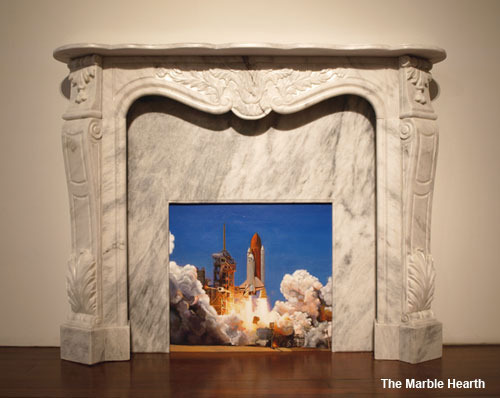
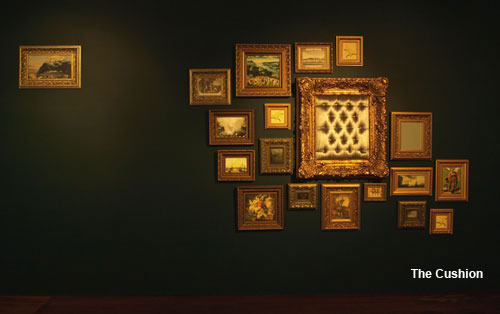
Lahore-based Risham Syed stages provocative set pieces by juxtaposing the power of the past with symbols of contemporary Pakistani society. She paints art, historical images or even photographic images in acrylic, which is essentially plastic. Paintings are turned into objects and ‘conceptual pieces’. There is a very strong influence of power play in the mise-en-scene of installation art and the placement of objects. Domestic objects are used to talk about her experience of living in a society “which imposes certain roles on (men and) women who in turn assume these roles most of the time without challenging/questioning them. This is a take on that, but then these objects engage in a dialogue with the larger social/political picture.” She chooses objects that carry a particular historical/cultural context. For example, the white marble mantelpiece is very Victorian with Indian elements. Along with representing the family unit or the institution of it, it represents a certain class. The wall lamp pretends to be ‘Victorian’ but is a very cheap Chinese version of it. The vestiges of cultural inheritance are observed to suggest an origin and it’s very perceived authenticity.


Art04

In conversation with the artist:

What inspires your works?
I collect photographs from newspapers, magazines, life around in general on a daily basis. I also collect old photographs that inherently carry a particular context with them. I am interested in history and how it connects itself with the present moment.

What draws you towards historical power play?
I connect history with the present. It is also a way of looking within and outside and I like this recurring dialogue. The way I construct this connection, I feel it remains open and every time a new narrative can appear, depending on the sequence of the connection.

Are you using space as a metaphor?
The most apparent thing is a domestic space that comes through from these constructions. It’s a metaphor for roles, personas, pretences, power play, control, etc. Domesticity is a tool that I use to connect various issues with the larger picture. You see a quiet wall lamp with a small painting under it but on close inspection the painting is of disturbance or violence. In this way within the quiet, apparently pretty domestic spaces, there is another space within the painted surface which again is a metaphor for the space outside of us which is alien yet it’s the space within us.

What does power mean to you?
The idea of power or ego is within us and it manifests itself in various dislocated channels resulting in destruction. There is power play from within the basic family unit structure of the society to the larger global picture. It’s the base of the economic structure and that becomes the driving force. It is connected with identities, images, personas, relationships and attitudes.

Influencing artists Zahoor-ul Akhlaq, Salima Hashmi, Quddus Mirza (her teachers at National College of Arts, Lahore). Indian artists like Amrita Sher Gill, Arpita Singh, Bhupen Khakar, the Warhli tribes.

Love looking at: Rembrandt, Leonardo, Vermeer, Gauguin, Van Gough, Magaritte, Joseph Cornell, Frida Kahlo, Chagall, Rothko, Rauschenburg, Richter, Peter Blake, Hockney, O’Keefe, Cartier Bresson….

Not a Word More, Not a Word Less – Jeffrey Archer

26 Saturday Jun 2010

Posted by sitanshi talati-parikh in Art, Literature & Culture, Interviews (All), Interviews: The Arts, Publication: Verve Magazine

≈ Leave a comment

Tags

International Fiction, Interview, Jeffrey Archer, Literature, vervemagazine

Published: Verve Magazine, International Edge, June 2010

British novelist, ex-politician and former jailbird, Lord Jeffrey Archer is an absorbing conversationalist. He’s confident, patient, petulant and raring with sure-fire ambition. In Mumbai for the launch of his latest collection of short stories, And Thereby Hangs a Tale, Sitanshi Talati-Parikh comes away from the tête-à-tête duly charmed

Jeffrey01

Jeffrey Archer explains the act of creation of dialogue, demonstrating how real-life conversation can’t be imitated exactly in fiction. “While talking you may say, ‘Can I have a cup of coffee, please?’ but you can’t put that in a book.” The ever-gracious Taj hospitality team appears bearing silverware and coffee, not knowing that Archer was merely demonstrating a point. “Is that my special?” he asks – having quite missed the force of his spoken word. They look confused. “Is that coffee?” They nod bewildered. “No, thank you, I have my special. I thought they told you all about it. No they didn’t? God bless them,” he mutters. A few minutes later, the somewhat-‘special’ turns up. They couldn’t garnish it with chocolate sauce, they murmur desperately. He takes a sip. “It’s not like Barista’s! They all try to make it like Barista, but they can’t. And who introduced me to Barista? ‘Raoool’ Dravid introduced me to it. I don’t like coffee. I like Barista’s. I don’t get it in England. I love it.” He gives it back, with an unhappy, “Thank you, very much.”

He is surprisingly energetic, he’s refreshingly ebullient and he holds the instinctive ability to inspire. At 70 years of age, he moves with the efficiency – and his voice carries the power of a 35-year-old. He speaks without platitudes and any hint of patronisation. And if you question his creative choices, he responds with effusive mock indignation.

Excerpts from a rollicking, sometimes serious conversation with the author:
(All exclamation marks and text repetitions are entirely based on the interviewee’s tone. Capitals denote elevated volume only.)

Why do you not have more female protagonists in your books – besides The Prodigal Daughter and False Impression?
The Prodigal Daughter is totally about the first woman president of the United States. Who wrote the first story about the first woman president of the United States? ME! Long before Hillary Clinton! You weren’t even born then! I’m married to a woman who runs the biggest, greatest hospital in Britain, Cambridge University. So, don’t you give me that protagonist stuff. In this one (points to his latest book) all the women are wicked. They’re nice in a lot of them, aren’t they? I’m not a women’s writer. I don’t write to please you, I write to please everyone!

And everyone is pleased by men?
Well, no. NO! The Prodigal Daughter is the story of a woman. False Impression, you’re quite right, is about a woman from beginning to end. You selfish thing, isn’t that enough for you? (Laughs uproariously.) God, women’s rights for India! Women to run India!

What happens if you don’t have a story to tell? Do you ever get stuck?
Never. NEVER! No writer’s block! Never. I know my next six stories. The next thing I’m writing is the biggest challenge in my life. I’m writing five books in a row, the story of which starts in 1920 and ends in 2020. They are called The Clifton Chronicles. The first book is dominated by a MAN called Harry Clifton. The second book is dominated by a woman called Emma. Yes!

Is there a sense of completion when your protagonists achieve that position of power – after all, that’s where the books end? What happens if they were to continue?
What you’ve said is going to happen in the next series. One will lead into another. They will all be separate books. I’m a believer in hard work and ambition and achievement – for men or women. (I can sense the aside.) I work for Margaret Thatcher – makes no difference to me. The achievement is in reaching the goal, not afterwards! You don’t want to think about retirement do you?

Do you believe that with great power comes great responsibility – for the storyteller and for the story itself?
No I don’t. I think that’s not realistic. I am a storyteller. I want you to enjoy the story. I want you to turn the page. I don’t want to leave you with any philosophical…well you can, but that’s not what I aim to do. I aim to entertain you.

Is that the difference between popular culture and literature?
NO! That’s insulting. (I’m just saying.) I know you are, but it’s insulting. That is to say you can’t be a great storyteller and write well. The literary failures of this world always try that line, because they are jealous. It was one of your great critics who told me, ‘Jeffrey, don’t worry with the sacred cows of India – read RK Narayan.’ I agree with her. Narayan is both – marvellous combination of great writer and great storyteller. There are very few Vikram Seths around. (He approves of Seth.)

So, your new collection of short stories….
(Answers with practised ease.) Fifteen short stories, nine of them true, the most exciting one for me is set in India, called Caste-off. It’s the story of two people I met in Mumbai three years ago (Nisha Jamvwal and Kanwar Rameshwar Singh Jamvwal). I think it will make a Bollywood film – it’s so romantic. I couldn’t believe it when I heard the story; it’s so remarkable that you can’t make it up.

Do you pull from real life or employ fiction?
It’s half and half. Human beings are giving stories all the time. Why bother to invent someone when I can just write you? It’s so easy. I look at people and I remember details very well. If I get a good story, I write one line that reminds me of it. I always keep notes. Normally everything is all up there. (Referring to his deeply lined forehead.) If you are working the whole time – and I’m always working – memory gets constantly tested. Your memory only gets lazy if you’re lazy.

What does power mean to you?
Power?! Power. (Makes it sound like ‘paar’.) It has many meanings. But sometimes, a writer has power without realising it because people will write to me and say, ‘Your book has changed my life,’ or ‘something you wrote has changed me as a person’. Which one hopes is power for good – for instance young Indians learning to believe in hard work to achieve what they want.

Your stories give people the drive to keep going, to succeed….
Nowadays, people want it tomorrow…not 20 years down the line. A girl came up to me at a restaurant and said, ‘I want to be famous.’ I asked her if she played the violin, sang a song or wrote a book…and she shook her head. She said, ‘You don’t understand me, I want to be famous.’ She didn’t want to do the work. You have to do the work. Now I’m more demanding all the time, on myself.

Does success increase the pressure to deliver?
I always had a story so I never felt pressure. The problem was making sure I worked hard enough. I’m working harder now than ever. People ask me silly questions like ‘Do you write all your books?’ But you would know straight away, wouldn’t you? You’d say, ‘Jeffrey! You didn’t write that!’ I always say to people, my readers would know – they know my tricks. Which makes it harder for me, because my fans are sitting there and saying, ‘Where’s the twist, Jeffrey? What’re you gonna do, Jeffrey? I’ve got my eye on you!’ It’s still a challenge to fool you, to get you to the last line and make you go ‘Aaeee!’ That’s the trick.

Few writers can handle short stories and sagas with equal aplomb….
The thing about short stories is that they are stories. A lot of people who write short stories are actually writing ‘looks at life’ or incidents. I tell stories. They have a beginning, middle and an end. I don’t want to write about the ‘movement in the room, made one feel luminous, as the girl walked toward me, I realised….’ Oh balls. Give me a STORY!

So you’re going strong.
Eh? FOREVER!

Love the spirit. Word.

Art and Conversation

27 Friday Nov 2009

Posted by sitanshi talati-parikh in Art, Literature & Culture, Interviews (All), Interviews: The Arts, Publication: Verve Magazine

≈ Leave a comment

Tags

Art and Design, Charles Saatchi, International Art, Interview, Kay Saatchi, vervemagazine

Published: Verve Magazine, Features, November 2009

Photograph: Ritam Banerjee

Former wife of advertising magnate and art collector Charles Saatchi, Kay Saatchi has been following the path to international curating. At the Art Expo in Mumbai, she talks to Sitanshi Talati-Parikh about watching Damien Hirst as a student, living with unliveable art, and being Kay Hartenstein Saatchi


Satchi

In the maze of people at Nehru Centre, it took a while for us to find each other. Once I did, it took but a moment for me to realise the lady embodies resilience and vulnerability. There has been much said and a lot more not said about Kay Hartenstein – former wife of the reclusive art collector and advertising magnate Charles Saatchi, who after their divorce in 2001, married celebrity chef Nigella Lawson.


American-born Kay had moved to London to start an art gallery of her own, but not long after ended up curating around 30 shows in eleven years at Saatchi gallery (and a dozen more after) while being Mrs. Charles Saatchi. All through she concentrated on “mothering” young artists. “I like watching them develop their career along the way. I’m not really in it for financial reasons, but you can’t help but feel clever when you buy an artist when they are terribly young and discover that you have made a good investment 20 years later.” She met the now internationally-renowned English artist Damien Hirst when he about 19, an art student going around the degree shows. “I saw his very first show…when I was married to Charles Saatchi, we gave him big shows – I’ve known him always and forever.”


How does she pick up on who will be the next big art sensation? “After all these years of going around shows, your gut instinct becomes the strongest factor. Artists have to have skill, and conviction about what they are doing. I spend a lot of time talking to them about why they want to be an artist and what they’re trying to say with their art.”


The 56-year-old Southern belle with a clipped British accent maintains her interest in art began when she was a baby. “I am quite creative as a person – I paint and draw and take photographs. Every Saturday I would wander into art galleries – it’s always been a part of my life. The process was that we (Charles and I) would go see everything. We would travel to Zurich, New York…that was the fun bit, I loved that. I have behind me 25 years of learning – meeting and talking to dealers, collectors. If I see a work of art in a degree show, I will immediately know if it connects up to something I’ve seen before. Artists tend to copy other artists – they tend to be greatly influenced by the work they admire…until they find their own voice. I can sift through that.”


She has seen all kinds of art – beautiful, outlandish and even macabre. Can she live with the things she buys? “I do! But also, I have had the incredible privilege of having a gallery with my ex, where we can exhibit things that would be of too big a scale or too demanding to have at home. I have had some wild things at our house (think Damien Hirst). It changed for me when I had a child in 1994 and I thought, ‘I don’t want this little toddler growing up and looking at rather shocking art.’”


If people are going to think twice about housing a work of art, what purpose does it serve? There is an idealistic spark in her eyes as she warms up to the topic. “It’s the creative process,” she emphasises. “Whether or not it sells! It’s good for the artist if it does, so they have the money to pay the rent and keep making more art. Some people like living with very shocking art…art is less about shocking now than it once was. Lately there is a trend towards beautiful craftsmanship and beautiful sculpting. In the English art world people wanted attention and publicity and that worked very well. There would be huge headlines about artist Tracy Emin’s ‘unmade bed’ (from the series My Bed) and that’s good up to a point. It’s not what the real meaning should be.”


As she winces at the state of her hair in the local post-monsoon humidity, she confesses that she is very partial to India. “Art is born out of the culture and this is a culture that I am very interested in. Some of the Indian artists are fantastic – I love Anju and Atul Dodiya’s work.” She pauses and as an afterthought adds, “The Indian art market has developed very quickly – it has had to slow down like the rest of the world because of the economy, and that is probably not a bad thing. A little correction and not everyone thinking they can start a gallery without doing their homework!”


“It’s okay not being a part of the Saatchi gallery anymore. At the end of the day, speaking about owning things, they are just things. I buy art all the time. I don’t want to have a gallery again – neither commercial nor private. I buy small things, emerging artists, things I can house. I try to get my other friends that are collectors to buy what I love! What I liked about doing things at the gallery was getting to know the artists, handling the shows, introducing art. When we started doing this, there wasn’t too much contemporary art being shown in London. It was just the excitement of it all and the memory of that which keeps me going. I like to look forward, not backward.”


I delicately broach the topic of the love of art bringing two people together and then suddenly realising that the love for art is all that’s left. That, and a teenage daughter (Phoebe) she talks fondly about. She seems perturbed by all the “rubbish about her past life” that has perpetuated on the Internet. While she considered going back to her maiden name after her divorce, she found that people remembered her as Kay Saatchi – “besides, it helps to get a table reservation!” she quips. On a more serious note, “I hope I am defined by my efforts in the art world and not by my name.”

Theatre: Burning Bright (Mahesh Dattani & Lilette Dubey)

26 Saturday Sep 2009

Posted by sitanshi talati-parikh in Art, Literature & Culture, Interviews (All), Interviews: The Arts, Publication: Verve Magazine

≈ Leave a comment

Tags

Interview, Lillete Dubey, Mahesh Dattani, Theatre, vervemagazine

Published: Verve Magazine, Nerve, September 2009

After a long hiatus, Mahesh Dattani returns with Brief Candle, a tragi-comedy about love, life and death, situated in a hospital for the terminally ill. Post the first opening last month, Sitanshi Talati-Parikh takes a theatrical turn with director, Lillete Dubey and the playwright

What should one expect from this Dattani play?
Mahesh Dattani (MD): I don’t know! It is a piece of drama like my other plays except it plays with theatrical conventions. [On another note] I do seem more motivated when a director is willing to commit herself to a production of my play. Lillete announced the play even before I had written it!
Lillete Dubey (LD): Mahesh’s hallmark ability to tackle difficult subjects with humanity, humour and deep insight.

You have had a very successful working relationship with each other….
MD: Lillete and I make a great team as our creative thoughts have common ground and yet we are two very different people. It is this synergy that creates an exciting creative environment at rehearsals and even in our personal interactions.
LD: Mahesh and I both enjoy stretching ourselves down a road less travelled – both in terms of theme and structure – and we try to create pieces that push people to re-examine their lives and the world around them.

What brought about this particular story?
MD: Well, the first thought came to me after a personal loss in my family. The concept of relationships that get defined only at the time of closure seemed to grow in me. While the play is not autobiographical it has sprung from personal loss. A lot of what my mother went through, although she did not suffer from cancer, found its way into characters like Shanti, a survivor of breast cancer.

Do you believe a topic like this can be handled with humour and without a deep sense of loss?
MD: There is a very fine line between comedy and tragedy. Both stem from a sense of loss but with comedy, that loss is viewed from a great distance. I have attempted to show characters who are going through a grave sense of loss but would like to distance themselves from it.
LD: That’s the challenge – to pick a subject like mortality and see how one can fashion something moving, meaningful, affirmative and even comic out of it!

Literature: Suma’s Soup For The Soul

26 Wednesday Aug 2009

Posted by sitanshi talati-parikh in Art, Literature & Culture, Interviews (All), Interviews: The Arts, Publication: Verve Magazine

≈ Leave a comment

Tags

Interview, Literature, vervemagazine

Published: Verve Magazine, Nerve, August 2009

A man traumatised by his parents’ death and a broken engagement found solace while reading Suma Varughese’s article on faith. Sitanshi Talati-Parikh speaks to the former Verve columnist whose book Travelling Light is an anthology of her columns written for Life Positive

What brought about a sudden shift from magazine journalism to spiritual journalism?
I quit Society (where she was an editor for six years) because I had become aware that the values I was promoting within Society and the values I practised in real life were in contradiction to each other. I had begun to understand that the purpose of life was growth and it seemed to me that immersing oneself in material pursuits was distracting us from this purpose. I was fortunate enough to join Life Positive (in 1996) which was then on the drawing board.

At what stage did you begin asking questions that answered some of life’s biggest dilemmas?
For 16 years I had been in a kind of low-grade depression and was a confused, unhappy person. Then I suddenly had an amazing experience. I discovered within me the capacity to flip out of my ego (or the narrow framework of one’s own thoughts, feelings, reactions, needs and wants within which most of us are bound) and really experience the other without relation to self. I could do this by uttering the statement, ‘It’s their happiness that counts, not mine.’

That appears to be a difficult selfless state to be in….
It was a state of empowerment and invulnerability because I simply did not mind what people said or did. Slowly I realised that putting the happiness of others ahead of mine made me very happy. And that it was an inexhaustible source of happiness that did not depend on circumstances, only me. I did not become a realised soul, but the whole jigsaw puzzle of life fit in perfectly!

EMPOWER YOURSELF

When dark clouds gather and melancholy wreaks havoc, many people turn to what is popularly known as self-help or motivational books. They provide direction, a guiding light and inspiration to get out of a troubled spot – or sometimes become simply a Dummies Guide To Being Holier-Than-Thou! Verve recalls some iconic self-help books (excluding religious or philosophical texts!)

How To Win Friends And Influence People by Dale Carnegie
The Seven Habits of Highly Effective People by Stephen Covey
Conversations With God by Neale Donald Walsch
Who Moved My Cheese by Spencer Johnson, MD
Jonathan Livingston Seagull by Richard Bach
The Alchemist by Paulo Coelho
Chicken Soup For The Soul by Jack Canfield
Men Are From Mars, Women Are From Venus by John Gray
The Secret by Rhonda Byrne
Reader’s Digest
The Monk Who Sold His Ferrari by Robin Sharma
The Power of Now by Eckhart Tolle

Interpretive Art

27 Wednesday May 2009

Posted by sitanshi talati-parikh in Art, Literature & Culture, Interviews (All), Interviews: The Arts, Publication: Verve Magazine

≈ Leave a comment

Tags

Art and Design, International Art, vervemagazine

Published: Verve Magazine, Nerve, May 2009

Photograph: Nilesh Acharekar

Art theorist, educator, poet, writer and photographer, Amir Parsa has often been publicly referred to as a ‘phenomenon’. On his recent visit to Mumbai, he chats with Sitanshi Talati-Parikh about his work with art and Alzhiemer’s disease at the Museum of Modern Art, New York

Social01

Born Iranian, but culturally and educationally French, Amir Parsa has spent less than a decade of his initial years in his home country, before finding himself in the suburbs of DC, USA. A formalist, his regular attendance at French schools affected his interest in art theory and literature and he discovered himself as a literary writer at the shockingly early age of five and continued through his teenage years. This interest in art, and literature as verbal or scriptorial art simply snowballed into a profound interest in education.

Parsa, who himself is an excellent listener, considers education to be something more complex and subtle than a mere transmission of knowledge – rather, knowledge as learning, interaction and often designing society and social beings with its critical engagement. That has been his preoccupation for the last four or five years at the New York City cultural icon, Museum of Modern Art (MoMA). Curious to explore how the arts can affect the quality of life, he is currently involved in an inquiry-based learning with different audiences, ranging from kids to adults, and now particularly with patients of Alzheimer’s disease.

“It isn’t lecturing, but rather starting with a lot of questions. We look at paintings and sculptures (among other art) that invite description and interpretation. Through that process we allow people to enter into critical dialogue with the work that they are engaging with and with themselves, with their previous thoughts and life experiences,” explains the Princeton and Columbia alumnus. For instance, someone with Alzheimer’s disease might have to say something very different from what is obviously in front of them, but they are making a particular connection. The museum’s learning programme acknowledges and encourages it.

Usha Mirchandani, of Galerie Mirchandani + Steinruecke, discussed the need to bring this sort of a transformation into people’s lives in India. Parsa, who is not deeply familiar with Indian art, embraced the idea, considering it to be an exploratory phase; the chance to open up dialogue on ‘how can art matter?’ in new environs. Sharing similar concerns, Mirchandani facilitated Parsa’s educationist lecture in Mumbai recently, held to an open audience of art lovers, collectors and artists. Parsa is already planning another trip to India, this time as an individual writer-artist. An author of ten literary books, his latest publication, a book that he is working on with a team at MoMA, is due to be out this month.

Travel blog: From China, With Love (Vikram Seth)

22 Wednesday Apr 2009

Posted by sitanshi talati-parikh in Interviews (All), Interviews: The Arts, Interviews: Travel, Publication: Verve Magazine, Travel Stories

≈ Leave a comment

Tags

China, From Heaven Lake, Interview, Interviews: Travel, Lhasa, Literature, Tibet, Verve Magazine, Vikram Seth

Published: Verve Magazine, Travel Special, April 2009
Illustration: Bappa

The reclusive writer Vikram Seth goes From Heaven Lake down memory lane. While at the University of Nanjing, young Seth, armed with a rare travel card, began a hitchhiking trip through the remote parts of China all the way to Lhasa, traversing difficult climatic zones and eating glutinous broth with pork fat floating in it. Sitanshi Talati-Parikh finds the writer fondly nostalgic

Vikramseth

He is as charming as he is reticent. He faces audiences like a pro; wooing them and making them chuckle with his tongue-in-cheek humour. I watch as he quietly walks to the people he knows, greeting them in perfect English and Hindi. He mingles with the cocktail crowd, and it is hard to remember that he is indeed reclusive. As little children put up a performance in his honour, he pays them full attention, and is willing to cut his talk short to ensure that they have sufficient time. Over cocktails at Amandari, the audience reaches out to him, asking him about his irrepressible journey, referenced in his travelogue From Heaven Lake – Travels Through Sinkiang and Tibet (1983).

Extracts from the conversation with Vikram Seth:

You were in China when it was a “different era”. Did you have a sense of the scale of difficulty?
No! If I had, I would have never done it. ‘Rules are rules’ – I can’t tell you how many times I heard that in China. The only way to counter a rule was to invent an opposing rule.

You had some interesting experiences with the Chinese language.
When I first went to China, I could hardly speak Chinese, despite having studied it. So when my friends asked me how I came to China, I used the wrong intonation of speech. When I meant to say aeroplane, it actually sounded like ‘fat chicken’.

You went to the local truck station instead of taking a train or plane. Why that particular choice of transportation?
I didn’t have very much money. I was in this desolate desert town called Willow Garden – the last willow must have disappeared several hundred years ago. After two days it was like descending into a vortex of despair. I ingratiated myself with a person leaving soon in an army truck that was loaded up to the brim with live chickens and fruit, with very inefficient heating. Not very far there were huge floods across the desert where we were stuck for days on end. The one thing you don’t expect in the desert is a lot of water, but it’s always there when you don’t need it!

What drew you to Tibet?
Tibet is a mixture of two great culture zones. It was a mysterious land and with my brother gearing towards Buddhism, I felt a strong inclination to go there. The feeling lingers to date. So strongly was it fixed as an aspiration, that even when it was fulfilled, it didn’t seem plausible.

People you met along the way had been trained to be very suspicious of foreigners. What kind of response did you get?
Quite rightly, if your family’s well-being is at stake, or you might be put down as consorting with foreigners, then it is absurd to put yourself in that kind of risk. Some people were keen to use you as a punchbag for language practice, others wanted to get to know you. Eventually you realised what good friends the Chinese make – reticent, and with a subtle and slapstick sense of humour.

Why did you decide to turn your experiences into a book from journals and photos?
I arrived home and was initially mistaken for a street peddler. I was burnt black by the sun, was wearing a blue Chinese cotton coat and carrying a Hessian sack with all my belongings. Eventually, I got really impatient and bored narrating my stories, so I decided to write a few pages. And then strange people appeared at my door, apparently from the foreign ministry armed with maps of China. My father suggested writing a book about it. And that’s what I did. I had no agent – I just sent out ten letters and a map!

Tell us about Heaven Lake.
It is a beautiful snow-fed mountain lake in a small range of mountains in the middle of the desert. You’re baking in the heat, have to buy a cap for yourself, and as you go higher and higher, you visit Heaven Lake – and actually freeze.

The foreword to the book was written “in white heat” three days after the Tiananmen Square massacre.
In some sense, I am not really qualified to speak about the state of affairs. I have followed it with interest, but I haven’t been back. No one has ever said that the dreadful massacre was wrong. Even now, at a time when the government has created such a prosperous economy, there’s such a strong journalistic hand – and a brutal hand – upon people who want to exercise free speech. Any alternative power centre or centre of allegiance has been crushed with an iron hand. I don’t know where it will lead! Chinese history is perhaps more brutal, and there is a more humanist tradition that goes through it, than in any other country. Even at times when people are in despair, like during the Cultural Revolution, when they had to betray their families, they took refuge in their great poets. They see long continuity, and it helps them get through terrible times.

Do you imagine having the freedom to say ‘I will stay a few extra days’ or to have an adventure like that again?
I am trying to enter a second childhood, by refusing to do anything. I rarely accept invitations and keep, as far as possible, a blank calendar. And it is not just so much a question of saying ‘I’ll stay here’, but it’s almost as much a question of ‘I am doing Chinese calligraphy, or painting,’ without having the obligation to go somewhere, or be somewhere. My friends now invite me on very short notice – if I’m not on the 13th line of a sonnet, then I’ll say, ‘sure’ – if they invite me with six weeks notice for a sit-down dinner, the answer is: ‘Don’t depend upon me.’

It has been two decades since you have revisited China….
It was 1982 when I left China after staying there for two years. In 1989 I went back, seeing that China, like the whole communist world, was opening up. Three days after returning from my visit, I read the newspaper and the headlines – the massacre of thousands of people on the square. Of people who wanted nothing more than a more open system. Sooner or later I will want to go back to China – it is very close to me and to my heart, in terms of the culture. Places change. India has changed a lot.

Poetry: Word Gypsy

26 Thursday Mar 2009

Posted by sitanshi talati-parikh in Art, Literature & Culture, Interviews (All), Interviews: The Arts, Publication: Verve Magazine

≈ Leave a comment

Tags

Indian Fiction, Interview, Poetry, vervemagazine

Published: Verve Magazine, Nerve, March 2009

Performer, poet, writer and columnist, Sharanya Manivannan has published a book of poems and is working on a novel. Sitanshi Talati-Parikh gets the writer, who has written a poem exclusively for Verve, to delve into the space and quirkiness of her works


Sharanya01

She is small, petite and extremely self-assured. Barely into her 20s, she started writing when she was seven, got involved with ‘readings’ at 15 (while living in Kuala Lumpur) and is now in Chennai – working as a copywriter with an ad agency and writing a column called ‘The Venus Flytrap’ for a local weekly newspaper. Witchcraft, Manivannan’s debut book of poems is an effort at mysticism, picking up themes of betrayal along with “love, loss and longing”. The “spontaneous and organic” writer was awarded a fellowship to work on her second book, a novel, for three weeks in Pondicherry last December. The novel picks up on the threads of love, loss and longing from Witchcraft, and is about a young photographer in her 20s who becomes obsessed with the preservation of transitory moments because her own personal history is in shadow. As she says, “Roots, exile and dislocation are things that affect me deeply both as a human being and a writer.”

Excerpts from a chat with Manivannan:

Relevance of a spoken word artist
Why ‘spoken word’ and not simply ‘readings’? Because spoken word is a legitimate genre of performance – not everybody is able to read, even their own work, with panache. Whereas, poetry publishing is a difficult and drawn-out process, performance allows immediate, often intimate, access to an audience. ?To me, to be a spoken word artist is to channel through the voice the spirit that some call duende. As with all performance, hearing the word aloud can be a transformational experience for both performer and observer.

Quirky and unusual writing
I personally don’t think that my writing is quirky or unusual. But there are two things I hear frequently about my work: that it is ‘brutal’, and that I say things which others chastise themselves for thinking. I’m willing to excavate deeply. And in doing so, I go to places in the mind and the memory that can be painful, dark, unsettling or revealing.

Space for women poets in India
In the English-writing world, the space is not any different from the space for men. I’ve not encountered any setbacks in this regard because of my gender but I have because of my age. However, the vernacular languages are a whole different ball game. For instance, I know that some Tamil poets like Salma and Kuttirevathi have had a tremendous backlash against their work because they approach the subject of the body.

Poetry as a serious genre
There are so many poets in India today – just look at Jeet Thayil’s anthologies, or the Poetry With Prakriti Festival in Chennai. That there aren’t many, is a misconception that could arise from the fact that no matter how seriously we take ourselves, the genre itself is not taken as seriously by the public and by publishers. I also don’t think there is any real gender disparity in terms of numbers, but issues like the ostracising of female poets who write about their bodies in the vernacular certainly exist.

Life and writing
I make sense of my life through my writing. I distill my experiences. Sometimes, being able to have a poem about a situation makes me feel so much better about having been in that situation at all. That’s as simple as it gets. Things like structure and narrative are layers that come later.

Being a poet and a fiction writer
Poems are microcosms and take up much less headspace; fiction is far more expansive, detailed and demanding. All of last year, I focused on poetry. But I’m picking up again the novel I’ve been working on off and on for years…. I can only hope that it’s possible to be good at both.

Years, not age, matter
As an older writer friend once told me, I may be 23 but I have been writing since I was seven – that’s 16 years of experience in the craft itself. As for life experiences per se, age really is just a number. Look at all the musicians who died at 27, after all. I’m 23 but you couldn’t guess it based on what I’ve been through and what I know – my life is really some sort of pulp fiction film.

SURFACING

Afterwards, we will
both wish that it was that
simple.

Your hands. My hair.
A drowning.

But you cannot kiss like that
and go on pretending that life
is not something that just happens,
arresting you in its undertow,
that it can go on,
that you can go back.


A kiss like a talisman.
A kiss like memory before birth.
The heart a bridge between
dismembering and
remembering.


Lover. Husband of another.
Lust is anarchy. Love, anodyne.
Father. Liar. Lover. Mine.
That afternoon an apocalypse of laws
we broke, our lives left spinning on
their axles. In the car I watched as
the hem of our city began
to unravel, the highway endless,
the embroidery of clear-watered
ponds, bougainvillea, as though
it was a country we left behind.
Bodies of water. Blooming.
Our city. I waited so long to
say that. I waited so long.


It was that simple.


I didn’t transcend my body.
I came into it.


A kiss like a tide I surfaced from
not knowing I had gone under at all.
A kiss like prophecy. A kiss like the
first falling star of a meteor shower.
A kiss like certainty. Like a song
roused from slumber. Like surrender.


Come back, lover.
Come back with your
voodoo, the calligraphy
of your tongue. Come
back with the night between
your teeth. Lie down. Let me
take the war out of you.
Come back.
Name what is holy.
Take what is already yours.


Kiss me without
choreography. Kiss me
like the first word
of the only language
we never borrowed.
Kiss me like alchemy.
Kiss me like
Original sin.

Literature: Top Dop Storyteller

26 Thursday Feb 2009

Posted by sitanshi talati-parikh in Art, Literature & Culture, Interviews (All), Interviews: The Arts, Publication: Verve Magazine

≈ Leave a comment

Tags

Bollywood, India, Indian Fiction, indiancinema, Interview, Slumdog Millionaire, vervemagazine, Vikas Swarup

Published: Verve Magazine, Features, February 2009

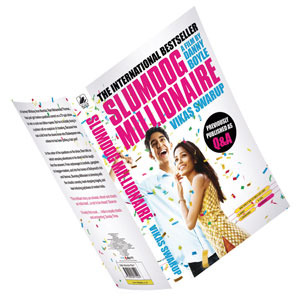
Vikas Swarup, the author of Q&A, on which the movie Slumdog Millionaire is based, speaks to Sitanshi Talati-Parikh about unique plots, winning formulas and how Ram Mohammed Thomas became Jamal Malik

Rahman06

The 47-year-old Vikas Swarup seems to have the Midas touch. His first book, Q&A, besides winning a fair share of awards itself, has left a wake of accolades for any adaptation based on the story. The audio book won the award for best audio book of the year, the BBC radio play won the Gold Award for Best Drama at the Sony Radio Academy Awards 2008, the movie is sweeping all statuettes and there is now a stage musical in the making. An accidental writer, the Deputy High Commissioner of India to South Africa, based in Pretoria, is quick, matter-of-fact and precise in his answers, like someone accustomed to being interviewed.

‘Not all deaths are equal…the murder of a celebrity instantly becomes headline news. Because the rich and famous rarely get murdered. They lead five-star lives and, unless they overdose on cocaine or meet with a freak accident, generally die a five-star death at a nice grey age, having augmented both lineage and lucre.’ Post 26/11, there is an inescapable irony in these words taken from Vikas Swarup’s latest novel, Six Suspects, published last year. Swarup is bemused at the inadvertent implication of his words.

He wears his achievements well, and bears it with the firm knowledge that a first-time writer like him, without any experience in creative writing or literature, cannot afford to take success for granted. While he considers himself “lucky”, he seems logical and practical – not in the least disconcerted by the overwhelming triumph of the film, Slumdog Millionaire. He merely seems gratified – glad that those who had never read or heard about the book before would now reach for a copy.

Rahman03

Sitting back in London, Swarup – who had never attempted to write before – chose to give it a shot. In 2003, Q&A was written and by 2005 it got published, and has so far been translated into 37 languages. “When I wrote this I knew the storyline was very fresh and the plot was unique. But that it would become such an international success, still confounds me. I thought it was a very Indian story, about the real India without any attempt to exoticise it. The fact that the book has appealed to readers from Barcelona to Sydney has come as a very pleasant surprise to me. You would never imagine a book that you have written, a light-hearted story, despite its social commentary, to mean so much to someone, giving them strength to carry on.”

The story did not find him, in the strictest sense of the word. He found it, by creating the perfect, winning formula – a judicious mix of all things desi, with a generous helping of ideas taken from true incidents and realities. The grim actuality of the street, the eternal rags-to-riches story and most importantly, the true Bollywood-style villain. Especially in Six Suspects, which is now being made into a film, many of the stories resonate with real life. Larry Page, for instance, a simple Texan about to marry an Indian girl based on a photo, was inspired by a report of a man who fell in love with a girl after seeing her photo and thinking she’s Aishwarya Rai. The terrorised young kids of the streets (from Q&A) were an “urban myth” while Swarup was growing up. “My mother would say, ‘Don’t go out alone, they will catch you and maim you.’ I have read reports that these things do happen.”

“These are the two things that I try to combine – a story that keeps the reader hooked and at the same time the book should have a soul. It should make you think as well as touch your heart.” So there are references to real people, like Shah Rukh Khan and Amitabh Bachchan, with the real story revolving around fictional characters. “When I conceived this book, there was only one show in India, Kaun Banega Crorepati, and you can certainly not attribute anything that Prem Kumar does to what Amitabh Bachchan would have done on the game show. In my fictional universe, the game show is promoted by a group of cheats, whose idea is to tempt and titillate you with the top five, but actually ensure that nobody wins it. The game show host has to be a slightly unsavoury character, actually based on Bollywood villains.”

Swarup, who likes to unwind by catching a movie with his artist-wife and two sons, was not really involved in the film adaptation of the book. He played the part of checking the script and suggesting revisions, but nothing beyond. He has accepted certain minor changes in the story and also that of the main character’s name. To explain the history behind Ram Mohammed Thomas’ name would become difficult to translate on screen, so he simply becomes Jamal Malik. Salim, who originally is a good-looking youth and Thomas’ best friend, becomes Malik’s gangster-brother.

Though born and brought up in India, the nature of his work leaves him unable to physically be in the country in which his stories are set. Swarup stays abreast with the news in India through modern communication – TV and the Internet. “That sense of distance and separation, which used to exist earlier, vanished. That makes you feel much more connected to the country.” And that feeling is very important for someone who is a “global nomad”.

Creative success has definitely influenced this family man’s life as a diplomat. “So many more doors open up for you, when people have read your books, which would otherwise remain closed for a deputy high commissioner!” Despite the popularity of his works, Swarup insists that all his books are one-offs. “Many people suggested another Q&A, and I thought to myself, if I have to do that, then it means I have no other stories to tell. The day I have to repeat myself, I won’t write.”

Off The Beat…On The Job

26 Monday Jan 2009

Posted by sitanshi talati-parikh in Features & Trends, Interviews (All), Interviews: The Arts, Publication: Verve Magazine

≈ Leave a comment

Tags

26/11, India, Interview, mumbai, vervemagazine

Published: Verve Magazine, In Memoriam, January 2009

Photograph: Ritam Banerjee

Despite the many bodies and minds that go behind giving viewers live news coverage from an area of conflict, it is the face that confronts the camera and speaks to us that leaves a lasting impression. The placid, immovable expression that barely flinches when gunfire erupts stands for courage, conviction, and a strong sense of responsibility. Under the endless barrage, especially on the first night, millions were glued to the television channels, in lieu of any print publication being available at the time. With minute-by-minute updates, we watched the newscasters broadcast live, without any perceptible fear. Sitanshi Talati-Parikh meets three representative young women newscasters, who are not crime reporters but ended up spending many long hours on the field. Mahrukh Inayet, the light-eyed Kashmiri with an insane work schedule that made it nearly impossible to meet her, Miloni Bhatt, the true-blue Mumbaikar, and Yogita Limaye, the youngest of the lot, composed and collected beyond her years – all of whom are self-assured, determined and ironically, camera shy

Mahrukh

MAHRUKH INAYET
Deputy News Editor, Times Now
Age : 31
Beat : Nothing specific – everything.

“Gunshots are not new to me.”
Mahrukh has been born and brought up in Kashmir, where her parents currently live. “I have seen so many encounters. During the start of militancy there would be firing outside our house and I could hear bullets hitting our tin roof, going ‘tuk-tuk-tuk’ and I would lie flat on the ground. It was very tough growing up like that. You get desensitised to it at a certain level. It is a very artificial way of living. I always felt that it had to end, I feel very strongly about what is happening there, in the sense that somehow, peace must be restored.”

“I always wanted to live in India.”
With a Masters in journalism from American University, USA, she started her programme at the same time as 9/11 and began her journalism assignments by interviewing people in the Pentagon. She worked with National Geographic (USA) for nine months, Headlines Today, Delhi for three years and has been in Mumbai with Times Now ever since, totalling over six years of work experience, including about 15-20 assignments from Kashmir”

“It was like something out of a movie set – I couldn’t believe it”
“The Taj is a symbol of so many things – our pre and post colonial legacy, our development, a space that stands and welcomes anything that comes into India. They are trying to hit everything that this country stands for: development, economy, the grandeur, the legacy, the tradition, the history, everything.”

“On TV you just get to see one face, but there are so many people who are involved, collating all the information.”
Mahrukh spent nearly 62 hours on the field during this tragedy. She worked in shifts with colleague and Mumbai bureau chief Deepti Menon, taking a three-four hour break – sleeping in the car or going home to change.

“The cameras were on most of the time, and you were in front of them…”
“You know that you have the ability to create panic in such a situation and you can’t be hysterical or show your emotions because others are watching you and might get affected by it. It is a very delicate balance to maintain. You couldn’t hide your feelings and expressions, despite there being bomb blasts and firing in the background.”

“You shouldn’t get into changing public opinion.”
“You should just report – as truthfully, as honestly as compassionately, in as composed and as calm a manner as possible. Opinions, editorialising information is left to editors, opinion-makers, and to the viewer.”

“We cannot afford to have a repeat of something like this.”
“Whether it is the government that needs to realise it or whether as citizens we need to be more active. While questioning politics, it is important for us to exercise our right to vote in a more effective manner and be more politically aware. It is a dichotomy that we live in and it is a two-way street.”

“Somewhere there needs to be a sense of closure.”
“I couldn’t switch off at all in the middle of it. I was in fact obsessed with the news. I just want to keep reading about it, going through the same pictures. It has happened to me for the first time. I don’t know what is going to bring it, but I need a sense of closure.”

“I enjoyed writing and I enjoyed telling a story.”
She didn’t always want to be a journalist. She thought about becoming a doctor – either a psychiatrist or a paediatrician. “I don’t think the situation in Kashmir per se moved me towards becoming a journalist. But, once I decided on it, I realised that it was one situation I wanted to report on.”

“It is easier being a woman reporter.”
“It is kind of unfair, because otherwise you believe in equal rights, but you never say no when you get easier access compared to the men. More government officers, politicians are nicer to women than men; even the women are nicer to women – more encouraging.”

“If I have any calmness and composure, I get it from my mother.”
“My mother is a very emancipated woman, very broad minded, and has taught me very basic values.”

“In my very little free time…”
“I like going out, watching movies, reading, travelling, and photography.”


Miloni

MILONI BHATT
Senior Special Correspondent, NDTV India
Age : 31
Beat : Economy and aviation

“I am a Mumbaikar”
Miloni was born, raised, fell in love, and got married in Mumbai. She has eight years of experience on the field, and has been with NDTV for five years.

“We came out of the emergency because of the print media that stuck its neck out.”
I didn’t always want to be a journalist. I was in the Democratic Republic of Congo, and Nigeria, visiting my father who was employed there, when I was absolutely appalled to discover that the people who were labourers were all highly educated. The gardener had a double degree. Nigeria and India got independence around the same time, and I couldn’t believe that one country ended up like this and the other so differently. One of the reasons was democracy and free press – the access to information, knowledge, to a world-view. I was very clear that I wanted to do TV because I was very influenced by the reporting BBC did in Africa.”

“I’ve covered crime before, but one can’t compare a terror attack to any kind of crime story.”
“It is of a different magnitude – the scale, the violence, the people, the victims. The train blasts, the bombings at the Gateway, at Zaveri Bazaar, explosions at Ghatkopar – I don’t think I will ever forget any of it.”

“My family is reconciled to the fact that I will be in situations like that.”
“I couldn’t take my family’s calls as I was in the midst of live reporting. I could see the phone blinking and I was thinking, ‘I can’t talk to you guys right now, just watch me on TV, if you are so desperate!’”

“I don’t think anyone can continuously report on terror.”
“It will get to you at some point. The important thing is that you get training to report and de-link yourself from that situation. Talking to your colleagues, putting things in perspective also help – I can’t talk to anybody on the outside – it’s too much for them to take.”

“We are not meant to editorialise.”
We are field reporters – what you see is what you talk about. Everyone has an opinion, but my job doesn’t allow me to express it. Reporters don’t fall in and out of personalities. Yes, we are angry. Yes, we feel like every other common man. But we also have a wide-angled perspective – because we are seeing many things happening simultaneously, understanding the reason and cause.

“This is my job.”
“Like security agents protect people – it is my job to report and if my job entails reporting on terror attacks then that’s what I will do. At the end of the day, as a journalist, you are compelled – you cannot sit in a newsroom when there is a big story unfolding. You just want to go there and be a part of it. At the end of the day, you are documenting history.”

“Mistakes do happen, with breaking news and developing a story over several days.”
“This is not a situation that anyone has ever reported on. The media doesn’t have a benchmark to go by. I’m sure we have made mistakes, and we regret those mistakes. I can imagine that the viewer’s point of view is also valid, but I’d rather do my job than worry about what xyz is saying. We can’t give in to our anger, sense of loss and rage like them.”

“I am amazed at the kind of response we have got…”
“People have said, ‘Wow you were there, thanks for bringing us the news.’ I don’t see novelty. Journalism is not about reporting only during normal times, it is about reporting in times of crises. We are trained to play the most responsible role possible. We report what we see and not give in to panic or rumours.”

“I have never thought about being a female journalist.”
“More than half of NDTV is women. Does that kind of discrimination exist? In eight years I have not faced it. It might have worked in my favour, maybe, but it hasn’t worked against me – and that’s a good thing.”

“I don’t have an icon.”
“I am a sucker for hard news. I love it – it gets me. It can be anywhere in the world….”

When not working…
“I just go home and sleep, because I am sleep deprived. Go out, meet friends. I catch up on life.”


Yogita

YOGITA LIMAYE
Senior Correspondent – Anchor, CNN-IBN
Age : 25
Beat : Mostly education and civic issues

“We could hear people screaming for help….”
“The first night, we were very close to the Taj and we could see people in the front of the hotel, facing the Gateway, holding white hankies, somebody was trying to send out a morse code with a flashlight.

“It is impossible to not react.”
“There are some people who can separate their professional life and their personal life – but you can’t break away from it. Seeing it burning, we all got emotional, whether we would like to admit it or not.”

“The next day, interviewing people, I didn’t try to be a professional journalist.”
“I put a little bit of emotion in it, because that is what you are naturally feeling. As long as you are not sensationalising it, it is okay. People want to hear and know what it felt like.”

“I also got smses from old friends, strangers….”
“I haven’t been able to reply to everyone, but each one added that energy saying you can go on. This is nothing compared to those who were inside and came out shaken up, went through. When you see that, you think at least I or my family isn’t in that situation, and I am just doing my job here.”

“It was the first time I had heard gunfire in my life.”
“For someone in South Bombay it is unheard of to hear shootings! And even ones who cover the crime beat are not people who work in Jammu and Kashmir or the north-east where things like this happen more regularly. I have never reported from a conflict area.”

“There was no fear at the time.”
“I was merely reporting what I was seeing on the ground. Fear hit me only at one instance that night. After the VT shooting, we were sitting in our car at the Metro junction, when we suddenly heard grenade explosions coming behind. Till date I have not been able to verify their location – but that’s when I wondered, what if they had also planted bombs all over the city.”

“You can be heroic and say you don’t feel like eating and don’t need rest, but the fact of the matter is, that you do.”
“I didn’t even think of bathroom breaks – you feel thirsty so you keep drinking, but we didn’t have a desire to eat. When I would go for four-five hours in the middle of the day to take a break, I made sure I had a bath, a strong cup of chai, and forced myself to eat. You are working as a team. When one person’s energy is running low, it is important for the next person to come back charged up. These are the days for which many of us become journalists – so you want to be there through the thick of the action.”

“Even now my mother hasn’t told me how scared they were.”
“My sister, from Bangalore, kept telling me, ‘Don’t do anything stupid, don’t be extra brave and try and get those shots’. While I wanted to get my work done, I realised it doesn’t make sense putting your life on line for something.”

“All of us are not in depression, but are tuning out.”
“I try to indulge in retail therapy, watch a film at home. While many of us are mentally tired, perhaps getting back to city stories – we know the action will die out soon enough. For a while it will seem like that adrenalin rush is missing….”

“The tsunami of December 2004 made me want to do this really badly.”
“I am qualified to be an engineer. I had always wanted to be a journalist, but the safer side of me prevailed. I was thoroughly bored with software though, and joined CNN-IBN as someone on the desk, instead. I worked my way up in a year to reporting and to Mumbai. I never considered my back-up option. This gives me a lot more satisfaction, it is never boring and I love it.”

“Gender doesn’t make a difference in this profession – if at all, it might make things easier!”

“After two nights, I began thinking, when will I go home and sleep in my own bed?”
“I hope to have the abundance of energy, which is what I notice in tireless people like CNN-IBN’s editor-in-chief Rajdeep Sardesai or Shah Rukh Khan – I see it in everyone at the top. The ability to go on and on and on like a Duracell bunny almost, it something that amazes me, and that I look up to.”

“There’s nothing like a disaster to give you recognition.”
“This has been my most important reporting assignment so far. Ironically, disasters are what journalists live for.”

← Older posts
Newer posts →

|  Filling the gaps between words.  |

Writing By Category

  • Art, Literature & Culture
  • Brand Builidng
  • Brand Watch
  • Fashion & Style
  • Features & Trends
  • Fiction
  • Food
  • Humour
  • In The Media
  • Interviews (All)
  • Interviews: Business
  • Interviews: Cinema
  • Interviews: Cover Stories
  • Interviews: Lifestyle
  • Interviews: Luxury Brands
  • Interviews: The Arts
  • Interviews: Travel
  • Musings
  • Parenting
  • Publication: Conde Nast
  • Publication: Elle
  • Publication: Mint Lounge
  • Publication: Mother's World
  • Publication: Taj Magazine
  • Publication: The Swaddle
  • Publication: The Voice of Fashion
  • Publication: Verve Magazine
  • Social Chronicles
  • Sustainability
  • Travel Stories

Reach out:
sitanshi.t.parikh@gmail.com

© Sitanshi Talati-Parikh 2018.
All Rights Reserved.

Website Powered by WordPress.com.

  • Subscribe Subscribed
    • sitanshi talati-parikh
    • Join 51 other subscribers
    • Already have a WordPress.com account? Log in now.
    • sitanshi talati-parikh
    • Subscribe Subscribed
    • Sign up
    • Log in
    • Report this content
    • View site in Reader
    • Manage subscriptions
    • Collapse this bar