• About
  • Brand Building
  • Film & Drama
  • Writing: Arts & Lifestyle
  • Writing: Interviews
  • Writing: Luxury Brands
  • Writing: Travel

sitanshi talati-parikh

sitanshi talati-parikh

Category Archives: Publication: Verve Magazine

Dangerous Liaisons: Men we hate to love (Indian cinema)

14 Wednesday Dec 2011

Posted by sitanshi talati-parikh in Art, Literature & Culture, Features & Trends, Publication: Verve Magazine

≈ Leave a comment

Tags

Bollywood, indiancinema, Men

Published: Verve Man, October 2011

Some say women are suckers for punishment, others believe that the young rebellious teen attracts the irresponsible Willoughby, while a grown woman is always in want of a decent man. History is witness to many a woman falling flat in the face while chasing a rogue beau. Sitanshi Talati-Parikh examines the shining Indian silver screen examples of lovable dangerous men

Straight-laced men don’t make for racy fantasies, skipping heartbeats and sexual tension. They lack the edge, the drive, the sizzle, the power to tug at our heartstrings and wreak sweet havoc with our lives. Women are attracted to danger like a moth to a flame – there has to be reason that phrase has become a cliché. There’s something inordinately sexy about a man who knows what he wants and will stop at nothing to get it. Getting a playboy’s attention is not necessarily about a notch on the belt as much as it is about being alluring enough to grab his attention. And deep down inside, every woman attracted to a naughty bloke feels that somewhere, there is a chance that she can fix him. That she can be the person he will surrender to, will change for, and will eventually become some version of the Utopian male they have in their head. And so they all fall.

They Work With Passion

This obsession with the men who are not quite toeing the line possibly began with Amitabh Bachchan’s Angry Young Man. Not a bad lot, but a man who is roaring with discontent – he’s full of testosterone, a desire to avenge all that’s wrong. He’s not passive. He’s not even passive-aggressive. He’s raging male. With a whole bunch of adolescent hormones. You know he has passion – for what he believes in – and you can easily imagine how that would translate – in bed and out of it. Shahenshah’s (1988) avenger became Shah Rukh Khan in Baazigar (1993). He played his hands, the cards turned in his favour and he got his own back, albeit with a massive amount of gore. The cinema of the 70s through the 80s threw up seething, vengeful heroes, those who were not apologetic about treading on a few lives. Recently, Aamir Khan’s Ghajini (2008) – with Khan’s character looming large over the messy revenge scene – in his own words, brought back the action genre with a Dabangg (2010).

They Steal Our Hearts

With the exception of chiseled-chin Vinod Khanna who debuted in cinema as the bad guy, it is only post 2000 that we have become somewhat sophisticated about our wayward heroes. Hrithik Roshan in Dhoom 2 (2006) oozed charm and stunning sex appeal – he didn’t even have an excuse about being bad, he just was.

Luckily though he wasn’t out to kill anyone, just cop a few shiny ones. Maybe it is the Dhoom franchise that has successfully converted our picture-perfect heroes into those with grey shades. Who cares if the guy you date is a bit of a thief? If he looks half as good as John Abraham from Dhoom (2004) or Roshan, or can provide half as much intellectual stimulation as Aamir Khan (the upcoming villain in Dhoom 3)…that would be a love life worth writing home about. Moot to point out that no one really notices the unshaven, paunchy good guy, the cop: Abhishek Bachchan. Has anyone ever wanted the good guy to lose as badly as in the Dhoom movies?

They Kill Us Softly With One Look

Going back a few years, can one deny that Saif Ali Khan actually became sizzling hot on screen in 2004 – in his comeback era – in the completely negative role Ek Hasina Thi? Which girl wouldn’t succumb to his charms? He made being a rogue look cool. And soon after in Being Cyrus (2005). All this, while maintaining his status quo as a premier romantic hero; and ironically, if not surprisingly, consolidating his screen appeal with repeated negative roles – including that of the recent clandestine terrorist in Kurbaan (2009).

They Play Good Cop, Bad Cop With Our Emotions

Anil Kapoor in Ram Lakhan. Was he good or was he bad? It’s hard to tell, even after watching the classic repeatedly. In Shahenshah, Amitabh Bachchan played an ineffectual corrupt cop, while fighting for justice, out of the system. Women go weak-kneed over a man in uniform, especially if it’s an errant cop out to play Robin Hood. The success of Dabangg – and Salman Khan shaking his uniformed body to national hysteria – heralds the revival of cop dramas and high-risk love lives.

They Cleverly Win Us Over

Ishwar ‘Langda’ Tyagi in Omkara (2006) completely took the movie to different heights, and the disgust one felt for the character was smudged with grudging admiration. You give a man brains and his mental prowess is bound to not go unnoticed.

They Wield Power Over Our Thoughts

Ajay Devgn made underworld dons appear cool – with an enviable display of control, smoothness and above all, power. As Al Pacino proved in Scarface (1983) that power attracts women, Devgn proved it with Company (2002) and a few years later with Once Upon A Time In Mumbai (2010). In fact, in OUATIM, Emraan Hashmi managed to keep his girl by his side despite ill-treating her. Katrina Kaif’s character fell in love with the Pratap politicians – played by Ranbir Kapoor and Arjun Rampal – who preferred to work the wrong side of the system in Raajneeti (2010). Forget women, even film-maker and actor Farhan Akhtar admits a strange fascination with Don’s character, leading him to remake the old classic. There is a natural instinct in women – as much as they like to nurture, they like to be protected. And who better to protect them than an unstoppable man who can rule a better part of the world?

Their Good Outweighs Their Bad?

Movies on real-life characters tend to tread on eggshells, portraying a primarily positive perspective of characters that have been perceived as heading down the wrong path. Guru (2007), for instance, portrayed the protagonist, Gurubhai (loosely based on Dhirubhai Ambani) in a very favourable light, in the role of an inspiring leader. Sarkar (2005), where Amitabh Bachchan plays a character assumed to be based on Bal Thakeray, creatively designed like The Godfather, showed him to be a man of steel and goodness parcelled with a lack of concern for human life.

They Win Our Sympathy

While Shiney Ahuja’s character in Gangster (2006) and Sanjay Dutt’s Raghu in Vaastav (1999), were all about the fallen man – looking desperately for love’s respite or salvation, Imran Khan’s Kabir in Kidnap (2008) saved face with his inner good guy winning over the bad. John Abraham touched a soft spot in his I’m-a-terrorist-but-a-good-guy in New York (2009). You may not be able to love these characters, but they do win your sympathy – and strangely that is a way into women’s hearts, sometimes.

They Need Rescuing

A step up from the sympathy vote is actually pulling them out of the quagmire. Abhay Deol has made it his prerogative to be the lack-lustre hero – think Dev D (2009) in particular – who’s always finding himself and losing his love. His women have to deal with his incapacities, and many love him despite it. Sanjay Dutt’s Ballu in Khalnayak (1993) immortalized the hero who loved, lost and died a pitiful love life.

They Have Converted from Lover to Lover Boy

You know this has to be about Salman Khan. He made every girl fall in love with Prem from Maine Pyar Kiya (1989) and then ran away from this good guy image, and embraced that of the playa. He played the field in every possible movie – even played the role of the playing-the-field-mentor in No Entry (2005), and carried a successful bunch of romantic comedies on merely his inability to remain faithful.

And so it goes that there’s nothing like a wayward love interest to make life a bunch of prickly roses. And there’s probably a make-your-bed-and-lie-on-it pun there somewhere….

 

Big Misses, Small Catches

17 Wednesday Aug 2011

Posted by sitanshi talati-parikh in Art, Literature & Culture, Features & Trends, Publication: Verve Magazine

≈ Leave a comment

Tags

Bollywood, indiancinema

Published: Verve Magazine, July, 2011

The masala dailies have wrung their words out trying to understand what happened last year. Heavyweights sunk at the box office and a handful of unknowns, nobodies and alternates walked away with the entire silver screen pie. Sitanshi Talati-Parikh decodes the enigma of the mega-budget losses and small-movie wins

Recently, film critic Rajeev Masand wrote a column deriding the excesses of the Indian film industry. He spoke about the glory of big budgets – including the cost of taking star wives and their entourage shopping – being washed out in the final tally at the box office, when the film faces the music of a silent box office register. While he was talking about an upcoming film, it is bringing back into focus the hot topic of discussion – namely the cold slush of the big-budget movies that failed miserably, against the refreshing warmth of the surprise hits: small films that made it huge.

Like a sudden bad hangover from the ’90s, Indian cinema is facing a crisis of money: too much money chasing an average story, a tired movie star, and refurbished content. The lucrative movie-making business has created an illusionary clout of movie stars and divas, gift-wrapped with zero professionalism and huge egos. These stars continue to be bankable at the box office, which is why big banners are willing to turn a blind (albeit bleeding) eye to their demands. After all, at the end of the day everyone rakes in the big bucks and trills home happy.

Suddenly though, expensive movies are not enough to attract the audience: with a refreshing sensibility that one wished would extend to our political choices, moviegoers have shunned some of the biggest movies last year. Big in the form of stars, directors, production houses, and production costs (see box for details). Think Kites, Tees Maar Khan, Guzaarish, Raavan. Before that, Saawariya, Blue, What’s Your Raashee? and even My Name Is Khan didn’t fare as well as one would have expected or the producers preferred to suggest. What went wrong? The formula elements were there: masala, big actors, varied concepts, established directors, expensive marketing and sufficient money chasing all of it to get a rise out of the staunchest movie buff.

How big can the movie be? The money being poured into the movies has become ostentatious without any sign of equal returns. This has led to a sudden flow of in-movie advertising, a desperate bid to sell music, cable and overseas distribution rights to the highest bidder. The problem lies in production costs. When a great amount of money is poured into lavish film sets, movie star salaries and their entourage fees, shooting abroad, and with relaxed schedules, it becomes impossible to recover those costs. And many times, the glitz outdoes the actual story. In the age of information overload, content is king: a good movie primarily needs a good script to work, the rest will follow. Udaan, one of the best movies last year, did well despite the odds; and others lost out despite the factors in their favour.

The final tally
It is not so much the audience that is changing as much as the amount of money being poured into a film that is challenging the final tally. Does a movie deserve that kind of money? Take Blue, or Kites for instance. Both gambled big, banking on the larger-than-life phenomenon: hoping that international locales (ridiculous when you see Kites which is shot in a barren desert) and a carrot of expensive productions would be a box-office draw. Possibly with the fact that much of the audience is now far more well-travelled, satellite television provides enough entertainment in the form of international scenery, viewers don’t necessarily want to go to the theatre merely to see American scapes or underwater corals.

Shah Rukh Khan’s RA.One, rumoured to have a budget of Rs one billion, makes it one of India’s most expensive films. Releasing later this year, Khan claims that the ambitious movie calls for special effects (collaborating with international teams) and cutting corners just won’t do the trick. With satellite rights already reportedly sold to Star India for Rs 40 crore, the film is playing the high stakes. Even if Khan magnanimously feels that he is setting the standard for technically well-produced movies and is ready to bear the costs of being such a trend-setter, no one can hope to gamble with big numbers and go in ready to fail.

More than the death of the blockbuster mega banner film, as some reports are willing to tout, what has emerged is a license to live for the small or medium film. Hrishikesh Mukherjee’s ’70s and ’80s saw the popularity of small films that spoke to the finer sensibilities of a discerning audience. Lately there have been slick mega-budget movies appealing to the grandeur of an emerging and moneyed India. Ironically, rather than get washed away in the gloss of a mega film, smaller films now, once again, have a greater chance of surviving, not only because of a good product, but particularly because their budgets are controlled. The big budget movies’ wins are meagre, their losses massive – so it’s not surprising that established production houses like Excel Entertainment (run by the Akhtars and Ritesh Sidhwani) are willing to stake their bets on smaller films like Karthik Calling Karthik, to give them room for one Zindagi Na Milegi Dobara, releasing this month.

Where the star cast is willing to share in the profits than take a big upfront fee also makes a difference in the movie business – think Aamir Khan, Farhan Akhtar, Shah Rukh Khan, Imran Khan. Guzaarish, for instance, started out in the red – after paying out massive amounts to the three heavyweights: director Sanjay Leela Bhansali, and actors Hrithik Roshan and Aishwarya Rai Bachchan, added to which the cost of making the lavish film, it was left with a massive total to bat towards. Even with a decent opening weekend, you cannot lay your bets on pulling in those kind of numbers. What may change the dynamics of the game is producers getting smarter and not trigger-happy stretching their purse strings for stars like Akshay Kumar who demand larger amounts and who believe in cross-bargaining, or even those directors, like Sanjay Leela Bhansali who genuinely think they are worth that much.

A talking point
Inevitably, the success of a film gets measured by numbers and the total pull from the box office. Which means that for a movie to be successful in a wide and diverse audience mix, it needs to satisfy various segments of society – which is impossible for one trying to be different. It then becomes obvious that such a film must be made with a small budget, so that the niche audience it is catering towards will accept it, and it can recover costs and possibly encourage others to take baby steps forward. There are few films in that mould which can satisfy enough people to become a talking point and generate sufficient traction to make it successful across the board. Udaan is one such film – like Iqbal (2005) was at one point of time. This works because an inspirational story has a universal appeal.

Certain films have recently faced flak because of too much ‘Hollywoodisation’. Kites took a Hollywood-type story, placed it in a Hollywood-style location and brought in technicians and a look from that part of the world. Besides the failings of the story, direction and editing, what didn’t resonate with the Indian audience was the fact that the mindset of the characters also became Western. As the Yash Raj and Dharma stable has proved time and time again, the locales and the clothes can be Western, but the identity and characterisation shouldn’t. While the movie may be echoing how a certain portion of the urbane youth is beginning to feel, it doesn’t resonate with the Indianness of the Indian culture. The audience seems to prefer an aspirational look and styling, with a strong Indian sensibility. Possibly a reason why Tanu Weds Manu or a Band Baaja Baaraat scored over Anjaana Anjaani and Break Ke Baad, despite the fact that the former had an average production and the latter a slick and well-styled product.

Within the milieu of an Indian sensibility, movies that were of the different mould, may not have been runaway successes, have nevertheless prepared us to accept experimental stories: Karthik Calling Karthik, Ishqiya, Anjaana Anjaani, Wake Up Sid, Rocket Singh, Love, Sex Aur Dhoka, Dev D. Rather than embrace the old formula, others would now be more willing to tread unknown waters. Would Delhi Belly – releasing this month – stand a chance if Aamir Khan Productions, UTV and Imran Khan were not associated with it? Possibly not – there is something reassuring about a safe bet. The viewers trust Aamir’s choice, and there will be people willing to see – even if out of sheer curiosity – what he has to offer next.

Great expectations
That leads one to expectations. One expects that a movie that has a big name or multiple big names attached to it would be good. So heavyweights act like our elected representatives – we trust them to be discerning in their choices, to provide us entertainment. And sometimes, as was the case with Madhuri Dixit, we also believe that they can make even an ordinary film superlative by their mere presence. The basic premise when we know big names are associated with a project is ‘How bad can it be? It’s worth a watch.’ This is what producers bank on to recover their costs in the first weekend, and it is what makes stars feel invincible.

And the small films that became conversation starters, centrepieces and endnotes? Besides a fresh script or perspective, what they have in common is that they have at least one big banner backing them and possibly even a big production house overseeing things – Udaan (UTV), Once Upon A Time in Mumbaai (Balaji Motion Pictures), Peepli [Live] (UTV and Aamir Khan Productions), Ishqiya (Shemaroo and Vishal Bharadwaj Pictures), Band Baaja Baaraat (Yash Raj Films), Tanu Weds Manu (Viacom 18 Motion Pictures). UTV readily picks what would appear to be more experimental films – think its round up of Mumbai terror movies in 2008, while other big banners are following suit by adding smaller films to their stable to balance the money being poured into a bigger venture. UTV Motion Pictures has actually been a part of a good number of the losing films last year, but has saved face with the popularity of the small films it backed.

Brand value
Would the backing of notable production houses attract top stars to milder scripts? Maybe, if they didn’t worry so much about their brand value dipping with lower sign-up fees, they (and then in return big banners) would be willing to hedge their bets on smaller films. Would Aishwarya have done films like Chokher Bali or Raincoat (even though it meant working with acclaimed Rituparno Ghosh) in the middle of her career trajectory, had she had plum offers in hand at the time? Possibly not. At a certain stage of stardom, movie stars tend to become particularly risk-averse, afraid to jinx a happy mainstream run. Which is ironic from the tally last year – all the top stars have struggled to make it through, while non-A-list actors like Kangna Ranaut, Anushka Sharma and Madhavan, and a new breed of directors have scored big – simply by having nothing to lose.

Another recent game-changer: in a rapid movement, social media has played a role in reducing the impact of big names versus good movies. With previews and online buzz allowing a good film to gain traction possibly even before the first weekend opening or very quickly during the first weekend, it stands a fair chance of doing well overall, and continuing for a longer time in cinemas and then negotiating a more competitive price for DVD and cable rights. On the flipside, social media still only reaches out to a few multiplex audiences in the urban sectors, lacking a strong overall impact.

At the end of the day, it’s some bad choices that have made this a conversation piece: people will not stop being drawn to the glamour of huge films. As we have seen, the buzz about Zindagi Na Milegi Dobara more than sizzles, with an overwhelming amount of names (Hrithik Roshan, Katrina Kaif, Farhan and Zoya Akhtar) and their unique combinations, including Abhay Deol and Kalki Koechlin, guaranteeing a sizeable opening. With the recent disappointments though, what will happen is that smaller films, which would ordinarily be considered niche and maybe even risky propositions, will now become more attractive to audiences who are looking for more challenging views. So the chances are the urbane audiences will watch Zindagi… and Delhi Belly this month with equal gusto. As long as there are some steady players: financiers, producers, directors and actors ready to take the plunge with small, experimental, unique films, willing to adjust budgets for the cause of the film rather than their pockets or egos, there will continue to be a breeding ground for good cinema. Where cinema remains an art form before it becomes a business.

BIG GUNS WHO MISSED THE SHOT

7 KHOON MAAF
Vishal Bharadwaj, Priyanka Chopra,
UTV Spotboy

VEER
Salman Khan,
Eros International

ACTION REPLAYY
Aishwarya Rai Bachchan, Akshay Kumar, Vipul Shah,
PVR Pictures

GUZAARISH
Sanjay Leela Bhansali, Hrithik Roshan, Aishwarya Rai Bachchan,
UTV Motion Pictures

RAAVAN
Mani Ratnam, Abhishek and Aishwarya Bachchan, Reliance Big Pictures,
Madras Talkies

LAFANGEY PARINDEY
Deepika Padukone, Neil Nitin Mukesh,
Yash Raj Films

KITES
Hrithik Roshan, Rakesh Roshan, Anurag Basu,
Reliance Big Pictures

BREAK KE BAAD
Kunal Kohli Productions, Reliance Big Pictures,
Deepika Padukone and Imran Khan

ANJAANA ANJAANI
Priyanka Chopra, Ranbir Kapoor

KHELEN HUM JEE JAAN SE
Ashutosh Gowariker, Abhishek Bachchan and Deepika Padukone,
UTV Motion Pictures

TEES MAAR KHAN
Farah Khan Productions, UTV Motion Pictures,
Akshay Kumar and Katrina Kaif

The World According to Aishwarya Rai Bachchan

19 Saturday Mar 2011

Posted by sitanshi talati-parikh in Interviews (All), Interviews: Cinema, Interviews: Cover Stories, Publication: Verve Magazine

≈ Leave a comment

Tags

Aishwarya Rai Bachchan, Bollywood, Interview, Interviews: Cinema, Interviews: Travel, Verve Magazine

Published: Verve Magazine, Cover Story, March 2011
Photographs by Mike Ruiz

Aishwarya Rai Bachchan’s natural precociousness springs up at every twist in the traveller’s tale. Sitanshi Talati-Parikh watches the ex-Miss World-turned-moviestar-and-homemaker switch from child to Inca queen, Bollywood dramatist to casual honeymooner, lost tourist to Disneyworld explorer, through loud giggles, flashing smiles, dramatic enunciations and passionate inflections, exploring a few of her many memorable journeys


Ash04

A little girl sets sail for the world in an “enormous ship”. The romantic notion of travel becomes a kaleidoscopic reality, possibly even a way of life, with her “shippie” dad and family. It is the mid ’80s when Japan is “very disciplined” and China is yet to come into its own. Around a decade later, winning the Miss World pageant makes her “a cultural ambassador of India” in places unpronounceable. And through it all, Aishwarya Rai Bachchan has felt the power of being Indian, of coming from “a world within the world”.


Since then, there have been movie shoots in exotic locales: from a desert full of water bodies in Latin America to remote towns in India, brand endorsements in cobble-stoned Europe, and the world becoming a stage, literally, with performances like the Unforgettable World Tour. “I will go out and experience a place, I won’t live in an ivory tower, while gauging it and being responsible. Ever since Miss World, people have given me a lot of love – whether you call it recognition or adulation, they have always been expressive in their connectivity with me. When they saw me on the streets, it wasn’t like ‘Ay, Aishwarya!’ – women would come forward blessing and embracing me.”


Always politically correct, her carefully polished voice modulating with occasional bursts of enthusiasm, the intrepid traveller sits easy, knowing that the subject of the day is one she can be naturally passionate about. She points out that while the world advanced technologically, becoming a “smaller place”, her life mirrored the advancement: “Everything became from a 14-hour or 18-hour flight to ‘just an overnighter’, because you started doing it so often. Abhishek (Bachchan) and I love flights – we’re psychotic that way.” And, as she inevitably spends an exorbitant amount of time in transit, the covert people watcher admits “feeling a lot for elderly Indian passengers who walk around staring at monitors. Airports can be overwhelming – with the distances, pace, people and security checks; and while they have become second nature to me, I can still relate to how the experience can be for the uninitiated.”


South Africa: “I had a funny feeling inside me – looking outside the airplane window – a sense of going away.”
There are three times that Aishwarya Rai Bachchan recalls feeling this way, with a distinct sense of poignancy. It began with the flight to South Africa as she left to compete for, and win, the Miss World pageant title in 1994. “I suddenly felt that I would be away from everyone and alone for a month. And the thought of being with a whole lot of people foreign to you; but when you get there, you just fit in. I don’t know if it was a premonition or not, but I sensed that life was changing.”


London: “When you land there in winter, you barely wake up from the jetlag and feel that it is dark, like night again.”
In London, where she was to spend a year as the reigning Miss World, she had the option to have her own apartment or to live with a family in their house. “And I, being the responsible one, chose to stay in a house with a very sweet elderly couple rather than alone in an apartment, knowing my family would feel more secure. It’s a very Indian thing.” It was the first time she was living on her own: “For further studies I never went outside of Mumbai, because my father was a marine engineer, and it was just my brother, mum and I living together; I would feel for my mother and didn’t want to leave her and go away.”


Shanghai: “Suddenly Shanghai was an absolutely different city, and the world was beginning to talk about the change in China.”
It was a very different China during her repeat journey in 1994, when she went as a model with Hemant Trevedi. “Shanghai was a symbol of that change – the modernisation and globalisation, like the US on this side of the world. This was a new culture, very much in keeping with the times or ahead of the time. Very interested in India and Indian fashion and it was almost a privilege to be there with our fashion and our designers.”


China: “This time I was shooting a song on the Great Wall doing a little jig!”
In 1994, she had walked up to the fifth gate of the Great Wall, with a “more grown-up taking away, recognising the passion of generations working on building this incredible wonder that we live with on our planet”. She was back on the Great Wall as an actor, shooting the song Poovukkul, which showcased the Seven Wonders of the World, for Shankar’s Jeans. “You never know when you are going to revisit a certain part of the world. As a kid, when I was there in the ’80s, they took us to a uniquely Chinese opera, and sang some of our Hindi songs, with all the Chinese in the audience looking at us because we were the one Indian family sitting there. You’ve heard of people in China and Russia listening to our music, our film songs, and then to think, on my third visit there, I was shooting a song, with a live audience of people fascinated by our cinema and the song culture of our movies.”


Times Square and historic sites: “I am an actor – it means you have to do everything!”
Dancing atop the Great Wall – did it feel ridiculous at all? “Interestingly enough, never,” Aishwarya answers decisively. “From the beginning, I never felt odd. When shooting for Aur Pyar Ho Gaya, I remember Bobby (Deol), even though he belongs to an actor-family, feeling a bit odd when we had to do ridiculous things in public arenas, like jump on a car, or run on the street with a toothbrush in our hand and toothpaste on our face.” Or the time when she was in New York City shooting for Aa Ab Laut Chalein in Times Square wearing a fuschia pink gown with a bow, big earrings and a flower in her hair. “I had no inhibitions. You’ve grown up watching it, song and dance is so much a part of our cinema that you don’t feel silly doing it.”


Disneyland: “We both were like excited kids – free, happy and wonderfully reliving our childhood.”
A youthful exuberance springs up as she recalls memories of the past. “That family trip (’80s) that started with Japan ended with Disneyland, and Abhishek and I ended our honeymoon – after Bora Bora’s ‘drop in the ocean’ experience – in Disneyland. It wasn’t planned, but worked out beautifully into a great circle.”


Tunisia: “In my interviews, when I say ‘Every day I feel like a newcomer, or every day is like the first time’ there are those special moments when I actually feel that, very, very strongly.”
The third time she felt “the pit of the stomach feeling” was when she took off to shoot for “one of the best film experiences”, The Last Legion in Tunisia and Slovakia. “Not only did I have no one from my nationality on the crew, it was a guy flick – everybody was a dude! I was going to be a warrior, this action character. I was feeling it again: going away for a very long period, and I had to step away from very interesting work that was happening here. I had gone through that predicament too many times in my life and career: ‘Heck, all good things happening, do I have to choose?’” Without any idea of the geography of Tunisia, she was bowled over by the spectacular beauty of the country. She arrived three days before the shoot, without rehearsal. “Everyone was in panic mode, but my dancing helped me, I embraced action instantly. Beautiful Mediterranean water, very hot and warm…a bit much in the costumes, with all that armour! The places were so quaint and simple that we all became that much closer as a group.”


Slovakia: “These guys are HUGE. When you sit on these buggers, you don’t walk straight for two days after.”
Slovakia was familiar because she had been to Prague. She found the “cold (weather) and green” country replete with beautiful castles. “We were all like kids. We had so much fun working together, and such incredible discipline – whether it was Colin (Firth) or Sir Ben (Kingsley) – we were like children in a giant videogame.” And the most remarkable experience was spending time on horseback. She emits a loud, expressive laugh: “The horses in Tunisia are one size and then you get to Slovakia and you realise that the horses there are different. These guys are HUGE. When you sit on these buggers, you don’t walk straight for two days after!”


Budapest: “Ajay kept telling Sanjay (Leela Bhansali) that the two things he dreaded the most, dancing and singing, were what Sanjay made him do in the film.”
Budapest was special because Hum Dil De Chuke Sanam was shot there, for which she got her first Best Actress award. She recalls with a smile, the dance sequence with a rather nervous Ajay Devgn. “It was exceptional because it was an insight into their culture – the music and dance sequence was local to the place. So you actually experienced something unique, apart from the magnificence of being by the river and bridge. Also, we saw very few children in the country, and then we realised that they were encouraging people to have more children because of the mortality rate. Apart from the cuisines, it is always interesting to come away with an insight into the place. For me, it is not about hitting the shops; it is about getting to know a place.”


Brazil: “I was reliving my college days, being vicariously part of a gang of childhood friends.”
After Columbia during her Miss World reign, she was back in South America much later, when shooting for Dhoom 2. “The genre of the film we were working on made us relive our college days. I was privy to a close unit of kids (Abhishek, ‘Duggu’ Hrithik Roshan and Uday Chopra) who are childhood friends, and felt that I was vicariously part of the gang. Brazil offers that kind of spirit, the film gave that kind of energy.” Her eyes take on a faraway look as she recalls a surreal moment towards the end of the Dhoom 2 shooting schedule. They lay sprawled below the “magnificent” Christo, in the wee hours of the morning, before Hrithik Roshan was returning to his son being born. “We were in that woozy state of mind, because we had stayed awake the previous day and night and were watching the sun rise. It was a very quiet time, the early morning hour before the tourists arrived. We had had such a noisy schedule, all of us buzzing throughout, that it was the best silence we all shared. As we lay on the ground, we felt that Christ was looking at us from the skies. You hear terms like, ‘listening to the sound of silence’, but we experienced it then.”


Machu Picchu: “In my little bling feathered costume, I looked like one of the Inca queens.”
Shankar’s Robot took her once again to “the other side of the world”. She had taken a break from her career for the first time in her life. “I was facing the camera after an unexpected eight months all the way in Machu Picchu (Peru).” It was the longest journey they had made – counting the kind of flights, number of flights and locations. Upon reaching the place, a tiny township, after a train journey, they all walked from the railway station dragging their bags on the road. “As we trekked along, we suddenly passed a marketplace. My staff was exhausted, but I was thinking, ‘What an adventure!’ I love walking, because we don’t do that enough, and you actually get to feel the pulse of the place, get in contact with the people and culture, otherwise it could well be structure to car, car to airport, airport to plane, plane to car, car to hotel.”


Mexico City airport: “I was the pride of India and all that – and I didn’t have my passport. This was the worst moment for me.”
With her valet in tow, and running a fever, Aishwarya was connecting via Mexico City en route to Melbourne, Australia, representing India in a performance at the Commonwealth Games. Special Services, who had come to help them with the language barrier, disappeared with their passports. “It was bizarre. People there would smile a lot and look blank, because they didn’t speak the language.” She was taken to a private room that was empty save for two people who could be guards eating a home-cooked meal. “It was like the movies – being in a prison cell and these guys going at their meat sauce and bread. They would say something to each other and keep smiling at me. My valet has piercing eyes, so I would keep telling him to smile and keep his face easy. I suddenly felt I had to be protective and get us out of here. I had never felt that before. I wasn’t getting through on the phone to anyone and at one point I felt myself go a bit cold. I had wanted to visit Mexico, but this was not the adventure I was looking for!” After an encounter with a man who spoke perfectly-accented English and suddenly refused to speak any, to a bunch of “strong-looking women” who used the word “off-loaded”, Aishwarya nearly gave up. And then suddenly, in the crowd she spied the person who had disappeared with their passports and chased him down. “He was carrying our passports in his hand, and till date I have no idea why.”


Los Angeles: “With time, travel, age and experiences, you begin to like the easier, more social pace of LA.”
After boarding the flight from an eventful Mexico City, she was transiting through LA to catch her Melbourne connection, hoping to make it in time to perform. “I reached LA and suddenly life was beyond fabulous. It was the one time I cherished being who I am, in terms of the celebrity life. Suddenly, it was beyond comfort, think all superlatives. I always say that once in a while, if it gets too comfortable, God just does a little schickt (demonstrates a click with her fingers like playing carom). He’s watching his own little rom-com, thinking, ‘I want to have fun with you’. So I think, ‘Enjoy it, and turn it when you want to.’”


New Zealand: “The life that we lead, we are like gypsies, nomads, and I’m very quick to feel at home in any place in the world.”
She’s spoken a marathon, and yet looks like she can go on. I’m right; this would make a coffee-table book. “We don’t realise how quickly time flies and because a part of our life gets captured on celluloid forever, I feel as actors we live lifetimes within our lifetime.” She is off to join Abhishek in time for his birthday, in New Zealand where he is shooting, in a place she has never been before. Some people are meant to be children of the world, explorers in their own right. “And yet, when one travels so much, there will always be something unique to being home. It is your family that makes home what it is – it’s not the physical structure even if you say bed and all of that. I live a very homely life in the places that I go to. Besides, as Abhishek rightly puts it, one in six is an Indian: you can go to the farthest of places and we (Indians) will be there, saying, ‘Hello, you want home-cooked food?’ That’s the best part about Indians – they are there to feed you. You are at home anywhere in the world.”

Romance Diaries: Knot of Love

18 Friday Feb 2011

Posted by sitanshi talati-parikh in Humour, Publication: Verve Magazine, Social Chronicles

≈ Leave a comment

Tags

Marriage, romance, vervemagazine

Published: Verve Magazine, Features, February 2009
Illustration by Bappa

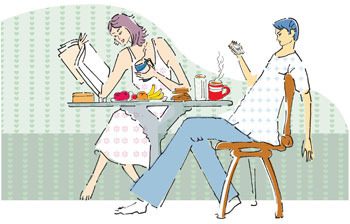
Does romance leave you behind at the altar or hold you even tighter in the embrace of marriage? Sitanshi Talati-Parikh traces the transition

Sitanshisdiary

It’s astonishing how deeply romantic it is to tie the knot, slip on the sparkly on your ring finger, walk down the aisle with a swishy fountain of lace behind you, or take a turn at the wedding mandap with dramatic chants sung against the sacred leaping flames. At every moment, you are shivering with anticipation, thinking of that spectacular wedding night that awaits you on a bed of roses. From the moment you drag your weary stiletto-ridden feet home after ‘receiving’ your many guests, you’re ready to crash. Literally. In a fun, wine-laced conversation at a recent bachelorette party, we did a show of hands to see how many people actually consummated their marriage on their wedding nights. The handful who did put up their hands, I’m dead sure, were all cock and bull stories, no pun intended. I mean who in their right mind actually does it on the wedding night?! One chica claimed – ‘You must – I mean, just for the heck of it – you have to! It’s your wedding night, after all!’

And that’s exactly how marriages begin. And romance begins to lose its edge. You do things because you have to, not because it’s always fun or scintillating. So what happens to the calls late into the night when you curl your toes under the covers with glee, the little pecks of promise, the anticipation of meeting soon, the entwined fingers and the burning look of intensity in the eyes that sends your spine and neck tingling with sensation? They are replaced by the harried look of multitasking chores, the absent-minded, disoriented air, the brow furrowed with concentration, the distracted monosyllabic answers at the breakfast table over coffee, toast and wireless BlackBerry compote, the intense concentration of a person who has his ambitious head turned skywards straight at the stars. I remind him it could get lonely at the top.

As I plan another vacation, in memory of the bygone days of wooing, to give me a brief glimpse into the young lovers we once were, I placate myself with the thought of a new destination that allows one to forget the responsibilities of life and focus on the simple pleasures. Like enjoying each other’s company in the companionable silence of golden sands and crashing waves. He slides his hand into mine; we flash back in time. At that moment I sense that romance never left us; we left it because of our preoccupations. The young boy’s romance has matured into a man’s love – deeper and subtler. Instead of wallowing in a time warp, I realise the romance didn’t die. It just changed, adapted, grew. The candyfloss tinted glasses fell off. I wouldn’t want it any other way.

Women Untamed

17 Thursday Feb 2011

Posted by sitanshi talati-parikh in Humour, Publication: Verve Magazine, Social Chronicles

≈ Leave a comment

Tags

comment, Trend, vervemagazine

Verve Magazine, Musings, February 2011

Women wearing the pants is passé, but now we find men holding onto their women’s pants with quiet desperation, afraid they will fly the coop even before the nest is made. Sitanshi Talati-Parikh muses on the metamorphoses of women in a liberated society

The Queen Bees of society are silent killers – men have for centuries been braggarts and women have found a way to get their own back. Who actually goes to a bachelor party expecting to get lucky and laid? The boys-trying-to-be-men come back with tall tales of passion galore, but the paunchy Indian men of the day (who need a compass in matters of orgasmic satisfaction) are hardly going to be the source of irresistible temptation to svelte Scandinavian women – unless a good deal of money is thrown their way. And if you need to pay for it, it doesn’t count. Indian women, who are generally in much better shape compared to their male counterparts, have an exciting, exotic appeal that makes a bit of harmless flirtation nothing more taxing to the purse than the bat of a mascara-ed eyelid. The PYTs of today can roam the cobbled streets of Europe kicking up a merry ruckus and returning quite the merrier. But we won’t go deep into the details – what happens at a destination bachelorette party, should be forgotten the moment you board the flight back home.

Women today are unselfconsciously raunchy, unafraid of their sexuality and are more than willing to take the leap in expressing it. As last year’s release, Aisha, suggests, gauche is out, and manipulative girl power is in. And of course, a foreign locale makes indiscretions completely acceptable – think Sex and the City 2 (2010) where Carrie steals a kiss with ex-boyfriend Aidan, in lieu of hubby Mr. Big being around. Or Vicky Christina Barcelona (2008), where straitlaced Vicky gets sorely tempted into an affair before marriage – even considering calling her wedding off. And while selling kisses for change at a Scottish bar at her hen night, Hannah in Made of Honour (2008) is left weak in the knees for her best friend, not her husband-to-be.

It’s not as much about infidelity and indecisiveness (that’s a thought for another day), as it is about choices. Where once women either didn’t have those choices, or didn’t give themselves the right to make those choices, now women are all for options. If men are like ice cream, women have the entire range of flavours to pick from. And choices that have to do with emotional involvement can get complicated, but we find it surprising that women can be quite the cold fish – unemotional about their liaisons and irreverent about the heartbreak they may leave in the wake of their decisions. A 20-something girl of my acquaintance was regularly chased after by men of all shapes and sizes. She flittered in and out of relationships, with unbelievable emotional ease, while trying to unravel the knots in her on-again, off-again relationship with her long-distance ex-boyfriend. Eventually, after years they decided to get married – and she seemed freaked out by the idea of ‘settling down’! She allowed herself, in that moment of cold feet, one last (we hope) indiscretion abroad. Her now-husband apparently understood her perfectly well and thought it would be most prudent to get it all out of her system. And this – acceptance of women’s wild oats that need to be sowed – is not uncommon in relationships today.

You can’t help but be slightly amazed at this development – since when did cold feet become a paddle ground for men and women, and decisions made on the call of these frozen extremities allow for getting your toes wet in alternate waters? Women today are afraid to take the plunge – in committed relationships, in marriages, towards motherhood…. It is the time when women want ‘space’ and ‘freedom’ to explore boundaries and create new ones, to feel free of the impositions that they have seen other women suffer for generations; and in that very experimental stage, often swing to the other end of the pendulum before slowly clawing back to level ground. At exactly what stage they decided to give themselves the same rights in indiscretion and fun that men have had for years, one can’t quite be sure, but the metamorphoses has firmly taken place and the butterflies are spreading their wings and flying the coop. Women do make up about 50 per cent of society – and realising this, they began to take liberties and make decisions for themselves, subservient to none but their own moral and possibly immoral code.

And this isn’t exactly bothering the men – while it may make them insecure and quite whipped, what turns men on is the winning combination of ‘girls gone wild’ – the hottest selling video in America of women crossing the line (what line?) at foam parties, Spring break, bachelorettes, sleepovers is of the same name. Women for the longest time have had silent power over men, in bed and out of it; it’s just the matter of wielding it, and wielding it right. There is something vicariously pleasing about women going wild, and something entirely irregular about men doing the same. Maybe it’s the fact that men have been having their slice of cheese on the side for years; or maybe it’s the bit where we don’t really give two hoots about a sausage fest in a bowl of hot soup? In fact, the best kind of woman is the naughty moral one: the delicious anomaly defined by the kind who isn’t afraid to kiss, but won’t tell and won’t cheat.

You can tame the man, but can the man tame his New Age, expressive woman? It’s the era of female domination – what existed in the echelons of the kitchen and household has moved to the bedroom and workplace. It’s not really about who wears the pants, rather who finds himself holding the skirt.

The Elite Address

17 Friday Dec 2010

Posted by sitanshi talati-parikh in Publication: Verve Magazine, Travel Stories

≈ Leave a comment

Verve Magazine, Scapes, November 2010

Quiet, clean environs and tree-lined avenues…old-world bungalows and landscaped condos…swanky wheels and round-the-clock security…. Verve stops by at the luxe locales of Mumbai, New Delhi, Chennai and Kolkata

MUMBAI
The pecking order

Old money, sky-rise penthouses, the crème de la crème of Mumbai’s business society, South Mumbai has it all….

Despite the scoffing at the incessant comparisons between the pulse of South Mumbai and Manhattan, there is something that runs as a common thread: a social hierarchy. SoBo (acronym for South Mumbai – are you snickering?) packs the crème de la crème of Mumbai’s business society (the filmi kind are found largely in the suburban elite areas). Wrapped around the country’s financial district, it is all about old money – and while SoBo represents old wealth in its bungalows, sky-rise penthouses and grossly overpriced sardine-can apartments, there is a very specific pecking order which is linked to the part of ‘town’ that you live in.

Malabar Hill is the premium territory, where flats can go for over a lakh per square foot. The original area of moneyed settlers, where the prongs spread to the classy sea-hugging stretch of Nepean Sea Road, on one foothill of the Hill, filled with a mix of wealthy Gujaratis, Marwaris and a smattering of an eclectic crowd, peppered with prestigious government bungalows (think helipads). On the other side facing the Queen’s Necklace, Walkeshwar is predominated by older settlements of traditional Gujarati business families, where the Walkeshwar Temple and Banganga Tank date to the 10th and 12th century respectively and the older dilapidated buildings are rapidly being replaced by spanking new ones. This is the area of pure vegetarian food, Italian marble in homes, diamonds on the neck, and an uneasy transition to a cosmopolitan outlook on life.

In sharp contrast are Cuffe Parade and Nariman Point, reclaimed and developed in the ‘60s. Consisting of a hugely cosmopolitan lot, there is a racy headiness associated with what is known as the ‘Cuffe crowd’. There is a mix of old and new money in this area. The youth of the Hill and Cuffe do not mix until they reach the dating stage – when it’s a grudging marriage of two important areas of geography, except among the more conservative families who can’t quite digest the categorical transition away from home ground.

Altamount Road and Carmichael Road form the other major Hill area, dominated by a quieter moneyed crowd, the sprawling bungalows and buildings interspersed with consular settlements. Possibly the only thing bringing down its stock is the lack of SoBo’s trump card – a sea view. Walking up and down this tree-lined avenue is all about getting noticed – whether you’re in a Lamborghini or outside one. Incidentally, this is where the older Ambani brother has chosen to build his towering monument of success.

While the by-lanes of Breach Candy and Pedder Road house many affluent families, you would find their own little nesting areas of the youth – like Scandal Point of yore or the Sophia College Lane. Breach Candy forms an extension of Nepean Sea Road, hugging the same stretch of sea.

Worli Sea Face doesn’t quite make it to the cream of SoBo residential areas, despite rapidly being replaced as the area of new money by the rather nouveau riche Lower Parel. Its microcosmic world of the sea face walk and spacious houses boasts a mixed crowd that is probably losing grace due to its proximity to the suburbs.

Marine Drive – facing the famed Queen’s Necklace – is all about a time of art deco and a sense of nostalgia. With airy flats lined in a grid leading off the main sea-way, Marine Drive still continues to host a majority of its original settlers. Their claim to fame is the walk/jogging community on the Drive, crowded and in view of the entire office-going traffic.

FAMOUS RESIDENTS
AVANTI AND YASH BIRLA
SHOBHAA AND DILIP DE NEERJA AND
KUMARMANGALAM BIRLA
POOJA AND MILIND DEORA
LATA MANGESHKAR
KAVITA AND VINOD KHANNA

Whom Women Want: Imran Khan cover story

13 Saturday Nov 2010

Posted by sitanshi talati-parikh in Interviews (All), Interviews: Cinema, Interviews: Cover Stories, Publication: Verve Magazine

≈ 1 Comment

Tags

Avantika Malik, Bollywood, I Hate Luv Storys, imrankhan, indiancinema, Kidnap, Luck, Nuzhat Khan, vervemagazine

Published: Verve Magazine, Verve Man Supplement, Cover Story, October 2010
Photographs: Joy Datta

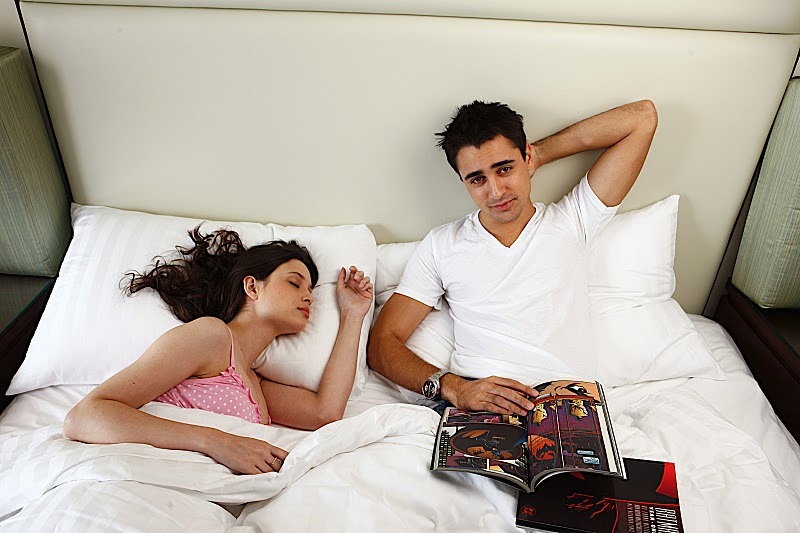
Img_0110

He’s the hot cake of the film industry, has a thriving gay fan following and is quite the favourite with the ladies. This is Imran Khan after he’s delivered his second big hit, I Hate Luv Storys and has a movie lined up with nearly every top actress in the industry: a big notch up from his overnight debut success. While Verve’s camera captures a day in the life of the movie star, Sitanshi Talati-Parikh looks beyond his distracting good looks to discover what makes him tick and makes him the coolest catch in town

“I’ve wanted him to be a man women would like,” is how Nuzhat Khan begins the conversation about her only child. Even the toughest detractors and hardest cynics would find it impossible to dislike 27-year-old Imran Khan, who admits to have consciously imbibed the best aspects of favourite characters from classic books, movies and comics. So, in a sense, the elusive, romantic notion of the man that women chase from fiction is actively present in Imran’s personality. Does that make him perfect? “It’s a work-in-progress,” he grins. In Nuzhat’s ideal lies a fundamental difference that sets Imran apart – while others stop at being good according to their own definition, Imran without self-deprecating, without martyring himself, goes the extra mile to be universally likeable.

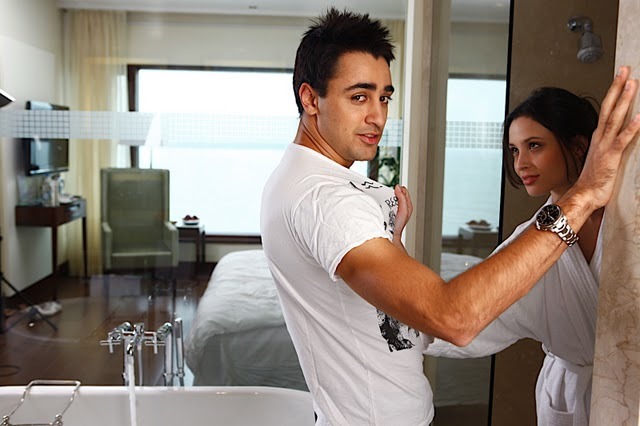
Img_0111

This precocious child started speaking long, coherent sentences at a very early age – and in Nuzhat’s words, “He was a complete person even as a child, never requiring disciplining – I could talk to him like a grown-up.” It doesn’t appear to be a statement stemming from a maternal fondness, because she has always attempted to look at Imran as an unrelated person, without bias. “I would hate for him to have grown up thinking he’s special because his mother thinks so – it should be because he believes it.” And that is what makes Imran self-assured. “I don’t think I’ve ever had issues with self-doubt. What I can’t change, I don’t let it influence or affect me. Even if it may seem unnatural for a teenager to be so, I have always been a kind of calm, reasonable, logical person – prided myself on being mature. It is something I consciously hold onto, that I’ve never wanted to lose. I always wanted to be the guy who can handle a situation.” And he can do that, MacGuyver-style, in any condition, under any circumstance.

This what his fiancée, Avantika Malik, in her light, lilting voice, lists as one of the traits that makes him the man she has known to love for eight years and counting, from the age of 19. She finds that through career choices veering from wanting to remain behind-the-scenes as a director, to embracing the limelight as a hero, nothing has changed in the boy she dated and the man she is soon to be married to. “The great thing about Imran is that at his very core, he remains completely the same, grounded and real, though it’s true that he carries himself with more ease and with greater confidence now than ever before.” Avantika admits that her respect for him also stems from the vital fact that he has never given her any reason to doubt his intentions, always being honest and forthcoming about his feelings. She quotes her mother, Vandana Malik, here, who describes Imran as, ‘one of very few God’s good people.’

What makes Imran refreshingly undiabetic, though, is his well-controlled moodiness – evidenced by his need for alone time – his sharp wit, often sardonic and dry, and his toe-the-line principles. You can’t cross boundaries he’s drawn because doing so endangers the very nature of that relationship and his tolerance towards you. But if you work within these limits, you can find in him a genuine friend – warming your grey cells against his razor-sharp repartees. Sonam Kapoor, his co-star in I Hate Luv Storys, marks “his humility and hunger for knowledge, but most of all his quirky sense of humour” as appealing, and Deepika Padukone, with whom he has the upcoming romantic dramedy Break Ke Baad, finds him a fun, supportive co-star, calling him, ‘Mr-Know-It-All.’ “Imran likes to know everything about everything and if there’s ever a time that he doesn’t, he will immediately read up or Google it.” Also known as ‘Imikepdia’ among his friends, intelligence in liberal doses is something Imran prides himself in having: “My dad (Anil Pal, IT professional in Sunnyvale, California) – after all, mera baap hai – knows more about everything than I can ever know. Currently it’s uncool to know stuff, but I have always considered it to be a good thing to be knowledgeable.”

That knowledge extends to supporting causes he believes in, whether it is attempting to create a greener world – he contributed an essay on being environmentally-friendly for Verve last year – to standing up for one’s democratic rights like voting or finding a shelter for homeless animals. With his personal brand of humour and wit, he uses his columns and public forums to inspire people into action – fighting religious myopia and mediocrity, for instance. And he walks the talk: ensuring that his house is environmentally friendly, adopting stray animals and taking criticism positively to ensure achieving his own potential. It works for him, after all, women haven’t given up on idealism: Saan, co-moderator of his unofficial fan site (www.imran-khan.org) is rather taken in by his principles: “I find his honest dedication to good causes and his belief in human beings very hot.”

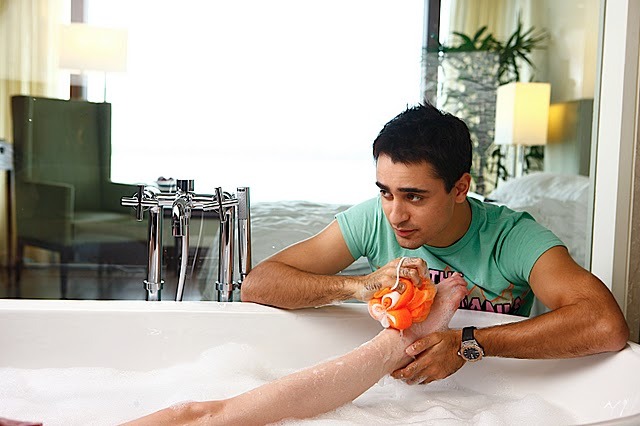
Img_0112

Sex-appeal? With Imran it’s never about the superficial stuff. “Good looks are not it. People are sweet and well behaved. But for my family, we lay a great deal of importance on integrity. It means different things for different people, but he doesn’t let go of that principle,” says Nuzhat. Imran accurately assesses that people gravitate towards his personality. “People like me when they meet me. I am an amiable, easy-going person. I like people and that translates well. Rakes work for younger women – say until the age of 25-26. I’ve always been the good guy, and up until a certain time I had absolutely no success with women…and suddenly everyone starts coming forward with, ‘You’re such a great guy!’ and I’m thinking, ‘Where were you 10 years ago?’” While his contemporaries play the field as cavalier Wickhams and Willoughbys, Imran remains the quintessential dependable Darcy. As Shaima, the founder of his fan site observes, “What I love about him is that he may be your typical heartthrob, but he isn’t a heart-breaker.” The fact that he has been in a committed relationship for longer than even he can remember may have something to do with it, but as Imran points out, he is quite the unlikely candidate to be “having short-lived affairs with aspiring actresses and models.”

There is a sense of vulnerability about the boy-man that is carefully concealed. I noticed it when I inadvertently came across him eating a boxful of chocolate bars, trying to calm his nerves before going in front of a live audience, over a year ago. You get barely a moment to notice it, before it flickers away. The face is always composed, the voice is always modulated and the feathers are impeccably unruffled. He is never reactionary: his sensitive personality is reined in by his logic-driven outlook. “My motivations are emotional, but my actions are rational. Both take place simultaneously. I’m not a shoulder people cry on; I am the guy who gives advice. Emotionally I am not great – I’m a fairly emotionally reserved person. People bring me things to fix, I’m a mechanic.”

Img_0113

And where reason is important, experimentation isn’t a part of who Imran is – he doesn’t choose to tread dangerous waters unless it will take him to the next step in his calculated climb to the top. Despite the fact that the prudence of his choices were questioned when he faced flak for films Kidnap and Luck, Imran makes every decision after great deliberation – he rarely, if ever, backtracks on that choice. He is quick to rectify errors, learn from the past and lay the foundation for the future, all the while maintaining a stoic demeanour about the present. For instance, his earlier bluntness – stemming from the inability to see the ramifications of brute candour – has now been prudently replaced by tactful replies, truthfulness coated with a barely perceptible paint of diplomacy. You would believe him to have a mental check-list, of the kind of movies he wishes to do, about the people he wants to work with, about the path his life should take, and find him actively fitting pieces of the puzzle to make it all fall into place.

The culmination of being inherently good, irrefutably smart, and irreverently humourous makes him a person you’d want to know despite his potential of being a big movie star. Imran is very clear about stardom: “You have to be a bankable star – to justify the money. You wear different hats. Being treated with deference can get irritating, because it can get too much; but not being treated with deference, bothers you too. I wear no hats in real life.” Twenty months ago, Imran prided himself on being the guy next door, who could roam around town ‘practically invisible’. Today, after the aggressive promos and resounding success of I Hate Luv Storys, he finds himself the reluctant star – unable to do so anymore. While he believes in positive fan interaction, he’s withdrawn from the popular social networking tool, Twitter, to ensure meaningful conversations over general mass following. Few can be actors before they are stars, few can uphold the integrity of their work over the drug of adulation and you believe he is one who can, possibly insulated by his rootedness. Nuzhat, with sudden maternal candour admits, “Yes, I worry that his goodness can suffer at the hands of the movie industry, but more so, I hope Imran never becomes content with mere success, but pushes the limits towards better and more meaningful work. And I don’t mean that for movies alone – but for it to extend to every part of his life.”

Img_0114

Post the success of his first film and the lack-lustre performance of two soon after, he wasn’t noticeably insecure, but definitely eager to prove himself once again. He took the beating in his stride, with the same equanimity with which he handled his overnight rise to fame. Today, there is a sense of retribution inflected in his tone – his choice of words denote an obviously confident person, who is merely reflecting the assurance that repeat success brings. While he doesn’t believe in destiny and can’t predict the future, he is secure: in the knowledge that he has everything that he would need to make his world go around – career back on rails, the power to pick and choose from the best of the industry lined up at his door, the girl, the family, and complete faith in himself. Al Pacino’s Tony Montana in Scarface famously said, ‘First you get the money, then you get the power, then you get the woman.’ Imran may have got it all in the wrong order, but for all the right reasons, he’s hot, he’s wanted and it looks very much like he’s here to stay.

Imran Notes
“Being the only child, I had more one-on-one time with my parents and time to introspect. I can’t deal with loud noise – like TV. I need regular periods of silence and quiet.”

“Who knows what makes you sexy? I think my personality works for me – people like me when they meet me. I am an amiable, easy-going person.

Imran owns a rare edition of his favourite comic book, batman, a Batman tie and believes that were he to have a superpower, it would be MacGyvering. He’s a Star Wars fan and considered being an archaeologist post an Indiana-Jones phase.

Img_0115

Imran Style Guide
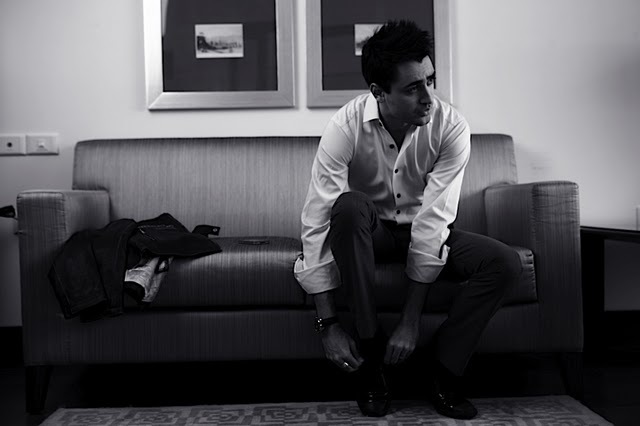
He’s been known for his quirky tees, comfort-fit denims and one-of-a-kind sneakers. The ones he is wearing at the Verve shoot are hand-painted Beatles Nike keds sourced by Avantika from LA. Lately, inspired by old movies and the Rat Pack’s sharp “badass” attire, he has decided he wants more from the way he dresses. He’s decided to “bring back the suit by taking that style of dressing and turning it over on its head. It’s not about what you do. You wear it, don’t let it wear you.” To drive the point home, he quotes Alec Baldwin from 30 Rock, who when asked why he’s wearing a tuxedo at work, snaps back, ‘It’s after seven, what am I, a farmer?’

Thai Contemporary: Review of KOH, InterContinental, Mumbai

23 Saturday Oct 2010

Posted by sitanshi talati-parikh in Food, Publication: Verve Magazine

≈ Leave a comment

Tags

Chef Ian Kittichai, Food, InterContinental, KOH, mumbai, Reviews, Thai

Published in Verve Magazine, October 2010


When pregnancy cravings hit, you need something fantastic to stem the stomach-curling desire. Chef Ian Kittichai’s Koh at the InterContinental Marine Drive, seemed like a promising addition to my rather exclusive list, from the moment I heard Deepika Padukone tweeting about how great the food is and my own cousin mentioning the presence of the rather elusive massamun curry on the menu.

On a Thursday evening the Manhattan-style Asian bistro is filled with a lively crowd of familiar and international faces. Where Czar once pulsated with desi tracks, its replacement, Koh’s muted restro-lounge atmosphere is at once sophisticated and global. Propped with comfortable cushions on a table for two that’s too closely set to make it an intimate dining experience, I’m floored by the facing glass wall mural created by Thai artist Patcharapon ‘Alex’ Tangruen. The mural defines the space and cuisine – traditional roots, contemporary accents. You suspect you won’t taste the conventional here, even if the chef has drawn from the flavours of his youth: his own mother’s kitchen.

Evocative fresh fruit signature cocktails with antioxidants (Gojiberry bellinis) set the tone for the flavourful and delicately-spiced food. Steamed edamame dusted with sea salt and Thai spices for the table, followed by appetizers that make you not want to save room for the mains. ‘Chocolat’ baby back ribs (coated with dusky chocolate), an unrivalled palate-opener, juxtaposed in quick succession with stems of stout lemon grass covered with flame-grilled chicken accented with coconut and cilantro make for a delicious first offering. In fine contrast is the hand-pounded rock corn minced with spices, and the tofu…. So, I confess, I hate tofu. Even Morimoto’s tofu couldn’t convert me, but I feel unable to turn down the mild-mannered and unassuming Chef Kittichai’s suggestion of a jasmine tea-smoked tofu. Surprisingly, it lacks tofu’s usual rude texture and it is smooth as butter. The aubergine dish, though tasty enough, has a tough skin texture, leaving it difficult to manipulate while eating. After soaking in the stunning Koh golden corn gumbo – hand-pressed corn swirling in coconut broth laced with Thai basil oil; we’re all set to move to entrees.

Composed of a wide variety of freshly-imported greens and vegetables (I add crisp water chestnuts), the ‘Paneang Curry’ is perfect for my taste buds, while what the general Indian palate may scream for is the hot stone curry-spiced rice – which is akin to a Thai biryani. My husband, Sahil, takes the chef’s apt suggestion and goes with the Chilean sea bass coated with a yellow-bean glaze: a fresh offering that lives up to its promise. You are surprised how easily the hours get eaten up while you are being gastronomically appeased. In entirety, the meal leaves nothing wanting, especially when topped off with the luscious valhorna chocolate dessert accompanied by Thai coffee ice cream. Oh and did I mention the coconut cheesecake? Absolutely lovely. My only regret is being physically unable to sample all the tempting flavours on the menu – but that’s for another evening, another craving.

Koh Notes

– Chef Kittichai’s favourite ingredient that shares its home with India and Thailand is cumin.
– All the ingredients at Koh are imported: meats thrice weekly from different parts of the world, vegetables thrice weekly from Bangkok and Chiang Mai and condiments weekly from Bangkok.
– Come October, Koh plans to add a Jain version to the already extensive menu and its varied vegetarian offerings.
– When travelling you can sample Ian Kittichai’s cooking at Kittichai in Manhattan, Restaurant Murmuri in Barcelona and the gastro bar Hyde and Seek in Bangkok.


What’s In A Drape? – The Pleating of Age

17 Sunday Oct 2010

Posted by sitanshi talati-parikh in Fashion & Style, Publication: Verve Magazine

≈ Leave a comment

Verve Magazine, Fashion, September 2010

There’s something sexy about a low-waisted lehnga with a shimmering choli – it’s the eternal ‘come hither’ which is playful, young, flirtatious and so very Navratri, when you’re totally on a high with all the eligible men checking you out. A sari in its very drape is elegant sophistication – it is too mature somehow – like you need to tread carefully before stepping into those pleats! I think that’s exactly why for the longest time, I stuck to lehngas that spun out into an umbrella-shaped twirl as I danced the nights away at various sangeets and dandiya-raases. They made me feel carefree with anticipation, like the stars of the night had many memorable tales left to be told as they winked against the delicate mirror-work embroidery on my outfit. I even got married in a lehnga; and it made me hold onto my youth, unconsciously and tenaciously. Three years after my wedding, I felt the desire to be, to look different – to be more woman, less girl. I tentatively plucked the folds of a beautiful vintage black-and-silver sari that my mother wore to my reception, and drew it to myself. I found a different person looking back at me in the mirror – someone who walked not floated, stood up straight with grace and dignity. From the moment I stepped into pleats it took me years to learn how to get it right (I still struggle occasionally), I began to walk in yards of fabric that I still often pull out with my bejewelled shoes at the very moment I am to enter an event, but I never looked back. I’ve steadily begun to turn a girl’s closet into a woman’s tresorie, replete with beautiful variations of the nine-yard magic drape that makes me more woman – every time I wear it.

Captured Memories

27 Monday Sep 2010

Posted by sitanshi talati-parikh in Art, Literature & Culture, Publication: Verve Magazine

≈ 1 Comment

Tags

Marriage, Photography, vervemagazine

Published: Verve Magazine, Nerve, September 2010

The most ignored aspect of a wedding is the one you would ideally want to do right for posterity – the pictures! Verve looks at various options for the album


Photo01
Photo02

Ehsaan Faridafsar’s photograph on the adjoining page has been taken from a photo essay in Verve’s iconic black-and-white issue – there is something blissfully happy and memorable about the imagery. Having a photographer willing to render the moments of the most important day in your life in a unique fashion apparently is not something everyone hankers towards. It is surprising, considering how much money is bled into the most spectacular invitations, back presents, sets, jewellery, clothes…and yet wedding photography remains the unfortunate step-child.

Mumbai-based artist, curator and gallerist, Bose Krishnamachari traces the evolution of marriage in India to the extravaganza popularised by the maharajas of yore – and in those times, posed portraiture was the norm. As canvases evolved to bulky and expensive camera film and to the digital varieties of date, the traditional form of posed imagery still remains a part of the wedding legacy. It is only rarely – and more abroad than in India – that the photojournalistic style of wedding photography is popularised, where candid shots are taken and irreverent moments captured to add a sense of realism to the wedding album.

Matthieu Foss, photography curator and gallerist (Mumbai) feels that weddings have been restricted to a more conventional and conservative form of photography when creating the family wedding album. From the point of the photographer, Foss points out, they are using this form to merely make a living, not as a creative act. While it would be interesting for a photographer to capture moments from a poignant and radically important time in someone’s life, it appears that the subject’s lack of interest in something different would naturally stem the photographer’s creativity, making it a space that is a mere commercial stepping-stone to more absorbing pastures. And if the photographer were doing something different, it may well be in the space of satire and kitsch. Foss gives the example of French artist Jean-Christian Bourcart, whose first job as a wedding photographer led to him being ‘fascinated by those moments of joy in a crude or absurd reality,’ which later defined his other distinct photo projects.

It is not unnatural to take wedding photography a step further and explore moments in the nature of fashion photography: styled shoots inspired by high-fashion glossies; think a more involved and personal version of Carrie Bradshaw in Sex and the City: The Movie snapped before her disastrous wedding in bridal fashion, documenting her pre-wedding preparations for an international fashion magazine. Many an aspiring socialite or fashionista would create a wedding album that looks like something out of the pages of a fashion magazine – to feel like the ultimate diva. Of course, this involves a good amount of post-processing of the images and possibly a touch up here and there!

At the other end of the glamour spectrum, with digital cameras and phone-cams, every other person considers himself/herself an amateur photographer, and impromptu and often unfortunately-candid shots of the wedding-in-process have been documented – much to the embarrassment of the couple-to-be. Loosely termed ‘contemporary wedding photography’, the professional version o f this irreverent clicking serves to capture the imagery of the wedding from the beginning to the end, without predetermined poses but with strong visual appeal.

While tradition is great when saying your vows or taking a turn around the fire, capturing eternal moments is an art and should be considered as such. With couples willing to give enough importance to the form, it may evolve into a universally appreciated aesthetic medium.

← Older posts
Newer posts →

|  Filling the gaps between words.  |

Writing By Category

  • Art, Literature & Culture
  • Brand Builidng
  • Brand Watch
  • Fashion & Style
  • Features & Trends
  • Fiction
  • Food
  • Humour
  • In The Media
  • Interviews (All)
  • Interviews: Business
  • Interviews: Cinema
  • Interviews: Cover Stories
  • Interviews: Lifestyle
  • Interviews: Luxury Brands
  • Interviews: The Arts
  • Interviews: Travel
  • Musings
  • Parenting
  • Publication: Conde Nast
  • Publication: Elle
  • Publication: Mint Lounge
  • Publication: Mother's World
  • Publication: Taj Magazine
  • Publication: The Swaddle
  • Publication: The Voice of Fashion
  • Publication: Verve Magazine
  • Social Chronicles
  • Sustainability
  • Travel Stories

Reach out:
sitanshi.t.parikh@gmail.com

© Sitanshi Talati-Parikh 2018.
All Rights Reserved.

Website Powered by WordPress.com.

  • Subscribe Subscribed
    • sitanshi talati-parikh
    • Join 51 other subscribers
    • Already have a WordPress.com account? Log in now.
    • sitanshi talati-parikh
    • Subscribe Subscribed
    • Sign up
    • Log in
    • Report this content
    • View site in Reader
    • Manage subscriptions
    • Collapse this bar