• About
  • Brand Building
  • Film & Drama
  • Writing: Arts & Lifestyle
  • Writing: Interviews
  • Writing: Luxury Brands
  • Writing: Travel

sitanshi talati-parikh

sitanshi talati-parikh

Category Archives: Publication: Verve Magazine

Literature: Suma’s Soup For The Soul

26 Wednesday Aug 2009

Posted by sitanshi talati-parikh in Art, Literature & Culture, Interviews (All), Interviews: The Arts, Publication: Verve Magazine

≈ Leave a comment

Tags

Interview, Literature, vervemagazine

Published: Verve Magazine, Nerve, August 2009

A man traumatised by his parents’ death and a broken engagement found solace while reading Suma Varughese’s article on faith. Sitanshi Talati-Parikh speaks to the former Verve columnist whose book Travelling Light is an anthology of her columns written for Life Positive

What brought about a sudden shift from magazine journalism to spiritual journalism?
I quit Society (where she was an editor for six years) because I had become aware that the values I was promoting within Society and the values I practised in real life were in contradiction to each other. I had begun to understand that the purpose of life was growth and it seemed to me that immersing oneself in material pursuits was distracting us from this purpose. I was fortunate enough to join Life Positive (in 1996) which was then on the drawing board.

At what stage did you begin asking questions that answered some of life’s biggest dilemmas?
For 16 years I had been in a kind of low-grade depression and was a confused, unhappy person. Then I suddenly had an amazing experience. I discovered within me the capacity to flip out of my ego (or the narrow framework of one’s own thoughts, feelings, reactions, needs and wants within which most of us are bound) and really experience the other without relation to self. I could do this by uttering the statement, ‘It’s their happiness that counts, not mine.’

That appears to be a difficult selfless state to be in….
It was a state of empowerment and invulnerability because I simply did not mind what people said or did. Slowly I realised that putting the happiness of others ahead of mine made me very happy. And that it was an inexhaustible source of happiness that did not depend on circumstances, only me. I did not become a realised soul, but the whole jigsaw puzzle of life fit in perfectly!

EMPOWER YOURSELF

When dark clouds gather and melancholy wreaks havoc, many people turn to what is popularly known as self-help or motivational books. They provide direction, a guiding light and inspiration to get out of a troubled spot – or sometimes become simply a Dummies Guide To Being Holier-Than-Thou! Verve recalls some iconic self-help books (excluding religious or philosophical texts!)

How To Win Friends And Influence People by Dale Carnegie
The Seven Habits of Highly Effective People by Stephen Covey
Conversations With God by Neale Donald Walsch
Who Moved My Cheese by Spencer Johnson, MD
Jonathan Livingston Seagull by Richard Bach
The Alchemist by Paulo Coelho
Chicken Soup For The Soul by Jack Canfield
Men Are From Mars, Women Are From Venus by John Gray
The Secret by Rhonda Byrne
Reader’s Digest
The Monk Who Sold His Ferrari by Robin Sharma
The Power of Now by Eckhart Tolle

When The Masks Slips….

18 Tuesday Aug 2009

Posted by sitanshi talati-parikh in Interviews (All), Interviews: Cinema, Publication: Verve Magazine

≈ Leave a comment

Tags

Abhishek Bachchan, aishwaryaraibachchan, Amitabh Bachchan, Anil Kapoor, Arjun Rampal, Bollywood, Cirque du Soleil, Farah Khan, Farhan Akhtar, Govinda, hrithikroshan, IIFA, indiancinema, Interview, Lara Dutta, Macau, Madhur Bhandarkar, Neil Nitin Mukesh, Riteish Deshmukh, Sonam Kapoor, Sonu Sood, Sushmita Sen, vervemagazine

Published: Verve Magazine, Morality, 75th black-and-white issue, July 2009

In a special media partnership with IIFA, Verve collects the memories, candid moments and some extraordinary quotes from the stars that glittered on the green carpet at IIFA’s 10th anniversary celebrations in Macau. Sitanshi Talati-Parikh shares her weekend diaries, where her conversation with the stars veers between dark and light

I think it can all be traced to our first few moments in Macau – at the ferry terminal, sans conveyor belt for our luggage collection. Harried-looking local baggage handlers were pounding in and off-loading massive amounts of luggage onto a corner alcove, while the entire flight’s passengers – all headed to IIFA – looked on in bemused silence. Designer Anamika Khanna standing lost and bewildered clinging onto her bags, Farah Khan’s plaintive cry for help directed at brother Zayed, while the latter scouted around for local help and Anil Kapoor and Sonam Kapoor’s stealthy exit, all established the premise of the diaries of stardom. Ferry terminals, I have decided, are great levellers.

As I ate meals with some of the actors and directors who were courageous enough to step out of their room and walk the massive hallways of the excruciatingly large Venetian Macao-Resort-Hotel, I found them to be relaxed outside their domain. This was a work-vacation, where they would be winning awards amid great fanfare. I watched Farah Khan working through the day setting up her dazzling designs – sported by many a star on the green carpet as well as the fashion runway. With Hrithik and Sussanne Roshan being her show-stoppers, the crowd couldn’t help but take their eyes away from the sparkling jewels. Farah Khan’s personal style mantra? “Never over-accessorise. Don’t draw people’s attention by wearing too much bling – let your true personality come out.”

And then true personalities began to come out: the scales tipped a little towards the dark side, with the Cirque du Soleil-esque masks slipping and the layers of make-up barely concealing discomfort. What happens when a popular star walks past and steals the show? The moment an Abhishek Bachchan or a Hrithik Roshan would stroll past, they would get mobbed in seconds, while a talented Vinay Pathak would walk along practically incognito. With Aishwarya Rai Bachchan in the forefront, Mugdha Godse was barely noticed on the green carpet.

Iifa21

Or Lara Dutta, who was noticed, not just for her lively presence and wit, but also for stepping up to the podium uncalled, claiming that Riteish Deshmukh, Boman Irani and she were (for the weekend) “joined at the hip.”

The crowd who had gathered over the days just for that one big celebrity sighting, often paying hefty sums of money for show tickets, spent most of their time hanging onto the barricades or prowling the passageways in search of their favourite stars. There were subdued murmurs of, “Where are the big stars? These are the young upcoming ones!” Ah, the price of fame – being a nobody is better than being a minor celebrity!

Iifa01
Iifa03

Walking down the green carpet, Abhishek, forever the doting husband, was not left with any option but to lose the charming veneer and adopt a stern countenance with a group of fans that were jostling too close to him and Aishwarya.

Iifa22

On the other hand, Arjun Rampal’s condescension and Anil Kapoor’s flicker of impatience with what can only be feigned disinterest as their fans collected and tried to get their autographs, made me wonder how it is possible to be so dismissive of those that have made them stars? Maybe, they were just tired?

Iifa14

You could tell that the gentleman was tired. The eyes had dark rims and they were red – with exhaustion or lack of sleep, or both. But he went on. As a reporter said, “When he talks, we have no choice but to listen.” IIFA brand ambassador, Amitabh Bachchan held every single person’s attention when he said: “We believe that cinema binds communities together. When we visit the cinema and we sit in a darkened hall, we never ask who is the person sitting next to us – we never ask whether he is Hindu, Muslim, Sikh or Christian; or what caste or race he is; or what nation he belongs to. We all sit there enjoy and love the product that we see. We sing the same songs, laugh at the same jokes we cry at the same emotion. What better example of integration than Indian cinema?

I asked him (for our thematic 75th issue) what he would define as the darkest period in Indian cinema. Not finding the question to be from the common mould, he asked for it to be repeated, and then in his commanding voice answered: “Cinema is a creative art and anything that restricts creativity can be termed the darkest era. When you restrict creativity, you challenge the very tenet of democracy, of freedom of expression – much like that of the press. If you say that you can only paint a painting in two colours, that is restricting creativity. That cannot happen – in a free world, in a free country as India is, we need the freedom of expression; keeping within the laws of the nation and the culture of the nation.”

Cushioning a star ego is a task into itself and with every expression, one can and must read between the lines. Amitabh Bachchan had a priceless expression when asked by a media person, “Bahut stars nahin aaye, to is time kya IIFA thoda thanda lagta hai? (Isn’t IIFA less glamourous this year – with so many stars not present?)” Taking barely a moment to recover from his amazement – I mean, who asks the Big B this sort of question? – he replied flippantly to appreciative laughter, “Aap hain to thanda kaise hoga? (With you present, how can you say the glamour quotient is missing?)”

The media were at their crass best, often behaving like buzzards – circling their prey and then swooping in for the kill. As I sat near Sushmita Sen and Govinda, waiting in dignified repose for a moment to ask my question, a young lady (if I may dare call her that) of TV origin came and sat on top of me – assuming that would be the best vantage point from which to force her questions. It required my highest level of meditation techniques to not throw her onto the cameraman crouched below. Sushmita, having lost most of the weight she had recently gained, looked stunning in sleek animal prints that showed off her tall, confident persona. She fielded questions (about her ‘fitness mantra’) with cultivated finesse – a reminder of her days as a beauty queen.

Talking about beauty and confidence, one simply cannot leave out Anushka Sharma. Barely a film down, and a mere modelling career behind her, this newcomer stood out with astonishing self-assurance and poise. Always well put-together, she finally had to exclaim, “I am running out of adjectives to describe the experience!” when repeatedly asked about her resounding success in landing a double whammy for her first film Rab Ne Bana Di Jodi (2008) – the Yash Raj banner and Shah Rukh Khan. “I won’t sign films simply because I want to have a bigger house or car,” said the young girl – as if proving that she isn’t out to “play the number game.”

Iifa31

Prevented by good sense and daddy dearest from playing the number game, is the very tall and very good-looking Sonam Kapoor. Vivacious and friendly, she awaits her coming of age in her next film – where she plays Jane Austen’s Emma. When the media questioned her about the answers to life, she looked bewildered. “I am still growing up as well – I can only find answers through trial and error. It is scary to have the kind of responsibility where you are asked questions about how things should be.” She was a tomboy growing up – “If you look at the so-called big stars of the past few decades, they are not the ultra-glamourous, big hairdo, lenses-wearing women. Think Nargis, Kajol, Rani Mukherjee, Sridevi. And they are the biggest stars. Madhuri (Dixit) is absolutely beautiful in Sailaab (1990) without her hair blow-dried in Humko Aaj Kal Hai…with hardly any make-up. Every generation has a naturally beautiful and spontaneous star. India accepts these stars.”

Aspiring star Sonu Sood, best known for his role as Sujamal in Jodhaa Akbar (2008), strives to choose roles with character. The tall actor (hailing from an engineering-and-some-modelling background) was mild-mannered and respectful of the seniors that abound in the breakfast hall, leaving the interview in deference to a veteran director who came to speak to him. Not before he remarked, “All my characters have had grey shades – in Yuva (2004), in Jodhaa Akbar. Every person has some kind of a grey shade. It connects with a cine-goer. Pure whites are not going to touch the hearts of the audience – it is the grey that matters, that adds colour.”

Iifa25

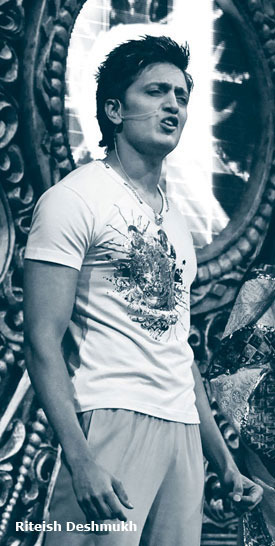
Riteish Deshmukh

has apparently gained sincere popularity for his comic timing – as evidenced by the little race that took place in the hotel lobby – where he was being chased by some fans (an entire family, no less) and the guards were chasing the fans. It was a real-life comedy, where we of course, followed suit to see how it all panned out! The actor, who is also an architect, was candid when he said: “A film was offered to me, and I love films, so I gave it a shot. Comedies worked – if people find my comedy palatable, then I’m really grateful! I cannot force my stuff onto people – I choose films based on my sensibility or on what I think people might like. I like to face reality – I don’t like to think about things that could be a possibility – I am not delusional. Coming from a political family, loads of people thought that my first film was because of my father, who was a politician then. I don’t hold it against them, because if I was in their place I may have thought the same! I had to work hard so that people would call me Riteish Deshmukh and not son of Vilasrao Deshmukh – though I take great pride in being his son.”

Iifa17

He drove the audiences to a state of euphoria (definitely more than Peter Andre’s powerful performance – my colleague Arti may disagree) with his impromptu rendering of a number from Rock On!! Farhan Akhtar was accessible, even a little endearingly nervous while facing the media. His presence was subtle, and his talent immense. “It is important for me to find a character that is real – no person is black or white, no one is just good or just bad, people change depending on what life puts in front of them, or the circumstances and changing situations that may befall them. The character of Luck By Chance (2009) was fascinating, because he was so real – so driven by success that he was willing to put his morals and his ethics aside. To still make him enjoyable to watch and on some level identify with the fact that everything that life has offered him and the decisions that he has made, albeit wrong in retrospect, seemed like the right thing for him to achieve whatever he wanted to achieve. It was so interesting.”

Iifa27

Neil Nitin Mukesh, an experimental role-player who stayed out late partying and greeting everyone with exceptional deference, would agree. His leaning towards the darker roles has him playing Parag Dixit – a youth jailed for a crime he didn’t commit – in Madhur Bhandarker’s next, Jail. “I started my career by getting out of my comfort zone. I want it to be a challenging career. The reason I choose dark films and characters is very simple – they are more interesting. Where else do you get the chance to actually evolve as a human being?” As I happened to be sitting next to the scriptwriter, Anuraadha Tewari, she remarked that with Jail, “Madhur’s [Bhandarkar] layering has gone from black and white into grey – less judgemental than his original films.”

Iifa28

On the flight back with the man himself, who plans to shock audiences with a comedy – albeit “sensible humour” – soon, Madhur Bhandarkar emphasised, “My movies represent contemporary society, with characters with grey shades or starkly black and absolutely positive. I try to combine realism and fiction. People think my movies are an exposé – I disagree. I think they are simply a mirror to society – a representation of all the myriad kinds of people that exist. My protagonist will always have a grey shade – from Chandni Bar (2001) to Fashion (2008). Priyanka Chopra was actually worried about taking up the role (in Fashion) because of what it would do to her image. But every film provides redemption for each of these characters – where the person comes out with flying colours.” I wonder if redemption is a mirror to real life….

The Cirque du Soleil show was a colourful blend of acrobats, jugglers, clowns, colours, masks and immense talent. It had us catch our breath ever so often as the performers catapulted themselves into the topmost echelons of artistic delivery. It also stood as a resounding metaphor for showbiz – a cruel make-believe world that weaves a magic wand and creates an aura of stardom. The ‘stars’ have no choice but to keep this myth alive. As I met some of the assistants – the make-up artistes, the hair stylists and the myriad staff that create the ‘look’ of the star, I found that they were loyal to their own, and busy tearing apart the rest. The models and the dancers were either stubbornly steering clear of showbiz, or trying to wheedle their way in. Fans, the fuel to stardom, were as fickle as they were loyal.

It is lonely at the top. It is also crowded, messy, competitive and superficial. And yet there are people like Javed and Farhan Akhtar whose accessibility and soft-spoken countenance makes one re-evaluate the black and white of stardom. Is it simply the on-screen persona that matters, or is it something more?

Being Hrithik

Iifa19

Hrithik Roshan was charmingly affable and confidently reserved. He fielded questions about his personal life with ease and without a flicker of annoyance. Waiting for 45 minutes outside his room (with a host of other media) to speak to him, seemed to be well worth the wait. He will be seen next in Kites with Mexican actress Barbara Mori; and will begin work in Sanjay Leela Bhansali’s next untitled film alongside Aishwarya Rai Bachchan – which he considers to be a dream role, the first after Koi Mil Gaya.

On not playing a really negative role
“In Dhoom 2 (2006), the idea was to make the bad look good. I have hardly done that many films – I do a film a year. I have no reservations on playing a completely negative character. The idea is to explore the boundaries of my talent as much as possible. Something that is exciting and that scares the hell out of me – I would do it! It’s more fun when you leap without a safety net!”

On reactions to an unkind media
“I have always been the kind of guy I am. I don’t have confrontations with people, problems with anybody in the industry. I am a peaceful guy – I live by my truths and I live free. Once you are happy with your truths, it doesn’t matter what somebody else says. My grandfather told me a long time ago, ‘The world is out to provoke you – if you get provoked it is your downfall.’ If I jump out and start justifying things, it’s just going to make me look silly. It is going to implicate that there is something wrong. I am happy the way I am, I am happy with my family.”

On Imran Khan who considers Hrithik the epitome of a perfect actor
“It is not just about talent – it is about being a good human being. What comes out through the screen subconsciously, is more the person you are than just the expressions you make and the talent you have. Which is why I think Imran will go a long way.”

On being a star
“I have no idea what it means to be a star. I know what it means to be an actor – it’s a job that I do, it’s a means to an end. I work hard so that I can enjoy the kind of life that I want to enjoy with my family and loved ones. I don’t even want to understand what it means to be a star – it is stressful and it is something that is used by some people to fill up that empty void which is a bottomless pit, the ego – I try and stay away from that.”

On living the art
“You have to enjoy what you do if you want to be a part of this industry. If you want to be a star – that is the wrong end you are pursuing. You have to truly enjoy the art. Acting is living in front of the camera. You are expressing emotions in front of the camera. If you are living with inhibitions and not expressing yourself every single moment, you will not be able to duplicate that in front of the camera. If you haven’t lived it, you can’t express it. Live free, explore your emotions despite a sense of fear. Have the courage to explore yourself – see what you are made of.”

Moving Shadows

15 Saturday Aug 2009

Posted by sitanshi talati-parikh in Art, Literature & Culture, Publication: Verve Magazine

≈ Leave a comment

Tags

Chinese Cinema, Shadow Puppetry, vervemagazine

Published: Verve Magazine, Nostalgia, 75th Black-and-white Issue, July 2009

Taking off from an internationally acclaimed Chinese film incorporating shadow puppetry to a peek into the prevalence of this art form in India, Sitanshi Talati-Parikh flits through the darkness and goes behind the scenes

Shadow04

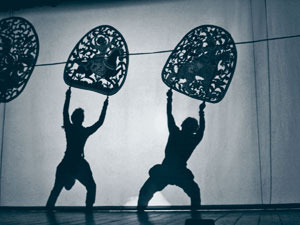
It was nearly a decade ago, at a seminar on popular culture and politics in Philadelphia that I first came across the international award-winning Chinese movie To Live, directed by Zhang Yimou and based on a novel of the same name by Yu Hua. (The film was banned in Mainland China, due to its satirical portrayal of various policies and campaigns of the communist government). Dark and captivating, the movie stirred something in me, a sense of loss and belonging, and sadness at seeing life wasted and then a burgeoning of spirit, upon seeing it resuscitated. The wealthy protagonist, Xu Fugui, gambles away his fortune and family property and is forced to start a shadow puppet troupe to support his family. Against the backdrop of the Chinese Civil War and later, the Cultural Revolution, we watch events unfold with heart-breaking resonance, as a bleak story simply gets bleaker; while his classical shadowy art form becomes a means to light up his otherwise miserable life.


A darting shadow hovers tentatively against the backdrop, and with a resounding sense of confidence, it moves along, bobbing about with a sense of menace, joined by another; creating the illusion of moving images, and a clear sense of good and evil. Story-telling through the art of shadow play or shadow puppetry weaves a sense of drama around a story or epic saga – and can be found in many countries across the world. In India, the leather puppets – sometimes translucent and sometimes opaque, black and white or coloured – represent gods, goddesses and apsaras (celestial beings), which are held in high esteem and stored separately from the demon-puppets. Historically, the tradition of Chhaya Natak (shadow theatre) seemed to have existed in Gujarat a thousand years ago and migrated to Maharashtra; with wandering tribes, spreading their art further south.


From religious doctrine to entertainment through education on social ethics and philosophy, the puppeteers tend to pick up on the themes of Mahabharata and Ramayana, using the sculptures and friezes of the region as inspiration for the figures of the puppets. Not only are they used in the retelling of epics, puppets are also considered divine creations. Most puppet shows in India commence with prayers, and when the puppets decay, they are sent floating away on rivers after performing the worship. Shadow theatre is still popular in many parts of Asia, and besides being a source of pure entertainment, it also serves as a fabulous entry point into the darker areas of character, personality and soul, touched upon not just by the storyline, but also by the technique.


Other Puppeteering Countries


China, Taiwan, France, Indonesia, Malaysia, Thailand, Turkey, Greece, Australia

Javed Akhtar: Of Timeless Words

20 Monday Jul 2009

Posted by sitanshi talati-parikh in Art, Literature & Culture, Interviews (All), Interviews: Cinema, Publication: Verve Magazine

≈ Leave a comment

Tags

Bollywood, dialogues, IIFA, Indian Fiction, indiancinema, Interview, Javed Akhtar, lyrics, screenplay, Scriptwriting, vervemagazine

Published: Verve Magazine, 75th Black and white issue, Features, July 2009
Photograph by: Sitanshi Talati-Parikh

You cannot be entirely objective towards a person who can be considered one of India’s greatest talents. And yet, Javed Akhtar doesn’t let you down. He is approachable, relaxed and as erudite as you might expect – talking a world of sense from a lifetime of experience, with more than a pinch of humour. Of course, the writer-lyricist-poet admits in a staged whisper, “Shabana [Azmi – his wife] is much more serious than I am.” Candid and rather regretful about his shortcomings – “being not-so-disciplined and rather lazy” – the father of two rising stars of Indian cinema (Farhan and Zoya Akhtar) speaks his mind to Sitanshi Talati-Parikh

Javed01

On being down-to-earth

I have never thought about it. If someone starts thinking about why he is modest, then he isn’t a modest person. If you have certain objectivity, you will know that wherever you are, there are many people who are miles ahead of you!

On what it means to be a star
When I was young, I also admired many people – Pandit Jawaharlal Nehru, a writer called Krishna Chandra, Dilip Kumar. Ultimately, as you grow up, you realise that some people are bestowed with some exceptional talent – they have focussed, worked hard, contributed something towards art, literature and human society – but behind all those achievements there is a human being, a person. I don’t feel that kind of blind admiration anymore. A ‘star’ is actually a very vulnerable person, well aware of his/her own shortcomings and weaknesses and failures.

On nostalgia – about the industry that once was
Life offers you packages. It’s not that things were good and now they are not good. Ultimately the film industry is becoming more streamlined, with people becoming more professional and more focussed than what they once were. The film industry is coming out of the feudal era and entering the industrial mindset. The good films of the 50s, 60s and 70s had a lot of social relevance, depth and literary flavour – and a certain dignity. Think Bimal Roy, Guru Dutt, Yash Chopra or Ramesh Sippy. Today films have more variety, technical finesse and people have become smarter, less pretentious and less melodramatic. But, today cinema lacks the strong edifice. Indian films don’t have the kind of power they once had. Rhetoric is not used the way it was. There is an attempt on understatement and restraint, a great reliance on the audience’s IQ. At the same time, I don’t see the magnum opus quality in their scripts – the saga-like stories are missing today.

On bridging the gap between esotericism and entertainment
Why has the industry decided that you can either be sensible or you can be interesting? Is it a choice? Ultimately, good mainstream cinema is extremely sensible and extremely interesting. This is the desired synthesis that I look for. Films like Lagaan, Taare Zameen Par, Dil Chahta Hai, Rang De Basanti all fall in that category.

On the darkest period of Indian cinema
In the 80s (all the way to the mid-90s) somehow something had happened to our society – and the film industry is a part and parcel of our society. The reasons are multiple – somewhere our aesthetics (be it music, architecture, cinema, theatre or politics) experienced a dip in moral values. Think of the times of Sarkailo Khatiya Jada Lage (Raja Babu, 1994), Choli Ke Peeche (Khalnayak, 1993) and Babri Masjid and the Ram Janma Bhoomi dispute. Cinema of any society doesn’t exist in any kind of socio-politico-cultural void. It is connected and even commercial cinema reflects the mindset of society. It is not a coincidence that such kind of cinema was doing well – where good cinema was actually marginalised. Thankfully, by the mid-90s we started reviving and the worst is behind us.

The best grey roles you have ever written are…
Gabbar Singh’s dialogues (Sholay, 1975), Vijay in Trishul (1978), Deewar (1975); or the important minor characters like those in Arjun (1985), and Raja in Mashaal (1984).

On feeling successful
I have had my share of defeats, deprivation and humiliation; at the same time, if I go to the grand total it is in my favour. Life has ultimately dealt me good cards. I don’t know if I am flattering myself, but I genuinely believe I could have achieved more than what I have. And that I should try to do it.

Awards mean…
I am in a strange situation – when I get an award I don’t get the same kind of thrill and excitement that I once did, but when I don’t get it I still get some kind of unhappiness. It is a bad deal – you get it and you don’t feel a thrill – it’s just another confirmation; you don’t get it and you start getting very suspicious – where am I? Why has it not come to me? Is my work not good enough? It is a precarious situation to be in!

On colour evocation
Black makes me think of Black power, black panthers (or the Black Panthers), Martin Luther King, slavery in the US, civil rights.

White leaves me with mixed feelings – it has a calming effect. It is a colour of peace and tranquillity, the word that comes to mind is an Urdu word: suqoon. Ironically, I don’t think of the white race with the colour white, while the colour black evokes thoughts of the black race.

Grey equals ultimate maturity. When you can see grey, you have matured. Black is not as black and white is not as white, if you have sharp eyes.

Interpretive Art

27 Wednesday May 2009

Posted by sitanshi talati-parikh in Art, Literature & Culture, Interviews (All), Interviews: The Arts, Publication: Verve Magazine

≈ Leave a comment

Tags

Art and Design, International Art, vervemagazine

Published: Verve Magazine, Nerve, May 2009

Photograph: Nilesh Acharekar

Art theorist, educator, poet, writer and photographer, Amir Parsa has often been publicly referred to as a ‘phenomenon’. On his recent visit to Mumbai, he chats with Sitanshi Talati-Parikh about his work with art and Alzhiemer’s disease at the Museum of Modern Art, New York

Social01

Born Iranian, but culturally and educationally French, Amir Parsa has spent less than a decade of his initial years in his home country, before finding himself in the suburbs of DC, USA. A formalist, his regular attendance at French schools affected his interest in art theory and literature and he discovered himself as a literary writer at the shockingly early age of five and continued through his teenage years. This interest in art, and literature as verbal or scriptorial art simply snowballed into a profound interest in education.

Parsa, who himself is an excellent listener, considers education to be something more complex and subtle than a mere transmission of knowledge – rather, knowledge as learning, interaction and often designing society and social beings with its critical engagement. That has been his preoccupation for the last four or five years at the New York City cultural icon, Museum of Modern Art (MoMA). Curious to explore how the arts can affect the quality of life, he is currently involved in an inquiry-based learning with different audiences, ranging from kids to adults, and now particularly with patients of Alzheimer’s disease.

“It isn’t lecturing, but rather starting with a lot of questions. We look at paintings and sculptures (among other art) that invite description and interpretation. Through that process we allow people to enter into critical dialogue with the work that they are engaging with and with themselves, with their previous thoughts and life experiences,” explains the Princeton and Columbia alumnus. For instance, someone with Alzheimer’s disease might have to say something very different from what is obviously in front of them, but they are making a particular connection. The museum’s learning programme acknowledges and encourages it.

Usha Mirchandani, of Galerie Mirchandani + Steinruecke, discussed the need to bring this sort of a transformation into people’s lives in India. Parsa, who is not deeply familiar with Indian art, embraced the idea, considering it to be an exploratory phase; the chance to open up dialogue on ‘how can art matter?’ in new environs. Sharing similar concerns, Mirchandani facilitated Parsa’s educationist lecture in Mumbai recently, held to an open audience of art lovers, collectors and artists. Parsa is already planning another trip to India, this time as an individual writer-artist. An author of ten literary books, his latest publication, a book that he is working on with a team at MoMA, is due to be out this month.

Bali’s Haute Brigade

20 Wednesday May 2009

Posted by sitanshi talati-parikh in Fashion & Style, Interviews (All), Interviews: Lifestyle, Publication: Verve Magazine

≈ Leave a comment

Tags

Bali, Bali art, Bali boutiques, Bali expats, Bali fashion, Designers, Fashion, Interview, Interviews: Travel, Kuta, Lifestyle, Seminyak, Ubud, Verve Magazine

Published: Verve Magazine, Life & Travel, April 2009
Photographs provided by the designers and artists themselves. All photographs are individual copyrights. This blog post does not assume any credit for the photographs.

While others sun, tan and shade themselves, Sitanshi Talati-Parikh gets up close and personal with some chic entrepreneurs and designers in Bali who are creating a global brand for themselves.These expatriates come together to create a fabulous confluence of talent and tradition, where international eyes meet local hands

A hop, skip and splash away in a tropical microcosm of creativity, one can discover a haven for those searching for a different and better life. “A mysterious and magic place charged with tremendous powers of creation and destruction, growth and decay, harmony and struggle,” says expat Susi Johnston. It was as far back as 1920s when artists and photographers moved to Bali inspired by the unselfconscious Balinese women working the fields, and the spectacular tropical environment. It wasn’t long before Bali became the centre for creative ambition. Now, with over 15,000 expats, the island is exploding with a fountain of talent that is simply waiting to be discovered.

While international brands lie low, it is the local labels that take centre stage, run by enterprising young people who are clever enough to spot the advantages of using the unentrepreneurial local talents in a more marketable and international manner. As I speak to many of the people who have moved there, I find that they have discovered a style niche – inspired by the lush tropical environment, amiable people, easy-going life and lower standard of living, they have found opportunities on this island, or more correctly, created opportunities on this island that they may not possibly have had in their home town. The “powerful” and “energetic” island is more than home for most of these “accidental entrepreneurs”. It is also a livelihood and a lifestyle.

And the locals play an important part – every expat I met unreservedly states that the Balinese people are superlatively talented. Excellent at working with their hands, quick at moving forward with traditional techniques and themes that have been handed down through the ages, they however, lack the ability to create an international-style brand and the vision and entrepreneurial ability to take it forward. Is it a happy marriage then? Possibly, though the challenges are many. Work stops unaccountably and a sense of professionalism is lacking. Language is another huge barrier. But these are small bumps on the style highway, as many of these expats are finding fruition by getting noticed by top design houses, designing for billionaires’ homes across the world, and finding a space in a global arena. While some bring global experience to the table, all have a keen sense of creativity and style.

Through many days of exploration, in between afternoons on the beach and motorbike rides through Jalan Oberoi, Seminyak’s shopping area filled with chic boutiques; tête-à-têtes over ‘Bali coffee’ at the boutique Elysian Hotel, wanderings through Bali’s art town, Ubud, cocktails at Amandari, watching ceramic production in action and bargaining with the jewellery vendors, I came across a phenomenon of style, determination and hard work.

Janet De Neefe
Writer, entrepreneur and restaurateur
Restaurants: Casa Luna and Indus, Ubud 

Bali21


It is not difficult to imagine Janet De Neefe as the face behind the annual international Ubud Writers & Readers Festival that is now in its sixth year, and has been instrumental in putting Ubud, Bali and Indonesia back on the travel map after the Bali bombings of 2002. “The aim of the festival is to give a voice to the many talented Indonesian writers by placing them on a world stage, alongside the likes of Vikram Seth and Michael Ondaatje.” Vikram Seth proclaims that his presence at the festival was merely because of Janet’s untiring persistence. Janet’s love affair with Bali began on her first holiday with her family, and on her second visit she met her husband Ketut. She hasn’t looked back since, having spent 20 years in Bali.

Roots Melbourne, Australia

Bali Years 20 years in Ubud

Creative Space Running two restaurants and authoring a book of her personal journey in Bali, partially inspired by the local cuisine and traditions called Fragrant Rice (2003)

Personal Style An eclectic take on the local designs: “Exotic Asian and Paris chic, with a bit of Spanish thrown in. I adore Indian textiles but also love Baroque style and Chinese and Moroccan embroidery.”

Challenges “Amidst all the challenges or misunderstandings, Bali has provided me with an exceptional life that most others would only dream of. I live in a generous, supportive community who value the importance of family, neighbours and community. So many places in the West have lost this. I never feel lonely or isolated and my children are treated with respect.”

“My love affair with Bali began in 1974, with my first visit on a family holiday when I was 15. I remember landing on the shores of a garden paradise, surrounded by waves and nodding palm trees and when the plane doors were flung open, the warm heavy air, mingled with fragrant frangipani and the sweet smell of clove cigarettes, embraced me like a long lost friend.”
– Janet De Neefe, Fragrant Rice


Made de Coney
Designer and boutique owner
Label: Lily Jean, Seminyak, Kerobokan (Kuta), Nusa Dua
Screen Shot 2017-07-25 at 4.11.20 PM

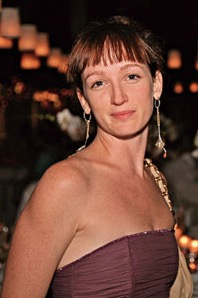
Made de Coney received an inheritance of US$ 5000 from her father (who lived in Bali) at the age of 23, and without thinking twice, used it to rent a shop and create the Lily Jean label. Influenced by international fashion and inspired by the local Bali artisans, Made uses imported materials and local hand work, especially in embroidery and batik. “The same artistry they use for their religious ceremonies are applied in every artistic endeavour.”

Roots Born in Bali, she spent a decade of her childhood in Brazil and studied fashion in America.

Milestones The label is available in 12 countries, and with five shops in Indonesia, Made can look back and say, “Now I realise it is quite an achievement!”

Customers “They are women in their teens who love the playfulness of the designs; they are women in their 20s who are seeking personal statements to make with their style; women in their 30s who embrace the need for changing expressions of self; and women of every age who appreciate the delight of dressing for their own pleasure in beautiful garments that enhance their sense of self.”

Challenges “I’ve learnt to be very tolerant of religious holidays (Christian, Muslim and Hindu) and to cultivate my patience.” 

Bali24

The Lily Jean Label has soft, stylish street wear and highly glamorous cocktail dresses with important materials and local handwork.

Kirsty Ludbrook
Artist and designer
www.kirstyludbrook.com; www.ludbrookandludbrook.com

Bali22

Kirsty Ludbrook moved to Bali to set up a home for her three boys – so that they could experience a world beyond the suburbs of Sydney. “The idea was thrilling and liberating. Especially our boys living this crazy exotic life in their early years, one that is so different to that which they would have had in Australia!” While she discovered that her flair for sketches and painting could be translated into sophisticated murals using local batik techniques on cloth, her husband Richard, a fashion photographer, is building a studio in Bali to accompany the very large one he already has in Sydney. “When I first arrived here I immediately started experimenting in my art with the new materials and techniques available – particularly with the rich, lustrous colours that could be achieved in silk batik work. As a result, my art evolved, and I have been working on portraits which are created by appliquing and embroidering together individual pieces of silks.”?Her paintings get an audience at her solo show in the Biasa Artspace this year.

Roots Sydney, Australia.

Milestones Kirsty has successfully sold a design agency in Australia,?and has been named by The Bulletin Magazine as one of Australia’s top 10 creative talents in their annual Smart 100 listing.

Challenges “The hardest thing is the fact that the Balinese are such nice people. They don’t want to disappoint you or say no. More often than not, being told ‘not possible’ at the beginning would have proven a little more practical.”

Bali19

Kirsty Ludbrook’s silk ‘Art Kimonos’ are inspired from costtume design in Japanese Manga and action films, while the hooded kimonos are from Ninja characters – which sounds deceptive, as the finished product is feminine, soft and very sensual.

Michela and Marcello Massoni
Creative head and business manager
Space and Brand: Gaya Fusion, Ubud
Screen Shot 2017-07-25 at 4.11.26 PM

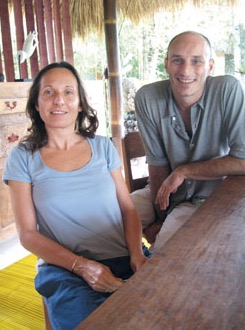
The first private contemporary art space in Bali was started by Stefano Grandi, an Italian entrepreneur, in collaboration with an Indonesian, Nyoman Birit. A young Italian couple, Marcello and Michela and their friend Giorgia Oronte were brought into the picture in 2003 with their background in sculpture and ceramics “to start a dream:? be able to be creative without limits and competitive and productive in an amazing environment.” With over hundred employees, Marcello manages Gaya Fusion, while Michela plays the creative head of the ceramics and sculpting division. Nostalgic about home at a time when Michela’s parents are visiting to meet the babies, they say that they “decided to move for the high quality of life, to give to our kids a natural living environment, to be creative without limits, to be inspired by the tropics and to be productive with capacities difficult to create in Italy.”

Roots Piacenza, a small town 50 km south of Milan, Italy.

Creative Space Gaya Fusion includes an art space showcasing local and international artists, a ceramic studio that exports and supplies to the top brands, including Bvlgari, Aman Resorts and Giorgio Armani Casa; private villas and spas with Italian-Balinese fusion architecture, and a restaurant offering Italian and Indonesian cuisine.

Challenges Dealing with Hindu culture, lot of ceremonies, beliefs, difficulty in finding a high level of professionalism.

Screen Shot 2017-07-25 at 4.14.00 PM

Using local products, Gaya Ceramics is always looking for new inspirations, as different clients mean different moods and designs. They make sculptures and unique pieces, while also producing nearly 5000 ceramic pieces a month.

Paola Zancanaro
Boutique owner and designer
Label: sKs or SimpleKonsepStore, Seminyak

Screen Shot 2017-07-25 at 4.11.33 PM

Paola Zancanaro hails from a long experiential fashion lineage. She studied fashion at the London College of Fashion, and began her career at Vivienne Westwood, in marketing, sales and events, then as celebrities’ dresser at Giorgio Armani, and finally at events at Prada, Milan. Ready for a change of culture, Paola considered Tokyo, but didn’t want a repeat of break-neck city life and chose Bali as her destination of choice. “I have been living on this amazing island for almost a year and half, its culture and nature are the reasons why I moved here.” She continued to work as a consultant for Prada events in Asia, while also becoming a part of a trendy boutique, sKs.

Screen Shot 2017-07-25 at 4.12.04 PM

Creative Space sKs – SimpleKonsepStore is the result of three Italian partners. All the sKs clothes are produced using antique Balinese techniques such as batik and silk screens. Paolo looks after the women’s clothes, while Mario Gierotto designs the menswear. Other accessories are from local designers and they also have exclusivity on Vivienne Westwood Jewellery.

Roots Born in Genoa and brought up in Alassio, Italy.

Challenges “Every day is a big challenge! You think you can do everything but when you get down to it, you realise is not that easy. Things do not get done quickly and as expected, but you can achieve amazing results by working with people who never stop smiling.”

sKs is a concept store where you can not just buy fashion but also find the latest gadget from Japan and real Italian design furniture such as the most iconic pieces from Kartell, Artemide, Flos and Alessi (brands that made history in the design furniture world).

Simonetta Quarti and Marco Lastrucci
Designers and boutique owners
Label: Quarzia, Seminyak

Screen Shot 2017-07-25 at 4.11.41 PM

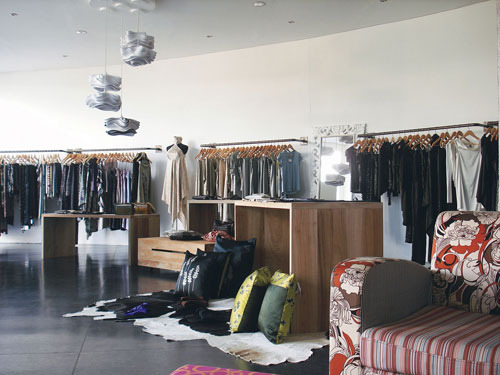
Marco Lastrucci and Simonetta Quarti started Quarzia, a chic boutique on Jalan Oberoi, (the main shopping district in Seminyak) in 2005, when nothing besides rice fields existed in the area. Hailing from a fashion background – Simonetta was a textile designer and Marco a financial manager, they were looking for a change, and Bali seemed like the perfect option. “The freedom to express ourselves and the skill of the Balinese people” were great motivators to the couple who have spent eight years on the island. Inspired by the old traditional design, they give the fabrics an European sense of colour and design. They are not driven by “creative stress” – having to come out with new collections frequently. Instead, they believe in “eternal” clothes that are one-of-a-kind with great designs, cuts and style.

Roots Florence and Venice, Italy.

Challenges It is difficult for the local artists to be precise and manage to get the exact shade of colour required in creating clothes of international standards. “We are completely different from the local people, but we respect each other and we can learn from each other.”

Bali12

Quarzia makes one-of-a-kind clothes, where design, cut and style are very important, and where a pair of pants can be eternal.


Stephanie Robert
Designer, painter and entrepreneur
Maisonbulle Ltd. (www.mbulle.com)
Screen Shot 2017-07-25 at 4.11.48 PM

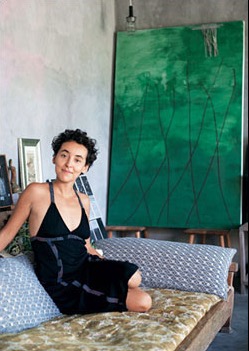
Stephanie has shifted through various creative interests and has entertained a relationship with the island since the early 90s when she came on holiday. “I loved the atmosphere and the endless possibility of creation and realisation the worker and their skills offered to one’s imaginative mind.” She returned to Indonesia to design, produce and buy a business she became a part of, for which she developed an interiors department, with the creation of a home textile and accessories line produced partially in Bali and India. Furniture took over textiles, and a sampling factory in Bali found Stephanie “enjoying experimenting, sharing knowledge and skill with a team of woodworkers, crafting beautiful pieces for single exclusive clients, architects, commercial decorators as well as large retail businesses.”

Roots France.

Design Style “Though my style would certainly reflect a great liking an admiration for the Scandinavian purist simplicity, mixed with an absolute love and fascination for the rough beauty of Asian road and country side furnishing and its practical laid-back attitude.”

Creative Space She is spearheading an online business, Maisonbulle Ltd. (www.mbulle.com) which an online catalogue of beautiful private holiday homes in Bali (and in the future globally), for which the main selective criteria is character. Specifically she recommends homes of designers, collectors, artists, philanthropists and travellers, whose homes reflect a unique character, to a similarly discerning set of travellers looking for a getaway. An editorial edition, Pulse, is soon to be launched. She also designs furniture and is a reclusive painter.

Stephanie puts her 15 years of experience travelling the world, particularly in Asia, into being a reference for “what is hot, stylish and worthy of attention”, with her online business Maisonbulle Ltd.

Susi Johnston
Art historian, designer, specialist sourcer
Store: Mican Tidur, Ubud 
Bali48


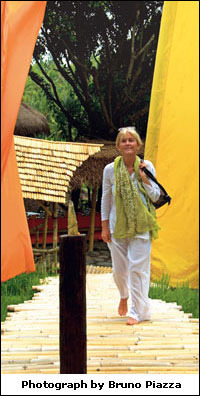
Determined to move to New Zealand, art historian Susi Johnston took a 14-year detour via Bali. She chose to ‘retire’ after a decade in marketing and public relations, “burnt out on fast-paced urban life,” and decided to spend six months in Bali doing “absolutely nothing”. She rented a little bamboo bungalow in the middle of the rice fields, near Ubud, and hasn’t looked back since. Susi speaks fluent Indonesian (actually stood in as a translator for an Indian yogi speaking to the local audience) and still hasn’t made that original relocation trip to New Zealand. “I ended up doing what I am currently doing in much the same way as so many other ‘accidental entrepreneurs’ who have found themselves in Bali,” says the ‘sleeping tiger of Bali’, who is a goldmine of information on the area and a regular blogger. She lives and works in collaboration with Bruno Piazza, her life partner, an Italian tribal art dealer and designer. They travel around Indonesia and mainland Southeast Asia together, “treasure hunting, feeding each other energy, inspiration, ideas and tastes”.

Roots Grew up in Seattle, lived in Scotland, London, New York and Hanoi.

Bali32

Creative Space Running multiple galleries with her business partners, Susi Johnston is in a space she terms “specialist sourcing”, selling genuine antiques and ancient artefacts, while also creating furniture, accessories, textiles and architectural elements in a collaborative effort.

Challenges “The education and training in Indonesia is far short of what it should be. It can be extremely difficult to put together skilled staff to fulfil the many roles that make up a modern business team.”

Susi Johnston’s companies make unique basketry objects that are more sculpture than mere baskets; work with local carvers and furniture makers who create works in stone, wood and mixed materials with traditional tools and methods. They are a part of the synergy between local and world culture.

Travel blog: The Roads Most Taken (Lonely Planet founders – Tony & Maureen Wheeler)

23 Thursday Apr 2009

Posted by sitanshi talati-parikh in Interviews (All), Interviews: Travel, Publication: Verve Magazine, Travel Stories

≈ Leave a comment

Tags

Interview, Interviews: Travel, Lonely Planet Founders, Tony and Maureen Wheeler, Verve Magazine

Published: Verve Magazine, Travel, April 2009

The founders of Lonely Planet Publications, Maureen and Tony Wheeler talk to Sitanshi Talati-Parikh about starting an empire, living like nomads, their experiences in India and often not being recognised

Tony05

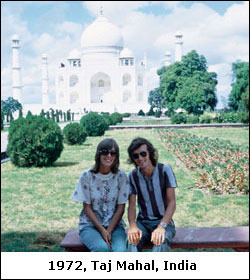
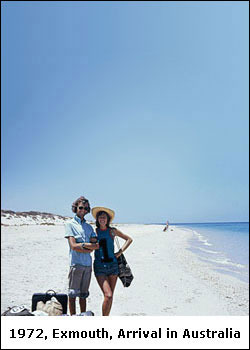
Simple, down-to-earth and practically incognito, the founder couple of Lonely Planet Publications whose guidebooks have become a bible for travellers, spend most of their time on the move. I find Tony Wheeler in his casual Hawaiian shirt, reserved in an unassuming sort of way; while Maureen, with trendy gold sandals and an instinctive sense of style is warm, friendly and bubbling with opinions, despite being under the weather. Their partnership is simple – ironically, Tony, hailing from England, with an MBA is the travel writer, while Maureen, born in Belfast, with secretarial skills and a degree in social work makes for a smart business person. Soon after their marriage, in the early 70s in an eventful overland trip to Asia on a shoestring budget, they reached Australian waters with no more than 27 cents and a camera (which they soon pawned). By popular demand they turned their experiences into a makeshift book, Across Asia on the Cheap. Eighteen months later, it was repackaged as South-East Asia on a shoestring, which has sold over half a million copies worldwide and is now in its 13th edition.

Today there are over 500 Lonely Planet titles, a thriving Internet community, and in 2007 BBC Worldwide took a majority stake in the company. Now, settled in Australia with two children, Tony, whose East Timor guidebook was awarded the Pacific Asia Travel Association 2005 Gold Award for Best Travel Guidebook; and Maureen, who has received the Inspiring Woman of Australia award (1999) and been voted Business Woman of the Year (2001), continue to travel to places that they haven’t yet been to. That is surprising seeing that they have already crossed more than 120 countries. Over an evening of conversation, I find that their experiences and decades of travel have led to their extraordinary success, which they handle with surprising diffidence.

Tony11

As travel writers, you must live nomadic lives….
Maureen Wheeler (MW): We could never stay in one place for very long, because you always have to keep moving in order to keep the information current. We never spend a week on the beach just relaxing….

Is it a part of a restless spirit?
Tony Wheeler (TW): Not so much a restless spirit as much as a necessity.
MW: The restless spirit comes first, before you become a travel writer. TW: I hate going back to the same hotel again.

Do things change for you once people find out who you are?
MW: People don’t really know who we are. I’m not amazed, but other people seem to be amazed by that. We just don’t look like anybody. If we get an upgrade, it happens because there isn’t another suite or something!
TW: Some places are very aware – but we don’t realise it. Our writers do prefer to go incognito – they get a more genuine impression. You have set the standard for travel writers….
TW: Our writers today are far more professional than we were.
MW: No. They have more ways of taking notes and better ways of keeping track with technology and the Internet, but we were very conscientious – we went to every hotel, restaurant. We had to sit down at every train station and make a list, when now you can just Google it. I don’t think that makes them more professional, just makes it a little easier for them.

Tony01

How diligent are you about each place you write about?
MW: We always went everywhere. We went to places where there was nothing. We spent three days in overnight trains getting to a place in India because we had heard you get mosaics there. After getting there, searching everywhere, we met a man who took us to a run-down villa and there was nothing to see! There was nowhere to stay or eat, so we spent another two days on the train getting back. And that ends up in the book as ‘There is nothing here – don’t bother going.’ There isn’t a standard stating you had to do ten pages, but that you had tried every single road.

In India, when Lonely Planet recommended ‘Rest House Bangalore’ other hotels changed their name to ‘Rest House Bangalore’….
TW: We are aware that in some places we have a really disproportionate influence, and we need to use that influence very carefully. We tell our writers not to be too enthusiastic and to rate judiciously.
MW: Indians are very entrepreneurial. We once got a letter from a traveller saying, ‘the hotel owner said they would give me a night free if I wrote a letter to you!’

Tony12

Do you feel content?
TW: I am proud of what we’ve done. We have done a good job and we have been honest. The guidebooks should do a number of things – they should be totally practical, but they also should be educational.
MW: There is nothing worse than sitting with a bunch of people who are talking through a performance – because they are there simply because it is a tourist thing. People should understand why it is important and to show respect as well. A guidebook must inform, educate and guide, but also give you the confidence to travel. If it can’t take you a little bit further than if you had gone without the guidebook, then it hasn’t worked well at all.

Lonely Planet – what’s in the name?
TW: It originated from a song by a late 60s rock and roll band, that went ‘Once while travelling across the skies, a lonely planet caught my eye.’ And I thought that sounded nice! The reality was Joe Cocker didn’t sing ‘lonely planet’, he sang ‘lovely planet’!
MW: When we started, it was just the two of us. But when people began reviewing these books, what stuck in people’s minds was the name of the company – Lonely Planet. People don’t go in and say ‘I want a Penguin book’ even though they know about Penguin the publisher. Very few publishers’ names are bigger than the authors.

You must have great language skills….
TW: I can say ‘yes’, ‘please’, ‘thank you’ and ask for a cold beer in lots of languages.

What’s home for you?
TW: London and Melbourne. Clothes hang in the wardrobe, so you feel like you live there. What do take with you when travelling?
MW: I can’t live without my iPod.
TW: I’m a technical person – I need my laptop and camera with me. You need your passport and a credit card, some clothes and something to carry them in, and you’re set.

Favourite travel spots?
MW: I love walking in Nepal.

Maureen has written a book Travelling With Children….
MW: We took our kids at a very young age – after three years it gets much easier, yet travelling without them seemed unimaginable. By the time our kids started school, they had already travelled almost everywhere. It is a rewarding experience having them along. All the little things that you have forgotten about begin to appear new as you see it through their eyes.

When you’ve seen everything, what do you do?
TW: Go back to your favourite ones.
MW: I don’t have a burning desire to keep going back to places – I like seeing new places, to go to different parts of places I’ve been to before…. I doubt we will see everything in our lifetime.

Travel blog: Hope Floats (Andaman and Nicobar Islands)

22 Wednesday Apr 2009

Posted by sitanshi talati-parikh in Publication: Verve Magazine, Travel Stories

≈ Leave a comment

Tags

Andaman and Nicobar Islands, Car Nicobar, India, Interviews: Travel, Port Blair, Verve Magazine

Published: Verve Magazine, Travel Special, April 2009
Photographs by Geeta Parikh

Andaman05

Sweeping palms and azure waters conjure up an idyllic way of life. Tragically, a gigantic and destructive wave washed all that away faster than you could say ‘Nicobar’. Sitanshi Talati-Parikh reports on the return of the celebratory spirit of life in Car Nicobar post the ravages of the 2004 tsunami


Andaman03

The Andaman and Nicobar islands evoke mixed feelings, predominantly those of curiosity. While images of gorgeous turquoise seas and pristine beaches are imagined by the mind’s eye, there is an element of uncertainty post the 2004 tsunami that ravaged lives and life on the islands. Pooja and Ankur Pandhe (Pandhe Group), currently on the island, are involved in the task of rebuilding local infrastructure. They initially teamed up with an NGO in 2005 and now work in tandem with the Central Public Works Department. Pooja informs me that the Car Nicobar island is a restricted area where tourists are not allowed without a special permit. This is not surprising considering it is an armed force base on which special training and testing activities are carried out, and also because of its strategic location – it’s only a few miles away from India’s southern-most territory, Indira Point.

Last year saw the little island celebrate for the first time in four years. The 55th All India Co-operative Week Celebration was held with over 10 of the villages involved in the performances and celebrations, including cultural exhibits and inter-village competitions. Local colours and moves kept pace with the coconut-flavoured delicacies. Life in this little big island is slowly but surely getting back to normal. Schools have started to run. With government-aided efforts including relief funding from agencies, concrete roads, permanent shelters and most importantly, food, have been provided to the inhabitants. You can spy school-going children scampering along, men feeding their pigs, women cooking or shelling coconuts, and you realise the locals do not have a fixed daily schedule. While the islands have fertile soil, relief funding has reduced the motivation to cultivate, grow and sell. A horticulture department on the island grows a few vegetables; otherwise all supplies are imported from Port Blair and nearby islands. There is actually no vegetation on the island.

Bright young entrepreneurs Pooja and Ankur find that, “The islands will continue to remain the abode of the Nicobari tribals, always remaining somewhat secluded from the life on mainland India. The beats of their tribal drums may bring back the memories of the devastating tsunami from time to time, but thanks to efforts from?various agencies, life is better now, foreseeing a better future for the next generation.”

Andaman02

TEMPTATION ISLANDS

While Car Nicobar restricts entry, the Indian Ocean offers many spectacular islands in the Andaman and Nicobar group which are great destination spots. Think rare flora and fauna, exotic underwater marine life and corals, crystal-clear seas and mangrove-lined creeks.

Port Blair This Andamanese town is home to several museums and a major base for the Indian Navy and the Indian Coast Guard. The Cellular Jail that became a symbol of the tenacity of the Indians in their freedom struggle is also located here.

Baratang From Port Blair ferries and a restricted Jarawa tribe area bring you to this island where you can check out limestone caves and a mud volcano.

Parrot Island Take a speed boat from Baratang if you are a parrot lover.

Havelock Island Tourist-friendly (with eco-tourism), great for scuba diving and known for its rich marine life. Can be reached by government boats that run from Port Blair.

Barren Island You can find the only active volcano in India here, with a big crater of the volcano rising abruptly from the sea. Can be visited on board vessels.

Ross Island Ruins and a small museum named Smritika holds photographs and the other antiques of the Britishers, the island having once been a seat of British power.

Getting There
Port Blair is connected with Delhi, Chennai and Kolkata by air. Regular passenger ship services are available to Port Blair from Chennai, Kolkata and Vishakhapatnam and back. Charter flights or ferries to other islands are also available from Port Blair. For more information go online to www.andaman.nic.in.

Travel blog: And When Home Beckons…. (Amanresorts, Bali)

22 Wednesday Apr 2009

Posted by sitanshi talati-parikh in Publication: Verve Magazine, Travel Stories

≈ Leave a comment

Tags

Amanresorts, Bali, Interviews: Travel, Verve Magazine

Published: Verve Magazine, Travel Special, April 2009

The complete Balinese experience includes rice paddies on mountains, volcanic home of the gods and sun-kissed beaches. Amanresorts creates a lifestyle out of intimate experiences with their three exquisite properties in Bali. Sitanshi Talati-Parikh discovers that these resorts go above and beyond making you feel right at home

Aman13

They say you just have to let go of all that weighs you down in the city and find yourself floating weightlessly along in Balinese heaven. I believe it’s the simple concept of going back to nature. What some people call luxury, it is very basically finding your roots.

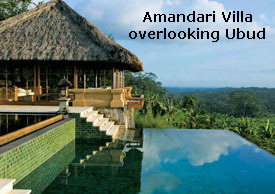
Seeing Bali through their eyes is about hillside villas designed like a Balinese village overlooking the best of Ubud at Amandari (peaceful spirits), sinking your toes into dark volcanic sand amid private bales poised against a backdrop of Mount Agung (a volcano revered as a home of the gods by the Balinese) at Amankila (peaceful hill), and finding yourself surrounded by the serenity of a golf course and most importantly, space, in Amanusa (peaceful isle). The typical Bali-Aman holiday drives you placidly through a time and space where you feel the world has taken a little pause, a deep breath to add some tranquility back into your life.

Aman02

Aman directly implies peace, and that is something that these worldwide resorts, from the very first one (Amanpuri, Thailand, 1988) have tried to incorporate. They successfully create a natural environment for you to feel rejuvenated. That doesn’t mean that water sports, helicopter tours, Balinese temples and spas are not on the menu. The difference lies in the little details. As I walk into the villa, I feel an overwhelming sense of grandeur that comes particularly from the large spaces, open air, thatched roofs that serenade the sky, and every object that has been meticulously drafted from local handicrafts and nature. Fresh flowers kiss woven cane and straw holders and muted earthen jars play hide-and-seek with overflowing sunshine. You feel like you are a part of nature with the open rain showers. I lie in front of the gigantic private pool and watch a play between a fat gecko and a palm frond and engross myself in the beautiful coffee-table books that lie on the traditional engraved chest.

With the high staff-to-guest ratio in these small luxury hotels, I am not surprised that the managers know each guest by name, leave handwritten notes for them and personally attend to them. I arrive at Amandari, with a host of allergies, and find the chef Morgan Lonergan and the sprightly manager Liv Gussing at my service, organising a customised meal on short notice. Within minutes, all the other resorts have been informed of my food restrictions, menus have been prepared in advance to accommodate them, and I find myself eating innovative meals that I have never enjoyed before now. Amanusa’s solicitous chef Hamish Lindsay actually prepared gluten-free cupcakes, pizzas and bread to go with the finely spiced local cuisine.

While the chefs and managers are expats who bring to the hospitality an international accent and finesse, the staff that is local and Balinese, (hailing sometimes from Java) are warm and inviting – take for instance the motherly Ibu Sariyani who has been with Amandari for 20 years. Amandari has built the resort right into the mountain, not separating it from the regular mountain paths – one such passageway cuts right through the resort and you can find the Balinese people trudging up and down on their regular beat. Faint melodies float through the air as a little dance school that is run on the premises allows the little local girls to practice and hone their skills, while the boys acclimatise themselves to local instruments.

Amid the scent of frangipani and tuberoses at Amankila, I discover that Amanresorts provides a sanctuary for people – rather than a place to see and be seen, it is a place where people who lead hectic lives, find quiet repository to detox. It is where songs of the birds and rustle of leaves come alive, over the much-needed silence of a non-existent television set. It is not surprising then, that the resorts have an extended list of famous people who choose to unwind here, often thinking, rejuvenating and maybe even writing a book or two.

Travel blog: From China, With Love (Vikram Seth)

22 Wednesday Apr 2009

Posted by sitanshi talati-parikh in Interviews (All), Interviews: The Arts, Interviews: Travel, Publication: Verve Magazine, Travel Stories

≈ Leave a comment

Tags

China, From Heaven Lake, Interview, Interviews: Travel, Lhasa, Literature, Tibet, Verve Magazine, Vikram Seth

Published: Verve Magazine, Travel Special, April 2009
Illustration: Bappa

The reclusive writer Vikram Seth goes From Heaven Lake down memory lane. While at the University of Nanjing, young Seth, armed with a rare travel card, began a hitchhiking trip through the remote parts of China all the way to Lhasa, traversing difficult climatic zones and eating glutinous broth with pork fat floating in it. Sitanshi Talati-Parikh finds the writer fondly nostalgic

Vikramseth

He is as charming as he is reticent. He faces audiences like a pro; wooing them and making them chuckle with his tongue-in-cheek humour. I watch as he quietly walks to the people he knows, greeting them in perfect English and Hindi. He mingles with the cocktail crowd, and it is hard to remember that he is indeed reclusive. As little children put up a performance in his honour, he pays them full attention, and is willing to cut his talk short to ensure that they have sufficient time. Over cocktails at Amandari, the audience reaches out to him, asking him about his irrepressible journey, referenced in his travelogue From Heaven Lake – Travels Through Sinkiang and Tibet (1983).

Extracts from the conversation with Vikram Seth:

You were in China when it was a “different era”. Did you have a sense of the scale of difficulty?
No! If I had, I would have never done it. ‘Rules are rules’ – I can’t tell you how many times I heard that in China. The only way to counter a rule was to invent an opposing rule.

You had some interesting experiences with the Chinese language.
When I first went to China, I could hardly speak Chinese, despite having studied it. So when my friends asked me how I came to China, I used the wrong intonation of speech. When I meant to say aeroplane, it actually sounded like ‘fat chicken’.

You went to the local truck station instead of taking a train or plane. Why that particular choice of transportation?
I didn’t have very much money. I was in this desolate desert town called Willow Garden – the last willow must have disappeared several hundred years ago. After two days it was like descending into a vortex of despair. I ingratiated myself with a person leaving soon in an army truck that was loaded up to the brim with live chickens and fruit, with very inefficient heating. Not very far there were huge floods across the desert where we were stuck for days on end. The one thing you don’t expect in the desert is a lot of water, but it’s always there when you don’t need it!

What drew you to Tibet?
Tibet is a mixture of two great culture zones. It was a mysterious land and with my brother gearing towards Buddhism, I felt a strong inclination to go there. The feeling lingers to date. So strongly was it fixed as an aspiration, that even when it was fulfilled, it didn’t seem plausible.

People you met along the way had been trained to be very suspicious of foreigners. What kind of response did you get?
Quite rightly, if your family’s well-being is at stake, or you might be put down as consorting with foreigners, then it is absurd to put yourself in that kind of risk. Some people were keen to use you as a punchbag for language practice, others wanted to get to know you. Eventually you realised what good friends the Chinese make – reticent, and with a subtle and slapstick sense of humour.

Why did you decide to turn your experiences into a book from journals and photos?
I arrived home and was initially mistaken for a street peddler. I was burnt black by the sun, was wearing a blue Chinese cotton coat and carrying a Hessian sack with all my belongings. Eventually, I got really impatient and bored narrating my stories, so I decided to write a few pages. And then strange people appeared at my door, apparently from the foreign ministry armed with maps of China. My father suggested writing a book about it. And that’s what I did. I had no agent – I just sent out ten letters and a map!

Tell us about Heaven Lake.
It is a beautiful snow-fed mountain lake in a small range of mountains in the middle of the desert. You’re baking in the heat, have to buy a cap for yourself, and as you go higher and higher, you visit Heaven Lake – and actually freeze.

The foreword to the book was written “in white heat” three days after the Tiananmen Square massacre.
In some sense, I am not really qualified to speak about the state of affairs. I have followed it with interest, but I haven’t been back. No one has ever said that the dreadful massacre was wrong. Even now, at a time when the government has created such a prosperous economy, there’s such a strong journalistic hand – and a brutal hand – upon people who want to exercise free speech. Any alternative power centre or centre of allegiance has been crushed with an iron hand. I don’t know where it will lead! Chinese history is perhaps more brutal, and there is a more humanist tradition that goes through it, than in any other country. Even at times when people are in despair, like during the Cultural Revolution, when they had to betray their families, they took refuge in their great poets. They see long continuity, and it helps them get through terrible times.

Do you imagine having the freedom to say ‘I will stay a few extra days’ or to have an adventure like that again?
I am trying to enter a second childhood, by refusing to do anything. I rarely accept invitations and keep, as far as possible, a blank calendar. And it is not just so much a question of saying ‘I’ll stay here’, but it’s almost as much a question of ‘I am doing Chinese calligraphy, or painting,’ without having the obligation to go somewhere, or be somewhere. My friends now invite me on very short notice – if I’m not on the 13th line of a sonnet, then I’ll say, ‘sure’ – if they invite me with six weeks notice for a sit-down dinner, the answer is: ‘Don’t depend upon me.’

It has been two decades since you have revisited China….
It was 1982 when I left China after staying there for two years. In 1989 I went back, seeing that China, like the whole communist world, was opening up. Three days after returning from my visit, I read the newspaper and the headlines – the massacre of thousands of people on the square. Of people who wanted nothing more than a more open system. Sooner or later I will want to go back to China – it is very close to me and to my heart, in terms of the culture. Places change. India has changed a lot.

← Older posts
Newer posts →

|  Filling the gaps between words.  |

Writing By Category

  • Art, Literature & Culture
  • Brand Builidng
  • Brand Watch
  • Fashion & Style
  • Features & Trends
  • Fiction
  • Food
  • Humour
  • In The Media
  • Interviews (All)
  • Interviews: Business
  • Interviews: Cinema
  • Interviews: Cover Stories
  • Interviews: Lifestyle
  • Interviews: Luxury Brands
  • Interviews: The Arts
  • Interviews: Travel
  • Musings
  • Parenting
  • Publication: Conde Nast
  • Publication: Elle
  • Publication: Mint Lounge
  • Publication: Mother's World
  • Publication: Taj Magazine
  • Publication: The Swaddle
  • Publication: The Voice of Fashion
  • Publication: Verve Magazine
  • Social Chronicles
  • Sustainability
  • Travel Stories

Reach out:
sitanshi.t.parikh@gmail.com

© Sitanshi Talati-Parikh 2018.
All Rights Reserved.

Website Powered by WordPress.com.

  • Subscribe Subscribed
    • sitanshi talati-parikh
    • Join 51 other subscribers
    • Already have a WordPress.com account? Log in now.
    • sitanshi talati-parikh
    • Subscribe Subscribed
    • Sign up
    • Log in
    • Report this content
    • View site in Reader
    • Manage subscriptions
    • Collapse this bar

Loading Comments...