• About
  • Brand Building
  • Film & Drama
  • Writing: Arts & Lifestyle
  • Writing: Interviews
  • Writing: Luxury Brands
  • Writing: Travel

sitanshi talati-parikh

sitanshi talati-parikh

Tag Archives: Art

A Glass Front

25 Wednesday Jun 2014

Posted by sitanshi talati-parikh in Brand Watch, Publication: Verve Magazine

≈ Leave a comment

Tags

Apple, Architecture, Art, Steve Jobs, Technology, Verve Magazine

Published: Verve Magazine July 2014

Apple Inc. changed the meaning of bricks-and-mortar with their spectacular, award-winning glass-and-steel flagship stores. We take a look at the architectural face of the brand

Apple Stores architecture

Clear glass, one crisp bitten virginal apple and a cult following to rival a pop star. Steve Jobs, the late co-founder of Apple, Inc. was a renowned stickler for design. There was no way he would retail his beautiful phones, computers and ‘haute couture’ tech gadgets in a shoddy showroom. While the majority of the showrooms exist in malls in a minimalistic steel-and-glass décor, Apple’s flagship stores have won numerous architectural awards, especially the one located on Fifth Avenue in midtown Manhattan, New York City. This particular one, open 24/7, 365 days of the year, has an iconic glass cube structure, which was completed in 2006 and revisited in 2011 to the reported cost of $7 million and $6.7 million respectively. The glass panes were replaced and fitted with larger ones to reduce the number of visible seams…because only one company in the world would care that much about judging the product by its display area.

Glass cubes, glass stairways with engineered precision, round glass elevators, glass bridges…and an inverted glass pyramid for the one at the Louvre; it is obvious that Apple loves the clarity and simplicity of glass. It’s as if Jobs wanted to provide a see-through looking glass to his products; a pedestal or shrine to the revered goods that should clearly be visible to anyone passing by. And there are many, who come to stare, openmouthed at the larger-than-life stores. The one on Fifth Avenue, for instance, is one of the most-photographed structures in the city, which is saying a lot! Despite the reverence towards steel and glass, you wouldn’t be hard-pressed to find instances where the Apple stores utilise and work around the aspects of the buildings’ original architecture – as seen when it maintained the romanticism of Paris in its Opera store.

Travelling the world with Apple: from 40,000 square feet of retail space in London; a huge, offset stainless steel frame holding the iconic glowing apple logo in Beijing; rooftop grass with a skylight visible to surrounding buildings in Boston; a big steel tunnel in Chicago; and a towering glass cylinder and spiral stairway in Shanghai, we arrive at Apple’s Grand Central Station store, which wraps around the station’s terminal from a balcony position, making it one of the largest Apple stores in the world. And while it’s not a big deal to open a store in a mall or an airport, evidently you need to be the cat’s whiskers to be given access to the Carrousel du Louvre, the underground shopping area in Paris, where the inverted glass pyramid is now as much of a talking point as Dan Brown’s imagination.

While the architectural firms Bohlin Cywinski Jackson (BCJ) and more recently, Foster + Partners have a heavy hand in the engineering and designing of the stores, Apple has  patented or filed patents for their most original designs, such as the cube and the cylinder. Steve Jobs’ name is listed first on those patents. There is even a technical patent for the engineering behind the complex glass and hardware system. Last year, in an effort to drive the success post Jobs’, the current CEO, Tim Cook, hired Angela Ahrendts, the person behind Burberry’s transformation into a symbol of global luxury. She’s been busy reshaping Apple’s physical and online retail efforts so that they both achieve a parallel cult status.

Steve Jobs masterminded the concept of retail and brand experience, hiring people specifically to drive this strategy. The high-profile retail stores, developed by Jobs, the Apple retail team, designers Eight Inc., architects Bohlin Cywinski Jackson and structural engineers Eckerlsey O’Callaghan have become among the most recognised brand expressions in retail. In fact, the one at Fifth Avenue beats Saks, Best Buy and Tiffany & Co by a mile in sales per square foot per year. With the ‘Genius Bar’ concept, customers can set-up their products or receive technical advice, while the chic stores create a sense of sharp intellectualness – a person breezing in would automatically feel part of an elite and clever gang. After all, Apple could be credited in part with making smart, cool.

Ever seen the lines in front of American booksellers before the next Harry Potter installment was due? Apple store openings have it bad. Followers and Apple-lovers (they exist in drones) line up early in the morning or even the night before to watch history being unveiled in their town. Some have more mercenary desires like the potential giveaways. The recent Apple store opening in Istanbul promised the first 4,500 entrants free T-shirts. Three thousand shoppers waited in line for the opening of Apple’s Sydney store in 2008. Alternatively, outraged Chinese Apple fans threw eggs at the Apple store in Beijing after sales of the iPhone 4S were cancelled! Wonder what is likely to happen when an Apple flagship store hits the mean streets of Mumbai?
A High Seat

10 Tuesday Jun 2014

Posted by sitanshi talati-parikh in Art, Literature & Culture, Publication: Verve Magazine

≈ Leave a comment

Tags

Art, Mansoor Ali, Verve Magazine

Published: Vervemagazine.in June 2014

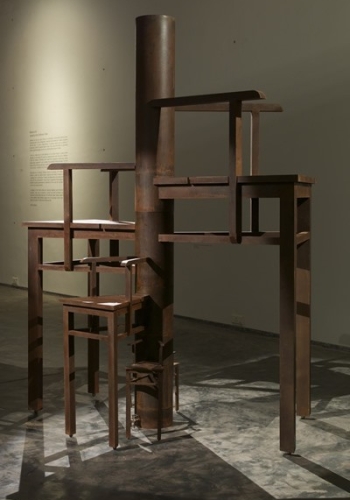
The lowly chair is also representative of the highest seat in the country. Mansoor Ali in a debut solo comments on the political system through his larger-than-life chair sculptures

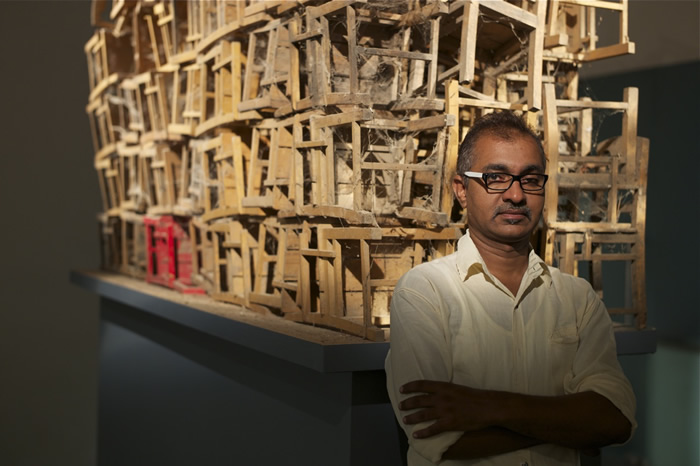
Mansoor Ali Artist

t’s the Indian political system, or the lack of it, that interests Gujarat-born artist Mansoor Ali. He uses chairs as a means of political commentary, and by changing their usual configuration, proportion and context, he opens up a dialogue of interpretations.

Anatomy of an Unknown Chair is Ali’s debut solo, where in The Restless Chair, you are looking at a seat that is constantly in motion and rotates faster as you approach it; Monument to an Unknown Politician is 102-inches tall where the central column supports seven chairs of various dimensions and to reach the highest chair, you have to climb the smaller ones. The biggest chair moves in a circle, but is going nowhere. In Weight of the Political Brain, an industrial weighing scale forms the seat of an oversized chair and a miniature version of the parliament house rests on the seat. The overhead digital display reveals the weight of this political nerve center to equal that of an average human brain. It is nudging us to question the people in whom we put our faith.

Mansoor Ali lives and works in Baroda and New Delhi. His works are a part of the collections at Saatchi Art Gallery. His solo show, Anatomy of an Unknown Chair, is on at Gallery Maskara, 6/7 3rd Pasta Lane, Colaba until July 31. Timings 11am to 7pm, Tuesday to Saturday.

Mansoor Ali

5 Questions with the artist:

1. Artistic motivation: “Art comes naturally to me. It is like a story in novel or a film in one frame – just like a good poet tells it.”

2. Inspirations… “I pick up my subjects and ideas from the environment and my experiences.”

2. Artists at home: “For me it is Andy Goldsworthy…if I could ever have one!”

4. Concerns that show up in your art: “It is the quest for humanitarian concerns and to address them to my best capability.”

5. If you weren’t an artist, you would be… “An architect, ad man or an author.”

A Parisian Rhapsody

10 Tuesday Jun 2014

Posted by sitanshi talati-parikh in Art, Literature & Culture, Publication: Verve Magazine

≈ Leave a comment

Tags

Art, Maya Burman, Verve Magazine

Published: Vervemagazine.in, June 2014

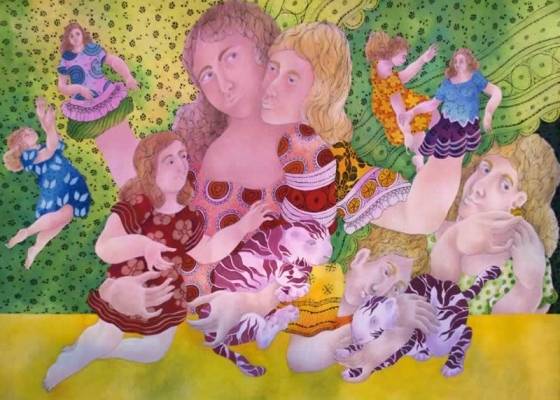
If she weren’t an artist, she would admittedly be a nightmare for her family. Parisian, Maya Burman, marries artistic traditions of France and India in her works, on show in Mumbai

Maya Burman Artist

The 43-year-old Paris-based Maya Burman creates works that have painstaking detailing for which she works in a methodical and laborious fashion: starting with a pencil sketch, moving on to a layer of watercolours and finishing with a black ink pen. Reminiscent of the French art nouveau tradition and drawing from Indian miniature painting, the artist happily merges two cultures in her evocative works.

Maya Burman’s works are can be viewed in a solo show, Rhapsody, at Art Musings gallery, Colaba, Mumbai until 20 July 2014. Monday to Friday 11am – 7pm, Saturday 11am – 5.30pm, Sundays closed. 

5 questions: Maya Burman

1. Artistic motivation “The pleasure of being alone, spending time with myself and escaping into my own world.”

2. Inspirations “Beauty, poetry and innocence in everyday small things.”

3. Art at home “I have no more space on my walls, but I will make some space for erotic drawings that I have started to collect.”

4. Concerns that show up in your art “Offences against women – present in subtle undertones in my work.”

5. If you weren’t an artist, you would be… “A nightmare for my family!”

Faces of Venice

06 Friday Jun 2014

Posted by sitanshi talati-parikh in Art, Literature & Culture, Brand Watch, Publication: Verve Magazine

≈ Leave a comment

Tags

Art, Books, Interviews: Luxury Brands, Interviews: Travel, Louis Vuitton, Venice

Published: Vervemagazine.in, June 2014

What do staged photographs and manga comic strips have in common? Espace Louis Vuitton Venezia presents an exhibit of more than 30 sketches and 25 photographs in a curated exhibit, Sguardi Incrociati a Venezia, starting today. Take a look….

Venice by Mariano Fortuny (below)

Venice by Mariano Fortuny Venice by Mariano Fortuny

Louis Vuitton Travel Book Venice 2014, Jiro Taniguchi (below)

Louis Vuitton Travel Book Venice 2014, Jiro Taniguchi Louis Vuitton Travel Book Venice 2014, Jiro Taniguchi

When art, fashion, travel and photography come together, it is always promising – and this one is a cracker of a combination. Japanese Manga artist, Jirô Taniguchi’s new works come on display next to the late painter, set designer and photographer, Mariano Fortuny’s photographs; with the two offering striking views on Venice.

The exhibition Sguardi Incrociati a Venezia, curated by art historian and author Adrien Goetz, displays more than 30 sketches, made by Jirô Taniguchi with 25 photographs by Mariano Fortuny held in the reserve collection of the Palazzo Fortuny, together with films and books, after meticulous restoration work (funded by Louis Vuitton as part of its partnership with the Fondazione Musei Civici Venezia).

The exhibit also launches the Louis Vuitton Venice Travel Book, designed by Jirô Taniguchi. The Louis Vuitton Travel Book collection attempts to embark upon “real and virtual voyages, enriched by intellectual stimulation and poignant moments”, filled with illustrations by artists that describe their own personal journeys.

The Sguardi Incrociati a Venezia Exhibition begins today, June 6, 2014 and lasts until November 18, 2014 at Espace Louis Vuitton Venezia, Calle del Ridotto 1353, 30124 Venezia. There is no entry charge; timings are 10.00 am to 7.30 pm.

‘Sleeping Through The Museum’

14 Wednesday May 2014

Posted by sitanshi talati-parikh in Art, Literature & Culture, Interviews (All), Interviews: The Arts, Publication: Verve Magazine

≈ Leave a comment

Tags

Art, Verve Magazine, Waswo X Waswo

Published: Vervemagazine.in, May 2014

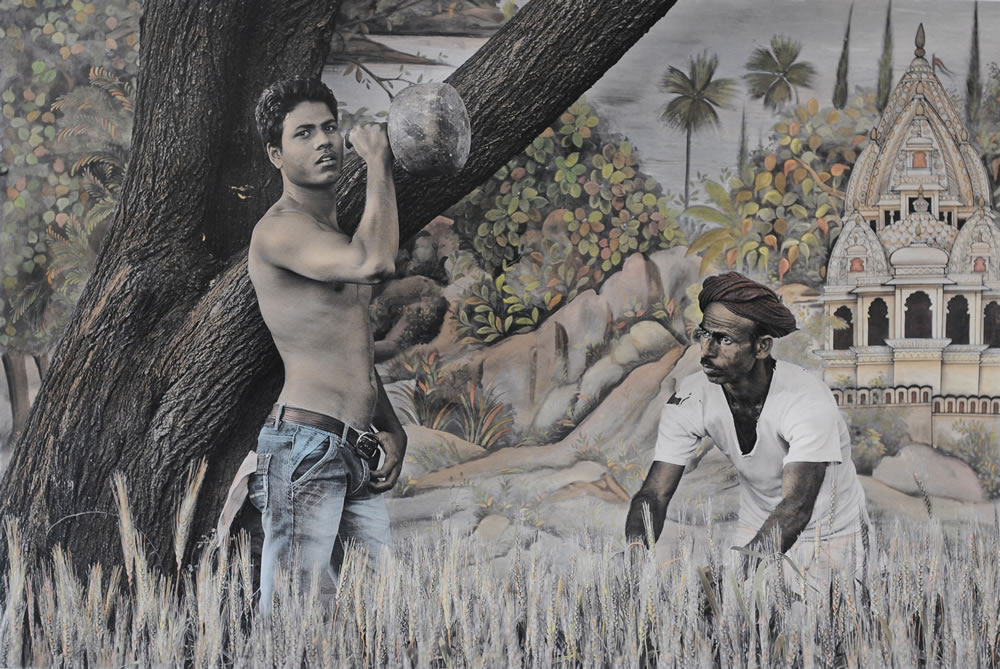
Waswo X. Waswo critiques the process of “museumification” in a show at Sakshi Art Gallery, Mumbai

Waswo X Waswo

5 Questions: Waswo X. Waswo

1. Artistic Motivation I grew up in an artistic family, so art has been part of my life since day one. It’s sort of a cliche to say art is about communication. Maybe I think about it more as a way to examine issues, and the world around me. It is in large part a way I look outward, but also self-examine.

2. Inspirations I could name a long list of artists and photographers who have inspired me, and still do. But for this particular exhibition I have to name a member of my own family, Ed Green, whose job it was to organise the painting of dioramas in the local natural history museum. This show is all about the issues that arise from that.

3. Art in your home Besides making my own art, I’ve also formed a very large collection of Indian printmaking. That collection was shown last year at the NGMA-Mumbai. So my home is filled with vintage and contemporary etchings and woodcuts by well-known Indian artists. My interest in printmaking is why I asked the young lithographer Subrat Behera Kumar to be a part of this show.

4. Concerns that show up in your art I’m concerned with how the world is being torn apart, it seems everywhere, by cultural misunderstandings. A large part of my art has been to explore these misunderstandings, and try to learn what creates them.

5. If you weren’t an artist, you would be… Believe it or not, when I was young, I also wanted to work in a museum like my cousin Ed. I dreamt about being a ‘curator’ long before that word came into common usage and fashion. If I hadn’t followed an art career, maybe that is where I would have found myself.

The show Sleeping Through the Museum previews tonight and is on until June 21, 2014 (11pm-6pm) at Sakshi Art Gallery (6/19, Grants Building, 2nd Floor, Arthur Bunder Road, Colaba, Mumbai.)

Simmering Voices

13 Tuesday May 2014

Posted by sitanshi talati-parikh in Art, Literature & Culture, Publication: Verve Magazine

≈ Leave a comment

Tags

Art, Soghra Khurasani, Verve Magazine

Published: Vervemagazine.in, May 2014

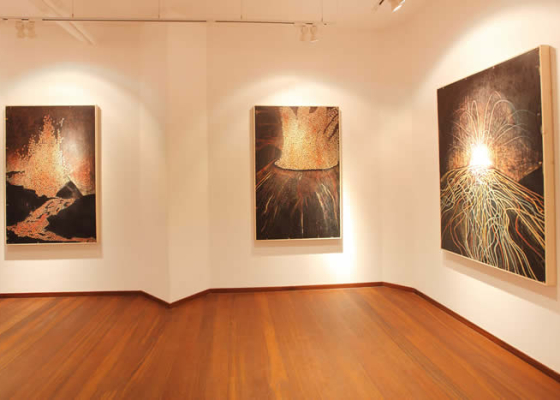
Soghra Khurasani works are layered with social and historical references and she speaks up for women. Through printmaking as well as new media work, she is able to explore and express ideas of beauty and violence, using an incredible attention to detail

Soghra Khurasani Artist

31-year-old Soghra Khurasani comes from a family that had migrated from Khorasan in Persia to Vishakhapatnam. She graduated in 2010 with a degree in printmaking from the Maharaja Sayajirao University in Baroda. Khurasani uses printmaking; sight-specific installations that use cloth and wire mesh, and using the colour red, to voice her opinion.

She carved a triptych woodcut of throbbing hearts calling them ‘Braveheart’, in 2009. In the aftermath of the 2012 Delhi rape, Khurasani created a series of large and small woodcuts in 2013, where her woodcuts depicted a volcano.

‘She explains them as emotional outbursts, a pent up frustration of her disappointment with people, her rejection of the years of violence she had witnessed for the last two decades, where the victims were primarily women. Khurasani’s red represents exuberance, a spout, a flow and a relentless energy, that is feminine and unrepressed,’ explains Sumesh Sharma in his introduction to her recent works.

4 Questions with the artist, Soghra Khurasani:

Artistic motivation “It’s a medium where I can explain my inner thoughts and feelings.”

An artist that finds place at your home “Zarina Hashmi.”

Your art reflects “I believe that we are losing our freedom to express ourselves, and that every human should be free. This theme finds a place in most of my works.”

If not an artist, you would be a… “Cricketer.”

One Day It Will Come Out, Solo Debut Soghra Khurasani, curated by Hena Kapadia & Sumesh Sharma, is on until June 7, 2014 at TARQ,  Dhanraj Mahal, Apollo Bunder, Colaba, Mumbai, from 11am-6pm, Monday through Saturday.

Kala Ghoda snapshots

05 Wednesday Feb 2014

Posted by sitanshi talati-parikh in Art, Literature & Culture

≈ Leave a comment

Tags

Art

The Kala Ghoda festival 2014 is comfortingly similar, while the installations aren’t ground-breaking. Here’s a look:

This slideshow requires JavaScript.

Artistic Brainwaves

11 Wednesday Sep 2013

Posted by sitanshi talati-parikh in Art, Literature & Culture, Publication: Verve Magazine

≈ Leave a comment

Tags

Art, Reviews, Verve Magazine

Published: Verve Magazine, Nerve, Art Pick, September 2013

Former newspaper cartoonist, Raghava KK, uses art and technology as a means of storytelling – often dramatic and radical

Image

He’s one of CNN’s 10 most remarkable people (2010), a four-time TED speaker, a lecturer at top American schools and his iPad book, Pop-it, won several awards, including a Kirkus Book Award (2011). New York and Bengaluru-based artist, Raghava KK quit school at 18 to start his career as a newspaper cartoonist. Now, the successful young artist is also actively involved in a radical education initiative, NuVu Studios, an offshoot of Harvard and MIT, to redefine creativity in education. He combines art and technology to bring multiple perspectives into the deployment of knowledge. His new show That’s All Folks! has come about through “the emotional mapping of the three disparate worlds: The Cartoon, The Historical, The Memetic”. Verve catches the artist, who believes in “non-linear, dispersive, collaborative storytelling” for a few questions.

Raghava KK’s solo show, That’s All Folks!, will be on at Art Musings, Colaba, Mumbai, from September 4 to October 25, 2013.

RAGHAVA SPEAK

How does your iPad art book Pop-it bring perspectives to children?
I created the book when my first child was born. Pop-it is about the things children do with their parents. It shakes up the concept of the ideal family and is meant to expose children to multiple perspectives at the earliest stage. The book starts out with a gay couple raising a child. If you shake the iPad, you get a lesbian couple. Shake it again, and you get a heterosexual couple. I can’t promise to bring my children up without biases, but I can promise to expose them to as many biases as possible.

Where do memes in art take us – are they a bridge between the graphic form of visual storytelling and the print form?
Contrary to what it may appear, memes serve exactly the opposite purpose. The meme breaks the bridge, giving the graphic a life and context of its own, disconnected from its original intent. (A meme, like a gene, contains certain properties, including the ability to self-replicate. But unlike a gene, a meme can move laterally and hierarchically from host to host, much like a parasite would. Memes create emergent phenomena when they reach critical mass and have a life of their own, separate from the life of their creators and replicators.)

Your interactive artwork brings together science, technology and art….
My brainwave art pieces use the viewers’ thoughts and mental state (read by an EEG headset) to dynamically bias and change the artwork. I am currently developing works using other biochemical sensors, kinect hacks, and a new touch-screen frame technology. These works are changing the role of the viewer from that of just a spectator to an active, biasing participant in the artwork.

Do you see the extinction of the traditional canvas?
Each medium, whether paint, digital, iPad, or performance, lends a unique perspective to the visual experience. I don’t see the future as doing away with any one of these unique forms of expression. Instead, I see a more inclusive pool, where there will be unique combinations and re-combinations of these mediums arising in new exploratory visual experiences.

Living off my Art: Comment

10 Wednesday Jul 2013

Posted by sitanshi talati-parikh in Art, Literature & Culture, Humour, Publication: Verve Magazine

≈ 1 Comment

Tags

Art, comment, Verve Magazine

Published: Verve Magazine, July 2013 (Illustration, Farzana Cooper)

Can the world that we live in become more valuable simply by the company we keep? Surrounded by the Masters, Sitanshi Talati-Parikh finds that happiness can lie in the brushstroke and in its bottomline

Image

As the Sensex crawls indefinitely, I have decided to buy art. Gold is too over-priced, and frankly, a wee bit middle class. I’m not particularly classist; it’s just that thing – clutching onto a shiny nugget hoping that when the Income Tax guys come and raid your house, you can slip it into your pants and hide it, is not quite my scene. I’d much rather play it cool – in the Thomas Crown way…where his heart was linked to his art and his art was all linked to his masterpieces of theft. But he didn’t really steal, he just borrowed and often did this cool barter thing, where he left one of his own paintings there and took theirs. Basically Pierce Brosnan made art cool. He loved Monet, and one of those is far more beautiful than anything Hirst (Damien, for the uninitiated) could ever dream of doing. Whatever you may say, installation isn’t quite art. I know it’s a huge topic of debate, but art should be old-fashioned and romantic, the kind that you have to painstakingly hang on a nail, look at, and think – ‘How beautiful, I so can’t do that!’ as opposed to, ‘Hmmm, interesting. But really, my dog could have pooped better than that splat.’

While I’m not a big collector or anything, I just like filling up space – the walls, the corners; the void inside me. So I live in this rent-controlled apartment, (at Rs 1800 a month for a one-bedroom in SoBo, it’s a total steal), and I pour all my money from being a finance geek into the art world. Sure, I know the anomaly – someone who gets money doesn’t really get art, but I’m one of those weird breeds that actually earn to spend on a bit of culture. Not that you can buy culture, but it’s cool to pretend. Basically, every inch of my house that was previously exposed is now covered – and I mean the ceilings, too. I believe in optimum use of space, so you’ll find Paresh Maity’s Kerala and rain-washed De charcoals next to Riyas Komu’s large portraits. I’m not a big name dropper, so I won’t go into the details of who else lives in my house with me. And I’m not fussed about the positioning, except when a curator-friend sort of talked me into buying Subodh Gupta’s installation. That’s when I got a bit annoyed with art. I know he’s doing some clever stuff, but my pad doesn’t really have any space and if I need to put his works in the kitchen, may not the universe object to his objectification? The problem with art is that there are way too many problems. But I figured that I put down good money to buy the stuff, so can’t I put it where I please? And thus, in the kitchen they are lodged.

And then, a well-meaning friend – I don’t know what he was suggesting – from the UK actually organised a replica of Damien Hirst’s Unmade Bed to be sent to me. (I don’t know why he bothered, because the real one is probably worth less than the fake right now. Didn’t you hear? The art world has totally shunned Damien.) When people hear on the grapevine that you are into art, firstly they assume you are into the new-age stuff. Secondly, they assume they can impress you with some of their outlandish picks. Thirdly, they think you won’t care if the stuff is a fake. Sure, I’m no Jobs, but I’m the real deal. I treat art the way a tree-hugging environmentalist would treat, well, a tree. Or a figure-hugging fashionista would treat Beckham. OK, so I was referring to David…I’ll change that to Herve Leger instead. Basically, I want the original. Which is why I stick to what I can afford. Hirst – real or not, is a con job either way. I mean now I have to actually sleep in his Unmade Bed, because I don’t have anywhere else to dump it!

Eventually, as life would have it, my mum stopped by to meet me one day. She generally avoids my home, because she thinks it’s a bit overwhelming and no amount of protesting that the condom on the bed was Hirst’s and not mine made her change her mind. She believes I have been dating some Shantaram-type character called Hirst (she keeps asking what his last name is) and refuses to step foot in my boudoir since. Oh well. Let’s be thankful for small mercies. Anyway, so she decided to freeze some food for beta, because beta isn’t getting enough home-cooked food. (I’m a girl, but I’m still beta. She doesn’t discriminate that way.) She sort of used Subodh’s stuff…I don’t really have any use for my kitchen, when the universe has kindly invented take-out. She didn’t understand why I looked so horrified that she would use Subodh’s stuff, she thinks Subodh is an irritable cook who doesn’t like anyone touching his utensils. (There may be some Freudian thing there with the real Subodh and his utensils. To be discussed over wine with curator-friend later.) When no amount of convincing my mom that she should just express mail food to me instead worked, I just decided to let it wash away. It didn’t seem worth the effort, and who’s going to snitch on me and tell Subodh? Who knows, maybe Bharti does it too. Though she doesn’t seem the cooking kind, to be honest.

So that was two months ago, and I’m thinking of starting my own business. I like to sleep in, and reaching my job on time has become increasingly difficult. The wannabe Hirst bed came with a great spongy mattress that doesn’t make me want to leave, ever. So I figure that if I start my own venture, I can also start at my own time? The only deal is that I need to put in a sum of money, as a goodwill gesture. I haven’t been able to leverage off anything, but as I lie thoughtfully on my unmade bed, I can’t help but notice a rather over-crowded wall. I could easily pluck one of those out, hand it over as my part of the investment and not even feel the difference. It’s like having one too many bags. When you are shopping you can never have one too many bags, but when you look at them all lined up at home, you wonder if it would matter if you had the peach Prada when you already have the beige Birkin. Culture, after all, isn’t like any other material acquisition. The more you give away, the more the world recognises that you have it.

I got my curator-friend in to help me choose. While she suggested hocking the obvious, I was rather loath to part with the household items that had now found a home. So, goodbye concentric circles…. May you find another home that loves you the way this one did. And while we are on the topic of blessings, one day, when I have a child who will be born in a material world, may she learn to appreciate the legacy I leave behind for her: of painstakingly brush-stroked wealth, of seasoned culture and a diary to my life, choices and moods, all on my walls.

Canvas and Kitsch: Trend

10 Wednesday Jul 2013

Posted by sitanshi talati-parikh in Art, Literature & Culture, Publication: Verve Magazine

≈ Leave a comment

Tags

Art, Verve Magazine

Published in Verve Magazine, July 2013 Art special

Is great art often discarded as kitsch? Can kitsch overtake art or is true art non-submissive to popular culture and commercialisation?

You can’t help reflecting your prejudice – and occasional snobbery – when you attempt to define kitsch. Oscillating wildly from the vulgarity of commercialisation to the sentimentality of cultural icons, most people’s version of kitsch falls somewhere in between. Wikipedia describes it as, ‘a style of mass-produced art or design using cultural icons. The term is generally reserved for unsubstantial or gaudy works, or works that are calculated to have popular appeal’. Kitsch is often looked down upon as melodramatic and sentimental in its artistic expression.

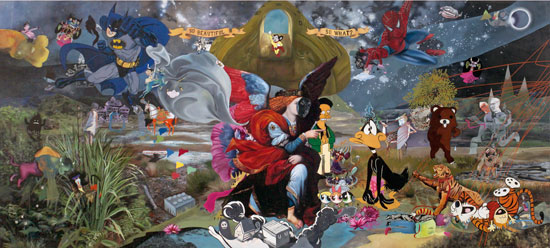
While ‘kitsch’ was a product of the art markets of Munich, used to describe inexpensive, popular and easily marketable pictures and sketches, the criticism for its concepts is due in large part to its imitative character. Austrian writer and Modernist, Hermann Broch, in his essay, Evil in the Value System of Art, argues that kitsch aims to copy the beautiful, not the good. Yet – and possibly due to its imitative nature – kitsch encompasses popular culture, social phenomena, cultural icons and history, becoming an inherent part of art and artistic comment. Can art be removed from kitsch and vice versa? Do we sentimentalise art by reproducing it or are we rendering art into the depths of blackness by commercialising it?

Image

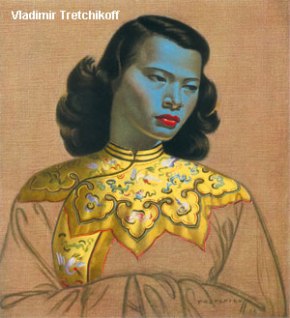
Vladimir Tretchikoff’s iconic painting Chinese Girl recently sold for $1.5 million at a Bonham’s Auction. Chinese Girl is also known as the ‘Mona Lisa of kitsch’, much to the chagrin of the artist. Manchurian-born Tretchikoff escaped from Soviet Russia and emigrated to South Africa after World War II. Along the way he lived in Shanghai, where he worked as an advertising and commercial illustrator in the 1930s. The ‘King of Kitsch’s’ reproduction prints became so popular that it is believed that he was second only to Picasso in popularity. Tretchikoff couldn’t stand being linked to kitsch, though – he considered himself a serious artist.

Image

On the other hand, American ‘painter of light’, Thomas Kinkade, made every attempt to gain popularity through mass marketing of his artworks, even setting up a company (The Thomas Kinkade Company) to do so – claiming to be ‘America’s most-collected living artist’ before his death last year. He was proclaimed to be nothing more than ‘commercially successful kitsch’ by the art world, and came under the hammer for gimmicks such as selling his works on the QVC home shopping network. While he considered himself controversial, others proclaimed his works to be ‘chocolate box art’ or ‘mall art’ – due to the fact that his work lacked depth and substance.

Salvador DalÕ's portrait of Mona Bismarck


Along with Tretchikoff, Salvador Dali’s portrait of Mona Bismarck made quite a rumble with its Sotheby’s sale this year. Dali’s later work – when he was involved in a ‘paranoiac-critical’ method through self-induced hallucinations – has been criticised as kitsch. In this instance, he painted wealthy and always impeccably-dressed Mona Williams Bismarck in black rags. The irony would in itself make the criticism of this work debatable.

Image

In India, Raja Ravi Varma reproduced his oils of deities from Hindu mythology through the process of oleograph – leading to immense popularity of his detailed, lifelike portraits. While his work was art, the popularity led to mechanically produced kitsch for the first time in the subcontinent – these portraits were later seen digitally reproduced and often stripped off their character on calendars and numerous posters.

nekotabi-gero-tan

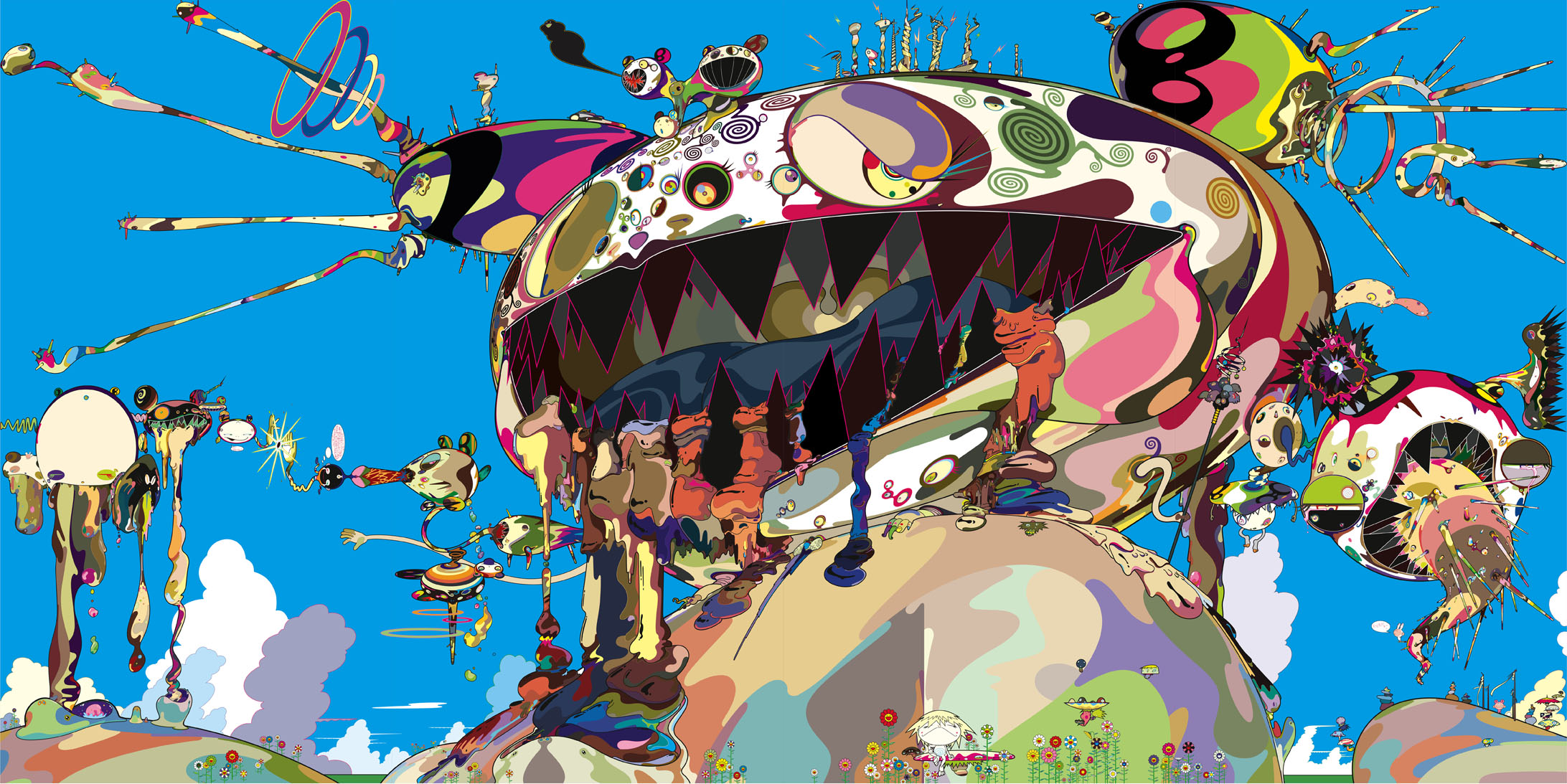
Japanese artist Takashi Murakami’s ‘flat’ works inspired by the Manga and Anime culture are a response to popular appeal. The lack of depth in his works is a strong throwback to contemporary Japanese culture, which he believed to be consumerist and devoid of meaning. In this case, Murakami is using symbols of popular culture to make a comment on popular culture. The self-reflective method is nuanced and thoughtful, distancing it from real kitsch. And yet, Murakami seems embroiled in consumerism, evidenced from the fact that he works with a team (Hiropon factory in Japan and his New York studio) to fabricate his works and his company, Kaikai Kiki & Co. carry out large-scale production of his commercial artworks and merchandise. He has designed a Louis Vuitton logo, and his installation has been seen at the Vuitton store in London. He is a part of the system that he is critiquing – but is he managing to control and execute the critique from his successful vantage point?

American art critic, Clement Greenberg, in his controversial essay Avant Garde and Kitsch (1939), calls the New Yorker magazine ‘high-class kitsch’ and rips the phenomenon to shreds: ‘Kitsch is mechanical and operates by formulae. Kitsch is a vicarious experience and faked sensations. Kitsch changes according to style, but remains always the same.’

Kitsch serves to remind people that a great work of art exists – but it fails to draw from the viewer the real emotion or sensibility that the original work of art can. Its problems lie in the intellectual stimulation – or lack of – that is provided. German literary critic, Walter Benjamin, points out that kitsch ‘offers instantaneous emotional gratification without intellectual effort, without the requirement of distance, without sublimation.’ Its feelings are associated with being self-congratulatory or false, and it fails to raise our experience to a level above the ordinary. In fact, as has often been pointed out, kitsch aims to please – and that in itself alienates it from true art.

And in that very sensibility appears the predilection to dislike kitsch in art. But as you dislike it, can you negate its positive commercial effects? American iconic pop artist Andy Warhol’s ironic art works have now become commercially reproduced in every possible way. Not only do they increase his popularity, but also, in consequence, they increase the value of the original artworks. So in essence, ironic though it may be, commercial kitsch increases the commercial viability of popular art or kitschy art and even that of high art, as Murakami and others have so clearly experienced.

While you may agree with Greenberg in thinking that kitsch is fooling naïve people, but isn’t it also opening the world up to the masses? Would someone in a country far away have known of the existence of the Mona Lisa, had it not been reproduced commercially? Doesn’t it bring the art world into focus and make the world a smaller palette with one mass-produced brush-stroke? (On a side note, a copyist once told an interviewer that his paintings of Leonardo’s Mona Lisa improved on the original by ‘taking a bit of the chill out of her expression’.)

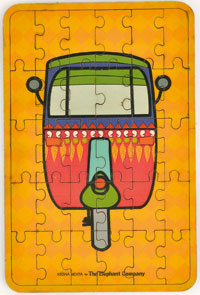
Conversely, the argument runs that kitsch is making people more nationalistic, and therefore closed to world art. The Chinese or Indians may prefer kitschy symbols harking to their own cultural icons. There is sentimentality in kitsch art that has endeared it to generations. But is that really problematic? Do we deride diasporic literature for the same reasons? Young India, in fact, is fondly embracing kitschy art: a product of graphic design and an occasionally-merry-occasionally-gaudy mix of pop culture icons or desi history. From Taj Mahal cushion covers to Bollywood poster totes, from chaiwalla and auto rickshaw coasters to Manish Arora’s clothes and Krsna Mehta’s Ind!a Circus (and previously The Bombay Project), it is all welcome.

Image

How do we feel about images of dhobi women in saris overlaid with containers of red lipstick as a cushion cover? Does it endear us to the India we grew up in, does it build nationalistic sentiment, does it mock a way of life the intelligentsia may not understand or does it arouse a melodramatic sentimentality for the curios of our city? But Krsna Mehta’s line’s evident popularity (leading him to launch new lines in collaboration with top local design stores) shows that people gravitate to a popular version of rural or local India. His book Mumbai Masti along with Bachi Karkaria, that puts together iconic local images, has been touted a best-seller. While Mehta may not be India’s answer to Warhol, it’s true he has made Bombay’s visuals a part of most households.

It would be simpler to accept that kitsch need not be lauded, but it must not be despised either. A product of industrialisation, it is here to stay, in its many forms, but without the original, a kitschy reproduction cannot exist. It can be a happy marriage. You would be rue to find a home without some form of kitsch that has seeped through the cracks of creative expression. In much the manner that a woman’s bookshelf may have Lolita and Fifty Shades of Grey with equal gumption. Who’s judging?

← Older posts
Newer posts →

|  Filling the gaps between words.  |

Writing By Category

  • Art, Literature & Culture
  • Brand Builidng
  • Brand Watch
  • Fashion & Style
  • Features & Trends
  • Fiction
  • Food
  • Humour
  • In The Media
  • Interviews (All)
  • Interviews: Business
  • Interviews: Cinema
  • Interviews: Cover Stories
  • Interviews: Lifestyle
  • Interviews: Luxury Brands
  • Interviews: The Arts
  • Interviews: Travel
  • Musings
  • Parenting
  • Publication: Conde Nast
  • Publication: Elle
  • Publication: Mint Lounge
  • Publication: Mother's World
  • Publication: Taj Magazine
  • Publication: The Swaddle
  • Publication: The Voice of Fashion
  • Publication: Verve Magazine
  • Social Chronicles
  • Sustainability
  • Travel Stories

Reach out:
sitanshi.t.parikh@gmail.com

© Sitanshi Talati-Parikh 2018.
All Rights Reserved.

Website Powered by WordPress.com.

  • Subscribe Subscribed
    • sitanshi talati-parikh
    • Join 51 other subscribers
    • Already have a WordPress.com account? Log in now.
    • sitanshi talati-parikh
    • Subscribe Subscribed
    • Sign up
    • Log in
    • Report this content
    • View site in Reader
    • Manage subscriptions
    • Collapse this bar
 

Loading Comments...