• About
  • Brand Building
  • Film & Drama
  • Writing: Arts & Lifestyle
  • Writing: Interviews
  • Writing: Luxury Brands
  • Writing: Travel

sitanshi talati-parikh

sitanshi talati-parikh

Tag Archives: Bollywood

Cool Crusader

10 Thursday Apr 2014

Posted by sitanshi talati-parikh in Interviews (All), Interviews: Cinema, Publication: Verve Magazine

≈ Leave a comment

Tags

Bollywood, Interviews: Cinema, Nirbhaya, Poorna Jagannathan, The Rose Code, Theatre, Verve Magazine

Published: Verve Magazine, March 2014
Photograph by Toranj Kavyon

Theatre personality, Bollywood actress and American television star Poorna Jagannathan is passionate, driven and well on her way to achieving her own definition of success

Poorna Jagannathan for Verve Magazine

“I’m sick of hearing myself talk about things I’d love to do. I’m trying to just shut up and actually do them.”

And she has gone ahead and done exactly that. Poorna Jagannathan, 41, best known locally for her irreverent role in Delhi Belly (2011) and her character role in last year’s Yeh Jawaani Hai Deewani, juggles working in America and India while also being a mother to her seven-year-old son. “Straddling two continents and living a gypsy lifestyle isn’t easy, but I am drawn to excellent writing and for now, it’s still coming out of the States for me. And raising a child when both parents are working is like a dance where everyone has two left feet!”

Jagannathan was born in Tunisia, grew up in various parts of the world, before calling America home. The American television and film actor begins shooting for HBO’s new series, Criminal Justice, opposite Robert De Niro this summer. But closest to her heart is the critically acclaimed human-rights-theatre-project Nirbhaya, which is a play she has initiated, produced and is acting in. The gang rape in Delhi left her with an unnerving feeling of complicity – reminding her about the times she remained silent about the sexual violence she had dealt with. She felt it is silence that sustains a culture of violence and unaccountability.

Five women (including Jagannathan) come forward to talk about their own personal experience with sexual violence. The hope is that by them breaking their silence, the audience members will too. The play premiered abroad where it won the 2013 Amnesty International award, including several others. It was also listed by The Guardian’s critics as one of the ‘best plays of 2013’. Leaning on crowd funding for their India run, Nirbhaya tours Mumbai (Tata Theatre, 17-20), Delhi (FICCI Auditorium, 22-25) and Bengaluru (Rangshankara, 26-30) this month. “Producing Nirbhaya was a complete paradigm shift. I stopped waiting for something or someone to come along and change things. It’s also when I stopped talking about wanting to do something and actually did it – that was hugely liberating.”

She’s constantly looking to be the voice of dissent. Jagannathan has added a new dimension to the Bollywood red carpet look, and that’s because she likes character in everything that she wears or does. She treasures her wedding ring, which is her mother’s old, traditional South Indian, U-shaped ring. Her sense of humour serves her well as she navigates the Indian film industry, and she admires people who play the ‘David vs. Goliath’ game. “It takes a lot to go up against the system here.”

The Barracks and the Beautiful

01 Tuesday Apr 2014

Posted by sitanshi talati-parikh in Features & Trends, Interviews (All), Publication: Verve Magazine

≈ Leave a comment

Tags

Anuja Chauhan, Anushka Sharma, Army Background, Bollywood, Gul Panag, Interviews: Cinema, Milkha Singh, Neha Dhupia, Nimrat Kaur, Priyanka Chopra, Tarun Tahiliani, Verve Magazine

Published Verve Magazine, March 2014

These driven professionals have solid grounding even if they have lived a nomadic existence. Discipline, endurance, strong commitment to fitness, confidence and the ability to fit in anywhere are defining qualities of army brats. We find that their background is a strong player in their success

“In the services one defined themselves by what one did and stood for, and that does someone more good than being dependent on possessions, especially those handed down to you. Our self- confidence came from ourselves, it was partially a nomadic life, thinking was the best way to travel, movies could be watched under umbrellas in the rain, and one was inculcated with a sense of pride”. – Tarun Tahiliani, designer

Were you aware that the celebrated designer and his sister, Tina, who runs the country’s foremost multi-brand designer store, Ensemble, both hail from a defence background? Their father, Admiral Radhakrishna Hariram Tahiliani, served as the Chief of the Naval Staff of the Indian Navy and as the Governor of Sikkim. Far more than you may realise, the great names of art and culture, fashion and television, corporate anchors and CEOs owe their allegiance to a background of serving the country. (See box for Bollywood’s army kids)

When you observe the way in which these young men and women deal with the pressures of public life, the way in which they remain calm under crisis or criticism, and have the patience and wherewithal to continue on a chosen trajectory, is seems to have a direct bearing on their powerful upbringing. Indian cinema actor, Anushka Sharma’s ability to respond with grace and restraint over the recent public scrutiny or Priyanka Chopra’s strong-willed endurance could be attributed to their upbringing. Former Miss India and Indian cinema actress, who once considered becoming an IAS officer, Neha Dhupia, is strong-willed and not easily moved. “I’m very stable as a person: when my head packs up my body takes over and when my body packs up my mind takes over. My Mom always says, ‘If it doesn’t kill you it only makes you stronger.’ My Dad always says, ‘Don’t sweat the small stuff.’ My parents are humble, educated and unaffected by their surroundings. Being indecisive about things in life isn’t appreciated; it’s almost a sign of being foolish. It’s important to try – winning or losing isn’t important.”

The lifestyle, bordering on nomadic – as Tahiliani describes it – is bound to have repercussions – for most of them, the ability to make friends anywhere, to pick up and move on and remain disconnected from the trappings of setting roots, and treating it like an “adventure”, as stellar novelist, and Rajput army kid, Anuja Chauhan, puts it. It serves them well when dealing with fame, ephemeral industries, transitory jobs and new people. Indian cinema actress, Nimrat Kaur, who shot to fame recently with The Lunchbox, says “We never stayed in one place for more than two to three years. It keeps challenging your comfort zone. You need to make new friends and start afresh; you don’t have an identity you carry with you for years together.” Actor and activist, Gul Panag counts that she has been to 13 schools: “I’m still in touch with these friends. Having travelled so much, I do find it easier to view life as a wide canvas.” While Chauhan admits that “you get better at socialising, taking a deep breath, walking into a roomful of strangers and making friends with them”, she believes that not sticking around in one school impacts the chance of having deep friendships.

There is also a tolerance towards and the ability to deal with people, while fostering an innate sense of confidence and approachability. Says Kaur, whose father was a farmer’s son and didn’t have money for school: “The environment is extremely eclectic – people from all walks of life come in to the army to become officers. You are exposed to values from different cultures. Everyone has the same resources and furniture, is at the same level – it makes a difference to your worldview. As a girl I was never treated differently from the boys, you have the same responsibilities.” And they are definitely not shy talking to people. Chauhan agrees, “Army brats strut around a safe cantonment environment, and so they’re more confident – and more patriotic!”

Great mental strength and the ability to deal with situations bristling with tension give them staying power in industries that are cutthroat yet riddled with fragile and tenuous relationships. Gul Panag, whose father, H S Panag, is a general (retired) in the Indian Army, admits that having to deal with the fact that one of your family members may be posted to an area that is fraught with immense danger and dealing with the uncertainty that it creates, makes you mentally very tough. “The whole focus of putting country before self also creates a deeper sense of purpose and strength that is then evident in other areas of life as well – you are willing to take more risks, live life fuller and, of course, are also more grounded.” Perhaps this thinking gives Panag the ability to be outspoken on a public platform, the confidence to become an activist for social causes.

And along with that comes the actual physical strength – the training to keep going for long hours and withstand immense physical pressure. Army brats are all very outdoorsy, learning to swim and horse-ride at an early age, are automatically exposed to a wide range of sports and tend towards natural athleticism, even if all can’t eventually be the famous runner Milkha Singh or his golfer son, Jeev Milkha Singh. Or stunt star Akshay Kumar, for that matter! Panag started running when she was 16, inspired by her father’s passion for fitness. “He would often make an example of me to his unfit officers, comparing the fact that a 16-year-old girl could outrun them! The focus on fitness was certainly a way of life growing up, and it’s stayed with me always.” Kaur also stresses on the discipline that comes as a part of the culture, along with being physically fit – being physically on time! “My father was one of the fittest people I had known. It (the movie industry) is a physically exhausting field and being delicate takes that much longer to adapt to things.” Neha Dhupia is a regular in the Mumbai Marathon. “I never start or end my day without a run, even when I am travelling. Being in the (movie) industry you want to get away, to clear and relax your mind, not have it ticking like a time bomb.” Chauhan, who easily romanticises the cantonment life says, “I think the whole club-swimming pool-golf-course- embroidery classes-May Queen Ball culture is one of the best one could have those days.”

The regular social events in the barracks, which include participation in initial-level beauty contests such as the Navy Queen held at the Navy Ball, naturally prep the girls for thinking of pageants as a future option on a bigger scale. Dhupia changed her mind about becoming an IAS officer when an uncle suggested her entering her name in the Miss India beauty pageant. There was no looking back. From Sushmita Sen and Lara Dutta to Pooja Batra, there are a number of army offspring who have shone in beauty pageants and eventually gone on to become actresses. Panag admits, “I think every little girl dreams of being Miss India one day. I don’t know if it’s an army-specific thing. But certainly the outlook in the defence forces is forward looking and allows girls that freedom to dream and do.” But Kaur is quite vociferous in her anti-view, “My mother was never inclined towards beauty contests. I don’t subscribe to them personally. They are an easy way of making a mark. When Sushmita Sen won Miss Universe, or Aishwarya Rai won Miss World, everyone rejoiced. The novelty may have got diluted today – now there are other ways of being noticed.”

Being associated with a defence family also means dealing with the loss of life and coming to terms with insecurity about your loved ones. It also tends to make you value life more. Kaur, whose father was in the Indian Army and lost his life in a terrorist attack in Kashmir, has deep feelings about it. “Having seen death up close keeps your core strong. My inner strength or core comes from an upbringing I have seen – you can take everything away from me, but you cannot take away the upbringing. I have these values and they remain with me. I have seen extremely drastic times with losing my father on the field in Kashmir. I don’t know if being in any other profession would have changed things. Life is more fragile and you have experienced more dangerous situations. You don’t take things for granted; you value life and people. Things change without your control so rapidly. All you have is your conduct and how you treated people, and your goodwill.”

Without going deep into Francis Galton’s nature and nurture debate, and accepting that the ‘tabula rasa’ theory cannot be viewed in isolation, one must admit that one’s upbringing and surroundings have a strong and dynamic impact on our choices, thinking and personality. It defines whom you eventually go on to become and defines how you deal with circumstances. Army brats are given a solid foundation upon which they manage to make something of themselves – as so many people in diverse fields have proven. Galton’s half- cousin Charles Darwin’s ‘survival of the fittest’ is not too far from the truth when it comes to defining the success of these individuals from defence backgrounds. They are fit, determined and they often show us how it’s done.

BOLLYWOOD’S ARMY BRATS

  • Akshay Kumar
  • Anushka Sharma
  • Arjun Rampal
  • Celina Jaitley
  • Chitrangada Singh
  • Gauri Khan
  • Lara Dutta
  • Mohnish Behl
  • Pooja Batra
  • Preity Zinta
  • Priyanka Chopra
  • Sushmita Sen

Greenlighting Gujarat

03 Monday Mar 2014

Posted by sitanshi talati-parikh in Art, Literature & Culture, Publication: Verve Magazine

≈ Leave a comment

Tags

Bollywood, Trend, Verve Magazine

Published: Verve Magazine, February 2014, Nerve

Last year six movies were shot in the state – in four, the location and its people were a major part of their storyline. This year, a new TV channel launches with a show filmed only in Gujarat. What’s the mystique of the locale?


This slideshow requires JavaScript.

When Amitabh Bachchan became the brand ambassador of Gujarat Tourism, one couldn’t have guessed that he would inadvertently wave a beacon heralding the future of Bollywood shootings in Narendra Modi’s state. Where once Chandni Chowk ruled roost – can anyone forget how Kajol immortalised the streets of Chandni Chowk in Karan Johar’s Kabhi Khushi Kabhie Gham (2001) – and Mumbai’s streets were fertile shooting grounds (no tasteless pun intended), now filmmakers (including those of the South) are unearthing previously undiscovered pastures. A lot of these happen to be in the Rann of Kutch or the splendid havelis of Gujarat.

From a rather obvious plate of dhokla in the recent Kareena Kapoor and Imran Khan starrer Gori Tere Pyar Mein (shot in and around Bhuj) to the lavish explosion of culture and colour in Sanjay Leela Bhansali’s Goliyon Ki Rasleela Ram-Leela, Gujarat has swung into bright prominence. Bhansali, a Gujarati, returns with nostalgia to the local mise en scene and Ram-Leela (2013) is quite reminiscent of his earlier Hum Dil De Chuke Sanam (1999) in the riotous dance-and-song sequences. Taking up on Romeo and Juliet’s tragedy for the storyline, he places his characters in a gun-wielding Gujarati town while the protagonists are not averse to sending each other romantic Gujarati couplets on SMS. The film is not entirely shot in Gujarat, though – he has shot scenes in Udaipur and in Film City as well.

India’s latest Oscar entry was the Gujarati-language film The Good Road that was shot on location. Abhishek Kapoor’s Kai Po Che (2013), based on Chetan Bhagat’s The 3 Mistakes of My Life, is about three local boys whose friendship is set against the backdrop of the Bhuj earthquake and the Gujarat riots, shot in Ahmedabad and other places. But movies like Lagaan (2001) and Matru Ki Bijlee Ka Mandola (2013) turned to Gujarat’s village setting (Bhuj and Mandvi) and haveli (Wankaner Palace) respectively, even when the story didn’t demand that particular state; while Saheb Biwi Aur Gangster (2011) tells the tale of a royal family of UP but was shot in Devgadh Baria, a princely town in Gujarat. Kareena Kapoor and Abhishek Bachchan’s debut film, Refugee (2000), favoured the Rann of Kutch for its shoot in much the manner of films like Nikhil Advani’s thriller D-Day (2013).

Film shootings have been happening in Gujarat for a very long time – but undoubtedly blockbuster movies like Lagaan and Hum Dil De Chuke Sanam have brought with them a furore of interest in the last decade. They popularised the town of Mandvi, which has a private beachside estate of 450 acres, and the Vijay Vilas Palace. In Hum Dil De Chuke Sanam, there is a momentous scene where Vanraj (Ajay Devgn) drags Nandini (Aishwarya Rai Bachchan) through a heritage house, down a flight of stairs – this was shot in the Orchard Palace of the erstwhile Maharajas of Gondal (converted into a heritage hotel).

The town of Rajpipla is a popular location for Gujarati and Bhojpuri films, earning it the moniker ‘Gollywood’. It has numerous palaces and grand buildings including the Rajwant Palace Resort in the Vijay Palace (1915) with seven acres of gardens, a swimming pool, antique interiors, a view of banana plantations, and the Vadia Palace also known as ‘Gujarat’s Taj Mahal’.

For a new thematic channel, Epic, slated to be launched early this year, one of their primetime Hindi-language shows, Dariba Diaries, was shot entirely in Gujarat. It’s a fast-paced investigative thriller set in the 1850s cataloguing the life of a detective. Sid Makkar, who plays the lead, Mirza, says that the location – Ambika Niwas Palace – in a small 20000-person-strong town called Muli and its surrounding palaces fit the bill as they are beautiful and match the architectural brief accurately. The production also managed to single-handedly change the local economy by providing employment to tens of thousands of people living in the area.

While it’s true that Prime Ministerial candidate Narendra Modi has paved the roads, so to speak, for the movie industry to shoot in Gujarat, it is also the basic connectivity and proximity to Mumbai, and the clearances offered that may be important factors in its territorial growth. Ranjit Sinh Parmar, Yuvraj of Muli (whose family owns Ambika Niwas Palace) points out that Gujarat is brimming with a variety of landscapes and private heritage properties, and the very fact that many of them are largely undiscovered and less exposed than others popularly used in the country, makes it more beguiling for filmmakers. Also, the proximity of multiple heritage properties to each other affords variety in one location. He adds that Gujarat may be fast replacing Rajasthan for shoot locations because the latter’s higher level of tourism makes many of their palaces unavailable or particularly pricey. After all, it would have been nearly impossible to shoot a television show for eight continuous months in a specific location in Rajasthan. Gujarat provides an equally beautiful, cost-effective alternative that is half the distance from Mumbai.

While directors have pandered to the avid movie-watching Gujarati community in much the way they have to the North Indian Punjabis, with overt references like the NRI family in Johar’s Kal Ho Na Ho (2003) and sly references to local food in 3 Idiots (2009), it seems that this trend of including the state in the movie may be more about the location than the people.

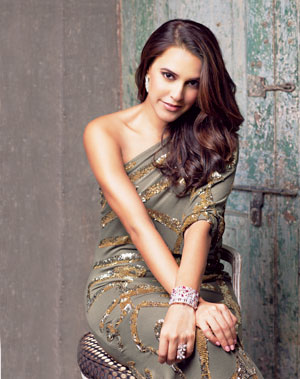
The Rose Code #1 Neha Dhupia: ‘A Higher State of Being’

03 Monday Mar 2014

Posted by sitanshi talati-parikh in Interviews (All), Interviews: Cinema, Publication: Verve Magazine

≈ Leave a comment

Tags

Bollywood, Rose Code, Verve Magazine

Published: Verve Magazine, February 2014, Luxe Select
Photograph by Toranj Kavyon

Actor and former Miss India, Neha Dhupia is a grounded celebrity. She carries herself with grace, works hard at her chosen profession and embodies a strong sense of self-worth, making her one of The Rose Code’s ambassadors of style and substance

Image

I’m a very stable person. When my head packs up, my body takes over; when my body packs up, my mind takes over.”

She’s confident, sorted and self-assured. Neha Dhupia has no qualms about speaking her mind, knows what she wants and comes across as balanced. The actor is in a good place right now with three films up for release before the summer: Ungli produced by Karan Johar (releasing next month), Viacom’s Santa Banta and Nautanki Film’s 21 Topo Ki Salaami, which she is currently shooting for.

She was all set to be an IAS officer – she had just chosen her subject – when a call from her uncle changed her path. He asked if she would be interested in trying out for the Miss India pageant. She missed the cut-off date that year, but kept an eye out for it the next. “When the other hopeful girls were starving to stay thin, I was having a ham-and-cheese multigrain club sandwich. Then I got selected, I won (2002) and things changed! I never thought I would last so many years.” She’s “had the pancake on for a long time”, been an actor in the Indian film industry for a decade, done theatre, modelling and the pageant before that. “The job that I do is most unstable and unforgiving. A bad photo is published more than a good one. But it’s also rewarding. I maintain a huge amount of stability in my head and heart. I’ve been in the tunnel and can always see the light.”

She counts her milestones in all her experiences, the first of everything achieved – getting on stage, walking the ramp, facing the camera, having a film release, running for the first time; and finding that life often comes a full circle. She’s been associated with charitable projects along the way – she’s run the Mumbai Marathon for the Concern India Foundation, she’s helped raise money for the Sikkim earthquake victims and for the last five years she has been a spokesperson for Shiksha, a philanthropic venture by Procter & Gamble.

Running is something very close to her heart. She ran the 2014 Marathon last month for a cause as important as any: herself. “I find my sense of spirituality in running. I never start or end my day without a run, even when I am travelling. Being in the industry you want to get away, to clear and relax your mind, not have it ticking like a time bomb. Running, to me, has almost become a religion. It’s a higher state of being. It balances me, personally and professionally. Being single, even on days that I lack companionship, running provides me that.”

Neha Dhupia, a previous cover girl for Verve’s Best Dressed issue, likes to dress “for the occasion and the weather,” always choosing to wear something that gets her personality out. Very certain about what she likes and what will suit her, she laughs and dismisses it saying, “It’s just clothes after all.” She treasures her grandmother’s pearl-and-gold bracelet, that she never wears because she’s afraid of losing it, and remains inspired by her own success and failure all at once, while believing that success is entirely relative.

To The Manner Born: Sonakshi Sinha

05 Monday Aug 2013

Posted by sitanshi talati-parikh in Interviews (All), Interviews: Cinema, Interviews: Cover Stories, Publication: Verve Magazine

≈ Leave a comment

Tags

Bollywood, Imran Khan, India, Interview, Interviews: Cinema, Sonakshi Sinha, Verve Magazine, Vikramaditya Motwane

Published: Verve Magazine, Cover Story, August 2013

Sanskaar is a word often associated with her, she says. Sonakshi Sinha is unabashedly confident, reclusively shy and riding a wave of professional good fortune. The homegrown actor is uncomplicated and easy-going…and quintessentially Indian…

Image

She is always excruciatingly punctual. Apparently, on set she’s the first one in – ready before even the lighting guys have set up. At magazine shoots, she’s there with at least a couple of minutes to spare. Sonakshi Sinha crashes on the bed of the hotel suite we are shooting in and experiences a ‘lazy’ moment. Indigo skinny jeans, fitted tee and a smart cropped black leather jacket, a faint hint of lipstick and reflector shades complete the biker-chic look.

We chat lightly. Her grilled cheese sandwich and fries are on their way. While she agrees that an Indian woman is meant to be traditionally curvy and voluptuous, you find that she looks surprisingly slimmer in person than she did recently on screen, and her stomach is enviably flat – but her face is as captivating when she breaks into a smile. That smile reaches her large, expressive coffee-brown eyes that are immersive and can sparkle with a mood of their own. When her lip curls in dissatisfaction, it takes you back to her recent role of Pakhi from Vikramaditya Motwane’s Lootera, seared in our memory, as she transcends the elongated scenes in the movie with her emotiveness. She speaks easily, points out that she keeps getting asked certain questions – answers to which she’s “rattoed” (memorised by rote) and admits she enjoyed our little conversation.

The largely well-received Lootera was a “once-in-a-lifetime opportunity. I felt it was written for me”. People kept telling her not to do the film, that it was meant for a more mature actress, but she figured it was a dream role. And, she admits, the very fact that people were advising her against it goaded her to go for it. While she makes no pretense to high cinema, the 26-year-old girl, who’s taken on masala blockbuster movies head-on and won the heart of the hinterlands, feels that a slow, period romance like Lootera has given her recognition as an actor.

She comes on the set, gets ready with her lines and awaits the director’s instruction. Opening each day with a clean slate, she prefers to be moulded according to the director’s vision, believing that no one understands the character better. In her upcoming release this month, the Akshay Kumar-Imran Khan starrer, Once Upon A Time In Mumbai Dobaara, she plays a girl who makes the move from Kashmir to Mumbai to act. The first Milan Luthria film was a gangster thriller; the sequel has a stronger love angle, requiring a different chemistry for each character (Akshay and Imran), and balancing that became a challenge for her. “I was never a movie buff – I watched very few movies. I like to observe people and their nuances. I meet so many people every day – there is so much variety.”

“Sonakshi is professional, dedicated, fearless and magical. She has a wonderful presence – if she chooses her roles well over the next few years she could be one of the all-time greats.”
– Vikramaditya Motwane, director

Standing tall at five feet and eight inches, she’s comfortable in her own skin, but remains a quiet person. “I am a Gemini – two sides of a coin. I’m a shy person; I like to be by myself sometimes. I don’t overindulge in conversations with people I wouldn’t know.” She knows she’s here to do a certain job and that’s all that matters. “Some people are just meant to do what they are meant to do. I’ve inherited it from my father (actor-politician, Shatrughan Sinha) – he’s a very confident person. Besides, I don’t have anything not to be confident about – I’m very happy, I’m doing well; I’m working hard.” But it’s an industry of insecurities. “That’s what a lot of people tell me. I don’t know. I don’t want to be the centre of attention, I’m not insecure, I’m very comfortable with who I am, with what I’m doing, I don’t poke my nose into other people’s business. I guess that makes me a misfit!”

Sonakshi has her life cleanly compartmentalised. “I switch on and switch off with the camera. I don’t like to take my work home, I don’t like to talk about it; at home it’s a completely different life.”

Preferring to hang out with her school and college friends rather than fraternising with industry people, she says, “Going out for events and promotions, crowds of people yelling and shouting your name – that’s where it ends. At home I’m not a star, I’m my parents’ daughter and my brothers’ sister. If I do something wrong I’m reprimanded for it.” Having lived an unabashedly sheltered life while growing up (not being allowed to go abroad to study or to join her brothers at Kodai International boarding school), she admits, “I still have to be home at 1.30 a.m. when I go out! I have a deadline…it’s always been like that.”

Her mother used to be by her side all the time when Sonakshi had just started her movie career, but now she leaves her to figure things out for herself. “While she knows we are always there for her, workspaces have changed today. She’s grown up now, she understands her limits,” says erstwhile actress, Poonam Sinha who recalls how her daughter has always been sure of herself, quick to take a decision, with no qualms after. “She used to sketch much before she knew she wanted a career in fashion design. She would throw the sheets away, but I used to collect her sketches. Even her foray into films – she entered without any formal training in acting, dance or dialogue delivery. But she was confident from day one. I remember Salman Khan saying to her, ‘Wow, you are a one-take artist!’ She also has a strong gut instinct – she had a feeling about Pakhi (Lootera), that no one but she could play that role. She didn’t think twice.”

Sonakshi has wriggled into a very specific niche in Hindi cinema, quietly making it her own. Somehow, that garners the most queries from viewers who are now accustomed to bare-all-wear-nothing heroines. “It’s ironic that people keep asking me why I keep doing traditional roles as opposed to glamorous ones and no one asks any other Hindi cinema actress why she doesn’t do traditional roles as opposed to glamorous ones! We are talking about India, aren’t we,” she snips back with a smile. Playing a UP girl in Dabangg, a Bihari in Rowdy Rathore, a Punjabi kudi in Son of Sardaar, a Bengali in Lootera and now a Kashmiri girl in Once Upon a Time…she’s been captivated by the places she’s shot in. “I’ve covered most parts of India and found the interiors of the country fascinating. While sitting in the city (Mumbai) we tend to plan vacations abroad, and shooting in these locales has been an eye-opener…they are beautiful! And, I love Mumbai. However much we may crib about the mess and the roads, there’s just something about being home – about this being home,” she says with a broad sweep of her hands, encompassing the rain-tossed waves and palm fronds of Juhu beach outside the windows.

You don’t think she’ll hop off to perform a puja anytime soon, but you do think that she’s been raised to be careful of her screen presence and of her public persona. To be mindful of the way her actions would reflect upon her family. “The world has moved on, children live in a freer world, inspired by the West, but we are a very conventional family. She knew her dos and don’ts. Her father comes from that part of India, is a politician…she’s had to understand her responsibility,” says Poonam Sinha. Sonakshi adds, “There has never been any pressure from their side to do any of it – it’s just the way I have been brought up. I am a certain way, I don’t wear certain kinds of clothes, and we are a conservative family. It’s a part of my value system. My upbringing has everything to do with my rootedness and morals. It’s instinctive. Today wherever I go, when I meet somebody senior, actors or technicians, they give a direct compliment to my parents by saying, ‘I want my daughter to be just like you,’ and they use the words sanskaar a lot.”

“She’s got the swagger and attitude of Salman Khan and Akshay Kumar, and what makes them attractive is what makes her attractive: her inherent confidence and security. She’s simple, straightforward and uncomplicated.”
– Imran Khan, actor and co-star

So she sinks easily into her onscreen traditional avatar. She dons the saris and bindis and smiles beatifically into the camera. She’s mastered the art of holding her face at an angle just right, so that her sharp profile can be seen at its best advantage – she knows she can charm the audience with her warm smile and demure flicker of her eyelashes. And when I relate what her co-star and director have to say about her for this interview, you can’t miss the faint blush creeping up. She’s bashful; she’s smiling, she’s unable to look up. “The overall perception is that the youth is getting immoral – but that is a generalisation. I think India remains a rooted country, a country bound by values. That’s the basic story.”

Matru Ki Bijlee Ka Mandola – Review

15 Tuesday Jan 2013

Posted by sitanshi talati-parikh in Musings

≈ Leave a comment

Tags

Bollywood, imrankhan, indiancinema, Reviews

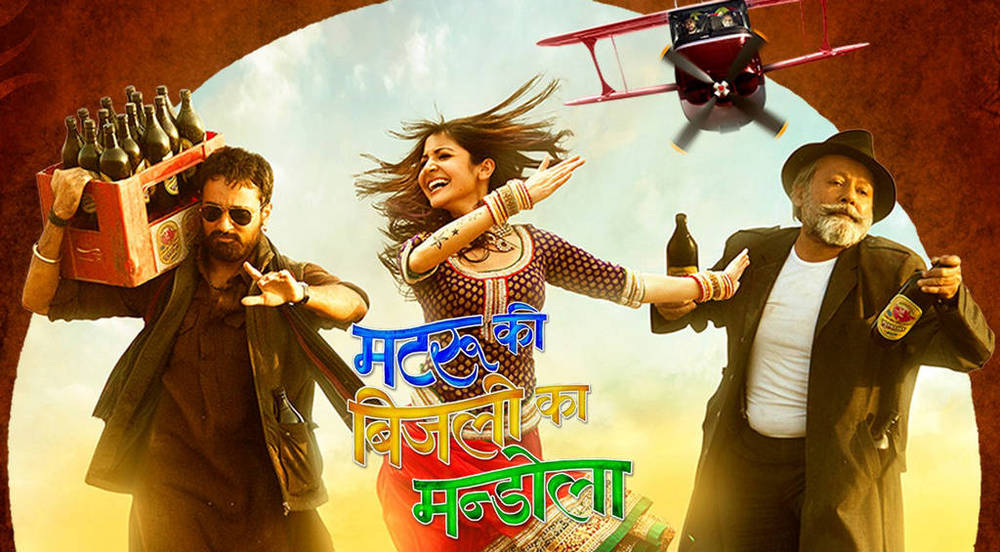
Matru Ki Bijlee Ka Mandola – a review

305308xcitefun-matru-ki-bijlee-ka-mandola

From the moment the promos hit the air, it promised to be a strange movie. But you hoped it was a good strange, or interesting strange. It suggested dark comedy, satire, farcical elements with a popular star cast and a winning director.

But when the time came to deliver, it could have been so much more. While one must admire Vishal Bharadwaj for making a film like this, which stemmed from his love for dharti mata, the hinterlands and Shakesperean tradition all combined, he stumbled in areas that he normally shouldn’t have. With Omkara (his Othello), Maqbool (his Macbeth) etc., he had clear direction. He took an Elizabethan setting and converted it to the darkness of a village in rural India. A milieu he understands well, a tradition he can well expand. With Matru…, he took the technique of social satire and farce and moved it to his familiar rural India. Without a strong Shakesperean story to fall back on, he flounders with a premise. Is he merely picking at the problems of rural farmers and their rich zamindars who are out to looto them? He deals with the topic with unwarranted superficiality. If one chooses not to be serious about a serious problem, then one must at the very least attempt to show some depth while plotting around it.

A good student of Shakespeare always has powerful characters and can sketch them well. Bharadwaj hasn’t failed before and doesn’t falter here either. All the characters come alive, are stand out performances and are believable, even if occasionally caricaturized on the premise of satire. Pankaj Kapur as the Jekyll-and-Hyde Mandola is brilliant, if a little too easy to manipulate towards a happy film ending. Bijlee is a free spirit and plays her role faultlessly. Matru is what the actor, Imran Khan, has described as a desi Che Guevara. Matru’s sophistication is obvious, but then we write it off as a Delhi-education that has softened the expected rough edges. Shabana Azmi’s politician and her witless son played by Arya Babbar appear the most caricaturized, but in the space of the film and it’s intentions, the OTT treatment is forgiven, in fact even acceptable.

For someone who should be a stickler for details, Bharadwaj seems to have ignored quite a few things. Why must Bijlee run amok shouting for Matru, when we are later shown Matru wielding a cell phone? How does Matru conveniently manage to pull a favour, get a check of money for his village, and then never have to worry about making the delivery 5 days later of the crop which is ruined? There was a chance to create pressure — those 5 days one would think would have been mentioned for a reason — but it never comes up, as time stands still and the village gets busy with Bijlee’s sudden wedding. Mandola has a remarkable change of heart, we don’t really understand why…and that’s a shame because everything seemed to be building up to him and his idiosyncrasies. It’s all very convenient, but it’s not sharp.

The dialogue on the other hand, is sharp. It’s witty and layered and the delivery is pretty good from all the characters, who show wonderful comic timing all the way. For once, the onus of comedy isn’t on the comic relief but is on all the characters, which is great thing for Indian cinema, especially when it comes to satire. However, the failing was language. With farce and dark humour, one would need one clear, easily decipherable language. Bharadwaj has used three: Hindi, English and Haryanvi, of which one is entirely alien to the multiplex audience and another alien to a single-screen audience. While Kapur is playing his character perfectly, slurring the words like a drunk, he is inadvertently making it harder for the audience to grasp all of what he’s saying, often having the viewer miss key points of humour. The director should have caught that. On the flip side, Khan with his crisp diction is actually easily understood even in his learned Haryanvi, making the experience lighter and easier for the multiplex audience.

All in all, a clever attempt but a near miss. It will go down in the books as something to be dissected, analysed and categorized. It is a film of no small significance, it’s just unfortunate how close it came to being a serious contender for something special. Not to mention, slash 20 min off the run time, it would have read as well and tightly as Delhi Belly, another mad caper film. And Matru… could have retained it’s rather good music.


Verve Man: The mysterious appeal of these men…

16 Tuesday Oct 2012

Posted by sitanshi talati-parikh in Features & Trends, Publication: Verve Magazine

≈ 2 Comments

Tags

Bollywood, indiancinema, Karan Johar, Men, Politics, Salman Khan, vervemagazine

Published: Verve Magazine, October 2012, Verve Man supplement

The Mysterious Appeal of These Men: Salman, Chetan, Rahul, Karan and Sachin. (Admit it – you knew their last names as you read it.)
In a perfect world, we want to see people who are famous because they know their craft exceedingly well – the ones who are untouchable because you can’t surpass their talent. It puts them on a pedestal of excellence and it silences detractors. Sometimes there are those who may or may not have talent, but have an x-factor, which makes them incredibly appealing to a large number of people. Sitanshi Talati-Parikh decodes the controversial appeal of five successful men across industries


Salman Khan, actor
In a recent TV interview, Salman Khan said something that sounded ridiculously ostentatious. But if you take it in context of who he is as a person – simple and direct – you would understand that he was just stating the obvious. Ek Tha Tiger’s release and people’s reaction to that movie and others before it, Dabangg and Bodyguard in particular, lend complete strength to the fact that Salman Khan exists in the industry for his fans. (And he has many of them.) As he points out, if you need an actor to play a role, there are many people to choose from. A director and producer will think of Salman Khan, only when they want the full Salman-Khan-ness in a particular film. He’s unapologetic about who he is or what makes him popular among the masses. He’s also matter-of-fact about his popularity, without being self-propagandizing. It doesn’t matter whether the movie has a story, or whether the film is completely OTT, or even that the character does the strangest things – like manage to pop the buttons of his shirt as he struts. His style of dancing – not updated over the years, but true to form with certain pelvic thrusts or iconic hand gestures; his action sequences, where he isn’t a hero, he is a super hero; his romancing – which is stilted and subdued; are all aspects of the Salman Khan phenomena that his viewers expect. It’s suggested that he dresses like James Dean and picks nuances from Dharmendra; two actors he believes should be closely watched. And in his smile, lies his resemblance to Dean, though he doesn’t smile enough – off screen and on it. While his cinema may be regressive in it’s form, it’s appeal – rather his appeal – remains eternal. He has consciously chosen to be a performer and entertainer, and removed himself from being an actor. And yet, maybe it was his cleverest move, the secret formula to being one of the biggest movie stars of the Indian film industry. Behind his rather simplistic appeal, quotes and choices, lies a sharp brain that has managed to find a bankable spot in the industry. He has, very possibly gauged his strengths and weaknesses, and put his money in just the right place.


Chetan Bhagat, writer
Some time ago, on an episode of Love2HateU, the celebrity guest was Chetan Bhagat. The poor girl – the ‘hater’ – stood no chance against Bhagat’s generous Gandhi-ism, so beatifically patronizing and condescending. But that’s Chetan Bhagat – a huge icon and idol to some and an even huger eyebrow raiser to others. Bhagat’s success – and he is astonishingly successful – is because he has crawled through the cracks and found his target audience. And what a target audience that is. The non-readers. Instead of churning out a highbrow book filled with beautiful metaphors and aiming for the Booker-reading intellectuals, Bhagat does what he does best – appeal to those that have admittedly never read a book before. And therein lies his claim to fame. Bhagat has automatically found his safety in numbers. While Bhagat makes no pretentions about his literary aspirations, he basks in his own stupendous success, often lying on a raft of self-appreciation. And what irks people is that his raft never, ever capsizes. Top models can have a bad hair day, brilliant directors can have a box office flop, the Sensex can crash, but Chetan Bhagat only goes from strength to strength. As he smugly states, ‘I’m happy to be on this show (Love2HateU) because my new book has just released and I want to know that there are people who don’t like what I do, not just people who enjoy my books.’


Rahul Gandhi, politician
Is it possible to bank a country’s future, its political aspirations on a set of irrepressible dimples? While our democracy is far more discerning than that (we hope) it is true that as the younger Gandhi scion grew up, a great deal of hope was vested on his future. He had the political pedigree, and most importantly he looked the part. It didn’t really matter what he said – or didn’t say – he was just so easy on the eye. Every woman could imagine him at the helm of India, attending the topmost international discussions and global summit roundtables looking stupendous representing India. And yet, that hasn’t really played out well for him – while remaining a member of Parliament, he hasn’t proven himself as a strong candidate for the topmost office of the country – despite the looks. Whether he manages to get any further, we can only wait and watch, and hope that there is more depth to him than his dimples, or India may end up having her own frat-boy-politician in the making, served up American style.


Karan Johar, director
You watch Dilwale Dulhaniya Le Jayenge and you see that plump friend of the hero, put there so that the hero can shine. A school misfit, no one would have guessed that Karan Johar would become a phenomenon. Johar has lived his high school misses through his films – creating the candy-floss make-believe world that he would have liked to be a part of, making his protagonist (more often than not played by his buddy Shah Rukh Khan) the popular kid in school. The kid Johar should have been, going by his current personality. What he may have been unable to achieve in his school years, he’s more than managed in his adult life. He is the force behind one of the biggest production houses in Hindi cinema, Dharma Productions, his movies do record business, he can make or break an actor or director, and often can control the future of a movie star, as evidenced by his power over the future of one top actress who wound up in his bad books. His talk show became an iconic talking point at every Koffee-table conversation. His rapid-fire questions allowed for his sharp wit, humour and personality to shine through, even if he did demonstrate that he lives happily in his own industry bubble. Only on Simi Garewal’s show did any of his vulnerability come to the fore. Johar is a complex animal, but his success is because of these complexities and layers to his personality. With Student of the Year in the offing, we wish we would move beyond the chasm of his youth to the brilliant success of his grown-up years in his directorial offerings. But would that be a cathartic story worth telling?


Sachin Tendulkar, sportsman
The Master Blaster. Anything said against him is akin to blasphemy. How did a supremely talented teenage kid manage to bear the weight of a nation’s hopes on his young shoulders? One who should just concentrate on the game is made to feel like the savior of the country. Every poor man’s hopes, every rich man’s dreams are with Sachin Tendulkar as he takes strike after strike. As if that were not enough, he had to attempt captaining the Indian cricket team. It’s a wonder he didn’t retire early, just to find inner peace. He has dealt with it all with equanimity – reminiscent of great players like Roger Federer in tennis – where nothing sways him. Victory brings a smile
, and when he’s down, he’s generally outwardly calm. Children are named after him in quick succession, he is revered to the point of blind faith, and he can do no wrong. Even if he gets out in duck thrice in a row, it’s okay because he has given us many centuries before. People cannot be logical around Tendulkar, he is more than human, he is God. With anyone else it would be dangerous, this blind idolization. As Wright Thompson in an insightful study on his charisma pointed out – Tendulkar’s meteoric rise took place in parallel to India as a country and economy opening up. He symbolizes everything we dream and wish for, all that is balanced and good. He steadies our racing hearts; he lives our greatest hopes. And he does it all with a clean chit. He makes people feel good – about themselves and their country, and he gives people a sense that we can be better, that we can be the best. And he forms the bridge – between the insecurity of the past and the brash confidence of the future.

Girl On A Wire: Cover Story with Parineeti Chopra

21 Friday Sep 2012

Posted by sitanshi talati-parikh in Interviews (All), Interviews: Cinema, Interviews: Cover Stories, Publication: Verve Magazine

≈ Leave a comment

Tags

Bollywood, indiancinema, Interview, Parineeti Chopra, vervemagazine

Published: Verve Magazine, September 2012, Cover Story
Photographs by Vishesh Verma

Parineeti01

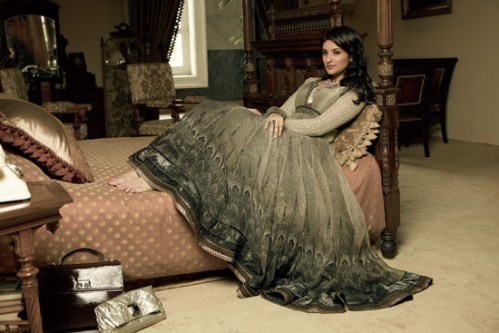
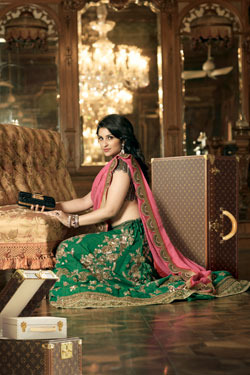
She is touted as the industry ’s great new talent on the block, on the watch list of every major director and actor. Six months after her first film released, she is already working on her third. It is a rapid start for any newcomer, particularly one who became an actor because she got a return ticket to Mumbai instead of Delhi! PARINEETI CHOPRA is refreshingly easy to talk to and incredibly laidback in general, finds SITANSHI TALATI-PARIKH, as she chats with the banker who became a movie star
Parineeti05

Alive wire buzzes with an electric current that creates energy all on its own, without sapping any other source. In cinema, the screen is ripped to shreds with the power of its intensity. She has a lovely structured face, instantly appealing with its generous smile, fiery light-brown eyes, and translucent skin. She has a particularly defiant tilt to her jawline – as she speaks, she unconsciously lifts her face upwards, as if willing the world to see where she is headed. And yet, she believes it’s all just destiny. After all, that is what her name means.

“I dreamed of being a very different person – the CEO of one of the biggest banks in the world.” And clutching onto that lifetime’s vision, Parineeti Chopra found herself floundering while looking for a finance job. “Twenty-one years of my life I dreamt of being a banker. I worked all my life for it; I went to London. The year I graduated, was a recession – a financial breakdown in the world. I’d taken an educational loan, followed my dreams and gone there to study… everything finished for me.”

That’s when she picked up the bits and decided to return to India. Used to working and buying her own ticket home, she found that it was cheaper to fly into Mumbai – a city she had never previously visited – than to fly to Delhi; staying with her cousin, actress Priyanka Chopra, before returning home. The day after Parineeti arrived into the city, Priyanka had a shoot at the YRF studios. She accompanied her to see the studio, out of curiosity. “When I came here, I saw things like ‘Producer’ and ‘Director’ written on the walls – and found it so strange. It fascinated me, as a fan. I haven’t grown up on films – I used to read finance books, I was very nerdy. When I saw this place (we are currently at the very same studios), I thought about applying for a job here – in finance or accounts, maybe.”

Parineeti09

And so, using one of her other majors, Parineeti ended up doing marketing. “I started seeing the actors here, and initially I used to look down upon them – they put on make-up, go on set, earn so much money, they are in the biggest cars, best hotels in the world, everything is paid for….” Ironically, now, for her, that is a checklist with all the boxes ticked. “But with a very different frame of mind,” she insists. “Now, even if I hear that some actor is paid 25 crores, or some unrealistic figure like that, I don’t find it strange anymore – because working with them made me realise why actors are paid so much, why they are famous and so sought after, why their lives affect so many lives. I felt then that this is a creative field, requiring a lot of intelligence. Not only banking. I used to think that because I read out of a book and because I am making money for my clients, I’m very intelligent. That’s when I decided to be an actor.”

A staffer nervously hands her a cup of her special hazelnut coffee, profusely apologising for being late, checking if it is okay. She notices my amused expression. “I think it’s sweet. I’ve done this for people. I know I’ve not done anything to deserve it, but I know it is a natural thing. This importance is what I didn’t understand earlier about actors…but I guess, now I get it.” Parineeti says it without a sense of wonderment. “You work in an office,” she gesticulates, using me as an example. “Imagine if you were suddenly made the owner of the magazine! Yash Raj treats its actors like stars: you are given that much pampering and importance, freedom and decision-making power, however new you may be. I used to coordinate interviews and order food for actors (everyone from Ranbir Kapoor, Shahid Kapoor, Ranveer Singh to Anushka Sharma, Deepika Padukone, Rani Mukerji and even her cousin, Priyanka). I used to take care of them, be their security person when they were out in the crowd. Suddenly you are elevated to a pedestal that you only used to be a caretaker of.”

The daughter of an NRI mom and Haryana’s Ambala-bornand-raised dad, left home at the age of 15 to study, and is fiercely independent and self-sufficient. “I had a very balanced childhood. Six months of the year I used to be in Ambala as a small-town girl with a very conservative, disciplined upbringing and six months I would live the life of utmost luxury with my billionaire grandparents abroad. I am a good-mannered, good girl, yet very open-minded in life. I get to see my parents thrice a year. They let me take my own decisions – all I have to do is inform them.” And yet, the 23-year-old admits she is not a great judge of people. “I’m not naive, but with people I do go wrong. Someone needs to come and tell me, ‘Why are you saying this to so-and-so, or why are you being so-and-so with so-and-so…’ and until someone tells me, it won’t occur to me. And I’m not a big star that people need to suck up to me!”

Parineeti02

She stops, takes a sip from a glass full of green liquid – spinach juice, she reveals with a wry grin, a formula she is using to improve her near-perfect skin so that she can face the camera without make-up for her next film. It’s a big step for a girl who has a chronic weakness for pizza – averaging four a week – to watch what she eats. “I don’t want to lose a lot of weight. But I like to be fit and I like to get into a regime before my next film so that I don’t get tired on set. Sometimes the director asks for 15 takes – and if I don’t have the energy to give that I may regret it for the rest of my life.”

As she murmurs approval over my bright coral bag, I’m certain there must be a girl in there who reads the fashion blogs and watches her choices being torn to shreds with the appearances she has made – including the big one at a film magazine’s awards ceremony where she stepped up to receive the best actress debut award for Ladies Vs. Ricky Bahl. “I’m wearing jeans today. It’s a big thing – people think I’m dressed up when I wear jeans. I have a whole pile of track pants and ganjees. That’s all I wear in my personal life. My hair is always in a mess.” She takes a breath, giving a clue to the fact that this may have hit home. “I don’t care about clothes. But I know that when I step out I need to look a certain way. Unfortunately, I don’t have the acumen to dress well. I’m just not that person. So now I do have a stylist to help me. I would never want people to say, ‘She is horribly dressed; she only knows how to act!’ I know I’ve made a lot of mistakes, because I’m so illiterate about what looks good on me or what’s in fashion. I have a very tricky body – I am not a very thin girl, so it is hard to dress me. But I am going to make an effort and try and look better. Just give me that time. I don’t have the vision of me as the actor, which needs to be sold in the industry. I wish I had grown up wanting to be an actor – I would have been so much more prepared.”

Prepared or not, she’s clearly gritty and hard-working to the extent of being tenacious about her roles, her characters, her life. Her screen presence has been remarkable and yet, apparently effortless. She enjoyed Ricky Bahl… and that created ripples on screen; she “gave my heart and soul” in Ishaqzaade and received critical acclaim. “There is a rule in the industry where actresses don’t get all the good roles. I would never say it is male-oriented, but there are better roles for men, which makes men huger stars than women. There are very few huge female stars, because they have been blessed with three or four really great evergreen roles. In my films, I think both characters are memorable – in absolutely different ways. I hope I get more such characters. I want to be a successful actor, which comes with successful characters, good characters.” An admirer of Vidya Balan and Rani Mukerji’s author-backed roles, she automatically shies away from ‘package films’ that rely upon a single selling point like money or a famous actor or a director on a winning spree. She needs something to keep her interested, to keep her wanting more. “I have a very short attention span. If you put me in similar kinds of characters I couldn’t do it. Something that is not meaty enough for me as an actor bores me. I can’t work on those films – except when I’m tired and need a break between two intense films…I should use the energy I have right now until I start tiring.”
Parineeti07Parineeti04

She’s been speaking rapidly, without hesitation, with a certain amount of lightheartedness that highlights her relaxed but upbeat demeanour, even as her work life steamrolls on. “I don’t mean to sound philosophical, but I’m just really happy in life. There are people – with due respect to them – who wait years and years for this to happen to them. I’m probably one of the more thankless ones, because I just got it – instead of running after it. I’m just plain happy.” She sounds dangerously blasé. “No – I’m saying this right now, but in three hours I may be crying saying I don’t know why I am an actor. I am a very extremist person. At this point I am content. I know this has happened to me. Life isn’t the same. But I haven’t dreamt about wanting to be an actor, so what has happened isn’t do-or-die for me. It’s not the hugest thing in the world. If I am successful, great. If not, I have my degree to fall back upon. The good thing is I don’t come from a film family. Today, my parents still say – do whatever you are doing until it makes you happy. When it doesn’t, do something else. Who knows – I may get bored of it, get married someday!”

There is something defiantly free spirited about her, that leaves one with the impression that she is in control, she needs to be in control, but occasionally spirals into the unknown ready to experiment at a moment’s choice. And she can surprise you with the things she says. “I’d like to believe I am very different, because nothing in this world means the world to me. Nothing. No one. Nothing. It could be my parents. People say you can’t live without your parents, but I know one day everybody is going to die and we are going to separate. I’m very realistic.” There is a moment of shock. Is there a little romantic girl? “I’m not a romantic person at all – I am very practical and realistic. Very. I will fall in love. And I know that the people that I love, I r-e-a-l-l-y love.” But these are people you can do without? “No! Not at all! They are very important to me. All I’m saying is that I don’t want anything to be the centre of my world because I’ll end up hurting myself. It’s just the kind of person I am. Whether it is money, or success in my career, or it’s my family or friends – I love everything and I want everything all the time till the day I die. But if something doesn’t work out, it’s okay. I don’t want it to shatter me. Whatever has happened to me is enough for it to go to anybody’s head. Because it’s happening so fast and happening so well. My name means ‘destiny’ and I really believe in destiny. I know that tomorrow if it is not meant to be, it will all be over, so I shouldn’t let it be the most important thing in the world to me.”

Parineeti08

Parineeti’s wedding diary 

The actor, who has so far had unrequited love on screen, is ready for a happy ending in real life.

THE GROOM “It’s a cliché, but I want my man to be like my father – I fi nd every other boy too pansy for me, because they are not brooding Punjabi Jatts.”

THE WOOING “My idea of romance is when a guy gives me no importance. I love it. I hate it when I get gifts, or when someone says, ‘Come, let’s go for dinner.’ But, ‘Just come over, we’ll watch a fi lm and order food’ – that’s fun. Just being a regular Punjabi man.”

THE RELATIONSHIP “I’m 23, I hope now I get into a good relationship. I’ve never been in a serious enough relationship to experience any kind of heartbreak. And that’s why I love Band Baaja Baraat – it says ‘Pyaar aur vyapaar ek saath ho sakte hain’.”

THE PROBLEMS “The privacy thing. Rumours in the p
apers link me up with various people – all friends; and now I can’t be seen with them! Even if I tell my mother there is nothing going on, there will be some seed planted in her mind. When I do have a boyfriend, I could never hide it. The problem now is if I am seen going on a late-night drive, or to the movies, people won’t think ‘how much fun they are having’, it will always be, ‘what is happening?’ It will always be negative, sleazier and shadier. But…it doesn’t deter me.”

THE LOCATION “A beach wedding! Water really turns me on…it could be a fake lake under a building, or even a rivulet, but I love water. Not sexually. It’s so strange; any sound of water – even a running tap – can calm me.”

THE CEREMONY “The wedding can be casual, where all my friends are bunked up in one hotel for three days. I’m not really into the ‘traditional, let’s do it the Hindu way’ or whatever. I’m not very religious. I just want a big party, with lots of food and…swimming!”

THE CLOTHES “The kind of looks we’re doing for the Verve shoot is exactly something that I would like to wear for my wedding. Something Indian, something beautiful, but not the usual traditional stuff. I think I look okay in Indian clothes.”

THE COLOUR “Onion pink. I like onion pink, a lot.”

Verve’s Bollywood Style Awards 2012

12 Sunday Feb 2012

Posted by sitanshi talati-parikh in Fashion & Style, Publication: Verve Magazine

≈ Leave a comment

Tags

Bollywood, Bollywood Style Awards, Fashion, indiancinema, Style, vervemagazine

Published: Verve Magazine, Features

Indian cinema has proven with its recent offerings that it can confidently step up to the plate and serve style that matches the character and mood of the movie rather than cook up a half-baked stew of fashion and metre. As Verve pointed out last year, couture has found a definite place in Indian cinema, whether through a subtle pair of designer shades or through a statement handbag. The good news is high fashion isn’t being used as candy floss on the big screen – it’s playing a specific role. Costumiers are equally willing to turn to village threads for authenticity, or design garish, bordering-on-the-vulgar outfits for a real-life character, as they are to doll up their actors in an international label. While there may not be any path-breaking moves here, costume design 2011 has been authentic, stylish and character-oriented. It sets the stage to push the envelope further, away from the sensationalist and dysfunctional ensembles of the past. Sitanshi Talati-Parikh picks out four movies that impressed with their true-to-the-grain styling, and Verve recreates these looks with young actors Sarah Jane Dias and Sahil Shroff.


AUTHENTIC RECREATION: MAUSAM

Lovleen Bains for Sonam Kapoor and Shahid Kapoor

Mausam01

For the clothes to take a backseat for a change and let real-life fashionista Sonam Kapoor’s character shine is no easy feat. Playing a simple Kashmiri refugee in Punjab, she faces Shahid Kapoor, a small town boy, in Mausam. You find the costumes hold their weight in their sheer subtlety – from the gaucheness of Shahid’s college blazer to the sophisticated tailoring of his air force pilot outfit; his character transitions in the very seams. Sonam’s transformation from youthful girl to a mature woman is rooted in her ethnicity: even as she dons international garb when living abroad, the Anamika Khanna-crafted red gown worn in Scotland has Indian embroidery on it, and the Kashmiri embroidered shawls are reminiscent of her Indianness.


Shades change with seasons and locations: the young lovers’ innocence is portrayed with the use of whites and creams in a wintry Punjab, picking up earthy hues along the way, through geographical displacement and character maturity. For instance, Sonam’s pale Kashmiri kurtas and dupattas soon reflect the happier shades of Punjab. When the characters meet again, in the church in Scotland, they are both, once more, in white. “Colour is almost a leitmotif in the film,” says Bains. Intentionally imperfect hand-stitching on Shahid’s college blazer, ageing of clothes to show wear, a fixed wardrobe with repetitions (Shahid had one pair of jeans through the first season except for the song sequences), researching the right length for Sonam’s kurtas, having Shahid’s sweaters woven by Punjabi village folk over gossip sessions and sarson ka saag, there is a thread of authenticity and rootedness in Lovleen Bains’ costume design of Mausam that is devoid of the trappings of Bollywood sensationalism.


URBAN SASS: ZINDAGI NA MILEGI DOBARA

Arjun Bhasin for Hrithik Roshan, Farhan Akhtar, Katrina Kaif, Abhay Deol and Kalki Koechlin

Znmd04

If last year’s Aisha had Dior handbags floating on every arm, 2011’s ZNMD makes ‘Bagwati’ a character – with her own position in the plotline. And the ostrich Hermes Kelly is styled with shades and a scarf occasionally, when the weather requires it. This is probably the first time fashion is used as a plot device in Indian cinema – an obvious barb at Kalki Koechlin’s prissy couture- conscious Natasha. Her blunt cut with sharp bangs, kitten heels, Chanel jacket and designer-everything says more than the pinched expression on her face ever could. The look is reminiscent of Molly-Ringwald-in-Pretty-in-Pink – except that unlike Ringwald’s second-hand, hand-stitched attire, Koechlin/Natasha’s clothes are an expensive combination of fresh-off-the-ramp and couture classics. In sharp contrast – as each character forms a fashion foil to the other – Katrina Kaif’s easy-going Laila philosophises in flowing dresses and tresses, easy-breezy beach wear and minimal makeup. Even a basic transformation into biker-chick requires her to wear a lightly ruffled-edged corset over jeans, always feminine and sexy.


With the boys, each actor’s personal tastes and style are visible. Abhay Deol has a naturally leggy, geeky look. The design takes it a step further for his character, Kabir, with over-the-top nerd spectacles, quirky shirts – think birds-taking-flight – teamed up with sneakers and a backpack that he hoists defensively when grilled about his life’s choices. Hrithik Roshan’s beefy look is toned down with buttoned shirts as the audience can’t be allowed to question how Arjun, a work-obsessed investment banker finds time to go to the gym while ignoring his girlfriend. (Of course, the toned shirtless body on the hoardings makes for a happy box office draw.) As the story unfolds, he loosens up, and so do his hair and styling. Farhan Akhtar is pushed further into a character scripted for him: quirky, philosophical poet, entirely boho chic. Aviator shades, loose pants, kurtas and long-sleeved t-shirts teemed with a random neck scarf and hat that he sports, on occasion, even outside the film.


Every look comes together cohesively, billed directly to director, Zoya Akhtar’s vivid visualization and stylist Arjun Bhasin’s recreation: detailed character-oriented styling and couture that slides into everyday life. We just wish it could’ve been a little more experimental – there is no room for a subtle overflow like a preppy artist, for instance. While ZNMD’s picture-perfect styling serves to
perpetuate stereotypes rather than demolish them, it does so rather appealingly.


YOUTH CULT: ROCKSTAR

Aki Narula for Ranbir Kapoor

Rockstar01

Polish artist Grzegorz Domaradzki set the stage with his poster sketch of Rockstar. You couldn’t help but know that the look and performance would be iconic and the movie didn’t disappoint – at least on those counts. Tight-assed Janardhan (Ranbir Kapoor) in his too-fitted jeans, too-snug sweater, too-crisp shirts and too-short hair is an obvious exaggeration to the transformation that becomes rock star Jordan. Free of inhibitions and full of angst, Jordan dresses exactly the way he feels – unfettered, irreverent, defiant and often unwashed. As he moves to his own tune, treating societal norms, business conventions and geographical boundaries in the same dismissive manner that he does anything that comes in the way of his single-minded vision, he becomes an unwilling anti-authoritarian cult figure. And to that effect, he redefines the Nehru cap as a fashion ploy. Even as detractors and politicos may shift uneasily, Kapoor makes it work.


What stand out are his wardrobe staples (often repeated in the film for realistic styling): the snazzy anti-establishment military jacket, the Qawwal jackets – a call to his Sufi leanings, the mocking feather-topped Sadda Haq police shirt, all teamed with the clever individualistic version of loose patiala pants and kurtas – ultimate comfort wear. Love the fact that there is no leather or biker rock look – so often over done and stereotypical. What impresses is the refreshing take on a rock star. Packaged with Kapoor’s long, unkempt hair, accessorised with a chain around the neck that houses his first broken guitar string and guitar pick along with other souvenirs, Aki Narula, director Imtiaz Ali and Ranbir Kapoor have visualised possibly the iconic look of the year, to be imitated and popularised by young college kids until the next grunge look rocks its way in.


RETRO RENDERING: THE DIRTY PICTURE

Niharika Khan for Vidya Balan

Tdp04

Even before the film released, Vidya Balan’s bosom encased in Niharika Khan’s suggestive designs made for feverish conversations and post the film’s release, one hears of ‘Ooh la la’ saris becoming popular commercially. If Vidya Balan has the mettle to take on an author-backed sensational role of this kind and further it with panache, then Khan has done more than her job to ensure that Balan’s character stays suitably unclothed throughout. For the racy protagonist, the costumes of the ’80s south are garish, loud and boldly uncouth – as the script intends it. The camera makes love to Vidya Balan’s unfettered body, and the clothes caress her intentionally untoned figure: you watch Balan attempting to button up her jeans over her flabby stomach with an enviably unconcerned attitude towards her generous midriff.


From the tight short dresses, the pelvis-hugging flared pants, to the cleavage-baring cholis and retro shirts, everything shrieks for attention. Where Bobby’s Dimple Kapadia and Once Upon a Time in Mumbai’s Prachi Desai conveyed youthful, shy sensuousness with their midriff baring, polka-dot front-tie shirts, Balan is unabashedly lusty and in-your-face with her wantonness in similar outfits. And yet, caught in a moment of vulnerability, Balan’s character, Silk, makes the walk of shame the morning after being dumped for the wife, attempting to shrink into the folds of her red sequined gown; but in the harsh morning light, it’s too tight for comfort or respect.


Ironically, for Silk, it’s all synthetic and the glitz of sequined make-believe. From the dull, aged South Indian cottons of Reshma’s village wear, and the lamé and brightness of Silk the superstar, to the unflattering wardrobe of an alcoholic, the clothes define every turn in the script. As Khan points out, “The film is about the character’s relationship with her clothing and body – and Balan is brave, far braver than even I could be, to take on this role.” These are the clothes of a woman whose attitude speaks more than her wardrobe, and her wardrobe merely perpetuates her freewheeling attitude. Whether Silk tries to hide or take the world in her stride, her clothes reveal her spirit and character – loud, brash, irreverent, attention-seeking, ambitious and vulnerable – and always exposed.

Vidya Balan: The Next Aamir Khan?

02 Monday Jan 2012

Posted by sitanshi talati-parikh in Musings

≈ Leave a comment

Tags

Aamir Khan, Bollywood, indiancinema, vidyabalan

Why Vidya Balan is all set to be the female version of Aamir Khan in Bollywood….

Many actresses have looks and talents and a few have both. But what sets a handful apart is when audiences wait for their next as unique and different, as unsual choices, and worth watching. Post her initial success, Balan, like Khan floundered in a couple of commercial films that did her talent no merit. But quickly, she found her ground and stood it. She is treading the fine line between off-beat and commercially successful that possibly only Rekha could before here, where her films now make for coffee-table discussions.

What works for Balan is her sheer versatility. She can morph herself into the character, much like Khan, so that there isn’t a trace of her real-life persona visible, besides her voice and features. No mannerisms, no particular nuances that one attributes to a person. She doesn’t bring herself on screen, she only brings a character, and that too a finely-drawn, deeply nuanced character.

That is possibly the difference between a fine actor and a movie star. A movie star can’t let go of their own persona, even momentarily on screen – think Shah Rukh Khan, Salman Khan and Kareena Kapoor – while a fine actor becomes whom he/she requires to be on screen. Many actors can don this persona for a specific kind of role – Ajay Devgn for gansta films, Abhishek Bachchan for Guru, Saif Ali Khan for Omkara, or Anil Kapoor for humorous, slimy characters like the one in Slumdog and MI4. And some like Saif Ali Khan and Anil Kapoor can even show a breadth of talent across the board. The others not listed here, like Ranbir Kapoor, are all extremely watchable, entertaining and even powerful in their screen presence, but they can’t let you forget who it is on screen that’s playing that role. Their personal presence often or momentarily overpowers their character.

To become another person on screen, and remain so through the entire film, over and over again through a wide range of films is possibly the mastery of only two actors at the moment in Hindi cinema – Aamir Khan and Vidya Balan. Their choices will always be followed, their movies will always have a definite audience, and their fans will remain discerning. That is not to say that there isn’t a place for other actors and movie stars, but it is to point out that Khan and Balan will remain a class apart in their profession of choice – acting. They will remain actors before they become superstars or moviestars.

Movie references:

Vidya: Ishqiya, No One Killed Jessica, The Dirty Picture, Paa, Parineeta, Guru, Salaam-e-ishq

Aamir: All his films since he began doing a single film a year! (mid 90s), particularly the ones in the last decade.

← Older posts
Newer posts →

|  Filling the gaps between words.  |

Writing By Category

  • Art, Literature & Culture
  • Brand Builidng
  • Brand Watch
  • Fashion & Style
  • Features & Trends
  • Fiction
  • Food
  • Humour
  • In The Media
  • Interviews (All)
  • Interviews: Business
  • Interviews: Cinema
  • Interviews: Cover Stories
  • Interviews: Lifestyle
  • Interviews: Luxury Brands
  • Interviews: The Arts
  • Interviews: Travel
  • Musings
  • Parenting
  • Publication: Conde Nast
  • Publication: Elle
  • Publication: Mint Lounge
  • Publication: Mother's World
  • Publication: Taj Magazine
  • Publication: The Swaddle
  • Publication: The Voice of Fashion
  • Publication: Verve Magazine
  • Social Chronicles
  • Sustainability
  • Travel Stories

Reach out:
sitanshi.t.parikh@gmail.com

© Sitanshi Talati-Parikh 2018.
All Rights Reserved.

Website Powered by WordPress.com.

  • Subscribe Subscribed
    • sitanshi talati-parikh
    • Join 51 other subscribers
    • Already have a WordPress.com account? Log in now.
    • sitanshi talati-parikh
    • Subscribe Subscribed
    • Sign up
    • Log in
    • Report this content
    • View site in Reader
    • Manage subscriptions
    • Collapse this bar
 

Loading Comments...