• About
  • Brand Building
  • Film & Drama
  • Writing: Arts & Lifestyle
  • Writing: Interviews
  • Writing: Luxury Brands
  • Writing: Travel

sitanshi talati-parikh

sitanshi talati-parikh

Tag Archives: Fashion

Can Fashion Save The Planet?

09 Monday Apr 2018

Posted by sitanshi talati-parikh in Fashion & Style, Publication: Elle, Sustainability

≈ 1 Comment

Tags

Anavila, Doodlage, Elle India, Fashion, Gautam Vazirani, Maku, Rajesh Pratap Singh, RiverBlue, Sustainability, Sustainable Fashion, The True Cost

Published: Elle India, April 2018
(Additional images and videos added to this post.)

Designers the world over are making a slow but steady shift towards sustainable fashion, but does the average consumer know what eco-friendly fashion really is? 


The sobering 2017 documentary RiverBlue follows international river conservationist Mark Angelo as he brings into focus how some of the world’s key rivers are being destroyed by the mass manufacturing of clothing. Angelo asserts that any major global fashion brand uses approximately 28 trillion gallons of fresh water every year. And that hazardous chemicals like mercury, cadmium and lead from the fabric are polluting rivers that supply drinking water dyes that filter into them. These chemicals do not break down and travel around the world destroying aquatic life and causing damage to humans in the form of cancer and sensory loss.
Screen Shot 2018-04-09 at 10.18.13 PM

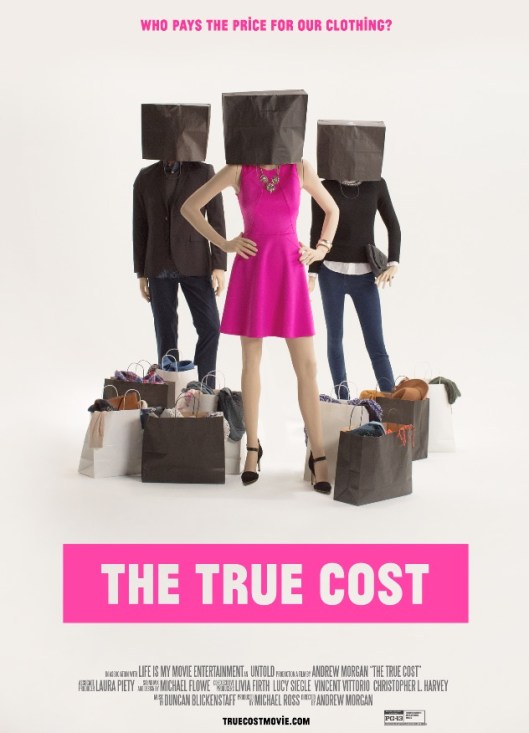
As consumers, we tend to chase beauty over benefits: if it looks good, it couldn’t have harmed anything on its way. There are no aubergine-hued pollutants in the rivers, no underage children making those sensational ruffles, and no worker was paid inadequately to sew those pastel sequins on. Are we wrong, ignorant or simply apathetic? Perhaps all of the above. The True Cost, a film on the fashion industry, brings to the forefront the materialism that drives the economy of fashion, and the heavy price that is paid for cost-effective fast fashion. Parallelly, brands are voraciously driving new trends, while discounting the previous season’s styles. How many pairs of jeans is enough, when baggy or cropped is in one month, and skinny or bootleg fit next month’s #goals? “The consumer didn’t wake up one morning, saying, ‘I want to buy five pairs of jeans.’ We were literally introduced to this concept by the fashion industry,” a commentator in RiverBlue says.

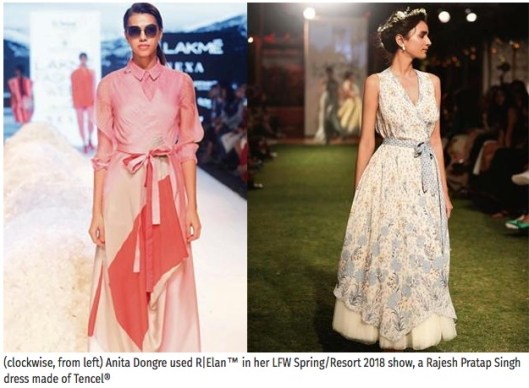
It is clear then, that of the many things it is — expressive, cathartic, good for the economy, and great for Instagram — fashion is also dangerous to the planet. Thankfully, and finally, the industry is now paying heed to its potential legacy of environmental destruction. At Lakmé Fashion Week Summer/Resort (LFW S/R) 2018, Rajesh Pratap Singh used Tencel, a soft fabric made by Austrian textile group Lenzing. It is made from the plant cellulose of sustainably harvested trees in a ‘closed-loop’ production sequence that recycles almost 100 per cent of the solvent. Mumbai-based designer Anavila Misra (of Anavila) has made linen, created from fibres of the flax plant, shine in her subtle-hued saris. Guwahati’s Nandini Baruva (of Kirameki) uses sustainable fabric, made from banana and pineapple (pina fabric), and Eri silk (also known as Ahimsa silk) in her designs that are laced with an ethnic touch. Globally, eco-warrior designer Stella McCartney’s Falabella Go backpack, going strong since 2017, is created using recycled polyester fabric made from ocean plastic. VivoBarefoot’s shoes are made using algae biomass — each pair helps recirculate 57 gallons of filtered water back into natural habitats.

Screen Shot 2018-04-09 at 10.20.04 PM
Screen Shot 2018-04-09 at 10.30.54 PM

(L) Anavila linen saris; (R) Maku natural indigo and white handwoven jamdani scarf. 

While high-street giants like H&M are exhorting you to ‘Rewear, Reuse, Recycle’, Kriti Tula, founder of upcycling relaxed fashion label Doodlage, is keen on waste-management: “Upcycling is the ethos of our brand. Each garment is created using industrial scrap, defective and end-of-the-line fabrics, which are all part of pre-consumer waste, and often end up in a landfill.”

Seven years ago, LFW began a dialogue on sustainable fashion and now dedicates a day to it each season, which focuses on grass-roots-level artisans and craftsmen, with enthusiastic participation from the country’s established and upcoming designers alike. Last season’s #RestartFashion show saw post-consumer waste-fabric makers team up with brands like Chola and Doodlage, while Craftmark by the All India Artisans And Craftworkers Welfare Association collaborated with designers like Anshu Arora, Hetal Shrivastav and Sonal Chitranshi, to showcase ethical garments that were handwoven without generating any waste.

Yvon Chouinard, founder of the outdoor gear label Patagonia, reminds his customers in The Usual, a New York-based publication with a focus on culture and the outdoors: “Think twice before you buy a product from us. Do you really need it or are you just bored, and want to buy something?” This echoes designer Santanu Das’s philosophy for his sustainable Kolkata-based brand, Maku. “Fashion is an industry, it responds to consumption patterns. You don’t need to go on a buying spree — even if the product is sustainable or organic.” Maku’s calls to action are the organic indigo dye and natural fabrics (that are essential to the brand) — its LFW S/R 2018 collection, In Transit, glorified indigo on khadi — and to limit the products on offer.
Screen Shot 2018-04-09 at 10.22.39 PMImage from Doodlage’s Instagram. Photo by: Tanvi Julka.

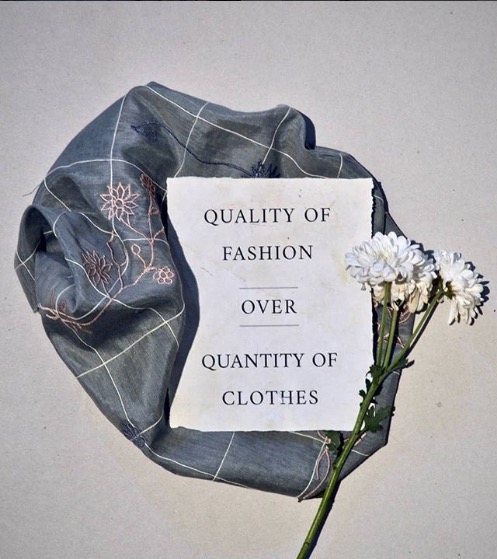
While fashion players are galvanising into action, consumers can and should do their part too. Gautam Vazirani, fashion curator, IMG Reliance, stresses on individual responsibility. “We are constantly trying to find the next cheapest sale, and we are not conscious about how much we really need,” he says. “In India, we are blessed with easily accessible sustainable fashion. For instance, a consumer can buy a sari made by a craftsman like Chaman Premji from Bhujodi village in Kutch that is handwoven with organic cotton and naturally dyed. Such fashion keeps the environment safe, and empowers the smallest producers in rural areas.” Today, with the rise of seasonless runways and unisex products and attire, we can make a difference by focusing on learning more about and investing in eco-friendly products and fabrics, and buying fewer but value-driven classics that will endure through time and trends.

Perhaps we should shop for a greener wardrobe because really, it is about making sustainable fashion fashionable. And that begins at home so that our heirlooms aren’t merely Chanel and Dior, but a habitable existence on earth. As Das points out, “Fashion cannot save the planet, you can.”

Say It With A Tee: The Enduring Appeal Of The Slogan Tee

01 Sunday Apr 2018

Posted by sitanshi talati-parikh in Fashion & Style, Publication: Mint Lounge

≈ Leave a comment

Tags

Ashish Gupta, Dior, Doodlage, Fashion, Nasty Woman, Politics of Fashion, Prabal Gurung, Slogan Tee, T-shirt, Vivienne Westwood

Published: Mint Lounge, March 31, 2018 edition.
Additional images added to this post.

Giving voice to historic movements over the years, the slogan T-shirt has been a powerful canvas for activism

Screen Shot 2018-04-03 at 9.00.12 AM
Screen Shot 2018-04-03 at 8.59.55 AM

Ashish Gupta’s Autumn/Winter 2018 show at the London Fashion Week.

Last month, at the London Fashion Week Autumn/Winter 2018, Delhi-born, London-based designer Ashish Gupta’s rainbow-hued sequinned slogan shirts took clever digs at excessive consumerism, with credit card brand names and logos rejigged into: “American Excess”, “Masturbate” and “Viva(L’Amore)”. An ongoing exhibit at London’s Fashion and Textile Museum, T-Shirt: Cult – Culture – Subversion (till 6 May), charts the T-shirt’s ability to bring about social change, via 200 iconic archival pieces.

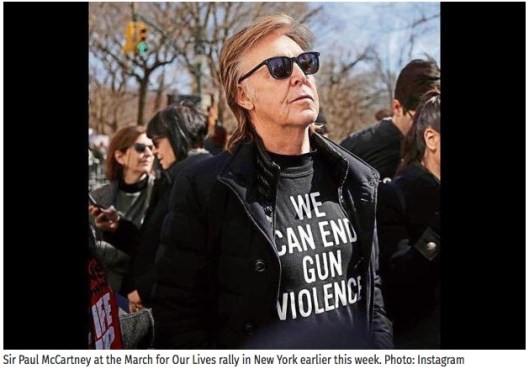
While actor Marlon Brando may have popularized the classic tee on screen with A Streetcar Named Desire (1951), it was American Republican candidate Thomas E. Dewey who used the first-ever slogan T-shirt in 1948 for his “Dew it with Dewey” presidential campaign—albeit with not much political success. Over the years, the slogan tee grew in popularity with the setting up of Disneyland and sale of their graphic tees in the 1950s, iconic pop artist Andy Warhol’s silk-screen printing technology of the 1960s, and the rise of pop music fandom (think The Rolling Stones) and anti-war protests, specifically the Vietnam War, during the 1960s.

The 1970s and 1980s were seminal for the tee out to challenge the establishment. English designer Katharine Hamnett launched politics on cotton—she met the then British prime minister Margaret Thatcher in 1984 sporting a T-shirt with an anti-nuclear message. Hamnett was quoted in The Guardian (2009): “Slogans work on so many different levels; they’re almost subliminal. They’re also a way of people aligning themselves to a cause. They’re tribal. Wearing one is like branding yourself.” British fashion designer Vivienne Westwood pushed forth her punk movement with slogan tees, while also reflecting political causes like nuclear disarmament and climate change, the latter as recent as 2013.

Westwood3
Screen Shot 2018-04-03 at 9.01.12 AM

Designer Vivienne Westwood’s call for a climate revolution.

Inevitably, the feminist ball started rolling as part of the sartorial activism. Formed in New York in 1985, Guerrilla Girls, an anonymous group of feminist activist artists fighting sexism and racism within the art world, took their poster, Advantages Of Being A Woman Artist, on to a T-shirt, among other things. The Fawcett Society, a UK-based charity campaigning for gender equality and women’s rights, teamed up with Elle UK and the high-street chain Whistles for the This is what a feminist looks like campaign in 2014—which, incidentally, faced a pushback with questions about the ethical production of the tees by the organization.

Screen Shot 2018-04-03 at 9.00.31 AM
Dior’s ‘We Should All Be Feminists’ campaign.

Maria Grazia Chiuri opted for “We should all be feminists” for her very first collection for the French fashion house, Dior, in October 2016, restarting the politics of feminism on a T-shirt; at the recently concluded Dior Autumn/Winter 2018-19 show, the statement sweater worn by model Ruth Bell, “C’est Non, Non, Non et Non!”, was a throwback to the defiant Youthquake spirit of Paris in the 1960s, and the nascent feminist movement gathering momentum at the time. You could’ve been living under a rock and still not have missed the slogan T-shirts on the runways at the New York Fashion Week 2017, with Nepalese-American, New York-based designer Prabal Gurung’s “The future is female”, and New York-based fashion and lifestyle brand Creatures of Comfort stating, “We are all human beings.” While questions may be raised about the imperfections of the fashion industry, such as the ethical and eco-friendly production of these tees, the power of a slogan T-shirt to keep the spotlight on topics like misogyny has remained strong.

Screen Shot 2018-04-03 at 8.36.00 AM

When statements are rife, so are controversies. Just a couple of months ago, Swedish high-street label H&M created a furore with an ad featuring an African-American child donning a hooded green sweatshirt with the words, “Coolest monkey in the jungle”, while online retail firm Amazon recalled children’s clothes bearing the slogan, “Slavery gets sh-t done.”

American high-street brands are uncomfortably familiar with T-shirt controversies. Running the gamut of sensitive topics are Abercrombie & Fitch’s Asian stereotype-propagator, “Wong Brothers Laundry Service: Two Wongs will make it white” (2002), Urban Outfitters’ anorexia-promoting “Eat less” (2010), American Apparel’s borderline-paedophiliac “Teenagers do it better” (2011), and JCPenney’s anti-feminist “I’m too pretty to do homework…so my brother has to do it for me” (2011) T-shirts. Not to forget popular sportswear brand Nike running with “Gold Digging” (2012) and pro-drug terminology like “Get High” and “Dope” (2011), with their affirmative tick mark logo featured below. Conde Nast Traveller’s October-November 2016 Indian edition cover with Priyanka Chopra wearing a custom tee upset some with words like “Refugee” and “Immigrant”, forcing the actor to issue a public apology.

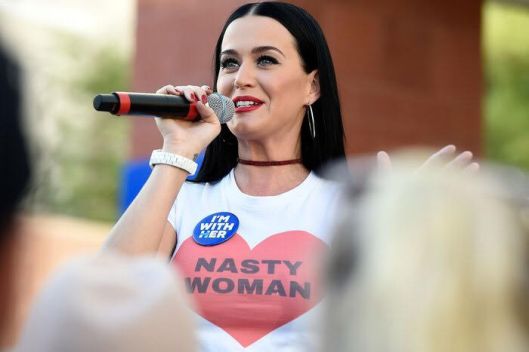
Katy PerryKaty Perry in a ‘Nasty Woman’ T-shirt.

The democratic garment is no stranger to political controversies either. When Donald Trump called Hillary Clinton a “nasty woman” during the final presidential debate in 2016, Amanda Brinkman, founder of ethical, women-driven lifestyle products site Shrill Society (earlier known as Google Ghost), created a satirical “Nasty Woman” T-shirt while the debate was live. Her creation went viral, selling nearly 10,000 pieces overnight. It became a symbol of anti-Trump resistance, with Hillary Clinton tweeting a video of actor Will Ferrell wearing the shirt. Says Brinkman, “Being able to identify with others through visual clothing choices is a powerful way to seek out and find like-minded individuals. When Trump called Clinton a ‘nasty woman’, it resonated with women everywhere who get talked down to despite (or perhaps, because of) their intelligence, ambitions, and desires.”

Screen Shot 2018-04-03 at 8.36.37 AM

Delhi-based ethical young brand Doodlage uses slogans as a part of its fashion vocabulary. Says founder Kriti Tula, “Clothing is a means of self-expression and slogans allow you to be more vocal and expressive, and make a statement.” Besides self-expression, perhaps, the T-shirt is really a neutral canvas on which you can paint your thoughts. Unfortunately, many of the T-shirt conversation starters over the decades are still relevant today. Which makes one wonder if there is enough change happening in the world, one slogan tee at a time.

Dark Side Of The Moon

23 Friday Feb 2018

Posted by sitanshi talati-parikh in Fashion & Style, Publication: Mint Lounge

≈ Leave a comment

Tags

Fashion, Genderless, Godrej India Culture Lab, Heumn, Japanese Fashion, Khadi, Lakme Fashion Week, Parmesh Shahani

Published: Mint Lounge, February 24, 2018 Edition
Additional images added to this post.

As ‘yami kawaii’, a Japanese fashion trend highlights mental illness, Lounge looks at the social taboos that fashion in India has addressed, however fleetingly

YamiKawaii_Google
YamiKawaii_Pinterest

‘Yami kawaii’ on social media.

Japan, in its inimitable way, has a relatively new subculture called “sick cute”, or yami kawaii. Taking off from the traditional kawaii culture that celebrates pastel-pink cuteness and pristine beauty, yami kawaii has Harajuku locals sporting medical-themed accessories like bandages, syringes, pills and fake blood, or anti-social words like “I kill you”, demonstrating the dark side of life on the same cutesy backgrounds. Suggesting that the wearer is fragile, ill or emotionally wounded, this is an attempt to start a conversation about depression and mental health, taboo in a country that has extraordinarily high rates of suicide.

Over the decades, globally, fashion has focused on issues that were relevant at the time: be it Jean Paul Gaultier’s skirts for men in 1984, Vivienne Westwood’s climate revolution call to action in 2013, or Comme des Garçons designer Rei Kawakubo’s acceptance of the imperfections of the human form. Feminism and gender equality have been consistently on the fashion radar, particularly with the rise of androgynous fashion. Many such socio-political movements may not have seen the kind of momentum they did without the support of pop culture.

House of Riot Tee
House of Riot

“Through our clothing, we express our economic status, our social alliance…. For fashion to effect change, it must speak up,” says Australian model-activist Ollie Henderson in a TEDx Sydney talk in 2015. Henderson, who found her voice through slogan T-shirts at the Australian Fashion Week, 2014, founded a Sydney-based fashion label and youth movement, House of Riot, that is described on their website as “an extended art project fuelled by political frustration”.

In India, perhaps an early example of fashion as a means of social change was Gandhi’s Swadeshi movement, which popularized, among other things, the use of local handwoven Khadi cloth. It not only had a political impact on the country’s freedom struggle but also paid dues to the grassroots-level artisans, with a positive socio-economic effect. There have been voices since, from Rohit Bal’s 2003 showing of men on the runway wearing sindoor as a gender-neutral statement to Lakmé Fashion Week’s (LFW’s) Sustainable Fashion Day (now in its seventh year), where artisans regularly take centre stage, walking the ramp with the designers.

“Globally, fashion weeks and organizations are embracing culture-led conversations; whether it is plus-sized model Ashley Graham becoming a rage on the international runways or the feminist movement started by Prabal Gurung in his show at New York Fashion Week last season,” says Jaspreet Chandok, vice-president and head of fashion, IMG Reliance, which co-organizes the LFW. “The first step is acceptance, which we (locally, with the LFW) have been able to achieve; once we move fashion from exclusive to inclusive, it will tip over into a larger conversation which can actually lead to change,” he adds.

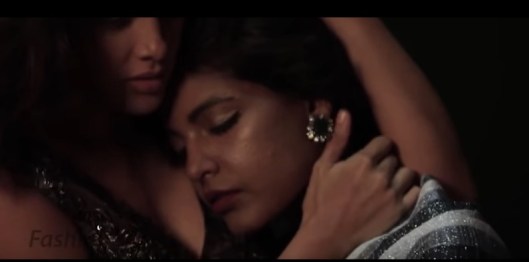
Screen Shot 2018-02-23 at 10.31.26 PMA still from ‘The Marriage of Shayla Patel’.

Last autumn at the LFW, Narendra Kumar Ahmed unveiled a short film, The Marriage Of Shayla Patel, with his bridal-wear show of the same name. In it, an elite urban bride-to-be who is in love with a woman is caught in a dilemma: choosing love over what is expected of her. It attempts to strip India’s strongest societal edifice—marriage, and, therefore, weddings: People get lost in the glamour, diamonds and designer clothes as they conform to society’s version of normal. Anjali Lama (born Nabin Waiba) became the first transgender woman to model at LFW Summer/Resort 2017 during their #TagFree show, which also included gender-neutral model Petr Nitka. The show strove to break stereotypes of size, shape, age and sex. The LFW Winter/Festive 2017 turned up the volume on sustainability and the footprint of fashion with the #RestartFashion initiative and Huemn Project’s Reflection. The designers for Huemn, Pranav Misra and Shyma Shetty, created an installation, a landfill of human bodies wrapped in clothing scraps and plastic bags. Misra believes: “Fashion’s primary role is to inspire and bring about change. Clothing is a by-product of the industry.”

Screen Shot 2018-02-23 at 10.36.35 PM
Screen Shot 2018-02-23 at 10.36.22 PM

Bobo Calcutta’s collection symbolizes the liberation of love and sexuality.

Godrej India Culture Lab’s (GICL’s) initiatives open the discussion on taboo topics—for instance, the Queer Aesthetics Now! installations at the recently concluded LFW Summer/Resort 2018 brought to the fore queer awareness and rights with a showcase by designers like Sumiran Kabir Sharma and Ayushman Mitra, among others. Kolkata-based Mitra’s collection (under the label Bobo Calcutta) symbolizes the liberation of love and sexuality, such as a sexless cotton jumpsuit that depicts gender-neutral faces in liplock, while the hand embroidery is done by craftsmen from West Bengal picking hues from the gay pride flag.

Fashion has managed to highlight issues like sexuality and sustainability, but will it shake up Indian society? While Misra appreciates the positive dialogue that began with their installation, he cannot judge its on-ground impact in a mere six months. Efforts at the institutional and individual levels are rife, but yet to become a movement like yami kawaii, stepping off the catwalk and on to the streets. “Fashion does talk about issues in India, but not in an articulate way. The mainstream voices are so focused on the two Bs—Bollywood and bridal—that these conversations remain on the margins. And at the end of the day, these dialogues should stem from designers that celebrate career-long values rather than ephemeral marketing,” says Parmesh Shahani, head of the GICL. For fashion can be a game changer, a way for people to connect to socio-political movements and express their support—being the change by wearing the change.

A Truly Green Wardrobe

10 Saturday Feb 2018

Posted by sitanshi talati-parikh in Fashion & Style, Publication: Mint Lounge, Sustainability

≈ Leave a comment

Tags

Bionic Yarn, Eco-friendly, Econyl, Fashion, Hemp, Linen, Mint Lounge, Recca, Stella McCartney, Sustainability, Sustainable Fashion, Tencel, Textiles and Fabrics

Published: Mint Lounge, February 10, 2018 Edition

Seaweed dresses, pineapple handbags and pantyhose made of recycled plastic—a lexicon of innovative eco-friendly fabrics

Screen Shot 2018-02-09 at 5.05.43 PM

From reclaimed fishing nets to algae biomass, and fungi fabric to banana fibre cloth, fashion has a new yarn to spin, and it’s singing a biodegradable tune. Eco-friendly fabrics are not only good for the environment, they also feel great because they are natural, non-toxic and breathable. Eco-fashion stems from sustainable sources, it includes fibres that do not require the use of pesticides or chemicals to grow, as well as biodegradable or fabric spin-offs from the non-biodegradable waste that is choking our planet. Lounge lists 13 fabrics that make the cut.

Bamboo Fabric

Bamboo fabric has come a long way from corset bones of the past. The fabric is durable, drapes well and absorbs moisture, while harvesting of bamboos is sustainable for the planet. London-based Thought and Asquith, Australian brand Shift to Nature and Vancouver-based Lululemon Athletica use bamboo fabric; locally, it is used in Naushad Ali’s designs. A variant called Bamboo Charcoal is created by processing the charcoal from heated bamboo and mixing it with fabrics using nanotechnology.

Bionic Yarn

It is recycled polyester made from recovered waste, particularly from the oceans. Plastic bottles from trash are collected, broken down, shredded into fibres and spun into core yarn; then, this is woven into an eco-friendly fabric. Musician Pharrell Williams joined forces with the team behind Bionic Yarn and it led to initiatives like “Raw For The Oceans” with G-Star Raw denims.

Screen Shot 2018-02-09 at 5.05.55 PM

Ultra Bloom shoes.

Bloom Foam

Algae in your shoes? No fear, Bloom has the world’s first plant-based, performance-driven foam formulated with algae biomass, using renewable feedstock. Noticed in a capsule collection of shoes by London-based Vivobarefoot, which states on its blog that each pair of these Ultra Bloom shoes will also help recirculate 57 gallons of filtered water back into natural habitats.

‘Cork Skin’

It is extracted from the cork oak tree, what Portuguese brand Pelcor calls “cork skin”, a natural, biodegradable and recyclable resource. The company offers accessories like bags, hats and shoes made out of cork.

Screen Shot 2018-02-09 at 5.06.01 PM

A Falabella Go backpack by Stella McCartney.

Econyl® Yarn

An innovative regenerated fibre, “Nylon 6” is made from 100% regenerated waste material, including reclaimed fishing nets. From Swedish Stockings’ pantyhose to luxury brand Stella McCartney’s Falabella Go Backpacks, a number of brands use this yarn in items like swimwear, sportswear and hosiery. Bloni showcased a line of Spring/Summer wear glorifying Econyl® at the recently concluded Lakmé Fashion Week (LFW) in Mumbai.

Hemp

It’s an ancient fibre dating back to 8,000 BC, but it has remained on the fringe. A decade ago, Donatella Versace used a hemp-silk fabric for a gown, while Calvin Klein created a hemp-based pantsuit for the FutureFashion show at the New York Fashion Week. The durable and strong fabric comes from the fibres of the herbaceous plant of the species, Cannabis sativa, a high-yield crop. A hemp blend would look like linen, softening over time. Currently seen in American apparel brands like Bad Decision Adventure Club and Patagonia.

Linen

One of the earliest fibres known to man, the Europeans’ favourite textile was at one point used as a form of currency. Made from the fibres of the flax plant, it has been favoured for bedsheets and tablecloths. There is a value attached to vintage linen as it softens over time—it is stronger than cotton and can last for decades. Anavila Misra has made linen a hero with her handwoven saris, and Padmaja Krishnan uses linen in her handwoven fabrics.

Screen Shot 2018-02-09 at 5.08.27 PM

Products using Pinatex.

Piña Fabric

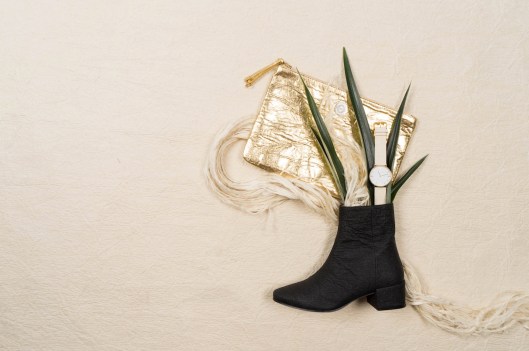
Made from the discarded leaves of the pineapple plant, it is malleable, and can be combined with silk or polyester to create a textile fabric. A cheaper alternative to leather, it can morph into anything from crocodile skin to glittering gold. UK-based Carmen Hijosa’s textile line Ananas Anam has made “Piñatex” chic; the ivory, glossy fabric is also used by Filipino brides for wedding dresses.

R | Elan™

Showcased in designer Anita Dongre’s Songs Of Summer collection at the LFW, R | Elan™ GreenGold is a fabric innovation from Reliance Industries that uses specially engineered fibres. GreenGold is made from 100% used plastic bottles and has a low carbon footprint.

Recca®

Made from pre- and post-consumer waste, it stands for recycled cotton and is manufactured by the Tamil Nadu-based Anandi Enterprises. Sohaya Misra’s label Chola showcased Recca® for the LFW Winter/Festive 2017 initiative “Restart Fashion”, with a monochrome palette and soft, layered silhouettes.

SeaCell®

It’s a fibre made from a mix of ground natural seaweed and wood cellulose, which locks the nutritious properties of seaweed into a wearable fabric. While manufacturers claim that the skin can absorb these nutrients, it depends on the quantity of seaweed in the mix. Made by German company Smartfiber AG, it can be seen in Lululemon Athletica’s VitaSea line of sportswear.

SoyBean Fabric

Also known as “vegetable cashmere”, it is made from fibres that are spun from the waste of the soy food industry, like the hulls of soybean. American designer Linda Loudermilk, considered a pioneer of eco-luxury, used this biodegradable fabric in her brand Luxury Eco years before it became cool to do so.

Tencel®

Last week, the LFW had a gently floating Tencel® chandelier installation in the heart of JioGarden in Mumbai that will be recycled. Produced by Austrian textile group Lenzing, the fabric is commonly known as lyocell. While viscose, rayon, modal and lyocell are all made from plant cellulose, the same fabrics produced by Lenzing are made from sustainably-harvested trees in a “closed-loop” production cycle that recycles almost 100% of solvent. It has a soft, smooth finish, drapes well and absorbs moisture. Skinny denims by Los Angeles-based DSTLD, mini-dresses by American slow-fashion brand Reformation and Rajesh Pratap Singh’s androgynous garments flaunt Tencel®.

We are watching out for the next-gen Refibra™ fibres that will go a step further in recycling cotton scraps left over from the lyocell production process, in a bid to eliminate all waste.

Manifesto: Sustainability & Fashion

01 Thursday Feb 2018

Posted by sitanshi talati-parikh in Fashion & Style, Sustainability

≈ Leave a comment

Tags

Fashion, Manifesto, Sustainability, Sustainable Fashion

Submitted to ‘Fashion and Sustainability’, London College of Fashion (FutureLearn Course)

This is a work-in-progress manifesto.

I love fashion, and it turns out, fashion is the biggest pollutant of our planet, after oil. How heavy is the cost of wearing beautiful clothes, and how long can we remain ignorant or act like it doesn’t matter to us?

If one values life—I care about the people around me, I care about animals (and hence am a vegetarian and wear vegan)—then one must understand, acknowledge, and attempt to change what is wrong with the fashion industry. As Barack Obama said: “We are the first generation to feel the effect of climate change and the last generation who can do something about it.”

Our era is defined as the Anthropocene and, according to Johan Rockstrom of the Stockholm Resilience Centre, we have only 50 years to make the changes needed to ensure our wellbeing on earth for the next 10,000 years. While we collect material goods as markers of progress and as a legacy, if we don’t make a change in our consumption patterns starting now, there won’t be a planet to leave to our kids.

While creating a sustainable planet has many angles and agendas, one of the concerns is consumption and waste. We are living in the economy of excess and if we learn frugality, perhaps we stand a chance of saving the planet.

A writer may dip into any of the agendas; my aim is to bring about change through magazine and news articles, to inform and educate and to draw people into the conversation of change.

I also want to be the change, so I am aiming for a more sustainable lifestyle and wardrobe and would like to engage those in my circle of influence in this lifestyle shift.

Vogue View: Buying Vegan

02 Tuesday Jan 2018

Posted by sitanshi talati-parikh in Fashion & Style, Publication: Conde Nast, Sustainability

≈ Leave a comment

Tags

Angela Roi, Cruelty-free fashion, Fashion, Gunas, Matt & Nat, Modavanti, Rheson, ShopEthica, Stella McCartney, Sustainability, Sustainable Fashion, Vegan, Vogue India

Published: Vogue India, Jan 2018

Vegan-Vogue-Jan2018

Gloves For Your Feet

23 Saturday Dec 2017

Posted by sitanshi talati-parikh in Fashion & Style, Publication: Mint Lounge

≈ Leave a comment

Tags

Fashion, Mint Lounge, Sock Boot

Published: Mint Lounge, December 23 Edition
Additional images added to this post.

Post the sneaker craze, the trending ‘sock boot’ takes athleisure a step higher

Screen Shot 2017-12-27 at 4.09.50 PM

Exactly when you start debating how Sarah Jessica Parker struts around town in knee-high hot pink socks tucked inside sky-high stilettos (and wonder if she buys the shoes a size bigger to make room for the socks), the world hands you the sock boot. Punk heel aside, the sock boot has a retro swing, reminiscent of the 1980s.

So it’s not a sock for your boot (which is technically termed a “boot sock”). It’s a boot, generally ankle or calf length, which merges the sock element in the design and is likely to have a pointy toe and a kitten or block heel. With colours ranging from neutral to pop, they are stretch-jersey booties, occasionally with added textures like velvet and embroidery. Sock line or potential scrunchy gathers aside, this hybrid acknowledges that athleisure is not a passing trend.

Pink Balenciaga Kinfe Booties

The sock boot is a natural progression from the thigh-high satin boots popularized by Karl Lagerfeld for Chanel in 1990, when the boots became an alternative to leggings. Kylie Jenner made waves in purple Balenciaga Spandex boots, which, offered in a range of colours, are an obvious replacement for leggings. In 2014, Nike and Adidas introduced the all-in-one knitted football sock shoes. More recently, Vetements and Balenciaga designer Demna Gvasalia redefined the boot with the second-skin Balenciaga “knife bootie” in black knitted sock or pop-coloured crepe, which, in turn, is an elevated take on the Vetements lighter-heel knitted sock boots. And Valentino’s and Prada’s sock-stilettos may not be boots, but they do bear a strong resemblance, naturally creating a sock-stiletto-boot hybrid.

Valentino With Outfit

Sock boots hug the ankles and create a slimming effect, which is a big hit on the street. And it’s a trend that suggests longevity, simply because of its ease of use. They feel lighter than the original kind and are easier to carry around when you are hopping between kickers and heels. They also turn up the volume on the preferred silhouettes of the moment, anti-fit above and body-con below. High-fashion sportswear has become a wardrobe staple, and it is but natural that boots should follow suit.

These boots make perfect accompaniments to mid-calf or knee-length flirty skirts, floral dresses and minis. They also provide opportunities for layering: Beyoncé paired her Vetements mid-calf bootie of sparkly green athletic socks and a unicorn-printed column heel with cut-off shorts and a camouflage jacket.

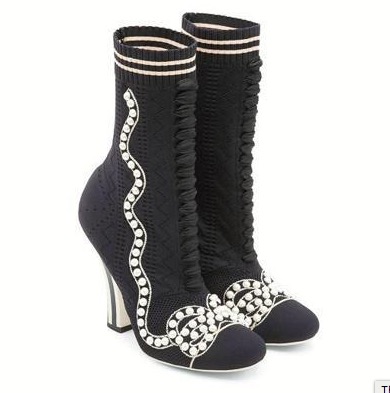
Our favourite among what’s out there? It’s got to be Fendi’s toast-to-vintage and ready-to-rock sock boots that give the sportiness a feminine kiss with pearls and lace.

Where to find it:

Fendi Embroidered Dark
Fendi Embroidered Opt 2
Fendi Red
Giuseppe Zanotti_2view
Malone Souliers
Uterque_1view
Vetements_3view

Balenciaga, Fendi, Vetements, Valentino, Malone Souliers, Uterque, Giuseppe Zanotti, Zara, Mango, Forever 21, TopShop.

Rajesh Pratap Singh: ‘Brocade Hoods and Pin-tucked Tuxedos’

25 Monday Sep 2017

Posted by sitanshi talati-parikh in Fashion & Style, Interviews (All), Interviews: Lifestyle, Publication: Verve Magazine

≈ Leave a comment

Tags

Designers, Fashion, Rajesh Pratap Singh, Verve Magazine

Published in Verve Magazine, September 2017 (Bridal Issue)
Photographs by Rishabh Malik

Designer, Rajesh Pratap Singh, on undertaking ‘super couture projects’ for unconventional brides. 

Screen Shot 2017-09-25 at 12.24.59 PM

He won’t design a wedding outfit. But, if you are lucky, he will create something, as a ‘super couture project’, for you, if approached with the right sensibility. All he asks is that you be: “intelligent, experimental, unconventional, and not bound by tradition”.

Seminal androgynous fashion has come out of Rajesh Pratap Singh’s atelier. Based in New Delhi, he hails from Rajasthan, and considers the poshakh the perfect bridal garment. Post NIFT Delhi, he worked in fashion in India and Italy before introducing his own line of men’s and women’s clothing in 1997. Pratap Singh, who has showcased his collections at Paris Fashion Week, draws from his roots to craft artisanal garments that stand out for their impeccably clean lines, careful detailing and subtle international silhouettes.

Pratap Singh, who is Woolmark’s first wool ambassador of India (2013), has his creations (made with Bhutanese fabrics) permanently housed in Bhutan’s Royal Textile Museum, while his ajrak prints on linen as well as handloom weaves in ikat are housed in the permanent textile and apparel archives of the Victoria and Albert Museum, London. However, his textile repertoire extends beyond experimenting with ikat weaves, handloom indigos, Chanderis and Benarasi weaves. His fondness for the sari, which he describes as “a directory of Indian textiles”, is evident by the animation in his voice and generosity of adjectives used while on the topic. “It is the purest and most perfect Indian garment: versatile, beautiful and sexy.” He has developed a range of saris; his looms, whenever free, go into creative production to make these.

His voice is crisp, but his demeanour is non-confrontational. He doesn’t want to disrupt, he just wants to be true to his point of view. Perhaps that is what is missing from the Indian bridal milieu — sophisticated, cultivated points of view that offer a bouquet of options to the bride-to-be. Not one that remains limited to what Pratap Singh, at the risk of being politically incorrect, suggests is “a crazy obsession with an idea of ‘Indian royalty’ which manifests itself in a whole different avatar when it comes to wedding attire”.

The designer, who — literally, as we speak — is setting up one of his looms to weave a garment for a close friend’s daughter, has, in the past, designed a classic Benarasi lehnga woven with engineered motifs for his colleague Devika Multani and created a veiled brocade jacket with dhoti pants for Border and Fall’s Malika Verma Kashyap, for their wedding days. Pratap Singh holds strong to the fact that “people should be able to wear whatever they want to, on supposedly one of the most important days in their life. It should be an extension of their personality and whatever they are comfortable with. There must be no expectations, nor should their wardrobe selection be dictated by norms”. Verma Kashyap speaks about her choice of designer for her wedding outfit: “Reaching out to Rajesh was a simple decision, as was the process of creating it with him. I’ve always loved his clothing and the spirit in which he approaches design: it’s thoughtful and cuts through the noise.”

In essence, it boils down to sensibility. And realising that if you like his work, he’ll work with you to create something exclusive. A garment that would be simply the combination of his technique and your personality. Both irrefutably unique.

Screen Shot 2017-09-25 at 12.25.13 PM

Excerpts from a conversation with the designer….

Tell us about your problem with Indian women dressed like ‘royalty’ on their wedding day.
There is a confused ‘royal hangover’. What a lot of designers think royalty ought to be, or ‘nouveau royalty’. We already have a traditional wedding outfit (typical to different parts of the country). I believe you shouldn’t touch a garment that is perfect, unless you have something serious to say. I see bad reproductions of some things that existed or that which are thought to have existed: such as a cancan-gown-inspired lehnga. It is neither here nor there.

Do you believe you could create a relevant voice in nontraditional bridal wear?
The categories we work with, so far, have not included bridal wear. Jackets were what we started off with and that is where we progressed. Our job is to solve problems, and we didn’t look at the bridal market as having a problem. There are enough people in this sphere, with some doing a really decent job of it.

What does style mean?
Style is distinctive, definitive and comes from being within your comfort zone, in an effortlessly natural and honest way.

Do you believe that bridal wear, by nature, allows women to be comfortable?
Each to her own. While I don’t want to judge, I can’t understand women wearing something so heavy, where the internal construction has suspenders to carry the weight of the embroidery on the lehnga. I would not make something like that! Weddings in India are a long affair, so wear what you feel comfortable in. If you want to make a statement, make sure it’s one you believe in — the designer is the last person who should be the decision maker.

Today in India, can there be an androgynous bride….or an androgynous groom?
Today in India, you should be whoever you want to be and wear whatever you want to wear. That is the true essence and spirit of freedom. If a girl wants to wear a tuxedo for her wedding, go ahead. I’ll make it for you!

How would you design a lehnga?
With engineered motifs, and definitely woven. I can’t say that the alternative is a pin-tuck lehnga, which people ask for. The geometry of the pin-tuck lehnga won’t give the right finish to the garment; it’s not meant for that.

Basically, it is the personality of the individual that pushes a garment, rather than me trying to say, ‘I’ve made a lehnga, I’ve put 10,000 crystals on it, it costs you a bomb and you have to wear it.’ It may be great for business, but I am not in that business.

What would it take for a bride to convince you to make an outfit for her?
She just needs to ask. And if she’s interesting and intelligent, why not? If I know the person, I would do it out of love. If a random person throws money at me, I won’t do it.

There has to be a certain vibe and understanding. It’s difficult for me to do a faceless, nameless design of this nature. For that, I have tons of friends doing wonderful work and I’m happy to direct you there!

With Love From Scandinavia

23 Saturday Sep 2017

Posted by sitanshi talati-parikh in Fashion & Style, Features & Trends, Publication: Mint Lounge

≈ Leave a comment

Tags

Design, Designers, Fashion, Mint Lounge, Scandinavia

Published: Mint Lounge, September 23 edition
Additional images and content (end box) used in this post.

Screen Shot 2017-09-25 at 5.35.59 PM

Swedish philosopher and feminist Ellen Key described in her essay, Beauty For All (1899), a life that consisted of fewer but finer things—those that are functional and beautiful all at once. By the 1950s, Scandinavia (colloquially including the five countries of Finland, Norway, Sweden, Iceland and Denmark) witnessed a design movement characterized by simplicity, minimalism and functionality. It’s a design sensibility influenced in part by the stark beauty of the Nordic landscape, the harsh northern climate and a lifestyle that is driven less by excess and more by fulfilment. The long winters and reduced sunlight, for instance, have designers creating bright, light and practical interiors. It is visible in art as well: late-19th century Swedish artist Carl Larsson was known for his brightly coloured paintings, while innovative, futuristic shapes dominated the works of the late Verner Panton, one of Denmark’s most influential 20th century furniture-and-interior designers. Contemporary interior brands like HAY and Ikea are Swedish exports to the world.

Screen Shot 2017-09-25 at 9.50.02 PMLifestyle scape by Hay.

With fashion, the focus is on functional—and often multifunctional wear—rather than occasional glamour. Importance is given to longevity, and there is a drive towards go-to staples that you can experiment with, add your own personality to and build your look around. Over the decades, from the bold prints of the 1960s and 1970s to the boho chic of the 1990s, the fashion sensibility of Norway, Sweden, Denmark and their neighbours has emerged as a distinctive “Scandi style”.

Today, you can’t make a trip to any of the European fashion capital cities without walking into a boutique devoted solely to Scandinavian fashion brands, not to mention its deep impact on wardrobes via high-street or upmarket streetwear, like H&M. It’s what the chic Parisians and Londoners are buying, and what global celebrities are headlining.

We bring you a lexicon of the fashion brigade from Scandinavia.

Screen Shot 2017-09-25 at 9.50.27 PM
Screen Shot 2017-09-25 at 9.50.35 PM

ACNE Studios
Ambition to Create Novel Expressions (ACNE) is a 21-year-old brand that has bridged the gap between high fashion, ready-to-wear and streetwear, with its headquarters in Stockholm and outlets in major fashion capitals of the world.

Screen Shot 2017-09-25 at 5.42.04 PMFjällräven

Backpacks as utilitarian cool
Chasing functionality entwined with a “cool geek” sensibility are brands like Fjällräven and Sandqvist. Fjällräven uses G-1000, its own hardwearing and versatile fabric born from founder Åke Nordin’s experiments with building mountaineering jackets out of tent fabric, while Sandqvist is inspired by the untrammelled rawness of the Nordic landscape.

Ganni 2Ganni

Copenhagen Girls
Danish brand Ganni is an Instagram fashion wonder. In 2015, Danish model and photographer Helena Christensen took a selfie with her friend, actor Kate Bosworth, for Instagram (both wearing Ganni) and captioned it “#GanniGirls”. It went viral, via digital influencers like Danish models who post images of the latest styles while on their summer break. What began as a niche cashmere line has taken the quintessential “Copenhagen girl” global, with celebrities like Jessica Alba and Kendall Jenner buying into the brand and concept.

Dagmar 1
Dagmar 2
Dagmar 4

Expressive knitwear
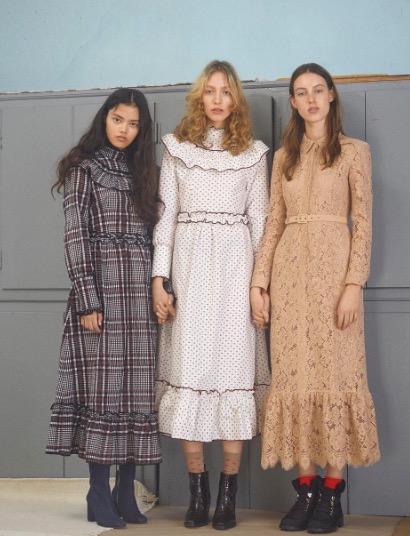
Family-owned, heritage knitwear companies like the Swedish House of Dagmar (named after the founders’ late grandmother, a tailor) and Danish brand SNS Herning (specializing in knitwear geared for Nordic fishermen) focus on the basics. Dagmar has defined the term “expressive knitwear”, where inspiration is taken from architecture, contemporary art and culture, focusing on textures and cuts.

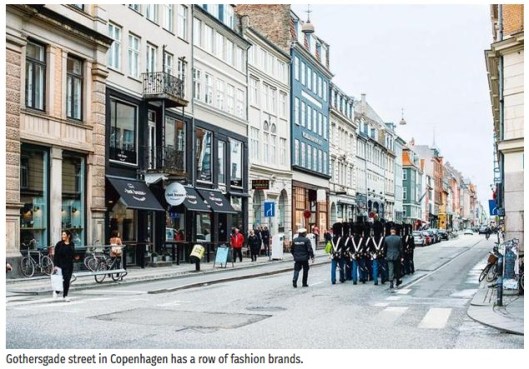
Gothersgade
The major street in the city centre of Copenhagen, Denmark, offers a wide range of shops and smaller boutiques.

Screen Shot 2017-09-25 at 5.42.38 PM

Scandi Kids
Nordic children’s brands emphasize on comfort, colour and print: from Swedish brand Mini Rodini started by an illustrator, Indikidual’s unisex pieces and Danish brand Bangbang Copenhagen’s circus play to Gardner and the Gang’s cartoon-embellished organic cotton and Soft Gallery’s poetic prints and embroidery.

More than H&M
In 2014, the Swedish multinational H&M Group was valued at €13 billion (around Rs99,300 crore), the highest-valued fashion brand in Europe. H&M also owns Cheap Monday (known for their hip skinny black jeans in the 1990s), the trendy & Other Stories, the younger-apparel brand Monki, and COS (Collection of Style), the unobtrusive brand which takes high-street wear into a chic new realm.

Screen Shot 2017-09-25 at 5.42.56 PM

New Nordic Movement
The award-winning, Copenhagen-based Henrik Vibskov is known for his avant-garde and forward-thinking designs in clothing (particularly men’s fashion), furniture, art and music. He is often associated with the “New Nordic Movement”, especially due to his serious runway fashion credentials.

Screen Shot 2017-09-25 at 5.43.37 PM

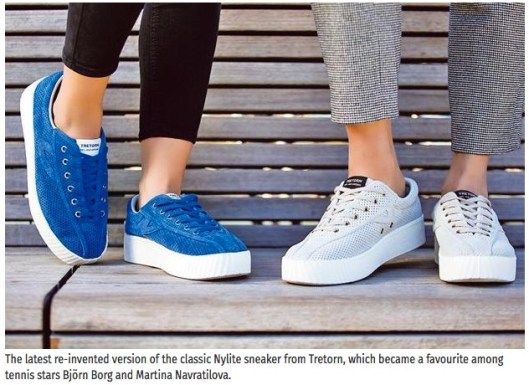
Performance footwear
Swedish brand Tretorn has expanded from weather-ready rubber boots to casual and performance footwear, with canvas shoes like Nylite and Racket. The brand that was born in 1891 holds a warrant of appointment to the Swedish royal family, making it an exclusive supplier to the court.

Screen Shot 2017-09-25 at 9.51.04 PM
Camilla Skovgaard

Toffel clogs
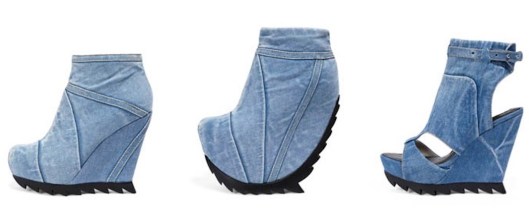
Sweden’s famous “toffel” clog has found its way into contemporary times with a modern look and vintage twist. Available in 22 countries, Swedish Hasbeens toffels (expanded from platform sandals to loafers, heels and clumpy boots), bags and belts are based on the original 1970s models, and are handmade with ecologically prepared natural grain leather. Meanwhile, award-winning footwear designer Camilla Skovgaard’s edgy spike heels and moulded platforms, which count patrons in actors Halle Berry and Kristen Stewart, and singer Rihanna, are available in 33 countries.

Screen Shot 2017-09-25 at 9.49.10 PMRAINS

Weather-proof textiles
Denmark’s wet climate has led to a surge in brands that factor in the weather. RAINS works contemporary cuts with weather-ready textiles, including classic rain anoraks and other waterproof apparel and accessories. Elka has rubbery, heavy gear, while Stutterheim applies the rubber fabric to handmade raincoats and SWIMS has a wide range of accessories made from 100% waterproof material.

OTHER KEY SCANDI BRANDS

By Malene Birger is worn by the Crown Princess of Denmark as well as the Duchess of Cambridge.

Bruuns Bazaar is the first Danish company to show in Paris in 1999.

FILLIPA K is a Swedish men’s and womenswear retailer believing in minimalist, pure, clean lines with high-quality fabrics and flattering cuts.

Wood Wood is a smart Danish athleisure brand with an attitude; with over 50 collaborations with brands from Nike to Disney and Fred Perry.
Gestuz Has a pared-down sophisticated sensibility for whom they describe to be a “Gestuz Girl”.

Astrid Andersen counts fans in Rihanna and Drake, and has taken forward the sport-luxe genre by adding materials like lace and fur to classic tracksuits.

Cecile Copenhagen Took two printed scarves and turned them into a shirt and a pair of shorts, which now count as signature pieces.

Norse Projects Copenhagen brand that blends streetwear and workwear towards a higher aesthetic.

Très-Bien The Swedish menswear store has an in-house label that speaks of minimalism and timeless silhouettes.

Sophie Bille Brahe Delicate and contemporary jewellery, counting Madonna as a fan.

Georg Jensen Classic Scandi jewellery that also collaborates with upcoming designers.

Preview of Lakme Fashion Week Winter/Festive 2017: Notes from the atelier

16 Wednesday Aug 2017

Posted by sitanshi talati-parikh in Fashion & Style, Publication: Mint Lounge

≈ Leave a comment

Tags

Designers, Fashion, Lakme Fashion Week, Mint Lounge

Published in Mint Lounge

As the Lakme Fashion Week takes off in Mumbai today, here are five designers to look out for and the causes they express through their collections

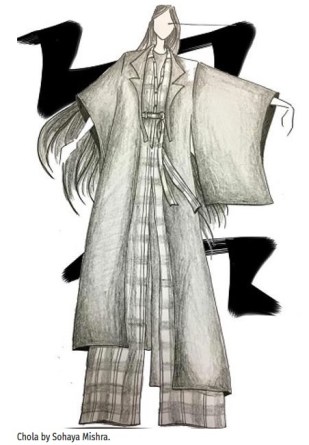
Eco warrior: Chola by Sohaya Mishra

Screen Shot 2017-08-18 at 10.07.09 AM

Mumbai-based Mishra has worked with a monochrome palette, which she feels “leaves space for thoughtful interpretation and encourages conversations on the beauty of contrast”. “Black and white, two opposing forces yet complementary, work together to bring balance, inherent to the concept of sustainability,” she says in an email interview. This dualism is woven into her dialogue on sustainability. For the collection, Mishra is working with Recca, a recycled cotton fabric sourced from Tamil Nadu’s Anandi Enterprises, an organization that supplies organic cotton. The collection consists of recycled twills in herringbone and check weaves. The recycled cotton is soft and is different in texture from the light weight organic cotton she has used previously. The movement is forged by a social media initiative, run with the hashtag ‘#RestartFashion’, intended to educate consumers about the consequences of fast fashion and benefits of using post-consumer waste.

Master of the weave: Sanjay Garg, Raw Mango

Screen Shot 2017-08-18 at 10.07.17 AM

Delhi-based Garg’s latest collection, “Angels” or “Cloud People”, opens Lakmé Fashion Week (LFW) this season, with an off-site showcase at the Royal Opera House in Mumbai. It highlights the softness of white with delicate chikankari on Bengal mul, zardozi and handwoven brocade. “The angel motif adds a new vocabulary to chikankari, which traditionally features florals and paisley motifs. In this case, it was about questioning the use of chikankari, as almost everything seen today is a diluted derivative. The chikan work in this collection is incredibly fine and delicate.” Garg recommends viewing the garments closely to examine the insides and details. What you’re likely to discover is soft feathers and clouds of angels in flight.

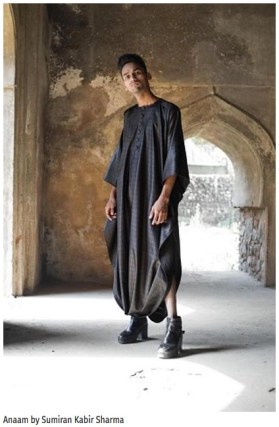
Bender of Norms: Anaam by Sumiran Kabir Sharma

Screen Shot 2017-08-18 at 10.07.01 AM

Delhi-based Sumiran Kabir Sharma’s collection is inspired by Sonagachi, the red light district in Kolkata. “Our collection, ‘Sonagachi’, represents an unstoppable, unbeatable army of warriors from the infamous district, those who march headfirst in flowy uniforms. Fierce, nameless, ageless, genderless silhouettes representing the collective strength and a call for identity, respect and recognition,” says Sharma. He goes for a representative colour palette with grey, black and earthy browns. The material used is suiting fabric, which is conventionally menswear fabric used for uniforms or corporate clothing. Drapes and patterns co-exist to form unique silhouettes, dotted with epaulettes and stitch detailing. He asks that you “come prepared to view it with equality and acceptance”.

Nostalgia artist: Eká by Rina Singh

Screen Shot 2017-08-18 at 10.06.52 AM

Inspired by old, discarded sketchbooks and undone artworks, Delhi-based designer Rina Singh’s theme embraces unfinished techniques. She creates a patchwork of artisanal, aged textiles, in a subtle aesthetic of Gandhian India. “I like to use the feeling of familiarity as opposed to sharp, untouched starched clothes. I like to present the clothes with a feeling of being washed and touched by hand, almost like it has been a part of your wardrobe already,” says Singh in an email interview. She looked to late artist Amrita Sher-Gil for inspiration, and also reached out to activist-author Arundhati Roy and artist Mithu Sen, to ask them questions about their choices and mementos in clothing.

In this collection, you will find monotones of nude with washed-down teal, indigo and blush pink. Faded shades of cement, iron and charcoal “lend a sepia-tinted veneer”. Visualize unfinished floral motifs on jamdani silk wool, block-printed textiles in art mosaic, and embroidery in unspun wool, silk and cotton yarns.

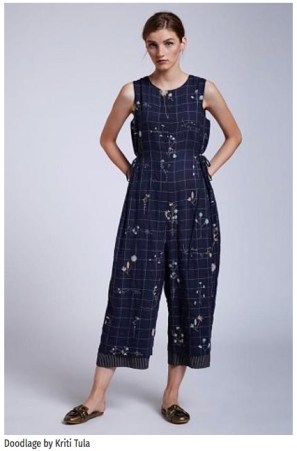
Upcycling advocate: Doodlage by Kriti Tula

Screen Shot 2017-08-18 at 10.06.41 AM

Delhi-based Doodlage started with the idea of being able to use scraps from the garment industry and to work around fabric defects to create limited-edition collections. Tula has collaborated with Conserve India, a Delhi-based organization that re-purposes used polybags, discarded seat belts and tyre tubes. They will present together on the second day of the five-day event of LFW; the day is dedicated to themes of sustainability. “Upcycling industrial waste is the central idea of our brand. Each garment is created using industrial scraps, defected fabric and end-of-the-line fabrics which are all a part of pre-consumer waste that often end up in massive quantities of landfill,” says Tula. The collection for LFW, “Dreams and Dystopia”, addresses the chaos and distress in current political and social situations. “What we need is a call to action. To find the strength to push for change and to go beyond likes and shares on social media,” she says.

Deep tones of navy, maroon, sap green are combined with light under-tones of pastel blue and steel grey. “A layer of patchwork and prints representing complex city grids is superimposed with whimsical floral details,” says the designer. Doodlage employs slogans as part of its fashion vocabulary. “Clothing is a means of self-expression and slogans allow you to be more vocal and expressive,” says Tula, of the typographic design employed in her fashion line.

← Older posts
Newer posts →

|  Filling the gaps between words.  |

Writing By Category

  • Art, Literature & Culture
  • Brand Builidng
  • Brand Watch
  • Fashion & Style
  • Features & Trends
  • Fiction
  • Food
  • Humour
  • In The Media
  • Interviews (All)
  • Interviews: Business
  • Interviews: Cinema
  • Interviews: Cover Stories
  • Interviews: Lifestyle
  • Interviews: Luxury Brands
  • Interviews: The Arts
  • Interviews: Travel
  • Musings
  • Parenting
  • Publication: Conde Nast
  • Publication: Elle
  • Publication: Mint Lounge
  • Publication: Mother's World
  • Publication: Taj Magazine
  • Publication: The Swaddle
  • Publication: The Voice of Fashion
  • Publication: Verve Magazine
  • Social Chronicles
  • Sustainability
  • Travel Stories

Reach out:
sitanshi.t.parikh@gmail.com

© Sitanshi Talati-Parikh 2018.
All Rights Reserved.

Website Powered by WordPress.com.

  • Subscribe Subscribed
    • sitanshi talati-parikh
    • Join 51 other subscribers
    • Already have a WordPress.com account? Log in now.
    • sitanshi talati-parikh
    • Subscribe Subscribed
    • Sign up
    • Log in
    • Report this content
    • View site in Reader
    • Manage subscriptions
    • Collapse this bar
 

Loading Comments...