• About
  • Brand Building
  • Film & Drama
  • Writing: Arts & Lifestyle
  • Writing: Interviews
  • Writing: Luxury Brands
  • Writing: Travel

sitanshi talati-parikh

sitanshi talati-parikh

Tag Archives: Interview

Off The Beat…On The Job

26 Monday Jan 2009

Posted by sitanshi talati-parikh in Features & Trends, Interviews (All), Interviews: The Arts, Publication: Verve Magazine

≈ Leave a comment

Tags

26/11, India, Interview, mumbai, vervemagazine

Published: Verve Magazine, In Memoriam, January 2009

Photograph: Ritam Banerjee

Despite the many bodies and minds that go behind giving viewers live news coverage from an area of conflict, it is the face that confronts the camera and speaks to us that leaves a lasting impression. The placid, immovable expression that barely flinches when gunfire erupts stands for courage, conviction, and a strong sense of responsibility. Under the endless barrage, especially on the first night, millions were glued to the television channels, in lieu of any print publication being available at the time. With minute-by-minute updates, we watched the newscasters broadcast live, without any perceptible fear. Sitanshi Talati-Parikh meets three representative young women newscasters, who are not crime reporters but ended up spending many long hours on the field. Mahrukh Inayet, the light-eyed Kashmiri with an insane work schedule that made it nearly impossible to meet her, Miloni Bhatt, the true-blue Mumbaikar, and Yogita Limaye, the youngest of the lot, composed and collected beyond her years – all of whom are self-assured, determined and ironically, camera shy

Mahrukh

MAHRUKH INAYET
Deputy News Editor, Times Now
Age : 31
Beat : Nothing specific – everything.

“Gunshots are not new to me.”
Mahrukh has been born and brought up in Kashmir, where her parents currently live. “I have seen so many encounters. During the start of militancy there would be firing outside our house and I could hear bullets hitting our tin roof, going ‘tuk-tuk-tuk’ and I would lie flat on the ground. It was very tough growing up like that. You get desensitised to it at a certain level. It is a very artificial way of living. I always felt that it had to end, I feel very strongly about what is happening there, in the sense that somehow, peace must be restored.”

“I always wanted to live in India.”
With a Masters in journalism from American University, USA, she started her programme at the same time as 9/11 and began her journalism assignments by interviewing people in the Pentagon. She worked with National Geographic (USA) for nine months, Headlines Today, Delhi for three years and has been in Mumbai with Times Now ever since, totalling over six years of work experience, including about 15-20 assignments from Kashmir”

“It was like something out of a movie set – I couldn’t believe it”
“The Taj is a symbol of so many things – our pre and post colonial legacy, our development, a space that stands and welcomes anything that comes into India. They are trying to hit everything that this country stands for: development, economy, the grandeur, the legacy, the tradition, the history, everything.”

“On TV you just get to see one face, but there are so many people who are involved, collating all the information.”
Mahrukh spent nearly 62 hours on the field during this tragedy. She worked in shifts with colleague and Mumbai bureau chief Deepti Menon, taking a three-four hour break – sleeping in the car or going home to change.

“The cameras were on most of the time, and you were in front of them…”
“You know that you have the ability to create panic in such a situation and you can’t be hysterical or show your emotions because others are watching you and might get affected by it. It is a very delicate balance to maintain. You couldn’t hide your feelings and expressions, despite there being bomb blasts and firing in the background.”

“You shouldn’t get into changing public opinion.”
“You should just report – as truthfully, as honestly as compassionately, in as composed and as calm a manner as possible. Opinions, editorialising information is left to editors, opinion-makers, and to the viewer.”

“We cannot afford to have a repeat of something like this.”
“Whether it is the government that needs to realise it or whether as citizens we need to be more active. While questioning politics, it is important for us to exercise our right to vote in a more effective manner and be more politically aware. It is a dichotomy that we live in and it is a two-way street.”

“Somewhere there needs to be a sense of closure.”
“I couldn’t switch off at all in the middle of it. I was in fact obsessed with the news. I just want to keep reading about it, going through the same pictures. It has happened to me for the first time. I don’t know what is going to bring it, but I need a sense of closure.”

“I enjoyed writing and I enjoyed telling a story.”
She didn’t always want to be a journalist. She thought about becoming a doctor – either a psychiatrist or a paediatrician. “I don’t think the situation in Kashmir per se moved me towards becoming a journalist. But, once I decided on it, I realised that it was one situation I wanted to report on.”

“It is easier being a woman reporter.”
“It is kind of unfair, because otherwise you believe in equal rights, but you never say no when you get easier access compared to the men. More government officers, politicians are nicer to women than men; even the women are nicer to women – more encouraging.”

“If I have any calmness and composure, I get it from my mother.”
“My mother is a very emancipated woman, very broad minded, and has taught me very basic values.”

“In my very little free time…”
“I like going out, watching movies, reading, travelling, and photography.”
 

Miloni

MILONI BHATT
Senior Special Correspondent, NDTV India
Age : 31
Beat : Economy and aviation

“I am a Mumbaikar”
Miloni was born, raised, fell in love, and got married in Mumbai. She has eight years of experience on the field, and has been with NDTV for five years.

“We came out of the emergency because of the print media that stuck its neck out.”
I didn’t always want to be a journalist. I was in the Democratic Republic of Congo, and Nigeria, visiting my father who was employed there, when I was absolutely appalled to discover that the people who were labourers were all highly educated. The gardener had a double degree. Nigeria and India got independence around the same time, and I couldn’t believe that one country ended up like this and the other so differently. One of the reasons was democracy and free press – the access to information, knowledge, to a world-view. I was very clear that I wanted to do TV because I was very influenced by the reporting BBC did in Africa.”

“I’ve covered crime before, but one can’t compare a terror attack to any kind of crime story.”
“It is of a different magnitude – the scale, the violence, the people, the victims. The train blasts, the bombings at the Gateway, at Zaveri Bazaar, explosions at Ghatkopar – I don’t think I will ever forget any of it.”

“My family is reconciled to the fact that I will be in situations like that.”
“I couldn’t take my family’s calls as I was in the midst of live reporting. I could see the phone blinking and I was thinking, ‘I can’t talk to you guys right now, just watch me on TV, if you are so desperate!’”

“I don’t think anyone can continuously report on terror.”
“It will get to you at some point. The important thing is that you get training to report and de-link yourself from that situation. Talking to your colleagues, putting things in perspective also help – I can’t talk to anybody on the outside – it’s too much for them to take.”

“We are not meant to editorialise.”
We are field reporters – what you see is what you talk about. Everyone has an opinion, but my job doesn’t allow me to express it. Reporters don’t fall in and out of personalities. Yes, we are angry. Yes, we feel like every other common man. But we also have a wide-angled perspective – because we are seeing many things happening simultaneously, understanding the reason and cause.

“This is my job.”
“Like security agents protect people – it is my job to report and if my job entails reporting on terror attacks then that’s what I will do. At the end of the day, as a journalist, you are compelled – you cannot sit in a newsroom when there is a big story unfolding. You just want to go there and be a part of it. At the end of the day, you are documenting history.”

“Mistakes do happen, with breaking news and developing a story over several days.”
“This is not a situation that anyone has ever reported on. The media doesn’t have a benchmark to go by. I’m sure we have made mistakes, and we regret those mistakes. I can imagine that the viewer’s point of view is also valid, but I’d rather do my job than worry about what xyz is saying. We can’t give in to our anger, sense of loss and rage like them.”

“I am amazed at the kind of response we have got…”
“People have said, ‘Wow you were there, thanks for bringing us the news.’ I don’t see novelty. Journalism is not about reporting only during normal times, it is about reporting in times of crises. We are trained to play the most responsible role possible. We report what we see and not give in to panic or rumours.”

“I have never thought about being a female journalist.”
“More than half of NDTV is women. Does that kind of discrimination exist? In eight years I have not faced it. It might have worked in my favour, maybe, but it hasn’t worked against me – and that’s a good thing.”

“I don’t have an icon.”
“I am a sucker for hard news. I love it – it gets me. It can be anywhere in the world….”

When not working…
“I just go home and sleep, because I am sleep deprived. Go out, meet friends. I catch up on life.”


Yogita

YOGITA LIMAYE
Senior Correspondent – Anchor, CNN-IBN
Age : 25
Beat : Mostly education and civic issues

“We could hear people screaming for help….”
“The first night, we were very close to the Taj and we could see people in the front of the hotel, facing the Gateway, holding white hankies, somebody was trying to send out a morse code with a flashlight.

“It is impossible to not react.”
“There are some people who can separate their professional life and their personal life – but you can’t break away from it. Seeing it burning, we all got emotional, whether we would like to admit it or not.”

“The next day, interviewing people, I didn’t try to be a professional journalist.”
“I put a little bit of emotion in it, because that is what you are naturally feeling. As long as you are not sensationalising it, it is okay. People want to hear and know what it felt like.”

“I also got smses from old friends, strangers….”
“I haven’t been able to reply to everyone, but each one added that energy saying you can go on. This is nothing compared to those who were inside and came out shaken up, went through. When you see that, you think at least I or my family isn’t in that situation, and I am just doing my job here.”

“It was the first time I had heard gunfire in my life.”
“For someone in South Bombay it is unheard of to hear shootings! And even ones who cover the crime beat are not people who work in Jammu and Kashmir or the north-east where things like this happen more regularly. I have never reported from a conflict area.”

“There was no fear at the time.”
“I was merely reporting what I was seeing on the ground. Fear hit me only at one instance that night. After the VT shooting, we were sitting in our car at the Metro junction, when we suddenly heard grenade explosions coming behind. Till date I have not been able to verify their location – but that’s when I wondered, what if they had also planted bombs all over the city.”

“You can be heroic and say you don’t feel like eating and don’t need rest, but the fact of the matter is, that you do.”
“I didn’t even think of bathroom breaks – you feel thirsty so you keep drinking, but we didn’t have a desire to eat. When I would go for four-five hours in the middle of the day to take a break, I made sure I had a bath, a strong cup of chai, and forced myself to eat. You are working as a team. When one person’s energy is running low, it is important for the next person to come back charged up. These are the days for which many of us become journalists – so you want to be there through the thick of the action.”

“Even now my mother hasn’t told me how scared they were.”
“My sister, from Bangalore, kept telling me, ‘Don’t do anything stupid, don’t be extra brave and try and get those shots’. While I wanted to get my work done, I realised it doesn’t make sense putting your life on line for something.”

“All of us are not in depression, but are tuning out.”
“I try to indulge in retail therapy, watch a film at home. While many of us are mentally tired, perhaps getting back to city stories – we know the action will die out soon enough. For a while it will seem like that adrenalin rush is missing….”

“The tsunami of December 2004 made me want to do this really badly.”
“I am qualified to be an engineer. I had always wanted to be a journalist, but the safer side of me prevailed. I was thoroughly bored with software though, and joined CNN-IBN as someone on the desk, instead. I worked my way up in a year to reporting and to Mumbai. I never considered my back-up option. This gives me a lot more satisfaction, it is never boring and I love it.”

“Gender doesn’t make a difference in this profession – if at all, it might make things easier!”

“After two nights, I began thinking, when will I go home and sleep in my own bed?”
“I hope to have the abundance of energy, which is what I notice in tireless people like CNN-IBN’s editor-in-chief Rajdeep Sardesai or Shah Rukh Khan – I see it in everyone at the top. The ability to go on and on and on like a Duracell bunny almost, it something that amazes me, and that I look up to.”

“There’s nothing like a disaster to give you recognition.”
“This has been my most important reporting assignment so far. Ironically, disasters are what journalists live for.”

Literature: Window to Pakistan

26 Friday Dec 2008

Posted by sitanshi talati-parikh in Publication: Verve Magazine

≈ Leave a comment

Tags

Chick Lit, Interview, Literature, Moni Mohsin, Pakistani Arts & Literature, vervemagazine

Published: Verve Magazine, Speaking Volumes, December 2008

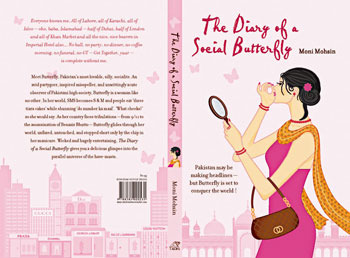
The Dairy of a Social Butterfly flits through Pakistani social life and lands smack in London. Droll and full of localised accents, the recently published book is a collection of London-based Pakistani writer Moni Mohsin’s columns over the past few years. Sitanshi Talati-Parikh catches up with the earnest writer to exchange a few words on the tenuous nature of relationships in the subcontinent, the role a writer plays and the sentimentalisation of literature

Spvol01

Dignified, self-assured and a tad bit scep-tical – I notice an imperceptible raise of the eyebrow denoting the discontentment at the way at which the talk on globalisation of language is conducted – in much the manner of a disapproving school marm. Originally from Pakistan, Moni Mohsin, lives in London with her family, and has been writing a delectably funny column for the Pakistani The Friday Times since the early 90s.

While her first book, The End of Innocence (2006) proved to be a promising debut novel, upon increasing interest in her columns, she shelved her plans for a second novel based in London, and went ahead with compiling her columns into a book. Launched particularly for the Indian sub-continent, seeing how the columns (which are also syndicated in India) drew a lot of interest during the Jaipur Kitab festival, Mohsin feels that she had found an audience for the book. Starting from 2001, the year of 9/11 and rounding up in 2007 with Benazir Bhutto’s assassination, The Dairy of a Social Butterfly is a witty and sardonic comment on the ‘social butterflies’ of Pakistan, especially the ones who find a summer home in London. With parallel events running in her book, for instance: ‘US concerned about Afghan border security, Butterfly concerned about her missing bike,’ the readers have enough to scoff at with the protagonist’s heavily accented language, lack of general unconcern and unintentional innuendos. The columns respond to events that take place in Pakistan: political and social events, big weddings et cetera. All of this is sourced through the news, Pakistani television and the social scandals discussed with Mohsin’s sister over the phone. “I go once or twice a year to Pakistan. I have children, so I am constrained by their school calendar,” says Mohsin with regret – as evidenced by the essay she has written exclusively for Verve.

Most writers of the diaspora tend to sentimentalise their country when they write about it. Mohsin reacts immediately with a very vociferous denial. Asking me, quite rhetorically if I thought Butterfly was sentimental, she races breathlessly on and lists Pakistani writers who are not in the least sentimental. Think Mohsin Hamid and The Reluctant Fundamentalist, Mohammed Hanif and A Case of Exploding Mangoes, or Nadeem Aslam. “In my novel, The End of Innocence, I talk about the honour killings in Pakistan and how horrible they are. We are not sentimentalising our country. You write about the smell of the earth after the rain, or the smell of freshly sliced fruit that fills a room because it is very particular to the subcontinent. If you live abroad, you realise that there are a lot of things you take for granted about the subcontinent. I always write about how when walking down a street in London, you know you are passing an Asian house, because of the smells that emanate – frying garlic and haldi. I don’t know if I am sentimentalising it, but it is there. Sometimes to avoid it would also be silly, because it exists. The challenge is not to romanticise it and to write about it with honesty and affection.”

Why not a novel about London where she lives, and why Pakistan, a place that she visits infrequently? “I thought I had to really know society before being able to comment on it. I have been hijacked by events, but my next book will be set in London. I am so involved with Pakistani society – so much is happening there, there is so much to be said. It is so vivid and new. The rest of the world is also interested in new societies and how they are shaping up.” Mohsin takes me back to a recent seminar in London, organised by Tehelka, in which they were trying to set up a dialogue between Pakistani writers and Indian writers and journalists and other cultural and political figures. A well-known film-maker said that there is recent interest in Muslims, ‘Muslims ka kaam karein’. “While he felt it was more of a trend, I don’t know. Generally in the subcontinent, interesting things are happening; people are producing interesting work and films. For such a long time, we in the subcontinent have been looking to the West and ignoring what is happening within ourselves and it is almost ‘declassing’ ourselves or ‘putting ourselves down’. Suddenly you feel you don’t have to. Pakistani and Indian writers and artists are making such waves abroad – you don’t have to look beyond our own backyard.”

While the interest is intense, is there openness for dialogue and understanding that extends beyond the arts? Mohsin firmly believes that Indians are less informed about Pakistan than the other way around – probably because Pakistanis have been exposed to Indian films for a long time and a greater percentage of Pakistanis travel to India. “Indians are possibly more naïve in that sense, and therefore readily believe everything they read about Pakistan. I think there is room on both sides for massive person-to-person contact; it is very important.” Mohsin, who also writes a column for a leading Indian daily describes how she is moved by the fluid dialogue between Malaysians and Indonesians. “They seemed to know each other, their works and their countries so well! Malaysians have houses in Indonesia, Indo–nesians work in Malaysia and such a free-flowing contact exists between them, that I thought what a pity that we don’t have that in the sub-continent.” I wonder why this is so, and Mohsin is quick to reply to my suggestive question, “I don’t think Pakistan is a closed society. It is very welcoming. Most people, Indians in particular when they come to Pakistan feel that hugely. What they are led to believe is so different from the actuality.”

Pakistani writers then shoulder a good deal of responsibility in setting the matter straight. “I don’t think I am playing a role in being an ambassador for my country – remember these articles were written for Pakistanis, they were not written for others, in fact, I thought they wouldn’t have a market outside. I’m just portraying what I see. And as a writer, your first duty is to tell the truth. It is not about me projecting my country abroad, it is just me commenting on my country. A writer’s job is to show a mirror to society, and I think all writers are trying to do that.”

Priyanka Chopra: Unstoppable Priyanka!

20 Thursday Nov 2008

Posted by sitanshi talati-parikh in Interviews (All), Interviews: Cinema, Interviews: Cover Stories, Publication: Verve Magazine

≈ Leave a comment

Tags

Bollywood, Dostana, indiancinema, Interview, priyankachopra

Published: Verve Magazine, Cover Story, November 2008
Photograph by Atul Kasbekar

From Bareilly to Boston and Manhattan to Mumbai, the cover girl many times over, is leading a fairy-tale life. Firmly entrenched in Bollywood, Priyanka Chopra will have a record six releases this year. Dostana, where she plays an editor at Verve, releases this month and promises to be a rollicking watch. Sitanshi Talati-Parikh finds the vivacious actress full of soul, spirit and spunk

Priyanka01

It is an ordinary Thursday. What makes it extraordinary is the glitter of star power that suffuses the morning with a powerful glow. The lithe, dusky beauty saunters into the make-up van, face barely visible under her enormous shades, dressed in “comfort clothes” – leggings and a long spandex top in her favourite colour, black – after a late shoot the previous night. We look up with trepidation, as she emerges a considerable while later, our allotted time ticking ominously away. Flashing dazzling smiles at everyone, Priyanka Chopra faces the camera, barely wincing in the painfully high Dior heels, which are at least a size too big for her – by her own confession, she was “born in heels”. Ace photographer, Atul Kasbekar, coaxes fluid motion from the svelte actress. She immediately picks up the beat of the music pulsating in the tiny studio and twirls, twists at her slender waist, gracefully cuts the air with the circular motion of her lean arms, flips her hair and throws herself into the scheme of things, with ferocious enthusiasm and buoyancy. It’s a perfect first shot. As the music suddenly stops, and her personal iPod is hastily summoned, with barely noticeable displeasure, she confides, “I can’t think or function without music. My van, my room, my car are always blasting music, so the five minutes I get, become my chill out zone. And besides my family, that’s the one thing I find time for.”

With the kind of schedule she keeps – 25 films in less than five years, not a single holiday or vacation since, working literally 20 hours a day – she is playing a serious juggling act with work and family. “I really don’t find time for my family – I take it for granted that they will come and hang out with me.” Being the first-born to parents who left a flourishing medical practice to ensure that her career took off, it is evident that Priyanka has done them proud. The senior Chopras unobtrusively watch their daughter’s shoot, the mother with a slight smile as she notes the near-perfect shots being reflected on the computer screen, and the father sits back quietly and takes in the confidence of his offspring with teary-eyed pride. Rarely present while his daughter is shooting, the Verve shoot takes Dr. Ashok Chopra back in time. He recalls his 12-year-old girl flouncing in front of a full-length mirror (her only demand from her parents) singing ‘Mere khwaabon mein jo aaye…’ from Dilwale Dulhaniya Le Jayenge – Priyanka’s absolute favourite film of all time. Even now, she recalls in the blink of an eye the same sparkle, head toss and look of romantic fervour.

“Today my dad is home, living his life to the fullest – I am so grateful for that.” She went through a rough patch – possibly the only glitch in an ostensibly dream-like life – when she watched her father go through a serious illness that took him two years to recover from. She was, at the time, shooting for one of the most important movies of her career, Krrish and wrapping up Bluffmaster. “Your father is always your invincible superhero, to whom nothing can ever happen, because he is the one who protects you – and then suddenly tables turn and you have to protect him. I felt so helpless and lost. I didn’t know how to deal with it.” But deal with it, she did. She would spend nights between shoots at the hospital, thankful that this happened at a time in her career when she could provide the best possible treatment that money could buy, without compromising on her work. A year earlier, it would not have been possible.

The July-born Cancerian’s amiable personality and warmth bubble to the surface as she reminisces about the people close to her heart. Her younger brother, Siddharth, is very proud of having a ‘hot’ older sister. She admits, “I am a self-confessed bully. I used to make him do all my work and I even used to dress him up as a girl! For seven years I was the only child and my parents’ most prized possession. And then he came – I used to pinch him and make him cry. My dad would come in and I would quickly pretend that I was holding and pacifying him!” She laughs unselfconsciously. “I love him – he is my greatest weakness. I spoil him, like he is my child.”

Friendships have their own familial bonds. Hailing from an army family, spending most of her childhood on the move, from Bareilly to Jamshedpur, and Iowa, New York and Boston, Priyanka has still managed to cultivate some lasting friendships – her childhood friend, Tamanna, for instance, who flies down from Delhi to meet her on her birthday. “I’m very close to my friends. If you have even two or three ‘4 a.m. friends’ who you can depend on for your life – and you know if you were kidnapped and someone asked you who would vouch for your life, it would be those people – then you’re very lucky. Though all your colleagues are your friends, there are only a few people whom you consider family.”

That’s what Dostana is about – three friends who consider each other family – and how a relationship between great friends is formed and broken. Priyanka, who loves the outdoors, admits that the movie had the best outdoor shoot she has ever experienced. Two months on location in Miami, she found herself gleefully entertaining her “khandaan” from America. Relatives were “crawling out of every room, closet and bathroom” in her three-bedroom apartment. Priyanka dressed for the shoot every morning with people passed out on the couch. Her family was on holiday and would come and hang out on the set. The euphoria was catchy. It is easy to visualise the massive on-location party, including malls and beaches (think fabulous South Beach), with a variety of restaurants and live music bars – all pulsating with energy that Priyanka feels will translate positively on screen.

In a film about friendships, what were the off-set relationships like? “I never thought I would bond with Tarun (Mansukhani) as much as I did. Initially, I didn’t know him very well and I didn’t think I would, either. He seemed like a really serious guy – we fought like cats and dogs, and made up instantly. I keep telling his wife, Karuna, that I play his on-set wife because we are constantly fighting like a married couple! But he has so much clarity as a director.” Karan Johar popped in for a bit and Hiroo Johar was officially the “big mother hen”. Abhishek Bachchan and John Abraham, her co-stars in the film, who pretend to be a gay couple to get an apartment to live in, spent all their off-screen time together, leading Priyanka to quip that they took their roles quite seriously!

John Abraham was the self-proclaimed fitness guru on the set, training everyone – the make-up maestro Mickey Contractor, included. Every day, after the shoot, everyone would land up at the gym. Priyanka studiously followed the regime – despite the fact that she generally doesn’t work out at all – to ensure that she looked prime for her swimsuit scene in the movie. Admiring her trim body – slimmer than she has ever been – It is hard to believe that she doesn’t work out or diet, after seeing how even the ramp-size Dior outfits at the Verve shoot are too large for her. She leans forward with a conspiratorial whisper, “being overworked and underpaid is the mantra for losing weight”.

Priyanka’s character in Dostana is an editor at Verve, and is dressed in accordance to the location. “In Miami, anything’s possible. I wore shorts, high heels and a shirt to work – and I was over-dressed!” Priyanka hopes the fashion critics will find it equally appealing. “If you try to please the critics, making films trying to keep in mind what the fashion industry is going to say, then you’ll never be able to experiment.”

The actress, who has had no mentor or any formal training in acting, has found herself experimenting through her film career. High on the popularity chart, Priyanka has had her share of missable films and reigned supreme in spite of them. The laugh lines smear away and she quickly retorts, “But that’s normal, right? Nobody can get a track record of 100 per cent. It is against the law of averages.” Have the decisions been based on script alone? “It is not just the script. At every point in my career, each film I did was for a certain reason. It may not have done well, but at that point doing that film or finding that film was very important.” Andaaz and Hero gave her small, but important parts; Kismat was her first solo heroine film; Plan with Sanjay Dutt, made by Sanjay Gupta and Asambhav with Rajiv Rai, were a step up in that ladder. “I never expect anything from any film. I feel when you have expectations, somewhere you are let down.” With a sudden flash of her 100-watt smile she confides, “But I can’t help expecting from these three – Drona, Dostana and Fashion. I’ve worked really hard on each one of them and they are very special to me, whatever the fate of the film may be.”

Suddenly retrospective and a tad philosophical, Priyanka appears wiser than her 26 years. Clichés appear truisms as she applies them to her life – she speaks without any affectation, if a shade reminiscent of her articulate Miss World persona. “It is never the end that matters. It is also the journey – we may think of it as a proverb, but that’s how I have led my life, and it works for me. At this point of time, what I do is very important. What happens in the future will be part of what destiny has in store. The decisions I take now must be with courage of conviction.”

Courage of conviction has definitely got her where she is – able to pick and choose, and have more work on her hands than she has time for. “I’ve always believed that I am destiny’s favourite child.” Not even in her wildest dreams did the naturally talented actress, who was considering a career in aeronautical engineering (“making planes and going to NASA”) ever think she would be a part of show biz. “It still feels so surreal.” Neither she nor her family have had the time to retrospect. A mere 17-year-old schoolgirl when she participated in the Miss India beauty pageant – on an entry sent in as a lark by her family – she had just finished school when she became Miss World. “I had to grow up in a month!” She had to reconcile herself from a teenager in sneakers riding a bicycle to a young woman in a sari gracefully balancing a tiara on her head. “They say that the head that wears the crown rules the world. It’s not easy and it wasn’t. I still don’t remember how I did it – I only followed instructions – I was almost robotic in what I did. I only remember being myself since the last few years – since I was 22 or 23. Before that I was always so withdrawn, wary of being in this industry, not knowing anyone, wanting to protect myself and my family. Everything just happened to me. I feel somebody up there is holding onto my little finger, guiding me through life, which is why I never question what’s happening. I know if something bad is happening, this too shall pass, because there is a reason why I am here.” And what about ideals of changing the world that beauty pageants inspire? “I never had aspirations to conquer or change the world. I’m just playing my little part in the bigger picture and am happy that I am able to contribute.”

The strong girl is also incredibly soft-hearted and considerate. Very fond of children, she swings into the shoot in her gold Dior dress with her spot-boy’s son on her arm, smiles and poses for multiple pictures with their family. Later, while giving bytes to a news channel, she notes with the corner of her eye a man bent double with heavy equipment standing behind waiting for her to finish, and she immediately stops and gives way. A self-confessed “mush-pot”, she has a major weakness for romantic comedies, though she can watch creepy horror films with equal fascination. She would often get inspired and write poetry on little paper napkins – being a fan of prose, shayaris and Urdu – though she hasn’t done that in a long time. With a sudden twinkle she reveals that she would love to be serenaded – but with originality and spontaneity. “Buying red roses and sending them is so thoughtless! I prefer thoughtful gifts. A hand-written note would mean so much more to me than diamonds. Actually, a hand-written note with diamonds would mean a lot more,” she rounds up with a chuckle.

The voracious reader (biographies, chick lit, travelogues) hasn’t even had time to read a script that has been lying with her since the last twenty days. Sleeping four-five hours a day, she only manages to unwind in her white Mercedes, which she calls home. “I have worked every single day in the past few years and there isn’t one day that I regret it. I know the day I wake up in the morning feeling that I am too tired to shoot today, I will retire. Very few people are fortunate enough to love what they do. I really, truly love what I do.” That obviously keeps her steamrolling on. As I step out of her car, I watch her walk to the next shoot with a bounce in her step – despite the fact that she missed lunch entirely while talking to me.

Tarun Mansukhani: Picture Perfect

20 Monday Oct 2008

Posted by sitanshi talati-parikh in Interviews (All), Interviews: Cinema, Publication: Verve Magazine

≈ Leave a comment

Tags

Bollywood, Dostana, indiancinema, Interview, Karan Johar, Tarun Mansukhani

Published: Verve Magazine, Features, October 2008
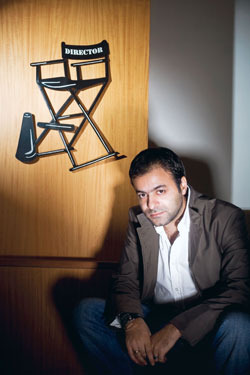
Photograph by Ritam Banerjee

After assisting with six films, and 10 years in the industry, Tarun Mansukhani debuts as a director with Dostana, releasing next month under the Dharma Productions banner. Sitanshi Talati-Parikh finds him full of steely determination, anticipation and solid allegiance to his mentor, Karan Johar

Director

The sharp, dapper man, just a shade over 30, seems more suited to the corporate world than Bollywood. With crispness of speech and meticulous attention to time, Tarun Mansukhani appears like a tightly wound elastic band – afraid to let go. It makes me ask him a number of times if he is nervous about his big release. “I haven’t thought about it, because I would’ve crumbled under that pressure. It is easier to think of it as just another film.”

Experience has made Mansukhani smarter. He quips, “I tell all my assistant directors that they can’t lie to me – I know all the tricks of the trade, I’ve played them all with Karan!” Waxing eloquent on a superb equation he shares with Karan Johar, the debut director paints a rosy picture. “Karan is the only producer in the world, who when you are hitting a deadline, tells you to relax and take your time. When you go over budget, he asks if it is justified, and if so, says, ‘No problem!’ It makes me want to ask him, ‘Are you sure?’”

Dostana, a romantic love triangle, starring Abhishek Bachchan, John Abraham and Priyanka Chopra, has been shot in Miami. During the shoot, Mansukhani recounts, Johar came to Miami for two weeks, and finally announced, ‘Look, I am really unemployed – I come, I shop and I eat. So I am going back to Mumbai to do more constructive work.’ And he left, not returning until the end of the film. The creative freedom, faith and trust provided by Johar, leaves the former singing praises of a perfect boss and perfect job. And yet, says Mansukhani, “I do not try to stay within Karan’s auteur. In fact, my deliberate decision is to combat what I have learnt – to break the school that we have developed for ourselves.”

While working on the story he has made a conscious effort to use everyday language, even if it is pedestrian language or Hinglish. While the film is youth-centric, it is not just the youth they want to appeal to. “There is an emotion that appeals to all age groups. It is not in its film-making or in its technicality or dialogues. We all have friends, our parents have had friends and our kids have friends. It may not be the dialogue that they might have spoken, or the language; but what is important is that they remember those friendships.”

Dostana is predominantly about the bond of friendship. Mansukhani, who studied in a boarding school, experienced deep friendships, giving him the idea for his first film. He brought in the premise of two men pretending to be gay to stay in an apartment, to make the story interesting. “It was a very conscious effort to not make fun of the gay community. You are not ribbing jokes about them or using them as a ploy.” A mother, who very subtly and with humour shows her acceptance of their sexual preference, adds a progressive element. So, another masala film with a social message? “We can all make art films at the end of the day, but there is a certain reach. Today this is what I would like to make. In the future, I may want to make an extremely gritty film, like Black Friday for instance.”

Talking about friendships, Johar and Mansukhani go back a long way. Johar went to school with Mansukhani’s sister, and when he was looking for an assistant for Kuch Kuch Hota Hai, he thought of him, who at the time was assisting television producer Anand Mahendroo. Mansukhani was not certain he wanted to be a part of commercial cinema – “I was just a Breach Candy boy who didn’t understand Shah Rukh and Kajol. Dilwale Dulhaniyan Le Jayenge was just another film for me.” When he took the FTII exam, confronted by questions on the direction of Swami Vivekanda Part II, he decided to work for Johar instead. The rest is history. The young director sees the future as very promising – making more films for Dharma, and eventually becoming a producer, financed by Dharma. “I don’t see myself breaking away from this family in any form. It is the only family I have known.”

Contrary to expectations, Mansukhani is not a die-hard cinema fan. Having studiously managed to avoid the classics, despite Johar’s repeated suggestions, he remarks unselfconsciously, “I stand clueless at a party when someone talks of classics like Guru Dutt and Satyajit Ray, and glibly put in my two bits, without knowing what they are talking about!” He prefers Sholay, Gadar or the more recent – admittedly candyfloss – films like Dilwale Dulhaniyan Le Jayenge and Kuch Kuch Hota Hai. Quick to laugh at himself, he confides, “The only reason I go to the cinema is because my wife wants to watch a film. While I critique every other film aloud, I am silently taking notes – though no one knows that!”

The resilient director doesn’t give himself even a moment to take a break. Starting work soon with Johar on My Name Is Khan, due for release next year, he is matter of fact about his breakneck schedule. “We are addicted to films – we are not good at anything else. This is our only world.”

And juggling that attitude with a family life? He is quick to compliment his spouse – with whom he has been in a relationship for 12 years and married for three – on being the most understanding person in the world, especially after admitting he hasn’t been to family dinners, and hasn’t met most of her family! He even missed his sister’s wedding when he was busy with a shoot. “I hope that these sacrifices made will accomplish something – at the end of the day, these opportunities may not come to me later. This is what I need to do to make life happen.”

Farhan Akhtar: Rocking Star

20 Monday Oct 2008

Posted by sitanshi talati-parikh in Interviews (All), Interviews: Cinema, Publication: Verve Magazine

≈ Leave a comment

Tags

Aamir Khan, Bollywood, Dil Chahta Hai, Don, Farhan Akhtar, indiancinema, Interview, Javed Akhtar, Lakshya, Luck By Chance, Rock On, Zoya Akhtar

Published: Verve Magazine, Verve Man, October 2008

Heady from the unprecedented success of Rock On!! Bollywood’s latest poster child of youth cinema, Farhan Akhtar talks to Sitanshi Talati-Parikh about his kind of movies, juggling family life with work and how genes make a difference

Superb actor, director, script-writer and now also a good singer (in a raspy sort of way), Farhan Akhtar steals the show with his overwhelming energy and passion on screen. Slipping into the skin of the protagonist, you feel him come alive and half expect him to jump out of the screen. How is it possible to be the master of all trades? Akhtar believes it’s just about applying yourself a 100 per cent in what you have chosen to do. Then there’s his excellent lineage. “I would agree that genetics must play a part in creating a natural leaning towards something that has been so dominant in past generations. But eventually, it cannot make you a good director or actor. That you will have to do yourself,” says the artiste, who keeps pace with a marathon schedule, and is known to never sit idle – not even for a moment.

Powered on by the desire to tell stories, Akhtar believes film-making is a collaborative art form which makes choices about script, crew and cast (among others) very crucial. He takes his time to decide on all these things before getting into a project. “I don’t know what motivates people to make the choices they do – I would hope that my work and its appreciation would serve as a catalyst for other people to do more original work and benefit from it – creatively and at the box office.”

Why, then a sequel to Don? “I found myself obsessed with the title character and the background score. I had to get it out of me. Luckily, I found many people who were as obsessed with the film as I was.” Akhtar has created a cult genre with his youth-centric films. Dil Chahta Hai became the film that revisited Bollywood norms and resonated with a huge college-going audience. That set the pace for Akhtar to continue down a road that told stories that he understood, that he wanted to tell, and which upgraded the passé films into a slicker, smoother and more identifiable medium. At the end of the day, as the film-maker puts it, “it is important to have something to say in an entertaining, engrossing manner.”

Akhtar was not consciously trying to set a social trend. He is clear in stating that, “It is not advisable to design a film keeping in mind its social impact. The design will show if that is the approach. Stay true to the story and do it because you believe in it. If the audience recognises your heart in it, everything else will follow — Rock On!! is being appreciated by an audience of 10 to 60 years of age. If the story has a universal emotional core, then it should be able to connect with all generations.”

And yet, each time it is a different story. Akhtar confesses he is a fan of all genres of movies. Lakshya didn’t do as well in the box office, but it was another story that had to be told. And then came Rock On!! – a simple story, a story you would have heard before, but one that rocked. It was the perfect blend of cinematography, acting, concept, style and above all (as with most of Akhtar’s work) dialogues that work. That are not stilted or refurbished like many of the others are.

There is actually a club of like-minded film-makers, where constructive criticism is an option, of which Farhan Akhtar, Kunal Kohli, Madhur Bhandarkar, Rakeysh (Omprakash) Mehra, Ashutosh Gowariker, Raju Hirani and Vipul Shah are a part. While Akhtar shares a great rapport with Gowariker, to the extent that they “discuss each other’s work candidly, knowing that all views are coming from a space of respect and admiration;” Akhtar’s film-making style is reminiscent of that of Aamir Khan – in that they are both gifted with supreme originality of outlook. And above all, a great sense of characterisation. Both have impeccable tastes in casting – and making an ensemble cast work is often what it takes.

Akhtar is constantly on the look out for talent – whether young or old. The website of Rock On!! actually has a talent hunt for upcoming stars. When questioned whether it was to increase the buzz on the site, he states that it is to find talent, young or old. “A good actor can be hidden inside any person of a age or gender.” That is surprising, considering that Akhtar, like Sanjay Leela Bhansali or Karan Johar, has chosen to work with established actors in his initial films. Akhtar doesn’t attribute this to stalwarts being a safer choice. He is noncommittal in his response. “I have been fortunate to have worked with some big names and talent in my films. That was the need of the script and character. Rock On!! allowed us to work with new talent as it suited the nature of the story. For me, cast is determined by character, not the other way around.”

The film-maker, who considers it a privilege to hail from a legendary family of parents — Javed Akhtar and Honey Irani, and Shabana Azmi – is very firm on the subject of credit. Where once Honey Irani had lost out on credit for her work on Dilwale Dulhaniya Le Jayenge, leading to relations being soured between the two film families, Akthar believes that, “credit is as, if not more, valuable than your fee. The money will come and go but your name will be up there forever. No one can take that away. We are very careful to make sure every single person involved on our films is given their due credit.”

A Martin Scorcese and Woody Allen fan, Akhtar admires their ability to keep reinventing themselves. It appears that he is modelling himself after them, waiting for more hidden talents to surface. Coming up soon is his sister Zoya Akhtar’s film Luck By Chance, in which he is acting. His next directorial venture is slated for 2009. Akhtar prefers not being bottled into acting or directing. “They are both a part of who I am and I hope to keep exploring and learning new things about the art and craft.”

Is his life easy? “I love doing what I do, so it’s not about easy or difficult for me. I try my best.” Married and father of two young daughters Shakya and Akira, Akhtar is constantly playing a juggling act. “I do take my children to set with me when it is possible because it is important that they know where I go and what I do. They should not feel I am disappearing for periods of time without reason.” Known to be exacting, is Akhtar an easy person to get along with? With a light chuckle, he responds, “I get along with myself just fine!”

Rohit Gandhi: Real Impressions

20 Saturday Sep 2008

Posted by sitanshi talati-parikh in Art, Literature & Culture, Interviews (All), Interviews: The Arts, Publication: Verve Magazine

≈ Leave a comment

Tags

Documentary, indiancinema, Interview, Rohit Gandhi

Published: Verve Magazine, Nerve, September 2008

With an impressive dossier of news stories that include live coverage of the Kashmir elections, Iraq conflict, Afghan War, the tsunami tragedy, Nepal’s royal coup, and an Emmy nomination for his recent film, Who Cares About The Girls, documentary filmmaker, Rohit Gandhi, speaks to Sitanshi Talati-Parikh about women in India and the role of journalism

Screen01

In the making of the documentary Who Cares About The Girls, which has been nominated for an Emmy award in the Outstanding Investigative Journalism – long form category, Rohit Gandhi, who is particularly interested in children – seeing that they are our future – describes how after weeks of research, a 14-year-old girl, Radha (name changed), was chosen by the NGO to be the one rescued from her abusive father and sister. He recalls with regret and anger that while the rescue took place as planned, the girl was produced in court and was released as the cops did not explain the circumstances under which the girl was rescued and, despite their best intentions, they could not help her.

The story revolves around four characters: two sisters who were sent away from home to work as child labourers, who were both sexually and verbally abused; a former sex worker-turned-activist and a rescued girl. Though it describes how children continue to be abused, Gandhi believes that there is a positive future ahead if we all get together and fight the problem. After all, “There is no magic wand to change the reality today.”

Gandhi takes his work in his stride – not wishing to become the face of any story, rather letting the story speak for itself. “It is providence to be in a position to be able to make a difference. Journalism is an opportunity to be a mirror of society, help reflect on what we are doing in our daily lives. It compresses space and time and gives a picture of our present reality.” In much the manner that his moving story on a young Iraqi boy who was severely injured by a bullet in the midst of the US-Iraq gun fire, came to the attention of the ambassador of Greece, who took the boy to Athens for treatment and brought his life back to normalcy.

The sociologist says that he knew where he was headed very early in life and that the things that need to be changed are not sitting hidden in sub-Saharan Africa, but right under our noses. “Evils of society happen right around us,” he states, moving on to describe one of his first stories – from the Tihar jail. He believes that putting criminals away in our jails makes them even more hardened criminals – and his story tried to bring about a positive change, in this “very evil system.”

The journalist who has worked with numerous national and international TV channels, and has been the recipient of many awards including an Emmy for his war coverage in Afghanistan in 2001, believes that Indian society respects its women a lot but at the same time treats them very badly. “Traditionally, we were not like this – we have lost our roots. We need to change that. Education, not just literacy, is the mantra.”

Literature: Second Comings

26 Wednesday Mar 2008

Posted by sitanshi talati-parikh in Art, Literature & Culture, Interviews (All), Interviews: The Arts, Publication: Verve Magazine

≈ Leave a comment

Tags

Interview, Interviews: Travel, Literature, vervemagazine

Published: Verve Magazine, Features, Travel, March 2008

With 27 novels and 14 books of criticism and non-fiction under his belt, Paul Theroux, American travel writer, who has spent extensive time in Asia and Africa, is ready to release his latest travel chronicle later this year. On his recent visit to the city, the writer of the best-selling The Great Railway Bazaar, and the winner of many an award, regales fans in Mumbai

Travel01

I wonder what a prolific travel writer would be like – well read and engaging? Paul Theroux is all of that and more, poetic at heart, and likely to espouse on his literary influences rather than his own work. Able to look at himself with humour and reticence, he remarks after being warmly introduced to the audience at a panel discussion, “Now, I begin to believe in myself.” Visiting Mumbai by chance when the Calcutta Book Fair got cancelled at the last minute, Theroux decided to tour the country for three weeks as a guest of the State Government.

Dreams of India began in the early 19th century, in the neighbourhood where Theroux grew up and are alive to this day. Ralph Waldo Emerson circulated copies of the Bhagwad Gita amongst his friends. Henry Thoreau and Mark Twain were both inspired by India. Twain’s Following the Equator, in turn, was a great source of inspiration for Theroux. Richard Henry Dana served as his role model, the perfect travel writer – bold, brave, uncomplaining, with an ability to survive discomfort. “When I thought of my first travel book, I thought of going to India and in the most interesting and unforgettable way – by train instead of plane.” Wanting to connect it to where he lived earlier–London–Theroux, studying a map, figured it was as simple as joining the dots. The journey turned out to be memorable enough to make for a fascinating travel book.

Paul Theroux’s recent visit to India is all about second comings. As he often notes, there are exceedingly few travel writers who have been able to return to a destination after having made a journey there once. In fact, all the great ones haven’t been able to do so. “When you get older, the world changes – in ways you cannot guess – it is possible to make predictions, but one cannot see into the future.” He remarks, tongue-in-cheek, that he had a choice – to take his own trip again, or leave it up to some 20-year-old in search of a book, who would write it, probably, not as well!

Theroux points out, ironically, in the age of globalisation and in a flat world, what was possible the first time around is often, impossible in the next journey. This was particularly the case with India, where it was no longer possible for him to take the Great Train Journey, like he did many a year ago, with the problems in Pakistan and Afghanistan.

He jokes about a time in Chennai when everyone there could tell him how to get to New York, but not a soul knew whether the ferry to Colombo was running! Taking a realistic perspective he notes, “The world isn’t a village you can go to, and not everyone are brothers and sisters! Over time, some countries close up and others open up.” While Vietnam and Burma may still have oppression, Laos is booming, and Singapore is heralding the brave new world. Taking a ‘prison tour’ in the ‘free world’, however, was enlightening – Theroux chose to see a Stalinist Labour Camp from the ’30s instead of Swan Lake or churches.

Travelling overland, one can really see how people are living, how they are displaced – and it’s many hours (over the quicker air route) well spent. China is unrecognisable – there are ‘ancient charming towns in a big fat city’. According to him, China is the difference between cultural revolution and money, where history hasn’t been kind: ‘Get out of the way, or we’ll run you over – a road is coming up over the pagoda!’

Theroux feels that India is not in the same boat. Attached to its past, there is a certain ‘changelessness’ about India – like the three-legged dog that will eternally roam the streets of the country. “It is like a hall of mirrors, looking down to see if it is continuous.” And the change is positive – the traveller determined to see the new India is certain to visit a call centre to meet Tarun aka Tony from Vikhroli.

As any traveller realises, their perspective of a place they visit is entirely different from that of the locals, or people who live there for long stretches of time. Vociferous about the subjective role of travel writers, Theroux agrees that the experiences could have been very different for any of the travel writers (including himself). Quoting Henry James, “The house of fiction has many windows,” Theroux insists that he is not an objective traveller. “I leap to conclusions and make wild generalisations for a living!” Travel writing isn’t a geographical survey – it is a ‘strange beast’ – its very false and speculative nature is what makes it amazing, autobiographical, and in a sense akin to life.

Words flow easily, as Theroux remarks on his role as a travel chronicler, “I wander aimlessly like a dog, but the writing has to be truthful. A travel book isn’t a love letter – it is the truth as I see it – reconstructed ‘above all to make you see’.’’

Sameera Reddy: Girl Transformed!

20 Tuesday Nov 2007

Posted by sitanshi talati-parikh in Interviews (All), Interviews: Cinema, Interviews: Cover Stories, Publication: Verve Magazine

≈ Leave a comment

Tags

Bollywood, indiancinema, Interview, Sameera Reddy

Published: Verve Magazine, Cover Story, November 2007
Photograph: Joy Datta

Bollywood siren Sameera Reddy has stepped out from the shadow of her model siblings into the sizzling world of the big screen. Recently seen schmoozing with the likes of Shakira and George Clooney at the Toronto Film Festival which showcased two of her films, the sultry star, who was also in the news for battling to save an orphanage, reveals to SITANSHI TALATI-PARIKH, that under all that glamour, she is just a simple girl with simple desires

Sameera03

“Being glamorous doesn’t turn my head, because I have been on the receiving end of never being looked at, of never getting a rose on Rose Day in college, of being alone. I am now more wary of superficiality.”

“It was a painful time when nobody even knew I existed – that there were just two Reddy sisters who were models, Sushma and Meghana.”

“We are so opinionated and headstrong, all with ideas about what’s best for the other! Now, when my sisters and I spend precious moments together, it is a riot.”

“Being sexy is just a facet, not the whole. I didn’t start out being a sex symbol, or think that I would be an actress. It was almost like an overnight change.”

“It isn’t fair to be under constant pressure of having to wake up every morning, roll out of bed and come down looking as if you have just stepped out of a Yash Chopra film! But it is a part of who we are and what we are expected to do.”

“I go with the flow, from bubble-headed bizarre roles in Telugu films, to serious acting in Bengali cinema, to masala parts in Bollywood.”

“I am meticulous about learning all the languages in which I act and I understand the meaning of every word that I speak.”

“Being an actor makes you an extrovert. It throws you into the water and forces you to learn to swim. The image is just an extension of what I am supposed to be – but it is really not who I am.”

“The adulation is fantastic – it is what makes all the baniyawalas and rikshawalas recognise me. But, one day it’s going to go away. The day most actors dread, is the day I feel I will be set free….”

“The turning point of my career was being a part of Buddhadeb Dasgupta’s film, Kalpurush. You can’t hide in Buddhadeb’s cinema, it is just you and your character and it is the true test of real acting.”

“I got a renewed sense of confidence when Buddhadeb chose to cast someone like me, when everyone else dismissed me as just a glamour doll.”

“Toronto was a crazy picnic. I went to the Festival with no expectations and ended up meeting all these international celebrities who are so unbelievably down to earth. Having dinner with them seemed like the most normal thing to do!”

“The Indian sari is the sexiest outfit in the world. Why wear Versace and Armani to International festivals?”

“I am mad about travel and I love places with history and culture, like Turkey. I like backpacking; I have spent a month in Thailand, where I learnt how to ride a bike.”

“I am a loner and an introvert. I love sitting by the poolside reading and writing in my diary – which would probably make a fantastic best-seller! I also enjoy knitting.
I shock myself. I can be unpredictable, because I am very impulsive. I follow a strict fitness and diet regime; yet one day I can wake up and decide to eat pani puri off the road, or fly to Paris, and actually do it!”

“I can say something, and then do something completely different.”

“I would never reveal my inner self to anybody.”

“My portable PlayStation is always with me. I love Need For Speed and car racing games. Sam’s Mission, a video game revolving around me, is a great kick, pun intended!
My love life suffers because guys are really intimidated by my image. At the end of the day, I am just a girl, who wants a simple guy she can come home to, not a model, actor or cricketer!”

“My role model is my mother, a part of my dad’s business, a social worker and a constant learner, whose energy even at the age of 61 makes me want to better myself.
In a world full of superficiality, taking care of orphan kids has been a reality check. The plasma TV, the diamond ring, every big thing became so redundant.”

“I emotionally blackmailed all my friends, found out what fancy new thing they were about to buy and made them put the money into the orphanage instead. I’m proud of them for coming through for me.”

“I am not a party animal. I like simplicity. My favourite thing in the world is plopping down with a big bag of popcorn and watching a movie. What really gives me pleasure is coming home to safety and comfort after a hard day’s work.”

“It is a tight slap in the face if you think that when you win the Filmfare Award you will be happy, or when you find the perfect man or lose weight you will feel good. None of that matters – happiness should begin right at this moment with no end goal in sight.”

Literature: Experimental Writer

26 Wednesday Sep 2007

Posted by sitanshi talati-parikh in Art, Literature & Culture, Interviews (All), Interviews: The Arts, Publication: Verve Magazine

≈ Leave a comment

Tags

Indian Fiction, Interview, Kalpana Swaminathan, Literature, vervemagazine

Published: Verve Magazine, Speaking Volumes, September 2007
Photograph: Ritam Banerjee

A doctor, columnist, novelist and detective fiction writer, Kalpana Swaminathan is often taken aback by the absurd situations that she has been witness to in her multi-hued career. She encapsulates the banality of everyday living in her works as is evidenced by her latest offering, The Gardener’s Song. Sitanshi Talati-Parikh exchanges notes with the diverse wordsmith who delights in dabbling in different genres

Speaking01

Holding a tête-à-tête with the talented, genteel lady, simply clad in a green sari, I sit at a corner table at Crossword, Bandra. Kalpana Swaminathan juggles at being a doctor, columnist, novelist and detective fiction writer, so our conversation sparks off with her unusual career choices. She brushes off any surprise at a paediatric surgeon taking to writing, with a decisive, “You have to be interested in people.”

Sensing that nothing more is forthcoming, I switch gears to what made her start writing. Looking less than pleased, she counters, “What kind of answers do you expect? I wish I could produce something magical.” As a child shouts behind us, Swaminathan visibly softens and warms to the topic. “I love children and I love to write.” She muses, “Medicine as a profession becomes a way of life. You use perhaps ten per cent of what you learn in practice. The other 90 per cent is not used for ‘doctoring’ – it serves a larger purpose, it changes the way you look at things, it changes the value of life.”

Just like one must have a sense for the written word, Swaminathan believes that one has to learn the child’s language and understand it. She defies the myth that children can’t talk or communicate. “It is actually the adult who has to learn how to communicate and learn to understand what the child is not telling you.” It is not surprising then, that she found her stories for children easy to write – they are all fairy tales, with magical things happening in the world.

Swaminathan found herself publishing short stories at the fantastically early age of 13, but soon after went through a lean period where for years she did not get the chance to write, until after the age of 30. She recalls those years as being “rich, harrowing and exciting,” all in one breath, a time when she was studying medicine and working intensely. “When I started writing again, the initial writing was easy – it simply scaled off me. After that, I began experimenting with different genres.”

Around 1996, after her foray into children’s writing, Swami–nathan began writing columns with her colleague and partner, Ishrat Syed. As I wonder if it is easy to write in tandem with another person, she brushes it off as child’s play, simply, “We had to arrive at a distinctive style.” It was an exploratory journey, from Animal Crackers for a daily newspaper, to columns, where they wrote about different things including art, food, “mad” science, literature and lingua franca. She recalls with pride, that in 2000, when the human genome was being mapped out, they tracked its progress, in a week-by-week review column. As if reading my thoughts, about why they haven’t written a piece of science fiction yet, she mentions that their jointly written book is due to be out soon, which is to be a futuristic view of Mumbai.

When the experimental writer wanted to have some fun, she began writing detective stories. Her detective Lalli is accompanied by her niece, the writer of the book. Lalli isn’t the action-oriented detective of the racy thrillers, but the analytical thinker of Agatha Christie’s genre. Noticing the Poirot-Hastings ensemble cast of her novel, I ask the inevitable question. Swaminathan is quick to reply, “Of course, I’ve read Agatha Christie – who hasn’t? She’s a marvellous writer, as all the others out there, but I like to think of my work as my work!” Her first detective fiction, The Page 3 Murders, is a spoof on a country house murder, relocated in Mumbai, where, as she puts it, “everyone lives in each other’s pockets.” In here we find the classic English whodunit.

Tired of men and their sidekicks, Swaminathan deliberately chose an elderly woman as her detective. After all, she points out, an Indian woman would be free to do as she pleased only when post-60 and problem free! Sharp, compassionate and efficient, Lalli, a retired police officer, is considered the man in khaki’s Last Resort (LR) on troublesome murder cases.

The Gardener’s Song, Swaminathan’s latest whodunit on the murder of the nosey Mr. Rao in a Mumbai suburb, is ultimately a Mumbai book, traversing Juhu by-lanes all the way to the dilapidated buildings of Princess Street, opening up the lives and eccentricities of suburban Mumbai households and communities. Her writing is experiential: “I used to know Bombay – not what is has become in the last two or three years, but its largeness, its middle-class suburban experience.”

The banality of everyday life comes under the writer’s microscope – taken aback by the absurd situations that she has often been witness to, it is but natural for her to include these elements in her story. In The Gardener’s Song, for instance, Swaminathan describes an incident where a man is in desperate need of a blood transfusion and the only person who matches his blood type appears on the scene, only to be nearly frightened away at the thought of an HIV test. Aghast by the impact of what a rumour like that could have on his social life and marriage prospects, the donor is vouched for by his employer and colleagues as “a good man, from good family” – as if to imply, that that in itself should be sufficient proof that the man is not HIV positive!

The Gardener’s Song is not lacking in social comment, as if attempting social change in the midst and through the medium of a detective story. This touches a sensitive area, as the impassioned writer exclaims, “I do feel very strongly about these things and cannot help voicing them!” She is angered that the Indian Penal Code has a separate section for dowry death, which is basically “soft-optioning it, not calling it murder.” Swaminathan finds that Indian crimes are crimes of despair, hypocrisy, refusal to face the truth: “We can’t say bad things about people, but we can murder them. We are a cruel, violent and dishonest lot, and those who disagree, do so as they are cushioned by illusion.”

Swaminathan takes a cynical view of women in Indian society, the kind of women who sustain an obsolete patriarchy, and the feminists who are tired of being feminists. She firmly believes that every man and woman should do his or her bit. Believing that the most powerful women in Indian culture are elderly women, she holds them responsible for the crimes committed against other women. In fact, this is one of the reasons that she profiled her detective as an elderly woman.

It is clear that this is a writer who understands her audience and her subject, in equal part. Swaminathan brings out nuances of the local language in her writing, nuances that are completely absent from her crisp spoken English. As we have a dialogue about Salman Rushdie’s theory of “chutneyfication” of the English language, she describes how the language conveys the essence of the person, the local idiom and the flavour of the conversation. A large number of writers attempt to bring their part of India in their writing, as the local dialogue is a bridge between writing in the local tongue and writing in English. It is in this manner, that the language comes alive and it is easy to move between time and place, to enter and explore a region and lives in a way that one can’t imagine. In fact, a lot of the conversations in her books are taken verbatim from real life.

Swaminathan isn’t disconcerted about the dearth of detective fiction in the country. Publishing in English, in India, she explains, is only 20 years old; she expects to see a great deal more in the next five years.

Taking a few moments for this thought to sink in, the middle-aged writer, who finds the time to write on a daily basis, whilst actively practising, notes that writing per se has less to do with the craft and more to do with the experience of being a writer. And what is it that she, as a writer looks for in her work? Sitting back, taking a sip of chilled water, Swaminathan smiles and says, “Every writer is looking for two things – the inspiration to write at least one line of truth, and the aspiration to write a book!”

Lillete Dubey: The Performer

20 Friday Jul 2007

Posted by sitanshi talati-parikh in Art, Literature & Culture, Interviews (All), Interviews: Cinema, Interviews: The Arts, Publication: Verve Magazine

≈ Leave a comment

Tags

Bollywood, indiancinema, Interview, Lillete Dubey, vervemagazine

Published: Verve Magazine, Features – Multiplex cinema, July 2007
Photograph by Kunaal Roy Kapur

She calls herself ‘an accidental film actress’. Lillete Dubey has made a mark for herself as an acclaimed character actor in films like Monsoon Wedding, My Brother Nikhil and the soon-to-be-released Bow Barracks Forever. In a freewheeling chat with Sitanshi Talati-Parikh, she describes how small-budget films have given rise to an independent, alternative voice in Indian cinema

Lillete

As I wait for the husky-voiced, charming character actor of substance, I potter around her intimate boudoir with its coffee-table tomes, old family photographs and bright silk cushions. Finally I meet the “died-in-the-wool theatre person”, who insists on calling herself an “accidental film actress,” whilst she is getting primed for the Verve shoot. Over lemonade and cheese toast, the intuitive, friendly and very “non-filmy” Lillete Dubey, jumps right into the topic at hand.

When I ask her whether alternative cinema began getting a decent showing after the mushrooming of multiplexes, she begs to differ. Dubey strongly believes it is the changing expectations of the audience that has given rise to a different kind of cinema. Multiplexes have given a platform, an alternative to mainstream, commercial cinema; but it was something that was coming – people were getting tired of having no choice. Everything, she believes, is a by-product of audience tastes.

Lighting a cigarette, Dubey explains that in her younger days, the audience did not have the choice to see anything besides Doordarshan. Today, due to the sudden advent of cable TV, media exposure and foreign films, there is a much more sophisticated audience. Their demands and expectations are different. The new discerning audience is not happy with the “seven-dances-in-Switzerland” kind of cinema. A synergy between all these elements, including the rise of multiplexes, led to the creation of what she calls, the “small-budget film”. “There isn’t ‘art’ or ‘offbeat’ cinema, simply “big-budget” and “small-budget” cinema.”

Small-budget films have given rise to an independent, alternative voice in Indian cinema, the likes of My Brother Nikhil, Bheja Fry and Monsoon Wedding. Here, the story and performances drive the film. Dubey believes this is what differentiates the two kinds of cinema and why so many movies with huge stars and hype are not hits. This is the reason why a ‘multiplex’ film, made well and within a tight budget, has very high chances of doing well, whilst the risks of a big-budget movie are commercially much higher.

Dubey rues the dearth of good character roles, especially for women, in Indian cinema, a fact that is slowly changing with the advent of smaller, independent films. The talented actress, whose upcoming ‘multiplex’ movie is the ensemble English film, Bow Barracks Forever, about Anglo-Indians in Kolkata, says thoughtfully, “Most actors (including me) would say, ‘I’ve never got the role that does me justice.’ That may sound presumptuous, but it is the remark of someone who is still striving to better than what they’ve always done. Any intelligent actor will always hanker for something richer, better, more complex, more difficult and more challenging. That’s the nature of the animal.”

Dubey agrees that a film-maker should keep trends, profiles and tastes of audiences, economics and universal appeal in mind when making a film. However, she strongly believes that if a film is made from the heart, with a good story, it will work better than a movie contrived with too much agenda. “In the end,” she smiles, “good cinema or any creative art is simply about illuminating the life we live.”

← Older posts
Newer posts →

|  Filling the gaps between words.  |

Writing By Category

  • Art, Literature & Culture
  • Brand Builidng
  • Brand Watch
  • Fashion & Style
  • Features & Trends
  • Fiction
  • Food
  • Humour
  • In The Media
  • Interviews (All)
  • Interviews: Business
  • Interviews: Cinema
  • Interviews: Cover Stories
  • Interviews: Lifestyle
  • Interviews: Luxury Brands
  • Interviews: The Arts
  • Interviews: Travel
  • Musings
  • Parenting
  • Publication: Conde Nast
  • Publication: Elle
  • Publication: Mint Lounge
  • Publication: Mother's World
  • Publication: Taj Magazine
  • Publication: The Swaddle
  • Publication: The Voice of Fashion
  • Publication: Verve Magazine
  • Social Chronicles
  • Sustainability
  • Travel Stories

Reach out:
sitanshi.t.parikh@gmail.com

© Sitanshi Talati-Parikh 2018.
All Rights Reserved.

Website Powered by WordPress.com.

  • Subscribe Subscribed
    • sitanshi talati-parikh
    • Join 51 other subscribers
    • Already have a WordPress.com account? Log in now.
    • sitanshi talati-parikh
    • Subscribe Subscribed
    • Sign up
    • Log in
    • Report this content
    • View site in Reader
    • Manage subscriptions
    • Collapse this bar