• About
  • Brand Building
  • Film & Drama
  • Writing: Arts & Lifestyle
  • Writing: Interviews
  • Writing: Luxury Brands
  • Writing: Travel

sitanshi talati-parikh

sitanshi talati-parikh

Tag Archives: vervemagazine

Keeping It Real

10 Tuesday Jul 2012

Posted by sitanshi talati-parikh in Art, Literature & Culture, Publication: Verve Magazine

≈ 2 Comments

Tags

Books, Food, vervemagazine

Published: Verve Magazine, July 2012

Debutante author Kiran Manral has an animated interaction with writers and bloggers on her debut novel The Reluctant Detective at the Trident-BKC’s Botticino

Event01

The monsoon ride to a luncheon book reading at the Trident-BKC’s Botticino restaurant was surprisingly quick. The clouds were dark and gathered, but not ominous. The hotel is chic, crisp and unostentatious. You’d expect a bustling business hotel, but the soft water channels, elegant jaali work and neck-craning tall ceilings masked the muted conversations floating around. Verve’s Arti Sarin and I were early: we settled into the Botticino’s little cozy seating area (off their grappa display cabinet with hand-blown glass bottles), where The Reluctant Detective’s charmingly poised and self-deprecating author, Kiran Manral, was to read from her book.

The Reluctant Detective by a first-time novelist treads new boundaries: the protagonist, Kanan Mehra, aka Kay, mustn’t be taken seriously. She bumbles and fumbles her way through a murder investigation – with the author’s trademark humour. Less of a stretch with the latter in the book would have made the writing crisper and less stream-of-consciousness. Yet, as the author is already on her next in series, you know she is creating a protagonist meant to be around with some permanence, and you wonder what Kay is likely to be embroiled in next.

For lunch, the Trident-Botticino’s chef Vikas Vichare put up a fine spread: a refreshing antipasto of ripe mango and asparagus in a filo pastry, to toast the season’s end for the king of fruits. Quick on the follow was a fresh pear, pecorino and arugula salad or a roast chicken roulade with marsala wine stewed figs, caramelised shallots and pistachio, if you please. While my choice for the mains was the ricotta and goat cheese ravioli; I could see the others savouring the meat options: chilli and fennel crusted snapper with orange sauce, and the mushroom and mozzarella filled chicken breast with sautéed fennel and thyme jus. As the wine glasses rolling with Frescobaldi Pater Sangiovese Di Toscana clinked to a well-balanced palate, the table wrapped up with a lovely-textured tiramisu and a berry sorbet.

At the beautifully laid table in a private alcove, conversation flowed easily between travel blogger Nisha Jha, food blogger Pushpa Moorjani, author Shakti Salgaokar and Manral, ranging from living the protagonist, to audience expectations, marketing a book and back-packing, while blogger Anuradha Shankar was snapping away with her camera at the elegant and meticulous plating. With Manral’s references to her spouse as “the husband” and to her intolerance towards cooking, we began to realise – in sweet irony over beautifully seasoned and balanced food – how much of the protagonist was her own alter ego. In this case, knowing the author uplifts the book to a place where the character unfolds and seems to come alive, larger than life, and so uncompromisingly realistic.

Bored Games

10 Tuesday Jul 2012

Posted by sitanshi talati-parikh in Humour, Publication: Verve Magazine, Social Chronicles

≈ Leave a comment

Tags

vervemagazine

Published: Verve Magazine, July 2012

In a swiftly-changing world peopled with inner demons, complex characters and spiralling violence, games and activities for kids have considerably morphed…

Remember the classic old-fashioned board game? The well-worn box that contained innocuous tools that began describing who we were to become as people, began giving free play to our subconscious personalities, whether dominant or submissive, as we learnt how to manage money, life, homes, countries, and even run medical check-ups, all in one night. We lived to spend hours in cozy drawing rooms and nurseries getting feisty over fake wealth, secret missions and die rolls. When did we trade in competitive fun for corporate ladders and managerial snakes? When did we keep aside the Monopoly money for hard cash and real real estate? When did we abandon Scrabble for SMSes?

Smartphones, iPads and computers make it possible to play games virtually. But having real people across the board to trash talk to, midnight feasts and conspiratorial whispers, and even reaching out to the board and flinging it across the room and watching all the little pieces scatter when you lose, is not quite possible in a stale, impersonal, virtual world.

Virtual games tend to walk on the evil side of life in their full experiential fantasy. Stealing cars, sniper games, subterranean ninjas, they make you more exhausted mentally and emotionally than relaxed. British nursery rhymes had a dark side that found roots in the time of war and the plague and served to prepare children for dark times. If our stories, games and activities for children are a sign of the times, we live in not-so-happy times. Building nuclear missiles, being trigger-happy, a desperate desire to save the world – it says something about the current state of society. Where childrens’ tales once spoke about an evil aunt or teacher, it’s our world that is now evil. We are fighting bigger and stronger forces than we ever imagined. We need armies. They have armies. Where once children were made to come to terms with death, today they are dealing with and becoming accustomed to killings. It’s mass bloodshed. Young boys hook up with prostitutes inside a stolen car and then kill the prostitute cold-bloodedly in the multi-award-winning satire on American life, Grand Theft Auto series. Its adult and violent content has not stopped it – in fact it aided it – in becoming one of the most popular video games worldwide.

What’s changed is that it is not as simple as good and bad any more. Characters have grey shades, they have a background, they bring baggage to the table. People are more complex as are the situations they are entwined in. We are teaching our children that the world isn’t a simple place. We are encouraging them to learn that it’s mean out there and to come to terms with their own inner demons. We are suggesting that they find an aspect of their personality that allows them to be bigger and better than the low-lives they are observing and role-playing.

It’s our subversive fascination with darkness and evil. If Shakespeare set the trend, then the gaming industry has perpetuated it. Clue would need to be updated to not finding the murderer, but being the murderer. Monopoly and Risk would go one step further: taking over and then destroying places and continents. Snakes & Ladders would be about killing the competition, not just winning over the competitors. Basically, playing fair would be taboo.

Verve’s Power Issue 2012: Absolute Power

12 Tuesday Jun 2012

Posted by sitanshi talati-parikh in Features & Trends, Interviews (All), Publication: Verve Magazine

≈ Leave a comment

Tags

vervemagazine

Feature, Verve Magazine, June 2012
Absolute Power (text by Sitanshi Talati-Parikh, except for the text on Shabana Azmi).
http://www.verveonline.com/109/people/absolute-power.shtml

Role models all, they rule over their chosen domains. Their undying passion for excellence continues to propel them ahead. their clarity of vision ensures that they remain in tune with the times and their acts of will inspire other women to rewrite their destinies. Verve zooms in on 15 iconic influentials who always push the envelope with their dynamic beliefs to impact the world around them….


nita AMBANI
48
INSTITUTION BUILDER

Nita Ambani has garnered recognition in her own right: the Dhirubhai Ambani International School (of which she is a founder-chairperson), has become one of the premier schools of the city – the preferred choice of celebrities even. She juggles many roles professionally, being actively involved in Project Drishti, a social initiative taken by Reliance Industries (RIL) and the National Association for the Blind; while remaining co-owner of the Mumbai Indians cricket team. “Unfortunately for me, I have realised that unless I go into the details of everything I never succeed,” she said definitively as a Verve cover girl – referring to managing all her projects. “Power to me is a responsibility – a means of creating new value and building institutions that serve a larger purpose for society.”

shobhana BHARTIA
55
MEDIA CZARINA

From being the daughter of industrialist KK Birla to becoming the first woman chief executive of a national newspaper when she joined the Hindustan Times in 1986, to finding an active place in the Rajya Sabha introducing The Child Marriage (Abolition) and Miscellaneous Provisions Bill in 2006, Shobhana Bhartia only grows from strength to strength. Under her leadership, HT Media became a publicly-listed conglomerate – and its newspaper Mint (in collaboration with the Wall Street Journal) has found a large readership. Currently chairperson and editorial director of the Hindustan Times Group, Bhartia features on the Forbes Power List 2012, Indian Express Power List 2012 and the Forbes list of the richest Indians. She also manages to find time to work out and stay fit…every day.

sonia GANDHI
65
INDIA’S MATRIARCH

True power is something you can’t necessarily see or quantify. It’s one that allows you to ‘wear teflon’ as Pritish Nandy once said for Sonia Gandhi. But while we are talking lists, suffice to say that Sonia Gandhi jumps over the first lady of USA, Michelle Obama, in the Forbes list of 100 Most Powerful Women in the World (2011). She is the powerhouse that enables the Congress to steam ahead. She keeps the peace in the party, brokers interventions and truces between ministers, manages the allies, and encourages Prime Minister Manmohan Singh to act. In her trademark simplicity – of speech, decorum and attire – she masks a firm grip on circumstance, determination to control the future, and resolute attitude towards turbulence – evidenced by her recent trademark silence towards the resurgence of the Bofors scandal her husband Rajiv Gandhi was embroiled in. And when it comes to leadership, if her mother-in-law led from the front, the younger Gandhi has found a successful formula to lead and implement from behind the scenes – one that people may mock, but continue to succumb to.

barkha DUTT
5640br> FIREPROOF FIREBRAND

Barkha Dutt has faced fire – both on field and off it. Somehow, like a crab, she clings on and manages to come out stronger each time. Recently, she strongly supported the Anna Hazare campaign against corruption – in her popular show, The Buck Stops Here on NDTV. The fact that she doesn’t balk at bringing up controversial topics and subjects – sometimes bordering on the sensational – and that her subjects are always people with power, has viewers glued to the telly when she hosts a show. In January, she had on board controversial writer Salman Rushdie and free-wheeling American talk-show host Oprah Winfrey. With awards under her belt – including a Padma Shri – it’s no surprise that she has been promoted to Group Editor at NDTV. And in a move that celebrates her professional success, she is to be president of NDTV’s Editorial Board, that’s been set up in a bid to work towards independent journalism and credible reporting. Whether sold on Dutt’s style of journalism or not, everyone has a say about it. As she said to Verve, “I have learnt that I can evoke strong opinions; I prefer it that way to be evoking middling ones for sure. That would make me feel bland!”

jayalalithaa
64
IRON WOMAN

The first elected female chief minister of Tamil Nadu’s calm porcelain composure hides a steely will and iron fist. Politics in India can get messy and combustive – and being able to steamroll the opposition is a particularly useful trait to have. Jayalalithaa’s yay or nay with the opposition alliance will assist in defeating the UPA in the next general elections, particularly after her party, AIADMK’s resounding victory in last year’s Assembly elections – bringing her back as chief minister for the third time. Not to be missed was her recent intervention with regards to the Kudankulam nuclear power plant, which helped end the anti-nuclear protests without bloodshed and made a policy decision to allocate all of the power from the plant for the use of the State to relieve the power shortage. The politician, who has remained a film actress and continues to moonlight as a producer, can also voice an opinion over national policy if she so chooses – as noted during India’s vote at the United Nations over Sri Lanka, displaying a desire to stand up for ethnic Tamils and wielding authoritative control over her territory. Also known for her freely distributing mixers, grinders and electric fans to women to free them of daily drudgery.

shabana AZMI
61
ACTIVIST ACTOR

The veteran theatre, television and Hindi cinema actor, who staunchly supported the recent Anna Hazare anti-corruption campaign and has been known to champion several social causes, was awarded the Padma Bhushan for her work in the field of cinema. A member of the Rajya Sabha, the Upper House of Indian Parliament, she was honoured by the City of New York for her contribution to cinema and her involvement with the movie industry here, becoming the first Indian actor to receive this honour. She has won five National Awards so far and along with Bengali screen legend Kanan Devi, is the youngest recipient of the Dadasaheb Phalke Award which she received in April 2011 at the age of 60. Most recently, she has made the Mumbai coastline into a personal project, restoring and reviving the city’s prominent beaches.

firuza PARIKH
56
IVF PIONEER

She is a pioneer in assisted reproduction techniques – doctoring South East Asia’s first ICSI baby in 1994, helping conceive the first pregnancy by LASER Assisted Hatching in 1999 and pioneering the Cumulous Aided Transfer (CAT) technique – but Parikh became a household name in 2012 for authoring a book comprising scientific papers, The Complete Guide to Getting Pregnant, launched by Aamir Khan and attended by friends, Nita and Mukesh Ambani and Shobhaa De, among the Who’s Who of Mumbai society. The fact that her roster of patients extends far and wide – including Kashmir and LOC and that she is trusted by dignitaries and premiers is only embellished by a cosmetic conglomerate’s award (Science and Innovation category), which she received this year.

parmeshwar GODREJ
66
LADY G

As long as her parties continue, there can be no other lady of leisure who will wield absolute power in the social circles as Parmeshwar Godrej. In January she hosted an exclusive dinner for American television powerhouse Oprah Winfrey at her home on the latter’s visit to India. But weighing in on the sway of her name isn’t all about hosting that perfect party for the celebrated guest. She also believes in giving back to society by using her clout – she brought AIDS into focus by garnering support from many Indian and international dignitaries including Richard Gere. Godrej has worked for social awareness through the Standard Chartered Mumbai Marathon 2011 and has undertaken a number of efforts on AIDS awareness and prevention on World Aids Day last year. The First Lady of France, Carla Bruni also wants to work with Mumbai’s social heavyweight on sensitising people about the disease. Godrej is now raising awareness about the lung disorder IPF (Idiopathic Pulmonary Fibrosis), which she also suffers from. She may be chic under the beret, Hervé Léger or not, but this is one lady with a mission.

kiran MAZUMDAR SHAW
59
SAVVY BREWMAKER

Says Cherie Blair about Kiran Mazumdar Shaw: “Kiran is the prime example of the Indian woman being empowered. Her story in itself is an inspirational one. All women are not the same in the world of men, but you do see that women have certain skills which lend themselves to the 21st century, when how strong you are physically isn’t necessarily the key to your success. It’s much more about how open you are to new ideas, how flexible you are; how savvy you are with using the new technology.” This sums up how the chairman and managing director of Bengaluru-based biotechnology company Biocon Limited, recently named among Time magazine’s 100 Most Influential People in the World, functions. Power lists can’t seem to let go of the rapid thinker who is adaptable and willing to experiment. She has been featured in the Forbes list of the world’s 100 most powerful women, the Financial Times’ top 50 Women in Business and is a member of the board of the prestigious Indian Institute of Technology, Hyder-abad. As her company continues to win awards, she determinedly heralds it into a remarkable future.

chanda KOCHHAR
50
TRAILBLAZING BANKER

She’s a list-maker, over and over again. The managing director and CEO of ICICI Bank who also heads the bank’s corporate centre is the second Indian in the Forbes Most Powerful Women list. From her position at number 92 in 2010, she shot up to number 43 last year and has consistently figured in Fortune’s list of Most Powerful Women in Business since 2005. 2011 also saw her feature in Business Today’s list of the ‘Most Powerful Women – Hall of Fame’ and ‘The 50 Most Influential People in Global Finance’ list of Bloomberg Markets.

At a time when her predecessor and mentor at ICICI had set a standard for aggressive growth, she took up the challenge to subvert the norms…successfully. She has been quoted saying in Forbes India, “One, if there is a challenge, your shoulder ought to become broader and your back straighter. Confidence is important. Two, you have to be the sponge that absorbs stress. Else, it passes down to the team and they cannot function efficiently.”

The recipient of the Padma Bhushan, TiE Stree Shakti Award and the first woman to receive the Business Leader of the Year award by The Economic Times, Kochhar has marked her place in economic history and in women’s leadership.

zia MODY
56
CASE TIPPER

In a male-dominated society, where a top female lawyer would be an anomaly, Zia Mody proved herself better than everyone else. Another Forbes power-lister (50 Asian Businesswomen), she is on the calling list of multinationals and billionaires like Sunil Mittal and Kumar Birla and on the board of HSBC, Asia-Pacific – for her reputation and prowess as an M&A (mergers and acquisitions) expert. Over the past year, the Cambridge (England) and Harvard (USA) alumnus has played an advisory role in Anil Agarwal’s Vedanta Resources’ $8.7 billion acquisition of a majority stake in Cairn India and BP’s $7.2 billion deal with Mukesh Ambani’s Reliance Industries. The Indian legal consultant worked at Baker & McKenzie in New York before returning home to India in 1984 to start her own practice – rather than be relegated to a junior position in another law firm. The Mumbai-born daughter of India’s former attorney general Soli Sorabjee, fights gender bias when hiring for her firm – which comprises nearly 50 per cent women – and believes that her own support system, including that of her family and in-laws allows
her to work extensive hours…often 16 hours a days. In a Harvard Law Bulletin, Mody says, “I was one of the very few women who were trying to take up for the gender at that time. People are much more willing to give women a chance today and wait for them to perform.”

naina lal KIDWAI
55
BANKABLE HEAD

Women like Naina Lal Kidwai make running a bank seem effortless. While being the group general manager and country head of HSBC India, the first Indian woman holding a Harvard MBA also serves various other roles, including being a non-executive director on the board of Nestlé SA, chairwoman of City of London’s Advisory Council for India, global advisor of the Harvard Business School and is also on the governing board of NCAER, audit advisory board of the Comptroller and Auditor General of India and on the national executive committee of CII and FICCI. Someone who once found herself lost in an American supermarket is particularly successful in navigating the futures of companies.


mamata BANERJEE
57
FIERY PETREL

She is described as mercurial, dictatorial and eccentric. She can hire and fire at will, claim no part in the allegations of misrule and walk away from flaming heat unscathed. The first woman chief minister of West Bengal, Mamata Banerjee – better known as Didi – has hit the headlines once again. Not just for being in Time magazine’s 100 Most Influential People in the World, but for forcing the resignation of Dinesh Trivedi for attempting to boldly modernise the railways, and for arresting a professor, Ambikesh Mahapatra, for allegedly circulating ‘defamatory’ cartoons of her. Banerjee, who managed to oust the Left Front in West Bengal after 34 years of uninterrupted rule, resigns, withdraws resignations, changes alliances, stages rallies and protests unexpectedly and at will – making her not only the most unreliable, but also the most powerful ally. There was also that meeting with Hillary Clinton. She won’t allow herself to be outplayed. She also remains untouched – in the mire of scams – by the lure of financial gains, as evidenced by her austere lifestyle, traditional Bengali cotton sari sans adornments of any kind.

vinita BALI
63
BISCUIT QUEEN

She may have started her career with Voltas Ltd. – a Tata Group company that launched the famous soft-drink concentrate, Rasna, but the success of that launch was only the beginning, as her career has spanned some of the biggest conglomerates, including Cadbury India (where she gained traction in roles not just in India, but also in the UK, Nigeria and South Africa) and Coca-Cola. From vice-president of marketing for Latin America, relocating to Chile as president of the Andrean Division with sales in excess of USD 1 billion, she found herself in 2001 as the corporate officer of the Coca-Cola Company and vice-president of corporate strategy reporting directly to the chairman. It’s no surprise then that she works from “anywhere and everywhere” – the market, the car, the airport. A fixed office is not high on the list of workplaces for the managing director of Britannia Industries Limited and a Forbes power-lister (Asia’s 50 Power Businesswomen).

shobhaa DE
63
SOCIAL CHRONICLER

She may do saris, social dos, book launches and what have you, but Shobhaa De will remain the ultimate social writing patriarch. A pithy observer and commentator, brash, unafraid and opinionated; the quality of her columns in the dailies keeps her in regular spotlight, but it is her fiction that made her a household name at a time when no other woman would step into her racy writing shoes. An active speaker, panelist and festival attendee, she was also a part of the Karachi Literature Festival, earlier this year.

Out of India

20 Friday Apr 2012

Posted by sitanshi talati-parikh in Humour, Parenting, Publication: Verve Magazine, Travel Stories

≈ 2 Comments

Tags

India, Interviews: Travel, Motherhood, vervemagazine

Published: Verve Magazine, Features, April 2012

It’s best if your kids get trained on home ground to face the intricacies of a splashy European holiday, as you travel in season with the jet setters of the world. But while tossing around the Mediterranean waves, are Indian kids missing out on knowing their own turf, asks Sitanshi Talati-Parikh

It took a leisurely Sunday brunch conversation at Café Zoe, a new Manhattan-style eatery in South Mumbai – exposed brick, metal beams et al – to remind us of what makes an Indian Summer. For those without school-going children, vacations are all about nipping off to the next hotspot all year round. Children tend to make social lives non-existent and travel plans seasonal. In my time, childhood summer vacations expanded into long sunny and muggy days of reading, swimming, learning tennis; the lucky ones travelling to Disney World or coral sighting around the Reef, catching spring on one end and autumn on the other. Now, with the advent of the International Baccalaureate educational system (IB) – prudently adopted by the crème de la crème schools of the country – the concept of a summer vacation (matching the international breaks around June-July) if not travelling abroad, would be incredibly difficult days of watching the rain pelt away and probably kicking around some slimy mush.

No sensible parent would make the mistake of keeping the kids homebound during these difficult months. And so, as a matter of course, summer breaks have changed dramatically to be Riviera cruising or Tuscany villa-bathing. Indians and their little tots are quite in with the European jet set, hopping onto a chartered yacht for a soiree or catching a rave in Ibiza after the kids are snoozing. Not surprisingly, the IB system fits in beautifully with the LV-armed maternistas’ (mothers who are fashionistas or even simply, yummy mummies) idea of a chic vacation. The Far East is suitable for a quick turn during Easter, Europe and its many sophisticated charms make for a cultural rendezvous in the summer break, and Latin America and its mysterious Incas and Brazilian parades fit in quite neatly during Christmas and New Year.

The world is the child’s oyster and you may actually counter: for someone who must surely play a part in global politics of the future in some capacity, is it not important to start the education young? To that effect, it might just be ideal to switch Sunday brunches from chilli cheese dosa to whole-wheat apricot pancakes. From the local Udipi guy to Pali Village Café. Ironically, what we New Age Indians love about these new café hotspots is their intrinsic non-Indianness. You find yourself celebrating the escape from what is India into a safe haven of faux cobblestones, rustic interiors and Latino soundtracks. In any case, it is wise to alter their (the children’s) taste buds to suit the vacation spots, for most ease of use. After all, no self-respecting Burberry mum will allow for her child to demand dal-chawal in Marbella. Popularised by Zoya Akhtar’s 2011 film Zindagi Na Milegi Dobara, children look forward in tangy anticipation to the La Tomatina festival in Bunõl as a wonderful cultural experience to whet an appetite for a freshly stomped meal. It’s not surprising then, that there’s an unnatural buzz in the air about Starbucks finally coming to India this year and Australian coffee house Di Bella making its foray into desi turf. Does one actually expect those little Gucci shoes to prance into a genuinely unpainted local Iranian café when there is an option of a peppermint frappuccino in a Christmas-carol touting, chicly hand-painted coffee shop?

The kids are wonderfully globalised, with curios for their rooms from every part of the world, and possibly a cultural hangover which can be passed off as jet lag. It is unlikely that Mount Abu or Meenakshi fit into the grand scheme of things, unless it’s a part of a school field trip. India is exactly that – a field trip, quite like going to the zoo or bird sanctuary or a museum: to be looked at with wonder, noted for a history or sociology class. You turn away with the first roots of cynicism as you wonder why our monuments can’t be as nicely kept as the ones we see abroad. You come away with a sense of loss and a protective distaste for the sights and smells of the country that will possibly stay with you a lifetime. The same smells that writers of the diaspora sigh about dreamily form a noxious accent to the lives of those who live here. Would we want our children to grow up fondly reminiscing about the urea-scented trips to the Elephanta caves, when they could deliberate on the Mona Lisa’s mystical smile over a Parisian pain au chocolat?

As it turns out, India is merely an option – or more rightly, Indianness is merely an option. It’s like a home menu that reads: Thai Monday, Mexican Tuesday, Italian Wednesday, Indian Thursday and Hibachi grill Friday. It’s not just about the food; it’s about looking at an Indian life. Cosmopolitan India is about rapidly assimilating the lifestyle of the world and making the city more palatable. It is no longer the expats who crave a Chilean sea bass and hop across to their local gourmet restaurant. It is the Indian who craves something regularly non-Indian to make him stay sane in a city that exhausts him with its grey clouds of monotony. If you can’t live abroad, at least the proverbial ‘Chef’ Mohammed can bring ‘abroad’ to your neighbourhood. There may have been a time when Indians just wanted to be cool and try new things. Today, Indians want international flavour with a sense of permanence. Indianness is merely chutney on the Mediterranean focaccia: in turn, layered, dipped into, hidden or wiped away.

Maybe in spirit, a city-dweller is a restless species, an eternal traveller, one who is looking for escape from home before he returns home. Maybe we just need to slow down: the pace of the city – with our always-online work, rapid-fire social connections perpetually drain us, and we need to be recharged often if not sooner. Our children face it from the word ‘Go’ – with their language classes for six-month-olds, baby gyms for nine-month-olds, and birthday parties every alternate day. Maybe it is a genetic illness we are passing along in growing measures down generations – that we can’t quite stop planning the next getaway before the first break has ended. It keeps the adrenalin pumping, keeps up the excitement to land at Chhatrapati Shivaji International Airport (or your own desi equivalent) with a spring in your step, just brimming with the knowledge that soon you’ll be back here, taking off to another place of intrigue.

An acquaintance points out that her sister has spent five years in the coolest, hippest, buzziest city in the world – New York, and yet, can’t wait to get away occasionally. So maybe it is less that we tire of India and more that we tire in general. It’s just that when we do get weary, we look far away for solace – wine country, beaches of Croatia…. What’s wrong with a neatly reworked heritage place – think Neemrana – in the nostalgic Matheran of our own childhood to build the memories of our children’s youth? As the desis would say it – though I doubt they would be couture (kosher) – ‘Culture ka culture ho jayega, aur holiday ka holiday.’

Verve’s Bollywood Style Awards 2012

12 Sunday Feb 2012

Posted by sitanshi talati-parikh in Fashion & Style, Publication: Verve Magazine

≈ Leave a comment

Tags

Bollywood, Bollywood Style Awards, Fashion, indiancinema, Style, vervemagazine

Published: Verve Magazine, Features

Indian cinema has proven with its recent offerings that it can confidently step up to the plate and serve style that matches the character and mood of the movie rather than cook up a half-baked stew of fashion and metre. As Verve pointed out last year, couture has found a definite place in Indian cinema, whether through a subtle pair of designer shades or through a statement handbag. The good news is high fashion isn’t being used as candy floss on the big screen – it’s playing a specific role. Costumiers are equally willing to turn to village threads for authenticity, or design garish, bordering-on-the-vulgar outfits for a real-life character, as they are to doll up their actors in an international label. While there may not be any path-breaking moves here, costume design 2011 has been authentic, stylish and character-oriented. It sets the stage to push the envelope further, away from the sensationalist and dysfunctional ensembles of the past. Sitanshi Talati-Parikh picks out four movies that impressed with their true-to-the-grain styling, and Verve recreates these looks with young actors Sarah Jane Dias and Sahil Shroff.


AUTHENTIC RECREATION: MAUSAM

Lovleen Bains for Sonam Kapoor and Shahid Kapoor

Mausam01

For the clothes to take a backseat for a change and let real-life fashionista Sonam Kapoor’s character shine is no easy feat. Playing a simple Kashmiri refugee in Punjab, she faces Shahid Kapoor, a small town boy, in Mausam. You find the costumes hold their weight in their sheer subtlety – from the gaucheness of Shahid’s college blazer to the sophisticated tailoring of his air force pilot outfit; his character transitions in the very seams. Sonam’s transformation from youthful girl to a mature woman is rooted in her ethnicity: even as she dons international garb when living abroad, the Anamika Khanna-crafted red gown worn in Scotland has Indian embroidery on it, and the Kashmiri embroidered shawls are reminiscent of her Indianness.


Shades change with seasons and locations: the young lovers’ innocence is portrayed with the use of whites and creams in a wintry Punjab, picking up earthy hues along the way, through geographical displacement and character maturity. For instance, Sonam’s pale Kashmiri kurtas and dupattas soon reflect the happier shades of Punjab. When the characters meet again, in the church in Scotland, they are both, once more, in white. “Colour is almost a leitmotif in the film,” says Bains. Intentionally imperfect hand-stitching on Shahid’s college blazer, ageing of clothes to show wear, a fixed wardrobe with repetitions (Shahid had one pair of jeans through the first season except for the song sequences), researching the right length for Sonam’s kurtas, having Shahid’s sweaters woven by Punjabi village folk over gossip sessions and sarson ka saag, there is a thread of authenticity and rootedness in Lovleen Bains’ costume design of Mausam that is devoid of the trappings of Bollywood sensationalism.


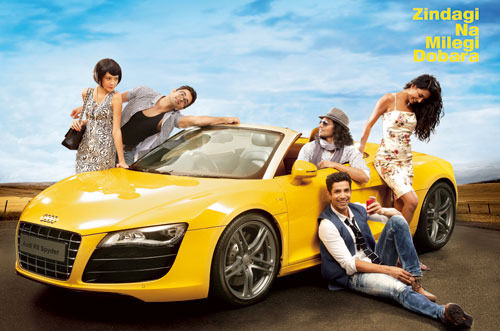
URBAN SASS: ZINDAGI NA MILEGI DOBARA

Arjun Bhasin for Hrithik Roshan, Farhan Akhtar, Katrina Kaif, Abhay Deol and Kalki Koechlin

Znmd04

If last year’s Aisha had Dior handbags floating on every arm, 2011’s ZNMD makes ‘Bagwati’ a character – with her own position in the plotline. And the ostrich Hermes Kelly is styled with shades and a scarf occasionally, when the weather requires it. This is probably the first time fashion is used as a plot device in Indian cinema – an obvious barb at Kalki Koechlin’s prissy couture- conscious Natasha. Her blunt cut with sharp bangs, kitten heels, Chanel jacket and designer-everything says more than the pinched expression on her face ever could. The look is reminiscent of Molly-Ringwald-in-Pretty-in-Pink – except that unlike Ringwald’s second-hand, hand-stitched attire, Koechlin/Natasha’s clothes are an expensive combination of fresh-off-the-ramp and couture classics. In sharp contrast – as each character forms a fashion foil to the other – Katrina Kaif’s easy-going Laila philosophises in flowing dresses and tresses, easy-breezy beach wear and minimal makeup. Even a basic transformation into biker-chick requires her to wear a lightly ruffled-edged corset over jeans, always feminine and sexy.


With the boys, each actor’s personal tastes and style are visible. Abhay Deol has a naturally leggy, geeky look. The design takes it a step further for his character, Kabir, with over-the-top nerd spectacles, quirky shirts – think birds-taking-flight – teamed up with sneakers and a backpack that he hoists defensively when grilled about his life’s choices. Hrithik Roshan’s beefy look is toned down with buttoned shirts as the audience can’t be allowed to question how Arjun, a work-obsessed investment banker finds time to go to the gym while ignoring his girlfriend. (Of course, the toned shirtless body on the hoardings makes for a happy box office draw.) As the story unfolds, he loosens up, and so do his hair and styling. Farhan Akhtar is pushed further into a character scripted for him: quirky, philosophical poet, entirely boho chic. Aviator shades, loose pants, kurtas and long-sleeved t-shirts teemed with a random neck scarf and hat that he sports, on occasion, even outside the film.


Every look comes together cohesively, billed directly to director, Zoya Akhtar’s vivid visualization and stylist Arjun Bhasin’s recreation: detailed character-oriented styling and couture that slides into everyday life. We just wish it could’ve been a little more experimental – there is no room for a subtle overflow like a preppy artist, for instance. While ZNMD’s picture-perfect styling serves to
perpetuate stereotypes rather than demolish them, it does so rather appealingly.


YOUTH CULT: ROCKSTAR

Aki Narula for Ranbir Kapoor

Rockstar01

Polish artist Grzegorz Domaradzki set the stage with his poster sketch of Rockstar. You couldn’t help but know that the look and performance would be iconic and the movie didn’t disappoint – at least on those counts. Tight-assed Janardhan (Ranbir Kapoor) in his too-fitted jeans, too-snug sweater, too-crisp shirts and too-short hair is an obvious exaggeration to the transformation that becomes rock star Jordan. Free of inhibitions and full of angst, Jordan dresses exactly the way he feels – unfettered, irreverent, defiant and often unwashed. As he moves to his own tune, treating societal norms, business conventions and geographical boundaries in the same dismissive manner that he does anything that comes in the way of his single-minded vision, he becomes an unwilling anti-authoritarian cult figure. And to that effect, he redefines the Nehru cap as a fashion ploy. Even as detractors and politicos may shift uneasily, Kapoor makes it work.


What stand out are his wardrobe staples (often repeated in the film for realistic styling): the snazzy anti-establishment military jacket, the Qawwal jackets – a call to his Sufi leanings, the mocking feather-topped Sadda Haq police shirt, all teamed with the clever individualistic version of loose patiala pants and kurtas – ultimate comfort wear. Love the fact that there is no leather or biker rock look – so often over done and stereotypical. What impresses is the refreshing take on a rock star. Packaged with Kapoor’s long, unkempt hair, accessorised with a chain around the neck that houses his first broken guitar string and guitar pick along with other souvenirs, Aki Narula, director Imtiaz Ali and Ranbir Kapoor have visualised possibly the iconic look of the year, to be imitated and popularised by young college kids until the next grunge look rocks its way in.


RETRO RENDERING: THE DIRTY PICTURE

Niharika Khan for Vidya Balan

Tdp04

Even before the film released, Vidya Balan’s bosom encased in Niharika Khan’s suggestive designs made for feverish conversations and post the film’s release, one hears of ‘Ooh la la’ saris becoming popular commercially. If Vidya Balan has the mettle to take on an author-backed sensational role of this kind and further it with panache, then Khan has done more than her job to ensure that Balan’s character stays suitably unclothed throughout. For the racy protagonist, the costumes of the ’80s south are garish, loud and boldly uncouth – as the script intends it. The camera makes love to Vidya Balan’s unfettered body, and the clothes caress her intentionally untoned figure: you watch Balan attempting to button up her jeans over her flabby stomach with an enviably unconcerned attitude towards her generous midriff.


From the tight short dresses, the pelvis-hugging flared pants, to the cleavage-baring cholis and retro shirts, everything shrieks for attention. Where Bobby’s Dimple Kapadia and Once Upon a Time in Mumbai’s Prachi Desai conveyed youthful, shy sensuousness with their midriff baring, polka-dot front-tie shirts, Balan is unabashedly lusty and in-your-face with her wantonness in similar outfits. And yet, caught in a moment of vulnerability, Balan’s character, Silk, makes the walk of shame the morning after being dumped for the wife, attempting to shrink into the folds of her red sequined gown; but in the harsh morning light, it’s too tight for comfort or respect.


Ironically, for Silk, it’s all synthetic and the glitz of sequined make-believe. From the dull, aged South Indian cottons of Reshma’s village wear, and the lamé and brightness of Silk the superstar, to the unflattering wardrobe of an alcoholic, the clothes define every turn in the script. As Khan points out, “The film is about the character’s relationship with her clothing and body – and Balan is brave, far braver than even I could be, to take on this role.” These are the clothes of a woman whose attitude speaks more than her wardrobe, and her wardrobe merely perpetuates her freewheeling attitude. Whether Silk tries to hide or take the world in her stride, her clothes reveal her spirit and character – loud, brash, irreverent, attention-seeking, ambitious and vulnerable – and always exposed.

Superheroes, ha!

12 Sunday Feb 2012

Posted by sitanshi talati-parikh in Art, Literature & Culture, Features & Trends, Publication: Verve Magazine

≈ Leave a comment

Tags

Superheroes, vervemagazine

Published: Verve Magazine, February 2012, Features

Illustration by Bappa

Superhero02

This summer, costumed crime-fighters return to the big screen in their darkest form – plagued by physical failings and emotional dilemmas. This may be their sexiest avatar, ever. What is it about sinister grey shades that make a woman see passionate purple? And can a woman ever stand by a male world-protector, holding her own? Sitanshi Talati-Parikh explores the subterranean world of fantasy fiction

MALE SUPERHEROES: 
the ultimate turn-on
There’s a general buzz in the air about the much-awaited release of Christopher Nolan’s The Dark Knight Rises where the costumed crime-fighter, Batman, is pushed to breaking point. The Amazing Spiderman, also releasing this summer, grapples with human and super-human crises. Superheroes are by default meant to be indestructible. That makes them sexy. But in the world of karmic angst and philosophical revolt, our superheroes are sexier in their existential and painfully human form. Maybe the allure lies in the fact that these are people who have transgressed above and beyond and are able to fight their own weaknesses and fears, and ours. Every cathartic battle makes them take a leap of fantasy in our psychedelic emotions – our subconscious mind becomes a battlefield of latent desires, every fight is a fight for survival. It’s about power. Not just at the obvious level, but at the level of hope. We hope that good can still win over evil. And yet, we hope that it’s a photo finish, because we are afraid of closure. If it all ends today, if everything is said, and all ends are nicely tied up what will we take home to our fantasies?

Indian superheroes are fantastical caricatures at best and over-the-top mystical drones at worst. There is no real superhero culture in commercial Indian cinema. We watch Ra.1 (2011) for Shah Rukh Khan’s exaggerated antics, Robot (2010) for Rajinikanth’s omniscience, and Drona (2008) for…nothing. In Indian cinema, the movie star is the superhero – he’s not an actor, he’s playing a larger-than-life persona. It gives him the ability to do anything, while also at a very simplistic level describing good and bad. Superheroes of Hollywood are a far more refined species, evolving over time to greater levels of depth and mystery. They have undergone many changes, versions and personalities to reach a point of climax. From a rather simplistic beginning during the time of the World War, where economic downturn led to a desire for a better life, a strong role model and a saviour for the average man; to returning in a new avatar: the confident anti-hero, standing up to the establishment, patriotic and powerful. Today we have a disturbed, grey superhero: who is battling his own demons, external and internal. No one can fight evil continuously without feeling the ramifications. Even in fantasy literature, Frodo and Harry Potter found themselves turning vicious under the brunt of carrying the malicious ring and destroying Horcruxes in Lord of the Rings – Return of the King and Harry Potter and the Deathly Hallows respectively. Similarly, in superhero fiction, what makes the current Hollywood costumed crime-fighter worth his weight in gold is the intensity of his emotional drama. His mental battles are ours as we make constant switches between the right and wrong decision. What is good and bad? Who defines it? Is making a bad decision for the greater good okay? Most people don’t face the weight of decisions where cities and worlds get impacted. The superhero’s crisis is supreme. He fights more than his own anxieties; he fights a world’s anxieties.

The power to be in that position and the eventual control he wields makes him obviously an object of desire – but the real sexiness comes from how human he actually is. His turmoil appeals to the nurturing instinct in every woman, and the desire to have him win, willing him along mentally, grips a girl through another superhero summer. Gadgets, indestructibility, strength, resilience, super-intelligence, metaphysical abilities…and an inner reservoir of good make the superhero a classic stereotype of attractiveness. What’s a regular girl asking of a regular boy? Physical desirability, material comfort, good nature, the strength to be her man. Every man spends a lifetime trying to be a superhero and every girl waits for a man to become one for her.

Popularised by teenage comic-book geeks, the genre grew from strength-to-strength inside the mental fantasy of a boy who was yet to come into his own. He is exalted in this make-believe secret world of crime fighting, where his deepest desire of leading a life far removed from his own, where what he believed himself capable of in an alternate universe appears to become a reality. He isn’t the jock, but he’s the guy with secret powers to save the world. He will be an outcast, because he isn’t like them, he is more than them. He yearns for the cutest girl in school, but he can’t have her because of the life he must lead to complete his mission. Along the way, he becomes desirable – he is so focused and inherently strong, that women begin to notice him. We begin to take him seriously. And in there lies his fulfilment – he may be too busy to get anything more than a chaste kiss, but the very fact that he is desirable is enough for him. And it must be enough for us. His sexiness is in his unreachability, in his very unavailability.

FEMALE SUPERHEROES: 
a failed species

In this whole scheme of things, what’s a woman’s role? Superheroes have evolved in their failings and flaws, but their women remain the same – waiting to be rescued, waiting to be loved. Spiderman yearns for Mary Jane, but it seems trite that he can never have her, despite being a superhero, because he’s a superhero. Superheroes have a duty to protect and cherish, but no place for love. They cannot endanger their lady love by bringing them into their web of crime-fighting and uncovering their secret identity. Is that merely ironic or is it a foundation for martyrdom? It’s like a Mills and Boon romance with an unresolved ending. Maybe, as the Twilight romance has proven, endurance – in the age of free sex – is a turn on. And it is possible that we want the people we look up to, to not get it all – to suffer and pay the price of power. Who does the superhero come home to after a hard day’s work? Would his failings and existential pangs have been resolved had he been able to experience a companion’s love, advice and support? Is a woman a superhero’s Kryptonite or elixir?

The story of good versus evil is romantic – whether in its blatant form of a leading love interest or in its subconscious form of bromance (Batman and Robin) and in its metaphysical form of evil serenading good, calling it out and finding itself extinguished in the flame of its love. And in this romanticism, detractors find much to say. Spiderman 2 spent too much time philosophising and romancing and too little fighting crime, say some. Indian superheroes are supreme – they manage to dance and make merry love while all along giving a hearty fight to the supervillains.

A superheroine? Does she exist? Catwoman, Batgirl, Spiderwoman, Ice, Wonder Woman, Xena… the list is quite long but unimpressive. While more popular in their comic book versions than their cinematic ones, these fabulous women don’t leave a lasting impression (except for Buffy the Vampire Slayer, but when vampires get involved it’s a different story altogether) the way the men do – probably because the men watching want to be in power and not be overpowered. So there is waif-fu. A character dependent on waif-fu is best described as a pint-sized powerhouse: an attractive woman with moves that can bring a man to his knees. Literally. If she is captured or pinned she doesn’t stand a chance, making her a good kidnap victim and a key plot turner. We want our women strong, but our men stronger. In women men look for resilience, patience, love… no superhuman powers and strengths. Men want to be seen as protectors and women as their emotional saviours. One would think a supergirl with powers would be the eternal turn on, but apparently, a woman in power is far sexier than a woman with powers. Demi Moore in Disclosure (1994) wins over Halle Berry’s Catwoman, any day.

The comic book industry may actually be male-dominated – after all, a lack of female readership of comic books was suggested as the reason behind keeping ‘women in refrigerators’: an inside term among the comic book circles implying doing away with the female lead as a plot device. And can a woman be his partner in crime? Fan blogs yearn for a true female superhero, the kind that can be more than just a foil to the male lead. But that may not actually work. Take the case in popular fiction of famous sleuths: The Hardy Boys – if you plan to read them, can you complain about the female positioning (or the lack of)? Bringing Nancy Drew and the Hardy Boys together, we have seen, never really worked – it is a recipe for disaster. How can the balance of power sit on the fence? Drew being rescued will make the Boys’ fans snicker with glee and annoy Drew’s fans; Drew playing power woman will turn off the boys. It wouldn’t be much different for a thrilling plot play of Batman and Catwoman, for instance. Coming together of male and female superheroes and crime fighters – unless it is for some fun on the side – is like treading on eggshells. One would have to be subservient to the other: there can be only one dominant hero, and by default and by popular vote, it tends to be the male hero. The fantasy industry does propagate stereotypes, but that isn’t surprising as most of popular culture works on the foundation of male supremacy. And in that world, women are but accessories to the greater good of mankind. And so we must lie.


MasterChef On My Plate

17 Saturday Dec 2011

Posted by sitanshi talati-parikh in Humour, Publication: Verve Magazine, Social Chronicles

≈ Leave a comment

Tags

comment, Designer Children's Parties, Designers, Food, India, MasterChef, Social Chronicle, Trend, vervemagazine

Published: Verve Magazine, Social Chronicle, December 2011
(Illustration by Farzana Cooper)

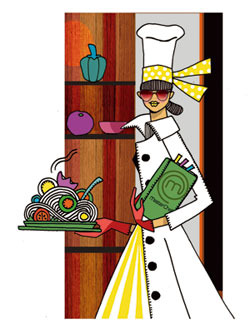
If you are the latest in the line if PYTs to send your hubby a tiffin that contains pan-seared foi gras with a champagne berry jus, then you know you’ve arrived onto a culinary scene that’s flush with promise and ready to launch. Sitanshi Talati-Parikh describes the necessity of taking a kitchen rendezvous to the next step


Verve-masterchef


‘Do you cook?’ She whispered. ‘Of course not!’ I retorted scornfully.  Great parties are never about knowing what to cook; they are all about finding the right caterer. Gloved hands, butler coats, flitting in and out: the spanking German-designed modular kitchen is meant to be seen, not used. Must you fret whether pesto has pine nuts or pistachios? I’m quite certain it’s the latter, logically, isn’t pesto the green one?


Lately though, newbie home-makers carry recipes in their Ferragamo totes, and while sneezing up a bomb at the local Nature’s Basket, can easily tell one nut from another. Blame it on the latest reality TV craze: MasterChef Australia – far superior to its Indian franchise. As the country watches with bated breath which one of the accented Australians go down under and which ones make it to the top, the ladies are picking up a few tricks along the way, and the men are finding a new itch to scratch: the kind which involves a cutting board and a chef’s hat. After all, those men in chef whites skim over the fine line to count as men in uniform – and the way into a woman’s boudoir may well be through her stomach. Many a young man has now leaned over the bar and whispered suggestively into his lady love’s ear, ‘Your kitchen or mine?’


Now, you can’t visit a friendly home without getting a sprig of parsley in your Brie, or a dose of balsamic vinaigrette in your chilled watermelon balls. Recipes are snitched from one of the mushrooming gourmet restaurants in the city – the toasted pine nut, goat cheese and watermelon salad is The Tasting Room, I believe – and every meal is judged on the outlandishly clever gourmet competency of the home-maker-turned-chef. Does your beetroot come laced with chevre? Has it been garnished just so? If not, it’s not good enough to be plated up?


Play dates (for the uninitiated: the time like-minded infants spend getting to know each other) are also a fine chance to show off those pa(i)ring skills: preparing the finest meal for your child’s little friend – what could be a better sign of love? Ten-month-olds are developing a spectacular taste for the healthy good life – in the form of broccoli-and-spinach risotto garnished with fresh basil, a traditional (low-spice of course) massuman curry and zucchini-and-parmesan ravioli, washed down with a tall bottle of elaichi-flavoured formula milk.


And it’s not just the chic young men and women flaunting their culinary skills, it’s about ensuring that you have a system in place to replicate this sensational food – anytime and with the least bother. And to that end, my Bihari cook is now struggling with understanding my desire to replace a Bombay grilled chutney sandwich on Britannia bread with a Mediterranean sandwich on multigrain herb focaccia.  And not even adding his own home-made paneer? Instead, layering the green meat of a tasteless fruit that he imagines to be Bengali baingan together with hefty hunks of feta, grilled zucchini and eggplant licked with a killer harrissa paste! He grudgingly grasps that the need of the hour – and the possibility of survival – means his knowing his parmigiana from his au gratin.


Chefs are now finding themselves akin to moviestars: in a recent MasterChef India (Season 2) show, one of the contestants cried because she got to meet her idol Michelin-starred, New York-based, Indian chef Vikas Khanna, whom she then proceeded to serenade. With Indians and Sri Lankans making their token presence felt on international cooking shows stirring up a curry-and-flatbread once in a way, and with Michelin-starred chef Vineet Bhatia attempting to challenge the desi taste buds, it appears innovation is the call of the day. You can’t serve up chana-bhatura any more, but what you can do is throw in chickpea couscous, broccoli khichdi and bhatura-flavoured sorbet. Now that would be a meal worth writing home about.


No longer is it about spices – it is about tempering taste buds with the appropriate levels of flavour so that they (your taste buds) can regain their virginity – and discard the massacre of years of generous masalas and chilli powder. And it isn’t really about eating – or stomaching to satisfy – as it is about teasing and cajoling the culinary senses into a pleased stupor. Hunger is for the middle-class. Palate-teasers are what fine dining is all about. It is no wonder that young chefs returning from Manhattan, dipping their fingers into genteel party catering, serve up hors d’oeuvres the size of peanuts. So smoked mozzarella flatbreads are actually coin pizzas, the size of, well, the shiny new 10-rupee coin. Tapas are in, or haven’t you heard? A meal in one of Mumbai’s trendy restaurants can consist of merely ordering 17 tapas and needing a hefty bottle of wine to wash all that tiny, tasty food down to feel deliciously full. 


Wine pairing can’t be missed of course. No self-respecting 30-something will serve anything less than the perfect limited-edition international sipper that goes best with the course being served. All along, the conversation tinkles with very profound discussions on Chinese politics, Rushdie’s literary smackdowns, and whether the Riesling would work better with the coconut soufflé or the champagne tart. My ultimate brain wave is to serve up a passion-fruit-and-lemongrass Sangria. It’s the easy way out of pretentious course-drinking – and is somehow that crass, bohemian sort of thing one can do, to remain cool after all that soul-searching food.


Talking about soul-searching food, the gourmands believe in cooking from your heart, and with a dollop of love. How much can you cook from your heart, when your stomach is empty and how much love can emanate from that drop of extra virgin olive oil that you mayn’t get from your grandmother’s hand-churned ghee?


The thrill lies in the pleasure-seeker and the social climber. After all, can you really be eating khana-khazana-type makhani food in your Jimmy Choos and Herve Leger? It is worth sharing Gouda and Roma tomato notes, if merely to prove that the world is your personal oyster and you have an international, exclusive and very uber chic stew cooking in your state-of-the-art kitchen. And after that dinner party full of whispered conversation, clinking flutes and a sense of social accomplishment, where the senses have been thrilled with that one lactose-free beetroot foam tortellini, you are more than likely to find yourself kicking back furtively with a hearty macaroni baked dish, folded with about 250 grams of Amul cheese, and a little kiss of ketchup.

Romance Diaries: Knot of Love

18 Friday Feb 2011

Posted by sitanshi talati-parikh in Humour, Publication: Verve Magazine, Social Chronicles

≈ Leave a comment

Tags

Marriage, romance, vervemagazine

Published: Verve Magazine, Features, February 2009
Illustration by Bappa

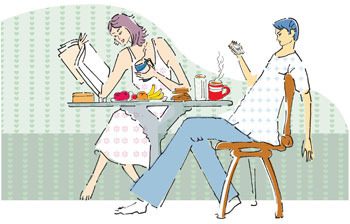
Does romance leave you behind at the altar or hold you even tighter in the embrace of marriage? Sitanshi Talati-Parikh traces the transition

Sitanshisdiary

It’s astonishing how deeply romantic it is to tie the knot, slip on the sparkly on your ring finger, walk down the aisle with a swishy fountain of lace behind you, or take a turn at the wedding mandap with dramatic chants sung against the sacred leaping flames. At every moment, you are shivering with anticipation, thinking of that spectacular wedding night that awaits you on a bed of roses. From the moment you drag your weary stiletto-ridden feet home after ‘receiving’ your many guests, you’re ready to crash. Literally. In a fun, wine-laced conversation at a recent bachelorette party, we did a show of hands to see how many people actually consummated their marriage on their wedding nights. The handful who did put up their hands, I’m dead sure, were all cock and bull stories, no pun intended. I mean who in their right mind actually does it on the wedding night?! One chica claimed – ‘You must – I mean, just for the heck of it – you have to! It’s your wedding night, after all!’

And that’s exactly how marriages begin. And romance begins to lose its edge. You do things because you have to, not because it’s always fun or scintillating. So what happens to the calls late into the night when you curl your toes under the covers with glee, the little pecks of promise, the anticipation of meeting soon, the entwined fingers and the burning look of intensity in the eyes that sends your spine and neck tingling with sensation? They are replaced by the harried look of multitasking chores, the absent-minded, disoriented air, the brow furrowed with concentration, the distracted monosyllabic answers at the breakfast table over coffee, toast and wireless BlackBerry compote, the intense concentration of a person who has his ambitious head turned skywards straight at the stars. I remind him it could get lonely at the top.

As I plan another vacation, in memory of the bygone days of wooing, to give me a brief glimpse into the young lovers we once were, I placate myself with the thought of a new destination that allows one to forget the responsibilities of life and focus on the simple pleasures. Like enjoying each other’s company in the companionable silence of golden sands and crashing waves. He slides his hand into mine; we flash back in time. At that moment I sense that romance never left us; we left it because of our preoccupations. The young boy’s romance has matured into a man’s love – deeper and subtler. Instead of wallowing in a time warp, I realise the romance didn’t die. It just changed, adapted, grew. The candyfloss tinted glasses fell off. I wouldn’t want it any other way.

Women Untamed

17 Thursday Feb 2011

Posted by sitanshi talati-parikh in Humour, Publication: Verve Magazine, Social Chronicles

≈ Leave a comment

Tags

comment, Trend, vervemagazine

Verve Magazine, Musings, February 2011

Women wearing the pants is passé, but now we find men holding onto their women’s pants with quiet desperation, afraid they will fly the coop even before the nest is made. Sitanshi Talati-Parikh muses on the metamorphoses of women in a liberated society

The Queen Bees of society are silent killers – men have for centuries been braggarts and women have found a way to get their own back. Who actually goes to a bachelor party expecting to get lucky and laid? The boys-trying-to-be-men come back with tall tales of passion galore, but the paunchy Indian men of the day (who need a compass in matters of orgasmic satisfaction) are hardly going to be the source of irresistible temptation to svelte Scandinavian women – unless a good deal of money is thrown their way. And if you need to pay for it, it doesn’t count. Indian women, who are generally in much better shape compared to their male counterparts, have an exciting, exotic appeal that makes a bit of harmless flirtation nothing more taxing to the purse than the bat of a mascara-ed eyelid. The PYTs of today can roam the cobbled streets of Europe kicking up a merry ruckus and returning quite the merrier. But we won’t go deep into the details – what happens at a destination bachelorette party, should be forgotten the moment you board the flight back home.

Women today are unselfconsciously raunchy, unafraid of their sexuality and are more than willing to take the leap in expressing it. As last year’s release, Aisha, suggests, gauche is out, and manipulative girl power is in. And of course, a foreign locale makes indiscretions completely acceptable – think Sex and the City 2 (2010) where Carrie steals a kiss with ex-boyfriend Aidan, in lieu of hubby Mr. Big being around. Or Vicky Christina Barcelona (2008), where straitlaced Vicky gets sorely tempted into an affair before marriage – even considering calling her wedding off. And while selling kisses for change at a Scottish bar at her hen night, Hannah in Made of Honour (2008) is left weak in the knees for her best friend, not her husband-to-be.

It’s not as much about infidelity and indecisiveness (that’s a thought for another day), as it is about choices. Where once women either didn’t have those choices, or didn’t give themselves the right to make those choices, now women are all for options. If men are like ice cream, women have the entire range of flavours to pick from. And choices that have to do with emotional involvement can get complicated, but we find it surprising that women can be quite the cold fish – unemotional about their liaisons and irreverent about the heartbreak they may leave in the wake of their decisions. A 20-something girl of my acquaintance was regularly chased after by men of all shapes and sizes. She flittered in and out of relationships, with unbelievable emotional ease, while trying to unravel the knots in her on-again, off-again relationship with her long-distance ex-boyfriend. Eventually, after years they decided to get married – and she seemed freaked out by the idea of ‘settling down’! She allowed herself, in that moment of cold feet, one last (we hope) indiscretion abroad. Her now-husband apparently understood her perfectly well and thought it would be most prudent to get it all out of her system. And this – acceptance of women’s wild oats that need to be sowed – is not uncommon in relationships today.

You can’t help but be slightly amazed at this development – since when did cold feet become a paddle ground for men and women, and decisions made on the call of these frozen extremities allow for getting your toes wet in alternate waters? Women today are afraid to take the plunge – in committed relationships, in marriages, towards motherhood…. It is the time when women want ‘space’ and ‘freedom’ to explore boundaries and create new ones, to feel free of the impositions that they have seen other women suffer for generations; and in that very experimental stage, often swing to the other end of the pendulum before slowly clawing back to level ground. At exactly what stage they decided to give themselves the same rights in indiscretion and fun that men have had for years, one can’t quite be sure, but the metamorphoses has firmly taken place and the butterflies are spreading their wings and flying the coop. Women do make up about 50 per cent of society – and realising this, they began to take liberties and make decisions for themselves, subservient to none but their own moral and possibly immoral code.

And this isn’t exactly bothering the men – while it may make them insecure and quite whipped, what turns men on is the winning combination of ‘girls gone wild’ – the hottest selling video in America of women crossing the line (what line?) at foam parties, Spring break, bachelorettes, sleepovers is of the same name. Women for the longest time have had silent power over men, in bed and out of it; it’s just the matter of wielding it, and wielding it right. There is something vicariously pleasing about women going wild, and something entirely irregular about men doing the same. Maybe it’s the fact that men have been having their slice of cheese on the side for years; or maybe it’s the bit where we don’t really give two hoots about a sausage fest in a bowl of hot soup? In fact, the best kind of woman is the naughty moral one: the delicious anomaly defined by the kind who isn’t afraid to kiss, but won’t tell and won’t cheat.

You can tame the man, but can the man tame his New Age, expressive woman? It’s the era of female domination – what existed in the echelons of the kitchen and household has moved to the bedroom and workplace. It’s not really about who wears the pants, rather who finds himself holding the skirt.

Whom Women Want: Imran Khan cover story

13 Saturday Nov 2010

Posted by sitanshi talati-parikh in Interviews (All), Interviews: Cinema, Interviews: Cover Stories, Publication: Verve Magazine

≈ 1 Comment

Tags

Avantika Malik, Bollywood, I Hate Luv Storys, imrankhan, indiancinema, Kidnap, Luck, Nuzhat Khan, vervemagazine

Published: Verve Magazine, Verve Man Supplement, Cover Story, October 2010
Photographs: Joy Datta

Img_0110

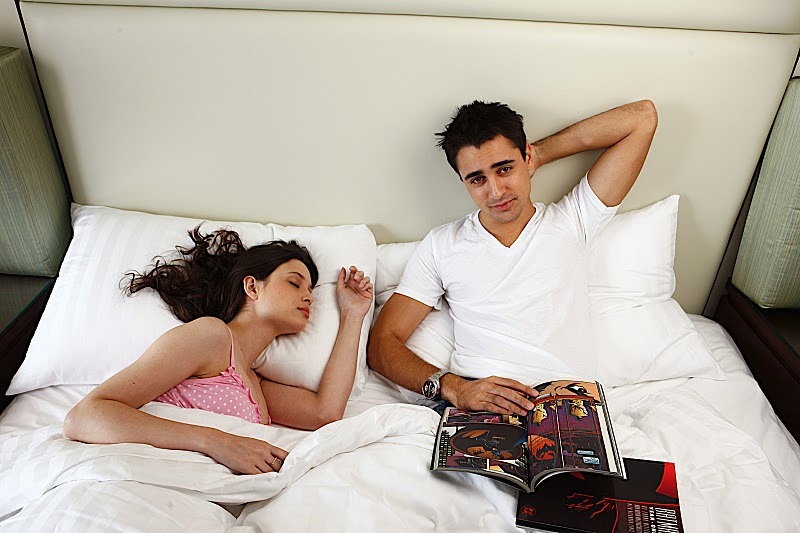
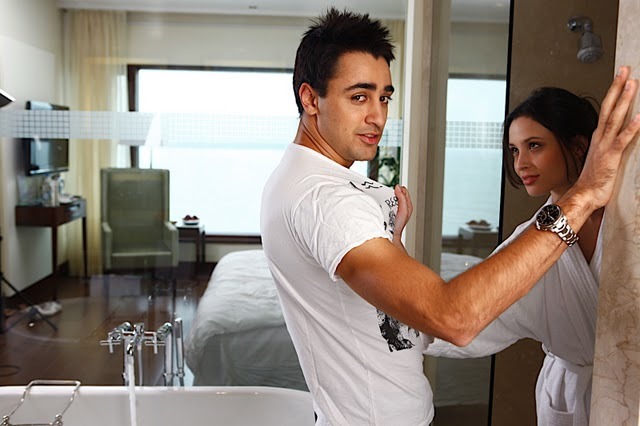
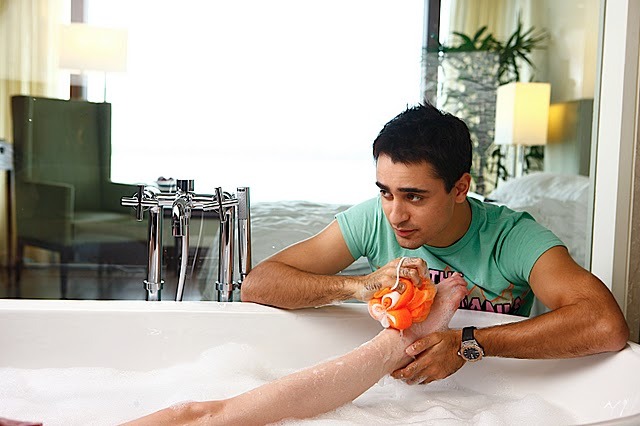
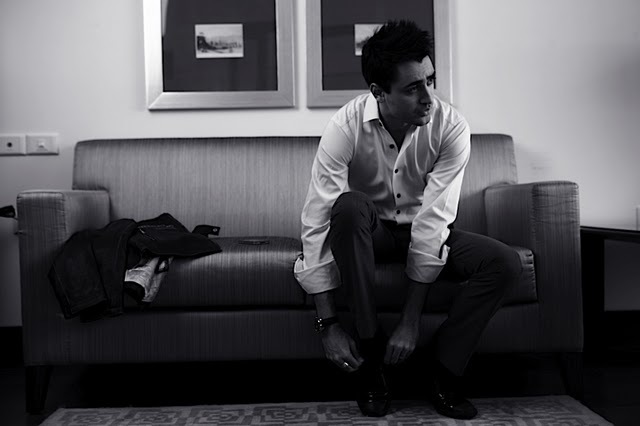
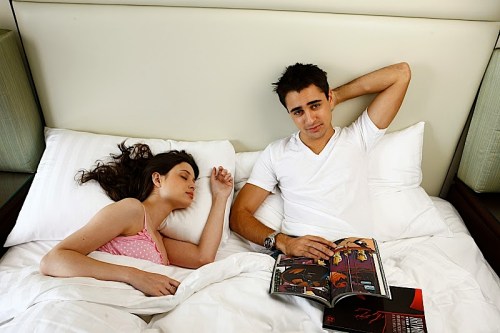
He’s the hot cake of the film industry, has a thriving gay fan following and is quite the favourite with the ladies. This is Imran Khan after he’s delivered his second big hit, I Hate Luv Storys and has a movie lined up with nearly every top actress in the industry: a big notch up from his overnight debut success. While Verve’s camera captures a day in the life of the movie star, Sitanshi Talati-Parikh looks beyond his distracting good looks to discover what makes him tick and makes him the coolest catch in town

“I’ve wanted him to be a man women would like,” is how Nuzhat Khan begins the conversation about her only child. Even the toughest detractors and hardest cynics would find it impossible to dislike 27-year-old Imran Khan, who admits to have consciously imbibed the best aspects of favourite characters from classic books, movies and comics. So, in a sense, the elusive, romantic notion of the man that women chase from fiction is actively present in Imran’s personality. Does that make him perfect? “It’s a work-in-progress,” he grins. In Nuzhat’s ideal lies a fundamental difference that sets Imran apart – while others stop at being good according to their own definition, Imran without self-deprecating, without martyring himself, goes the extra mile to be universally likeable.
Img_0111

This precocious child started speaking long, coherent sentences at a very early age – and in Nuzhat’s words, “He was a complete person even as a child, never requiring disciplining – I could talk to him like a grown-up.” It doesn’t appear to be a statement stemming from a maternal fondness, because she has always attempted to look at Imran as an unrelated person, without bias. “I would hate for him to have grown up thinking he’s special because his mother thinks so – it should be because he believes it.” And that is what makes Imran self-assured. “I don’t think I’ve ever had issues with self-doubt. What I can’t change, I don’t let it influence or affect me. Even if it may seem unnatural for a teenager to be so, I have always been a kind of calm, reasonable, logical person – prided myself on being mature. It is something I consciously hold onto, that I’ve never wanted to lose. I always wanted to be the guy who can handle a situation.” And he can do that, MacGuyver-style, in any condition, under any circumstance.

This what his fiancée, Avantika Malik, in her light, lilting voice, lists as one of the traits that makes him the man she has known to love for eight years and counting, from the age of 19. She finds that through career choices veering from wanting to remain behind-the-scenes as a director, to embracing the limelight as a hero, nothing has changed in the boy she dated and the man she is soon to be married to. “The great thing about Imran is that at his very core, he remains completely the same, grounded and real, though it’s true that he carries himself with more ease and with greater confidence now than ever before.” Avantika admits that her respect for him also stems from the vital fact that he has never given her any reason to doubt his intentions, always being honest and forthcoming about his feelings. She quotes her mother, Vandana Malik, here, who describes Imran as, ‘one of very few God’s good people.’

What makes Imran refreshingly undiabetic, though, is his well-controlled moodiness – evidenced by his need for alone time – his sharp wit, often sardonic and dry, and his toe-the-line principles. You can’t cross boundaries he’s drawn because doing so endangers the very nature of that relationship and his tolerance towards you. But if you work within these limits, you can find in him a genuine friend – warming your grey cells against his razor-sharp repartees. Sonam Kapoor, his co-star in I Hate Luv Storys, marks “his humility and hunger for knowledge, but most of all his quirky sense of humour” as appealing, and Deepika Padukone, with whom he has the upcoming romantic dramedy Break Ke Baad, finds him a fun, supportive co-star, calling him, ‘Mr-Know-It-All.’ “Imran likes to know everything about everything and if there’s ever a time that he doesn’t, he will immediately read up or Google it.” Also known as ‘Imikepdia’ among his friends, intelligence in liberal doses is something Imran prides himself in having: “My dad (Anil Pal, IT professional in Sunnyvale, California) – after all, mera baap hai – knows more about everything than I can ever know. Currently it’s uncool to know stuff, but I have always considered it to be a good thing to be knowledgeable.”

That knowledge extends to supporting causes he believes in, whether it is attempting to create a greener world – he contributed an essay on being environmentally-friendly for Verve last year – to standing up for one’s democratic rights like voting or finding a shelter for homeless animals. With his personal brand of humour and wit, he uses his columns and public forums to inspire people into action – fighting religious myopia and mediocrity, for instance. And he walks the talk: ensuring that his house is environmentally friendly, adopting stray animals and taking criticism positively to ensure achieving his own potential. It works for him, after all, women haven’t given up on idealism: Saan, co-moderator of his unofficial fan site (www.imran-khan.org) is rather taken in by his principles: “I find his honest dedication to good causes and his belief in human beings very hot.”

Img_0112

Sex-appeal? With Imran it’s never about the superficial stuff. “Good looks are not it. People are sweet and well behaved. But for my family, we lay a great deal of importance on integrity. It means different things for different people, but he doesn’t let go of that principle,” says Nuzhat. Imran accurately assesses that people gravitate towards his personality. “People like me when they meet me. I am an amiable, easy-going person. I like people and that translates well. Rakes work for younger women – say until the age of 25-26. I’ve always been the good guy, and up until a certain time I had absolutely no success with women…and suddenly everyone starts coming forward with, ‘You’re such a great guy!’ and I’m thinking, ‘Where were you 10 years ago?’” While his contemporaries play the field as cavalier Wickhams and Willoughbys, Imran remains the quintessential dependable Darcy. As Shaima, the founder of his fan site observes, “What I love about him is that he may be your typical heartthrob, but he isn’t a heart-breaker.” The fact that he has been in a committed relationship for longer than even he can remember may have something to do with it, but as Imran points out, he is quite the unlikely candidate to be “having short-lived affairs with aspiring actresses and models.”

There is a sense of vulnerability about the boy-man that is carefully concealed. I noticed it when I inadvertently came across him eating a boxful of chocolate bars, trying to calm his nerves before going in front of a live audience, over a year ago. You get barely a moment to notice it, before it flickers away. The face is always composed, the voice is always modulated and the feathers are impeccably unruffled. He is never reactionary: his sensitive personality is reined in by his logic-driven outlook. “My motivations are emotional, but my actions are rational. Both take place simultaneously. I’m not a shoulder people cry on; I am the guy who gives advice. Emotionally I am not great – I’m a fairly emotionally reserved person. People bring me things to fix, I’m a mechanic.”

Img_0113

And where reason is important, experimentation isn’t a part of who Imran is – he doesn’t choose to tread dangerous waters unless it will take him to the next step in his calculated climb to the top. Despite the fact that the prudence of his choices were questioned when he faced flak for films Kidnap and Luck, Imran makes every decision after great deliberation – he rarely, if ever, backtracks on that choice. He is quick to rectify errors, learn from the past and lay the foundation for the future, all the while maintaining a stoic demeanour about the present. For instance, his earlier bluntness – stemming from the inability to see the ramifications of brute candour – has now been prudently replaced by tactful replies, truthfulness coated with a barely perceptible paint of diplomacy. You would believe him to have a mental check-list, of the kind of movies he wishes to do, about the people he wants to work with, about the path his life should take, and find him actively fitting pieces of the puzzle to make it all fall into place.

The culmination of being inherently good, irrefutably smart, and irreverently humourous makes him a person you’d want to know despite his potential of being a big movie star. Imran is very clear about stardom: “You have to be a bankable star – to justify the money. You wear different hats. Being treated with deference can get irritating, because it can get too much; but not being treated with deference, bothers you too. I wear no hats in real life.” Twenty months ago, Imran prided himself on being the guy next door, who could roam around town ‘practically invisible’. Today, after the aggressive promos and resounding success of I Hate Luv Storys, he finds himself the reluctant star – unable to do so anymore. While he believes in positive fan interaction, he’s withdrawn from the popular social networking tool, Twitter, to ensure meaningful conversations over general mass following. Few can be actors before they are stars, few can uphold the integrity of their work over the drug of adulation and you believe he is one who can, possibly insulated by his rootedness. Nuzhat, with sudden maternal candour admits, “Yes, I worry that his goodness can suffer at the hands of the movie industry, but more so, I hope Imran never becomes content with mere success, but pushes the limits towards better and more meaningful work. And I don’t mean that for movies alone – but for it to extend to every part of his life.”

Img_0114

Post the success of his first film and the lack-lustre performance of two soon after, he wasn’t noticeably insecure, but definitely eager to prove himself once again. He took the beating in his stride, with the same equanimity with which he handled his overnight rise to fame. Today, there is a sense of retribution inflected in his tone – his choice of words denote an obviously confident person, who is merely reflecting the assurance that repeat success brings. While he doesn’t believe in destiny and can’t predict the future, he is secure: in the knowledge that he has everything that he would need to make his world go around – career back on rails, the power to pick and choose from the best of the industry lined up at his door, the girl, the family, and complete faith in himself. Al Pacino’s Tony Montana in Scarface famously said, ‘First you get the money, then you get the power, then you get the woman.’ Imran may have got it all in the wrong order, but for all the right reasons, he’s hot, he’s wanted and it looks very much like he’s here to stay.

Imran Notes
“Being the only child, I had more one-on-one time with my parents and time to introspect. I can’t deal with loud noise – like TV. I need regular periods of silence and quiet.”

“Who knows what makes you sexy? I think my personality works for me – people like me when they meet me. I am an amiable, easy-going person.

Imran owns a rare edition of his favourite comic book, batman, a Batman tie and believes that were he to have a superpower, it would be MacGyvering. He’s a Star Wars fan and considered being an archaeologist post an Indiana-Jones phase.

Img_0115

Imran Style Guide
He’s been known for his quirky tees, comfort-fit denims and one-of-a-kind sneakers. The ones he is wearing at the Verve shoot are hand-painted Beatles Nike keds sourced by Avantika from LA. Lately, inspired by old movies and the Rat Pack’s sharp “badass” attire, he has decided he wants more from the way he dresses. He’s decided to “bring back the suit by taking that style of dressing and turning it over on its head. It’s not about what you do. You wear it, don’t let it wear you.” To drive the point home, he quotes Alec Baldwin from 30 Rock, who when asked why he’s wearing a tuxedo at work, snaps back, ‘It’s after seven, what am I, a farmer?’

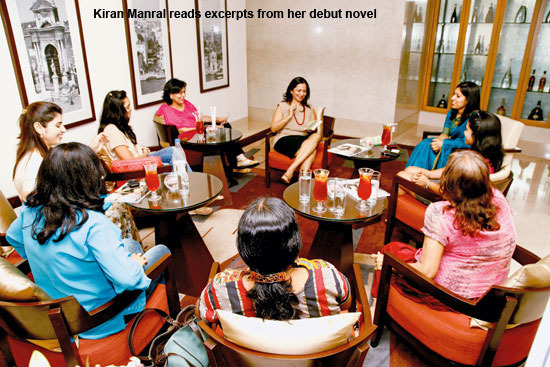
← Older posts
Newer posts →

|  Filling the gaps between words.  |

Writing By Category

  • Art, Literature & Culture
  • Brand Builidng
  • Brand Watch
  • Fashion & Style
  • Features & Trends
  • Fiction
  • Food
  • Humour
  • In The Media
  • Interviews (All)
  • Interviews: Business
  • Interviews: Cinema
  • Interviews: Cover Stories
  • Interviews: Lifestyle
  • Interviews: Luxury Brands
  • Interviews: The Arts
  • Interviews: Travel
  • Musings
  • Parenting
  • Publication: Conde Nast
  • Publication: Elle
  • Publication: Mint Lounge
  • Publication: Mother's World
  • Publication: Taj Magazine
  • Publication: The Swaddle
  • Publication: The Voice of Fashion
  • Publication: Verve Magazine
  • Social Chronicles
  • Sustainability
  • Travel Stories

Reach out:
sitanshi.t.parikh@gmail.com

© Sitanshi Talati-Parikh 2018.
All Rights Reserved.

Website Powered by WordPress.com.

  • Subscribe Subscribed
    • sitanshi talati-parikh
    • Join 51 other subscribers
    • Already have a WordPress.com account? Log in now.
    • sitanshi talati-parikh
    • Subscribe Subscribed
    • Sign up
    • Log in
    • Report this content
    • View site in Reader
    • Manage subscriptions
    • Collapse this bar