
• About
  • Brand Building
  • Film & Drama
  • Writing: Arts & Lifestyle
  • Writing: Interviews
  • Writing: Luxury Brands
  • Writing: Travel

sitanshi talati-parikh

sitanshi talati-parikh

Category Archives: Art, Literature & Culture

Poetry: Word Gypsy

26 Thursday Mar 2009

Posted by sitanshi talati-parikh in Art, Literature & Culture, Interviews (All), Interviews: The Arts, Publication: Verve Magazine

≈ Leave a comment

Tags

Indian Fiction, Interview, Poetry, vervemagazine

Published: Verve Magazine, Nerve, March 2009

Performer, poet, writer and columnist, Sharanya Manivannan has published a book of poems and is working on a novel. Sitanshi Talati-Parikh gets the writer, who has written a poem exclusively for Verve, to delve into the space and quirkiness of her works


Sharanya01

She is small, petite and extremely self-assured. Barely into her 20s, she started writing when she was seven, got involved with ‘readings’ at 15 (while living in Kuala Lumpur) and is now in Chennai – working as a copywriter with an ad agency and writing a column called ‘The Venus Flytrap’ for a local weekly newspaper. Witchcraft, Manivannan’s debut book of poems is an effort at mysticism, picking up themes of betrayal along with “love, loss and longing”. The “spontaneous and organic” writer was awarded a fellowship to work on her second book, a novel, for three weeks in Pondicherry last December. The novel picks up on the threads of love, loss and longing from Witchcraft, and is about a young photographer in her 20s who becomes obsessed with the preservation of transitory moments because her own personal history is in shadow. As she says, “Roots, exile and dislocation are things that affect me deeply both as a human being and a writer.”

Excerpts from a chat with Manivannan:

Relevance of a spoken word artist
Why ‘spoken word’ and not simply ‘readings’? Because spoken word is a legitimate genre of performance – not everybody is able to read, even their own work, with panache. Whereas, poetry publishing is a difficult and drawn-out process, performance allows immediate, often intimate, access to an audience. ?To me, to be a spoken word artist is to channel through the voice the spirit that some call duende. As with all performance, hearing the word aloud can be a transformational experience for both performer and observer.

Quirky and unusual writing
I personally don’t think that my writing is quirky or unusual. But there are two things I hear frequently about my work: that it is ‘brutal’, and that I say things which others chastise themselves for thinking. I’m willing to excavate deeply. And in doing so, I go to places in the mind and the memory that can be painful, dark, unsettling or revealing.

Space for women poets in India
In the English-writing world, the space is not any different from the space for men. I’ve not encountered any setbacks in this regard because of my gender but I have because of my age. However, the vernacular languages are a whole different ball game. For instance, I know that some Tamil poets like Salma and Kuttirevathi have had a tremendous backlash against their work because they approach the subject of the body.

Poetry as a serious genre
There are so many poets in India today – just look at Jeet Thayil’s anthologies, or the Poetry With Prakriti Festival in Chennai. That there aren’t many, is a misconception that could arise from the fact that no matter how seriously we take ourselves, the genre itself is not taken as seriously by the public and by publishers. I also don’t think there is any real gender disparity in terms of numbers, but issues like the ostracising of female poets who write about their bodies in the vernacular certainly exist.

Life and writing
I make sense of my life through my writing. I distill my experiences. Sometimes, being able to have a poem about a situation makes me feel so much better about having been in that situation at all. That’s as simple as it gets. Things like structure and narrative are layers that come later.

Being a poet and a fiction writer
Poems are microcosms and take up much less headspace; fiction is far more expansive, detailed and demanding. All of last year, I focused on poetry. But I’m picking up again the novel I’ve been working on off and on for years…. I can only hope that it’s possible to be good at both.

Years, not age, matter
As an older writer friend once told me, I may be 23 but I have been writing since I was seven – that’s 16 years of experience in the craft itself. As for life experiences per se, age really is just a number. Look at all the musicians who died at 27, after all. I’m 23 but you couldn’t guess it based on what I’ve been through and what I know – my life is really some sort of pulp fiction film.

SURFACING

Afterwards, we will
both wish that it was that
simple.

Your hands. My hair.
A drowning.

But you cannot kiss like that
and go on pretending that life
is not something that just happens,
arresting you in its undertow,
that it can go on,
that you can go back.


A kiss like a talisman.
A kiss like memory before birth.
The heart a bridge between
dismembering and
remembering.


Lover. Husband of another.
Lust is anarchy. Love, anodyne.
Father. Liar. Lover. Mine.
That afternoon an apocalypse of laws
we broke, our lives left spinning on
their axles. In the car I watched as
the hem of our city began
to unravel, the highway endless,
the embroidery of clear-watered
ponds, bougainvillea, as though
it was a country we left behind.
Bodies of water. Blooming.
Our city. I waited so long to
say that. I waited so long.


It was that simple.


I didn’t transcend my body.
I came into it.


A kiss like a tide I surfaced from
not knowing I had gone under at all.
A kiss like prophecy. A kiss like the
first falling star of a meteor shower.
A kiss like certainty. Like a song
roused from slumber. Like surrender.


Come back, lover.
Come back with your
voodoo, the calligraphy
of your tongue. Come
back with the night between
your teeth. Lie down. Let me
take the war out of you.
Come back.
Name what is holy.
Take what is already yours.


Kiss me without
choreography. Kiss me
like the first word
of the only language
we never borrowed.
Kiss me like alchemy.
Kiss me like
Original sin.
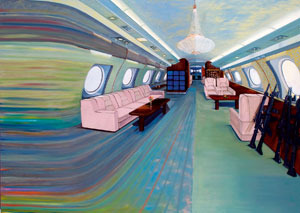
Visual Maverick

27 Friday Feb 2009

Posted by sitanshi talati-parikh in Art, Literature & Culture, Publication: Verve Magazine

≈ Leave a comment

Tags

Indian Art, vervemagazine

Published: Verve Magazine, Nerve, February 2009

Kanishka Raja speaks volumes – through his precise canvases and his methodical working – despite his pretence of being creative through “a lot of productive time-wasting, in and out of the studio.” Sitanshi Talati-Parikh discovers the pithy sense of humour that lurks behind the canvas

Art07

Kanishka Raja vociferously sticks by the title of his last exhibition – where he predicts that ‘In The Future, No One Will Have A Past’. Raja’s world appears to be globally interconnected, while there is a pervasive sense of displacement. This is particularly apparent in his upcoming exhibition I Have Seen The Enemy And It Is Eye, which comprises a mix installations, larger pieces and smaller ones that resemble stills from a filmstrip. There is a feeling of motion and grandness that is larger than life – in the specific brushstrokes and choice of colours that encompass the airports, ships and television monitors.

Raja’s work draws from Indian tradition and miniature forms. Says the artist, “The vernacular imagery I grew up around in Kolkata: the posters and calendars, the charts in school, the cinema hoardings, the shop signage, the Amar Chitra Kathas, the Tintins, are indelible parts of my visual data bank. My parents, whose work in textile design over the last 40 years is a true labour of love, have probably been my earliest, most lasting and most inadvertent influence.”

The artist, who blithely claims that Salman Rushdie gave him the permission to be an artist, studied fine art at Hampshire College, Amherst, MA and received his MFA from Southern Methodist University, Dallas, Texas, also attended the Skowhegan School of Painting and Sculpture in Skowhegan, Maine. “I live in New York because I love cities and New York is the most diverse, democratic, secular and permissive city I know – Mumbai is not too shabby either.”

As he gears up for his first solo show in India, Raja, who “operates in the marketplace of ideas” plans to spend long periods of time puttering around his studio reading, thinking, doodling, with a fair bit of travel thrown in for good measure, after the show. You ask him why he chose to be an artist, and he has a glib reply ready, “The minute I realised that girls were really into artists!”

Literature: Top Dop Storyteller

26 Thursday Feb 2009

Posted by sitanshi talati-parikh in Art, Literature & Culture, Interviews (All), Interviews: The Arts, Publication: Verve Magazine

≈ Leave a comment

Tags

Bollywood, India, Indian Fiction, indiancinema, Interview, Slumdog Millionaire, vervemagazine, Vikas Swarup

Published: Verve Magazine, Features, February 2009

Vikas Swarup, the author of Q&A, on which the movie Slumdog Millionaire is based, speaks to Sitanshi Talati-Parikh about unique plots, winning formulas and how Ram Mohammed Thomas became Jamal Malik

Rahman06

The 47-year-old Vikas Swarup seems to have the Midas touch. His first book, Q&A, besides winning a fair share of awards itself, has left a wake of accolades for any adaptation based on the story. The audio book won the award for best audio book of the year, the BBC radio play won the Gold Award for Best Drama at the Sony Radio Academy Awards 2008, the movie is sweeping all statuettes and there is now a stage musical in the making. An accidental writer, the Deputy High Commissioner of India to South Africa, based in Pretoria, is quick, matter-of-fact and precise in his answers, like someone accustomed to being interviewed.

‘Not all deaths are equal…the murder of a celebrity instantly becomes headline news. Because the rich and famous rarely get murdered. They lead five-star lives and, unless they overdose on cocaine or meet with a freak accident, generally die a five-star death at a nice grey age, having augmented both lineage and lucre.’ Post 26/11, there is an inescapable irony in these words taken from Vikas Swarup’s latest novel, Six Suspects, published last year. Swarup is bemused at the inadvertent implication of his words.

He wears his achievements well, and bears it with the firm knowledge that a first-time writer like him, without any experience in creative writing or literature, cannot afford to take success for granted. While he considers himself “lucky”, he seems logical and practical – not in the least disconcerted by the overwhelming triumph of the film, Slumdog Millionaire. He merely seems gratified – glad that those who had never read or heard about the book before would now reach for a copy.

Rahman03

Sitting back in London, Swarup – who had never attempted to write before – chose to give it a shot. In 2003, Q&A was written and by 2005 it got published, and has so far been translated into 37 languages. “When I wrote this I knew the storyline was very fresh and the plot was unique. But that it would become such an international success, still confounds me. I thought it was a very Indian story, about the real India without any attempt to exoticise it. The fact that the book has appealed to readers from Barcelona to Sydney has come as a very pleasant surprise to me. You would never imagine a book that you have written, a light-hearted story, despite its social commentary, to mean so much to someone, giving them strength to carry on.”

The story did not find him, in the strictest sense of the word. He found it, by creating the perfect, winning formula – a judicious mix of all things desi, with a generous helping of ideas taken from true incidents and realities. The grim actuality of the street, the eternal rags-to-riches story and most importantly, the true Bollywood-style villain. Especially in Six Suspects, which is now being made into a film, many of the stories resonate with real life. Larry Page, for instance, a simple Texan about to marry an Indian girl based on a photo, was inspired by a report of a man who fell in love with a girl after seeing her photo and thinking she’s Aishwarya Rai. The terrorised young kids of the streets (from Q&A) were an “urban myth” while Swarup was growing up. “My mother would say, ‘Don’t go out alone, they will catch you and maim you.’ I have read reports that these things do happen.”

“These are the two things that I try to combine – a story that keeps the reader hooked and at the same time the book should have a soul. It should make you think as well as touch your heart.” So there are references to real people, like Shah Rukh Khan and Amitabh Bachchan, with the real story revolving around fictional characters. “When I conceived this book, there was only one show in India, Kaun Banega Crorepati, and you can certainly not attribute anything that Prem Kumar does to what Amitabh Bachchan would have done on the game show. In my fictional universe, the game show is promoted by a group of cheats, whose idea is to tempt and titillate you with the top five, but actually ensure that nobody wins it. The game show host has to be a slightly unsavoury character, actually based on Bollywood villains.”

Swarup, who likes to unwind by catching a movie with his artist-wife and two sons, was not really involved in the film adaptation of the book. He played the part of checking the script and suggesting revisions, but nothing beyond. He has accepted certain minor changes in the story and also that of the main character’s name. To explain the history behind Ram Mohammed Thomas’ name would become difficult to translate on screen, so he simply becomes Jamal Malik. Salim, who originally is a good-looking youth and Thomas’ best friend, becomes Malik’s gangster-brother.

Though born and brought up in India, the nature of his work leaves him unable to physically be in the country in which his stories are set. Swarup stays abreast with the news in India through modern communication – TV and the Internet. “That sense of distance and separation, which used to exist earlier, vanished. That makes you feel much more connected to the country.” And that feeling is very important for someone who is a “global nomad”.

Creative success has definitely influenced this family man’s life as a diplomat. “So many more doors open up for you, when people have read your books, which would otherwise remain closed for a deputy high commissioner!” Despite the popularity of his works, Swarup insists that all his books are one-offs. “Many people suggested another Q&A, and I thought to myself, if I have to do that, then it means I have no other stories to tell. The day I have to repeat myself, I won’t write.”

Mumbai Unspooled

18 Tuesday Nov 2008

Posted by sitanshi talati-parikh in Art, Literature & Culture, Features & Trends, Publication: Verve Magazine

≈ Leave a comment

Tags

Bollywood, India, indiancinema, mumbai, UTV, vervemagazine

Published: Verve Magazine, Screen, November 2008

Nine Mumbai-inspired movies have been released already this year. Sitanshi Talati-Parikh explores the city’s iconography, in a retrospective look at major Mumbai films

The throbbing, pulsating city has a million stories to tell. Every minute that ticks by on the Rajabhai Tower, something new happens, and it is the numerous faces of the city that film-makers strive to capture. Its myriad voices and its many tales, the sordid truths and the fantastical goings on. The city is at once a context for relationships and events, and often a hero or even an anti-hero. It is a city of romance, aspirations, gross inequalities, fundamentalism and cosmopolitanism, strength and unity and great divisiveness. It is the city of extremes and in that sense, remarkably a city of the world – a microcosm depicting the inane possibilities that surround us. Its distinctiveness, which only a person who has spent sufficient time in the city, discovers. The cutting chai and the Iranian tea houses, the Mercedes’ and the Mumbai trains, the five star hotels and Dharavi slums, art deco Marine Drive and the Victorian Kala Ghoda area, the meandering bylanes and the heaving buses that wind through these zones, the vendors and the businessmen, the young lovers and the social climbers.

City of dreams
In this deeply aspirational city, the rags-to-riches stories can be recounted by the dozen, whether one thinks of Guru (2007) or the Munnabhai movies, as throngs of people continue to relocate to the ‘big city’ in the hope of a better life. It is their tragic and often wondrous stories that need to be told, very often by those in the Bollywood film fraternity, who may have had similar experiences. Director, Anurag Kashyap, for instance, moved to the city, struggling initially, staying at the St Xavier’s College hostel and hanging out with a band called Greek. These experiences prompted him to make Paanch (2003), an urban crime thriller involving a rock band; while Black Friday (2007), about the Mumbai riots, was inspired by a book he read.

Dark alleys and grim landscapes
The city’s black side, its alter ego, is more evocative and larger than life. It opens up its dark and mysterious corners to the exploration of themes that are a grim reality. Johnny Gaddaar (2007), a noir crime thriller shot in black, white and red, explores the sinister elements in a person’s character, in much the manner of Ek Hasina Thi (2004). Aamir (2008), a thriller about fundamentalism, where an NRI Muslim goes through a freakishly disastrous time on arrival in Mumbai and Mumbai Meri Jaan (2008) about the serial bomb blasts in Mumbai on 7/11, which depict how the blasts led to chaos and irrationality stemming from fear and loss of control in people’s lives.

Cosmopolitan angst
A city that has rivers of gold and the greatest power struggles, is also home to a good deal of metropolitan frustrated violence – when aspirations are not met. Cosmopolitan angst is an equally prominent contemporary theme, as clearly portrayed by the reality-inspired Life in a… Metro (2007), Page 3 (2005), Dus Kahaniyaan (2007), Mumbai Cutting (2008), and even the pedantic Mumbai Salsa (2007). Reminiscent of Paris, je t’aime, Mumbai Cutting is less about love and more about the grim realities of the city. Dus Kahaniyan (2007) picks up on urban themes like extramarital affairs, drugs, violence and relationships. It makes one wonder if love actually exists any more – candyfloss has disappeared from its smoggy walls. Jogger’s Park (2003) picks up a theme of a relationship between an elderly man and a young girl. Exploring relationships and the varied kind of situations life places one in, is a trend of Mumbai-based or metro-based films.

Big city tinsel town
People living in smaller towns look at the movies depicting the big city life with great interest, while those living in the city naturally identify with it. Main Madhuri Dixit Banna Chahti Hoon (2003) is a film where small town aspirations for tinsel town come to life. TV artiste and upcoming big screen actor Sid Makkar provides some finer insight. Luck By Chance, Zoya Akhtar’s upcoming film, in which he plays a part, is naturally located in Mumbai, since the movie is about the film industry. Makkar finds that the majority of movies about Mumbai are steeped in reality – and “reality is entertaining”.

Platform rendezvous and car chases
While the Golden Gate Bridge of San Francisco or the Empire State Building (in lieu of the missing World Trade Centre towers) in Manhattan are iconic structures of the city, we find the Mumbai local trains as a constant motif in movies on the city. As the train thunders along, many a story is told. Think of Mumbai Meri Jaan (2008) on the serial bomb blasts, Life in a… Metro (2007) where a clandestine meeting takes place at the local train station, Chameli (2003) takes one from Lamington Road to Kamathipura, Kundan Shah’s Hero in Mumbai Cutting is about the local train commuter as the city’s unsung hero, or even A Wednesday (2008), Saathiya (2002) and Dombivali Fast (2005). Similarly, Taxi No 9211 (2006), is a thrilling cab chase through the streets of Mumbai, loosely based on Hollywood film Changing Lanes (2002) that takes place in New York.

Waves, sand and love trysts
Many an iconic love story has been told on the streets of Mumbai – Marine Drive, Chowpatty, Worli sea face, Bandra reclamation and Juhu-Chowpatty. Bluffmaster’s (2005) glamourous love trysts, Guru’s (2007) impassioned rise to fame starting with a determined walk on Marine Drive, Hum Tum (2004) finds the star-crossed lovers coming together on Chowpatty beach in true cosmopolitan fashion (ironically, not in Paris, the city of romance). Not to forget the coming-of-age of youths in Jaane Tu… Ya Jaane Na (2008), love sparks in Lage Raho Munnabhai (2006), and the problems of urban marriage Chalte Chalte (2003).

Monsoon saris and dewdrops
Come monsoon, the city bursts into a flood of romantic fervour. The wind-splashed windscreens and swaying palm trees on Chowpatty-Marine Drive are all symbolic of a dark sensuality. Huddled under the umbrella, a generation that grew up in the city feels the homeliness in its murky puddles and blackened sky-scrapers; while those who moved here looking for something better, have a wistful sense of allegiance and belonging. Think of the romance in Chandini (1989), iconic Raj Kapoor and Nargis in Shree 420 (1955), Amitabh Bachchan and Smita Patil in Namak Halaal (1982) and even the blossoming of love amidst grim city reality in Satya (1998).

The haves and the have nots
Anyone who arrives in the city cannot miss the straggly-haired, skinny street children that wander about looking for a benefactor. At every traffic signal and outside a food place you are accosted with them. Mira Nair’s Salaam Bombay (1988) that was nominated for an Academy Award (Best Foreign Language Film) told the tale of Mumbai’s street children which now, in Traffic Signal (2007), becomes a tale of a full-fledged business. As with any big city – but particularly in a city like Mumbai that sees so much disparity between the rich and the poor – emerge tales of inequality, angst and violence. Mumbai Express (2005) describes the economic disproportion in a comic tale of Dharavi slum-dwellers plotting the kidnapping of a rich businessman’s son, while Kidnap (2008) is a movie where an orphaned youth takes revenge for a false kidnapping charge. Chandni Bar (2001) describes the tale of a young village girl, who moves to Mumbai and is forced to become a bar dancer by her uncle.

Fundamental terror
Terror camps aiming for the greatest impact by hitting the most aspirational part of a country can be found making Mumbai their target – creating a great deal of threat and insecurity. Fundamentalism, power struggles and gang wars have been the overriding theme in most of the recent films on or about Mumbai. Where a cosmopolitan love story bloomed in Mani Ratnam’s Bombay (1995), the city also took its pound of flesh in the face of fundamentalism. A decade (1985-1995) that witnessed a bloody mafia war in Mumbai, led to a barrage of films being made about the behind-the-scenes of this underworld terror, exposing the policemen-politicians-criminals nexus at a time when extortion was rife. Ram Gopal Varma’s Satya (1998) and Company (2002), an expose of the underworld gangsters that were an intrinsic part of the city at the time, before the police ran a cleansing act with a great deal of encounters, it would seem that older movies like Don (1978), were simply a tip of the iceberg that was to become Mumbai mafia. Vaastav (1999) starring Sanjay Dutt was the making of a mafia kingpin, while Ram Gopal Varma’s Sarkar (2005) and its sequel Sarkar Raj (2008), starring Bachchan senior and junior, picked up from Hollywood’s Godfather (1972), to depict the reality of a mafia family that holds the city at ransom. Shootout at Lokhandwala (2007) tells the graphic tale of the 1991 underworld encounter that made Mumbai a war zone. Black Friday (2007), Aamir (2008), Mumbai Meri Jaan (2008) and A Wednesday (2008) expose the nakedness and vulnerability of our city, and question our placid acceptance or numb nonchalance towards the problems that exist.

Absurdist desperation
A Wednesday (2008) is about a bomb scare where a citizen takes matters into his own hands to prevent the continuous outbreak of violence that has made it a dangerous city to live in. At a stage when its citizens are fearful of taking the daily train, or even walking on the street, you begin to question protection provided by the city that is your home. It is an absurdist movie taking a freakish stance about a serious problem that is being evaded or ignored by a majority of the ‘snoozing’ public.

It appears that film-makers have shifted their stance from simply portraying realities, to sounding a wake-up call to the citizens. Where the older films would explore economic disparities, love and building a life in the city, the newer films are darker in their representation. Suddenly the trouble-makers are no longer families or individuals – it is a problem that society and the country as a whole, need to address. When movies on 9/11 are made, they depict the country and the people coming together. When the serial blasts happened in India, why is it that it seemed to be more of a cry for help and a frightening portrayal of our own vulnerability than an exultation of the greatness of spirit and bond of human race?

From the people, by the people
It is easy to see why UTV CEO, Siddharth Kapur feels that, “It hasn’t been a deliberate decision to have so many movies about Mumbai (UTV has been a part of Aamir, Mumbai Meri Jaan and A Wednesday) but these are times we are living in right now. There is bound to be an influence by the age of terrorism and riots. It so happens that a lot of film-makers have been born and brought up in the city or have been greatly influenced by the experiences in the city.” But that does not limit the story’s appeal. After all, the themes are universal. Rajkumar Gupta, director of Aamir, believes that while the city’s diversity has a major role to play, the answer can be as simple as the fact that Bollywood is based in Mumbai. After all, for the film-makers working within tight budgets, it is easier to shoot in their own city.

It is undeniable though that the city is a powerful influence for film-makers. A good number of films stem out of realities that are Mumbai. If the dark reality-scapes have become the identifiable norm, it is a true barometer of the soon-to-be-absurdist life in this metro.

Turquoise Ananda

28 Sunday Sep 2008

Posted by sitanshi talati-parikh in Art, Literature & Culture, Publication: Verve Magazine

≈ Leave a comment

Tags

Indian Art, vervemagazine

Published: Verve Magazine, Nerve, September 2008

Youthful, enthusiastic and effervescent, Priti Kyal’s personality flows onto her canvas and paints it in colourful hues while being rooted in a spiritual reality, finds Sitanshi Talati-Parikh

Priti Kyal’s painting style is intuitive, with a lot of motifs, design and texture, reminiscent of the saris worn by her mother. “The figures in this set of works are?small representing that we are a tiny part of the large cosmos. I have used the tree of life to reflect growth and sustenance, while the doors and windows reflect change.”

Working off traditional canvas, Mumbai-based Kyal believes that she will move towards a medium like installation, only when her thoughts need to be translated in that form.?“I unlearn everything I have already done by trying new media.” The artist, who is completely satisfied with ink at this moment, finds that despite its simplicity, it is capable of a great deal – “It’s so uncomplicated that it’s thrilling!”

Change is what motivates Kyal: “The thrill of discovery is what keeps me moving on. My work is not about the most perfect face or the most perfect picture but it is about the expression of thought.”

Talking about her buoyant and feminine choice of colours, the artist who recently had her third solo show at Jehangir Art Gallery, Mumbai, explains that her works are about herself. “The colours I use reflect my mood.?I have used soft pinks, oranges, mellow yellows and firoza (turquoise). In that sense, the works are autobiographical.”?Much of her current collection has the words ‘I Am That’ painted on, which Kyal describes as ananda?– the unity between the atman and the parmatman.?Similarly, she seeks a union between her work and herself, so that there is no duality. “I Am That, is a state where I Am My Work.”

The artist, who has a background in English literature and Indian aesthetics, dabbles in poetry, often finding herself scribbling spontaneously onto the painting. Art is simply a medium to express that which is most important, forming a montage representing small vignettes of her life.

Rohit Gandhi: Real Impressions

20 Saturday Sep 2008

Posted by sitanshi talati-parikh in Art, Literature & Culture, Interviews (All), Interviews: The Arts, Publication: Verve Magazine

≈ Leave a comment

Tags

Documentary, indiancinema, Interview, Rohit Gandhi

Published: Verve Magazine, Nerve, September 2008

With an impressive dossier of news stories that include live coverage of the Kashmir elections, Iraq conflict, Afghan War, the tsunami tragedy, Nepal’s royal coup, and an Emmy nomination for his recent film, Who Cares About The Girls, documentary filmmaker, Rohit Gandhi, speaks to Sitanshi Talati-Parikh about women in India and the role of journalism

Screen01

In the making of the documentary Who Cares About The Girls, which has been nominated for an Emmy award in the Outstanding Investigative Journalism – long form category, Rohit Gandhi, who is particularly interested in children – seeing that they are our future – describes how after weeks of research, a 14-year-old girl, Radha (name changed), was chosen by the NGO to be the one rescued from her abusive father and sister. He recalls with regret and anger that while the rescue took place as planned, the girl was produced in court and was released as the cops did not explain the circumstances under which the girl was rescued and, despite their best intentions, they could not help her.

The story revolves around four characters: two sisters who were sent away from home to work as child labourers, who were both sexually and verbally abused; a former sex worker-turned-activist and a rescued girl. Though it describes how children continue to be abused, Gandhi believes that there is a positive future ahead if we all get together and fight the problem. After all, “There is no magic wand to change the reality today.”

Gandhi takes his work in his stride – not wishing to become the face of any story, rather letting the story speak for itself. “It is providence to be in a position to be able to make a difference. Journalism is an opportunity to be a mirror of society, help reflect on what we are doing in our daily lives. It compresses space and time and gives a picture of our present reality.” In much the manner that his moving story on a young Iraqi boy who was severely injured by a bullet in the midst of the US-Iraq gun fire, came to the attention of the ambassador of Greece, who took the boy to Athens for treatment and brought his life back to normalcy.

The sociologist says that he knew where he was headed very early in life and that the things that need to be changed are not sitting hidden in sub-Saharan Africa, but right under our noses. “Evils of society happen right around us,” he states, moving on to describe one of his first stories – from the Tihar jail. He believes that putting criminals away in our jails makes them even more hardened criminals – and his story tried to bring about a positive change, in this “very evil system.”

The journalist who has worked with numerous national and international TV channels, and has been the recipient of many awards including an Emmy for his war coverage in Afghanistan in 2001, believes that Indian society respects its women a lot but at the same time treats them very badly. “Traditionally, we were not like this – we have lost our roots. We need to change that. Education, not just literacy, is the mantra.”

Fair Ground

27 Wednesday Aug 2008

Posted by sitanshi talati-parikh in Art, Literature & Culture, Publication: Verve Magazine

≈ Leave a comment

Tags

Indian Art, International Art, vervemagazine

Published: Verve Magazine, Features, August 2008

Over 100 artists, 34 art galleries, critics, curators, collectors, delegates and speakers from across the world will come together in the very first art fair of its kind and biggest art exhibition to date in India this month. Sitanshi Talati-Parikh constructs a discussion between some of the top attendees, in an exclusive Verve sneak preview

For all the people out there who get intimidated by art galleries and their mysterious interiors that presently abound with pots, pans and acrylic that sell at stupendous prices, and for all those who don’t, comes the leveller of all levellers – an art fair in Pragati Maidan, New Delhi. Reminiscent of melas and tousled gatherings of intellengisia on hot dusty evenings, the ‘fair’ is somewhat a more accessible term. And accessibility is the aim of the Indian Art Summit 2008, put together by Hanmer MS & L.

Going Public
Dr Robert Storr, Dean, Yale University School of Art, USA, who is one of the people flying in specially for the occasion, is interested in the “opportunity it affords to make crucial distinctions between commercial formats for showing art and exhibitions and formats such as museums, alternative spaces, biennials and the like.” He elaborates, “I have nothing against dealers and galleries, but they primarily reach an already engaged segment of the public – collectors especially – whereas large exhibitions and small ones in venues more readily accessible to the non-art world public represent the long-term hope for Indian contemporary artists – or for contemporary artists anywhere – of making a lasting mark on their country, their culture and their time.”

Why Now?
What makes it the right time, keeping aside the fact that art is the new mantra and one of the biggest money-spinners? Renu Modi, of Gallery Espace admits that about a decade ago, she had tried to bring about such a fair at Pragati Maidan and it fell through then. She believes it is the right atmosphere for an art market – it is happening elsewhere in the world, why not here?

The Outcome
Renu Modi feels that such a summit that brings together like-minded people discussing issues and ideas will automatically see things and trends materialising. That is not to say that there haven’t been seminars and symposiums in Delhi, where not much has come out of the discussions – it is important to implement these ideas in the long-term, stresses the gallery owner. Echoing her thought, Dr Storr believes that “just getting a group of active, committed people in any field into one room – artists, art professionals in this case – can throw sparks and have a profound catalytic effect on the scene if everyone comes prepared to listen as well as to speak.”

Philip Hoffman, chief executive, The Fine Art Fund Group, considers the Indian art market to still be in its emerging phase. He specifies that the size of the market has grown from $2 million to approximately $400 million in seven years alone. “An art fair could really help boost the growth rate by directly involving galleries and artists alike, getting collectors and investors on site and by generating general interest.”

Going Global
Dr Hugo Weihe, international director, Asian Art, Christies, sees Indian art as becoming increasingly global, India and all things Indian occupying a new pride of place, while Peter Nagy, Nature Morte, feels that the best of Indian art is already truly global, but also thinks that Indian culture, as a whole, is becoming more relevant and important to the entire world. Nagy deliberates that while this also has to do with economic and political influence, interest in contemporary Indian art is also a natural extension of the increased globalisation of the art world.

Philip Hoffman, who agrees with Nagy in the sense that the Indian art scene is already global, believes that modern and contemporary Indian art has long been undervalued as compared to other areas of the art market, and with the boom of the financial markets, real estate and all other asset classes in India, many new art collectors are establishing themselves and purchasing works from artists of similar heritage. “We believe there is a high level of creativity and talent in India, which is going to make this market move even further, and with continued global exposure in 2008, we think that this is the right time to invest in Indian art.” He continues, “Prices are continually rising and are much higher than they were, say, five years ago. However, when compared to the Western contemporary art market there is clearly potential for an increase in prices.”

International Recognition
Dr Storr, who has an unmatched résumé in art as critic, curator, artist, academic and writer, chronicles the need for international recognition to validate art. “This has been true throughout the history of the modern era – which is a history of great powers and empires. Once upon a time, artists from my country went to Paris or London to get recognition. Now they stay home and the world comes to them. This will happen in India too – indeed it is has started to happen in measurable ways. The point is that the institutions in India must do the right things for artists so that when the world comes they see the best under the best circumstances, and that includes not just contemporary classics or hot new market stars but those artists who challenge art, art institutions and the public in the liveliest, most inventive and the most pertinent ways. Once that process starts – and Indian artists, critics and curators have started it already – there is no standing pat, and above all, no going back.” On the other hand, Peter Nagy, who made the move from New York to New Delhi in 1997, finds that, “the powers-that-be within India are still too timid and insecure about contemporary art to take many of the risks necessary to properly champion the avant-garde.”

ANJOLIE ELA MENON
ARTIST
“I think it is a great idea, and have backed it from the beginning. Galleries couldn’t get their act together to do this, so it is better to have a neutral agency taking the initiative. Like Hanmer’s Khushi art auctions earlier, one hopes that this will be managed to those same high standards. It is a young, enthusiastic team, which brings together good presentation, an interesting mix of people from abroad and India. Many of the top people in the art world have accepted the invitation to attend the summit. It is clever on the part of the organisers to have galleries taking stalls as opposed to individual artists. This event also brings together diverse publications on art under one roof for the first time.

The triumvirate of artists, gallerists and critics coming together is unique. Increasingly critics and curators add a theoretical dimension to the understanding of art, both interpreting and endorsing various trends. Gallerists represent the market. But let’s not lose sight of the fact that it is upon the creative genius of artists that the whole edifice actually rests.

One hopes that the venue (Pragati Maidan) will bring art to a wider public in a forum that is not intimidating, for those who are habitually drawn only to food, fashion and films! The summit will be an important milestone as young new artists will get a chance to be showcased along with the veterans.

Indian art has been around for a long time, it is only now that it is being accepted internationally. Today there are Indian galleries abroad dedicated specifically to Indian art. It is INDIA TIME now. India is IN and Indian art rides on the crest of this wave.

Indians do not buy international art in significant numbers. But it is equally difficult for our artists to enter the global market. It is largely expats abroad who buy their country’s art. The Indian art boom is fuelled by investors and NRIs and not so much by foreign buyers. More importantly, for the first time Indian art is finally being acquired by foreign museums. I was fortunate in being given a six months solo at the Asian Art Museum, San Francisco last year and several artists have followed in various venues. It is a shame that the government has stopped sending artists to the Biennales and art fairs. Before the Venice Biennale last year, I went to see the Indian Government with the then director of the Venice Biennale, Dr Robert Storr. I just got a bureaucratic excuse, and no entry was sent officially. A wonderful opportunity for India was lost. It is the private players who have put Indian art on the map and this event will prove this beyond a doubt.”

ART CRITIC AND CURATOR
“The summit is important in the sense that it shifts the focus from normal areas of art activity like the gallery circuit into a more public space. The place at which it is being organised (Pragati Maidan) is where industrial or government organised fairs are generally held and attracts hundreds of thousands of footfalls. It is the first time a summit of this kind is being held – it changes the level of exchange, where there is a social and public address rather than merely a controlled group of people. The summit will hopefully grow and become more structured, gaining authority over a period of time. It is also a way by which pressure can be brought upon government art and culture circuits to be more active in the field. I am very optimistic about the venture.

An event like this should be a public event, and that also depends on the marketing of such an event. Art shouldn’t be a traded commodity – or evaluated in terms of asset to the portfolio. It should be a means to enrich the public consciousness. Before this, there was no single event that rallied together critics, gallerists, artists, media and promoters. In that sense it is a step forward, a call to the world to come and take a look.

The current growth is a long overdue recognition due to the Indian art scene. It has to solidify, look at including better art education, institutions and also a professional gallery structure. There is no reason why the world shouldn’t be interested in Indian art, an art which draws from and is an amalgam of varied sources: literary, political, the social polity. Intellectually and artistically it will grow, but much more radical investment in institutional support is required. The place of art at the level that is societal and civilisational, must be better recognised.”

Larger Than Life

27 Friday Jun 2008

Posted by sitanshi talati-parikh in Art, Literature & Culture, Interviews (All), Interviews: The Arts, Publication: Verve Magazine

≈ Leave a comment

Tags

Art and Design, Indian Art, vervemagazine

Published: Verve Magazine, Nerve, June 2008

Inspired by ‘life’, 30-year-old installation artist Ranjani Shettar has created a buzz among the art circles, particularly in the US. She draws inspiration from deep-rooted Indian culture and traditions and finds a spiritual cognizance with the wispy installations that she has unwittingly made her signature style, incorporating simple materials like coconut fibres, resin, terracotta, wax, twine and metal in her work. Sitanshi Talati-Parikh talks to the artist from Bangalore who refuses to keep track of the marketability and rates of her works

Artmart04

Entitled Sun-sneezers blow light bubbles, Ranjani Shettar’s first solo show in a US museum is currently on at the Institute of Contemporary Art, Boston, Massachusetts, where suspended sculpture made with steel, tamarind powder and muslin is fashioned into organic shapes reminiscent of soap bubbles, containers of light or multiplying cells, creating a dreamy ambience. The artist, also concurrently showcasing at the prestigious 55th Carnegie International, Pennsylvania, isn’t sure of who has influenced her works through time. “The answer keeps changing every time someone asks me that question!” she remarks. Currently, she holds weight by William Kentridge, Martin Puryear, Eve Hesse and Tim Hawkinson.

Shettar prefers to use simple materials like thread and wax to car bodies and silicone rubber. “Ranjani Shettar’s use of materials both organic and man-made suggests the complex cultural associations of India and the collision of tradition and modernity,” opines Jill Medvedow, Director of the Institute of Contemporary Art.

She was very clear about her choice of installations over paintings. “My visualisation is in three dimensions and so it is much more natural for me to sculpt than paint.” She finds it more comfortable to work in space rather than on a flat surface, where she enjoys the act of involving herself physically and completely in the making of the work.

Originally trained as a sculptor, she started off in a classical way, with figurative sculptures in clay, wood, plaster and stone, where she learned to use the materials and her hands. It was a slow and gradual transition from the figurative to the abstraction. “Somewhere along the way,” she realised, “I needed to expand my choice of materials to be able to express myself better and that’s when I started using materials from my own surroundings.”

Shettar’s works straddle urban and organic forces. This is not surprising as she believes that, “each one of us is a reflection of our own surroundings, upbringing and our own mind. I have grown up being close to nature in a rural set up with my essentially urban family.”

The Born Again Opera

18 Sunday May 2008

Posted by sitanshi talati-parikh in Art, Literature & Culture, Features & Trends, Publication: Verve Magazine

≈ Leave a comment

Tags

Bollywood, Opera, Padmavati, Sanjay Leela Bhansali, vervemagazine

Published: Verve Magazine, Features, May 2008

Sanjay Leela Bhansali’s Padmavati has brought operas in the Indian context into the forefront of every coffee-table discussion. Sitanshi Talati-Parikh examines the relevance of operas and their place in society, and discovers that India has a long-standing operatic tradition

Opera01

Opera is music drama,’ said Richard Wagner, the famous German composer, conductor, music theorist and essayist. Suddenly, the world of sung-drama or musicals falls wide open into the purview of what is commonly considered ‘opera’. Musicals are not to be confused with operas – the former are closer to plays interspersed with singing, and the latter a dramatic art form wherein singers and musicians combine text with a musical score.

India has a distinctive sung-drama tradition, from the sentimental lyrical tales, Sufi poetry and the Ramlila of the north, to Chakyar Koothu and Ottamthullal of the south, even if the classical operas in the European style are a far cry from our own operatic form. In India, Dip Chand introduced the importance of voice-culture and voice-modulation and an emphasis on emotion in music, incorporating music, dance, verse, ballad recital and pantomime. From plays drawn from legends to current themes like women empowerment and AIDS awareness, this form of theatre serves a social purpose as well.

Luciano Berio, experimental Italian composer, spoke about the birth of the opera in the 16th century: ‘Opera once was an important social instrument, especially in Italy. With Rossini and Verdi, people were listening to opera together and having the same catharsis with the same story, the same moral dilemmas. They were holding hands in the darkness. That has gone. Now perhaps they are holding hands watching television.’

It leads one to question whether television has made performances into a commodity and if live acts have lost their artistic place in society. When at one time, in lieu of TV, people would gather together in a community to watch live performances; now it is a delicacy left for the elite or the tamasha of the poor.

‘Opera is an 18th and 19th century art that must find a 20th century audience.’ The late Goeran Gentele, Swedish empressario and director of the Metropolitan Opera in New York, pondered on the challenges of modern opera. The same question applies to us. Will this century witness a resurgence of this art form in the cosmopolitan theatres of India, or will it be marginalised as local tradition, simply splurged upon when visiting the Continent?

Opera03

Omung Kumar and Rajesh Pratap Singh, who have worked on Sanjay Leela Bhansali’s flamboyant production, Padmavati, on the sets and costumes res–pectively, both agree that to bring larger-than-life performance in the shape of a grand opera to India is a challenge and not necessarily commercially viable. With exorbitant sums required in funding, they wonder if anyone would touch an opera. Also, it serves to satisfy the aesthetic palette of only a minute slice of the theatre-going audience. It is not surprising, seeing that Padmavati, at the Theatre du Chatelet, had an excellent infrastructure – a pit in the stage that went down 25 feet – the budget and ability to throw in a few live animals (elephant, horse and tiger, no less) and a flying Ganesha, to top it all.

Indian films that follow the song-and-dance routine come closer to musicals than operas, but serve to remind us that given a chance, our audience may not balk from a truly operatic experience. Recently, Puccini’s opera Madama Butterfly was recreated by the National Centre of the Performing Arts (NCPA) in Mumbai where The Symphony Orchestra of India worked in tandem with an international troupe. This sparing visit left the theatre-going audience craving for more. As Padmavati moves to Italy and may plan to visit India at some point of time, it leads us to hope that sophisticated operas on an international scale may find a place in our weekends. Sitting through an opera is like taking a bite of caviar and relishing it. With elitist appeal and an expensive price tag, can this art form become a trend in India or remain a luxurious delicacy?

India Abroad
Padmavati – Albert Roussel, sailor and composer, after a trip to South Asia in 1909, wrote this opera, which was well received in Paris in 1923. It was recorded twice after – in 1969 by Jean Martinon and in 1982 by Michel Plasson. The latest version is by Sanjay Leela Bhansali, in 2008.

Les Indes Galantes – The Orient has served to fascinate French composers since the 18th century, the greatest period for the opera-ballet. Jean-Philippe Rameau’s Les Indes Galantes is an example, depicting the love life of ‘noble savages’.

The Sorcerer – This 2006 Gilbert and Sullivan light opera was advertised with the tagline ‘Opera Meets Bollywood’ and performed in Stanford University’s Dinkelspiel Auditorium. The story is set in Victorian India, where the protagonist, Alexis Iyangar, follows love to countermand worldly unhappiness. Bright silks and Bollywood choreography are set to Gilbert and Sullivan’s original score.

The Fakir of Benares – The opening show in April 1922 at the Mandador Theatre in Paris, became the talk of Europe. Priya Wacziarg, soprano and daughter of French author and historian Francis Wacziarg resurrected this opera nearly 80 years later, under the direction of Muzaffar Ali. The opera incorporates Bharat Natyam and Kalairipattu, along with Indian musical instruments. This was the first time an opera was screened in India with the help of Indian and French artistes, before taking it abroad.

Raj Kapoor’s first introduction to opera was Fiddler on the Roof, performed by Topol, famous Israeli theatrical and film producer. At this time, Topol was said to have announced to the audience: ‘Ladies and gentlemen, there is a misconception that I am Israel’s most popular actor. That’s wrong. I am the second most popular man, the first being Raj Kapoor of India, who is present here with us today.’

Operatic Genres
Operetta – Considered the precursor of the modern musical comedy.

Comic Opera – English-language operetta, reached its peak under the hands of Gilbert and Sullivan during the Victorian era.

Rock Opera – Singers sing a story while acting it out.

Metal and Rap Opera – The latter also called hip-hopera; is a strain of Rock Operas.

International reactions to Padmavati (2008)
‘If the Theatre du Chatelet was hoping for a spectacle on a scale seldom seen these days, this work – staged only once since its Paris premiere in 1923 – offered endless potential. Bollywood director, Sanjay Leela Bhansali, making his first foray into opera, obliged with a flamboyant production attentive to authentic detail.’
Lynne Walker for The Independent

‘Some of its dark colours are undeniably attractive, and the vocal writing is elegant. But something more is needed in a 100-minute stage work, and the thinness of the action, combined with the lack of detail in any of the characters, even Padmavati, is only emphasised by the long stretches of ballet music in which nothing happens.’ Andrew Clements for The Guardian

‘The result looks like a Bollywood movie – colourful, endearingly naive, picturesque…. Don’t expect thrilling arias or dramatic climaxes. Padmavati is essentially a decorative work. You watch it like an exotic painting or a religious ceremony.’
Jorg von Uthmann for Bloomberg News

Opera in Bollywood
Hum Dil De Chuke Sanam Salman Khan and Aishwarya Rai Bachchan’s parting scene in a grand opera house.

Dil Chahta Hai – Preity Zinta takes Aamir Khan to an opera in Sydney.

Aaja Nachle – An operatic picturisation of the Laila-Majnu story.

Devdas (2002) – Lawrence Foster, Opera Music Director, Padmavati, considers it ‘opera ballet;’ while David Chute, writes in the LA Weekly, ‘There were sequences in his 2002 Devdas that played like long-lost snippets of Verdi.’

Saawariya – In the same article, Saawariya (Beloved), is described as ‘a lavish road-show revamp of La Bohème.’ Shree 420, Awara, Mera Naam Joker – Raj Kapoor is known to have visualised films in operatic style, with pathos and melodrama. Shree 420, an iconic film is actually considered to be more performance than film – a ‘brilliant melodrama’ where everyone sings and everyone dances, including the homeless and the wealthy!

Homespun sung-drama
Origin – 3rd century BC with the Rigveda and the Natya Shastra of Bharata Muni, where plays were written in verse form, commonly under royal patronisation.

North India – Swang is a popular folk dance drama consisting of theatrical mimicry (nakal) accompanied by song and dialogue, in kirtan or nautanki style.

Punjab – Heer Ranjha is performed as an opera-ballet and Mirza Sahiba is sung in long pensive notes.

Kerala – The satirical Ottamthullal finds a single actor reciting dance songs, acting and dancing; while the humorous Chakyar Koothu mixes prose and poetry.

Literature: Second Comings

26 Wednesday Mar 2008

Posted by sitanshi talati-parikh in Art, Literature & Culture, Interviews (All), Interviews: The Arts, Publication: Verve Magazine

≈ Leave a comment

Tags

Interview, Interviews: Travel, Literature, vervemagazine

Published: Verve Magazine, Features, Travel, March 2008

With 27 novels and 14 books of criticism and non-fiction under his belt, Paul Theroux, American travel writer, who has spent extensive time in Asia and Africa, is ready to release his latest travel chronicle later this year. On his recent visit to the city, the writer of the best-selling The Great Railway Bazaar, and the winner of many an award, regales fans in Mumbai

Travel01

I wonder what a prolific travel writer would be like – well read and engaging? Paul Theroux is all of that and more, poetic at heart, and likely to espouse on his literary influences rather than his own work. Able to look at himself with humour and reticence, he remarks after being warmly introduced to the audience at a panel discussion, “Now, I begin to believe in myself.” Visiting Mumbai by chance when the Calcutta Book Fair got cancelled at the last minute, Theroux decided to tour the country for three weeks as a guest of the State Government.

Dreams of India began in the early 19th century, in the neighbourhood where Theroux grew up and are alive to this day. Ralph Waldo Emerson circulated copies of the Bhagwad Gita amongst his friends. Henry Thoreau and Mark Twain were both inspired by India. Twain’s Following the Equator, in turn, was a great source of inspiration for Theroux. Richard Henry Dana served as his role model, the perfect travel writer – bold, brave, uncomplaining, with an ability to survive discomfort. “When I thought of my first travel book, I thought of going to India and in the most interesting and unforgettable way – by train instead of plane.” Wanting to connect it to where he lived earlier–London–Theroux, studying a map, figured it was as simple as joining the dots. The journey turned out to be memorable enough to make for a fascinating travel book.

Paul Theroux’s recent visit to India is all about second comings. As he often notes, there are exceedingly few travel writers who have been able to return to a destination after having made a journey there once. In fact, all the great ones haven’t been able to do so. “When you get older, the world changes – in ways you cannot guess – it is possible to make predictions, but one cannot see into the future.” He remarks, tongue-in-cheek, that he had a choice – to take his own trip again, or leave it up to some 20-year-old in search of a book, who would write it, probably, not as well!

Theroux points out, ironically, in the age of globalisation and in a flat world, what was possible the first time around is often, impossible in the next journey. This was particularly the case with India, where it was no longer possible for him to take the Great Train Journey, like he did many a year ago, with the problems in Pakistan and Afghanistan.

He jokes about a time in Chennai when everyone there could tell him how to get to New York, but not a soul knew whether the ferry to Colombo was running! Taking a realistic perspective he notes, “The world isn’t a village you can go to, and not everyone are brothers and sisters! Over time, some countries close up and others open up.” While Vietnam and Burma may still have oppression, Laos is booming, and Singapore is heralding the brave new world. Taking a ‘prison tour’ in the ‘free world’, however, was enlightening – Theroux chose to see a Stalinist Labour Camp from the ’30s instead of Swan Lake or churches.

Travelling overland, one can really see how people are living, how they are displaced – and it’s many hours (over the quicker air route) well spent. China is unrecognisable – there are ‘ancient charming towns in a big fat city’. According to him, China is the difference between cultural revolution and money, where history hasn’t been kind: ‘Get out of the way, or we’ll run you over – a road is coming up over the pagoda!’

Theroux feels that India is not in the same boat. Attached to its past, there is a certain ‘changelessness’ about India – like the three-legged dog that will eternally roam the streets of the country. “It is like a hall of mirrors, looking down to see if it is continuous.” And the change is positive – the traveller determined to see the new India is certain to visit a call centre to meet Tarun aka Tony from Vikhroli.

As any traveller realises, their perspective of a place they visit is entirely different from that of the locals, or people who live there for long stretches of time. Vociferous about the subjective role of travel writers, Theroux agrees that the experiences could have been very different for any of the travel writers (including himself). Quoting Henry James, “The house of fiction has many windows,” Theroux insists that he is not an objective traveller. “I leap to conclusions and make wild generalisations for a living!” Travel writing isn’t a geographical survey – it is a ‘strange beast’ – its very false and speculative nature is what makes it amazing, autobiographical, and in a sense akin to life.

Words flow easily, as Theroux remarks on his role as a travel chronicler, “I wander aimlessly like a dog, but the writing has to be truthful. A travel book isn’t a love letter – it is the truth as I see it – reconstructed ‘above all to make you see’.’’

← Older posts
Newer posts →

|  Filling the gaps between words.  |

Writing By Category

  • Art, Literature & Culture
  • Brand Builidng
  • Brand Watch
  • Fashion & Style
  • Features & Trends
  • Fiction
  • Food
  • Humour
  • In The Media
  • Interviews (All)
  • Interviews: Business
  • Interviews: Cinema
  • Interviews: Cover Stories
  • Interviews: Lifestyle
  • Interviews: Luxury Brands
  • Interviews: The Arts
  • Interviews: Travel
  • Musings
  • Parenting
  • Publication: Conde Nast
  • Publication: Elle
  • Publication: Mint Lounge
  • Publication: Mother's World
  • Publication: Taj Magazine
  • Publication: The Swaddle
  • Publication: The Voice of Fashion
  • Publication: Verve Magazine
  • Social Chronicles
  • Sustainability
  • Travel Stories

Reach out:
sitanshi.t.parikh@gmail.com

© Sitanshi Talati-Parikh 2018.
All Rights Reserved.

Website Powered by WordPress.com.

  • Subscribe Subscribed
    • sitanshi talati-parikh
    • Join 51 other subscribers
    • Already have a WordPress.com account? Log in now.
    • sitanshi talati-parikh
    • Subscribe Subscribed
    • Sign up
    • Log in
    • Report this content
    • View site in Reader
    • Manage subscriptions
    • Collapse this bar