• About
  • Brand Building
  • Film & Drama
  • Writing: Arts & Lifestyle
  • Writing: Interviews
  • Writing: Luxury Brands
  • Writing: Travel

sitanshi talati-parikh

sitanshi talati-parikh

Category Archives: Interviews (All)

Father of the Child: Imran Khan & Tusshar Kapoor

28 Wednesday Dec 2016

Posted by sitanshi talati-parikh in Features & Trends, Interviews (All), Interviews: Cinema, Publication: Verve Magazine

≈ Leave a comment

Tags

Bollywood, Imran Khan, Interview, Parenting, Tusshar Kapoor, Verve Magazine

Published: Verve Magazine, December 2016
Image credit: Ryan Martis

These two young dads from the Indian film industry exemplify the changing attitude towards child-rearing

Screen Shot 2017-04-12 at 4.36.44 PM

The gentleman of today is exactly that. Ready to accept that raising a family is a joint responsibility, a far cry from the Indian men of a previous generation who believed in the division of responsibilities: earning was a male domain, while taking care of the home and kids was restricted to women. Taking this a step further, what happens when a man decides to become a father without a woman? Two young dads from an industry that celebrates showbiz show us that they are as real as they come and all about changing the name of the parenting game, albeit in two diametrically different ways.

We’ve watched Imran Khan take a leap into parenting in much the same way that he made a foray into cinema — suddenly, without warning, and quickly reaching superstardom. His focused and balanced nature held him in good stead, and we see that in his role as a parent. During his first ever photoshoot with his daughter, we discover that Imran has Imara’s baby footprint tattooed on his chest — a sign of an endearing and permanent love. He may be a man besotted, but he is also hands-on about life, not one to watch as things happen around him.

Tusshar Kapoor has bitten the parenting bullet with single-minded predetermination, and six months into it (before which, he preferred to avoid Laksshya facing the camera), he’s finding his ground. It has made him an example for a generation that strives to juggle choices — whether in a partner, career or life. Perhaps Jane Austen hadn’t prepared for this eventuality. Can a single man in possession of good fortune, be in want of a wife? Or would he prefer IVF-led-surrogacy into single parenthood instead?

Let the men do the talking, we say.

What made you decide to take the plunge?
Imran: It was completely accidental. It was one of those extremely hectic nights. I won’t go into any further detail, but next thing you know, three weeks later, Avantika (Malik, married since 2011) is in the bathroom throwing up and I’m making jokes like, ‘Haha, what if you’re pregnant?’ Two hours later, I wasn’t laughing anymore.

Tusshar: The best things in life just happen. I was considering becoming a father; marriage didn’t seem to be on the cards and I was nearing 40. I had a faint idea of becoming a single parent through surrogacy — maybe through IVF. It just didn’t seem very possible in India. Then I happened to have a chat with director Prakash Jha, and he introduced me to a family that had done it. Things fell into place, and it was wonderful that a year later, I had a child in my arms.

You’re likely to go in with a romantic notion of being a dad — was it all that you imagined?
Tusshar: I was a bit anxious at times, especially on the day of the delivery. The entire family stayed up all night. All the ‘Still a few days more’ just went out the window. But thereafter, I was quite prepared, with the nursery, with help. My biggest concern was losing out on life while wanting to be a hands-on dad. I asked my friends, ‘Can I go out? Will I be able to…?’ And nothing changes. You just have to manage your time well.

Imran: I didn’t know what to expect because, as I said, we had stumbled into it. Suddenly, she was pregnant. Suddenly, the baby has come. And I felt like it snowballed really quickly, and those first couple of months, we were both at a complete loss; we had a really rough time. Even though Imara from, like, day two or three would tend to sleep through the night, we’d be up in the night wondering, ‘Is she breathing? Is she suffocating?’ Both of us were nervous wrecks. It took us five or six months to really settle down and stop being so panicky. That was when I first started to really feel that, ‘Oh my god, I’ve lost my heart to this girl.’ And now I know what that mad parental love is.

Screen Shot 2017-04-12 at 4.36.34 PM

Imran Khan with daughter, Imara


What is that one moment in their lives that you’re waiting for?
Tusshar: I don’t want to miss watching him go to school and picking him up. My parents (actor Jeetendra and Shobha Kapoor) were never there to do that. I mean, they came for PTA meetings and my mom used to drop me off, watch me go to my class, crying. I don’t know if my dad remembered my birth date at that point in time, even though he remembered to wish me. The parents of the ’70s and ’80s (at least in my case) had their own issues. Working, trying to make a life for us. I want to be there for my child. I’ll dot the i’s and cross the t’s.

Imran: It’s a nightmare, haan. Every time I drop Imara to playschool, it’s ‘Papa, don’t go’. You’ll die on the spot because your baby is weeping and you have to leave her. I sit on the steps outside, listening to her cry, thinking, ‘Oh god, I’m a bad father. What am I doing?’

To answer your question, what I am looking forward to the most is the point when she will come and tell me things and make me laugh with her words, with wit — I think that’ll be something that will really make me proud.

Will you change anything in your parenting style from the way you’ve been brought up?
Imran: I love my mother (producer, director and screenwriter, Nasir Hussain’s daughter, Nuzhat Khan) and my mother loves me perhaps a little bit too much — so, I think throughout my life, she was a little over indulgent. That is why I have these notions that I want everything to be exactly the way I want it. This is not an ideal situation, so I would try to love my child a little bit less than my mother loved me.

Is there anxiety about missing key milestones with the nature of your work?
Imran: I was shooting a film from the time Imara was four to eight months old. I was a little nervous about not being there for big moments like if she were to say a word…. I would see her in the morning before I left, for a few minutes. And then the second I returned, I would spend time with her till she went to sleep. Avantika would come on set all the time with her. Luckily, I was there when she took her first steps. I consciously made an effort to not take on work when I knew that that was ‘baby Imara time’. For the past year, I have not shot for any movie. I have been home, with the baby. I’ve been travelling with her and I’ve been there for every major moment.

Tusshar: I’m a little anxious about what’s going to happen next month, when I start shooting. I hope it doesn’t really change things from what I’m doing now and what I’ll have to do then. The shoot, fortunately, is in Mumbai, so I will not be disconnected from my child completely. I’ll try to meet him before I leave home. If he’s sleeping after I’m back home, I’ll miss spending the evening with him; unfortunately there will be some moments that I’ll have to sacrifice. If you are worried you’re not going to be with your child, I think the child also senses that. If a parent is away, but trying their best to make it work, the child understands that and connects with that. And that’s love.

What’s the one thing you enjoy the most about being a father?
Imran: It’s the first time I’ve had the experience of wanting to spend time with someone — and not caring about other things. If the phone is ringing, you let it ring. If you’re late for something, you’re late — it doesn’t matter. If you’re hungry, you eat later. It just doesn’t matter. I also had that fear of my life coming to a standstill because I like to go places and do things. You’ll have a choice between spending time with your child or going somewhere else. And you’ll feel like you’d rather be with her because it’s more fun. It’s not a difficult choice. You’re not giving up anything.

Tusshar: It makes you very selfless. It calms you down, it’s very therapeutic. In a city like Mumbai, we’re clouded with issues and career ups and downs. I haven’t shot for a film at all this year. But, thank god. Since the baby’s come, I feel like I want to be at home with him, I want to spend time with him. And that’s the best part of being a parent — the maturity that comes with it. You rise above petty things that make you anxious. I think my child has taught me what fun it is to be on a playmat! I see his expression change and stop worrying about my work or about who’s inviting and not inviting me to some function or even about who’s calling or not calling back.

Tusshar, if your child asks, ‘Where is mom?’ what would your answer be?
Tusshar: I’m going to have to be very honest with Laksshya about him not having a mom. I’ll have to tell him exactly how and why he came into this world, so that he knows that he is a child born out of love and that I wouldn’t have been happy without him in my life — that he’s my everything. I will try and compensate and be what two parents can be to a child. It is just love that will make things work out.

So who fills the gap of a female figure?
Tusshar: The female energy at home comes from my sister (television and film producer Ekta Kapoor) and mother. I won’t be lying to Laksshya, telling him that his grandmother is like his mom. I don’t want to confuse him with that ideology. My mother has waited a long time for a grandchild. She gets to do so many things all over again, 40 years later. A large part of why I had this child is because my parents were going through a phase of depression; any parent would want to become a grandparent someday, so this is their dream come true. We feel like a very normal — and, I hope, happy — family, one where there’s enough attention from me as a father and enough female energy from my mother and sister even though there is no mother.

Imran, Imara’s obviously got you wrapped around her finger. Who’s the disciplinarian?
Imran: Avantika’s always on my case about not being a good disciplinarian. I can’t say no to Imara for anything. Whatever she wants, I feel like I have no choice but to give it to her. It’s not ideal, but I’m working on it.

Tusshar: That’s something I feel strongly about — I would hate to have a brat as a child. I’m going to be careful about not spoiling Laksshya, but my parents, bua, my sister and the nanny are always going to spoil him. Which is why it’s important that we (the parents) be the balancing factors. And the sooner, the better.

Imran: Yes, I will start today. Today, I am going to start disciplining!

Screen Shot 2017-04-12 at 2.34.08 PM

Who do you guys go to for parenting advice?
Imran: I’ve never asked anyone for parenting advice — not my mom, dad, or Avantika’s mom. I’ve never read any of those parenting books. Maybe I’m missing out on something, I don’t know, but I feel like Avantika and I just kind of figured it out between the two of us. You find your own rhythm.

Tusshar: I didn’t read any books or take any advice from anybody. But the people who’ve done surrogacy before — the family who took me to Dr Firuza Parikh — they helped me set up the nursery before the baby arrived and to deal with things like finding day and night nurses for Laksshya. For day-to-day questions, I got help from my mom and friends.

Who’s the one reading stories at bedtime?
Imran: Anything that is play-related, I’m the one. Building things with Lego, reading books, telling stories — that’s where I’m always first to jump in, saying, ‘Haan, don’t worry, baby, I’ll take care of it.’

Tusshar: Bedtime stories haven’t started for me. I sing loris to put him to sleep. I have some old Hindi songs that I just hum — and he loves it. If I stop humming, he starts crying.

How many diapers have you two changed? Of course, Imran, you’ve had more years to change them.
Imran: Yes. That being said, I’ve probably changed fewer diapers than Avantika has. My trick is this — you change diapers when people come over to visit. Then everyone thinks, ‘Look, this guy’s an amazing hands-on father.’ After that, I can hand it over to Avantika or the nanny.

Tusshar: I don’t know why everyone thinks that diaper-changing is it and why it stands for being a hands-on father. It’s the easiest thing to do. There are tons of other things. Do you know how to poop your baby on a flight? Do you know how to feed your baby? Do you know how to put your baby to sleep? These are my fears.

Imran: I’ve noticed you’re not answering how many diapers you’ve changed.

Tusshar: I’ve changed — to prove to myself — three or four diapers.

Dads today are breaking the stereotype of the Indian father. What do you think has led to this change?
Imran: Part of it just has to do with globalisation. We are now more exposed to international culture, with the way that it is in the US, UK, and Europe.

Tusshar: It’s not like somebody wrote a book about good parenting which everyone read and, therefore, the next generation turned out to be much cooler, better parents! I think my son is going to have some issues with my parenting, even though I’m doing my best. It’s a learning process: what you go through as a child, what you’ve seen your parents do for you and what you feel was left out. Then you make those changes; it’s a natural progression. Society changes, parents change, family settings change, and that’s what evolution is all about.


Alia’s Unalienable Allure

01 Tuesday Nov 2016

Posted by sitanshi talati-parikh in Interviews (All), Interviews: Cinema, Interviews: Cover Stories, Publication: Verve Magazine

≈ Leave a comment

Tags

Alia Bhatt, Best Dressed, Bollywood, Verve Magazine

Published: Verve Magazine, Cover Story, October 2016
Image credit: Tarun Vishwa

Screen Shot 2017-04-12 at 3.32.32 PM

She’s waif-like, with fine features and aggressive sideburns. You would expect her to be loud and vivacious, but her off-camera persona is quietly dignified with moments of impetuousness. At Verve’s Best Dressed cover shoot, she inadvertently transforms breathtakingly into India’s answer to Audrey Hepburn. She’s poised and controlled, even though a stray, unstifled yawn delicately slips by between shots. Grievances, if any, are kept under wraps, evidenced only by the slight movement of the eyes which her very tuned-in press representative, Priyanka, catches. The blower gets switched off when the dress billows too much, her hand stays next to it, and she quietly strives for the perfect pose that keeps the skirt from doing a Marilyn Monroe while facing the lens with youthful zeal.

Unlike a tall, lissome model that you would want to make a clothes hanger, you nearly want to shoot Alia Bhatt with the bare minimum on, because she is, literally, comfortable in her own skin. And yet, she transforms in front of the spotlight with every kind of outfit that comes her way. Flirty dresses that lend romantic appeal, punk rock chic with attitude, jackets that demand attention and couture befitting an urban sophisticate. It’s all Alia, and you could keep going. Wielding props from metallic studded headphones to virginal blooms, she carries off the ready smiles and pouts like she was to the camera born.

It’s this chameleon-like adaptability to clothes, moods and the environment that makes her come alive on screen with a natural aura. She isn’t someone who needs the ‘right’ look or the ‘perfect’ environment to perform. Alia is a heady cocktail of daintiness amid sharpness: the limoncello that is quietly, unobtrusively intoxicating, without a harsh edge. And she has a wry sense of humour. It’s not slapstick and perhaps not sharp enough to be British, but it is blunt. When she can’t hear our creative director’s suggestions over the loud music, her lips curl into a slight smile to knock the bite off the words, “Either scream or don’t talk!”

Screen Shot 2017-04-12 at 4.27.17 PM

The one ‘look’ that suggests longevity is the all-encompassing smile that radiates oomph and naïveté all at once: the glow of youth and the vigour of a woman. Alia Bhatt has an incredible fan following online, despite the live gaffes that have had the country in disbelieving splits. But then, refreshingly, like India rubber, she bounces back, laughing at herself, finding humour in the absurd and her fan base swells with overwhelming uproar. And that is style. The skill to be suave in situations that don’t appear favourable, to shrug those perfect shoulders and create your own brand of cool; that’s what makes Alia Bhatt stand out from the crowd. “I can’t answer questions about what others think about me or what image I am portraying. I prefer not to think about why I am not like the others. Then I will become conscious of it and I will try and be this fabricated version of myself which is not fun, and then you are taking yourself too seriously.”

She doesn’t need to be an intellectual, she’s smarter than that. Intellectuals alienate the masses, smart people know that being a nonchalant but authentic version of yourself is magnetic in a world of make-believe and press imagery. “You can’t develop that. You either have it or not. It’s actually not even an ability, it’s just who you are. I think a certain way, which I assume is how it’s supposed to be, and which reflects how I have been brought up. Because of the fact that people keep talking about it now, I feel that it’s a big deal to not take yourself too seriously.”

At 23, she is admittedly a dreamer, but in other words, she runs the happy risk of losing interest rapidly — and you have to work really hard to engage her. Much like a girl of her age, in today’s age. It’s a generation that perhaps isn’t heavy on wisdom, but is wise beyond their years. Wise enough to understand that in a world of ephemeral wants and multiple choices, it’s best to go with the flow. To know who you are and ignore naysayers and disbelievers. Because where’s the time for that? Alia Bhatt epitomises the young woman of today — self-assured but not self-reflective or conscious. “I know when people say things like ‘youth icon’ it bodes a sense of responsibility. I just hope that when they look up to anyone, or look at anyone, they see a real person they can connect with rather than the images portrayed on screen as characters.”

It’s important, to her, that this ‘real person’ be well-put-together. “If I am going out for an event, or a party, I always want to look impressive. And that’s not to impress one person in particular!” Who’s her definition of a best-dressed person? “Somebody who stands out without trying too hard; who can combine looks with a certain ease, which is not ‘black heels, a bodycon dress, tight and fitted right here, and perfect hair’. That’s nice, but there has to be some personality, something interesting about the way the person dresses. Either the combination, or the kind of clothes, keeping the trends in mind. Someone who basically understands their body, self and clothes.”

As spirited women from Indian cinema have often grappled with the question of publicity and image, Alia is very firm that being an actor of worth isn’t enough. “It is important to be well dressed. You can’t just be focusing on your talent. You have to be visually appealing. If you are beautiful, you would present yourself beautifully also.” Alia isn’t alien to making a good impression, in every way she can. Much like Angelina Jolie’s internet-breaking wedding gown decorated with the artwork of her children, Alia’s stylist came up with the idea of a ‘doodle dress’ during the promotion of her film Shandaar last year. “I feel really bad — we are constantly getting these lovely letters, drawings, paintings and pictures from our fans and we never get to do anything with them apart from looking at them and probably saving them. This way I can actually wear them, since clothes are such a big part of our lives. It was an ode to the fans.”

She’s recently bought adult colouring books, to rewind to a childhood passion. “It’s exciting, therapeutic and de-stressing; it’s complicated, but so much fun! And it’s still hard to stay inside the lines — which is important, to make it look neat and pretty.” And that defines Alia, striving to stay inside the lines, without toeing the line. Someone who always puts her best foot forward, even if she manages to put her foot in her mouth occasionally.

Screen Shot 2017-04-12 at 4.27.10 PM

Alia Speak

“My trademark style is comfort mixed with fun and colour. I dress according to my mood — after all, I’m a Piscean! I’m always comfortable, no matter what I’m wearing.”

“I need my stylist(s) to push me. It’s also important that they understand my vibe. If I feel it’s not me, I won’t wear it even if it’s gorgeous. You need someone who understands fashion and trends, even making a look out of something in your own wardrobe. I may like a stand-alone top and a dress, but I may not be able to visualise a winning combination.”

“I love Kangana’s (Ranaut) sense of style. She has nailed the combination of being at ease and looking unique at the same time.”

“I would happily get into a ganjee and loose long overalls with jeans; pyjamas in bed; and sneakers over heels any day! I wear a nice dress if I’m dressing to impress. It can be a midi, but it should be interesting and not the short, typical outfit. I love what I wore for my birthday this year —  the Bambah dress. There isn’t any look that I regret.”

“It takes me 20 minutes to get ready for a regular look and an hour for something dressier.”

“My go-to city for shopping is London.”

“I love ready-to-wear kind of brands like Chloe, Zadig & Voltaire and Anya Hindmarch. Locally, I love Manish (Malhotra), he’s an all-time favourite. From the newer lot, I really like Dhruv Kapoor.”

“I’m not a label-conscious person, I can wear anything from anywhere. But, I would choose bags from the luxury lines simply because I want them to be long-lasting and of high quality.”

“If I had to be a brand ambassador, I would choose affordable over luxury. For example, Anya (Hindmarch). The bags have a lot of personality.”

“I like following trends — because that’s what is available and looking good. I don’t follow every kind of trend…there are some which wouldn’t look good on me. I could never wear a fringe dress for instance — it would irritate me, the idea of everything just dangling about! Give me a fringe jacket, instead.”

“I have a love-hate relationship with food. While I love it, instinctively I don’t eat badly. I like it to be nutritious and I don’t enjoy the taste of junk grub any more.”

“I’ve recently turned vegetarian/pescatarian — I eat fish once in a blue moon. I went off meat — there is no religious reason, but I felt so much better when I was avoiding it. I prefer only three meals a day. I have porridge or granola (from the Paleo Foods Company) with almond milk for breakfast, sabzi-roti (ragi/jowar) for lunch and something light for dinner, like soup and an omelette, or fish and veggies. Or I have dahi-chawal. I love it, it’s my favourite thing to eat!”

“If I don’t work out, I get really cranky. I have always been like that. I was recently ill and forbidden to go to the gym and all I could think of was about when I could get back. I like sweating it out. I do a combination of Pilates and cardio. I also love swimming.”

“For a night out in town I go to my favourite restaurants for dinner. It’s generally with my sister (Shaheen) or my friends…I have three friends in total! I’d wear comfortable clothes, because if I go out, I eat!”

“I zone in and out of places, people and conversations like that (snaps fingers). I can dream about anything — what I want to do next, something that I saw, a movie that I want to see or be in, a vacation….”

“I have an obsessive-compulsive disorder — vis-à-vis my hands. I need to keep cleaning my hands. While running on the treadmill all I can think about is how I need to clean my hands! It’s very irritating — you reminded me of it now again. And then I keep smelling them. (Smells them.) Now I want some cream.”

“When not working, I just want to sleep…lie in bed and watch Downton Abbey or Friends. Comfortable, happy stuff.”

Founder’s Tales: Fawaz Gruosi, De Grisogono

31 Monday Oct 2016

Posted by sitanshi talati-parikh in Brand Watch, Interviews (All), Interviews: Luxury Brands, Publication: Verve Magazine

≈ Leave a comment

Tags

Baselworld, De Grisogono, Fawaz Gruosi, Interview, Interviews: Luxury Brands, Jewellery, Verve Magazine, Watches

Published, Verve Magazine, October 2016

‘I think in volumes, I imagine in colours, I design in lights.’

Screen Shot 2017-07-24 at 2.25.55 PM

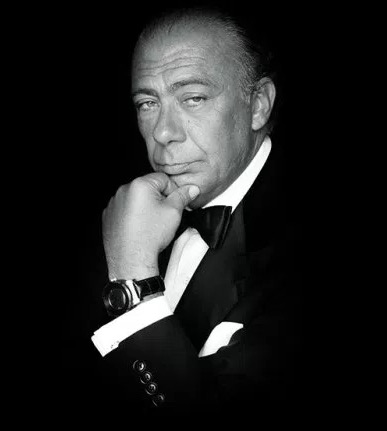
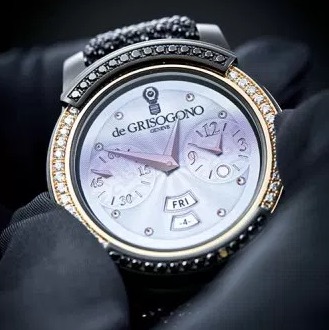
Fawaz Gruosi, the founder of the de Grisogono (1993) brand of jewellery and watches, is a garrulous personality, known for his ‘disruptive creations’. In a market filled with traditional jewellery, he took risks with bold designs, different materials and radical stones, like black diamonds. An exceptionally active man, he’s probably taken a total of three months off in 21 years! He explains why India wasn’t primed for conceptual jewellery and his love affair with the country….

What’s the India chapter all about in the De Grisogono tale?
I have had a bad experience with India. We opened an amazing shop six or seven years ago at Emporio in New Delhi. We were number 3 or 4 after Cartier and Chanel, the shop cost us a fortune. We did not have a problem selling watches; the jewellery was another story. The women wanted to know how much gold there was in each piece. The problem was that they didn’t understand the price of creativity, design and uniqueness!

After two years, our costs of maintaining the storefront was so high that we withdrew. But now, the brand is more known, there is likely to be a better attitude.

What defines the De Grisogono woman?
She is not defined by where she is from, physical attributes, or if she has an angelic face…. I think the beauty in the woman comes from her character. When a woman is sure of wearing something unusual, she wears it like she does not even remember that she has it on.

Screen Shot 2017-07-24 at 2.26.27 PM

How do you dream up these unconventional designs?
I am not someone who sits at a desk waiting for inspiration. I could design sitting here talking to you; it might just click in my head. And, I can imagine immediately a pair of earrings. Normally, my pocket is full of papers.

When I buy stones or I decide to do something very complicated, I never think about how much it will cost or how it will be priced. My creativity is linked to my heart. I just want the piece to be beautiful. Perfection doesn’t exist, but we try hard to find it…and to do what other people cannot do!

What does it take to create a luxury brand today?
Let your creativity flow and don’t be scared. If you have an idea, and you believe in it, go for it. Sometimes it will happen, sometimes it won’t. Success without a bit of risk is not realistic, unless you are part of a big group.

Have you been to India?
Several times. I have been to Mumbai and Delhi. I love India very much. I attended an amazing wedding about a year ago. I was also in love with an Indian girl and the long-distance relationship between New York and Geneva lasted a couple of years.

Founder’s Tales: Christophe Claret

31 Monday Oct 2016

Posted by sitanshi talati-parikh in Brand Watch, Interviews (All), Interviews: Luxury Brands, Publication: Verve Magazine

≈ Leave a comment

Tags

Christophe Claret, Interview, Interviews: Luxury Brands, SIHH, Verve Magazine, Watches

Published, Verve Magazine, October 2016

‘In watchmaking, everything has already been done, and everything has yet to be invented.’

Screen Shot 2017-07-24 at 2.29.25 PM

Born to a wealthy family in Lyon, and from the Geneva watchmaking school, Christophe Claret trained with Roger Dubuis and studied corporate management. With 25 years of experience in manufacturing for watch brands including Ulysse Nardin, Claret, who’s currently wearing his Maestoso watch, decided along the way to use his Neuchâtel operations for his own brand, where he ‘reinterprets haute horlogerie’. Besides the traditional and extreme lines with complications is his range of gaming watches. For example, while the Poker allows a real three-player Texas Hold ’Em game, Baccara doubles as a miniature casino with three games: baccarat (baccara in French), roulette and dice, each one of which also engages your audio, visual and tactile senses. Created especially for women are the Margot and Marguerite, romantic watches with a play on the ‘He loves me, he loves me not’ game, and the latter can have a personalised secret message.

Your watches are unique. How much importance is placed on art and design?
It is important to produce something with innovation. If I take inspiration from the watch industry, I would be recreating the same old design. It is very important to do something new. I am a perfectionist and for me, it’s perfection for detail and the aesthetic together that’s important.

Screen Shot 2017-07-24 at 2.17.59 PM

You’ve launched a gaming collection. Do you play?
No. Never. I’m afraid to play! Some people can bet a lot of money and boom — that can go away! It’s crazy. The watch works for those who play, and those who don’t can enjoy the technicality of the complication.

What drew you to complications for women?
I’ve wanted to produce pieces for women for a long time. Despite what the other watchmakers thought, I’ve always believed that they are a big market for speciality products. That’s why I created Margot — a very complicated watch. We sold many pieces! And Marguerite happened. Today, many other brands are designing big complications for women. Though I was the first!

Do you see an audience in India?
I am very interested to sell in India. It’s a little complicated to open something there because you have tax issues. I’m sure there is a market for us. For the Marguerite and X-Trem-1, for example. I think we will be looking at India very soon.

Founder’s Tales: Aletta Stas-Bax, Fredrique Constant watches

30 Sunday Oct 2016

Posted by sitanshi talati-parikh in Brand Watch, Interviews (All), Interviews: Luxury Brands, Publication: Verve Magazine

≈ Leave a comment

Tags

Aletta Stas-Bax, Baselworld, Fredrique Constant, Interview, Interviews: Luxury Brands, Verve Magazine, Watches

Published Verve Magazine, October 2016

‘True passion has always been the result of fine sensitive processes that happen over time ­— not the exploits of some exciting moment.’

Screen Shot 2017-07-24 at 2.21.30 PM

In 1988, checking out watch stores during a winter vacation in Bern, Switzerland sparked off the idea to start a “young watch company offering innovative products”. In 1991, Aletta Bax and Peter Stas were married and began working on the design and development of their first prototype watch. The next year they presented their horological offering at the Hong Kong trade fair and found, to their surprise, an order for 350 watches from a Japanese buyer. Aletta is the chief operations officer at Frédérique Constant, which has recently been acquired by Citizen, and is responsible for all the company’s day-to-day operations. She works on the development of new designs; most notably she played a major role in the introduction of the Double Heart Beat collection.

What’s the one word that you would use to describe your journey?
Passion.

Isn’t that what your book, Live Your Passion: Building A Watch Manufacture, is about?
It is a mix between a coffee-table and business book, one we worked on together with two journalists from Austria and Germany.

When you are busy building a venture you often do not get time to reflect….
And then you also learn to stand still. You realise that the people whom you work with are also important, in the end, you cannot do it all alone.

Tell us about your role in the Double Heart Beat collection.
It was around 2006. I wanted to have some more presence with the ladies’ collections. Hearts are something that women always like. That is why I designed the double heart. It is now an important pillar in our collection. We also link the heart collection with heart- and child-related charities, where we donate 50 dollars for each watch sold.

Screen Shot 2017-07-24 at 2.21.40 PM

Since last year, you have tied up with technology whereas others have only deliberated over it….
You are talking about our Horological Smartwatch. In the beginning, people were thinking that these are two different industries. While much of the Swiss watch industry remains traditional in thinking, we believe that if you can have a quartz watch with ‘connected’ (digital integration) features, then why should you not go in the direction of futuristic innovation, and why would the customers not be interested?

We need to integrate this whole system with cloud functionality, which is not our field. So, we found a partner who could do that. And, having sold 16,000 Horological Smartwatches, I can say that it is a pillar of Frédérique Constant; along with the ladies’ collection, with our new ambassador, Gwyneth Paltrow.

What’s the India story?
We started with a room five to six years ago, and last year, we grew 30 per cent. We have 40 to 42 per cent sales in India. We are really happy! The infrastructure is improving dramatically. I have visited the bigger cities — Mumbai, Delhi, Kolkata and Chandigarh — a few times. It’s an impressive country.

Discovering Design: Claude Emmenegger for Audemars Piguet

30 Tuesday Aug 2016

Posted by sitanshi talati-parikh in Brand Watch, Interviews (All), Interviews: Luxury Brands, Publication: Verve Magazine

≈ Leave a comment

Tags

Audemars Piguet, Claude Emmenegger, Interview, Interviews: Luxury Brands, SIHH, Verve Magazine, Watches

Published in Verve Magazine, August 2016

Screen Shot 2017-07-24 at 2.18.19 PM

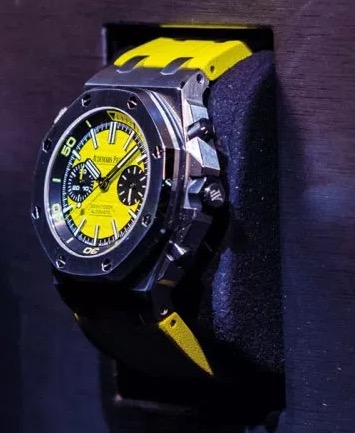
Last year, Claude Emmenegger became the new creative director of Audemars Piguet. After a stint with the brand from 1999 to 2003, he left to establish his own design consulting company. Twelve years and working with 40 brands later, he is back, firm in the belief that his appreciation for the brand has not changed a bit. He’s the creator of the Royal Oak Concept (2002) and the Tradition of Excellence models 2, 3 and 4; currently his main objectives include the development of the women’s category, high-tech concepts and new functionalities. ‘Break the rules in order to revolutionise horology’ is Emmenegger’s philosophy. Find out more:

Design vision
“Audemars Piguet is known for its classical points, along with innovation. I would like to take the design in a more modern direction inspired by contemporary art: make it evolve — though, not change — from what it is now.”

Audemars Piguet philosophy
“Diversity in excellence. When Audemars Piguet does something new, the idea is not to stop things halfway; it is to do something innovative and to finish it in the right way.”

Screen Shot 2017-07-24 at 3.08.26 PM.jpg

Creative inspirations
“We live in a world where we are bombarded by sounds, images, perceptions…. The strength of a designer is to be able to hear in all that mass of information — what is interesting, what could be combined, what is of essence — and bring that together into something new. Once you have passed the stage of mood boards where you filter out the things you want to focus on…then, what the world is doing and what the noise is saying doesn’t matter anymore. Then you just have to get it done!”

Advanced complications for women
“We are in the middle of progress into that field. It’s really a big project right now — there are things in the pipeline and on the board, to see how the movements can evolve.”

When design meets technology
“It’s a bit like two brothers with different characters…. When you have a dream that you want to transform into a reality, it takes quite a bit to follow a road and make it happen. Even if you want to, tech may say, ‘No we can’t do it!’ You have to be able to stimulate them and persuade them…we are going to bend the iron a little bit more, but we are going to make it work!

What has really changed is the team spirit. You have people from design, from production, from the technological world, having discussions as early as possible. And rather than ‘No, it’s impossible to make it’, to agree on ‘Let’s find out if we can do it!’”


Story of a Watchmaker: At A Lange & Soehne’s atelier in Dresden

31 Sunday Jul 2016

Posted by sitanshi talati-parikh in Brand Watch, Features & Trends, Interviews (All), Interviews: Luxury Brands, Publication: Verve Magazine

≈ Leave a comment

Tags

A Lange and Soehne, Atelier visit, Feature, Interview, Interviews: Luxury Brands, Verve Magazine, Watches

Published Verve Magazine, July 2016

Visiting the new manufactory of one of the world’s premier watchmakers, A. Lange & Söhne, in Dresden, Germany, to meet the people behind the scenes and find out what makes them tick

Screen Shot 2017-07-25 at 11.40.16 AM

The girl is bent over in concentration, a magnifying eye glass strapped to her face…and when she looks up she takes a momentary glance at a candid photo of her family slipped into a metal wire stand. At another table, a man has a photo of the sunset staring at him, but if he were to look up, he would see, through large atelier windows, the lush green hillside on which the A. Lange & Söhne (pronounced ‘ah lang-eh’ and ‘zurn-neh’) manufactory resides, tucked away in the heart of Glashütte.

Germany’s prime watchmaking district, Glashütte (pronounced ‘glass-hoot-ey’), is an hour’s drive from the quaint Saxon town of Dresden and boasts 12 watch manufacturers of different calibres and hosts around 1,500 employees. These employees start their learning as early as the age of 15, and sometimes hail from different disciplines such as dentistry and porcelain making. They apply their fine motor skills expertise in watch manufacturing after undergoing at least three years’ training — including an extensive internal training — if they choose to work with A. Lange & Söhne. The people who work here are deeply passionate about what they do — their entire life revolves around their job.

Screen Shot 2017-07-25 at 11.40.31 AM

The desks are pristine and clinical to a fault, except where you catch fragments of personalisation — a little bag of crisps or chocolate, kept neatly to the side — while the technicians work on tiny components with focus and sharp consistency, often not requiring the guidance of their computer screens that flash the exact technical procedure required at the time. The virtually dust-free and energy-efficient manufactory has individual ultra-modern workshops for the various processes — all the way from complications to engraving, from quality control to finishing and assembly. It takes a few minutes to a few hours to look over a single minutiae element; challenging ones can take up to a few days. The entire process of making a single handcrafted timepiece takes from six months to a year. It takes a person with a particular steadfast temperament and a great deal of passion for the job to have the staying power to continue in this vein.

Screen Shot 2017-07-25 at 11.40.46 AM

And you can sense that as you walk through the spanking new manufactory that boasts a production area of 5,400 square metres, which can now house bigger and heavier machines, all entirely state of the art. You’re feeling like part of the establishment, clad in a crisp A. Lange & Söhne facility jacket and with machine-dispensed disposable plastic ‘socks’ on your shoe-covered feet. The double-skin walk-in facade has a climate-control function. Inaugurated last August, the facility, that cost in the double-digit tune of millions of euros, sees Saxony’s largest geothermal energy plant keeping the indoor climate pleasant year round. There is a serenity pervading the corridors and workstations, save for the sound of workmen putting the finishing touches to the new building. It is in this calm that perfection is allowed to thrive: an attention to detail, a rejection of that which doesn’t match their exacting standards.

Ferdinand Adolph Lange was the son of a gunsmith. The fire burnt strong in his belly for watchmaking, though, and in 1845 he managed to convince the local government to lend their support. He started in a small house on the Glashütte main street with a few apprentices. What had so far been a mining town was now poised to become the local centre of watchmaking. (His pocket watches remain highly coveted among collectors all over the world.) Despite managing to survive both world wars, he faced hard times in the 1850s and ’60s; and when, after the Second World War, East Germany came under the purview of the Russians, he continued manufacturing, though the A. Lange & Söhne name nearly disappeared into oblivion.

Screen Shot 2017-07-25 at 11.43.53 AM

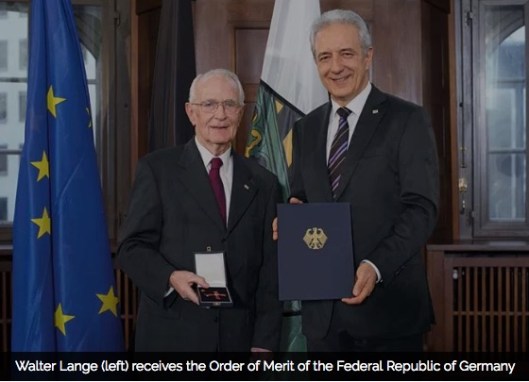
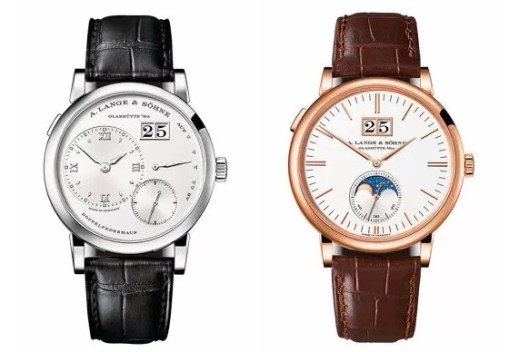
In 1990, F. A. Lange’s great-grandson, Walter Lange, took it upon himself to relaunch the brand. In 1994, their first collection was launched in Dresden Castle. He was recently bestowed with the Order of Merit of the Federal Republic of Germany (First Class) by German President Joachim Gauck in recognition of his services in re-establishing Saxony’s watchmaking industry. Two months after winning the award, he remains affable, charming and humble as he walks with us around the A. Lange & Söhne booth at the exclusive Salon International de la Haute Horlogerie (SIHH) watch fair in Geneva, talking appreciatively about Indian women and their outfits.

Screen Shot 2017-07-25 at 11.40.59 AM

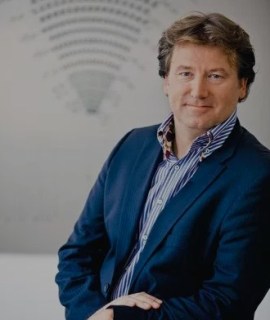
In just over 20 years, A. Lange & Söhne has developed 51 manufacture calibres, which has given them a prime position among the world’s finest watch brands. Their greatest successes include innovative timekeeping instruments such as the Lange 1 (with the first outsize date in a series-produced wristwatch) and the Zeitwerk (with its supremely legible, precisely jumping numerals). The jocular head of development, Anthony de Haas, identifies what has become key to most heritage watchmakers. “It’s very important for us as a brand to stay true to the identity we started with in the 1990s when we rebuilt the company. And it is a challenge to create something new with the A. Lange & Söhne identity that’s very recognisable. The Zeitwerk is a very good example of that — of pushing the limits, not only technically but also in design.”

Their showstopper Zeitwerk timepiece was launched in 2009. It hails from a German word, which means ‘time-movement’. Standing in the Zeitwerk workshop in Dresden, I am privy to the fact that the timepiece has 415 to 428 parts and 200 oiling points (with four different oils). Missing a single oiling point would lead to the watch potentially stopping — which leaves one thankful for the extensive quality control and assembly checks. The manufactory’s complication department is the vanguard of the brand’s prestige watches. The watchmakers who work there are responsible for a single timepiece from beginning to end (unlike the other watches that move from one specialised department to another). In a world where there is a heavy dependence on technology, it is astonishing to discover that in this case, machines are used for checking and not for making that change, as machines cannot make fine adjustments, like to the 100th of a millimetre!

Screen Shot 2017-07-25 at 11.41.05 AM

Last year, the big noise was the minute repeater with the decimal; this year at SIHH, the talking point was the limited-edition (100 pieces) Richard Lange Jumping Seconds which has an integrated jumping mechanism that makes it possible to display the time in strict one-second intervals. Says de Haas, “This is a typical collector’s watch — and you need a bit of an understanding of what’s going on. It’s a technical highlight, but packed in a very elegant, discreet way. You can make complications but they need to be nice-looking and fit the identity of the brand. Don’t do crazy things. Don’t start making diving or pilot watches, because others can do it far better.

A. Lange & Söhne never made watches to swim with, because the brand didn’t exist during the period when that became important. Also, with such a beautiful movement, with the sapphire case back, would I ever dare to jump in the water — even if I know it’s waterproof?”

Screen Shot 2017-07-25 at 11.41.25 AM

A. Lange & Söhne has a tradition (started 150 years ago) of using German silver for their plates and movements, which requires two assemblies because of the delicacy of the metal. Despite the challenges associated with using this particular metal — not just limited to temperature and its sensitivity to humidity — it remains a speciality of the watchmaker for its beautiful golden, shining surface. It’s also symbolic of how the brand considers challenges and an indication of why it has so many movements to its name.

The watchmakers design their own tools for the intricate work. And it is intricate — as I soon realise when I am (as a surprise) taken to my own little private engraving workshop, where I am to sketch a design, then pick up a tool and work on a metal plate (which have both been made idiot-proof for newbies). I discover under local guidance that I am not entirely unforgivable at it, and I pass muster!

Screen Shot 2017-07-25 at 11.41.15 AM

I get the hand-engraved piece returned to me in a box as a keepsake of the experience, which is nothing like the beautiful trademark floral engraving from Ferdinand Adolph Lange’s original pocket watches. Today, A. Lange & Söhne engravers undertake bespoke designs not just inside with specific creatives (like that of a royal family emblem, a motif or even a lover’s face) and initials, but also on the solid case back. You can place the bespoke order via your local boutique for a new piece and it then goes into the production process; while engraving initials on the balance cock can be done after purchase.

I walk over to the historic family building from 1873 (which once also housed production areas) and sit down for a light lunch with the director of press and public relations, Arnd Einhorn, who is eloquent about communicating the brand’s philosophy. There is a common speak and sensibility that pervades the brand and all associated personnel. De Haas (who incidentally had a stint at IWC before his 11 years at A. Lange & Söhne) was recently asked about making pilot’s watches. His response was simple and frank. ‘The Second World War for the Germans is a very black, dark period. Secondly, if we have companies like IWC who are masters in making a pilot’s watch, why should we do it, especially this year (the anniversary of the pilot’s watch)? To earn more money? To get more of their share of the market? That is not A. Lange & Söhne. We don’t decide on a market and then develop a product. We carefully develop the product families. And the marketing is merely our product, with the right information, with the right story.’

The developers and craftsmen in the valley who live in this placid, pristine environment, cut off from the machinations of the outside world, speaking only the local language, are the ones creating products for discerning people world over. The CEO, Wilhelm Schmid, is right when he says, “There is a certain German matter-of-factness, which can be perceived immediately.” De Haas identifies the quiet understatedness of the brand and the products as being influenced by the local area. “We are not so shiny, while we are fun. It’s very discreet; people are down to earth…with passion for detail. And I think that reflects in our products. We don’t come with pilots and spitfires and catwalks and Nicole Kidmans…it’s just us. And there are people who find it very boring, but we are how we are.” And he’s right. There is an atmosphere, in those quiet Glashütte hills filled with the sound of dedication.

The manufactory visit brings you closer to the heroes of these precision timepieces, affording you insight into a brand that believes in being subtly superior. The emotional connect isn’t with a clever marketing pitch, it’s with a labour-of-love marker of time.

A. Lange & Söhne consciously avoids having brand ambassadors — the watchmaker is the hero….as is the product.

5 things CEO Wilhelm Schmid wants you to know:

Screen Shot 2017-07-25 at 11.41.41 AM

“Our first priority is that every new model is predestined to stand the test of time. This may lead to a classic design like the 1815 or more avant-garde concepts like the ZEITWERK Luminous.”

“Our second priority is recognition value. Even without the distinctive arched logo, an A. Lange & Söhne can always be identified. This is due to a combination of subtle features like the curvature of the lugs, the shape of the hands and the engraved look of the typography.”

“Our customers are quality-conscious watch connoisseurs, self-confident personalities who are seeking outstanding timepieces that reflect their individual style.”

“I am pleased to see that more and more women invest in our timepieces because they combine the best of two worlds: handcrafted mechanical excellence and timeless elegance. The majority of our watches are not designed for a specific gender but with a horological issue in mind.”

“Ever since we entered the Indian market in 2007, our timepieces have enjoyed growing popularity. We have, therefore, recently opened our fifth point of sale in Bengaluru.”

Quick Byte with Anthony De Haas, Head of Development

Screen Shot 2017-07-25 at 11.41.49 AM

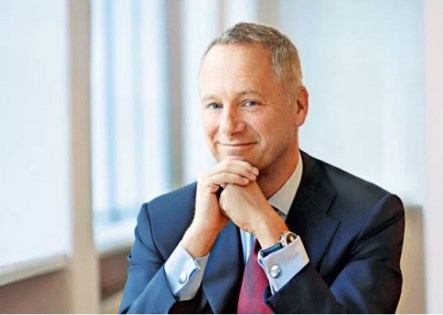
“Money talks, wealth whispers. Our watches are for whom wealth whispers. You are not buying an A. Lange & Söhne watch if you want to show off — when you buy a manually wound two-hand watch for 20,000 euros, you need to be a connoisseur. It’s very understated. Our sale of platinum watches is very high…why? They look like steel. So nobody recognises that you are wearing a watch that is worth 20-, 30- or 50,000 euros. But you have it for your own self. You know the inner value. Not merely the dial. The story is complete.”

Why You Should Buy A Vintage IWC Watch, And Which One

20 Wednesday Jul 2016

Posted by sitanshi talati-parikh in Brand Watch, Interviews (All), Interviews: Luxury Brands, Publication: Verve Magazine

≈ Leave a comment

Tags

Interview, Interviews: Luxury Brands, IWC, SIHH, Verve Magazine, Vintage, Watches

Published, Vervemagazine.in July 8, 2016

Find out which vintage IWC watch their own historian recommends, along with how to check authenticity and make the right purchase

The first Special Pilot’s Watch left the IWC (International Watch Company) factory in 1936. It was the start of a unique relationship between IWC Schaffhausen and flying.

Screen Shot 2017-07-24 at 2.42.53 PM

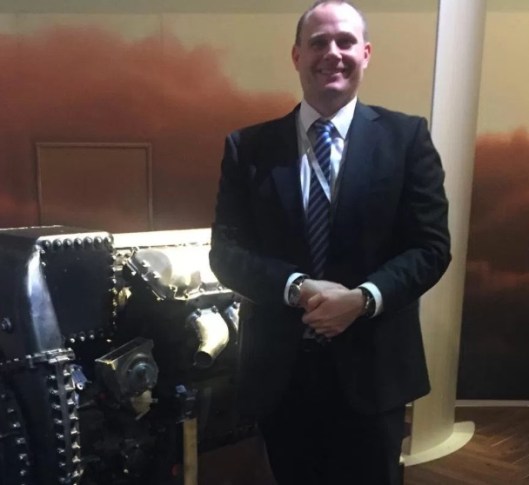
Today, 80 years later, Verve speaks to the IWC historian, David Seyffer, about the tradition of the Pilot’s Watch and about becoming an IWC collector.

Screen Shot 2017-07-24 at 2.42.35 PM

What does 2016 mean for IWC?
“Eighty years (of the pilot’s watches) – and we have now really made happen with a huge collection! With a different variation, really to please all needs or tastes of watch lovers but still hold onto the main characters of the heritage of the Pilot’s Watch.”

IWC at one point targeted the next male generation with the ‘father and son pilot’s watches’ – is this still a trend and has your target customer changed now?
“I do not think so. Interestingly, I have met people, where the man had the Big Pilot’s watch and the woman was wearing the son’s edition. Today, the youth knows and appreciates the nostalgia associated with the mechanical watch. With all that is going on in the world, people want something out of history.”

If there is one vintage IWC watch that any collector must own which would it be?
“I would really recommend (since it’s on my wrist) the Mark XI. The reason: it’s affordable as a collector’s piece, and we have huge quantity of spare parts if it comes for servicing. The movement, Caliber 89, is like an all-running system. It’s impressive how precise these movements are which are made in the 1940s, 1950s, and it has really a cool-looking feeling. So if somebody wants to start with collecting wristwatches, this is really a nice timepiece to start with.”

Screen Shot 2017-07-24 at 2.42.19 PM

Approximately, how much would it cost?
“This depends on editions. You could potentially find a vintage watch within 4-5 thousand dollars, but then if it is a rare piece and is in good condition, possibly used by BOAC, then it could go to 15 thousand dollars or so. Also, authenticity…are they all the parts 100% authentic or not?”

If somebody in India wanted to buy one of the vintage watches, where would they go? How could they check the authenticity?
“Now we are living in the world of international business, so you can really get it everywhere. For example, if you find a nice offer on the Internet. But, then it’s the point of the authenticity. IWC offers a ‘certificate of authenticity’: you send your watch to IWC; there is a team of 3-4 watchmakers (and myself) and if everything looks fine, then you get an official certificate. Also works for people who want to sell antique or heritage timepieces. Interesting for all are the auctions (worldwide from the famous auction houses) where you may find a MARK XI Pilot’s watch!”

Screen Shot 2017-07-24 at 2.42.07 PM

If you could get a carte blanche to create a pilot’s watch based on the history that you are so well versed with, would it be very different from what the brand currently has?
“Not really…because this year’s collection is so strongly related to the original design. Probably a small change I would recommend, as a conservative person, would be to skip the date, to make the watch look like a Mark XI.”

What is the one takeaway that you would leave a new watch buyer with when it comes to IWC’s rich history and tradition?
“IWC is located on the eastern part of Switzerland, therefore the design is different. It’s this east German-Swiss approach with the watch – you can find it in the way the bracelets are made. And in the way the cases were made. And of course, traditionally, what IWC was always about: precision and quality.”

Who is the IWC watch collector?
“The typical watch collector is in a certain way, a freak, highly knowledgeable, with a diverse background. We have very, very rich people and we have students who save every cent they earn just to get a historical timepiece, or a new timepiece. Bottom line is, the interest to learn as much as possible about the watch. Recently, in the collector’s meet, there were people from the USA, Europe. And, there was Captain Vishal who flies Air-India A-330 for several years and guess what he wears—An IWC Pilot’s watch! So you see, meeting people from all over the world, and really with that passion, feels great!”

Bulgari’s Guido and Fabrizio reveal what women want…

30 Wednesday Sep 2015

Posted by sitanshi talati-parikh in Brand Watch, Interviews (All), Interviews: Luxury Brands, Publication: Verve Magazine

≈ Leave a comment

Tags

Baselworld, Bulgari, Interview, Interviews: Luxury Brands, Watches

Published in Verve Magazine, September 2015

Bold design, irony, marriage of materials and at the core of it all – authenticity, they let us in on the fashion house’s creative sensibility…

Screen Shot 2017-07-24 at 1.28.04 PM

The Bulgari booth at Baselworld 2015 is abuzz with conversations, flutes of champagne or cups with a caffeine kick (depending on your preference) and alive with sparkle and pizzazz. The spectacular neckpiece from the Diva collection that heralds you into the boudoir of timelessness, the displays of watches that suggest tradition, technique, innovation and that sure-fire bold touch which is all-Italian. The Octo Finissimo with its size-zero figure to the Serpenti with emerald eyes that conceals secrets and time. It is no wonder Elizabeth Taylor’s personal collection of Bulgari jewels rocked the screen in Cleopatra.

The Bulgari hospitality is warm, and the passion of the makers floods through with the top notes of its designs. As Fabrizio Buonamassa, the director of the Bulgari Watches Design Center (who moved from Fiat to Bulgari following his love for watches) says, “Bulgari’s style is pure in terms of shape and sometimes opulent in terms of attention to detail.”

Screen Shot 2017-07-24 at 1.27.43 PM
Screen Shot 2017-07-24 at 1.27.51 PM

We notice how the brand — despite possibly attempting to rein in their desire to build a wide range of pieces — has enough to keep the most diverse customer satisfied. Is it any wonder that they have the pride of place at Baselworld — the moment you enter the fair, on your left is the sprawling ‘serpentine’ domain. How do they maintain a sense of aesthetic continuance through varied complications and bejewelled designs? Buonamassa explains: “Bulgari is a world of science and inspirations. You need to find the right language for the right products or you create strange objects! Women are all about emotions, and it is about finding the right shape and proportion while being consistent with the Bulgari values and rules. With men you are looking for performance, movement, engine, finishing…technical elements.”

Screen Shot 2017-07-24 at 11.49.24 AM
Screen Shot 2017-07-24 at 11.49.38 AM

While we may not be certain we want to be pigeonholed into these categories — the Saphir Ultranero and the Diagono Magnesium, for instance, could be as fascinating to us as the Diva collection or the Giardini Nocturna — it would make sense for the design team to focus on what is a large target audience for their aesthetic sensibility and happy marriage of materials. Buonamassa agrees — pointing to a strong trend of ladies’ complication watches being merged with jewellery. “Bulgari is a part of the Italian design culture. Italian design is unique because it is not merely ‘form follow function’. It is about the ‘ironic’ — it plays with colours and materials in a different way, to give the object a second life. Only Bulgari is able to use tubogas for a watch and make this iconic in the luxury market. We play with constrains and often these very constrains become the turning point of the project and drive the aesthetics.”

Screen Shot 2017-07-24 at 1.33.39 PM

And how do you keep it relevant? “I manage the science of the company and imagine how I can transform this science into contemporary products and not just copy-paste from the archives. My approach is contemporary with respect for the roots and the evolution of the science.”

The gregarious Guido Terreni, managing director of Bulgari Horlogerie, drives home the fact that Bulgari, as a brand, is built on authenticity. “It’s about being true to your brand and your client. You can’t play around with your personality, and that’s exactly the same with a brand. The watches that are successful are successful for decades. Too much new stuff leads to confusion.”

Screen Shot 2017-07-24 at 1.27.26 PM

Terreni warms to the topic as he talks passionately about the various hallmarks of the Bulgari timepieces. “Serpenti is in the DNA of the brand since the past 70 years. Bulgari Bulgari, Diva, Lvcea are….” Iconic? “Iconic is an abused word. Everything is iconic in every brand. But Serpenti is truly iconic. When you are authentic and true to yourself, you are credible. And to be credible in luxury, you have to be credible in terms of style and craftsmanship, both. That’s why we have developed the know-how internally to address the competence of watchmaking. After all, the ladies are buying competence!”

With a diverse portfolio of luxury products, Bulgari has still made a mark with their watches, particularly their latest edition — the distinctive ‘vault-like’ smart watch (which moves beyond calculating calories burnt to storing valuable data). Terreni believes it’s a part of the core differentiation of the brand. “We have the technique at the service of the aesthetic and vice-versa. We are the only brand that thinks about technique and design simultaneously, we are not selling to watch freaks; we are selling to people who know what luxury is about and can recognise the authenticity of an idea and the craftsmanship in the watch. I love the idea generation, to see the design grow, to see the prototype become true…but this would be nothing if I don’t receive an emotion in return. Your emotion is the true reward of all this work. I don’t look for  ‘I like’, or ‘I don’t like’; I look for ‘Wow’.”

Gypsy Queen: Anushka Sharma

01 Monday Jun 2015

Posted by sitanshi talati-parikh in Interviews (All), Interviews: Cinema, Interviews: Cover Stories, Publication: Verve Magazine

≈ Leave a comment

Tags

Anushka Sharma, Bollywood, Interview, Interviews: Cinema, Verve Magazine

Published Verve Magazine (Cover story) April 2015 and on vervemagazine.in
Photographs by Prasad Naik

Anushka Sharma for Verve Magazine April 2015 cover

“I don’t think I have ever felt like I have belonged to any place.” Coming from an army background, she has spent her youth travelling around the country. Even Bengaluru, where she spent most of her time, wasn’t really home. Anushka Sharma moved to Mumbai over eight years ago with no connections, accompanied by just her mother and brother. “The beauty of my childhood, the lovely experiences I had…all came into focus when I didn’t have them anymore.”

The arrival into the city, into the civilian world, made her appreciate the sheltered and contained life she had lived before. “That’s what your journey is about — when you are living it you don’t know what it is, you are only experiencing emotions. In the army background you are prepped to live in order; when you come out of it, you experience chaos. You live and you continue the motions to cope with it. You ride the tide. You can’t stop and think; you go with the flow.”

In her new, comfortably appointed home in Versova, she tucks herself into a nook of her massive sofa and bites into an extra-large samosa with relish. This particular house has been a labour of love; with an entire floor (over 6000 square feet) devoted to private spaces for her parents, her brother and herself. Bright vases, patterned wallpaper, large mirrors, distressed furniture all radiate a happy, lived-in vibe. After the success of the Aamir Khan-starrer, PK, she’s shooting nights, and also juggling the launch of her maiden production venture, NH10 while awaiting the release of Anurag Kashyap’s Bombay Velvet with Ranbir Kapoor. She doesn’t have the jaded eye of a seasoned traveller or the wide-eyed wonder of a newbie. She’s free from poetry but she finds the silent music that calls out to her when she moves to her own rhythm. Over cups of cappuccino made with freshly crushed coffee beans and topped with smileys patterned in the foam, we discover the girl behind the gypsy.

“Mumbai made me grow up.”
“I was 17 or 18 when I came to Mumbai. I didn’t have any friends when I came here. My brother (older by four years) accompanied me…we got even closer. You learn so much about yourself. For an outsider, the city doesn’t have a residential vibe, unlike Bengaluru and Delhi. Here, every area is a mix of workplaces and homes. You are constantly surrounded by a rapid pace and energy. You find it daunting, you get involved in it, you get sucked into it and finally find your calm in the city.”

“Mumbai is an extremely professional city.”
“I have gotten a lot from it and I have grown to respect the place. There is a vein in which people who live here function, especially those who have come from outside to work. People are hard-working — constantly on the move, constantly trying to make something out of their lives.”

“Although you are a part of this huge population, you are constantly alone.”
“People say Mumbai is a lonely city. Everyone’s moving in a hurry. No one casually chats with anyone. In a train filled with people, no one is having a conversation. Everyone is in his or her own zone. And you want that, you are looking for this time to yourself.”

“I just want to be left alone when I am travelling.”
“Even when nobody knew who I was, I would explore places as if I were lost in my own world. That’s the time you enjoy your privacy. In India I can only see places when I am shooting, because they are cordoned off. It’s only abroad that I can experience something as normal as getting out of the hotel and walking on the street rather than getting into a car and going somewhere….”

“I’m not interested in sightseeing.”
“As actors we travel a lot. We live in places for 15 days to a month and a half. A film crew is always interested in the sights. For me, it’s all about the experience. I want to go to a restaurant; I want to walk on the streets and eat in the quaint places, experiencing the local flavour of the place. That’s exciting.”

“I always end up talking to strangers.”
“While growing up I used to watch a lot of travel shows. The one thing that connects people and places is food. There are so many stories you hear when you go to a restaurant or to a bar, meeting local people, talking to them. That discovery is very important, which is why I don’t like going to touristy places. If my friends want to go to Goa, I won’t take them to Baga. It will be to a place that I have discovered after several visits to Goa.”

“I’ve always been open to new experiences.”
“Travel is anything that enables you to have a different perspective on things, which could be 50 or 5000 kilometres away. I constantly want to see and know more. I don’t have a wish list, because when you really want to connect to places you keep your horizons wide and open.”

“I find it difficult to connect to European countries.”
“I find that language is a barrier — as much as I love Europe and its unique culture — I don’t think about living or having a house there.”

“I bring back fridge magnets from every place I go to.”
“I also always pick up one for a friend. Unfortunately, in this (new) home, I am unable to put up the magnets on the modular kitchen fridge, so now I just keep them or give them to people….”

“My home is very personal.”
“I didn’t want someone to just do my house. I didn’t want an opulent looking place with chandeliers and velvet or the colour red. I find it impersonal. I wanted a space that would be an extension of my own personality. I’m a little rough around the edges, I’m not very proper; so the elements in the house are close to that.”

“The moment in my life that I felt extremely proud was the day I moved into my house.”
“People in the industry who come from an affluent background, may feel it’s just buying a house…but for me, it’s a milestone. When you come from a middle class background, it’s the biggest achievement. I’ve lived in government lodgings all my life. My father had taken many loans for our house in Bengaluru. I’m very close to my family and always wanted to live with them. When I moved into this house, my father looked very happy — and for the first time I felt proud of myself. Though I had an apartment before, this was the ‘big’ house we all wanted. ‘Achievement’ is a personal term. For the world achievements may be fame and money, but just the fact that we had made a home, meant the world to me.”

Anushka Sharma for Verve Magazine April 2015 cover

Places with connect

St Ives, England
“I had the most amazing mussels here. (I am now a vegetarian). I could see seagulls near the ocean, hear the sound of the birds, the weather was beautiful; I was with my closest friends and the mussels were so fresh….”

Galibore, Karnataka
“I went to a fishing camp with two friends. The Kaveri River flows by there. It wasn’t the fishing season; bits of the riverbed were exposed. We didn’t fish, but we would go on boat rides. We stayed in a camping site that included tents and barbeques, no resorts!”

Australia
“Even though I’ve only been there once, I really liked it.”

Café Y, New York City
“It’s an underground café in the Village. I heard the most beautiful music here. It was commercial music, but done so differently.”

North-east India
“The north-east is the loveliest part of our country. When I was six or seven years old my father was posted in Arunachal Pradesh and Assam. I used to travel to places people hadn’t even heard of. It was a completely different world.”

London, United Kingdom
“I could have a house in London. I’ve been there the most number of times; I know the place really well.”

Anushka Sharma for Verve Magazine April 2015 cover

Right Here, Right Now with Anushka Sharma:

On my iPod “Take Me To Church by Hozier.”

In (On) my fridge “No fridge magnets!” (There’s a story behind this. Read more here.)

In my bag
 “Wallet, Lip Balm, House Keys.”

On my blacklist
“Complicated people, drama, lies, dishonesty.”

In my wallet
 “Money, credit cards, identity card.”

In my bedroom “I like it clean. I don’t like hoarding things. Just my bed, TV and books.”

On my bookshelf  “Lots and lots of books. A favourite, JD Salinger’s The Catcher in the Rye.”

On my phone “Phone calls, music, e-mails.”

On my wall “Two pictures of a ballet school, showing the feet of ballerinas. It describes all the things your body can’t naturally do, that you train your body to do – it shows strength and hard work; it is beautiful and creative.”

In my car’s glove compartment “Tissues.”

In my wardrobe “Clothes waiting to be colour coded! I have no OCDs but my wardrobe is chaotic. It’s a walk-in wardrobe where I just leave things. I can’t find clothes. So I keep saying I need more clothes.”

On my bucket list “To travel, to grow, to learn.”

In my beauty bag “Lip balm, mascara, under-eye cream.”

In my bathroom “I’m obsessed with bath products! I have lots of shower gels and multiple body lotions. My nose is sensitive and when I wake up and go to have a shower, I like to surround myself with lovely fragrances.”

On my skin “Moisturiser. I have asked all the women whom I have met who have great skin, if they moisturised a lot when they were younger, and they said yes. However late I may return from a shoot or however tired I may be, I make sure I moisturise everyday.”

In my life “Family, work, love.”

← Older posts
Newer posts →

|  Filling the gaps between words.  |

Writing By Category

  • Art, Literature & Culture
  • Brand Builidng
  • Brand Watch
  • Fashion & Style
  • Features & Trends
  • Fiction
  • Food
  • Humour
  • In The Media
  • Interviews (All)
  • Interviews: Business
  • Interviews: Cinema
  • Interviews: Cover Stories
  • Interviews: Lifestyle
  • Interviews: Luxury Brands
  • Interviews: The Arts
  • Interviews: Travel
  • Musings
  • Parenting
  • Publication: Conde Nast
  • Publication: Elle
  • Publication: Mint Lounge
  • Publication: Mother's World
  • Publication: Taj Magazine
  • Publication: The Swaddle
  • Publication: The Voice of Fashion
  • Publication: Verve Magazine
  • Social Chronicles
  • Sustainability
  • Travel Stories

Reach out:
sitanshi.t.parikh@gmail.com

© Sitanshi Talati-Parikh 2018.
All Rights Reserved.

Website Powered by WordPress.com.

  • Subscribe Subscribed
    • sitanshi talati-parikh
    • Join 51 other subscribers
    • Already have a WordPress.com account? Log in now.
    • sitanshi talati-parikh
    • Subscribe Subscribed
    • Sign up
    • Log in
    • Report this content
    • View site in Reader
    • Manage subscriptions
    • Collapse this bar
 

Loading Comments...