Dangerous Liaisons: Men we hate to love (Indian cinema)

Tags

, ,

Published: Verve Man, October 2011

Some say women are suckers for punishment, others believe that the young rebellious teen attracts the irresponsible Willoughby, while a grown woman is always in want of a decent man. History is witness to many a woman falling flat in the face while chasing a rogue beau. Sitanshi Talati-Parikh examines the shining Indian silver screen examples of lovable dangerous men

Straight-laced men don’t make for racy fantasies, skipping heartbeats and sexual tension. They lack the edge, the drive, the sizzle, the power to tug at our heartstrings and wreak sweet havoc with our lives. Women are attracted to danger like a moth to a flame – there has to be reason that phrase has become a cliché. There’s something inordinately sexy about a man who knows what he wants and will stop at nothing to get it. Getting a playboy’s attention is not necessarily about a notch on the belt as much as it is about being alluring enough to grab his attention. And deep down inside, every woman attracted to a naughty bloke feels that somewhere, there is a chance that she can fix him. That she can be the person he will surrender to, will change for, and will eventually become some version of the Utopian male they have in their head. And so they all fall.

They Work With Passion

This obsession with the men who are not quite toeing the line possibly began with Amitabh Bachchan’s Angry Young Man. Not a bad lot, but a man who is roaring with discontent – he’s full of testosterone, a desire to avenge all that’s wrong. He’s not passive. He’s not even passive-aggressive. He’s raging male. With a whole bunch of adolescent hormones. You know he has passion – for what he believes in – and you can easily imagine how that would translate – in bed and out of it. Shahenshah’s (1988) avenger became Shah Rukh Khan in Baazigar (1993). He played his hands, the cards turned in his favour and he got his own back, albeit with a massive amount of gore. The cinema of the 70s through the 80s threw up seething, vengeful heroes, those who were not apologetic about treading on a few lives. Recently, Aamir Khan’s Ghajini (2008) – with Khan’s character looming large over the messy revenge scene – in his own words, brought back the action genre with a Dabangg (2010).

They Steal Our Hearts

With the exception of chiseled-chin Vinod Khanna who debuted in cinema as the bad guy, it is only post 2000 that we have become somewhat sophisticated about our wayward heroes. Hrithik Roshan in Dhoom 2 (2006) oozed charm and stunning sex appeal – he didn’t even have an excuse about being bad, he just was.

Luckily though he wasn’t out to kill anyone, just cop a few shiny ones. Maybe it is the Dhoom franchise that has successfully converted our picture-perfect heroes into those with grey shades. Who cares if the guy you date is a bit of a thief? If he looks half as good as John Abraham from Dhoom (2004) or Roshan, or can provide half as much intellectual stimulation as Aamir Khan (the upcoming villain in Dhoom 3)…that would be a love life worth writing home about. Moot to point out that no one really notices the unshaven, paunchy good guy, the cop: Abhishek Bachchan. Has anyone ever wanted the good guy to lose as badly as in the Dhoom movies?

They Kill Us Softly With One Look

Going back a few years, can one deny that Saif Ali Khan actually became sizzling hot on screen in 2004 – in his comeback era – in the completely negative role Ek Hasina Thi? Which girl wouldn’t succumb to his charms? He made being a rogue look cool. And soon after in Being Cyrus (2005). All this, while maintaining his status quo as a premier romantic hero; and ironically, if not surprisingly, consolidating his screen appeal with repeated negative roles – including that of the recent clandestine terrorist in Kurbaan (2009).

They Play Good Cop, Bad Cop With Our Emotions

Anil Kapoor in Ram Lakhan. Was he good or was he bad? It’s hard to tell, even after watching the classic repeatedly. In Shahenshah, Amitabh Bachchan played an ineffectual corrupt cop, while fighting for justice, out of the system. Women go weak-kneed over a man in uniform, especially if it’s an errant cop out to play Robin Hood. The success of Dabangg – and Salman Khan shaking his uniformed body to national hysteria – heralds the revival of cop dramas and high-risk love lives.

They Cleverly Win Us Over

Ishwar ‘Langda’ Tyagi in Omkara (2006) completely took the movie to different heights, and the disgust one felt for the character was smudged with grudging admiration. You give a man brains and his mental prowess is bound to not go unnoticed.

They Wield Power Over Our Thoughts

Ajay Devgn made underworld dons appear cool – with an enviable display of control, smoothness and above all, power. As Al Pacino proved in Scarface (1983) that power attracts women, Devgn proved it with Company (2002) and a few years later with Once Upon A Time In Mumbai (2010). In fact, in OUATIM, Emraan Hashmi managed to keep his girl by his side despite ill-treating her. Katrina Kaif’s character fell in love with the Pratap politicians – played by Ranbir Kapoor and Arjun Rampal – who preferred to work the wrong side of the system in Raajneeti (2010). Forget women, even film-maker and actor Farhan Akhtar admits a strange fascination with Don’s character, leading him to remake the old classic. There is a natural instinct in women – as much as they like to nurture, they like to be protected. And who better to protect them than an unstoppable man who can rule a better part of the world?

Their Good Outweighs Their Bad?

Movies on real-life characters tend to tread on eggshells, portraying a primarily positive perspective of characters that have been perceived as heading down the wrong path. Guru (2007), for instance, portrayed the protagonist, Gurubhai (loosely based on Dhirubhai Ambani) in a very favourable light, in the role of an inspiring leader. Sarkar (2005), where Amitabh Bachchan plays a character assumed to be based on Bal Thakeray, creatively designed like The Godfather, showed him to be a man of steel and goodness parcelled with a lack of concern for human life.

They Win Our Sympathy

While Shiney Ahuja’s character in Gangster (2006) and Sanjay Dutt’s Raghu in Vaastav (1999), were all about the fallen man – looking desperately for love’s respite or salvation, Imran Khan’s Kabir in Kidnap (2008) saved face with his inner good guy winning over the bad. John Abraham touched a soft spot in his I’m-a-terrorist-but-a-good-guy in New York (2009). You may not be able to love these characters, but they do win your sympathy – and strangely that is a way into women’s hearts, sometimes.

They Need Rescuing

A step up from the sympathy vote is actually pulling them out of the quagmire. Abhay Deol has made it his prerogative to be the lack-lustre hero – think Dev D (2009) in particular – who’s always finding himself and losing his love. His women have to deal with his incapacities, and many love him despite it. Sanjay Dutt’s Ballu in Khalnayak (1993) immortalized the hero who loved, lost and died a pitiful love life.

They Have Converted from Lover to Lover Boy

You know this has to be about Salman Khan. He made every girl fall in love with Prem from Maine Pyar Kiya (1989) and then ran away from this good guy image, and embraced that of the playa. He played the field in every possible movie – even played the role of the playing-the-field-mentor in No Entry (2005), and carried a successful bunch of romantic comedies on merely his inability to remain faithful.

And so it goes that there’s nothing like a wayward love interest to make life a bunch of prickly roses. And there’s probably a make-your-bed-and-lie-on-it pun there somewhere….


Rockin’ Rockstar poster

Tags

, , ,

Img_1839
Rockstar1
H_int_rockstar

Imtiaz Ali’s upcoming movie, Rockstar, starring Ranbir Kapoor and Nargis Fakhri has some absolutely stunning artwork and sketches. Very reminscent of the angry young man bollywood posters of the 70s, but far superior. The artist is Grzegorz Domaradzki from Poland, and I can’t wait to see what more he has in store. I wonder if Imtiaz Ali will think of marketing some of this beautiful artwork as a part of the promos? Like selling the posters – remember the time we used to find Salman, Aamir and Madhuri posters all over the place to be kept on walls?

PS: Font remind you of Def Leppard any one? It’s not identical, but quite reminiscent.

Check out a great interview with the artist here: http://onesmallwindow.com/interviews/those-cool-rockstar-posters/

Some related links:

Grzegorz Domaradzki’s official website
Grzegorz’s Vector Movie Posters series.
Rockstar – Official Website


Nama Yum Yum

Tags

, ,

Img_1752
Img_1753
Img_1821

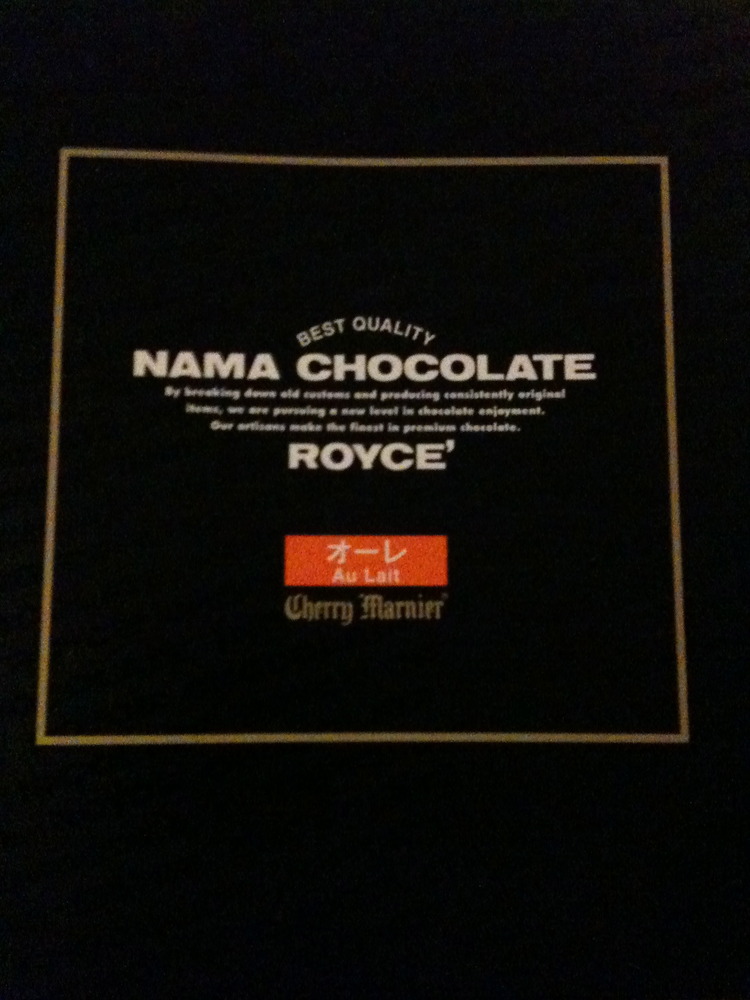
A good friend suggested picking up some Royce chocolates while in Singapore. Sooo unassuming: the name, the location – in the basement of Takashimaya, but I began to perceive how sensational it would be when I saw them packing the chocolates up. An insulated bag with a icepack for travel and storage. Trying some of it won me over – completely incredible, ready-to-melt-in-your-mouth dark chocolates. If life is about experiences, this is definitely one of them. My favourite? The Petite Truffe – Orange. It’s got slivers of orange peel tucked into the folds of dark truffle. It kicks Belgian chocolate’s ass. The Nama chocolate in various flavours (running with some amount of liquor or champagne) are fabulous. There’s even a slab of what they call ‘Black Chocolate’. And a bag of chocolate potato chips that I didn’t try. Hailing from Hokkaido, Japan, I’m not surprised these bits of heavenly cocoa have a cult following. Can they come to Mumbai, already?

Big Misses, Small Catches

Tags

,

Published: Verve Magazine, July, 2011

The masala dailies have wrung their words out trying to understand what happened last year. Heavyweights sunk at the box office and a handful of unknowns, nobodies and alternates walked away with the entire silver screen pie. Sitanshi Talati-Parikh decodes the enigma of the mega-budget losses and small-movie wins

Recently, film critic Rajeev Masand wrote a column deriding the excesses of the Indian film industry. He spoke about the glory of big budgets – including the cost of taking star wives and their entourage shopping – being washed out in the final tally at the box office, when the film faces the music of a silent box office register. While he was talking about an upcoming film, it is bringing back into focus the hot topic of discussion – namely the cold slush of the big-budget movies that failed miserably, against the refreshing warmth of the surprise hits: small films that made it huge.

Like a sudden bad hangover from the ’90s, Indian cinema is facing a crisis of money: too much money chasing an average story, a tired movie star, and refurbished content. The lucrative movie-making business has created an illusionary clout of movie stars and divas, gift-wrapped with zero professionalism and huge egos. These stars continue to be bankable at the box office, which is why big banners are willing to turn a blind (albeit bleeding) eye to their demands. After all, at the end of the day everyone rakes in the big bucks and trills home happy.

Suddenly though, expensive movies are not enough to attract the audience: with a refreshing sensibility that one wished would extend to our political choices, moviegoers have shunned some of the biggest movies last year. Big in the form of stars, directors, production houses, and production costs (see box for details). Think Kites, Tees Maar Khan, Guzaarish, Raavan. Before that, Saawariya, Blue, What’s Your Raashee? and even My Name Is Khan didn’t fare as well as one would have expected or the producers preferred to suggest. What went wrong? The formula elements were there: masala, big actors, varied concepts, established directors, expensive marketing and sufficient money chasing all of it to get a rise out of the staunchest movie buff.

How big can the movie be? The money being poured into the movies has become ostentatious without any sign of equal returns. This has led to a sudden flow of in-movie advertising, a desperate bid to sell music, cable and overseas distribution rights to the highest bidder. The problem lies in production costs. When a great amount of money is poured into lavish film sets, movie star salaries and their entourage fees, shooting abroad, and with relaxed schedules, it becomes impossible to recover those costs. And many times, the glitz outdoes the actual story. In the age of information overload, content is king: a good movie primarily needs a good script to work, the rest will follow. Udaan, one of the best movies last year, did well despite the odds; and others lost out despite the factors in their favour.

The final tally
It is not so much the audience that is changing as much as the amount of money being poured into a film that is challenging the final tally. Does a movie deserve that kind of money? Take Blue, or Kites for instance. Both gambled big, banking on the larger-than-life phenomenon: hoping that international locales (ridiculous when you see Kites which is shot in a barren desert) and a carrot of expensive productions would be a box-office draw. Possibly with the fact that much of the audience is now far more well-travelled, satellite television provides enough entertainment in the form of international scenery, viewers don’t necessarily want to go to the theatre merely to see American scapes or underwater corals.

Shah Rukh Khan’s RA.One, rumoured to have a budget of Rs one billion, makes it one of India’s most expensive films. Releasing later this year, Khan claims that the ambitious movie calls for special effects (collaborating with international teams) and cutting corners just won’t do the trick. With satellite rights already reportedly sold to Star India for Rs 40 crore, the film is playing the high stakes. Even if Khan magnanimously feels that he is setting the standard for technically well-produced movies and is ready to bear the costs of being such a trend-setter, no one can hope to gamble with big numbers and go in ready to fail.

More than the death of the blockbuster mega banner film, as some reports are willing to tout, what has emerged is a license to live for the small or medium film. Hrishikesh Mukherjee’s ’70s and ’80s saw the popularity of small films that spoke to the finer sensibilities of a discerning audience. Lately there have been slick mega-budget movies appealing to the grandeur of an emerging and moneyed India. Ironically, rather than get washed away in the gloss of a mega film, smaller films now, once again, have a greater chance of surviving, not only because of a good product, but particularly because their budgets are controlled. The big budget movies’ wins are meagre, their losses massive – so it’s not surprising that established production houses like Excel Entertainment (run by the Akhtars and Ritesh Sidhwani) are willing to stake their bets on smaller films like Karthik Calling Karthik, to give them room for one Zindagi Na Milegi Dobara, releasing this month.

Where the star cast is willing to share in the profits than take a big upfront fee also makes a difference in the movie business – think Aamir Khan, Farhan Akhtar, Shah Rukh Khan, Imran Khan. Guzaarish, for instance, started out in the red – after paying out massive amounts to the three heavyweights: director Sanjay Leela Bhansali, and actors Hrithik Roshan and Aishwarya Rai Bachchan, added to which the cost of making the lavish film, it was left with a massive total to bat towards. Even with a decent opening weekend, you cannot lay your bets on pulling in those kind of numbers. What may change the dynamics of the game is producers getting smarter and not trigger-happy stretching their purse strings for stars like Akshay Kumar who demand larger amounts and who believe in cross-bargaining, or even those directors, like Sanjay Leela Bhansali who genuinely think they are worth that much.

A talking point
Inevitably, the success of a film gets measured by numbers and the total pull from the box office. Which means that for a movie to be successful in a wide and diverse audience mix, it needs to satisfy various segments of society – which is impossible for one trying to be different. It then becomes obvious that such a film must be made with a small budget, so that the niche audience it is catering towards will accept it, and it can recover costs and possibly encourage others to take baby steps forward. There are few films in that mould which can satisfy enough people to become a talking point and generate sufficient traction to make it successful across the board. Udaan is one such film – like Iqbal (2005) was at one point of time. This works because an inspirational story has a universal appeal.

Certain films have recently faced flak because of too much ‘Hollywoodisation’. Kites took a Hollywood-type story, placed it in a Hollywood-style location and brought in technicians and a look from that part of the world. Besides the failings of the story, direction and editing, what didn’t resonate with the Indian audience was the fact that the mindset of the characters also became Western. As the Yash Raj and Dharma stable has proved time and time again, the locales and the clothes can be Western, but the identity and characterisation shouldn’t. While the movie may be echoing how a certain portion of the urbane youth is beginning to feel, it doesn’t resonate with the Indianness of the Indian culture. The audience seems to prefer an aspirational look and styling, with a strong Indian sensibility. Possibly a reason why Tanu Weds Manu or a Band Baaja Baaraat scored over Anjaana Anjaani and Break Ke Baad, despite the fact that the former had an average production and the latter a slick and well-styled product.

Within the milieu of an Indian sensibility, movies that were of the different mould, may not have been runaway successes, have nevertheless prepared us to accept experimental stories: Karthik Calling Karthik, Ishqiya, Anjaana Anjaani, Wake Up Sid, Rocket Singh, Love, Sex Aur Dhoka, Dev D. Rather than embrace the old formula, others would now be more willing to tread unknown waters. Would Delhi Belly – releasing this month – stand a chance if Aamir Khan Productions, UTV and Imran Khan were not associated with it? Possibly not – there is something reassuring about a safe bet. The viewers trust Aamir’s choice, and there will be people willing to see – even if out of sheer curiosity – what he has to offer next.

Great expectations
That leads one to expectations. One expects that a movie that has a big name or multiple big names attached to it would be good. So heavyweights act like our elected representatives – we trust them to be discerning in their choices, to provide us entertainment. And sometimes, as was the case with Madhuri Dixit, we also believe that they can make even an ordinary film superlative by their mere presence. The basic premise when we know big names are associated with a project is ‘How bad can it be? It’s worth a watch.’ This is what producers bank on to recover their costs in the first weekend, and it is what makes stars feel invincible.

And the small films that became conversation starters, centrepieces and endnotes? Besides a fresh script or perspective, what they have in common is that they have at least one big banner backing them and possibly even a big production house overseeing things – Udaan (UTV), Once Upon A Time in Mumbaai (Balaji Motion Pictures), Peepli [Live] (UTV and Aamir Khan Productions), Ishqiya (Shemaroo and Vishal Bharadwaj Pictures), Band Baaja Baaraat (Yash Raj Films), Tanu Weds Manu (Viacom 18 Motion Pictures). UTV readily picks what would appear to be more experimental films – think its round up of Mumbai terror movies in 2008, while other big banners are following suit by adding smaller films to their stable to balance the money being poured into a bigger venture. UTV Motion Pictures has actually been a part of a good number of the losing films last year, but has saved face with the popularity of the small films it backed.

Brand value
Would the backing of notable production houses attract top stars to milder scripts? Maybe, if they didn’t worry so much about their brand value dipping with lower sign-up fees, they (and then in return big banners) would be willing to hedge their bets on smaller films. Would Aishwarya have done films like Chokher Bali or Raincoat (even though it meant working with acclaimed Rituparno Ghosh) in the middle of her career trajectory, had she had plum offers in hand at the time? Possibly not. At a certain stage of stardom, movie stars tend to become particularly risk-averse, afraid to jinx a happy mainstream run. Which is ironic from the tally last year – all the top stars have struggled to make it through, while non-A-list actors like Kangna Ranaut, Anushka Sharma and Madhavan, and a new breed of directors have scored big – simply by having nothing to lose.

Another recent game-changer: in a rapid movement, social media has played a role in reducing the impact of big names versus good movies. With previews and online buzz allowing a good film to gain traction possibly even before the first weekend opening or very quickly during the first weekend, it stands a fair chance of doing well overall, and continuing for a longer time in cinemas and then negotiating a more competitive price for DVD and cable rights. On the flipside, social media still only reaches out to a few multiplex audiences in the urban sectors, lacking a strong overall impact.

At the end of the day, it’s some bad choices that have made this a conversation piece: people will not stop being drawn to the glamour of huge films. As we have seen, the buzz about Zindagi Na Milegi Dobara more than sizzles, with an overwhelming amount of names (Hrithik Roshan, Katrina Kaif, Farhan and Zoya Akhtar) and their unique combinations, including Abhay Deol and Kalki Koechlin, guaranteeing a sizeable opening. With the recent disappointments though, what will happen is that smaller films, which would ordinarily be considered niche and maybe even risky propositions, will now become more attractive to audiences who are looking for more challenging views. So the chances are the urbane audiences will watch Zindagi… and Delhi Belly this month with equal gusto. As long as there are some steady players: financiers, producers, directors and actors ready to take the plunge with small, experimental, unique films, willing to adjust budgets for the cause of the film rather than their pockets or egos, there will continue to be a breeding ground for good cinema. Where cinema remains an art form before it becomes a business.

BIG GUNS WHO MISSED THE SHOT

7 KHOON MAAF
Vishal Bharadwaj, Priyanka Chopra,
UTV Spotboy

VEER
Salman Khan,
Eros International

ACTION REPLAYY
Aishwarya Rai Bachchan, Akshay Kumar, Vipul Shah,
PVR Pictures

GUZAARISH
Sanjay Leela Bhansali, Hrithik Roshan, Aishwarya Rai Bachchan,
UTV Motion Pictures

RAAVAN
Mani Ratnam, Abhishek and Aishwarya Bachchan, Reliance Big Pictures,
Madras Talkies

LAFANGEY PARINDEY
Deepika Padukone, Neil Nitin Mukesh,
Yash Raj Films

KITES
Hrithik Roshan, Rakesh Roshan, Anurag Basu,
Reliance Big Pictures

BREAK KE BAAD
Kunal Kohli Productions, Reliance Big Pictures,
Deepika Padukone and Imran Khan

ANJAANA ANJAANI
Priyanka Chopra, Ranbir Kapoor

KHELEN HUM JEE JAAN SE
Ashutosh Gowariker, Abhishek Bachchan and Deepika Padukone,
UTV Motion Pictures

TEES MAAR KHAN
Farah Khan Productions, UTV Motion Pictures,
Akshay Kumar and Katrina Kaif

Why @delhibellymovie makes for a marketing study

Tags

, , , , ,

Any movie that has a tagline “Sh!t Happens” is doing two things very knowingly: alienating a section of people, and getting another section of people curious. Possibly only a gamble Aamir Khan is willing to take: selling a movie about potty stuff and a stomach condition. There will be those who will consider him not quite off the rocker, and those who will grudgingly drag themselves into the cinemas next weekend to see what’s up. Or down.

Aamir’s movies would make for a brilliant marketing study in themselves. They use elements of the films very carefully, carving a niche audience even before the release – in this case, possibly queasy college kids – and are always unique. He never tends to repeat himself, and what is fabulous: he never openly sells himself. He sells his intellect, which people have seen and appreciated over the years; he sells his choices, which people have grown to trust; he sells tenets of the movie that may not be obviously saleable and he, ingeniously, makes them saleable.

He waited many years to release this film, even queuing it behind his production house’s other releases, so much so that people got tired waiting for it to release, rumours began spreading about tension brewing between the director and the producers. When he finally decided to release the film, which is a short English-language film (also being dubbed in local languages) without an interval and with no songs (besides background music), he worked in an alternative promotional strategy.

1. Imran Khan, now a household name, is selling sex in the movie. Crushing the ‘nice kid – now married and settled’ image, Imran gets down and dirty in the movie.

2. There are a good number of expletives used – particularly in the song which has been touted as a cult classic ‘Bhaagbhaagdkbose’. The ‘good kids’ of the film, claim to not know these words and their meanings. Aamir suggests an ‘A’ rating. The censor boards get into overdrive. See video of the song (my personal favourite): http://youtu.be/8OVGbdOG7dA

Also: Selling reverse psychology. Telling people not to watch something is like a sure fire way to get the people to come see what they are told not to watch. Snap.

3. The actors remain straight-faced and yet severely dry and mocking in their humour when being interviewed. (See @thevirdas’ tweets about conversations with a journalist)

4. The songs. THE SONGS. For a movie that has no songs, the songs are a raging hit.  Shot recently, they are cleverly envisioned – each one a distinct and innovative study in youth culture, popular lingo, satire and clever misconceptions. Music and lyrics, bang on. Cult classics in the making.

5. Soft selling. What does the youth who will be coerced to watching this movie want? T-shirts. Funky, irreverent t-shirts, selling the Delhi Belly brand. Imran and the others are busy doing that.

6. Food: Delhi Belly refers to a stomach condition. You find the Delhi Belly trio, ironically being photographed at gourmet and fine dining places – presumably to now avoid getting a ‘delhi belly’?

7. Irreverence. Therein lies the foundation on which this film is built. Three kids go through sh*t. And hopefully come out of it alive. With the name, the songs, the attitude and the overall marketing, Delhi Belly is selling a good degree of irreverence.

8. Item Number: Aamir, is for once, selling himself. An item number done 70s disco style. #MAJORWin. See video: http://youtu.be/IGYA_P7ZHcw

9. I like a movie that sells it’s men rather than it’s women. A gratifying change. However ‘shitty’ it might be.

Now it’s just up to the target audience to lap it up.

Aamir has a way of making films and concepts iconic and into a brand. His auteur, unlike other directors, isn’t a kind of film, it’s merely good cinema – path-breaking, unique, and never cut from the common cloth. The success of his films has enough to do with his marketing brainwaves, experience and perfection at the editing table as it does with the film itself. SO much nicer than cheap marketing pot shots that many other films are reduced to.


Why Bollywood Talk Show Hosts Should Host Less

Tags

, , , , ,

Recently two celebrity talk shows that once reigned supreme have returned to television in a brand new avatar. Simpering, buttering and at best cajoling their guests into letting go of certain inhibitions to guarantee TRPs.

Lately, Simi Garewal – famous for her Rendezvouz With Simi show, where she played agony aunt to all her celebrity guests – got them to cry on her shoulder, laugh and reminisce all while holding their hands, giving them a chance to open up their lives, loves and unhappiness in front of the entire nation, is back with Simi selects India’s Most Desirable. This time, she uses the show to reestablish her iconic status and that of her guests. She repeats frequently in the show why she considers her guests ‘India’s most desirable.’ I think we would know why a handful of top Bollywood stars are desirable. Do give the audience some credit. She uses the show to suggest how Ranbir Kapoor, whom she is obviously incredibly fond of, possibly even charmed by, is actually really a sweet little Mama’s boy, very acceptably interested in women. What’s amusing is how Ranbir manages to charm her and keep her charmed throughout. And we shouldn’t even get to the part where Mama actually comes in with her endearments for Son. Simi’s botoxed and sugar-coated avatar give the audience less of a chance to see the real person, and more of a chance to see the avatar she wishes to – or has promised her guests to – unfold before the audience. Add a reassuring tarot card reader, a live audience that is highly impressionable and possibly enamoured by star power, and you have a celebrity I’m-so-famous-that-it-hurts show.

Karan Johar’s Koffee With Karan was funny, irreverent and iconic in that he managed to make a chat show into a gossip session that allowed his guests a ‘get out of jail free’ card to be as bitchy and frank as they liked when they did their rapid fire round. This time around, KWK is like a badly made cup of weak Koffee – quoted from my earlier post Decaffeinated Koffee With Karan:

“After a long hiatus, Johar is back with season 3 of KWK, and despite being much awaited, it fails to satisfy. It is disappointing, just like his movies: dramatic without meat, one-sided and microcosmic. Where you look for incisive questions, probing analysis and incurable wit, you realize that the show now balances on Johar’s relationship with his guests – so he treads on eggshells, pleases them, praises them and it becomes a mutual back-scratching hour. The questions are boring, dull and jaded – do we really care how some actors rate other actors? Do we want to know about only 5 actors – the Khans and Akshay Kumar? With only the bitchiness or sharp wit, straight-faced untruths and simpering (respectively) of Kareena, Saif, Ranbir and Priyanka provide some entertainment or relief, the show falls completely flat for the same reasons his movies fail to excite: they remain relevant to an older time, they assume only 5 people of either sex exist in the industry or Karan’s world, the format hasn’t got updated with anything but blatant in-show marketing of advertisers and sponsors.”

Note: Deepika comes into Simi’s show advertising blatantly for Neutrogena. She goes to Karan’s show taking Nescafe breaks – another one of her brands. Simi and Karan openly advertise these brands on their show. Maybe the hosts/ channels are afraid they won’t make the TRPs or the advertising revenue the normal way, so need to add this extra marketing to the mix?

What is it about these smart, savvy and experienced talk show hosts that they find themselves sinking into mediocre hosting? Pressure from that fact that they are a part of the same industry? Wouldn’t it be far more interesting if an outsider quizzed these people, without having to worry about having to make movies with them in the future? Or to not have to face that odd, cringing feeling when the guests have to choose from a list of tired-and-famous directors, and when the talk show host puts himself on that list. In a spectacular display of self-preoccupation. So the hosts are full of themselves, the guests are full of themselves, the hosts are insisting on the popularity of their guests with audience clips, accolades and praises – and in all of that, the viewer is left feeling…very-taken-for-a-starry-ride-to-nowehere-ish. Oh snap.


What It Takes To Be A Journalist

Tags

, , , , , ,

1. Writing the truth.

2. Quoting facts as they are and not as you would want them to be.

3. Making an effort: to verify and qualify.

Three basic things that it appears the Hindustan Times’ reporters seem to lack. While a gross negligence towards facts seems to be a common ground among the harried young journalists of today, a happy desire to pick up words and fling them about into convenient sentences has become an art form that should go on their resume.

Take the case of young Aakriti Sawhney, art and lifestyle reporter with HT City, Delhi. Doing a breathtakingly insicive piece (with Damini Purkayastha) on how Subodh Gupta isn’t hacking it in Sotheby’s anymore, they appear to have collected some quotes, and possibly feeling the need to add some more spice to the piece, decided to pick a random tweet by me and play scrabble with the words, ending up with a sentence with an entirely different meaning from it’s original intent. Of course, they didn’t bother to check with me (why would they when they planned to play switcheroo with the words) nor did they qualify who I am or use my full name – would have taken too much effort to click search on Google. After such hard work, here is what it looks like:

For those unfamiliar with Twitter, @Daffynitions is a clever alternative dictionary that light-heartedly invents alternative definitions of common words. A recent one was: “Symbolism:  a great excuse for having a sink full of dirty dishes.” I found that funny. And is also reminded me – IRONICALLY – of an artist whom I respect, Subodh Gupta. Famous for his installations of pots and pans, it seems ironic in the context of the ‘Daffynition’. Hence my tweet: “Subodh Gupta’s pots and pans, anyone? : Symbolism: a great excuse for having a sink full of dirty dishes.”

Ms. Sawhney and Ms. Purkayastha, thrilled with the discovery of such a potentially juicy misquote, decided to take this innocent tweet into their clever hands and came up with this concoction: “Even fans are no longer buying it [Subodh Gupta and other artists’ worth]. ‘SG’s pots and pans, anyone? A great excuse for having a sink full of dirty dishes,’ tweeted Sitanshi.”
See full article: http://www.hindustantimes.com/Subodh-s-sotheby-s-shock/Article1-704468.aspx

I am left speechless (or not) at journalism full of such integrity and honesty.

At the moment, I am waiting for them to remove the words associated with my name, a polite request to follow the first 3 points above, if possible.

Update: Hindustan Times has removed the incorrect quote and has also issued a corrigendum.