Killing me softly with my own smog | Jaagore

Tags

, , , ,

Guest Post by Sitanshi Talati-Parikh, Features Editor, Verve Magazine

The problem with writing about issues is the fatalism that creeps in and tends to swallow you whole, where you want to scream to the world to wake up – before it’s too late, but you get the sense that they are simply not getting it. And makes you want to sink into a mire of desperation and helplessness. *Shudder*.

So, the idea is to calmly embrace the fact that the world as we know it, will really not last very long. I have a distant uncle who is geared into amassing family wealth for the next seven generations – and while I am truly proud of this generous gesture towards his family’s well-being, I feel that he is just a bit deluded. At the rate we are going – denuding the earth’s natural resources without a thought towards replenishment, ransacking and pillaging and foraging like barbarians, without once questioning what it implies for tomorrow, there will be no tomorrow. And I don’t mean like, oops I’m going to wake up and June 1, 2010 will no longer exist, but really, June 2, 2020 might not!

Do we really have as many years as we think we do on this planet? As we plan the next generation of pillagers, do we really believe they will make it through another 80 years of living in toxic hell? If the planet doesn’t implode on our own sins, we will definitely self-destruct in some way or the other.

1. We have waste disposal problems.

2. We have severe water shortage issues.

3. The air we breathe is so polluted that there’s no point smoking – you’re inhaling crap anyway.

4. We are rapidly consuming all limited natural resources without really figuring out alternate sources of energy, power etc.

5. Global warming is bringing in volcanic eruptions, tsunamis, earthquakes, tremours and a lot of other stuff that should shake us in our heads, not our houses.

6. There is severe overcrowding and over population, which is merely compounding the crises mentioned in 1-4.

Specifically talking about Mumbai, do we realise that as the incorrigibly corrupt government and municipal corporations allow illegal construction of sky-rises in already sandwiched areas, it’s not just the pressure on the land, it is also the impossible question of the pressure on infrastructure? Our infrastructure is quite simply redundant – there are old pipes, rusted and cracking under the pressure, drinking water getting mixed up with sewage and refuse, there is already insane amounts of fuel, water and power shortage; and with the advent of that many more homes, families, people and cars, the problems on the surface and below will only compound. So as spanking new buildings start popping up left, right and centre, who plans to deal with the repercussions of these short-sighted activities? Forget problems like soil erosion, pollution and cloud cover thinning that you can’t comprehend, but think of the really basic stuff. Say you spend multiple arms and legs buying a flat in a nice Sobo area, in a brand new building, with a great view. What are you going to do when the pipes burst with the pressure and you get filthy water to drink and bathe with in your new luxurious haven? What are you going to do when the already choked area doesn’t allow for you to take your brand new gas-guzzler out because there’s a perennial jam of cars being taken out for unnecessary spins?

The problem is that we think that it’s not our problem yet. It’s not relevant now. It’s not about me. As long as we continue with the current status quo, living in mass oblivion, we are barely able to grasp – despite Hollywood’s barrage of disaster ‘2012’ flicks – that everything is very real, everything is NOW. Tomorrow is not just another day in the grimy city; tomorrow may be a day where we no longer exist. And it would be entirely our fault. No amount of words can make you sit up and take action – until you realise that it’s your and your family’s life at stake, not your neighbour’s.

Travel blog: The Russian Revelation

Tags

, , , , , , , , ,

Published: Verve Magazine, Scapes, April 2010

Exploring the many treasures of Moscow and St. Petersburg is like balancing 17 Faberge eggs on your head, breathing fire and inhaling ice, sharing breadcrumbs with a hungry tigress and walking a tight-rope while knocking down a few vodka shots, discovers Sitanshi Talati-Parikh
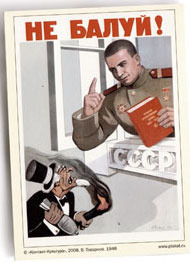
Russia23

Standing at the unventilated Domodevodo airport in Moscow, bleary-eyed and tired after a long flight, all I want is the safe haven of my hotel room. Unfortunately, that is not destined in my near future. The arrival lounge at the airport, I am surprised to discover, is much worse than our own Chhatrapati Shivaji International Airport. The lines are snake-like (think anacondas) and as thick as an Amazonian rainforest. You pick a spot and hope for the best. As you get to the head of the line, you reach a sour-faced (albeit good-looking) official who has immediately made the judgement call based on your skin tone. White people move along rapidly, the tanner-skins are examined with the efficiency and distaste one reserves for a life-threatening disease. The non-English-speaking officer looks down at our passport, refers to an alarming scroll filled with digits and codes, growls out a few words in an incomprehensible manner and then points to the side, immediately dismisses us and moves onto the next lot of people. In much the same manner, there is a growing crowd of people collected next to each aisle, ‘waiting’ for whoever or whatever is to befall them. Godot, maybe? One hour in the line, half-hour at the immigration check counter, half-hour next to the immigration check counter. Doesn’t matter which time zone you’re checking.

We feel like reprimanded school children. Eventually, another gruff-looking (this one is larger and shorter, but equally sour-faced) official arrives and begins to ‘collect’ us from the aisles. ‘Come!’ is the genial order. We follow him obediently – what’s a person to do? He’s got our passports, after all; a volte face is not an option any more unless we try tackling him to the ground and running for our lives. We enter an all-metal grilled elevator – the kind that would be perfect to transport cattle or prisoners-of-war in and start a downward movement. I may have watched too many Hollywood Cold War movies, but truly, metal-heading-towards-basement has a distinct sense of foreboding. My mother, definitely the braver of the lot, finally speaks up, ‘What’s the problem, sir?’ He appears shocked by the sound of any voice not his own. ‘No problem,’ is the answering growl – as if that explains everything. Our elite hand-picked group comprises a smattering from China, Malaysia, India, Bangladesh, Africa. Think students, tourists and business-people. We’re led to a ‘holding room’ clutching nothing but the shreds of our own dignity, about to be crunched on the gravel that has probably seen much worse than late-night international tourists. This area is a hallway in front of an administrative office, as militia come and go. There’s a cracked window next to us, and no seats as we await the verdict.

An hour-and-a-half later, when we are about to simply plonk ourselves on the dusty floor, our good man officer emerges with our passports in hand and orders us with his favourite word: ‘Come!’ And we go. Follow him into the metal elevator and up the building, into the immigration hall and back to our sour-puss counter. Again, the man scrutinises our passports, murmurs something unintelligible, cross-references a set of codes as we fume inwardly, contemplating returning home right away. It would be impossible to explain that desire to the gentleman before us, though. Before our disbelieving eyes, he looks piercingly at us and then stomps (not stamps) our passport with an entry visa. We’re in. We’re in?

Russia09_1

The relief at getting to the Hotel Baltschug Kempinski (where everyone from country premiers, pop icons and royalty find themselves when visiting the city) is unimaginable. Overlooking the city’s historic district (The Red Square, The Kremlin, State Historical Museum and St. Basil’s Cathedral) leaves you with a different high – imagine a room across from the biggest symbols of Communist Russia. The President of India is also staying there, at the time of our visit, with Indian men in safari suits prowling the hallways with blueprints and security briefs. Fortunately, besides the enviable location, the hotel also teems with helpful staff that possesses a refreshingly good command over the language. Peek outside the windows and you can see the domed, gilded, lit and turreted city stretch out before you – like a snake that has convinced you that his lair is mighty cool.

The day had begun overcast, and smiling grimly after our dark experience the previous night, we were certain that the weather gods would also be in cahoots with the government officials that prey on the visitors to this city. We choose to walk across to the Red Square – considered the central point – and see what the fuss is all about. The square is buzzing with tourists from all over, and looks like Disneyland. From the moment you enter the colourful arched entrance (stopping at the central point of the city engraved into the ground), you feel like you’ve entered another world. And it’s not grim and dark and blackened stone as you would imagine – it is a riot of colours, as if fairy-tale Alice has picked her favourite colours and created a gingerbread house or a candy wonderland. We walked with the throng, and it began to thin out as people chose their favourite stop to stand and stare.

Russia04

Of course, the moment we chose to park ourselves right in the middle of the square, where a full 360-degree turn would give us a multi-hued view of all the various structures, it began to pour. We had with us navy blue grandfather umbrellas, courtesy the hotel, which popped open as soon as the clouds overturned their misery onto us. We made a beeline for the first available entrance – it turned out to be GUM (pronounced ‘goom’ to rhyme with ‘doom’) mall – the official state department shopping centre of Communist times, which is now home to the top designer brands of the world. Irony hasn’t even begun to rein her wicked head; as we walked past the rather empty chi-chi stores and marvelled at the architectural wonder that is GUM, with its wired sky-lights and fountains, we found ourselves at a nice (dry-looking) café. We settled at a table on the sidewalk, well-covered and protected, and upon emerging hungrily from the rather American menu, we found ourselves staring at the simplistically designed Lenin’s mausoleum (Communist leaders were mummified), across the square. Lenin (or the alleged wax copy of his body) lies in a crystal casket and the mausoleum is faced with red granite (for Communism) and black labradorite (for mourning), essentially a pyramid composed of cubes.

Russia22

On the one end is the colourful St. Basil’s Cathedral (originally named Cathedral of the Intercession) built to commemorate Ivan the Terrible’s capture of the Mongol stronghold of Kazan. Ivan is known to have ordered architects to be blinded when a beautiful job was done, so that it could not be replicated elsewhere. The bright colour (obviously touched up and repainted recently) stands as a testimony to the tears of blood that must have run to create this lovely structure of domes, cupolas, arches, towers, and spires. We sat in silence, consuming our burgers, and tried not to think about the extremely long line that snaked across the other side of the Kremlin wall, extending a mile or more out, people milling about, waiting to get a chance to see – or pay their respects to – Lenin. I found it disconcerting to be observing this from a capitalist mall with all its trimmings housed in what was previously a communist-state driven shop: an irrational depiction (possibly unintentional) of the clashing ideologies and conflicting vision or state of the country. Were we sitting at the confluence of a truly open economy, has tourism changed all aspects of Communist philosophy, or were we a part of a bizarre Absurdist drama?

As we entered the haloed precincts of the Kremlin, there was a sense of awe that engulfed me. Unlike the Red Square that feels like a candy land, the Kremlin is more sophisticated and sprawling, with a variety of architectural forms visible. What you see from the Sophia Embankment leaves you with no clue of the self-contained city inside – palaces, armories, churches and a medieval fortress. The world-famous Kremlin is the fortress and residence of the Russian rulers. With Ivan the Great (1462-1505) at its helm, Muscovite rule extended over all of Russia, and the Kremlin became the seat of Russian power. Its stone walls were graced by the magnificent Cathedral of the Assumption, where Ivan defiantly tore up the charter binding Moscow to Mongol rule. Over the next two centuries, until Peter the Great transferred the capital of Russia to St. Petersburg, the Kremlin served as the central stage for the magnificent and occasionally horrific history of the Tsars. Secret tunnels exist below the Kremlin, whispering tales of a different time, of a time that is best left to history, conspiracy-cinema and careless whispers. The Cathedral Square however, is one of the most exquisite parts of Moscow: dotting the Square are cathedrals, towers, and palaces that together constitute almost the entire history of that period.
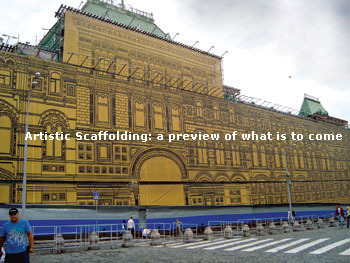
Russia01

You can study Russian history while walking through Moscow: the buildings are deserving of adjectives like beautiful, ugly, ridiculous and gorgeous. Moscow has grown over the years and therefore reads likes pages of a history book and marks time, unlike St. Petersburg, which is of a particular era and is elegant and poised. Our tour guide didn’t fail to point out memorials for Indira Gandhi, Mahatma Gandhi and Jawaharlal Nehru that exist to remind one of the close relations between the two countries. Besides the Kremlin and the Red Square area, the war memorials, and the Cathedral of Christ the Saviour, the most iconic architectural elements that appear as you pass through various parts of the city are the ‘Seven Sisters’ or ‘Stalin’s seven wedding cakes’: the seven towers of Moscow (including the Ministry of Foreign Affairs and the Moscow State University), designed in Stalinist style. Some apartment buildings are like those in Germany: self-contained buildings furnished for Kremlin employees, observed by the KGB. It is not a glass-and-towers city like Shanghai or Hong Kong. It is a city where the architecture and the walls speak of history, a history that is also reflected in the eyes of the people.
Russia14

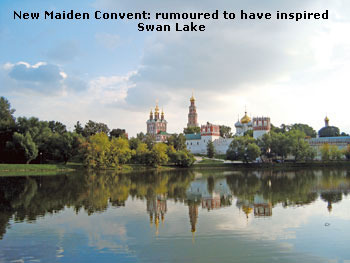
The Sparrow Hills are possibly one of the loveliest parts of Moscow: working as an observatory or viewpoint, with the entire city laid out before you – from where you can see the stadium, university, all the towers – looking lush and green, and not really a relic of the past. The view describes a city that is eminently like any other Eastern European one, well-maintained and advanced. But the most beautiful place, by far, is Moscow’s best-known cloister, the virtually intact New Maiden’s Convent (Novodevichy Convent, also known as Bogoroditse-Smolensky Monastery), proclaimed a UNESCO World Heritage Site. It is a dreamy, magical place that is lit up by night, with swans gliding along on the lake. Legend has it that here Tchaikovsky was inspired to write Swan Lake. Though, unfortunately, today, there are no swans here in sight – only ducks. Is that significant?

The metro is akin to being the underground kingdom of the Soviet. The metro runs every 90 seconds during rush hour, with nine million people using it daily. Built in the ’30s and ’40s by world-class architects, as a part of Stalin’s five-year plan, some of the beautifully designed metro stations are protected by UNESCO. It is actually quite a pleasing exercise – much in the manner of visiting and spending a day at an art gallery – to hop from one metro station to another.

Running deep into the ground – the escalators down can be intensely steep and extraordinarily long – there is an artistic treasure-trove hidden in its subterranean depths. You can find baroque-style and Kiev-inspired stations, some outstanding examples of socialist realist art and those with mosaics, framed art, sculpture, spectacular chandeliers and war memorials. During the war, some were used as bomb shelters. There is actually an entire ‘art train’ – painted from the outside with works of art hanging inside. Each station is very different from the other. The station near Revolution Square, for instance, has sculptures of dogs, where the snouts are polished regularly because students keep touching the snouts for good luck before exams. The metros form a particularly interesting rendezvous spot for couples: I noticed a tall, well-dressed woman meeting her beau who was waiting for her with a single, long-stemmed flower.

All along, as with other parts of the city, you need to watch out for thugs and pickpockets. I do indeed speak from mild experience, as we stepped out from the metro and found ourselves jostled, with a loud scream and a girl falling roughly against my husband, who looked positively startled. Turns out, the girl was in the process of getting her purse picked by a group of enterprising gypsies, and luckily for her, she felt the pick. Raising a hue and cry, a genial fist-fight ensued, accompanied by shrieks and growls, with policemen arriving on the scene double quick. The gypsies decided to show the policemen who’s the boss, and got whacked right back in return, with an ensuing chase up the metro steps. Just another day on the metro. Yawn.

It is peaceful and quiet on the weekends and overcrowded on the weekdays. Muscovites prefer to stay in summer cottages outside the city on the weekends, in the countryside. Moscow is an exorbitantly expensive city, even for the locals, and there is a huge disparity with respect to money, leading to crime and violence, even racist attacks. There are expensive malls housing top-brand shops, an exclusive high-life that glitters by night. It is a city that seems to be trying to fit into the new European capitalist scene, but it is not yet there. The women are some of the most beautiful in Europe, nay the world. Young women are overtly sexy riding on sky-high heels, skinny jeans/attention-grabbing leggings/ miniskirts, long hair and sheer shirts that scream for attention. Really, the heels and the legs are longer than the buildings. I noticed my man couldn’t take his eyes off them. Note to self: No point bothering. These women are beyond compare.

It’s not the best idea to explore town alone, unless it is a well-known bar or linked to a respectable establishment like a big hotel, particularly since no one really gets grooving until post-midnight. You will find nightclubs and dining halls made out of old bomb-shelters. When we visited, there was a happening spot called the ‘Garage’. Irony, irony everywhere, not a drop to drink. There are constant reminders of the old world in Moscow: they are either embracing change or mocking the old guard with the new life. I have yet to discover which one it is. Even a Starbucks (right around the corner from our hotel), which is generally buzzing with capitalist hope, wherever it is located, appears dark and dismal…or maybe it is just that time of the night and my imagination is playing cultural tricks on me.

IN THE CHERRY ORCHARD
extra pickings

The Russian circus: it’s like any other, but fun because of the acrobatic feats. Animals, humans and talent blend in a colourful mix of bright music, costumes and showmanship.
Spend a leisurely day checking out the Pushkin Fine Arts Museum for Impressionist and Post-Impressionist paintings.
Don’t miss one the world’s finest private collections of art at the Tretyakov Art Gallery (19th and 20th century collection of Russian avant-garde).
Alexander Pushkin is a really big deal. Check out the Pushkin café, over-rated but definitely worth a cuppa in its dark, green interiors lit by red lamps.

ST. PETERSBURG
looking forward

Russia07

Say what you like but a train often beats taking a flight hands down. And in Russia, like most of Europe, it is particularly charming to take the super fast trains between cities, because you get a chance to check out the countryside as well. And if you have time, there are cruise ships that travel between Moscow and St. Petersburg (or St. Petes as it is casually known), where you can visit small towns along the way. Formerly known as Leningrad, the city is just plain delightful with its canals and European-style buildings. And the people are super friendly. (Tell them that, and they bask in the glory – there’s a competitive streak that runs between Muscovites and Petersburgians.)

Looking at St. Petes, you immediately feel a sense of satisfaction – there is an aesthetic appeal and more often than not a sense of proportion in every street, line, building and structure. It is as if the best European minds took a policy decision to make this a city of artistic reckoning, and proceeded to do just that. The Italian designers, hailing from sunnier lands and finding themselves in duller space with the grey weather of St. Petes, took up the brush with determination, running paint in colourful hues across the buildings. In fact here, there is a sense of rightness in seeing the joy of a local wedding on the beautifully serene embankment facing the stunning, sea-green coloured, very large and very old museum of art and culture, the State Hermitage (think over 3 million works of local and international artists), as the wedding party makes merry with inebriated song. Or on the grounds of the spectacular Peterhof Palace and Park with costumed guests, amid the fountains that intentionally rival that of Versailles, with what the locals claim to be better natural water pumping and drainage technology invented in the 18th century. Or following tradition, with the groom carrying his new bride around the Bronze Horseman Statue….

It’s no wonder that after their forefathers’ experience during invasion attempts, the French and the German tourists are the ones who are particularly at ease visiting St. Petes when it is at its most beautiful in the winter, under snow with the River Neva frozen to one metre of ice that you can walk or skate on, with temperatures dipping from -10 to -30 degrees. Rivalling the winter, for people like me who prefer warm sunshine and skid-less walks, is the spectacular and tourist-happy time of ‘white nights’, when by virtue of its proximity to the North Pole, St. Petes experiences a span of continuous daylight (variably around early June through early July). Having the chance of revelling in the city’s beauty, continuously day-lit, fired many a poetic imagination: think Fyodor Dostoyevsky’s White Nights for one, which in turn, influenced international and Indian cinema (from Manmohan Desai’s Chhalia to Sanjay Leela Bhansali’s Saawariya).

The river canals really make all the difference. Slipping under low-hanging mini-bridges (and nearly getting my head slapped into one while taking a bottom-angle photo of the Church of the Saviour on Spilled Blood), moss-covered stone, large sculptural delights and past occasional official-looking Communist-style buildings (with the double-headed eagle coat of arms) holding fort with beautiful European ones, you need an English-speaking tour guide along, as hopping onto a canal tour from the Nevsky Prospect will land you with a Russian-language one (we discovered to our dismay). And at night, when there is night, the ‘Venice of the North’, which comprises 42 islands and is connected by eight waterways, opens up its drawbridges to let cruise ships and boats pass through. Lit up, it’s quite a spectacular sight.
Russia27

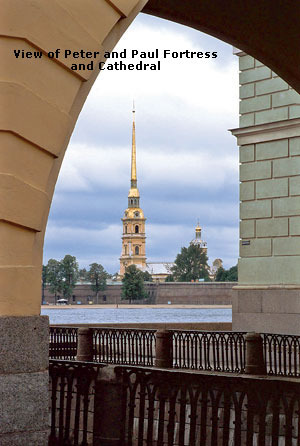
St. Petes, while magical by itself, is known worldwide for its exquisite palaces, built in baroque or neo-classical style. What I find quite amazing is that while the Communists introduced atheism (anyone going to church would have to report to the KGB office) and were severely against symbols of royal power and the excesses of the royal courts, the Communist government spent millions of dollars in restoring these royal palaces and the works of art within, which were burnt to the ground, destroyed or looted during the Revolution, world wars and invasions. The city has its fair share of synagogues, mosques, cathedrals and Buddhist temples. Two lovely examples of cathedrals are that of St. Isaac’s, the largest in the city; and that of Peter and Paul, built inside Peter and Paul Fortress, considered the first and oldest landmark in St. Petersburg.

Talking about works of art, you can spend three years in the Hermitage and not end up seeing all that it has to offer. What is particularly striking is the Raphael Loggia, rebuilt exactly (by Russian masters among others) according to the original Italian model in the Apostolic Palace in Rome frescoed by Raphael. As chambers roll into each other, each one more striking than the other, you feel lost in a space and time that is of another world or era. Ceilings that are replica of floors, floors with 16 kinds of wood…and we haven’t even got to the sheer magnificence of the royal palaces yet. While there are many to check out (each requiring half day or a full day) located in the ‘Imperial suburbs’ (not including Tsarskoye Selo) three good examples are the classical Pavlovsk Palace, baroque Catherine Palace and Park and the famous Versailles-like Peterhof.

It feels distinctly incongruous leaving the old-world charm of St. Petes by the industrial road (which has a famous porcelain factory) and taking the highway, which has plain cement buildings marring it to make our way to Catherine Palace and Park. Catherine’s Palace is a brilliant example of 18th century baroque. Built earlier than Pavlovsk, it was also restored to its current finery, with immaculate French landscaping in the gardens. We walk into the Amber room and we discover that the amber was looted from this room during the war, and later restored – so cleverly that we can barely tell where they ran short and painted stone just like it!

Peterhof is sheer magnificence. You feel that you can’t feel more wonder after having seen so many palaces and taken a long turn around the Hermitage, and then you realise that the best is always saved for the last, cutting across to a part of the grounds from where you can see the Gulf of Finland. Lying south-west of St. Petes, arriving there means being greeted by enormous, beautifully-landscaped gardens, memorials, and numerous fountains. After so many years, it is still being restored (the process that began after the Second World War) from original sketches, paintings and plans.

As we drive on the beautiful Moskovsky Prospect (‘the road which leads to Moscow’), a 10-kilometre road that ends in St. Petes’ historical centre, we pass striking examples of Stalinesque and Kruschev-style architecture. As exemplified by the Victory Park bordering the street – where 75,000 people were buried during the Second World War – scarred by many wars and many attempts at invasions (the Russians are proud of the fact that these attempts have been largely unsuccessful), you can’t miss the war memorials that stand out across the city: the old metro station built in 1957 after the Second World War, decorated with Soviet symbols; the Aurora World War II vessel which you can explore; and the Field of Mars, a graveyard for World War victims.

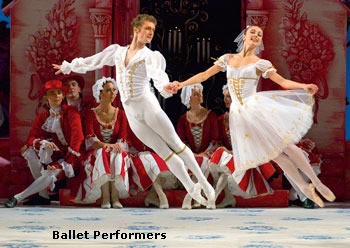
You return to the city having exhausted your eyes, nursed your emotions and wearied your legs taking in the finest art and learning about the ravaged history and have yet to experience a world-famous Russian ballet performance. Summer performances are reserved for the tourists, October being the best time for ballet when the more experienced troupes are back in town from summer break. The Fine Arts Square in the city is replete with theatres and museums (particularly the famous Russian Museum), and many a quaint shop in which to buy curios while you wait for the theatre doors to open.

A little girl stands on her toes and pirouettes, spinning faster and faster, until she appears like a blur, a speck on the stage. She stops, leans backward until her back is a perfect arch and if she moves even a fraction it will snap like an elastic band. And that, is the best way to describe the experience that is St. Petersburg – a fabulous cultural experience, breathtaking in parts, dizzying with its extraordinary beauty and somehow, always young and receptive. Words can’t do justice; you need to live the experience.

Russia08


FAR & AWAY

Getting There Aeroflot flies direct from Delhi. You can also connect via airlines like Finnair and Emirates.

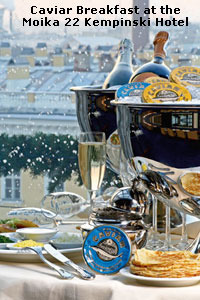
Stay While there are many good hotels, including excellent local ones, the Kempinski chain is highly reliable and perfectly catered to tourists in terms of location, cuisine, service and language; with most European tourists staying here. The Baltschug in Moscow is one of the best hotels in the city, while the Moika 22 in St. Petersburg, housed in a Petersburg Mansion on the Moika river embankment offers a spectacular view of the historic part of the city from its rooftop restaurant. Choosing a common chain for the two cities is also advisable because the consular paperwork required can be handled simultaneously.
Russia06

Eat A traditional meal is vodka with the meal including salad, soup, meat-and-potatoes style mains and dessert. Because of the weather, people prefer strong alcohol. Try the Tsar’s breakfast: orange juice, Russian champagne, red and black caviar, smoked sturgeon, marinated salmon with extras; and a version of the Russian sandwich: Bachmann salmon tartar with caviar, lettuce and chives on bread. When in St. Petersburg, check out The Other Side, a lively watering hole for expats run by a New Yorker; Podvorye (near the Pavlovsk Palace) which is designed like a traditional Russian village and has a menu offering Putin’s favourite meal; the Palkin which is considered to be the city’s best and most splurge-worthy restaurant; and Flying Dutchman which is a ship-restaurant (including a dance club and gym to burn calories) on the Neva river.

Travel Must-Knows
Don’t even consider backpacking in Russia. If you are not going as a part of a convention or an organised tour, it is recommended that you stay at a well-recognised hotel and link yourself with an accredited English-speaking tour guide. The foreign police/militia can approach anyone (particularly a tourist) and ask to see their papers. Your passport must be with you at all times.

Take Aways

Russia10

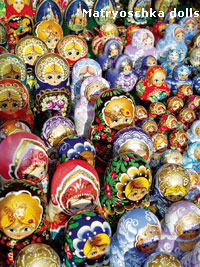
Matryoschka dolls, vodka, Russian chocolate (Krubskya which is a St. Petersburg brand), caviar (Osetra, Beluga or Sevruga), a woolly Russian hat, artistic keepsakes of the Russian masters, quirky postcards that raise an eyebrow at Communism.

Moving Images

Tags

, , ,

Published: Verve Magazine, Nerve, March 2010

Two Australians set off on a bike ride through Rajasthan clicking photographs along the way, which were later auctioned for charity. Verve brings an exclusive showcase of four of the shots taken by veteran director Baz Luhrmann and People’s Choice Award-winning artist Vincent Fantauzzo

A Snappy Portrait

Moving05

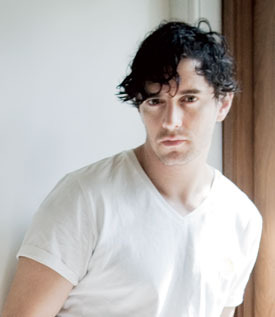
He’s the hot young artist with a wife of Indian (think Goa) origin and a three-month-old baby. Preferable medium of choice, oil on canvas – with a cinematic approach. Vincent Fantauzzo likes using photography and film to create a narrative that the viewer can relate to. “It’s all real art. I do a lot of photography, filming, sculptures and abstract painting. I’m completely open to all forms, letting it evolve naturally. Photography and film inspires my painting.” Not surprising then, that he’s in talks with director Baz Luhrmann (also inspired by visual arts) to blur the line between painting and film with animation.

The 33-year-old UK-born-Australian-resident exhibited his works (besides painting a mural with Luhrmann) at the Le Sutra art concept hotel, Mumbai. He’s exhibited in India three years ago, but this journey was a little bit different. Luhrmann and Fantauzzo set off on a bike ride through Rajasthan to take pictures of anything interesting that came their way, the shots then being auctioned for charity – a positive gesture through a creative act.

Going back to his stunning paintings of the late Heath Ledger and the child actor Brandon Walters from Luhrmann’s Australia that earned him the People’s Choice Award, the soft-spoken Fantauzzo says, “I’m interested in a story behind the person. Sometimes that is a space with the person in it – close-up crop section of the person. A picture speaks a thousand words and a face can do the same thing. A single image can tell a whole story leaving room for interpretation, where multiple stories can evolve. It is about not complicating art. I don’t want a person to have to be an academic or an art historian to connect with my work. It’s for everyone.”

A lens-worthy construction

Tags

, , ,

Published: Verve Magazine, Nerve, March 2010

Verve takes a look at artist Yamini Nayar’s photographs, created for the lens and destroyed right after

Art03
Art04
Art07

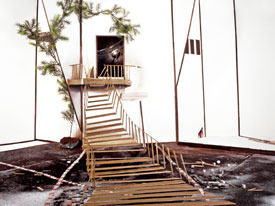
BROOKLYN-BASED AND DETROIT-BORN YAMINI NAYAR HAS found recognition in the top international magazines. Drawing inspiration from industrial and post-industrial towns, she combines sculpture, installation and photography in her images of imagined spaces. Using raw, industrial and discarded materials, her table-top to room-size installations are built for the lens: the scenes are photographed with a large-format camera and are destroyed once the photograph is generated.

The 34-year-old artist says, “The digital studies are created parallel to the constructed images, in which they conceive of spatial systems within images of found settings, including sites of decaying industrial towns and manufacturing sites.” She goes on to elaborate, “Space is where design and everyday life intersect. It is layered; public and private grow and overlap in the traces and material culture of inhabitants – habits, histories, desires, neuroses. In addition, I’m drawn to a kind of makeshift construction and architectonics, a repurposing of materials, mirroring what you see in developing global cities where there is an inventiveness with materials, realising what is possible with what is at hand.”

Abhay Deol: An Uncommon Man

Tags

, , , , , , ,

Published: Verve Magazine, March 2010
Photographs: Harsh Man Rai and Tina Dehal

You may choose to like or dislike his choices, but you can’t ignore him. A string (think ten) of unusual movies later, Abhay Deol, who turns 34 this month, has found sure footing in Hindi cinema with unexpected acceptance from the audience and grudging respect from the industry. He inspires deeply opposing reactions, but that doesn’t bother him in the least. Sitanshi Talati-Parikh discovers the man behind the actor

Abhay02

I had a premonition about that Saturday, but I didn’t anticipate that meeting the hottest Deol in town would involve a star-crossed sequence of errors. Lost in Aram Nagar Colony, in the innards of distant Versova, trying to navigate around bungalows that had no order or system, unable to get the girl answering the phone to give me usable directions, I reached harried – unforgivably – three minutes late, only to find him busy in a conference with director Navdeep Singh for his first home production, Basra.


Apparently, while trying to get his own production house rolling, he’d forgotten about our interview. Looking rather bemused, he started talking rapidly…for nine minutes, and then requested a five-minute time-out while he finished some critical Basra-related work. Meanwhile, I tapped my nails on the wooden table, back firmly facing the curious eyes in the production house, checking out posters of Dharmendra’s films that populated the walls and watched the minutes become the better part of an hour confirming that I would miss my friend’s wedding in the bargain. After being at the receiving end of a couple of sardonic comments about time and responding with rather genuine profuse apologies (yes, I believe him), he emerged to give me a full, uninterrupted 40 minutes of quality time. Am I surprised that at the end of it all it was a great interview?


Of course, the dark clouds that loomed hadn’t begun to pour yet. I got back home only to discover to my intense horror that only the first nine minutes had saved on my voice recorder – all else had, by some inexplicable black magic, vanished. The curious dead cat had got my tongue and made me roast in hell. Munching vigorously on humble pie, I returned to the now-familiar Aram Nagar Colony a few tense days later on another professional rendezvous with the refreshingly easy-going actor-turned-producer. This time around, he didn’t keep me waiting and my recorder behaved itself. We ate some bitter chocolate to thaw the ice in the air.


Curiosity killed the proverbial cat and made Abhay Deol famous. It took a while, but now everyone wants a piece of this man who doesn’t fail to arouse interest. He’s not a misfit in the sense that he’s an abnormality; au contraire, when you meet him, he’s pleasantly normal. It’s his choices that have made for fevered coffee-table speculation, and the fact that you always wonder what new oddity this unconventional Deol will roll out. He’s been called that so many times, it’s almost a cliché. Maybe that’s why the lanky actor, who always prefers to keep a surprise up his rather hairy arm, has chosen to do a movie that seems so incredibly mainstream. The upcoming Aisha, loosely based on Jane Austen’s Emma, co-starring Sonam Kapoor and produced by Anil Kapoor, is worth watching, if only to understand why someone like Deol would star in it. A perfectly normal romance, there is no angst, no odd-ball character, no debauchery; nothing really that makes it something he would ideally gravitate towards.


It makes you suspicious, wondering if all along, these strange choices – a superhuman character in Honeymoon Travels Pvt. Ltd (2007), a lovable thief in Oye Lucky, Lucky Oye (2008), a contemporary Devdas in Dev.D (2009), a failed writer and middle-class government engineer caught in a web of deceit in noir film Manorama Six Feet Under (2007) – were all an act, until he found a director and producer willing to cast him into the ‘safe’ and common mould. Deol looks unabashed, as if you would be ridiculous to question his choices, firmly crediting script over banner, any day. His other release this year, Dev Benegal’s Road, Movie (an Indo-American production which has already got rave reviews on the international circuit) about the experiences of a guy driving his truck through a desert, makes this statement a fact. Deol happens to be a part of Road, Movie merely because Benegal was willing to wait to accommodate the former’s busy schedule – it is a twist in the actor’s fateful tale. Now, where Deol goes, the banners and author-backed roles follow.


Dharmendra’s nephew has had to live with being told, rather matter-of-factly, that his movies don’t stand a chance. But patience, grim determination and a slow pace of success later, when people started to (albeit grudgingly) accept him as a bankable star and the industry began looking up to him as a leader in experimentation, you find that Deol can’t help but be a little smug. Success breeds confidence, and he admits that being on the other side of the bargaining table, seeing the way the chips have fallen has given him the right to be self-assured – to talk with the knowledge that people are itching to hear him (he was a speaker at the prestigious TEDIndia – Technology, Entertainment, Design – international conference last year); and to walk with a sense of renewed purpose. And a part of that purpose is being a catalyst for change. “You need to take the few early steps – paving the road for others to drive upon. And more importantly, I have to do things that appeal to me as an artiste/ actor, that’s where the honesty will come from. The audience will follow – after all, people always gravitate towards those who are sure of themselves, and those who do things with integrity.”


While he may claim an avid fan following, there are those who have not seen his films, and therefore have not really come to recognise him as an actor of repute. Road, Movie, for instance, is a film that he admits can go either way with the audience. “It is a step in an unexplored direction and I don’t know how people will react – the foreign audiences have really appreciated it, but will it be a film that appeals universally? I don’t know. With a good release, though, it stands a chance.” At the same time, he is not comfortable with the idea that his films – and therefore he – may appeal to a niche, intellectual audience. “I have never looked upon an audience – particularly the Indian audience – as being dumb or looking for escapism. I consider my audience to be smarter than I am. If I didn’t, I would be taking my audience for granted. Whether realistic or not, it keeps me on my toes, and raises the bar for me personally.”


Talking about being realistic, you can’t see this Deol raging on screen, warding off goons and doing a merry jig around trees (though Honeymoon… proved that the boy has magic in his tangoing feet). Subtlety, not melodrama is his artistic choice. Where at one time, cousin Sunny Deol’s angry histrionics may have held the day, today, the multiplex audience is more forgiving towards actors who believe in the power of nuanced performances. In real life Abhay Deol is a casual and prolific talker, but his on-screen characters tend to emote with expressions rather than voice: minor inflections are expressively reflected on camera. “I prefer to use facial expressions when I am acting. There are actors who will want more dialogues simply so that they can have longer screen time. I tend to cut my own dialogues – if something can be said in one line, why do you need five? Our face and expressions are magnified on the big screen, so less is always more.”


‘Beta engineer banega’ is what most Indian parents would think and that’s exactly what Deol’s parents hoped for. Growing up in the same house as legendary star Dharmendra and his sons Sunny and Bobby Deol, the younger Deol came into his own on stage in Jamnabai Narsee School, as early as age five, but remained ambivalent about his future as an actor. “My family wanted me to do whatever I wanted and give it my 100 per cent, though they would have liked it if I became a doctor or a scientist. Growing up in the ’80s, it was like that. The kids in school would make fun of me, because I came from a family of actors. When people around me proclaimed, ‘He’ll be a good actor,’ I would find it deeply offensive, thinking, ‘How do you know that; how do you know I may not have other interests?’ I hid the fact that I wanted to act. I used to be good at drawing…I thought I would take up graphic design.” It seems that for longer than should be necessary, Deol has been fighting being moulded according to people’s expectations, even if those expectations were a part of his own dream.


What the kid that refused to conform actually did was study theatre in Los Angeles, USA, and contrary to expectations, it wasn’t an easy road into movies. “Initially, I wanted to work with everybody, to do that commercial film so that I would get the money to do a non-commercial film. I hate those labels – ‘commercial’, ‘non-commercial’. But it conveys the message. Nobody wanted to take a chance on me because I was a flop actor. And, before Socha Na Tha (2005, Deol’s debut film directed by Imtiaz Ali), there was no interest in me either.” Despite dogged determination and a good show of bravado, Deol’s chosen path came with its own share of insecurities. “You want to navigate the system, you need support. You don’t want to end up as someone on the periphery. I decided then that whether hit or miss, I would let my work and its consistency speak for itself. You can only be insecure if you have something to hide or if you doubt yourself. I’m pretty truthful and honest, so my insecurities kept going out of the door. Those that remained were about my career as a whole, because it is a bigger entity.”


Forbidden Films (it’s hard to miss the defiant air in the choice of name) is a production house that he started after the painful realisation that many of his films failed because of bad marketing. “There has been a struggle working with first-time producers and smaller film-makers – it’s difficult because even while making the film, money runs out. And when it comes to releasing the film, there’s no money left for marketing. Then, the producer lacks the clout to distribute it well. That works against a good product and it kept happening to me. For instance, Oye Lucky, Lucky Oye and Dev.D, backed by UTV, fared better than Shemaroo which didn’t manage to successfully market Manorama Six Feet Under. These are lessons I have learnt.” He believes that none of the Indian film producers – whatever they may claim – really know how to market a film internationally. And therein lies a huge untapped audience. “Starting my own production house was merely to give films, directors and stories that I believe in a chance to survive. I don’t plan to star in all the films I produce – but I am acting in the first one, Basra. Production is a lot of work, and being new to it, it’s a learning process.” And this coming after shooting three films back-to-back (Oye Lucky…, Dev.D, Road, Movie), which got this avid traveller (who prefers luxurious European jaunts to backpacking trips) so burnt out that he had to take a few therapeutic months off to do a welding and metal-work course in New York.


He has chosen wisely to not be bothered by what others think or how they define him, particularly by the recent incident reported about him being at loggerheads with the Aisha producers on being dissatisfied with his role. “Almost everything that is reported is a?rumour or not true, though I’m not saying everything is false. I’m private about my life…and there are times when I say what comes to my mind, in a particularly casual fashion, which gives my words the leeway to be twisted.” With a sheepish grin he remarks, “And sarcasm doesn’t work really well with the media.” Like others before him, Deol has fallen prey to people’s opinions based on the quirky characters he has played, his oddball choices and industry buzz. “I do feel that I am misunderstood as a person. There are things I have heard about myself…it all comes back to you. People think that the stars don’t know, but they know about these rumours. You are in the public eye, working with different people, a lot of times you could be the one being difficult and it’s there for all to see, and other times you could be justified in what you say, but people will still feel that you are being difficult, because of all that’s perceived of you and because you are in such a position of power.”


Or the times when there are determined probes into this highly eligible bachelor’s love life. With no real face to attach to the girl(s) on his arm, Deol inconveniently finds himself linked up to anybody he works with or has been seen talking to. Professional hazard it may be, but he’s often in the incongruous state of being too honest and too private all at once. “Once while in New York, I made the mistake of saying, ‘I’m dating a few girls, it’s not like I don’t have a social life,’ and that got blown totally out of context! In New York it is natural to date casually; while in India I naturally tend to get more protective, I don’t want to have to answer to anybody…questions like: ‘How did you meet, how’s it going, are you serious, are you getting married?’ I mean, who are you to ask me that? Why should I answer? And tomorrow if the two of us are not together, they will write about what might have gone wrong. Sometimes your personal life takes a beating when your professional life starts to go down; then they judge you, and judge your partner for leaving you.”


And so the ‘ladies’ man’ tag has found itself surely attached to his broad shoulders. His voice escalates in volume just enough to suggest that this is a touchy topic (no pun intended). “If you call me a ladies’ man, then, on one level yes, there’s nothing wrong with flirting. I like the opposite sex, I always go out of my way to charm someone and talk to someone; but at the same time, I’m not one to sleep around! I’m not looking to settle down right now, but I’m also not someone who will sleep with anything in a skirt! For me, more than a relationship, companionship is very important. In our day and age, it is much harder to be in a committed relationship for very long.” Experience talks, having battled work pressures simultaneously with relationships, leading him to conclude that it’s one or the other at this stage in his life. “Right now, I’ve barely got my foot in the door – I’m not even settled in right now. So I’ve had two successes behind me, big deal! Two more flops and I will be in the same position I was in two years ago. It’s not like I have cemented myself in this industry – that won’t happen for a very long time – but at least for the next couple of years I need to put in the energy and get close to having, if not my toe, then perhaps, half my body in the door. Then I’ll be happy and take a break. I understand that it is important for me to have a life outside of work….”


He may be playing the field, but he isn’t riding the high horse of fame to charm a girl. Meeting him, you understand he doesn’t need to. He’s not anything like the dark heroes he plays; he’s not the Dev folly. “I am a positive person, happy in my personal life, and I’m not very competitive. I tend to gravitate towards those girls that don’t give me any extra attention just because I’m famous. For example, there was one who wasn’t very polite to me because she assumed that I would have star-like airs, but over the course of a few meetings, she opened up to me, when she realised that I’m just a normal guy. And immediately, I was attracted to her because she valued the right things. Of course, there is a lot of attention because you are famous….”


One would imagine that living with a handful of movie-star Deols would have got him used to fame. “It’s true, I’ve grown up with that and I’m wise to it. I think that’s why I did my own thing when I started out. The fame bit is important to me simply because it helps me get the money to make the movies I want to make. Beyond that, it doesn’t define who I am. And I won’t ever let that happen. It’s not about getting the launch or a platform or a silver spoon up your butt or whatever; it’s really not being taken in by fame and glamour, because once you get taken in, it comes and it goes, it is not permanent. The only thing permanent that you have is the work you have left behind.”


Maybe we are quick to judge people who are not of the common grain. Someone who has chosen – more accurately written – his own path, who one would imagine to be opinionated and as stubborn as a mule, is actually quite reasonable about his opinions. “One of my philosophies is that I know that I don’t know. I’m entitled to my opinions, but am not rigid about them to the extent that you can’t convince me otherwise. You have to accept that you can make mistakes; sometimes you can become so subjective that the objectivity is gone. I need someone to turn around and give me a slap across my face! I respect that, as long as it is justified.”


And being open to other people’s opinions is having respect for individuality. This gets him steaming. “We are constantly told, don’t do this, do that instead. It is crazy. I totally believe if you have faith in your artist, if he/she has already delivered, give them a chance. The one thing we lack in our industry is individuality. Which is why all the films, actors, actresses look the same! Because they are all aiming for the same thing – who can dance better, who can fight better. That is why we have more flops than hits. It still baffles me how people see formula and depend so much on it. There is a formula, for sure there is. But the ones who break tradition, get famous.”


He finally leans back – barely having paused for a breath – and you feel like you have travelled the long, rough road to the beginning of success with him. Only you haven’t. “I’m happy, but just because you are happy doesn’t mean you stop. You can be greedy and want more.” There is a deep throaty chuckle, Kevin Spacey-like dimples flashing, reminding you that despite having reason to, he doesn’t smile enough. “I want to go the distance in making a movie that has universal appeal. I want to communicate to the world, not just to India and Indians. It’s not just about boy meets girl, it’s not just about comedy; there’s also global warming, genocide, political assassinations, social workers, adoption….”


It’s also about microcosms that have macrocosmic appeal. “While I’m a Mumbai kid, I understand village mentality because my family is essentially from the Pind, in Punjab. I’ve been brought up with a certain set of traditional values and culture, and I want to have my own take on Indian culture. There’s a huge gap…and film is the medium you can bridge it with!” Lucky Singh (Oye Lucky…) and Dev (Dev.D) were two such curious characters rooted in North India, with a nation-wide appeal. “With Dev.D I knew I could take a classic novel, which even my grandfather knows, contemporise it, and have it appeal to a 16-year-old today. It’s the same thing that Sarat Chandra Chatterjee was trying to say in 1917, that kids today are trying to tell their parents. Why are they rebelling? Why are they obsessing? While Chatterjee didn’t like his own work, and I cannot identify with Devdas, it does have universal appeal.”


With the same angst of a person struggling to find his rightful place in the world and triumphing in the end, he is more like Satyaveer Randhawa in Manorama… than any of the characters he’s played. Yet, he gravitates towards all his roles, albeit unconsciously, because they share a common strain – a debauched spirit that masks a principled person. The principles can shift from determination to fixation with a thought, the debauchery can be rakishness or trivialisation of a socially accepted moral code – but they entwine into the personality of a person who simply goes with what he believes is right.


This is what makes his characters likeable despite their flaws, and this is what makes Deol interesting. Lucky Singh’s sincere eyes belie his actions, the deeply dimpled smile is innocently impish – and you feel that there is a possibility of redemption – in fact it should be no other way. Taller than you’d imagine at six-feet-and-one-inch, and skinnier than you’d expect, clad in pale blue denim and a casual tee, the Darcy-like personality leaves you with the same impression. “Is he as hot in real life?” asks a friend. He may not be your average candyfloss poster boy, but you would be foolish to ignore him. Self-assured, flippant and with an unintentional air of cavalier disarray, the actor is a ‘project’ – someone a girl would automatically get attracted towards, to ‘fix’. And that is just dangerous territory, because as defined by his sometimes wayward, often laid-back attitude, Deol is essentially a free spirit. Dressed (defiantly?) casual at a glittering fashion soirée, he is equally at ease being his own companion, as he is exchanging pleasantries with the best looking girl there. He can be perfectly charming, should he choose to do so and that would be within the constraints of what he defines to be a laid-back friendship or relationship. He would revolt against shackles of any kind, expectations, demands and a desire to be moulded into someone who conforms. And yet, he believes, “commitment-phobic” is not the appropriate term for him. “It’s just that I am not at that place right now,” he explains earnestly. This Deol isn’t misunderstood; he’s just waiting to be understood. At the right time and place in his life.


Baz Luhrmann: Amplifying Emotion

Tags

, , , , , ,

Published: Verve Magazine, International Edge, March 2010
Photographs: Aparna Jayakumar

Award-winning Australian director of films Moulin Rouge!, Romeo + Juliet and Australia, Baz Luhrmann arrived in India expecting a “creative adventure”. In the midst of dipping his fingers into paint, warding off curious eyes, responding to over-enthusiastic banter and driving a bike through Rajasthan taking photos, Sitanshi Talati-Parikh gets an insight into his artistic mantra


Edge01


An elderly Indian gentleman (probably inebriated) asks Baz Luhrmann at a recent art soirée, about the size of his pants. Luhrmann replies politely and retreats to probably punch the wall or take a deep breath. He has, in the correct manner of famous people especially of international origin, been generously accosted. His voice is scratchy from replying to the same – or inane – questions, his face is showing more lines than it should from smiling politely to profusely talking strangers, and he is undeniably tired. It is not surprising then, that he chooses a late start, armed with coffee, the morning of our meeting. “Not all of it is joy,” the veteran director admits, “Some of it is overwhelming. But something keeps telling me to ‘surrender’ and be in the moment.” An agreeable disposition and genial self-deprecating humour on his surprisingly slight frame make him a very real person who likes making larger-than-life movies that tend to hit the spot.

It is a creative visionary’s brush that picks up on the nuances of life, emotions and true-to-life characters with a flourish to create the ‘big’ film – full of flavour, drama, vibrant colours and melody – whether it is the garish realism of Romeo + Juliet (1996), the Parisian kitsch of Moulin Rouge! (2001), or the ochre-hued drama of Australia (2008). “It is amplification. You take realistic human emotions, realities or problems but you use an expressionistic canvas.” And this is what led to what is popularly known as Luhrmann’s Red Curtain Trilogy (Strictly Ballroom (1992), Romeo + Juliet, Moulin Rouge!) – the concept of an “overtly theatrical musical work”.


Australia announced a departure from Sydney-born Luhrmann’s previous musical format and moved towards a more sweeping epic form. “There is no way that Australia is of the then-current naturalistic vernacular. It is heightened, much like Gone With The Wind is heightened. Instead of music, I tried using landscape to amplify emotion. It is operatic in that sense. Naturalism is like looking through a keyhole and you are apparently looking at reality; but this form is where words fail us – sometimes we just can’t express in words what it is like to truly be exalted or truly be in love or truly lose your child over a cliff.” Instantly, in the mind’s eye appears the stunning visual of the herd of cattle racing towards the brink of a cliff pounding a dust storm. “What may seem to us to be a small event, to a person in the village, it is operatic at that point of time. ‘You-can’t-marry-that-boy-moment’ internally feels like Tosca. As an artist you want to use devices to help the audience empathise. And that doesn’t mean just reproducing the way it apparently is. I try not to show the way things are, rather the way things would have felt for the character.”


The once-aspiring actor has often given credit to Hindi cinema for influencing his cinema. “India has always been an extraordinary serum for my soul. Fifteen years ago – it is quite serendipitous – I made a production of Shakespeare’s A Midsummer Night’s Dream (1993) set in colonial India. I was really fascinated by the connection between the Elizabethan spiritual world and the Hindu spiritual world. The production is very distinctly making those visual translations in the time of the Raj – the lovers are all European Raj characters and the Hindu spiritual world plays with them.” It went on to be a hugely successful show, winning the Critic’s Prize at the Edinburgh Festival. He recalls the defining moment being his visit to India at the time, with his award-winning production-designer wife, Catherine Martin, where in Rajasthan, they saw their very first Bollywood movie. Unable to remember the title or the cast – except that it was about two brothers going to Oxford University, and fighting over the same girl – Luhrmann found it remarkable that there was, “intense tragedy, next to very broad comedy and then a burst of song. Two thousand people were spellbound, including us who couldn’t speak the language, for three hours. What we got out of that was the value of exaltation. In that sense Bollywood films are Shakespearean. Different people can have different experiences at different levels. That sensibility became the Red Curtain Trilogy and has stayed with me ever since.”

Edge02

Characters and sensitivity to their emotions is a trait that can be traced back to his youth working at a gas station observing people. At 47, he admits, “I’m addicted to people. And, it’s shocking, but I’m just getting started. I haven’t begun to meet all the people and haven’t begun to make all the movies. Maybe one day I’ll make a really good film, won’t that be good?!” There’s a light chuckle. “People are derided for it…being enthusiastic is uncool, so I would think, be as uncool as you possibly can. There is nothing sadder than getting to a certain age and sleepwalking through life, marking time until the curtain falls. I don’t want to surround myself with that energy.”


His own vigour (despite the weariness) is paramount, and you would expect him to have enthralled us with more work than he has. He has a bunch of projects lined up, including that of a cinematic production of The Great Gatsby. “There is no such thing for me as lying on a beach and saying, ‘The cocktail’s good!’ Creativity has always instinctively been for me the pursuit of a rich and extraordinary life, out of which creativity grows, as opposed to the pursuit of a successful career. I did that, and all of the Red Curtain came out of the instinctive urge. It has to be personal to begin with. For instance, I love Paris and Bohemia, hence Moulin Rouge!” The first Harry Potter film was offered to him: recalling that, he mutters, ‘Idiot!’ and smacks his forehead in mock disapproval at missing out. “That might have been a brilliant career choice once, but the work I do comes out of my life’s journey. Recently, I lost sight of that. So between films I’m doing things just like this.”


And this is exactly where we are. At the newly-opened Le Sutra art concept hotel, Bandra, Mumbai, that has a mural painted by Luhrmann and Australian artist Vincent Fantauzzo. Appalled by the recent negativity in Australia that he’s afraid will mar the formative years of Indian students, Luhrmann decided to partake of this “creative adventure” to use the artistic medium to speak out in a way that politicians cannot. “It is a genuine leading experiential artwork, what we used to call in the old days, ‘a happening’ and a platform to express the positivity to counter the negativity. As old as India is, it is young again. It is youthful, it’s finding new creativity – Australia connects with India on that level. Without getting too clever or complicated, it was adventurous for us, but also symbolically and creatively a positive gesture. So far it has been intense, and it hasn’t let us down.”


Whether it is playing himself on an American TV show, directing a ballet, painting a wall or making a film, Luhrmann has never been judgemental about ‘high’ and ‘low’ art. “It is just expression…the adventure in pursuing it and the personal gain in your internal journey. What does it do for you?” While painting the mural – quipping that he merely held the can of paint – he finds that he has, “received the invisible lesson – one that you don’t know where to look for.” Accustomed to a zillion people following his directives, he suddenly found himself floundering with the language barrier, helping young children paint the embroidery on the mural. “There aren’t 15 people here to say ‘Yes Boss!’ I was reminded what directing is – to know what you want and engage people and help them release their fear, be the very best they can be.”


Mark Anthony Luhrmann, “a tiny kid with an Afro”, was very young when he ran away from his father, whom he describes as a “loving disciplinarian”. The long, “crazy” hair, left Luhrmann with the derisive nickname ‘Baz’, which he decided to defiantly hold on to, particularly after it was used affectionately by his father, a little before he died. His brand, Bazmark, has a crest with a motto, ‘A life lived in fear is a life half lived’. It defines the way Luhrmann thinks – against a formula that’s any but his own and one that is constantly being redefined by life’s experiences. “As you become successful in any way, little switches have turned where you increasingly become disconnected with yourself and you think you’re doing stuff, but you are not. It’s harder to not be your brand. You get tired…of stepping outside your comfort zone. Being here is awesome, but it’s not like I’m 25 and haven’t gone to India before and it’s not like stuff isn’t thrown at us. But the effort, already, has given me hundred-fold back. I could leave today and know that I have been woken up in a way that I wouldn’t have had I not stepped outside my comfort zone. You tend to regret not finding out.”

nine hundred and ninety-nine: review of Nine

Tags

, , ,

Writer’s block. Oh my god, how many times does a creative person look for inspiration, and fail more often than he/she succeeds? But in Nine, Daniel Day-Lewis so beautifully portrays the lost child within, the-boy-that-yearns-to-be-a-child-that-yearns-to-be-a-man, the Freudian (maybe even Oedipal) angst, the emptiness when words fail him, the pain of a missing story, the desperate search for a muse and the haunting of a woman wronged. Well many women were wronged by him – and they loved him in the way women get attracted to a project and they wallow in the misery of being a part of that project. The man that has failed in many ways and looks for redemption – from the one woman who can give it to him.

The layers of the movie are as many as the title of this blog post, okay maybe I exaggerate, but trying to catch the many levels at which it works, the complex characterization of each person…all admirably portrayed through one-song-and-a-few-lines-scene each. Each character, each woman comes alive within that tight frame that she is allowed. And through each of them, Lewis’ failings are unearthed.

Possibly the weakest area of the movie also has some of its strengths – weak or bland dialogue intersperses with some very powerful lines, often spoken so simply that you want to reach and catch them before they float away. Judi Dench gets more than a handful of those and Marion Cotillard suffers from less than her share (which she makes up for with great expressions). Nicole Kidman gets a briefer scene than what one would expect but gets some great lines and moments. Oh and the songs – what should have been the strength of the musical nearly becomes its undoing – lacking rhythm and poise, the lyrics are more often than not uninspiring; but the score survives and the women make it watchable.

Great camera work and cinematographic vision, love the bleary red-darkness of the film and the meshing storylines between fantasy, past and present. The little boy crawling back into the man…surreal at times, existentialist in its soul, but the film redeems itself from its weaknesses, just like the protagonist.

Pixie-dust Romances

Tags

, , , , , , , , , ,

Verve Magazine, Culturescape, February 2010

The immense worldwide success of the Twilight vampire love series and James Cameron’s epic film Avatar have made fantasy a romantic prerequisite. Fangs, love bites, fairy dust and aliens pour out of the Pandora box of magic potions, brewing tales that sell imaginary love to bewitched humans. Sitanshi Talati-Parikh finds herself taking love-struck bites

As humans get more barbaric as a race, romances tend to swirl around a fictional character of an imaginary species. What is it about Pandora and the Na’vi tribe that makes them so beautiful and desired? Or about the blood-sucking undead that makes them the modern version of Byronic or Darcyian romantic heroes? Or what attracts us to a ghost, a spirit or a powerful figment of our imagination? It’s not just the fact that their being unreal or non-real, gives me the ability to superimpose the characteristics that I wish to see in the person I love. It is also the fact that by virtue of being unreal, they can be more than we are. Either as humans we are deeply ineffectual at romance; or as people we need, nay we demand more. The inability of romantic deliverance from a human race appears to send our hearts racing towards the inhuman – in true escapist fashion.

Escapism at one point of time was candyfloss romance – where the romantic hero was kind and considerate and loved you for the woman you were, not the woman he wanted you to be. It was human to be imperfect, it was human to accept these imperfections and it was human to love them. Women have always been suckers for the knight-in-shining-armour story – it is as if, we are still waiting to be rescued if not from atypical danger, then from ourselves, and our deep-rooted insecurities. The age of Feminism masked these things under the coat of smart trousers, shorter hair, and a career. Scratch the surface though, and you will find a rather unapologetic little romantic girl hidden inside every driven woman. As Vatsala Kaul Banerjee, editorial director, children and reference books for Hachette India, publishers of the Twilight, House of Night, Sookie Stackhouse, Blue Bloods, Vampire Diaries, Night World and other such series states, “Feminism is not, and should not be, exclusive to the idea of love. Not everyone who chooses to love a male or be loved by him, even if occasionally beyond all logic, is a needy little twerp. C’mon, we’ve all been there – fallen for someone so bad, it’s been hard to think of anyone or anything else, including school or friends or family. But eventually, you get real.”

What is Edward Cullen, the famous vampire hero of the Twilight saga by Stephenie Meyer, if not a paternal caregiver to the rather insipid heroine Bella Swan? His primary role is in protecting her, because he is that much stronger and more powerful than she can ever be (until she turns into a vampire, that is). As she gets embroiled repeatedly in danger, he appears miraculously to save her – because she means the world to him. When he can’t be around, it is the young werewolf Jacob Black, who, again with greater powers, remains her protector. Bella, it appears, is in love with security, and whichever good-looking, charming man who can provide that kind of security to her. It is primarily the love of a teenage girl for an older, stronger man, a benefactor, a lover, and a protector.

With the fact that there is a burgeoning cult of ‘Twilight Moms’, the notion that this is merely the infatuation of teenage girls is immediately put to question. As some of these 30-plus women grudgingly admit, there is something deeply hypnotising about this romance – which fulfils their own unrequited high-school love. The trials of high-school romances and self-doubts never change – Bella, in her rather characterless state becomes an easy avatar for the reader to identify with. As an avid reader from France in her 20s, Myriam Belkis admits, “We can empathise with Bella particularly because of her unremarkability.” The reader, hopefully a stronger Bella, can morph into a young girl, who just wants the perfect guy to love her unconditionally. And so what if the guy is a blood-sucking, cold-blooded (literally) vampire? The very fact that he finds her blood intoxicating and thirsts for it, fights a moral battle every time he is with her, struggling to control himself to be with her, kisses her and withdraws from her raw passion, is inherently sexy. It is guilt-edged, morally unsound and dangerous desire that leaves the reader panting for more.

What is bothersome is Bella’s lack of control and vapidity as a heroine – at least in the first three books. While it may be easy for girls to slip into her character because it’s an empty shell, it’s rare to find readers rooting for Team Bella. The men superimpose the woman, and despite it being her story, she remains vacuous and annoying at best, irritatingly dependent on a man to make her life credible (except for the fourth book, Breaking Dawn, where she comes into her own). ‘Even after half a year with him, I still couldn’t believe that I deserve this degree of good fortune,’ says Bella in New Moon. We can’t believe it either, because she never considered herself worthy of anyone. On a very superficial level, her crisis is that of any teenage girl’s deafening insecurity and self-doubt; on a deeper level, it is disturbing to see the protagonist in one of the most popular romances of the time behave like a suicidal sacrificial lamb at the altar of love. It makes you wonder if women have come a full circle – willing to do anything for love and for a man – and does that make it endearing or frightening?

Bella is unnaturally attracted to the supernatural, making us wonder if she is inherently other-worldly (they suggest she was born to be a vampire) or if she is battling a normal teenager’s rebellious nature with an uncanny curiosity for trouble. Isn’t it more likely for Bella’s love to be infatuation than the unflinching deep love it is proclaimed to be? As a 17-year-old she takes the kind of hazardous decisions – in the name of love – that a 27-year-old would shudder to contemplate. Belkis confesses that, “At that age you are often reckless, and personally I remember my teenage feelings as the most intense I’ve had in my life.” While its appeal to a teen audience is understandable, its appeal to an older audience is Potteresque – fantasy captures the imagination like nothing else does.

And it asserts the notion of being attracted to the bad guy, and wanting to ‘fix’ the bad guy. Edward (and later Jacob) try to make Bella believe that they are dangerous and therefore shouldn’t be anywhere near her, but that just draws her to them even more, testing their endurance. We understand why she loves them, but why, oh, why, do they love her? Is it meant to be a beacon call of hope for all the spineless women out there who want to believe that Mr Perfect is hovering somewhere, even if he is an alien?

We are constantly reminded that Edward is beautiful and perfect, Jacob is warm and attractive – and it seems to be okay, particularly from a sound feminist point of retribution, to objectify men under the pretext of unconditional love, in this three-way interspecies romance. No regular teenage boy (or man for that matter) would stand a chance against a sophisticated vampire or powerful werewolf with super powers and a burning, intense, monogamous love.

It is in much the same way that the Na’vi tribe and the female lead Neytiri are objectified in Avatar – their other-worldliness, devoid of the trappings of human failings, the beauty in their every movement and relationships with their environs is viewed with reverence, envy and admiration by the voyeur-protagonist Jake Sully. It is easy for Jake to be reborn as a freer soul, powerful in ways that a human cannot be, and in tune with a better moral and ethic fibre. He is escaping from a rotten life to a better world. Aren’t we all hoping for an avatar that can help us escape the monotony and failings of our world? There is the obvious call for humans to be better, to rethink their priorities and non-ideals, because if not, all the good men are going to be falling in love with good aliens!

The love affair in Twilight is as, another reader in her late 20s, Megha Gupta, believes, “unrealistic and teenage, even stalkerish in the real world – but oh so romantic! What attracted me initially to the first book was the fantasy element, but what kept me hooked was the star-crossed lovers theme. I wanted Edward and Bella to stay young and beautiful and in love, ‘every single day of forever’.” The romance of eternity is an obvious attraction with the love of the undead: to be frozen in time appears to be an acceptable price to pay to remain eternally bound together – even if it is at the risk of losing your soul.

In Carole Matthews’ It’s a Kind of Magic, the protagonist, Emma wishes the love of her life, Leo, could magically turn into a better boyfriend, and lo behold, he does, but with an impossibly fabulous fairy girlfriend, Isobel, in tow, whom Emma cannot possibly compete with. Love has some sort of magical element attached to it that leads you to do uncontrollable things; and yet often rights things that are wrong – because as humans we are sometimes incapable of doing so.

Lara leads a desperately boring life in Sophie Kinsella’s Twenties Girl. It takes the advent of the ghost of her great-aunt Sadie to create delicious havoc and weave a wand of romance in Lara’s life, with the touch of a nostalgic past – that of a more chivalrous time. Are we harping back to a time of better – different, more meaningful love? Is something old-fashioned genetically imprinted in us, where we wish for a time where things were simpler and more complicated all at once?

Banerjee finds that the attraction lies in “an unusual, unreal, unearthly, extraordinary romance, against all odds, enticingly impossible, potentially dangerous and possibly forbidden. Whether it’s shape-shifters, ghosts or vampires…it’s dark, action-packed and sexy. Because it’s not just ordinary men and women, the parameters of romance itself become fluid, different and challenging. The emotional and physical interfaces between two people are transformed…that’s quite thrilling, I daresay. It raises the unpredictability bar and makes for exciting unknowns to unfold.”


It is as if we, as humans, yearn for everything good that doesn’t exist in our own version of the world. Is it a deep existential quest for a better world, a better life and a better romance that we are now looking at extraterrestrial fantasy? Or is it just that a Clueless-type romance doesn’t meet our thirst for romantic fulfilment as much as the thrill of a blood-sucking or alien fantasy might? Edward has the trappings of a perfect romantic hero – he has the lineage and hails from a time of great chivalry, he is the strong-silent type, loves unconditionally and is deeply faithful, morals and ethics mean the world to him, has all the right educational qualifications, is knowledgeable and artistic, is extraordinarily rich and doesn’t ever age! It’s true – he isn’t real. It is easier to establish perfection in one that is not human – because isn’t by definition the idea of being human equal to being interestingly imperfect? And yet, Bella and Edward are a romanticised version of award-winning film, American Beauty’s (1999) Jane and Ricky – freaks to the world that doesn’t understand them.


So what are we saying? Women thoughtlessly yearn for men they can never have? The fantasies will remain largely unrequited and there will be a deep sense of dissatisfaction with their men – who will, being human, be unable to live up to these other-worldly expectations. Which human man, because he may hurt her with his brutal strength, will be willing to abscond from the pleasure of sex eternally? While Meyer’s Mormon background leads her to spell out a strict moral code of abstinence and a romance of deep fortitude, I wonder if the spellbound teens may follow suit. In a racy age when sex scandals and illicit love are the order of the day, Meyer, Kinsella and to some extent Matthew refrain from it. The sensuality is derived from restrained kissing, controlled passion and stemmed desire. It is the contemplation of the act that leaves one wanting more – it is the romance of mental and suggested foreplay. It draws one to a time where love precluded lust, where instant gratification was frowned upon.


These books are not making excuses for what they represent. There is no deep-rooted agenda, no desire to change or improve the world, but in that very sense, as popular fiction, they are making a statement about society as a whole. As Banerjee points out, “Fiction is not about being prescriptive, didactic, apologetic or redemptive…not for publishers, and not for authors. The protagonists are characters, not examples for edification. Readers may subscribe to the subtext in their personality or personal life, and that’s their choice; but for some, saying that they are what they read may be akin to saying something as simplistic as they are criminal-minded if they read crime fiction or bile-blooded freaks if they like horror. Many mothers/parents use books such as those in the Twilight series to discuss issues of love, relationships, boundaries and choices with their girls – now there’s an unexpected good thing.”


Whether you consider alien fantasies escapist fare of the worst kind or a subversive pleasure in the other world, the fascination towards romance, whether human or interspecies will remain one of the most popular forms of writing to come. As we explore galaxies, planets and the dark side of human nature, we open our minds to that which may exist outside the realm of our understanding, imagination and acceptance. It’s just heartening to know that romance isn’t dead, even if it is with the undead.

Is Fiction Tastier Than Fact?

Tags

, ,

In tabloid journalism, respect for the truth and the other person’s dignity never existed, that’s why it is politely termed ‘trash’ or a ‘rag’. All the hoolaa in the media about wronging celebrities got me thinking about something that I have realised for a very long time. In much the manner that terrorism becomes a clinical act of violence, where those who cover the crime beat begin to lose touch with humanity, sensitivity and emotion simply because after a point it is too hard to keep up; in much the same manner (but with no similar justification), the general media treats a celebrity like an object they own – to be used for sensationalism and to sell copies. After all, money taints many things and when money is involved (think buyers, subscribers, advertisers and targets) there is a very clinical attitude towards celebs. They end up being names, that people throw around, that are replaceable by the next available or prominent personality. They are evaluated like objects with features, and their time is up for grabs.

But we forget that just as quickly as we are willing to sully friendships for cheap gossip, we are willing to drag celebrity-strangers through the muck because their pain is irrelevant to us. A conscience is an archaic word that has lost meaning a long time ago. And since when are celebrities people? It appears to be a price we believe they should pay because they enjoy fame: it is a way to level the field. You can’t have the cake and eat it too, you should end up paying for it in some way, and that is by being muck-mired.

Even if a celebrity has chosen the path of the limelight, nowhere have they signed up for public humiliation. If it has become a part-and-parcel of public life, it is because, we as an audience, have made it acceptable. It is because we buy, read and excitedly discuss Aishwarya’s supposed health problems, Hrithik’s spring cleaning, Deepika’s relationships and Imran’s equations with his co-stars. We choose the lower road, and that makes us as bad at the media who print stuff like this.

Whether the rumours and true or false, whether the celebrity is a good person or bad is logically irrelevant to his/her job. Just the way we judged Clinton’s presidency on the basis of his sexual choices or Tiger Wood’s golf game on the basis of his loyalty to his marriage, we are wrongly judging our own actor or a sports-person on his/ her personal life. If they open their life to us, it is their choice; if not, still their choice. But spreading rumours (whether based in fact or fiction) about their personal life should not be our choice. As media and as readers we should be merely interested in relevant facts – or is that too boring for our palate now? Can we digest dull, boring facts after being brought up on a gourmet diet of tasty hearsay, rumour and Chinese whispers?

Is it not our responsibility to respect the people we admire for who they are, who they appear to be, who they may be, and for who they may not be? Isn’t that being human? And shouldn’t we concentrate on good sport and on good cinema, as opposed to trying to be a voyeur into another’s life? Really, let live and let be.

Actually, get a life – your own.

can i watch arthouse in a multiplex?

Tags

, ,

first off, labelling a film sux – coz a film works on so many levels that it’s not easy to classify or pigeon hole a work of art. but do that we must (thank you Yoda for doing that to me time and again); simply to be realistic and to understand the finer sensibilities of cinema as a whole and as a marketable venture.

as our sensibilities begin to shift, we are more forgiving towards nuanced performances, simple stories and slice-of-life cinema. We basically stop demanding more for our buck, stop expecting the whole nine yards in the space of 2 hours. That should give directors and writers some breathing room, to create quirky films like Kaminey, Ishqiya and Karthik…. What it also gives people the chance to do is give space to a movie like Road, Movie – which appears to be a film that would not necessarily appeal to all. Now should this movie be forced to fight the BO with films like MNIK? (Thanks Manish A for the run on the idea.) Let’s watch and see what happens to Dibakar’s LSD. Should we put these films in a multiplex or move them to a smaller screen which specialises in arthouse, foreign films, documentaries etc?

Are we categorising these films as ‘not-mainstream’ (perhaps rightly) and would it be better to give them a chance to find space in a dedicated cinema hall, which would be frequented by movie-lovers, film students etc? Or will that not give the movie a chance to recover costs? I’m guessing we just don’t have enough movie afficionados to keep the coffers alive.

Or how about giving a movie like that a release on TV: on a special arthouse channel?

It is really not about a film per se; not about good and bad – it is about giving filmmakers a chance to go on with out-of-the-box cinema, to know that there is an audience out there, waiting. Like an NCPA experimental for cinema. I wonder if they will lose the desire to make off-beat films (just like it happened a few decades ago). I wonder if we are encouraging trashy maintstream and letting independent thought and new ideas die.