soul for the soul

Tags

the only thing that people can’t take away from you – your spirit, your soul, is what matters. It lasts long beyond anything tangible. Whatever is tangible can and will one day dissappear.

and yet, people spend the least amount of time on their spirit and soul, and the most amount of time on the tangibles. the tangibles make them feel complete, and without a healthy helping of these tangibles, their spirit is broken. the soul takes a beating with every acquisiton.

that’s why so many people, even nations, lack soul.

what must one love – the book or the cover?

Tags

, ,

I don’t mean to be morbid – but when I saw the fragile dead body, it really made me think. When life seeps out of the body, there is nothing left but a mass of biodegradable waste, and yet it is that biodegradable waste that we hanker for, love, hate and worship. As ‘beauty’ is sold as a concept, as a way of life, as a necessisity, we really wonder why we chase after something so ephemeral. Tons of times we are reminded that it is the inner beauty that one must look out for, but only until we see the decay of the outer self, that we realise the sheer truth of that statement. The outer blinds us, because it is simply more pleasing to see ‘pretty’ things.

When we form deep attachments to people, do we realise that we are not forming them to their body, which will fade; we are not forming to their heart, mind or personality, because that is an abstract concept that disappears the moment life remains no more; we are forming an attachment to things that will no longer exist – except in our memory. Is that why humans have a strange fondness for pictures and photos? The longing to preserve moments, time and people beyond their span of existence.

We can claim that we love the soul, the inexplicable part of a person that is entwined in karma and all things mysterious, but can we feel that soul, is it tactile enough for us to love it and miss it? We can spend our entire life loving things and people, and desperately trying to hold on to those we love, when all along, they are destined to disappear in a poof.

Off The Beat…On The Job

Tags

, , , ,

Published: Verve Magazine, In Memoriam, January 2009

Photograph: Ritam Banerjee

Despite the many bodies and minds that go behind giving viewers live news coverage from an area of conflict, it is the face that confronts the camera and speaks to us that leaves a lasting impression. The placid, immovable expression that barely flinches when gunfire erupts stands for courage, conviction, and a strong sense of responsibility. Under the endless barrage, especially on the first night, millions were glued to the television channels, in lieu of any print publication being available at the time. With minute-by-minute updates, we watched the newscasters broadcast live, without any perceptible fear. Sitanshi Talati-Parikh meets three representative young women newscasters, who are not crime reporters but ended up spending many long hours on the field. Mahrukh Inayet, the light-eyed Kashmiri with an insane work schedule that made it nearly impossible to meet her, Miloni Bhatt, the true-blue Mumbaikar, and Yogita Limaye, the youngest of the lot, composed and collected beyond her years – all of whom are self-assured, determined and ironically, camera shy

Mahrukh

MAHRUKH INAYET
Deputy News Editor, Times Now
Age : 31
Beat : Nothing specific – everything.

“Gunshots are not new to me.”
Mahrukh has been born and brought up in Kashmir, where her parents currently live. “I have seen so many encounters. During the start of militancy there would be firing outside our house and I could hear bullets hitting our tin roof, going ‘tuk-tuk-tuk’ and I would lie flat on the ground. It was very tough growing up like that. You get desensitised to it at a certain level. It is a very artificial way of living. I always felt that it had to end, I feel very strongly about what is happening there, in the sense that somehow, peace must be restored.”

“I always wanted to live in India.”
With a Masters in journalism from American University, USA, she started her programme at the same time as 9/11 and began her journalism assignments by interviewing people in the Pentagon. She worked with National Geographic (USA) for nine months, Headlines Today, Delhi for three years and has been in Mumbai with Times Now ever since, totalling over six years of work experience, including about 15-20 assignments from Kashmir”

“It was like something out of a movie set – I couldn’t believe it”
“The Taj is a symbol of so many things – our pre and post colonial legacy, our development, a space that stands and welcomes anything that comes into India. They are trying to hit everything that this country stands for: development, economy, the grandeur, the legacy, the tradition, the history, everything.”

“On TV you just get to see one face, but there are so many people who are involved, collating all the information.”
Mahrukh spent nearly 62 hours on the field during this tragedy. She worked in shifts with colleague and Mumbai bureau chief Deepti Menon, taking a three-four hour break – sleeping in the car or going home to change.

“The cameras were on most of the time, and you were in front of them…”
“You know that you have the ability to create panic in such a situation and you can’t be hysterical or show your emotions because others are watching you and might get affected by it. It is a very delicate balance to maintain. You couldn’t hide your feelings and expressions, despite there being bomb blasts and firing in the background.”

“You shouldn’t get into changing public opinion.”
“You should just report – as truthfully, as honestly as compassionately, in as composed and as calm a manner as possible. Opinions, editorialising information is left to editors, opinion-makers, and to the viewer.”

“We cannot afford to have a repeat of something like this.”
“Whether it is the government that needs to realise it or whether as citizens we need to be more active. While questioning politics, it is important for us to exercise our right to vote in a more effective manner and be more politically aware. It is a dichotomy that we live in and it is a two-way street.”

“Somewhere there needs to be a sense of closure.”
“I couldn’t switch off at all in the middle of it. I was in fact obsessed with the news. I just want to keep reading about it, going through the same pictures. It has happened to me for the first time. I don’t know what is going to bring it, but I need a sense of closure.”

“I enjoyed writing and I enjoyed telling a story.”
She didn’t always want to be a journalist. She thought about becoming a doctor – either a psychiatrist or a paediatrician. “I don’t think the situation in Kashmir per se moved me towards becoming a journalist. But, once I decided on it, I realised that it was one situation I wanted to report on.”

“It is easier being a woman reporter.”
“It is kind of unfair, because otherwise you believe in equal rights, but you never say no when you get easier access compared to the men. More government officers, politicians are nicer to women than men; even the women are nicer to women – more encouraging.”

“If I have any calmness and composure, I get it from my mother.”
“My mother is a very emancipated woman, very broad minded, and has taught me very basic values.”

“In my very little free time…”
“I like going out, watching movies, reading, travelling, and photography.”


Miloni

MILONI BHATT
Senior Special Correspondent, NDTV India
Age : 31
Beat : Economy and aviation

“I am a Mumbaikar”
Miloni was born, raised, fell in love, and got married in Mumbai. She has eight years of experience on the field, and has been with NDTV for five years.

“We came out of the emergency because of the print media that stuck its neck out.”
I didn’t always want to be a journalist. I was in the Democratic Republic of Congo, and Nigeria, visiting my father who was employed there, when I was absolutely appalled to discover that the people who were labourers were all highly educated. The gardener had a double degree. Nigeria and India got independence around the same time, and I couldn’t believe that one country ended up like this and the other so differently. One of the reasons was democracy and free press – the access to information, knowledge, to a world-view. I was very clear that I wanted to do TV because I was very influenced by the reporting BBC did in Africa.”

“I’ve covered crime before, but one can’t compare a terror attack to any kind of crime story.”
“It is of a different magnitude – the scale, the violence, the people, the victims. The train blasts, the bombings at the Gateway, at Zaveri Bazaar, explosions at Ghatkopar – I don’t think I will ever forget any of it.”

“My family is reconciled to the fact that I will be in situations like that.”
“I couldn’t take my family’s calls as I was in the midst of live reporting. I could see the phone blinking and I was thinking, ‘I can’t talk to you guys right now, just watch me on TV, if you are so desperate!’”

“I don’t think anyone can continuously report on terror.”
“It will get to you at some point. The important thing is that you get training to report and de-link yourself from that situation. Talking to your colleagues, putting things in perspective also help – I can’t talk to anybody on the outside – it’s too much for them to take.”

“We are not meant to editorialise.”
We are field reporters – what you see is what you talk about. Everyone has an opinion, but my job doesn’t allow me to express it. Reporters don’t fall in and out of personalities. Yes, we are angry. Yes, we feel like every other common man. But we also have a wide-angled perspective – because we are seeing many things happening simultaneously, understanding the reason and cause.

“This is my job.”
“Like security agents protect people – it is my job to report and if my job entails reporting on terror attacks then that’s what I will do. At the end of the day, as a journalist, you are compelled – you cannot sit in a newsroom when there is a big story unfolding. You just want to go there and be a part of it. At the end of the day, you are documenting history.”

“Mistakes do happen, with breaking news and developing a story over several days.”
“This is not a situation that anyone has ever reported on. The media doesn’t have a benchmark to go by. I’m sure we have made mistakes, and we regret those mistakes. I can imagine that the viewer’s point of view is also valid, but I’d rather do my job than worry about what xyz is saying. We can’t give in to our anger, sense of loss and rage like them.”

“I am amazed at the kind of response we have got…”
“People have said, ‘Wow you were there, thanks for bringing us the news.’ I don’t see novelty. Journalism is not about reporting only during normal times, it is about reporting in times of crises. We are trained to play the most responsible role possible. We report what we see and not give in to panic or rumours.”

“I have never thought about being a female journalist.”
“More than half of NDTV is women. Does that kind of discrimination exist? In eight years I have not faced it. It might have worked in my favour, maybe, but it hasn’t worked against me – and that’s a good thing.”

“I don’t have an icon.”
“I am a sucker for hard news. I love it – it gets me. It can be anywhere in the world….”

When not working…
“I just go home and sleep, because I am sleep deprived. Go out, meet friends. I catch up on life.”


Yogita

YOGITA LIMAYE
Senior Correspondent – Anchor, CNN-IBN
Age : 25
Beat : Mostly education and civic issues

“We could hear people screaming for help….”
“The first night, we were very close to the Taj and we could see people in the front of the hotel, facing the Gateway, holding white hankies, somebody was trying to send out a morse code with a flashlight.

“It is impossible to not react.”
“There are some people who can separate their professional life and their personal life – but you can’t break away from it. Seeing it burning, we all got emotional, whether we would like to admit it or not.”

“The next day, interviewing people, I didn’t try to be a professional journalist.”
“I put a little bit of emotion in it, because that is what you are naturally feeling. As long as you are not sensationalising it, it is okay. People want to hear and know what it felt like.”

“I also got smses from old friends, strangers….”
“I haven’t been able to reply to everyone, but each one added that energy saying you can go on. This is nothing compared to those who were inside and came out shaken up, went through. When you see that, you think at least I or my family isn’t in that situation, and I am just doing my job here.”

“It was the first time I had heard gunfire in my life.”
“For someone in South Bombay it is unheard of to hear shootings! And even ones who cover the crime beat are not people who work in Jammu and Kashmir or the north-east where things like this happen more regularly. I have never reported from a conflict area.”

“There was no fear at the time.”
“I was merely reporting what I was seeing on the ground. Fear hit me only at one instance that night. After the VT shooting, we were sitting in our car at the Metro junction, when we suddenly heard grenade explosions coming behind. Till date I have not been able to verify their location – but that’s when I wondered, what if they had also planted bombs all over the city.”

“You can be heroic and say you don’t feel like eating and don’t need rest, but the fact of the matter is, that you do.”
“I didn’t even think of bathroom breaks – you feel thirsty so you keep drinking, but we didn’t have a desire to eat. When I would go for four-five hours in the middle of the day to take a break, I made sure I had a bath, a strong cup of chai, and forced myself to eat. You are working as a team. When one person’s energy is running low, it is important for the next person to come back charged up. These are the days for which many of us become journalists – so you want to be there through the thick of the action.”

“Even now my mother hasn’t told me how scared they were.”
“My sister, from Bangalore, kept telling me, ‘Don’t do anything stupid, don’t be extra brave and try and get those shots’. While I wanted to get my work done, I realised it doesn’t make sense putting your life on line for something.”

“All of us are not in depression, but are tuning out.”
“I try to indulge in retail therapy, watch a film at home. While many of us are mentally tired, perhaps getting back to city stories – we know the action will die out soon enough. For a while it will seem like that adrenalin rush is missing….”

“The tsunami of December 2004 made me want to do this really badly.”
“I am qualified to be an engineer. I had always wanted to be a journalist, but the safer side of me prevailed. I was thoroughly bored with software though, and joined CNN-IBN as someone on the desk, instead. I worked my way up in a year to reporting and to Mumbai. I never considered my back-up option. This gives me a lot more satisfaction, it is never boring and I love it.”

“Gender doesn’t make a difference in this profession – if at all, it might make things easier!”

“After two nights, I began thinking, when will I go home and sleep in my own bed?”
“I hope to have the abundance of energy, which is what I notice in tireless people like CNN-IBN’s editor-in-chief Rajdeep Sardesai or Shah Rukh Khan – I see it in everyone at the top. The ability to go on and on and on like a Duracell bunny almost, it something that amazes me, and that I look up to.”

“There’s nothing like a disaster to give you recognition.”
“This has been my most important reporting assignment so far. Ironically, disasters are what journalists live for.”

Verve Diaries on 26/11: Sab Nahi Chalta Hai

Tags

, , , , , ,

Published: Verve Magazine, In Memoriam Issue, January 2009

‘Light a candle and watch it burn away
Light a fire in your soul and keep it here to stay….’

I read post after post, article after article of heart-rending stories and traumatic accounts. In reading them, I forget my own pain. But a greater anguish floods my soul – it is a gut-wrenching feeling, like something is being ripped out from inside. The city isn’t burning, we are. We are being caught alive and examined in public – it is our own public hanging and extermination – well-deserved in the face of reality. It made me angry when we revelled in the spirit of Mumbai, to bounce back and just get into work, without a second thought. I came to work, broken and disheartened, walked into the building barely a block away from Café Leopold and watched everyone discussing the horror in muted tones, with escalating emotions. I couldn’t join in. I watched people – young people – say ‘but it will be okay – we will be back to normal soon, sab chalta hai’. My mind screamed out to them – what is normal? Is our apathy – which is neither resilience nor spiritedness – normal?

As I arrived, a few days later for the protest march and drifted along with the throng, as if I were a paper boat riding a wave, something snapped within me. A sense of pride, a sense of conviction, a sense of determination, a sense of change. As the chants mounted into a powerful crescendo, it was the chant of a city finding its spirit. The real spirit – not to sit back and watch, but to stand up and take charge.

I felt a thundering inside me, as I watched the intelligentsia rub shoulders with the workers. Every ethnic community stood unified that night – the remote SoBoites who generally abscond from voting because it is beneath them, stormed the streets and asked for justice, pushed for change.

Of course this time it was because it was the Taj and Oberoi that got hit. Of course it was because these are places that we could have been at – on another day, at another time. And of course, it made people uncomfortable – for the first time, this made them sit up and take notice. It was unfortunately at the cost of so many people, so many people we knew, but all the same, it gave Mumbai a soul.

If we need a cause to get motivated, this is it. Let us not burn another candle in our lives – a candle that may brighten up a dark night, sympathise with a bereft one and watch out for a lost soul; but ones which eventually melt away into the night like stained wax. Let it not be another incident relegated to the archives of human thought – better left undisturbed. Let us wake every day with a fire that eats into us, ravages us, demanding that we do something, to make it right. Let it not take the loss of one more life before we hold onto our very evasive Mumbai soul.

Literature: Window to Pakistan

Tags

, , , , ,

Published: Verve Magazine, Speaking Volumes, December 2008

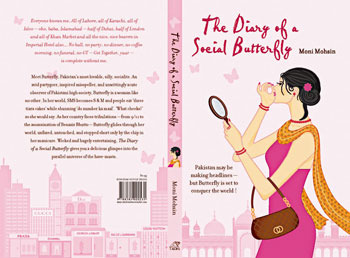
The Dairy of a Social Butterfly flits through Pakistani social life and lands smack in London. Droll and full of localised accents, the recently published book is a collection of London-based Pakistani writer Moni Mohsin’s columns over the past few years. Sitanshi Talati-Parikh catches up with the earnest writer to exchange a few words on the tenuous nature of relationships in the subcontinent, the role a writer plays and the sentimentalisation of literature

Spvol01

Dignified, self-assured and a tad bit scep-tical – I notice an imperceptible raise of the eyebrow denoting the discontentment at the way at which the talk on globalisation of language is conducted – in much the manner of a disapproving school marm. Originally from Pakistan, Moni Mohsin, lives in London with her family, and has been writing a delectably funny column for the Pakistani The Friday Times since the early 90s.

While her first book, The End of Innocence (2006) proved to be a promising debut novel, upon increasing interest in her columns, she shelved her plans for a second novel based in London, and went ahead with compiling her columns into a book. Launched particularly for the Indian sub-continent, seeing how the columns (which are also syndicated in India) drew a lot of interest during the Jaipur Kitab festival, Mohsin feels that she had found an audience for the book. Starting from 2001, the year of 9/11 and rounding up in 2007 with Benazir Bhutto’s assassination, The Dairy of a Social Butterfly is a witty and sardonic comment on the ‘social butterflies’ of Pakistan, especially the ones who find a summer home in London. With parallel events running in her book, for instance: ‘US concerned about Afghan border security, Butterfly concerned about her missing bike,’ the readers have enough to scoff at with the protagonist’s heavily accented language, lack of general unconcern and unintentional innuendos. The columns respond to events that take place in Pakistan: political and social events, big weddings et cetera. All of this is sourced through the news, Pakistani television and the social scandals discussed with Mohsin’s sister over the phone. “I go once or twice a year to Pakistan. I have children, so I am constrained by their school calendar,” says Mohsin with regret – as evidenced by the essay she has written exclusively for Verve.

Most writers of the diaspora tend to sentimentalise their country when they write about it. Mohsin reacts immediately with a very vociferous denial. Asking me, quite rhetorically if I thought Butterfly was sentimental, she races breathlessly on and lists Pakistani writers who are not in the least sentimental. Think Mohsin Hamid and The Reluctant Fundamentalist, Mohammed Hanif and A Case of Exploding Mangoes, or Nadeem Aslam. “In my novel, The End of Innocence, I talk about the honour killings in Pakistan and how horrible they are. We are not sentimentalising our country. You write about the smell of the earth after the rain, or the smell of freshly sliced fruit that fills a room because it is very particular to the subcontinent. If you live abroad, you realise that there are a lot of things you take for granted about the subcontinent. I always write about how when walking down a street in London, you know you are passing an Asian house, because of the smells that emanate – frying garlic and haldi. I don’t know if I am sentimentalising it, but it is there. Sometimes to avoid it would also be silly, because it exists. The challenge is not to romanticise it and to write about it with honesty and affection.”

Why not a novel about London where she lives, and why Pakistan, a place that she visits infrequently? “I thought I had to really know society before being able to comment on it. I have been hijacked by events, but my next book will be set in London. I am so involved with Pakistani society – so much is happening there, there is so much to be said. It is so vivid and new. The rest of the world is also interested in new societies and how they are shaping up.” Mohsin takes me back to a recent seminar in London, organised by Tehelka, in which they were trying to set up a dialogue between Pakistani writers and Indian writers and journalists and other cultural and political figures. A well-known film-maker said that there is recent interest in Muslims, ‘Muslims ka kaam karein’. “While he felt it was more of a trend, I don’t know. Generally in the subcontinent, interesting things are happening; people are producing interesting work and films. For such a long time, we in the subcontinent have been looking to the West and ignoring what is happening within ourselves and it is almost ‘declassing’ ourselves or ‘putting ourselves down’. Suddenly you feel you don’t have to. Pakistani and Indian writers and artists are making such waves abroad – you don’t have to look beyond our own backyard.”

While the interest is intense, is there openness for dialogue and understanding that extends beyond the arts? Mohsin firmly believes that Indians are less informed about Pakistan than the other way around – probably because Pakistanis have been exposed to Indian films for a long time and a greater percentage of Pakistanis travel to India. “Indians are possibly more naïve in that sense, and therefore readily believe everything they read about Pakistan. I think there is room on both sides for massive person-to-person contact; it is very important.” Mohsin, who also writes a column for a leading Indian daily describes how she is moved by the fluid dialogue between Malaysians and Indonesians. “They seemed to know each other, their works and their countries so well! Malaysians have houses in Indonesia, Indo–nesians work in Malaysia and such a free-flowing contact exists between them, that I thought what a pity that we don’t have that in the sub-continent.” I wonder why this is so, and Mohsin is quick to reply to my suggestive question, “I don’t think Pakistan is a closed society. It is very welcoming. Most people, Indians in particular when they come to Pakistan feel that hugely. What they are led to believe is so different from the actuality.”

Pakistani writers then shoulder a good deal of responsibility in setting the matter straight. “I don’t think I am playing a role in being an ambassador for my country – remember these articles were written for Pakistanis, they were not written for others, in fact, I thought they wouldn’t have a market outside. I’m just portraying what I see. And as a writer, your first duty is to tell the truth. It is not about me projecting my country abroad, it is just me commenting on my country. A writer’s job is to show a mirror to society, and I think all writers are trying to do that.”

Priyanka Chopra: Unstoppable Priyanka!

Tags

, , , ,

Published: Verve Magazine, Cover Story, November 2008
Photograph by Atul Kasbekar

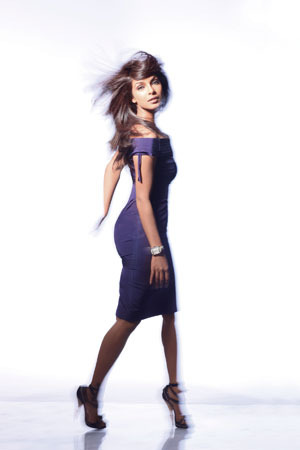
From Bareilly to Boston and Manhattan to Mumbai, the cover girl many times over, is leading a fairy-tale life. Firmly entrenched in Bollywood, Priyanka Chopra will have a record six releases this year. Dostana, where she plays an editor at Verve, releases this month and promises to be a rollicking watch. Sitanshi Talati-Parikh finds the vivacious actress full of soul, spirit and spunk

Priyanka01

It is an ordinary Thursday. What makes it extraordinary is the glitter of star power that suffuses the morning with a powerful glow. The lithe, dusky beauty saunters into the make-up van, face barely visible under her enormous shades, dressed in “comfort clothes” – leggings and a long spandex top in her favourite colour, black – after a late shoot the previous night. We look up with trepidation, as she emerges a considerable while later, our allotted time ticking ominously away. Flashing dazzling smiles at everyone, Priyanka Chopra faces the camera, barely wincing in the painfully high Dior heels, which are at least a size too big for her – by her own confession, she was “born in heels”. Ace photographer, Atul Kasbekar, coaxes fluid motion from the svelte actress. She immediately picks up the beat of the music pulsating in the tiny studio and twirls, twists at her slender waist, gracefully cuts the air with the circular motion of her lean arms, flips her hair and throws herself into the scheme of things, with ferocious enthusiasm and buoyancy. It’s a perfect first shot. As the music suddenly stops, and her personal iPod is hastily summoned, with barely noticeable displeasure, she confides, “I can’t think or function without music. My van, my room, my car are always blasting music, so the five minutes I get, become my chill out zone. And besides my family, that’s the one thing I find time for.”

With the kind of schedule she keeps – 25 films in less than five years, not a single holiday or vacation since, working literally 20 hours a day – she is playing a serious juggling act with work and family. “I really don’t find time for my family – I take it for granted that they will come and hang out with me.” Being the first-born to parents who left a flourishing medical practice to ensure that her career took off, it is evident that Priyanka has done them proud. The senior Chopras unobtrusively watch their daughter’s shoot, the mother with a slight smile as she notes the near-perfect shots being reflected on the computer screen, and the father sits back quietly and takes in the confidence of his offspring with teary-eyed pride. Rarely present while his daughter is shooting, the Verve shoot takes Dr. Ashok Chopra back in time. He recalls his 12-year-old girl flouncing in front of a full-length mirror (her only demand from her parents) singing ‘Mere khwaabon mein jo aaye…’ from Dilwale Dulhaniya Le Jayenge – Priyanka’s absolute favourite film of all time. Even now, she recalls in the blink of an eye the same sparkle, head toss and look of romantic fervour.

“Today my dad is home, living his life to the fullest – I am so grateful for that.” She went through a rough patch – possibly the only glitch in an ostensibly dream-like life – when she watched her father go through a serious illness that took him two years to recover from. She was, at the time, shooting for one of the most important movies of her career, Krrish and wrapping up Bluffmaster. “Your father is always your invincible superhero, to whom nothing can ever happen, because he is the one who protects you – and then suddenly tables turn and you have to protect him. I felt so helpless and lost. I didn’t know how to deal with it.” But deal with it, she did. She would spend nights between shoots at the hospital, thankful that this happened at a time in her career when she could provide the best possible treatment that money could buy, without compromising on her work. A year earlier, it would not have been possible.

The July-born Cancerian’s amiable personality and warmth bubble to the surface as she reminisces about the people close to her heart. Her younger brother, Siddharth, is very proud of having a ‘hot’ older sister. She admits, “I am a self-confessed bully. I used to make him do all my work and I even used to dress him up as a girl! For seven years I was the only child and my parents’ most prized possession. And then he came – I used to pinch him and make him cry. My dad would come in and I would quickly pretend that I was holding and pacifying him!” She laughs unselfconsciously. “I love him – he is my greatest weakness. I spoil him, like he is my child.”

Friendships have their own familial bonds. Hailing from an army family, spending most of her childhood on the move, from Bareilly to Jamshedpur, and Iowa, New York and Boston, Priyanka has still managed to cultivate some lasting friendships – her childhood friend, Tamanna, for instance, who flies down from Delhi to meet her on her birthday. “I’m very close to my friends. If you have even two or three ‘4 a.m. friends’ who you can depend on for your life – and you know if you were kidnapped and someone asked you who would vouch for your life, it would be those people – then you’re very lucky. Though all your colleagues are your friends, there are only a few people whom you consider family.”

That’s what Dostana is about – three friends who consider each other family – and how a relationship between great friends is formed and broken. Priyanka, who loves the outdoors, admits that the movie had the best outdoor shoot she has ever experienced. Two months on location in Miami, she found herself gleefully entertaining her “khandaan” from America. Relatives were “crawling out of every room, closet and bathroom” in her three-bedroom apartment. Priyanka dressed for the shoot every morning with people passed out on the couch. Her family was on holiday and would come and hang out on the set. The euphoria was catchy. It is easy to visualise the massive on-location party, including malls and beaches (think fabulous South Beach), with a variety of restaurants and live music bars – all pulsating with energy that Priyanka feels will translate positively on screen.

In a film about friendships, what were the off-set relationships like? “I never thought I would bond with Tarun (Mansukhani) as much as I did. Initially, I didn’t know him very well and I didn’t think I would, either. He seemed like a really serious guy – we fought like cats and dogs, and made up instantly. I keep telling his wife, Karuna, that I play his on-set wife because we are constantly fighting like a married couple! But he has so much clarity as a director.” Karan Johar popped in for a bit and Hiroo Johar was officially the “big mother hen”. Abhishek Bachchan and John Abraham, her co-stars in the film, who pretend to be a gay couple to get an apartment to live in, spent all their off-screen time together, leading Priyanka to quip that they took their roles quite seriously!

John Abraham was the self-proclaimed fitness guru on the set, training everyone – the make-up maestro Mickey Contractor, included. Every day, after the shoot, everyone would land up at the gym. Priyanka studiously followed the regime – despite the fact that she generally doesn’t work out at all – to ensure that she looked prime for her swimsuit scene in the movie. Admiring her trim body – slimmer than she has ever been – It is hard to believe that she doesn’t work out or diet, after seeing how even the ramp-size Dior outfits at the Verve shoot are too large for her. She leans forward with a conspiratorial whisper, “being overworked and underpaid is the mantra for losing weight”.

Priyanka’s character in Dostana is an editor at Verve, and is dressed in accordance to the location. “In Miami, anything’s possible. I wore shorts, high heels and a shirt to work – and I was over-dressed!” Priyanka hopes the fashion critics will find it equally appealing. “If you try to please the critics, making films trying to keep in mind what the fashion industry is going to say, then you’ll never be able to experiment.”

The actress, who has had no mentor or any formal training in acting, has found herself experimenting through her film career. High on the popularity chart, Priyanka has had her share of missable films and reigned supreme in spite of them. The laugh lines smear away and she quickly retorts, “But that’s normal, right? Nobody can get a track record of 100 per cent. It is against the law of averages.” Have the decisions been based on script alone? “It is not just the script. At every point in my career, each film I did was for a certain reason. It may not have done well, but at that point doing that film or finding that film was very important.” Andaaz and Hero gave her small, but important parts; Kismat was her first solo heroine film; Plan with Sanjay Dutt, made by Sanjay Gupta and Asambhav with Rajiv Rai, were a step up in that ladder. “I never expect anything from any film. I feel when you have expectations, somewhere you are let down.” With a sudden flash of her 100-watt smile she confides, “But I can’t help expecting from these three – Drona, Dostana and Fashion. I’ve worked really hard on each one of them and they are very special to me, whatever the fate of the film may be.”

Suddenly retrospective and a tad philosophical, Priyanka appears wiser than her 26 years. Clichés appear truisms as she applies them to her life – she speaks without any affectation, if a shade reminiscent of her articulate Miss World persona. “It is never the end that matters. It is also the journey – we may think of it as a proverb, but that’s how I have led my life, and it works for me. At this point of time, what I do is very important. What happens in the future will be part of what destiny has in store. The decisions I take now must be with courage of conviction.”

Courage of conviction has definitely got her where she is – able to pick and choose, and have more work on her hands than she has time for. “I’ve always believed that I am destiny’s favourite child.” Not even in her wildest dreams did the naturally talented actress, who was considering a career in aeronautical engineering (“making planes and going to NASA”) ever think she would be a part of show biz. “It still feels so surreal.” Neither she nor her family have had the time to retrospect. A mere 17-year-old schoolgirl when she participated in the Miss India beauty pageant – on an entry sent in as a lark by her family – she had just finished school when she became Miss World. “I had to grow up in a month!” She had to reconcile herself from a teenager in sneakers riding a bicycle to a young woman in a sari gracefully balancing a tiara on her head. “They say that the head that wears the crown rules the world. It’s not easy and it wasn’t. I still don’t remember how I did it – I only followed instructions – I was almost robotic in what I did. I only remember being myself since the last few years – since I was 22 or 23. Before that I was always so withdrawn, wary of being in this industry, not knowing anyone, wanting to protect myself and my family. Everything just happened to me. I feel somebody up there is holding onto my little finger, guiding me through life, which is why I never question what’s happening. I know if something bad is happening, this too shall pass, because there is a reason why I am here.” And what about ideals of changing the world that beauty pageants inspire? “I never had aspirations to conquer or change the world. I’m just playing my little part in the bigger picture and am happy that I am able to contribute.”

The strong girl is also incredibly soft-hearted and considerate. Very fond of children, she swings into the shoot in her gold Dior dress with her spot-boy’s son on her arm, smiles and poses for multiple pictures with their family. Later, while giving bytes to a news channel, she notes with the corner of her eye a man bent double with heavy equipment standing behind waiting for her to finish, and she immediately stops and gives way. A self-confessed “mush-pot”, she has a major weakness for romantic comedies, though she can watch creepy horror films with equal fascination. She would often get inspired and write poetry on little paper napkins – being a fan of prose, shayaris and Urdu – though she hasn’t done that in a long time. With a sudden twinkle she reveals that she would love to be serenaded – but with originality and spontaneity. “Buying red roses and sending them is so thoughtless! I prefer thoughtful gifts. A hand-written note would mean so much more to me than diamonds. Actually, a hand-written note with diamonds would mean a lot more,” she rounds up with a chuckle.

The voracious reader (biographies, chick lit, travelogues) hasn’t even had time to read a script that has been lying with her since the last twenty days. Sleeping four-five hours a day, she only manages to unwind in her white Mercedes, which she calls home. “I have worked every single day in the past few years and there isn’t one day that I regret it. I know the day I wake up in the morning feeling that I am too tired to shoot today, I will retire. Very few people are fortunate enough to love what they do. I really, truly love what I do.” That obviously keeps her steamrolling on. As I step out of her car, I watch her walk to the next shoot with a bounce in her step – despite the fact that she missed lunch entirely while talking to me.

Mumbai Unspooled

Tags

, , , , ,

Published: Verve Magazine, Screen, November 2008

Nine Mumbai-inspired movies have been released already this year. Sitanshi Talati-Parikh explores the city’s iconography, in a retrospective look at major Mumbai films

The throbbing, pulsating city has a million stories to tell. Every minute that ticks by on the Rajabhai Tower, something new happens, and it is the numerous faces of the city that film-makers strive to capture. Its myriad voices and its many tales, the sordid truths and the fantastical goings on. The city is at once a context for relationships and events, and often a hero or even an anti-hero. It is a city of romance, aspirations, gross inequalities, fundamentalism and cosmopolitanism, strength and unity and great divisiveness. It is the city of extremes and in that sense, remarkably a city of the world – a microcosm depicting the inane possibilities that surround us. Its distinctiveness, which only a person who has spent sufficient time in the city, discovers. The cutting chai and the Iranian tea houses, the Mercedes’ and the Mumbai trains, the five star hotels and Dharavi slums, art deco Marine Drive and the Victorian Kala Ghoda area, the meandering bylanes and the heaving buses that wind through these zones, the vendors and the businessmen, the young lovers and the social climbers.

City of dreams
In this deeply aspirational city, the rags-to-riches stories can be recounted by the dozen, whether one thinks of Guru (2007) or the Munnabhai movies, as throngs of people continue to relocate to the ‘big city’ in the hope of a better life. It is their tragic and often wondrous stories that need to be told, very often by those in the Bollywood film fraternity, who may have had similar experiences. Director, Anurag Kashyap, for instance, moved to the city, struggling initially, staying at the St Xavier’s College hostel and hanging out with a band called Greek. These experiences prompted him to make Paanch (2003), an urban crime thriller involving a rock band; while Black Friday (2007), about the Mumbai riots, was inspired by a book he read.

Dark alleys and grim landscapes
The city’s black side, its alter ego, is more evocative and larger than life. It opens up its dark and mysterious corners to the exploration of themes that are a grim reality. Johnny Gaddaar (2007), a noir crime thriller shot in black, white and red, explores the sinister elements in a person’s character, in much the manner of Ek Hasina Thi (2004). Aamir (2008), a thriller about fundamentalism, where an NRI Muslim goes through a freakishly disastrous time on arrival in Mumbai and Mumbai Meri Jaan (2008) about the serial bomb blasts in Mumbai on 7/11, which depict how the blasts led to chaos and irrationality stemming from fear and loss of control in people’s lives.

Cosmopolitan angst
A city that has rivers of gold and the greatest power struggles, is also home to a good deal of metropolitan frustrated violence – when aspirations are not met. Cosmopolitan angst is an equally prominent contemporary theme, as clearly portrayed by the reality-inspired Life in a… Metro (2007), Page 3 (2005), Dus Kahaniyaan (2007), Mumbai Cutting (2008), and even the pedantic Mumbai Salsa (2007). Reminiscent of Paris, je t’aime, Mumbai Cutting is less about love and more about the grim realities of the city. Dus Kahaniyan (2007) picks up on urban themes like extramarital affairs, drugs, violence and relationships. It makes one wonder if love actually exists any more – candyfloss has disappeared from its smoggy walls. Jogger’s Park (2003) picks up a theme of a relationship between an elderly man and a young girl. Exploring relationships and the varied kind of situations life places one in, is a trend of Mumbai-based or metro-based films.

Big city tinsel town
People living in smaller towns look at the movies depicting the big city life with great interest, while those living in the city naturally identify with it. Main Madhuri Dixit Banna Chahti Hoon (2003) is a film where small town aspirations for tinsel town come to life. TV artiste and upcoming big screen actor Sid Makkar provides some finer insight. Luck By Chance, Zoya Akhtar’s upcoming film, in which he plays a part, is naturally located in Mumbai, since the movie is about the film industry. Makkar finds that the majority of movies about Mumbai are steeped in reality – and “reality is entertaining”.

Platform rendezvous and car chases
While the Golden Gate Bridge of San Francisco or the Empire State Building (in lieu of the missing World Trade Centre towers) in Manhattan are iconic structures of the city, we find the Mumbai local trains as a constant motif in movies on the city. As the train thunders along, many a story is told. Think of Mumbai Meri Jaan (2008) on the serial bomb blasts, Life in a… Metro (2007) where a clandestine meeting takes place at the local train station, Chameli (2003) takes one from Lamington Road to Kamathipura, Kundan Shah’s Hero in Mumbai Cutting is about the local train commuter as the city’s unsung hero, or even A Wednesday (2008), Saathiya (2002) and Dombivali Fast (2005). Similarly, Taxi No 9211 (2006), is a thrilling cab chase through the streets of Mumbai, loosely based on Hollywood film Changing Lanes (2002) that takes place in New York.

Waves, sand and love trysts
Many an iconic love story has been told on the streets of Mumbai – Marine Drive, Chowpatty, Worli sea face, Bandra reclamation and Juhu-Chowpatty. Bluffmaster’s (2005) glamourous love trysts, Guru’s (2007) impassioned rise to fame starting with a determined walk on Marine Drive, Hum Tum (2004) finds the star-crossed lovers coming together on Chowpatty beach in true cosmopolitan fashion (ironically, not in Paris, the city of romance). Not to forget the coming-of-age of youths in Jaane Tu… Ya Jaane Na (2008), love sparks in Lage Raho Munnabhai (2006), and the problems of urban marriage Chalte Chalte (2003).

Monsoon saris and dewdrops
Come monsoon, the city bursts into a flood of romantic fervour. The wind-splashed windscreens and swaying palm trees on Chowpatty-Marine Drive are all symbolic of a dark sensuality. Huddled under the umbrella, a generation that grew up in the city feels the homeliness in its murky puddles and blackened sky-scrapers; while those who moved here looking for something better, have a wistful sense of allegiance and belonging. Think of the romance in Chandini (1989), iconic Raj Kapoor and Nargis in Shree 420 (1955), Amitabh Bachchan and Smita Patil in Namak Halaal (1982) and even the blossoming of love amidst grim city reality in Satya (1998).

The haves and the have nots
Anyone who arrives in the city cannot miss the straggly-haired, skinny street children that wander about looking for a benefactor. At every traffic signal and outside a food place you are accosted with them. Mira Nair’s Salaam Bombay (1988) that was nominated for an Academy Award (Best Foreign Language Film) told the tale of Mumbai’s street children which now, in Traffic Signal (2007), becomes a tale of a full-fledged business. As with any big city – but particularly in a city like Mumbai that sees so much disparity between the rich and the poor – emerge tales of inequality, angst and violence. Mumbai Express (2005) describes the economic disproportion in a comic tale of Dharavi slum-dwellers plotting the kidnapping of a rich businessman’s son, while Kidnap (2008) is a movie where an orphaned youth takes revenge for a false kidnapping charge. Chandni Bar (2001) describes the tale of a young village girl, who moves to Mumbai and is forced to become a bar dancer by her uncle.

Fundamental terror
Terror camps aiming for the greatest impact by hitting the most aspirational part of a country can be found making Mumbai their target – creating a great deal of threat and insecurity. Fundamentalism, power struggles and gang wars have been the overriding theme in most of the recent films on or about Mumbai. Where a cosmopolitan love story bloomed in Mani Ratnam’s Bombay (1995), the city also took its pound of flesh in the face of fundamentalism. A decade (1985-1995) that witnessed a bloody mafia war in Mumbai, led to a barrage of films being made about the behind-the-scenes of this underworld terror, exposing the policemen-politicians-criminals nexus at a time when extortion was rife. Ram Gopal Varma’s Satya (1998) and Company (2002), an expose of the underworld gangsters that were an intrinsic part of the city at the time, before the police ran a cleansing act with a great deal of encounters, it would seem that older movies like Don (1978), were simply a tip of the iceberg that was to become Mumbai mafia. Vaastav (1999) starring Sanjay Dutt was the making of a mafia kingpin, while Ram Gopal Varma’s Sarkar (2005) and its sequel Sarkar Raj (2008), starring Bachchan senior and junior, picked up from Hollywood’s Godfather (1972), to depict the reality of a mafia family that holds the city at ransom. Shootout at Lokhandwala (2007) tells the graphic tale of the 1991 underworld encounter that made Mumbai a war zone. Black Friday (2007), Aamir (2008), Mumbai Meri Jaan (2008) and A Wednesday (2008) expose the nakedness and vulnerability of our city, and question our placid acceptance or numb nonchalance towards the problems that exist.

Absurdist desperation
A Wednesday (2008) is about a bomb scare where a citizen takes matters into his own hands to prevent the continuous outbreak of violence that has made it a dangerous city to live in. At a stage when its citizens are fearful of taking the daily train, or even walking on the street, you begin to question protection provided by the city that is your home. It is an absurdist movie taking a freakish stance about a serious problem that is being evaded or ignored by a majority of the ‘snoozing’ public.

It appears that film-makers have shifted their stance from simply portraying realities, to sounding a wake-up call to the citizens. Where the older films would explore economic disparities, love and building a life in the city, the newer films are darker in their representation. Suddenly the trouble-makers are no longer families or individuals – it is a problem that society and the country as a whole, need to address. When movies on 9/11 are made, they depict the country and the people coming together. When the serial blasts happened in India, why is it that it seemed to be more of a cry for help and a frightening portrayal of our own vulnerability than an exultation of the greatness of spirit and bond of human race?

From the people, by the people
It is easy to see why UTV CEO, Siddharth Kapur feels that, “It hasn’t been a deliberate decision to have so many movies about Mumbai (UTV has been a part of Aamir, Mumbai Meri Jaan and A Wednesday) but these are times we are living in right now. There is bound to be an influence by the age of terrorism and riots. It so happens that a lot of film-makers have been born and brought up in the city or have been greatly influenced by the experiences in the city.” But that does not limit the story’s appeal. After all, the themes are universal. Rajkumar Gupta, director of Aamir, believes that while the city’s diversity has a major role to play, the answer can be as simple as the fact that Bollywood is based in Mumbai. After all, for the film-makers working within tight budgets, it is easier to shoot in their own city.

It is undeniable though that the city is a powerful influence for film-makers. A good number of films stem out of realities that are Mumbai. If the dark reality-scapes have become the identifiable norm, it is a true barometer of the soon-to-be-absurdist life in this metro.

20 is the New 40

Tags

, , , , ,

Published: Verve Magazine, Essay, November 2008
Illustration by Farzana Cooper

In a time when being young is ageless and wisdom is selective, the 20-something age group is in a different space from where it has ever been. Sitanshi Talati-Parikh ruminates on the phenomenon called the ‘quarter-life crisis’ and explores the factors that contribute to a generation on autopilot

Chronicle01

Youth has taken on a new maturity, and a new sensibility has attached itself to age. What is it that makes one feel old – age, a thought-process, experience or wisdom? And what exactly, defines a crisis – an inability to deal with circumstances and life? The mid-life crisis is quite been-there-done-that; what is now in prime focus is the quarter-life crisis (QLC) referring to a period immediately following adolescence – a decade of chaos lasting from the early twenties to the early thirties of one’s life, a phenomenon recognised by therapists and mental health professionals.

Characterised by feelings of incompetence, frustration (with relationships and work), identity crisis, insecurity, stress, confusion, boredom, opinionated and short-tempered responses, loneliness, nostalgia towards youth and a pressure-free school life, an inability to deal with situations and to face the reality of responsibilities; the ‘crisis’ seems to hit everyone in the age-group that suddenly realises that they have to grow up, fast. These emotions tend to occur pretty soon after the youths enter the post-college-make-important-decisions-about-life-stage.

Tweens are in a tearing hurry to be teens, teens are in a tremendous rush to be 20-something-mature-and-in-charge-of-their-lives, while the 20-somethings just want to stay 20-somethings. Suddenly the buck screeches to a halt there – leading to obvious maladjustments. Those who take life by the horns get burnt out, and those who ponder and plan, simply don’t move. It is a generation of extremes. ‘How will I know what I want to do so early? I need to find myself, test waters, I need space!’ Or a grimly determined, ‘I know where I want to go, and I wanna get there fast!’

At an age when, post MBA or post graduate school, the younglings would be just stepping out of the shelter of their parental lock and into the world wide web, these kids are faced with too many options, too many choices and a cheese that’s highly indecisive and constantly moving. Whilst embracing change fondly, this uncertain generation opts to hide behind the cloak of experimentation. It is difficult to step out of the comfort zone: marriage takes a backseat as jobs and partners switch with remarkable ease, towns and countries are no longer ‘long distance’, corporate ladders are meant to be parachuted up, and the age at which life ‘settles down’ is not in the near future. As a young magazine editor puts it, “We are living in an ageless world – the whole notion of age has been ‘problematised’.” After all, 30 is the new 20.

And so, 20 is the new 30. With the ‘new maturity’ – a biological fact that the age of puberty is being advanced – by the time we have reached our 20s, we are thinking like we would in our 30s; and ironically, to hold onto a desperate sense of youth, the 30-somethings are thinking, looking and behaving like they are in their 20s. As you mature faster, you also want to stay ‘younger’ longer.

And yet, it gets more complicated! Medically, 30 is the new 40. Stress, high cholesterol, high blood pressure, mental angst and all the adjoining ailments are hitting the 20-somethings in supreme irony, as the medical world finds new means to extend life. Consultant gastroenterologist, Dr Chetan Bhatt, finds the “hurry, worry, curry” syndrome has found its mark. QLC is officially a part of the psycho-babble and the 20-something age group is the cash cow of today.

Dr Ashit Sheth, consultant psychiatrist at Bombay Hospital, feels it’s the transitionary stress of the last 50 years – with a changed lifestyle, values, exposure, and disintegration of the joint-family system – transition from dependency to independency. The media hype and advertising-generated consumerism is all about “what you want being more important than what you have”. Women especially, are leading dual roles, with increasing demands. There is an excessive concern about weight leading to anorexia; the yuppie population doesn’t have time to consummate their marriages; and it eventually can lead to silent depression. The solution, according to Dr Sheth, is a five-fold answer: “Accept, follow recommendations, alter demand and expectations, enjoy what you have and learn to value basic needs.”

Expectations and needs are at the crux of this problem, agrees Dr Bhatt. It is the time of low tolerance and instant gratification – why slog and wait a few decades to enjoy things that can be had in an instant? Instant coffee, instant marriage, instant divorce, instant travel, instant loans and instant break-downs. As the older generation reminisces about the pleasures of delayed gratification, the need to work hard to reap the rewards; this generation agrees – but now years become days and delayed becomes instant. Money flows in easily – the concept of ‘working hard’ has changed to ‘maximise returns’. The youth often has their priorities straight – earn a ‘pot load’, somehow, and retire early. ‘And what exactly is a pot load?’ A 26-year-old financial analyst, casually describes a crore of rupees a year as being thoroughly acceptable – in all seriousness – “to lead a comfortable life.” High ambitions and an unreal sense of a consumerism engulf the youth, creating fantastic expectations and setting impossible goals.

As the material world threatens to swallow up the fresh recruits ripe out of school, it is the frenetic pace, which leads the 20-something in the quest of more or an existential nothingness. It is the epitome of the psychological fight-or-flight syndrome, dealt with a querulous sense of foreboding and complete confusion. As questions pile up and the answers don’t, these 20-somethings turn to mind-numbing, mind-altering and mindless states of being, hoping to alleviate their sense of frustration. It is especially worrisome, when India’s median age currently is 24.9 years – with over half its population under 25 years of age. The 20-somethings are riding a fast bike and driving a hard bargain, and it is important for someone to sit up and provide a guiding light. As Dr Bhatt concludes, “Dreams are not what you see while sleeping, dreams are what makes you restless and don’t let you sleep.”

Record Breakers

Tags

,

Published: Verve Magazine, Nerve, October 2008

Two rocking women have something new to offer. Sona Mahapatra is singing a different tune and Anushka Manchanda is jamming with a new band when she’s not trying daredevil stunts in Fear Factor – Khatron Ke Khiladi. Sitanshi Talati-Parikh turns up the volume

Katrina

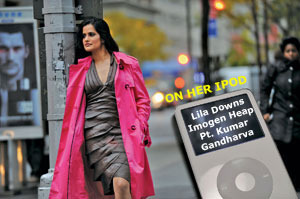
SONA MAHAPATRA

Tell us about your latest song, Diljale and album, Raat/Din. What’s exciting about it?
Diljale is a rock power ballad that celebrates the pain of loneliness, the beautiful void. The album, Raat/Din is really exciting because we believe it’s India’s first soundtrack rock album. The music is heavily influenced by the films of David Lynch and Wim Wenders. And the launching is unique: a totally digital launch worldwide, starting with Diljale, followed by subsequent songs with finally the whole album releasing by the end of the year.

Indie vs. film, what’s your take?
They’re two completely different genres today. In film music, you’re mostly interpreting other people’s ideas, while with independent music you’re expressing your own. There was a time when film songs were about ideas and expression and taking a narrative forward, but sadly today there are promotional tools and have drifted further away from meaning, the notable exception being Gulzar saab. I prefer being on stage above all else!

Anushka

ANUSHKA MANCHANDA

Do you rock just as much behind the scenes?
I quit being a VJ on TV to focus on my music and my career as a playback singer, and haven’t regretted the decision. As a performer, I get to travel the country and the world, and being on stage, I have never missed the limelight. I’m the same person on and off camera, and am comfortable both ways.

Tell us what’s exciting about your ‘electro rock n pop’ band, Shkabang?
Shkabang is here to play some good music and to have a blast doing it. We’re pretty elastic as a genre, but love bouncy grooves and bass lines. The boys are all hotties, and I’m trying to get at least one of them to play topless.

What was the most challenging part of Khatron Ke Khiladi?
I’m not a very good swimmer and I’m petrified of being underwater. I almost drowned in a pool as a child, and even though I absolutely love being in the water, I panic when it’s deep. So all the stunts involving water would have me freaking out!

Do you write your own songs?
Yes! There was a time when I only wrote about heartache and stupid boys. Now, I see things around me that make me stop and think, and I write about them.