to vote or not to vote – for whom?

Tags

, ,

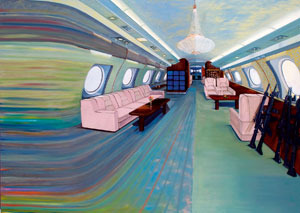
when the system is rotten from the core, what can an average man do besides take to the streets and picket? Post 26/11 there have been a surge of interest groups, trying to make a difference. Now the time has come – to make a choice. Do we want to vote for criminals and ineffectual people and leaders or for those who have left bright careers to make a difference? Whether the person wins or not, it is our choice to stand by them.

every election time we complain about not having a choice to vote for a good candidate. we complain that we only have to choose from the better for two evils. we complain that there are no smart, young, dynamic, and most importantly – honest people who want to change things. well now there may be – and we have a choice.

this voting long weekend – one must not take off to our local version of the hamptons. or even if we do, we should vote and then leave. and vote for the best person, even if he/she is an independent. It can take one voice to start a revolution.

check out: http://www.meerahsanyal.in/ – for someone who wants to make a difference.

infectious emotions, darkness and bright light

Tags

,

when you spend extended hours in a hospital, your perspective on life really changes. it makes you wonder what really is important in life – and then, the moment you step into the blinding sunlight, the nitty-gritty of life catches up with you and before you know it, you are sucked deep into the black hole. that in itself is a contradiction because it implies that the grim reality of the hospital is better than the harsh reality of the outside world.

negativity is slimy and serpent-like – it crawls up on you when you least need it, and twists your mind out of rationality and sucks the life breath out of you. you thrash around inside your mind looking for a silver lining and all you can see is a deep black hole. after all, a hospital is grounded in reality. that nothing is permanent, things change, and that’s something you simply have to deal with.

after all, from the deepest darkest depths it can only get better, right? it is a reality check to remind you that sometimes the things you worry about and fear are not important, to not sweat the small stuff.

um, the darker the cloud, the brighter the lining…?

Poetry: Word Gypsy

Tags

, , ,

Published: Verve Magazine, Nerve, March 2009

Performer, poet, writer and columnist, Sharanya Manivannan has published a book of poems and is working on a novel. Sitanshi Talati-Parikh gets the writer, who has written a poem exclusively for Verve, to delve into the space and quirkiness of her works


Sharanya01

She is small, petite and extremely self-assured. Barely into her 20s, she started writing when she was seven, got involved with ‘readings’ at 15 (while living in Kuala Lumpur) and is now in Chennai – working as a copywriter with an ad agency and writing a column called ‘The Venus Flytrap’ for a local weekly newspaper. Witchcraft, Manivannan’s debut book of poems is an effort at mysticism, picking up themes of betrayal along with “love, loss and longing”. The “spontaneous and organic” writer was awarded a fellowship to work on her second book, a novel, for three weeks in Pondicherry last December. The novel picks up on the threads of love, loss and longing from Witchcraft, and is about a young photographer in her 20s who becomes obsessed with the preservation of transitory moments because her own personal history is in shadow. As she says, “Roots, exile and dislocation are things that affect me deeply both as a human being and a writer.”

Excerpts from a chat with Manivannan:

Relevance of a spoken word artist
Why ‘spoken word’ and not simply ‘readings’? Because spoken word is a legitimate genre of performance – not everybody is able to read, even their own work, with panache. Whereas, poetry publishing is a difficult and drawn-out process, performance allows immediate, often intimate, access to an audience. ?To me, to be a spoken word artist is to channel through the voice the spirit that some call duende. As with all performance, hearing the word aloud can be a transformational experience for both performer and observer.

Quirky and unusual writing
I personally don’t think that my writing is quirky or unusual. But there are two things I hear frequently about my work: that it is ‘brutal’, and that I say things which others chastise themselves for thinking. I’m willing to excavate deeply. And in doing so, I go to places in the mind and the memory that can be painful, dark, unsettling or revealing.

Space for women poets in India
In the English-writing world, the space is not any different from the space for men. I’ve not encountered any setbacks in this regard because of my gender but I have because of my age. However, the vernacular languages are a whole different ball game. For instance, I know that some Tamil poets like Salma and Kuttirevathi have had a tremendous backlash against their work because they approach the subject of the body.

Poetry as a serious genre
There are so many poets in India today – just look at Jeet Thayil’s anthologies, or the Poetry With Prakriti Festival in Chennai. That there aren’t many, is a misconception that could arise from the fact that no matter how seriously we take ourselves, the genre itself is not taken as seriously by the public and by publishers. I also don’t think there is any real gender disparity in terms of numbers, but issues like the ostracising of female poets who write about their bodies in the vernacular certainly exist.

Life and writing
I make sense of my life through my writing. I distill my experiences. Sometimes, being able to have a poem about a situation makes me feel so much better about having been in that situation at all. That’s as simple as it gets. Things like structure and narrative are layers that come later.

Being a poet and a fiction writer
Poems are microcosms and take up much less headspace; fiction is far more expansive, detailed and demanding. All of last year, I focused on poetry. But I’m picking up again the novel I’ve been working on off and on for years…. I can only hope that it’s possible to be good at both.

Years, not age, matter
As an older writer friend once told me, I may be 23 but I have been writing since I was seven – that’s 16 years of experience in the craft itself. As for life experiences per se, age really is just a number. Look at all the musicians who died at 27, after all. I’m 23 but you couldn’t guess it based on what I’ve been through and what I know – my life is really some sort of pulp fiction film.

SURFACING

Afterwards, we will
both wish that it was that
simple.

Your hands. My hair.
A drowning.

But you cannot kiss like that
and go on pretending that life
is not something that just happens,
arresting you in its undertow,
that it can go on,
that you can go back.


A kiss like a talisman.
A kiss like memory before birth.
The heart a bridge between
dismembering and
remembering.


Lover. Husband of another.
Lust is anarchy. Love, anodyne.
Father. Liar. Lover. Mine.
That afternoon an apocalypse of laws
we broke, our lives left spinning on
their axles. In the car I watched as
the hem of our city began
to unravel, the highway endless,
the embroidery of clear-watered
ponds, bougainvillea, as though
it was a country we left behind.
Bodies of water. Blooming.
Our city. I waited so long to
say that. I waited so long.


It was that simple.


I didn’t transcend my body.
I came into it.


A kiss like a tide I surfaced from
not knowing I had gone under at all.
A kiss like prophecy. A kiss like the
first falling star of a meteor shower.
A kiss like certainty. Like a song
roused from slumber. Like surrender.


Come back, lover.
Come back with your
voodoo, the calligraphy
of your tongue. Come
back with the night between
your teeth. Lie down. Let me
take the war out of you.
Come back.
Name what is holy.
Take what is already yours.


Kiss me without
choreography. Kiss me
like the first word
of the only language
we never borrowed.
Kiss me like alchemy.
Kiss me like
Original sin.

Zoya Akhtar: The Zoya Effect

Tags

, , , ,

Published: Verve Magazine, Features, March 2009

Luck By Chance (LBC), a film visualised in Goa, worked on for seven years, which finally saw daylight in 2009, catapulted debut writer-director Zoya Akhtar into tinsel-town limelight. Javed Akhtar and Honey Irani’s daughter and Farhan Akhtar’s sister has the Midas touch herself, with a self confidence that appears to be cultivated from over a decade of hard work. Sitanshi Talati-Parikh finds her enjoying the journey

IT IS REALLY TOUGH TO pin her down, but when you do, she is patient, effervescent and a powerhouse of energy. I quiz her on her newfound success – not easy with a debut film. “It is a bit of a dichotomy – I expected the collections to be better; I didn’t expect the film to do so well for me! The reviews and feedback have been amazing.”

Has the success of LBC raised the bar? “Your second film is actually a tough one – it has to be ‘do I just keep doing what I do; or do I have to think of the commercial market now?’ What you work with should keep you excited for two years – and turn you on.” What turns Zoya on is a “clever” movie – like The Usual Suspects or Munnabhai MBBS or Lagaan; or one that really touches you, like Black Friday. “I don’t understand movies where the producer and director ask me to leave my brain at home.”

We discuss the clever nuances of LBC, and Zoya is surprisingly modest. “As a director, you need people who can take your vision and give you ideas that you haven’t even thought of – your crew can make or break your film.” Zoya, who studied film at New York University, post literature and sociology at St. Xavier’s College, Mumbai, has always written her own work. She finds that to be the secret of the exacting clarity required to take her vision forward.

The 36-year-old movie enthusiast prefers to engage and question norms in the realms of mainstream cinema. “There is no film-maker who wants only a few people to see his film. There is no more art and commercial cinema. The point is to merge this gap and simply make good commercial films.” And is art instinctive or learned? “Both. You have to be a storyteller at heart, but you have to learn – whether it is from a DVD library, film school or working on a set.”

I point out that there is a sense of irony in making a film about struggling Bollywood ‘have-nots’, when you represent the ‘haves’. She retorts immediately, “What do mean by ‘have’? It’s not like I decided to be a director and got a launch on a platter! If you want to do anything that is slightly out of the box, you have to struggle like anyone else. There are perks – you have access to people, but they won’t do something simply because you are so-and-so’s kid or sister.” Which is evidenced by the fact that all the big stars she approached for the lead role politely turned her down; at which point her brother, Farhan, bailed her out. Taking this in her stride, Zoya, who is tenacious and resilient, laughs and hopes the casting will be easier for her second film. On the other hand, having had experience as a casting director, Zoya – who incidentally would love to cast Sonam Kapoor for one of her films – recalls the numerous aspiring actors that hope for an audience. And while she looks at some of them, thinking that they probably won’t make it, she doesn’t say it aloud. “After all, in this industry, you never know!”

Sharp and incisive, she has a knack for creating characters that are extremely likeable despite their inherent flaws or weaknesses. “I truly believe that if you retain a character’s humanity, you can make the character do anything. They are not heroes and villains, they are people. We come from a culture where everything is so black and white – the good are so good and the bad are just bad. It is boring! They work in superhero films or films like Die Hard, but not all the time.”

Zoya Akhtar is one of the many young women directors now holding fort in Bollywood. “There is a place opened up for young directors. The gender is not really relevant. In this industry – you can be a man, woman, dog, alien, if you can make money for them, they will hire you! And it is a secular industry – it is the only one in the country where it doesn’t really matter what your religion is.”

The story of LBC has a message that resonates deeply with Zoya. Sipping green tea, she says thoughtfully, “We are in a place where success and failure are so polarised – the media tells you whether you are successful or not. I have to think of my sense of self – my accomplishment with my first film. ‘What do I feel about it?’ That to me was what my film was about. Success or failure is merely about the choice(s) you make.”

Zoya speak

I revere…Martin Scorsese, Quentin Tarantino, Mani Ratnam, Mira Nair, Robert Altman, Roman Polanski, Wong Kar Wai, Woody Allen.
I can’t turn off…The Godfather, Scarface, A Fish Called Wanda.
Directing or writing? Both – Can’t I have both? I want it all!
I’m currently reading…One Bright Summer Morning by James Hadley Chase.
When relaxing…I read or watch a movie.
In five years I will be…living in Goa.
I will be satisfied when…I will never be satisfied! I don’t want to reach anywhere – the journey keeps me going.

Turkish Trail

Tags

, ,

Published: Verve Magazine, Travel, March 2009

Caught up in a whirlwind, you are swept from place to place, in this age-old vast expanse of Eurasian land. SITANSHI TALATI-PARIKH explores the five top spots in Turkey

Bodrum
Seaside Buzz

It could be Capri, St. Tropez, Amalfi, Mykonos, with its turquoise waters topped with white froth, cheery sailboats dotting the pier and a town that is like a creamed scone. The Turkish Riviera sprinkled with ancient cities and harbours, memorial tombs and beaches, plays host to some of the most sparkling celebrities, who look for the very best and the most anonymous of locations. Bodrum is an ideal seaside getaway as we steer clear of the madding crowds that appear in Antalya in hordes. While Antalya, though an excellent fishing port where many a gorgeous tourist trail abounds (Santa Claus was apparently born near Antalya in Demre), Bodrum is for those seeking beauty on their own terms – quiet in a reserved self-confident sort of way. And if Bodrum is still too buzzy, Turk-buku and Didime are even quieter, secret getaways.

Driving down the Marmaris (more than a 1000 km of shoreline along the Mediterranean Sea), with a view rivalled only by Greece, Bodrum’s sleepy seaside town is surprisingly chic and quite the happening party spot if you want to while the wee hours of the night away. With options like the very sophisticated sprawling Kempinski Hotel, with its pristine infinity pool, quiet private beach and the Six Senses Spa or the little boutique hotels that dot the landscape unobtrusively (the haunt of celebs), the Turkish Riviera is plum with choice picks for more than a bed and breakfast.

Staying away from the crowded town gave us time to unwind and grab a few rays, and catch the shuttle into town only when truly pushed. The town itself is as charming as most European ones are, with winding alleys that all spill into the waterfront that in itself is gorgeous with a multitude of dotted sailboats and ferries. Climbing to the top of Bodrum Castle (that dates back to 1402 AD) and seeing the spectacular view that lies before you, takes your breath away – literally and metaphorically. For over a century St. Peter’s Castle remained the second most important castle, serving as a refuge for Christians in Asia Minor.

A quiet town of fishermen and sponge divers until the mid-20th century, Turkey’s educated classes (amongst them, artists) picked Bodrum as their place of inspiration. And, romance is not to be forgotten – Mark Anthony chose the Turkish Riviera as a wedding gift for his beloved Cleopatra!

Anatolia
Vintage Drama

It is a walk down the rubble of centuries – even if it is restructured and recreated history, the ancient town of Ephesus, host to one of the seven wonders of the ancient world, is a part of the Mediterranean heritage. Architecture stems completely from Roman/Greek influence – with no signs of the mosaic and domes of the Ottoman era. A city of ancient Anatolia, it is famed for one of the seven wonders of the ancient world, the Temple of Artemis (completed around 550 BC), destroyed by the Goths in 263 BC and rebuilt by the emperor Constantine I. The town was again partially destroyed by an earthquake in 614 BC. The importance of the city as a commercial center declined as the harbour slowly filled with silt from the river. Ephesus contains the largest collection of Roman ruins east of the Mediterranean, of which only an estimated 15 per cent has been excavated. The Library of Celsus, whose façade has been carefully reconstructed from all original pieces, once held nearly 12,000 scrolls. Its open-air theatre, which was capable of holding 25,000 spectators is an impressive sight – as you can envision the dramatic performances and gladiatorial combats taking place here to cheering crowds. The population of Ephesus also had several major bath complexes, and one of the most advanced aqueduct systems in the ancient world. It is particularly amusing to see the ‘community potties’ , where apparently the men got together to perform their morning ablutions, interspersed with conversation and gossip! An emptying of mind and body, exemplified.

Ephesus is believed to be the city of the Seven Sleepers. The story of the Seven Sleepers (who are considered saints by Catholics and Muslims), tells that they were persecuted because of their belief in God and that they slept in a cave near Ephesus for centuries.

It is ideal when visiting Ephesus to stay either at Kusadasi or Bird Island – a lively port overlooking the Aegean with yachting, shopping and great beaches. I found the Charisma Hotel here a fun place to stay in, with dinner barbecue and a non-stop party atmosphere. Alternatively, you can stay at Izmir, believed to be the hometown of Homer, a happening and cosmopolitan city with much ado particularly during the International Arts Festival (June/July) and the International Fair (August/September).

Pamukkale
Healing Springs

Shed clothes and inhibitions amid therapeutic thermal spring waters, as you climb the terraced plateau, a fairyland of dazzling white. Stalactites, cataracts and basins have formed with the natural calcium salt deposits. Pamukkale means ‘cotton castle’ in Turkish and is located in the Aegean region, in the River Menderes valley, which enjoys a temperate climate through most of the year. The tectonic movements that took place here triggered frequent earthquakes, and led to the emergence of a number of very hot springs. The water from one of these springs, with its large mineral content – chalk in particular, created the natural world heritage site that is Pamukkale. The ancient city of Hierapolis was built on top of the white ‘castle’, which is in total about 2700 metres long and 160m high.

Cappadocia
Stuff of Fantasy

Millions of years ago, three of the Cappadocian mountains were active volcanoes, and years of erosion of soft volcanic rock led to a fantastical landscape. Holes in the countryside in which people actually lived in, is the stuff that imagination, fantasy and fairy tales are made of. Reminiscent of the bizarre landscape from Star Wars – rivalled by none other than Tunisia – Cappadocia in the Central Anatolia province of Turkey is one of the most extraordinary places you can visit. Not only for the amazing land formations, but also for the fact that people actually lived in the maze of underground cities, which are so tiny that a full-grown person can barely crawl through – ideal to prevent enemies from finding their hiding spots. Clambering through the labyrinth is a surreal experience, what with wine and oil presses, stables, cellars, storage rooms, refectories and chapels all finding room underground.

Strolling through the Goreme Open Air Museum, I walk into some of the 30 rock-carved churches and chapels with some stunning frescoes, dating from the ninth to the 11th centuries – particularly from the Iconoclastic period. Christians fleeing Roman persecution found refuge here, carving homes for themselves out of the soft volcanic tuff. Sadly, the subsequent Turkish invaders have destroyed many of these frescoes, by scratching out the faces, eyes and symbols of Christianity.

We break for lunch at Uranos Sarikaya cave restaurant. Served a hearty local meal kicked off with lentil soup while sitting in the dimly lit caves, we break bread as a family. Local wine is served in rustic earthenware from Avanos, richly flavourful from the fertile vineyards of the volcanic region.

Cappadocia, a UNESCO world heritage site, is best viewed from a hot air balloon, suspended high above the natural wonder, in the wee hours of the morning. Unable to struggle out of bed so early, I watch a golf tournament take place with great fascination, from one of the idyllic spots in the Goreme Valley – the Museum Hotel – sipping a cup of ruby-coloured Turkish tea. Suddenly, as a famous Turkish TV star is escorted into the hotel with much ado, I find my reverie broken. While I am repeatedly reminded of the Cappadocian men’s renowned good looks, I find it difficult to tear my eyes away from this gorgeous landscape, as the sun sets over these landforms splashing them brightly with myriad hues.

Though I cannot imagine living in the underground cave mazes, I find myself easily able to sink into a supremely luxurious cave chamber. As rooms spill into more rooms, with rounded ceilings and ‘cave’ bathrooms, TV sets nestled amidst cave alcoves and some fabulous hand-picked local antiques (think thick Turkish rugs and handcrafted porcelain) finding home in this cavernous boudoir, I wonder how I ever spent years in cities of cement and tar. This special soft rock – a natural insulator: cool in summer and warm in winter – packed with history, time and wisdom, is just one of the things I would like to take home with me.

Istanbul
12 Hot Tips

Former capital of three empires, Roman, Byzantine and Ottoman, Istanbul combines exquisite opulence with street fare. Moving quickly beyond the time of Guru, when Abhishek Bachchan goes to Istanbul for work, it still is reminiscent of the quaint bazaars and spirited individuals. Turkey’s tourist capital is exciting and full of experiences. If the walls could talk, they would speak a thousand words (though only a smattering of English is spoken in the country), of an era of princes and noblemen, of finery and hustlers, of busy streets and industrial growth.

Where belly dancing is replaced by Reina; the Grand Bazaar by the waterside flea market, sophisticated shops by street hustlers and kebabs by kumpirs, Istanbul can be more than the usual experiences.

  1. Con Artists They watch you, stalk you and then pretend to have dropped something. You, naively stop and point it out to them. Appearing thankful, they then offer a free service in return (a complimentary shoe shine) as you hesitate, and maybe even take them up on the offer, they have varied means of outing you of your money.
  2. Shopper’s Stop The Grand Bazaar is merely grand by name. Unless you are a shopaholic who must rummage through every shop, the Ortakoy flea market is a much better place to pick up trinkets and local crafts. While Istiklal Caddesi is smart street shopping, a crowded tourist street filled with local boutiques and bargain deals; the Nisantasi area is high end shopping, with exclusive boutiques like Gonul Paksoy (favoured by Japanese royalty and Gulf princesses) selling one of a kind dresses inspired by Dervish silhouettes made from antique Ottoman-era cloth.
  3. Kumpirs, Kebabs and Dondurma Kumpir, a local variation of a baked jacket potato smoothened with a generous helping of butter and cheese, with toppings of your choice, and fresh kebabs are all over the city. The local ice-cream (dondurma) vendors are thoroughbred performers and true salesmen, who will charm you with their artsy moves with long paddles and colourful ices and then convince you to buy a scoop.
  4. Eurasia Istanbul is a large city that strides two continents – Asia and Europe. Cutting through the heart of the city, the Istanbul Strait finds the mingling of the waters of the Black Sea, the Sea of Marmara and the Golden Horn (horn-shaped estuary). Don’t miss a cruise on the Bosphorous – by day or night.
  5. The Desi Connection Our Bollywood icon, Raj Kapoor, is super famous in Turkey. As Awara is one of the locals’ favourite movies, RK songs are hummed and sung everywhere. Also, many words from Hindi/Urdu are common to the Turkish language. Cuppa chai, anyone?
  6. Orhan Pamuk The Turkish Tourism office was not forthcoming about connecting me with this highly controversial Nobel prize-winning, Turkish novelist. Not surprising when you realise that he no longer lives in Turkey – in 2006, after a period in which criminal charges had been pressed against him for his outspoken comments on the Armenian Genocide, he left his hometown Istanbul for America. Don’t miss his book, Istanbul, a great insight into the city.
  7. Lucky No. 7 Istanbul is synonymous with the epithet ‘city of seven hills’ – in much the manner of Rome. Since the Babylonians, the number seven has been attached to a holy place – a belief continued through mythology, paganism and mysticism. Istanbul has seven focal points – with Ottoman period imperial mosques dominating the skyline when seen from the Golden Horn.
  8. Sky-high To Water Level The city is best enjoyed when on the waterfront, or at a height. With a zillion sensational night-spots dotting the landscape, you can pick from exclusive on-the-water-lounges like Reina or at the top of the world places like 360 degrees – with unsurpassed views and famous personalities likely to be around.
  9. Cosmopolitan Wonder The Basilica of Hagia Sophia (Holy Wisdom) was the largest cathedral ever built for over a thousand years. When Constantinople was conquered by the Ottoman Turks, it was converted into the Ayasofya Mosque. Some of the Islamic features (like the four minarets outside) were added under the Ottomans. To prevent any dispute over the religious ownership, in 1935 the Republic of Turkey converted it into a museum. With its 55 metres dome and Byzantine mosaics, it is a confluence of two religions and truly a cosmopolitan wonder. Turkey is a secular republic, with a predominantly Muslim population.
  10. Arts and Culture A relatively closed economy until the mid-1980s led to a slowly developing contemporary art scene in Turkey. Where Parisian art was a great influence in the 1970s, German art inspired Turkish artists in recent times. Social change, particularly in Istanbul is a recurrent theme. Classical Turkish art techniques such as carpet weaving, sculpture and ceramics are now used in combination with other media like installation, video and photography; with women are now featuring heavily on the scene. Check out The International Arts and Cultural festival come June and July and the International Film Festival in March and April.
  11. Belly Dancers Everyone knows about Turkish belly dancers! Choose the show wisely – a lot of overpriced performances take place, and very few are actually worth the pretty penny you have to shell out.
  12. Turkish Baths While the baths themselves are quite famous, it is the stripped-down to the bare-skin community bathing that leaves many a tourist taken aback. Let go of inhibitions and discover your ability to find a new sense of camaraderie, while you cleanse yourself. If this doesn’t work for you, the top hotels in the city have excellent private hammam experiences. Try the surreal Turkish bath and massage, with masseuse Sema at the Ritz Carlton Istanbul. It is a great way to round up your trip.

empathy pity and pithy witty – the interview question

Tags

,

what does it take to successfully meet someone and in the space of a few minutes, understand where they are coming from and what makes them tick? who is to stop them from lying through their teeth? i think it is setting up a comfort level – also making them believe that you are a a non-threatening person to deal with. every time i have to do it, i always wonder what it is that makes someone willing to bare information about themselves and their life without giving it a second thought! When I had to switch sides and go to the other side of the table, I suddenly realised, it is just being yourself and if you speak from the heart, it is really tough to get it wrong. very importantly, you should be interviewing a person you are genuinely interested in knowing more about – otherwise it is a superficial q&a.

and it will always, always show when your interview lacks soul and depth. and the voice of the interviewer – how strong can it be? after all, you filter everything through your own consciousness and perceptions – how accurate are they? At the end of the day, reporting accurately is a misnomer – how can you report what is level one of chinese whispers? the correct interpretation of the question -> the correct interpretation of the answer -> the correct translation into words -> the judicious editing -> the correct interpretation by the reader. After so many filters, if the article still reads accurate, then it is actually a job well done.

if you overpower the interviewee and puts words in his/ her mouth, you are no better than a basic tabloid writer. when do you transition from journalist to writer? from empathy to wit and a modicum of charm, you are cajoling the best possible answers for the meatiest story. and twisted with veracity and smart writing. wow – who ever said it’s easy? and it doesn’t help when you are informed by the interviewee that ‘hey – its completely up to the interviewer to make it work, to create a great dialogue… no pressure, of course!’

Visual Maverick

Tags

,

Published: Verve Magazine, Nerve, February 2009

Kanishka Raja speaks volumes – through his precise canvases and his methodical working – despite his pretence of being creative through “a lot of productive time-wasting, in and out of the studio.” Sitanshi Talati-Parikh discovers the pithy sense of humour that lurks behind the canvas

Art07

Kanishka Raja vociferously sticks by the title of his last exhibition – where he predicts that ‘In The Future, No One Will Have A Past’. Raja’s world appears to be globally interconnected, while there is a pervasive sense of displacement. This is particularly apparent in his upcoming exhibition I Have Seen The Enemy And It Is Eye, which comprises a mix installations, larger pieces and smaller ones that resemble stills from a filmstrip. There is a feeling of motion and grandness that is larger than life – in the specific brushstrokes and choice of colours that encompass the airports, ships and television monitors.

Raja’s work draws from Indian tradition and miniature forms. Says the artist, “The vernacular imagery I grew up around in Kolkata: the posters and calendars, the charts in school, the cinema hoardings, the shop signage, the Amar Chitra Kathas, the Tintins, are indelible parts of my visual data bank. My parents, whose work in textile design over the last 40 years is a true labour of love, have probably been my earliest, most lasting and most inadvertent influence.”

The artist, who blithely claims that Salman Rushdie gave him the permission to be an artist, studied fine art at Hampshire College, Amherst, MA and received his MFA from Southern Methodist University, Dallas, Texas, also attended the Skowhegan School of Painting and Sculpture in Skowhegan, Maine. “I live in New York because I love cities and New York is the most diverse, democratic, secular and permissive city I know – Mumbai is not too shabby either.”

As he gears up for his first solo show in India, Raja, who “operates in the marketplace of ideas” plans to spend long periods of time puttering around his studio reading, thinking, doodling, with a fair bit of travel thrown in for good measure, after the show. You ask him why he chose to be an artist, and he has a glib reply ready, “The minute I realised that girls were really into artists!”

Literature: Top Dop Storyteller

Tags

, , , , , , ,

Published: Verve Magazine, Features, February 2009

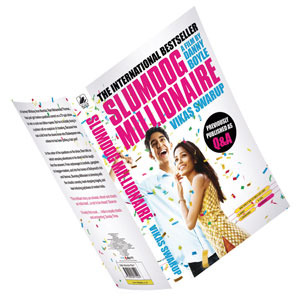
Vikas Swarup, the author of Q&A, on which the movie Slumdog Millionaire is based, speaks to Sitanshi Talati-Parikh about unique plots, winning formulas and how Ram Mohammed Thomas became Jamal Malik

Rahman06

The 47-year-old Vikas Swarup seems to have the Midas touch. His first book, Q&A, besides winning a fair share of awards itself, has left a wake of accolades for any adaptation based on the story. The audio book won the award for best audio book of the year, the BBC radio play won the Gold Award for Best Drama at the Sony Radio Academy Awards 2008, the movie is sweeping all statuettes and there is now a stage musical in the making. An accidental writer, the Deputy High Commissioner of India to South Africa, based in Pretoria, is quick, matter-of-fact and precise in his answers, like someone accustomed to being interviewed.

‘Not all deaths are equal…the murder of a celebrity instantly becomes headline news. Because the rich and famous rarely get murdered. They lead five-star lives and, unless they overdose on cocaine or meet with a freak accident, generally die a five-star death at a nice grey age, having augmented both lineage and lucre.’ Post 26/11, there is an inescapable irony in these words taken from Vikas Swarup’s latest novel, Six Suspects, published last year. Swarup is bemused at the inadvertent implication of his words.

He wears his achievements well, and bears it with the firm knowledge that a first-time writer like him, without any experience in creative writing or literature, cannot afford to take success for granted. While he considers himself “lucky”, he seems logical and practical – not in the least disconcerted by the overwhelming triumph of the film, Slumdog Millionaire. He merely seems gratified – glad that those who had never read or heard about the book before would now reach for a copy.

Rahman03

Sitting back in London, Swarup – who had never attempted to write before – chose to give it a shot. In 2003, Q&A was written and by 2005 it got published, and has so far been translated into 37 languages. “When I wrote this I knew the storyline was very fresh and the plot was unique. But that it would become such an international success, still confounds me. I thought it was a very Indian story, about the real India without any attempt to exoticise it. The fact that the book has appealed to readers from Barcelona to Sydney has come as a very pleasant surprise to me. You would never imagine a book that you have written, a light-hearted story, despite its social commentary, to mean so much to someone, giving them strength to carry on.”

The story did not find him, in the strictest sense of the word. He found it, by creating the perfect, winning formula – a judicious mix of all things desi, with a generous helping of ideas taken from true incidents and realities. The grim actuality of the street, the eternal rags-to-riches story and most importantly, the true Bollywood-style villain. Especially in Six Suspects, which is now being made into a film, many of the stories resonate with real life. Larry Page, for instance, a simple Texan about to marry an Indian girl based on a photo, was inspired by a report of a man who fell in love with a girl after seeing her photo and thinking she’s Aishwarya Rai. The terrorised young kids of the streets (from Q&A) were an “urban myth” while Swarup was growing up. “My mother would say, ‘Don’t go out alone, they will catch you and maim you.’ I have read reports that these things do happen.”

“These are the two things that I try to combine – a story that keeps the reader hooked and at the same time the book should have a soul. It should make you think as well as touch your heart.” So there are references to real people, like Shah Rukh Khan and Amitabh Bachchan, with the real story revolving around fictional characters. “When I conceived this book, there was only one show in India, Kaun Banega Crorepati, and you can certainly not attribute anything that Prem Kumar does to what Amitabh Bachchan would have done on the game show. In my fictional universe, the game show is promoted by a group of cheats, whose idea is to tempt and titillate you with the top five, but actually ensure that nobody wins it. The game show host has to be a slightly unsavoury character, actually based on Bollywood villains.”

Swarup, who likes to unwind by catching a movie with his artist-wife and two sons, was not really involved in the film adaptation of the book. He played the part of checking the script and suggesting revisions, but nothing beyond. He has accepted certain minor changes in the story and also that of the main character’s name. To explain the history behind Ram Mohammed Thomas’ name would become difficult to translate on screen, so he simply becomes Jamal Malik. Salim, who originally is a good-looking youth and Thomas’ best friend, becomes Malik’s gangster-brother.

Though born and brought up in India, the nature of his work leaves him unable to physically be in the country in which his stories are set. Swarup stays abreast with the news in India through modern communication – TV and the Internet. “That sense of distance and separation, which used to exist earlier, vanished. That makes you feel much more connected to the country.” And that feeling is very important for someone who is a “global nomad”.

Creative success has definitely influenced this family man’s life as a diplomat. “So many more doors open up for you, when people have read your books, which would otherwise remain closed for a deputy high commissioner!” Despite the popularity of his works, Swarup insists that all his books are one-offs. “Many people suggested another Q&A, and I thought to myself, if I have to do that, then it means I have no other stories to tell. The day I have to repeat myself, I won’t write.”

when paths cross…

Tags

, , ,

Life has a funny way of making things happen. Sometimes you don’t have to lift a finger and events roll out like a mossy stone!

So, Ed Iwata, a writer and blogger from the States popped into Bombay for a week to get an understanding of what’s happening in this mad, mad city. The city that has suddenly come into the limelight post-Slumdoggy Mil… Anyway, I begin to digress. He touched base with my husband to chat about what the entrepreneurship scene looks like, and about our ‘cross-cultural’ lives.

It has been interesting, India-America-India; also kinda cool, study-study-work-business-business and the inherent learning curve. We spoke about how it is a ‘get rich quick’ culture – no one really has the patience to work at making money; the kind that makes you feel good at the end of the day and sleep well at night. The kind that makes you feel complete. ‘I achieved something. And one day that will translate into material benefits, simply because it is the right thing.’

That discussion brings me to a persistent thought – when Sahil and I meet people my age, they don’t really care about doing the ‘right thing’ – they care about the end result, the monies and the more you reach out for it, the faster it runs away from you – the chase we politely term, ‘a rat race’. Maybe we are meeting the wrong people, but it does worry me, that in hindsight so many people my age will have spent the best years of their life chasing money and not building something, or creating a life for themselves. Money is ultimately delusional, simply because you need it, you believe that that’s all u need in life. Need is a necessity that you can fulfil through various means. When luxury becomes a need, the desperation follows. What I need is love, a few square meals on the table (preferably yummy tasting), exotic world travel and wonderful life experiences that I can write about. Money is simply the facilitator – it is the means to the end, not the end to the means. So, in retrospect, I did digress! Back to the point:

Ed, who is also being entrepreneurial, writing a book; tried in a short span to time to understand our culture, our thinking and our business. Fond of trying Indian food (he bravely experimented with chaat, dosa, and tons of masala stuff), he is very diligent about exploring the city and its nooks and crannies to find the watering holes in which the youth find space. He popped into all possible places and spoke to many people asking intuitive questions and following a trail.

Here’s what he wrote on us.

And something more picked up by the NYTimes.

I think its great that entrepreneurship is coming back into focus – and that is just a spirit. You can be entrepreneurial even within your own domain – home, office, work space, job, as a freelancer, and most importantly and challengingly, as an entrepreneurial businessman. It is the spirit that matters at the end of the day, and the dedication and drive. Money isn’t here and probably will not come for a long time, but at the end of the day, you fall back on your pillow, content that you have done what you were born to do.