• About
  • Brand Building
  • Film & Drama
  • Writing: Arts & Lifestyle
  • Writing: Interviews
  • Writing: Luxury Brands
  • Writing: Travel

sitanshi talati-parikh

sitanshi talati-parikh

Tag Archives: Bollywood

Imran Khan: An Actor and a Gentleman

20 Monday Apr 2009

Posted by sitanshi talati-parikh in Interviews (All), Interviews: Cinema, Publication: Verve Magazine

≈ 1 Comment

Tags

Aamir Khan, Avantika Malik, Bollywood, Delhi Belly, imrankhan, indiancinema, Interview, Jaane Tu Ya Jaane Na, Kidnap, Luck, vervemagazine

Published: Verve Magazine, Verve Man, Features, April 2009
Photograph by Colston Julian

Affable yet reticent, blunt yet polite, serious yet funny, unemotional yet moody, Bollywood’s latest poster boy seems to be a contradiction of sorts. Aamir Khan’s nephew and Nasir Husain’s grandson, 26-year-old Imran Khan is two films down with two new releases, Delhi Belly and Luck coming up this year. Sitanshi Talati-Parikh draws the suave and restrained actor out, even if just for a little bit
Imran02

The brows are furrowed in intense concentration. The facial expression is blank. The eyes are reflective. The humour is deadpan. No smirk, no smile, not even a laugh line. And yet we all titter. What is it about this new kid on the block that sends hearts fluttering and makes you yearn to know more? As I watch Imran Khan step self-consciously in front of the camera, taking shot after shot effortlessly, I can’t help but notice his face has character. Whether it emanates from the well-crafted jawline or the intensely expressive eyes, it’s unmistakable. After every shot, Imran lithely hops over for a critical assessment. He is his own worst (or best) critic. As he discusses camera angles with photographer Colston Julian, I learn that he is a self-taught actor (or more accurately, natural), while he has been formally trained in writing, cinematography and direction at New York Film Academy, Los Angeles.

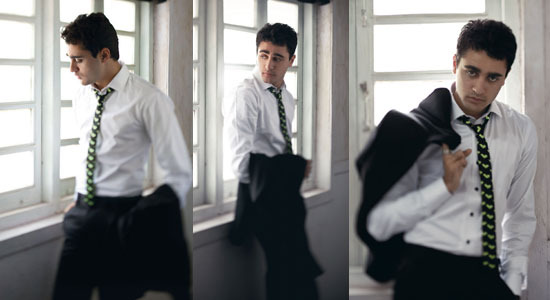
In a crisp white shirt and black trousers with a funky Batman tie (he is a huge fan), Imran sits cross-legged before me on a chair with an expectant look on his face. Why would someone who looks as good as him not attempt to give acting a shot and head straight for direction? As a child he picked up the camera, playing with genres like sci-fi (on the lines of Alien), Agatha Christiesque murder mysteries and spoofs. Post-school, he stumbled from market research into advertising (including ad films). At this point he realised films are what he understands best. After all, the mere smell of celluloid gives him butterflies in his stomach.

Acting was never his intention. A sequence of events – or fate – combined with Abbas Tyrewala’s faith in him led to Imran being cast as the lead in Jaane Tu…Ya Jaane Na (2008), the film that made him an overnight star. Despite having played a young Aamir Khan in Qayamat Se Qayamat Tak (1988) and Jo Jeeta Wohi Sikandar (1992), he says matter-of-factly, “I never thought of myself as being a very good looking guy and figured there was no place for me in the Hindi film industry. Hrithik Roshan set the bar. He is a complete package. I’m not built like him, I can’t dance even a quarter as well as he can – that’s something I aspire to.”

Noticing my imperceptible shiver with the blast from the air conditioner, he solicitously jumps to his sock-covered feet and props himself up on his toes to tone down the room temperature. Then in a flash he is back in interrogation mode. Born in Wisconsin, America, to Nuzhat Khan (director Mansoor Khan’s sister) and Anil Pal, he moved to Mumbai with his mother after his parents’ divorce. He was a year and a half at the time. In all the schools he went to – including Bombay Scottish (Mumbai), two schools in Ooty, a nature-based gurukul in the Nilgiris, Bangalore and Fremont high school in Sunnyvale, California, he was always the new kid in school. “It was really tough. I didn’t grow up being considered cool or dating a lot of girls. I was into science and books and not into sports. I was always the odd one out at parties, sitting in the corner, knowing barely two or three people.”

Imran admits that constantly moving from school to school made him more independent but also a bit of a loner. “I don’t socialise a lot and like silence. I can’t be on all the time – I need occasions when I am with absolutely no one so I can reset, recharge, rejuvenate and then come back out.” He has only just started to make friends in the industry – think Ranbir Kapoor – since he grew up not knowing anyone. Though fond of listening to music, he can’t abide television. He actually doesn’t own a TV or a cable connection. Surprising, considering that he is an obsessive movie buff and watches three to five movies a day (on his computer) and is happiest when at a movie theatre.

As we get to the much-publicised fact that girls are extremely “well-behaved” around him – “very calm and composed – no crazy stuff,” I discover he is also the guy who likes to be in the background and tries not to get noticed. “I roam around town (getting a roll at Candies, Bandra) practically invisible. It’s like an internal switch I can turn on and off. I can walk into a room and make everyone turn around and notice me, or I can walk across a room and no one will ever realise that I am there.”

Imran04

He can be brutally blunt without any perceptible intention of causing discord. “I can’t make stuff up or say anything that isn’t exactly as it is. I live my life by fact and follow reason and logic. I find emotion and irrationality hard to deal with.” Does that make relationships complicated? He swiftly attributes his personal growth to his relationship with girlfriend Avantika Malik, whom he has been seeing for over six years. “I have learned a lot about myself and become a more balanced person. I was 19 when I started seeing Avantika, at a point where I couldn’t express my thoughts and feelings. I’m still not very good at that but have become more comfortable with my own emotions.” The young actor doesn’t see any danger in tagging himself as ‘unavailable’ – “People trust you more if you are open about your relationships.”

Post film school in LA, he could have tried his hand at Hollywood movies. He attributes his return to India to finding it offensive that elite Indians can be so disdainful of Hindi films. “I understand that these movies have shortcomings, but I want to make it better!” He explains earnestly, “I have never lacked anything in life. Everything that I have today comes from the film industry. My grandfather started with nothing – his family threw him out when they found out that he wanted to work in the film industry. He has built it all up, and for me to run away from that is impossible.” I can quite believe him when he says his strongest point is his integrity. “If it is not right or not honourable, I won’t do it – like taking money for things I don’t believe in. It may be an old-fashioned concept, but it counts for something, right?”

Right. And victory follows the honourable? According to the Capricornian, “Success is having the freedom to choose to do only what you really want to do.” By his own definition, Imran is very successful. While scripts are lined up at home, he can’t seem to find one that excites him. “I feel bored and stagnated if I am doing the same thing over and over – that’s part of the reason I am not a banker!” It explains why he jumped from playing a romantic hero to a villain. Ironically, while serious roles are easier for him than light, fun, “torturous” scenes, Imran suffered a lot emotionally, playing the negative role in Kidnap (2008). He couldn’t sleep, would suddenly start crying, and even threw up, dealing with the violence of the character. I ask him if it is worth it. Pensively he says, “I have come out of that stronger as an actor. It’s like scar tissue – when it heals, it heals back tougher.”

In his upcoming comic caper Delhi Belly, directed by Abhinay Deo and from the Aamir Khan Productions banner, Imran sports a new look. He loses the beefed-up frame of Luck, a forthcoming action-thriller directed by Soham Shah and turns into a long-haired, scrawny guy. “Everyone knows how much your physical appearance affects you personally. Women think that way about being fat while guys worry about being skinny.” He straightens his body and puffs his shoulders to demonstrate. “Physicality means a lot – for better or for worse. That’s how we are!”

He is precise and involved about his look to the extent of admitted eccentricity. The idiosyncrasy is tinged with moodiness – he shuffles simultaneously through multiple books and movies entirely dependent on his frame of mind. Imran, who coined, “I like humanity in principle but not in practice,” doesn’t wear his heart on his sleeve. “The people who matter know and understand me. I don’t feel everyone needs to like me beyond a superficial level.” And yet this intensely private person is also incredibly sentimental. The quirky tie collector fondly treasures his grandfather’s blue tie; and the green-and-yellow striped tie worn by Aamir in Jo Jeeta Wohi Sikandar is sported by the nephew in the publicity stills of Jaane Tu…. I inadvertently stumble upon a pair of bright-hued Converse shoes (another fetish) gifted to him by a friend on his birthday, that he doggedly wears despite their being a size too small.

He puts the shoes down and looks up expectantly. My first and last memory of him is his intense concentration. He doesn’t get distracted easily as people move, doors open, phones ring, bugs fly; he remains completely tuned into the task at hand. For about an hour the deep brown eyes are trained onto me and the very second, the conversation (as he prefers to term it) is over, the eyes have clicked out and the focus has shifted to the next task at hand. The bright young Khan – who refuses to tint his car or wear sunglasses because they hide the eyes and mask the face – has withdrawn into his shell, the inscrutable mask back in place.


Zoya Akhtar: The Zoya Effect

20 Friday Mar 2009

Posted by sitanshi talati-parikh in Interviews (All), Interviews: Cinema, Publication: Verve Magazine

≈ Leave a comment

Tags

Bollywood, indiancinema, Interview, Luck By Chance, Zoya Akhtar

Published: Verve Magazine, Features, March 2009

Luck By Chance (LBC), a film visualised in Goa, worked on for seven years, which finally saw daylight in 2009, catapulted debut writer-director Zoya Akhtar into tinsel-town limelight. Javed Akhtar and Honey Irani’s daughter and Farhan Akhtar’s sister has the Midas touch herself, with a self confidence that appears to be cultivated from over a decade of hard work. Sitanshi Talati-Parikh finds her enjoying the journey

IT IS REALLY TOUGH TO pin her down, but when you do, she is patient, effervescent and a powerhouse of energy. I quiz her on her newfound success – not easy with a debut film. “It is a bit of a dichotomy – I expected the collections to be better; I didn’t expect the film to do so well for me! The reviews and feedback have been amazing.”

Has the success of LBC raised the bar? “Your second film is actually a tough one – it has to be ‘do I just keep doing what I do; or do I have to think of the commercial market now?’ What you work with should keep you excited for two years – and turn you on.” What turns Zoya on is a “clever” movie – like The Usual Suspects or Munnabhai MBBS or Lagaan; or one that really touches you, like Black Friday. “I don’t understand movies where the producer and director ask me to leave my brain at home.”

We discuss the clever nuances of LBC, and Zoya is surprisingly modest. “As a director, you need people who can take your vision and give you ideas that you haven’t even thought of – your crew can make or break your film.” Zoya, who studied film at New York University, post literature and sociology at St. Xavier’s College, Mumbai, has always written her own work. She finds that to be the secret of the exacting clarity required to take her vision forward.

The 36-year-old movie enthusiast prefers to engage and question norms in the realms of mainstream cinema. “There is no film-maker who wants only a few people to see his film. There is no more art and commercial cinema. The point is to merge this gap and simply make good commercial films.” And is art instinctive or learned? “Both. You have to be a storyteller at heart, but you have to learn – whether it is from a DVD library, film school or working on a set.”

I point out that there is a sense of irony in making a film about struggling Bollywood ‘have-nots’, when you represent the ‘haves’. She retorts immediately, “What do mean by ‘have’? It’s not like I decided to be a director and got a launch on a platter! If you want to do anything that is slightly out of the box, you have to struggle like anyone else. There are perks – you have access to people, but they won’t do something simply because you are so-and-so’s kid or sister.” Which is evidenced by the fact that all the big stars she approached for the lead role politely turned her down; at which point her brother, Farhan, bailed her out. Taking this in her stride, Zoya, who is tenacious and resilient, laughs and hopes the casting will be easier for her second film. On the other hand, having had experience as a casting director, Zoya – who incidentally would love to cast Sonam Kapoor for one of her films – recalls the numerous aspiring actors that hope for an audience. And while she looks at some of them, thinking that they probably won’t make it, she doesn’t say it aloud. “After all, in this industry, you never know!”

Sharp and incisive, she has a knack for creating characters that are extremely likeable despite their inherent flaws or weaknesses. “I truly believe that if you retain a character’s humanity, you can make the character do anything. They are not heroes and villains, they are people. We come from a culture where everything is so black and white – the good are so good and the bad are just bad. It is boring! They work in superhero films or films like Die Hard, but not all the time.”

Zoya Akhtar is one of the many young women directors now holding fort in Bollywood. “There is a place opened up for young directors. The gender is not really relevant. In this industry – you can be a man, woman, dog, alien, if you can make money for them, they will hire you! And it is a secular industry – it is the only one in the country where it doesn’t really matter what your religion is.”

The story of LBC has a message that resonates deeply with Zoya. Sipping green tea, she says thoughtfully, “We are in a place where success and failure are so polarised – the media tells you whether you are successful or not. I have to think of my sense of self – my accomplishment with my first film. ‘What do I feel about it?’ That to me was what my film was about. Success or failure is merely about the choice(s) you make.”

Zoya speak

I revere…Martin Scorsese, Quentin Tarantino, Mani Ratnam, Mira Nair, Robert Altman, Roman Polanski, Wong Kar Wai, Woody Allen.
I can’t turn off…The Godfather, Scarface, A Fish Called Wanda.
Directing or writing? Both – Can’t I have both? I want it all!
I’m currently reading…One Bright Summer Morning by James Hadley Chase.
When relaxing…I read or watch a movie.
In five years I will be…living in Goa.
I will be satisfied when…I will never be satisfied! I don’t want to reach anywhere – the journey keeps me going.

Literature: Top Dop Storyteller

26 Thursday Feb 2009

Posted by sitanshi talati-parikh in Art, Literature & Culture, Interviews (All), Interviews: The Arts, Publication: Verve Magazine

≈ Leave a comment

Tags

Bollywood, India, Indian Fiction, indiancinema, Interview, Slumdog Millionaire, vervemagazine, Vikas Swarup

Published: Verve Magazine, Features, February 2009

Vikas Swarup, the author of Q&A, on which the movie Slumdog Millionaire is based, speaks to Sitanshi Talati-Parikh about unique plots, winning formulas and how Ram Mohammed Thomas became Jamal Malik

Rahman06

The 47-year-old Vikas Swarup seems to have the Midas touch. His first book, Q&A, besides winning a fair share of awards itself, has left a wake of accolades for any adaptation based on the story. The audio book won the award for best audio book of the year, the BBC radio play won the Gold Award for Best Drama at the Sony Radio Academy Awards 2008, the movie is sweeping all statuettes and there is now a stage musical in the making. An accidental writer, the Deputy High Commissioner of India to South Africa, based in Pretoria, is quick, matter-of-fact and precise in his answers, like someone accustomed to being interviewed.

‘Not all deaths are equal…the murder of a celebrity instantly becomes headline news. Because the rich and famous rarely get murdered. They lead five-star lives and, unless they overdose on cocaine or meet with a freak accident, generally die a five-star death at a nice grey age, having augmented both lineage and lucre.’ Post 26/11, there is an inescapable irony in these words taken from Vikas Swarup’s latest novel, Six Suspects, published last year. Swarup is bemused at the inadvertent implication of his words.

He wears his achievements well, and bears it with the firm knowledge that a first-time writer like him, without any experience in creative writing or literature, cannot afford to take success for granted. While he considers himself “lucky”, he seems logical and practical – not in the least disconcerted by the overwhelming triumph of the film, Slumdog Millionaire. He merely seems gratified – glad that those who had never read or heard about the book before would now reach for a copy.

Rahman03

Sitting back in London, Swarup – who had never attempted to write before – chose to give it a shot. In 2003, Q&A was written and by 2005 it got published, and has so far been translated into 37 languages. “When I wrote this I knew the storyline was very fresh and the plot was unique. But that it would become such an international success, still confounds me. I thought it was a very Indian story, about the real India without any attempt to exoticise it. The fact that the book has appealed to readers from Barcelona to Sydney has come as a very pleasant surprise to me. You would never imagine a book that you have written, a light-hearted story, despite its social commentary, to mean so much to someone, giving them strength to carry on.”

The story did not find him, in the strictest sense of the word. He found it, by creating the perfect, winning formula – a judicious mix of all things desi, with a generous helping of ideas taken from true incidents and realities. The grim actuality of the street, the eternal rags-to-riches story and most importantly, the true Bollywood-style villain. Especially in Six Suspects, which is now being made into a film, many of the stories resonate with real life. Larry Page, for instance, a simple Texan about to marry an Indian girl based on a photo, was inspired by a report of a man who fell in love with a girl after seeing her photo and thinking she’s Aishwarya Rai. The terrorised young kids of the streets (from Q&A) were an “urban myth” while Swarup was growing up. “My mother would say, ‘Don’t go out alone, they will catch you and maim you.’ I have read reports that these things do happen.”

“These are the two things that I try to combine – a story that keeps the reader hooked and at the same time the book should have a soul. It should make you think as well as touch your heart.” So there are references to real people, like Shah Rukh Khan and Amitabh Bachchan, with the real story revolving around fictional characters. “When I conceived this book, there was only one show in India, Kaun Banega Crorepati, and you can certainly not attribute anything that Prem Kumar does to what Amitabh Bachchan would have done on the game show. In my fictional universe, the game show is promoted by a group of cheats, whose idea is to tempt and titillate you with the top five, but actually ensure that nobody wins it. The game show host has to be a slightly unsavoury character, actually based on Bollywood villains.”

Swarup, who likes to unwind by catching a movie with his artist-wife and two sons, was not really involved in the film adaptation of the book. He played the part of checking the script and suggesting revisions, but nothing beyond. He has accepted certain minor changes in the story and also that of the main character’s name. To explain the history behind Ram Mohammed Thomas’ name would become difficult to translate on screen, so he simply becomes Jamal Malik. Salim, who originally is a good-looking youth and Thomas’ best friend, becomes Malik’s gangster-brother.

Though born and brought up in India, the nature of his work leaves him unable to physically be in the country in which his stories are set. Swarup stays abreast with the news in India through modern communication – TV and the Internet. “That sense of distance and separation, which used to exist earlier, vanished. That makes you feel much more connected to the country.” And that feeling is very important for someone who is a “global nomad”.

Creative success has definitely influenced this family man’s life as a diplomat. “So many more doors open up for you, when people have read your books, which would otherwise remain closed for a deputy high commissioner!” Despite the popularity of his works, Swarup insists that all his books are one-offs. “Many people suggested another Q&A, and I thought to myself, if I have to do that, then it means I have no other stories to tell. The day I have to repeat myself, I won’t write.”

Priyanka Chopra: Unstoppable Priyanka!

20 Thursday Nov 2008

Posted by sitanshi talati-parikh in Interviews (All), Interviews: Cinema, Interviews: Cover Stories, Publication: Verve Magazine

≈ Leave a comment

Tags

Bollywood, Dostana, indiancinema, Interview, priyankachopra

Published: Verve Magazine, Cover Story, November 2008
Photograph by Atul Kasbekar

From Bareilly to Boston and Manhattan to Mumbai, the cover girl many times over, is leading a fairy-tale life. Firmly entrenched in Bollywood, Priyanka Chopra will have a record six releases this year. Dostana, where she plays an editor at Verve, releases this month and promises to be a rollicking watch. Sitanshi Talati-Parikh finds the vivacious actress full of soul, spirit and spunk

Priyanka01

It is an ordinary Thursday. What makes it extraordinary is the glitter of star power that suffuses the morning with a powerful glow. The lithe, dusky beauty saunters into the make-up van, face barely visible under her enormous shades, dressed in “comfort clothes” – leggings and a long spandex top in her favourite colour, black – after a late shoot the previous night. We look up with trepidation, as she emerges a considerable while later, our allotted time ticking ominously away. Flashing dazzling smiles at everyone, Priyanka Chopra faces the camera, barely wincing in the painfully high Dior heels, which are at least a size too big for her – by her own confession, she was “born in heels”. Ace photographer, Atul Kasbekar, coaxes fluid motion from the svelte actress. She immediately picks up the beat of the music pulsating in the tiny studio and twirls, twists at her slender waist, gracefully cuts the air with the circular motion of her lean arms, flips her hair and throws herself into the scheme of things, with ferocious enthusiasm and buoyancy. It’s a perfect first shot. As the music suddenly stops, and her personal iPod is hastily summoned, with barely noticeable displeasure, she confides, “I can’t think or function without music. My van, my room, my car are always blasting music, so the five minutes I get, become my chill out zone. And besides my family, that’s the one thing I find time for.”

With the kind of schedule she keeps – 25 films in less than five years, not a single holiday or vacation since, working literally 20 hours a day – she is playing a serious juggling act with work and family. “I really don’t find time for my family – I take it for granted that they will come and hang out with me.” Being the first-born to parents who left a flourishing medical practice to ensure that her career took off, it is evident that Priyanka has done them proud. The senior Chopras unobtrusively watch their daughter’s shoot, the mother with a slight smile as she notes the near-perfect shots being reflected on the computer screen, and the father sits back quietly and takes in the confidence of his offspring with teary-eyed pride. Rarely present while his daughter is shooting, the Verve shoot takes Dr. Ashok Chopra back in time. He recalls his 12-year-old girl flouncing in front of a full-length mirror (her only demand from her parents) singing ‘Mere khwaabon mein jo aaye…’ from Dilwale Dulhaniya Le Jayenge – Priyanka’s absolute favourite film of all time. Even now, she recalls in the blink of an eye the same sparkle, head toss and look of romantic fervour.

“Today my dad is home, living his life to the fullest – I am so grateful for that.” She went through a rough patch – possibly the only glitch in an ostensibly dream-like life – when she watched her father go through a serious illness that took him two years to recover from. She was, at the time, shooting for one of the most important movies of her career, Krrish and wrapping up Bluffmaster. “Your father is always your invincible superhero, to whom nothing can ever happen, because he is the one who protects you – and then suddenly tables turn and you have to protect him. I felt so helpless and lost. I didn’t know how to deal with it.” But deal with it, she did. She would spend nights between shoots at the hospital, thankful that this happened at a time in her career when she could provide the best possible treatment that money could buy, without compromising on her work. A year earlier, it would not have been possible.

The July-born Cancerian’s amiable personality and warmth bubble to the surface as she reminisces about the people close to her heart. Her younger brother, Siddharth, is very proud of having a ‘hot’ older sister. She admits, “I am a self-confessed bully. I used to make him do all my work and I even used to dress him up as a girl! For seven years I was the only child and my parents’ most prized possession. And then he came – I used to pinch him and make him cry. My dad would come in and I would quickly pretend that I was holding and pacifying him!” She laughs unselfconsciously. “I love him – he is my greatest weakness. I spoil him, like he is my child.”

Friendships have their own familial bonds. Hailing from an army family, spending most of her childhood on the move, from Bareilly to Jamshedpur, and Iowa, New York and Boston, Priyanka has still managed to cultivate some lasting friendships – her childhood friend, Tamanna, for instance, who flies down from Delhi to meet her on her birthday. “I’m very close to my friends. If you have even two or three ‘4 a.m. friends’ who you can depend on for your life – and you know if you were kidnapped and someone asked you who would vouch for your life, it would be those people – then you’re very lucky. Though all your colleagues are your friends, there are only a few people whom you consider family.”

That’s what Dostana is about – three friends who consider each other family – and how a relationship between great friends is formed and broken. Priyanka, who loves the outdoors, admits that the movie had the best outdoor shoot she has ever experienced. Two months on location in Miami, she found herself gleefully entertaining her “khandaan” from America. Relatives were “crawling out of every room, closet and bathroom” in her three-bedroom apartment. Priyanka dressed for the shoot every morning with people passed out on the couch. Her family was on holiday and would come and hang out on the set. The euphoria was catchy. It is easy to visualise the massive on-location party, including malls and beaches (think fabulous South Beach), with a variety of restaurants and live music bars – all pulsating with energy that Priyanka feels will translate positively on screen.

In a film about friendships, what were the off-set relationships like? “I never thought I would bond with Tarun (Mansukhani) as much as I did. Initially, I didn’t know him very well and I didn’t think I would, either. He seemed like a really serious guy – we fought like cats and dogs, and made up instantly. I keep telling his wife, Karuna, that I play his on-set wife because we are constantly fighting like a married couple! But he has so much clarity as a director.” Karan Johar popped in for a bit and Hiroo Johar was officially the “big mother hen”. Abhishek Bachchan and John Abraham, her co-stars in the film, who pretend to be a gay couple to get an apartment to live in, spent all their off-screen time together, leading Priyanka to quip that they took their roles quite seriously!

John Abraham was the self-proclaimed fitness guru on the set, training everyone – the make-up maestro Mickey Contractor, included. Every day, after the shoot, everyone would land up at the gym. Priyanka studiously followed the regime – despite the fact that she generally doesn’t work out at all – to ensure that she looked prime for her swimsuit scene in the movie. Admiring her trim body – slimmer than she has ever been – It is hard to believe that she doesn’t work out or diet, after seeing how even the ramp-size Dior outfits at the Verve shoot are too large for her. She leans forward with a conspiratorial whisper, “being overworked and underpaid is the mantra for losing weight”.

Priyanka’s character in Dostana is an editor at Verve, and is dressed in accordance to the location. “In Miami, anything’s possible. I wore shorts, high heels and a shirt to work – and I was over-dressed!” Priyanka hopes the fashion critics will find it equally appealing. “If you try to please the critics, making films trying to keep in mind what the fashion industry is going to say, then you’ll never be able to experiment.”

The actress, who has had no mentor or any formal training in acting, has found herself experimenting through her film career. High on the popularity chart, Priyanka has had her share of missable films and reigned supreme in spite of them. The laugh lines smear away and she quickly retorts, “But that’s normal, right? Nobody can get a track record of 100 per cent. It is against the law of averages.” Have the decisions been based on script alone? “It is not just the script. At every point in my career, each film I did was for a certain reason. It may not have done well, but at that point doing that film or finding that film was very important.” Andaaz and Hero gave her small, but important parts; Kismat was her first solo heroine film; Plan with Sanjay Dutt, made by Sanjay Gupta and Asambhav with Rajiv Rai, were a step up in that ladder. “I never expect anything from any film. I feel when you have expectations, somewhere you are let down.” With a sudden flash of her 100-watt smile she confides, “But I can’t help expecting from these three – Drona, Dostana and Fashion. I’ve worked really hard on each one of them and they are very special to me, whatever the fate of the film may be.”

Suddenly retrospective and a tad philosophical, Priyanka appears wiser than her 26 years. Clichés appear truisms as she applies them to her life – she speaks without any affectation, if a shade reminiscent of her articulate Miss World persona. “It is never the end that matters. It is also the journey – we may think of it as a proverb, but that’s how I have led my life, and it works for me. At this point of time, what I do is very important. What happens in the future will be part of what destiny has in store. The decisions I take now must be with courage of conviction.”

Courage of conviction has definitely got her where she is – able to pick and choose, and have more work on her hands than she has time for. “I’ve always believed that I am destiny’s favourite child.” Not even in her wildest dreams did the naturally talented actress, who was considering a career in aeronautical engineering (“making planes and going to NASA”) ever think she would be a part of show biz. “It still feels so surreal.” Neither she nor her family have had the time to retrospect. A mere 17-year-old schoolgirl when she participated in the Miss India beauty pageant – on an entry sent in as a lark by her family – she had just finished school when she became Miss World. “I had to grow up in a month!” She had to reconcile herself from a teenager in sneakers riding a bicycle to a young woman in a sari gracefully balancing a tiara on her head. “They say that the head that wears the crown rules the world. It’s not easy and it wasn’t. I still don’t remember how I did it – I only followed instructions – I was almost robotic in what I did. I only remember being myself since the last few years – since I was 22 or 23. Before that I was always so withdrawn, wary of being in this industry, not knowing anyone, wanting to protect myself and my family. Everything just happened to me. I feel somebody up there is holding onto my little finger, guiding me through life, which is why I never question what’s happening. I know if something bad is happening, this too shall pass, because there is a reason why I am here.” And what about ideals of changing the world that beauty pageants inspire? “I never had aspirations to conquer or change the world. I’m just playing my little part in the bigger picture and am happy that I am able to contribute.”

The strong girl is also incredibly soft-hearted and considerate. Very fond of children, she swings into the shoot in her gold Dior dress with her spot-boy’s son on her arm, smiles and poses for multiple pictures with their family. Later, while giving bytes to a news channel, she notes with the corner of her eye a man bent double with heavy equipment standing behind waiting for her to finish, and she immediately stops and gives way. A self-confessed “mush-pot”, she has a major weakness for romantic comedies, though she can watch creepy horror films with equal fascination. She would often get inspired and write poetry on little paper napkins – being a fan of prose, shayaris and Urdu – though she hasn’t done that in a long time. With a sudden twinkle she reveals that she would love to be serenaded – but with originality and spontaneity. “Buying red roses and sending them is so thoughtless! I prefer thoughtful gifts. A hand-written note would mean so much more to me than diamonds. Actually, a hand-written note with diamonds would mean a lot more,” she rounds up with a chuckle.

The voracious reader (biographies, chick lit, travelogues) hasn’t even had time to read a script that has been lying with her since the last twenty days. Sleeping four-five hours a day, she only manages to unwind in her white Mercedes, which she calls home. “I have worked every single day in the past few years and there isn’t one day that I regret it. I know the day I wake up in the morning feeling that I am too tired to shoot today, I will retire. Very few people are fortunate enough to love what they do. I really, truly love what I do.” That obviously keeps her steamrolling on. As I step out of her car, I watch her walk to the next shoot with a bounce in her step – despite the fact that she missed lunch entirely while talking to me.

Mumbai Unspooled

18 Tuesday Nov 2008

Posted by sitanshi talati-parikh in Art, Literature & Culture, Features & Trends, Publication: Verve Magazine

≈ Leave a comment

Tags

Bollywood, India, indiancinema, mumbai, UTV, vervemagazine

Published: Verve Magazine, Screen, November 2008

Nine Mumbai-inspired movies have been released already this year. Sitanshi Talati-Parikh explores the city’s iconography, in a retrospective look at major Mumbai films

The throbbing, pulsating city has a million stories to tell. Every minute that ticks by on the Rajabhai Tower, something new happens, and it is the numerous faces of the city that film-makers strive to capture. Its myriad voices and its many tales, the sordid truths and the fantastical goings on. The city is at once a context for relationships and events, and often a hero or even an anti-hero. It is a city of romance, aspirations, gross inequalities, fundamentalism and cosmopolitanism, strength and unity and great divisiveness. It is the city of extremes and in that sense, remarkably a city of the world – a microcosm depicting the inane possibilities that surround us. Its distinctiveness, which only a person who has spent sufficient time in the city, discovers. The cutting chai and the Iranian tea houses, the Mercedes’ and the Mumbai trains, the five star hotels and Dharavi slums, art deco Marine Drive and the Victorian Kala Ghoda area, the meandering bylanes and the heaving buses that wind through these zones, the vendors and the businessmen, the young lovers and the social climbers.

City of dreams
In this deeply aspirational city, the rags-to-riches stories can be recounted by the dozen, whether one thinks of Guru (2007) or the Munnabhai movies, as throngs of people continue to relocate to the ‘big city’ in the hope of a better life. It is their tragic and often wondrous stories that need to be told, very often by those in the Bollywood film fraternity, who may have had similar experiences. Director, Anurag Kashyap, for instance, moved to the city, struggling initially, staying at the St Xavier’s College hostel and hanging out with a band called Greek. These experiences prompted him to make Paanch (2003), an urban crime thriller involving a rock band; while Black Friday (2007), about the Mumbai riots, was inspired by a book he read.

Dark alleys and grim landscapes
The city’s black side, its alter ego, is more evocative and larger than life. It opens up its dark and mysterious corners to the exploration of themes that are a grim reality. Johnny Gaddaar (2007), a noir crime thriller shot in black, white and red, explores the sinister elements in a person’s character, in much the manner of Ek Hasina Thi (2004). Aamir (2008), a thriller about fundamentalism, where an NRI Muslim goes through a freakishly disastrous time on arrival in Mumbai and Mumbai Meri Jaan (2008) about the serial bomb blasts in Mumbai on 7/11, which depict how the blasts led to chaos and irrationality stemming from fear and loss of control in people’s lives.

Cosmopolitan angst
A city that has rivers of gold and the greatest power struggles, is also home to a good deal of metropolitan frustrated violence – when aspirations are not met. Cosmopolitan angst is an equally prominent contemporary theme, as clearly portrayed by the reality-inspired Life in a… Metro (2007), Page 3 (2005), Dus Kahaniyaan (2007), Mumbai Cutting (2008), and even the pedantic Mumbai Salsa (2007). Reminiscent of Paris, je t’aime, Mumbai Cutting is less about love and more about the grim realities of the city. Dus Kahaniyan (2007) picks up on urban themes like extramarital affairs, drugs, violence and relationships. It makes one wonder if love actually exists any more – candyfloss has disappeared from its smoggy walls. Jogger’s Park (2003) picks up a theme of a relationship between an elderly man and a young girl. Exploring relationships and the varied kind of situations life places one in, is a trend of Mumbai-based or metro-based films.

Big city tinsel town
People living in smaller towns look at the movies depicting the big city life with great interest, while those living in the city naturally identify with it. Main Madhuri Dixit Banna Chahti Hoon (2003) is a film where small town aspirations for tinsel town come to life. TV artiste and upcoming big screen actor Sid Makkar provides some finer insight. Luck By Chance, Zoya Akhtar’s upcoming film, in which he plays a part, is naturally located in Mumbai, since the movie is about the film industry. Makkar finds that the majority of movies about Mumbai are steeped in reality – and “reality is entertaining”.

Platform rendezvous and car chases
While the Golden Gate Bridge of San Francisco or the Empire State Building (in lieu of the missing World Trade Centre towers) in Manhattan are iconic structures of the city, we find the Mumbai local trains as a constant motif in movies on the city. As the train thunders along, many a story is told. Think of Mumbai Meri Jaan (2008) on the serial bomb blasts, Life in a… Metro (2007) where a clandestine meeting takes place at the local train station, Chameli (2003) takes one from Lamington Road to Kamathipura, Kundan Shah’s Hero in Mumbai Cutting is about the local train commuter as the city’s unsung hero, or even A Wednesday (2008), Saathiya (2002) and Dombivali Fast (2005). Similarly, Taxi No 9211 (2006), is a thrilling cab chase through the streets of Mumbai, loosely based on Hollywood film Changing Lanes (2002) that takes place in New York.

Waves, sand and love trysts
Many an iconic love story has been told on the streets of Mumbai – Marine Drive, Chowpatty, Worli sea face, Bandra reclamation and Juhu-Chowpatty. Bluffmaster’s (2005) glamourous love trysts, Guru’s (2007) impassioned rise to fame starting with a determined walk on Marine Drive, Hum Tum (2004) finds the star-crossed lovers coming together on Chowpatty beach in true cosmopolitan fashion (ironically, not in Paris, the city of romance). Not to forget the coming-of-age of youths in Jaane Tu… Ya Jaane Na (2008), love sparks in Lage Raho Munnabhai (2006), and the problems of urban marriage Chalte Chalte (2003).

Monsoon saris and dewdrops
Come monsoon, the city bursts into a flood of romantic fervour. The wind-splashed windscreens and swaying palm trees on Chowpatty-Marine Drive are all symbolic of a dark sensuality. Huddled under the umbrella, a generation that grew up in the city feels the homeliness in its murky puddles and blackened sky-scrapers; while those who moved here looking for something better, have a wistful sense of allegiance and belonging. Think of the romance in Chandini (1989), iconic Raj Kapoor and Nargis in Shree 420 (1955), Amitabh Bachchan and Smita Patil in Namak Halaal (1982) and even the blossoming of love amidst grim city reality in Satya (1998).

The haves and the have nots
Anyone who arrives in the city cannot miss the straggly-haired, skinny street children that wander about looking for a benefactor. At every traffic signal and outside a food place you are accosted with them. Mira Nair’s Salaam Bombay (1988) that was nominated for an Academy Award (Best Foreign Language Film) told the tale of Mumbai’s street children which now, in Traffic Signal (2007), becomes a tale of a full-fledged business. As with any big city – but particularly in a city like Mumbai that sees so much disparity between the rich and the poor – emerge tales of inequality, angst and violence. Mumbai Express (2005) describes the economic disproportion in a comic tale of Dharavi slum-dwellers plotting the kidnapping of a rich businessman’s son, while Kidnap (2008) is a movie where an orphaned youth takes revenge for a false kidnapping charge. Chandni Bar (2001) describes the tale of a young village girl, who moves to Mumbai and is forced to become a bar dancer by her uncle.

Fundamental terror
Terror camps aiming for the greatest impact by hitting the most aspirational part of a country can be found making Mumbai their target – creating a great deal of threat and insecurity. Fundamentalism, power struggles and gang wars have been the overriding theme in most of the recent films on or about Mumbai. Where a cosmopolitan love story bloomed in Mani Ratnam’s Bombay (1995), the city also took its pound of flesh in the face of fundamentalism. A decade (1985-1995) that witnessed a bloody mafia war in Mumbai, led to a barrage of films being made about the behind-the-scenes of this underworld terror, exposing the policemen-politicians-criminals nexus at a time when extortion was rife. Ram Gopal Varma’s Satya (1998) and Company (2002), an expose of the underworld gangsters that were an intrinsic part of the city at the time, before the police ran a cleansing act with a great deal of encounters, it would seem that older movies like Don (1978), were simply a tip of the iceberg that was to become Mumbai mafia. Vaastav (1999) starring Sanjay Dutt was the making of a mafia kingpin, while Ram Gopal Varma’s Sarkar (2005) and its sequel Sarkar Raj (2008), starring Bachchan senior and junior, picked up from Hollywood’s Godfather (1972), to depict the reality of a mafia family that holds the city at ransom. Shootout at Lokhandwala (2007) tells the graphic tale of the 1991 underworld encounter that made Mumbai a war zone. Black Friday (2007), Aamir (2008), Mumbai Meri Jaan (2008) and A Wednesday (2008) expose the nakedness and vulnerability of our city, and question our placid acceptance or numb nonchalance towards the problems that exist.

Absurdist desperation
A Wednesday (2008) is about a bomb scare where a citizen takes matters into his own hands to prevent the continuous outbreak of violence that has made it a dangerous city to live in. At a stage when its citizens are fearful of taking the daily train, or even walking on the street, you begin to question protection provided by the city that is your home. It is an absurdist movie taking a freakish stance about a serious problem that is being evaded or ignored by a majority of the ‘snoozing’ public.

It appears that film-makers have shifted their stance from simply portraying realities, to sounding a wake-up call to the citizens. Where the older films would explore economic disparities, love and building a life in the city, the newer films are darker in their representation. Suddenly the trouble-makers are no longer families or individuals – it is a problem that society and the country as a whole, need to address. When movies on 9/11 are made, they depict the country and the people coming together. When the serial blasts happened in India, why is it that it seemed to be more of a cry for help and a frightening portrayal of our own vulnerability than an exultation of the greatness of spirit and bond of human race?

From the people, by the people
It is easy to see why UTV CEO, Siddharth Kapur feels that, “It hasn’t been a deliberate decision to have so many movies about Mumbai (UTV has been a part of Aamir, Mumbai Meri Jaan and A Wednesday) but these are times we are living in right now. There is bound to be an influence by the age of terrorism and riots. It so happens that a lot of film-makers have been born and brought up in the city or have been greatly influenced by the experiences in the city.” But that does not limit the story’s appeal. After all, the themes are universal. Rajkumar Gupta, director of Aamir, believes that while the city’s diversity has a major role to play, the answer can be as simple as the fact that Bollywood is based in Mumbai. After all, for the film-makers working within tight budgets, it is easier to shoot in their own city.

It is undeniable though that the city is a powerful influence for film-makers. A good number of films stem out of realities that are Mumbai. If the dark reality-scapes have become the identifiable norm, it is a true barometer of the soon-to-be-absurdist life in this metro.

Tarun Mansukhani: Picture Perfect

20 Monday Oct 2008

Posted by sitanshi talati-parikh in Interviews (All), Interviews: Cinema, Publication: Verve Magazine

≈ Leave a comment

Tags

Bollywood, Dostana, indiancinema, Interview, Karan Johar, Tarun Mansukhani

Published: Verve Magazine, Features, October 2008
Photograph by Ritam Banerjee

After assisting with six films, and 10 years in the industry, Tarun Mansukhani debuts as a director with Dostana, releasing next month under the Dharma Productions banner. Sitanshi Talati-Parikh finds him full of steely determination, anticipation and solid allegiance to his mentor, Karan Johar

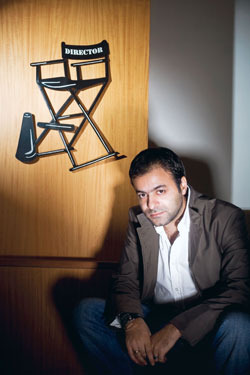
Director

The sharp, dapper man, just a shade over 30, seems more suited to the corporate world than Bollywood. With crispness of speech and meticulous attention to time, Tarun Mansukhani appears like a tightly wound elastic band – afraid to let go. It makes me ask him a number of times if he is nervous about his big release. “I haven’t thought about it, because I would’ve crumbled under that pressure. It is easier to think of it as just another film.”

Experience has made Mansukhani smarter. He quips, “I tell all my assistant directors that they can’t lie to me – I know all the tricks of the trade, I’ve played them all with Karan!” Waxing eloquent on a superb equation he shares with Karan Johar, the debut director paints a rosy picture. “Karan is the only producer in the world, who when you are hitting a deadline, tells you to relax and take your time. When you go over budget, he asks if it is justified, and if so, says, ‘No problem!’ It makes me want to ask him, ‘Are you sure?’”

Dostana, a romantic love triangle, starring Abhishek Bachchan, John Abraham and Priyanka Chopra, has been shot in Miami. During the shoot, Mansukhani recounts, Johar came to Miami for two weeks, and finally announced, ‘Look, I am really unemployed – I come, I shop and I eat. So I am going back to Mumbai to do more constructive work.’ And he left, not returning until the end of the film. The creative freedom, faith and trust provided by Johar, leaves the former singing praises of a perfect boss and perfect job. And yet, says Mansukhani, “I do not try to stay within Karan’s auteur. In fact, my deliberate decision is to combat what I have learnt – to break the school that we have developed for ourselves.”

While working on the story he has made a conscious effort to use everyday language, even if it is pedestrian language or Hinglish. While the film is youth-centric, it is not just the youth they want to appeal to. “There is an emotion that appeals to all age groups. It is not in its film-making or in its technicality or dialogues. We all have friends, our parents have had friends and our kids have friends. It may not be the dialogue that they might have spoken, or the language; but what is important is that they remember those friendships.”

Dostana is predominantly about the bond of friendship. Mansukhani, who studied in a boarding school, experienced deep friendships, giving him the idea for his first film. He brought in the premise of two men pretending to be gay to stay in an apartment, to make the story interesting. “It was a very conscious effort to not make fun of the gay community. You are not ribbing jokes about them or using them as a ploy.” A mother, who very subtly and with humour shows her acceptance of their sexual preference, adds a progressive element. So, another masala film with a social message? “We can all make art films at the end of the day, but there is a certain reach. Today this is what I would like to make. In the future, I may want to make an extremely gritty film, like Black Friday for instance.”

Talking about friendships, Johar and Mansukhani go back a long way. Johar went to school with Mansukhani’s sister, and when he was looking for an assistant for Kuch Kuch Hota Hai, he thought of him, who at the time was assisting television producer Anand Mahendroo. Mansukhani was not certain he wanted to be a part of commercial cinema – “I was just a Breach Candy boy who didn’t understand Shah Rukh and Kajol. Dilwale Dulhaniyan Le Jayenge was just another film for me.” When he took the FTII exam, confronted by questions on the direction of Swami Vivekanda Part II, he decided to work for Johar instead. The rest is history. The young director sees the future as very promising – making more films for Dharma, and eventually becoming a producer, financed by Dharma. “I don’t see myself breaking away from this family in any form. It is the only family I have known.”

Contrary to expectations, Mansukhani is not a die-hard cinema fan. Having studiously managed to avoid the classics, despite Johar’s repeated suggestions, he remarks unselfconsciously, “I stand clueless at a party when someone talks of classics like Guru Dutt and Satyajit Ray, and glibly put in my two bits, without knowing what they are talking about!” He prefers Sholay, Gadar or the more recent – admittedly candyfloss – films like Dilwale Dulhaniyan Le Jayenge and Kuch Kuch Hota Hai. Quick to laugh at himself, he confides, “The only reason I go to the cinema is because my wife wants to watch a film. While I critique every other film aloud, I am silently taking notes – though no one knows that!”

The resilient director doesn’t give himself even a moment to take a break. Starting work soon with Johar on My Name Is Khan, due for release next year, he is matter of fact about his breakneck schedule. “We are addicted to films – we are not good at anything else. This is our only world.”

And juggling that attitude with a family life? He is quick to compliment his spouse – with whom he has been in a relationship for 12 years and married for three – on being the most understanding person in the world, especially after admitting he hasn’t been to family dinners, and hasn’t met most of her family! He even missed his sister’s wedding when he was busy with a shoot. “I hope that these sacrifices made will accomplish something – at the end of the day, these opportunities may not come to me later. This is what I need to do to make life happen.”

Farhan Akhtar: Rocking Star

20 Monday Oct 2008

Posted by sitanshi talati-parikh in Interviews (All), Interviews: Cinema, Publication: Verve Magazine

≈ Leave a comment

Tags

Aamir Khan, Bollywood, Dil Chahta Hai, Don, Farhan Akhtar, indiancinema, Interview, Javed Akhtar, Lakshya, Luck By Chance, Rock On, Zoya Akhtar

Published: Verve Magazine, Verve Man, October 2008

Heady from the unprecedented success of Rock On!! Bollywood’s latest poster child of youth cinema, Farhan Akhtar talks to Sitanshi Talati-Parikh about his kind of movies, juggling family life with work and how genes make a difference

Superb actor, director, script-writer and now also a good singer (in a raspy sort of way), Farhan Akhtar steals the show with his overwhelming energy and passion on screen. Slipping into the skin of the protagonist, you feel him come alive and half expect him to jump out of the screen. How is it possible to be the master of all trades? Akhtar believes it’s just about applying yourself a 100 per cent in what you have chosen to do. Then there’s his excellent lineage. “I would agree that genetics must play a part in creating a natural leaning towards something that has been so dominant in past generations. But eventually, it cannot make you a good director or actor. That you will have to do yourself,” says the artiste, who keeps pace with a marathon schedule, and is known to never sit idle – not even for a moment.

Powered on by the desire to tell stories, Akhtar believes film-making is a collaborative art form which makes choices about script, crew and cast (among others) very crucial. He takes his time to decide on all these things before getting into a project. “I don’t know what motivates people to make the choices they do – I would hope that my work and its appreciation would serve as a catalyst for other people to do more original work and benefit from it – creatively and at the box office.”

Why, then a sequel to Don? “I found myself obsessed with the title character and the background score. I had to get it out of me. Luckily, I found many people who were as obsessed with the film as I was.” Akhtar has created a cult genre with his youth-centric films. Dil Chahta Hai became the film that revisited Bollywood norms and resonated with a huge college-going audience. That set the pace for Akhtar to continue down a road that told stories that he understood, that he wanted to tell, and which upgraded the passé films into a slicker, smoother and more identifiable medium. At the end of the day, as the film-maker puts it, “it is important to have something to say in an entertaining, engrossing manner.”

Akhtar was not consciously trying to set a social trend. He is clear in stating that, “It is not advisable to design a film keeping in mind its social impact. The design will show if that is the approach. Stay true to the story and do it because you believe in it. If the audience recognises your heart in it, everything else will follow — Rock On!! is being appreciated by an audience of 10 to 60 years of age. If the story has a universal emotional core, then it should be able to connect with all generations.”

And yet, each time it is a different story. Akhtar confesses he is a fan of all genres of movies. Lakshya didn’t do as well in the box office, but it was another story that had to be told. And then came Rock On!! – a simple story, a story you would have heard before, but one that rocked. It was the perfect blend of cinematography, acting, concept, style and above all (as with most of Akhtar’s work) dialogues that work. That are not stilted or refurbished like many of the others are.

There is actually a club of like-minded film-makers, where constructive criticism is an option, of which Farhan Akhtar, Kunal Kohli, Madhur Bhandarkar, Rakeysh (Omprakash) Mehra, Ashutosh Gowariker, Raju Hirani and Vipul Shah are a part. While Akhtar shares a great rapport with Gowariker, to the extent that they “discuss each other’s work candidly, knowing that all views are coming from a space of respect and admiration;” Akhtar’s film-making style is reminiscent of that of Aamir Khan – in that they are both gifted with supreme originality of outlook. And above all, a great sense of characterisation. Both have impeccable tastes in casting – and making an ensemble cast work is often what it takes.

Akhtar is constantly on the look out for talent – whether young or old. The website of Rock On!! actually has a talent hunt for upcoming stars. When questioned whether it was to increase the buzz on the site, he states that it is to find talent, young or old. “A good actor can be hidden inside any person of a age or gender.” That is surprising, considering that Akhtar, like Sanjay Leela Bhansali or Karan Johar, has chosen to work with established actors in his initial films. Akhtar doesn’t attribute this to stalwarts being a safer choice. He is noncommittal in his response. “I have been fortunate to have worked with some big names and talent in my films. That was the need of the script and character. Rock On!! allowed us to work with new talent as it suited the nature of the story. For me, cast is determined by character, not the other way around.”

The film-maker, who considers it a privilege to hail from a legendary family of parents — Javed Akhtar and Honey Irani, and Shabana Azmi – is very firm on the subject of credit. Where once Honey Irani had lost out on credit for her work on Dilwale Dulhaniya Le Jayenge, leading to relations being soured between the two film families, Akthar believes that, “credit is as, if not more, valuable than your fee. The money will come and go but your name will be up there forever. No one can take that away. We are very careful to make sure every single person involved on our films is given their due credit.”

A Martin Scorcese and Woody Allen fan, Akhtar admires their ability to keep reinventing themselves. It appears that he is modelling himself after them, waiting for more hidden talents to surface. Coming up soon is his sister Zoya Akhtar’s film Luck By Chance, in which he is acting. His next directorial venture is slated for 2009. Akhtar prefers not being bottled into acting or directing. “They are both a part of who I am and I hope to keep exploring and learning new things about the art and craft.”

Is his life easy? “I love doing what I do, so it’s not about easy or difficult for me. I try my best.” Married and father of two young daughters Shakya and Akira, Akhtar is constantly playing a juggling act. “I do take my children to set with me when it is possible because it is important that they know where I go and what I do. They should not feel I am disappearing for periods of time without reason.” Known to be exacting, is Akhtar an easy person to get along with? With a light chuckle, he responds, “I get along with myself just fine!”

The Born Again Opera

18 Sunday May 2008

Posted by sitanshi talati-parikh in Art, Literature & Culture, Features & Trends, Publication: Verve Magazine

≈ Leave a comment

Tags

Bollywood, Opera, Padmavati, Sanjay Leela Bhansali, vervemagazine

Published: Verve Magazine, Features, May 2008

Sanjay Leela Bhansali’s Padmavati has brought operas in the Indian context into the forefront of every coffee-table discussion. Sitanshi Talati-Parikh examines the relevance of operas and their place in society, and discovers that India has a long-standing operatic tradition

Opera01

Opera is music drama,’ said Richard Wagner, the famous German composer, conductor, music theorist and essayist. Suddenly, the world of sung-drama or musicals falls wide open into the purview of what is commonly considered ‘opera’. Musicals are not to be confused with operas – the former are closer to plays interspersed with singing, and the latter a dramatic art form wherein singers and musicians combine text with a musical score.

India has a distinctive sung-drama tradition, from the sentimental lyrical tales, Sufi poetry and the Ramlila of the north, to Chakyar Koothu and Ottamthullal of the south, even if the classical operas in the European style are a far cry from our own operatic form. In India, Dip Chand introduced the importance of voice-culture and voice-modulation and an emphasis on emotion in music, incorporating music, dance, verse, ballad recital and pantomime. From plays drawn from legends to current themes like women empowerment and AIDS awareness, this form of theatre serves a social purpose as well.

Luciano Berio, experimental Italian composer, spoke about the birth of the opera in the 16th century: ‘Opera once was an important social instrument, especially in Italy. With Rossini and Verdi, people were listening to opera together and having the same catharsis with the same story, the same moral dilemmas. They were holding hands in the darkness. That has gone. Now perhaps they are holding hands watching television.’

It leads one to question whether television has made performances into a commodity and if live acts have lost their artistic place in society. When at one time, in lieu of TV, people would gather together in a community to watch live performances; now it is a delicacy left for the elite or the tamasha of the poor.

‘Opera is an 18th and 19th century art that must find a 20th century audience.’ The late Goeran Gentele, Swedish empressario and director of the Metropolitan Opera in New York, pondered on the challenges of modern opera. The same question applies to us. Will this century witness a resurgence of this art form in the cosmopolitan theatres of India, or will it be marginalised as local tradition, simply splurged upon when visiting the Continent?

Opera03

Omung Kumar and Rajesh Pratap Singh, who have worked on Sanjay Leela Bhansali’s flamboyant production, Padmavati, on the sets and costumes res–pectively, both agree that to bring larger-than-life performance in the shape of a grand opera to India is a challenge and not necessarily commercially viable. With exorbitant sums required in funding, they wonder if anyone would touch an opera. Also, it serves to satisfy the aesthetic palette of only a minute slice of the theatre-going audience. It is not surprising, seeing that Padmavati, at the Theatre du Chatelet, had an excellent infrastructure – a pit in the stage that went down 25 feet – the budget and ability to throw in a few live animals (elephant, horse and tiger, no less) and a flying Ganesha, to top it all.

Indian films that follow the song-and-dance routine come closer to musicals than operas, but serve to remind us that given a chance, our audience may not balk from a truly operatic experience. Recently, Puccini’s opera Madama Butterfly was recreated by the National Centre of the Performing Arts (NCPA) in Mumbai where The Symphony Orchestra of India worked in tandem with an international troupe. This sparing visit left the theatre-going audience craving for more. As Padmavati moves to Italy and may plan to visit India at some point of time, it leads us to hope that sophisticated operas on an international scale may find a place in our weekends. Sitting through an opera is like taking a bite of caviar and relishing it. With elitist appeal and an expensive price tag, can this art form become a trend in India or remain a luxurious delicacy?

India Abroad
Padmavati – Albert Roussel, sailor and composer, after a trip to South Asia in 1909, wrote this opera, which was well received in Paris in 1923. It was recorded twice after – in 1969 by Jean Martinon and in 1982 by Michel Plasson. The latest version is by Sanjay Leela Bhansali, in 2008.

Les Indes Galantes – The Orient has served to fascinate French composers since the 18th century, the greatest period for the opera-ballet. Jean-Philippe Rameau’s Les Indes Galantes is an example, depicting the love life of ‘noble savages’.

The Sorcerer – This 2006 Gilbert and Sullivan light opera was advertised with the tagline ‘Opera Meets Bollywood’ and performed in Stanford University’s Dinkelspiel Auditorium. The story is set in Victorian India, where the protagonist, Alexis Iyangar, follows love to countermand worldly unhappiness. Bright silks and Bollywood choreography are set to Gilbert and Sullivan’s original score.

The Fakir of Benares – The opening show in April 1922 at the Mandador Theatre in Paris, became the talk of Europe. Priya Wacziarg, soprano and daughter of French author and historian Francis Wacziarg resurrected this opera nearly 80 years later, under the direction of Muzaffar Ali. The opera incorporates Bharat Natyam and Kalairipattu, along with Indian musical instruments. This was the first time an opera was screened in India with the help of Indian and French artistes, before taking it abroad.

Raj Kapoor’s first introduction to opera was Fiddler on the Roof, performed by Topol, famous Israeli theatrical and film producer. At this time, Topol was said to have announced to the audience: ‘Ladies and gentlemen, there is a misconception that I am Israel’s most popular actor. That’s wrong. I am the second most popular man, the first being Raj Kapoor of India, who is present here with us today.’

Operatic Genres
Operetta – Considered the precursor of the modern musical comedy.

Comic Opera – English-language operetta, reached its peak under the hands of Gilbert and Sullivan during the Victorian era.

Rock Opera – Singers sing a story while acting it out.

Metal and Rap Opera – The latter also called hip-hopera; is a strain of Rock Operas.

International reactions to Padmavati (2008)
‘If the Theatre du Chatelet was hoping for a spectacle on a scale seldom seen these days, this work – staged only once since its Paris premiere in 1923 – offered endless potential. Bollywood director, Sanjay Leela Bhansali, making his first foray into opera, obliged with a flamboyant production attentive to authentic detail.’
Lynne Walker for The Independent

‘Some of its dark colours are undeniably attractive, and the vocal writing is elegant. But something more is needed in a 100-minute stage work, and the thinness of the action, combined with the lack of detail in any of the characters, even Padmavati, is only emphasised by the long stretches of ballet music in which nothing happens.’ Andrew Clements for The Guardian

‘The result looks like a Bollywood movie – colourful, endearingly naive, picturesque…. Don’t expect thrilling arias or dramatic climaxes. Padmavati is essentially a decorative work. You watch it like an exotic painting or a religious ceremony.’
Jorg von Uthmann for Bloomberg News

Opera in Bollywood
Hum Dil De Chuke Sanam Salman Khan and Aishwarya Rai Bachchan’s parting scene in a grand opera house.

Dil Chahta Hai – Preity Zinta takes Aamir Khan to an opera in Sydney.

Aaja Nachle – An operatic picturisation of the Laila-Majnu story.

Devdas (2002) – Lawrence Foster, Opera Music Director, Padmavati, considers it ‘opera ballet;’ while David Chute, writes in the LA Weekly, ‘There were sequences in his 2002 Devdas that played like long-lost snippets of Verdi.’

Saawariya – In the same article, Saawariya (Beloved), is described as ‘a lavish road-show revamp of La Bohème.’ Shree 420, Awara, Mera Naam Joker – Raj Kapoor is known to have visualised films in operatic style, with pathos and melodrama. Shree 420, an iconic film is actually considered to be more performance than film – a ‘brilliant melodrama’ where everyone sings and everyone dances, including the homeless and the wealthy!

Homespun sung-drama
Origin – 3rd century BC with the Rigveda and the Natya Shastra of Bharata Muni, where plays were written in verse form, commonly under royal patronisation.

North India – Swang is a popular folk dance drama consisting of theatrical mimicry (nakal) accompanied by song and dialogue, in kirtan or nautanki style.

Punjab – Heer Ranjha is performed as an opera-ballet and Mirza Sahiba is sung in long pensive notes.

Kerala – The satirical Ottamthullal finds a single actor reciting dance songs, acting and dancing; while the humorous Chakyar Koothu mixes prose and poetry.

Verve’s Bollywood Style Awards 2008

19 Tuesday Feb 2008

Posted by sitanshi talati-parikh in Art, Literature & Culture, Fashion & Style, Publication: Verve Magazine

≈ Leave a comment

Tags

Bollywood, Bollywood Style Awards, Fashion, indiancinema, jabwemet, Saawariya, vervemagazine

Published: Verve Magazine, Features, February 2008
Photographs by Manmeet Bhatti

After a long era of homegrown costumiers dressing movie stars of yore, fashion designers styling glam queens has become de rigueur in today’s Bollywood. From unique kitsch to contemporary chic, Verve awards three veteran couturiers for their distinctive Indo-retro costumes that set the screen ablaze in 2007 and recreates these trendsetting looks with model Amrit Maghera

Bollywood01

Fantasy Mode – Saawariya
Anuradha Vakil for Sonam Kapoor
In the romantic, lyrical tale described over four fateful nights, the screen comes alive with intricate attention to detail in the ambience of Saawariya. Fantasy woven into the fabric of traditional designs enhances Sakina’s (Sonam Kapoor) mystical quality, as she flits in between the surrealistic frames. Designing with the outlook of ‘poetry in motion,’ Anuradha Vakil, known for her work in fashion design that is deeply rooted in Indian crafts, completes director Sanjay Leela Bhansali’s vision. Understated designs, which shadow the intricate background sets, are actually realistic and wearable. Empire waistlines and floating anarkalis in classic colours (primarily black and white) have become the rage. Drawing from kathak and the Islamic arts and culture, there is a predominance of antique fabrics, appliqué and ikat weaves and kalabottan embroidery. Vakil shed her initial skepticism at designing for a commercial film, when she discovered the artistic vision of the film.


Bollywood02

Authentic Recreation – Khoya Khoya Chand
Niharika Khan for Soha Ali Khan
In a film that takes the audience back to the 1950s, to the era of black and white cinema, Khoya Khoya Chand, a story of on-set romance, subtly plays with the mood of the time. Niharika Khan (along with Ashima Belapurkar) tracked back to film magazines, old movies, footage, and survivors from that decade, meticulously developing the evolution of the 50s’ silks and baggy pants to the chiffons and drainpipes of the 60s; indemnifying the teased hairdos, and svelte sari-draped divas. Khan tapped into real life sources, like those of her mother-in-law, Begum Para, her mother’s friend, Waheeda Rehman, and ’60s glamour doll, Saira Banu, making diligent use of valuable resources like old pictures (especially those of Madhubala) and her mother’s saris. It is not surprising then, that the styling is reminiscent of divas from that era – Nadira, Nargis and Meena Kumari. The movement in time is also symbolised by the colour palette: the earlier half of the film restricts itself to muted hues and black and white, while the latter half erupts with a burst of colour, as the cinema transitions to Technicolour.

Ethnic Fusion – Jab We Met
Manish Malhotra for Kareena Kapoor
As the small-town girl, with spirit and a refreshingly optimistic outlook on life, completely unaware of street corner whispers and conventional norms, Kareena Kapoor carried off this eccentric look with aplomb in Jab We Met. Manish Malhotra, exercising the artistic freedom given to him by the director, Imitiaz Ali, boldly dressed Kareena in patiala pants in a fusion concept with a mismatched T-shirt and traditional hoop earrings, which have gone on to become a cult statement. As he describes it, “The blue singlet was peeking through her shirt, and her character, Geet, is someone who would shed the shirt and jeans for a patiala and ganjee – the transition is easy, not requiring any deviation.” The outfit was designed keeping Kareena in mind – her slim figure, height and darkened hair complemented the ensemble. In the latter half of the film, when the character is in Shimla, though Kareena would have preferred dresses, both the director and designer were in agreement that a simple salwar-kameez would work best, staying true to her small-town roots.
And work well it did….


Bollywood04

Retro Rendering – Om Shanti Om
Manish Malhotra for Deepika Padukone
Celebrating the ’70s in multicoloured tones, bling and outlandish evocations, Manish Malhotra had fun going vintage with bright colours, skintight churidar-kurtas and bouffant or long straight hair to boot. Being brought up on an intense dose of ’70s films, Malhotra got the opportunity to recreate this vision in Om Shanti Om. Farah Khan, who shares his passion for the era, didn’t think twice before selecting him as the costume designer. Khan wanted to be exact, and even modelled the looks on actresses like Hema Malini, Rekha, Mumtaz, Leena Chandavarkar and Helen, before opting for the final designs. Malhotra loved dressing up Deepika Padukone, whom he describes as, “a beautiful young actress, with a great figure. We could mould her into the look we wanted.” He is thrilled to have recreated history, particularly in the multi-starrer song, which was an exciting challenge in itself. The retro style is now so popular that a commercial line celebrating this look is soon to be launched!

Sameera Reddy: Girl Transformed!

20 Tuesday Nov 2007

Posted by sitanshi talati-parikh in Interviews (All), Interviews: Cinema, Interviews: Cover Stories, Publication: Verve Magazine

≈ Leave a comment

Tags

Bollywood, indiancinema, Interview, Sameera Reddy

Published: Verve Magazine, Cover Story, November 2007
Photograph: Joy Datta

Bollywood siren Sameera Reddy has stepped out from the shadow of her model siblings into the sizzling world of the big screen. Recently seen schmoozing with the likes of Shakira and George Clooney at the Toronto Film Festival which showcased two of her films, the sultry star, who was also in the news for battling to save an orphanage, reveals to SITANSHI TALATI-PARIKH, that under all that glamour, she is just a simple girl with simple desires

Sameera03

“Being glamorous doesn’t turn my head, because I have been on the receiving end of never being looked at, of never getting a rose on Rose Day in college, of being alone. I am now more wary of superficiality.”

“It was a painful time when nobody even knew I existed – that there were just two Reddy sisters who were models, Sushma and Meghana.”

“We are so opinionated and headstrong, all with ideas about what’s best for the other! Now, when my sisters and I spend precious moments together, it is a riot.”

“Being sexy is just a facet, not the whole. I didn’t start out being a sex symbol, or think that I would be an actress. It was almost like an overnight change.”

“It isn’t fair to be under constant pressure of having to wake up every morning, roll out of bed and come down looking as if you have just stepped out of a Yash Chopra film! But it is a part of who we are and what we are expected to do.”

“I go with the flow, from bubble-headed bizarre roles in Telugu films, to serious acting in Bengali cinema, to masala parts in Bollywood.”

“I am meticulous about learning all the languages in which I act and I understand the meaning of every word that I speak.”

“Being an actor makes you an extrovert. It throws you into the water and forces you to learn to swim. The image is just an extension of what I am supposed to be – but it is really not who I am.”

“The adulation is fantastic – it is what makes all the baniyawalas and rikshawalas recognise me. But, one day it’s going to go away. The day most actors dread, is the day I feel I will be set free….”

“The turning point of my career was being a part of Buddhadeb Dasgupta’s film, Kalpurush. You can’t hide in Buddhadeb’s cinema, it is just you and your character and it is the true test of real acting.”

“I got a renewed sense of confidence when Buddhadeb chose to cast someone like me, when everyone else dismissed me as just a glamour doll.”

“Toronto was a crazy picnic. I went to the Festival with no expectations and ended up meeting all these international celebrities who are so unbelievably down to earth. Having dinner with them seemed like the most normal thing to do!”

“The Indian sari is the sexiest outfit in the world. Why wear Versace and Armani to International festivals?”

“I am mad about travel and I love places with history and culture, like Turkey. I like backpacking; I have spent a month in Thailand, where I learnt how to ride a bike.”

“I am a loner and an introvert. I love sitting by the poolside reading and writing in my diary – which would probably make a fantastic best-seller! I also enjoy knitting.
I shock myself. I can be unpredictable, because I am very impulsive. I follow a strict fitness and diet regime; yet one day I can wake up and decide to eat pani puri off the road, or fly to Paris, and actually do it!”

“I can say something, and then do something completely different.”

“I would never reveal my inner self to anybody.”

“My portable PlayStation is always with me. I love Need For Speed and car racing games. Sam’s Mission, a video game revolving around me, is a great kick, pun intended!
My love life suffers because guys are really intimidated by my image. At the end of the day, I am just a girl, who wants a simple guy she can come home to, not a model, actor or cricketer!”

“My role model is my mother, a part of my dad’s business, a social worker and a constant learner, whose energy even at the age of 61 makes me want to better myself.
In a world full of superficiality, taking care of orphan kids has been a reality check. The plasma TV, the diamond ring, every big thing became so redundant.”

“I emotionally blackmailed all my friends, found out what fancy new thing they were about to buy and made them put the money into the orphanage instead. I’m proud of them for coming through for me.”

“I am not a party animal. I like simplicity. My favourite thing in the world is plopping down with a big bag of popcorn and watching a movie. What really gives me pleasure is coming home to safety and comfort after a hard day’s work.”

“It is a tight slap in the face if you think that when you win the Filmfare Award you will be happy, or when you find the perfect man or lose weight you will feel good. None of that matters – happiness should begin right at this moment with no end goal in sight.”

← Older posts
Newer posts →

|  Filling the gaps between words.  |

Writing By Category

  • Art, Literature & Culture
  • Brand Builidng
  • Brand Watch
  • Fashion & Style
  • Features & Trends
  • Fiction
  • Food
  • Humour
  • In The Media
  • Interviews (All)
  • Interviews: Business
  • Interviews: Cinema
  • Interviews: Cover Stories
  • Interviews: Lifestyle
  • Interviews: Luxury Brands
  • Interviews: The Arts
  • Interviews: Travel
  • Musings
  • Parenting
  • Publication: Conde Nast
  • Publication: Elle
  • Publication: Mint Lounge
  • Publication: Mother's World
  • Publication: Taj Magazine
  • Publication: The Swaddle
  • Publication: The Voice of Fashion
  • Publication: Verve Magazine
  • Social Chronicles
  • Sustainability
  • Travel Stories

Reach out:
sitanshi.t.parikh@gmail.com

© Sitanshi Talati-Parikh 2018.
All Rights Reserved.

Website Powered by WordPress.com.

  • Subscribe Subscribed
    • sitanshi talati-parikh
    • Join 51 other subscribers
    • Already have a WordPress.com account? Log in now.
    • sitanshi talati-parikh
    • Subscribe Subscribed
    • Sign up
    • Log in
    • Report this content
    • View site in Reader
    • Manage subscriptions
    • Collapse this bar