• About
  • Brand Building
  • Film & Drama
  • Writing: Arts & Lifestyle
  • Writing: Interviews
  • Writing: Luxury Brands
  • Writing: Travel

sitanshi talati-parikh

sitanshi talati-parikh

Tag Archives: Interview

Story of a Watchmaker: At A Lange & Soehne’s atelier in Dresden

31 Sunday Jul 2016

Posted by sitanshi talati-parikh in Brand Watch, Features & Trends, Interviews (All), Interviews: Luxury Brands, Publication: Verve Magazine

≈ Leave a comment

Tags

A Lange and Soehne, Atelier visit, Feature, Interview, Interviews: Luxury Brands, Verve Magazine, Watches

Published Verve Magazine, July 2016

Visiting the new manufactory of one of the world’s premier watchmakers, A. Lange & Söhne, in Dresden, Germany, to meet the people behind the scenes and find out what makes them tick

Screen Shot 2017-07-25 at 11.40.16 AM

The girl is bent over in concentration, a magnifying eye glass strapped to her face…and when she looks up she takes a momentary glance at a candid photo of her family slipped into a metal wire stand. At another table, a man has a photo of the sunset staring at him, but if he were to look up, he would see, through large atelier windows, the lush green hillside on which the A. Lange & Söhne (pronounced ‘ah lang-eh’ and ‘zurn-neh’) manufactory resides, tucked away in the heart of Glashütte.

Germany’s prime watchmaking district, Glashütte (pronounced ‘glass-hoot-ey’), is an hour’s drive from the quaint Saxon town of Dresden and boasts 12 watch manufacturers of different calibres and hosts around 1,500 employees. These employees start their learning as early as the age of 15, and sometimes hail from different disciplines such as dentistry and porcelain making. They apply their fine motor skills expertise in watch manufacturing after undergoing at least three years’ training — including an extensive internal training — if they choose to work with A. Lange & Söhne. The people who work here are deeply passionate about what they do — their entire life revolves around their job.

Screen Shot 2017-07-25 at 11.40.31 AM

The desks are pristine and clinical to a fault, except where you catch fragments of personalisation — a little bag of crisps or chocolate, kept neatly to the side — while the technicians work on tiny components with focus and sharp consistency, often not requiring the guidance of their computer screens that flash the exact technical procedure required at the time. The virtually dust-free and energy-efficient manufactory has individual ultra-modern workshops for the various processes — all the way from complications to engraving, from quality control to finishing and assembly. It takes a few minutes to a few hours to look over a single minutiae element; challenging ones can take up to a few days. The entire process of making a single handcrafted timepiece takes from six months to a year. It takes a person with a particular steadfast temperament and a great deal of passion for the job to have the staying power to continue in this vein.

Screen Shot 2017-07-25 at 11.40.46 AM

And you can sense that as you walk through the spanking new manufactory that boasts a production area of 5,400 square metres, which can now house bigger and heavier machines, all entirely state of the art. You’re feeling like part of the establishment, clad in a crisp A. Lange & Söhne facility jacket and with machine-dispensed disposable plastic ‘socks’ on your shoe-covered feet. The double-skin walk-in facade has a climate-control function. Inaugurated last August, the facility, that cost in the double-digit tune of millions of euros, sees Saxony’s largest geothermal energy plant keeping the indoor climate pleasant year round. There is a serenity pervading the corridors and workstations, save for the sound of workmen putting the finishing touches to the new building. It is in this calm that perfection is allowed to thrive: an attention to detail, a rejection of that which doesn’t match their exacting standards.

Ferdinand Adolph Lange was the son of a gunsmith. The fire burnt strong in his belly for watchmaking, though, and in 1845 he managed to convince the local government to lend their support. He started in a small house on the Glashütte main street with a few apprentices. What had so far been a mining town was now poised to become the local centre of watchmaking. (His pocket watches remain highly coveted among collectors all over the world.) Despite managing to survive both world wars, he faced hard times in the 1850s and ’60s; and when, after the Second World War, East Germany came under the purview of the Russians, he continued manufacturing, though the A. Lange & Söhne name nearly disappeared into oblivion.
Screen Shot 2017-07-25 at 11.43.53 AM

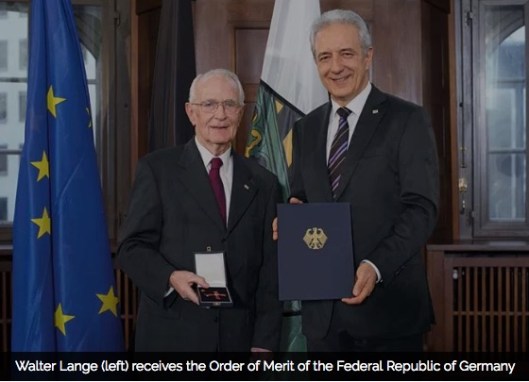
In 1990, F. A. Lange’s great-grandson, Walter Lange, took it upon himself to relaunch the brand. In 1994, their first collection was launched in Dresden Castle. He was recently bestowed with the Order of Merit of the Federal Republic of Germany (First Class) by German President Joachim Gauck in recognition of his services in re-establishing Saxony’s watchmaking industry. Two months after winning the award, he remains affable, charming and humble as he walks with us around the A. Lange & Söhne booth at the exclusive Salon International de la Haute Horlogerie (SIHH) watch fair in Geneva, talking appreciatively about Indian women and their outfits.

Screen Shot 2017-07-25 at 11.40.59 AM

In just over 20 years, A. Lange & Söhne has developed 51 manufacture calibres, which has given them a prime position among the world’s finest watch brands. Their greatest successes include innovative timekeeping instruments such as the Lange 1 (with the first outsize date in a series-produced wristwatch) and the Zeitwerk (with its supremely legible, precisely jumping numerals). The jocular head of development, Anthony de Haas, identifies what has become key to most heritage watchmakers. “It’s very important for us as a brand to stay true to the identity we started with in the 1990s when we rebuilt the company. And it is a challenge to create something new with the A. Lange & Söhne identity that’s very recognisable. The Zeitwerk is a very good example of that — of pushing the limits, not only technically but also in design.”

Their showstopper Zeitwerk timepiece was launched in 2009. It hails from a German word, which means ‘time-movement’. Standing in the Zeitwerk workshop in Dresden, I am privy to the fact that the timepiece has 415 to 428 parts and 200 oiling points (with four different oils). Missing a single oiling point would lead to the watch potentially stopping — which leaves one thankful for the extensive quality control and assembly checks. The manufactory’s complication department is the vanguard of the brand’s prestige watches. The watchmakers who work there are responsible for a single timepiece from beginning to end (unlike the other watches that move from one specialised department to another). In a world where there is a heavy dependence on technology, it is astonishing to discover that in this case, machines are used for checking and not for making that change, as machines cannot make fine adjustments, like to the 100th of a millimetre!

Screen Shot 2017-07-25 at 11.41.05 AM

Last year, the big noise was the minute repeater with the decimal; this year at SIHH, the talking point was the limited-edition (100 pieces) Richard Lange Jumping Seconds which has an integrated jumping mechanism that makes it possible to display the time in strict one-second intervals. Says de Haas, “This is a typical collector’s watch — and you need a bit of an understanding of what’s going on. It’s a technical highlight, but packed in a very elegant, discreet way. You can make complications but they need to be nice-looking and fit the identity of the brand. Don’t do crazy things. Don’t start making diving or pilot watches, because others can do it far better.

A. Lange & Söhne never made watches to swim with, because the brand didn’t exist during the period when that became important. Also, with such a beautiful movement, with the sapphire case back, would I ever dare to jump in the water — even if I know it’s waterproof?”

Screen Shot 2017-07-25 at 11.41.25 AM

A. Lange & Söhne has a tradition (started 150 years ago) of using German silver for their plates and movements, which requires two assemblies because of the delicacy of the metal. Despite the challenges associated with using this particular metal — not just limited to temperature and its sensitivity to humidity — it remains a speciality of the watchmaker for its beautiful golden, shining surface. It’s also symbolic of how the brand considers challenges and an indication of why it has so many movements to its name.

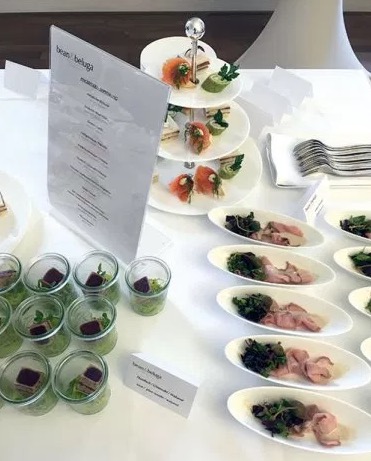
The watchmakers design their own tools for the intricate work. And it is intricate — as I soon realise when I am (as a surprise) taken to my own little private engraving workshop, where I am to sketch a design, then pick up a tool and work on a metal plate (which have both been made idiot-proof for newbies). I discover under local guidance that I am not entirely unforgivable at it, and I pass muster!
Screen Shot 2017-07-25 at 11.41.15 AM

I get the hand-engraved piece returned to me in a box as a keepsake of the experience, which is nothing like the beautiful trademark floral engraving from Ferdinand Adolph Lange’s original pocket watches. Today, A. Lange & Söhne engravers undertake bespoke designs not just inside with specific creatives (like that of a royal family emblem, a motif or even a lover’s face) and initials, but also on the solid case back. You can place the bespoke order via your local boutique for a new piece and it then goes into the production process; while engraving initials on the balance cock can be done after purchase.

I walk over to the historic family building from 1873 (which once also housed production areas) and sit down for a light lunch with the director of press and public relations, Arnd Einhorn, who is eloquent about communicating the brand’s philosophy. There is a common speak and sensibility that pervades the brand and all associated personnel. De Haas (who incidentally had a stint at IWC before his 11 years at A. Lange & Söhne) was recently asked about making pilot’s watches. His response was simple and frank. ‘The Second World War for the Germans is a very black, dark period. Secondly, if we have companies like IWC who are masters in making a pilot’s watch, why should we do it, especially this year (the anniversary of the pilot’s watch)? To earn more money? To get more of their share of the market? That is not A. Lange & Söhne. We don’t decide on a market and then develop a product. We carefully develop the product families. And the marketing is merely our product, with the right information, with the right story.’

The developers and craftsmen in the valley who live in this placid, pristine environment, cut off from the machinations of the outside world, speaking only the local language, are the ones creating products for discerning people world over. The CEO, Wilhelm Schmid, is right when he says, “There is a certain German matter-of-factness, which can be perceived immediately.” De Haas identifies the quiet understatedness of the brand and the products as being influenced by the local area. “We are not so shiny, while we are fun. It’s very discreet; people are down to earth…with passion for detail. And I think that reflects in our products. We don’t come with pilots and spitfires and catwalks and Nicole Kidmans…it’s just us. And there are people who find it very boring, but we are how we are.” And he’s right. There is an atmosphere, in those quiet Glashütte hills filled with the sound of dedication.

The manufactory visit brings you closer to the heroes of these precision timepieces, affording you insight into a brand that believes in being subtly superior. The emotional connect isn’t with a clever marketing pitch, it’s with a labour-of-love marker of time.

A. Lange & Söhne consciously avoids having brand ambassadors — the watchmaker is the hero….as is the product.

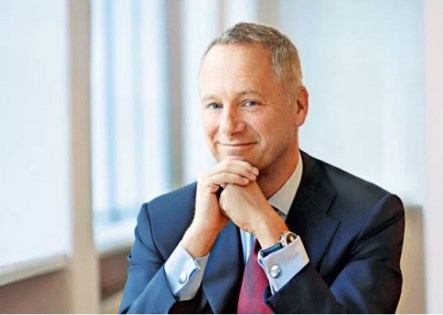
5 things CEO Wilhelm Schmid wants you to know:
Screen Shot 2017-07-25 at 11.41.41 AM

“Our first priority is that every new model is predestined to stand the test of time. This may lead to a classic design like the 1815 or more avant-garde concepts like the ZEITWERK Luminous.”

“Our second priority is recognition value. Even without the distinctive arched logo, an A. Lange & Söhne can always be identified. This is due to a combination of subtle features like the curvature of the lugs, the shape of the hands and the engraved look of the typography.”

“Our customers are quality-conscious watch connoisseurs, self-confident personalities who are seeking outstanding timepieces that reflect their individual style.”

“I am pleased to see that more and more women invest in our timepieces because they combine the best of two worlds: handcrafted mechanical excellence and timeless elegance. The majority of our watches are not designed for a specific gender but with a horological issue in mind.”

“Ever since we entered the Indian market in 2007, our timepieces have enjoyed growing popularity. We have, therefore, recently opened our fifth point of sale in Bengaluru.”

Quick Byte with Anthony De Haas, Head of Development
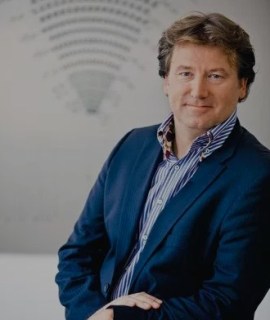
Screen Shot 2017-07-25 at 11.41.49 AM

“Money talks, wealth whispers. Our watches are for whom wealth whispers. You are not buying an A. Lange & Söhne watch if you want to show off — when you buy a manually wound two-hand watch for 20,000 euros, you need to be a connoisseur. It’s very understated. Our sale of platinum watches is very high…why? They look like steel. So nobody recognises that you are wearing a watch that is worth 20-, 30- or 50,000 euros. But you have it for your own self. You know the inner value. Not merely the dial. The story is complete.”

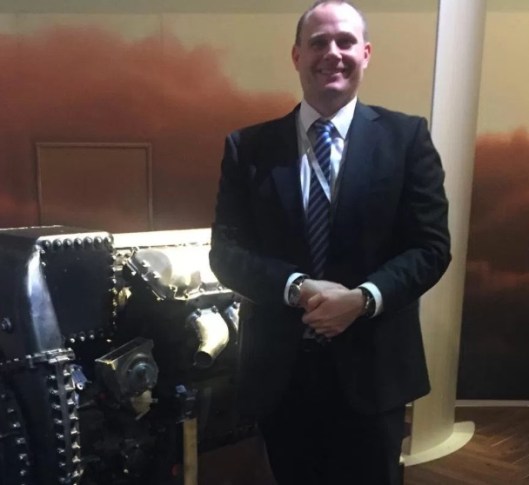
Why You Should Buy A Vintage IWC Watch, And Which One

20 Wednesday Jul 2016

Posted by sitanshi talati-parikh in Brand Watch, Interviews (All), Interviews: Luxury Brands, Publication: Verve Magazine

≈ Leave a comment

Tags

Interview, Interviews: Luxury Brands, IWC, SIHH, Verve Magazine, Vintage, Watches

Published, Vervemagazine.in July 8, 2016

Find out which vintage IWC watch their own historian recommends, along with how to check authenticity and make the right purchase

The first Special Pilot’s Watch left the IWC (International Watch Company) factory in 1936. It was the start of a unique relationship between IWC Schaffhausen and flying.

Screen Shot 2017-07-24 at 2.42.53 PM

Today, 80 years later, Verve speaks to the IWC historian, David Seyffer, about the tradition of the Pilot’s Watch and about becoming an IWC collector.

Screen Shot 2017-07-24 at 2.42.35 PM

What does 2016 mean for IWC?
“Eighty years (of the pilot’s watches) – and we have now really made happen with a huge collection! With a different variation, really to please all needs or tastes of watch lovers but still hold onto the main characters of the heritage of the Pilot’s Watch.”

IWC at one point targeted the next male generation with the ‘father and son pilot’s watches’ – is this still a trend and has your target customer changed now?
“I do not think so. Interestingly, I have met people, where the man had the Big Pilot’s watch and the woman was wearing the son’s edition. Today, the youth knows and appreciates the nostalgia associated with the mechanical watch. With all that is going on in the world, people want something out of history.”

If there is one vintage IWC watch that any collector must own which would it be?
“I would really recommend (since it’s on my wrist) the Mark XI. The reason: it’s affordable as a collector’s piece, and we have huge quantity of spare parts if it comes for servicing. The movement, Caliber 89, is like an all-running system. It’s impressive how precise these movements are which are made in the 1940s, 1950s, and it has really a cool-looking feeling. So if somebody wants to start with collecting wristwatches, this is really a nice timepiece to start with.”

Screen Shot 2017-07-24 at 2.42.19 PM

Approximately, how much would it cost?
“This depends on editions. You could potentially find a vintage watch within 4-5 thousand dollars, but then if it is a rare piece and is in good condition, possibly used by BOAC, then it could go to 15 thousand dollars or so. Also, authenticity…are they all the parts 100% authentic or not?”

If somebody in India wanted to buy one of the vintage watches, where would they go? How could they check the authenticity?
“Now we are living in the world of international business, so you can really get it everywhere. For example, if you find a nice offer on the Internet. But, then it’s the point of the authenticity. IWC offers a ‘certificate of authenticity’: you send your watch to IWC; there is a team of 3-4 watchmakers (and myself) and if everything looks fine, then you get an official certificate. Also works for people who want to sell antique or heritage timepieces. Interesting for all are the auctions (worldwide from the famous auction houses) where you may find a MARK XI Pilot’s watch!”

Screen Shot 2017-07-24 at 2.42.07 PM

If you could get a carte blanche to create a pilot’s watch based on the history that you are so well versed with, would it be very different from what the brand currently has?
“Not really…because this year’s collection is so strongly related to the original design. Probably a small change I would recommend, as a conservative person, would be to skip the date, to make the watch look like a Mark XI.”

What is the one takeaway that you would leave a new watch buyer with when it comes to IWC’s rich history and tradition?
“IWC is located on the eastern part of Switzerland, therefore the design is different. It’s this east German-Swiss approach with the watch – you can find it in the way the bracelets are made. And in the way the cases were made. And of course, traditionally, what IWC was always about: precision and quality.”

Who is the IWC watch collector?
“The typical watch collector is in a certain way, a freak, highly knowledgeable, with a diverse background. We have very, very rich people and we have students who save every cent they earn just to get a historical timepiece, or a new timepiece. Bottom line is, the interest to learn as much as possible about the watch. Recently, in the collector’s meet, there were people from the USA, Europe. And, there was Captain Vishal who flies Air-India A-330 for several years and guess what he wears—An IWC Pilot’s watch! So you see, meeting people from all over the world, and really with that passion, feels great!”

Bulgari’s Guido and Fabrizio reveal what women want…

30 Wednesday Sep 2015

Posted by sitanshi talati-parikh in Brand Watch, Interviews (All), Interviews: Luxury Brands, Publication: Verve Magazine

≈ Leave a comment

Tags

Baselworld, Bulgari, Interview, Interviews: Luxury Brands, Watches

Published in Verve Magazine, September 2015

Bold design, irony, marriage of materials and at the core of it all – authenticity, they let us in on the fashion house’s creative sensibility…

Screen Shot 2017-07-24 at 1.28.04 PM

The Bulgari booth at Baselworld 2015 is abuzz with conversations, flutes of champagne or cups with a caffeine kick (depending on your preference) and alive with sparkle and pizzazz. The spectacular neckpiece from the Diva collection that heralds you into the boudoir of timelessness, the displays of watches that suggest tradition, technique, innovation and that sure-fire bold touch which is all-Italian. The Octo Finissimo with its size-zero figure to the Serpenti with emerald eyes that conceals secrets and time. It is no wonder Elizabeth Taylor’s personal collection of Bulgari jewels rocked the screen in Cleopatra.

The Bulgari hospitality is warm, and the passion of the makers floods through with the top notes of its designs. As Fabrizio Buonamassa, the director of the Bulgari Watches Design Center (who moved from Fiat to Bulgari following his love for watches) says, “Bulgari’s style is pure in terms of shape and sometimes opulent in terms of attention to detail.”

Screen Shot 2017-07-24 at 1.27.43 PM
Screen Shot 2017-07-24 at 1.27.51 PM

We notice how the brand — despite possibly attempting to rein in their desire to build a wide range of pieces — has enough to keep the most diverse customer satisfied. Is it any wonder that they have the pride of place at Baselworld — the moment you enter the fair, on your left is the sprawling ‘serpentine’ domain. How do they maintain a sense of aesthetic continuance through varied complications and bejewelled designs? Buonamassa explains: “Bulgari is a world of science and inspirations. You need to find the right language for the right products or you create strange objects! Women are all about emotions, and it is about finding the right shape and proportion while being consistent with the Bulgari values and rules. With men you are looking for performance, movement, engine, finishing…technical elements.”

Screen Shot 2017-07-24 at 11.49.24 AM
Screen Shot 2017-07-24 at 11.49.38 AM

While we may not be certain we want to be pigeonholed into these categories — the Saphir Ultranero and the Diagono Magnesium, for instance, could be as fascinating to us as the Diva collection or the Giardini Nocturna — it would make sense for the design team to focus on what is a large target audience for their aesthetic sensibility and happy marriage of materials. Buonamassa agrees — pointing to a strong trend of ladies’ complication watches being merged with jewellery. “Bulgari is a part of the Italian design culture. Italian design is unique because it is not merely ‘form follow function’. It is about the ‘ironic’ — it plays with colours and materials in a different way, to give the object a second life. Only Bulgari is able to use tubogas for a watch and make this iconic in the luxury market. We play with constrains and often these very constrains become the turning point of the project and drive the aesthetics.”

Screen Shot 2017-07-24 at 1.33.39 PM

And how do you keep it relevant? “I manage the science of the company and imagine how I can transform this science into contemporary products and not just copy-paste from the archives. My approach is contemporary with respect for the roots and the evolution of the science.”

The gregarious Guido Terreni, managing director of Bulgari Horlogerie, drives home the fact that Bulgari, as a brand, is built on authenticity. “It’s about being true to your brand and your client. You can’t play around with your personality, and that’s exactly the same with a brand. The watches that are successful are successful for decades. Too much new stuff leads to confusion.”

Screen Shot 2017-07-24 at 1.27.26 PM

Terreni warms to the topic as he talks passionately about the various hallmarks of the Bulgari timepieces. “Serpenti is in the DNA of the brand since the past 70 years. Bulgari Bulgari, Diva, Lvcea are….” Iconic? “Iconic is an abused word. Everything is iconic in every brand. But Serpenti is truly iconic. When you are authentic and true to yourself, you are credible. And to be credible in luxury, you have to be credible in terms of style and craftsmanship, both. That’s why we have developed the know-how internally to address the competence of watchmaking. After all, the ladies are buying competence!”

With a diverse portfolio of luxury products, Bulgari has still made a mark with their watches, particularly their latest edition — the distinctive ‘vault-like’ smart watch (which moves beyond calculating calories burnt to storing valuable data). Terreni believes it’s a part of the core differentiation of the brand. “We have the technique at the service of the aesthetic and vice-versa. We are the only brand that thinks about technique and design simultaneously, we are not selling to watch freaks; we are selling to people who know what luxury is about and can recognise the authenticity of an idea and the craftsmanship in the watch. I love the idea generation, to see the design grow, to see the prototype become true…but this would be nothing if I don’t receive an emotion in return. Your emotion is the true reward of all this work. I don’t look for  ‘I like’, or ‘I don’t like’; I look for ‘Wow’.”

Gypsy Queen: Anushka Sharma

01 Monday Jun 2015

Posted by sitanshi talati-parikh in Interviews (All), Interviews: Cinema, Interviews: Cover Stories, Publication: Verve Magazine

≈ Leave a comment

Tags

Anushka Sharma, Bollywood, Interview, Interviews: Cinema, Verve Magazine

Published Verve Magazine (Cover story) April 2015 and on vervemagazine.in
Photographs by Prasad Naik

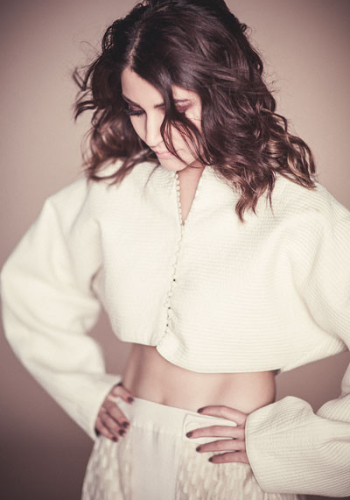
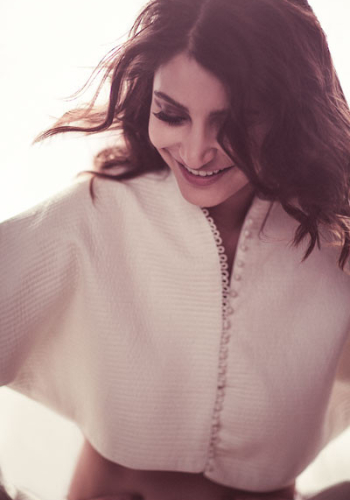
Anushka Sharma for Verve Magazine April 2015 cover

“I don’t think I have ever felt like I have belonged to any place.” Coming from an army background, she has spent her youth travelling around the country. Even Bengaluru, where she spent most of her time, wasn’t really home. Anushka Sharma moved to Mumbai over eight years ago with no connections, accompanied by just her mother and brother. “The beauty of my childhood, the lovely experiences I had…all came into focus when I didn’t have them anymore.”

The arrival into the city, into the civilian world, made her appreciate the sheltered and contained life she had lived before. “That’s what your journey is about — when you are living it you don’t know what it is, you are only experiencing emotions. In the army background you are prepped to live in order; when you come out of it, you experience chaos. You live and you continue the motions to cope with it. You ride the tide. You can’t stop and think; you go with the flow.”

In her new, comfortably appointed home in Versova, she tucks herself into a nook of her massive sofa and bites into an extra-large samosa with relish. This particular house has been a labour of love; with an entire floor (over 6000 square feet) devoted to private spaces for her parents, her brother and herself. Bright vases, patterned wallpaper, large mirrors, distressed furniture all radiate a happy, lived-in vibe. After the success of the Aamir Khan-starrer, PK, she’s shooting nights, and also juggling the launch of her maiden production venture, NH10 while awaiting the release of Anurag Kashyap’s Bombay Velvet with Ranbir Kapoor. She doesn’t have the jaded eye of a seasoned traveller or the wide-eyed wonder of a newbie. She’s free from poetry but she finds the silent music that calls out to her when she moves to her own rhythm. Over cups of cappuccino made with freshly crushed coffee beans and topped with smileys patterned in the foam, we discover the girl behind the gypsy.

“Mumbai made me grow up.”
“I was 17 or 18 when I came to Mumbai. I didn’t have any friends when I came here. My brother (older by four years) accompanied me…we got even closer. You learn so much about yourself. For an outsider, the city doesn’t have a residential vibe, unlike Bengaluru and Delhi. Here, every area is a mix of workplaces and homes. You are constantly surrounded by a rapid pace and energy. You find it daunting, you get involved in it, you get sucked into it and finally find your calm in the city.”

“Mumbai is an extremely professional city.”
“I have gotten a lot from it and I have grown to respect the place. There is a vein in which people who live here function, especially those who have come from outside to work. People are hard-working — constantly on the move, constantly trying to make something out of their lives.”

“Although you are a part of this huge population, you are constantly alone.”
“People say Mumbai is a lonely city. Everyone’s moving in a hurry. No one casually chats with anyone. In a train filled with people, no one is having a conversation. Everyone is in his or her own zone. And you want that, you are looking for this time to yourself.”

“I just want to be left alone when I am travelling.”
“Even when nobody knew who I was, I would explore places as if I were lost in my own world. That’s the time you enjoy your privacy. In India I can only see places when I am shooting, because they are cordoned off. It’s only abroad that I can experience something as normal as getting out of the hotel and walking on the street rather than getting into a car and going somewhere….”

“I’m not interested in sightseeing.”
“As actors we travel a lot. We live in places for 15 days to a month and a half. A film crew is always interested in the sights. For me, it’s all about the experience. I want to go to a restaurant; I want to walk on the streets and eat in the quaint places, experiencing the local flavour of the place. That’s exciting.”

“I always end up talking to strangers.”
“While growing up I used to watch a lot of travel shows. The one thing that connects people and places is food. There are so many stories you hear when you go to a restaurant or to a bar, meeting local people, talking to them. That discovery is very important, which is why I don’t like going to touristy places. If my friends want to go to Goa, I won’t take them to Baga. It will be to a place that I have discovered after several visits to Goa.”

“I’ve always been open to new experiences.”
“Travel is anything that enables you to have a different perspective on things, which could be 50 or 5000 kilometres away. I constantly want to see and know more. I don’t have a wish list, because when you really want to connect to places you keep your horizons wide and open.”

“I find it difficult to connect to European countries.”
“I find that language is a barrier — as much as I love Europe and its unique culture — I don’t think about living or having a house there.”

“I bring back fridge magnets from every place I go to.”
“I also always pick up one for a friend. Unfortunately, in this (new) home, I am unable to put up the magnets on the modular kitchen fridge, so now I just keep them or give them to people….”

“My home is very personal.”
“I didn’t want someone to just do my house. I didn’t want an opulent looking place with chandeliers and velvet or the colour red. I find it impersonal. I wanted a space that would be an extension of my own personality. I’m a little rough around the edges, I’m not very proper; so the elements in the house are close to that.”

“The moment in my life that I felt extremely proud was the day I moved into my house.”
“People in the industry who come from an affluent background, may feel it’s just buying a house…but for me, it’s a milestone. When you come from a middle class background, it’s the biggest achievement. I’ve lived in government lodgings all my life. My father had taken many loans for our house in Bengaluru. I’m very close to my family and always wanted to live with them. When I moved into this house, my father looked very happy — and for the first time I felt proud of myself. Though I had an apartment before, this was the ‘big’ house we all wanted. ‘Achievement’ is a personal term. For the world achievements may be fame and money, but just the fact that we had made a home, meant the world to me.”

Anushka Sharma for Verve Magazine April 2015 cover

Places with connect

St Ives, England
“I had the most amazing mussels here. (I am now a vegetarian). I could see seagulls near the ocean, hear the sound of the birds, the weather was beautiful; I was with my closest friends and the mussels were so fresh….”

Galibore, Karnataka
“I went to a fishing camp with two friends. The Kaveri River flows by there. It wasn’t the fishing season; bits of the riverbed were exposed. We didn’t fish, but we would go on boat rides. We stayed in a camping site that included tents and barbeques, no resorts!”

Australia
“Even though I’ve only been there once, I really liked it.”

Café Y, New York City
“It’s an underground café in the Village. I heard the most beautiful music here. It was commercial music, but done so differently.”

North-east India
“The north-east is the loveliest part of our country. When I was six or seven years old my father was posted in Arunachal Pradesh and Assam. I used to travel to places people hadn’t even heard of. It was a completely different world.”

London, United Kingdom
“I could have a house in London. I’ve been there the most number of times; I know the place really well.”

Anushka Sharma for Verve Magazine April 2015 cover

Right Here, Right Now with Anushka Sharma:

On my iPod “Take Me To Church by Hozier.”

In (On) my fridge “No fridge magnets!” (There’s a story behind this. Read more here.)

In my bag
 “Wallet, Lip Balm, House Keys.”

On my blacklist
“Complicated people, drama, lies, dishonesty.”

In my wallet
 “Money, credit cards, identity card.”

In my bedroom “I like it clean. I don’t like hoarding things. Just my bed, TV and books.”

On my bookshelf  “Lots and lots of books. A favourite, JD Salinger’s The Catcher in the Rye.”

On my phone “Phone calls, music, e-mails.”

On my wall “Two pictures of a ballet school, showing the feet of ballerinas. It describes all the things your body can’t naturally do, that you train your body to do – it shows strength and hard work; it is beautiful and creative.”

In my car’s glove compartment “Tissues.”

In my wardrobe “Clothes waiting to be colour coded! I have no OCDs but my wardrobe is chaotic. It’s a walk-in wardrobe where I just leave things. I can’t find clothes. So I keep saying I need more clothes.”

On my bucket list “To travel, to grow, to learn.”

In my beauty bag “Lip balm, mascara, under-eye cream.”

In my bathroom “I’m obsessed with bath products! I have lots of shower gels and multiple body lotions. My nose is sensitive and when I wake up and go to have a shower, I like to surround myself with lovely fragrances.”

On my skin “Moisturiser. I have asked all the women whom I have met who have great skin, if they moisturised a lot when they were younger, and they said yes. However late I may return from a shoot or however tired I may be, I make sure I moisturise everyday.”

In my life “Family, work, love.”

Legacy Talk: Raymond Weil’s CEO Speaks About Their Musical History

03 Friday Apr 2015

Posted by sitanshi talati-parikh in Brand Watch, Interviews (All), Interviews: Luxury Brands, Publication: Verve Magazine

≈ Leave a comment

Tags

Baselworld, Elie Bernheim, Interview, Interviews: Luxury Brands, Raymond Weil, Verve Magazine, Watches

Published in Vervemagazine.in April 3, 2015

The grandson of the late Raymond Weil, Elie Bernheim joined the company in 2004 and was appointed CEO last year. Here’s a Q&A with the dashing CEO:

Screen Shot 2017-07-24 at 4.54.25 PM

1. The brand has a strong link with the world of music. How did this come to be?
It is true, you are absolutely right, my late grandfather Mr. Raymond Weil had a infinite passion for music, so has my father Olivier Bernheim. My mother is a professional pianist, and I have been playing the cello and piano from a very early age. You can then easily understand how much music is part of our family story, and naturally splits into our Brand DNA. Since three years now, we have developed the concept of music marketing; hence trying every year to establish qualitative musical collaborations such as the examples you have seen this year in our novelties: the Nabucco timepiece inspired by Gibson, Sinatra’s 100 years of birth commemorative maestro timepiece or even our brand new complication: the Nabucco Cello tourbillon.

2. What is your opinion on ‘smart’ watches?
It is always wise to remain informed, updated and sensitive to new developments and innovations – but the tendency this year for Raymond Weil is to point on our watchmaking know-how and propose creative yet audacious timepieces that bear musical features.

3. Which current trend in horology is the most path-breaking?
It is very hard to say, but the sure thing is, if a watch brand remains faithful to its values and provides clients with an authentic, honest and a reasonably-priced collection it will definitely lead to a deserved recognition. I try every day to improve on the quality of the timepieces we propose to our clients. Taking care of the materials, the durability and the long-term readability of the timepiece: these are for me challenging objectives you can always improve on.

4. What do you think of the relevance of chronographs and tourbillon movements today for women?
My challenge this year in Basel was to present a watch that represents the best our actual inspiration — that is why I have encouraged my R&D staff to work on a very special project, this has lead to a superbly designed tourbillon timepiece, totally in line with our musical DNA. It is a gents’ watch, and I am convinced ladies will be sensitive to the approach as well. 45 to 50% of our collection is dedicated to women — we may integrate complications for ladies if it is of relevance for our product strategy — as we have already done in the past.


Premier Speak: Walter Von Kanel on Longines relationship with India

03 Friday Apr 2015

Posted by sitanshi talati-parikh in Brand Watch, Interviews (All), Interviews: Luxury Brands, Publication: Verve Magazine

≈ Leave a comment

Tags

Baselworld, Interview, Interviews: Luxury Brands, Longines, Verve Magazine, Walter Von Kanel, Watches

Published, Vervemagazine.in, April 3, 2015

President of Longines, Walter von Kanel talks about India, politics, bureaucracy and Aishwarya Rai Bachchan

Screen Shot 2017-07-25 at 9.26.29 AM

Walter von Kanel is lively, intelligent and with a sharp sense of humour. You can have an easy chat with him which will lead to wide-ranging topics and he will know how to drive facts home. Over his many decades with Longines, the president is sure of himself and the brand and where it is headed — number one in their price segment from it’s current number 4 standing. He shares his views on India below.

  • I’ve brought the brand (Longines) to Number 4 in this industry. When you are over a billion swiss francs, it means a lot of money…it’s too many rupees that I cannot count. We brought this company to a very strong position. 
  • We have now very impressive distribution, according to the group governance where we respect all national laws. Your decision not to allow us to open our own shops for instance!
  • The Indian market is local and abroad the…? (NRIs) Yes, the NRIs! In India they drive you nuts with acronyms. It’s an Indian speciality.
  • With Brazil, India is the highest tax country…we respect it, because unlike Brazil, we don’t have to pay baksheesh. 
  • Rolex is good at number 1. (Taps a bunch of numbers.) It’s impossible to be number 1. I want to be number 1 in my price segment — in this industry it’s difficult to do everything. The name of the game is the price segment. Many people are coming to this segment now, we welcome them.
  • In this industry you have macro tendency. There is an evolution and no revolution. If you are a genius and have the most brilliant idea, you can’t be a genius alone — this industry is not Apple or Google or Samsung. The cycle is longer. 
  • I’m happy companies like Apple and Samsung are coming into the business. It is additional business for me. They change every few months. They will help us put a watch on the wrist of the younger generation. And one day this generation will be tired of these electronic watches and they will be looking at an analog watch. It is a status symbol. 
  • You (India) are one of the most populated companies in the world. Being the number 1 or 2 populated country in the world, you are number 24 of the 30 countries buying from us. The barriers are so big, that they buy from abroad rather than locally. For instance, we can open a shop anywhere in China, we are not blocked by Titan!
  • The Indian consumer in our price segment knows what they want. I’ve been many times to your country — to the pink building in Delhi! The quota, the licence, the duty… And I learnt one thing that the man with the power is not the minister, it is the guy who works for him, the secretary sitting outside. 
  • Indians have discount in their blood. You always bargain. Don’t you? (No.) Then you must be buying from a shop that doesn’t offer a discount!
  • India is a mature market. It was open to branded consumer goods much before China. Indians travel a lot abroad to cities where they may purchase these goods. But India itself as a market is not 100% open. 
  • In India there is no smuggling, we tell them not to buy from bandits. In luxury shops, if one retailer is selling fakes, he is killed — by the brand and the industry. Your fellow citizens smell the fakes. 
  • Your PM (Narendra Modi) says he is fighting against corruption. Give him a chance! In China they are very strict.
  • It’s nice to have Aishwarya Rai Bachchan (brand ambassador of Longines for 15 years), it’s nice to see her daughter, it’s nice to see her mom…. I was the guy who picked her, when I got a call saying it was time to negotiate with her. 

Curators of Style: Sussanne Khan, Farah Khan Ali & Simone Arora

11 Sunday Jan 2015

Posted by sitanshi talati-parikh in Interviews (All), Interviews: Cinema, Interviews: Cover Stories, Interviews: Lifestyle, Publication: Verve Magazine

≈ Leave a comment

Tags

Bollywood, DDecor, Designers, DJ Aqeel, Farah Khan Ali, Hrithik Roshan, Interview, Simone Arora, Sussanne Khan, Verve Magazine

Published Verve Magazine, December 2014
Photograph by Rohan Shrestha

These stylish, poised women have created a name for themselves in the designing world, each with a distinctive sense of aesthetics and style. Sussanne Khan for her interior design and curated home store, Farah Khan Ali for her jewellery brand and Simone Arora for her fabric design and recently-opened concept home boutique. Sanjay and Zarine Khan’s daughters are creative, dedicated and spirited women of substance, discovers Verve

Verve Magazine December 2014 cover: Sussanne Khan, Farah Khan Ali, Simone Arora

It’s not a stretch of the imagination to expect that the younger lot of a famous film family are likely to be starry, diva-esque butterfly society women. It is an easy stereotype that gets associated with those who come from a family of means and natural access to the limelight. But Zarine and Sanjay Khan’s daughters appear to be quite the opposite. They are self-assured, strong-willed and independent, with a single-minded determination to excel and are deeply passionate about their work.

Producer, director and actor, Sanjay Khan and his interior designer wife, Zarine Khan (née Katrak) have four children. The first, 45-year-old Farah Khan Ali is married to DJ Aqeel and is the founder of the Farah Khan Fine Jewellery brand. Younger by a year, Simone, married to Ajay Arora, the owner of D’Decor home furnishings, has been instrumental in the creative aspect of the brand and has recently launched her own concept store, Simone. Thirty-six-year-old Sussanne, formerly married to Indian cinema actor and childhood sweetheart Hrithik Roshan, has followed her mother in interior design and has been working on her own store, The Charcoal Project, for the last few years. Zayed is the youngest, whom Sussanne considers to be “a boy version of me, my twin!” even though he is two years younger.

Through various interactions with the women in the family, you begin to draw a distinct sense of who they are. Fiercely protective about each other and extremely supportive, there is an easy camaraderie that can only be built up through a lifetime of nurturing. As Farah interjects, twice, “I love them to death and would do anything for them. I would even kill for them…not that I would ever kill anyone.”

Firm grounding
“It’s the values,” insists Zarine Khan, called the “firecracker of the family” by Sussanne. When you speak to her, you understand what her daughters are made of. Notwithstanding the strong creative and emotional influence their father has had on them, you come away knowing that they are reflections – albeit in their own unique ways – of their mother. She is crisp in her language, sharp in her observations and firm in her opinions. “They grew up with a lot of humanity in them, with gentleness and kindness and not an ounce of jealousy. Even though we had cars at our disposal, we had rules. Once by car, the next time by bus.” Simone speaks up. “We were not raised to be competitive, to be compared or be critical. We complemented each other.” And the importance given to the legacy of education, impressed upon them by their father who himself couldn’t complete his education due to lack of funds. Farah: “We were taught to value people and relationships over things. People can never be replaced; things can be. If Simone buys something bigger, I won’t envy her, I’ll be happy that I can also use it. We share bags, clothes, shoes, jewellery, memories and laughter.”

Well-travelled and well-exposed to the world, fond of the European lifestyle and far from a slacker, Zarine continues to work for her select clientele even today. It is a family of early risers and active swimmers, with full workdays. “Despite having all the luxuries of being a star wife, I continued to work. I’ve impressed upon them the need to avoid idle gossip.”

Sussanne recalls, “Our mother left us with the thought that we must try and be the best we could be and choose to do something that would give us creative satisfaction. Watching her was the biggest example.”

Meeting the Khans
I had first seen Sussanne at a tony suburban café with her then-fiancé Hrithik Roshan, sharing conversation and coffee just before the launch of his first film, Kaho Na Pyaar Hai (2000). They looked at ease with each other, made a lovely couple and suggested a genteel persona. No one knew that he would soon take the industry by storm. Sussanne is not too different today, nearly 15 years later. While her youthful face may be etched with the trials of a woman, she has an easy charm that you warm up to instantly. The girl who has a tattoo on her arm that reads, ‘Follow your sunshine’, is polite, courteous as a host, punctilious and an amiable conversationalist.

Farah appears to be more difficult to pin down, as she misses the first interview opportunity and leaves hurriedly through the second, with a promise to send an e-mail message. She surprises you by actually doing so, and then calling and texting after. You are left amused, because this grown woman of a well-established brand is droll and sincere and as she puts it, somehow manages to find “method to the madness”. Simone wants to be heard. With the launch of her store, this is her chance to come into her own, in the eye of the media, and she is eager to make her voice and name felt.

Simone: The one in the background
Simone, the first to tie the knot at the age of 21, joined her husband as the creative director of his business. At the time, Ajay Arora used to manufacture garments. Zarine Khan felt the greater potential of a furnishings line, and seeing the business sense in it, Simone and Ajay took up the challenge. They bought designs from Italy, machines from Belgium and started the process of creating samples for the international fairs. Simone, with her unerring eye for colour, was in charge of creating the designs and combinations. Now, after 15 years, the D’Decor brand is the world’s largest exporter of home furnishing fabrics. Four years ago, they turned their attention to the local market with Gauri and Shah Rukh Khan as brand ambassadors.

“After being an anonymous contributor to D’Decor (while it was the company that made me who I am), I felt it was time to express myself and create an identity of my own.” Inspired by the process of designing her own home, Amore, and the feedback she received, Simone took forward the idea of her own store. She wanted a modern space hosted in a classic heritage building and Amarchand Mansion in South Mumbai provided exactly that. The store, Simone, launched just over two months ago, is nature-inspired, with curated pieces from international brands. “It was a hard journey, a labour of love. It had to embody me and my design sensibility. Simone is like a canvas, and everything that I display is the hero. I like to accessorise on simple cuts and monochromatic palettes. We have everything for the home, including the signature scent of Simone.” (Read more about Simone Arora.)

Farah: The party girl grown up
Farah was the one who floundered the most in choosing a career. Having assisted her father in the television production of his serials and dabbled in interior designing, she came into her own accidentally. Taking off for a course in gemmology at the GIA (USA), she thought it would be a good cover for a fun social life. “On the first day of my class, I learned that gemmology was the study of the chemical, optical and physical properties of 99 minerals and their gemstone varieties. I was in total shock as it involved all the sciences I had despised in school! Having made a promise to my dad to excel, I ended up becoming the ‘Indian nerd’ instead of the ‘party animal’.” She topped her class and there was no looking back. “The Bollywood connection only helped open doors initially; but it was my work eventually that made people keep coming back. I struggled hard – I had no investment of my own to begin with, so I began creating designs on paper that were breathtakingly beautiful. I spent hours sketching, rendering and painting life into each piece.”

Over the years, from retailing with other jewellers to starting her own store and then facing legal trouble with a disgruntled financial partner, Farah emerged surer, wiser and stronger as a businesswoman, able to take her brand to the next level. Having to start financially all over again, she then secured a loan and began her own top-of-the-line manufacturing unit. In 2013 she re-opened her showroom in Bandra in a bigger way; and just last month, Farah achieved another milestone by signing up as a designer for Tanishq and becoming the first designer approved by them to take care of the manufacturing, having met the strict  standards of the Tata Group. “I see the world in a magical perspective where everything I see, I see as design. Design for me begins with a strong emotion. My thoughts are conceived in my overactive imagination that allows me the freedom to make the impossible possible.” (Read more about Farah Khan Ali.)

Sussanne: The spirited dreamer
Sussanne, being the youngest, used to accompany her mother on the latter’s interior projects. Her mother recalls fondly, “She could make out the difference between fawn and beige!” She has always been attracted to a strong masculine sensibility, despite her petite feminine appearance. “I love metal, Gothic, industrial, shabby chic. Metal mixed with leather and dark wood, elements of nature.” A strong believer in the energy radiated by metal, Sussanne’s style is about the bolder, stoic structures balanced with the frivolous and fun using European influences, like that of French Rococo and Renaissance.

After Sophia College in Mumbai, she went to Brooks College in Long Beach California to study interior design. Like her father, she got interested in the history of art and architecture. “As a designer you have to ensure that what you are giving your clients is unique. You also have to get to know them well so that you can have them feel the best in their space. In the setting you have to think of stories, and the story is more important than the product.”

Talking about the inspiration behind The Charcoal Project, her face is more alive than ever. “Space can be grey and lifeless; charcoal is ugly. But when you light it, it sparks up. When a designer or person ignites a site or project it almost glows, as life is breathed into it. Design is a feeling. It elevates you. It makes you feel good. It is also designing your thoughts, and about how to deal with certain situations in your life.” (Read more about Sussanne Khan.)

Entertaining as a lifestyle
All three sisters strongly believe that the exposure while growing up has led to their creativity. Sussanne: “The influence of the world of design and the aesthetic value of knowing how important your home or your way of living is has been brought in by both parents equally. My father and mother (who is a Parsi) are both passionate about entertainment, with visitors from all over the world, not just the film fraternity. They have the most fabulous spread of exotic foods. The home was also like their temple.” Sussanne remembers watching her mother put together the most beautiful table settings. Lemon and white, or a combination of sea green, in handcrafted, cross-stitched French linen, flower arrangements, silver and cut glass all formed a harmonious composition. “In other homes, dining is part of the living room. In our home it was kept separate, giving it that importance. If the family was in the house, we always ate every meal together. We were never encouraged to eat alone in our room.” Sussanne, who has two sons, Hrehaan (8) and Hridhaan (6); Farah, who has a son, Azaan (11) and daughter, Fizaa (9); and Simone, who has three children – boys Armaan (18), Yuraaz (17) and a daughter Adah (11) – have continued this tradition with the next generation. (Read more: What do Sussanne, Farah and Simone have in their homes?)

And to date, the smaller, intimate gatherings are what they value the most. Farah, the acknowledged party girl admits, “Twenty years ago entertaining meant going out all night and breaking all the curfews, getting caught, getting fired. Now entertaining means being with my family and people I care about, my close friends. It’s not about being everywhere or at Page 3 parties. It’s about being with people who matter.”

Making relationships work
Farah, who renewed wedding vows with husband DJ Aqeel on their 10th wedding anniversary in Goa, shares that they are both very different people – one “living by the day” and the other “by the night”, and all marriages have their own challenges. “There is no marriage that is perfect and it requires a lot of hard work like any relationship. Some succeed, some don’t, and some keep trying, some leave and some stay. Being successfully married in any actor’s life is a miracle because your marriage is never a private affair and things that any other couple could have worked out easily become a mammoth issue because of a lack of total privacy. Sometimes less ‘concern’ by others is much nicer.” Talking about her sister, Farah says, “Sussanne is my precious baby and Hrithik is my younger brother who I love and adore with all my heart. I will always be there for both of them and wish things work out eventually, but if they don’t, I will have no choice but to accept that too. Equations change all the time but certain bonds transcend all.”

Sussanne, in a different conversation, when asked whom she relies upon during trying moments, shares that while family is always at hand, she is a bit of a loner and a private person and remains inspired by great thinkers like Einstein and Steve Jobs. “There are times when you have to make a choice and people may not think it’s the right choice, but you have to be true to yourself in life. You have to live in your own head, and you don’t have to live in anyone else’s head. It’s important for human beings to value their instinct and their own gut more than any suggestion or any kind of influence from the outside.”

The sibling equation
As evidenced at the shoot, Simone wields easy authority over Farah. Farah reminisces from their childhood: “She was the head girl; I was the naughty girl. She was neat and organised; I was untidy and disorganised. Simone had timetables on one side of the wall; I had rock stars and pop stars. She would want to wake up in the morning to study. I would want to stay up all night and not study. We had a line dividing our parts of the room and if either one crossed that line they would get a slap! She married the first man she cared about. I dated many frogs before I met my prince.”

Sussanne, who is an amalgamation of the two of them in terms of personality, finds a balance. “At work I maintain a certain order, but there is also a strong element of a flower child in me, which likes to enjoy life and music.” She talks about their childhood, “There would be crazy fighting growing up – actual physical fights. My sisters were fighting over a dress, and my mom, who knew how to shut us up, took the dress and cut it in the middle and gave each of them half! My parents never took sides or indulged us to the level of spoiling us. They taught us to appreciate what we have and to not ever think that something that is expensive will make us feel or look better.”

Coming of age
The turning point in their lives came soon after their father’s fire accident while shooting on the sets of the television series, The Sword of Tipu Sultan. As teenagers they had to come to terms with the fact that their father may not make it. “We saw our mother stand up, so tough against all the odds stacked up against her. We thought, come what may, we are going to be like her, going to be strong.”

Eighty-two operations and 103 bottles of blood later, he survived. Simone feels it taught them perseverance and determination, “the never-say-die spirit, how to appreciate life and all its offerings.” In the hospital room, he saw the staff come in to clean, and all he wanted was to switch places with them – he was in such extreme pain. “The doctors wanted us to amputate his hands, saying that it was the only way he would survive.” Their mother refused. Eventually, post his recovery, he went back to completing Tipu Sultan, even riding horseback in the heat of Rajasthan.

Farah needed to release the stress and turned to dance with Shiamak Davar’s troupe. “The discipline that I learned is what I put into my work today. From a youngster who didn’t care about things I became this perfectionist. It changed me overnight. I became more like Simone!”

She continues to sum up the go-getter anthem of the family that has seen many ups and downs, together and individually. “It’s not where you are born; it’s what you make of your life. I have seen the rich squander away their legacy and have seen the poor man make history. Carve your own destiny…only you can.”

Home Truths: Sussanne, Farah, Simone

16 Tuesday Dec 2014

Posted by sitanshi talati-parikh in Interviews (All), Interviews: Lifestyle, Publication: Verve Magazine

≈ Leave a comment

Tags

Bollywood, Designers, Farah Khan Ali, Interview, Simone Arora, Sussanne Khan, Verve Magazine

Vervemagazine.in December 2014
Photograph by Rohan Shrestha

What do the doyennes of design, Sussanne Khan, Farah Khan Ali and Simone Arora, have in their homes?

GroupShot

On Your Table
Farah “Sunday lunch with my family.”
Simone “Happy times on the table.”
Sussanne “Books and food.”

In Your Closet
Farah
“Lots of shoes and bags.”
Simone “Clothing, evening-wear, business-office wear, shoes, accessories, jewellery.”
Farah “Simone’s closet is as big as a bedroom.”
Sussanne “Diaries.”

In Your Teapot
Farah and Simone
“Green tea.”
Sussanne “Black coffee.”

On Your Breakfast Table
Farah
“Lots of eggs, protein, dry fruits, brown bread. Eat healthy in the morning after a workout.”
Simone “My favourite and largest meal is breakfast, soon after a 7 am swim. Dry fruit, fresh fruit, cereal, eggs, mixed vegetable juice.”
Sussanne “Cheese, honey, yogurt…cold foods.”

In Your Bar
Farah
“Not much of a drinker. So champagne, Moet or Dom Perignon.”
Simone “I don’t drink. Occasionally, wine. I do enjoy keeping a bar with exquisite glasses bought over the years from different parts of the world.”
Sussanne “French red wine.”

In Your Fridge
Farah
“Chocolates, fresh fruit, fresh salad, lot of fish, milk.”
Simone “Cheeses, dessert, sauces and things for the children.”
Sussanne “Chocolates, food, things to snack on – as if it is games night.”

On The Wall
Farah
“A lot of my designs, in my cabin. Post-its. Books, awards, creative things.”
Simone “Family pictures and abstract international artists. Workplace: books on interiors, design, catalogues, references.”
Sussanne “All my art, my photo art, antiques, my cheap-and-cheerful art that I get from flea markets, collectibles, moments.”

In Your Library
Farah
“Books and films. Not fiction; rather philosophy, spirituality, business.”
Simone “International movies. Recordings from The National Geographic and Discovery channels.”
Sussanne “Illustrated books on the history of art and architecture, thoughts. How To Steal Like An Artist, Pantone books, children’s books like those by Julia Donaldson, Roald Dahl, Dr Seuss.”

On Speedial
Farah
“I memorise all the numbers, I prefer dialing them.”
Simone “Kids, family, workplace.”
Sussanne “My son, Hrehaan, my store, store manager and my ‘gladiators’ at the store and my home, nicknamed, ‘Nest’.”

On Your Guestlist (apart from family)
Farah
“My friend Bonnie, Anna or Monica. Whoever I remember that day.”
Simone “Close group of friends.”
Sussanne “Haven’t invited anyone over for a long time, but probably my closest friend Salpi and Vishal.”

In Your Browser History
Farah
“Instagram. I’m very into social media.”
Simone “Nothing at all.”
Sussanne “Look up on world trends, blogs; whatever comes up on Google alert for my name. It’s nice to be aware, and it’s occasionally amusing. I like understanding the perception of people. And recipes.”

In Your Recipe Book
Farah
“Mom’s recipe book. I like experimenting and cooking Continental food.”
Simone “We refer to our mom’s recipe book all the time when we instruct our cooks.”
Sussanne “All kinds of recipe books. My mom’s book of treasures with all different cuisines (soon to be published). The Nutella cookbook.”

Coming soon: The cover story with the Khan siblings talking about love, relationships, career choices, their childhood and family. Watch the behind-the-scenes video of the cover shoot here.

A Pop-Up Star

13 Saturday Dec 2014

Posted by sitanshi talati-parikh in Fashion & Style, Interviews (All), Interviews: Lifestyle, Publication: Verve Magazine

≈ Leave a comment

Tags

Designers, Interview, Pernia Qureshi, The Rose Code, Verve Magazine

Published Verve Magazine, November 2014
Photograph by Ryan Martis.

She is assertive and doesn’t believe in wasting time. Founder and owner of perniaspopupshop.com, top stylist, Pernia Qureshi, who has made it to the cover of Verve’s best dressed list, sits pretty on The Rose Code list of achievers

Pernia-Qureshi

“My online store is my baby and means a lot to me. I have never worked as hard as I did to put this store together. It was a huge challenge but worth it!”

She majored in criminal justice and English literature, and minored in dance from George Washington University, USA. She had ambitions to become a lawyer while growing up, but Pernia Qureshi ended up being a top stylist and fashion entrepreneur. Working in the fashion industry as a stylist in New York, she found her footing and brought that back to India. “New York was a great learning experience for me. It laid the base on which I built my career.” Upon returning to Delhi though, it wasn’t easy at first. “I found it hard to relate to disorganisation, unpunctuality, and unprofessionalism in some cases.”

Pernia worked independently with top Indian designers on their campaigns, look books and fashion shows. She also began styling for Indian cinema with movies like Aisha (2010) and Thank You (2011). Simultaneously, she poured her energies into building possibly India’s first curated fashion shopping portal, perniaspopupshop.com (PPUS), which has been a resounding success. While she works for her online store 24/7, she remains interested in styling for cinema, awaiting the kind of projects that would spark her interest.

Evidently, having worked on every aspect of her business, she is connected to it in a way that is different from her independent projects. “It is hard to pinpoint one aspect as the most challenging or enjoyable. I am involved in everything and I get a sense of overall satisfaction and pride from my work.” She has a busy day, but manages to involve her love for dancing in it. “These days my schedule is off. Normally I wake up, have breakfast, move on to spending two hours in my Kuchipudi class with Raja and Radha Reddy and Kaushalya Reddy, get home, shower, lunch, head to work at PPUS, and reach back home for an early dinner.”

Whether at work or at an event, she knows how to work the styling charm, while being appropriate to the occasion and respecting the dress code. “My personal style is classic, feminine and sometimes sexy.” Her most treasured piece of jewellery remains her grandmother’s earrings that the latter wore at her wedding.

She’s looking ahead, but her thoughts are simple. “I don’t feel like I have reached any milestone professionally yet. Personally I have managed to have a family and a few friends that love me and dote on me. For me, that’s a milestone enough.” As for the future – “I don’t plan so far ahead. I just hope to be financially independent and creatively satisfied. I am inspired by so many things all the time. All my senses are constantly engaged. And success to me is measured in happiness.”

No Airs, All Grace

30 Wednesday Jul 2014

Posted by sitanshi talati-parikh in Interviews (All), Interviews: Cinema, Interviews: Cover Stories, Publication: Verve Magazine

≈ Leave a comment

Tags

Art, Bollywood, Interview, Kalki Koechlin, Verve Magazine

Published Verve Magazine, July 2014, Art Special, Cover Story
Photographs by Jatin Kampani

She’s like a delightful elf, a wisp of fresh air, youthful, light-hearted and effortlessly chic. The face of alternate cinema and an agreeable player in mainstream blockbusters, Kalki Koechlin is malleable and experimental, making her the perfect muse for Verve’s art issue. Verve explores the creative inspirations that define her personality and talent

Kalki Koechlin Verve July cover girl - art special shot by Jatin Kampani  VERVE-KALKI-KOECHLIN2

Kalki Koechlin impresses upon you that she’s not conventional by any means. She stood out from her first film, Dev D (2009), where she played the role of Leni, a teenage girl caught in the world of prostitution. Her molten sensuality and her raw performance were stellar, added to which was the subject matter, the fact that she is a “white, blonde-haired chick” and that she is tantalisingly uninhibited. And it’s a different uninhibitedness from say that of a Rakhi Sawant or a Mallika Sherawat; Kalki’s is a classy reserved-ness that naturally doesn’t liken itself to exposure. She isn’t crass or over the top – she merely has different boundaries. These are the boundaries that an artist explores, that one probes unreservedly at societal limitations. “I am not consciously trying to be different; the fact is, that I am different,” she explains, while sitting with her bare feet tucked under her on the sofa. She admits facing an on-going battle with people’s perceptions and consciously attempts to break those limitations.

A QUIRKY BEGINNING
Everything about her has been fairly unusual. Born in Puducherry to French parents, Francoise and Joel Koechlin, who settled into ashram life, she hasn’t been brought up with conventional rules. “They both came here separately, they met in India. They were looking for a life that was different – they taught me to be responsible but to make my own choices. It was never, ‘you have to believe it because we believe it’.”

A CHILDHOOD OF GULLY CRICKET AND PHILOSOPHY
Growing up she read a lot of philosophical literature, including Aurobindo. While most people safely go their entire life without stumbling upon it, Kalki explored Krishnamurti’s Freedom From The Known at the age of 13. “My life changed because of it – you get affected by these things.” She started writing at a very early age – little poems, songs, stories, while running around barefoot, playing gully cricket in a village called Periamudaliachavadi and exploring drama and art along with trekking through jungles while at Hebron School, Ooty. So removed was it from a traditional Indian schooling experience, that she felt comfortable in the knowledge that it was all sufficiently “open-minded and liberal”. Until she had an eye-opening jolt when she went off to study at Goldsmiths in London, where there were “women with T-shirts saying ‘I’m a lesbian’, with pink hair and purple tutus and Goth black boots coming to school. I felt so simple!”

BRINGING THEATRE TO LIFE
Studying drama in London was admittedly the greatest influence on her, carving her as an actor. You understand immediately when she explains that Damien Hirst, and some “out-there art” emerged from Goldsmiths. A smile begins to form, “A lot of which I didn’t like, but which made me think outside the box. It was an opening to these other things that I knew nothing about. An artist takes everything as inspiration, everything that affects your life, the circumstances.”

CREATING CHARACTERS THAT SPEAK
Her all-round drama course exposed her to everything from feminism in theatre to world theatre (including our own Kathakali and Butoh, a Japanese form of theatre); while she picked her favourites from the local greats like Pina Bausch, Peter Brook, Robert Lepage and Robert Wilson. That foundation in theatre becomes ingrained – as a big screen actor, she needs familiarity with the mise-en-scène, which takes place upon reaching the set – even before hair and make-up. A newspaper-stuffed handbag won’t do; what if she needs to throw something at someone, or needs the phone to make a call, while in the throes of the scene? “I need to know what is in my room… what drawers to open! Sometimes I ask the set designer to put some stuff in. The more detailing you give to anything, the more real it becomes.”

Kalki Koechlin for Verve's July Art Issue shot by Jatin Kampani

BEING A HUMAN CHAMELEON
The personality she brings to a mainstream girl-next-door role, like that of Aditi in last year’s blockbuster, Yeh Jawaani Hai Deewani, is unique. The mannerisms, the bitchy look, the irritatingly suffocating girlfriend may be as far removed from Kalki in real life as possible, but Natasha in Zoya Akhtar’s hit film, Zindagi Na Milegi Dobara(2011) came alive on screen and became one of the most memorable characters from the movie. Kalki can’t help asking questions… making sure the script works, the role works and maybe that’s why the casting works. “I need logic to the character, some idea of how it’s working, even if it is a completely commercial film. You have to make that character believable for yourself. If you don’t believe it, your audience won’t believe it.”

SEARCHING FOR ACCEPTANCE
She has a particularly contrary mix of cinematic choices – dark, edgy plots, horror and easy feel-good romantic films. She takes this mixed bag in her stride; after all, she can watch a Meg Ryan or Julia Roberts’ rom-com, intense European films, or “a mindnumbing Bollywood film like Heroine” with equal ease. “Everybody has multiple tastes, so why should  an actor only stick to one thing? An actor’s job is to be a chameleon, to constantly adapt to different roles. I just want to surprise myself. I chose to be an actor because I love the challenge of changing and transforming. If I get comfortable and stick to that, I would get bored of acting. I can’t keep doing the same role.”

TELLING A PERSONAL STORY
She’s not immune to the fact that an actor only survives because of an audience; an artist can’t find inspiration in isolation. “No matter how much you say you are only doing it for yourself, you want people to relate and understand. I don’t think of doing an independent film so that only my family will watch it, I think, ‘this is a great subject, how come we don’t talk about these things more’. At the end of the day, like everyone, I want to be loved and understood. And that’s the main thing an artist wants.”

The 30-year-old loves popping into MoMA, Tate Modern and the Guggenheim, and finds herself drawn to modern art. “Art is completely tied to the society and the place you are at. It is always relevant to what’s going on. It has to start with something personal otherwise it becomes a social cause. I see art that preaches about change. But until you bring your own personal story to it, it’s not as powerful. The reason you do art is because you feel helpless and you want to change things…but only when it really affects you do you begin to have something to say.” She expresses herself through her writing – even though she isn’t deeply committed to it. She’s written a play, Skeleton Woman, with her friend, Prashant Prakash; co-writtenThat Girl In Yellow Boots with director Anurag Kashyap; has written a new (untitled) play recently and engages in a spot of blogging. “It’s something very sporadic; I feel very focused on my acting. Writing is therapeutic for me.”

It’s difficult to imagine someone so soft-spoken having firm opinions about things; it’s unnatural to imagine Kalki as a movie star. She does and she isn’t. She’s an artiste, an actor, married to the craft, and understands and loves it for what it is. Having participated in various shoots and covers for Verve magazine, including a glamorous Best-Dressed issue last October, you find nothing has changed, no airs have appeared. She’s matured ever so slightly, or is it your imagination that the pixie-like features are just a bit worldlier post her recent estrangement from director-husband Anurag Kashyap? But the childlike innocence, the carefree spirit and the charming personality are all intact. She turns up post a leisurely holiday in Greece, with an enviable figure, abs to die for, dressed unobtrusively in pastel shorts and a shirt. She lounges around photographer Jatin Kampani’s studio, waiting for the shoot to commence, and is completely at ease, with herself and the people around her. She doesn’t mind being captured on candid camera without any make-up or work on her hair, while her contemporaries wouldn’t accept being seen without make-up. She takes photos of the crew on her own nifty camera and is easily amused with the results – promising to email them out. I am not surprised when, true to grain, the email arrives, intact with artistic filters that pick up the mustard yellow from my jumpsuit and spread it in a slow fire around my face. After all, what is art if not living life on your own terms with a little bit of experimentation?

KALKI’S COLLECTION
ON HER WALLS

  1. French artist Marie Tissot (original, inherited from her grandmother).
  2. Modernist Marc Chagall (replicas, he’s one of her favourites).
  3. Dhiraj Choudhury (painting of clowns, gifted to her by her mother).
  4. Amrita Bagchi (given by the artist in repayment for a favour).

IN HER LIBRARY

  1. Lots of books on philosophy, history and people.
  2. Leonard Cohen’s biography (“I am a fan of his music…not his personality!”).
  3. Non-fiction like Rana Dagupta’s Capital.
  4. Classics like those by Oscar Wilde and Edith Wharton.
  5. Kurt Vonnegut (“When he died, I was like, ‘What, I won’t get any more books?’”)

Watch Kalki live in Verve‘s quirky behind-the-scenes shoot here.

← Older posts
Newer posts →

|  Filling the gaps between words.  |

Writing By Category

  • Art, Literature & Culture
  • Brand Builidng
  • Brand Watch
  • Fashion & Style
  • Features & Trends
  • Fiction
  • Food
  • Humour
  • In The Media
  • Interviews (All)
  • Interviews: Business
  • Interviews: Cinema
  • Interviews: Cover Stories
  • Interviews: Lifestyle
  • Interviews: Luxury Brands
  • Interviews: The Arts
  • Interviews: Travel
  • Musings
  • Parenting
  • Publication: Conde Nast
  • Publication: Elle
  • Publication: Mint Lounge
  • Publication: Mother's World
  • Publication: Taj Magazine
  • Publication: The Swaddle
  • Publication: The Voice of Fashion
  • Publication: Verve Magazine
  • Social Chronicles
  • Sustainability
  • Travel Stories

Reach out:
sitanshi.t.parikh@gmail.com

© Sitanshi Talati-Parikh 2018.
All Rights Reserved.

Website Powered by WordPress.com.

  • Subscribe Subscribed
    • sitanshi talati-parikh
    • Join 51 other subscribers
    • Already have a WordPress.com account? Log in now.
    • sitanshi talati-parikh
    • Subscribe Subscribed
    • Sign up
    • Log in
    • Report this content
    • View site in Reader
    • Manage subscriptions
    • Collapse this bar
 

Loading Comments...