• About
  • Brand Building
  • Film & Drama
  • Writing: Arts & Lifestyle
  • Writing: Interviews
  • Writing: Luxury Brands
  • Writing: Travel

sitanshi talati-parikh

sitanshi talati-parikh

Tag Archives: Interview

Cover Story with Priyanka Chopra: “Little Grown-Up Girl”

17 Tuesday Dec 2013

Posted by sitanshi talati-parikh in Interviews (All), Interviews: Cinema, Interviews: Cover Stories, Publication: Verve Magazine

≈ Leave a comment

Tags

Interview, Priyanka Chopra, Verve Magazine

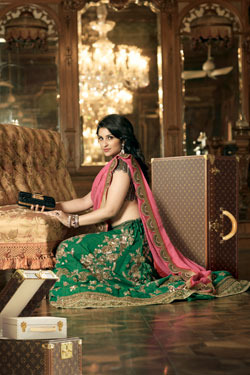
Published: Verve Magazine, Dec 2013 (18th year anniversary issue)
Photograph by: Dabboo Ratnani

Priyanka Chopra has had to take leaps and become an adult when her peers were bunking school. She’s tumbled into several coming-of-age moments; ones that define her and some that continue to plague her. The top-rung Hindi film actor and experimental singer opens up about her self-esteem issues, growing up, making mistakes and finding herself

Image

She’s sexy, glamorous and unbelievably graceful. As she walks into the cover shoot, every single head turns. And if you catch her eye, the look can be distant or it can pierce your soul, entirely dependent upon how interested she may be in knowing you. She’s warm but has her personal space and boundaries clearly defined. Her husky voice is muted, as she remains engrossed in long, involved conversations with her Verve cover co-stars, Karan Johar and Ekta Kapoor. Later, you struggle to reconcile the raw vulnerability of the girl to the exterior of this poised and spirited woman, as she reveals the moments of the past that define her today….

JUST INTO THE AWKWARD TEENS, I WAS VERY CONSCIOUS OF THE WAY I LOOKED. I was very dusky and skinny to my Punjabi family’s fair, fat and pretty. I always felt left out. With all those insecurities in mind, I landed up in America in high school (ninth grade), which took a big toll on me as a teenager.

TO BE IN HIGH SCHOOL IN AMERICA IS JUST LIKE MEAN GIRLS, THE MOVIE. I came from Bareilly, didn’t understand anything and had so many emotional and self-esteem issues; and around me the girls looked so grown-up. I looked 12 to their 16. They were dressed up, developed, wore make-up, had blow-dried hair, and I was in pigtails. I realised that grooming is the only thing that will make you look the best that you can be and I started learning how to take care of myself.

THE WAY YOU LOOK, UNFORTUNATELY, MAKES YOU FEEL A CERTAIN WAY. Everybody doesn’t like certain things about themselves and as soon as you start accepting yourself for who you are, or be the best that you can be then you start feeling confident. It is something I still do. I have improved upon my skin, my looks. There is nothing wrong with that skin tone; in fact, I photograph really well because of it. But my skin, unlike Smita Patil’s beautiful duskiness, for instance, used to be an unclear dusky. I started taking care of it, which gave me a much clearer complexion; being more active and getting toned up so my body started developing the way I wanted it to; and I began wearing the right kind of clothes.

THE UGLY DUCKLING USED TO BE MY FAVOURITE STORY, BECAUSE THAT WAS MY STORY. In high school, in four years, from 13 to 17 I changed from that gawky teenager to Miss World. And yet, even as Miss World, I didn’t feel like a pari. I had major self-esteem issues because it was in my head.

I CAUGHT A TV SHOW, JUST THIS MORNING, WHERE THEY TALKED ABOUT ‘PLASTIC CHOPRA’ about how my body, face and hair have changed over the years. My knees were circled in one picture pointing out that they had more gradation in skin colour (2005) and they circled my knees now, saying ‘knees pe plastic surgery karvaiyi hai, colour badal gaya hai unka! (She’s had plastic surgery on her knees, their colour has changed.)’ It hurts me so much, because it’s taken so much of me to go from that ugly duckling to be who I am today, to be in the movie business. For all the young girls out there – moisturise every day and watch your skin become smoother and it will start glowing. It’s the little things and I learnt that over time. There was no one to teach me….

WHEN I BECAME MISS WORLD THAT WAS A BIG COMING-OF-AGE MOMENT FOR ME. Suddenly from a school uniform in the 12th standard I went to talking about the economy of Zimbabwe to the press of the world. How am I supposed to know that at 17? I had to grow up instantly.

THE MOVIE INDUSTRY IS A HARD PLACE TO BE IN WHEN YOU DON’T HAVE A MENTOR OR A BOYFRIEND, SOMEONE WHO IS PROTECTING YOU. At the ages of 18-20 I had to deal with people the way an adult would, and in the movie business you meet a lot of strange people. I had my mom with me, and even though she didn’t know the ways of the industry either, we both knew how to live life on our terms.

I HAVE NEVER BEEN FORCED OR COERCED INTO DOING SOMETHING. I know how to protect myself as a woman. Even if it’s a big film, I know how to say no if I feel uncomfortable. Every movie that I have done has been an experience in making me the actor that I am today. Sometimes it’s hard, because it’s a male-dominated world. But nothing in life is worth your self-respect or your dignity.

I HAVE MY VALUES VERY INTACT. I HAVE A LOT OF COURAGE OF CONVICTION. EVEN IF I MAKE MISTAKES, THEY ARE MINE. I stand by them and I will take the lynching and the shooting and stand in front of the squad and say, ‘I did this. Now shoot me. I am not a saint. I haven’t come here to be one, and no one can be.’ I am someone who is happiest when I make people happy.

I HAVE A REALLY FIERCE SENSE OF RIGHTEOUSNESS, WHICH DOESN’T MEAN THAT I DRAW LINES AND STAY WITHIN THE PARAMETERS OF WHAT IS SAFE. I won’t say, ‘Yeh laxman rekha hai, and I won’t cross it.’ I am adventurous in life and I have done so many things out of my comfort zone whether it is my career or my personal life. But I stand by them. I don’t feel like I regret even the bad phases of my life. I may have wanted them not to happen. But I have never been ashamed of anything I have done.

I AM MOST UNCOMFORTABLE WHEN I AM IN GREY SITUATIONS. I am a very black-and-white kind of person. I need to make parallels and flow charts. I need to know life is headed a particular way; I need to know what is going to happen; I need to be prepared. But life is not like that, it throws googlies at you regularly…and I get thrown off. I am a very sensitive person, hugely emotional. Every time life throws a googly at me, I come of age. I grow up a little bit more.

THE ONE THING I MISSED OUT ON IS COLLEGE LIFE; MY MOM FEELS THAT THAT IS HER BIGGEST REGRET FOR ME. Bunking classes and running off with your friends. I never had that. I feel like I am regressing now, though. I am also a private, shy person. With my work I take all the risks, but with my personal life I am afraid to take the leap.

I’M LETTING LIFE PASS ME BY BECAUSE I ADORE MY JOB. It gives me the greatest joy, but maybe ten years down the line I will think, ‘I wish I had taken that holiday….’ I haven’t taken a holiday in 16 years. This phase – as you are talking to me – is a coming-of-age phase. I am happy and content professionally; I am blazing my own trail…whether it’s the wrong path, failure-ridden path, successful path…I don’t know. But at least it’s my own. I’m not following norms. It’s more fun that way. I always like running…or flying! I don’t ever want to take any steps back for any reason.

MY DAD’S GOING MADE ME GROW UP A LITTLE BIT. It’s too soon so I haven’t dealt with it in a way, but that changed me a lot. I’m still processing it. I will always remember my post 20s beginning like that.

MY 20S WERE VERY TURBULENT. I didn’t know who I was, what I wanted to be…not that I know now, but I am a little closer to understanding it. I know what I don’t want. You start living with an acceptance of who you are.

To The Manner Born: Sonakshi Sinha

05 Monday Aug 2013

Posted by sitanshi talati-parikh in Interviews (All), Interviews: Cinema, Interviews: Cover Stories, Publication: Verve Magazine

≈ Leave a comment

Tags

Bollywood, Imran Khan, India, Interview, Interviews: Cinema, Sonakshi Sinha, Verve Magazine, Vikramaditya Motwane

Published: Verve Magazine, Cover Story, August 2013

Sanskaar is a word often associated with her, she says. Sonakshi Sinha is unabashedly confident, reclusively shy and riding a wave of professional good fortune. The homegrown actor is uncomplicated and easy-going…and quintessentially Indian…

Image

She is always excruciatingly punctual. Apparently, on set she’s the first one in – ready before even the lighting guys have set up. At magazine shoots, she’s there with at least a couple of minutes to spare. Sonakshi Sinha crashes on the bed of the hotel suite we are shooting in and experiences a ‘lazy’ moment. Indigo skinny jeans, fitted tee and a smart cropped black leather jacket, a faint hint of lipstick and reflector shades complete the biker-chic look.

We chat lightly. Her grilled cheese sandwich and fries are on their way. While she agrees that an Indian woman is meant to be traditionally curvy and voluptuous, you find that she looks surprisingly slimmer in person than she did recently on screen, and her stomach is enviably flat – but her face is as captivating when she breaks into a smile. That smile reaches her large, expressive coffee-brown eyes that are immersive and can sparkle with a mood of their own. When her lip curls in dissatisfaction, it takes you back to her recent role of Pakhi from Vikramaditya Motwane’s Lootera, seared in our memory, as she transcends the elongated scenes in the movie with her emotiveness. She speaks easily, points out that she keeps getting asked certain questions – answers to which she’s “rattoed” (memorised by rote) and admits she enjoyed our little conversation.

The largely well-received Lootera was a “once-in-a-lifetime opportunity. I felt it was written for me”. People kept telling her not to do the film, that it was meant for a more mature actress, but she figured it was a dream role. And, she admits, the very fact that people were advising her against it goaded her to go for it. While she makes no pretense to high cinema, the 26-year-old girl, who’s taken on masala blockbuster movies head-on and won the heart of the hinterlands, feels that a slow, period romance like Lootera has given her recognition as an actor.

She comes on the set, gets ready with her lines and awaits the director’s instruction. Opening each day with a clean slate, she prefers to be moulded according to the director’s vision, believing that no one understands the character better. In her upcoming release this month, the Akshay Kumar-Imran Khan starrer, Once Upon A Time In Mumbai Dobaara, she plays a girl who makes the move from Kashmir to Mumbai to act. The first Milan Luthria film was a gangster thriller; the sequel has a stronger love angle, requiring a different chemistry for each character (Akshay and Imran), and balancing that became a challenge for her. “I was never a movie buff – I watched very few movies. I like to observe people and their nuances. I meet so many people every day – there is so much variety.”

“Sonakshi is professional, dedicated, fearless and magical. She has a wonderful presence – if she chooses her roles well over the next few years she could be one of the all-time greats.”
– Vikramaditya Motwane, director

Standing tall at five feet and eight inches, she’s comfortable in her own skin, but remains a quiet person. “I am a Gemini – two sides of a coin. I’m a shy person; I like to be by myself sometimes. I don’t overindulge in conversations with people I wouldn’t know.” She knows she’s here to do a certain job and that’s all that matters. “Some people are just meant to do what they are meant to do. I’ve inherited it from my father (actor-politician, Shatrughan Sinha) – he’s a very confident person. Besides, I don’t have anything not to be confident about – I’m very happy, I’m doing well; I’m working hard.” But it’s an industry of insecurities. “That’s what a lot of people tell me. I don’t know. I don’t want to be the centre of attention, I’m not insecure, I’m very comfortable with who I am, with what I’m doing, I don’t poke my nose into other people’s business. I guess that makes me a misfit!”

Sonakshi has her life cleanly compartmentalised. “I switch on and switch off with the camera. I don’t like to take my work home, I don’t like to talk about it; at home it’s a completely different life.”

Preferring to hang out with her school and college friends rather than fraternising with industry people, she says, “Going out for events and promotions, crowds of people yelling and shouting your name – that’s where it ends. At home I’m not a star, I’m my parents’ daughter and my brothers’ sister. If I do something wrong I’m reprimanded for it.” Having lived an unabashedly sheltered life while growing up (not being allowed to go abroad to study or to join her brothers at Kodai International boarding school), she admits, “I still have to be home at 1.30 a.m. when I go out! I have a deadline…it’s always been like that.”

Her mother used to be by her side all the time when Sonakshi had just started her movie career, but now she leaves her to figure things out for herself. “While she knows we are always there for her, workspaces have changed today. She’s grown up now, she understands her limits,” says erstwhile actress, Poonam Sinha who recalls how her daughter has always been sure of herself, quick to take a decision, with no qualms after. “She used to sketch much before she knew she wanted a career in fashion design. She would throw the sheets away, but I used to collect her sketches. Even her foray into films – she entered without any formal training in acting, dance or dialogue delivery. But she was confident from day one. I remember Salman Khan saying to her, ‘Wow, you are a one-take artist!’ She also has a strong gut instinct – she had a feeling about Pakhi (Lootera), that no one but she could play that role. She didn’t think twice.”

Sonakshi has wriggled into a very specific niche in Hindi cinema, quietly making it her own. Somehow, that garners the most queries from viewers who are now accustomed to bare-all-wear-nothing heroines. “It’s ironic that people keep asking me why I keep doing traditional roles as opposed to glamorous ones and no one asks any other Hindi cinema actress why she doesn’t do traditional roles as opposed to glamorous ones! We are talking about India, aren’t we,” she snips back with a smile. Playing a UP girl in Dabangg, a Bihari in Rowdy Rathore, a Punjabi kudi in Son of Sardaar, a Bengali in Lootera and now a Kashmiri girl in Once Upon a Time…she’s been captivated by the places she’s shot in. “I’ve covered most parts of India and found the interiors of the country fascinating. While sitting in the city (Mumbai) we tend to plan vacations abroad, and shooting in these locales has been an eye-opener…they are beautiful! And, I love Mumbai. However much we may crib about the mess and the roads, there’s just something about being home – about this being home,” she says with a broad sweep of her hands, encompassing the rain-tossed waves and palm fronds of Juhu beach outside the windows.

You don’t think she’ll hop off to perform a puja anytime soon, but you do think that she’s been raised to be careful of her screen presence and of her public persona. To be mindful of the way her actions would reflect upon her family. “The world has moved on, children live in a freer world, inspired by the West, but we are a very conventional family. She knew her dos and don’ts. Her father comes from that part of India, is a politician…she’s had to understand her responsibility,” says Poonam Sinha. Sonakshi adds, “There has never been any pressure from their side to do any of it – it’s just the way I have been brought up. I am a certain way, I don’t wear certain kinds of clothes, and we are a conservative family. It’s a part of my value system. My upbringing has everything to do with my rootedness and morals. It’s instinctive. Today wherever I go, when I meet somebody senior, actors or technicians, they give a direct compliment to my parents by saying, ‘I want my daughter to be just like you,’ and they use the words sanskaar a lot.”

“She’s got the swagger and attitude of Salman Khan and Akshay Kumar, and what makes them attractive is what makes her attractive: her inherent confidence and security. She’s simple, straightforward and uncomplicated.”
– Imran Khan, actor and co-star

So she sinks easily into her onscreen traditional avatar. She dons the saris and bindis and smiles beatifically into the camera. She’s mastered the art of holding her face at an angle just right, so that her sharp profile can be seen at its best advantage – she knows she can charm the audience with her warm smile and demure flicker of her eyelashes. And when I relate what her co-star and director have to say about her for this interview, you can’t miss the faint blush creeping up. She’s bashful; she’s smiling, she’s unable to look up. “The overall perception is that the youth is getting immoral – but that is a generalisation. I think India remains a rooted country, a country bound by values. That’s the basic story.”

Girl On A Wire: Cover Story with Parineeti Chopra

21 Friday Sep 2012

Posted by sitanshi talati-parikh in Interviews (All), Interviews: Cinema, Interviews: Cover Stories, Publication: Verve Magazine

≈ Leave a comment

Tags

Bollywood, indiancinema, Interview, Parineeti Chopra, vervemagazine

Published: Verve Magazine, September 2012, Cover Story
Photographs by Vishesh Verma

Parineeti01

She is touted as the industry ’s great new talent on the block, on the watch list of every major director and actor. Six months after her first film released, she is already working on her third. It is a rapid start for any newcomer, particularly one who became an actor because she got a return ticket to Mumbai instead of Delhi! PARINEETI CHOPRA is refreshingly easy to talk to and incredibly laidback in general, finds SITANSHI TALATI-PARIKH, as she chats with the banker who became a movie star

Parineeti05

Alive wire buzzes with an electric current that creates energy all on its own, without sapping any other source. In cinema, the screen is ripped to shreds with the power of its intensity. She has a lovely structured face, instantly appealing with its generous smile, fiery light-brown eyes, and translucent skin. She has a particularly defiant tilt to her jawline – as she speaks, she unconsciously lifts her face upwards, as if willing the world to see where she is headed. And yet, she believes it’s all just destiny. After all, that is what her name means.

“I dreamed of being a very different person – the CEO of one of the biggest banks in the world.” And clutching onto that lifetime’s vision, Parineeti Chopra found herself floundering while looking for a finance job. “Twenty-one years of my life I dreamt of being a banker. I worked all my life for it; I went to London. The year I graduated, was a recession – a financial breakdown in the world. I’d taken an educational loan, followed my dreams and gone there to study… everything finished for me.”

That’s when she picked up the bits and decided to return to India. Used to working and buying her own ticket home, she found that it was cheaper to fly into Mumbai – a city she had never previously visited – than to fly to Delhi; staying with her cousin, actress Priyanka Chopra, before returning home. The day after Parineeti arrived into the city, Priyanka had a shoot at the YRF studios. She accompanied her to see the studio, out of curiosity. “When I came here, I saw things like ‘Producer’ and ‘Director’ written on the walls – and found it so strange. It fascinated me, as a fan. I haven’t grown up on films – I used to read finance books, I was very nerdy. When I saw this place (we are currently at the very same studios), I thought about applying for a job here – in finance or accounts, maybe.”

Parineeti09

And so, using one of her other majors, Parineeti ended up doing marketing. “I started seeing the actors here, and initially I used to look down upon them – they put on make-up, go on set, earn so much money, they are in the biggest cars, best hotels in the world, everything is paid for….” Ironically, now, for her, that is a checklist with all the boxes ticked. “But with a very different frame of mind,” she insists. “Now, even if I hear that some actor is paid 25 crores, or some unrealistic figure like that, I don’t find it strange anymore – because working with them made me realise why actors are paid so much, why they are famous and so sought after, why their lives affect so many lives. I felt then that this is a creative field, requiring a lot of intelligence. Not only banking. I used to think that because I read out of a book and because I am making money for my clients, I’m very intelligent. That’s when I decided to be an actor.”

A staffer nervously hands her a cup of her special hazelnut coffee, profusely apologising for being late, checking if it is okay. She notices my amused expression. “I think it’s sweet. I’ve done this for people. I know I’ve not done anything to deserve it, but I know it is a natural thing. This importance is what I didn’t understand earlier about actors…but I guess, now I get it.” Parineeti says it without a sense of wonderment. “You work in an office,” she gesticulates, using me as an example. “Imagine if you were suddenly made the owner of the magazine! Yash Raj treats its actors like stars: you are given that much pampering and importance, freedom and decision-making power, however new you may be. I used to coordinate interviews and order food for actors (everyone from Ranbir Kapoor, Shahid Kapoor, Ranveer Singh to Anushka Sharma, Deepika Padukone, Rani Mukerji and even her cousin, Priyanka). I used to take care of them, be their security person when they were out in the crowd. Suddenly you are elevated to a pedestal that you only used to be a caretaker of.”

The daughter of an NRI mom and Haryana’s Ambala-bornand-raised dad, left home at the age of 15 to study, and is fiercely independent and self-sufficient. “I had a very balanced childhood. Six months of the year I used to be in Ambala as a small-town girl with a very conservative, disciplined upbringing and six months I would live the life of utmost luxury with my billionaire grandparents abroad. I am a good-mannered, good girl, yet very open-minded in life. I get to see my parents thrice a year. They let me take my own decisions – all I have to do is inform them.” And yet, the 23-year-old admits she is not a great judge of people. “I’m not naive, but with people I do go wrong. Someone needs to come and tell me, ‘Why are you saying this to so-and-so, or why are you being so-and-so with so-and-so…’ and until someone tells me, it won’t occur to me. And I’m not a big star that people need to suck up to me!”

Parineeti02

She stops, takes a sip from a glass full of green liquid – spinach juice, she reveals with a wry grin, a formula she is using to improve her near-perfect skin so that she can face the camera without make-up for her next film. It’s a big step for a girl who has a chronic weakness for pizza – averaging four a week – to watch what she eats. “I don’t want to lose a lot of weight. But I like to be fit and I like to get into a regime before my next film so that I don’t get tired on set. Sometimes the director asks for 15 takes – and if I don’t have the energy to give that I may regret it for the rest of my life.”

As she murmurs approval over my bright coral bag, I’m certain there must be a girl in there who reads the fashion blogs and watches her choices being torn to shreds with the appearances she has made – including the big one at a film magazine’s awards ceremony where she stepped up to receive the best actress debut award for Ladies Vs. Ricky Bahl. “I’m wearing jeans today. It’s a big thing – people think I’m dressed up when I wear jeans. I have a whole pile of track pants and ganjees. That’s all I wear in my personal life. My hair is always in a mess.” She takes a breath, giving a clue to the fact that this may have hit home. “I don’t care about clothes. But I know that when I step out I need to look a certain way. Unfortunately, I don’t have the acumen to dress well. I’m just not that person. So now I do have a stylist to help me. I would never want people to say, ‘She is horribly dressed; she only knows how to act!’ I know I’ve made a lot of mistakes, because I’m so illiterate about what looks good on me or what’s in fashion. I have a very tricky body – I am not a very thin girl, so it is hard to dress me. But I am going to make an effort and try and look better. Just give me that time. I don’t have the vision of me as the actor, which needs to be sold in the industry. I wish I had grown up wanting to be an actor – I would have been so much more prepared.”

Prepared or not, she’s clearly gritty and hard-working to the extent of being tenacious about her roles, her characters, her life. Her screen presence has been remarkable and yet, apparently effortless. She enjoyed Ricky Bahl… and that created ripples on screen; she “gave my heart and soul” in Ishaqzaade and received critical acclaim. “There is a rule in the industry where actresses don’t get all the good roles. I would never say it is male-oriented, but there are better roles for men, which makes men huger stars than women. There are very few huge female stars, because they have been blessed with three or four really great evergreen roles. In my films, I think both characters are memorable – in absolutely different ways. I hope I get more such characters. I want to be a successful actor, which comes with successful characters, good characters.” An admirer of Vidya Balan and Rani Mukerji’s author-backed roles, she automatically shies away from ‘package films’ that rely upon a single selling point like money or a famous actor or a director on a winning spree. She needs something to keep her interested, to keep her wanting more. “I have a very short attention span. If you put me in similar kinds of characters I couldn’t do it. Something that is not meaty enough for me as an actor bores me. I can’t work on those films – except when I’m tired and need a break between two intense films…I should use the energy I have right now until I start tiring.”

Parineeti07Parineeti04

She’s been speaking rapidly, without hesitation, with a certain amount of lightheartedness that highlights her relaxed but upbeat demeanour, even as her work life steamrolls on. “I don’t mean to sound philosophical, but I’m just really happy in life. There are people – with due respect to them – who wait years and years for this to happen to them. I’m probably one of the more thankless ones, because I just got it – instead of running after it. I’m just plain happy.” She sounds dangerously blasé. “No – I’m saying this right now, but in three hours I may be crying saying I don’t know why I am an actor. I am a very extremist person. At this point I am content. I know this has happened to me. Life isn’t the same. But I haven’t dreamt about wanting to be an actor, so what has happened isn’t do-or-die for me. It’s not the hugest thing in the world. If I am successful, great. If not, I have my degree to fall back upon. The good thing is I don’t come from a film family. Today, my parents still say – do whatever you are doing until it makes you happy. When it doesn’t, do something else. Who knows – I may get bored of it, get married someday!”

There is something defiantly free spirited about her, that leaves one with the impression that she is in control, she needs to be in control, but occasionally spirals into the unknown ready to experiment at a moment’s choice. And she can surprise you with the things she says. “I’d like to believe I am very different, because nothing in this world means the world to me. Nothing. No one. Nothing. It could be my parents. People say you can’t live without your parents, but I know one day everybody is going to die and we are going to separate. I’m very realistic.” There is a moment of shock. Is there a little romantic girl? “I’m not a romantic person at all – I am very practical and realistic. Very. I will fall in love. And I know that the people that I love, I r-e-a-l-l-y love.” But these are people you can do without? “No! Not at all! They are very important to me. All I’m saying is that I don’t want anything to be the centre of my world because I’ll end up hurting myself. It’s just the kind of person I am. Whether it is money, or success in my career, or it’s my family or friends – I love everything and I want everything all the time till the day I die. But if something doesn’t work out, it’s okay. I don’t want it to shatter me. Whatever has happened to me is enough for it to go to anybody’s head. Because it’s happening so fast and happening so well. My name means ‘destiny’ and I really believe in destiny. I know that tomorrow if it is not meant to be, it will all be over, so I shouldn’t let it be the most important thing in the world to me.”

Parineeti08

Parineeti’s wedding diary 

The actor, who has so far had unrequited love on screen, is ready for a happy ending in real life.

THE GROOM “It’s a cliché, but I want my man to be like my father – I fi nd every other boy too pansy for me, because they are not brooding Punjabi Jatts.”

THE WOOING “My idea of romance is when a guy gives me no importance. I love it. I hate it when I get gifts, or when someone says, ‘Come, let’s go for dinner.’ But, ‘Just come over, we’ll watch a fi lm and order food’ – that’s fun. Just being a regular Punjabi man.”

THE RELATIONSHIP “I’m 23, I hope now I get into a good relationship. I’ve never been in a serious enough relationship to experience any kind of heartbreak. And that’s why I love Band Baaja Baraat – it says ‘Pyaar aur vyapaar ek saath ho sakte hain’.”

THE PROBLEMS “The privacy thing. Rumours in the p
apers link me up with various people – all friends; and now I can’t be seen with them! Even if I tell my mother there is nothing going on, there will be some seed planted in her mind. When I do have a boyfriend, I could never hide it. The problem now is if I am seen going on a late-night drive, or to the movies, people won’t think ‘how much fun they are having’, it will always be, ‘what is happening?’ It will always be negative, sleazier and shadier. But…it doesn’t deter me.”

THE LOCATION “A beach wedding! Water really turns me on…it could be a fake lake under a building, or even a rivulet, but I love water. Not sexually. It’s so strange; any sound of water – even a running tap – can calm me.”

THE CEREMONY “The wedding can be casual, where all my friends are bunked up in one hotel for three days. I’m not really into the ‘traditional, let’s do it the Hindu way’ or whatever. I’m not very religious. I just want a big party, with lots of food and…swimming!”

THE CLOTHES “The kind of looks we’re doing for the Verve shoot is exactly something that I would like to wear for my wedding. Something Indian, something beautiful, but not the usual traditional stuff. I think I look okay in Indian clothes.”

THE COLOUR “Onion pink. I like onion pink, a lot.”

Malaika Zayed Khan for Mother’s World Magazine

20 Thursday Sep 2012

Posted by sitanshi talati-parikh in Interviews (All), Interviews: Cinema, Interviews: Cover Stories, Parenting, Publication: Mother's World

≈ Leave a comment

Tags

Interview, Mother's World Magazine, Motherhood

Published: Mother’s World Magazine, September-November 2012, Cover Story

“I’m an out-with-them mum”

Malaika Khan makes the parenting thing seem a cakewalk. Less Stepford and more hip soccer mum, the soon-to-be-32-year-old vivacious and soft-spoken mother of two, is in her element with her life and family well in control. And she looks fabulous. Sitanshi Talati-Parikh takes a peek at woman behind the mother….

She is struggling to get her older son, Zidaan (4), in the mood for the Mother’s World photoshoot. He is not pleased at losing his time with his cousins Hrehaan and Hridhaan (Hrithik and Suzanne Roshan’s sons) who are over for their weekly play date. Malaika Zayed Khan is playing the role of super mom – cajoling the kids, smiling for the camera, popping into the kitchen to bring cheese slices on demand to appease Zidaan enough to take a shot, checking frequently if her guests – including the Mother’s World team – need anything to eat or drink. All the whirlwind activity is managed in a lovely blue day dress and stunner heels. “I’m still on the mission of losing weight. People who know me know that this is not me. I’ve always been a 44-kilo girl. I am 5 feet 2 inches, so 44 is a good weight for somebody of my height!” She’s a self-confessed foodie – to the extent that she can stare people down when they are eating enough to make them ask her if she would like a bite, she relates, with a peal of laughter.

The real challenge through her pregnancy has been losing weight, particularly her second one, which was a C-section. “It took me eight weeks before I could actually start working out. According to me, I have still got 10 kilos to go and I’m hoping it will happen by the end of this year. The first time (my weight loss) was so quick that I don’t even know where it went – because it was a normal delivery and also, I was far more conscious about what I ate – this time I’m eating what I feel like eating, when I feel like eating.” She works out three days a week with a trainer in what she terms ‘functional training’, which is a full body workout but using her own body weight rather than external weights. “I’ve been doing it for four months and I have been enjoying it – I haven’t had to sacrifice anything in terms of my food intake. It’s also genetics – I have it in my genes to be skinny – though I missed the height gene,” she chuckles.

As we track through her wooden-tiled living room to the marble floor bedroom, I express concern over ransacking her Juhu apartment. She reveals she is the person responsible for cleaning her house once a week. “No one is allowed to touch anything, the staff have to go wait in the kitchen. I’m a cleanliness freak…I set up my house every Sunday. Boarding school habits die hard!” It’s obvious then that she is a super active person, someone her husband refers to as one with ‘ants in her pants’. “People have this myth that pregnancy weight is so difficult to lose – in fact, it’s the easiest weight to lose. It’s how quickly you decide to tackle it. If you sit back and relax and enjoy life, it will pile on. I’m not a stay-at-home mum as much as an out-with-them mum.” She plays the role of soccer mom with ease: “trotting about everywhere”, taking Zidaan to all his classes (drawing, reading, writing), doing his kung-fu tumbles with him; simultaneously watching out for the younger one, Aariz (11 months) who is already attempting to walk – all of it becoming easier because of her naturally athletic body from years of enforced sports at boarding school.

Malaika’s a chronic planner – someone who always knew what she wanted when she wanted it, and luckily, managed to get it. “I completely planned my life – when I was going to have my first child, my second, when I was going to get married…when I was going to fall in love! It was a quick pregnancy each time, and I had planned a sufficient age gap between the kids.” I wonder if she’s got her children’s future planned as well? “No,” she laughs. “But yes, I’ve already told my son, you have to study law and you have to…” she breaks off with giggles. “My rule is that you have to complete your MBA and then you are done – you can then have the golden key of your life in your hands.” Coming from a secular household into a rather easy-going family, Malaika who is half-English, half-Hindu Jain, finds that she can even easily keep a balance culturally and let her sons experience a wide range of things.

What about keeping the kids grounded with fame surrounding them? “You have to let the child know his life, the only thing you can do as a parent is not let them think it all came easy. When we go shopping, and Zidaan wants to buy something, I never refuse. I put a hundred rupees in his pocket and tell him (with emphasis) that, ‘It is a hundred rupees – whatever comes in that money you can buy. And since it is a lot of money, you can buy at least three toys with it, so think wisely what you want to buy.’ We travel business class, not everybody travels business class. He can see it, and learn that if he wants to be somebody he has to work that hard. Just because he is an actor’s son, or has a grandfather, Sanjay Khan, or an uncle Hrithik Roshan, it doesn’t change him as a person.” Malaika admits, though, that she wouldn’t put him in a school just surrounded by celebrities – she would choose a more grounded school. Zidaan isn’t oblivious to his family’s chosen profession, however. He knows all his father’s and uncle’s films. “The other day I showed him a small episode from The Sword of Tipu Sultan, and he goes, ‘Dadu, that’s you!’” (Referring to his paternal grandfather, Sanjay Khan).

As the shots click by, we notice that Zidaan, who is known in the family as the “40-year-old man – with an old man’s soul” has settled comfortably into the nook of the sofa, clutching his sliced cheese roll in one hand and tucking the other arm around his little brother. Is it protective instinct, companionship or a sense of comfort? He isn’t in the least uneasy about having another person around sharing his parents’ time and affection, despite having got over three years of undivided attention. Malaika smiles at the thought; knowing it is something she has consciously worked towards and for which she has made an unconventional choice. “My theory was – if I give too much attention to the second one, the older one would feel the pinch. So, I focussed on the older one, because the younger was too little to know any better. When my older son was not around or asleep, I would go to my second child…to this day. I have left my second child to my mother and maid – both of whom have been wonderful – therefore not allowing my first child to feel at all insecure. Now I find Zidaan very connected with his brother, because he doesn’t feel jealously. I’m very vigilant – I look from the corner of my eye when I am hugging Aariz to see how Zidaan is reacting. This is my way of handling it – even if I may look back and find myself to have been the biggest fool for having given less attention to the younger one.”

While the baby of the family, Aariz, enjoys his toddlerhood, reaching out for things, gliding, looking at the AC vent and blowing out air with a cute rounding of his lips and a silent whistling sound; his mum proudly points out that Zidaan is thriving, with being able to spell his and his cousins’ names, knowing twenty words and framing sentences. Besides his martial arts, she’s trying to get him t
o play chess, but his father has drawn the line at pushing him into too many activities. “I’m getting him used to classes from now, so that when he needs to do more serious schoolwork later, he will be accustomed to the concept. These are not make-believe Einstein classes, these are fun activities incorporating knowledge – he enjoys doing it, I don’t force him into going.”

There is fun time – lots of it. “Holidays are just about the kids. Only twice a year do Zayed and I take off on our own and for no more than four days. We have flown back many times because I have started crying and having palpitations! Fifteen-day holidays without the kids didn’t work. Our holidays are adventurous…. In fact, I was hoping I would be charged enough to go for another child, hoping it would be a girl, but I’ll just hold on to that thought! Three boys are all I can take right now!” It does affect the time the couple get to spend together, but that’s all a part of the parenting life. “All relationships are going to have their ups and downs. Children are like kabab mein haddi – you love your child endlessly, but it does happen. The man may feel it more because he loses time with you, but it is a small phase and then you start enjoying it and it becomes three or four of you. Now I don’t even send out messages without signing off Zidaan and Aariz as well. It’s been quite smooth for us!”

Zidaan gets to spend Friday and Saturday night in bed with his parents, and he knows weekdays he’s on his own. His mom concocts creative games that he can play with his cousins on Sundays for their weekly play date. “I don’t encourage a lot of TV, it makes them feel that it’s more important that their mind gets more active than their physical body. If I watch TV, so will he. I have to make sure I’m doing the things I want him to do.” Malaika is all praise for her husband, Zayed, who’s always wanted to be a father. “He doesn’t even need me – he manages just fine, he’s just too, too good as a father. Zidaan and him are perpetually together. They go for movies and bowling, play videogames together, hang out on the iPad, he takes him to the park and sits on the bench and watches him play – that’s his time with him. Whatever time he gets at home, he wants to be with the kids. It’s been damn easy.”


The World According to Aishwarya Rai Bachchan

19 Saturday Mar 2011

Posted by sitanshi talati-parikh in Interviews (All), Interviews: Cinema, Interviews: Cover Stories, Publication: Verve Magazine

≈ Leave a comment

Tags

Aishwarya Rai Bachchan, Bollywood, Interview, Interviews: Cinema, Interviews: Travel, Verve Magazine

Published: Verve Magazine, Cover Story, March 2011
Photographs by Mike Ruiz

Aishwarya Rai Bachchan’s natural precociousness springs up at every twist in the traveller’s tale. Sitanshi Talati-Parikh watches the ex-Miss World-turned-moviestar-and-homemaker switch from child to Inca queen, Bollywood dramatist to casual honeymooner, lost tourist to Disneyworld explorer, through loud giggles, flashing smiles, dramatic enunciations and passionate inflections, exploring a few of her many memorable journeys


Ash04

A little girl sets sail for the world in an “enormous ship”. The romantic notion of travel becomes a kaleidoscopic reality, possibly even a way of life, with her “shippie” dad and family. It is the mid ’80s when Japan is “very disciplined” and China is yet to come into its own. Around a decade later, winning the Miss World pageant makes her “a cultural ambassador of India” in places unpronounceable. And through it all, Aishwarya Rai Bachchan has felt the power of being Indian, of coming from “a world within the world”.


Since then, there have been movie shoots in exotic locales: from a desert full of water bodies in Latin America to remote towns in India, brand endorsements in cobble-stoned Europe, and the world becoming a stage, literally, with performances like the Unforgettable World Tour. “I will go out and experience a place, I won’t live in an ivory tower, while gauging it and being responsible. Ever since Miss World, people have given me a lot of love – whether you call it recognition or adulation, they have always been expressive in their connectivity with me. When they saw me on the streets, it wasn’t like ‘Ay, Aishwarya!’ – women would come forward blessing and embracing me.”


Always politically correct, her carefully polished voice modulating with occasional bursts of enthusiasm, the intrepid traveller sits easy, knowing that the subject of the day is one she can be naturally passionate about. She points out that while the world advanced technologically, becoming a “smaller place”, her life mirrored the advancement: “Everything became from a 14-hour or 18-hour flight to ‘just an overnighter’, because you started doing it so often. Abhishek (Bachchan) and I love flights – we’re psychotic that way.” And, as she inevitably spends an exorbitant amount of time in transit, the covert people watcher admits “feeling a lot for elderly Indian passengers who walk around staring at monitors. Airports can be overwhelming – with the distances, pace, people and security checks; and while they have become second nature to me, I can still relate to how the experience can be for the uninitiated.”


South Africa: “I had a funny feeling inside me – looking outside the airplane window – a sense of going away.”
There are three times that Aishwarya Rai Bachchan recalls feeling this way, with a distinct sense of poignancy. It began with the flight to South Africa as she left to compete for, and win, the Miss World pageant title in 1994. “I suddenly felt that I would be away from everyone and alone for a month. And the thought of being with a whole lot of people foreign to you; but when you get there, you just fit in. I don’t know if it was a premonition or not, but I sensed that life was changing.”


London: “When you land there in winter, you barely wake up from the jetlag and feel that it is dark, like night again.”
In London, where she was to spend a year as the reigning Miss World, she had the option to have her own apartment or to live with a family in their house. “And I, being the responsible one, chose to stay in a house with a very sweet elderly couple rather than alone in an apartment, knowing my family would feel more secure. It’s a very Indian thing.” It was the first time she was living on her own: “For further studies I never went outside of Mumbai, because my father was a marine engineer, and it was just my brother, mum and I living together; I would feel for my mother and didn’t want to leave her and go away.”


Shanghai: “Suddenly Shanghai was an absolutely different city, and the world was beginning to talk about the change in China.”
It was a very different China during her repeat journey in 1994, when she went as a model with Hemant Trevedi. “Shanghai was a symbol of that change – the modernisation and globalisation, like the US on this side of the world. This was a new culture, very much in keeping with the times or ahead of the time. Very interested in India and Indian fashion and it was almost a privilege to be there with our fashion and our designers.”


China: “This time I was shooting a song on the Great Wall doing a little jig!”
In 1994, she had walked up to the fifth gate of the Great Wall, with a “more grown-up taking away, recognising the passion of generations working on building this incredible wonder that we live with on our planet”. She was back on the Great Wall as an actor, shooting the song Poovukkul, which showcased the Seven Wonders of the World, for Shankar’s Jeans. “You never know when you are going to revisit a certain part of the world. As a kid, when I was there in the ’80s, they took us to a uniquely Chinese opera, and sang some of our Hindi songs, with all the Chinese in the audience looking at us because we were the one Indian family sitting there. You’ve heard of people in China and Russia listening to our music, our film songs, and then to think, on my third visit there, I was shooting a song, with a live audience of people fascinated by our cinema and the song culture of our movies.”


Times Square and historic sites: “I am an actor – it means you have to do everything!”
Dancing atop the Great Wall – did it feel ridiculous at all? “Interestingly enough, never,” Aishwarya answers decisively. “From the beginning, I never felt odd. When shooting for Aur Pyar Ho Gaya, I remember Bobby (Deol), even though he belongs to an actor-family, feeling a bit odd when we had to do ridiculous things in public arenas, like jump on a car, or run on the street with a toothbrush in our hand and toothpaste on our face.” Or the time when she was in New York City shooting for Aa Ab Laut Chalein in Times Square wearing a fuschia pink gown with a bow, big earrings and a flower in her hair. “I had no inhibitions. You’ve grown up watching it, song and dance is so much a part of our cinema that you don’t feel silly doing it.”


Disneyland: “We both were like excited kids – free, happy and wonderfully reliving our childhood.”
A youthful exuberance springs up as she recalls memories of the past. “That family trip (’80s) that started with Japan ended with Disneyland, and Abhishek and I ended our honeymoon – after Bora Bora’s ‘drop in the ocean’ experience – in Disneyland. It wasn’t planned, but worked out beautifully into a great circle.”


Tunisia: “In my interviews, when I say ‘Every day I feel like a newcomer, or every day is like the first time’ there are those special moments when I actually feel that, very, very strongly.”
The third time she felt “the pit of the stomach feeling” was when she took off to shoot for “one of the best film experiences”, The Last Legion in Tunisia and Slovakia. “Not only did I have no one from my nationality on the crew, it was a guy flick – everybody was a dude! I was going to be a warrior, this action character. I was feeling it again: going away for a very long period, and I had to step away from very interesting work that was happening here. I had gone through that predicament too many times in my life and career: ‘Heck, all good things happening, do I have to choose?’” Without any idea of the geography of Tunisia, she was bowled over by the spectacular beauty of the country. She arrived three days before the shoot, without rehearsal. “Everyone was in panic mode, but my dancing helped me, I embraced action instantly. Beautiful Mediterranean water, very hot and warm…a bit much in the costumes, with all that armour! The places were so quaint and simple that we all became that much closer as a group.”


Slovakia: “These guys are HUGE. When you sit on these buggers, you don’t walk straight for two days after.”
Slovakia was familiar because she had been to Prague. She found the “cold (weather) and green” country replete with beautiful castles. “We were all like kids. We had so much fun working together, and such incredible discipline – whether it was Colin (Firth) or Sir Ben (Kingsley) – we were like children in a giant videogame.” And the most remarkable experience was spending time on horseback. She emits a loud, expressive laugh: “The horses in Tunisia are one size and then you get to Slovakia and you realise that the horses there are different. These guys are HUGE. When you sit on these buggers, you don’t walk straight for two days after!”


Budapest: “Ajay kept telling Sanjay (Leela Bhansali) that the two things he dreaded the most, dancing and singing, were what Sanjay made him do in the film.”
Budapest was special because Hum Dil De Chuke Sanam was shot there, for which she got her first Best Actress award. She recalls with a smile, the dance sequence with a rather nervous Ajay Devgn. “It was exceptional because it was an insight into their culture – the music and dance sequence was local to the place. So you actually experienced something unique, apart from the magnificence of being by the river and bridge. Also, we saw very few children in the country, and then we realised that they were encouraging people to have more children because of the mortality rate. Apart from the cuisines, it is always interesting to come away with an insight into the place. For me, it is not about hitting the shops; it is about getting to know a place.”


Brazil: “I was reliving my college days, being vicariously part of a gang of childhood friends.”
After Columbia during her Miss World reign, she was back in South America much later, when shooting for Dhoom 2. “The genre of the film we were working on made us relive our college days. I was privy to a close unit of kids (Abhishek, ‘Duggu’ Hrithik Roshan and Uday Chopra) who are childhood friends, and felt that I was vicariously part of the gang. Brazil offers that kind of spirit, the film gave that kind of energy.” Her eyes take on a faraway look as she recalls a surreal moment towards the end of the Dhoom 2 shooting schedule. They lay sprawled below the “magnificent” Christo, in the wee hours of the morning, before Hrithik Roshan was returning to his son being born. “We were in that woozy state of mind, because we had stayed awake the previous day and night and were watching the sun rise. It was a very quiet time, the early morning hour before the tourists arrived. We had had such a noisy schedule, all of us buzzing throughout, that it was the best silence we all shared. As we lay on the ground, we felt that Christ was looking at us from the skies. You hear terms like, ‘listening to the sound of silence’, but we experienced it then.”


Machu Picchu: “In my little bling feathered costume, I looked like one of the Inca queens.”
Shankar’s Robot took her once again to “the other side of the world”. She had taken a break from her career for the first time in her life. “I was facing the camera after an unexpected eight months all the way in Machu Picchu (Peru).” It was the longest journey they had made – counting the kind of flights, number of flights and locations. Upon reaching the place, a tiny township, after a train journey, they all walked from the railway station dragging their bags on the road. “As we trekked along, we suddenly passed a marketplace. My staff was exhausted, but I was thinking, ‘What an adventure!’ I love walking, because we don’t do that enough, and you actually get to feel the pulse of the place, get in contact with the people and culture, otherwise it could well be structure to car, car to airport, airport to plane, plane to car, car to hotel.”


Mexico City airport: “I was the pride of India and all that – and I didn’t have my passport. This was the worst moment for me.”
With her valet in tow, and running a fever, Aishwarya was connecting via Mexico City en route to Melbourne, Australia, representing India in a performance at the Commonwealth Games. Special Services, who had come to help them with the language barrier, disappeared with their passports. “It was bizarre. People there would smile a lot and look blank, because they didn’t speak the language.” She was taken to a private room that was empty save for two people who could be guards eating a home-cooked meal. “It was like the movies – being in a prison cell and these guys going at their meat sauce and bread. They would say something to each other and keep smiling at me. My valet has piercing eyes, so I would keep telling him to smile and keep his face easy. I suddenly felt I had to be protective and get us out of here. I had never felt that before. I wasn’t getting through on the phone to anyone and at one point I felt myself go a bit cold. I had wanted to visit Mexico, but this was not the adventure I was looking for!” After an encounter with a man who spoke perfectly-accented English and suddenly refused to speak any, to a bunch of “strong-looking women” who used the word “off-loaded”, Aishwarya nearly gave up. And then suddenly, in the crowd she spied the person who had disappeared with their passports and chased him down. “He was carrying our passports in his hand, and till date I have no idea why.”


Los Angeles: “With time, travel, age and experiences, you begin to like the easier, more social pace of LA.”
After boarding the flight from an eventful Mexico City, she was transiting through LA to catch her Melbourne connection, hoping to make it in time to perform. “I reached LA and suddenly life was beyond fabulous. It was the one time I cherished being who I am, in terms of the celebrity life. Suddenly, it was beyond comfort, think all superlatives. I always say that once in a while, if it gets too comfortable, God just does a little schickt (demonstrates a click with her fingers like playing carom). He’s watching his own little rom-com, thinking, ‘I want to have fun with you’. So I think, ‘Enjoy it, and turn it when you want to.’”


New Zealand: “The life that we lead, we are like gypsies, nomads, and I’m very quick to feel at home in any place in the world.”
She’s spoken a marathon, and yet looks like she can go on. I’m right; this would make a coffee-table book. “We don’t realise how quickly time flies and because a part of our life gets captured on celluloid forever, I feel as actors we live lifetimes within our lifetime.” She is off to join Abhishek in time for his birthday, in New Zealand where he is shooting, in a place she has never been before. Some people are meant to be children of the world, explorers in their own right. “And yet, when one travels so much, there will always be something unique to being home. It is your family that makes home what it is – it’s not the physical structure even if you say bed and all of that. I live a very homely life in the places that I go to. Besides, as Abhishek rightly puts it, one in six is an Indian: you can go to the farthest of places and we (Indians) will be there, saying, ‘Hello, you want home-cooked food?’ That’s the best part about Indians – they are there to feed you. You are at home anywhere in the world.”

Sculpted Vision – Bharti Kher

27 Friday Aug 2010

Posted by sitanshi talati-parikh in Art, Literature & Culture, Interviews (All), Interviews: The Arts, Publication: Verve Magazine

≈ Leave a comment

Tags

Art and Design, Bharti Kher, Indian Art, Interview, vervemagazine

Published: Verve Magazine, Nerve, August 2010

Bharti Kher is now considered ‘India’s top woman artist’. We catch up with the 3-time Verve Power Lister post the astounding sale of her sculpture at a recent Sotheby’s auction


Art01

Her elephant sculpture, The Skin Speaks a Language Not Its Own, reportedly sold for a hefty $1.5 million, giving UK-born, India-residing Bharti Kher a permanent residence in the top echelons of artistic stardom. In a quick Q&A:


Artists stray from using traditional symbols of India, but you are popularising them (elephants, bindi etc) as elements with great depth.
It’s not particular to India as such, what I’m interested in is the ready-made and its transformation, and then the cliché and how it sits in our consciousness. When you use something so obvious there has to be subversion.


Every artist strives to have their voice heard and influence public opinion. Do you believe you’ve managed to do that?
I don’t think artists have very powerful voices, we whisper for a long time, perhaps! Maybe people will look at Indian art more, but they have been looking for a long time: this generation has had a lot of exposure already.


Does it bother you that Indians are not the ones purchasing the works; it is a foreign gallery/ foreign collectors?
Yes it would if it was true. Indians do buy my work but less than those from abroad…some major works left when they could have stayed.


Where do you believe Indian artists fall short in terms of gaining international recognition and acceptance?
Indian artists don’t fall short at all, it’s just that the world is a bit slow and needs time to catch up to them!


How does it feel to be one part of a successful couple in the same profession – being married to Subodh Gupta?
We are both working hard right now…we talk, we fight, nothing is easy and we are still sailing.


What attracts you to life-size sculpture?
It creates a relationship with the self. Scale is something I enjoy – whether I want the works to envelope you or seem fragile, so that you (the viewer) feel like a giant or an elf.


Since you work on each piece for a long duration – a few months at a time – do you ever feel that the idea stops mattering to you or changes?
I usually work on many works simultaneously, so none of them ever reach the same level of completion at the same time – therefore the energy is always different at each stage of a work. I have to keep my sanity!


Hypothetically, what do you think your career graph would look like had you remained in the UK and established yourself as an artist from there?
I can’t talk about the things that never were. Maybe I would have been a writer or a mental patient! It’s fun to think about the ‘what ifs’ and go on strange journeys with yourself.

“Books don’t end fantasies – real life does!” Interview with Rupa Gulab

26 Monday Jul 2010

Posted by sitanshi talati-parikh in Art, Literature & Culture, Interviews (All), Interviews: The Arts, Publication: Verve Magazine

≈ Leave a comment

Tags

Indian Fiction, Interview, Literature, Rupa Gulab, vervemagazine

Published: Verve Magazine, Features, July 2010

Irrepressible fiction writer Rupa Gulab is back with another tale to tell, the story of 40-something Mantra who quits her job and battles everything that can possibly go wrong at that time in her life, exploring the vicissitudes of midlife crises. Sitanshi Talati Parikh in a freewheeling chat with the author

What’s fun? Writing the book or planning the book?
Planning a book is great fun. You just scribble notes while you’re lazing in bed eating chocolates and feel like you’ve accomplished a big deal! Writing a book, however, is hard work. My characters rarely act according to my plans – they’re stubborn, annoying, and insist on doing their own thing. It’s a huge struggle making them toe the line – very often, I have this overpowering urge to get them brutally murdered. Maybe I should start writing crime novels instead!

As you grow older, do your characters age with you?
That’s not strictly true. My next book after Girl Alone was for a younger target audience (Chip of the Old Blockhead) – a thirteen-year-old coming to terms with the fact that her divorced parents are falling in love with each other again – and experiencing her first crush as well. I don’t necessarily write for my own age group – I like to believe that I write for women of all ages.

Situations are not really funny when they are happening are they? But in retrospect….
Oh, I absolutely agree – everything looks better in retrospect. I always make it a point to look back with laughter. When you continue to be bitter and resentful, you need to consume gallons of antacids – and I hate, hate, hate antacids – they taste like chalk!

Do you think it really helps an average woman to read about another and find solace?
Yes it does help – particularly if you identify with the character’s problems. Why do you think chick lit always sells? Most single women enjoy reading about the trials and tribulations of other single women. You don’t feel so alone then. It’s a great comfort read. A Girl Alone fan once told me that she re-reads my book on those date-less Friday nights.

So it’s the end of fantasy for women?
Books don’t end fantasies – real life does!

Is there a greater social comment about a woman like Mantra, who feels a loss of control over her life?
I wouldn’t say that it’s a social comment. It’s just something that happens to most of us when we hit the big four-oh. That’s when you realise that almost half your life is over and the other half is not remotely attractive or promising at all: wrinkles, failing eyesight, depression and the desperate, irrational feeling that this is your very last chance to achieve what you really, really want; whether it’s your love life, career, whatever.

Mantra is placed in a higher social bracket. But a woman doesn’t become secure without basic financial trouble does she?
Money can’t buy happiness. We all learn that – sometimes the hard way.

Do you ever find the man in your stories insecure, or is it just the woman?
In my first book, Girl Alone, only the female characters were insecure. That’s because they were in their late twenties/early thirties: single, psycho and looking for love. The male characters were, as men that age usually are, rabid commitment-phobes. In The Great Depression of the 40s, all the characters are insecure about different things – including the three male characters. Vir is worried about losing his job – his stress levels are extremely high. While Karan doesn’t dissuade his wife from meeting her ex-boyfriend, he’s not exactly comfortable with it – the wily fox needs to see them interact every now and then to get a feel of the situation. And the college-going Rohan is miserable and mopey when his cool girlfriend insists on a no strings attached relationship. In the real world, everyone is insecure!

It sounds like you pretty much put into words what you are thinking….
I write exactly as I think. And the reason why I mainly do satire is because I can see through most people and situations. I have to confess that I have the most horrible, terrible nicknames for people in my head – but you can’t blame me for it because I got this from my mum. What can I say – I have lousy genes!

What do you turn, to read?
I’m a fairly eclectic reader, but I stick to fiction. Mainly humour, with a little bit of intensity every now and then. I have way too many favourite authors to list, but I must say that P.G. Wodehouse continues to be a hot favourite. He’s a great pick-me-up when I’m down. He dries tears better than Kleenex tissues.

So you’ve knocked out the 30s, 40s and the teens. What’s next?
I have two strong plots in mind – one for young adults and the other for the chick lit brigade, but I have no idea right now which one I’ll go with eventually. I just want to flake out for a bit – the characters in The Great Depression of the 40s have left me emotionally drained. I really should have killed a few of them!

THE GREAT DEPRESSION OF THE 40s
Rupa Gulab
Penguin India

Gulab’s sardonic wit hasn’t dissipated over time, in fact it has become more reined in with it’s well-crafted barbs. While you warm to the characters, and envision their lives in a midlife crisis, it helps you understand relationships and people as they change with time. The insecurities are all the same, the circumstances and decisions to deal with those insecurities vary. Gulab’s self-referencing – with her lead character attempting to write a novel and towards the end of the story reaching the idea of The Great Depression of the 40s – serves the purpose of reminding the readers that they are like one of the characters in some way, either pining for a bygone time, or harping for something out of their reach. If Gulab were to concentrate less on structured witticism, more on the depth of her characters, especially the male ones, the book would be eminently heart-warming, but would lack the punch that makes it inherently her own style. ‘Marriage ruthlessly strips away all pretences of common interests,’ is what Gulab has her protagonist thinking, and goes on to prove how fragile and yet how solid marriages can actually be. After all, as her characters prove, it is what we make of it.

Not a Word More, Not a Word Less – Jeffrey Archer

26 Saturday Jun 2010

Posted by sitanshi talati-parikh in Art, Literature & Culture, Interviews (All), Interviews: The Arts, Publication: Verve Magazine

≈ Leave a comment

Tags

International Fiction, Interview, Jeffrey Archer, Literature, vervemagazine

Published: Verve Magazine, International Edge, June 2010

British novelist, ex-politician and former jailbird, Lord Jeffrey Archer is an absorbing conversationalist. He’s confident, patient, petulant and raring with sure-fire ambition. In Mumbai for the launch of his latest collection of short stories, And Thereby Hangs a Tale, Sitanshi Talati-Parikh comes away from the tête-à-tête duly charmed

Jeffrey01

Jeffrey Archer explains the act of creation of dialogue, demonstrating how real-life conversation can’t be imitated exactly in fiction. “While talking you may say, ‘Can I have a cup of coffee, please?’ but you can’t put that in a book.” The ever-gracious Taj hospitality team appears bearing silverware and coffee, not knowing that Archer was merely demonstrating a point. “Is that my special?” he asks – having quite missed the force of his spoken word. They look confused. “Is that coffee?” They nod bewildered. “No, thank you, I have my special. I thought they told you all about it. No they didn’t? God bless them,” he mutters. A few minutes later, the somewhat-‘special’ turns up. They couldn’t garnish it with chocolate sauce, they murmur desperately. He takes a sip. “It’s not like Barista’s! They all try to make it like Barista, but they can’t. And who introduced me to Barista? ‘Raoool’ Dravid introduced me to it. I don’t like coffee. I like Barista’s. I don’t get it in England. I love it.” He gives it back, with an unhappy, “Thank you, very much.”

He is surprisingly energetic, he’s refreshingly ebullient and he holds the instinctive ability to inspire. At 70 years of age, he moves with the efficiency – and his voice carries the power of a 35-year-old. He speaks without platitudes and any hint of patronisation. And if you question his creative choices, he responds with effusive mock indignation.

Excerpts from a rollicking, sometimes serious conversation with the author:
(All exclamation marks and text repetitions are entirely based on the interviewee’s tone. Capitals denote elevated volume only.)

Why do you not have more female protagonists in your books – besides The Prodigal Daughter and False Impression?
The Prodigal Daughter is totally about the first woman president of the United States. Who wrote the first story about the first woman president of the United States? ME! Long before Hillary Clinton! You weren’t even born then! I’m married to a woman who runs the biggest, greatest hospital in Britain, Cambridge University. So, don’t you give me that protagonist stuff. In this one (points to his latest book) all the women are wicked. They’re nice in a lot of them, aren’t they? I’m not a women’s writer. I don’t write to please you, I write to please everyone!

And everyone is pleased by men?
Well, no. NO! The Prodigal Daughter is the story of a woman. False Impression, you’re quite right, is about a woman from beginning to end. You selfish thing, isn’t that enough for you? (Laughs uproariously.) God, women’s rights for India! Women to run India!

What happens if you don’t have a story to tell? Do you ever get stuck?
Never. NEVER! No writer’s block! Never. I know my next six stories. The next thing I’m writing is the biggest challenge in my life. I’m writing five books in a row, the story of which starts in 1920 and ends in 2020. They are called The Clifton Chronicles. The first book is dominated by a MAN called Harry Clifton. The second book is dominated by a woman called Emma. Yes!

Is there a sense of completion when your protagonists achieve that position of power – after all, that’s where the books end? What happens if they were to continue?
What you’ve said is going to happen in the next series. One will lead into another. They will all be separate books. I’m a believer in hard work and ambition and achievement – for men or women. (I can sense the aside.) I work for Margaret Thatcher – makes no difference to me. The achievement is in reaching the goal, not afterwards! You don’t want to think about retirement do you?

Do you believe that with great power comes great responsibility – for the storyteller and for the story itself?
No I don’t. I think that’s not realistic. I am a storyteller. I want you to enjoy the story. I want you to turn the page. I don’t want to leave you with any philosophical…well you can, but that’s not what I aim to do. I aim to entertain you.

Is that the difference between popular culture and literature?
NO! That’s insulting. (I’m just saying.) I know you are, but it’s insulting. That is to say you can’t be a great storyteller and write well. The literary failures of this world always try that line, because they are jealous. It was one of your great critics who told me, ‘Jeffrey, don’t worry with the sacred cows of India – read RK Narayan.’ I agree with her. Narayan is both – marvellous combination of great writer and great storyteller. There are very few Vikram Seths around. (He approves of Seth.)

So, your new collection of short stories….
(Answers with practised ease.) Fifteen short stories, nine of them true, the most exciting one for me is set in India, called Caste-off. It’s the story of two people I met in Mumbai three years ago (Nisha Jamvwal and Kanwar Rameshwar Singh Jamvwal). I think it will make a Bollywood film – it’s so romantic. I couldn’t believe it when I heard the story; it’s so remarkable that you can’t make it up.

Do you pull from real life or employ fiction?
It’s half and half. Human beings are giving stories all the time. Why bother to invent someone when I can just write you? It’s so easy. I look at people and I remember details very well. If I get a good story, I write one line that reminds me of it. I always keep notes. Normally everything is all up there. (Referring to his deeply lined forehead.) If you are working the whole time – and I’m always working – memory gets constantly tested. Your memory only gets lazy if you’re lazy.

What does power mean to you?
Power?! Power. (Makes it sound like ‘paar’.) It has many meanings. But sometimes, a writer has power without realising it because people will write to me and say, ‘Your book has changed my life,’ or ‘something you wrote has changed me as a person’. Which one hopes is power for good – for instance young Indians learning to believe in hard work to achieve what they want.

Your stories give people the drive to keep going, to succeed….
Nowadays, people want it tomorrow…not 20 years down the line. A girl came up to me at a restaurant and said, ‘I want to be famous.’ I asked her if she played the violin, sang a song or wrote a book…and she shook her head. She said, ‘You don’t understand me, I want to be famous.’ She didn’t want to do the work. You have to do the work. Now I’m more demanding all the time, on myself.

Does success increase the pressure to deliver?
I always had a story so I never felt pressure. The problem was making sure I worked hard enough. I’m working harder now than ever. People ask me silly questions like ‘Do you write all your books?’ But you would know straight away, wouldn’t you? You’d say, ‘Jeffrey! You didn’t write that!’ I always say to people, my readers would know – they know my tricks. Which makes it harder for me, because my fans are sitting there and saying, ‘Where’s the twist, Jeffrey? What’re you gonna do, Jeffrey? I’ve got my eye on you!’ It’s still a challenge to fool you, to get you to the last line and make you go ‘Aaeee!’ That’s the trick.

Few writers can handle short stories and sagas with equal aplomb….
The thing about short stories is that they are stories. A lot of people who write short stories are actually writing ‘looks at life’ or incidents. I tell stories. They have a beginning, middle and an end. I don’t want to write about the ‘movement in the room, made one feel luminous, as the girl walked toward me, I realised….’ Oh balls. Give me a STORY!

So you’re going strong.
Eh? FOREVER!

Love the spirit. Word.

Trendsetting Strokes

26 Wednesday May 2010

Posted by sitanshi talati-parikh in Fashion & Style, Interviews (All), Interviews: Lifestyle, Publication: Verve Magazine

≈ Leave a comment

Tags

Art and Design, Designers, Fashion, Gaurav Gupta, Interview, Satya Paul, Style, vervemagazine, Wendell Rodricks

Published: Verve Magazine, Nerve, May 2010

The connection between fashion and art is an old one; international trends can be written in no less than multiple coffee-table books. Verve speaks to four top Indian fashion designers who show obvious influences of art in their designs

WENDELL RODRICKS

Wendell


On the connect “There has always been a connection between art and fashion. Chanel loved Cubism. Schiaparelli loved Surrealism. And Yves Saint Laurent paid tribute to many artists: Braque, Picasso, Mondrian. Art and fashion are both provocative and often intrigue the general public.”

In my designs “I have used art as an influence not just from the Western world but also from an Asian perspective. I have collaborated with Goan artist Theodore Mesquitta; and did an installation for Habitat Centre (Alka Pande). In fact, I know one day I will paint.”

Fashion as a work of art “Fashion is at the lowest rung of the pure art ladder. Our clothes certainly are a form of art. To elevate them to pure art though is being overly ambitious. Fashion can become art in the hands of Alexander McQueen or Hussain Chalayan who look at clothing and shows as art to begin with. But in most cases, fashion is not art.”

SATYA PAUL

Satyapaul02

On the connect “Anything in life has two possibilities – either you can use it to raise or lower the bar. What matters is how one takes it. Fashion is itself an art form, a medium to be used to create amazing art. Broadly seen, it is a confluence of colour, texture and form (by way of weaving, embroidery, printing, and cutting/pattern making). The importance of the two is akin to asking ‘…the importance of oxygen to life?’”

In my designs “Art is anything done with heart! In that vein we have made numerous collections over the years where art of different artists, and movements of art is the basis. Recently, Chola period brozes and Pop art have been referenced in our collections. In addition, we have explored and developed a new visual language.

GAURAV GUPTA

Gaurav02

On the connect “Sure there is: fashion is simply commercial art.”

In my designs “I’ve always been inspired by art. Think architecture by Gaudi, movements like Surrealism, Dadaism, the art nouveau and art deco realisations. While it is nothing obvious and direct, there is a subconscious connect. Recently, I collaborated with artist Akshay Singh Rathore, taking off from his light-box installations. We’ve independently been working towards similar things – a more landscape-like feeling. Tartan checks can be rigid; with this concept, they became more fluid, draping well.”

Fashion as a work of art “Some of them are! Designs are sculpted around a body. Sculptures have a mood; and in fabric draping, construction and moulding, it is like working with clay. One of my saris for instance was displayed at the Portugal Biennale (an international art exhibition) late last year.”

POONAM BHAGAT

Poonam02

On the connect “Art and fashion are both intertwined. Both are highly creative fields. One uses a canvas with brush strokes or mixed media while the other uses fabrics and threads on cloth. The difference is, the latter is turned into a structured garment while the former is flat with sometimes a 3D effect. Artists have even started incorporating materials available to fashion designers in their art.”

In my designs “My spring summer 2010 collection was inspired by the works of world renowned Spanish artist Joan Miró, who was known for his very vibrant, childlike paintings and use of primary colours. I borrowed elements from his art and gave them my own TAIKA twist using vibrant appliqués and embroidery on ivory linens and cotton-silks. The recently concluded WIFW AW 10 showcased my collection inspired by abstract expressionism, a modern American art movement which took wing post World War II in the late ’40s and flourished till the early 1960s, putting New York on the global art map for the very first time.”

Designer in an art show “For me art speaks; so does fashion. The first ever group art show I participated in was organised by Polka Art Gallery at The Visual Arts Centre, New Delhi in August 2007. It was a showing of extremely eminent artists. I was the only fashion designer and the only one to create tapestries on fabric with embroideries.”

Designs as works of art “My designs are just fashion statements, to be worn and enjoyed. Not to be treasured!”

Abhay Deol: An Uncommon Man

19 Friday Mar 2010

Posted by sitanshi talati-parikh in Interviews (All), Interviews: Cinema, Publication: Verve Magazine

≈ Leave a comment

Tags

Abhay Deol, Aisha, Bollywood, devd, indiancinema, Interview, movies, vervemagazine

Published: Verve Magazine, March 2010
Photographs: Harsh Man Rai and Tina Dehal

You may choose to like or dislike his choices, but you can’t ignore him. A string (think ten) of unusual movies later, Abhay Deol, who turns 34 this month, has found sure footing in Hindi cinema with unexpected acceptance from the audience and grudging respect from the industry. He inspires deeply opposing reactions, but that doesn’t bother him in the least. Sitanshi Talati-Parikh discovers the man behind the actor

Abhay02

I had a premonition about that Saturday, but I didn’t anticipate that meeting the hottest Deol in town would involve a star-crossed sequence of errors. Lost in Aram Nagar Colony, in the innards of distant Versova, trying to navigate around bungalows that had no order or system, unable to get the girl answering the phone to give me usable directions, I reached harried – unforgivably – three minutes late, only to find him busy in a conference with director Navdeep Singh for his first home production, Basra.


Apparently, while trying to get his own production house rolling, he’d forgotten about our interview. Looking rather bemused, he started talking rapidly…for nine minutes, and then requested a five-minute time-out while he finished some critical Basra-related work. Meanwhile, I tapped my nails on the wooden table, back firmly facing the curious eyes in the production house, checking out posters of Dharmendra’s films that populated the walls and watched the minutes become the better part of an hour confirming that I would miss my friend’s wedding in the bargain. After being at the receiving end of a couple of sardonic comments about time and responding with rather genuine profuse apologies (yes, I believe him), he emerged to give me a full, uninterrupted 40 minutes of quality time. Am I surprised that at the end of it all it was a great interview?


Of course, the dark clouds that loomed hadn’t begun to pour yet. I got back home only to discover to my intense horror that only the first nine minutes had saved on my voice recorder – all else had, by some inexplicable black magic, vanished. The curious dead cat had got my tongue and made me roast in hell. Munching vigorously on humble pie, I returned to the now-familiar Aram Nagar Colony a few tense days later on another professional rendezvous with the refreshingly easy-going actor-turned-producer. This time around, he didn’t keep me waiting and my recorder behaved itself. We ate some bitter chocolate to thaw the ice in the air.


Curiosity killed the proverbial cat and made Abhay Deol famous. It took a while, but now everyone wants a piece of this man who doesn’t fail to arouse interest. He’s not a misfit in the sense that he’s an abnormality; au contraire, when you meet him, he’s pleasantly normal. It’s his choices that have made for fevered coffee-table speculation, and the fact that you always wonder what new oddity this unconventional Deol will roll out. He’s been called that so many times, it’s almost a cliché. Maybe that’s why the lanky actor, who always prefers to keep a surprise up his rather hairy arm, has chosen to do a movie that seems so incredibly mainstream. The upcoming Aisha, loosely based on Jane Austen’s Emma, co-starring Sonam Kapoor and produced by Anil Kapoor, is worth watching, if only to understand why someone like Deol would star in it. A perfectly normal romance, there is no angst, no odd-ball character, no debauchery; nothing really that makes it something he would ideally gravitate towards.


It makes you suspicious, wondering if all along, these strange choices – a superhuman character in Honeymoon Travels Pvt. Ltd (2007), a lovable thief in Oye Lucky, Lucky Oye (2008), a contemporary Devdas in Dev.D (2009), a failed writer and middle-class government engineer caught in a web of deceit in noir film Manorama Six Feet Under (2007) – were all an act, until he found a director and producer willing to cast him into the ‘safe’ and common mould. Deol looks unabashed, as if you would be ridiculous to question his choices, firmly crediting script over banner, any day. His other release this year, Dev Benegal’s Road, Movie (an Indo-American production which has already got rave reviews on the international circuit) about the experiences of a guy driving his truck through a desert, makes this statement a fact. Deol happens to be a part of Road, Movie merely because Benegal was willing to wait to accommodate the former’s busy schedule – it is a twist in the actor’s fateful tale. Now, where Deol goes, the banners and author-backed roles follow.


Dharmendra’s nephew has had to live with being told, rather matter-of-factly, that his movies don’t stand a chance. But patience, grim determination and a slow pace of success later, when people started to (albeit grudgingly) accept him as a bankable star and the industry began looking up to him as a leader in experimentation, you find that Deol can’t help but be a little smug. Success breeds confidence, and he admits that being on the other side of the bargaining table, seeing the way the chips have fallen has given him the right to be self-assured – to talk with the knowledge that people are itching to hear him (he was a speaker at the prestigious TEDIndia – Technology, Entertainment, Design – international conference last year); and to walk with a sense of renewed purpose. And a part of that purpose is being a catalyst for change. “You need to take the few early steps – paving the road for others to drive upon. And more importantly, I have to do things that appeal to me as an artiste/ actor, that’s where the honesty will come from. The audience will follow – after all, people always gravitate towards those who are sure of themselves, and those who do things with integrity.”


While he may claim an avid fan following, there are those who have not seen his films, and therefore have not really come to recognise him as an actor of repute. Road, Movie, for instance, is a film that he admits can go either way with the audience. “It is a step in an unexplored direction and I don’t know how people will react – the foreign audiences have really appreciated it, but will it be a film that appeals universally? I don’t know. With a good release, though, it stands a chance.” At the same time, he is not comfortable with the idea that his films – and therefore he – may appeal to a niche, intellectual audience. “I have never looked upon an audience – particularly the Indian audience – as being dumb or looking for escapism. I consider my audience to be smarter than I am. If I didn’t, I would be taking my audience for granted. Whether realistic or not, it keeps me on my toes, and raises the bar for me personally.”


Talking about being realistic, you can’t see this Deol raging on screen, warding off goons and doing a merry jig around trees (though Honeymoon… proved that the boy has magic in his tangoing feet). Subtlety, not melodrama is his artistic choice. Where at one time, cousin Sunny Deol’s angry histrionics may have held the day, today, the multiplex audience is more forgiving towards actors who believe in the power of nuanced performances. In real life Abhay Deol is a casual and prolific talker, but his on-screen characters tend to emote with expressions rather than voice: minor inflections are expressively reflected on camera. “I prefer to use facial expressions when I am acting. There are actors who will want more dialogues simply so that they can have longer screen time. I tend to cut my own dialogues – if something can be said in one line, why do you need five? Our face and expressions are magnified on the big screen, so less is always more.”


‘Beta engineer banega’ is what most Indian parents would think and that’s exactly what Deol’s parents hoped for. Growing up in the same house as legendary star Dharmendra and his sons Sunny and Bobby Deol, the younger Deol came into his own on stage in Jamnabai Narsee School, as early as age five, but remained ambivalent about his future as an actor. “My family wanted me to do whatever I wanted and give it my 100 per cent, though they would have liked it if I became a doctor or a scientist. Growing up in the ’80s, it was like that. The kids in school would make fun of me, because I came from a family of actors. When people around me proclaimed, ‘He’ll be a good actor,’ I would find it deeply offensive, thinking, ‘How do you know that; how do you know I may not have other interests?’ I hid the fact that I wanted to act. I used to be good at drawing…I thought I would take up graphic design.” It seems that for longer than should be necessary, Deol has been fighting being moulded according to people’s expectations, even if those expectations were a part of his own dream.


What the kid that refused to conform actually did was study theatre in Los Angeles, USA, and contrary to expectations, it wasn’t an easy road into movies. “Initially, I wanted to work with everybody, to do that commercial film so that I would get the money to do a non-commercial film. I hate those labels – ‘commercial’, ‘non-commercial’. But it conveys the message. Nobody wanted to take a chance on me because I was a flop actor. And, before Socha Na Tha (2005, Deol’s debut film directed by Imtiaz Ali), there was no interest in me either.” Despite dogged determination and a good show of bravado, Deol’s chosen path came with its own share of insecurities. “You want to navigate the system, you need support. You don’t want to end up as someone on the periphery. I decided then that whether hit or miss, I would let my work and its consistency speak for itself. You can only be insecure if you have something to hide or if you doubt yourself. I’m pretty truthful and honest, so my insecurities kept going out of the door. Those that remained were about my career as a whole, because it is a bigger entity.”


Forbidden Films (it’s hard to miss the defiant air in the choice of name) is a production house that he started after the painful realisation that many of his films failed because of bad marketing. “There has been a struggle working with first-time producers and smaller film-makers – it’s difficult because even while making the film, money runs out. And when it comes to releasing the film, there’s no money left for marketing. Then, the producer lacks the clout to distribute it well. That works against a good product and it kept happening to me. For instance, Oye Lucky, Lucky Oye and Dev.D, backed by UTV, fared better than Shemaroo which didn’t manage to successfully market Manorama Six Feet Under. These are lessons I have learnt.” He believes that none of the Indian film producers – whatever they may claim – really know how to market a film internationally. And therein lies a huge untapped audience. “Starting my own production house was merely to give films, directors and stories that I believe in a chance to survive. I don’t plan to star in all the films I produce – but I am acting in the first one, Basra. Production is a lot of work, and being new to it, it’s a learning process.” And this coming after shooting three films back-to-back (Oye Lucky…, Dev.D, Road, Movie), which got this avid traveller (who prefers luxurious European jaunts to backpacking trips) so burnt out that he had to take a few therapeutic months off to do a welding and metal-work course in New York.


He has chosen wisely to not be bothered by what others think or how they define him, particularly by the recent incident reported about him being at loggerheads with the Aisha producers on being dissatisfied with his role. “Almost everything that is reported is a?rumour or not true, though I’m not saying everything is false. I’m private about my life…and there are times when I say what comes to my mind, in a particularly casual fashion, which gives my words the leeway to be twisted.” With a sheepish grin he remarks, “And sarcasm doesn’t work really well with the media.” Like others before him, Deol has fallen prey to people’s opinions based on the quirky characters he has played, his oddball choices and industry buzz. “I do feel that I am misunderstood as a person. There are things I have heard about myself…it all comes back to you. People think that the stars don’t know, but they know about these rumours. You are in the public eye, working with different people, a lot of times you could be the one being difficult and it’s there for all to see, and other times you could be justified in what you say, but people will still feel that you are being difficult, because of all that’s perceived of you and because you are in such a position of power.”


Or the times when there are determined probes into this highly eligible bachelor’s love life. With no real face to attach to the girl(s) on his arm, Deol inconveniently finds himself linked up to anybody he works with or has been seen talking to. Professional hazard it may be, but he’s often in the incongruous state of being too honest and too private all at once. “Once while in New York, I made the mistake of saying, ‘I’m dating a few girls, it’s not like I don’t have a social life,’ and that got blown totally out of context! In New York it is natural to date casually; while in India I naturally tend to get more protective, I don’t want to have to answer to anybody…questions like: ‘How did you meet, how’s it going, are you serious, are you getting married?’ I mean, who are you to ask me that? Why should I answer? And tomorrow if the two of us are not together, they will write about what might have gone wrong. Sometimes your personal life takes a beating when your professional life starts to go down; then they judge you, and judge your partner for leaving you.”


And so the ‘ladies’ man’ tag has found itself surely attached to his broad shoulders. His voice escalates in volume just enough to suggest that this is a touchy topic (no pun intended). “If you call me a ladies’ man, then, on one level yes, there’s nothing wrong with flirting. I like the opposite sex, I always go out of my way to charm someone and talk to someone; but at the same time, I’m not one to sleep around! I’m not looking to settle down right now, but I’m also not someone who will sleep with anything in a skirt! For me, more than a relationship, companionship is very important. In our day and age, it is much harder to be in a committed relationship for very long.” Experience talks, having battled work pressures simultaneously with relationships, leading him to conclude that it’s one or the other at this stage in his life. “Right now, I’ve barely got my foot in the door – I’m not even settled in right now. So I’ve had two successes behind me, big deal! Two more flops and I will be in the same position I was in two years ago. It’s not like I have cemented myself in this industry – that won’t happen for a very long time – but at least for the next couple of years I need to put in the energy and get close to having, if not my toe, then perhaps, half my body in the door. Then I’ll be happy and take a break. I understand that it is important for me to have a life outside of work….”


He may be playing the field, but he isn’t riding the high horse of fame to charm a girl. Meeting him, you understand he doesn’t need to. He’s not anything like the dark heroes he plays; he’s not the Dev folly. “I am a positive person, happy in my personal life, and I’m not very competitive. I tend to gravitate towards those girls that don’t give me any extra attention just because I’m famous. For example, there was one who wasn’t very polite to me because she assumed that I would have star-like airs, but over the course of a few meetings, she opened up to me, when she realised that I’m just a normal guy. And immediately, I was attracted to her because she valued the right things. Of course, there is a lot of attention because you are famous….”


One would imagine that living with a handful of movie-star Deols would have got him used to fame. “It’s true, I’ve grown up with that and I’m wise to it. I think that’s why I did my own thing when I started out. The fame bit is important to me simply because it helps me get the money to make the movies I want to make. Beyond that, it doesn’t define who I am. And I won’t ever let that happen. It’s not about getting the launch or a platform or a silver spoon up your butt or whatever; it’s really not being taken in by fame and glamour, because once you get taken in, it comes and it goes, it is not permanent. The only thing permanent that you have is the work you have left behind.”


Maybe we are quick to judge people who are not of the common grain. Someone who has chosen – more accurately written – his own path, who one would imagine to be opinionated and as stubborn as a mule, is actually quite reasonable about his opinions. “One of my philosophies is that I know that I don’t know. I’m entitled to my opinions, but am not rigid about them to the extent that you can’t convince me otherwise. You have to accept that you can make mistakes; sometimes you can become so subjective that the objectivity is gone. I need someone to turn around and give me a slap across my face! I respect that, as long as it is justified.”


And being open to other people’s opinions is having respect for individuality. This gets him steaming. “We are constantly told, don’t do this, do that instead. It is crazy. I totally believe if you have faith in your artist, if he/she has already delivered, give them a chance. The one thing we lack in our industry is individuality. Which is why all the films, actors, actresses look the same! Because they are all aiming for the same thing – who can dance better, who can fight better. That is why we have more flops than hits. It still baffles me how people see formula and depend so much on it. There is a formula, for sure there is. But the ones who break tradition, get famous.”


He finally leans back – barely having paused for a breath – and you feel like you have travelled the long, rough road to the beginning of success with him. Only you haven’t. “I’m happy, but just because you are happy doesn’t mean you stop. You can be greedy and want more.” There is a deep throaty chuckle, Kevin Spacey-like dimples flashing, reminding you that despite having reason to, he doesn’t smile enough. “I want to go the distance in making a movie that has universal appeal. I want to communicate to the world, not just to India and Indians. It’s not just about boy meets girl, it’s not just about comedy; there’s also global warming, genocide, political assassinations, social workers, adoption….”


It’s also about microcosms that have macrocosmic appeal. “While I’m a Mumbai kid, I understand village mentality because my family is essentially from the Pind, in Punjab. I’ve been brought up with a certain set of traditional values and culture, and I want to have my own take on Indian culture. There’s a huge gap…and film is the medium you can bridge it with!” Lucky Singh (Oye Lucky…) and Dev (Dev.D) were two such curious characters rooted in North India, with a nation-wide appeal. “With Dev.D I knew I could take a classic novel, which even my grandfather knows, contemporise it, and have it appeal to a 16-year-old today. It’s the same thing that Sarat Chandra Chatterjee was trying to say in 1917, that kids today are trying to tell their parents. Why are they rebelling? Why are they obsessing? While Chatterjee didn’t like his own work, and I cannot identify with Devdas, it does have universal appeal.”


With the same angst of a person struggling to find his rightful place in the world and triumphing in the end, he is more like Satyaveer Randhawa in Manorama… than any of the characters he’s played. Yet, he gravitates towards all his roles, albeit unconsciously, because they share a common strain – a debauched spirit that masks a principled person. The principles can shift from determination to fixation with a thought, the debauchery can be rakishness or trivialisation of a socially accepted moral code – but they entwine into the personality of a person who simply goes with what he believes is right.


This is what makes his characters likeable despite their flaws, and this is what makes Deol interesting. Lucky Singh’s sincere eyes belie his actions, the deeply dimpled smile is innocently impish – and you feel that there is a possibility of redemption – in fact it should be no other way. Taller than you’d imagine at six-feet-and-one-inch, and skinnier than you’d expect, clad in pale blue denim and a casual tee, the Darcy-like personality leaves you with the same impression. “Is he as hot in real life?” asks a friend. He may not be your average candyfloss poster boy, but you would be foolish to ignore him. Self-assured, flippant and with an unintentional air of cavalier disarray, the actor is a ‘project’ – someone a girl would automatically get attracted towards, to ‘fix’. And that is just dangerous territory, because as defined by his sometimes wayward, often laid-back attitude, Deol is essentially a free spirit. Dressed (defiantly?) casual at a glittering fashion soirée, he is equally at ease being his own companion, as he is exchanging pleasantries with the best looking girl there. He can be perfectly charming, should he choose to do so and that would be within the constraints of what he defines to be a laid-back friendship or relationship. He would revolt against shackles of any kind, expectations, demands and a desire to be moulded into someone who conforms. And yet, he believes, “commitment-phobic” is not the appropriate term for him. “It’s just that I am not at that place right now,” he explains earnestly. This Deol isn’t misunderstood; he’s just waiting to be understood. At the right time and place in his life.

 

← Older posts
Newer posts →

|  Filling the gaps between words.  |

Writing By Category

  • Art, Literature & Culture
  • Brand Builidng
  • Brand Watch
  • Fashion & Style
  • Features & Trends
  • Fiction
  • Food
  • Humour
  • In The Media
  • Interviews (All)
  • Interviews: Business
  • Interviews: Cinema
  • Interviews: Cover Stories
  • Interviews: Lifestyle
  • Interviews: Luxury Brands
  • Interviews: The Arts
  • Interviews: Travel
  • Musings
  • Parenting
  • Publication: Conde Nast
  • Publication: Elle
  • Publication: Mint Lounge
  • Publication: Mother's World
  • Publication: Taj Magazine
  • Publication: The Swaddle
  • Publication: The Voice of Fashion
  • Publication: Verve Magazine
  • Social Chronicles
  • Sustainability
  • Travel Stories

Reach out:
sitanshi.t.parikh@gmail.com

© Sitanshi Talati-Parikh 2018.
All Rights Reserved.

Website Powered by WordPress.com.

  • Subscribe Subscribed
    • sitanshi talati-parikh
    • Join 51 other subscribers
    • Already have a WordPress.com account? Log in now.
    • sitanshi talati-parikh
    • Subscribe Subscribed
    • Sign up
    • Log in
    • Report this content
    • View site in Reader
    • Manage subscriptions
    • Collapse this bar