• About
  • Brand Building
  • Film & Drama
  • Writing: Arts & Lifestyle
  • Writing: Interviews
  • Writing: Luxury Brands
  • Writing: Travel

sitanshi talati-parikh

sitanshi talati-parikh

Tag Archives: Verve Magazine

Artistic Brainwaves

11 Wednesday Sep 2013

Posted by sitanshi talati-parikh in Art, Literature & Culture, Publication: Verve Magazine

≈ Leave a comment

Tags

Art, Reviews, Verve Magazine

Published: Verve Magazine, Nerve, Art Pick, September 2013

Former newspaper cartoonist, Raghava KK, uses art and technology as a means of storytelling – often dramatic and radical

Image

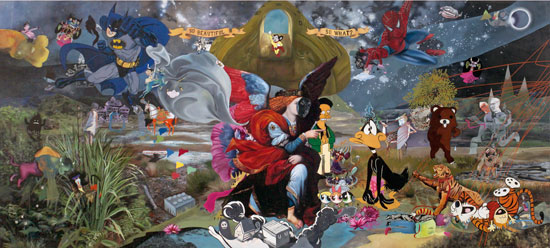
He’s one of CNN’s 10 most remarkable people (2010), a four-time TED speaker, a lecturer at top American schools and his iPad book, Pop-it, won several awards, including a Kirkus Book Award (2011). New York and Bengaluru-based artist, Raghava KK quit school at 18 to start his career as a newspaper cartoonist. Now, the successful young artist is also actively involved in a radical education initiative, NuVu Studios, an offshoot of Harvard and MIT, to redefine creativity in education. He combines art and technology to bring multiple perspectives into the deployment of knowledge. His new show That’s All Folks! has come about through “the emotional mapping of the three disparate worlds: The Cartoon, The Historical, The Memetic”. Verve catches the artist, who believes in “non-linear, dispersive, collaborative storytelling” for a few questions.

Raghava KK’s solo show, That’s All Folks!, will be on at Art Musings, Colaba, Mumbai, from September 4 to October 25, 2013.

RAGHAVA SPEAK

How does your iPad art book Pop-it bring perspectives to children?
I created the book when my first child was born. Pop-it is about the things children do with their parents. It shakes up the concept of the ideal family and is meant to expose children to multiple perspectives at the earliest stage. The book starts out with a gay couple raising a child. If you shake the iPad, you get a lesbian couple. Shake it again, and you get a heterosexual couple. I can’t promise to bring my children up without biases, but I can promise to expose them to as many biases as possible.

Where do memes in art take us – are they a bridge between the graphic form of visual storytelling and the print form?
Contrary to what it may appear, memes serve exactly the opposite purpose. The meme breaks the bridge, giving the graphic a life and context of its own, disconnected from its original intent. (A meme, like a gene, contains certain properties, including the ability to self-replicate. But unlike a gene, a meme can move laterally and hierarchically from host to host, much like a parasite would. Memes create emergent phenomena when they reach critical mass and have a life of their own, separate from the life of their creators and replicators.)

Your interactive artwork brings together science, technology and art….
My brainwave art pieces use the viewers’ thoughts and mental state (read by an EEG headset) to dynamically bias and change the artwork. I am currently developing works using other biochemical sensors, kinect hacks, and a new touch-screen frame technology. These works are changing the role of the viewer from that of just a spectator to an active, biasing participant in the artwork.

Do you see the extinction of the traditional canvas?
Each medium, whether paint, digital, iPad, or performance, lends a unique perspective to the visual experience. I don’t see the future as doing away with any one of these unique forms of expression. Instead, I see a more inclusive pool, where there will be unique combinations and re-combinations of these mediums arising in new exploratory visual experiences.

To The Manner Born: Sonakshi Sinha

05 Monday Aug 2013

Posted by sitanshi talati-parikh in Interviews (All), Interviews: Cinema, Interviews: Cover Stories, Publication: Verve Magazine

≈ Leave a comment

Tags

Bollywood, Imran Khan, India, Interview, Interviews: Cinema, Sonakshi Sinha, Verve Magazine, Vikramaditya Motwane

Published: Verve Magazine, Cover Story, August 2013

Sanskaar is a word often associated with her, she says. Sonakshi Sinha is unabashedly confident, reclusively shy and riding a wave of professional good fortune. The homegrown actor is uncomplicated and easy-going…and quintessentially Indian…

Image

She is always excruciatingly punctual. Apparently, on set she’s the first one in – ready before even the lighting guys have set up. At magazine shoots, she’s there with at least a couple of minutes to spare. Sonakshi Sinha crashes on the bed of the hotel suite we are shooting in and experiences a ‘lazy’ moment. Indigo skinny jeans, fitted tee and a smart cropped black leather jacket, a faint hint of lipstick and reflector shades complete the biker-chic look.

We chat lightly. Her grilled cheese sandwich and fries are on their way. While she agrees that an Indian woman is meant to be traditionally curvy and voluptuous, you find that she looks surprisingly slimmer in person than she did recently on screen, and her stomach is enviably flat – but her face is as captivating when she breaks into a smile. That smile reaches her large, expressive coffee-brown eyes that are immersive and can sparkle with a mood of their own. When her lip curls in dissatisfaction, it takes you back to her recent role of Pakhi from Vikramaditya Motwane’s Lootera, seared in our memory, as she transcends the elongated scenes in the movie with her emotiveness. She speaks easily, points out that she keeps getting asked certain questions – answers to which she’s “rattoed” (memorised by rote) and admits she enjoyed our little conversation.

The largely well-received Lootera was a “once-in-a-lifetime opportunity. I felt it was written for me”. People kept telling her not to do the film, that it was meant for a more mature actress, but she figured it was a dream role. And, she admits, the very fact that people were advising her against it goaded her to go for it. While she makes no pretense to high cinema, the 26-year-old girl, who’s taken on masala blockbuster movies head-on and won the heart of the hinterlands, feels that a slow, period romance like Lootera has given her recognition as an actor.

She comes on the set, gets ready with her lines and awaits the director’s instruction. Opening each day with a clean slate, she prefers to be moulded according to the director’s vision, believing that no one understands the character better. In her upcoming release this month, the Akshay Kumar-Imran Khan starrer, Once Upon A Time In Mumbai Dobaara, she plays a girl who makes the move from Kashmir to Mumbai to act. The first Milan Luthria film was a gangster thriller; the sequel has a stronger love angle, requiring a different chemistry for each character (Akshay and Imran), and balancing that became a challenge for her. “I was never a movie buff – I watched very few movies. I like to observe people and their nuances. I meet so many people every day – there is so much variety.”

“Sonakshi is professional, dedicated, fearless and magical. She has a wonderful presence – if she chooses her roles well over the next few years she could be one of the all-time greats.”
– Vikramaditya Motwane, director

Standing tall at five feet and eight inches, she’s comfortable in her own skin, but remains a quiet person. “I am a Gemini – two sides of a coin. I’m a shy person; I like to be by myself sometimes. I don’t overindulge in conversations with people I wouldn’t know.” She knows she’s here to do a certain job and that’s all that matters. “Some people are just meant to do what they are meant to do. I’ve inherited it from my father (actor-politician, Shatrughan Sinha) – he’s a very confident person. Besides, I don’t have anything not to be confident about – I’m very happy, I’m doing well; I’m working hard.” But it’s an industry of insecurities. “That’s what a lot of people tell me. I don’t know. I don’t want to be the centre of attention, I’m not insecure, I’m very comfortable with who I am, with what I’m doing, I don’t poke my nose into other people’s business. I guess that makes me a misfit!”

Sonakshi has her life cleanly compartmentalised. “I switch on and switch off with the camera. I don’t like to take my work home, I don’t like to talk about it; at home it’s a completely different life.”

Preferring to hang out with her school and college friends rather than fraternising with industry people, she says, “Going out for events and promotions, crowds of people yelling and shouting your name – that’s where it ends. At home I’m not a star, I’m my parents’ daughter and my brothers’ sister. If I do something wrong I’m reprimanded for it.” Having lived an unabashedly sheltered life while growing up (not being allowed to go abroad to study or to join her brothers at Kodai International boarding school), she admits, “I still have to be home at 1.30 a.m. when I go out! I have a deadline…it’s always been like that.”

Her mother used to be by her side all the time when Sonakshi had just started her movie career, but now she leaves her to figure things out for herself. “While she knows we are always there for her, workspaces have changed today. She’s grown up now, she understands her limits,” says erstwhile actress, Poonam Sinha who recalls how her daughter has always been sure of herself, quick to take a decision, with no qualms after. “She used to sketch much before she knew she wanted a career in fashion design. She would throw the sheets away, but I used to collect her sketches. Even her foray into films – she entered without any formal training in acting, dance or dialogue delivery. But she was confident from day one. I remember Salman Khan saying to her, ‘Wow, you are a one-take artist!’ She also has a strong gut instinct – she had a feeling about Pakhi (Lootera), that no one but she could play that role. She didn’t think twice.”

Sonakshi has wriggled into a very specific niche in Hindi cinema, quietly making it her own. Somehow, that garners the most queries from viewers who are now accustomed to bare-all-wear-nothing heroines. “It’s ironic that people keep asking me why I keep doing traditional roles as opposed to glamorous ones and no one asks any other Hindi cinema actress why she doesn’t do traditional roles as opposed to glamorous ones! We are talking about India, aren’t we,” she snips back with a smile. Playing a UP girl in Dabangg, a Bihari in Rowdy Rathore, a Punjabi kudi in Son of Sardaar, a Bengali in Lootera and now a Kashmiri girl in Once Upon a Time…she’s been captivated by the places she’s shot in. “I’ve covered most parts of India and found the interiors of the country fascinating. While sitting in the city (Mumbai) we tend to plan vacations abroad, and shooting in these locales has been an eye-opener…they are beautiful! And, I love Mumbai. However much we may crib about the mess and the roads, there’s just something about being home – about this being home,” she says with a broad sweep of her hands, encompassing the rain-tossed waves and palm fronds of Juhu beach outside the windows.

You don’t think she’ll hop off to perform a puja anytime soon, but you do think that she’s been raised to be careful of her screen presence and of her public persona. To be mindful of the way her actions would reflect upon her family. “The world has moved on, children live in a freer world, inspired by the West, but we are a very conventional family. She knew her dos and don’ts. Her father comes from that part of India, is a politician…she’s had to understand her responsibility,” says Poonam Sinha. Sonakshi adds, “There has never been any pressure from their side to do any of it – it’s just the way I have been brought up. I am a certain way, I don’t wear certain kinds of clothes, and we are a conservative family. It’s a part of my value system. My upbringing has everything to do with my rootedness and morals. It’s instinctive. Today wherever I go, when I meet somebody senior, actors or technicians, they give a direct compliment to my parents by saying, ‘I want my daughter to be just like you,’ and they use the words sanskaar a lot.”

“She’s got the swagger and attitude of Salman Khan and Akshay Kumar, and what makes them attractive is what makes her attractive: her inherent confidence and security. She’s simple, straightforward and uncomplicated.”
– Imran Khan, actor and co-star

So she sinks easily into her onscreen traditional avatar. She dons the saris and bindis and smiles beatifically into the camera. She’s mastered the art of holding her face at an angle just right, so that her sharp profile can be seen at its best advantage – she knows she can charm the audience with her warm smile and demure flicker of her eyelashes. And when I relate what her co-star and director have to say about her for this interview, you can’t miss the faint blush creeping up. She’s bashful; she’s smiling, she’s unable to look up. “The overall perception is that the youth is getting immoral – but that is a generalisation. I think India remains a rooted country, a country bound by values. That’s the basic story.”

The ‘John Grishams’ of Banking

05 Monday Aug 2013

Posted by sitanshi talati-parikh in Art, Literature & Culture, Publication: Verve Magazine

≈ Leave a comment

Tags

Books, Indian Fiction, Reviews, Trend, Verve Magazine

Published: Nerve Books-Trend, Verve Magazine, August 2013

While John Grisham turned from criminal lawyer to legal thriller novelist, our local boys are also finding dramatic success in writing. What makes the finance geeks and diplomats turn into vivid storytellers?

Image

A banker friend looks enviously at my job description and makes a comment about how much fun it all seems to be. There’s some talk about doing something because you love doing it, not because of the money. Ahem. Who needs money, today, right? With inflation, it’s so easy to live on air, water and ink. And then an email pops into my inbox, informing me that the ‘John Grisham of Banking’ is out with a new book. Ravi Subramanian, winner of the Economist-Crossword award for The Incredible Banker is going to be jumping headlong into financial scams, university intrigue and politics, all of which will lead to murder. Subramanian is an alumus of IIM-Bangalore and a banker by profession. Sounds familiar? The often impudently positioned Chetan Bhagat comes to mind. He brought the IIM-havens into our homes, making us feel one with his world particularly through his clever non-language. Bhagat, for those unfamiliar with India’s educator-of-the-masses, is an investment banker hailing from IIM-Ahmedabad. He quit his career to become a full-time bestseller writer. In 2010, Time magazine named him one of the most influential people in the world.

And there’s the case of Shiva taking on the avatar of Lakshmi! The brainchild of an alumnus of IIM-Calcutta, Amish Tripathi’s The Shiva Trilogy has broken records in terms of book sales, becoming the fastest selling book series in the history of Indian publishing, with 1.7 million copies in print and over Rs 40 crores in sales. His books have been known to displace Bhagat’s on bookshelves. It’s surprising there hasn’t been any mass uprising against that. Forbes India has ranked him #85 in the 2012 Celebrity 100 list, while Dharma Productions has optioned the movie rights to his book, The Immortals of Meluha.

Vikas Swarup, from the Indian Foreign Services (IFS), and currently Consul General of India in Osaka-Kobe, Japan, has found an alternative career in writing to go with his day job. For those unfamiliar with Swarup’s name, he’s the mastermind behind Slumdog Millionaire – in its original novel form of Q&A.

They’ve made literature sexy – because of their success stories, but does the fact that they have come from management backgrounds and position their pen against the end goal of a fat bottom-line enable them to write themselves into money? If Tripathi is to be believed, the right kind of marketing can be the key to success, after all, his marketing and finance background have hugely helped him in the process. He approached bookstores to distribute free copies of the first chapter of his debut novel. He created video trailers and screened them at multiplexes for his sequel. For the last in the trilogy, he released a music album – all of these being marketing firsts for books. Bhagat is a player in the field of self-marketing, whether direct or through his opinion pieces and articles.

Finance and marketing geeks work hard and tend to get burnt out. They make a pot load of money and then ship out to a more reasonable version of their current profession. But is it that simple? With the way the banking and finance world runs and the state of the world economy, is it just timely and brilliant that these smart mavericks have found a way to quit a strenuous job and make a mark in the world of the Arts? Can it be a happy marriage? Tripathi’s read up on how to write (Stephen King’s On Writing), he’s made Excel sheets with date plans and character sketches in Word documents. Eventually, he learned to go with the flow. Not to forget his first attempt got rejected 20 times. But then a merger and acquisition deal or a marketing pitch can take months of hard work before falling through. Does that give you the patience and inner strength to deal with rejection and wait for success?

These men would have us believe that it’s possible to write a good story and have the readers flocking to you. Each of them has found a hook – even if they often get critiqued for poor writing and editing. Bhagat is proud of the fact that he has got those who never read to start reading. But they are selling a story – and it’s a good one and largely, ‘in the language of the common man.’ While writers write, and wait for a good peg, these young men have stories to tell – the writing is incidental to the tale. It’s like a business proposition – you think of a good business idea and kick-start it; making it happen is merely execution. So you lose the beauty of language and the metaphors of thought; you don’t get literature, you get entertainment. Popular culture provides your money’s worth, something worth writing home about, and these are the kings of pop culture.

And the applause comes from everywhere. Their books get sold for movie rights: Vikas Swarup’s Q&A, became Slumdog Millionaire catapulting him to more fame than he would have envisioned. Bhagat, already hugely successful in his own right, reached new peaks with movies like 3 Idiots and Kai Po Che being made from his books. We’ll have to see where Dharma’s version of Tripathi’s story takes him.

But more importantly, it seems they may have set the benchmarks higher. A woman today may no longer stand back and say, ‘I wish to have a man who can serenade me with wit – or money.’ Instead, she is more likely to say, ‘I wish to lie with a man spinning tales of sweet fortune.’ Can any ordinary man ever measure up? And while we are at it, can there ever be an Excel spreadsheet that outlines how one can become a successful writer, mathematical formulae et al?

Living off my Art: Comment

10 Wednesday Jul 2013

Posted by sitanshi talati-parikh in Art, Literature & Culture, Humour, Publication: Verve Magazine

≈ 1 Comment

Tags

Art, comment, Verve Magazine

Published: Verve Magazine, July 2013 (Illustration, Farzana Cooper)

Can the world that we live in become more valuable simply by the company we keep? Surrounded by the Masters, Sitanshi Talati-Parikh finds that happiness can lie in the brushstroke and in its bottomline

Image

As the Sensex crawls indefinitely, I have decided to buy art. Gold is too over-priced, and frankly, a wee bit middle class. I’m not particularly classist; it’s just that thing – clutching onto a shiny nugget hoping that when the Income Tax guys come and raid your house, you can slip it into your pants and hide it, is not quite my scene. I’d much rather play it cool – in the Thomas Crown way…where his heart was linked to his art and his art was all linked to his masterpieces of theft. But he didn’t really steal, he just borrowed and often did this cool barter thing, where he left one of his own paintings there and took theirs. Basically Pierce Brosnan made art cool. He loved Monet, and one of those is far more beautiful than anything Hirst (Damien, for the uninitiated) could ever dream of doing. Whatever you may say, installation isn’t quite art. I know it’s a huge topic of debate, but art should be old-fashioned and romantic, the kind that you have to painstakingly hang on a nail, look at, and think – ‘How beautiful, I so can’t do that!’ as opposed to, ‘Hmmm, interesting. But really, my dog could have pooped better than that splat.’

While I’m not a big collector or anything, I just like filling up space – the walls, the corners; the void inside me. So I live in this rent-controlled apartment, (at Rs 1800 a month for a one-bedroom in SoBo, it’s a total steal), and I pour all my money from being a finance geek into the art world. Sure, I know the anomaly – someone who gets money doesn’t really get art, but I’m one of those weird breeds that actually earn to spend on a bit of culture. Not that you can buy culture, but it’s cool to pretend. Basically, every inch of my house that was previously exposed is now covered – and I mean the ceilings, too. I believe in optimum use of space, so you’ll find Paresh Maity’s Kerala and rain-washed De charcoals next to Riyas Komu’s large portraits. I’m not a big name dropper, so I won’t go into the details of who else lives in my house with me. And I’m not fussed about the positioning, except when a curator-friend sort of talked me into buying Subodh Gupta’s installation. That’s when I got a bit annoyed with art. I know he’s doing some clever stuff, but my pad doesn’t really have any space and if I need to put his works in the kitchen, may not the universe object to his objectification? The problem with art is that there are way too many problems. But I figured that I put down good money to buy the stuff, so can’t I put it where I please? And thus, in the kitchen they are lodged.

And then, a well-meaning friend – I don’t know what he was suggesting – from the UK actually organised a replica of Damien Hirst’s Unmade Bed to be sent to me. (I don’t know why he bothered, because the real one is probably worth less than the fake right now. Didn’t you hear? The art world has totally shunned Damien.) When people hear on the grapevine that you are into art, firstly they assume you are into the new-age stuff. Secondly, they assume they can impress you with some of their outlandish picks. Thirdly, they think you won’t care if the stuff is a fake. Sure, I’m no Jobs, but I’m the real deal. I treat art the way a tree-hugging environmentalist would treat, well, a tree. Or a figure-hugging fashionista would treat Beckham. OK, so I was referring to David…I’ll change that to Herve Leger instead. Basically, I want the original. Which is why I stick to what I can afford. Hirst – real or not, is a con job either way. I mean now I have to actually sleep in his Unmade Bed, because I don’t have anywhere else to dump it!

Eventually, as life would have it, my mum stopped by to meet me one day. She generally avoids my home, because she thinks it’s a bit overwhelming and no amount of protesting that the condom on the bed was Hirst’s and not mine made her change her mind. She believes I have been dating some Shantaram-type character called Hirst (she keeps asking what his last name is) and refuses to step foot in my boudoir since. Oh well. Let’s be thankful for small mercies. Anyway, so she decided to freeze some food for beta, because beta isn’t getting enough home-cooked food. (I’m a girl, but I’m still beta. She doesn’t discriminate that way.) She sort of used Subodh’s stuff…I don’t really have any use for my kitchen, when the universe has kindly invented take-out. She didn’t understand why I looked so horrified that she would use Subodh’s stuff, she thinks Subodh is an irritable cook who doesn’t like anyone touching his utensils. (There may be some Freudian thing there with the real Subodh and his utensils. To be discussed over wine with curator-friend later.) When no amount of convincing my mom that she should just express mail food to me instead worked, I just decided to let it wash away. It didn’t seem worth the effort, and who’s going to snitch on me and tell Subodh? Who knows, maybe Bharti does it too. Though she doesn’t seem the cooking kind, to be honest.

So that was two months ago, and I’m thinking of starting my own business. I like to sleep in, and reaching my job on time has become increasingly difficult. The wannabe Hirst bed came with a great spongy mattress that doesn’t make me want to leave, ever. So I figure that if I start my own venture, I can also start at my own time? The only deal is that I need to put in a sum of money, as a goodwill gesture. I haven’t been able to leverage off anything, but as I lie thoughtfully on my unmade bed, I can’t help but notice a rather over-crowded wall. I could easily pluck one of those out, hand it over as my part of the investment and not even feel the difference. It’s like having one too many bags. When you are shopping you can never have one too many bags, but when you look at them all lined up at home, you wonder if it would matter if you had the peach Prada when you already have the beige Birkin. Culture, after all, isn’t like any other material acquisition. The more you give away, the more the world recognises that you have it.

I got my curator-friend in to help me choose. While she suggested hocking the obvious, I was rather loath to part with the household items that had now found a home. So, goodbye concentric circles…. May you find another home that loves you the way this one did. And while we are on the topic of blessings, one day, when I have a child who will be born in a material world, may she learn to appreciate the legacy I leave behind for her: of painstakingly brush-stroked wealth, of seasoned culture and a diary to my life, choices and moods, all on my walls.

Canvas and Kitsch: Trend

10 Wednesday Jul 2013

Posted by sitanshi talati-parikh in Art, Literature & Culture, Publication: Verve Magazine

≈ Leave a comment

Tags

Art, Verve Magazine

Published in Verve Magazine, July 2013 Art special

Is great art often discarded as kitsch? Can kitsch overtake art or is true art non-submissive to popular culture and commercialisation?

You can’t help reflecting your prejudice – and occasional snobbery – when you attempt to define kitsch. Oscillating wildly from the vulgarity of commercialisation to the sentimentality of cultural icons, most people’s version of kitsch falls somewhere in between. Wikipedia describes it as, ‘a style of mass-produced art or design using cultural icons. The term is generally reserved for unsubstantial or gaudy works, or works that are calculated to have popular appeal’. Kitsch is often looked down upon as melodramatic and sentimental in its artistic expression.

While ‘kitsch’ was a product of the art markets of Munich, used to describe inexpensive, popular and easily marketable pictures and sketches, the criticism for its concepts is due in large part to its imitative character. Austrian writer and Modernist, Hermann Broch, in his essay, Evil in the Value System of Art, argues that kitsch aims to copy the beautiful, not the good. Yet – and possibly due to its imitative nature – kitsch encompasses popular culture, social phenomena, cultural icons and history, becoming an inherent part of art and artistic comment. Can art be removed from kitsch and vice versa? Do we sentimentalise art by reproducing it or are we rendering art into the depths of blackness by commercialising it?

Image

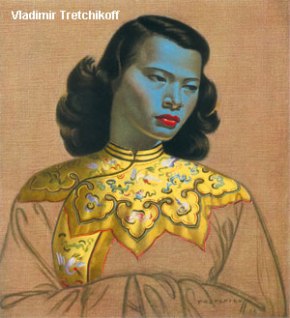
Vladimir Tretchikoff’s iconic painting Chinese Girl recently sold for $1.5 million at a Bonham’s Auction. Chinese Girl is also known as the ‘Mona Lisa of kitsch’, much to the chagrin of the artist. Manchurian-born Tretchikoff escaped from Soviet Russia and emigrated to South Africa after World War II. Along the way he lived in Shanghai, where he worked as an advertising and commercial illustrator in the 1930s. The ‘King of Kitsch’s’ reproduction prints became so popular that it is believed that he was second only to Picasso in popularity. Tretchikoff couldn’t stand being linked to kitsch, though – he considered himself a serious artist.

Image

On the other hand, American ‘painter of light’, Thomas Kinkade, made every attempt to gain popularity through mass marketing of his artworks, even setting up a company (The Thomas Kinkade Company) to do so – claiming to be ‘America’s most-collected living artist’ before his death last year. He was proclaimed to be nothing more than ‘commercially successful kitsch’ by the art world, and came under the hammer for gimmicks such as selling his works on the QVC home shopping network. While he considered himself controversial, others proclaimed his works to be ‘chocolate box art’ or ‘mall art’ – due to the fact that his work lacked depth and substance.

Salvador DalÕ's portrait of Mona Bismarck


Along with Tretchikoff, Salvador Dali’s portrait of Mona Bismarck made quite a rumble with its Sotheby’s sale this year. Dali’s later work – when he was involved in a ‘paranoiac-critical’ method through self-induced hallucinations – has been criticised as kitsch. In this instance, he painted wealthy and always impeccably-dressed Mona Williams Bismarck in black rags. The irony would in itself make the criticism of this work debatable.

Image

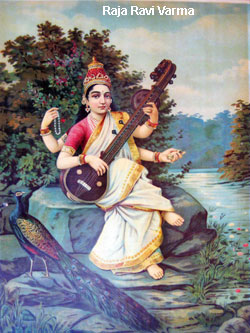
In India, Raja Ravi Varma reproduced his oils of deities from Hindu mythology through the process of oleograph – leading to immense popularity of his detailed, lifelike portraits. While his work was art, the popularity led to mechanically produced kitsch for the first time in the subcontinent – these portraits were later seen digitally reproduced and often stripped off their character on calendars and numerous posters.

nekotabi-gero-tan

Japanese artist Takashi Murakami’s ‘flat’ works inspired by the Manga and Anime culture are a response to popular appeal. The lack of depth in his works is a strong throwback to contemporary Japanese culture, which he believed to be consumerist and devoid of meaning. In this case, Murakami is using symbols of popular culture to make a comment on popular culture. The self-reflective method is nuanced and thoughtful, distancing it from real kitsch. And yet, Murakami seems embroiled in consumerism, evidenced from the fact that he works with a team (Hiropon factory in Japan and his New York studio) to fabricate his works and his company, Kaikai Kiki & Co. carry out large-scale production of his commercial artworks and merchandise. He has designed a Louis Vuitton logo, and his installation has been seen at the Vuitton store in London. He is a part of the system that he is critiquing – but is he managing to control and execute the critique from his successful vantage point?

American art critic, Clement Greenberg, in his controversial essay Avant Garde and Kitsch (1939), calls the New Yorker magazine ‘high-class kitsch’ and rips the phenomenon to shreds: ‘Kitsch is mechanical and operates by formulae. Kitsch is a vicarious experience and faked sensations. Kitsch changes according to style, but remains always the same.’

Kitsch serves to remind people that a great work of art exists – but it fails to draw from the viewer the real emotion or sensibility that the original work of art can. Its problems lie in the intellectual stimulation – or lack of – that is provided. German literary critic, Walter Benjamin, points out that kitsch ‘offers instantaneous emotional gratification without intellectual effort, without the requirement of distance, without sublimation.’ Its feelings are associated with being self-congratulatory or false, and it fails to raise our experience to a level above the ordinary. In fact, as has often been pointed out, kitsch aims to please – and that in itself alienates it from true art.

And in that very sensibility appears the predilection to dislike kitsch in art. But as you dislike it, can you negate its positive commercial effects? American iconic pop artist Andy Warhol’s ironic art works have now become commercially reproduced in every possible way. Not only do they increase his popularity, but also, in consequence, they increase the value of the original artworks. So in essence, ironic though it may be, commercial kitsch increases the commercial viability of popular art or kitschy art and even that of high art, as Murakami and others have so clearly experienced.

While you may agree with Greenberg in thinking that kitsch is fooling naïve people, but isn’t it also opening the world up to the masses? Would someone in a country far away have known of the existence of the Mona Lisa, had it not been reproduced commercially? Doesn’t it bring the art world into focus and make the world a smaller palette with one mass-produced brush-stroke? (On a side note, a copyist once told an interviewer that his paintings of Leonardo’s Mona Lisa improved on the original by ‘taking a bit of the chill out of her expression’.)

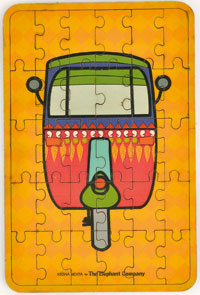
Conversely, the argument runs that kitsch is making people more nationalistic, and therefore closed to world art. The Chinese or Indians may prefer kitschy symbols harking to their own cultural icons. There is sentimentality in kitsch art that has endeared it to generations. But is that really problematic? Do we deride diasporic literature for the same reasons? Young India, in fact, is fondly embracing kitschy art: a product of graphic design and an occasionally-merry-occasionally-gaudy mix of pop culture icons or desi history. From Taj Mahal cushion covers to Bollywood poster totes, from chaiwalla and auto rickshaw coasters to Manish Arora’s clothes and Krsna Mehta’s Ind!a Circus (and previously The Bombay Project), it is all welcome.

Image

How do we feel about images of dhobi women in saris overlaid with containers of red lipstick as a cushion cover? Does it endear us to the India we grew up in, does it build nationalistic sentiment, does it mock a way of life the intelligentsia may not understand or does it arouse a melodramatic sentimentality for the curios of our city? But Krsna Mehta’s line’s evident popularity (leading him to launch new lines in collaboration with top local design stores) shows that people gravitate to a popular version of rural or local India. His book Mumbai Masti along with Bachi Karkaria, that puts together iconic local images, has been touted a best-seller. While Mehta may not be India’s answer to Warhol, it’s true he has made Bombay’s visuals a part of most households.

It would be simpler to accept that kitsch need not be lauded, but it must not be despised either. A product of industrialisation, it is here to stay, in its many forms, but without the original, a kitschy reproduction cannot exist. It can be a happy marriage. You would be rue to find a home without some form of kitsch that has seeped through the cracks of creative expression. In much the manner that a woman’s bookshelf may have Lolita and Fifty Shades of Grey with equal gumption. Who’s judging?

Power Women 2013

19 Wednesday Jun 2013

Posted by sitanshi talati-parikh in Interviews (All), Interviews: Business, Interviews: Cinema, Publication: Verve Magazine

≈ Leave a comment

Tags

Kareena Kapoor, Priyanka Chopra, Verve Magazine, Vidya Balan

Published: Verve Magazine, Annual Power List, Feature, Power Rush

Kareena KAPOOR
32 POWER SIREN
A fiery mix of impeccable genes, experience and natural talent have kept Kareena Kapoor Khan going strong years after contemporaries have lost steam. The zesty Poo from Kabhi Khushi Kabhie Gham has matured into a seasoned actress who can carry films with her massive screen presence, proving that an actress in a serious relationship doesn’t lose out on the popularity scale. From holding the weight of a movie like Heroine that suffered from poor scripting, to adding punch to a light movie like Ekk Main Aur Ekk Tu, from playing a defining character role in Talaash to becoming attached to the male-dominated 100-crore club movie successes, she has proven that nothing can shake her and she can juggle multiple roles. Not to mention, having had what has been pegged by a Wall Street Journal blogger as ‘India’s wedding and social event of the year’ – a power wedding with beau, the Nawab of Pataudi, Saif Ali Khan last year. In association with Globus, she is the first Indian actress to launch her own line of clothing. Voted India’s Hottest Woman by a glossy and recently ranked one of India’s most influential women, she has also co-authored two fitness books and last year, her own memoir, The Style Diary Of A Bollywood Diva.

METHODOLOGY: None. She has been pegged as an ‘instinctive actor with emotional intelligence’ who refuses to rehearse for her roles preferring to rely on spontaneity.

COMING-OF-AGE ROLE: Chameli, a sex worker in Chameli (2004). It defined her as a versatile actress with depth.

TRACES ONLINE: None. Despite buddy Karan Johar’s desire to get Kareena Kapoor on Twitter, she has steered clear of any social media and most media in general.

FRAGRANT CAUSE: Jean Paul Gaultier Classique perfume, her all-time favourite.

Nina LATH GUPTA
48 POWER HEAD
The National Film Development Corporation (NFDC) saw a dramatic change after Nina Lath Gupta came on board as managing director. With a slimmer, restructured team that harps on transparency and accountability, the NFDC shies away from government and bureaucratic stereotypes. Determined to ensure that the NFDC produces films that will make cinematic history, but big production houses won’t touch, Gupta has been breaking new ground. Recognising the need for development of good writing, they set up the Screenwriters’ Lab, under the NFDC Labs. Their home video label, Cinemas of India, saw reruns of all the DVDs they have released to date. The Film Bazaar, which runs parallel to the International Film Festival of India in Goa is an incubator of talent, with art-house films (including South-Asia films) regularly getting picked up for the festival circuit from there. In real terms, the NFDC saw a dramatic leap in turnover from Rs 12 crores in 2006 to Rs 255 crores in 2011- 2012 under her leadership, turning a struggling enterprise into a dynamic and profitable one. Last year, The Hollywood Reporter featured Gupta as one of the 12 outstanding international women achievers in the field of entertainment, and she regularly speaks at film festivals across the world, while also being on the jury of the Venice Film Festival (2010).

BIGGEST CHALLENGE: “The ability to keep pace with the times, of being able to constantly adapt according to the needs of the time and ensuring that our activities are in tune with the requirements of the talent and creative pool we work with.”

STRONG PERSONALITY TRAIT: “Unrelenting perfectionist.”

ABOUT THE JOB: “It begins with a love for the movies. But gradually that passion grew with an increasing awareness of the immense power that the motion pictures have in influencing individuals and thereby society. This in turn created a consciousness of the immense responsibility that filmmakers carry.”

2012-13 WAS ABOUT…“Initiating Phase II of NFDC’s growth and taking small steps in the direction of setting up platforms that aim at last mile connectivity for good cinema with audiences.”

Pankaja THAKUR
42 POWER FILTER
The chief executive of the Central Board of Film Certification or the Censor Board of India has headed tough decisions on ratings and cuts in Indian cinema, leading to resentment from many and approval from some. She’s in the unique situation of being damned if you do and damned if you don’t. Movies that go through with stringent censoring give rise to social questions like – ‘are the recent atrocities against women a throwback to violence in cinema?’ Movies that face savage cuts or ‘A’ ratings get a rise out of the filmmakers. While there have been altercations on films like 2011’s blockbuster, The Dirty Picture (which withstood 52 cuts) and Ashwin Kumar’s documentary, Inshallah, Football (2010) which got an ‘A’ rating, she’s taken tough decisions on international films as well, such as The Girl With The Dragon Tattoo (2011), which didn’t end up being screened in India. She was one of the panellists to object to Sheila Ki Jawaani (the song from Tees Maar Khan). ‘I would not like my daughter singing, “I am too sexy for you,” as the lyrics of the song go, but we cannot bring in our personal value systems while making decisions.’

ALTERNATIVE CAREER: As a bureaucrat with the Indian customs agency, she has headed assignments like one involving screening baggage at the Mumbai International Airport.

DEFINITION OF POWER: “The freedom to make choices and the ability to take decisions for oneself and for others.”

BIGGEST CHALLENGE: “To keep myself and others working with me motivated. With fixed salaries and time-bound promotions the drive to improve is difficult to generate.”

A WORD OF ADVICE: “My advice to all new civil servants is to begin their day with this prayer: God give me the ability to change things that I can, The serenity to accept things that I cannot change…the wisdom to understand the difference between the two.”

WAYS TO RELAX: “I meditate and listen to music.”

Roshni NADAR MALHOTRA
31 POWER HEIRESS
The only daughter of Shiv Nadar, chairman of the $6 billion-listed HCL Group that includes HCL Technologies and HCL Infosystems, is all set to take over as chairman after her father retires. Currently, she is CEO and executive director of the corporation and is a trustee of the Shiv Nadar Foundation, managing the latter’s philanthropic initiatives. She drives Vidya Gyan – an initiative that provides free education to people from underprivileged backgrounds and is on its way to open a third school. Planning to steer clear of a corporate role despite her impending appointment, the Kellogg School of Management alumnus wants to concentrate on the philanthropic activities.

FAMILY TIES: Married to Babson (US) alumnus, Shikhar Malhotra, who founded an auto retail venture, and is now the chief executive of Shiv Nadar School. They have a son.

CREATIVE PURSUITS: Is a trained classical musician.

ALTERNATE CAREER: Has an undergraduate degree in Communications, majoring in radio, television and film from Northwestern University (USA) and has worked briefly as a news producer for SkyNews (UK) and CNN (America).

LANDING GROUND: She lives in New Delhi.

Mary KOM
30 POWER WINNER
Five-time world boxing champion and the only woman boxer to have won a medal in each one of the six world championships, Mary Kom belongs to the Kom tribal community in Manipur. She is the only Indian woman boxer to have qualified for the 2012 Summer Olympics, and returned with the bronze medal. The recent Padma Bhushan (Sports) awardee has also been ranked as No 4 AIBA World Women’s Ranking Flyweight category, while locally she has been felicitated with a host of awards like the Padma Shri (Sports) and Arjuna Award (Boxing). Her personal story of rising to great heights in an unconventional sport from a simple beginning has led to a Hindi feature film being made by Sanjay Leela Bhansali, on her life, with Priyanka Chopra essaying her life.

ON REACHING HIGHS: “I am a strong believer in ‘Apna karm karo, fal ki chinta mat karo’ (Do your work without worry about the result). Thank you so much for giving me such an honour; I will keep working harder and harder to take the Indian flag to new highs.”

SUCCESS MANTRA: “You reap what you sow. Work hard, be disciplined, be grounded, be polite to everyone, share your experience with your colleagues and juniors.”

UNWINDS BY: “I hardly get a chance to relax, but whenever I get the time, I listen to music and enjoy quality time with my husband and children.”

A NORMAL DAY: “I get up early and do my daily morning exercise and training; then after breakfast, lunch and a rest, I go in for my evening training.”

BIGGEST CHALLENGES: “To keep myself physically and mentally fit and try to avoid injuries during training sessions and competitions.”

BIGGEST ACHIEVEMENT: “Without any doubt, my Olympic medal. This medal has given me an opportunity to let the whole world know about Mary Kom, what she has done in her long boxing career. I hope my journey will inspire other upcoming talents.”

Shikha SHARMA
54 POWER BANKER
Awards spill out of her hat like rabbits do from a magician’s! And she managed to turn what could have been a windfall – ceding a possible CEO position at ICICI Bank to Chanda Kochhar after 29 years of service there – to a position of strength. The IIM-Ahmedabad alumnus has been the managing director and CEO of Axis Bank since 2009, and India’s third largest bank in the private sector saw a spurt of 30 per cent last year to $55 billion. She is bullish on growth, and if the recent stock price is anything to go by, people believe her story.

Since taking charge, she has more than doubled the bank’s network to 1,500 branches and 8,300-plus ATMs. The Transformational Business Leader of the Year (AIMA’s Managing India Awards), Woman Leader of the Year (Bloomberg-UTV Financial Leadership Awards), and Businessworld’s Banker of the Year’ has somehow also managed to squeeze into the Forbes List of Asia’s 50 Power Business Women, Indian Express’ Most Powerful Indians and India Today’s Power List of 25 Most Influential Women, all in 2012. This is the same woman who during her post-MBA placement wasn’t able to land a job until day 8 or 9. She was rejected by foreign banks which gave her confidence a drubbing.

IDENTIFIABLE PERSONALITY TRAIT: “Self-belief.”

FAMOUS QUOTE: ‘I want to make Axis Bank India’s JPMorgan.’

ADMIRES: Jamie Dimon of JPMorgan (US). Also looks up to Gandhiji and corporate leaders like Ratan Tata.

FAMILY TIES: Her husband, Sanjay Sharma, is the MD of Tata Interactive Systems. Her son is a part of a startup at Silicon Valley. She also has a daughter.

PERSONAL TIME: She has studied Hindustani classical music.

Vidya BALAN
34 POWER EMOTER
The moment the supremely talented actress became comfortable in her own skin, the entire world fell at her feet. Her success has not been merely accolades and awards, critics and popular appeal – though she has had those in liberal doses. Hers has been the power of taking a formula-driven industry and turning it on its head to prove that rules can be broken, and to make her choices game-changers. While she bagged several awards for her role as a pregnant woman in search of her missing husband in Sujoy Ghosh’s Kahaani (2012), post the spate of hugely successful author-backed roles, she has now been considered a ‘female hero’ – toppling the notion of a male lead in a largely male-dominated industry. Last year, not only did she marry beau UTV CEO Siddharth Roy Kapur, she also became the youngest recipient of the Prabha Khaitan Puraskar awarded by the Calcutta Chamber of Commerce for her attempts to empower women. In May, she was part of the jury panel at the 66th Cannes International Film Festival, taking the respect for her acumen and sensibility overseas.

UNWINDS BY: “At the end of every day, I sit on my balcony and watch the waves and think about nothing.”

LESSONS LEARNT: “Firstly, there are no rules. Secondly, anyone who tells you otherwise knows no better. Thirdly, and most importantly, have faith in yourself, if you don’t – no one will.”

IDENTIFIABLE PERSONALITY TRAIT: “Self-belief.”

GREATEST ACHIEVEMENT: “I’ve begun to love and accept myself more and more.”

BIGGEST PASSION: “People.”

MOTIVATING FACTOR: “My love for life keeps me going, and my love for love keeps me going!”

Vrinda GROVER
49 POWER ACTIVIST
Self-belief, conviction, and a strong sense of purpose define this human-rights activist and New Delhi-based lawyer. She has done extensive work on rape laws and women’s issues. Seeing harassment of women in public areas and in colleges, she became a part of a street theatre group and one thing led to another and she became a lawyer standing up for the rights of women and human rights in general, particularly for those who have slipped through the cracks of the system, not just the privileged lot. For her tireless efforts to change the system, brought particularly in the limelight with the brutal gang rape in Delhi, she was one of the three Indians who made it to Time’s 100 most influential people in the world.

POWER LISTER: “I don’t attach any significance to these ‘lists’. They view life through the lens of individual achievements. The credit for foregrounding the issue of violence against women and the changes in law and policy must be given to the collective struggle and strength of the women’s movements in India.”

DAY IN THE LIFE: “Each day is different, as I engage with human rights through many forums – the courts, campaigns, meetings, street protests and read, write and ruminate in my office.”

BIGGEST CHALLENGES: “Those tasked with upholding the rights of people, are violating them the most. Anger and despair are driving people to think that violence – à la death penalty – is a solution. The subversion of Indian democracy by corporate power and dominant communal forces. And of course patriarchy!”

Rohini IYER
31 POWER MOVER
You can’t get to most top Indian cinema celebrities without coming into contact with their publicist Rohini Iyer, who named her PR agency Raindrop Media after the song, ‘Raindrops keep falling on my head….’ This may prove that she’s a romantic at heart, but it belies the fact that she’s tough and intractable and manages one of the topmost agencies on her own steam. Her current roster of names includes Kareena Kapoor, Ranbir Kapoor, Katrina Kaif, Vidya Balan, Priyanka Chopra, Abhishek Bachchan, Ekta Kapoor and Sanjay Leela Bhansali. Not surprising then, that Iyer has resounding clout in an industry she understands and navigates well.

POWER LISTER: “I’m constantly trying to push the envelope – and these honours are extremely encouraging.”

SUCCESS MANTRA: “Always listen to your gut instinct. Always stand for something you believe in.”

TIME OFF: “I don’t switch off…. But I make it a point to watch at least one movie a day and am an avid reader.”

FUTURE PLANS: “World cinema is still waiting. All I want is everything!”

BIGGEST CHALLENGES: “I love crises. It’s challenging to not lose your calm in the face of a crisis and that is what Raindrop thrives on.”

CAREER ADVICE: “‘Greed is good’ – to quote Gordon Gekko in Wall Street.”

IDENTIFIABLE PERSONALITY TRAIT: “Killer instinct.”

Saina NEHWAL
23 POWER PLAYER
The lithe Haryana-born girl from Hyderabad made her country proud with a bronze at the London Olympics last year. Valiantly holding her number two ranking by the Badminton World Federation for over two years, she is flying high, having bagged the Thailand and Swiss Open Grand Prix Gold, reclaimed her Indonesia Super Series Premier title and having become the second Indian to win the Denmark Open last year. NDTV editor, T S Sudhir, wrote An Inspirational Biography on the girl who watched badminton even from her pram, not to mention that primary school textbooks in Andhra Pradesh apparently carry a chapter on Nehwal. Last year, she became India’s highest paid non-cricketing sportsperson after reportedly signing an over $7 million three-year contract with a sports management firm.

STARTING OUT: “I would get up at 4 a.m. and catch a bus at 4.30 a.m. for the stadium 25 km away. I would skip the last two periods of school and practise till seven or eight. I often slept in the bus or even on the scooter. I have lost several racquets in autos.”

GETTING THERE: “Even while growing up I would love working hard. My body would hurt after workouts, but I loved the pain. I do not think that I have missed something in my life. I want to make myself so perfect that I will become World No 1. That is my target.”

PROVERBS TO PROVE WRONG: “Many Indians would say, ‘Padhoge likhoge banoge nabab, kheloge kudo ge honge kharrab’ (If you learn to read and write, you can be on top of the world; if you play sport, it will ruin you). I changed the proverb and proved that sports is a neglected field in India, where a lot more is to be done.”

LIKES TO UNWIND BY… “Sleeping and watching a movie.”

BIGGEST ACHIEVEMENT: “I hope the Olympic medal is a big one, but every win is a win for me.”

Purva NARESH
38 POWER TALENT
Trained Kathak danseuse and award-winning short filmmaker, Purva Naresh wears many hats. She juggles between being a writer, director, and producer of Aarambh, a theatre group that produces musicals, plays and short films and holds down a day job as head of production of motion pictures for Reliance Entertainment while also choreographing and designing costumes for stage. She has written Afsaneh: Bai Se Bioscope Tak, and has adapted stories of Ruskin Bond for A Special Bond 1 and 2, while her feature film credits include Hanuman, Kisna: The Warrior Poet and Krrish. She swivels between earning wins and nominations at the Mahindra Excellence in Theatre Awards (META), and earlier this year she was the recipient of The Laadli National Media Awards (Best Drama) for her play Ok Tata Bye Bye. She was invited to give a reading of the play at The Royal Court Theatre, London.

POWER IS: “The ability to take and execute my own decisions.”

SUCCESS MANTRA: “Keep calm and carry on.”

UNWINDS BY: “Jogging, dancing, reading, watching a movie or a play.”

A NORMAL DAY IS: “Hectic. Impossible. Promising….”

BIGGEST CHALLENGES: “Time management and my impatience.”

BIGGEST ACHIEVEMENT: “When my mother finally approved of my play, after I did seven!”

Pernia QURESHI
27 POWER ENTREPRENEUR
Post experience in New York, the fashionista and stylist moved back home and landed her dream job of dressing up beautiful women in couture. Not content with that, she capitalised on the market space and took it a step further by launching her online store, Perniaspopupshop.com. Last year she managed to get top-line designers to give her rotating capsule collections to showcase and purchase directly from her store, and has also launched her own collection online along with the popular names. Aisha (2010) was the first Hindi feature film she styled, which brought couture to the forefront of Indian cinema. And the trained Kuchipudi dancer made it to the cover of Verve’s best-dressed list last year.

POWER IS… “To be able to do exactly what one wants to do.”

SUCCESS MANTRA: “Hard work, conviction, a great attitude and passion.”

UNWINDS BY: “Eating good food and hanging out with friends.”

A NORMAL DAY: “If I’m in Delhi, then I spend the first half dancing (Kuchipudi) and the second half working (office, shoots and meetings).”

BIGGEST CHALLENGES: “Finding sincere people to build a team for work. I think I have done a good job but it was tough.”

CAREER ADVICE: “Be prepared to work 24/7.”

IDENTIFIABLE PERSONALITY TRAIT: “Honesty.”

Priyanka CHOPRA
30 POWER BEAT-MAKER
Fame is a funny thing. It brought India’s Miss World to the top echelons of stardom as a beauty pageant contestant, as a movie star, and now the talented actress has an international music record label to add to her list of credits. In July 2012, Chopra became the first Hindi movie actor to be signed by an LA-based entertainment and sports agency. Her first album is set to release this year and she debuted her first single In My City with rapper Will.i.am, which was launched on NFL’s Thursday Night Football after being unveiled in India. In last year’s Barfi!, she essayed the role of Jhilmil Chatterjee, an autistic woman who falls in love with a deaf-mute man. Here we find a powerful actor: Priyanka’s glamorous screen persona disappears and Jhilmil’s character comes alive. Possibly one of the reasons that Sanjay Leela Bhansali has chosen a mainstream actor like her to portray Mary Kom in the latter’s biopic. And PC’s own peripatetic story forms the first chapter of an Environmental Studies book as part of the curriculum in a reputed Bengaluru CBSE school.

CELEBRITY LIFE: “I am being watched all the time. Even simple things like scratching my nose will get captured in all their glory!”

PERSONAL LIFE: “The only thing I guard very carefully is my personal life. It’s never been a question of hiding any of the relationships, but more about keeping them away from public glare. I’m not comfortable opening the doors of my private world for the world to see….”

ON HER OTHER LOVE: “I can’t think or function without music. My van, my room, my car are always blasting music, so the five minutes I get, become my chill-out zone. And besides my family, that’s the one thing I find time for.”

PERSONAL QUIRK: Her DVDs are all labelled and numbered.

The Desi Zomcom Bomb

19 Wednesday Jun 2013

Posted by sitanshi talati-parikh in Art, Literature & Culture, Publication: Verve Magazine

≈ 1 Comment

Tags

Verve Magazine

Published in: Verve Magazine, May 2013, Verve’s Got The Nerve

Quirky, dark or gut-wrenching screaming…. When did zombie movies come into fashion in Indian cinema?

Remember the Resident Evil series and Dawn of the Dead (2004) type Hollywood flicks that come with lashings of trashy cannibalistic blood, gore (think flying body parts) and gut-wrenching screaming? It seems, now, Hindi filmmakers are ready to move beyond thrillers, romance and slapstick and dip their lenses into a hitherto untouched genre.

Last month we were introduced to India’s first zombie origin horror film with a runtime of just 90 minutes. Luke Kenny’s Rise of the Zombie aspires to be an international-style trilogy that begins with the birth of a zombie (Neil Parker, wildlife photographer). We’re also awaiting Navdeep Singh’s on-again, off-again zomedy, Rock The Shaadi, with Abhay Deol and Genelia (a Punjabi wedding that has zombies as guests) to take off.

But eventually, Saif Ali Khan, whom we think would make a great vampire, has decided to foray into zombie land too, and go the full circuit by becoming a blond, wannabe Russian zombie-slayer. Cute. Directed by the duo, Raj Nidimoru and Krishna DK of Shor In The City (2011) fame, Go Goa Gone, India’s first zomedy about an adventure gone awry in Goa, releases this month. Starring Kunal Khemu, Vir Das and Anand Tiwari, the trailer promises a funny, if quirky ride, self-confessedly leaping into the zomcom genre. As we are soon to discover, zombie comedies can be slapstick or dark, and in our desi version, masala mixed with a healthy dose of bheja fry.

And, for those keen on foraging abroad for a diet of gore, World War Z releases this year, along with the TV version of the popular movie, Zombieland (2009), while The Walking Dead franchise of comic books, TV series, web series and video games keeps rolling out something new. Get ready for a life-threatening movie-going experience this year!

ZOMBIE FILE

1. Zombies are not ghosts, ghouls, mummies or vampires. Think more ‘animated corpses resurrected by mystical means, such as witchcraft’ (Wikipedia).

2. Largely seen as the walking undead, drawing from George Romero’s flick Night of the Living Dead (1968), which, apparently, was partly inspired by Richard Matheson’s 1954 novel, I Am Legend. Romero’s movie set off a trend of corny zombie lines like, ‘They’re coming to get you, Barbara.’

3. Victor Halperin’s White Zombie (1932) is believed to be the first zombie film, if one discounts the zombie like character in The Cabinet of Dr. Caligari 1919) and Frankenstein’s (1910) reanimated corpse.

4. The Walking Dead had its actors go through an on-set zombie school to learn how to walk and behave like zombies.

An Ode to Juicy Couture Pants

19 Sunday May 2013

Posted by sitanshi talati-parikh in Fashion & Style, Humour, Publication: Verve Magazine

≈ Leave a comment

Tags

Verve Magazine

Published: Verve Magazine, May 2013, Humour

As women hide their exhausted silhouettes in sombre black, the girl with Juicy will stand out like a star fruit in Burma. You know you just want to be that girl…

Oh ye of the softest terry material,
Spun woven for maximum pleasure,
Snapping at the ankles to ensure that you don’t flap,
Drawn ribbon-like curving gently around the waist bulge,
Holding on tight, you remain open to being open:
For a quick visit to the restroom or for a mile high sojourn.
You arrive in popping electric colours,
For if that isn’t enough to draw my eyes to you,
Then the shiny letters that spell your Juicy name –
Poised perfectly on the owner’s luscious bum…just do it.

When you appear at the airport terminal,
I see a flash of your brightness and then suddenly you are gone,
I look around quickly, hoping to catch sight of more…
But you choose to ignore me, tease me, tantalise me.
So enamoured am I by your flashy presence,
So envious am I with the wearer of your mystique,
I fall prey to your flighty aura,
I search for more of you, drawn like a moth to a flame,
And like a moth that perishes,
I very nearly miss my flight.

I see you slide smoothly into first class and my surreptitious glance,
Leads me to the Juicy derriere lounging peacefully on a plush seat,
The wearer’s eyes masked by a hot pink furry shade
Keeping all ills at bay.
Misery’s claws creep into my lime-green soul,
As my plebian cotton and I trudge back to our seat.
Juicy: your soft touch, furry and alive, warm and sensual,
Burn a fire within me that nothing save a glass of the fiercest poison can quench.
My word, the very moment this winged vehicle lands, I shall have you.
You shall be mine; and next time, I will be The Girl With Juicy.

That Chauhan Girl Again #Review: Those Pricey Thakur Girls

20 Wednesday Mar 2013

Posted by sitanshi talati-parikh in Art, Literature & Culture, Publication: Verve Magazine

≈ Leave a comment

Tags

Anuja Chauhan, Books, Reviews, Verve Magazine

Published: Verve Magazine, March 2013, Nerve/Reviews

As her previous two books roll on the floors as films, ad and screenplay writer, Anuja Chauhan is out with a third novel, which also promises a sequel

Image

For any chick-lit fan, Anuja Chauhan is a breath of fresh air. She set the stage with The Zoya Factor, ensuring that we get her milieu of razor-sharp wit, desi mise en scene, irreverent metaphors and vivid character sketches. She took it a notch further by moving away from the city grime into rural dust with Battle for Bittora, her second novel. Those Pricey Thakur Girls arrive in small-town Delhi, with middle-class morality and the desire to be strong independent women. But here she places the story in the 80s, where at every stage you are familiarising yourself with a time that seems far removed from today. It’s the time of Doordarshan, tweaked to be Desh Darpan, a time when the Emergency is still fresh in everyone’s mind, when free speech is something to be treasured and fought for. Her protagonists are a newsreader and an investigative journalist, which makes them snooty about their respective jobs as well as their differing personalities. In the midst of revolutionary thoughts, careers and salary slips, a budding romance blossoms where Debjani Thakur, the feisty but incredibly shy newsreader falls prey to Dylan Singh Shekhawat’s charms.

Chauhan treats the light-hearted women’s fiction genre with remarkable personality. There is no rallying to western chick lit; there isn’t a desperate desiness, she has made it her own with a mix of gentility and local rootedness, which she claims is nothing but “the space we all live in! This is life in India aaj kal. I’m just writing down what I see around me, every day.” After all, Chauhan grew up in a house full of girls and has two of her own. It’s not hard to see that she leans towards the darkly determined men, who are at the heart of the matter, decent. Chauhan’s wickedly humourous romances are always marked with a foray into something new while being strangely, and comfortingly, familiar. Until the sequel, then.

Q & A – ANUJA CHAUHAN

Fame – either accidental or unsolicited – accompanies the stories of your protagonists.
I just enjoy a big fat public declaration of love. When it finally happens, everybody should see, everybody should know. And so Zoya (in The Zoya Factor) dates the cricket captain, Jinni (in Battle For Bittora) embraces her political rival and makes the front pages and Debjani does… um, what she does. Maybe that’s very cheesy of me – but I think a little cheese is required in our daily diet. I like putting my protagonists in peculiar predicaments and seeing which way they’ll jump.

Why is the book set in the 80s?
Nostalgia I think. I found I was spending a lot of time telling my kids (11, 14 and 17) how life was ‘back then’ when I was growing up. No Pepsi, no pizza delivery, only DD on TV. Besides, something about this book, about five sisters growing up in a big old house with a walled garden, just felt right in the 80s. Also, maybe this was just a reaction to the kind of snappy, sassy, glossy books that are flooding the bookstores, full of ‘bold’ girls and ‘jerk’ guys, I felt like I wanted to write old-fashioned romance – no texts, only letters, no sex, only kisses.

And the darkly determined young men going after your girls…?
I do admit to the darkly determined. I don’t like fair men – I can’t write them. And I detest ditherers, so that’s out too.

A Focussed Affair: Mumbai’s on-going Focus Festival

19 Tuesday Mar 2013

Posted by sitanshi talati-parikh in Art, Literature & Culture, Publication: Verve Magazine

≈ 2 Comments

Tags

Photography, Verve Magazine

Published: Verve Magazine, March 2013, Framed

This month, the hotbed of Mumbai’s arts and culture scene throws its doors open to still visuals. Verve gives you a preview of the frames to come

Image

Image

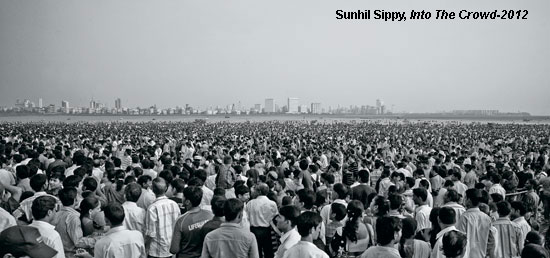
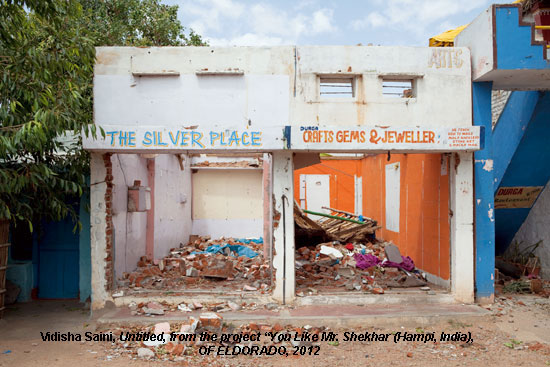
Hot on the heels of the Kala Ghoda festival, where the lay person creates magic with his camera phone, snapping away at the thought-provoking installations on display, comes, FOCUS, Mumbai’s first free photography festival to be held in the last two weeks of this month. Not surprising then, is the theme of The City, where a range of budding and established photographers, both local and international, make their lens-way over to receptive centres in South Mumbai. In a bid to throw a deeper net and engage a wider audience, the exhibition runs with the usual suspects in Kala Ghoda, Mumbai, like the Terrace Gallery (Jehangir Art Complex) and the Max Mueller Bhavan Gallery (Rampart Row) and onto fresh faces like Bombay Electric, Bungalow 8, Design Temple, Filter, Good Earth, Hermes and Kala Ghoda Café.

From early Bombay images (1850-1890) curated by academic Susan Hapgood to contemporary photography by women curated by photographer Sunil Gupta and curator Veerangana Solanki, from Risham Syed’s Metropolyptical: A Tale of a City to Sooni Taraporevala’s Parsis: The Zoroastrians of India, from talks, workshops, photography books and magazines to portfolio review sessions…FOCUS, co-founded by Nicola Antaki, Elise Foster Vander Elst and Matthieu Foss, promises to be a dynamic vision of the future.

Image
Q&A WITH MATTHIEU FOSS

WHAT DO YOU LOVE ABOUT THE CITY AS A POWERFUL VISUAL METAPHOR?
The City, as a backdrop for the lives of the majority of the word’s population is a tremendous source of inspiration for photographers. We wish to present photo projects from the very local, to much wider global contexts – from a photo-journalistic point of view as well as from more artistic interpretations, from issues pertaining to local routine, as well as more aesthetic studies on architecture and urbanism. Images from Mumbai will co-exist with some from cities around the world thus encouraging constructive dialogue.

YOU’VE OPENED UP NON-GALLERY SPACES LIKE CAFÉS AND STORES TO A PHOTOGRAPHY DIALOGUE….
A festival is the ideal way to create bridges between communities on a particular subject or art form, and with exhibitions and events taking place throughout the city in traditional spaces as well as alternative ones, we will benefit from an exciting cross-pollination of audiences and create true synergies.

Image

← Older posts
Newer posts →

|  Filling the gaps between words.  |

Writing By Category

  • Art, Literature & Culture
  • Brand Builidng
  • Brand Watch
  • Fashion & Style
  • Features & Trends
  • Fiction
  • Food
  • Humour
  • In The Media
  • Interviews (All)
  • Interviews: Business
  • Interviews: Cinema
  • Interviews: Cover Stories
  • Interviews: Lifestyle
  • Interviews: Luxury Brands
  • Interviews: The Arts
  • Interviews: Travel
  • Musings
  • Parenting
  • Publication: Conde Nast
  • Publication: Elle
  • Publication: Mint Lounge
  • Publication: Mother's World
  • Publication: Taj Magazine
  • Publication: The Swaddle
  • Publication: The Voice of Fashion
  • Publication: Verve Magazine
  • Social Chronicles
  • Sustainability
  • Travel Stories

Reach out:
sitanshi.t.parikh@gmail.com

© Sitanshi Talati-Parikh 2018.
All Rights Reserved.

Website Powered by WordPress.com.

  • Subscribe Subscribed
    • sitanshi talati-parikh
    • Join 51 other subscribers
    • Already have a WordPress.com account? Log in now.
    • sitanshi talati-parikh
    • Subscribe Subscribed
    • Sign up
    • Log in
    • Report this content
    • View site in Reader
    • Manage subscriptions
    • Collapse this bar
 

Loading Comments...