• About
  • Brand Building
  • Film & Drama
  • Writing: Arts & Lifestyle
  • Writing: Interviews
  • Writing: Luxury Brands
  • Writing: Travel

sitanshi talati-parikh

sitanshi talati-parikh

Category Archives: Art, Literature & Culture

Greenlighting Gujarat

03 Monday Mar 2014

Posted by sitanshi talati-parikh in Art, Literature & Culture, Publication: Verve Magazine

≈ Leave a comment

Tags

Bollywood, Trend, Verve Magazine

Published: Verve Magazine, February 2014, Nerve

Last year six movies were shot in the state – in four, the location and its people were a major part of their storyline. This year, a new TV channel launches with a show filmed only in Gujarat. What’s the mystique of the locale?


This slideshow requires JavaScript.

When Amitabh Bachchan became the brand ambassador of Gujarat Tourism, one couldn’t have guessed that he would inadvertently wave a beacon heralding the future of Bollywood shootings in Narendra Modi’s state. Where once Chandni Chowk ruled roost – can anyone forget how Kajol immortalised the streets of Chandni Chowk in Karan Johar’s Kabhi Khushi Kabhie Gham (2001) – and Mumbai’s streets were fertile shooting grounds (no tasteless pun intended), now filmmakers (including those of the South) are unearthing previously undiscovered pastures. A lot of these happen to be in the Rann of Kutch or the splendid havelis of Gujarat.

From a rather obvious plate of dhokla in the recent Kareena Kapoor and Imran Khan starrer Gori Tere Pyar Mein (shot in and around Bhuj) to the lavish explosion of culture and colour in Sanjay Leela Bhansali’s Goliyon Ki Rasleela Ram-Leela, Gujarat has swung into bright prominence. Bhansali, a Gujarati, returns with nostalgia to the local mise en scene and Ram-Leela (2013) is quite reminiscent of his earlier Hum Dil De Chuke Sanam (1999) in the riotous dance-and-song sequences. Taking up on Romeo and Juliet’s tragedy for the storyline, he places his characters in a gun-wielding Gujarati town while the protagonists are not averse to sending each other romantic Gujarati couplets on SMS. The film is not entirely shot in Gujarat, though – he has shot scenes in Udaipur and in Film City as well.

India’s latest Oscar entry was the Gujarati-language film The Good Road that was shot on location. Abhishek Kapoor’s Kai Po Che (2013), based on Chetan Bhagat’s The 3 Mistakes of My Life, is about three local boys whose friendship is set against the backdrop of the Bhuj earthquake and the Gujarat riots, shot in Ahmedabad and other places. But movies like Lagaan (2001) and Matru Ki Bijlee Ka Mandola (2013) turned to Gujarat’s village setting (Bhuj and Mandvi) and haveli (Wankaner Palace) respectively, even when the story didn’t demand that particular state; while Saheb Biwi Aur Gangster (2011) tells the tale of a royal family of UP but was shot in Devgadh Baria, a princely town in Gujarat. Kareena Kapoor and Abhishek Bachchan’s debut film, Refugee (2000), favoured the Rann of Kutch for its shoot in much the manner of films like Nikhil Advani’s thriller D-Day (2013).

Film shootings have been happening in Gujarat for a very long time – but undoubtedly blockbuster movies like Lagaan and Hum Dil De Chuke Sanam have brought with them a furore of interest in the last decade. They popularised the town of Mandvi, which has a private beachside estate of 450 acres, and the Vijay Vilas Palace. In Hum Dil De Chuke Sanam, there is a momentous scene where Vanraj (Ajay Devgn) drags Nandini (Aishwarya Rai Bachchan) through a heritage house, down a flight of stairs – this was shot in the Orchard Palace of the erstwhile Maharajas of Gondal (converted into a heritage hotel).

The town of Rajpipla is a popular location for Gujarati and Bhojpuri films, earning it the moniker ‘Gollywood’. It has numerous palaces and grand buildings including the Rajwant Palace Resort in the Vijay Palace (1915) with seven acres of gardens, a swimming pool, antique interiors, a view of banana plantations, and the Vadia Palace also known as ‘Gujarat’s Taj Mahal’.

For a new thematic channel, Epic, slated to be launched early this year, one of their primetime Hindi-language shows, Dariba Diaries, was shot entirely in Gujarat. It’s a fast-paced investigative thriller set in the 1850s cataloguing the life of a detective. Sid Makkar, who plays the lead, Mirza, says that the location – Ambika Niwas Palace – in a small 20000-person-strong town called Muli and its surrounding palaces fit the bill as they are beautiful and match the architectural brief accurately. The production also managed to single-handedly change the local economy by providing employment to tens of thousands of people living in the area.

While it’s true that Prime Ministerial candidate Narendra Modi has paved the roads, so to speak, for the movie industry to shoot in Gujarat, it is also the basic connectivity and proximity to Mumbai, and the clearances offered that may be important factors in its territorial growth. Ranjit Sinh Parmar, Yuvraj of Muli (whose family owns Ambika Niwas Palace) points out that Gujarat is brimming with a variety of landscapes and private heritage properties, and the very fact that many of them are largely undiscovered and less exposed than others popularly used in the country, makes it more beguiling for filmmakers. Also, the proximity of multiple heritage properties to each other affords variety in one location. He adds that Gujarat may be fast replacing Rajasthan for shoot locations because the latter’s higher level of tourism makes many of their palaces unavailable or particularly pricey. After all, it would have been nearly impossible to shoot a television show for eight continuous months in a specific location in Rajasthan. Gujarat provides an equally beautiful, cost-effective alternative that is half the distance from Mumbai.

While directors have pandered to the avid movie-watching Gujarati community in much the way they have to the North Indian Punjabis, with overt references like the NRI family in Johar’s Kal Ho Na Ho (2003) and sly references to local food in 3 Idiots (2009), it seems that this trend of including the state in the movie may be more about the location than the people.
A Bad Boy Crumpet: Wentworth Miller

03 Monday Mar 2014

Posted by sitanshi talati-parikh in Art, Literature & Culture, Publication: Verve Magazine

≈ Leave a comment

Tags

comment, Hollywood, movies, Verve Magazine

Published: Verve Magazine, February 2014, Features, Romance Diaries
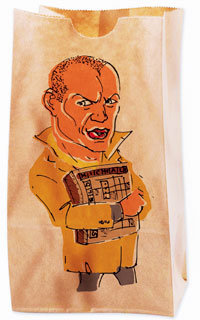
Illustration by Hemant Sapre

Image

Wentworth Earl Miller III best known as Michael Scofield in the hit American television drama, Prison Break, definitely is good-looking – he made it to People magazine’s 100 most beautiful people in the world. Impressive seeing how he spent much of his screen time bald. We know clean-shaven is sexy, but bald? It’s not that there aren’t sufficient handsome heroes that rock my boat – from Ryan Phillippe, Pierce Brosnan, Colin Firth, Gabriel Macht, Zac Efron to our local boys, Imran Khan and Ayushmann Khurrana.

The thing about Miller is that he’s really unattainable. He sent estrogen on a downward spiral when he finally came out of the closet by declining to attend the St Petersburg Film Festival as he was ‘deeply troubled’ by the Russian government’s treatment of its gay citizens. 2013 saw him return to his writing roots and this private person isn’t afraid admitting to enjoying his time at The Art Institute of Chicago or staying at home playing Scrabble. He attempted suicide as a teenager, and has struggled with his roots coming from a bi-racial background –his parents have 11 ethnic origins between the two of them, including European and African-American.

And yet, his intensity as Michael Scofield, with the penetrating eyes, self-contained emotion and searing intellect all serve up a pretty hot mix. He’s a lean, mean, thinking machine. He’s a good guy trapped in a world that’s vicious; and he’s only trying to find his ‘safe’ place. Never thought I’d want a bald, multi-racial man who’s got major issues and is sure-fire gay…but then with women you just never know, do you? And he’s named after Captain Wentworth…from Jane Austen’s Persuasion.

A Noisy Trend: Coffitivity

03 Monday Mar 2014

Posted by sitanshi talati-parikh in Art, Literature & Culture, Publication: Verve Magazine

≈ Leave a comment

Tags

Reviews, Technology, Verve Magazine

Published: Verve Magazine, February 2014, Technology

There’s a new app on the market that accurately replicates coffee-shop murmurs while you work to help your creative juices to flow

Some like to work in silence, but apparently it’s an anathema for those who like feeling the heady buzz of sound. In an increasingly connected world, it seems that people are feeling more disconnected and alone. From quiet cubicles to work-from-home dens people don’t like to work in isolation. So to circumvent this, young professionals have taken to Coffitivity (coffitivity.com) like an only child takes to company. The online app provides three kinds of background noise. ‘Morning Murmur’ (a gentle hum to get the day started), ‘Lunchtime Lounge’ (bustling chatter of the lunchtime rush) and ‘University Undertones’ (the scholarly sounds of a campus café).

The noise that would be strange and annoying to someone who is passing by your workstation is actually strangely comforting while you work. While you would expect it to destroy your ability to concentrate, it actually soothes you and helps you focus better. Its tagline actually says, ‘Enough noise to work’! Their positioning relies upon research that states that ‘it’s pretty hard to be creative in a quiet space’, while a ‘loud workspace can be frustrating and distracting’, so they provide a perfect mix of ‘calm and commotion’ to replicate the environment in a coffee house. The sounds include those of clinking cups, cash registers and murmurs of conversation floating around you. It’s kept soft and muted in the background, is never invasive and a perfect sensory accompaniment to the steaming cup of your favourite brew.

With the strong coffee house culture flowing into India from Europe and America, many business meetings and discussions are held over a cuppa at a coffee shop. There is a pervasive ‘social’ feeling that allows for a discussion that isn’t held within a bubble. You don’t feel cut off from the world, you feel that you are a part of the world. There is a relaxed and casual attitude to a work discussion that you don’t get in a closed-door conference room.

While it forms a clever replacement to music that some people prefer while working, and it grows on you as you have it on, all I can say is that for someone who can be the most creative in silence, I felt a sense of relief and a lightness in my head when it was switched off. And really, nothing can replace the soft chirping of a real bird in the background….

Kala Ghoda snapshots

05 Wednesday Feb 2014

Posted by sitanshi talati-parikh in Art, Literature & Culture

≈ Leave a comment

Tags

Art

The Kala Ghoda festival 2014 is comfortingly similar, while the installations aren’t ground-breaking. Here’s a look:

This slideshow requires JavaScript.

Artistic Brainwaves

11 Wednesday Sep 2013

Posted by sitanshi talati-parikh in Art, Literature & Culture, Publication: Verve Magazine

≈ Leave a comment

Tags

Art, Reviews, Verve Magazine

Published: Verve Magazine, Nerve, Art Pick, September 2013

Former newspaper cartoonist, Raghava KK, uses art and technology as a means of storytelling – often dramatic and radical

Image

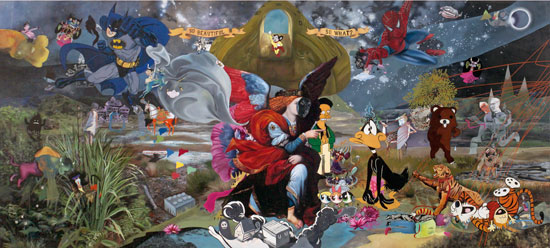
He’s one of CNN’s 10 most remarkable people (2010), a four-time TED speaker, a lecturer at top American schools and his iPad book, Pop-it, won several awards, including a Kirkus Book Award (2011). New York and Bengaluru-based artist, Raghava KK quit school at 18 to start his career as a newspaper cartoonist. Now, the successful young artist is also actively involved in a radical education initiative, NuVu Studios, an offshoot of Harvard and MIT, to redefine creativity in education. He combines art and technology to bring multiple perspectives into the deployment of knowledge. His new show That’s All Folks! has come about through “the emotional mapping of the three disparate worlds: The Cartoon, The Historical, The Memetic”. Verve catches the artist, who believes in “non-linear, dispersive, collaborative storytelling” for a few questions.

Raghava KK’s solo show, That’s All Folks!, will be on at Art Musings, Colaba, Mumbai, from September 4 to October 25, 2013.

RAGHAVA SPEAK

How does your iPad art book Pop-it bring perspectives to children?
I created the book when my first child was born. Pop-it is about the things children do with their parents. It shakes up the concept of the ideal family and is meant to expose children to multiple perspectives at the earliest stage. The book starts out with a gay couple raising a child. If you shake the iPad, you get a lesbian couple. Shake it again, and you get a heterosexual couple. I can’t promise to bring my children up without biases, but I can promise to expose them to as many biases as possible.

Where do memes in art take us – are they a bridge between the graphic form of visual storytelling and the print form?
Contrary to what it may appear, memes serve exactly the opposite purpose. The meme breaks the bridge, giving the graphic a life and context of its own, disconnected from its original intent. (A meme, like a gene, contains certain properties, including the ability to self-replicate. But unlike a gene, a meme can move laterally and hierarchically from host to host, much like a parasite would. Memes create emergent phenomena when they reach critical mass and have a life of their own, separate from the life of their creators and replicators.)

Your interactive artwork brings together science, technology and art….
My brainwave art pieces use the viewers’ thoughts and mental state (read by an EEG headset) to dynamically bias and change the artwork. I am currently developing works using other biochemical sensors, kinect hacks, and a new touch-screen frame technology. These works are changing the role of the viewer from that of just a spectator to an active, biasing participant in the artwork.

Do you see the extinction of the traditional canvas?
Each medium, whether paint, digital, iPad, or performance, lends a unique perspective to the visual experience. I don’t see the future as doing away with any one of these unique forms of expression. Instead, I see a more inclusive pool, where there will be unique combinations and re-combinations of these mediums arising in new exploratory visual experiences.

The ‘John Grishams’ of Banking

05 Monday Aug 2013

Posted by sitanshi talati-parikh in Art, Literature & Culture, Publication: Verve Magazine

≈ Leave a comment

Tags

Books, Indian Fiction, Reviews, Trend, Verve Magazine

Published: Nerve Books-Trend, Verve Magazine, August 2013

While John Grisham turned from criminal lawyer to legal thriller novelist, our local boys are also finding dramatic success in writing. What makes the finance geeks and diplomats turn into vivid storytellers?

Image

A banker friend looks enviously at my job description and makes a comment about how much fun it all seems to be. There’s some talk about doing something because you love doing it, not because of the money. Ahem. Who needs money, today, right? With inflation, it’s so easy to live on air, water and ink. And then an email pops into my inbox, informing me that the ‘John Grisham of Banking’ is out with a new book. Ravi Subramanian, winner of the Economist-Crossword award for The Incredible Banker is going to be jumping headlong into financial scams, university intrigue and politics, all of which will lead to murder. Subramanian is an alumus of IIM-Bangalore and a banker by profession. Sounds familiar? The often impudently positioned Chetan Bhagat comes to mind. He brought the IIM-havens into our homes, making us feel one with his world particularly through his clever non-language. Bhagat, for those unfamiliar with India’s educator-of-the-masses, is an investment banker hailing from IIM-Ahmedabad. He quit his career to become a full-time bestseller writer. In 2010, Time magazine named him one of the most influential people in the world.

And there’s the case of Shiva taking on the avatar of Lakshmi! The brainchild of an alumnus of IIM-Calcutta, Amish Tripathi’s The Shiva Trilogy has broken records in terms of book sales, becoming the fastest selling book series in the history of Indian publishing, with 1.7 million copies in print and over Rs 40 crores in sales. His books have been known to displace Bhagat’s on bookshelves. It’s surprising there hasn’t been any mass uprising against that. Forbes India has ranked him #85 in the 2012 Celebrity 100 list, while Dharma Productions has optioned the movie rights to his book, The Immortals of Meluha.

Vikas Swarup, from the Indian Foreign Services (IFS), and currently Consul General of India in Osaka-Kobe, Japan, has found an alternative career in writing to go with his day job. For those unfamiliar with Swarup’s name, he’s the mastermind behind Slumdog Millionaire – in its original novel form of Q&A.

They’ve made literature sexy – because of their success stories, but does the fact that they have come from management backgrounds and position their pen against the end goal of a fat bottom-line enable them to write themselves into money? If Tripathi is to be believed, the right kind of marketing can be the key to success, after all, his marketing and finance background have hugely helped him in the process. He approached bookstores to distribute free copies of the first chapter of his debut novel. He created video trailers and screened them at multiplexes for his sequel. For the last in the trilogy, he released a music album – all of these being marketing firsts for books. Bhagat is a player in the field of self-marketing, whether direct or through his opinion pieces and articles.

Finance and marketing geeks work hard and tend to get burnt out. They make a pot load of money and then ship out to a more reasonable version of their current profession. But is it that simple? With the way the banking and finance world runs and the state of the world economy, is it just timely and brilliant that these smart mavericks have found a way to quit a strenuous job and make a mark in the world of the Arts? Can it be a happy marriage? Tripathi’s read up on how to write (Stephen King’s On Writing), he’s made Excel sheets with date plans and character sketches in Word documents. Eventually, he learned to go with the flow. Not to forget his first attempt got rejected 20 times. But then a merger and acquisition deal or a marketing pitch can take months of hard work before falling through. Does that give you the patience and inner strength to deal with rejection and wait for success?

These men would have us believe that it’s possible to write a good story and have the readers flocking to you. Each of them has found a hook – even if they often get critiqued for poor writing and editing. Bhagat is proud of the fact that he has got those who never read to start reading. But they are selling a story – and it’s a good one and largely, ‘in the language of the common man.’ While writers write, and wait for a good peg, these young men have stories to tell – the writing is incidental to the tale. It’s like a business proposition – you think of a good business idea and kick-start it; making it happen is merely execution. So you lose the beauty of language and the metaphors of thought; you don’t get literature, you get entertainment. Popular culture provides your money’s worth, something worth writing home about, and these are the kings of pop culture.

And the applause comes from everywhere. Their books get sold for movie rights: Vikas Swarup’s Q&A, became Slumdog Millionaire catapulting him to more fame than he would have envisioned. Bhagat, already hugely successful in his own right, reached new peaks with movies like 3 Idiots and Kai Po Che being made from his books. We’ll have to see where Dharma’s version of Tripathi’s story takes him.

But more importantly, it seems they may have set the benchmarks higher. A woman today may no longer stand back and say, ‘I wish to have a man who can serenade me with wit – or money.’ Instead, she is more likely to say, ‘I wish to lie with a man spinning tales of sweet fortune.’ Can any ordinary man ever measure up? And while we are at it, can there ever be an Excel spreadsheet that outlines how one can become a successful writer, mathematical formulae et al?

Living off my Art: Comment

10 Wednesday Jul 2013

Posted by sitanshi talati-parikh in Art, Literature & Culture, Humour, Publication: Verve Magazine

≈ 1 Comment

Tags

Art, comment, Verve Magazine

Published: Verve Magazine, July 2013 (Illustration, Farzana Cooper)

Can the world that we live in become more valuable simply by the company we keep? Surrounded by the Masters, Sitanshi Talati-Parikh finds that happiness can lie in the brushstroke and in its bottomline

Image

As the Sensex crawls indefinitely, I have decided to buy art. Gold is too over-priced, and frankly, a wee bit middle class. I’m not particularly classist; it’s just that thing – clutching onto a shiny nugget hoping that when the Income Tax guys come and raid your house, you can slip it into your pants and hide it, is not quite my scene. I’d much rather play it cool – in the Thomas Crown way…where his heart was linked to his art and his art was all linked to his masterpieces of theft. But he didn’t really steal, he just borrowed and often did this cool barter thing, where he left one of his own paintings there and took theirs. Basically Pierce Brosnan made art cool. He loved Monet, and one of those is far more beautiful than anything Hirst (Damien, for the uninitiated) could ever dream of doing. Whatever you may say, installation isn’t quite art. I know it’s a huge topic of debate, but art should be old-fashioned and romantic, the kind that you have to painstakingly hang on a nail, look at, and think – ‘How beautiful, I so can’t do that!’ as opposed to, ‘Hmmm, interesting. But really, my dog could have pooped better than that splat.’

While I’m not a big collector or anything, I just like filling up space – the walls, the corners; the void inside me. So I live in this rent-controlled apartment, (at Rs 1800 a month for a one-bedroom in SoBo, it’s a total steal), and I pour all my money from being a finance geek into the art world. Sure, I know the anomaly – someone who gets money doesn’t really get art, but I’m one of those weird breeds that actually earn to spend on a bit of culture. Not that you can buy culture, but it’s cool to pretend. Basically, every inch of my house that was previously exposed is now covered – and I mean the ceilings, too. I believe in optimum use of space, so you’ll find Paresh Maity’s Kerala and rain-washed De charcoals next to Riyas Komu’s large portraits. I’m not a big name dropper, so I won’t go into the details of who else lives in my house with me. And I’m not fussed about the positioning, except when a curator-friend sort of talked me into buying Subodh Gupta’s installation. That’s when I got a bit annoyed with art. I know he’s doing some clever stuff, but my pad doesn’t really have any space and if I need to put his works in the kitchen, may not the universe object to his objectification? The problem with art is that there are way too many problems. But I figured that I put down good money to buy the stuff, so can’t I put it where I please? And thus, in the kitchen they are lodged.

And then, a well-meaning friend – I don’t know what he was suggesting – from the UK actually organised a replica of Damien Hirst’s Unmade Bed to be sent to me. (I don’t know why he bothered, because the real one is probably worth less than the fake right now. Didn’t you hear? The art world has totally shunned Damien.) When people hear on the grapevine that you are into art, firstly they assume you are into the new-age stuff. Secondly, they assume they can impress you with some of their outlandish picks. Thirdly, they think you won’t care if the stuff is a fake. Sure, I’m no Jobs, but I’m the real deal. I treat art the way a tree-hugging environmentalist would treat, well, a tree. Or a figure-hugging fashionista would treat Beckham. OK, so I was referring to David…I’ll change that to Herve Leger instead. Basically, I want the original. Which is why I stick to what I can afford. Hirst – real or not, is a con job either way. I mean now I have to actually sleep in his Unmade Bed, because I don’t have anywhere else to dump it!

Eventually, as life would have it, my mum stopped by to meet me one day. She generally avoids my home, because she thinks it’s a bit overwhelming and no amount of protesting that the condom on the bed was Hirst’s and not mine made her change her mind. She believes I have been dating some Shantaram-type character called Hirst (she keeps asking what his last name is) and refuses to step foot in my boudoir since. Oh well. Let’s be thankful for small mercies. Anyway, so she decided to freeze some food for beta, because beta isn’t getting enough home-cooked food. (I’m a girl, but I’m still beta. She doesn’t discriminate that way.) She sort of used Subodh’s stuff…I don’t really have any use for my kitchen, when the universe has kindly invented take-out. She didn’t understand why I looked so horrified that she would use Subodh’s stuff, she thinks Subodh is an irritable cook who doesn’t like anyone touching his utensils. (There may be some Freudian thing there with the real Subodh and his utensils. To be discussed over wine with curator-friend later.) When no amount of convincing my mom that she should just express mail food to me instead worked, I just decided to let it wash away. It didn’t seem worth the effort, and who’s going to snitch on me and tell Subodh? Who knows, maybe Bharti does it too. Though she doesn’t seem the cooking kind, to be honest.

So that was two months ago, and I’m thinking of starting my own business. I like to sleep in, and reaching my job on time has become increasingly difficult. The wannabe Hirst bed came with a great spongy mattress that doesn’t make me want to leave, ever. So I figure that if I start my own venture, I can also start at my own time? The only deal is that I need to put in a sum of money, as a goodwill gesture. I haven’t been able to leverage off anything, but as I lie thoughtfully on my unmade bed, I can’t help but notice a rather over-crowded wall. I could easily pluck one of those out, hand it over as my part of the investment and not even feel the difference. It’s like having one too many bags. When you are shopping you can never have one too many bags, but when you look at them all lined up at home, you wonder if it would matter if you had the peach Prada when you already have the beige Birkin. Culture, after all, isn’t like any other material acquisition. The more you give away, the more the world recognises that you have it.

I got my curator-friend in to help me choose. While she suggested hocking the obvious, I was rather loath to part with the household items that had now found a home. So, goodbye concentric circles…. May you find another home that loves you the way this one did. And while we are on the topic of blessings, one day, when I have a child who will be born in a material world, may she learn to appreciate the legacy I leave behind for her: of painstakingly brush-stroked wealth, of seasoned culture and a diary to my life, choices and moods, all on my walls.

Canvas and Kitsch: Trend

10 Wednesday Jul 2013

Posted by sitanshi talati-parikh in Art, Literature & Culture, Publication: Verve Magazine

≈ Leave a comment

Tags

Art, Verve Magazine

Published in Verve Magazine, July 2013 Art special

Is great art often discarded as kitsch? Can kitsch overtake art or is true art non-submissive to popular culture and commercialisation?

You can’t help reflecting your prejudice – and occasional snobbery – when you attempt to define kitsch. Oscillating wildly from the vulgarity of commercialisation to the sentimentality of cultural icons, most people’s version of kitsch falls somewhere in between. Wikipedia describes it as, ‘a style of mass-produced art or design using cultural icons. The term is generally reserved for unsubstantial or gaudy works, or works that are calculated to have popular appeal’. Kitsch is often looked down upon as melodramatic and sentimental in its artistic expression.

While ‘kitsch’ was a product of the art markets of Munich, used to describe inexpensive, popular and easily marketable pictures and sketches, the criticism for its concepts is due in large part to its imitative character. Austrian writer and Modernist, Hermann Broch, in his essay, Evil in the Value System of Art, argues that kitsch aims to copy the beautiful, not the good. Yet – and possibly due to its imitative nature – kitsch encompasses popular culture, social phenomena, cultural icons and history, becoming an inherent part of art and artistic comment. Can art be removed from kitsch and vice versa? Do we sentimentalise art by reproducing it or are we rendering art into the depths of blackness by commercialising it?

Image

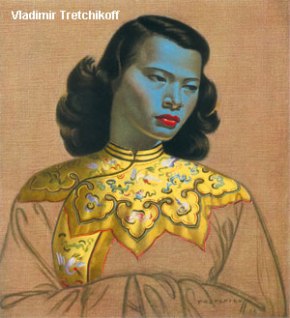
Vladimir Tretchikoff’s iconic painting Chinese Girl recently sold for $1.5 million at a Bonham’s Auction. Chinese Girl is also known as the ‘Mona Lisa of kitsch’, much to the chagrin of the artist. Manchurian-born Tretchikoff escaped from Soviet Russia and emigrated to South Africa after World War II. Along the way he lived in Shanghai, where he worked as an advertising and commercial illustrator in the 1930s. The ‘King of Kitsch’s’ reproduction prints became so popular that it is believed that he was second only to Picasso in popularity. Tretchikoff couldn’t stand being linked to kitsch, though – he considered himself a serious artist.

Image

On the other hand, American ‘painter of light’, Thomas Kinkade, made every attempt to gain popularity through mass marketing of his artworks, even setting up a company (The Thomas Kinkade Company) to do so – claiming to be ‘America’s most-collected living artist’ before his death last year. He was proclaimed to be nothing more than ‘commercially successful kitsch’ by the art world, and came under the hammer for gimmicks such as selling his works on the QVC home shopping network. While he considered himself controversial, others proclaimed his works to be ‘chocolate box art’ or ‘mall art’ – due to the fact that his work lacked depth and substance.

Salvador DalÕ's portrait of Mona Bismarck


Along with Tretchikoff, Salvador Dali’s portrait of Mona Bismarck made quite a rumble with its Sotheby’s sale this year. Dali’s later work – when he was involved in a ‘paranoiac-critical’ method through self-induced hallucinations – has been criticised as kitsch. In this instance, he painted wealthy and always impeccably-dressed Mona Williams Bismarck in black rags. The irony would in itself make the criticism of this work debatable.

Image

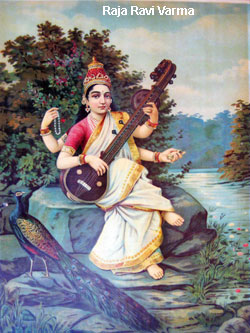
In India, Raja Ravi Varma reproduced his oils of deities from Hindu mythology through the process of oleograph – leading to immense popularity of his detailed, lifelike portraits. While his work was art, the popularity led to mechanically produced kitsch for the first time in the subcontinent – these portraits were later seen digitally reproduced and often stripped off their character on calendars and numerous posters.

nekotabi-gero-tan

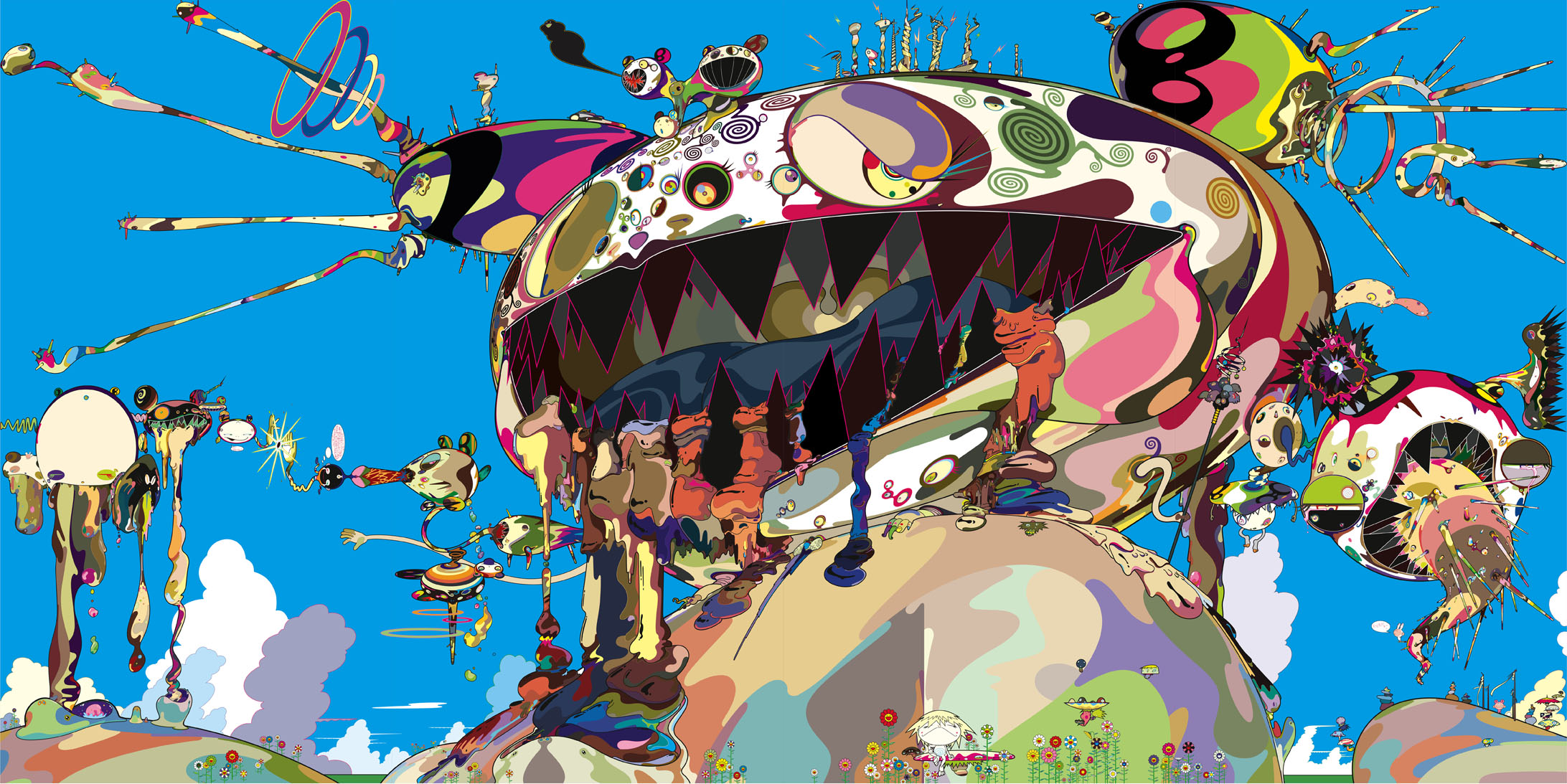
Japanese artist Takashi Murakami’s ‘flat’ works inspired by the Manga and Anime culture are a response to popular appeal. The lack of depth in his works is a strong throwback to contemporary Japanese culture, which he believed to be consumerist and devoid of meaning. In this case, Murakami is using symbols of popular culture to make a comment on popular culture. The self-reflective method is nuanced and thoughtful, distancing it from real kitsch. And yet, Murakami seems embroiled in consumerism, evidenced from the fact that he works with a team (Hiropon factory in Japan and his New York studio) to fabricate his works and his company, Kaikai Kiki & Co. carry out large-scale production of his commercial artworks and merchandise. He has designed a Louis Vuitton logo, and his installation has been seen at the Vuitton store in London. He is a part of the system that he is critiquing – but is he managing to control and execute the critique from his successful vantage point?

American art critic, Clement Greenberg, in his controversial essay Avant Garde and Kitsch (1939), calls the New Yorker magazine ‘high-class kitsch’ and rips the phenomenon to shreds: ‘Kitsch is mechanical and operates by formulae. Kitsch is a vicarious experience and faked sensations. Kitsch changes according to style, but remains always the same.’

Kitsch serves to remind people that a great work of art exists – but it fails to draw from the viewer the real emotion or sensibility that the original work of art can. Its problems lie in the intellectual stimulation – or lack of – that is provided. German literary critic, Walter Benjamin, points out that kitsch ‘offers instantaneous emotional gratification without intellectual effort, without the requirement of distance, without sublimation.’ Its feelings are associated with being self-congratulatory or false, and it fails to raise our experience to a level above the ordinary. In fact, as has often been pointed out, kitsch aims to please – and that in itself alienates it from true art.

And in that very sensibility appears the predilection to dislike kitsch in art. But as you dislike it, can you negate its positive commercial effects? American iconic pop artist Andy Warhol’s ironic art works have now become commercially reproduced in every possible way. Not only do they increase his popularity, but also, in consequence, they increase the value of the original artworks. So in essence, ironic though it may be, commercial kitsch increases the commercial viability of popular art or kitschy art and even that of high art, as Murakami and others have so clearly experienced.

While you may agree with Greenberg in thinking that kitsch is fooling naïve people, but isn’t it also opening the world up to the masses? Would someone in a country far away have known of the existence of the Mona Lisa, had it not been reproduced commercially? Doesn’t it bring the art world into focus and make the world a smaller palette with one mass-produced brush-stroke? (On a side note, a copyist once told an interviewer that his paintings of Leonardo’s Mona Lisa improved on the original by ‘taking a bit of the chill out of her expression’.)

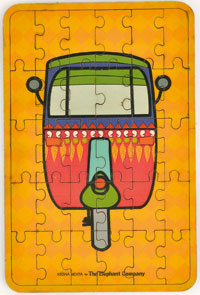
Conversely, the argument runs that kitsch is making people more nationalistic, and therefore closed to world art. The Chinese or Indians may prefer kitschy symbols harking to their own cultural icons. There is sentimentality in kitsch art that has endeared it to generations. But is that really problematic? Do we deride diasporic literature for the same reasons? Young India, in fact, is fondly embracing kitschy art: a product of graphic design and an occasionally-merry-occasionally-gaudy mix of pop culture icons or desi history. From Taj Mahal cushion covers to Bollywood poster totes, from chaiwalla and auto rickshaw coasters to Manish Arora’s clothes and Krsna Mehta’s Ind!a Circus (and previously The Bombay Project), it is all welcome.

Image

How do we feel about images of dhobi women in saris overlaid with containers of red lipstick as a cushion cover? Does it endear us to the India we grew up in, does it build nationalistic sentiment, does it mock a way of life the intelligentsia may not understand or does it arouse a melodramatic sentimentality for the curios of our city? But Krsna Mehta’s line’s evident popularity (leading him to launch new lines in collaboration with top local design stores) shows that people gravitate to a popular version of rural or local India. His book Mumbai Masti along with Bachi Karkaria, that puts together iconic local images, has been touted a best-seller. While Mehta may not be India’s answer to Warhol, it’s true he has made Bombay’s visuals a part of most households.

It would be simpler to accept that kitsch need not be lauded, but it must not be despised either. A product of industrialisation, it is here to stay, in its many forms, but without the original, a kitschy reproduction cannot exist. It can be a happy marriage. You would be rue to find a home without some form of kitsch that has seeped through the cracks of creative expression. In much the manner that a woman’s bookshelf may have Lolita and Fifty Shades of Grey with equal gumption. Who’s judging?

The Desi Zomcom Bomb

19 Wednesday Jun 2013

Posted by sitanshi talati-parikh in Art, Literature & Culture, Publication: Verve Magazine

≈ 1 Comment

Tags

Verve Magazine

Published in: Verve Magazine, May 2013, Verve’s Got The Nerve

Quirky, dark or gut-wrenching screaming…. When did zombie movies come into fashion in Indian cinema?

Remember the Resident Evil series and Dawn of the Dead (2004) type Hollywood flicks that come with lashings of trashy cannibalistic blood, gore (think flying body parts) and gut-wrenching screaming? It seems, now, Hindi filmmakers are ready to move beyond thrillers, romance and slapstick and dip their lenses into a hitherto untouched genre.

Last month we were introduced to India’s first zombie origin horror film with a runtime of just 90 minutes. Luke Kenny’s Rise of the Zombie aspires to be an international-style trilogy that begins with the birth of a zombie (Neil Parker, wildlife photographer). We’re also awaiting Navdeep Singh’s on-again, off-again zomedy, Rock The Shaadi, with Abhay Deol and Genelia (a Punjabi wedding that has zombies as guests) to take off.

But eventually, Saif Ali Khan, whom we think would make a great vampire, has decided to foray into zombie land too, and go the full circuit by becoming a blond, wannabe Russian zombie-slayer. Cute. Directed by the duo, Raj Nidimoru and Krishna DK of Shor In The City (2011) fame, Go Goa Gone, India’s first zomedy about an adventure gone awry in Goa, releases this month. Starring Kunal Khemu, Vir Das and Anand Tiwari, the trailer promises a funny, if quirky ride, self-confessedly leaping into the zomcom genre. As we are soon to discover, zombie comedies can be slapstick or dark, and in our desi version, masala mixed with a healthy dose of bheja fry.

And, for those keen on foraging abroad for a diet of gore, World War Z releases this year, along with the TV version of the popular movie, Zombieland (2009), while The Walking Dead franchise of comic books, TV series, web series and video games keeps rolling out something new. Get ready for a life-threatening movie-going experience this year!

ZOMBIE FILE

1. Zombies are not ghosts, ghouls, mummies or vampires. Think more ‘animated corpses resurrected by mystical means, such as witchcraft’ (Wikipedia).

2. Largely seen as the walking undead, drawing from George Romero’s flick Night of the Living Dead (1968), which, apparently, was partly inspired by Richard Matheson’s 1954 novel, I Am Legend. Romero’s movie set off a trend of corny zombie lines like, ‘They’re coming to get you, Barbara.’

3. Victor Halperin’s White Zombie (1932) is believed to be the first zombie film, if one discounts the zombie like character in The Cabinet of Dr. Caligari 1919) and Frankenstein’s (1910) reanimated corpse.

4. The Walking Dead had its actors go through an on-set zombie school to learn how to walk and behave like zombies.

That Chauhan Girl Again #Review: Those Pricey Thakur Girls

20 Wednesday Mar 2013

Posted by sitanshi talati-parikh in Art, Literature & Culture, Publication: Verve Magazine

≈ Leave a comment

Tags

Anuja Chauhan, Books, Reviews, Verve Magazine

Published: Verve Magazine, March 2013, Nerve/Reviews

As her previous two books roll on the floors as films, ad and screenplay writer, Anuja Chauhan is out with a third novel, which also promises a sequel

Image

For any chick-lit fan, Anuja Chauhan is a breath of fresh air. She set the stage with The Zoya Factor, ensuring that we get her milieu of razor-sharp wit, desi mise en scene, irreverent metaphors and vivid character sketches. She took it a notch further by moving away from the city grime into rural dust with Battle for Bittora, her second novel. Those Pricey Thakur Girls arrive in small-town Delhi, with middle-class morality and the desire to be strong independent women. But here she places the story in the 80s, where at every stage you are familiarising yourself with a time that seems far removed from today. It’s the time of Doordarshan, tweaked to be Desh Darpan, a time when the Emergency is still fresh in everyone’s mind, when free speech is something to be treasured and fought for. Her protagonists are a newsreader and an investigative journalist, which makes them snooty about their respective jobs as well as their differing personalities. In the midst of revolutionary thoughts, careers and salary slips, a budding romance blossoms where Debjani Thakur, the feisty but incredibly shy newsreader falls prey to Dylan Singh Shekhawat’s charms.

Chauhan treats the light-hearted women’s fiction genre with remarkable personality. There is no rallying to western chick lit; there isn’t a desperate desiness, she has made it her own with a mix of gentility and local rootedness, which she claims is nothing but “the space we all live in! This is life in India aaj kal. I’m just writing down what I see around me, every day.” After all, Chauhan grew up in a house full of girls and has two of her own. It’s not hard to see that she leans towards the darkly determined men, who are at the heart of the matter, decent. Chauhan’s wickedly humourous romances are always marked with a foray into something new while being strangely, and comfortingly, familiar. Until the sequel, then.

Q & A – ANUJA CHAUHAN

Fame – either accidental or unsolicited – accompanies the stories of your protagonists.
I just enjoy a big fat public declaration of love. When it finally happens, everybody should see, everybody should know. And so Zoya (in The Zoya Factor) dates the cricket captain, Jinni (in Battle For Bittora) embraces her political rival and makes the front pages and Debjani does… um, what she does. Maybe that’s very cheesy of me – but I think a little cheese is required in our daily diet. I like putting my protagonists in peculiar predicaments and seeing which way they’ll jump.

Why is the book set in the 80s?
Nostalgia I think. I found I was spending a lot of time telling my kids (11, 14 and 17) how life was ‘back then’ when I was growing up. No Pepsi, no pizza delivery, only DD on TV. Besides, something about this book, about five sisters growing up in a big old house with a walled garden, just felt right in the 80s. Also, maybe this was just a reaction to the kind of snappy, sassy, glossy books that are flooding the bookstores, full of ‘bold’ girls and ‘jerk’ guys, I felt like I wanted to write old-fashioned romance – no texts, only letters, no sex, only kisses.

And the darkly determined young men going after your girls…?
I do admit to the darkly determined. I don’t like fair men – I can’t write them. And I detest ditherers, so that’s out too.

← Older posts
Newer posts →

|  Filling the gaps between words.  |

Writing By Category

  • Art, Literature & Culture
  • Brand Builidng
  • Brand Watch
  • Fashion & Style
  • Features & Trends
  • Fiction
  • Food
  • Humour
  • In The Media
  • Interviews (All)
  • Interviews: Business
  • Interviews: Cinema
  • Interviews: Cover Stories
  • Interviews: Lifestyle
  • Interviews: Luxury Brands
  • Interviews: The Arts
  • Interviews: Travel
  • Musings
  • Parenting
  • Publication: Conde Nast
  • Publication: Elle
  • Publication: Mint Lounge
  • Publication: Mother's World
  • Publication: Taj Magazine
  • Publication: The Swaddle
  • Publication: The Voice of Fashion
  • Publication: Verve Magazine
  • Social Chronicles
  • Sustainability
  • Travel Stories

Reach out:
sitanshi.t.parikh@gmail.com

© Sitanshi Talati-Parikh 2018.
All Rights Reserved.

Website Powered by WordPress.com.

  • Subscribe Subscribed
    • sitanshi talati-parikh
    • Join 51 other subscribers
    • Already have a WordPress.com account? Log in now.
    • sitanshi talati-parikh
    • Subscribe Subscribed
    • Sign up
    • Log in
    • Report this content
    • View site in Reader
    • Manage subscriptions
    • Collapse this bar
 

Loading Comments...