• About
  • Brand Building
  • Film & Drama
  • Writing: Arts & Lifestyle
  • Writing: Interviews
  • Writing: Luxury Brands
  • Writing: Travel

sitanshi talati-parikh

sitanshi talati-parikh

Category Archives: Publication: Verve Magazine

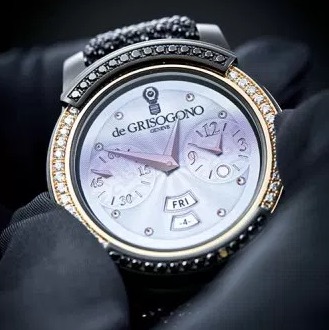
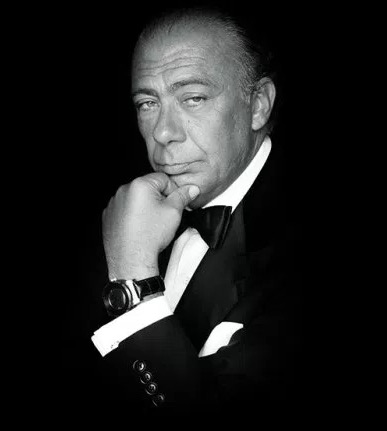
Founder’s Tales: Fawaz Gruosi, De Grisogono

31 Monday Oct 2016

Posted by sitanshi talati-parikh in Brand Watch, Interviews (All), Interviews: Luxury Brands, Publication: Verve Magazine

≈ Leave a comment

Tags

Baselworld, De Grisogono, Fawaz Gruosi, Interview, Interviews: Luxury Brands, Jewellery, Verve Magazine, Watches

Published, Verve Magazine, October 2016

‘I think in volumes, I imagine in colours, I design in lights.’

Screen Shot 2017-07-24 at 2.25.55 PM

Fawaz Gruosi, the founder of the de Grisogono (1993) brand of jewellery and watches, is a garrulous personality, known for his ‘disruptive creations’. In a market filled with traditional jewellery, he took risks with bold designs, different materials and radical stones, like black diamonds. An exceptionally active man, he’s probably taken a total of three months off in 21 years! He explains why India wasn’t primed for conceptual jewellery and his love affair with the country….

What’s the India chapter all about in the De Grisogono tale?
I have had a bad experience with India. We opened an amazing shop six or seven years ago at Emporio in New Delhi. We were number 3 or 4 after Cartier and Chanel, the shop cost us a fortune. We did not have a problem selling watches; the jewellery was another story. The women wanted to know how much gold there was in each piece. The problem was that they didn’t understand the price of creativity, design and uniqueness!

After two years, our costs of maintaining the storefront was so high that we withdrew. But now, the brand is more known, there is likely to be a better attitude.

What defines the De Grisogono woman?
She is not defined by where she is from, physical attributes, or if she has an angelic face…. I think the beauty in the woman comes from her character. When a woman is sure of wearing something unusual, she wears it like she does not even remember that she has it on.

Screen Shot 2017-07-24 at 2.26.27 PM

How do you dream up these unconventional designs?
I am not someone who sits at a desk waiting for inspiration. I could design sitting here talking to you; it might just click in my head. And, I can imagine immediately a pair of earrings. Normally, my pocket is full of papers.

When I buy stones or I decide to do something very complicated, I never think about how much it will cost or how it will be priced. My creativity is linked to my heart. I just want the piece to be beautiful. Perfection doesn’t exist, but we try hard to find it…and to do what other people cannot do!

What does it take to create a luxury brand today?
Let your creativity flow and don’t be scared. If you have an idea, and you believe in it, go for it. Sometimes it will happen, sometimes it won’t. Success without a bit of risk is not realistic, unless you are part of a big group.

Have you been to India?
Several times. I have been to Mumbai and Delhi. I love India very much. I attended an amazing wedding about a year ago. I was also in love with an Indian girl and the long-distance relationship between New York and Geneva lasted a couple of years.

Founder’s Tales: Christophe Claret

31 Monday Oct 2016

Posted by sitanshi talati-parikh in Brand Watch, Interviews (All), Interviews: Luxury Brands, Publication: Verve Magazine

≈ Leave a comment

Tags

Christophe Claret, Interview, Interviews: Luxury Brands, SIHH, Verve Magazine, Watches

Published, Verve Magazine, October 2016

‘In watchmaking, everything has already been done, and everything has yet to be invented.’

Screen Shot 2017-07-24 at 2.29.25 PM

Born to a wealthy family in Lyon, and from the Geneva watchmaking school, Christophe Claret trained with Roger Dubuis and studied corporate management. With 25 years of experience in manufacturing for watch brands including Ulysse Nardin, Claret, who’s currently wearing his Maestoso watch, decided along the way to use his Neuchâtel operations for his own brand, where he ‘reinterprets haute horlogerie’. Besides the traditional and extreme lines with complications is his range of gaming watches. For example, while the Poker allows a real three-player Texas Hold ’Em game, Baccara doubles as a miniature casino with three games: baccarat (baccara in French), roulette and dice, each one of which also engages your audio, visual and tactile senses. Created especially for women are the Margot and Marguerite, romantic watches with a play on the ‘He loves me, he loves me not’ game, and the latter can have a personalised secret message.

Your watches are unique. How much importance is placed on art and design?
It is important to produce something with innovation. If I take inspiration from the watch industry, I would be recreating the same old design. It is very important to do something new. I am a perfectionist and for me, it’s perfection for detail and the aesthetic together that’s important.

Screen Shot 2017-07-24 at 2.17.59 PM

You’ve launched a gaming collection. Do you play?
No. Never. I’m afraid to play! Some people can bet a lot of money and boom — that can go away! It’s crazy. The watch works for those who play, and those who don’t can enjoy the technicality of the complication.

What drew you to complications for women?
I’ve wanted to produce pieces for women for a long time. Despite what the other watchmakers thought, I’ve always believed that they are a big market for speciality products. That’s why I created Margot — a very complicated watch. We sold many pieces! And Marguerite happened. Today, many other brands are designing big complications for women. Though I was the first!

Do you see an audience in India?
I am very interested to sell in India. It’s a little complicated to open something there because you have tax issues. I’m sure there is a market for us. For the Marguerite and X-Trem-1, for example. I think we will be looking at India very soon.

Founder’s Tales: Aletta Stas-Bax, Fredrique Constant watches

30 Sunday Oct 2016

Posted by sitanshi talati-parikh in Brand Watch, Interviews (All), Interviews: Luxury Brands, Publication: Verve Magazine

≈ Leave a comment

Tags

Aletta Stas-Bax, Baselworld, Fredrique Constant, Interview, Interviews: Luxury Brands, Verve Magazine, Watches

Published Verve Magazine, October 2016

‘True passion has always been the result of fine sensitive processes that happen over time ­— not the exploits of some exciting moment.’

Screen Shot 2017-07-24 at 2.21.30 PM

In 1988, checking out watch stores during a winter vacation in Bern, Switzerland sparked off the idea to start a “young watch company offering innovative products”. In 1991, Aletta Bax and Peter Stas were married and began working on the design and development of their first prototype watch. The next year they presented their horological offering at the Hong Kong trade fair and found, to their surprise, an order for 350 watches from a Japanese buyer. Aletta is the chief operations officer at Frédérique Constant, which has recently been acquired by Citizen, and is responsible for all the company’s day-to-day operations. She works on the development of new designs; most notably she played a major role in the introduction of the Double Heart Beat collection.

What’s the one word that you would use to describe your journey?
Passion.

Isn’t that what your book, Live Your Passion: Building A Watch Manufacture, is about?
It is a mix between a coffee-table and business book, one we worked on together with two journalists from Austria and Germany.

When you are busy building a venture you often do not get time to reflect….
And then you also learn to stand still. You realise that the people whom you work with are also important, in the end, you cannot do it all alone.

Tell us about your role in the Double Heart Beat collection.
It was around 2006. I wanted to have some more presence with the ladies’ collections. Hearts are something that women always like. That is why I designed the double heart. It is now an important pillar in our collection. We also link the heart collection with heart- and child-related charities, where we donate 50 dollars for each watch sold.

Screen Shot 2017-07-24 at 2.21.40 PM

Since last year, you have tied up with technology whereas others have only deliberated over it….
You are talking about our Horological Smartwatch. In the beginning, people were thinking that these are two different industries. While much of the Swiss watch industry remains traditional in thinking, we believe that if you can have a quartz watch with ‘connected’ (digital integration) features, then why should you not go in the direction of futuristic innovation, and why would the customers not be interested?

We need to integrate this whole system with cloud functionality, which is not our field. So, we found a partner who could do that. And, having sold 16,000 Horological Smartwatches, I can say that it is a pillar of Frédérique Constant; along with the ladies’ collection, with our new ambassador, Gwyneth Paltrow.

What’s the India story?
We started with a room five to six years ago, and last year, we grew 30 per cent. We have 40 to 42 per cent sales in India. We are really happy! The infrastructure is improving dramatically. I have visited the bigger cities — Mumbai, Delhi, Kolkata and Chandigarh — a few times. It’s an impressive country.

The Curious Colours of Colmar

30 Friday Sep 2016

Posted by sitanshi talati-parikh in Publication: Verve Magazine, Travel Stories

≈ Leave a comment

Tags

Alsace, Colmar, France, Interviews: Travel, Wine

Published in Verve Magazine, September 2016
Photographs by Falguni Kapadia

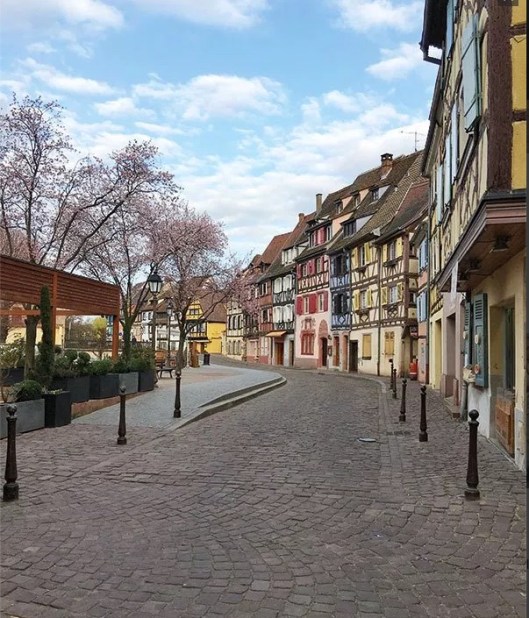
At the heart of the Alsace region in France lies a beautiful town that makes your heart sing. Colmar is the spot that makes you fall head over heels in love

Screen Shot 2017-07-24 at 1.08.06 PM


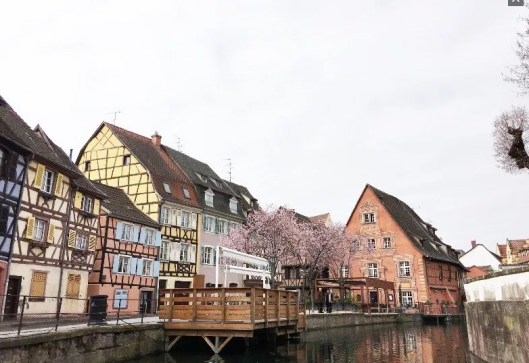
Brilliant splashes of colour on half-timbered houses is what makes Colmar breathe life into the cliche ‘picture-perfect’. But it’s the quaint lanes, stuffed with local shops and delicacies, the warmth of the Alsatian-speaking people and the stunning calmness that pervades the town that makes it other-worldly. A medieval setting, but without the drama of gnomes, toadstools and fairy dust, something Enid Blyton would use as inspiration for a magical novel series, perhaps. And yet, Colmar has lived in the time of practicality and realism of taxes and war and not of imaginative children’s tales. Ironically encouraging the toadstool shapes, the town tax at one moment in history was as per the surface area of the house on the ground; so the residents built homes narrower from the bottom and wider from the top.

Screen Shot 2017-07-24 at 1.08.27 PM

As you walk through the lanes, you are privy to some of the most eclectic structures; also, the timber inside is protected and cannot be removed or cut down. Christina Perri’s song pops into my head — Darling, don’t be afraid, I have loved you for a thousand years. I’ll love you for a thousand more — when I face centuries of European history in the bright vision that is Colmar.

Screen Shot 2017-07-24 at 1.08.40 PM

Johann, our river guide, is beaming from ear-to-ear, with a sense of pride in the beauty of his hometown. As he guides us through Little Venice, down the serene ‘green area’ on the river (with a silent zone) and under tiny bridges so low that you need to bend triple, you can’t help but find his exuberance for the surrounding infectious. While he tries to nudge information out about your city, he knows nothing can match up to his. When you buy a house on the embankment (and they cost a pretty penny), you buy a part of the river, which keeps the tiny water body private. It flows through the garden district of the town, and was once used to transport produce. Tax seems to have been quite an evasive issue, because the boats in the town are also flat — there was a tax on the part of the boat submerged in the water, so they were designed just deep enough to bring back vegetables. And as a protective gesture, the precinct of the old town once had a railing to prevent boats from entering the town at night, a worthy safeguard, perhaps as someone entering this lush space may fall promptly in love and set roots forever?

Screen Shot 2017-07-24 at 1.09.36 PM

The Rhine, which is now a partition between Germany and France, once formed a link between the two countries. Colmar, in the heart of the upper Rhine valley, turned French in the 17th century and changed nationality five times! In 1939, it was the first bit to be invaded by the Nazis and was the last important town to be freed in 1945, with practically no damage to boot. The town is a curious mix — though a happy one — of French and German culture, and the influences are evident everywhere. The ‘fashion street’ of the past has the motif carved in metal of the draper holding a stick to measure material. As you walk along, you can’t miss those of a lady holding a goose or a pig, with foie gras and sausage being popular products from the area. The latter can be tasted at a number of the local restaurants, including the multi-floor one, which has graphic art on the walls and is happily positioned in the city centre, called Le Fer Rouge. The Alsace region is the birthplace of foie gras, and the town is peppered with Michelin-starred restaurants, each rubbing shoulders with the other.

Screen Shot 2017-07-24 at 1.09.09 PM
Screen Shot 2017-07-24 at 1.09.19 PM

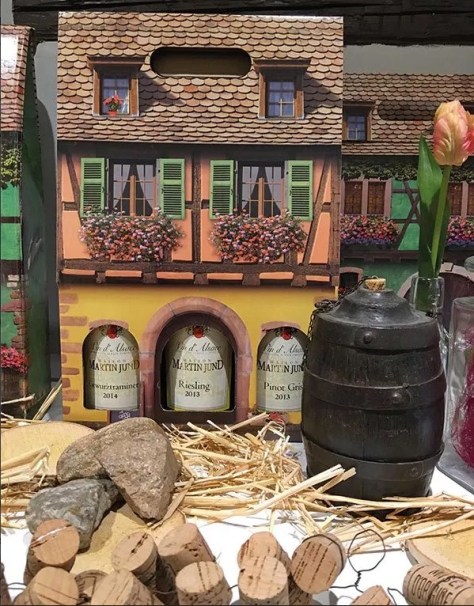
The favourite local son, Bartholdi, the famous creator of the Statue of Liberty in New York, has his mark everywhere, including a smaller replica in the city! Besides a museum dedicated to him, there is also a Bartholdi fountain where he is holding grapes, because he is supposed to have brought back grapes from Hungary for the local Pinot Gris. Wine, not surprisingly, is like water in Colmar, which has been the wine capital of the Alsace region since the Middle Ages, when it used to export to Switzerland. Large quantities of local produce were shipped along the river to Strasbourg, and then onwards along the Rhine to the Netherlands, moving on to England, Scandinavia and the Baltic coast. For the Domaine Martin Jund winery, Sebastian Jund, a fourth-generation viticulturist, shows us his cellar and takes us through the various in-house specialities. “Local wine represents the culture and people of the area.” Producing off 80 hectares of land, without pesticides and chemical products, they work with seven different grapes. White wine is the popular local drink of choice, we discover, and the hand-pressed grapes, stored in their own cellar, are sold mostly locally at around 50,000 bottles a year. We tasted four wines: the fruity Muscat sugarless, the spicy grape Gewurztraminer, the Sylvaner and a dry Riesling. As we swirl the home-grown liquid around in our glasses, we learn that they never drink alone, always with family. As Jund says, “With wine, it’s not about the right word or right place; it’s about having a good time and comforting your personality.”

Screen Shot 2017-07-24 at 1.09.48 PM

That’s what the town is about — local character with a ‘country’ atmosphere. For instance, the tale associated with the watchtower in the iconic Gothic monument with a striking coloured tile roof, the Église Saint-Martin church. As legend goes, a watchman was required to stay in the tower for one year at a time and not come down. But as a lot is required to keep a man busy, besides keeping a lookout, he was also a shoe repairman…and footwear was sent up to be fixed via a pulley system! Stories and folklore abound, the town swells with the high notes of history. And as we wind down with dinner at La Maison des Têtes, we are surrounded by tables that reverberate with a sense of the familiar, and we can’t help but feel the beat of the infectious camaraderie that suggests lasting friendships.

Screen Shot 2017-07-24 at 1.10.02 PM

La Maison des Têtes (House of Heads), a fine example of Renaissance architecture in the centre of Colmar, is actually built from the stones of the first wall in the town in the early 13th century. It is possibly the most famous local house, with intricate sculptural adornment — decorated as it is with 106 grimacing heads. The building that conveys ‘an idea of the wealth of the merchant class’ was restored in 2012. While many remains from the prehistoric town are around, you are not likely to find them in Colmar, probably because of the river that would have washed away the pieces. The facade of La Maison des Têtes was built in the early 17th century and one part was used for praying. Today, it opens into a charming hotel with sumptuous-sized rooms and a fine-dining restaurant. With history surrounding you, you find yourself at peace in this abode, a perfect place for a romantic sojourn, to dwell amid the thoughts of the past and the mystery of the present, to the sounds of classical and jazz music flooding the town during festival time and the sweetness of the jam made from the fruit of the wild rose tree.


Discovering Design: Claude Emmenegger for Audemars Piguet

30 Tuesday Aug 2016

Posted by sitanshi talati-parikh in Brand Watch, Interviews (All), Interviews: Luxury Brands, Publication: Verve Magazine

≈ Leave a comment

Tags

Audemars Piguet, Claude Emmenegger, Interview, Interviews: Luxury Brands, SIHH, Verve Magazine, Watches

Published in Verve Magazine, August 2016

Screen Shot 2017-07-24 at 2.18.19 PM

Last year, Claude Emmenegger became the new creative director of Audemars Piguet. After a stint with the brand from 1999 to 2003, he left to establish his own design consulting company. Twelve years and working with 40 brands later, he is back, firm in the belief that his appreciation for the brand has not changed a bit. He’s the creator of the Royal Oak Concept (2002) and the Tradition of Excellence models 2, 3 and 4; currently his main objectives include the development of the women’s category, high-tech concepts and new functionalities. ‘Break the rules in order to revolutionise horology’ is Emmenegger’s philosophy. Find out more:

Design vision
“Audemars Piguet is known for its classical points, along with innovation. I would like to take the design in a more modern direction inspired by contemporary art: make it evolve — though, not change — from what it is now.”

Audemars Piguet philosophy
“Diversity in excellence. When Audemars Piguet does something new, the idea is not to stop things halfway; it is to do something innovative and to finish it in the right way.”

Screen Shot 2017-07-24 at 3.08.26 PM.jpg

Creative inspirations
“We live in a world where we are bombarded by sounds, images, perceptions…. The strength of a designer is to be able to hear in all that mass of information — what is interesting, what could be combined, what is of essence — and bring that together into something new. Once you have passed the stage of mood boards where you filter out the things you want to focus on…then, what the world is doing and what the noise is saying doesn’t matter anymore. Then you just have to get it done!”

Advanced complications for women
“We are in the middle of progress into that field. It’s really a big project right now — there are things in the pipeline and on the board, to see how the movements can evolve.”

When design meets technology
“It’s a bit like two brothers with different characters…. When you have a dream that you want to transform into a reality, it takes quite a bit to follow a road and make it happen. Even if you want to, tech may say, ‘No we can’t do it!’ You have to be able to stimulate them and persuade them…we are going to bend the iron a little bit more, but we are going to make it work!

What has really changed is the team spirit. You have people from design, from production, from the technological world, having discussions as early as possible. And rather than ‘No, it’s impossible to make it’, to agree on ‘Let’s find out if we can do it!’”


Story of a Watchmaker: At A Lange & Soehne’s atelier in Dresden

31 Sunday Jul 2016

Posted by sitanshi talati-parikh in Brand Watch, Features & Trends, Interviews (All), Interviews: Luxury Brands, Publication: Verve Magazine

≈ Leave a comment

Tags

A Lange and Soehne, Atelier visit, Feature, Interview, Interviews: Luxury Brands, Verve Magazine, Watches

Published Verve Magazine, July 2016

Visiting the new manufactory of one of the world’s premier watchmakers, A. Lange & Söhne, in Dresden, Germany, to meet the people behind the scenes and find out what makes them tick

Screen Shot 2017-07-25 at 11.40.16 AM

The girl is bent over in concentration, a magnifying eye glass strapped to her face…and when she looks up she takes a momentary glance at a candid photo of her family slipped into a metal wire stand. At another table, a man has a photo of the sunset staring at him, but if he were to look up, he would see, through large atelier windows, the lush green hillside on which the A. Lange & Söhne (pronounced ‘ah lang-eh’ and ‘zurn-neh’) manufactory resides, tucked away in the heart of Glashütte.

Germany’s prime watchmaking district, Glashütte (pronounced ‘glass-hoot-ey’), is an hour’s drive from the quaint Saxon town of Dresden and boasts 12 watch manufacturers of different calibres and hosts around 1,500 employees. These employees start their learning as early as the age of 15, and sometimes hail from different disciplines such as dentistry and porcelain making. They apply their fine motor skills expertise in watch manufacturing after undergoing at least three years’ training — including an extensive internal training — if they choose to work with A. Lange & Söhne. The people who work here are deeply passionate about what they do — their entire life revolves around their job.

Screen Shot 2017-07-25 at 11.40.31 AM

The desks are pristine and clinical to a fault, except where you catch fragments of personalisation — a little bag of crisps or chocolate, kept neatly to the side — while the technicians work on tiny components with focus and sharp consistency, often not requiring the guidance of their computer screens that flash the exact technical procedure required at the time. The virtually dust-free and energy-efficient manufactory has individual ultra-modern workshops for the various processes — all the way from complications to engraving, from quality control to finishing and assembly. It takes a few minutes to a few hours to look over a single minutiae element; challenging ones can take up to a few days. The entire process of making a single handcrafted timepiece takes from six months to a year. It takes a person with a particular steadfast temperament and a great deal of passion for the job to have the staying power to continue in this vein.

Screen Shot 2017-07-25 at 11.40.46 AM

And you can sense that as you walk through the spanking new manufactory that boasts a production area of 5,400 square metres, which can now house bigger and heavier machines, all entirely state of the art. You’re feeling like part of the establishment, clad in a crisp A. Lange & Söhne facility jacket and with machine-dispensed disposable plastic ‘socks’ on your shoe-covered feet. The double-skin walk-in facade has a climate-control function. Inaugurated last August, the facility, that cost in the double-digit tune of millions of euros, sees Saxony’s largest geothermal energy plant keeping the indoor climate pleasant year round. There is a serenity pervading the corridors and workstations, save for the sound of workmen putting the finishing touches to the new building. It is in this calm that perfection is allowed to thrive: an attention to detail, a rejection of that which doesn’t match their exacting standards.

Ferdinand Adolph Lange was the son of a gunsmith. The fire burnt strong in his belly for watchmaking, though, and in 1845 he managed to convince the local government to lend their support. He started in a small house on the Glashütte main street with a few apprentices. What had so far been a mining town was now poised to become the local centre of watchmaking. (His pocket watches remain highly coveted among collectors all over the world.) Despite managing to survive both world wars, he faced hard times in the 1850s and ’60s; and when, after the Second World War, East Germany came under the purview of the Russians, he continued manufacturing, though the A. Lange & Söhne name nearly disappeared into oblivion.
Screen Shot 2017-07-25 at 11.43.53 AM

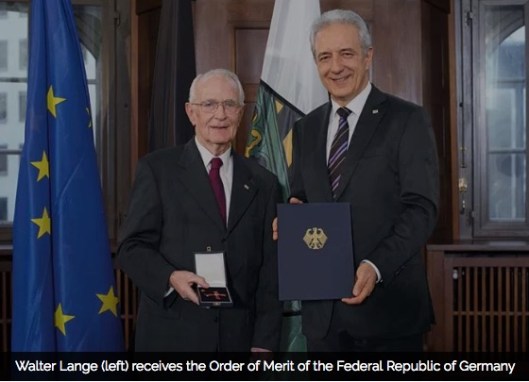
In 1990, F. A. Lange’s great-grandson, Walter Lange, took it upon himself to relaunch the brand. In 1994, their first collection was launched in Dresden Castle. He was recently bestowed with the Order of Merit of the Federal Republic of Germany (First Class) by German President Joachim Gauck in recognition of his services in re-establishing Saxony’s watchmaking industry. Two months after winning the award, he remains affable, charming and humble as he walks with us around the A. Lange & Söhne booth at the exclusive Salon International de la Haute Horlogerie (SIHH) watch fair in Geneva, talking appreciatively about Indian women and their outfits.
Screen Shot 2017-07-25 at 11.40.59 AM

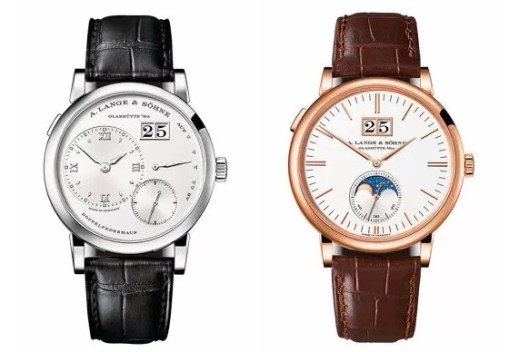
In just over 20 years, A. Lange & Söhne has developed 51 manufacture calibres, which has given them a prime position among the world’s finest watch brands. Their greatest successes include innovative timekeeping instruments such as the Lange 1 (with the first outsize date in a series-produced wristwatch) and the Zeitwerk (with its supremely legible, precisely jumping numerals). The jocular head of development, Anthony de Haas, identifies what has become key to most heritage watchmakers. “It’s very important for us as a brand to stay true to the identity we started with in the 1990s when we rebuilt the company. And it is a challenge to create something new with the A. Lange & Söhne identity that’s very recognisable. The Zeitwerk is a very good example of that — of pushing the limits, not only technically but also in design.”

Their showstopper Zeitwerk timepiece was launched in 2009. It hails from a German word, which means ‘time-movement’. Standing in the Zeitwerk workshop in Dresden, I am privy to the fact that the timepiece has 415 to 428 parts and 200 oiling points (with four different oils). Missing a single oiling point would lead to the watch potentially stopping — which leaves one thankful for the extensive quality control and assembly checks. The manufactory’s complication department is the vanguard of the brand’s prestige watches. The watchmakers who work there are responsible for a single timepiece from beginning to end (unlike the other watches that move from one specialised department to another). In a world where there is a heavy dependence on technology, it is astonishing to discover that in this case, machines are used for checking and not for making that change, as machines cannot make fine adjustments, like to the 100th of a millimetre!

Screen Shot 2017-07-25 at 11.41.05 AM

Last year, the big noise was the minute repeater with the decimal; this year at SIHH, the talking point was the limited-edition (100 pieces) Richard Lange Jumping Seconds which has an integrated jumping mechanism that makes it possible to display the time in strict one-second intervals. Says de Haas, “This is a typical collector’s watch — and you need a bit of an understanding of what’s going on. It’s a technical highlight, but packed in a very elegant, discreet way. You can make complications but they need to be nice-looking and fit the identity of the brand. Don’t do crazy things. Don’t start making diving or pilot watches, because others can do it far better.

A. Lange & Söhne never made watches to swim with, because the brand didn’t exist during the period when that became important. Also, with such a beautiful movement, with the sapphire case back, would I ever dare to jump in the water — even if I know it’s waterproof?”

Screen Shot 2017-07-25 at 11.41.25 AM

A. Lange & Söhne has a tradition (started 150 years ago) of using German silver for their plates and movements, which requires two assemblies because of the delicacy of the metal. Despite the challenges associated with using this particular metal — not just limited to temperature and its sensitivity to humidity — it remains a speciality of the watchmaker for its beautiful golden, shining surface. It’s also symbolic of how the brand considers challenges and an indication of why it has so many movements to its name.

The watchmakers design their own tools for the intricate work. And it is intricate — as I soon realise when I am (as a surprise) taken to my own little private engraving workshop, where I am to sketch a design, then pick up a tool and work on a metal plate (which have both been made idiot-proof for newbies). I discover under local guidance that I am not entirely unforgivable at it, and I pass muster!

Screen Shot 2017-07-25 at 11.41.15 AM

I get the hand-engraved piece returned to me in a box as a keepsake of the experience, which is nothing like the beautiful trademark floral engraving from Ferdinand Adolph Lange’s original pocket watches. Today, A. Lange & Söhne engravers undertake bespoke designs not just inside with specific creatives (like that of a royal family emblem, a motif or even a lover’s face) and initials, but also on the solid case back. You can place the bespoke order via your local boutique for a new piece and it then goes into the production process; while engraving initials on the balance cock can be done after purchase.

I walk over to the historic family building from 1873 (which once also housed production areas) and sit down for a light lunch with the director of press and public relations, Arnd Einhorn, who is eloquent about communicating the brand’s philosophy. There is a common speak and sensibility that pervades the brand and all associated personnel. De Haas (who incidentally had a stint at IWC before his 11 years at A. Lange & Söhne) was recently asked about making pilot’s watches. His response was simple and frank. ‘The Second World War for the Germans is a very black, dark period. Secondly, if we have companies like IWC who are masters in making a pilot’s watch, why should we do it, especially this year (the anniversary of the pilot’s watch)? To earn more money? To get more of their share of the market? That is not A. Lange & Söhne. We don’t decide on a market and then develop a product. We carefully develop the product families. And the marketing is merely our product, with the right information, with the right story.’

The developers and craftsmen in the valley who live in this placid, pristine environment, cut off from the machinations of the outside world, speaking only the local language, are the ones creating products for discerning people world over. The CEO, Wilhelm Schmid, is right when he says, “There is a certain German matter-of-factness, which can be perceived immediately.” De Haas identifies the quiet understatedness of the brand and the products as being influenced by the local area. “We are not so shiny, while we are fun. It’s very discreet; people are down to earth…with passion for detail. And I think that reflects in our products. We don’t come with pilots and spitfires and catwalks and Nicole Kidmans…it’s just us. And there are people who find it very boring, but we are how we are.” And he’s right. There is an atmosphere, in those quiet Glashütte hills filled with the sound of dedication.

The manufactory visit brings you closer to the heroes of these precision timepieces, affording you insight into a brand that believes in being subtly superior. The emotional connect isn’t with a clever marketing pitch, it’s with a labour-of-love marker of time.

A. Lange & Söhne consciously avoids having brand ambassadors — the watchmaker is the hero….as is the product.

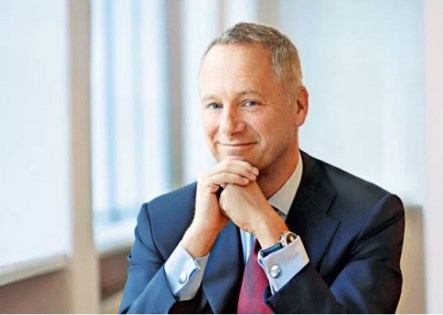
5 things CEO Wilhelm Schmid wants you to know:
Screen Shot 2017-07-25 at 11.41.41 AM

“Our first priority is that every new model is predestined to stand the test of time. This may lead to a classic design like the 1815 or more avant-garde concepts like the ZEITWERK Luminous.”

“Our second priority is recognition value. Even without the distinctive arched logo, an A. Lange & Söhne can always be identified. This is due to a combination of subtle features like the curvature of the lugs, the shape of the hands and the engraved look of the typography.”

“Our customers are quality-conscious watch connoisseurs, self-confident personalities who are seeking outstanding timepieces that reflect their individual style.”

“I am pleased to see that more and more women invest in our timepieces because they combine the best of two worlds: handcrafted mechanical excellence and timeless elegance. The majority of our watches are not designed for a specific gender but with a horological issue in mind.”

“Ever since we entered the Indian market in 2007, our timepieces have enjoyed growing popularity. We have, therefore, recently opened our fifth point of sale in Bengaluru.”

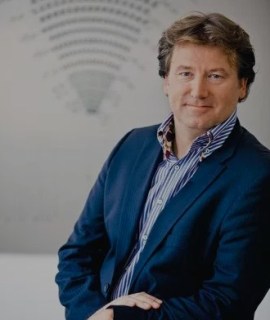
Quick Byte with Anthony De Haas, Head of Development
Screen Shot 2017-07-25 at 11.41.49 AM

“Money talks, wealth whispers. Our watches are for whom wealth whispers. You are not buying an A. Lange & Söhne watch if you want to show off — when you buy a manually wound two-hand watch for 20,000 euros, you need to be a connoisseur. It’s very understated. Our sale of platinum watches is very high…why? They look like steel. So nobody recognises that you are wearing a watch that is worth 20-, 30- or 50,000 euros. But you have it for your own self. You know the inner value. Not merely the dial. The story is complete.”

Why You Should Buy A Vintage IWC Watch, And Which One

20 Wednesday Jul 2016

Posted by sitanshi talati-parikh in Brand Watch, Interviews (All), Interviews: Luxury Brands, Publication: Verve Magazine

≈ Leave a comment

Tags

Interview, Interviews: Luxury Brands, IWC, SIHH, Verve Magazine, Vintage, Watches

Published, Vervemagazine.in July 8, 2016

Find out which vintage IWC watch their own historian recommends, along with how to check authenticity and make the right purchase

The first Special Pilot’s Watch left the IWC (International Watch Company) factory in 1936. It was the start of a unique relationship between IWC Schaffhausen and flying.

Screen Shot 2017-07-24 at 2.42.53 PM

Today, 80 years later, Verve speaks to the IWC historian, David Seyffer, about the tradition of the Pilot’s Watch and about becoming an IWC collector.

Screen Shot 2017-07-24 at 2.42.35 PM

What does 2016 mean for IWC?
“Eighty years (of the pilot’s watches) – and we have now really made happen with a huge collection! With a different variation, really to please all needs or tastes of watch lovers but still hold onto the main characters of the heritage of the Pilot’s Watch.”

IWC at one point targeted the next male generation with the ‘father and son pilot’s watches’ – is this still a trend and has your target customer changed now?
“I do not think so. Interestingly, I have met people, where the man had the Big Pilot’s watch and the woman was wearing the son’s edition. Today, the youth knows and appreciates the nostalgia associated with the mechanical watch. With all that is going on in the world, people want something out of history.”

If there is one vintage IWC watch that any collector must own which would it be?
“I would really recommend (since it’s on my wrist) the Mark XI. The reason: it’s affordable as a collector’s piece, and we have huge quantity of spare parts if it comes for servicing. The movement, Caliber 89, is like an all-running system. It’s impressive how precise these movements are which are made in the 1940s, 1950s, and it has really a cool-looking feeling. So if somebody wants to start with collecting wristwatches, this is really a nice timepiece to start with.”

Screen Shot 2017-07-24 at 2.42.19 PM

Approximately, how much would it cost?
“This depends on editions. You could potentially find a vintage watch within 4-5 thousand dollars, but then if it is a rare piece and is in good condition, possibly used by BOAC, then it could go to 15 thousand dollars or so. Also, authenticity…are they all the parts 100% authentic or not?”

If somebody in India wanted to buy one of the vintage watches, where would they go? How could they check the authenticity?
“Now we are living in the world of international business, so you can really get it everywhere. For example, if you find a nice offer on the Internet. But, then it’s the point of the authenticity. IWC offers a ‘certificate of authenticity’: you send your watch to IWC; there is a team of 3-4 watchmakers (and myself) and if everything looks fine, then you get an official certificate. Also works for people who want to sell antique or heritage timepieces. Interesting for all are the auctions (worldwide from the famous auction houses) where you may find a MARK XI Pilot’s watch!”

Screen Shot 2017-07-24 at 2.42.07 PM

If you could get a carte blanche to create a pilot’s watch based on the history that you are so well versed with, would it be very different from what the brand currently has?
“Not really…because this year’s collection is so strongly related to the original design. Probably a small change I would recommend, as a conservative person, would be to skip the date, to make the watch look like a Mark XI.”

What is the one takeaway that you would leave a new watch buyer with when it comes to IWC’s rich history and tradition?
“IWC is located on the eastern part of Switzerland, therefore the design is different. It’s this east German-Swiss approach with the watch – you can find it in the way the bracelets are made. And in the way the cases were made. And of course, traditionally, what IWC was always about: precision and quality.”

Who is the IWC watch collector?
“The typical watch collector is in a certain way, a freak, highly knowledgeable, with a diverse background. We have very, very rich people and we have students who save every cent they earn just to get a historical timepiece, or a new timepiece. Bottom line is, the interest to learn as much as possible about the watch. Recently, in the collector’s meet, there were people from the USA, Europe. And, there was Captain Vishal who flies Air-India A-330 for several years and guess what he wears—An IWC Pilot’s watch! So you see, meeting people from all over the world, and really with that passion, feels great!”

Discovering 25 cities with Louis Vuitton’s City Guide App

15 Tuesday Dec 2015

Posted by sitanshi talati-parikh in Brand Watch, Publication: Verve Magazine

≈ Leave a comment

Tags

City Guide Books, Interviews: Luxury Brands, Interviews: Travel, Louis Vuitton, Reviews, Verve Magazine

Published Vervemagazine.in, December 2015

Screen Shot 2017-07-25 at 12.36.02 PM

‘I travel not to go anywhere, but to go. I travel for travel’s sake. The great affair is to move.’ Robert Louis Stevenson

Screen Shot 2017-07-25 at 12.36.11 PM

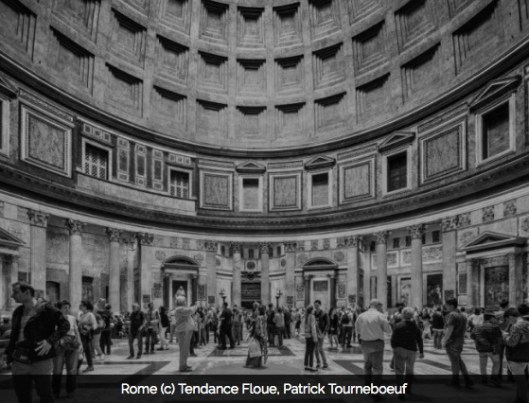
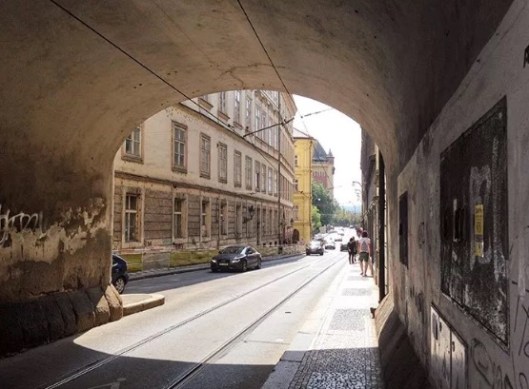
We’re sold on the beautiful travel images that capture monochrome moments from the cities. The ones above are from their newest cities, Chicago, Prague and Rome. Having been familiar with the beautifully produced hard-bound editions of Louis Vuitton’s colour-coded city guides (available in box sets as well), the just-launched app is a traveller’s dream come true. Lavish photos (taken by imaginative photography creative Tendance Floue) with an expansive lens-eye, an attractive and friendly user interface, the little category bubbles open up a world of painstakingly-collected information. But they already had us at the opening quotes, which change each time you access the app, like the one by Stevenson.

Screen Shot 2017-07-25 at 12.36.20 PM

Cafes that tell tales of day dreaming artists and authors, museums that paint a picture of a different time, streets that exude a ‘haute’ aura that has nothing to do with the ability to buy or sell. It speaks of a state of mind – the desire to experience the city through the eyes of the like-minded locals.

Screen Shot 2017-07-25 at 12.35.51 PM

A team of 50 experts, including those from the cities being covered, contribute content making it a comprehensive guide to 25 of the world’s most popular cities: fashion capitals, centres for contemporary art, beach towns and business hubs. The best part? The Parisian guide is available for free until the end of this month (the others cost €9.99 or US$9.99 in the App Store).

Screen Shot 2017-07-25 at 12.37.43 PM

Here’s what you can do:

Screen Shot 2017-07-25 at 12.37.49 PM

1. LOCATION, LOCATION It’s a snap to find any address on these easy-to-read maps, available offline. In location-aware mode, you can see all nearby businesses and points of interest, zoom in and refine your results by topic. With the search engine, you can switch to list mode.

2. LITTLE BLACK BOOK Create and view your address book of favourites at any time.

Screen Shot 2017-07-25 at 12.37.55 PM

3. POSTCARD FROM PARIS Send your loved ones a photo from your camera or from the guide’s gallery of pictures. Personalise your postcard and share your travel memories by using the filter in the colour of each city.

What’s more…

1. CONTRIBUTORS OF CALIBRE Each Louis Vuitton City Guide includes the participation of special guest contributors, who speak from personal experience of their home cities. Local celebrities or insiders open their personal address books and divulge several secret preferred haunts. For example, Prince M.L. Poomchai Chumbala suggests some of the elegant highlights to discover in Bangkok, while the film director Ivan Zachariáš takes the reader for a stroll around his favourite parts of central Prague.

2. LANGUAGE OF WORTH The guide is available in English and French options.

3. COLLABORATORS UNITE Louis Vuitton reaches out to journalists, writers, major figures in the world of arts and letters, many of whom divide their time between two cities; several authors often collaborate on one city, and each guide reflects the personalities of its contributors.

Screen Shot 2017-07-25 at 12.38.01 PM

4. (UN)COVERED If you plan to go the whole hog they also have a small leather case with the Monogram pattern, for the iPad and iPhone (6 and 6 Plus); they come in four extra colors inspired by the city collection: blue for Paris, yellow for Rome, red for Beijing and pink for Tokyo.

Did you know?

Screen Shot 2017-07-25 at 12.38.09 PM

Louis Vuitton has operated its own publishing house for some fifteen years and today offers a catalogue of more than 80 titles, including two collections focused on travel: its City Guides and Travel Books. Gaston-Louis Vuitton (1883–1970), grandson of the founder, was an avid collector and keen bibliophile, whose tastes ranged from literature to art books; he founded three bibliophile societies. When the Louis Vuitton store on the Champs-Elysées opened its doors in 1914, it already featured a comfortable reading and letter-writing room for its customers. This tradition continues into the present day at the Louis Vuitton bookstores.

Bulgari’s Guido and Fabrizio reveal what women want…

30 Wednesday Sep 2015

Posted by sitanshi talati-parikh in Brand Watch, Interviews (All), Interviews: Luxury Brands, Publication: Verve Magazine

≈ Leave a comment

Tags

Baselworld, Bulgari, Interview, Interviews: Luxury Brands, Watches

Published in Verve Magazine, September 2015

Bold design, irony, marriage of materials and at the core of it all – authenticity, they let us in on the fashion house’s creative sensibility…

Screen Shot 2017-07-24 at 1.28.04 PM

The Bulgari booth at Baselworld 2015 is abuzz with conversations, flutes of champagne or cups with a caffeine kick (depending on your preference) and alive with sparkle and pizzazz. The spectacular neckpiece from the Diva collection that heralds you into the boudoir of timelessness, the displays of watches that suggest tradition, technique, innovation and that sure-fire bold touch which is all-Italian. The Octo Finissimo with its size-zero figure to the Serpenti with emerald eyes that conceals secrets and time. It is no wonder Elizabeth Taylor’s personal collection of Bulgari jewels rocked the screen in Cleopatra.

The Bulgari hospitality is warm, and the passion of the makers floods through with the top notes of its designs. As Fabrizio Buonamassa, the director of the Bulgari Watches Design Center (who moved from Fiat to Bulgari following his love for watches) says, “Bulgari’s style is pure in terms of shape and sometimes opulent in terms of attention to detail.”

Screen Shot 2017-07-24 at 1.27.43 PM
Screen Shot 2017-07-24 at 1.27.51 PM

We notice how the brand — despite possibly attempting to rein in their desire to build a wide range of pieces — has enough to keep the most diverse customer satisfied. Is it any wonder that they have the pride of place at Baselworld — the moment you enter the fair, on your left is the sprawling ‘serpentine’ domain. How do they maintain a sense of aesthetic continuance through varied complications and bejewelled designs? Buonamassa explains: “Bulgari is a world of science and inspirations. You need to find the right language for the right products or you create strange objects! Women are all about emotions, and it is about finding the right shape and proportion while being consistent with the Bulgari values and rules. With men you are looking for performance, movement, engine, finishing…technical elements.”

Screen Shot 2017-07-24 at 11.49.24 AM
Screen Shot 2017-07-24 at 11.49.38 AM

While we may not be certain we want to be pigeonholed into these categories — the Saphir Ultranero and the Diagono Magnesium, for instance, could be as fascinating to us as the Diva collection or the Giardini Nocturna — it would make sense for the design team to focus on what is a large target audience for their aesthetic sensibility and happy marriage of materials. Buonamassa agrees — pointing to a strong trend of ladies’ complication watches being merged with jewellery. “Bulgari is a part of the Italian design culture. Italian design is unique because it is not merely ‘form follow function’. It is about the ‘ironic’ — it plays with colours and materials in a different way, to give the object a second life. Only Bulgari is able to use tubogas for a watch and make this iconic in the luxury market. We play with constrains and often these very constrains become the turning point of the project and drive the aesthetics.”

Screen Shot 2017-07-24 at 1.33.39 PM

And how do you keep it relevant? “I manage the science of the company and imagine how I can transform this science into contemporary products and not just copy-paste from the archives. My approach is contemporary with respect for the roots and the evolution of the science.”
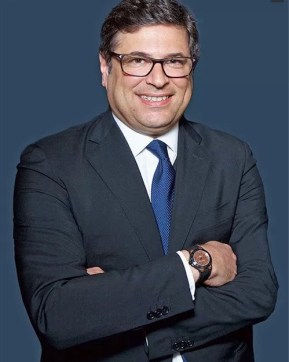
The gregarious Guido Terreni, managing director of Bulgari Horlogerie, drives home the fact that Bulgari, as a brand, is built on authenticity. “It’s about being true to your brand and your client. You can’t play around with your personality, and that’s exactly the same with a brand. The watches that are successful are successful for decades. Too much new stuff leads to confusion.”

Screen Shot 2017-07-24 at 1.27.26 PM

Terreni warms to the topic as he talks passionately about the various hallmarks of the Bulgari timepieces. “Serpenti is in the DNA of the brand since the past 70 years. Bulgari Bulgari, Diva, Lvcea are….” Iconic? “Iconic is an abused word. Everything is iconic in every brand. But Serpenti is truly iconic. When you are authentic and true to yourself, you are credible. And to be credible in luxury, you have to be credible in terms of style and craftsmanship, both. That’s why we have developed the know-how internally to address the competence of watchmaking. After all, the ladies are buying competence!”

With a diverse portfolio of luxury products, Bulgari has still made a mark with their watches, particularly their latest edition — the distinctive ‘vault-like’ smart watch (which moves beyond calculating calories burnt to storing valuable data). Terreni believes it’s a part of the core differentiation of the brand. “We have the technique at the service of the aesthetic and vice-versa. We are the only brand that thinks about technique and design simultaneously, we are not selling to watch freaks; we are selling to people who know what luxury is about and can recognise the authenticity of an idea and the craftsmanship in the watch. I love the idea generation, to see the design grow, to see the prototype become true…but this would be nothing if I don’t receive an emotion in return. Your emotion is the true reward of all this work. I don’t look for  ‘I like’, or ‘I don’t like’; I look for ‘Wow’.”

Spells in the Shadows: Prague’s Art

31 Friday Jul 2015

Posted by sitanshi talati-parikh in Publication: Verve Magazine, Travel Stories

≈ Leave a comment

Tags

Art, Europe, Interviews: Travel, Mandarin Oriental, Prague, Verve Magazine

Published, Verve Magazine, July 2015
Images by Sitanshi Talati-Parikh

There is a deep romanticism in Prague, the city that speaks of desire and timelessness….

Screen Shot 2017-07-25 at 6.25.51 PM

I see myself living like a troll under the Charles Bridge — or having a conversation one bewitching night with one of the many baroque-style statues that line the bridge. Such is the draw of the city — as if witches that hide in the alleyways have brewed up a mysterious potion with their gnarled hands, the elixir that entices you to want to roam the cobblestone paths searching for truth on the darkened walls. History seems to lurk in those streets, sometimes furtive, often beckoning, suggestive of many moments of love, lust, hope and death. Time stops at the very moment in the past that your imagination sucks out of the grasp of history…as if the pages turn before you in the form of shadowy streets and pebble-stone corners.

Screen Shot 2017-07-25 at 6.25.57 PM

One of the only cities in Europe offering the finest examples of every single architectural style, one would imagine this to be a city that would captivate minds seeking to paint dark rich strokes on canvas, extolling the virtues of a land that is like a dark maiden with a tattoo — neither fair nor blemish-free but full of promise. And yet, the nondescript galleries that are scattered all over the touristy parts of town are not plum with creativity. Surly faces, bored tones and a melange of artworks are what a tourist will encounter if seeking without knowledge of where to look. As I sit in the shady, tree-lined square, I see what others may have seen. Time etched on walls, celebrated by seasonal tourists and seasoned salesmen. Local kitsch and pop art history make their presence felt amid curios and street art.

Screen Shot 2017-07-25 at 6.26.03 PM

The walls don’t disappoint. Taking to the streets from Prague Castle across the Old Town to Municipal House would unfold almost all the historical styles, including Gothic, baroque, eclectic historicism and art nouveau. Not to forget the quaint Jewish Quarter with well-preserved structures and historical synagogues. And within many of these beautiful buildings, monuments of history, you may find inspiration.

Screen Shot 2017-07-25 at 6.26.09 PM

Across a beautiful park, taking the road behind the Mandarin Oriental Hotel, Prague, lies the Kampa Museum. One of the solid examples of artistic exploration where an explosion of thought can break through via a fine slice of contemporary musings available in the form of installations or canvases featuring 20th-century Czech and central European art. (Not to miss a gigantic chair sculpture by Magdalena Jetelová that was once washed away in the floods.) Culture goes pop with the Gallery of Art’s selection of Andy Warhol, Dali’s photographs and Alfons Mucha’s selected art nouveau works. They may be few and far between, but tucked away in the corners of the city seeped in mystery lie hidden gems. Works of art that only a person determined to seek is likely to find.

Screen Shot 2017-07-25 at 6.26.14 PM

ART TALK

1. State institutions such as National Gallery offer a selection from Czech art beginning with medieval art up to recent days.

2. Private galleries offer mainly well-recognized Czech artists known as ‘1960s generation’ and young contemporary artists. Galleries are scattered around the city.

3. Many young artists, graphic designers and young professionals have their studio in Orco, Prague 7 which has become a kind of cultural hot spot. The Chemistry Gallery supporting young artists is also located there. The Hunt Kastner gallery run by two members of Prague’s expat community represents local artists, while also being instrumental in promoting local art abroad.

4. Museum Monatelli (MuMo) is one of only few private museums of fine arts in the Czech Republic and the the museum’s inaugural show in 2009 featured works by 21 international female artists.

5. Princely Collections, Lobkowicz Palace at Prague Castle is likely to become well-known, but for now, the knowledge of it remains with a few. The palace (within the Prague Castle) houses a newly-opened collection of music, art, antiques and arms drawn from centuries-old collections of the Lobkowicz noble family.

6. The Leica Gallery, showcases contemporary photography through the year.

7. Amoya: A not-for-profit project supporting young artists and a platform for Artbanka. The museum’s program takes place in the Baroque palace where visitors can familiarise themselves with the world of contemporary Czech and international art. FUTURA is another not-for-profit centre, with a residency program.

8. DOX Center for contemporary art, architecture and design is considered a dynamic cultural platform.

9. The David Cerny Tour: A 3-4 hour tour by a motor vehicle to explore the works of the famous Czech sculptor and controversial artist, curated by Katerina Sedlakova, a freelance tour guide also connected to the Mandarin Oriental, Prague.

10. Summer Shakespeare Festival: Every summer, from June through September, Europe’s oldest and biggest open-air theatrical event dedicated to the works of William Shakespeare has approximately 150 performances, but in the local Czech language.

← Older posts
Newer posts →

|  Filling the gaps between words.  |

Writing By Category

  • Art, Literature & Culture
  • Brand Builidng
  • Brand Watch
  • Fashion & Style
  • Features & Trends
  • Fiction
  • Food
  • Humour
  • In The Media
  • Interviews (All)
  • Interviews: Business
  • Interviews: Cinema
  • Interviews: Cover Stories
  • Interviews: Lifestyle
  • Interviews: Luxury Brands
  • Interviews: The Arts
  • Interviews: Travel
  • Musings
  • Parenting
  • Publication: Conde Nast
  • Publication: Elle
  • Publication: Mint Lounge
  • Publication: Mother's World
  • Publication: Taj Magazine
  • Publication: The Swaddle
  • Publication: The Voice of Fashion
  • Publication: Verve Magazine
  • Social Chronicles
  • Sustainability
  • Travel Stories

Reach out:
sitanshi.t.parikh@gmail.com

© Sitanshi Talati-Parikh 2018.
All Rights Reserved.

Website Powered by WordPress.com.

  • Subscribe Subscribed
    • sitanshi talati-parikh
    • Join 51 other subscribers
    • Already have a WordPress.com account? Log in now.
    • sitanshi talati-parikh
    • Subscribe Subscribed
    • Sign up
    • Log in
    • Report this content
    • View site in Reader
    • Manage subscriptions
    • Collapse this bar
 

Loading Comments...