Art and Conversation

Tags

, , , , ,

Published: Verve Magazine, Features, November 2009

Photograph: Ritam Banerjee

Former wife of advertising magnate and art collector Charles Saatchi, Kay Saatchi has been following the path to international curating. At the Art Expo in Mumbai, she talks to Sitanshi Talati-Parikh about watching Damien Hirst as a student, living with unliveable art, and being Kay Hartenstein Saatchi


Satchi

In the maze of people at Nehru Centre, it took a while for us to find each other. Once I did, it took but a moment for me to realise the lady embodies resilience and vulnerability. There has been much said and a lot more not said about Kay Hartenstein – former wife of the reclusive art collector and advertising magnate Charles Saatchi, who after their divorce in 2001, married celebrity chef Nigella Lawson.


American-born Kay had moved to London to start an art gallery of her own, but not long after ended up curating around 30 shows in eleven years at Saatchi gallery (and a dozen more after) while being Mrs. Charles Saatchi. All through she concentrated on “mothering” young artists. “I like watching them develop their career along the way. I’m not really in it for financial reasons, but you can’t help but feel clever when you buy an artist when they are terribly young and discover that you have made a good investment 20 years later.” She met the now internationally-renowned English artist Damien Hirst when he about 19, an art student going around the degree shows. “I saw his very first show…when I was married to Charles Saatchi, we gave him big shows – I’ve known him always and forever.”


How does she pick up on who will be the next big art sensation? “After all these years of going around shows, your gut instinct becomes the strongest factor. Artists have to have skill, and conviction about what they are doing. I spend a lot of time talking to them about why they want to be an artist and what they’re trying to say with their art.”


The 56-year-old Southern belle with a clipped British accent maintains her interest in art began when she was a baby. “I am quite creative as a person – I paint and draw and take photographs. Every Saturday I would wander into art galleries – it’s always been a part of my life. The process was that we (Charles and I) would go see everything. We would travel to Zurich, New York…that was the fun bit, I loved that. I have behind me 25 years of learning – meeting and talking to dealers, collectors. If I see a work of art in a degree show, I will immediately know if it connects up to something I’ve seen before. Artists tend to copy other artists – they tend to be greatly influenced by the work they admire…until they find their own voice. I can sift through that.”


She has seen all kinds of art – beautiful, outlandish and even macabre. Can she live with the things she buys? “I do! But also, I have had the incredible privilege of having a gallery with my ex, where we can exhibit things that would be of too big a scale or too demanding to have at home. I have had some wild things at our house (think Damien Hirst). It changed for me when I had a child in 1994 and I thought, ‘I don’t want this little toddler growing up and looking at rather shocking art.’”


If people are going to think twice about housing a work of art, what purpose does it serve? There is an idealistic spark in her eyes as she warms up to the topic. “It’s the creative process,” she emphasises. “Whether or not it sells! It’s good for the artist if it does, so they have the money to pay the rent and keep making more art. Some people like living with very shocking art…art is less about shocking now than it once was. Lately there is a trend towards beautiful craftsmanship and beautiful sculpting. In the English art world people wanted attention and publicity and that worked very well. There would be huge headlines about artist Tracy Emin’s ‘unmade bed’ (from the series My Bed) and that’s good up to a point. It’s not what the real meaning should be.”


As she winces at the state of her hair in the local post-monsoon humidity, she confesses that she is very partial to India. “Art is born out of the culture and this is a culture that I am very interested in. Some of the Indian artists are fantastic – I love Anju and Atul Dodiya’s work.” She pauses and as an afterthought adds, “The Indian art market has developed very quickly – it has had to slow down like the rest of the world because of the economy, and that is probably not a bad thing. A little correction and not everyone thinking they can start a gallery without doing their homework!”


“It’s okay not being a part of the Saatchi gallery anymore. At the end of the day, speaking about owning things, they are just things. I buy art all the time. I don’t want to have a gallery again – neither commercial nor private. I buy small things, emerging artists, things I can house. I try to get my other friends that are collectors to buy what I love! What I liked about doing things at the gallery was getting to know the artists, handling the shows, introducing art. When we started doing this, there wasn’t too much contemporary art being shown in London. It was just the excitement of it all and the memory of that which keeps me going. I like to look forward, not backward.”


I delicately broach the topic of the love of art bringing two people together and then suddenly realising that the love for art is all that’s left. That, and a teenage daughter (Phoebe) she talks fondly about. She seems perturbed by all the “rubbish about her past life” that has perpetuated on the Internet. While she considered going back to her maiden name after her divorce, she found that people remembered her as Kay Saatchi – “besides, it helps to get a table reservation!” she quips. On a more serious note, “I hope I am defined by my efforts in the art world and not by my name.”

Deepika Padukone: Killing Them Softly With Her Smile….

Tags

, , , , , , , ,

Published: Verve Magazine, Cover Story, November 2009

Photograph by: Prasad Naik

She responds to questions with wide-eyed innocence. She will giggle and toss her head, even shriek with laughter. But to get her to reveal her innermost thoughts is a real job, discovers Sitanshi Talati-Parikh as she engages Deepika Padukone, voted the ‘Hottest Girl on Earth’ by a men’s monthly, in a freewheeling chat

Deepika04

There has to be a sense of mystery,” she intones, weaving her charm around us, zapping us with those smouldering doe eyes. She is the antithesis of the ‘socially networked generation’ that keeps fans enthralled with their hour-by-hour updates. A child-woman combination: the dimples in a captivating impish face reach out to you as if wanting to say something, but with firm, resolute determination, Deepika Padukone keeps interest at bay.

I look squarely at the long-limbed, quietly self-assured girl and wonder why she constantly holds back – doesn’t let herself be understood. “Having a guard or barrier up, not telling all, is a good thing.” She flashes that 100-watt smile. I don’t melt. I’m angling for a peek. “But that peek will never end. Today you’ll peek and tomorrow someone else will say I want to peek a little more – and then there’s no mystery left!” She continues animatedly, “There’s only that much we want to share with people. We are also human beings leading normal lives. You have to keep some things – nice and not-so-nice – to yourself. Even normal people don’t share everything with their friends and family. It’s important to have people wanting to know more.” That must take some effort – being consciously ‘normal’, constantly enigmatic. “It’s not an intentional thing. It’s automatically created. I’m not someone who makes the effort to create a particular aura around myself. I mean, how do you create something like that? It’s important to just be you and be real.”

She is Meera Pandit from Imtiaz Ali’s Love Aaj Kal (2009): the strong, silent type, simmering with emotion within. “Like Meera, I absorb and understand a lot without having to say anything. Even the way I react to certain situations. In the film, Meera is silent, as she wonders why Jai has waited until her wedding day to tell her how he feels. Only people who have understood the character have understood the silence in that scene – and that’s how I am. A lot of things are better left unsaid.”

Deepika was a great co-star. She suited the role of Meera in Love Aaj Kal really well and displayed a lot of depth. She is a very quiet and professional person, and seems down to earth and very attached to home.
– Saif Ali Khan, actor

While the twirly ‘RK’ tattoo on the nape of her shapely neck stares at me defiantly, expressively and even outrageously, the girl with the tattoo remains stubbornly silent about discussing relationships – past or present. Of course the letters could stand for anything – rock king, reverse karma, renegade kitten. While Wake Up Sid star and heart-throb Ranbir Kapoor and her make a very attractive couple, the rumour mills have been suggesting turbulence. “I’ve reached a stage in my life, in the last couple of weeks, where I have become a little superstitious and I don’t want to talk about it. I am guarded now. I want to keep it to myself. I think enough has been said, stories going back and forth, people saying what they want…. As long as we know what’s happening in our lives, that’s all that matters.” Does she aim for perfection? After all, Kapoor has been recently quoted in a daily, saying, ‘I don’t want a perfect life.’ “Ranbir and I come from different families – I guess what he thinks is perfect or imperfect will be different from what I think. For me, a perfect life is when obviously everything goes my way. If I am happy doing everything I am doing, happy in the relationship I’m in, with the way my career is going, my family life, if my films are successful, if I am being appreciated for my work, if I’m eating good food…that’ll make me happy.”

Surprisingly, underneath that controlled veneer, she confesses to being a die-hard romantic. “I am a complete sucker for love and romance. I love doing those perfectly romantic things. Being in love is a beautiful feeling. I’ve written lots of love notes….” In a (desperate) bid to get an unrestrained confession, I suggest, ‘Have you ever gift-wrapped yourself?’ I am rewarded by a widening of the kaleidoscope eyes and a look of shock. “Gift-wrap myself?! NO!” A moment to reconsider – “But that’s a good idea!” She chuckles – possibly planning a 5-feet-9-inch surprise in her head. “In the kind of life we lead, the best gift that you can give is spending quality time with each other. No amount of material gifts makes any difference.” How often does that happen? “You’ve to make time for it. People think that if you are in a relationship you’re distracted, but I’m very good at balancing it out. It doesn’t mean that I am not focussed or not as driven as someone who’s single. It makes it easier, because it feels more complete. Romance can’t be defined. There’s too much theory on love and romance and relationships – you can’t go by what the textbook says. Sometimes you just need to let it be – the process and experience is different for different people. When you are in love and in a relationship, everything just falls into place.”

We certainly did not expect Deepika’s dream to be a top model to be realised so soon – it’s entirely due to her determination and clarity of thought. We are extremely proud and while we want her career to continue, it is more important that she make an effort to be a better human being and remain grounded at all times. It may look charming from the outside, but it is a very tough life.
– Prakash Padukone, father 

Adulation then. That must be a tough one. “It’s something I already knew would happen to me when I got into this profession. If you do well, that is. If you are honest to your work and performance, everything else will follow – fame, success, money. My family keeps me grounded. Fame is not new to me – I’ve seen the way my father has handled fame and success. Today it’s there, tomorrow it may not be there.” Will that be okay? “It would be if I’m not affected by it now.” But it’s a part of your life, you’re used to having it around. What happens when it’s not there? She hesitates. “I have no clue. It may be scary.”

Six films in the kitty – with romantic thriller Karthik Calling Karthik opposite Farhan Akhtar and comedy Housefull due to release next year – and she’s already worked with some of the top directors and actors, across genres. Not to mention handling a box office debacle, Chandni Chowk to China (2009), with equanimity. “You move on. I handle my successes just the way I handle my failures. Ups and downs are a part of my profession – there’s no point feeling bad about it. I’ve worked hard and as an actor I know where the film went wrong and I’ll be careful next time.”

Deepika is the epitome of an Indian beauty – regal, graceful, dignified and with a maturity well beyond her age. She has always been a consummate professional, the discipline deeply ingrained – probably from her modelling and sports background. She will go a long way.
– Farah Khan, director

It may be The Secret or just plain wilful resolution, but Padukone hasn’t found herself floundering through decisions like a radical career shift, moving from Bengaluru to Mumbai (which was a huge change for the Padukone family) and disassociating herself with beauty pageants that have been the ticket to stardom for many a model. “My mission for myself was that I would become a famous model – without taking part in a beauty pageant. It’s a great platform for certain people, but it’s not for me.” Hesitant to break away from her firmly adopted diplomacy, she explains, “I can’t compete with other people and be questioned about what I want to do. And being given points because I’ve answered a certain way – that’s just bizarre. I don’t get it.”

With ex-badminton champion Prakash Padukone as her father, a younger sister entering pro golf and the fact that Padukone herself used to play national-level badminton, it was just her single-minded knowledge of who she wanted to be – a top model – that brought her to where she is now. “I didn’t enjoy sports enough to make it a profession for the rest of my life. You just know that something is coming your way or something is meant to be and it all fell into place.” It’s like a fabulous dream, I suggest. She interjects sharply, “But I’ve also worked hard for it! Which is why this is happening to me. I’ve done the right thing at the right time. I also believe that if you really want something, it happens.” At 23, Padukone is the owner of a Mumbai home and a BMW to take her places. But she is far from resting on her laurels. “I haven’t done everything! I have a lot left to do. More films (an Indian period film, like Umrao Jaan)…and so much more in life too. At 60 I’ll hopefully be married, with a happy family…cruising somewhere. When I look back I want people to remember me as a good human being – not an actress or a famous person. If you are not a good human being, nothing else matters, how rich you are, how beautiful you are… whatever you’ve achieved doesn’t make any difference to anyone.”

I can see that the intent to be a good person is deeply ingrained. And it is this intrinsic goodness which may have been taken advantage of. Someone somewhere has touched a raw nerve and made her a hard-backed turtle – careful, diplomatic and withdrawn. I sense a deep-rooted distrust of the media. “Sometimes it (media) bothers me a little bit. It’s annoying when stories are fabricated. Check with me, clarify with me – that’s fine. When things just come out of nowhere – I’m not saying everything is false – but not everything is true. It is annoying when things are not true.” There appears to be something specific on her mind. Just as I feel that she may say something more, the moment has passed and she has reverted to her unflappable self: “If you look at everything positively, it shouldn’t matter. I can’t pick up a tabloid and read it. It might affect me for a bit but then I get into yoga and other things and I get my mind off it or get into work. There’s no point being upset over something. I like being surrounded by positive people and positivity. I get over things fast. I have no idea how I manage – it’s scary sometimes! My father in particular has been a very positive influence – ‘don’t let things affect you, if something is bothering you, talk about it, let it out.’” Obviously there was a footnote which said, talk, but be careful whom you talk to.

Deepika Speak
Greatest fear “To lose loved ones.”

Filmi buddies “Beginning with Ranbir (Kapoor) – you can’t get filmier than that! I’m in touch with a lot of actors like Asin and Bipasha Basu. We don’t hang out – we speak or sms each other once in a while. I’m pretty okay with everyone…Priyanka (Chopra) even. We used to meet earlier, now we don’t, but we’re still in touch.”

Quirks “I am obsessed with cleanliness. If I have to live with someone, I’d clean their mess too!”

Passions Work, food, playing sports, yoga.

Pet Peeves “None.” Not possible. Thinks. “None.”

TV’s Dressing Down

Tags

, , , ,

Published: Verve Magazine, Nerve, October 2009

Looking at cult American television styling for inspiration may not be such a bad idea for the Indian boob tube, suggests Sitanshi Talati-Parikh

It was in 1998 that a deep sense of style began to permeate American television, with the advent of hit TV show Sex and the City. While the women were sharp, well put together and style conscious, the show only became the crucible of fashion a couple of seasons down, as it became more firmly established and daring. Not surprisingly, the show won an Emmy award for Costumes, and last year, designer Patricia Field launched a 60-piece Marks and Spencer clothes line modelled on the show’s styling.

Television04

And in that very fact lies the secret of the show’s successful outfitting: it brought about the genuine mix of high street and high-end designer fashion and made it accessible; also pointing out that the protagonists are not afraid to poke around musty vintage shops. Not just in the fact that Carrie is brave enough to wear her wardrobe experiments with élan, but also the fact that her concoctions are acceptable because of her supreme confidence. Think of the time she wore a Chanel top backwards with a handkerchief, or embellished her outfits with exaggerated accessories (corsages). Not to miss her unabashedly running through the streets of Manhattan in bright hot pants and stilettos.

One would assume all shows set in Manhattan would immediately be style and brand conscious – but that was not the case with Friends, where the styling was often atrocious (which did nothing to reduce its fan following). Gossip Girls may never achieve cult status like that of Sex and the City, but for both men and women, the show promises a feast for style-conscious eyes.

Television02

So what’s wrong with urban Indian television? Is it the fact that there are no shows set in trendy metros? Are we to remain relegated to putting up with the antiquated styling and oppressive jewellery of soap operas on the one hand and jeans and trashy urban outfits of reality shows on the other? Brinda Shah, styling consultant for television channels like Zoom explains, “We have a lot of restrictions in terms of clothes. Not just with the censor board which is difficult to say the least, but also the fact that Indian women cannot carry styles like high-cut backs. While celebs and VJs can experiment, regular people and TV actors are not as easy to work with.

The receptiveness of the audience needs to be considered – and really, it’s all about attitude.”

Undoubtedly, top TRP-endorsed Indian serials manage to put together a dazzling array of traditional finery – to the extent that it creates aspirational dressing for the audience, particularly when occasions demand such opulence. In that lies the strength and weakness of the fashion quotient that exists on television: it remains more traditional costuming where the women practically ‘sleep in their jadau’, rather than moving up the design ladder to becoming cutting-edge styling that has design houses taking notice. With top designers upping the ante in the Indian film industry (where Karisma Kapoor’s puff-sleeved frilly dresses changed into Kareena Kapoor’s chic minidresses) hopefully it is just a matter of time before they decide to foray into televsion – an untapped medium of huge impact.

Barenaked Ladies’ Men

Tags

, , , , , , , , , , , , , , , , , ,

Published: Verve Magazine, Verve Man Supplement, October 2009

Salman Khan, the trailblazer of toplessness in Hindi cinema, transformed from an endearingly lean romantic hero into a full-blown male with an explosion of warrior-like muscles. The others grudgingly followed suit(less). Tongue firmly in cheek, SITANSHI TALATI-PARIKH disclaims all puns as truly intentional as she traces the shirtless journey

Ranbir01

WE LOVE THEM, WE LOVE TO hate them, and now we’ve got them by the balls. For years, Choli ke peeche remained a resounding metaphor for desi mankind, as women heaved with cleavages bared and shimmied their naked bellies. It’s time for retribution. Men have now to convince us of their physical worthiness. No, I’m not a feminist. I truly love men, but this is honourably judicious and just sound philosophy. No woman or gay man worth her/ his salt will settle for less than that.

So began the era of the shirtless man – and the ball was set rolling by Prem-boy. Boy, do I miss Prem from Maine Pyar Kiya. I’d be his friend any day! Ignoring the fact that his first commercial success may have had something to do with his lean frame and boyish charm, Salman Khan instead fixated upon the name as a lucky charm and decided to henceforth fill the screen with his presence, literally. Prem from Partner and No Entry are not exactly more prem-worthy simply because there is more of him to love. Characteristically, Salman Khan’s beefy frame became more ‘wanted’ than his histrionic abilities as he cleverly diverted our attention to his torso, with frequent fluid and well-practised moments of sudden shirtlessness. The swollen muscles oozed charm and the girls swooned. And the men followed suit. Swooning, I mean. They began hyperventilating – they realised that to be taken seriously, as true romantic lovers, with fire in their loins and sincerity in their hearts, they would have to bare all. Truth be damned, the shirt must come off. And so began that waxing of the bodies and the waning of the clothes, as the actors worked themselves into a deep sweat for the roles that demanded an idolisation of their bodies. The Khan gym became the harvest ground for the upcoming lean, mean male machines.

Shah Rukh Khan decided that the best way to circumvent this phenomenon was to do exactly the opposite – keep his shirt on. Tantalising and teasing, he wore skin-tight ensembles, T-shirts that promised a well-toned torso when peeled off, to which only those near and dear would be privy. For the not-so-lucky others, it was left to the fertile imagination and Chinese whispers. And then, someone near and dear to him decided that enough was enough. Such magnificence must not be left inside the closet, but must be shared with the populace at large. So, amid quite a splash, all multiple packs of SRK’s un-really flat belly were exposed in Farah Khan’s Om Shanti Om. The women (and men) responded with sincere gratitude – so much money was spent in a genuine quest for sensual pleasure that the two Khans (one with a flat stomach and one generously pregnant) sang their title track all the way from the box office to the bank.

Aamir Khan watched in stoic silence. He knew his work was cut out for him. Baring his chest as a farmer would only get the spade card – he needed a clever way to up the shirtless quotient into an ace of hearts. He decided that the only way to make women scream with orgasmic satisfaction was to go down south. That’s when he decided to recreate Ghajini in Hindi. His blown up torso filled the screen with its angst, the veins on his muscular arms popped out with fury – that seemed to glower with an incinerating question – Prem, Rahul or Me? After all, if anyone came after his girl with a hatchet, whether she lived to tell the tale or not, he would make sure justice was achieved. Even if it killed him to remember to do so.

While the cream Khans were running around scheming pure nudity, at the Kumars’ there was much debate about the best course of action. How could the great body transform from toned-stuntman-entertainer into sizzling garam masala? That is when they decided to take the high road – with the wife unbuttoning khiladi husband’s pants in a public display of affection. Truly hedonistic. Meanwhile, his old counterpart Saif Ali Khan was not to be left an anari any longer. He figured a hot new avatar was in order and in Salaam Namaste, in a mad Race, with a lot of Tashan, he showed the world that what he was made of. We know at least one girl who fell hard for it and requested a more detailed inspection. While playing onscreen gangster roles to vindicate his offscreen ones, Sanju baba (Sanjay Dutt for the uninitiated) decided that he couldn’t be forgotten – after all, he was in his hey days, the proud bearer of a hot bod, too! So he joined the ranks of the younger lot – the likes of Arjun (Rampal), Zayed (Khan), Upen (Patel) and Dino (Morea) who were flashing well-toned bodies and not much wit.

When you talk of the real current guard of male hotness, Hrithik Roshan and John Abraham immediately spring to mind. I recall a young Hrithik Roshan out on a romantic date with then-girlfriend Sussanne, looking dangerously attractive. He wasn’t buffed up – he was lean and lanky. And then out of the blue, Kaho Na Pyaar Hai threw up an overnight sensation – a new dancing superstar with rippling muscles and a body that seemed like it would burst out of the sheathed vests. The girls nearly jumped out of their seats with uncontrollable hysteria. I can only imagine that Roshan, a shy, ambitious youngster (the industry is full of such oxymorons) was overwhelmed with the response, scared even, so afraid for his life that he decided it was better to keep the clothes all on – at least until he was well armed. The Greek-god-superhero protected us in Krrish, battled his suitors in Jodhaa Akbar and matched wits with his counterpart in Dhoom 2, all suitably unclothed, leaving women severely asthmatic with increased bouts of breathlessness. As if that is not enough, to drive the point home hard, Roshan (with full aashirwad from Roshan senior) has decided to shipwreck our hearts even more with his upcoming super-sensual Kites, where it is all about baring more, not Barbara Mori.

John Abraham had it easy or hard depending on who’s judging. He could have been written off as a piece of rugged meat: good to bite, but tough to chew. He met all the traditional bad-boy expectations: hard, chiselled body, a driving desire for bikes and the rough road to success; and to the disappointment of many a woman, a hot babe to go with the hot body on the hot wheels. The slightly crooked, dimpled smile and the wayward earnest expression belie the fact that he has an MBA tucked up his sleeveless arm. Going straight into no-nonsense territory, steamy Jism proved early on that he had no qualms about using his body to the best advantage, Dhoom sent pulses racing faster than his bike and Dostana captured the juicy dimples in all his cheeks. After his serious nudity in New York, we may grudgingly agree with the bootylicious actor when he asserts, ‘You may know me for my body, you may think I am sexy, but you will respect me as an actor.’

And just around the corner, the boy next door has come a long way from being a performer in Shaimak Davar’s dance troupe, better known for his flamboyant relationship with Kareena Kapoor. And now he is playing the role of one of the most eligible bachelors, playing the field by playing his current relationship(s) close to his chest. Always sporting a well-expanded torso, ‘F’hahid Kapoor is riding a high horse, with hair askew, grim determination and a lean, shirtless body steering him very close to the winning line, making him the industry’s latest poster child of toplessness. Rather than well-clothed charm and boyish appeal, it is the (unnecessarily) bare-chested appeal of kamina Charlie that seems to tug at female (and box office) heartstrings.

When we speak of male nudity, there is a young debonair rake who will possibly never live down the unexpected sensation of a particular homoerotic towel scene in his debut movie, one that will be etched into memories of an unforgiving and salivating audience for years to come. He may hide behind his beard (Rocket Singh), wear khadi (Rajneeti), sleep in (Wake Up Sid) and disappear from the media, but Ranbir Kapoor will forever remain the iconic just-showered Ranbir Raj from Saawariya – all infamously fair and handsome.

Proving their own worth in the meatpacking business is the young crop of ‘thinking actors’ who are in various stages of undressing. Neil Nitin Mukesh, who has a predilection towards dark roles, has seriously gone the full monty for his upcoming film Jail. Farhan Akhtar gave us a splashy preview in Rock On!! and Abhay Deol was darkly interesting in his lazy, rather hairy topless state in Dev.D. Imran Khan has yet to show us what he’s made of, and he can kidnap us anytime to do so!

Verve and the Divas

Tags

, , , , , , , ,

Published: Verve Magazine, Line Up (Behind the scenes of the cover shoot), October 2009
Photographer: Vishesh Verma

Lineup01
Lineup07


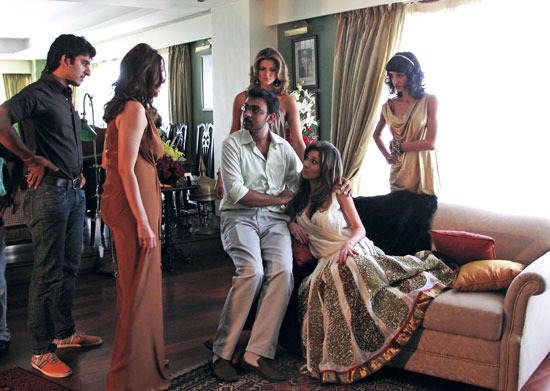
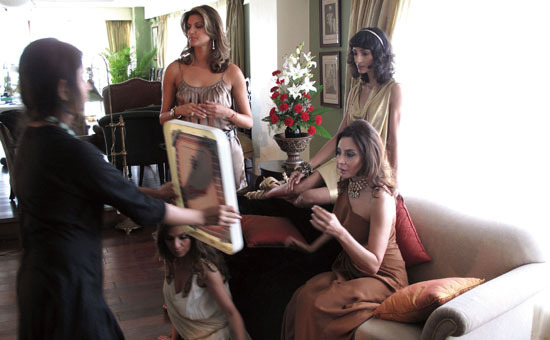
Suddenly, a lazy Sunday becomes suffused with energy – there are make-up artists, hair stylists and a host of Verve staffers scurrying about the impressive Mahindra Towers, Mumbai. Really, getting eight women of ‘hot’ couture together could be termed nothing short of an achievement. Smiles pasted, calves toned to deal with the pressure, endless cups of soda (not diet, by the way) and coffee later and we have 10 hours worth of memories of one helluva iconic shoot.

We start with two good omens: the breaking of porcelain and Rita Dhody. The first to arrive, amicable to a T and replete with fresh ideas, Rita remains, until the end of the day, charm personified. In an aside, while we wait for the others to put on the finishing touches of their make-up and get the team from Yasmin’s to tease their hair into sensational curls, she tells me, rather nostalgically, how she not only let Verve into her heart, but also into her home for an “amazing feature, full of depth, that brought in everything that was good and beautiful in my life” way back in 2003.

There is a lively sprite-like quality about Akanksha Nanda. Her vitality seems to spring from more than her slight frame and she chats with me about how much fun she had on a ‘London holiday’ where she did a fashion story with Verve and managed to squeeze in time for some heavy-duty sightseeing as well.

I skip past reams of cloth and a tangle of wires, stop to admire a couple of well-guarded stunning pieces of Zoya jewellery and make my way towards Nandita Mahtani and Haseena Jethmalani. As they are busy multitasking – what with make-up, personal chats and phone calls, it becomes practically impossible to get a word in edgeways. Besides, Nandita is terribly distracted, having made a rather ambitious plan for Alibaug for this afternoon. As her phone rings non stop and her antsy stance begins to affect the others, photographer Vishesh Verma and the Verve art team (creative director Falguni Kapadia and photo editor Lamya Bhatri) attempt to get the perfect shot.

Verve fashion director Nisha Jhangiani (ably assisted by Sohiny Das and Rishika Roopchand) has barely stopped to eat, as she flits from one woman to the next, as if on adrenalin, picking the most flattering outfit, convincing, cajoling, mollifying and possibly, mentally exploding. In the midst of it all is an incessant demand for banana chips, mirrors (and more mirrors!) and the cause of finding lost phones and designer handbags.

Malini Ramani strides in with her personal air of unabashed confidence. Immediately she needs a caffeine high – she can probably sense the zing in the air. Poised through it all, from the moment she steps out of the bubble-elevator, Simone Singh’s eyes light up with the memory of her first cover shoot with Verve – which incidentally took place right here and was ‘all roses’. Now, as she gets her make-up done, she appears apprehensive about ruining her pristine white skirt. A Verve staffer’s throw is quickly handed to her, with Lancôme make-up artist, Stafford Braganza’s reassuring voice in the background saying, “The make-up won’t spill!”

Kalyany Chawla, driving straight from the airport chats animatedly with everyone; a little hug here, a little peck there, noting every style detail and keeping a firm hand with her hair and make-up artists. Leaning forward she confides, “I appreciate the fact that you don’t have to be 20 to be on Verve’s best-dressed list!”

Waif-like Priya Kishore, who flits (even floats) across the room, confidently carrying off an extraordinary haircut, in a way that only she can, gives us a thumbs up for willing to experiment with her unconventional style. I follow her up narrow metal stairs and watch with fascination as she deftly pulls off a fabulous inside shot in a matter of seconds. She quietly takes off her sky-high gold heels, puts ballerina flats back on and flits back down to earth. It will be some time before we do.

desi-pan and paan-chawal

Tags

,

Honestly, it has always bothered me. The Indian writing in English (particularly of the diaspora). I can see people going into exacting details about the nuances and sights and smells….its cloying. There is something shriekingly Indian about it – like we are not fine just being in our own skin that we need to overtly display it in every sentence with the haldi, the masala, paan, the works. There are very few writers whose works work for me, and most of the others I just prefer to avoid. I can’t abide the nostalgia, the sense of what could have been and the mysticism. And often the not-so-subtle desire for social change that makes it just so oppressive. It doesn’t make us respond or emote better if we read exhaustive descriptions of the sights smells and sounds of the neighbours. I wonder when we can actually just drop the clinging to desiness and culture and just start relaxing – in being, naturally who we are: urban Indians, global citizens.

Age of Lovelessness

Tags

, , , , , , ,

Published: Verve Magazine, Nerve, September 2009

Young men and women have become cavalier about love – romance has disappeared and it is a recall to the era of practical compromise, this time, by choice. Sitanshi Talati-Parikh touches upon the pulse of relationships as portrayed by contemporary cinema

No longer is a single man (with or without fortune) in want of a wife. Men are slippery eels – the kind who don’t know their mind and remain confused bachelor boys for life, while the woman of their dreams escapes into the arms of another. Simultaneously, women these days (the strong career-driven kind) are equally adept at being dense at matters of the heart. Spending time on a long-distance relationship is not worth the trouble to either party, and hopping in and out of a relationship is easier done than said. Love Aaj Kal (2009) takes a step forward from Hum Tum (2004) and drives home the point touched upon by Kabhi Alvida Naa Kehna (2006). Hasty marriage choices – particularly made because it is the right time to do so, or due to societal pressures or even because they seem logical, tend to lead to greater unhappiness.

Qayamat Se Qayamat Tak (1988), Dil (1990) and their ilk were about breaking free from the boundaries of familial pressures and making choices purely out of love. Movies like Chalte Chalte (2003) and Saathiya (2002) moved on to explore the consequences of following the heart and the reality of making those choices. The new age of romantic cinema is that of Love Aaj Kal, where love is about practicality. Money is not necessarily the issue here – rather it is things like geographical location, the frame of mind, the inability to say ‘I do’, the desire to not get fettered by the shackles of a permanent relationship, and the importance given to the career of both individuals.

While Love… is actually pointing out the folly in choosing practical considerations over holding onto a soul mate, the fact still remains that we are currently living in a loveless age. Coming together and moving on is so easy – the options are so much more; it is easier to break up than stay together. It’s so lacking in emotion, that a break-up can be celebrated with a party thrown by the couple together. It is the era of the thinking couples’ love story – devoid of romance, emotion and yet full of unrecognised heartbreak.

a buzzload of marketing and a dollop of money

Tags

,

so at what point do you concede that marketing drives content everywhere? it’s quite a vicious cycle – to keep publications afloat, ad revenue is the bread and butter. at what stage does it become the most important aspect of editorial content? when does one draw the line to say, screw the moolah, we gotta say what we gotta say? while ethics are not in question, it’s actually a fact that we write what we are paid to write, rather than want to or believe in writing. in a free market economy, while sustainability is important, one also needs to hold onto the right of free speech. if we say something too vicious (but true) we can alienate people and so the advertisers. if we choose not to write abt something we don’t agree with, then we may alienate the people that keep us going. the grey line has been crossed and we need to stop and reconsider if we would sell our souls to pay the price to keep the written word alive. An international men’s monthly announced their annual issue with a huge “in association with…” It is as if alcohol brands are now going to be associated with media and the top people in the world that media represents. everywhere, everyone has fallen prey to ad-driven content and marketing. so it all boils down to one thing: corporates hold the strings to everything: politics, media, consumer goods and therefore consumers. How far will we go? The show 24 is not far off the mark when it speaks about the government not being the enemy as much as the world;s corporate houses – after all, money is more powerful than power itself.

lost in the bylanes of bandra

Tags

,

it used to be a joke – needing a passport to go beyond worli, but now i understand why it is so difficult to navigate the bylanes of my favourite suburb – bandra. While it is full of exciting little lanes and cafes, character and quaintness; it remains shrouded in inaccessibility. lanes map into more lanes, and turning from one bit just takes u into another. the grid is meaningless to an outsider.

and yet, as i made another attempt this weekend, armed with addresses and numbers, i began to realise that the more time you spend here, the more familiar it gets – having to stop at every lane and asking a rickshaw driver for directions notwithstanding!

essentially, bandra has character. u can spend ages sitting in a little cafe and watch the world go by, or you can wander through the lanes, and discover one something new at every turn. everyone seems to be going somewhere, and yet nowhere.

there’s an unhurried pace that differs from the city: it makes you want to stop. maybe its bandra, or maybe it’s the fact that 20 min outside the city and suddenly it’s a different world!

i love taking the sealink, it makes me feel connected to this place, this is little haven that is rapidly turning into an extension of the big city, losing its charm and becoming more…concrete…if that makes sense.

a weekend in the city

Tags

,

i have always felt that to really get a break, you need to leave the place that you live in, and go somewhere else. that breaks the cord of attachment and helps get your mind free. just this weekend i discovered that that may not be necessarily true. i had a fabulous time, where I didn’t think about anything that would bog me down, because I behaved, for a day, like a tourist in my own town. I watched a play, ate dinner out, went somewhere else for drinks, hung out at a friend’s place, slept in, went out for brunch, and wrapped up with a 3D animated film. I would probably do one or two, or maybe even three of those things on a normal weekend, but not all. And coming together in a single day, where I don’t have to think about anything that matters, makes my mind feel so free. Sometimes, coming home can be fun and relieving, but sometimes, home can mean something much bigger – a life that you want a break from. There’s often nothing wrong with our lives, it’s how we pace ourselves and how seriously we take it. So often, our mind just needs to break free – whether it is for a few hours, or even for a day.