• About
  • Brand Building
  • Film & Drama
  • Writing: Arts & Lifestyle
  • Writing: Interviews
  • Writing: Luxury Brands
  • Writing: Travel

sitanshi talati-parikh

sitanshi talati-parikh

Category Archives: Art, Literature & Culture

Verve’s Bollywood Style Awards 2008

19 Tuesday Feb 2008

Posted by sitanshi talati-parikh in Art, Literature & Culture, Fashion & Style, Publication: Verve Magazine

≈ Leave a comment

Tags

Bollywood, Bollywood Style Awards, Fashion, indiancinema, jabwemet, Saawariya, vervemagazine

Published: Verve Magazine, Features, February 2008
Photographs by Manmeet Bhatti

After a long era of homegrown costumiers dressing movie stars of yore, fashion designers styling glam queens has become de rigueur in today’s Bollywood. From unique kitsch to contemporary chic, Verve awards three veteran couturiers for their distinctive Indo-retro costumes that set the screen ablaze in 2007 and recreates these trendsetting looks with model Amrit Maghera

Bollywood01

Fantasy Mode – Saawariya
Anuradha Vakil for Sonam Kapoor
In the romantic, lyrical tale described over four fateful nights, the screen comes alive with intricate attention to detail in the ambience of Saawariya. Fantasy woven into the fabric of traditional designs enhances Sakina’s (Sonam Kapoor) mystical quality, as she flits in between the surrealistic frames. Designing with the outlook of ‘poetry in motion,’ Anuradha Vakil, known for her work in fashion design that is deeply rooted in Indian crafts, completes director Sanjay Leela Bhansali’s vision. Understated designs, which shadow the intricate background sets, are actually realistic and wearable. Empire waistlines and floating anarkalis in classic colours (primarily black and white) have become the rage. Drawing from kathak and the Islamic arts and culture, there is a predominance of antique fabrics, appliqué and ikat weaves and kalabottan embroidery. Vakil shed her initial skepticism at designing for a commercial film, when she discovered the artistic vision of the film.


Bollywood02

Authentic Recreation – Khoya Khoya Chand
Niharika Khan for Soha Ali Khan
In a film that takes the audience back to the 1950s, to the era of black and white cinema, Khoya Khoya Chand, a story of on-set romance, subtly plays with the mood of the time. Niharika Khan (along with Ashima Belapurkar) tracked back to film magazines, old movies, footage, and survivors from that decade, meticulously developing the evolution of the 50s’ silks and baggy pants to the chiffons and drainpipes of the 60s; indemnifying the teased hairdos, and svelte sari-draped divas. Khan tapped into real life sources, like those of her mother-in-law, Begum Para, her mother’s friend, Waheeda Rehman, and ’60s glamour doll, Saira Banu, making diligent use of valuable resources like old pictures (especially those of Madhubala) and her mother’s saris. It is not surprising then, that the styling is reminiscent of divas from that era – Nadira, Nargis and Meena Kumari. The movement in time is also symbolised by the colour palette: the earlier half of the film restricts itself to muted hues and black and white, while the latter half erupts with a burst of colour, as the cinema transitions to Technicolour.

Ethnic Fusion – Jab We Met
Manish Malhotra for Kareena Kapoor
As the small-town girl, with spirit and a refreshingly optimistic outlook on life, completely unaware of street corner whispers and conventional norms, Kareena Kapoor carried off this eccentric look with aplomb in Jab We Met. Manish Malhotra, exercising the artistic freedom given to him by the director, Imitiaz Ali, boldly dressed Kareena in patiala pants in a fusion concept with a mismatched T-shirt and traditional hoop earrings, which have gone on to become a cult statement. As he describes it, “The blue singlet was peeking through her shirt, and her character, Geet, is someone who would shed the shirt and jeans for a patiala and ganjee – the transition is easy, not requiring any deviation.” The outfit was designed keeping Kareena in mind – her slim figure, height and darkened hair complemented the ensemble. In the latter half of the film, when the character is in Shimla, though Kareena would have preferred dresses, both the director and designer were in agreement that a simple salwar-kameez would work best, staying true to her small-town roots.
And work well it did….


Bollywood04

Retro Rendering – Om Shanti Om
Manish Malhotra for Deepika Padukone
Celebrating the ’70s in multicoloured tones, bling and outlandish evocations, Manish Malhotra had fun going vintage with bright colours, skintight churidar-kurtas and bouffant or long straight hair to boot. Being brought up on an intense dose of ’70s films, Malhotra got the opportunity to recreate this vision in Om Shanti Om. Farah Khan, who shares his passion for the era, didn’t think twice before selecting him as the costume designer. Khan wanted to be exact, and even modelled the looks on actresses like Hema Malini, Rekha, Mumtaz, Leena Chandavarkar and Helen, before opting for the final designs. Malhotra loved dressing up Deepika Padukone, whom he describes as, “a beautiful young actress, with a great figure. We could mould her into the look we wanted.” He is thrilled to have recreated history, particularly in the multi-starrer song, which was an exciting challenge in itself. The retro style is now so popular that a commercial line celebrating this look is soon to be launched!

Saawariya: Review

19 Wednesday Dec 2007

Posted by sitanshi talati-parikh in Art, Literature & Culture, Publication: Verve Magazine

≈ Leave a comment

Tags

comment, Ranbir Kapoor, Reviews, Saawariya, Sanjay Leela Bhansali, Sonam Kapoor, vervemagazine, White Nights

Published: Verve Magazine, Screen, December 2007

Sanjay Leela Bhansali’s fantastical and surreal Saawariya is a lyrical odyssey that could have been explosive as a theatrical performance or a stage musical, opines Sitanshi Talati-Parikh

Evolving the vibrant medium of cinema a notch further has been considered the auteur of Sanjay Leela Bhansali. In his latest offering, Saawariya, he draws from Fyodor Dostoevsky’s short story, White Nights, where a vibrant youth enters a snowy, mystical hillside town only to be carried away in a fantastical love affair over four surreal nights. Despite the gaps being filled by a good soundtrack, the lyrical odyssey stretches and the story is not a perfect flow through the frames and between the songs. It would have worked better, had the songs been half the number, the scenes more tightly wound and the characters allowed to develop fully. Alternatively, this could have been explosive as a theatrical performance or stage musical.

With Saawariya, the film-maker brings a superb theatrical effect to light. Drawing from the paintings of Frederick Arthur Bridgman, Fred R Wagner and William Louis Sonntag, visualiser Ravi Chandran has made Omung Kumar’s stylised sets come alive, with the use of space lights (a first for India). Add that to excellent costumes by Reza Shariffi (Ranbir Kapoor) and Anuradha Vakil (Rani Mukerji, Sonam Kapoor), the look of Saawariya is larger than life. The movie, however, doesn’t work evocatively, even if it does enchant. His multi-hued extravaganza just misses the exacting moment, when a painting comes to life.

The beautiful canvas may just be too well crafted. As the actors appear on this canvas to enact a sequence of events, the space appears too perfectly composed, too posturised, leaving the characters distant from the audience. As Sakina (Sonam) drifts past on the waters with her arm extended, it is dramatic and unreal at the same time. Suddenly that feeling changes, when accosted with Lillianji (Zohra Sehgal) and Gulabji (Mukerji). They spring to life and the film abruptly loses its dream-like detached quality. Raj (Ranbir) splits between the gaps and opens up on screen, as an identifiable character, but one is unable to get a lasting feel of his emotions as they scatter across the canvas.

The fresh, lively faces of the newcomers light up the screen. Ranbir exceeds expectations, while Sonam Kapoor shows potential. The lack of chemistry between them, if intentional, works at a subterranean level, to hint that it is a doomed love story, but the missing chemistry – between Imaan (Salman Khan) and Sakina – has no explanation. It is easier to be moved by Lillianji’s grief, as she is left alone, than it is to sympathise with the protagonists.

Bhansali’s experimental cinema is always a welcome change from the mundane histrionics of mass cinema. Whether the audience is able to accept the shortcomings of Saawariya in light of its positive movement towards evolutionary cinema that breaks with convention, is left to be seen.

Literature: Experimental Writer

26 Wednesday Sep 2007

Posted by sitanshi talati-parikh in Art, Literature & Culture, Interviews (All), Interviews: The Arts, Publication: Verve Magazine

≈ Leave a comment

Tags

Indian Fiction, Interview, Kalpana Swaminathan, Literature, vervemagazine

Published: Verve Magazine, Speaking Volumes, September 2007
Photograph: Ritam Banerjee

A doctor, columnist, novelist and detective fiction writer, Kalpana Swaminathan is often taken aback by the absurd situations that she has been witness to in her multi-hued career. She encapsulates the banality of everyday living in her works as is evidenced by her latest offering, The Gardener’s Song. Sitanshi Talati-Parikh exchanges notes with the diverse wordsmith who delights in dabbling in different genres

Speaking01

Holding a tête-à-tête with the talented, genteel lady, simply clad in a green sari, I sit at a corner table at Crossword, Bandra. Kalpana Swaminathan juggles at being a doctor, columnist, novelist and detective fiction writer, so our conversation sparks off with her unusual career choices. She brushes off any surprise at a paediatric surgeon taking to writing, with a decisive, “You have to be interested in people.”

Sensing that nothing more is forthcoming, I switch gears to what made her start writing. Looking less than pleased, she counters, “What kind of answers do you expect? I wish I could produce something magical.” As a child shouts behind us, Swaminathan visibly softens and warms to the topic. “I love children and I love to write.” She muses, “Medicine as a profession becomes a way of life. You use perhaps ten per cent of what you learn in practice. The other 90 per cent is not used for ‘doctoring’ – it serves a larger purpose, it changes the way you look at things, it changes the value of life.”

Just like one must have a sense for the written word, Swaminathan believes that one has to learn the child’s language and understand it. She defies the myth that children can’t talk or communicate. “It is actually the adult who has to learn how to communicate and learn to understand what the child is not telling you.” It is not surprising then, that she found her stories for children easy to write – they are all fairy tales, with magical things happening in the world.

Swaminathan found herself publishing short stories at the fantastically early age of 13, but soon after went through a lean period where for years she did not get the chance to write, until after the age of 30. She recalls those years as being “rich, harrowing and exciting,” all in one breath, a time when she was studying medicine and working intensely. “When I started writing again, the initial writing was easy – it simply scaled off me. After that, I began experimenting with different genres.”

Around 1996, after her foray into children’s writing, Swami–nathan began writing columns with her colleague and partner, Ishrat Syed. As I wonder if it is easy to write in tandem with another person, she brushes it off as child’s play, simply, “We had to arrive at a distinctive style.” It was an exploratory journey, from Animal Crackers for a daily newspaper, to columns, where they wrote about different things including art, food, “mad” science, literature and lingua franca. She recalls with pride, that in 2000, when the human genome was being mapped out, they tracked its progress, in a week-by-week review column. As if reading my thoughts, about why they haven’t written a piece of science fiction yet, she mentions that their jointly written book is due to be out soon, which is to be a futuristic view of Mumbai.

When the experimental writer wanted to have some fun, she began writing detective stories. Her detective Lalli is accompanied by her niece, the writer of the book. Lalli isn’t the action-oriented detective of the racy thrillers, but the analytical thinker of Agatha Christie’s genre. Noticing the Poirot-Hastings ensemble cast of her novel, I ask the inevitable question. Swaminathan is quick to reply, “Of course, I’ve read Agatha Christie – who hasn’t? She’s a marvellous writer, as all the others out there, but I like to think of my work as my work!” Her first detective fiction, The Page 3 Murders, is a spoof on a country house murder, relocated in Mumbai, where, as she puts it, “everyone lives in each other’s pockets.” In here we find the classic English whodunit.

Tired of men and their sidekicks, Swaminathan deliberately chose an elderly woman as her detective. After all, she points out, an Indian woman would be free to do as she pleased only when post-60 and problem free! Sharp, compassionate and efficient, Lalli, a retired police officer, is considered the man in khaki’s Last Resort (LR) on troublesome murder cases.

The Gardener’s Song, Swaminathan’s latest whodunit on the murder of the nosey Mr. Rao in a Mumbai suburb, is ultimately a Mumbai book, traversing Juhu by-lanes all the way to the dilapidated buildings of Princess Street, opening up the lives and eccentricities of suburban Mumbai households and communities. Her writing is experiential: “I used to know Bombay – not what is has become in the last two or three years, but its largeness, its middle-class suburban experience.”

The banality of everyday life comes under the writer’s microscope – taken aback by the absurd situations that she has often been witness to, it is but natural for her to include these elements in her story. In The Gardener’s Song, for instance, Swaminathan describes an incident where a man is in desperate need of a blood transfusion and the only person who matches his blood type appears on the scene, only to be nearly frightened away at the thought of an HIV test. Aghast by the impact of what a rumour like that could have on his social life and marriage prospects, the donor is vouched for by his employer and colleagues as “a good man, from good family” – as if to imply, that that in itself should be sufficient proof that the man is not HIV positive!

The Gardener’s Song is not lacking in social comment, as if attempting social change in the midst and through the medium of a detective story. This touches a sensitive area, as the impassioned writer exclaims, “I do feel very strongly about these things and cannot help voicing them!” She is angered that the Indian Penal Code has a separate section for dowry death, which is basically “soft-optioning it, not calling it murder.” Swaminathan finds that Indian crimes are crimes of despair, hypocrisy, refusal to face the truth: “We can’t say bad things about people, but we can murder them. We are a cruel, violent and dishonest lot, and those who disagree, do so as they are cushioned by illusion.”

Swaminathan takes a cynical view of women in Indian society, the kind of women who sustain an obsolete patriarchy, and the feminists who are tired of being feminists. She firmly believes that every man and woman should do his or her bit. Believing that the most powerful women in Indian culture are elderly women, she holds them responsible for the crimes committed against other women. In fact, this is one of the reasons that she profiled her detective as an elderly woman.

It is clear that this is a writer who understands her audience and her subject, in equal part. Swaminathan brings out nuances of the local language in her writing, nuances that are completely absent from her crisp spoken English. As we have a dialogue about Salman Rushdie’s theory of “chutneyfication” of the English language, she describes how the language conveys the essence of the person, the local idiom and the flavour of the conversation. A large number of writers attempt to bring their part of India in their writing, as the local dialogue is a bridge between writing in the local tongue and writing in English. It is in this manner, that the language comes alive and it is easy to move between time and place, to enter and explore a region and lives in a way that one can’t imagine. In fact, a lot of the conversations in her books are taken verbatim from real life.

Swaminathan isn’t disconcerted about the dearth of detective fiction in the country. Publishing in English, in India, she explains, is only 20 years old; she expects to see a great deal more in the next five years.

Taking a few moments for this thought to sink in, the middle-aged writer, who finds the time to write on a daily basis, whilst actively practising, notes that writing per se has less to do with the craft and more to do with the experience of being a writer. And what is it that she, as a writer looks for in her work? Sitting back, taking a sip of chilled water, Swaminathan smiles and says, “Every writer is looking for two things – the inspiration to write at least one line of truth, and the aspiration to write a book!”

Lillete Dubey: The Performer

20 Friday Jul 2007

Posted by sitanshi talati-parikh in Art, Literature & Culture, Interviews (All), Interviews: Cinema, Interviews: The Arts, Publication: Verve Magazine

≈ Leave a comment

Tags

Bollywood, indiancinema, Interview, Lillete Dubey, vervemagazine

Published: Verve Magazine, Features – Multiplex cinema, July 2007
Photograph by Kunaal Roy Kapur

She calls herself ‘an accidental film actress’. Lillete Dubey has made a mark for herself as an acclaimed character actor in films like Monsoon Wedding, My Brother Nikhil and the soon-to-be-released Bow Barracks Forever. In a freewheeling chat with Sitanshi Talati-Parikh, she describes how small-budget films have given rise to an independent, alternative voice in Indian cinema

Lillete

As I wait for the husky-voiced, charming character actor of substance, I potter around her intimate boudoir with its coffee-table tomes, old family photographs and bright silk cushions. Finally I meet the “died-in-the-wool theatre person”, who insists on calling herself an “accidental film actress,” whilst she is getting primed for the Verve shoot. Over lemonade and cheese toast, the intuitive, friendly and very “non-filmy” Lillete Dubey, jumps right into the topic at hand.

When I ask her whether alternative cinema began getting a decent showing after the mushrooming of multiplexes, she begs to differ. Dubey strongly believes it is the changing expectations of the audience that has given rise to a different kind of cinema. Multiplexes have given a platform, an alternative to mainstream, commercial cinema; but it was something that was coming – people were getting tired of having no choice. Everything, she believes, is a by-product of audience tastes.

Lighting a cigarette, Dubey explains that in her younger days, the audience did not have the choice to see anything besides Doordarshan. Today, due to the sudden advent of cable TV, media exposure and foreign films, there is a much more sophisticated audience. Their demands and expectations are different. The new discerning audience is not happy with the “seven-dances-in-Switzerland” kind of cinema. A synergy between all these elements, including the rise of multiplexes, led to the creation of what she calls, the “small-budget film”. “There isn’t ‘art’ or ‘offbeat’ cinema, simply “big-budget” and “small-budget” cinema.”

Small-budget films have given rise to an independent, alternative voice in Indian cinema, the likes of My Brother Nikhil, Bheja Fry and Monsoon Wedding. Here, the story and performances drive the film. Dubey believes this is what differentiates the two kinds of cinema and why so many movies with huge stars and hype are not hits. This is the reason why a ‘multiplex’ film, made well and within a tight budget, has very high chances of doing well, whilst the risks of a big-budget movie are commercially much higher.

Dubey rues the dearth of good character roles, especially for women, in Indian cinema, a fact that is slowly changing with the advent of smaller, independent films. The talented actress, whose upcoming ‘multiplex’ movie is the ensemble English film, Bow Barracks Forever, about Anglo-Indians in Kolkata, says thoughtfully, “Most actors (including me) would say, ‘I’ve never got the role that does me justice.’ That may sound presumptuous, but it is the remark of someone who is still striving to better than what they’ve always done. Any intelligent actor will always hanker for something richer, better, more complex, more difficult and more challenging. That’s the nature of the animal.”

Dubey agrees that a film-maker should keep trends, profiles and tastes of audiences, economics and universal appeal in mind when making a film. However, she strongly believes that if a film is made from the heart, with a good story, it will work better than a movie contrived with too much agenda. “In the end,” she smiles, “good cinema or any creative art is simply about illuminating the life we live.”

Chick Lit for the Soul

19 Saturday May 2007

Posted by sitanshi talati-parikh in Art, Literature & Culture, Features & Trends, Publication: Verve Magazine

≈ Leave a comment

Tags

Chick Lit, India, Indian Fiction, vervemagazine

Published: Verve Magazine, Features, April 2007

Single career women filling reams with the sardonic and witty prose about the angst of their lives, loves and non-loves, create a space for female readers who are tired of romances that talk about the exotically beautiful and the perfectly endowed. Increasingly, women writers are willing to pen the trials of the real woman in a real world where Mr Right may not exist. Chick lit romance is contemporary and true, with a sense of humour that stands the test of modern roles and expectations. It’s another matter that few writers can complete the final chapter without a Mr Right! Sitanshi Talati-Parikh attempts to unravel the attraction of this feel-good genre

Chicklit01

With cosmopolitan women choosing a martini over kesar-pista milk, the face of the contemporary Indian woman is changing and so is the writing to keep up with the new form of Westernised liberalisation.

Discovering an empty niche between perfectly real literature and unrealistically perfect romance, books featuring the lives and loves of young professional women, aka chick lit, comes as a form of salvation to the average woman who wants reality on the rocks, with a twist of humour. Smoothly banishing the heavy-handed depressed monotone of philosophy, and sardonically diminishing the fluffy picture-perfect description of fantasy, international chick lit queens like Helen Fielding (Bridget Jones’s Diary), Candace Bushnell (Sex and the City), Lauren Weisberger (The Devil Wears Prada) and Emma McLaughlin and Nicola Kraus (The Nanny Diaries) have set the standard for chick lit across the globe.

Seeing modern Indian women identify with these books and protagonists, Indian writers, like that of other countries across the world, have adapted this space in the local context. chick lit writer, Kavita Daswani, believes that a woman anywhere in the world is a Bridget Jones in the making, and that her angst is not much different from any working middle-class woman. Daswani points out that today’s woman anywhere in the world is probably looking for a boyfriend/husband, satisfaction in her career, good friends, enjoyment; she has money issues, she gets involved with the wrong men, and she might have conflicts within her family – all those things that any 20 or 30-something professional woman encounters on a day-to-day basis, probably anywhere in the world.

Rajashree, a Mumbai-based writer is pleased with the similarity. “I can identify with her (Bridget Jones). I was so delighted to read the portions about Bridget’s mom – even British mothers bug their daughters about getting married!” And this is how we find amusingly disgruntled, unmarried career women, filling pages with the sardonic and witty angst of their lives, loves and non-loves, create a space for the average woman, who are tired of the romances that frontline exotically beautiful and perfectly endowed women, and are willing to read about the trials of the real woman, in a real world, where Mr Right may not exist.

Women, however, being who they are, find the perfect satisfaction when Mr Right comes around and says ala Bridget Jones, “I love you just the way you are!” Every woman’s writer is selling a fantasy, it may be more real in chick lit, where the romance is contemporary and stark, with a humour that stands the test of modern roles and expectations, but no writer can complete the final chapter without a Mr Right!

This person may be an unexpected springer from the sidelines, overshadowing the ‘perfect’ man, who more often than not turns out to be the bad guy, but Mr Right inevitably appears, satisfying every reader that however unwholesome she may be, she can most certainly hope for the man of her dreams to swing by her street.

This is the actual brand of hope for those Indian women who struggle with the pressure of family expectations, arranged marriages and an optimum work life, and attempt to find a way out of the muddles of society. Swati Kaushal, author of the best-selling Piece of Cake, believes that the Indian marriage scene is not so different from dating abroad. “An arranged Indian marriage as it happens these days in India (where the girl and guy do meet a few times before they say yes),” she says, “today starts to appear as not so-very-different from arranged dates in the Western world (where a girl and guy meet a few times before they decide to go ahead). Everyone wants to have a relationship that succeeds. It’s just a question of how you get it started.”

All said and done, arranged marriages (however similar they may be to the Western dating culture) haven’t left the lives of Indian women. It seems difficult to imagine Indian chick lit bearing substance without the angst of arranged marriages in tryst with the love lives of protagonists. Rajashree agrees, believing that arranged marriages are to Indian chick lit, what dating is to Western chick lit – full of comic possibilities.

Though Swati Kaushal’s Piece of Cake upholds the same themes, where the protagonist’s mother is constantly trying to get her married to the ‘right’ man, Kaushal, herself, feels a deeper sense of worth in the novels: “I think of the bulk of my generation of middle class Indian women as torn between tradition and modernity, between what we learned from our mothers and what we learn from the Internet. Our angst derives from wanting to achieve more, to do more, to be more and quite unlike Bridget Jones, whose ambitions and preoccupations were steeped in the middle class cynicism of a mature, western economy.” Piece of Cake succeeds in bringing this out as Minal (the protagonist) comes through the pages as a character that avoids succumbing to the infinitesimal terrors of not having a mind of her own.

In Beyond Indigo, the heroine, Nina, struggles with the formula of marriage: “My mother and father made it work. Although it wasn’t the best marriage in the world they were still together and in their own way, they loved each other. Raj was a good man and that was the most important thing. He was practical, stable, kind, and he loved me and would never do anything to hurt me.” Eventually Nina has to choose between stability and risk, arranged marriage and love, tradition and loving a foreigner.

In its essence, all these novels are encouraging a coming of age of the Indian woman – whereby she cuts through the bonds of social obligation and stands up for herself. This is breaking free from the shackles of a patriarchal society, where women of a previous generation encourage the next to continue subservience to the male factor. Thus, encouragement from the written word comes at a time when women face the most insecurities and frustrations associated with an independent career-oriented life.

These novels are not feminist in the fighting sense of the word, in fact, they believe in the male significance in the woman’s life – but without sacrificing the woman’s worth and self-respect. Daswani’s Everything Happens for a Reason where a Delhi girl, Priya, is married to a California boy, and is made subservient at their wonderful California home, seems like a trite story, but the character of Priya manages to break through with a sense of subdued independence. It ends up more as an all’s-well-that-ends-well sort of story, rather than sensitive storytelling. Daswani herself agrees that the theme of arranged marriages and in-laws might have been over-touted and over done in Indian chick lit. She believes it is now time to tackle the challenge of finding unusual ways of telling those stories, or perhaps having those particular cornerstones being less important to the overall plot: “Just because an author is Indian doesn’t mean she can only tell Indian-themed stories.”

Rajashree’s Trust Me brings the theme of the big bad men, with a difference – she chooses the Indian film industry as a backdrop to the theme, drawing upon her own professional knowledge of Bollywood. In the end, one comes to realise that despite the backdrop of California, London or Bollywood – the situations and themes are not very different, and men and women are the same everywhere. It is now up to the writers to create scenarios, characters and personalities that stand out, if chick lit is to be considered seriously.

Preethi Nair’s Beyond Indigo creates such a powerful character. Nair’s storytelling is gripping and her characters tear through the pages to reach out with the power of literature and the critical depth of real story-telling. Nair’s work, like Chitra Banerjee Divakaruni (Queen of Dreams) crosses the chasm between chick lit and women’s literature. Where chick lit often remains fluffy and feel good in its writing style, women’s literature (not the chick lit sub-genre of women’s lit) is more serious and developed. As Nair, who doesn’t have much time for chick lit, puts it, “You just don’t think, ‘I’m going to write a novel now’ – you have to have something to say!” While Nair and Divakaruni’s books contain the basic elements of chick lit, it may be as tricky classifying them as chick lit, as may be Austen’s Pride and Prejudice.

Prof Dr Shefali Balsari Shah, Head of the English Department, St. Xavier’s College, Mumbai, has had entertaining discussions with her students about chick lit as a form of popular culture. Considered a part of the romance genre studies or the feminist approach to popular culture, she warns against using simplistic criteria to slot a women’s novel as chick lit. She however believes that chick lit is running out of steam and into repetitive and self-plagiarising mode. Where the wit and humour works, she wonders if the writing will be able to sustain itself.

Many of the chick lit writers are not traditionally writers by profession – they often come from varied backgrounds, and inspired by a story or incidents from their personal life, write successful chick lit novels. Since chick lit is about professional women in their mid 20s or 30s, who are juggling a career, a love life and social obligations, it is not surprising that the writers are using experiential techniques in the novelistic form.

Swati Kaushal, herself has an MBA from IIM Kolkata, and has worked with MNC’s like Nestle and Nokia for several years. Her familiarisation with the corporate culture formed her research and helped her portray Minal’s professional career accurately in Piece of Cake. Rupa Gulab, writer of the popular Girl Alone, also draws from her own experiences of living in a hostel. Similarly, Rajashree, a film writer and director, chose to try her hand at novels, placing her protagonist within the milieu of the Indian film industry.

Beyond Indigo was practically an autobiographical novel for Preethi Nair, who had experienced similar social and parental pressures to be in the ‘perfect’ job and find the ‘perfect’ man. She, like her protagonist, Nina, managed to break free from these obligations and managed to find success in what she really wanted to do – take the path less travelled.

The fact that these novels draw from personal experiences of women who are out there in the field, are writing about events that are current and relevant, make these novels all the more enjoyable and identifiable. Easy reads, simplistic themes and bright witty characters, make them the novel of choice for the average woman. The fact that they are popular is obvious from the number of books that populate bookstores and flashy covers and catchy titles that ape the genre that has found rapid popularity in the West.

Whether the quality of writing keeps up with the speed with which these novels are churned out, is questionable, where good storytelling and openhearted confession need to be seamlessly integrated. Instead, light and enjoyable becomes trashy and annoying, themes are becoming formulaic. Nisha Minha, a UK-based writer, whose books are most widely available in bookstores, is one such example. Lacking depth and character development, these novels are neither clever nor enjoyable for a discerning reader and are merely a notch higher than Mills and Boon, with a lot more regressive soap-opera-type sex and drama thrown in for good measure.

Daswani, a California-based writer, discovers interesting shades in chick lit by Indian diaspora. She explains that the most obvious difference is that authors of the Indian diaspora weave in their own cultural sensibilities, perceptions and observations into their work, telling their stories from a unique Indo-American/Indo-British/Indo-European point of view. She believes that “this clashing of cultures, even in its most subtle incarnations, can make for some very vivid storytelling”.

Chick lit, by Indian writers of the diaspora is less easily available in India, compared to chick lit by non-Indian writers! Most bookstores in Mumbai do not stock most of these writers – they are either out of stock and not reprinted or simply not available. It is also true that there are more writers of the diaspora attempting Indian chick lit, rather than local Indian writers. That could be due to the greater influence of Western culture and the growing influence of chick lit abroad, than locally. Interestingly, chick lit has its own domain and space in bookstores abroad. However, it is heartening to note that writers like Daswani and Nair are very popular amongst readers at circulating libraries like Shemaroo. As the latter puts it, the readers like something that they can read, enjoy and forget!

Kaushal, ruminating on the influence of chick lit, suggests that Indian society is changing, quite rapidly, as its economy is growing. She is cautious about the growth of chick lit: “I’m not sure there is enough writing out there to catalyse the change, one can only hope that eventually the influence of progressive books becomes more wide reaching than that of regressive serials.” Daswani on the other hand is more positive, opining that the role of chick lit is also inspirational, where many of these books serve to illuminate and enlighten, showing readers a life beyond what they know.
Whether the life that is displayed in these novels is beyond reality, or a fantasy that is clothed in reality, the books do serve to lighten the mood and temperament of professional women. Identification with the real-life heroines brings empathy through the pages, the wit and humour serves to remind us to take life not so seriously, the coming of age redefines our sense of self-worth, and more importantly the storybook endings play their part in negating cynicism and shining a beacon of hope.

Literature: The Passionate Scotsman

26 Friday Jan 2007

Posted by sitanshi talati-parikh in Art, Literature & Culture, Interviews (All), Interviews: The Arts, Publication: Verve Magazine

≈ Leave a comment

Tags

Interview, Literature, vervemagazine, William Dalrymple

Published: Verve Magazine, Speaking Volumes, January 2007
Photograph: Dia Mehta

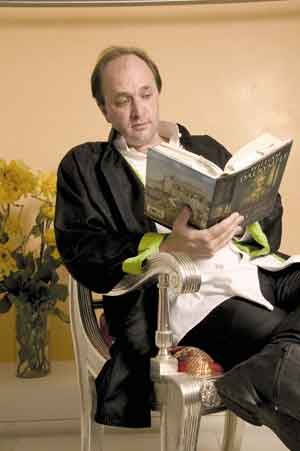
He seamlessly translates his obsession with history into words. At the launch of his latest tome – The Last Moghul – in Mumbai, William Dalrymple zooms in on the contemporary literary diaspora and its impact on the West. Sitanshi Talati-Parikh gets upfront and personal with the veteran novelist

Volumes01

I read through some parts of a 500-page historic tome and then stop to wonder what the writer, William Dalrymple, himself would be like. A hearty, jovial Scotsman was definitely not in the reckoning, but there he was, merrily sipping wine and chuckling away at every opportune moment.

“‘Why India and why Delhi’, is a question that always intrigues me,” muses William Dalrymple. “It implies that India and Delhi are not places where one would naturally prefer to live. One doesn’t think that way about New York or London. It implies as if India is second best!” He laughs heartily at the fact that English journalists never ask him this question. But scribes from Delhi and Mumbai often have this query and seek answers from him.

The Last Moghul, on the sepoy mutiny during the British Raj, was drawn from a collection of 20,000 Urdu and Persian documents stored in the National Archives in Delhi. Dalrymple collaborated with two other scholars who helped him unravel the material written in these languages and scripts. “The physical writing is mine, but the actual work, thoughts and ideas that we thrashed out over many cups of National Archives’ chai and Kareem’s kebabs was equally Mahmood’s [Farooqui] as it was mine,” he states unequivocally.

As we discuss the nature of religion affecting the uprising, Dalrymple suggests that every historian writes history imprisoned in his own time. Like he himself discovered that, in the aftermath of 9/11 and Ayodhya where one sees religious matters animating people to resistance and violence, the Delhi documents were overwhelmingly one of religious causes. To his surprise, he also found a latent jihadi element: the Delhi uprising didn’t talk about the angrez, as much as it discussed the Christians and the kafirs (infidels).

Though Dalrymple disagrees that this book serves to talk about the present or the future, he does believe that history repeats itself. There are clear lessons, and while sitting in the library researching this, the story had been played out every day in the newspapers. “At the basic level,” he says, “if in the West, you mess around with the East, invade it, the chickens will come home to roost!” He is bemused by the Americans’ surprise: it is not shocking if one country takes over people of another nation, impinges on the freedom of people, dominates their economies and their lives, it is bound to have repercussions. “So,” he emphasises, “you find a completely erroneous depiction of history of unbridgeable divides of civilisation, of eternal clashes between a free, democratic, liberal, Judeo-Christian West and the imperial, aggressive, irrational East.”

It took a Scotsman passionate about Indian history to notice the wealth of information lost to people in the dusty archives. Dalrymple is shocked that 75 per cent of material that they uncovered from the department had never been requisitioned before. He exclaims, “This is the National Archives in the Indian capital, with documents on practically the biggest event in 19th century history where the anti-colonial vote was the largest in this city than anywhere in the world, and there was no interest in exploring it. That to me is utterly, utterly extraordinary!”

Dalrymple believes that one of the reasons that a major piece of world history was more-or-less his to unfold and write about, was the lack of familiarity with Urdu or Persian by scholars and historians of today. “It is a great privilege to be in this position. But it is not as it should be. It shouldn’t be a white Englishman unravelling a major piece of Indian history.”

The writer who has lived in Delhi for 20 years, and claims modestly to know Hindi “thodi, thodi,” suddenly jumps up excitedly and asks me about Kiran Desai. Reading aloud from The Inheritance of Loss, he speaks with pleasure of the desis in New York, the taxi and delivery boys. On a serious note, he says, “The diaspora are mediating India for the West.” Kiran Desai, according to him, is a New Yorker. The last book, written by an Indian, in India, which really made it in the West, was The God of Small Things. He believes that one does not need to be validated by the recognition of the West to be an artist. Accepting that writing in a regional language may be superior to one of these Indian novels in English, he feels that Indians are no longer producing artistic work that creates an impact on the West. Thereafter follows the discussion over whether one should privilege ethnicity over experience: Shantaram is considered to be a far more realistic portrait of Mumbai than Suketu Mehta’s Maximum City.

The historian, whose first travel out of Scotland was to the subcontinent, is optimistic, but believes that the jury’s out on India. Whilst there are “extraordinary cities rising out of the deserts,” there are still some major unresolved issues like the “criminality of politics, caste issues and cranky infrastructure.” Dalrymple is surprised that Pakistan has much better infrastructure than India. He describes the big difference between the two countries is that every year India’s literacy rate creeps up: this is the factor that will determine the subcontinent’s future prosperity and Pakistan’s uncertainty.

The controversial writer is proud of how easily his family has adjusted to India. His wife, Olivia, an artist, speaks better Hindi than he does, and his three children go to school in Delhi, hang out at the Red Fort, watch Dhoom:2, spend Christmas at the Tiracol Fort in Goa, weekends in Jaipur and summers in the UK. “I like walking. The frustration about living in a place like Delhi is that for most part of the year, the climate over here is not conducive for walking. There are moments in May when I am at a loss, wondering why I live in this country!” he laughs. Dalrymple considers Delhi home and Mumbai a place where he comes for fun, with a meal at Trishna, walk on the beach in Juhu and friends to visit.

Exhausted after producing “two big fatties” in five years, William Dalrymple looks forward to taking a year off, doing bits of journalism and attending literary festivals in beach resorts. He eloquently anticipates a reading at the moonlit Diwan-e-Khas in January. Already next on the list are a collection of Indo-centric religious journals, with sections on countries like Pakistan and Palestine; and a book on Akbar soon to follow. Quietly pleased with the appreciation of his work, this Scotsman, who has discovered a passion for the history of the Indian subcontinent, is determined to uncover more stones left unturned.

Literature: The World Cannot Become Uniform (Vikram Chandra)

26 Thursday Oct 2006

Posted by sitanshi talati-parikh in Art, Literature & Culture, Interviews (All), Interviews: The Arts, Publication: Verve Magazine

≈ Leave a comment

Tags

Indian Fiction, Interview, Literature, Sacred Games, vervemagazine, Vikram Chandra

Published: Verve Magazine, Features, September-October 2006
Photograph: Gaurav Bhat

Straddling two continents, wordsmith, Vikram Chandra is deeply inspired by Indian mythology and epics. In Mumbai for the release of his latest offering, Sacred Games, the award-winning US-based author speaks about modernity and ‘Indianness’ in a tête-à-tête with SITANSHI TALATI-PARIKH

Vikram01

Muted conversations, tinkling of wine glasses, dusk setting in saw the world-wide book launch of eminent writer, Vikram Chandra’s much awaited third literary offering, Sacred Games, in Mumbai at the Hilton Towers’ Rooftop. Early the next day, at the suburban Taj Lands End, Mumbai, a conversation enfolded with the award-winning novelist who surfaces in the world of words (earlier works are Red Earth and Pouring Rain and Love and Longing in Bombay) after a long sabbatical. I had to ask – why so many years before another novel – seven in the making. He replies with alacrity, “I’m just slow, very slow. It does take some perseverance and a large degree of obsession!” This trait is remarkable in the little man with precise and fluent thoughts and a great deal of patience. As the dialogue swirls around lengths and time, Chandra states that writers have their own best lengths. “I did short stories as an experiment,” he says, “to see if they would work, but even those got really long! For me, long length is natural.”

It becomes very clear that the California-based Chandra is, as one can tell from his writing, deeply inspired by Indian mythology, the epics and other magical tales. “What forms us when we are young and growing up, stays with us,” is his strong belief.

Born and brought up in India, but having left for the States out of sheer frustration at not being able to find a good course in creative writing (when he followed poet, Nissim Ezekiel, around), Chandra did his undergraduate degree magna cum laude in English. He looks back and wonders: “Before going abroad, you live in your own parochial world and somehow think that you are universal; that you are like the person on the other side of the world. Once there, within the first couple of days, you realise that you are talking in different languages, even though everyone is supposedly speaking English!

Since then, he has been studying, working and living in America, with frequent visits to the city close to his heart, Mumbai. As a professor of creative writing at the University of California, Berkeley, he finds the cross-cultural mingling stimulating and educational for both sides. He marvels at the rapid changes in India too, “The modern urban Indian is a very different creature from the modern urban New Yorker. In a world that’s rapidly globalising and seemingly getting smaller, we are also fragmenting more and more and the polarities are growing more intense.”

What is his concept of ‘Indian’, then? What we think of as ‘Indian’ is actually the result of many, many changes all through the ages, Chandra explains. He points out that to talk of an unchanging Indianness and the nostalgia for an unchanging past and subsequent stability is itself a falsehood. Brooding about the changing nature of society, Chandra insists that “the world cannot become uniform, even if it is a smaller place”. He predicts an increase of the parochial and the local or an urban niche. “The seemingly contradictory thing,” he says, “is that even as we become more modern, we become more tribal.”

Chandra often and wistfully recalls the days when he and his friend, Anuradha Tandon started the adda in Goa Portuguesa, a restaurant in Mumbai, as a meeting ground for young thinkers and artists. He notes with some amusement that while the Mumbaiites would be dedicatedly taking part in discussions that went on into the wee hours of the morning, their American counterparts in DC, would rush off home by 9 p.m., since the next day was a working day. With barely concealed enthusiasm, he states, “It really was amazing and a lot of fun! That kind of cross-pollination and conversation is really helpful for all kinds of people – really good things came out of that.”

With the turmoil prevalent in the world around, Chandra believes that in some ways it’s a really good time to be a writer because there is so much turbulence and change. The material that is offered to you, that you come by – although it is often painful – is really rich. “In some sense, every book that I have written is a response to what is going on around me,” he says.

Coming from a family that is prolific in the arts, it is no surprise that he is also greatly influenced by the people around him. While his mother, Kamna Chandra, a playwright for All India Radio at the time, was concerned about how all her children would make a living by choosing a vocation in the arts, the entire family came together as a great support system for each other. The atmosphere in the house was always filled with literary discussions and varied artistic interests – what with sisters, Tanuja Chandra (film director) and Anupama Chopra (journalist-writer), to add to the talent pool.

One would imagine that with so many writers in one household, there would often be a difference of opinion. Chandra, on the other hand, looks unfazed and finds it productive. “It’s all in good faith. It doesn’t get to the point where you start resenting somebody else’s opinion. It’s great to be around people who understand the life of being somebody like that. You are, in a sense, strange and different.” Talking about his wife, Melanie Abrams, who is also a writer, Chandra recalls meeting her at an art festival in Los Angeles and staying in touch via email. He says, “We sometimes completely baffle each other. The universe we see is different from that of the other person.”

Chandra, himself, is a man of many talents. His proficiency with computers was discovered when he was working his way through film school in New York. A self-proclaimed computer geek, he loves to dabble in a bit of programming to relax!

After his ambiguous experience of being one of the writers for Vidhu Vinod Chopra’s Mission Kashmir, Chandra is pretty emphatic about not returning to script-writing anytime soon. “As a novelist, you have such complete control over what you do but film-making, from the ground up, is a collaborative art. It’s thrilling at times, because you pass around ideas and then directors step in and the actors make something of what you did. At other times, you want to do something and you can’t! So, then you feel really angry and frustrated.”

Funnily enough, Chandra recalls with a sheepish look, “I actually went to film school because I was scared of being a writer!” After his BA, he was lost and didn’t know how to earn his livelihood. For a year he drifted around taking up odd jobs from that of a night baker to a security guard and furniture mover in Los Angeles. Then he decided to go to film school, figuring that at least that way he would have a chance at a creative job. Ironically, it was film school that led him right back to writing books!

As the discussion revolves around the topics he chooses for his books, Chandra matter-of-factly states, “One writes something close to what one reads and gives pleasure. The Victorians, for instance. I love the diffusion of characters…!” He believes that Indians would necessarily write about the Indian experience, since that is where they are coming from. However, he warns, “One does have to be careful about getting stuck in an ethnic ghetto…for instance, the temptation to write yet another story about cultural confusion.”

For the choice of the detective genre for his latest book, Chandra believes it is a neglected and curiously pleasing form, which weaves across cultures. The detective incarnates the scientific method and the form fits with logic and reason against the chaotic. “In the end,” he says with a smile, “you love it because it comforts us and restores order.”

Has the million dollar-signing contract restored any order for Chandra? Quick to allay the thought that he is discontent, he states a little ruefully, “People presume that with that kind of number, you are set for life. After paying taxes, what you are left with isn’t enough to even buy a house! At the end of it, you are still faced with the task of making a living and feeding your dog. It’s not as if you are transported into some kind of heaven!”

A kind of heaven for Chandra, it appears, is his time distributed between his two homes. He does miss Mumbai and writes about it through the characters in his new book as well. “That is also not to say that the city is not trying and exhausting and wears on you like nothing,” he chuckles. He finds the travel and distance to be a much-needed perspective. “Getting away is a sort of purposeful dislocation – and each time I return, I can feel the city experientially again, renewed.”

While stating that there is so much territory left to explore, Chandra does show a semblance of weariness as he states that he has no plans for another book as yet. A holiday is on the official charts for him – a much required and enforced one.

Quietly contemplative, he concludes, “I realise now how lucky it is to be able to do work in the world that you actually enjoy. It’s not a privilege that everyone gets.”

Newer posts →

|  Filling the gaps between words.  |

Writing By Category

  • Art, Literature & Culture
  • Brand Builidng
  • Brand Watch
  • Fashion & Style
  • Features & Trends
  • Fiction
  • Food
  • Humour
  • In The Media
  • Interviews (All)
  • Interviews: Business
  • Interviews: Cinema
  • Interviews: Cover Stories
  • Interviews: Lifestyle
  • Interviews: Luxury Brands
  • Interviews: The Arts
  • Interviews: Travel
  • Musings
  • Parenting
  • Publication: Conde Nast
  • Publication: Elle
  • Publication: Mint Lounge
  • Publication: Mother's World
  • Publication: Taj Magazine
  • Publication: The Swaddle
  • Publication: The Voice of Fashion
  • Publication: Verve Magazine
  • Social Chronicles
  • Sustainability
  • Travel Stories

Reach out:
sitanshi.t.parikh@gmail.com

© Sitanshi Talati-Parikh 2018.
All Rights Reserved.

Website Powered by WordPress.com.

  • Subscribe Subscribed
    • sitanshi talati-parikh
    • Join 51 other subscribers
    • Already have a WordPress.com account? Log in now.
    • sitanshi talati-parikh
    • Subscribe Subscribed
    • Sign up
    • Log in
    • Report this content
    • View site in Reader
    • Manage subscriptions
    • Collapse this bar