A Pocketful of Memories

Tags

,

Published: Vervemagazine.in, September 2014

Where do memories take you? What happens to the residual thoughts? This eclectic group show at TARQ pushes the boundaries of subconscious expression

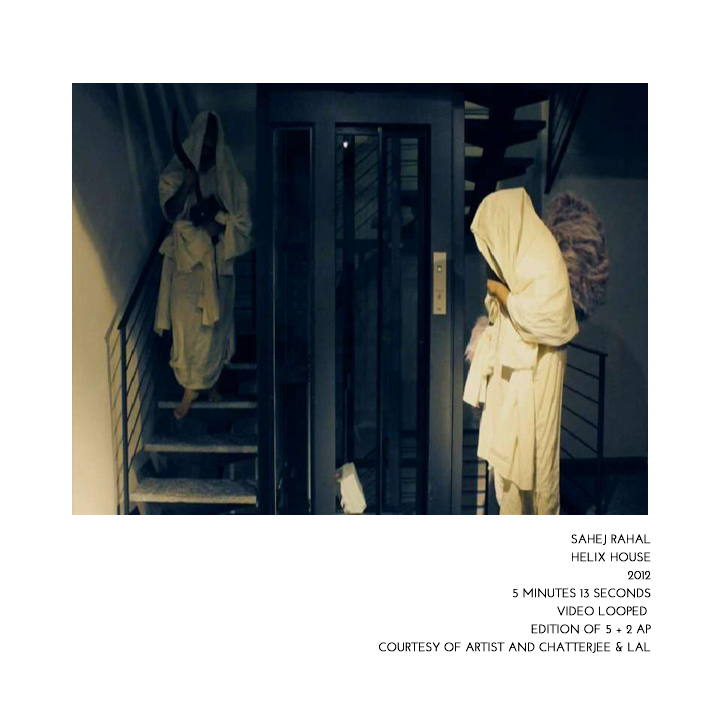
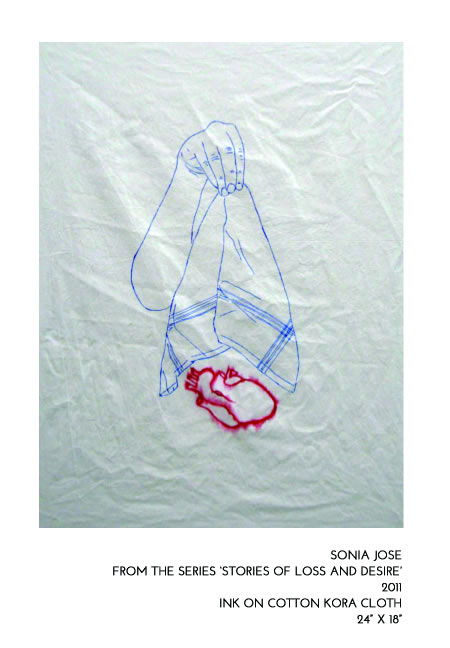
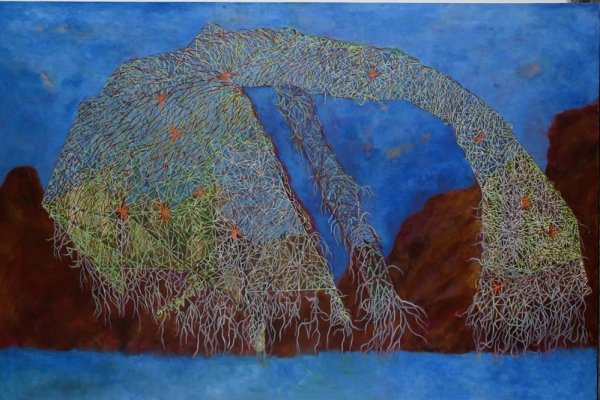
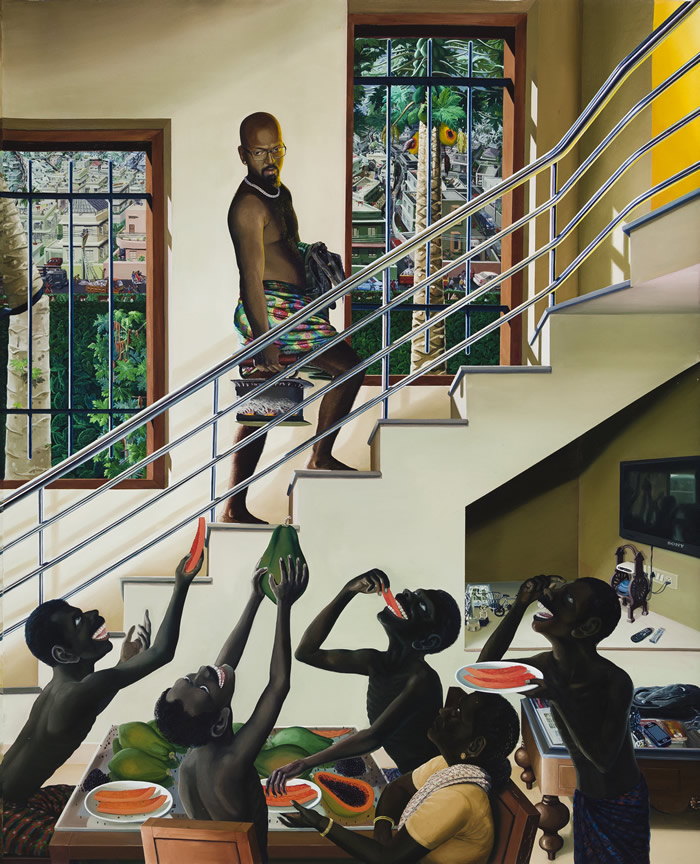
Pocket Maps of the Mind (Residues of Memory), curated by Veerangana Solanki for TARQ, looks at the multi-faceted nature of memory. The show focusses on different, complex ways in which the mind selects, stores and internalises memories to create ‘perilous utopias’ which ‘can never be destroyed, because in our minds maps they will always exist as residues of memory.’

The show previews this evening and continues until November 7, 2014 at TARQ (F35/36, Dhanraj Mahal, Apollo Bunder, Colaba, Mumbai).

Sahej Rahel Artist TARQ Sonia Jose artist TARQ

Here’s the low-down on the exhibiting artists:

Prayas Abhinav, Ahmedabad: Artist, occasional teacher and curator. He has worked in the last few years on pieces of speculative fiction, software, games, interactive installations, public interventions and curatorial projects. He is interested in politics, pedagogy and the interaction of the humanities and the digital.

Nandan Ghiya, Jaipur: He refers to the 21st century as one of emulation, competition and pressure. ‘No matter what we may achieve, somehow our pursuits never end, for the image itself seems to change or transform over time with changing trends and lifestyles. The transitory state is the state of its existence.’

Sonia Jose, Bangalore: Drawing inspiration from everyday life and experiences, Sonia’s art practice relates to the environment and personal/social history. Her work stems from a need to preserve and acknowledge lived experience – she is particularly drawn to the intimate and overlooked circumstances that surround routine life practices.

Payal Kapadia, Mumbai: Payal’s work includes documentary, experimental film, and animation. Her current works are concerned with nature and the memory of a human-nature relationship. They attempt to trace back a history of this relationship in the Indian context by examining texts such as the Upanishads, as well as myths and folktales.

Prajakta Potnis, Mumbai: Prajakta’s works are an inquiry into the seepage of time and aura around mundane objects from daily life. They dwell between the intimate world of an individual and the outside, through mediums of photography, painting and site-specific installations.

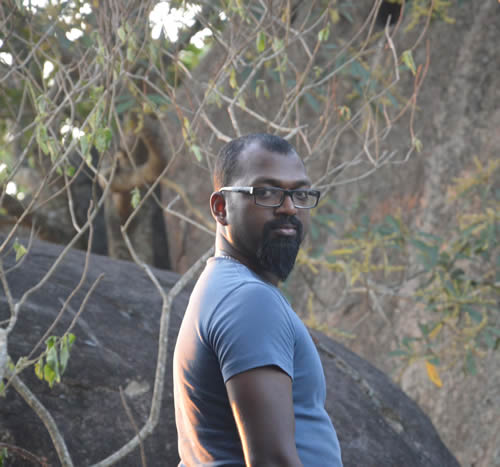
Sahej Rahal, Mumbai: Sahej’s artworks revel in masculine fantasy, whilst also mocking its affectations. The solitary characters he essays seem to have emerged from Joseph Campbell’s Hero with a Thousand Faces refracted through George Lucas’s Star Wars series. The nature of these characters, like that of the peculiar beasts he fashions, is often ambiguous.

Sandunes is the full-time electronic music project of Sanaya Ardeshir, Mumbai-based producer, composer & synth player. From early influences in jazz and blues, to a defining stint with London underground sounds, her music blends various organic and electronic elements into a hybrid zone.

Wolves is a live visual project and proto-rebellious medium for Joshua Dmello and Jash Reen. Currently teething, the project is being tested through 3D-mapped installations for alternative residencies (Smash Up, Bass Camp) and commercial mainstays like Lakme India Fashion Week.

The Postcard Canvas

Tags

, ,

Published: Vervemagazine.in, September 2014

A typewriter, stove, traditional telephone, juicer, tickets and postcards. Madhav Imartey finds inspiration in everyday or defunct objects and elevates them to the level of art

Madhav Imartey Artist

Nagpur-born Madhav Imartey has remained fascinated by disused and defunct objects. With a background in classical music and art (JJ School of Art, Mumbai) collages form an intrinsic part of his artworks, using postcards, railway tickets, inland letters among other things. Jesal Thacker, curator, finds that the Mumbai-based artist engages with various aspects of movement – organic, conceptual and subliminal, and the exhibition attempts to trace this synchronised visual formation. A takeaway is that Imartey doesn’t fall into complete abstraction, rather concentrates on the result of the elements that combine into a form.

Moving Images, opens at 5:30pm today at Percept Art Gallery and continues until November 7, 2014. (Percept Art Gallery: P2, Raghuvanshi State Compound, Lower Parel (W) 11am-9pm.)

3 Qs with Madhav Imartey

Artistic Motivations “Freedom to express myself! I work with a liberal attitude and I am intolerant to any kind of restriction. I aim to express hidden emotions and inner feelings; individuality drives me and I am motivated by the state of ambiguity that prevails within oneself.”

Inspirations “Objects that are not beautiful and are disused fascinate me a lot; nature has always been my prime inspiration….”

Concerns  “Firstly, uncertainty of human life and secondly, insecurity that persists in every individual.”

Boardroom Tigress

Tags

, ,

Published: Verve Magazine, August 2014
Photograph by Toranj Kavyon

Twenty-eight-year-old Nadia Chauhan Kurup is chief marketing officer and joint managing director of Parle Agro Pvt Ltd. She’s taken the company from Rs 300 crores to Rs 2000 crores in the last five years

Nadia Chauhan Kurup

“I am inspired by fearless and passionate people who always do what it takes to fulfill their cherished dreams.”

She’s won awards, she’s delivered a double-digit growth every year and she’s driven diversification making Parle Agro a leader in both beverage and food. Nadia Chauhan Kurup proves that progeny can be the leaders of the next gen. “I remember being mesmerised by the stories my dad (Prakash Chauhan) would relate to us and the many new products that he often brought back for us to taste. Passion is undoubtedly contagious! My inquisitiveness about everything that he was doing kept growing stronger as I became older. I used to spend many hours after school and often even on weekends at his office.”

From a shy child to a boardroom tigress, she has come a long way. “I remember often enough being quite intimidated when I was asked by my father to join a meeting and observe. I picked up a great deal from his very dynamic style of leadership. I noticed how he worked with intuition and his gut in taking decisions. I rely on a lot of this myself even today, in taking the organisation forward.” Looking at the future, she believes that the thriving business is at a tipping point, about to take a greater leap forward.

With great support from her husband and children, she has ably managed to find a suitable balance to ensure that her four-year-old daughter and ten-month-old son remain a big part of her day. “Nia and Kian have accompanied me to office since they were a month old. I am as passionate a mother as I am a businesswoman. I am very hands-on and extremely proud to be so. While you sacrifice some things just to be able to create that balance and give your 100 per cent, to see the outcome of it is the best feeling ever! I dedicate all my non-working time to my kids.”

She’s a perfectionist who often likes to step away from her comfort zone. “I take risks, I explore new ground – with that I grow and with that the business grows further. Personally, I would like to see myself travelling around the world and discovering new experiences.” Her daily personal style is practical and comfortable; while dressing up for an occasion it translates into ‘graceful elegance’.

Nadia admits that she is not fond of the gender question in the business arena. “Why create such differentiation, when there is none? Women around the world are becoming increasingly dominant in work, education, households, even in love and marriage. Some studies suggest that the global economy is becoming a place where women are finding more success than men, and are poised to become the next superpower. It’s pretty much evident with the increasing number of women running some of the best companies in the world.”

To The Triennale

Tags

, ,

Published: Vervemagazine.in, September 2014

Trivandrum-based artist, Ratheesh T, writes in to Verve from a cafe right before his showing at Japan’s Fukouka Asian Art Triennale

Ratheesh T

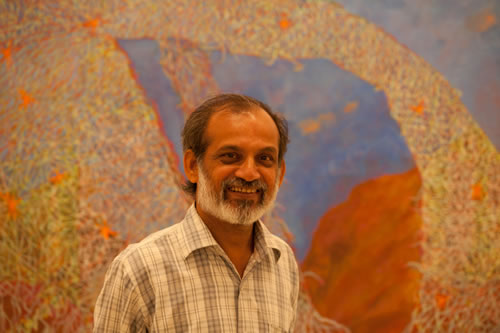
Born in Kilimanoor, Kerala, Ratheesh T has held solo exhibitions in Mumbai and Berlin and now makes his way to the fifth Fukouka Asia Art Triennale in Japan. Bold lines and structure suggest a confidence of stroke in the 34-year-old artist. His artworks are on view at the Triennale from September 6 to November 30.

4 Qs with Ratheesh T: 

Artistic motivations “Why do I paint? I paint for myself, for my growth. Thinking is not enough. Doing is important and only through that comes understanding and growth. Thinking is also for growth. Through that growth comes painting.”

Inspirations “My mother and past life are a gift, and my main inspirations.”

Wishlist for the wall “Leonardo Da Vinci.”

Artistic concerns “India is my country. Living in India, spending lot of time with local people; the biggest problem I see is our religious system. The problem is the symbolisation or simplification of religion.”

A Deeper Look

Tags

, ,

Published: Vervemagazine.in, September 2014

Deepjyoti Kalita promises a striking debut performance taking upon themes of relationships and individualism, technology and consumerism, opening today in Delhi

Deepjyoti Kalita Artist

Today, is it possible for love to be unselfish and pure or is it condemned to be shrouded in a cloak of materialism, consumerism and individualism? “The ‘power of love’ has become overshadowed by the ‘love of power’; thus our relationships become battlegrounds….” is the what Baroda-based artist, Deepjyoti Kalita, is expressing among other things, in his debut solo. Using a range of materials and exploring the depths of life and relationships – or the lack of them – Kalita has some striking imagery and shows promise of consolidating his thoughts into a strong visual aesthetic.

Deepjyoti Kalita’s first ever solo show Amour Fou will be on display at Gallery Latitude 28, from 5 September to 5 October, 2014. Gallery Latitude: F 208 G/F Lado Sarai, New Delhi.

5 Questions with the artist:

1. Motivations “Apart from India’s rich cultural heritage that one comes across daily, what really motivated me to create works was the visual and cultural diversity I experienced due to my shift from Assam to Baroda and now to Delhi.”

2. Inspirations “I am a big movie buff, and in movies the light and sound, editing, direction and screenplay have always inspired me. The same theatricality, made-up reality and movement can be found in my works. My father has been actively involved in the theatre circuit of my native state of Assam. Directors like Jahnu Barua, Bhabendra Nath Saikia, Kim Ki-duk, Gaspar Noé and Takashi Murakami have inspired and molded my taste.”

3. Artists at home “I want the great reformer like Shankardeva, poets like Kabir and Ghalib and philosophers like Nietzsche and Derrida in my home. They all were great artists in their own way and their life were exceptional paintings.”

4. Concerns “In today’s day and time, when a capitalist-consumerist idiosyncrasy has deeply entrenched our culture, we have developed a tendency to objectify and fetishize human relations too. We have turned immune to human suffering and immoral deeds. That explains the highly volatile state of our country in terms of female safety and other crimes. Violence has become a part of our daily diet that we digest and forget. My works might not directly point towards these subjects but their presence will be felt in a subtle manner.”

5. If you weren’t an artist, you would be in… “any other profession where I can be innovative and skillful, like interior or fashion designing or architecture.”

Love Actually?

Tags

, , ,

Published: Verve Magazine, September 2014, Anti-View

Does love play an important role in Indian marriages today? A country that survives on celluloid rom-coms may be choosing practicality in real life

nerve-antiview

We grew up watching those regressive movies where everyone was always against love – marriage had to be a meeting of two families, economic status, caste, creed, sect, religion, language and mithai. Mishti doi couldn’t find place on the same platter as sevaiyaan for goodness’ sake! And then our Bollywood kings and queens would come swooping in with goose-bumpy tales of love, of love that conquers all.

We would sigh with pleasure when our heroes circumvented all odds and came together in holy matrimony. After taking the sacred pheras, no evil could befall them, and they would remain cocooned in the power of love.

Of course movies like Akele Hum, Akele Tum (1995), Chalte Chalte (2003) and Kabhi Alvida Naa Kehna (2006) attempted to showcase the reality of marriage – that after the rose-tinted glasses are replaced with the horn-rimmed ones, it’s never quite happily ever after.

People can’t change and while their circumstances may, can love overcome it all? When director Imtiaz Ali and I sat together to concoct a love story by meshing Jab We Met and Love Aaj Kal together for Verve, he pointed out that there is a reason that love stories end when they do. No one needs to face the reality of actually making a life together afterwards – people need to walk away with hope.

In urban India, the youth is no longer enamoured by love. Where earlier parents chose the partners for their children and the latter rebelliously yearned to be with who they wanted to be, today, the youth decides upon marriage via a purely clinical checklist. If the top criteria are met, it shall make a successful partnership. So in a way, it has come a full circle, where choices are made based on practical external factors rather than mushy feelings and red hot desire – the only difference is that the youth is willing to make those decisions if the parents won’t. After all, people are getting more practical by the day – can one survive life on love alone; doesn’t a country club membership and a neat set of wheels make life a smooth ride?

What has changed? Love isn’t a benchmark any more. You are lucky if the one you love also meets the points on the general marriage checklist; but it seems that people are more and more willing to go for things most important to them – economic comfort, a nuclear set-up, an easy-going partner and similar ideologies on travel (including the pursuit of a deep-sea diving certification). And it’s not settling for someone, it’s a well-considered arrangement that is legally bound to end happily ever after. Who shall dare to ask for more?

Shapes of Intent

Tags

, ,

Published: Vervemagazine.in, August 2014

Recovery from a paralytic stroke led Dhruva Mistry to sculpturally reinterpret the nine universal emotions that form the essence of life

Dhruva Mistry artist

The show: “It is mind, matter, illusion and dream of comprehension of reality that comprise the sensual experience of being alive. The Sanskrit illusion or dream and universe being manifestations of Maya re-captured my imagination in summer 2008 following a severe paralytic stroke. On the way to a painfully slow recovery,Something Else emerged out of the crisis as a welcome respite.”

Specifics: The works are relief pieces of 32 x 41.5 cms, water-jet cut, 1mm-thick stainless steel plates painted with epoxy paints. There are several sets with nine pieces each in vertical as well as horizontal format, titled, numbered and signed by the artist. Configuration of each piece refers to one of the nine emotions with a corresponding hue. The cut-outs reveal sculptural beauty of classical Rasa like,Rati (love), Hasya (mirth), Karuna (sorrow), Rudra (anger), Vira (energy) and Shanta (tranquillity). “Cut-outs of silhouetted torsos create a kind of metaphorical abstraction that deters perception of female form as popular sex objects.”

About the artist: Gujarat-born, UK-educated Dhruva Mistry explores forms in a variety of 2D media like drawing, painting, etching, dry point, digital works, photography, and 3D forms in space. Mistry, who has had over 25 solo shows, numerous international showings and is part of local and international private and public collections, finds inspiration from all civilisations and cultures and resides in Vadodara, Gujarat.

Q&A with Dhruva Mistry (An excerpt)
1. Artistic motivation “Scruples to endure some moments beyond the idea of pain, pleasure and gain arouse curiosity. Consequent feeling of life in the given environment enlivens certain sense of wonder as I shape forms of intent fused with its content.”

2. Creative inspirations “An innate interest in creatures big and small and things dead or alive affect my life. Thought, feeling, reason, environment and society enhance my interests and enlighten my pursuit.”

3. Artists at home “I like Rabindranath Tagore, Ram Kinker Baij, Marcel Duchamp, Van Gogh, Paul Gauguin, Constantin Brancusi, Pablo Picasso, Henry Matisse, Marcel Duchamp, Lucien Freud, Frank Albarch, Louise Bourgeois, and some others including my teachers from Baroda. Apart from areas of interest led by some of my contemporaries, I like commitment of the young and struggling artists whose work advance a new vision as I learn about them.”

4. Concerns that show up in your art… “In the age of moral, political and democratic decay and material greed, to be alive implies being surrounded by irrepressible flames of fear, dread, temptation and glimpses of delight as well as death. I contemplate moments of pleasure, mirth, laughter, peace and bliss that regulate my pulse and movement of the mind seeking peace, harmony and unity.”

Something Else previews at Sakshi Art Gallery, Mumbai today and is on until September 27, 2014. (Sakshi Art Gallery: 6/19, Grants Building, 2nd Floor, Arthur Bunder Road Colaba, Mumbai 400 005 T: +91 22 66103424)

No Airs, All Grace

Tags

, , , ,

Published Verve Magazine, July 2014, Art Special, Cover Story
Photographs by Jatin Kampani

She’s like a delightful elf, a wisp of fresh air, youthful, light-hearted and effortlessly chic. The face of alternate cinema and an agreeable player in mainstream blockbusters, Kalki Koechlin is malleable and experimental, making her the perfect muse for Verve’s art issue. Verve explores the creative inspirations that define her personality and talent

Kalki Koechlin Verve July cover girl - art special shot by Jatin Kampani  VERVE-KALKI-KOECHLIN2

Kalki Koechlin impresses upon you that she’s not conventional by any means. She stood out from her first film, Dev D (2009), where she played the role of Leni, a teenage girl caught in the world of prostitution. Her molten sensuality and her raw performance were stellar, added to which was the subject matter, the fact that she is a “white, blonde-haired chick” and that she is tantalisingly uninhibited. And it’s a different uninhibitedness from say that of a Rakhi Sawant or a Mallika Sherawat; Kalki’s is a classy reserved-ness that naturally doesn’t liken itself to exposure. She isn’t crass or over the top – she merely has different boundaries. These are the boundaries that an artist explores, that one probes unreservedly at societal limitations. “I am not consciously trying to be different; the fact is, that I am different,” she explains, while sitting with her bare feet tucked under her on the sofa. She admits facing an on-going battle with people’s perceptions and consciously attempts to break those limitations.

A QUIRKY BEGINNING
Everything about her has been fairly unusual. Born in Puducherry to French parents, Francoise and Joel Koechlin, who settled into ashram life, she hasn’t been brought up with conventional rules. “They both came here separately, they met in India. They were looking for a life that was different – they taught me to be responsible but to make my own choices. It was never, ‘you have to believe it because we believe it’.”

A CHILDHOOD OF GULLY CRICKET AND PHILOSOPHY
Growing up she read a lot of philosophical literature, including Aurobindo. While most people safely go their entire life without stumbling upon it, Kalki explored Krishnamurti’s Freedom From The Known at the age of 13. “My life changed because of it – you get affected by these things.” She started writing at a very early age – little poems, songs, stories, while running around barefoot, playing gully cricket in a village called Periamudaliachavadi and exploring drama and art along with trekking through jungles while at Hebron School, Ooty. So removed was it from a traditional Indian schooling experience, that she felt comfortable in the knowledge that it was all sufficiently “open-minded and liberal”. Until she had an eye-opening jolt when she went off to study at Goldsmiths in London, where there were “women with T-shirts saying ‘I’m a lesbian’, with pink hair and purple tutus and Goth black boots coming to school. I felt so simple!”

BRINGING THEATRE TO LIFE
Studying drama in London was admittedly the greatest influence on her, carving her as an actor. You understand immediately when she explains that Damien Hirst, and some “out-there art” emerged from Goldsmiths. A smile begins to form, “A lot of which I didn’t like, but which made me think outside the box. It was an opening to these other things that I knew nothing about. An artist takes everything as inspiration, everything that affects your life, the circumstances.”

CREATING CHARACTERS THAT SPEAK
Her all-round drama course exposed her to everything from feminism in theatre to world theatre (including our own Kathakali and Butoh, a Japanese form of theatre); while she picked her favourites from the local greats like Pina Bausch, Peter Brook, Robert Lepage and Robert Wilson. That foundation in theatre becomes ingrained – as a big screen actor, she needs familiarity with the mise-en-scène, which takes place upon reaching the set – even before hair and make-up. A newspaper-stuffed handbag won’t do; what if she needs to throw something at someone, or needs the phone to make a call, while in the throes of the scene? “I need to know what is in my room… what drawers to open! Sometimes I ask the set designer to put some stuff in. The more detailing you give to anything, the more real it becomes.”

Kalki Koechlin for Verve's July Art Issue shot by Jatin Kampani

BEING A HUMAN CHAMELEON
The personality she brings to a mainstream girl-next-door role, like that of Aditi in last year’s blockbuster, Yeh Jawaani Hai Deewani, is unique. The mannerisms, the bitchy look, the irritatingly suffocating girlfriend may be as far removed from Kalki in real life as possible, but Natasha in Zoya Akhtar’s hit film, Zindagi Na Milegi Dobara(2011) came alive on screen and became one of the most memorable characters from the movie. Kalki can’t help asking questions… making sure the script works, the role works and maybe that’s why the casting works. “I need logic to the character, some idea of how it’s working, even if it is a completely commercial film. You have to make that character believable for yourself. If you don’t believe it, your audience won’t believe it.”

SEARCHING FOR ACCEPTANCE
She has a particularly contrary mix of cinematic choices – dark, edgy plots, horror and easy feel-good romantic films. She takes this mixed bag in her stride; after all, she can watch a Meg Ryan or Julia Roberts’ rom-com, intense European films, or “a mindnumbing Bollywood film like Heroine” with equal ease. “Everybody has multiple tastes, so why should  an actor only stick to one thing? An actor’s job is to be a chameleon, to constantly adapt to different roles. I just want to surprise myself. I chose to be an actor because I love the challenge of changing and transforming. If I get comfortable and stick to that, I would get bored of acting. I can’t keep doing the same role.”

TELLING A PERSONAL STORY
She’s not immune to the fact that an actor only survives because of an audience; an artist can’t find inspiration in isolation. “No matter how much you say you are only doing it for yourself, you want people to relate and understand. I don’t think of doing an independent film so that only my family will watch it, I think, ‘this is a great subject, how come we don’t talk about these things more’. At the end of the day, like everyone, I want to be loved and understood. And that’s the main thing an artist wants.”

The 30-year-old loves popping into MoMA, Tate Modern and the Guggenheim, and finds herself drawn to modern art. “Art is completely tied to the society and the place you are at. It is always relevant to what’s going on. It has to start with something personal otherwise it becomes a social cause. I see art that preaches about change. But until you bring your own personal story to it, it’s not as powerful. The reason you do art is because you feel helpless and you want to change things…but only when it really affects you do you begin to have something to say.” She expresses herself through her writing – even though she isn’t deeply committed to it. She’s written a play, Skeleton Woman, with her friend, Prashant Prakash; co-writtenThat Girl In Yellow Boots with director Anurag Kashyap; has written a new (untitled) play recently and engages in a spot of blogging. “It’s something very sporadic; I feel very focused on my acting. Writing is therapeutic for me.”

It’s difficult to imagine someone so soft-spoken having firm opinions about things; it’s unnatural to imagine Kalki as a movie star. She does and she isn’t. She’s an artiste, an actor, married to the craft, and understands and loves it for what it is. Having participated in various shoots and covers for Verve magazine, including a glamorous Best-Dressed issue last October, you find nothing has changed, no airs have appeared. She’s matured ever so slightly, or is it your imagination that the pixie-like features are just a bit worldlier post her recent estrangement from director-husband Anurag Kashyap? But the childlike innocence, the carefree spirit and the charming personality are all intact. She turns up post a leisurely holiday in Greece, with an enviable figure, abs to die for, dressed unobtrusively in pastel shorts and a shirt. She lounges around photographer Jatin Kampani’s studio, waiting for the shoot to commence, and is completely at ease, with herself and the people around her. She doesn’t mind being captured on candid camera without any make-up or work on her hair, while her contemporaries wouldn’t accept being seen without make-up. She takes photos of the crew on her own nifty camera and is easily amused with the results – promising to email them out. I am not surprised when, true to grain, the email arrives, intact with artistic filters that pick up the mustard yellow from my jumpsuit and spread it in a slow fire around my face. After all, what is art if not living life on your own terms with a little bit of experimentation?

KALKI’S COLLECTION
ON HER WALLS

  1. French artist Marie Tissot (original, inherited from her grandmother).
  2. Modernist Marc Chagall (replicas, he’s one of her favourites).
  3. Dhiraj Choudhury (painting of clowns, gifted to her by her mother).
  4. Amrita Bagchi (given by the artist in repayment for a favour).

IN HER LIBRARY

  1. Lots of books on philosophy, history and people.
  2. Leonard Cohen’s biography (“I am a fan of his music…not his personality!”).
  3. Non-fiction like Rana Dagupta’s Capital.
  4. Classics like those by Oscar Wilde and Edith Wharton.
  5. Kurt Vonnegut (“When he died, I was like, ‘What, I won’t get any more books?’”)

Watch Kalki live in Verve‘s quirky behind-the-scenes shoot here.

Connoisseur of Canvases

Tags

, , , ,

Published: Verve Magazine, July 2014
Photograph by Toranj Kavyon

She has established herself in the art world, has the happy ability to see the lighter side of things, is inspired by nature and is a specialist and head of Christie’s Mumbai sale

Sonal Singh Christies Verve Magazine

“I don’t really have a normal work day, as I spend a lot of my time on road.”

The 35-year-old associate director and head of sale for South Asian Modern and Contemporary Art at Christie’s Mumbai is unlikely to be chained to a desk, and probably has the most creative mix of business and pleasure. She was partial to the arts from childhood. After studying sociology at Delhi University – where she spent a good deal of her time competing for the college at music competitions – Sonal Singh created a solid foundation for herself artistically and academically in London: ceramic design at Central St. Martins College of Art and Design, modern and contemporary art at Christie’s Education and a Master’s in art business at Sotheby’s Institute of Art. After working in the field for a few years, she joined Christie’s in 2007 when the latter decided to expand its operations in India and were looking for a resident specialist.

“Every auction that you work on is exciting – to be able to handle the art at first hand is really the most thrilling experience for someone with my passions! Having said that, being a part of the Christie’s first auction in India (December 2013) was really a dream.” While she interacted with big names in the art world at the India Habitat Centre and worked with many artists at Bodhi Art Gallery, at Christie’s she is consumed by the sheer volume and quality of art that she is exposed to – some of the world’s greatest works. “Seeing the whole process through is really gratifying – first working with the collector and getting the consignment, appraising its value and importance and then seeing it go under the hammer. Negotiating for a work can be hard but getting it into an auction is extremely satisfying; similarly the actual auction can be stressful but when an artwork sets a new record or fetches a good price, it’s the most thrilling experience.”

What would someone who works with works of art like to see on her own walls? “I like the immediacy of works on paper and this is mostly what I’ve bought. I’d love to have works by Gaitonde and Amrita Sher-Gil some day and I would like to start learning more about antiquities, in particular, Gandhara sculptures.” She likes Indian textiles, treasures family jewellery and has recently rediscovered saris, while otherwise she would be likely to be seen in churidaars for formal occasions and jeans-and-shirts on a casual note.

She works as part of a team, with colleagues based in New York, London and Mumbai. They curate auctions and aim to bring together rare, important and exquisite works of art. Not surprisingly, she is often on the move, which works well for her, as she is fascinated with planes. After work, if there aren’t any overseas conference calls scheduled, she finds time for a walk, a gallery opening or catches up with friends for dinner.

“I realised a few years ago that the people in my life are my priority and I try to spend as much time as I can with them.” Sonal Singh believes in living life on her own terms and in creating her own path; and that success is nothing more or less than “making the most of what life gives you”.

A Glass Front

Tags

, , , , ,

Published: Verve Magazine July 2014

Apple Inc. changed the meaning of bricks-and-mortar with their spectacular, award-winning glass-and-steel flagship stores. We take a look at the architectural face of the brand

Apple Stores architecture

Clear glass, one crisp bitten virginal apple and a cult following to rival a pop star. Steve Jobs, the late co-founder of Apple, Inc. was a renowned stickler for design. There was no way he would retail his beautiful phones, computers and ‘haute couture’ tech gadgets in a shoddy showroom. While the majority of the showrooms exist in malls in a minimalistic steel-and-glass décor, Apple’s flagship stores have won numerous architectural awards, especially the one located on Fifth Avenue in midtown Manhattan, New York City. This particular one, open 24/7, 365 days of the year, has an iconic glass cube structure, which was completed in 2006 and revisited in 2011 to the reported cost of $7 million and $6.7 million respectively. The glass panes were replaced and fitted with larger ones to reduce the number of visible seams…because only one company in the world would care that much about judging the product by its display area.

Glass cubes, glass stairways with engineered precision, round glass elevators, glass bridges…and an inverted glass pyramid for the one at the Louvre; it is obvious that Apple loves the clarity and simplicity of glass. It’s as if Jobs wanted to provide a see-through looking glass to his products; a pedestal or shrine to the revered goods that should clearly be visible to anyone passing by. And there are many, who come to stare, openmouthed at the larger-than-life stores. The one on Fifth Avenue, for instance, is one of the most-photographed structures in the city, which is saying a lot! Despite the reverence towards steel and glass, you wouldn’t be hard-pressed to find instances where the Apple stores utilise and work around the aspects of the buildings’ original architecture – as seen when it maintained the romanticism of Paris in its Opera store.

Travelling the world with Apple: from 40,000 square feet of retail space in London; a huge, offset stainless steel frame holding the iconic glowing apple logo in Beijing; rooftop grass with a skylight visible to surrounding buildings in Boston; a big steel tunnel in Chicago; and a towering glass cylinder and spiral stairway in Shanghai, we arrive at Apple’s Grand Central Station store, which wraps around the station’s terminal from a balcony position, making it one of the largest Apple stores in the world. And while it’s not a big deal to open a store in a mall or an airport, evidently you need to be the cat’s whiskers to be given access to the Carrousel du Louvre, the underground shopping area in Paris, where the inverted glass pyramid is now as much of a talking point as Dan Brown’s imagination.

While the architectural firms Bohlin Cywinski Jackson (BCJ) and more recently, Foster + Partners have a heavy hand in the engineering and designing of the stores, Apple has  patented or filed patents for their most original designs, such as the cube and the cylinder. Steve Jobs’ name is listed first on those patents. There is even a technical patent for the engineering behind the complex glass and hardware system. Last year, in an effort to drive the success post Jobs’, the current CEO, Tim Cook, hired Angela Ahrendts, the person behind Burberry’s transformation into a symbol of global luxury. She’s been busy reshaping Apple’s physical and online retail efforts so that they both achieve a parallel cult status.

Steve Jobs masterminded the concept of retail and brand experience, hiring people specifically to drive this strategy. The high-profile retail stores, developed by Jobs, the Apple retail team, designers Eight Inc., architects Bohlin Cywinski Jackson and structural engineers Eckerlsey O’Callaghan have become among the most recognised brand expressions in retail. In fact, the one at Fifth Avenue beats Saks, Best Buy and Tiffany & Co by a mile in sales per square foot per year. With the ‘Genius Bar’ concept, customers can set-up their products or receive technical advice, while the chic stores create a sense of sharp intellectualness – a person breezing in would automatically feel part of an elite and clever gang. After all, Apple could be credited in part with making smart, cool.

Ever seen the lines in front of American booksellers before the next Harry Potter installment was due? Apple store openings have it bad. Followers and Apple-lovers (they exist in drones) line up early in the morning or even the night before to watch history being unveiled in their town. Some have more mercenary desires like the potential giveaways. The recent Apple store opening in Istanbul promised the first 4,500 entrants free T-shirts. Three thousand shoppers waited in line for the opening of Apple’s Sydney store in 2008. Alternatively, outraged Chinese Apple fans threw eggs at the Apple store in Beijing after sales of the iPhone 4S were cancelled! Wonder what is likely to happen when an Apple flagship store hits the mean streets of Mumbai?